Tuesday, 30 December 2014

Norman Atlantic ferry fire: 12 confirmed dead, 41 people unaccounted for as rescue operation wraps up on ferry burning in Adriatic


Two Albanian seamen who took part in the rescue operation for the Norman Atlantic ferry have died from injuries incurred in an accident, raising the death toll from the fire to 12.

The Italian navy said the merchant sailors were on board a tugboat when the cables attaching it to the stricken ferry snapped. It did not provide further details.

Meanwhile, nearly 40 passengers thought to have been on the boat remain unaccounted for, but it is unclear whether that is due to inaccurate manifest lists or whether some of them may have perished unnoticed in the chaotic early stages of the disaster.

Earlier, Italy's defence minister Roberta Pinotti told a news conference that the Italian navy rescued 427 people, bringing the total accounted for to 437.

However, Greek authorities originally announced that 478 passengers and crew were on board when the fire broke out and left the ferry drifting in high seas and treacherous weather off Albania.

But Italian transport minister Maurizio Lupi said it was unclear whether the passenger list released by the Greek authorities was an accurate reflection of who was on board.

He said the ferry had made a stopover on a Greek island before it ran into trouble on Sunday morning.

"There is a embarkation list on which the names of the 427 passengers and 56 crew appear," Mr Lupi said.

"It is up to the departure port to match up their list and the people (rescued).

"That is why we are continuing our (search) effort: we cannot know what the exact number was."

None of the statements made by survivors of the disaster have so far given any indication that as many as 41 passengers may have died.

This morning DFAT confirmed that two Turkish-Australian dual nationals on the ferry were both safe and well and had been offered consular assistance.

Italian navy chief of staff Admiral Giuseppe De Giorgi said military planes were continuing to overfly the area around the ferry checking for bodies.

Italian prime minister Matteo Renzi praised the work of the Italian-led rescue effort, which he said had helped avoid a "massacre".

The Italian navy said the Italian captain Argilio Giacomazzi was the last of the crew to leave the ship in a rescue effort that defied high seas and freezing weather in a 36-hour drama.

The Norman Atlantic was sailing from Patros in western Greece to Ancona in Italy carrying passengers and more than 200 vehicles when a fire broke out in the early hours of Sunday.

It was 44 nautical miles from Corfu when fire broke out on the car deck.

"It was hell," Greek opera singer Dimitra Theodossiou said after being evacuated by helicopter.

"It was very cold, terribly cold. Nearby ships sprayed water from their hydrants [to fight the fire] and we were completely wet."

She was treated for a mild case of hypothermia at a hospital in Lecce, Italy, and later released.

Another passenger, Robert Mane, said there was little warning that a fire had broken out, and many people struggled to get into lifeboats.

"We were asleep when the smoke entered out cabins. Flames and smoke were engulfing people from all sides," he said.

"The crew tried to somewhat coordinate the evacuation into the emergency boats, but that proved to be impossible.

"At that stage people were just throwing themselves into the boats. It took me 25 minutes to get into one."

Italian and Greek helicopter crews winched more than 400 people to safety despite gale-force winds and thick smoke.

Bad weather hampered earlier efforts to attach cables to the ferry for towing.

Rough seas and thick fog in the area also led to the collision of two merchant ships, resulting in at least one death.

Italy's coastguard confirmed the first casualty of the disaster when it recovered the body of a man who had thrown himself off the burning ferry.

Officials said most of the passengers were Greek, but the manifest included names from several other countries including Germany, Italy, Austria, Turkey, France and the Netherlands.

The rescue effort involved helicopters and aircraft from the Italian and Greek defence forces along with 10 ships in support roles.

Early in the rescue, seven merchant ships gathered around the ferry to act as a windbreak as firefighting vessels made their way to the scene.

The Ferry recently passed inspection for faulty fire door.

"The tests confirmed that the boat was in full working order," Carlos Visentini said.

He said the company had addressed minor flaws found after checks by Greek authorities in the port of Patras.

"The inspectors did uncover a slight malfunction in one of the fire doors, number 112, situated on bridge number 5 - the one where, according to the information we have so far, the fire developed," he said.

"This was immediately repaired to the satisfaction of the inspectors and therefore the boat was able to continue in service."

The Italian-flagged ferry was chartered by Greek ferry operator Anek Lines. The cause of the fire has still to be determined.

Tuesday 30 December 2014

http://www.abc.net.au/news/2014-12-30/norman-atlantic-ferry-rescue-wraps-up/5992308

continue reading

Human bones discovered on Gaspé peninsula ‘witnesses to a tragic event’


The human bones arrived in a cardboard box and the investigators scrutinized them one by one: About a dozen long bones, more than 25 vertebrae, pieces of a jawbone.

Laid out on a long, rectangular table, the remains held a tale of human tragedy. The investigators – anthropologists working for Parks Canada – began to piece that tale together, helping bring some resolution to a mystery that straddles time and two continents.

The partial skeletons were discovered near the surface of a stony beach on Quebec’s Gaspé peninsula three years ago. Now, officials have determined they are those of three children from Europe who showed signs of malnutrition. They believe they were almost certainly Irish migrants who died in a 19th-century shipwreck in Canadian waters as they fled poverty in search of a better life.

“They are witnesses to a tragic event,” said Pierre Cloutier, an archeologist at Parks Canada. “You can’t have a more tangible witness to tragedy than human remains.”

The findings are poignant for Georges Kavanagh, a resident of Gaspé who traces his ancestors to some of the victims and survivors of the shipwreck. He has been carefully following the story of the bones since they were found. He wants to ensure they get a proper reburial.

“I have a link to these people – I almost consider them my family,” Mr. Kavanagh said. “Who wouldn’t want their ancestors to get a peaceful rest?”

The quest to trace the origins of the bones began in 2011.

A passerby discovered the remains on the shoreline of Cap-des-Rosiers, within the boundaries of the Forillon National Park, 700 kilometres northeast of Quebec City. Erosion had exposed them to the elements and disturbed the resting place of three children who likely had little rest in their short lives.

Officials believe the three were probably victims of the wreck of the Carricks, one of the many “coffin ships” that crossed the Atlantic carrying Irish migrants fleeing famine in their homeland. The Carricks was heading to Quebec City, but foundered in a violent storm off Cap-des-Rosiers in 1847.

Reports of the death toll vary, but about 100 bodies washed ashore after the storm and were buried in a mass grave; survivors were taken in by local families. Montreal’s St. Patrick’s parish later erected a stone marker at the site commemorating the tragedy, which stands only 40 yards from where the children’s skeletal remains were found.

Parks Canada sent the bones for analysis to Quebec’s forensics lab in Montreal, then they were taken to the University of Montreal, where anthropologist Isabelle Ribot and graduate student Rémi Toupin began to examine them in detective-like detail.

The length of the bones and other clues indicated the victims were children – two aged between 7 and 9, the other 11 or 12. A curve in one bone pointed to malnutrition consistent with rickets, a condition caused by vitamin D deficiency.

Mr. Toupin scraped off a bit of tooth enamel for a chemical analysis. The results point to a plant-based diet found in Europe that could have included potatoes, a staple in Ireland before the catastrophic blight caused a famine that killed swaths of the population and sent legions into exile.

A clue found on the site offered a glimpse of the victims’ history: An unvarnished, nickel-sized, dark-brown wooden button. It was traced to 19th-century Europe.

“In archeology, we are there to protect memory … and give people an identity and say who they were,” Mr. Toupin said. “We can’t always reach absolute conclusions, but it’s always our goal to go as far as possible in identifying people.”

It would take carbon dating and DNA testing to be sure the victims were aboard the Carricks. Parks Canada, however, says it will not take the analysis any further.

The Carricks was among hundreds of migrant ships bound for the port of Quebec City in 1847, the darkest year of the famine in Ireland. The voyage was perilous for the desperate travellers, who were often weakened by hunger and disease. Nearly 5,300 of those fleeing died on their way to Canada.

The bones from Cap-des-Rosiers are to be repatriated to the Gaspé for reburial next year. Mr. Kavanagh would like to find the precise spot of the common grave and move it, if need be, to prevent other human remains from being disturbed by erosion.

“I want them to be placed in a spot,” Mr. Kavanagh said from his home, “where they can remain for centuries and centuries.”

Tuesday 30 December 2014

http://www.theglobeandmail.com/news/national/human-bones-discovered-on-gaspe-peninsula-witnesses-to-a-tragic-event/article22234819/

continue reading

Police to conduct DNA tests to identify Bhiwandi fire victims


The Narpoli police will carry out DNA tests to identify the eight workers who died in the Bhiwandi warehouse blaze on Saturday.

Early Saturday morning in Bhiwandi, a city in the Indian state of Maharashtra some 20 kilometres north-east of Mumbai, a massive fire broke out on the premises of a timber mart. The fire reportedly started in one timber godown and spread to three others. Dozens of fire-fighters managed to bring the inferno under control, but not before it had taken eight lives and injured three others. The bodies, charred beyond recognition, will be identified via DNA testing.

The charred bodies of the deceased who worked in two warehouses located close to each other in the Rahnal area have been kept at the IGM hospital morgue in Bhiwandi.

The two warehouses where the fire broke were used to stock timber and plastic. Primary probe in the incident revealed that the warehouses were operating without any legal permits. It is mandatory for warehouses stocking such inflamable goods to have fire safety equipments, which was not followed in this case.

The fire brigade received a call of the fire at around 2.57 AM and managed to put it out by 7 AM, after four-long-hours, using three fire engines and water from a nearby well. Cooling operations were underway till 11.30 AM. According to officials, the 100 by 50 square meter godown was used to build wooden crates and had workers living inside, judging by the charred clothes and utensils.

“Eight people were charred and we managed to rescue three who had sustained severe burns and have taken them to Indira Gandhi hospital. There are rumours of two more trapped inside, we haven’t been able to know for sure. If they are still trapped, which is highly unlikely, they would not have survived,” said a fire official at the site.

Tuesday 30 December 2014

http://www.mumbaimirror.com/mumbai/others/Police-to-conduct-DNA-tests-to-identify-Bhiwandi-fire-victims/articleshow/45672488.cms

http://indianexpress.com/article/india/india-others/8-killed-in-bhiwandi-fire-accident-at-timbre-mart/

continue reading

Monday, 29 December 2014

Italy ferry: 'Up to 38 still missing' amid confusion over Norman Atlantic passenger list, death toll rises to 8


The death toll in the Italian car ferry fire shipwreck in the Adriatic climbed to eight today as a Greek report said as many as 38 people may still be missing.

The latest figures released by the Italian coast guard said eight people had died after the fire broke out in the Norman Atlantic Sunday and that 407 people had been rescued.

Earlier Italian prime minister Matteo Renzi heartily congratulated Italian rescuers on averting a "hecatomb" and said everyone had been rescued from the ferry.

However the respected Greek online weekly To VIma reported that as many as 38 people were still missing from the ferry.

Italian transport minister Maurizio Lupi admitted at a news conference that authorities are uncertain how many people who were evacuated from lifeboats had been tipped into the sea Sunday.

He also said that while the ship was officially carrying 478 people including 56 crew some survivors picked up were not on the passenger list. Mr Renzi earlier on Monday during a news conference said there may have been illegal immigrants who were stowaways aboard the ferry.

Mr Renzi told the last man to leave the ship was Captain Argilio Giacomazzi, saying “there is only the captain [left on board], who like all serious captains is the last to abandon ship”.

Captain Argilio Giacomazzi later disembarked from the ship, handing over to Italian navy officers at 2.50pm on Monday.

Mr Renzi also paid tribute to the firefighters, Navy personnel and other rescuers who raced to the ship off Corfu using helicopters, motor launches and tugs.

“An intervention full of passion, dedication and tenaciousness allowed us to avert a real hecatomb,” he said. “We expect to end the rescue operation within a few hours.”

The fire broke out on the car deck of the five-year-old ferry at dawn, as it was passing 44 nautical miles north of Corfu, destroying the ship’s steering mechanism and leaving it drifting towards the Albanian coast.

The car ferry had been sailing from Patras in Greece and Ancona in northern Italy.

Photographs showed flames spreading quickly through the decks as passengers began to evacuate. Roughly 120 people were able to leave the ship, and were picked up by a nearby freighter, before the fire cut off access to the lifeboats.

Monday 29 December 2014

http://www.telegraph.co.uk/news/worldnews/europe/italy/11316653/Italy-ferry-Up-to-38-still-missing-amid-confusion-over-Norman-Atlantic-passenger-list.html

continue reading

Fire in Lahore shopping centre leaves 13 dead, 2 injured


A fire broke out in Khalid Plaza, Al-Kareem Market of Urdu Bazar near Lohari Gate, Lahore on Monday evening apparently due to a short circuit in which 13 people, including a woman, were killed and two were injured.

More casualties are feared as fire fighters of Rescue 1122 and the fire brigade are still trying to overcome the fire.

The fire broke out at 5.32 pm in the evening and intensified within 10 minutes. So intense was the fire, that it trapped a number of people inside.

Speaking to The Express Tribune, Rescue 1122 spokesperson Jam Sajjad Hussain said that the operation was underway and the real cause of the fire could only be ascertained once the blaze has been put out. He added that 16 firefighting vehicles and around 80 firefighters are trying to overcome the blaze while 25 ambulances were present to evacuate the dead and injured to the hospital.

“More casualties are feared since we haven’t managed to overcome the fire completely as yet,” said Hussain, adding that the building has only one entry and exit point.

One of the firefighters told The Express Tribune that they could not predict how many of people were still inside the building. Rescue services and fire brigade officials were also facing problems owing to low visibility and narrow streets and the large crowd gathered at the scene.

SP City Asad Sarfraz Khan said he had to use a loud speaker on multiple occasions to ask the gathered crowd to clear the area outside the affected building so that the rescue workers could work unhindered.

However, District Co-ordination Officer Captain (retd) Muhammad Usman said that the fire broke out due to short-circuit.

One of the shopkeepers of the market, Abu Bakar Butt, told The Express Tribune that Waleed, the son of the market union’s president was also among the dead.

MS Mayo Hospital Dr Amjad Shahzad confirmed that 12 bodies had been brought to them, including that of a woman. He added that initial examination of the dead showed that most had died of suffocation, while some had also suffered from burns.

One of the injured Mazhar Afzal, who suffered 15 per cent burn injuries was discharged after treatment. The dead were identified by their relatives.

Meanwhile, CM Punjab Shahbaz Sharif took notice of the fire and asked the city district government to submit the report of the incident within 24 hours.

“All the resources should be utilized in saving the lives of the people who are in the Khalid Plaza and best treatment facilities should be provided to the injured people who are rescued,” said Sharif.

Monday 29 December 2014

http://tribune.com.pk/story/814038/fire-in-lahore-shopping-centre-leaves-12-dead-10-injured/

continue reading

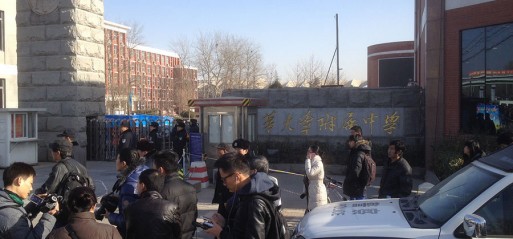
China: Beijing scaffold collapse kills 10, injures 4


Ten people were killed and four were injured following a scaffold collapse in a Beijing school on Monday morning, local sources said.

The accident happened at around 8:30 a.m. at a construction site of Tsinghua High School. The injured were all rushed to the nearby hospital.

Witnesses saw dozens of ambulances and fire engines at the site. Rescue work is under way.

29 December 2014

http://news.xinhuanet.com/english/china/2014-12/29/c_133884910.htm

continue reading

Italy ferry: Death toll rises to seven as evacuation ends


The death toll following a fire on the Norman Atlantic ferry off Corfu has risen to seven, with the evacuation of all those on board now complete.

One man was killed when trying to escape the ship, and a further six bodies have since been found.

More than 400 people have been rescued, in a long and complex operation amid gale-force winds and thick smoke.

The captain of the ferry was the last to be rescued, more than 36 hours after sending out a distress signal.

It is unclear what caused the fire to break out on Sunday on the car deck of the ferry, which was carrying 478 people from the Greek city of Patras to Ancona in Italy.

Italian prosecutors announced on Monday that they had opened a criminal investigation into the fire and would look into whether negligence had played a role.

A 62-year-old Greek man was the first of the fatalities to be recovered. He and his wife, who was injured, had fallen into the water as they tried to reach a lifeboat.

Teodora Douli, 56, told Ansa news agency that her husband may have hit his head as he fell. "I tried to save him but I couldn't," she said.

Greek Coast Guard spokesman Nikos Lagadianos said six more bodies were found on Monday.

Helicopters crews fitted with night vision equipment had worked through the night to rescue passengers despite difficult conditions.

Italian Air Force helicopter pilot, Maj Antonio Laneve told Italian state TV that "acrid smoke" had filled his helicopter cabin, making the rescue even more challenging.

People were taken off the ship individually by helicopter, an Italian navy spokesperson said.

Most of the rescued passengers were transferred to nearby ships, although some were taken directly to hospital.

Three children and a pregnant woman were among those being treated in hospital for hypothermia, according to the Associated Press news agency.

Passengers described panicking as the heat on the ferry rose, then freezing as they stood on decks awaiting rescue.

The wife of one of the cooks told journalists she had had a call from her husband saying: "I cannot breathe, we are all going to burn like rats - God save us."

Another passenger told Greek TV station Mega: "We are outside, we are very cold, the ship is full of smoke, the boat is still burning, the floors are boiling, underneath the cabins it must be burning since 5 o'clock, the boats that came (to rescue us) are gone, and we are here. They cannot take us."

Coast Guard Adm Giovanni Pettorino said that a member of the Italian military had been injured during the rescue.

Most of those on board were Greek. Mr Lagadianos told AP that 234 passengers and 34 crew members were from the country.

Others came from Italy, Turkey, Albania, Germany and several other countries. Four British nationals have been rescued from the stricken ferry, according to the UK Foreign Office.

The chief executive of the Visentini group that owns the vessel, Carlo Visentini, said the ferry had passed a recent technical inspection despite a "slight malfunction" in one of the fire doors, Italy's Ansa news agency reports.

"The tests confirmed that the boat was in full working order," he said, adding that the fire door had been repaired "to the satisfaction of the inspectors".

Ferries are an important mode of transport between Greece's hundreds of islands as well as neighbouring countries.

Monday 29 December 2014

http://www.bbc.co.uk/news/world-europe-30624086

continue reading

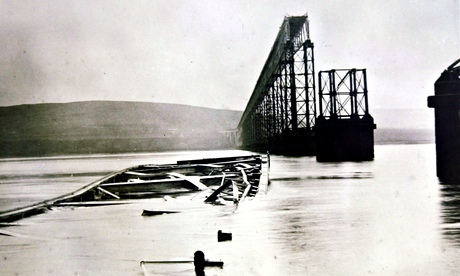
The Tay Bridge rail disaster, 135 years on


It was, said the Glasgow Herald on a Monday morning exactly 135 years ago, a catastrophe of the most appalling description.

The night before - Sunday, December 28, 1879 - the central span of the Tay Bridge, at that time the longest bridge in the world, had collapsed during a violent gale estimated at Beaufort force 10/11.

A northbound ferry train from Burntisland had the misfortune to be on the bridge when the collapse happened. The six-carriage train plunged 130ft into the freezing waters of the Tay killing 75 people.

The wind was blowing hard that night, bringing down chimney pots and roof slates. The iron girders of the Tay Bridge, opened in June 1878, should have been strong enough to withstand any winds. But a half-mile span of the bridge collapsed just as a train was crossing.

A court of inquiry ruled that the collapse was due to an “insufficiency of the cross bracing and its fastenings” to withstand the gale.

However, the inquiry did not hear the testimony of one witness, engineer WB Thomson, who reported seeing “two luminous columns of mist or spray”, perhaps 100 metres tall, travelling across the river. The spray from one column struck a nearby house with hissing sound, leaving the windows caked with salt. A second witness, William Robertson, also described the columns.

Researchers at tornado research organisation Torro believe these columns were waterspouts – tornadoes over water made visible by the water droplets they carry. They believe the impact of one or more tornadoes brought down the bridge after it had been weakened by the wind.

After the disaster rules were introduced requiring new bridges to be built stronger. As McGonagall observed: “For the stronger we our houses do build / The less chance we have of being killed.”

Monday 29 December 2014

http://www.theguardian.com/news/2014/dec/22/weatherwatch-tragedy-new-twist

continue reading

Indonesia set to resume search for missing AirAsia plane, relatives wait


Indonesia was set to resume at first light the search for an AirAsia plane carrying 162 people from the Indonesian city of Surabaya to Singapore, which went missing on Sunday just after the pilot requested a change in course to avoid bad weather.

Singapore said it had sent two naval vessels to help the Indonesian military look for the Airbus A320-200 operated by Indonesia AirAsia, adding a C-130 air force plane took part in the search on Sunday.

Malaysia would send three naval vessels and a C-130 to assist, Singapore's Channel News Asia television reported. Australia, the United States, Britain, South Korea and India also offered help ranging from planes and navy ships to experts and investigators.

"We are deeply shocked and saddened by this incident," said Indonesia AirAsia Chief Executive Sunu Widyatmoko. "We are cooperating with the relevant authorities to the fullest extent to determine the cause of this incident."

The carrier is 49 percent owned by Malaysia-based budget carrier Air Asia. The AirAsia group, including affiliates in Thailand, the Philippines and India, has not suffered a crash since its Malaysian budget operations began in 2002.

Onboard Flight QZ8501 were 155 Indonesians, three South Koreans, one person each from Singapore, Malaysia and Britain, while the co-pilot was French.

The plane was about halfway between Surabaya and Singapore when it lost contact with air traffic control at 6:17 a.m. on Sunday (2317 GMT Saturday), Indonesian officials said.

It issued no distress call, officials added.

There was bad weather over nearby Belitung island at the time and the aircraft had been flying at 32,000 feet before asking to fly at 38,000 feet to avoid clouds, said Joko Muryo Atmodjo, air transportation director at Indonesia's transport ministry.

The pilot "was requesting deviation due to en-route weather before communication with the aircraft was lost", the airline added.

The Indonesian pilot was experienced and the plane last underwent maintenance in mid-November, the airline said. The aircraft had accumulated about 23,000 flight hours in some 13,600 flights, according to Airbus.

Malaysia AirAsia chief Tony Fernandes flew to Surabaya and, along with Indonesian officials, updated distraught relatives of passengers at a makeshift crisis centre at the airport in Indonesia's second-largest city.

"This is my worst nightmare," Fernandes said on Twitter. "But there's no stopping", he said of the search.

AirAsia swapped the distinctive bright red of its logo for grey on social media accounts and the company website as it faced its biggest ever challenge.

The incident caps a disastrous year for Malaysia-affiliated airlines. Malaysian Airlines Flight MH370 went missing on March 8 on a trip from Kuala Lumpur to Beijing with 239 passengers and crew on board and has not been found.

On July 17, the same airline's Flight MH17 was shot down over Ukraine, killing all 298 people on board.

PRAYING FOR PASSENGERS

Indonesian President Joko Widodo urged his people to pray for the safety of the passengers and crew. During his Sunday address at St. Peter's Square in the Vatican, Pope Francis said those on board were in his prayers.

Louise Sidharta was at Singapore's Changi Airport waiting for her fiancée to return from a family holiday.

"It was supposed to be their last vacation before we got married," she said.

A man named Purnomo told TVOne in Surabaya of his lucky escape. "I should have been on the flight ... but this morning I had an emergency. I had my passport in hand."

Like all affiliates of AirAsia, Indonesia AirAsia operates Airbus jets, of which it has 30 of the A320 model.

AirAsia has ordered several hundred jets from the European planemaker, making it one of its most important customers. The missing plane has been in service for just over six years, according to airfleets.net.

Indonesian officials from the civil aviation authority and transport safety committee, which are responsible for crash investigations, arrived in Surabaya on Sunday. A transport ministry official said Indonesia would handle the probe.

"The aircraft was registered in Indonesia and it looks to be missing over Indonesian territory, so we will lead the investigation," said the official, who asked not to be named as he was not authorised to speak to the media.

"We have the expertise to do this."

Monday 29 December 2014

http://uk.reuters.com/article/2014/12/28/uk-indonesia-airplane-idUKKBN0K601G20141228

continue reading

Saturday, 27 December 2014

Gaul tragedy: Relative 'will not rest' until UK sends DNA team to Russia


Relatives of the Gaul trawler victims are still trying to persuade the Government to send a team to Russia to check the DNA of human remains.

The Foreign Office has so far ruled out sending experts to Russia to verify test results, which it is claimed show that human remains found there in 2012 do not belong to Gaul crew members.

Humberside Police contacted families in October to tell them they are no longer sending anyone to Russia to study the remains.

The force wanted to send three officers to assess the remains of up to ten bodies.

Mystery surrounds the tragedy, which saw all 36 crew members perish when the Hull trawler sank off the Norwegian coast on February 8, 1974.

Sandra Spink, who now lives in Scotland, lost her father John Chisholm aboard the Gaul.

She has written to the Foreign Office urging them to send over a team but has had no response.

She said: "People keep saying there is no reason to go over and test the DNA because the remains are not from the Gaul crew. But we want a team to go over to confirm this is definitely the case.

"We don't trust what the Russians tell us and we have the best DNA testing techniques here."

Mrs Spink is disappointed she has had no response from the Government.

She said: "I wrote to the Foreign Office on behalf of all the families two months ago but I haven't heard a thing.

"I am not going to rest until someone from the UK tests these remains.

"Sheaths belonging to British fishermen were found near the bodies yet they claim the remains are not British.

"When we were told of these remains they really raised our hopes. The families just need closure. Confirming the DNA results one way or another will help a little.

"But I'm not sure we will get the answers I want in my lifetime."

The remains were initially found on the Rybachy peninsula in the Murmansk region of Russia in the mid-1970s, by people living nearby.

The bodies reportedly washed ashore in 1974 or 1975, and were then buried by locals under rocks.

They were rediscovered in 2012 by a researcher who was aware of the sinking of the Gaul.

Humberside Police contacted relatives of Gaul trawlermen last year to make them aware of the discovery.

Steve Holmes, whose 17-year- old uncle Karl Straker was the youngest crew member lost on the Gaul, also contacted the Foreign Office.

He said: "We are very frustrated by the lack of answers but we are getting used to it.

"I can't believe it was over a year ago that we were told about these remains.

"I sent an email to the Foreign Office but I've had nothing back.

"My worry is that my nanna will pass away before she ever finds anything out.

"I think we will have another year of no answers. I don't hold any hope of anything breaking."

A spokesman for the Foreign and Commonwealth Office said: "The Russian authorities have led on the investigation into the disappearance of the Gaul.

"They have kept Humberside Police and the Foreign and Commonwealth Office updated and as a fellow member of Interpol, we have no reason to doubt the veracity of the Russian response.

"Any follow-up visit would need to be agreed between the relevant investigative authorities."

Saturday 27 December 2014

http://www.hulldailymail.co.uk/Gaul-tragedy-Relative-rest-UK-sends-DNA-team/story-25769725-detail/story.html

continue reading

Survivors, dead from sunken ship arrive in Busan


The bodies of those who died after a Korean fishing trawler sank earlier this month in the Bering Sea arrived in Busan on Friday, nearly a month after the accident.

The 1,753-ton Oryong 501 capsized on Dec. 1 in the freezing waters off the eastern coast of Russia due to bad weather, killing 27 crew members and leaving 26 others missing.

Only seven men were rescued. Six survivors, three Indonesians and three Filipinos, were also aboard the 5,000-ton Russian vessel that transported the dead, which arrived at Gamcheon Harbor in Busan. The 21 bodies onboard were confirmed to be the remains of 14 Indonesians and five Filipino crew members. The other two have not yet been identified.

The surviving men will receive health checkups at a nearby hospital and be treated until they are deemed fully recovered. They are also scheduled to be questioned over the accident so that authorities can gain a better understanding of the cause of the accident and the events leading up to it.

The Oryong 501 was carrying 60 crew members when it sank: 11 Koreans, 35 Indonesians, 13 Filipinos and one Russian inspector, according to Korea’s Ministry of Foreign Affairs.

Among the 11 Korean crew, six have been confirmed dead, including the Korean captain of the ship, and five remain missing. The bodies are scheduled to be returned to Korea once search vessels withdraw on Dec. 31.

According to the Korean government, poor weather and water conditions have hampered further searches.

When the Russian ship came into sight on Friday, 10 Korean family members who lost their loved ones or have not yet found them burst into tears.

“He is still in the freezing water! What should I do?” one of them cried out.

Korean Capt. Kim Kye-hwan, 46, was among the casualties on Dec. 1. In a radio transmission, Kim told Lee Yang-woo, another Sajo Industries captain and a close friend: “I am staying with the boat till the very end.”

The boat sank less than an hour later, at 5:15 p.m. local time.

Ten officials from the Embassy of the Republic of Indonesia and the Embassy of the Republic of the Philippines in Seoul were present at Gamcheon Harbor to express their condolences and urged the Korean government’s cooperation and support in managing the accident.

The Oryong 501 was built 36 years ago and operated by Sajo Industries, a Korean fishing company.

Saturday 27 December 2014

http://koreajoongangdaily.joins.com/news/article/article.aspx?aid=2998958&cloc=joongangdaily%7Chome%7Cnewslist1

continue reading

Friday, 26 December 2014

Candles, prayers and tears as Asia mourns tsunami dead 10 years on


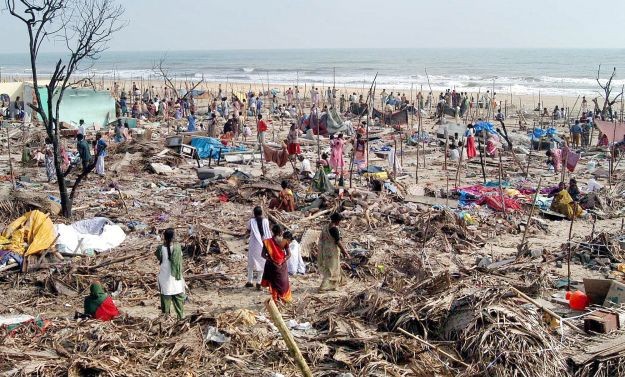
Tearful mourners lit candles on Friday to remember the 220,000 people who died a decade ago when tsunami waves devastated coastal areas along the Indian Ocean, in one of the worst natural disasters in human history.

On December 26, 2004 a 9.3-magnitude earthquake off Indonesia's western tip generated a series of massive waves that pummelled the coastline of 14 countries as far apart as Indonesia, Thailand, Sri Lanka and Somalia.

Among the victims were thousands of foreign tourists enjoying Christmas on the region's sun-kissed beaches, carrying the tragedy of an unprecedented natural disaster into homes around the globe.

In southern Thailand, where half of the 5,400 dead were holidaymakers, people recounted stories of horror and miraculous survival as the churning waters, laden with the debris of eviscerated bungalows, cars and boats, swept in without warning, obliterating resorts and villages.

A minute's silence in the resort of Khao Lak, much of which was washed away by the towering waves, was broken by a lone trumpeter, as mourners each lit a single white candle, some sobbing as they illuminated the darkness.

Hundreds of people also lit candles on Patong beach on Phuket island after observing a minute's silence. Afterwards, many placed the candles into a sand sculpture created by students as part of the memorial service.

Among the international commemorations, in Sweden, which lost 543 citizens, the royal family and relatives of the victims attended a memorial service in Uppsala Cathedral.

"Sweden is still traumatised," said Prime Minister Stefan Lofven, who paid tribute to all who died, saying their "lives were extinguished but the memory of their love shines in the night"

There was no warning of the impending tsunami, giving little time for evacuation, despite the hours-long gaps between the waves striking different continents.

In 2011 a pan-ocean tsunami warning system was established, made up of a network of sea gauges, buoys and seismic monitors, while individual countries have invested heavily in disaster preparedness.

But experts have cautioned against "disaster amnesia" creeping into communities vulnerable to natural disasters.

The scale of the devastation in 2004 saw nations initially struggle to mobilise a relief effort, leaving bloated bodies to pile up under the tropical sun or in makeshift morgues.

The world poured money and expertise into the relief and reconstruction, with more than $13.5 billion collected in the months after the disaster.

Almost $7 billion in aid went into rebuilding more than 140,000 houses across Indonesia's Aceh province, where most of the nation's 170,000 victims were claimed.

In the main city, Banda Aceh, several thousand mourners gathered in a park for the nation's official remembrance.

It was near the epicentre of the undersea quake and bore the brunt of waves towering up to 35-metres (115 feet) high.

"Thousands of corpses were sprawled in this field," Indonesian Vice President Jusuf Kalla told the crowd, many among them weeping.

"There were feelings of confusion, shock, sorrow, fear and suffering. We prayed.

"And then we rose and received help in an extraordinary way," he said, hailing the outpouring of aid from local and foreign donors.

The disaster also ended a decades-long separatist conflict in Aceh, with a peace deal between rebels and Jakarta struck less than a year later.

Mosques held prayers across the province, while people visited mass graves -- the resting place of many of Indonesia's tsunami dead.

But a Red Cross display of hundreds of salvaged ID documents and bank cards served as a grim reminder that many victims simply vanished.

In Sri Lanka, where 31,000 people perished, survivors and relatives gathered to remember around 1,000 victims who died when waves derailed a passenger train.

The mourners boarded the restored Ocean Queen Express and headed to Peraliya -- the exact spot where it was ripped from the tracks, around 90 kilometres (56 miles) south of Colombo.

"We had about 15 minutes to move the passengers to safety. I could have done it. We had the time, but not the knowledge," the train's head guard Wanigaratne Karunatilleke, 58, told AFP.

Friday 26 December 2014

http://news.yahoo.com/world-honours-dead-indonesia-begins-tsunami-memorials-192203281.html

continue reading

9 killed, 10 missing in Sri Lanka mudslides


At least nine people were killed and 10 others were missing in mudslides triggered by heavy rains Friday in the central hills of Sri Lanka, officials said.

More than 60,000 people have been evacuated and 3,000 homes destroyed as floods and mudslides have covered many parts of the Indian Ocean island in the last four days, disaster officials said.

Nine people were killed and two injured in mudslides Friday in the tea-growing Badulla district when their houses were buried in landslides, said Udaya Kumara, an official at the state disaster management center. Ten others were missing and rescue operations were temporarily halted due to risk of further landslides, he said.

The inclement weather has so far affected more than 500,000 people across the country.

The meteorology department has warned that thundershowers and heavy rains will occur in many parts of the island nation and asked people in coastal areas to be vigilant.

It is monsoon season in some parts of Sri Lanka, but many other areas not normally affected are also experiencing nonseasonal rains.

Dozens of people were killed in October when mudslides buried homes of tea plantation workers in the country's central hills.

Friday 26 December 2014

http://www.thestate.com/2014/12/26/3894017_sri-lanka-mudslides-kill-9.html

continue reading

At least 30 dead in DRCongo river-boat accident


At least 30 people died when an overcrowded boat hit a rock and sank on the Congo river, sparking riots in which angry youths on the rampage set fire to public buildings, officials said Friday.

"There are 105 survivors and we have pulled up 30 bodies. The search is continuing," provincial government spokesman Monulphe Bosso told AFP.

The accident occurred when an overcrowded boat hit a rock and sank Monday near the village of Yakusu II some 35 kilometres (20 miles) north of the eastern provincial capital of Kisangani.

"At its departure, in Kisangani, the boat embarked 39 people according to the register handed over to the authorities. Perhaps they were trying to cheat river surveillance services... as they took more passengers on board along the way," Bosso said.

"They embarked many more people... the boat was carrying a lot of goods and was also crowded with people. They hit a rock" and it sank, he added.

A government delegation was heading Friday for the town of Isangi, the vessel's scheduled destination, where rioting youngsters on Thursday went on the rampage.

"They set fire to the offices of the river police and the naval force. They're youngsters angered by the loss of their relatives, they say people (the authorities) are not rigorous enough" about making sure safety conditions are complied with, Bosso added.

Shipping disasters occur frequently, leaving many dead on the lakes and rivers of the Democratic Republic of Congo due to overcrowding on old and poorly maintained vessels, a lack of life-jackets and the fact that many people do not know how to swim.

At least 129 people died in December when an overcrowded boat went down on Lake Tanganyika, and in March a shipwreck on Lake Albert left 210 dead and missing.

Friday 26 December 2014

http://news.yahoo.com/least-30-dead-drcongo-river-boat-wreck-sparking-094908178.html

continue reading

Thursday, 25 December 2014

Refugees drown in attempted Sudanese smuggling


At least eight asylum-seekers have drowned trying to cross a river in Sudan during an attempt to smuggle them out of a refugee camp, the UN refugee agency said Thursday.

The accident happened as a group of from the Shegarab-1 camp in the eastern state of Kassala tried to cross the Atbara river on Wednesday evening.

"There was an attempt to smuggle some of these asylum-seekers out of the camp and they were being transported on four rickety, small fishing boats," said Mohammed Adar, the UNHCR representative in Sudan.

One of the boats sank and "eight bodies have been found and two are still missing," he said, adding that another 10 people swam to safety and returned to the camp.

The other boats crossed successfully, Adar said, without saying how many people had managed to leave the camp.

Adar said the United Nations had not verified the nationality of the dead but said the government had sent a team to investigate.

Their intended destination was unknown, but eastern Sudan has a significant refugee population, the majority Eritreans fleeing a military regime at home.

Nearly 110,000 Eritreans currently live throughout Sudan.

The Shegarab-1 camp is jointly run by the Sudanese government and the UN and houses 15,000 people, mostly asylum-seekers.

Thursday 25 December 2014

http://www.dailymail.co.uk/wires/afp/article-2887005/Refugees-drown-attempted-Sudanese-smuggling.html

continue reading

Hundreds of victims of the 2004 Indian Ocean Tsunami have still not been identified


With the bodies of almost 400 victims of the Indian Ocean tsunami still unidentified a decade on, Thai police were holding out little hope of gleaning any new information from opening a cargo container packed with unclaimed personal items.

Watches, chunky gold necklaces with Buddhist amulets, an Egyptian souvenir coin purse, and a wad of $1,800 in cash were pulled from tattered cardboard boxes and police evidence bags stashed in the container that has not been opened since 2011.

The three meter by 12 meter container was passed to various Thai police agencies after the 2004 Boxing Day disaster that killed at least 226,000 people in 14 countries. It was handed over to Takua Pa district police in southern Thailand in 2011.

But the Takua Pa police never looked inside until recently when, after requests from Reuters, they opened the container ahead of the 10-year anniversary of the Dec. 26 tsunami when the items can, by official regulation, be put up for auction.

They initially believed the container held the belongings of unidentified victims, but found some items were identification cards and credit cards and could be claimed by relatives.

"I’m a bit surprised by the large number of valuables," Lieutenant Colonel Voravit Yamaree from Takua Pa district said as his team surveyed the items on a long, white table.

"I think back then everyone was so busy focusing on identifying the corpses they may have forgotten about this."

The tsunami left 5,395 dead and 2,932 missing in Thailand, including about 2,000 foreign tourists, when a wall of water several meters high ripped through resorts and fishing villages on the Andaman Sea coast in southern Thailand.

In the aftermath of the tsunami, forensics experts from 39 countries convened in Phang Nga, where about 80 percent of the victims in Thailand perished, to identify the bodies.

The Thai Tsunami Victim Identification unit was considered one of the largest and most successful projects of its kind, putting names and faces to the thousands of tourists, Thais and migrant workers killed in the Boxing Day disaster.


NUMBERS, NOT NAMES

However, 10 years after the one of the most devastating humanitarian disasters in recorded history, about 400 unclaimed bodies – 369 of them still unidentified – rest in metal coffins, marked with coded numbers.

In the past four years, just 24 bodies have been claimed, all but one Thai nationals, according to various reports.

In Ban Nam Khem, a sleepy fishing village on the north end of Phang Nga, the tsunami left 661 dead and 765 missing.

Ban Nam Khem resident Hin Chan-ngern lost five family members in the tsunami - his wife, brother and three daughters. In the three years after the disaster, four of their bodies were found, but his eldest daughter remains among the missing.

"We provided all of the information – dental records, tissue and DNA samples ... but they still can't find her. I don't know what more I can do," said Hin, sitting amid photos of his loved ones killed in the tsunami.

The unidentified and unclaimed bodies are all in a cemetery in Bang Maruan village, just south of Takua Pa.


The graveyard, with a metal plaque at the gate listing the nations involved in the project, is often overgrown with weeds.

Of the bodies there, authorities have identified 26 Thais and 26 Burmese, but their families have not come to claim their bodies, according to Colonel Yuthaphong Intaraphone, the police superintendent overseeing the Police Forensic Science Office.

"It would cost them (the relatives of Burmese migrant workers) a decade of life savings to come to Thailand and reclaim the bodies," Yutaphong said in an interview at the Disaster Victim Identification Centre in Bangkok.

What happens now to the personal possessions that have been stashed in the container for years remains unknown with the police headquarters in Bangkok to make that call.

Even if the items in the container do not go up for auction, the chances of victims' families claiming the possessions of their loved ones are narrowing as the boxes holding the contents deteriorate, said Voravit.

"We have records with code numbers listed on each box, but it is rather difficult to check as the numbers are fading," he said.

Thursday 25 December 2014

http://uk.businessinsider.com/r-exclusive-thai-police-see-little-hope-of-putting-names-to-about-370-tsunami-victims-2014-12?r=US http://uk.reuters.com/article/2014/12/23/uk-tsunami-anniversary-unclaimed-idUKKBN0K10H820141223

continue reading

10 killed in Jhalakati bus plunge


At least ten people have been killed and 25 injured as a passenger bus plunged into a roadside ditch in Rajapur upazila of Jhalakati on Tuesday afternoon.

The identities of the deceased could not be known immediately. The injured were rushed to Rajapur Health Complex. Of them, nine were shifted to Barisal Medical College Hospital as their condition deteriorated.

Quoting Jhalakati ASP AFM Anwar Hossain, our Barisal Correspondent said: “Eight people were killed and 25 others injured in the accident.”

Rajapur police station Officer-in-Charge told the Dhaka Tribune: “A passenger bus plunged into a roadside ditch after the driver of the bus lost his control over the steering near the under construction Rajapur-Biswasbari Bridge around 3:45pm, leaving seven people dead on the spot.”

“Later, one person died at the upazila health complex. The death toll may climb further as some 20 to 25 people received serious injuries.”

Mohammad Abdul Aziz Bepari, deputy assistant director of Jhalakati Fire Service and Civil Defence, said: “We have recovered seven bodies from inside the bus so far. Some passengers are still trapped inside it and the fire fighters are trying to rescue them.”

“We are facing obstacles while conducting the rescue operation as the Barisal-bound bus from Satkhira fell in a way that it cannot be lifted from the ditch easily.”

He also suspected that the death would rise further.

Thursday 25 December 2014

http://www.dhakatribune.com/bangladesh/2014/dec/23/7-killed-jhalakathi-bus-plunge

continue reading

Ten years of tsunami: Disaster management still a pipe dream?


C. G. Kanagasundaram of Kameswaram, 11 km away from Nagapattinam, was the only person to run eastwards on December 26, 2004, when residents from coastal villages were on an exodus in the opposite direction.

Even before reaching the coast, he used a public telephone on the way to inform the police and Village Administrative Officer of a ‘disaster’ at sea. On looking at bodies scattered on the shore, he used his mobile phone to call drivers of autorickshaws known to him to shift the injured to hospital and the electricity staff to cut off power.

“At that time, I had a fair knowledge of disasters, except earthquake. But tsunami was unknown. Still, my swift reaction helped in saving some lives,” recalls Mr. Kanagasundaram, president of Tirupoondi East panchayat.

It was a similar case with Samiyarpatti panchayat in Cuddalore district, where the loss to life and property was reduced due to the ability of the local body leader to manage disasters.

These two were among the 16 heads of panchayat to be trained in disaster preparedness and management by the Department of Political Science and Development Administration of Gandhigram Rural Institute in Dindigul district in early 2004 under a UNDPA programme. After a decade, not all panchayat heads, especially those in coast and hills, are empowered to encounter disaster. Section 41 of the Disaster Management Act 2005 says that “local authority shall ensure that its officers and employees are trained for disaster management; ensure that resources relating to disaster management are so maintained as to be readily available for use....”

The situation now is the same as it was 10 years ago, says G. Palanithurai, professor of the department. There is a State plan and a district plan to confront any disaster but there is no such plan at the village-level. “The panchayat president has to get permission from revenue officials even to use the cyclone shelters in the village,” says Dr. Palanithurai. Such a plan is essential not only to manage disaster but also to undertake follow-up rehabilitation. Post-tsunami, a “people’s plan” was got ready for 17 panchayats by GRI in association with The Hunger Project. It was also approved by the then Collector, J. Radhakrishnan.

“Grass-root empowerment is essential in disaster management. Heads of local bodies should be trained in disaster preparedness and provided with a tool kit. The panchayat president is empowered to convene special gram sabhas to plan management or relief operations. The empowerment exercise should include constitutional and community panchayats,” says Dr. Palanithurai. “The State requires a comprehensive training policy for leaders of local bodies,” he adds.

Mr. Kanagasundaram, along with two other panchayat heads, attended a disaster management training programme in Chennai in the last week of November, about 10 years after tsunami hit the coastal districts.

Thursday 25 December 2014

http://www.thehindu.com/news/national/tamil-nadu/ten-years-of-tsunami-disaster-management-still-a-pipe-dream/article6720610.ece

continue reading

Aichi doctors to form disaster teams to examine corpses


An association of doctors in Aichi Prefecture, plans to create teams next spring that specialize in examining the bodies of victims in major natural disasters and accidents, according to people familiar with the plan.

The Aichi Prefectural Government estimates that up to 29,000 people could die in the prefecture if a major earthquake strikes in the Nankai Trough off the Pacific coast and generates a huge tsunami.

The Aichi Medical Association will be the first such entity in the country to form a team dedicated to examining corpses following major disasters and accidents, the sources said.

In its discussions to set up the teams, the Aichi group included aircraft accidents. The prefecture is home to Central Japan International Airport, or Centrair, and Nagoya Airfield, also known as Komaki Airport.

The eruption earlier this year at Mount Ontake, on the border between nearby Gifu and Nagano prefectures, prompted the group to accelerate the talks. The natural disaster left 57 people dead and six missing.

The teams will act at the request of police to examine bodies at the scene, mainly to identify cause of death. Each team will have three or four doctors.

Thursday 25 December 2014

http://www.japantimes.co.jp/news/2014/12/24/national/aichi-doctors-to-form-disaster-teams-to-examine-corpses/

continue reading

Tuesday, 23 December 2014

One more body recovered from village Saddal in Udhampur


The rescue teams today recovered one more body of a woman, among 40 persons who got buried in landslide hit village Saddal in Udhampur district during flash floods on September 7.

"One more corpse was recovered today in the rescue operation launched by the Udhampur district administration to retrieve dead bodies of the missing persons in landslide hit Saddal village of Pancheri block," police sources here said.

They identified the recovered body as Lila Devi (40) wife of Girdhari Lal.

"With the recovery of this body, so far 30 dead bodies have been recovered from the Saddal hamlet while 10 persons are still missing under the debris of massive landslide, which hit the village on September 7," they added.

Tuesday 23 December 2014

http://news.webindia123.com/news/Articles/India/20141222/2516156.html

continue reading

Another family joins lawsuit against JPAC for recovery of remains from WWII


Another family has filed suit against the Defense Department POW/MIA accounting agencies seeking the identification and return of remains.

Sally Hill Jones — niece and next of kin of a missing World War II Army Air Forces B-24 gunner — filed suit without the assistance of an attorney on Dec. 4 in a Texas district court, according to documents. Jones seeks to join John Eakin in suing the government over remains she believes could belong to her uncle, Staff Sgt. Carl Holley.br>
Holley was one of 10 reportedly killed on April 18, 1944, when the B-24 bomber “Sweepy-Time” Gal was shot down by Japanese Zeroes off the coast of Hong Kong. Four bodies were recovered after the crash, and three allegedly have been identified, according to Jones, former Joint POW/MIA Accounting Command investigators and accounting documents. br>
The unidentified remains were buried at Hawaii’s National Memorial Cemetery of the Pacific, called the Punchbowl, until 2005, when they were exhumed by JPAC.br>
The Armed Forces DNA Identification Laboratory and JPAC’s Central Identification Laboratory have tried to use DNA testing to identify the remains but have been unable to do so, according to internal emails and documents. br>
In 2012, after years of JPAC denials, Eakin sued for the remains of his cousin, Pvt. Arthur “Bud” Kelder, who, evidence suggested, was buried as an unknown in the Philippines. As a result, the Defense Department exhumed 10 sets of remains in August and is actively working to make identifications. br>
Jones said she had been pursuing the case since 2001, but couldn’t get answers until she filed her lawsuit. The accounting community finally responded to her, but she was not satisfied. br>
The government has until Jan. 16 to respond to her suit, according to U.S. Attorney’s Office spokesman Daryl Fields. br>
“I don’t have faith in JPAC to make the ID, given their track record,” Jones said. br>
She hoped that by suing, she could open the door for other families.br>
“I’d like to see an attorney take this on as a class action,” she said. “There are a lot of older folks whose siblings died in World War II, and they don’t know what happened to them. But they could know. It’s heartbreaking.”br>
Lt. Col. Melinda Morgan, of the Defense POW/Missing Personnel Office, declined to comment in an email to Stars and Stripes, citing the ongoing litigation.br>
However, Jones provided documents and emails to Stars and Stripes that show the JPAC-CIL and AFDIL are using an untested, next-generation mitochondrial DNA approach with the remains. They believe they have a result, but the procedure hasn’t been validated yet. br>
Jones has been told the validation and an identification could come early next year.br>
Mark Leney, JPAC’s former DNA manager, who is now at the University of Massachusetts Medical School, had undertaken the case before he left JPAC in 2006. He said the remains appeared to have been treated with a chemical — possibly formaldehyde — that made the identification difficult at the time. However, he believed that issue had been resolved in recent years by technological advancements.br>
“That was eight years ago,” he said. “It doesn’t seem like they’ve gone very far.”br>
Leney said mitochondrial DNA testing is “not a very strong method” in making identifications and works best in exclusions. br>
Jones started her quest for an ID more than a decade ago. Her mother has since died.br>
Louis Mroz, younger brother of 2nd Lt. John Mroz, who also died in the plane crash and is one of the seven missing, had been leading efforts to compel the government to make an identification but is now 86 and in poor health. He said he has been turned away by JPAC several times when seeking answers. br>
“I’d like to see some new sources of information,” he said. br>
Jones hopes her suit can spur identifications before the memories fade — like Mroz’s recollection of his brother building him a P-40 Warhawk model airplane just before he shipped out.br>
“He was quite a guy,” Mroz said of his brother. “He always had time to help me. … I’m 86 years old, but the memories are still fresh in my mind.” br>
Tuesday 23 December 2014 br>
http://www.stripes.com/news/another-family-joins-lawsuit-against-jpac-for-recovery-of-remains-from-wwii-1.320590

continue reading

10 years after tsunami, victim's mom learns body wasn't lost


Of all the moments to chase a dream, May Aye Nwe chose the morning of Dec. 26, 2004.

A child of rural Myanmar, she boarded a small boat seeking a better life in Thailand, just as the Indian Ocean tsunami raced in.

Ten days later, her mother got a phone call that her 20-year-old daughter had died, and apparently vanished at sea in one of modern history's worst natural disasters.

It took her nearly 10 years to learn the truth. Her daughter's body had in fact been recovered after the tsunami and was buried in an anonymous grave. It lies today beside more than 400 unclaimed bodies at the Tsunami Victims' Cemetery in southern Thailand, a memorial to the disaster's forgotten victims. The tombstones are marked with numbers, not names.

An Associated Press investigation helped track down two families with loved ones at the cemetery, including May Aye Nwe's mother. As the 10th anniversary of the disaster approaches, Aye Pu, now a 55-year-old widow, says her healing process can finally begin.

"For so long, I believed my child was lost," said Aye Pu, her eyes filled with tears, during an interview at her remote village in Myanmar's southern Karen state, where she taps rubber trees for a living. "It's impossible to put into words how very sad - and very happy - I now feel."

The discovery has rekindled emotion and memories of her daughter, a bright star in a family of farmers who was on the cusp of a new life.

May Aye Nwe dreamed of becoming a nurse and set off for Thailand to earn money, as do so many of Myanmar's poor. She and a childhood friend, Khin Htway Yee, traveled 1,000 kilometers (600 miles) from their village to the country's southern tip. At about 10 a.m. on Dec. 26, 2004, they boarded a boat to cross a tiny patch of the Andaman Sea to Thailand, a trip that takes about 15 minutes.

Earlier that morning, a magnitude-9.1 earthquake tore open a vast stretch of sea bed off Indonesia's Sumatra coast. It displaced billions of tons of water, sending waves roaring across the Indian Ocean, in some places at jetliner speeds. It killed about 230,000 people in 14 countries. More than 5,000 died on Thailand's Andaman Sea coast, where the waves swallowed resort beaches and flattened fishing villages.

Khin Htway Yee, who survived, said the calm sea turned violent a few minutes into the boat ride. She and May had never seen the ocean before, and didn't realize the waves were unusual.

The boat flipped and there was panic, screaming, struggling. Khin Htway Yee, now 31, remains haunted by her friend's desperate last moments.

"We were grabbing at one another," she said, speaking in the shade of her friend's family home. "She tried to pull me, but finally I had to push her away.

"There was nothing I could do. I was struggling for my life, and I couldn't save her," Khin Htway Yee said. She said she survived by holding onto a plastic container bobbing in the water.

After an hour at sea, she struggled ashore with one goal: To evade arrest. She had entered Thailand illegally and was too afraid to report what had happened to authorities. She disappeared into the illegal workforce and stayed two years in Thailand before returning home and starting a family.

May Aye Nwe's story helps explain why there are 418 unclaimed bodies at the Tsunami Victims' Cemetery, in the town of Ban Bangmuang. Experts believe most of those buried are migrant workers from Myanmar, also known as Burma, who came to do the jobs that Thais shun. Then, as now, many were working in the area illegally and had no documents. When they died, no one knew who they were, and those who did know were too scared to go to authorities.

"I believe that over 90 percent of these bodies are Burmese migrant workers," said Htoo Chit, a human rights advocate for Myanmar migrants, during an interview at the cemetery. "Many migrants who lost their loved ones, they were afraid of being arrested and deported. That's why there are so many bodies here."

The cemetery was created after a massive operation by international forensics experts to identify and repatriate victims was completed.

As part of the AP investigation, reporters sifted through more than 100 documents, finding mostly single names that led nowhere and non-working phone numbers. Some have DNA data but most have little beyond a reference number. Their gravestones are concrete blocks with metal plaques that bear a reference number.

May Aye Nwe's reference number was PM66-TA1415. It is unclear why she went unidentified because her body was found with her national identity card __ which AP used to find her village, and then her mother.

While most of the bodies in the cemetery will probably never be identified, one other family now has a degree of closure, after 10 years of waiting.

On a sunny morning last month, the body of Bhesraj Dhaurali, a tailor from Myanmar of Nepalese descent, was exhumed from the cemetery and cremated with Hindu rites, after the AP investigation traced police records to his family.

The ceremony was attended by his 19-year-old son and 20-year-old daughter. They were still in Myanmar when the tsunami killed both their parents, who had gone to Thailand to work. The son and daughter have followed in their footsteps, and now live in southern Thailand.

"If I could speak to my father today, I would ask him why he left us so early," said the daughter, Dipa Dhaurali. "It has been so many years. But after being able to see this with my own eyes, in a way it gives me some joy."

May's mother is too poor to travel to Thailand to retrieve her daughter's body, or to pay to have it brought home. She hopes the body can be cremated in line with Buddhist customs.

"I'm not angry. I don't blame anyone. I want to thank those who kept her body," Aye Pu said, sobbing. "This was my daughter's fate."

Monday 22 December 2014

http://www.aol.com/article/2014/12/22/10-years-after-tsunami-victims-mom-learns-body-wasnt-lost/21119699/

continue reading

Monday, 22 December 2014

services mark 104th anniversary of Pretoria Pit disaster


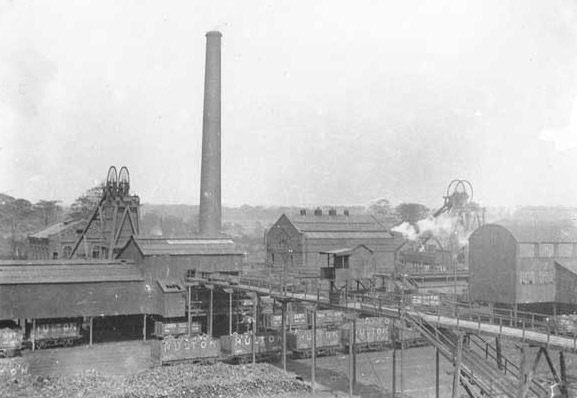
Three poignant memorial services were held for the 344 men and boys who were killed in Lancashire’s worst ever mining tragedy.

Young and old gathered at the Pretoria Pit disaster monument on the border of Over Hulton and Atherton on Saturday, the eve of the accident’s 104th anniversary.

The disaster, the third worst to have ever occurred in British history, happened at 7.50am on December 21, 1910, and decimated families throughout Westhoughton and Atherton.

The Pretoria Pit disaster occurred when there was an underground explosion at the Hulton Bank Colliery No. 3 Pit, known as the Pretoria Pit, in Over Hulton, Westhoughton, then in the historic county of Lancashire, in North West England. A total of 344 men lost their lives.

At 7:50am, there was an explosion in the Plodder Mine, which was thought to have been caused by an accumulation of gas from a roof collapse the previous day.

That day 349 workers descended the No 3 bank pit shaft to work in the Plodder, Yard and Three Quarters mines. Of those, only four survived to be brought to the surface. One died immediately and one the next day. The two survivors were Joseph Staveley and William Davenport. In addition one man died in the Arley Mine of No. 4 Pit, bringing the total to 344. There was a final fatality that day, William Turton, who died while fighting a fire in No. 3 pit. The men who were working the other mines in the pit worked from No.4 shaft were unharmed.

Bolton West MP Julie Hilling led the ceremony from the memorial at the bottom of Broadway, off Newbrook Road, which is 300 yards from the shaft from which survivors and bodies were raised.

“It is a fitting tribute to those who died, and to those who continue to commemorate those who lost their lives in the tragedy.”

Only three miners survived the devastating explosion, with one dying less than 24 hours after being rescued.

Two new memorials were engraved and placed in a small memorial garden with the original stone in 2012 after ex-miner Tony Hogan, whose great-grandfather was one of the victims of the disaster, spent two years campaigning and fundraising for a lasting tribute.

Mr Hogan said: “It is embedded in our history unfortunately, so it is important that each year people come together and remember the disaster and the people who died.

Cllr Kevan Jones, Mayor of Westhoughton, said: “It is so important people remember the tragedy and pay their respects because it is a part of our history.”

Monday 22 December 2014

http://www.theboltonnews.co.uk/news/11681215.Three_services_mark_104th_anniversary_of_Pretoria_Pit_disaster/

continue reading

Sunday, 21 December 2014

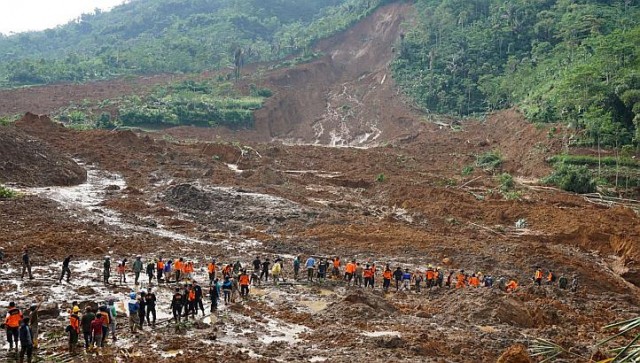
Banjarnegara ends search for landslide victims


The search for victims of the landslide in Banjarnegara regency, Central Java, was brought to an end on Sunday, with the official death toll standing at 95 with 13 people still listed as missing.

The search-and-rescue (SAR) joint team recovered the remains of the last two victims on Sunday; however, the bodies were too badly decomposed for the team to identify them.

Central Java Governor Ganjar Pranowo said bad weather was among the reasons that had led the provincial administration to call a halt to the search for victims of the landslide in Jemblung hamlet, Karangkobar district, Banjarnegara.

“The rain has been falling incessantly, causing many of the SAR team members to fear for their safety while carrying out their duties in the field. They are afraid that there will be more landslides. We have paid close attention to those concerns for the sake of their safety,” he told The Jakarta Post on Sunday.

Ganjar said most of bodies found during the search were badly decomposed as the disaster occurred around 10 days ago. Not only did this complicate the identification process, the decomposed bodies were hazardous to the health of SAR team members and volunteers.

“So, based on agreement with all parties, including Jemblung residents, we have officially stopped the search for victims today,” Ganjar said.

He said the administration would permit Jemblung residents who wished to continue the search to do so as long as it was conducted safely.

“The principle is, the safety of landslide survivors should be a higher priority,” he said.

Separately, search coordinator, Col. Edi Rohmatulloh, said the team had found the wrecks of several vehicles. “There are 14 motorcycles and 15 cars,” he said, adding that most of the vehicles belonged to Banjarnegara residents. A Suzuki APV car with a Bandung, West Java, registration was located at the incident site but its owner remained unknown.

During the massive landslide in Jemblung hamlet on Dec.12, over 100 people were buried when a hill collapsed. Many victims were found on a village road under around 100 meters of thick mud.

Landslides triggered by heavy rain and floods are common in tropical Indonesia during the rainy season.

The national disaster agency estimates around half the country's 250 million population lives in areas prone to landslides.

The vast Indonesian archipelago is one of the world's most disaster-prone nations. Apart from landslides, it is also frequently hit by earthquakes and volcanic eruptions.

Sunday 21 December 2014

http://www.thejakartapost.com/news/2014/12/21/banjarnegara-ends-search-landslide-victims.html

continue reading

Forensic experts to examine Makkah bones


Construction workers in the Grand Mosque found skeletal remains buried under the Ottoman hallway.

The workers were executing the third stage of the Holy Mosque expansion project when they found the bones. Photos of the discovery were shared on social media websites with users divided on whether the bones belonged to humans or animals.

The photos showed six security officers from the location digging a three-meter-deep hole to check the source of the bones and what else could be unearthed.

Archeologist Sameer Barqah said that one of the workers of the expansion project found the Ottoman hallway near the right corner of King Abdulaziz Gate. He informed a security officer who was passing by and that is where the bones were later discovered.

“They immediately secured the area and heads of the General Presidency for the Affairs of the Two Holy Mosques and Saudi Binladin Group attended to the scene. Forensics experts were involved and security officers were trying to control the situation. I sent the pictures to the Saudi Commission for Tourism and Antiquities (SCTA) to send a group of researchers to investigate the discovery,” said Barqah.

The bones were found on Mount Safa which stands at the eastern front of the mosque. According to Umm Al-Qura history professor, Fawzi Saati, this mountain is said to be the first mountain on Earth. At its bottom is a cave called Al-Kanz (“the treasure”).

According to Mohammad Bin Ahmad Al-Nahrawi’s book, there is where Adam, Eve and their son Seth were buried.

Forensic experts in Makkah will begin examination of the bones found at the Grand Mosque expansion project site to determine whether they are human or animal remains.

If they are found to be human, the matter will be forwarded to the General Court and a committee will be formed to study the issue.

After the report is filed, Grand Mufti Abdul Aziz Al-Asheikh will review the matter.

The Grand Mufti is the highest official of religious law in Saudi Arabia.

Abdul Salam bin Sulaiman Mashat, the holy city's undersecretary for services, said the municipality has not received any information about the discovery of a cemetery inside the Grand Mosque.

Such a rumour has been doing the rounds across social media sites for some time, he added.

Saleh bin Saad Al-Luhaidan, professor of criminal justice and member of the Union of Arab Historians, argued that the remains could be human bodies washed away by floods decades or centuries ago.

He dismissed the idea of organised clusters of graves in the area.

Sunday 21 December 2014

http://www.firstpost.com/fwire/forensic-experts-to-examine-makkah-bones-1942699.html

http://www.saudigazette.com.sa/index.cfm?method=home.regcon&contentid=20141217227781

continue reading

Myanmar migrants haunted by memory of tsunami missing in Thailand


A decade after towering waves wrenched her newborn baby from her arms, Mi Htay remains haunted by memories of the children she lost in the tsunami whose bodies, like hundreds of other Myanmar migrants in Thailand, were never identified.

No one knows exactly how many foreign labourers died when the tsunami cut into southern Thailand as most lacked official work permits and their relatives did not come forward in the days and weeks after the Dec 26, 2004, disaster fearing arrest or deportation.

An estimated 2,000 migrants from neighbouring Myanmar are thought to have perished, deaths that went almost unnoticed as the television cameras focused on foreign tourists and Thai victims.

Among them were Mi Htay's eight-day-old baby -- too young even to have been given a name -- two of her other children, both toddlers, as well as her mother and a nephew.

Despite the aching reminders of her loss, Mi Htay returned around a year later to the small coastal village of Ban Nam Khem, in Ta Kuapha distict in Thailand's worst-hit Phangnga province, in search of work in the area's fisheries.

"When I am working, I can forget what happened," the now 40-year-old told AFP, pointing out the spot where the waves pulled her newborn away from her grasp.

"But when I see other families with their children going to eat, I feel so sad. If they were alive, we would be like that. I can't forget it for one day."

In 2006 Mi Htay -- whose two oldest children survived the disaster -- was informed that the bodies of her mother and nephew had been identified as part of what was, at the time, the biggest global forensic investigation.

The Indian Ocean tsunami, which was sparked by the third-largest earthquake on record, claimed more than 220,000 lives in one of the world's deadliest and most geographically widespread disasters.

More than 3,000 bodies were identified and returned to families across the world by Thai and international experts in the years after the tsunami using dental records, DNA or fingerprints.

But Mi Htay's three missing children were not among them.

"I presume they are dead. But maybe they are alive as they haven't found the bodies. Maybe they are with other people. I keep thinking like that," she said.

Migrants return

Other than a small sign in Thai pointing to a nearby evacuation shelter, there is little evidence of the tsunami that wiped out nearly half of the village's 5,000 people.

The sparsely furnished apartments Myanmar nationals rent from Thais have been rebuilt and the pier is bustling with migrants sliding bucket-loads of freshly-caught fish off boats and into factories, where workers like Ma Mee Htay gut fish for around US$10 (330 baht) a day.

There are more migrant labourers in Phang Nga province than before the tsunami and now most are registered, says Htoo Chit, director of the Foundation for Education and Development charity.

An estimated two million Myanmar nationals work in Thailand, where they make up part of a vast migrant labour force often working in low-paid jobs and poor conditions, subject to exploitation.

Htoo Chit recalls the difficulty in identifying the decomposing bodies of undocumented victims with no official records, a problem compounded by the mass deportation of over 2,500 migrants in the aftermath of the tsunami.

"Most of them (the deported) lost their relatives. They didn't want to come back to Thailand again to claim the dead," he said.

Htoo Chit estimates around 1,000 Myanmar migrants were killed or missing in Phang Nga alone. Human Rights Watch estimates the overall figure at some 2,000 for all six tsunami-hit Thai provinces.

Some of these deaths are accounted for in Thailand's official toll of 5,395. The national police forensic department has recorded around 400 people still missing, a quarter from Myanmar.

Remains finally returned

At the nearby Bang Muang cemetery, 369 bodies lie unidentified beneath concrete headstones labelled simply with serial numbers on laminated cards. Authorities believe the majority are Myanmar nationals but have no DNA samples to check against.

The remains of a further 49 Thai nationals lie identified but unclaimed.

At the far end of the graveyard, an empty stainless steel coffin serves as a reminder of the scaled back -- but still ongoing -- operation to return corpses.

Up until last month it had been the resting place of Nepali tailor Rajan Dhaurali, whose body was identified through a DNA match with his sister two years after he died in neighbouring Khao Lak.

But, without the documents to show he was a Myanmar national, like others in his family who hold Myanmar passports but are Nepali by origin, police refused to release the body, according to the Phuket Thai-Nepali Association.

It helped track down Dhaurali's children and the documents required to retrieve the remains after it was alerted to the case by media outlets ahead of the tsunami anniversary.

At the house where she now works as a live-in nanny in Patong town, his daughter Depa, 20, said her family's deep grief was tinged with relief after finally cremating their father in November.

"I couldn't believe it after 10 years... It felt bad, but in some ways it's a relief. I would like to find my sister and mother too," Depa said of the two family members who died the same day and whose bodies remain unidentified.

For now she, like Mi Htay, is focused on building her life anew in Thailand, learning to live with unanswered questions as best as she can.

Sunday 21 December 2014

http://www.bangkokpost.com/news/general/451329/myanmar-migrants-haunted-by-memory-of-tsunami-missing-in-thailand

continue reading

400 tsunami bodies unidentified


The bodies of almost 400 tsunami victims remain unidentified a decade after the deadly 2004 Boxing Day disaster.

Pol Col Yutaphong Intaraphong, who is in charge of tsunami victims data at the Missing Persons Management Centre, said the unidentified remains were all interred at Phangnga’s Bang Ma Ruan cemetery.

He said police had collected data from 3,708 bodies in the wake of the tsunami, but only 3,339 victims have been formally identified.

Of those that have been identified, 3,285 bodies have been claimed, with the remaining 52 belonging to Thai and Myanmar nationals whose families lack the money to take them home.

Pol Col Yutaphong said DNA samples taken from 383 people whose loved ones remained missing did not match any of the 369 unidentified bodies.

DNA testing must return results above 50% probability in order for the bodies to be claimed, he said. Secondary relatives, in most cases, produce a match of only 30%.

Over the past four years, 24 bodies have been claimed, all but one of them Thai nationals. The claiming process requires approval from the Police Body Identification Committee.

"I recommend that those relatives still searching for tsunami victims contact the 8th Region Police Office directly and bring as much information as they can, such as dental records, to match with the bodies in Bang Ma Ruan," Pol Col Yutaphong said.

"If they find a matching body, they can choose to claim it or, should they wish, a cremation service can be provided free of charge by the cemetery."

He said identifying the remaining victims has been hindered by a lack of funds to find relatives who might be living abroad.

In October, the body of a Nepalese victim was claimed from Bang Ma Ruan by relatives. Travelling expenses for the family were supported by the AP news agency as part of a documentary project.

Thanapon Songput, from the Mirror Foundation, said the situation should be a reminder that Thailand needs better disaster management planning.

He said the country had no main authoritative body to handle large-scale natural disasters, resulting in a failure to handle budgets effectively and poor post-disaster coordination between agencies.

"We have seen so many management gaps in the 10 years since the tsunami, but we have to seriously ask what lessons have been drawn to prepare the authorities and the community for future disasters."

Sunday 21 December 2014

http://www.bangkokpost.com/news/general/451168/400-tsunami-bodies-unidentified

continue reading

Friday, 19 December 2014

Swaziland: Search continues for victims of kombi swept by flooded river


Army roped in to help police as search for more bodies intensifies following an accident which saw a fully-loaded kombi swept away by a flooded river at Mgazini on Monday

An intensive search for more dead bodies at Mgazini yesterday saw the retrieval of the Quantum kombi driver about 20 kilometres from where the incident happened on Monday evening.

The driver of the kombi, which operated as Khathazile Transport, Mpendulo Dlamini, was found at Mancubeni while the kombi is believed to have been swept by a heavy tide while attempting to cross a bridge at Mawelawela River.

This increases the number of confirmed victims to 11.

It transpired that the body of the driver was swept by the flooded river for kilometres before it was deposited into the Ngwempisi River. As early as 7am members of Royal Swaziland Police were already split in groups in search of bodies at least from four different spots.

The driver’s body was found yesterday morning and the officers and scuba divers proceeded with the search until 3pm when it was called off, at least for the day.

According to the Regional Commissioner Richard Mngomezulu, officers woke up to continue with the operation but had to break at 3pm as it had been a long day.

He explained that the reason for taking the break was to allow officers to rest as the nature of the job they were doing needed them to have enough energy hence the operation would resume this morning.

He confirmed that there were now 11 bodies found from the accident. Amongst the accident victims was also a six-year-old boy believed to have been with his mother at the time.

Residents from Mgazini and surrounding areas also continued to render their help in searching for more victims from the accident.

The accident, which has left many people around the area speechless, happened on Monday evening when the kombi said to be the last mode of transport from Mgazini to Lushikishini was swept by a flooded river, killing all on onboard.

Army roped in to assist police in operation

Members of the Umbutfo Swaziland Defence Force (USDF) were yesterday roped in to assist the police in the search for more bodies at Mgazini.

The approximately 50 soldiers joined the police, who were reported to be around 110 to render help while they looked for more people who could have been trapped along the river.

The soldiers together with the Royal Swaziland Police, Scuba divers from OSSU, Fire and Emergency personnel as well as paramedics from the Emergency Services were split into different groups as the operation entered its second day. Only one person, the kombi driver was found by the operational squad.

Eleven bodies identified by families

At least all 11 bodies retrieved from the river have so far been identified by their families. With the assistance of police officers, the families were allowed to see their relatives at the mortuary, where the bodies are kept.

Yesterday, about 10 families visited Mankayane Police Station, where they were taken to the mortuary to view the bodies. The residents confirmed that they were had seen their relatives. The body of the kombi conductor was identified by his aunt on Tuesday at Mawelawela River before it was even taken to the mortuary.

On the other hand, two families reported to Mankayane police that they were still missing some of their relatives. A former teacher from Nokuthula Primary School was said to have phoned home that she was coming but never did. Her daughter and son-in-law have been hoping to find her but this had not happened by the time the operation was called off.

Another male adult also reported his girlfriend and child missing as he could not reach them on their mobile phone.

Cops believe more buried in debris

Police believe there could be more people buried in debris and even under the river sand.

This follows information to the effect that the kombi could have been overloaded, carrying about 20 people. Only 11 bodies have so far been found and identified.

According to Regional Commissioner Richard Mngomezulu the search would continue until they were satisfied that all the people who could have been aboard the vehicle were found.

“There is a possibility that more people are missing or buried underneath the river sand hence we will continue with the operation until we are assured all have been retrieved,” he said.

He said this was very important especially for the families who needed to accord their loved ones a dignified send off.

“As Swazis, we all know that when a person is no more, he or she is given a decent burial hence it is important for us to ensure such eventually happens for all the families,” Mngomezulu said.

The first day of the operation saw 10 bodies being retrieved under rocks and thorny bushes where they were plunged by the heavy water.

Residents request for sniffer dogs

While residents concur with the police that more bodies could be buried underneath, they believe the incorporation of sniffer dogs from the Correctional Services could be of great help.

Interviewed, some of the residents, who were found at Mawelawela River attempting to retrieve the remains of the Toyota Quantum mentioned that they feared more people could be left buried.

This was mainly because there was piled up rubble from the heavy storm and flood which hit the area on Monday afternoon. identify

Mduduzi Dlamini, who claimed to have lost a neighbour during the incident, said if possible, the dogs from the department should be roped in as they could possibly identify some of the bodies that the current squad had not been able to find.

He explained that even though the dogs were said to operate under certain instructions and capabilities, it was only worth a try as clothes could also be used.

Kombi wreckage found buried in sand

The remains of the wrecked Toyota Quantum were yesterday found buried deep in the river sand by residents. When this publication arrived at the scene, relatives of the kombi owner together with other members of the community were found dismantling the remains in an effort to retrieve it from the river.

However, there was hardly any part in shape as the engine was covered in sand while the car diff was spotted about 300 metres from where the squashed kombi was. Residents expressed dismay over the fact that the Fire and Emergency personnel did not assist them in retrieving the kombi possibly because they saw no use of the remains.

“We were told they were coming but they did not. The only people who came here were the police and soldiers who only checked if there were no bodies trapped and they also left,” said one of the residents.

The kombi is believed to have been swept by a flooded river while attempting to cross a bridge at Mawelawela on Monday.

winds

On the other hand, some residents have come up to state that the kombi could have been swept by the strong winds from the storm that hit the area on Monday.

Shortly before the accident, it was reported that a majority of homesteads had their roof tops blown off with a number of trees uprooted.

The winds were strong that even the biggest trees in the area had branches broken hence the kombi could have come across the storm while waiting for the water levels at the second bridge to decline, explained some of the residents.

Community members join search .

Residents from both Mgazini and Lushikishini joined the Royal Swaziland Police in search for the missing passengers who died when a Toyota Quantum plunged into Mawelawela River.

However, the residents believe government can do better to ensure that such incidents are attended to swiftly. Community Policeman Almon Mndzebele, speaking on behalf of the residents, stated that police officers from Mankayane were faced with a serious shortage of vehicles.

He said the only cars available were not in a proper state, thus not fit to effectively do some of the duties. He implored government to consider providing more cars so that whenever they reported such incidents, the officers were able to respond swiftly.

Mndzebele also complained that whenever they called the 999 line, they were either not attended to or given a certain attitude which made their operations very difficult.

In reference to the incident, Mndzebele said he spent about E300 airtime while trying to contact some of his colleagues so that they could attend to the matter.

Friday 19 December 2014

http://www.observer.org.sz/news/68746-kombi-driver%E2%80%99s-body-found-20km-from-bridge.html

continue reading

8 more bodies found after Egypt Red Sea boat mishap


Egyptian authorities on Thursday extracted the bodies of eight more drowned fishermen from the Red Sea following a deadly accident earlier this week involving a fishing boat and a cargo ship, an Egyptian official has said.

The latest discoveries bring the death toll to 25 fishermen, as the search continues for two more people missing since Sunday's accident, according to Abdel-Rehim Mustafa, a spokesman for Egypt's Red Sea Port Authority.

The eight fishermen's bodies have been transferred to the victims' hometown in the Nile Delta's Matariya city.

Since the accident, rescuers have found 25 bodies and rescued 13 survivors who had been among 40 fishermen aboard the ill-fated vessel at the time of the crash.

The boat sank in the Red Sea's Gulf of Suez after crashing into a Saudi-bound cargo ship.

Egyptian prosecutors have detained the ship's captain and his assistant pending investigation into charges of involuntary manslaughter and criminal negligence in connection with the incident, a judicial source said.

Two other crew members have since been released, according to the source.

The ship, which has since been confiscated by the authorities, is Kuwaiti-owned. At the time of the accident, it had been en route to Saudi Arabia's Jeddah seaport from Italy via the Suez Canal, according to a maritime source.

Two people are still missing, while the recovered bodies have been transferred to Al-Tor Hospital morgue. A total of 13 fishermen are injured.

A Jeddah-bound Kuwaiti container ship crashed into a fishing vessel named “Badr Al-Islam” Sunday. The collision first left 13 fishermen killed, 13 others injured and 14 missing at sea. The fishing vessel had 40 fishermen on board.

The source added that the ship had been carrying 265,000 tons of cargo, including highly-flammable materials.

Friday 19 December 2014

http://www.turkishpress.com/news/416151/

continue reading