Monday, 19 May 2014

Glacier giving up remains of 1952 Air Force plane crash


The Colony Glacier in Alaska is giving up the dead it has held in a frozen grave for 62 years.

Little by little, the monster slab of ice is grinding out the remnants of an Air Force C-124A Globemaster, a military transport airplane that was Korea-bound on Nov. 22, 1952, when it crashed into the side of Mount Gannett, about 40 miles east of Anchorage.

The wreckage, along with the remains of 52 servicemen, slid into the glacier next to the mountain. Recovery efforts never got into high gear because of a rugged winter that year. It wasn’t long before the glacier claimed the aircraft and its passengers.

Two years ago, the glacier began churning up pieces of the wreckage — 12 miles from the crash site — and the debris was spotted by the crew of an Alaska National Guard Black Hawk helicopter on a training mission.

Now the military has collected some human remains and matched DNA samples with descendants of the killed servicemen. In late April, more than six decades after the crash, the government began sending families notifications of the positive identifications. Long overdue funeral services are being planned.

And yet, Tonja Anderson-Dell, 43, of Tampa, waits. She spearheaded online a social media charge to find and recover the remains and wreckage on behalf of the relatives of the servicemen on that plane. Her grandfather, Isaac Anderson, then 21 and in the Air Force for less than two years, was among the passengers who perished in the crash. He left behind a 20-year-old wife, Dorothy, and an 18-month old son, Isaac Jr., Anderson-Dell’s father.

Though she’s made connections with most of the families of those soldiers, and she’s happy for their closure in this matter, Anderson-Dell is anguished that her grandfather’s remains have not yet been found.

“Oh, yes,” she said. “It’s overwhelming. I’m praying for that day right now. But I’m still focused on a lot of the families. Many have asked me to attend funeral services for their relatives.”

In the beginning, Anderson-Dell thought she was the only relative asking about the plane. She built a Facebook page and began contacting families of other victims. Together, they kept track of progress.

In September 2012, she went to the site where the wreckage emerged and met with the crew who first spotted the aircraft and looked over the containers of recovered aircraft parts.

There was a bin of personal artifacts, including dog tags, Social Security cards and wallets with money still in them. “I got a chance to hold some of the pieces taken from the crash site,” she said.

The military even sent some small pieces of the aircraft to families as keepsakes, including Anderson-Dell, who said her piece of the Globemaster still smelled of diesel fuel after 60-plus years under ice.

She’s been on this mission for a decade and a half, starting out petitioning the military for a flag to be presented to her grandmother. The flag eventually was awarded to the family, but her grandmother died shortly before the ceremony, held at MacDill Air Force Base.

Over the past two years, recovery crews made trips to the crash site whenever pieces of wreckage surfaced and collected whatever they saw. Remains of 19 servicemen were found; DNA tests were conducted. A few weeks ago, the military sent notifications to those families in which remains of their ancestor had been positively identified.

“We are all quite shocked at how emotional it really is,” said Kathy Evans Naughton of Fort Lauderdale, whose uncle, Thomas Lyons, died on that flight. Her family got word two weeks ago that his remains had been identified.

“The picture in our house,” she said, “just became a young boy again.”

Growing up, she said, there were photographs in the house of Lyons in his military uniform.

“We knew there was a plane crash and there were letters to my grandmother from the military,” she said. “We knew all that stuff was in her hope chest.”

Her family submitted a DNA sample a couple of years ago but didn’t think her uncle’s remains would ever be recovered.

“We were not very hopeful it ever would happen, but then the military called out of the blue,” she said.

Though her grandmother lived to be 101, she died three months before they found the plane, Naughton said.

Next week, the family is expecting a knock on the door. Thomas Lyons’ personal effects will be hand-delivered. They include a wallet with everything in it and a notebook.

In a couple of months’ time, Naughton said, a military funeral service will take place in Lake Worth.

“I’m extremely relieved, but it’s bittersweet for my mom (Lyons’ sister),” she said. “She was 14 when he died. He was 19. She’s now reliving the whole experience.”

The job of gathering DNA samples from surviving family members and matching those samples with remains found at the crash site lies with the Joint POW/MIA Accounting Command, which conducts searches all over the world for missing or unaccounted for servicemen and women.

Lee Tucker, the command’s spokesman, said remains of the 19 bodies were taken to the Hawaii headquarters and tested.

He said search teams have made and will continue to make trips to the glacier when new bits of wreckage surface.

“We went there for an excavation the first year and recovered everything we could from the ice,” he said. “Then, fast forward 11 months later, and there’s more. We sent a team again. And we’re in preparation right now to send a recovery team out there again.”

Tucker said because the remains were under ice for 60 years, they are well preserved. “It definitely helps,” he said. “It makes it favorable for us to do quality testing.”

Last year, Anderson-Dell submitted paperwork with the Alaska Department of Natural Resources to name the unnamed Mount Gannett peak where the plane crashed Globemaster Peak. The proposal successfully made its way through the appropriate state agencies and has been approved by the U.S. Geological Survey.

“The naming of this peak means a lot to me because there is a great possibility that not all our loved ones will return home (my grandfather included),” Anderson-Dell wrote on the website letting the surviving families know about her efforts. “To know that Globemaster Peak will now be forever changed in honor of our 52 servicemen is priceless.”

“I started off just trying to get a flag for my grandmother,” she said in a telephone interview this week, “and now, I’m ending up with the naming of a peak.”

Monday 19 May 2014

http://www.stripes.com/news/us/glacier-giving-up-remains-of-1952-air-force-plane-crash-1.283712

continue reading

Another body recovered from Meghna launch capsize


Another dead body was recovered from the Meghna River on Sunday, four days after passenger vessel MV Miraj-4 sank at Munshiganj’s Gazaria.

Gazaria UNO ATM Mahbub Karim in the evening said the body of a male passenger was found floating on the river nearly one kilometre south of the scene of accident.

The man was yet to be identified, he added. The latest recovery has taken the death toll to 56.

The local administration is still contuining search for the rest of the passengers missing.

The inquiry team, which visited the spot on Sunday, said the substitute master of the launch was at the helm when it capsized Thursday evening with over 200 passengers on board.

It was caught in a storm near Gazaria’s Doulatpur.

The chief master was on leave, said AFM Sirajul Islam, Chief Engineer at Department of Shipping and head of the investigation committee.

The stand-in master has also died in the accident.

Earlier, 55 bodies were recovered and handed over to their families.

But families of those missing are waiting at the bank of Meghna to find their loved ones even after four days.

However, Munshiganj Superintendent of Police Md Jakir Hossain Majumder said no case was filed over the accident, though it was an offence under the criminal law.

But no passengers or their relatives or BIWTA had lodged any case until now.

Majumder said they would wait another day and if no one filed a complaint, police would lodge a case at Gazaria, he added.

Monday 19 May 2014

http://bdnews24.com/bangladesh/2014/05/19/another-body-recovered-from-meghna-launch-capsize

continue reading

Bodies to be exhumed from Kitengela mass grave

Government pathologist Johanson Oduor says bodies and body parts from two mass graves discovered in Kitengela on Friday, will be exhumed today, Monday morning.

There are fears that more bodies could be found buried in the mass grave.

Up until now, the bodies lying in the mass graves have not been identified yet. According to the county commissioner, about five families have come forward to report missing persons.

Kajiado county commissioner Albert Kobia has revealed that the bizarre murders resulted from an ongoing land dispute at Noon-Kopir area.

Kobia is blaming illegal land brokers for defrauding people into purchasing land in the area, leading to such deadly rows.

The 5,000 acres of land and another 10,000 within Kitengela Township are at the centre of deadly retaliatory attacks.

The land is said to belong to a cement manufacturing company.

The county commissioner has criticized the management of the factory for allegedly contributing to the crisis due to their inaction.

The county authorities have vowed to bring to book all the cartels in Kajiado County, who are illegally dealing in land and are being blamed for the mystery killings.

Monday 19 May 2014

http://www.citizennews.co.ke/news/2012/local/item/19377-bodies-to-be-exhumed-from-kitengela-mass-grave

continue reading

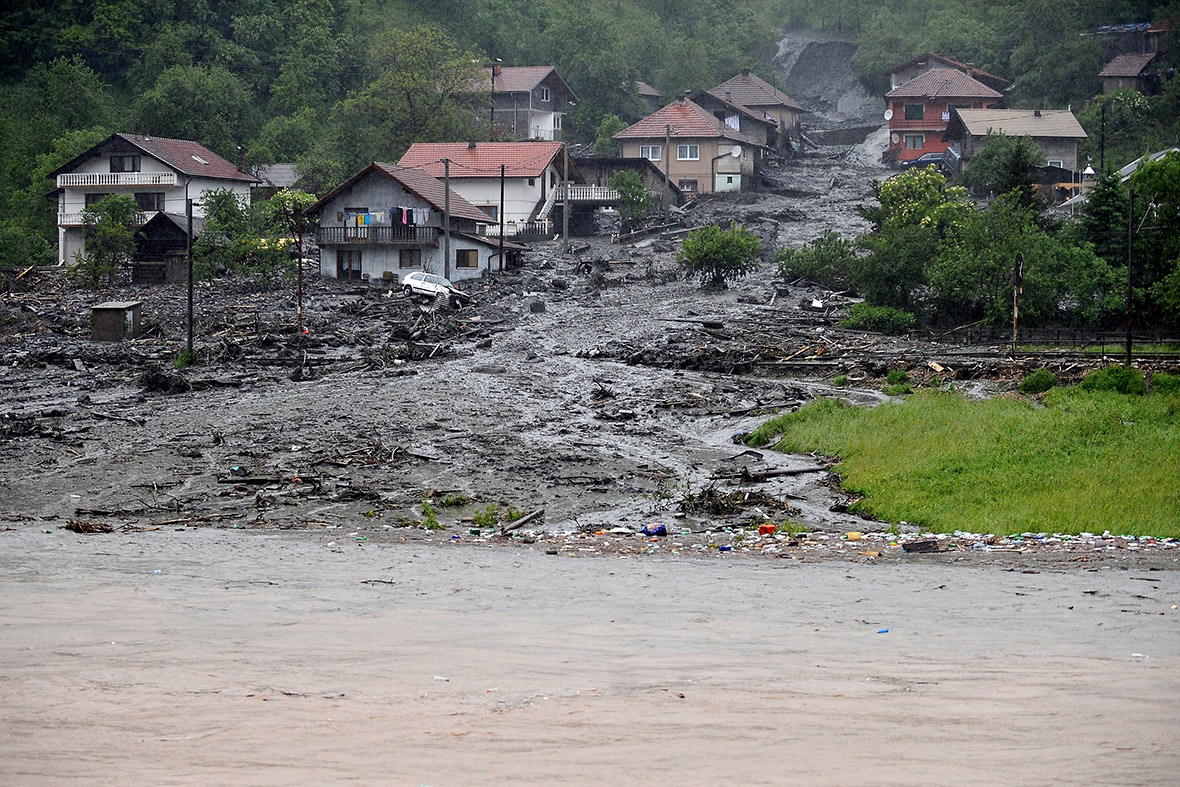
Death toll rises as worst floods in over a century hit Balkans

More than two dozen people are feared dead in Bosnia-Hercegovina and Serbia after the worst floods in more than a century.

Tens of thousands have fled their homes as several months of rain fell in a few days and rivers burst their banks. Landslides have buried houses.

In one Bosnian town alone, Doboj, the mayor said more than 20 bodies had been taken to the mortuary.

In Serbia, an outer suburb of the capital Belgrade has been inundated.

"More than 20 corpses have so far been brought to the city's morgue," the mayor of Doboj, in the north-east, was quoted as saying.

The republic's police chief, Gojko Vasic, said the situation had been particularly difficult in Doboj "because the flood waters acted as a tsunami, three to four metres high. No-one could have resisted."

Observed from the air, almost a third of Bosnia, mostly its north-east corner, resembled a huge muddy lake, with houses, roads and rail lines submerged, the Associated Press reports.

According to a spokesman for Bosnia's Security Ministry, about a million people - more than a quarter of the country's population - live in the affected area.

One of the worst-hit areas in Bosnia is the eastern town of Bijeljina where rescue teams are trying to transport 10,000 people to safety.

Prime Minister Aleksandar Vucic told reporters the first bodies had been recovered in Obrenovac, the worst-hit area to the south-west of the capital, and he feared more would be found.

But he said the number of deaths would not be made public until the waters had receded.

In Bosnia, a third of the country is under water, mostly in northern and eastern areas. A quarter of the four million population live in the affected areas.

At least 19 people have died in the flooding, which has also led to the displacement of landmines.

Heavy landslides have moved landmines and minefields from the 1992-95 war and warning signs at some 9,000 spots.

It is estimated that some 120,000 landmines remain in Bosnia.

About 600 people have been killed by mines in the country since 1995.

Sarajevo Mine Action Centre official Sasa Obradovic said: "Besides the mines, a lot of weapons were thrown into the rivers, lying idle for almost 20 years."

Croatia is also fighting to cope with the effects of the flooding, with two confirmed deaths and earth walls being built along the Sava and Danube rivers.

In Serbia, 12 bodies were recovered in the flooded town of Obrenovac, about 20 miles south-west of the capital, Belgrade.

"What happened to us happens once in a thousand years," Prime Minister Aleksandar Vucic said at a press conference yesterday.

"We have managed to avoid the worst catastrophe thanks to good organisation.

"The end is not close, but today is much better than yesterday."

The countries stand along the Sava river. Its swollen tributaries made bridges disappear in minutes, while roads and railways were cut within hours. The tops of traffic signs were just visible yesterday under three or four metres of water.

Monday 19 May 2014

http://www.irishtimes.com/news/world/europe/death-toll-rises-as-worst-floods-in-over-a-century-hit-balkans-1.1800380

continue reading

Sunday, 18 May 2014

North Korea apartment building collapses, hundreds feared dead


North Korea's state media has reported an "unimaginable" accident at an apartment construction site in Pyongyang, which had resulted in an unspecified number of casualties.

North Korea has apologised to bereaved families after the apartment building collapsed in Pyongyang, possibly killing hundreds, the official KCNA news agency says.

It is a rare admission of fallibility from the reclusive state, but no death toll was given.

Pyongyang's expression of "profound consolation and apology" was the first official news of the disaster, which happened in the Phyongchon district of the North Korean capital last Tuesday.

"The construction of an apartment house was not done properly and officials supervised and controlled it in an irresponsible manner," said the statement from KCNA.

The statement said the collapse of the apartment building "claimed casualties" but did not give any indication of how many had been killed or injured.

A rescue operation ended on Saturday, it said.

A South Korean official confirmed a 23-storey building collapsed in Pyongyang.

He said the building was believed to have accommodated 92 households or families, and it was common for North Koreans to move into new buildings before construction was completed.

"Hundreds are presumed to be dead, assuming that each family has an average of four members," he said.

No source for the information was provided.

The KCNA statement said North Korean authorities put emergency measures in place to rescue people from the collapsed building and to treat the injured.

It said North Korea's minister of people's security, Choe Pu Il, had "repented", admitting he had failed to supervise the project adequately, "thereby causing an unimaginable accident".

The rare apology from the North came as South Korean president Park Geun-hye's administration faces criticism for its handling of a ferry disaster that killed more than 300 people, many of them schoolchildren, last month.

North Korea launched a vitriolic attack of Ms Park in the wake of that disaster.

"It is common in North Korea that people move into a new apartment building before construction officially ends," an official told AFP.

The official said 92 families were believed to be living in the collapsed building, and the final death toll was likely to be "considerable".

About 2.5 million people - mostly political elites including senior party members or those with privileged background - are believed to live in Pyongyang.

Pyongyang residents are known to enjoy better access to electricity, food, goods and other services than those living elsewhere in the impoverished and isolated country.

Sunday 18 May 2015

http://www.radioaustralia.net.au/international/2014-05-18/north-korea-apartment-building-collapses-hundreds-feared-dead/1312800

continue reading

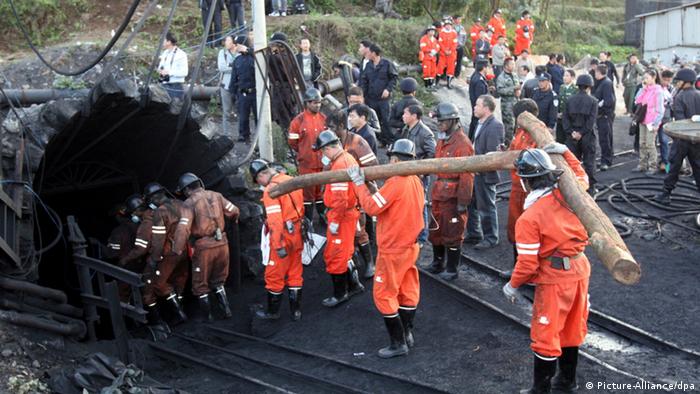
Pipeline collapse in coal mines kills 11, leaves 2 missing in northwestern China


A pipeline in a coal mine in northwestern China has collapsed, killing 11 people, the official Xinhua News Agency and a local work safety official said Saturday.

The official at the provincial work safety bureau, who only gave his last name Han, said that two more people were missing from the accident that took place Wednesday in the city of Yulin in the northwestern province of Shaanxi. He said odds were slim they would be found alive.

Xinhua said 37 people were in a shaft when a cement pipeline collapsed in the state-owned mine that was under construction. It said rescued recovered two bodies and pulled out 24 people alive Wednesday.

China has some of the world's deadliest mines, killing more than 100 people since the start of the year, but they are getting safer with stricter work safety enforcement.

Sunday 18 May 2014

http://www.globalpost.com/dispatch/news/the-canadian-press/140517/pipeline-collapse-coal-mines-kills-11-leaves-2-missing-north

continue reading

Mozambique: Death toll in Memba mine collapse rises


The known death toll from the collapse of an illegal gold mine in Memba district, in the northern Mozambican province of Nampula, has reached nine, according to a report in Saturday's issue of the Maputo daily “Noticias”.

The Minister of Mineral Resources, Esperanca Bias, travelled to Memba on Saturday, to accompany the attempts to find survivors and recover bodies.

Since the collapse occurred on Monday morning, the chances of finding anybody still alive must be regarded as remote. In the early stages of the rescue operation, 15 people were pulled out still alive.

One of them was seriously injured, and is currently undergoing medical treatment in the Memba health centre.

It is feared that the final death toll could be as anywhere between 40 and 70. Nobody seems to know exactly how many people were inside the mine when it collapsed.

The bodies that have been recovered so far were in an advanced state of decomposition, and had to be buried immediately in the vicinity of the mine. Most of them could not be identified, since they were not carrying any documents.

A month ago the Memba authorities had ordered the closure of the mine, which is in an area known as Namajuba, and were preparing to remove thousands of artisanal miners digging for gold in the area. Clearly their orders were ignored, with tragic results.

The Memba district permanent secretary, Felisberta Joaquim, told “Noticias” that most of those digging in the mine were from Nampula, and the neigbouring provinces of Cabo Delgado and Zambezia, but some had come from Tanzania.

Sunday 18 May 2014

http://allafrica.com/stories/201405170193.html

continue reading

Saturday, 17 May 2014

Turkey mine explosion: Final bodies recovered from underground as death tolls reaches 301


Rescue workers removed the last remaining bodies from a stricken mine here on Saturday afternoon as the death toll in Turkey’s worst mining accident rose to 301 people, according to the prime minister’s office.

The final recovery efforts were hampered by a fire that broke out underground Saturday morning, as well as the leakage of methane gas, according to the energy minister, Taner Yildiz. Some of the 17 bodies removed overnight were so badly burned that DNA testing will be required to identify them, he said.

Smoke could be seen rising near an entrance to the mine on Saturday. For the first time since the accident four days ago, there were no relatives of victims seen waiting. Some of the families moved to a nearby state hospital, to await the results of the DNA tests.

With so many dead, the tragedy rippled for miles around the coal mine, affecting towns and tiny villages in a region where thousands of men work in the industry.

On Saturday, volunteers flocked to a village especially hard hit by the accident. At least 11 men from Elmadere, a town of about 250 people, were killed in the accident.

As the volunteers — who came in buses from Istanbul and other towns — passed out toys and candy to the village’s children, residents fretted about a future without their miners.

“We’ve tried cattle breeding, it failed. We tried tobacco, it failed,” said Ali Suay, 57, whose 34-year-old son died in the mine. “Nothing provided us enough income.”

At the entrance to the mine, Cevat Altuntas, who had worked as a miner for 30 years, said the authorities focused on safety only after accidents.

“This is how mining goes in Turkey,” he said. “Unless our fingers are bleeding, we don’t take precautions.”

Ozgur Ozel, an opposition politician from the Soma region, petitioned parliament in October to hold an inquiry into mine safety but the proposal was voted down.

He says there is a mine accident every three or four months in the area and 11 workers had died in the last three years alone.

The Turkish Government has not adopted the International Labour Organisation's convention on mine safety, which is widely regarded as the industry standard.

Saturday 17 May 2014

http://www.independent.co.uk/news/world/europe/turkey-mine-explosion-final-bodies-recovered-from-underground-9390053.html

continue reading

Serbia and Bosnia floods: At least 20 dead


Record flooding in the Balkans has killed 20 people in Serbia and Bosnia this morning. Emergency services pulled dead bodies from flooded homes as tens of thousands were forced to flee, authorities said.

Soldiers worked to free hundreds of people blocked inside a school in Serbia, due to what meteorologists say is the worst flooding since records began 120 years ago, after three-months’ worth of rain fell on the region in just three days.

Obrenovac, 18 miles south-west of the Serbian capital Belgrade, is the worst hit, with water depth reaching up to three metres in the streets, and seven dead bodies found.

The city is completely underwater and residents reportedly stood on roofs and terraces waiting to be rescued. The main priority for the Serbian army was to evacuate 700 people, mainly women and children, from a primary school located on higher ground.

Thousands of volunteers joined the Serbian soldiers in building sandbag flood defences around the town of Sabac do to the flood danger presented by the river Sava.

In Serbia, 95,000 homes are without electricity right now, with the country’s energy system is near breaking point.

In Bosnia, 13 bodies have been found in the eastern town of Doboj and in Samac, in the north part of the country, during rescues this morning.

“I’m afraid that won’t be the end,” Bosnian Serb leader Milorad Dodik told to a news conference held this morning in Belgrade, alongside with the Serbian authorities and Aleksandar Vucic, the Serbian prime minister.

In the eastern Bosnian town of Bijeljina, 10,000 people are being evacuated and accommodated in schools. Helicopters evacuated people from the north Bosnian towns of Samac and Modrica and trucks are carrying food and blankets to the hardest hit areas.

About 1,000 people, including babies, pregnant women, disabled people and the elderly have been transferred in safe places from the region of Zeljezno Polje in central Bosnia, where several villages have been destroyed.

The flooding of the Kolubara, the Danube and the Sava rivers creates several problems to coal-fired power plants, causing a fire inside the Kolubara power complex, which has been closed since Thursday.

Saturday 17 May 2014

http://www.independent.co.uk/news/world/europe/serbia-and-bosnia-floods-at-least-20-dead-in-worst-flooding-since-records-began-9390263.html

continue reading

Clyde Snow, famed forensic anthropologist dies; called “grave-digging detective”


Clyde Collins Snow, 86, one of the foremost of the nation’s forensic anthropologists, who discovered the hidden stories told by skeletal remains and put his findings in the service of human rights, bereaved families and law enforcement , died Friday in a hospital in Norman, Okla.

The death of Dr. Snow was confirmed by his wife, Jerry, who said he had cancer and emphysema.

As a forensic anthropologist, Dr. Snow was a medical detective, a kind of latter-day Sherlock Holmes, who used keen observation, encyclopedic knowledge and a thorough n understanding of human experience to overcome what conventional wisdom describes as the silence of the grave.

In many of the most notorious crimes of the past half century, Dr. Snow made his energies and abilities available to those responding to the concerns of both grieving relatives and society at large: who had died, how they had died and who was responsible.

In a career that spanned continents and decades, he helped to give names to murder victims and to the persons whose remains were found after airplane crashes.

With decades of scientific knowledge in his head, and a leather satchel filled with specialized tools he helped to tell the story of Custer’s Last Stand, he confirmed the identity of X-rays taken after the assassination of President John F. Kennedy, and he refuted theories about the deaths of Butch Cassidy and the Sundance Kid.

In the aftermath of one event that marked the communal violence in the former Yugoslavia, he and his team determined that those whose bodies were found in a mass grave had been killed execution style.

It was not only the bones from which Dr. Snow could glean names and stories, it was also the very ground under which executioners in a variety of countries, tried to conceal their deadly acts.

“The ground is like a beautiful woman,” said the man who has been described as the country’s best known grave-digging detective. “If you treat her gently,” he continued in his folksy drawl, “she’ll tell you all her secrets.” In the appearance of soil on the surface, he could often infer what was hidden beneath.

Those secrets, which he worked to ferret out, included the deaths of tens of thousands of Mayan Indians who were liquidated 30 years ago in a bloody Guatemalan counterinsurgency program.

In an interview while there, he explained the passion that accounted for his years of trying to help dead men tell their tales. It was not mere scientific curiosity. It was a matter of law, justice and human rights.

“People will never respect the law until there’s justice,” he told The Washington Post. “And a good place to start is with murder” cases.

In another overseas mission, he was sent in 1985 by a scientific group to Argentina, where a “dirty war,” conducted under the rule of military juntas, had resulted in many people having mysteriously “disappeared.”

After leading a team that found the bodies of many death squad victims, he served as a witness at the trials of some of those accused of the killings.

There was a reason, he suggested, to sift through graves and scrutinize the skeletons of those long dead.

“If you can make people feel they’re not going to get away with it,” he said, “that’s all we’re asking.” It was, he said, to hold people accountable, even after time had covered up the evidence of wrongdoing.

“His first passion in life,” his wife said, “was human rights.”

Clyde Collins Snow, was born Jan 7, 1928 in Fort Worth, Tex. and grew up in the town of Ralls in the Texas panhandle. His father was a physician, and his mother, although not formally trained, served often as his nurse.

His bachelor of sciences degree came in 1951 from Eastern New Mexico University in Portales.

After graduate work and service as an Air Force officer, he began work for his PhD in archeology at the Unversity of Arizona, in Tucson. Shifting his focus to anthropology, he received his doctorate in 1967.

Even before receiving his PhD, however, he had been enlisted by the Federal Aviation Administration to help find ways to enhance the safety of airplane passengers in the event of a crash.

In 1979 he helped identify those killed in a fiery crash of an airliner shortly after it took off from O’Hare International Airport near Chicago.

Of the 273 who died, 50 were unidentified when he began work. X-rays, interviews with survivors, photographs and an effort to find such revealing signs as fractures, or indications of left-handedness, helped, along with use of a computer, helped him and a colleague give names to about one in five.

As his achievements and abilities became increasingly known, he was called on for such matters as the effort to identify remains found in a cemetery near Sao Paulo, Brazil.

It was suspected that the bones were those of Joseph Mengele, one of the most notorious of those who carried out Nazi concentration camp killings in World War II. Mengele had fled to South America; Dr. Snow helped show that the remains were his.

Among the techniques that he helped develop was that of facial reconstruction--creating a portrait of a human face from skull bones. Based on such work, the discovery of buried facial bones permitted drawings to be made that could be widely shown and could lead to identifications.

This technique has been credited with the identification of some of the 1970s victims of Illinois mass murderer John Wayne Gacy.

Another well known achievement was his participation on reconstructing the face of the ancient Egyptian king, Tutankhamen.

His work was regarded as pivotal in the decision by the American Academy of Forensic Sciences to make a formal specialty of forensic anthroplogy.

He retired from the FAA in 1979, performed consulting work and continued his teaching at the University of Oklahoma, where he was an adjunct faculty member at the time of his death.

In addition to his wife, he was survived by four daughters and one son. Three earlier marriages ended in divorce.

He was a witty man, not given to pretense. Once in Guatemala, he was asked about how he avoided troublesome confrontation with those who did not welcome his investigations.

He responded by drawing from a pocket a large metal badge, carrying the words “Illinois Coroners Association.”

Members of the civil patrols in Guatemala , who might have caused him difficulty, carried only small badges, he said. Despite its unimpressive words, his was of more than ample size, and with local law enforcement, he said, “whoever has the biggest badge wins.”

Saturday 17 May 2014

http://www.washingtonpost.com/local/obituaries/clyde-snow-famed-forensic-anthropologist-dies-called-grave-digging-detective/2014/05/16/f93778a4-dd44-11e3-bda1-9b46b2066796_story.html

continue reading

Desperate search after immigrants die in desert


Corina Montoya cries as she holds her granddaughter in her arms.

Angie will turn 2 soon. She was just 18 days old when her father left their home in El Progreso, Honduras. Hector Rivas hasn't been heard from since he headed to the United States in 2012 with the dream of buying a taxi, sending money home and giving his newborn a better life. Here, he only earned $304 a month working for a cooking oil business.

The cell phone Rivas' family used to reach him has stopped working.

"I called a thousand times," Montoya says. "It rang and rang, and then a message said it was out of service."

Now his family fears he's one of thousands of migrants who've died on the perilous journey north. It's grown more dangerous as security increases along the U.S.-Mexico border, but that didn't stop Rivas and others like him from taking the risk.

Rivas could have taken any path to the United States -- all dangerous, though crossing through the Arizona desert stands out for its cruelty.

The possibility that Rivas didn't make it doesn't stop his family from searching for signs of his whereabouts.

"Everything we have done has been futile ... going to the newspapers, morgues, prisons, courts ... and nothing," Montoya says.

At least 350 people from El Progreso have gone missing on the trek from the Central American nation to the United States, according to Cofamicro, a Honduran organization of volunteers trying to help families find their relatives.

Before, all these families could do was wait and wonder. But now they have another option.

That's why today, many gather inside a large community classroom in El Progreso.

Women like Montoya sit at tables around the room, answering a series of questions from investigators. Then they hold out their hands.

Technicians prick their finger with needles, then press them into a piece of paper.

For Montoya, the small red circle of blood left behind is her latest way of asking a question she's been desperately posing for nearly two years: Where is my son?

'The first steps'

Mercedes Doretti is the director of the New York-based Argentine Forensic Anthropology Team, which is collecting DNA from family members and unidentified corpses in the hope of finding a match. "It's a huge challenge," she says, "and we are still barely taking the first steps."

Someday, hopefully soon, Mercedes Doretti may have the answer.

For decades, she's helped lead a team of investigators into some of the world's most violent places and harshest environments. Their mission: Solving the mysteries of missing people who are victims of violent crime or human trafficking.

Her organization, Argentine Forensic Anthropology Team (EAAF), based in Brooklyn, New York, started out as a group dedicated to identifying the bodies of dissidents killed from 1976 to 1983 during Argentina's brutal military dictatorship. Over the years, they expanded their investigations to other countries, including Mexico -- where they first created a database dealing with migrant deaths while investigating murders in Ciudad Juarez.

More than four years ago, they set their sights on another dangerous region: the Arizona desert, where authorities say more than 2,000 migrants have been found dead in the past 13 years -- many of them without any identification.

Meanwhile, hundreds or even thousands of miles away, their family members -- like Montoya -- are searching for answers.

That's where Doretti and her team come in, collecting DNA from family members and unidentified corpses in the hope of finding a match.

The group has collected more than 1,700 DNA samples from families in Mexico, El Salvador, Honduras, Costa Rica and Guatemala. So far, they've identified 65 bodies.

Doretti sad it's still an overwhelming task. And even when they're able to find a match, it's a bittersweet victory.

"This is never a happy ending. We just try to reduce the time that families have to prolong their pain," she says. "It's a huge challenge, and we are still barely taking the first steps."

'Mass disaster'

In a cold, sterile room in Arizona, Pima County chief medical examiner Gregory Hess is taking another step.

When migrants' remains are found in the Arizona desert, investigators bring them to this morgue, where Hess and his team determine what caused their deaths and try to identify the bodies.

Almost every day, he says, the morgue gets a new set of remains found in the desert. Some are bodies whose facial features and physical characteristics are mostly intact. Others are little more than bones. All are tagged, placed inside plastic body bags and stored in a large, temperature-controlled warehouse where cold air and the stench of rot seep out every time the door is opened.

They methodically go over the bodies, looking for documents or belongings to create a case file for future identification, but sometimes, they don't have many clues.

Today, there are three skulls on the table in front of Hess -- remains, he says, that may be from migrants who died in the desert.

On the wall beside him, a poster describes the problem of missing and unidentified persons, calling it a "silent mass disaster."

At this point, it's too soon to tell very much about whose remains are on the table.

"If there is no personal property, how do you then identify who that skull is? That's difficult," he says. "The only way that's going to happen is through DNA. But you can take all the DNA in the world you want, but if you don't have anything to compare it to, it doesn't do you any good."

Dangers of the desert

Last year, the remains of 169 migrants arrived here. Authorities say the number of deaths in the desert has grown as security along the border increased after the Sept. 11, 2001 terror attacks. Beefed up security aimed at blocking illegal immigration along the border has forced migrants from Mexico and Central America to cross in more remote and dangerous locations.

For migrants, making it to the other side of the border is only part of the treacherous journey.

"In the desert you find wild animals, you will get lost, you run into hostile vegetation ... many things happen in the desert," says Alfonso de Alba, vice consul of the Consulate of Mexico in Tucson, Arizona, where officials are often involved in the process of trying to identify the remains of migrants who perished along the way.

There is also the risk of robberies, rapes and beatings from bandits or smugglers, consulate staff says.

Most migrant deaths are the result of triple-digit temperatures in summer and freezing cold temperatures in winter, Hess says. Only 1% of deaths are due to violence.

Jeronimo Garcia, an employee at the consulate who's become a go-to person for American authorities when it comes to finding clues to the immigrants' identities, says he's warned many not to make the journey.

"You can never take enough water (or food)," he says. "I tell immigrants to not risk their lives in the desert. The smugglers don't see them as human beings, regardless of how much money they have paid."

But still, the migrants keep coming, and the list of unidentified remains in the Pima County morgue keeps growing.

Many of those immigrants carry no identification and sometimes their bodies have been abandoned for so long that only bones remain, Hess says.

For years, his office collected DNA samples from the remains and tried to match them to U.S. federal databases.

But since many of the immigrants had never been in the United States before, authorities couldn't get a DNA match.

That changed when the Pima County's Medical Examiner's Office and the Argentine Forensic Anthropology Team began working together. American authorities now can match the DNA of dead bodies in their database with the DNA of relatives of missing migrants in Mexico and Central America.

It's a complicated process that crosses international and state borders. Once the EAAF team collects DNA from family members, the information is compared with a DNA database in a lab in Virginia, which houses information from the bodies found in the Arizona desert.

"We are trying to assemble a regional system," Doretti says, "so that all the information collected and stored can be used to provide the families of the missing some closure."

Searching for a match

Back in El Progreso, the community classroom is filled with desperate families searching for answers.

It's one of several stops the EAAF made on a recent trip to Honduras and El Salvador, where they traveled to interview and take DNA samples from the mothers, fathers and siblings of missing migrants.

"The more samples that are taken, the better chance of finding a match," says Carmen Osorno, a member of Doretti's team. Each interview lasts about two hours and includes filling out a long questionnaire.

Some family members bring photographs, letters and other evidence, hoping authorities will undertake a more extensive investigation.

Paula Ivette Martinez carries a picture of her brother, Henry, in one hand and wipes away tears with the other hand.

"I'm glad you're here to help me find my missing brother and sister," she tells her interviewer.

Henry disappeared on his way to Miami, Paula says. Her sister, Ondina, went missing while she was making her way to Chicago several years ago.

"It is very sad," Martinez says. "My mother died without knowing what became of her children."

One family gets an answer; another is still asking questions

For nearly a decade, Jose Noriega and Carmela Ayala wondered what happened to their son, Luis Fernando.

He left Honduras in 2001 to work in America, then called them two years later to say that he'd made it. He sent money home around Mother's Day that year, and called to check in again a month later.

That was the

last they ever heard from him. Calls to the Honduran Foreign Ministry and other officials yielded no results.

Then, years later, a potential clue: In 2011, a Honduran newspaper published a list of names tied to unclaimed bodies at the Pima County morgue. There were 17 Central Americans, including four Hondurans. And one name immediately jumped out for Noriega: Luis Fernando.

But was it their Luis Fernando? Noriega says they didn't know where to turn next.

When the EAAF traveled to Honduras in September 2012 to take DNA samples, Luis Fernando's parents sought out the team's investigators, told their story and asked for their help.

The team returned to the United States with DNA from the parents, and compared it with data from the Pima County Medical Examiner's Office. They found a match for Luis Fernando.

"They said they were 100% convinced that it was our son," Noriega says.

Luis Fernando didn't perish crossing the desert, the parents learned, but unbeknownst to them died in a car crash.

Luis Fernando's ashes arrived at the Honduran capital's airport in a wooden box nearly a year later, on October 2, 2013. They were interred during Holy Week this year.

"Now I can die in peace," his mother says.

But another mother is still looking for closure.

Even though she's given her DNA to investigators, Corina Montoya still has hopes that her home telephone will ring and her son will be on the line.

Or, at the very least, that someone will call and tell her what happened to him.

Saturday 17 May 2014

http://edition.cnn.com/2014/05/17/us/immigrant-desert-deaths-dna/

continue reading

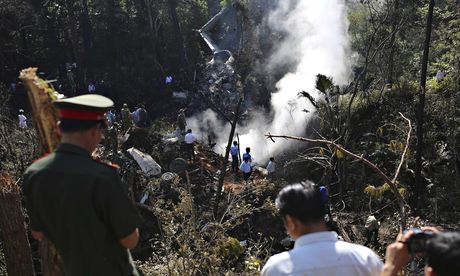
Plane crash in Laos kills several top officials


A Laos air force plane carrying senior government officials has crashed, killing the country's defence minister and at least five others.

The plane came down in a forested area of Xiangkhoung province, near one of Laos's major archaeological sites, the Plain of Jars, the Thai foreign ministry spokesman Sek Wannamethee said.

Laos National Television showed images of the aircraft with smoke rising from its charred remains.

The defence minister, Douangchay Phichit, was one of the country's deputy prime ministers and a high-ranking member of Laos' Politburo, the main decision-making body for the nation's ruling Communist party. Also among the dead were his wife, the governor of the capital of Vientiane, Sukhan Mahalad, and two other senior officials.

The Russian-made plane left the capital early on Saturday morning, heading for an official ceremony in the north-eastern province of Xiangkhoung, about 290 miles away.

The cause of the crash is not yet clear, but a witness said the plane crashed just over a mile away from the airport where it was due to land.

Around 20 people were believed to have been on board, according to Nipat Thonglek, the Thai defence ministry's permanent secretary. He said he was given the information by authorities in neighbouring Laos who did not immediately release details of the other passengers.

Thailand's Thai Rath newspaper identified the plane as a Russian-made Antonov AN-74.

"A Laos air force plane has crashed on its way to Xiangkhouang province in the north of the country. The mayor of Vientiane, the defence minister of Laos and his wife were on board," an official told Reuters.

Thailand's foreign ministry said it had been informed by Laos's government that the plane had crashed at 6.15am.

Laos is one of the poorest countries in Asia, under its authoritarian communist one-party government, and has a poor track record on air safety. Last October a civilian plane crashed into the Mekong river, killing all 49 people on board.

Saturday 17 May 2014

http://www.theguardian.com/world/2014/may/17/laos-plane-crash-kills-defence-minister-wife-officials

continue reading

Bangladesh resumes search for missing in sunken ferry; 54 bodies recovered so far


Rescuers have recovered 54 bodies from a ferry that sank in a river during a storm in central Bangladesh, resuming their search Saturday after protests by relatives of people missing in the disaster.

Officials said that 12 people were still unaccounted for, although there has been confusion over how many were aboard the ferry M.V. Miraz-4 when it sank Thursday in the River Meghna.

Earlier Saturday, authorities called the search off after retrieving 40 bodies, but hundreds of relatives and local residents protested at the scene of the accident in Munshiganj district, forcing authorities to announce that they would continue to look for bodies.

"I haven't got my brother, where is he? Why do authorities stop searching?" asked Mohammad Moniruzzaman.

By late Saturday afternoon, a total of 54 bodies had been recovered, said Shamsuddoha Khandaker, chief of Bangladesh's water transport authority.

"We will continue our search," he said. "We have towed the ferry to the shore, but we will continue to search for bodies in the waters."

There has been confusion over how many passengers were on board the sunken vessel. Ferry operators in Bangladesh usually do not maintain a list of passengers, and none was available in Thursday's disaster, said local administrator Saiful Hasan.

Before 11 more bodies were recovered after the search resumed Saturday, police had estimated that at least 100 people were still missing.

Rescue diver Masudul Haque said Friday evening that many bodies were still trapped in cabin rooms.

"We have recovered the bodies mainly from the lower deck and other open spaces, but could not open the doors of the cabin rooms where many passengers took shelter after the storm had hit," Haque said. "I tried to open those doors but could not as huge volumes of sand have buried many of the doors."

Relatives of the missing and the dead have been gathering since Thursday on the banks the Meghna River, near where the boat capsized. Several bodies, covered in cloth, were laid out on the ground on Saturday.

"I came here yesterday for my brother, but I don't have any trace yet. Nobody can assure me of anything," said a sobbing relative, Lokman Hossain.

Sabuj, a passenger who jumped overboard when the ship began to sink, said he was among about 25 survivors who swam to shore. He said the captain of the double-decker ferry ignored the passengers' calls to stay close to the shore as the storm started brewing.

"But he continued to steer the ship" out into the water, said Sabuj, who uses one name.

The ferry was apparently overcrowded and its lower deck was loaded with goods, said Mohammad Ali, a director of the Bangladesh Inland Water Transport Authority. Officials were investigating whether the vessel was overcrowded or had design faults.

Ferries are a common mode of transportation in this populous delta nation, and the Meghna River has been the scene of past accidents. In 2012, at least 150 people died when a ferry carrying about 200 people capsized at night in the river.

In 2003, an overcrowded ferry capsized in flood-swollen waters at the confluence of the Padma, Meghna and Dakatia rivers near Bangladesh's capital, Dhaka. Up to 400 people died.

Saturday 17 May 2014

http://www.foxnews.com/world/2014/05/17/bangladesh-resumes-search-for-missing-in-sunken-ferry-54-bodies-recovered-so/

continue reading

Friday, 16 May 2014

A month after Ferry disaster, closure eludes one mother


A month after the sinking of the ferry Sewol, Lee Gum-hee fears her daughter may never be found.

Ms. Lee's daughter, Choi Eun-wha, was one of the students from a Seoul area high school—the largest passenger group—aboard the ship that sank on April 16. With 250 students reported dead or missing, the 16-year-old was still unaccounted for as of Thursday.

The bodies of 284 people have been retrieved from the wreck—several in just the past few days. With 20 people still missing, the search continues, but the rate of recovery has slowed as divers have gone through most of the main cabins on the ship. At the same time, dangers for divers have increased as the ship's structure has weakened. Treacherous weather has also paused the search for days at a time.

Relatives of those missing still push for maximum efforts to retrieve their loved ones, but they are starting to confront the prospect that may not be possible.

"What really worries me is that my child may have already drifted away," said Ms. Lee, 44 years old, from a gymnasium near the site of the wreck, her eyes swollen from fatigue and damp with tears.

Late last month, fishermen recovered the body of a passenger of the ship two kilometers (1.2 miles) away from the ferry sinking site. Days later, a recovered body slipped away from divers and drifted 4.5 kilometers before being found again.

The coast guard has set up nets around the ship, and boats and aircraft search for any drifting bodies near the sinking site, but officials are afraid some may be lost for good.

Prosecutors have been investigating for weeks the crew members who were among the first rescued from the ship as many students were still stuck below deck. On Thursday, the captain of the ferry and three senior crew members were indicted on homicide charges, while 11 other crew members were indicted for negligence.

Government prosecutor Yang Joong-jin said the captain and the three senior crew members—the first officer, the second officer and the chief engineer—could face the death penalty if convicted.

Legal representatives for the crew members couldn't be reached for comment.

The school trip on the Sewol involved almost the full second-year grade at Danwon High School in Ansan, a satellite city of Seoul. Of Eun-wha's school mates, only the 13 students who didn't go on the fateful ferry trip plus two of the students who survived are back in school, local education officials say.

They said that most of the survivors, 69 students, are taking part in a program outside the school that includes art therapy, special lectures and individual and group counseling. Four students remain in the hospital.

"She used to rest her head on my lap in the kitchen," Ms. Lee said of her 16-year-old daughter, who recently decided that she would try to get a secure job in government to help support her family

Ms. Lee, who also has a son, is one of a dwindling group of relatives still camped out in a gymnasium near where the Sewol sank. The mood in the gym, highly charged with anger from grieving parents in the days after the disaster, has turned subdued as more families have packed up their sleeping gear and left as the bodies of their loved ones have been found.

At the gym, there is still the occasional shouting at journalists or officials, but some of the anger has been replaced by a more quiet anguish as the days follow their grim routine.

Shuttle buses run regularly between the gym and the pier where recovered bodies are brought in for identification. Often, the coast guard reaches out to families for identification after recovering cellphones or photo IDs from the victims. Most families have already provided police with their DNA samples.

A few days ago, Ms. Lee went out to a rescue barge in the sea with the help of the coast guard to watch divers search the sunken ferry. She wailed and cried, she said. Some of the divers also cried, she added.

Last week, a veteran civilian diver died while installing a line used to guide other divers in the murky waters and amid the strong current. Another diver was treated at a hospital after showing signs of decompression sickness, in another reminder of the risks facing divers.

"We want divers to stay healthy. After all, it's divers who can recover my kid and other victims from the ship," Ms. Lee said.

Eventually, the ferry will have to come out of the water—a subject that raises deep emotions among families of those still missing.

Five giant cranes brought to the site of the wreck in the days immediately after the sinking to lift the ferry out were withdrawn after opposition from family members, who thought that might jeopardize any potential survivors inside the ship. Families continue to object for fear of possible damage to bodies inside, officials says.

"We still dare not discuss the 'salvage' at meetings with the families," said a government official who handles administrative issues for the families. "The families are still pretty adamant that they oppose it."

In 2010, following the sinking of a navy corvette in the Yellow Sea, believed to be by a North Korean torpedo, the search for people lasted for eight days. With six navy sailors still unaccounted for, their families agreed to end the search after the death of a diver and fishermen aiding the operation. Personal belongings were used to bury those unaccounted for.

Such a scenario was still unacceptable to Ms. Lee as she sat in the gym, surrounded by empty mats or sleeping cots left by other parents who had gone home to bury their children.

"They have to hurry up. They have to pull out every single person from the cold sea by all means until nobody is left," Ms. Lee said.

Friday 16 May 2014

http://online.wsj.com/news/articles/SB10001424052702304547704579563401310521392

continue reading

Names and dignity for the desert’s unknown dead


When Robin Reineke achieves a goal at work her spirits are lifted. It lasts no longer than one minute. Then she remembers the implications of her success: a good result is matching the remains of a migrant who has died crossing the US-Mexican border with the family’s description.

For many families, however, finding their loved ones is a comfort. Trapped in a purgatory of not knowing, their quest for answers can become all-consuming. Ms Reineke recalls one woman who recognised her son’s camouflage trousers from the buttons – they had been moved to fit his slim frame when his father handed them down.

The woman had been distraught over her son’s whereabouts – he had left in the night without telling her, which is common among migrants hoping for a smooth departure. When she finally received confirmation that her son’s remains had been found in the desert, her frantic mind was calmed. She could bury her son. “She was so grateful that she could take care of him and honour him,” reflects 32-year-old Ms Reineke.

Providing support to such families is part of Ms Reineke’s job as executive director of the Colibrรญ Center for Human Rights in Tucson, Arizona. The non-governmental organisation compiles and owns the most comprehensive data about missing border crossers and unidentified remains found where the US and Mexico meet. The database draws on information derived from forensic examinations and provided by foreign consulates and families. It enables people to find their relatives’ unidentified remains. When there is a possible match, Ms Reineke calls the family.

The centre takes its name from the hummingbird, colibrรญ in Spanish. In 2009 the remains of a man who died while crossing the border were found. In his pocket was a small, dead hummingbird – an indigenous symbol of safe passage.

Most anthropologists who work in human identification are forensic anthropologists. Among them is Bruce Anderson, Ms Reineke’s colleague, who specialises in skin and bone that might establish an identity through old fractures or dental work.

Ms Reineke, however, is a cultural anthropologist focused on social relationships. She believes her background helps her liaise between forensic scientists and families of the missing, generally indigenous people. “We understand cultural and religious needs in terms of the disposition of the dead body. We act as mediators between the scientists, who are focused on the dead, and the families focused on the living and honouring the memory of the deceased.”

Each year the remains of about 165 people are recovered from the desert of Pima county in southern Arizona. About 35 per cent cannot be identified. Before 2000, typically 10 bodies were found in the Pima county desert every year.

A report by the University of Arizona attributes the increase to tightened border security that was introduced by the Clinton administration. This has created a so-called funnel effect in which migrants choose entry points that are less policed but more remote.

The report rejects the notion that more people are dying because more people are trying to cross the border. Border Patrol apprehension statistics – a measure often used as a proxy for unauthorised migration flow – show that the number of people attempting the crossing has actually decreased.

Half of the deaths are caused by overheating. Typically, groups of mig­rants walk for three to five days, with little access to water. Those who have underlying health problems or are in pain are likely to be left behind, which is potentially lethal in the desert.

Ms Reineke is featured in Who is Dayani Cristal? , a documentary that deals with a forensic investigation into the case of a migrant found in the desert. The film retraces the man’s steps from Honduras following the path of other migrant travellers. As is usual for these “illegals”, he carried no passport or papers. Ultimately it is his tattoos, which name his young daughter, that help to identify him.

After identification, his family is able to make the match and bury him. Ms Reineke makes the point that many families are not able to do this. “A lot of cases aren’t resolved,” she says.

She cites the example of a newly married and pregnant Guatemalan woman who contacted her recently. Her husband had lost his job and felt his only option was to go to the US and send money home. Despite her request that he remain in Guatemala he left in the middle of the night. He has not been found.

Ms Reineke believes the film helps to humanise the migration debate. “In the US, the discussion on immigrants is hostile and racist. We dehumanise migrants. People shouldn’t have to walk through the desert to come to the US. People don’t want to leave their families.”

Does she not believe in border controls? “We’re too focused on the border and don’t look at the broader social and economic reasons.”

Her work on migrant identification began in 2005. She took an internship with Dr Anderson while studying for her PhD in cultural anthropology. At that point, he was desperate for help compiling details of those found dead in the desert.

The bulk of her work deals with calls from families anxious about missing relatives. Now the centre, funded by the Ford Foundation, among others, receives as many as 70 calls a week. On average she or her colleagues take about an hour to ask questions to create a detailed profile that includes identifying features such as a history of bone fractures, also establishing whether the person has tried to cross before.

Details of personal items are obviously useful to investigators – photographs, handwritten notes from family members, children’s drawings, bibles. Many migrants carry prayer cards or other items representing saints.

Ms Reineke anticipates the missing are likely to be dead but is careful to talk of them to their families in the present tense. Nonetheless, she sees it as her duty “to prepare them for the very worst”.

Many families are scared of coming forward to US authorities, she says, in case their relative has made the journey successfully and is working illegally across the border.

The work can be frustrating, Ms Reineke reflects. “The science and technologies can be out of reach due to expense.”

Moreover, dealing with different government authorities can be complicated. The job, inevitably, gets her down at times. But she is cautious about overstating the impact on her.

“If I take on the families’ grief then I can’t help them.”

Friday 16 May 2014

http://www.ft.com/cms/s/0/8b48fbd0-d775-11e3-80e0-00144feabdc0.html

continue reading

Death toll in Shaanxi mine accident climbs to 10


The death toll in a coal mine accident in northwest China's Shaanxi province has risen to 10 with three still missing, local authorities said Friday.

Rescuers retrieved three more bodies early Friday from a coal mine where a pipeline collapse trapped 11 workers Wednesday morning, the search and rescue headquarters said in a press release.

The coal mine, owned by China National Coal Group Corp. in Yulin City of northwest China's Shaanxi province, was still under construction when the accident happened at around 11:00 am Wednesday.

Thirty-seven workers were in the shaft when a major cement pipeline detached, the document said.

Of the 26 people who were brought out shortly after the accident, two were confirmed dead and 16 were taken to hospital, including six with serious injuries.

As of midday Friday, rescuers were still searching for the three missing workers, though chances of finding anyone alive are slim.

An investigation into the accident is under way.

Friday 16 May 2014

http://www.ecns.cn/2014/05-16/114422.shtml

continue reading

Bangladesh ferry capsizes; at least 22 bodies recovered and others still missing (update)


Rescuers have recovered at least 22 bodies after a ferry capsized during a storm in a river in central Bangladesh, officials said Friday.

Police estimated at least 100 people were still missing, but there was no clear picture about exactly how many people were on board because the ferry operators did not maintain a passenger list, said a local administrator, Saiful Hasan.

Sabuj, a passenger who jumped overboard when the ship began to sink, said he was among some 25 people who managed to swim to safety.

He said the captain of the double-decker ferry ignored the passengers' calls to stay close to the shore as the storm started brewing.

"But he continued to steer the ship" out into the water, said Sabuj, who uses one name.

Relatives of the missing and the dead were gathering near the Meghna River, near where the boat capsized Thursday afternoon in Munshiganj district. Several recovered bodies, covered in cloth, were on the banks of the river, according to television footage.

Officials said divers had located the sunken ferry and were attempting to recover bodies as darkness fell.

A navy ship, a salvage vessel and about a dozen speedboats were pictured helping with rescue efforts at the scene of the incident.

But the width of the river, the depth of the water and the strong currents were hampering the search, officials added.

Ferry accidents are common in Bangladesh, a low-lying delta nation, because of overcrowding, faulty vessels and lax rules.

Boats are the main form of transport in the rural parts of Bangladesh and ferry accidents are common.

In March 2012, more than 112 people died when a ferry on the wide and fast-moving Meghna river collided with an oil tanker and sank.

The authorities have been repeatedly criticised for failing to honour their pledges to tackle lax safety standards.

Friday 16 May 2014

http://www.foxnews.com/world/2014/05/16/bangladesh-ferry-capsizes-at-least-22-bodies-recovered-and-others-still-missing/

http://www.bbc.co.uk/news/world-asia-27427984

continue reading

Thursday, 15 May 2014

Bangladesh ferry capsizes with 200 passengers aboard, 9 bodies found


A Bangladeshi ferry with around 200 passengers on board capsized in a storm on a river near the capital Dhaka on Thursday, with police reporting that at least nine bodies had been recovered, but there were fears that the toll would climb.

"We fear there will be more bodies inside the vessel and we cannot be sure of the number of passengers (on board)," Saiful Hassan Badal, Deputy Commissioner of Munshiganj district told Reuters by telephone from the scene of the accident.

The M.V. Miraj-4 ferry capsized in high winds and rain in the Meghna river at Rasulpur in Munshiganj district, 27 kilometers from Dhaka. The accident occurred at around 3:30 pm (0930 GMT). The ferry had been going to Shariatpur from Dhaka.

Some survivors were able to swim ashore, despite strong currents and high waves whipped up by the storm.

"There was a sudden storm and we requested the boat-swain to anchor at the river side but he ignored us...and all on a sudden the ferry capsized within a few seconds" said Abdur Rahman, 50, a passenger who had managed to swim ashore.

A rescue vessel sent from Dhaka reached the stricken ferry some three hours later, and Saiful said firefighters and members of the coast guard, including divers were involved in search efforts.

So far nine bodies had been recovered, including those of women and children, according to Oliur Rahman, a police officer at the scene.

The Meghna river is one of the most important tributaries in the country.

Bangladesh has a sorry history of ferry disasters, with casualties sometimes running into hundreds due to overcrowding.

In March 2012, at least 145 perished when a packed ferry carrying at least 250 people capsized on the river in the same district.

In another, earlier deadly accident, around 150 lost their lives in February 2005 when a ferry sank in the Buriganga river on the outskirts of Dhaka. In December 2009, 46 people, mostly women and children, drowned in Daira river in the north-eastern district of Kishorganj after a ferry capsized.

Thursday 15 May 2014

http://www.reuters.com/article/2014/05/15/us-bangladesh-ferry-accident-idUSBREA4E0H220140515

continue reading

Chronology: Major mining disasters

Severe mining accidents can happen anywhere people dig for coal or other resources underground. Chinese miners are particularly vulnerable because of inadequate security measures and poor training. But severe mining accidents also occur elsewhere in the world.

August 2010: A seismic disturbance buried 33 miners in a Chilean copper and gold mine in the Atacama desert. It took rescue workers two weeks of drilling to first reach the men, who were trapped 700 meters below the surface. In order to survive, the miners were supplied with essentials via a smaller tunnel until they could be rescued via a larger tunnel. The miners spent 69 days underground, and the dramatic rescue operation became a worldwide media event.

The trapped miners in Chile became world famous following their ordeal

June 2010: A methane gas explosion caused the partial collapse of a coal mine south of Medellin, in Columbia. At least 73 people were killed. High concentrations of methane and carbon monoxide in the facility made the rescue operation difficult, and the first bodies were recovered after nine days. The mine's safety measures had been checked a week before the disaster, and it was found to be lacking gas detectors and a proper ventilation system.

May 2010: Two methane gas explosions killed 73 people in a coal mine in western Siberia. At least 16 miners remained missing. The two explosions happened two hours apart, and rescue workers were in the mine when the second - much stronger - explosion occurred. More than 280 miners survived the accident.

May 2009: A fire broke out in a South African coal mine southwest of Johannesburg, killing 82 illegally working miners.

December 2007: A gas explosion in a coal mine in northern China killed 105. It was reported that most of the victims died from carbon monoxide poisoning.

November 2007: A methane gas explosion at a depth of 1,078 meters (3,536 feet) in a coal mine near the eastern Ukrainian city of Donetsk resulted in the death of 100 miners. At the time of the disaster, 457 miners had been underground. More than 350 miners - some with serious injuries - were rescued.

August 2007: The bursting of a dam flooded a coal mine in the eastern Chinese province of Shandong. More than 170 trapped workers are killed.

February 2005: In China's worst mining disaster in decades, at least 214 miners died following an earthquake and a gas explosion 242 meters underground in the northeastern province of Liaoning. Twenty-nine miners were taken to the hospital with broken bones, gas poisoning and burns.

March 2000: At least 80 miners died after a methane explosion in a mine in Luhansk, eastern Ukraine.

1992: 263 miners are killed in an accident in the Turkish coal mining district of Zonguldak, near the Black Sea.

Thursday 15 May 2014

http://www.dw.de/chronology-major-mining-disasters/a-17637498

continue reading

Turkish families bury miners as toll rises to 282


Women sang songs about departed miners Thursday over the graves of relatives killed in Turkey's worst mining accident, even as more hearses pulled up and backhoes dug more graves around them.

Rescue teams recovered eight more victims, raising the death toll to 282, with 142 people still unaccounted for. The disaster Tuesday has set off protests around Turkey and thrown Prime Minister Recep Tayyip Erdogan's presidential ambitions off stride. Blackening his reputation further, one of Erdogan's aides was accused of attacking a protester on the ground.

In the western town of Soma, where coal mining has been the main industry for decades, women wailed and sang songs about their relatives as bodies were taken from coffins and lowered into their graves. Pictures of the lost relatives were pinned onto their clothing.

No miner has been brought out alive since dawn Wednesday from the coal mine where the explosion and fire took place. Many mourners said they spent their whole lives fearing something like this.

"The wives of the miners kiss their husbands in the morning. When they come back, even if they are five minutes late, everyone starts calling. You never know what is going to happen," said Gulizar Donmez, 45, the daughter and wife of a miner and neighbor of one of the victims.

Erdogan, who is expected to soon announce his candidacy for Turkey's presidential election in August, was not welcome at the forced to take refuge at a supermarket during his visit to the area Wednesday after angry crowds called him a murderer and thief and clashed with police. Turkish newspapers Cumhuriyet, Milliyet and others on Thursday printed photographs they said were of an Erdogan aide kicking a protester who was on the ground and being held by special forces police during the scuffles. The papers identified the aide as Yusuf Yerkel.

Erdogan had earlier downplayed the disaster, calling mining accidents "ordinary things" that also occur in many other countries, after giving examples of 19th-century mine accidents in Britain.

Erdogan has made no secret of his desire to become Turkey's first popularly elected president. His party swept local elections in March despite a corruption scandal that forced him to dismiss four government ministers in December and later also implicated him and family members. Erdogan denies corruption, calling the allegations part of a plot to bring his government down.

Protests broke out in Istanbul, Ankara and other cities over the deaths and poor safety conditions at mines around the country. In Istanbul and Izmir, authorities used water cannons and tear gas to break up the protests. Turk-Is, Turkey's largest trade union confederation representing some 800,000 workers, joined a one-day strike by other unions to demand better conditions for workers.

Workers in the mining region of Zonguldak, obeying the strike, gathering in front of a pit but did not enter it. In Istanbul, a group chanted anti-government slogans and carried a large banner that read: "It's not an accident, it's murder."

With hopes for the missing miners fading, Energy Minister Taner Yildiz told reporters that rescue efforts were focusing on two areas inside the mine.

Rescue operations have been suspended several times as burning coal inside created toxic fumes and too-risky conditions for the rescue teams.

"We believe that we still have brothers in two areas that we still have not been able to reach," Yildiz said. He did not say whether authorities believed they were dead.

The government has said 787 people were inside the coal mine at the time of Tuesday's explosion. Scores of those rescued suffered injuries.

The death toll has topped a 1992 gas explosion that killed 263 workers near Turkey's Black Sea port of Zonguldak.

Authorities said this week's disaster followed an explosion and fire at a power distribution unit, and most deaths were caused by carbon monoxide poisoning.

Erdogan promised the tragedy would be investigated to its "smallest detail" and that "no negligence will be ignored." Hurriyet newspaper reported Thursday that a group of 15 prosecutors has been assigned to investigate the accident.

Mining accidents are common in Turkey, which is plagued by poor safety conditions. Tuesday's explosion tore through the mine as workers were preparing for a shift change, which likely raised the casualty toll.

Turkey's Labor and Social Security Ministry said the mine had been inspected five times since 2012, most recently in March, when no safety violations were detected. But the country's main opposition party said Erdogan's ruling party had recently voted down a proposal to hold a parliamentary inquiry into a series of small-scale accidents at the mines around Soma.

Thursday 15 May 2014

http://www.kltv.com/story/25521417/turkish-coal-mine-deaths-rise-to-282

continue reading

Wednesday, 14 May 2014

Turkey mine explosion: At least 201 dead and more trapped underground after fire (update)


Rescuers pulled more dead and injured from a coal mine in western Turkey on Wednesday more than 12 hours after an explosion, bringing the death toll to 201 in the nation's worst mining disaster for decades.

Hundreds more were still believed to be trapped in the mine in Soma, around 120 km (75 miles) northeast of the Aegean coastal city of Izmir. The explosion, which triggered a fire, occurred shortly after 3 pm (1200 GMT) on Tuesday.

"We are worried that this death toll will rise ... I have to say that our hopes are dimming in terms of the rescue efforts," Energy Minister Taner Yildiz told reporters at the scene.

Fellow miners said the fire was still burning underground, hampering the operation. A pall of smoke hung above the area.

Rescue workers pumped oxygen into the mine to try to keep those trapped by the blaze alive, as thousands of family members and co-workers gathered outside the town's hospital. Many of the dead had suffered carbon monoxide poisoning, Yildiz said.

The energy minister had warned late on Tuesday that 787 workers had been in the mine at the time of the blast, believed to have been caused by an electrical fault.

Some 80 people were pulled out wounded including several rescuers, four of them critically injured.

The explosion took place during a change in shifts, meaning there was uncertainty about the exact number of miners still trapped inside, although Turkey's disaster management agency (AFAD) put the figure at more than 200 late on Tuesday.

A cold storage warehouse, usually used for food, and freezer trucks served as makeshift morgues as hospital facilities overflowed. Medical staff intermittently emerged from the hospital to read the names of survivors being treated inside, with families and fellow workers clamouring for information.

Teams of psychiatrists were being pulled together to help counsel the families of victims. Paramilitary police guarded the entrance to the mine to keep distressed relatives at a safe distance from the rescue effort.

There were calls on social media for protests in front of the Istanbul headquarters of Soma Komur Isletmeleri, the operator of the mine. The company said in a brief statement late on Tuesday that there had been "a grave accident" caused by an explosion in a substation but gave few other details.

Prime Minister Tayyip Erdogan cancelled a day trip to Albania, scheduled for Wednesday, and would instead go to the site of the disaster, sources in his office said.

The Labour Ministry said late on Tuesday its officials had carried out regular inspections at the mine, most recently in March this year, and that no irregularities had been detected.

Turkey's worst mining accident was in 1992, when a gas explosion killed 263 workers in the Black Sea province of Zonguldak. The country has a poor health and safety record in mining, particularly coal.

In May 2010, another gas explosion killed 30 miners, again in Zonguldak province.

Wednesday 14 May 2014

http://in.reuters.com/article/2014/05/14/uk-turkey-mine-idINKBN0DT22B20140514

continue reading

Colleagues face grim task of identifying bus crash victims


Colleagues of four Bangladeshi workers killed in Saturday’s bus crash in Dubai said they may have to identify the bodies.

The accident on Emirates Road also killed nine Indian workers and injured more than a dozen others travelling in the bus that hit a parked truck.

Only three workers — all Bangladeshi — remain in hospital, said an official from the Bangladeshi consulate in Dubai.

They are stable and recovering, he said.

The workers live in Umm Al Quwain and work mostly in Dubai.

They said some of them may be transported to Dubai on Wednesday to identify the bodies of the dead Bangladeshis.

According to survivors of the crash – and purported pictures of the accident aftermath – some of the victims’ faces have been left badly disfigured.

Worker Mohammad Babul said a number of roommates of the deceased and a relative of two accident victims may be among those identifying the bodies.

“We will have to identify them using other ways as well, not just by faces. The accident was so bad some victims’ faces are beyond recognition,” Babul said.

“One victim was 42-43 years old. Another was 32 and fat. A third was 22 and kind of fair. The fourth was short and of dark complexion.”

Babul said “we got a call from the company office to be ready early morning on Wednesday as we have to go to Dubai for this.”

Another worker, Mohammad Atiullah, also said some workers may be going for the grim task.

Meanwhile, according to the workers, their company’s “owner” visited them in Umm Al Quwain on Monday night for the first time after the accident.

He was reportedly held for questioning before his release on Monday, a company representative had said.

The representative could not be reached for an immediate comment on Tuesday.

The workers said the owner, said to be an Indian expat, promised to ensure their rights.

Babul said: “He said the management will fight for the injured and victims’ rights, saying they are following up with insurance companies. He said not one fils of any outstanding wages will be held back.

“He also said they are working day and night with local authorities and the Indian and Bangladeshi consulate or embassy to have the bodies sent home as soon as possible.”

Babul added that the owner was flanked by a manager and legal advisor.

“We were told that the company is looking to house us closer to work in Dubai or even in Sharjah.”

Their long daily drive from Umm Al Quwain to Dubai and back left them with little rest or leisure time, workers said.

“It was hard for the driver also, he may have fallen asleep when the bus crashed,” said a survivor.

Survivors earlier said they are not sure what led to the early morning accident as almost all the nearly 30 workers were asleep in the bus at the time.

Meanwhile, the workers have not been to work since Saturday.

“The owner said those of us who can, should return to work. Some of us were too disturbed by the tragedy,” Atiullah said.

Wednesday 14 May 2014

http://gulfnews.com/news/gulf/uae/government/colleagues-face-grim-task-of-identifying-bus-crash-victims-1.1332093

continue reading

Several killed, hundreds trapped after Turkey mine explosion


At least 17 people have been killed after an explosion and fire at a coal mine in western Turkey, officials say.

Hundreds were reported to be trapped underground at the mine in Soma, Manisa province, but Turkish media suggest as many as 157 have died.

A huge rescue operation has begun and some 20 people are reported to have been brought out so far.

Turkish President Abdullah Gul has ordered the regional governor to deploy all resources to rescue the miners.

They are thought to be 4km (2.4 miles) from the entrance, at a depth of 2km.

While it is estimated that 580 workers were underground at the time of the blast, it is thought many of them managed to escape.


Union officials said as the blast occurred at shift changeover time, there was uncertainty about how many miners were still inside, Reuters news agency reports.

Large crowds of worried family members gathered near the privately-owned mine.

This evening the Mayor of Manisa, Cengiz Ergun, said 157 had been killed and 75 injured in the explosion, which is believed to have been triggered by an electrical fault.

Mr Ergun said nearly 600 workers were left trapped underground after the explosion.

They are thought to be trapped about 2km below the surface and 4km from the exit of the mine.

Turkish Energy Minister Taner Yildiz said the situation was 'worrisome' and rescue efforts would last until the morning.

Yildiz said rescuers were pumping fresh air into the mine and rescue teams from neighbouring regions were rushing to the area. Tamer Kucukgencay, chairman of the regional labour union, said: ‘They are pumping oxygen into the mine, but the fire is still burning.

‘They say it is an electrical fault but it could be that coal is burning as well.’

Dozens of fellow workers and family members have gathered outside the hospital in Soma - a coal mining community in Turkey's western province of Manisa.

A senior local official, Mehmet Bahattin Atci, said thick smoke was hampering rescue efforts.

Energy Ministry Taner Yildiz said it was a "serious accident" and that he was going to Soma to oversee the rescue operation.

He told reporters that the fire had been triggered by an electrical fault.


He also said that four separate rescue teams were currently working in the mine.

"The fire creates a problem but oxygen is being pumped into the mine shafts that weren't affected," he added.

Before leaving for Manisa, Mr Yildiz told journalists it was too early to be precise about the extent of casualties: "I don't want to give any numbers. We first have to reach our workers underground,"

Analysts say the safety record of Turkey's coal mining industry lags behind that of most industrial nations.

The country's worst mining disaster was in 1992, when 270 miners were killed near Zonguldak, on the Black Sea.

Wednesday 14 May 2014

http://www.bbc.co.uk/news/world-europe-27400283

continue reading

Tuesday, 13 May 2014

Weather clears up: Body found in South Korean ferry


Divers have found another body trapped in a sunken South Korean ferry as the search for more than two dozen missing passengers resumed after strong winds and waves halted the effort for three days.

Searchers have found 276 bodies, and 28 passengers remain missing.

Most of the victims were students from a single high school south of Seoul.

Improved weather allowed the search to resume early on Tuesday, government task force spokesman Ko Myung-seok said.

Nearly a month after the ferry sank, the search teams have been hampered by bad weather, floating debris inside the ship and, lately, the vessel's deterioration.

According to Ko, it has been difficult to enter some of the rooms because waterlogged walls have partially collapsed and blocked passages.

Tuesday 13 May 2014

http://www.skynews.com.au/news/world/asiapacific/2014/05/13/body-found-in-south-korean-ferry.html

continue reading

Rough weather delays search for bodies on sunken Korean ferry


Bad weather prevented divers from searching inside the sunken, deteriorating South Korean ferry for a third day Monday.

Nearly a month after the ferry sank, 29 passengers remain missing, with 275 bodies recovered so far, most of them students from a single high school south of Seoul. No bodies have been found since Friday.

A high seas watch was lifted Monday morning but the search was not immediately resumed because of high waves and a rolling sea swell, emergency task force spokesman Ko Myung-seok said. Officials later said in a statement that the mission was further delayed because workers had to restore wires that disconnected from an anchor on a search barge during the bad weather.

Coast guard official Yang Jong-ta said the underwater search would resume as soon as the waves calmed.

Besides bad weather, the deterioration of the ferry is another big problem. Ko said it’s difficult to enter some of the rooms as the entryways have been blocked because some waterlogged walls have partially collapsed. Ko said the team will open new entrances by using iron levers and other devices.

Meanwhile, South Korea’s Welfare Ministry honoured three dead crew members on the Sewol ferry by designating them as “martyrs.”

The ministry said 22-year-old Park Ji-young, 28-year-old Kim Ki-woong and 28-year-old Jung Hyun-seon sacrificed themselves by remaining in the sinking vessel to help others escape.

The three can be buried in a national cemetery, and their bereaved families will be eligible for financial compensation and medical assistance.

Only 172 people, including 22 of the 29 crew members, survived the April 16 disaster. All 15 surviving crew members involved in the ferry’s navigation have been arrested on suspicion of negligence and failing to protect passengers.

Tuesday 13 May 2014

http://www.theglobeandmail.com/news/world/rough-weather-delays-search-for-bodies-on-sunken-korean-ferry/article18606867/

continue reading

At least 15 dead in fan stampede at Congo soccer stadium


A stampede at a soccer stadium in Congo's capital killed at least 15 people after angry fans threw rocks from the stands, prompting security officers to fire tear gas that caused crowds to flee in panic, government officials and witnesses said Monday.

The stampede at the Tata Raphael Stadium in Kinshasa happened toward the end of a match Sunday between popular teams AS Vita Club and TP Mazembe.

At least 21 others were injured during the melee, said Gov. Andre Kimbuta, who has set up a commission to investigate the incident.

Congolese government spokesman Lambert Mende on Monday defended the actions of the security officers.

"It is false to say that the violence was started by the tear gas, which was used to protect people being threatened by elements in the stands who were acting like militiamen," he said.

Three of the injured remained in the hospital, Mende said.

Spectator Kanga Yves said the crowds were trampled as they tried to flee the tear gas, and that he had seen at least eight bodies.

Witnesses said angry fans threw objects onto the field including rocks late in the match on the last day of the league season. The home team, AS Vita, was losing 1-0.

The stampede caused a recently restored wall and gate to collapse, the Confederation of African Football said in a statement.

More than 20 people were killed on April 25 in the town of Kikwit in southwest Congo when generators failed during a festival honoring a popular singer, plunging the stadium into darkness and causing a stampede.

Sunday’s Kinshasa stadium stampede also came days after Ghana marked the anniversary of Africa’s worst football disaster. Over 120 people were killed on May 9, 2001 when police fired tear gas at a stadium in the Ghanaian capital Accra because of crowd trouble at a game, also causing a stampede in the stands.

Most recently, more than 70 people died in a riot at a football game in the Egyptian city of Port Said in February 2012. The riot was linked to political violence in Egypt following the overthrow of Hosni Mubarak as president.

Tuesday 13 May 2014

http://www.tampabay.com/sports/soccer/stampede-kills-15-in-congo/2179490

http://losangeles.cbslocal.com/2014/05/12/at-least-15-dead-in-fan-stampede-at-congo-soccer-stadium/

continue reading

At least 14 die as migrant boat headed for Italy sinks off Libyan coast


At least 17 people died when a boat carrying hundreds of migrants sank in waters between Libya and southern Italy, navy officials say.

Some 200 others were rescued from the boat, which went down south of the Italian island of Lampedusa.

This comes a day after it emerged that 36 migrants drowned last week when their boat sank off the Libyan coast.

Libya is used as a departure point by many African migrants trying to enter the European Union illegally.

The boat sank on Monday about 185 km (115 miles) south of Lampedusa, Italy's Ansa news agency said.

An Italian navy spokesperson said it was not clear how many people were on board, so the number of missing passengers was unknown, AP news agency reported.

A tug boat servicing nearby oilrigs saw that the migrant boat was in trouble. As it went to help, the vessel capsized.

The rescue operation was conducted under an Italian military and humanitarian program called Mare Nostrum, Latin for “our sea,” the Roman name for the Mediterranean. The program is meant to control the flow of migrants who try to enter Europe by boat, and to assist vessels in distress. It has been monitoring the southern Mediterranean since last October, after a boat sank off the small Italian island of Lampedusa and 350 migrants died. Continue reading the main story

The Mare Nostrum program has come under political attack in recent weeks because of a surge in migrants reaching Italy, putting a severe strain on the government’s resources for receiving them. Critics said that about 9 million euros ($12.4 million) a month was too costly and not effective enough: as of Monday, 36,627 migrants had landed along Italy’s southern coast in 2014, according to Interior Ministry statistics. Most came from Africa or the Middle East.

Italy has been calling on the European Union to do more to help the country deal with the inflow, and Angelino Alfano, the interior minister, added his voice on Monday. “Europe isn’t helping us,” he said, according to ANSA, the Italian news agency. “While Italy was saving survivors of the shipwreck,” he added, Europe “must take care of the living.”

Roberta Pinotti, the defense minister, told Parliament last week that since it began last October, Mare Nostrum had saved the lives of 27,790 migrants, including more than 3,000 children, and had arrested 207 people for human trafficking. “The numbers are shocking,” Ms. Pinotti told lawmakers, “but let’s think of how tragic the count of the loss of human lives could have been.”

Flavio Di Giacomo, the Italian spokesman for the International Organization for Migration, said that “Mare Nostrum has saved many lives, but it’s clear that these trips are dangerous, so shipwrecks are not possible to avoid.”

Nine out of 10 refugees who enter Italy by sea pass through Libya, a former Italian colony and the closest part of North Africa to Italian territory, Ms. Pinotti said. More than two-thirds of them could qualify for political refugee status.

The flood of migrants is a major issue in Italy, one that the populist Northern League has made a cornerstone of its campaign in the European Parliament elections later this month. One candidate created a video in which migrants from various countries are seen warning their compatriots that Italy is not the Promised Land and that the traffickers who would smuggle them across the sea by boat “are assassins and fraudsters.”

Separately, Libya's navy said it had rescued 340 migrants from another boat after it began to take in water off the coast of the western town Sabratha, AFP reported.

On Sunday, Libyan officials said at least 36 migrants from various sub-Saharan African countries drowned when their boat sank off the Libyan coast last week.

Late last year, hundreds of migrants drowned when two boats sank in waters off Lampedusa. Italy has since stepped up navy and coastguard operations.

Unseaworthy, overcrowded vessels are continually setting out from Libya, carrying people who hope for better lives in Europe after fleeing war and poverty in various parts of Africa and the Middle East, the BBC's Alan Johnston in Rome report

Tuesday 13 May 2014

http://www.nytimes.com/2014/05/13/world/europe/at-least-14-die-as-migrant-boat-headed-for-italy-sinks-off-libyan-coast.html?_r=0

http://www.bbc.co.uk/news/world-europe-27379493

continue reading