Friday, 16 May 2014

Bangladesh ferry capsizes; at least 22 bodies recovered and others still missing (update)


Rescuers have recovered at least 22 bodies after a ferry capsized during a storm in a river in central Bangladesh, officials said Friday.

Police estimated at least 100 people were still missing, but there was no clear picture about exactly how many people were on board because the ferry operators did not maintain a passenger list, said a local administrator, Saiful Hasan.

Sabuj, a passenger who jumped overboard when the ship began to sink, said he was among some 25 people who managed to swim to safety.

He said the captain of the double-decker ferry ignored the passengers' calls to stay close to the shore as the storm started brewing.

"But he continued to steer the ship" out into the water, said Sabuj, who uses one name.

Relatives of the missing and the dead were gathering near the Meghna River, near where the boat capsized Thursday afternoon in Munshiganj district. Several recovered bodies, covered in cloth, were on the banks of the river, according to television footage.

Officials said divers had located the sunken ferry and were attempting to recover bodies as darkness fell.

A navy ship, a salvage vessel and about a dozen speedboats were pictured helping with rescue efforts at the scene of the incident.

But the width of the river, the depth of the water and the strong currents were hampering the search, officials added.

Ferry accidents are common in Bangladesh, a low-lying delta nation, because of overcrowding, faulty vessels and lax rules.

Boats are the main form of transport in the rural parts of Bangladesh and ferry accidents are common.

In March 2012, more than 112 people died when a ferry on the wide and fast-moving Meghna river collided with an oil tanker and sank.

The authorities have been repeatedly criticised for failing to honour their pledges to tackle lax safety standards.

Friday 16 May 2014

http://www.foxnews.com/world/2014/05/16/bangladesh-ferry-capsizes-at-least-22-bodies-recovered-and-others-still-missing/

http://www.bbc.co.uk/news/world-asia-27427984

continue reading

Thursday, 15 May 2014

Bangladesh ferry capsizes with 200 passengers aboard, 9 bodies found


A Bangladeshi ferry with around 200 passengers on board capsized in a storm on a river near the capital Dhaka on Thursday, with police reporting that at least nine bodies had been recovered, but there were fears that the toll would climb.

"We fear there will be more bodies inside the vessel and we cannot be sure of the number of passengers (on board)," Saiful Hassan Badal, Deputy Commissioner of Munshiganj district told Reuters by telephone from the scene of the accident.

The M.V. Miraj-4 ferry capsized in high winds and rain in the Meghna river at Rasulpur in Munshiganj district, 27 kilometers from Dhaka. The accident occurred at around 3:30 pm (0930 GMT). The ferry had been going to Shariatpur from Dhaka.

Some survivors were able to swim ashore, despite strong currents and high waves whipped up by the storm.

"There was a sudden storm and we requested the boat-swain to anchor at the river side but he ignored us...and all on a sudden the ferry capsized within a few seconds" said Abdur Rahman, 50, a passenger who had managed to swim ashore.

A rescue vessel sent from Dhaka reached the stricken ferry some three hours later, and Saiful said firefighters and members of the coast guard, including divers were involved in search efforts.

So far nine bodies had been recovered, including those of women and children, according to Oliur Rahman, a police officer at the scene.

The Meghna river is one of the most important tributaries in the country.

Bangladesh has a sorry history of ferry disasters, with casualties sometimes running into hundreds due to overcrowding.

In March 2012, at least 145 perished when a packed ferry carrying at least 250 people capsized on the river in the same district.

In another, earlier deadly accident, around 150 lost their lives in February 2005 when a ferry sank in the Buriganga river on the outskirts of Dhaka. In December 2009, 46 people, mostly women and children, drowned in Daira river in the north-eastern district of Kishorganj after a ferry capsized.

Thursday 15 May 2014

http://www.reuters.com/article/2014/05/15/us-bangladesh-ferry-accident-idUSBREA4E0H220140515

continue reading

Chronology: Major mining disasters

Severe mining accidents can happen anywhere people dig for coal or other resources underground. Chinese miners are particularly vulnerable because of inadequate security measures and poor training. But severe mining accidents also occur elsewhere in the world.

August 2010: A seismic disturbance buried 33 miners in a Chilean copper and gold mine in the Atacama desert. It took rescue workers two weeks of drilling to first reach the men, who were trapped 700 meters below the surface. In order to survive, the miners were supplied with essentials via a smaller tunnel until they could be rescued via a larger tunnel. The miners spent 69 days underground, and the dramatic rescue operation became a worldwide media event.

The trapped miners in Chile became world famous following their ordeal

June 2010: A methane gas explosion caused the partial collapse of a coal mine south of Medellin, in Columbia. At least 73 people were killed. High concentrations of methane and carbon monoxide in the facility made the rescue operation difficult, and the first bodies were recovered after nine days. The mine's safety measures had been checked a week before the disaster, and it was found to be lacking gas detectors and a proper ventilation system.

May 2010: Two methane gas explosions killed 73 people in a coal mine in western Siberia. At least 16 miners remained missing. The two explosions happened two hours apart, and rescue workers were in the mine when the second - much stronger - explosion occurred. More than 280 miners survived the accident.

May 2009: A fire broke out in a South African coal mine southwest of Johannesburg, killing 82 illegally working miners.

December 2007: A gas explosion in a coal mine in northern China killed 105. It was reported that most of the victims died from carbon monoxide poisoning.

November 2007: A methane gas explosion at a depth of 1,078 meters (3,536 feet) in a coal mine near the eastern Ukrainian city of Donetsk resulted in the death of 100 miners. At the time of the disaster, 457 miners had been underground. More than 350 miners - some with serious injuries - were rescued.

August 2007: The bursting of a dam flooded a coal mine in the eastern Chinese province of Shandong. More than 170 trapped workers are killed.

February 2005: In China's worst mining disaster in decades, at least 214 miners died following an earthquake and a gas explosion 242 meters underground in the northeastern province of Liaoning. Twenty-nine miners were taken to the hospital with broken bones, gas poisoning and burns.

March 2000: At least 80 miners died after a methane explosion in a mine in Luhansk, eastern Ukraine.

1992: 263 miners are killed in an accident in the Turkish coal mining district of Zonguldak, near the Black Sea.

Thursday 15 May 2014

http://www.dw.de/chronology-major-mining-disasters/a-17637498

continue reading

Turkish families bury miners as toll rises to 282


Women sang songs about departed miners Thursday over the graves of relatives killed in Turkey's worst mining accident, even as more hearses pulled up and backhoes dug more graves around them.

Rescue teams recovered eight more victims, raising the death toll to 282, with 142 people still unaccounted for. The disaster Tuesday has set off protests around Turkey and thrown Prime Minister Recep Tayyip Erdogan's presidential ambitions off stride. Blackening his reputation further, one of Erdogan's aides was accused of attacking a protester on the ground.

In the western town of Soma, where coal mining has been the main industry for decades, women wailed and sang songs about their relatives as bodies were taken from coffins and lowered into their graves. Pictures of the lost relatives were pinned onto their clothing.

No miner has been brought out alive since dawn Wednesday from the coal mine where the explosion and fire took place. Many mourners said they spent their whole lives fearing something like this.

"The wives of the miners kiss their husbands in the morning. When they come back, even if they are five minutes late, everyone starts calling. You never know what is going to happen," said Gulizar Donmez, 45, the daughter and wife of a miner and neighbor of one of the victims.

Erdogan, who is expected to soon announce his candidacy for Turkey's presidential election in August, was not welcome at the forced to take refuge at a supermarket during his visit to the area Wednesday after angry crowds called him a murderer and thief and clashed with police. Turkish newspapers Cumhuriyet, Milliyet and others on Thursday printed photographs they said were of an Erdogan aide kicking a protester who was on the ground and being held by special forces police during the scuffles. The papers identified the aide as Yusuf Yerkel.

Erdogan had earlier downplayed the disaster, calling mining accidents "ordinary things" that also occur in many other countries, after giving examples of 19th-century mine accidents in Britain.

Erdogan has made no secret of his desire to become Turkey's first popularly elected president. His party swept local elections in March despite a corruption scandal that forced him to dismiss four government ministers in December and later also implicated him and family members. Erdogan denies corruption, calling the allegations part of a plot to bring his government down.

Protests broke out in Istanbul, Ankara and other cities over the deaths and poor safety conditions at mines around the country. In Istanbul and Izmir, authorities used water cannons and tear gas to break up the protests. Turk-Is, Turkey's largest trade union confederation representing some 800,000 workers, joined a one-day strike by other unions to demand better conditions for workers.

Workers in the mining region of Zonguldak, obeying the strike, gathering in front of a pit but did not enter it. In Istanbul, a group chanted anti-government slogans and carried a large banner that read: "It's not an accident, it's murder."

With hopes for the missing miners fading, Energy Minister Taner Yildiz told reporters that rescue efforts were focusing on two areas inside the mine.

Rescue operations have been suspended several times as burning coal inside created toxic fumes and too-risky conditions for the rescue teams.

"We believe that we still have brothers in two areas that we still have not been able to reach," Yildiz said. He did not say whether authorities believed they were dead.

The government has said 787 people were inside the coal mine at the time of Tuesday's explosion. Scores of those rescued suffered injuries.

The death toll has topped a 1992 gas explosion that killed 263 workers near Turkey's Black Sea port of Zonguldak.

Authorities said this week's disaster followed an explosion and fire at a power distribution unit, and most deaths were caused by carbon monoxide poisoning.

Erdogan promised the tragedy would be investigated to its "smallest detail" and that "no negligence will be ignored." Hurriyet newspaper reported Thursday that a group of 15 prosecutors has been assigned to investigate the accident.

Mining accidents are common in Turkey, which is plagued by poor safety conditions. Tuesday's explosion tore through the mine as workers were preparing for a shift change, which likely raised the casualty toll.

Turkey's Labor and Social Security Ministry said the mine had been inspected five times since 2012, most recently in March, when no safety violations were detected. But the country's main opposition party said Erdogan's ruling party had recently voted down a proposal to hold a parliamentary inquiry into a series of small-scale accidents at the mines around Soma.

Thursday 15 May 2014

http://www.kltv.com/story/25521417/turkish-coal-mine-deaths-rise-to-282

continue reading

Wednesday, 14 May 2014

Turkey mine explosion: At least 201 dead and more trapped underground after fire (update)


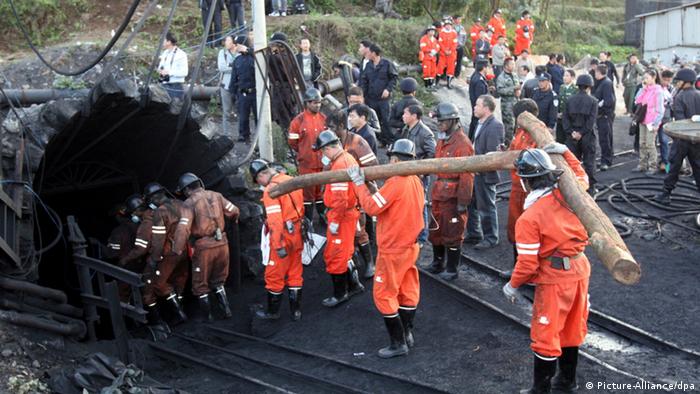
Rescuers pulled more dead and injured from a coal mine in western Turkey on Wednesday more than 12 hours after an explosion, bringing the death toll to 201 in the nation's worst mining disaster for decades.

Hundreds more were still believed to be trapped in the mine in Soma, around 120 km (75 miles) northeast of the Aegean coastal city of Izmir. The explosion, which triggered a fire, occurred shortly after 3 pm (1200 GMT) on Tuesday.

"We are worried that this death toll will rise ... I have to say that our hopes are dimming in terms of the rescue efforts," Energy Minister Taner Yildiz told reporters at the scene.

Fellow miners said the fire was still burning underground, hampering the operation. A pall of smoke hung above the area.

Rescue workers pumped oxygen into the mine to try to keep those trapped by the blaze alive, as thousands of family members and co-workers gathered outside the town's hospital. Many of the dead had suffered carbon monoxide poisoning, Yildiz said.

The energy minister had warned late on Tuesday that 787 workers had been in the mine at the time of the blast, believed to have been caused by an electrical fault.

Some 80 people were pulled out wounded including several rescuers, four of them critically injured.

The explosion took place during a change in shifts, meaning there was uncertainty about the exact number of miners still trapped inside, although Turkey's disaster management agency (AFAD) put the figure at more than 200 late on Tuesday.

A cold storage warehouse, usually used for food, and freezer trucks served as makeshift morgues as hospital facilities overflowed. Medical staff intermittently emerged from the hospital to read the names of survivors being treated inside, with families and fellow workers clamouring for information.

Teams of psychiatrists were being pulled together to help counsel the families of victims. Paramilitary police guarded the entrance to the mine to keep distressed relatives at a safe distance from the rescue effort.

There were calls on social media for protests in front of the Istanbul headquarters of Soma Komur Isletmeleri, the operator of the mine. The company said in a brief statement late on Tuesday that there had been "a grave accident" caused by an explosion in a substation but gave few other details.

Prime Minister Tayyip Erdogan cancelled a day trip to Albania, scheduled for Wednesday, and would instead go to the site of the disaster, sources in his office said.

The Labour Ministry said late on Tuesday its officials had carried out regular inspections at the mine, most recently in March this year, and that no irregularities had been detected.

Turkey's worst mining accident was in 1992, when a gas explosion killed 263 workers in the Black Sea province of Zonguldak. The country has a poor health and safety record in mining, particularly coal.

In May 2010, another gas explosion killed 30 miners, again in Zonguldak province.

Wednesday 14 May 2014

http://in.reuters.com/article/2014/05/14/uk-turkey-mine-idINKBN0DT22B20140514

continue reading

Colleagues face grim task of identifying bus crash victims


Colleagues of four Bangladeshi workers killed in Saturday’s bus crash in Dubai said they may have to identify the bodies.

The accident on Emirates Road also killed nine Indian workers and injured more than a dozen others travelling in the bus that hit a parked truck.

Only three workers — all Bangladeshi — remain in hospital, said an official from the Bangladeshi consulate in Dubai.

They are stable and recovering, he said.

The workers live in Umm Al Quwain and work mostly in Dubai.

They said some of them may be transported to Dubai on Wednesday to identify the bodies of the dead Bangladeshis.

According to survivors of the crash – and purported pictures of the accident aftermath – some of the victims’ faces have been left badly disfigured.

Worker Mohammad Babul said a number of roommates of the deceased and a relative of two accident victims may be among those identifying the bodies.

“We will have to identify them using other ways as well, not just by faces. The accident was so bad some victims’ faces are beyond recognition,” Babul said.

“One victim was 42-43 years old. Another was 32 and fat. A third was 22 and kind of fair. The fourth was short and of dark complexion.”

Babul said “we got a call from the company office to be ready early morning on Wednesday as we have to go to Dubai for this.”

Another worker, Mohammad Atiullah, also said some workers may be going for the grim task.

Meanwhile, according to the workers, their company’s “owner” visited them in Umm Al Quwain on Monday night for the first time after the accident.

He was reportedly held for questioning before his release on Monday, a company representative had said.

The representative could not be reached for an immediate comment on Tuesday.

The workers said the owner, said to be an Indian expat, promised to ensure their rights.

Babul said: “He said the management will fight for the injured and victims’ rights, saying they are following up with insurance companies. He said not one fils of any outstanding wages will be held back.

“He also said they are working day and night with local authorities and the Indian and Bangladeshi consulate or embassy to have the bodies sent home as soon as possible.”

Babul added that the owner was flanked by a manager and legal advisor.

“We were told that the company is looking to house us closer to work in Dubai or even in Sharjah.”

Their long daily drive from Umm Al Quwain to Dubai and back left them with little rest or leisure time, workers said.

“It was hard for the driver also, he may have fallen asleep when the bus crashed,” said a survivor.

Survivors earlier said they are not sure what led to the early morning accident as almost all the nearly 30 workers were asleep in the bus at the time.

Meanwhile, the workers have not been to work since Saturday.

“The owner said those of us who can, should return to work. Some of us were too disturbed by the tragedy,” Atiullah said.

Wednesday 14 May 2014

http://gulfnews.com/news/gulf/uae/government/colleagues-face-grim-task-of-identifying-bus-crash-victims-1.1332093

continue reading

Several killed, hundreds trapped after Turkey mine explosion


At least 17 people have been killed after an explosion and fire at a coal mine in western Turkey, officials say.

Hundreds were reported to be trapped underground at the mine in Soma, Manisa province, but Turkish media suggest as many as 157 have died.

A huge rescue operation has begun and some 20 people are reported to have been brought out so far.

Turkish President Abdullah Gul has ordered the regional governor to deploy all resources to rescue the miners.

They are thought to be 4km (2.4 miles) from the entrance, at a depth of 2km.

While it is estimated that 580 workers were underground at the time of the blast, it is thought many of them managed to escape.


Union officials said as the blast occurred at shift changeover time, there was uncertainty about how many miners were still inside, Reuters news agency reports.

Large crowds of worried family members gathered near the privately-owned mine.

This evening the Mayor of Manisa, Cengiz Ergun, said 157 had been killed and 75 injured in the explosion, which is believed to have been triggered by an electrical fault.

Mr Ergun said nearly 600 workers were left trapped underground after the explosion.

They are thought to be trapped about 2km below the surface and 4km from the exit of the mine.

Turkish Energy Minister Taner Yildiz said the situation was 'worrisome' and rescue efforts would last until the morning.

Yildiz said rescuers were pumping fresh air into the mine and rescue teams from neighbouring regions were rushing to the area. Tamer Kucukgencay, chairman of the regional labour union, said: ‘They are pumping oxygen into the mine, but the fire is still burning.

‘They say it is an electrical fault but it could be that coal is burning as well.’

Dozens of fellow workers and family members have gathered outside the hospital in Soma - a coal mining community in Turkey's western province of Manisa.

A senior local official, Mehmet Bahattin Atci, said thick smoke was hampering rescue efforts.

Energy Ministry Taner Yildiz said it was a "serious accident" and that he was going to Soma to oversee the rescue operation.

He told reporters that the fire had been triggered by an electrical fault.


He also said that four separate rescue teams were currently working in the mine.

"The fire creates a problem but oxygen is being pumped into the mine shafts that weren't affected," he added.

Before leaving for Manisa, Mr Yildiz told journalists it was too early to be precise about the extent of casualties: "I don't want to give any numbers. We first have to reach our workers underground,"

Analysts say the safety record of Turkey's coal mining industry lags behind that of most industrial nations.

The country's worst mining disaster was in 1992, when 270 miners were killed near Zonguldak, on the Black Sea.

Wednesday 14 May 2014

http://www.bbc.co.uk/news/world-europe-27400283

continue reading

Tuesday, 13 May 2014

Weather clears up: Body found in South Korean ferry


Divers have found another body trapped in a sunken South Korean ferry as the search for more than two dozen missing passengers resumed after strong winds and waves halted the effort for three days.

Searchers have found 276 bodies, and 28 passengers remain missing.

Most of the victims were students from a single high school south of Seoul.

Improved weather allowed the search to resume early on Tuesday, government task force spokesman Ko Myung-seok said.

Nearly a month after the ferry sank, the search teams have been hampered by bad weather, floating debris inside the ship and, lately, the vessel's deterioration.

According to Ko, it has been difficult to enter some of the rooms because waterlogged walls have partially collapsed and blocked passages.

Tuesday 13 May 2014

http://www.skynews.com.au/news/world/asiapacific/2014/05/13/body-found-in-south-korean-ferry.html

continue reading

Rough weather delays search for bodies on sunken Korean ferry


Bad weather prevented divers from searching inside the sunken, deteriorating South Korean ferry for a third day Monday.

Nearly a month after the ferry sank, 29 passengers remain missing, with 275 bodies recovered so far, most of them students from a single high school south of Seoul. No bodies have been found since Friday.

A high seas watch was lifted Monday morning but the search was not immediately resumed because of high waves and a rolling sea swell, emergency task force spokesman Ko Myung-seok said. Officials later said in a statement that the mission was further delayed because workers had to restore wires that disconnected from an anchor on a search barge during the bad weather.

Coast guard official Yang Jong-ta said the underwater search would resume as soon as the waves calmed.

Besides bad weather, the deterioration of the ferry is another big problem. Ko said it’s difficult to enter some of the rooms as the entryways have been blocked because some waterlogged walls have partially collapsed. Ko said the team will open new entrances by using iron levers and other devices.

Meanwhile, South Korea’s Welfare Ministry honoured three dead crew members on the Sewol ferry by designating them as “martyrs.”

The ministry said 22-year-old Park Ji-young, 28-year-old Kim Ki-woong and 28-year-old Jung Hyun-seon sacrificed themselves by remaining in the sinking vessel to help others escape.

The three can be buried in a national cemetery, and their bereaved families will be eligible for financial compensation and medical assistance.

Only 172 people, including 22 of the 29 crew members, survived the April 16 disaster. All 15 surviving crew members involved in the ferry’s navigation have been arrested on suspicion of negligence and failing to protect passengers.

Tuesday 13 May 2014

http://www.theglobeandmail.com/news/world/rough-weather-delays-search-for-bodies-on-sunken-korean-ferry/article18606867/

continue reading

At least 15 dead in fan stampede at Congo soccer stadium


A stampede at a soccer stadium in Congo's capital killed at least 15 people after angry fans threw rocks from the stands, prompting security officers to fire tear gas that caused crowds to flee in panic, government officials and witnesses said Monday.

The stampede at the Tata Raphael Stadium in Kinshasa happened toward the end of a match Sunday between popular teams AS Vita Club and TP Mazembe.

At least 21 others were injured during the melee, said Gov. Andre Kimbuta, who has set up a commission to investigate the incident.

Congolese government spokesman Lambert Mende on Monday defended the actions of the security officers.

"It is false to say that the violence was started by the tear gas, which was used to protect people being threatened by elements in the stands who were acting like militiamen," he said.

Three of the injured remained in the hospital, Mende said.

Spectator Kanga Yves said the crowds were trampled as they tried to flee the tear gas, and that he had seen at least eight bodies.

Witnesses said angry fans threw objects onto the field including rocks late in the match on the last day of the league season. The home team, AS Vita, was losing 1-0.

The stampede caused a recently restored wall and gate to collapse, the Confederation of African Football said in a statement.

More than 20 people were killed on April 25 in the town of Kikwit in southwest Congo when generators failed during a festival honoring a popular singer, plunging the stadium into darkness and causing a stampede.

Sunday’s Kinshasa stadium stampede also came days after Ghana marked the anniversary of Africa’s worst football disaster. Over 120 people were killed on May 9, 2001 when police fired tear gas at a stadium in the Ghanaian capital Accra because of crowd trouble at a game, also causing a stampede in the stands.

Most recently, more than 70 people died in a riot at a football game in the Egyptian city of Port Said in February 2012. The riot was linked to political violence in Egypt following the overthrow of Hosni Mubarak as president.

Tuesday 13 May 2014

http://www.tampabay.com/sports/soccer/stampede-kills-15-in-congo/2179490

http://losangeles.cbslocal.com/2014/05/12/at-least-15-dead-in-fan-stampede-at-congo-soccer-stadium/

continue reading

At least 14 die as migrant boat headed for Italy sinks off Libyan coast


At least 17 people died when a boat carrying hundreds of migrants sank in waters between Libya and southern Italy, navy officials say.

Some 200 others were rescued from the boat, which went down south of the Italian island of Lampedusa.

This comes a day after it emerged that 36 migrants drowned last week when their boat sank off the Libyan coast.

Libya is used as a departure point by many African migrants trying to enter the European Union illegally.

The boat sank on Monday about 185 km (115 miles) south of Lampedusa, Italy's Ansa news agency said.

An Italian navy spokesperson said it was not clear how many people were on board, so the number of missing passengers was unknown, AP news agency reported.

A tug boat servicing nearby oilrigs saw that the migrant boat was in trouble. As it went to help, the vessel capsized.

The rescue operation was conducted under an Italian military and humanitarian program called Mare Nostrum, Latin for “our sea,” the Roman name for the Mediterranean. The program is meant to control the flow of migrants who try to enter Europe by boat, and to assist vessels in distress. It has been monitoring the southern Mediterranean since last October, after a boat sank off the small Italian island of Lampedusa and 350 migrants died. Continue reading the main story

The Mare Nostrum program has come under political attack in recent weeks because of a surge in migrants reaching Italy, putting a severe strain on the government’s resources for receiving them. Critics said that about 9 million euros ($12.4 million) a month was too costly and not effective enough: as of Monday, 36,627 migrants had landed along Italy’s southern coast in 2014, according to Interior Ministry statistics. Most came from Africa or the Middle East.

Italy has been calling on the European Union to do more to help the country deal with the inflow, and Angelino Alfano, the interior minister, added his voice on Monday. “Europe isn’t helping us,” he said, according to ANSA, the Italian news agency. “While Italy was saving survivors of the shipwreck,” he added, Europe “must take care of the living.”

Roberta Pinotti, the defense minister, told Parliament last week that since it began last October, Mare Nostrum had saved the lives of 27,790 migrants, including more than 3,000 children, and had arrested 207 people for human trafficking. “The numbers are shocking,” Ms. Pinotti told lawmakers, “but let’s think of how tragic the count of the loss of human lives could have been.”

Flavio Di Giacomo, the Italian spokesman for the International Organization for Migration, said that “Mare Nostrum has saved many lives, but it’s clear that these trips are dangerous, so shipwrecks are not possible to avoid.”

Nine out of 10 refugees who enter Italy by sea pass through Libya, a former Italian colony and the closest part of North Africa to Italian territory, Ms. Pinotti said. More than two-thirds of them could qualify for political refugee status.

The flood of migrants is a major issue in Italy, one that the populist Northern League has made a cornerstone of its campaign in the European Parliament elections later this month. One candidate created a video in which migrants from various countries are seen warning their compatriots that Italy is not the Promised Land and that the traffickers who would smuggle them across the sea by boat “are assassins and fraudsters.”

Separately, Libya's navy said it had rescued 340 migrants from another boat after it began to take in water off the coast of the western town Sabratha, AFP reported.

On Sunday, Libyan officials said at least 36 migrants from various sub-Saharan African countries drowned when their boat sank off the Libyan coast last week.

Late last year, hundreds of migrants drowned when two boats sank in waters off Lampedusa. Italy has since stepped up navy and coastguard operations.

Unseaworthy, overcrowded vessels are continually setting out from Libya, carrying people who hope for better lives in Europe after fleeing war and poverty in various parts of Africa and the Middle East, the BBC's Alan Johnston in Rome report

Tuesday 13 May 2014

http://www.nytimes.com/2014/05/13/world/europe/at-least-14-die-as-migrant-boat-headed-for-italy-sinks-off-libyan-coast.html?_r=0

http://www.bbc.co.uk/news/world-europe-27379493

continue reading

Monday, 12 May 2014

State mental patients killed in 1918 fire to get markers after long-lost gravesite found in Norman cemetery


The night watchman smelled smoke in the linen room of Oklahoma State Hospital Ward 14 at 3:45 a.m. on a spring Saturday morning in 1918. He quickly sounded the steam whistle at the hospital's power plant to wake the sleeping patients. Nurses, ward watchmen, and other employees fought the fire with hand-held extinguishers and a one-hose stream.

Night-shift attendants bravely began trying to evacuate the men and boys from the ward and the sleeping room above them. Dr. D.W. Griffin was on the scene within minutes, organizing rescuers.

The south wind was blowing fire debris and quickly caught the dining room on fire. Flames caught Ward 13 and 16 on fire but all 88 patients were safely evacuated and the flames beaten back. In all, about 1,000 patients were housed in the sanitarium that spring.

Some of the patients were violent and the fire excited them even more, making the rescue more difficult. A few were confused and ran back into the buildings. Sitting on the grounds, the attendants wrapped the patients with blankets and took a head count: Forty men and boys out of 48 patients in Ward 14 were dead, mostly smothered in their beds. It is believed to be the highest number of deaths in a single Oklahoma fire, outdistancing the 36 killed in the Babbs Switch school fire on Christmas Eve in 1924.

The bodies were mostly unrecognizable. Undertakers I.M. Jackson and Meyer & Meyer removed the remains and prepared them for burial in coffins. One body was identified. The Rev. and Mrs. L.H. Havill identified their son, Ona, and took custody of his remains for burial at nearby Independence Cemetery.

Other families came from throughout the state to try and identify their sons, husbands and brothers. In a large, unmarked grave, in the northeastern part of the I.O.O.F. cemetery in northeast Norman, 37 coffins were covered with dirt on a Sunday afternoon.

For nearly 100 years, the exact location of the grave was unknown. Deputy Fire Chief Jim Bailey and others became interested in marking the grave to remember the fire victims.

Bailey enlisted the help of hospital administrators and staff of the Oklahoma Archaeological Survey at the University of Oklahoma. Dr. Scott Hammerstedt ran ground penetrating radar twice on the area where the mass grave was believed to be located. He'll discuss his findings in a talk at the hospital cafeteria at 6 p.m. March 25.

"We found something," he said. "But without excavation you never can be sure. We found an anomaly around that size. We are reasonably sure but you can never be 100 percent sure."

The site was one identified by a previous cemetery manager.

In newspaper accounts of the time, they were called simply "the unfortunates," the 40 patients of the Oklahoma State Hospital for the Insane who died on April 13, 1918, in a grisly, pre-dawn fire.

While their names were known, their bodies for the most part were unrecognizable. And with the exception of one man who was identified and claimed by his family, they were buried together in a single, unmarked grave.

Other graves were dug to the right and left of them, and tombstones lovingly planted to record for posterity who was buried there. Yet, the 39 unclaimed bodies remained with no marker, no message to posterity that they once had lived —— and violently died —— at the state hospital for the mentally ill. Soon, the site where they were laid to rest was forgotten.

Now, almost a century later, the grave of "the unfortunates" has been located, and hospital officials say they want to rectify what was a grievous oversight.

Monday 12 May 2014

http://www.tulsaworld.com/news/state-mental-patients-killed-in-fire-to-get-markers-after/article_ac1653ec-fcd9-5fa4-94e4-9c6495ac20e4.html

http://www.firehouse.com/news/11321098/1918-norman-oklahoma-state-hospital-fire-tragedy-remembered

continue reading

The worst sea tragedy — Kadavulevu


There have been many disasters in Fiji waters that have claimed a few hundred lives.

Of all, the capsizing of the inter-island vessel Kadavulevu in 1964 is believed to be the worst as it claimed 89 lives and left only three survivors.

Before the Kadavulevu tragedy, the destruction of the Syria at Nasilai Reef on the night of May 11, 1884 was regarded as the worst shipping tragedy in Fiji waters.

The 1010 tonne ship ran aground on the reef and broke into two, claiming 59 lives and throwing more than 200 survivors in rough seas.

Following the Kadavulevu tragedy, the Makogai and the inter-island vessel Uluilakeba got caught in Cyclone Lottie in 1973 and capsized, jointly claiming more than 80 lives.

More than a decade after Cyclone Lottie had wreaked havoc in the country, the Talofa capsized in waters off Yasawa-i-Rara in 1986, in which eight people died.

In 1995, the country was shocked when a boat carrying two people capsized between Labasa and Cikobia, leaving 21 people dead and one survivor.

The Ovalau tragedy in 2003 did not claim any lives but millions of dollars worth of heavy machinery, trucks and cargo were lost in Bligh Waters.

As part of a flashback into major sea disasters in Fiji, today we bring you excerpts from The Fiji Times of yesteryears on the Kadavulevu tragedy. A Fijian song was also written about it.

IT was March 29, 1964, when the inter-island vessel left an outer island.

There were 92 people on board the Kadavulevu, including passengers and crew, and it was reportedly sailing back to Suva.

On the front page of the April 2, 1964 edition, this newspaper reported the vessel had sunk in the Koro Sea just before midnight on March 29.

Seini Wakesa, 43, who had survived the disaster, relayed the tragic news after being washed ashore on Nosoata Island at the mouth of the Rewa River on April 1.

This newspaper had reported then that the passengers and crew clung to the side of the overturned ship but within minutes a fire broke out and they were forced to swim away.

It was also reported Ms Wakesa and three others hurriedly built a raft from debris and pushed away from the burning hull of the vessel.

After midday on April 1, 1964, the raft hit the reef near Nasilai and broke up, forcing Ms Wakesa to start swimming for her life, with no knowledge of the others who were with her.

It was reported the Kadavulevu was a wooden-hulled auxiliary schooner that was 45 feet long with a weight of 23.31 tonnes and was licensed to carry 29 passengers in Fiji waters.

On the front page of the April 3 edition, this newspaper reported the death toll from the tragedy would be more than 70.

Also, it was reported two more survivors — Viliame Qelo, 10, of Nasonini in Suva and Nina Rareba, 49, of Vatuwaqa in Suva were found, bringing the number of survivors to three.

The survivors had been in the water for a maximum of three and a half days without food and drinking water before they were found.

It was also reported that more than 70 passengers in the vessel were returning from a large gathering on Nairai Island in the Lomaiviti Group.

On the front page of the April 4 edition, this newspaper reported that hopes were fading to find other survivors from the tragedy.

The owner of the vessel Samson Lee and his brother Peter Lee were also said to have been on board the Kadavulevu when it capsized and caught fire. Survivors of the tragedy told this newspaper then that they sang hymns and prayed while swimming and trying to reach land.

On page three of the same day's edition, this newspaper released the first list of people who were on board the inter-island vessel when tragedy struck.

Among them were several women and children, most of whose bodies were never found despite days of aerial and sea search.

This newspaper continued to report on the developments then, including calls for a special fund for the victims families and calls for an inquiry into the disaster.

In the April 9 edition of this newspaper, the Fiji Marine Board invited anybody with evidence that could assist in the inquiry into the disaster to submit their names. Also, it was reported in the same edition that Samisoni Dakunivosa, 22, did not travel on the vessel from Nairai to Suva because it was overcrowded and the weather was bad.

On Tuesday, April 21, 1964, this newspaper reported on the start of an inquiry into the Kadavulevu tragedy.

The master of the vessel Yacomai, Misaele Tiko told the Fiji Marine Board inquiry that the captain of the Kadavulevu, its owner and others had an argument before it left Suva for Nairai on the night of March 26. Ms Wakesa told the inquiry, as reported in the April 22 edition, that she prayed to God to give her strength while she was in the raft she and others had made and while swimming.

She also told the inquiry about the fire which reportedly broke out after the boat had tilted to its side in open seas.

On the front page of the April 23 edition, this newspaper reported on the findings of the Fiji Marine Board inquiry into the tragedy.

The inquiry found that the primary cause of the Kadavulevu capsizing was gross overloading of passengers, most of whom were on the cabin top and in the main cabin.

It found that the adverse weather and sea conditions at the time of the accident, together with the gross overloading, were contributing factors to the vessel foundering but should not be confused with the primary cause — gross overloading with many people on the top parts of the Kadavulevu.

The marine board said in its opinion, there was not sufficient evidence to show the steering gear was defective and it was therefore not considered to be a contributing factor in the accident.

Also, the board considered a formal investigation into the loss of the Kadavulevu to be requisite and expedient. It expressed its regret at the loss of lives and extended its sympathy to the victims' relatives.

During the inquiry, the board heard from 16 witnesses, including the three survivors of the tragic incident.

On April 24, this newspaper reported that pieces of wreckage, mats, pillows and a blanket from the vessel had been washed up on the beach near two villages on Vatulele Island.

While the tragic loss of several lives resulted in a lot of sad faces, what made things more difficult for the victims' families was the fact that many bodies were never recovered.

Monday 12 May 2014

http://www.fijitimes.com/story.aspx?id=268234

continue reading

S Korea ferry disaster: Don't forget those still waiting to find their loved ones


Around 10 days after the April 16 sinking of the ferry Sewol, which killed hundreds of passengers who were mostly high school students on a field trip, the mother of one missing student lamented that she may not be able to identify her son's body if it was found because he did not wear any brand-name clothes. "I didn't have enough money to buy him brand-name clothes and now I'll never have the chance," she said as she wept.

Once a body is found, the description appears on a large monitor in the gymnasium in Jindo where the families of the missing students have been staying since the tragedy. The characteristics are gender, height, clothing and any distinctive physical characteristics. The families undergo a harrowing emotional moment each time the monitor displays such information.

On April 24, one woman in her 20s wept in agony as the description on the monitor matched that of her brother. She had always been among the most active among the family members of victims in calling for more efforts to find the passengers and had remained relatively calm until then.

Her hands shook as she gathered her belongings from the floor of the gymnasium. Tears streamed down her cheeks and dripped from her glasses. Other family members could not take their eyes off of her until she headed off to identify the body.

The same day, another woman learned that the body of her 44-year-old husband had been found. Other family members, who were still waiting for news about their loved ones, told her she was lucky to have found him.

After identifying the bodies of their child, husband or wife, families hold a funeral and finally head home. But those who still remain at the gymnasium keep staring at the monitor.

Some 500,000 people have visited a memorial altar in Ansan, south of Seoul, near the high school where most of the passengers came from. But the families still remaining at the gymnasium in Jindo wonder how much longer they have to wait until they hear any news about their loved ones. As the number of the missing dwindles, so do the numbers of volunteers working at the gym and journalists covering the tragedy. But the hearts of the Korean public should be with them until they too find their loved ones.

Weakening ship

Nearly a month after the ferry Sewol sank off the southwest coast of Korea, rescuers are encountering a new challenge as the search continues for 29 people still unaccounted for: a weakening ship.

The mission has been suspended since Saturday due to dangerous conditions such as high waves and strong tides. Coastguard spokesman Ko Myung-seok said the search will continue once conditions improve, but a new threat to divers is the collapse of parts of the vessel.

One room that the divers have been trying to enter near the rear of the ship has been blocked by the partial collapse in a nearby wall, Mr. Ko said.

It’s a room that divers have entered before, but they want to explore more thoroughly as try to reach places that were previously obstructed, he said.

“We will put the priority on the safety of divers when they search through dangerous areas,” Mr. Ko said.

Meanwhile, officials are scrambling to prevent currents from sweeping away articles and bodies from the ship. An object has been found in a location as far as 80 kilometers away from the accident site.

The government has also decided to provide subsidies to cover for any economic losses incurred by fishermen who have been taking part in the rescue operations, such as fuel costs and damage to fish farms.

As of Monday, 275 people have been confirmed dead from the April 16 ferry sinking.

Monday 12 May 2014

http://english.chosun.com/site/data/html_dir/2014/05/12/2014051201815.html

http://blogs.wsj.com/korearealtime/2014/05/12/ferry-sinking-update-weakening-ship-threatens-divers/

continue reading

Missing in America Project to bury 28 veterans' unclaimed remains


For four years, about 250 unclaimed bodies have been cremated and stored in plastic containers awaiting mass burial by the Allegheny County Medical Examiner's Office.

John Fabry, Pennsylvania coordinator of the Missing in America Project, suspected that some of them might have been veterans entitled to military funerals.

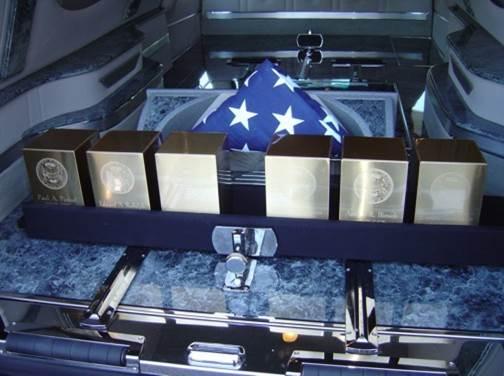
After talking with the military, the medical examiner's staff, a coroner and numerous funeral homes, he will bury 28 veterans with military honors on Thursday in the National Cemetery of the Alleghenies in Cecil.

“I'm glad we're able to do this,” said Michael Chichwak, manager of investigations for the Medical Examiner's Office.

The procession will start at 9:30 a.m. at Pittsburgh Institute of Mortuary Science on Baum Boulevard in East Liberty and reach the cemetery about 10:30 a.m. Fabry is hoping people will volunteer to drive in the procession, help with the ceremony, or simply pay their respects.

He needs a chaplain, volunteers to fire the salute and others to fold the flags.

His organization works to ensure that the inscription on grave markers — “Not forgotten” — rings true.

“These individuals served our country in either peacetime or wartime and for whatever reason ended up in our office. Now we're able to give them the proper, dignified burial they deserve, instead of being placed in a vault with 200 other unclaimed individuals in a pauper's grave that would be unmarked,” Chichwak said.

The Missing in America Project, a national program, says on its website that it has visited 1,560 funeral homes, identified the cremated remains of 2,144 people as veterans, and buried 1,882 of them.

The veterans in the burial on Thursday represent all branches except the Coast Guard. Most died after 2010, except one who died in 2005 and another in 1993.

If family members do not claim the ashes, funeral homes store them, Fabry said. The national organization once buried a Civil War veteran whose remains sat on a shelf in the South for 92 years, he said.

Fabry became involved with the organization about two or three years ago when he purchased what became the Goldsboro-Fabry Funeral Home in Fairchance in Fayette County.

Although not a veteran, he said he feels a kinship to those in the military. His father, John Fabry Sr., crossed the Rhine with Gen. George Patton during World War II and was shot below the ear. The bullet removed his tonsils and came out the other side. Totally disabled, his father died at 38.

Fabry said he has mixed feelings about his work identifying ashes as belonging to veterans.

“Once you find an individual is a veteran, you feel bad,” he said. “Here's a person who served his country, and now nobody wants to give him a proper burial.”

That sadness is balanced by the satisfaction he feels in providing that.

The project has the support of the Veterans Leadership Program of Western Pennsylvania, a nonprofit group that helps veterans with housing and job counseling.

“The service members have sacrificed on behalf of us. For the community to rally around in this way for the final farewell is exactly what the community should do,” said Albert Mercer, a Navy veteran who is executive director of the Veterans Leadership Program.

For info, see: http://www.miap.us/

Monday 12 May 2014

http://triblive.com/news/allegheny/6060854-74/pittsburgh-vietnam-army

continue reading

Typhoon Yolanda identification update


In Tacloban, residents still searching for missing loved ones may finally find closure six months after Yolanda devastated the city.

A team from the National Bureau of Investigation in Manila will conduct antemortem identifications of 2,255 bodies that remain unidentified.

Acting city administrator Jennylyn Manibay said the Tacloban government asked the NBI for help in identifying the victims. “This is the least the city government can do to provide comfort and closure to the relatives who had lost their loved ones,” Manibay said.

Of the bodies that had yet to be unidentified, 2,243 were buried in a mass grave at Holy Cross Cemetery in Barangay Diit.

Relatives of the missing can go to the Balyuan Convention Center beginning May 19 to register. The taking of blood samples and dental swabs will be done alphabetically. The samples extraction will end on July 7.

Qualified to give samples are parents and children of victims.

The samples will be sent to the NBI office in Manila. Their DNA will be matched with the DNA taken from the bones and tissues of unidentified victims.

Dr. Charina Labrador, NBI Disaster Victims Identification chief, said she could not say how long it would take to complete the procedure.

She said the matching would be done free of charge. Under ordinary circumstances, DNA matching costs P20,000.

Sunday 12 May 2014

http://newsinfo.inquirer.net/601215/govt-has-yolanda-recovery-report-after-all

continue reading

Sunday, 11 May 2014

At least 36 migrants drown off Libya


At least 36 migrants drowned when their boat sank off the Libyan coast earlier this week, officials said, following the recovery of more bodies on Sunday.

The navy said it rescued 52 people when the boat sank on Tuesday, but survivors say there were 130 people on board.

On Saturday Libya's interior minister urged the European Union (EU) to do more to help stem the flow of migrants.

Libya is the preferred crossing point for many African migrants trying to enter the EU.

Libyan navy spokesman Ayoub Kassem told the BBC that the boat capsized about 4km (2.5 miles) out to sea near the Libyan coastal town of Garabouli.

The bottom of the boat had collapsed, causing it to capsize, he said. At least 54 people remain missing, he added.

On Sunday 24 more bodies were recovered from the sea near Garabouli, bringing the death toll to 36.

Mr Kassem added that the migrants were from various sub-Saharan African countries including Mali, Cameroon, Ghana, Gambia and Burkina Faso.

The search continues for the remaining passengers.

Interior Minister Saleh Mazek said on Saturday that Libya could not cope with the amount of migrants arriving from sub-Saharan Africa.

He warned the EU that if it did not "shoulder its responsibility", then Libya may help the migrants to reach Europe.

The boat capsized off Garabulli, 50km east of the Libyan capital Tripoli and was reported to have been en-route to Europe.

On Saturday, Interior Minister Saleh Maziq threatened to help illegal migrants reach Europe if the European Union did not do more to help Libya deal with a flood of migrants using Libya as a transit point.

Libya's porous borders with its sub-Saharan neighbours and its proximity to Italy and Malta across the Mediterranean have made the North African country a common transit route for migrants trying to reach Europe.

Sunday 11 May 2014

http://www.aljazeera.com/news/middleeast/2014/05/dozens-migrants-drown-off-libya-201451114459970884.html

continue reading

Wall collapses in eastern China, killing 18 people


Heavy rain caused a retaining wall to collapse at a recycling plant in the eastern Chinese city of Qingdao on Sunday, killing 18 people, state media reported.

The wall that collapsed crushed a house for workers in which 40 people were gathered, the Qingdao government information office said.

The wall collapsed due to waterlogging after a rainstorm, the official Xinhua News Agency reported. It said 18 people were killed and three others were injured.

Authorities were investigating the collapse.

China's eastern coastal and southern regions have been drenched by heavy rains in recent days. Two other deaths in Hunan province and Guangxi Zhuang Autonomous Region were linked to the rains as flooding and landslides hit swaths of the country.

Sunday 11 May 2014

http://www.kwqc.com/story/25484804/wall-collapse-in-china-kills-18-injures-3

continue reading

Saturday, 10 May 2014

Divers retrieve two more bodies in S Korea ferry disaster


Divers have retrieved two more bodies from the wreck of the South Korean ferry that sank last month, as conditions on the ship further deteriorated, officials said on Saturday.

The bodies were found late on Saturday in the inverted, submerged ship, bringing the confirmed death toll from the April 16 disaster to 275, Coastguard Spokesman Ko Myung-Suk told journalists.

Twenty nine are still unaccounted for.

Divers have now swept through most of the ship, which is resting on its side at a depth of more than 40 metres off the country’s southern coast.

The divers have also reported that partition walls on the ship have started warping and are at risk of collapsing, which would further complicate their work, a government task force said in a statement.

The divers have been under immense pressure from the authorities and the victims’ families to retrieve all the trapped bodies as quickly as possible.

They face enormous hazards and challenges, including near-zero visibility, strong currents and often treacherous weather conditions.

The Sewol was carrying 476 people when it sank after listing sharply to one side.

Of those on board, 325 were children from a high school in Ansan City in the southern suburbs of Seoul who were on an organised trip to the southern resort island of Jeju.

Initial investigations suggest the ferry was carrying up to three times its safe cargo capacity.

The Sewol’s regular captain, who was off duty on the day of the accident, has told prosecutors that the ferry operator Chonghaejin Marine Co. “brushed aside” repeated warnings that the 20-year-old ship had stability issues following a renovation in 2012.

The head of Chonghaejin, Kim Han-Sik, faces charges of manslaughter through negligence and breaches of vessel safety laws, Yonhap news agency said.

At a public park in Ansan, a focal point of national mourning, some 2,000 students from various high schools in the city held a candlelit vigil yesterday night for the victims, with yellow ribbons tied to their arms.

Saturday 10 May 2014

http://indianexpress.com/article/world/asia/divers-retrieve-two-more-bodies-in-s-korea-ferry-disaster/

continue reading

Accident death toll in Dubai increases to 15

Fifteen workers were killed and 14 others injured in a traffic accident on Emirates Road on Saturday.

Colonel Ali Ghanim, Director of Bur Dubai Police Station said that the accident occurred when a bus carrying 29 Asian workers rammed a heavy truck parked on the hard shoulder, killing 13 people on the spot.

According to the statement issued by the Dubai Police, 10 of the injured were rushed to Rashid Hospital and six others to Al Baraha Hospital. Two of the injured died shortly at the hospital which increased the toll to 15.

The air wing of Dubai Police and ambulance and police patrols used hydraulic cutters to remove bodies of the workers.

Major-General Khamis Mattar Al Mazeina, Commander-in-Chief of the Dubai Police visited the accident scene to determine the cause of the accident.

It is worthy to mention that the Dubai traffic authorities have proposed that mini buses and vans should not be allowed to transport workers as they are not safe.

Saturday 10 May 2014

http://www.khaleejtimes.com/kt-article-display-1.asp?xfile=data/crime/2014/May/crime_May17.xml§ion=crime

continue reading

5 dead, 10 missing in Odisha boat capsize


At least five people drowned to death and over ten persons went missing as a country boat capsized in Biluakhai river near Biridi in Odisha’s Jagatsinghpur district, the SP Satyabrat Bhoi said this evening.

The fire brigade team engaged in the rescue act have so far managed to fish out five bodies, he said, adding that the joint rescue and search operation by the fire brigade, police and local volunteers is on.

Local sources said the small-sized country boat was carrying over 25 people which was far beyond the capacity across the Biluakhai river. The passengers, mostly from the Nachhipur village, were returning home after attending a fire ritual at a Shiva temple located in Galipur on the other side of the river.

Saturday 10 May 2014

http://odishasuntimes.com/52595/5-dead-10-missing-odisha-boat-capsize/

continue reading

MH370: 89th aircraft to go missing in last 66 years


Malaysia Airlines flight MH370 is allegedly the 89th aircraft to have gone mysteriously missing since 1948 and since its disappearance two months ago numerous theories and conclusions have surfaced.

Dubbed the biggest mystery in aviation history, investigators and experts from around the globe raced to find solutions, not ruling out the possibilities of hijack, pilot suicide, sabotage or even alien abduction.

According to data from the Aviation Safety Network, some 88 aircraft have been declared as "missing" which means there are no traces of bodies or debris from these flights, all with 14 or more passengers on board.

Back in the 1940s and 50s such disappearances were more common when communication technology was not so advanced, but in recent history, with such state-of-the-art equipment, the fate of MH370 truly remains a mystery.

Based on the history of aircraft disappearances, one could conclude that even if MH370 is not located in the near future, there is the possibility of it resurfacing decades down the line.

According to past reports, a Boeing 727 that went missing sometime in 1985 was not discovered till 2006 when some hikers stumbled upon the wreckage in a glacier on Mount Illimani - Bolivia's second hightest peak.

Listed below are six cases of aircrafts that mysteriously went missing over water (source from history.com) - similar to the fate of MH370.


- British South American Airways Star Tiger (January 30, 1948)

The waters of the Atlantic Ocean in what would be dubbed the Bermuda Triangle had already been the scene of a mysterious aviation incident in 1945 when five American torpedo bombers on a routine training mission all mysteriously vanished off the Florida coast.

A seaplane with 13 aboard also disappeared in the rescue mission. Three years later, the Star Tiger, with 31 people aboard, maintained normal radio communication shortly before entering Bermuda airspace on a flight from the Azores.

The plane, however, never landed, and no distress message ever emanated from the Avro Tudor aircraft.

A five-day rescue effort located no wreckage, and investigators concluded the fate of the airliner was "an unsolved mystery."

- British South American Airways Star Ariel (January 17, 1949)

Less than a year after the Star Tiger vanished in the Bermuda Triangle, another British South American Airways flight also disappeared in the same region en route from Bermuda to Jamaica.

Although the pilot reported fine weather conditions, radio contact with the Star Ariel suddenly ceased an hour after the flight departed.

British investigators could not find the wreckage of the Avro Tudor Mark IV or any sign of the 20 people on board.

Without evidence, investigators were forced to conclude that the cause of the accident was unknown.

- Northwest Orient Airlines Flight 2501 (June 23, 1950)

As the pilot of the DC-4 prop plane carrying 55 passengers and a three-person crew approached Lake Michigan around midnight, a powerful line of squalls loomed ahead.

The storm's severe turbulence and frequent lightning had already caused pilots of three other westbound flights to turn around.

Near Benton Harbor, Michigan, the pilot of the Northwest airliner requested permission to lower altitude from 3,500 feet to 2,500 feet without stating a reason, but air traffic controllers denied the request because of other planes in the area.

The pilot's acknowledgment of the denial would be the last transmission received from the plane that was en route from New York to Seattle with stopovers scheduled for Minneapolis and Spokane, Washington.

Minutes later, witnesses on the ground heard a sputtering aircraft "like a stock car with a blown head gasket" and saw a "terrific flash."

The U.S. Coast Guard discovered oil slicks in Lake Michigan near Milwaukee and focused the initial search there.

However, two days later search parties discovered blankets with the Northwest logo, foam rubber cushions and human remains 10 miles offshore of South Haven, Michigan, and the responders realised they had been looking in the wrong area of the lake for the plane.

With visibility less than eight inches in the murky lake bottom, divers could not locate the plane, and the U.S. Civil Aeronautics Board could only conclude that the cause of what at the time was the deadliest commercial airliner accident in American history was "unknown."

- Canadian Pacific Air Lines (July 21, 1951)

As the Korean War raged, a Douglas DC-4 took off from Vancouver, Canada, on a flight to Tokyo, Japan, to assist in the Korean Airlift.

Carrying 31 passengers and a six-person crew, the Canadian Pacific airliner encountered rain, low visibility and icing conditions as it approached Anchorage, Alaska, for a refueling stop.

The plane reported no issues as it checked in near the Alaskan panhandle about 90 minutes from arrival.

It would never be heard from again. American and Canadian rescue teams searched for months but found no traces of wreckage.

- Pan Am Flight 7 (November 9, 1957)

The Boeing 377 Stratocruiser that took off from San Francisco to Honolulu with 36 passengers and 8 crewmembers on the first leg of an around-the-world flight was the lap of luxury.

Passengers aboard the "ocean liner of the air" enjoyed 60 inches of legroom, reclining sleeper seats, a horseshoe-shaped cocktail lounge and seven-course dinners that included caviar and champagne.

The Clipper Romance of the Skies was about halfway through the flight when radar contact was suddenly lost without a distress call from the plane.

After a five-day search, a U.S. Navy carrier spotted floating debris and recovered 19 bodies nearly 1,000 miles east of Honolulu.

Most of the victims were wearing life vests, indicating that the plane had been prepared to hit the Pacific Ocean.

The aircraft and the remaining 25 people aboard were never found.

Although testing revealed elevated levels of carbon monoxide in several of the recovered bodies, the Civil Aeronautics Board found "no evidence of foul play or sabotage."

- Flying Tiger Line Flight 739 (March 16, 1962)

Chartered to transport military personnel during the Vietnam War, the Lockheed L-1049 Super Constellation took off from Guam with 93 U.S. Army electronics and communications specialists, 3 members of the South Vietnamese military and 11 crewmembers aboard.

Although flying conditions were ideal and no distress signal was ever received, the plane never arrived at its intended destination-Clark Air Base in the Philippines.

The disappearance sparked the largest peacetime air-and-sea rescue mission in the Pacific Ocean since Amelia Earhart vanished in 1937.

The 1,300-person search party scoured 144,000 square miles and turned up nothing.

An Italian crew aboard an oil super tanker reported seeing an "intensely luminous" explosion in the sky and two flaming objects plunging to the ocean around the location of the plane when it disappeared.

Since another Flying Tiger plane had crashed in Alaska only hours earlier, killing one of the seven people aboard, sabotage was considered, but the Civil Aeronautics Board ultimately could not determine a probable cause because of the lack of any recoverable evidence.


Saturday 10 May 2014

http://www.fz.com/content/mh370-89th-aircraft-go-missing-last-66-years

continue reading

At least 13 missing Niger migrants found dead in Sahara


At least 13 of the dozens of migrants from Niger abandoned by smugglers in the Sahara desert last week have been found dead in southern Algeria, a local official and a military source in Niger said on Friday.

Alat Mougaskia, the local representative of the Niamey government in the northern town of Arlit, said 13 bodies had been confirmed in one location. Mougaskia said another 33 people from the same convoy of mainly women and children were believed to have died elsewhere but their bodies had not been found yet.

"These people appear to have gone looking for shelter but died from the lack of food and water," a Niger military source told Reuters, asking not to be named. The source put the estimate for the dead at 30.

There was no immediate comment from authorities in Algeria.

Niger sits at a crossroads of migrant routes linking North Africa t

o the rest of the continent. The country pledged to crack down on smuggling after 92 migrants died trying to make the same trip to Algeria late last year. Authorities on both sides of the border have been searching for migrants this week after six women and eight children who were part of a convoy of migrants abandoned by their driver in the desert were rescued by Algerian security forces, officials said.

Most of the migrants heading to Algeria are women and children from Niger's remote southeast who are sent to beg outside mosques in Algeria. The Libya route, however, is popular amongst youth from across West Africa looking to work in Libya or seek a better life in Europe.

Saturday 10 May 2014

http://www.thestar.com.my/News/World/2014/05/10/At-least-13-missing-Niger-migrants-found-dead-in-Sahara--officials/

continue reading

Friday, 9 May 2014

Train hits jeep at unmanned crossing in Uttar Pradesh, 13 killed


At least 13 people were dead and three injured when a train rammed into a jeep at a unmanned railway crossing in Kothipur area here.

According to reports, the jeep carrying 16 persons was returning from a marriage function.

The incident took place at 1 am.

Thirteen people were killed on the spot and their bodies were pulled out with great difficulty from the mangled steel remains, an official told a news agency.

The three seriously injured have been admitted to a hospital.

The rail route was disrupted for several hours after the accident and normal traffic was restored early Friday.

Friday 09 May 2014

http://zeenews.india.com/news/uttar-pradesh/13-killed-in-train-jeep-accident-in-uttar-pradesh_930827.html

continue reading

Poor Asian transportation disaster response could impact U.S. aviation business


As President Barack Obama continues his strategic “Pivot to Asia,” away from the Middle East, we must include in that pivot a demand that countries and companies doing business in the region embrace a more thoughtful emergency response that mirrors the openness and best practices standards of the Western world. Specifically, we must ensure that extensive and detailed family assistance plans are proactively in place prior to a major transportation disaster.

The missing Malaysia Airlines Flight 370 and the sinking of the MV Sewol are stark reminders of just how far many countries in that region and around the world have yet to travel to reach minimally acceptable standards in addressing families’ needs after such tragic accidents. We continue to see families protesting and attacking the Malaysian Embassy in Beijing and even demanding answers from the Chicago headquartered aircraft manufacturer Boeing. In South Korea, families were traumatized even further when several of the bodies of teenage victims from MV Sewol were returned to the wrong families.

As the former Director of Government, Public and Family Affairs at the National Transportation Safety Board, I have personally seen how grieved the victims’ families can be when the remains and personal effects of their loved ones are mishandled. Between 1994 and 1996, there were four major transportation accidents in the United States, which killed a total of 540 people. Similar to what we have seen in both Malaysia and now in South Korea, the U.S. emergency response teams on occasion lacked organization, coordination, and even compassion.

In answering families’ cries for assistance, Congress passed the 1996 Family Assistance Act and subsequently, the 1997 Foreign Air Carrier Act. I served as a core member in the development of the NTSB’s family assistance program, which is still in effect to this day in the U.S.

The operation we designed harnesses the assets and capabilities of the federal government to work in cooperative coordination with emergency responders and the local medical examiner or coroner, whose responsibility it is to recover and identify victims. Since the passage of the Family Assistance Act, the NTSB’s program has been considered the gold standard.

As U.S. interests pivot East, the region as well as American companies doing business there should look West and adopt the standards established by the family assistance programs already adopted in countries including Australia, Canada, Brazil, throughout the European Union and of course, the U.S. While having such a comprehensive plan in place would not have located MH370 any faster or changed the likely criminal actions of the captain of the MV Sewol, a plan would have provided some measure of relief and not exacerbated the unthinkable sadness and grief for those who lost loved ones.

A tremendous amount is at stake in Asia for the American aircraft manufacturing industry if it fails to adequately address the needs and concerns of the MH370 families head-on. This is primarily due to the information void caused by the still missing Boeing 777 aircraft and complicated further by Malaysia’s former prime minister blaming Boeing for its disappearance. While clearly this is a blatantly unfair overstatement at this point in the investigation, the fact remains for Boeing that Malaysia, and Asian region public opinion for that matter, both are turning against Boeing very quickly. It would be sensible for Boeing to take a pro-active role with the families as part of an overall reputational risk management strategy.

The reasons why this is important are clearly stated in a Boeing market report released in February 2014. In the report, Boeing predicts that the demand for new airplanes in the Asia Pacific region will grow exponentially over the next 20 years. Boeing also estimates the region's airlines will need an additional 12,820 airplanes valued at $1.9 trillion, representing 36 percent of the world's new airplane deliveries over the next two decades. However, should Boeing’s reputation with Asian governments and their publics erode due to their perceived mishandling of their response to MH370 families, Boeing could face potentially significant losses in market share within this critical region.

Both countries and companies must no longer view family assistance as reactionary but must bring the development and improvement of family assistance plans to the forefront of their strategy. If they do not prepare adequately, they too could become an unwilling participant on the next global stage where families’ horrific reactions and outrage on disaster are broadcasted internationally.

Friday 09 May 2014

http://thehill.com/blogs/congress-blog/foreign-policy/205590-poor-asian-transportation-disaster-response-could-impact

continue reading

Korea Coast Guard expands search for missing bodies from Sewol


South Korea’s coast guard expanded the search area for missing bodies from the sunken Sewol ferry, as the government announced support for companies hit by lower consumer spending during a period of national mourning.

The coast guard deployed drifting buoys attached with mannequins in an effort to trace the possible path of bodies that may have been dragged away from the Sewol, the government’s disaster response team said in an e-mailed statement. The vessel sank in an area known for strong currents off the southwest corner of the Korean peninsula on April 16.

The search was also expanded to all 111 rooms on the Sewol, after the divers had previously focused their attention on 64 cabins known to have been occupied before the ship listed, coast guard official Ko Myung Suk said in a televised briefing today. The confirmed death toll of 273 will probably rise to 304 of the 476 people on board, making it the nation’s worst maritime disaster since 1970.

President Park Geun Hye, facing criticism over government handling of the disaster, called for preemptive measures to support the economy and companies affected by the ferry sinking, according to the presidential Blue House website. Those support measures include 15 billion won ($14.7 million) of cheap loans to travel firms and a further front-loading of the 2014 budget to boost domestic consumption, the finance and other ministries said in a statement today.

Travel agencies, transport companies and hotel chains have lost bookings during what’s normally one of their busiest periods. Before the incident, the government had designated May 1-11 as a special period for tourism, providing discount coupons for hotels, attractions and restaurants as part of its plan to boost domestic tourism spending. High School Students

More than two thirds of the people on the Sewol were a group of 339 students and teachers from Danwon High School near Seoul. They were on a four-day excursion to Jeju island, nicknamed ‘Korea’s Hawaii’ for its volcanic scenery and beaches, a trip made by about 300,000 students a year, according to the island’s government.

Hundreds of thousands of people have visited temporary altars around the country to offer their condolences. Yellow ribbons with messages in support of the victims and their families are tied on railings in public places including along walking paths that flank the Cheonggye stream in central Seoul.

Families of the victims marched to the presidential Blue House seeking a meeting with Park overnight, according to YTN, which showed footage of a candlelight procession with many wrapped in blankets with police standing by.

Bank of Korea Governor Lee Ju Yeol said today the ferry’s impact on consumer sentiment is likely to be felt in the economy through the second quarter.

Friday 09 May 2014

http://www.businessweek.com/news/2014-05-09/korea-coast-guard-expands-search-for-missing-bodies-from-sewol

continue reading

Thursday, 8 May 2014

South Korean ferry accident: Number of people missing rises


The number of people missing in the South Korean ferry sinking disaster rose after two unregistered Chinese nationals onboard were detected to be missing, authorities said on Thursday.

There was no change in the total number of passengers, but the number of those missing has risen, Xinhua cited from an interim report on rescue operations by Coast Guard chief Kim Seok-kyun.

As of Thursday, 269 people have been confirmed dead, while 35 are still missing. The number of those saved was 172.

The number of those rescued fell by two due to a double report and a mistaken calculation.

The number of missing rose by two as two Chinese nationals unregistered in the passenger list were added, Kim said.

A total of four Chinese nationals were onboard the ferry, which sank off the country's southwestern coast April 16.

On the 23rd day into search, no bodies were retrieved overnight as climatic conditions became worse in the area.

Koh Myung-seok, spokesman of the accident response centre, told a press briefing that divers have stood by overnight as waves were high and strong winds were blowing.

Divers will be able to plunge into waters Thursday afternoon to search passenger cabins on the third, fourth and fifth floors of the five-storey vessel along with communal spaces such as restaurants and toilets, Koh said.

The number of injured divers kept rising as they were exhausted amid the protracted search operations. Six more divers received decompression treatment Wednesday, taking the total number of those injured to 24.

Thursday 08 May 2014

http://news.oneindia.in/international/south-korean-ferry-accident-two-more-missing-1443695.html

continue reading

Memories on 50th anniversary of airplane disaster in the East Bay still run strong


The story of Pacific Airlines Flight 773 is a nearly forgotten chapter in the annals of senseless airplane tragedies.

But 50 years ago, the serene sloping hills of the Tassajara Valley were the scene of the first commercial airliner crash of its kind -- one that forced aviation safety reforms.

On May 7, 1964, Flight 773, a "gambler's special" flight from Reno to San Francisco via Stockton, took a nose-dive into the hills from 5,000 feet. The Fairchild F27A turboprop airliner hit with a thunderous crash some described as "a sonic boom," erupting into a ball of fire and an enormous plume of smoke that could be seen for miles. It left 44 people dead.

Investigators, FBI agents, police and press all descended upon the grassy dunes, combing through the shredded metal and human remains for clues to what caused the crash. The sleepy hamlet of Danville became the center of operations for the flight recovery and investigation efforts -- a place where loved ones came to claim the bodies that filled a makeshift morgue at the Village Theater.

"It was just a big boom ... and we'd never seen anything like that ever, in our nice, little, quiet community," said Gordon Rasmussen, a rancher who heard the crash that day. "It was horrific."

The handgun changed everything

It would take three days for an essential key to the mystery to be found -- a .357 magnum revolver, twisted and blackened from the fire, with six bullets still inside.

Francisco Paula Gonzales, 27, a member of the Philippines 1960 Olympics yachting team, reportedly had been depressed over marital and debt-related financial problems. He showed the revolver to numerous friends and told them he planned to shoot himself. He even told people they'd read about him in the papers around May 6 or 7. And on his final night in the casinos in Reno, he told a casino worker he didn't care how much money he lost because "it won't make any difference after tomorrow."

As the May 7 sun was rising, Gonzales shot both the pilot and co-pilot before turning the gun on himself. The plane plummeted to the ground, killing all on aboard.

Days later, the long and hard-to-understand message on the air traffic control tower's voice recording with the pilots was finally deciphered. Co-pilot First Officer Ray Andress, of Santa Clara, was heard saying, "Skipper's shot. We've been shot! Trying to help." And then more shots could be heard -- and then just static.

Legacy of a tragedy

Flight 773 made a lasting mark in aviation history as the first commercial flight during which the pilot was killed by a gunman, causing passengers to die in a crash, said Jerry Warren, board vice president of the Museum of the San Ramon Valley in Danville, who spent months researching the crash.

Back then, it seemed like an isolated incident, said Julie Clark, the daughter of pilot Ernie Clark and now an El Dorado County resident: "People just didn't kill people, go through cockpit doors and shoot people."

Flight 773 "did change a lot of things in the airline industry," said Judy Clark Grilli, Julie Clark's twin sister. In addition to Clark's Law (named after Ernie Clark), requiring cockpit doors on commercial flights be locked, Flight 773 prompted federal rules and legislation requiring that voice recorders be installed in the cockpit of all passenger aircraft, Warren said.

Grilli was 15 when her father's plane went down. She recalls being called out of her high school class before lunchtime; when she saw her sister Julie walking ahead of her in the hallway, they both knew something horrible had happened, she said. Their mother had died in an accident almost a year earlier, and they'd been called out of school in exactly the same way.

Exacerbating their pain was the rampant speculation, before the gun was recovered, that her father may have been at fault, said Julie Clark, who later became one of the first female pilots in the commercial aviation industry.

When she -- and the rest of the world -- found out that a lone gunman, a passenger, was responsible, "I thought 'hallelujah.' I was just happy, because I knew it wasn't (my dad's) fault," she recalled.

National focus on Danville

For days, the hills of the Tassajara Valley were marred by "the chaos" of the wreckage, recalled Gayle Montgomery, a former Oakland Tribune reporter and editor who covered the crash for three days.

"You'd find pieces of body ... and it wasn't pretty," he said. "And this was a gamblers' plane, so apparently everyone had brought back a deck of playing cards, which were scattered everywhere."

Nearby Danville -- then a town of some 13,000 people -- bustled during the recovery efforts.

Chuck Fereira was 17 and a senior at San Ramon Valley High School at the time. His mother was a beautician who also worked for the town mortician, Mel Whalin, helping prepare bodies for viewing. The enormity of the crash hit home three days later, when he and his father were anxiously waiting for his mother to come home and cook dinner. She arrived uncharacteristically late -- and uncharacteristically emotional, he said.

"Finally I remember my dad coming in and telling me then that the crash was caused by someone who had shot the pilots," he said. "And by that time, the town had really begun to comprehend the magnitude of what happened."

Fifty years later, Fereira calls the crash a defining local moment that ranked almost with President Kennedy's assassination.

"But even that, you watched on TV or talked about in church -- it wasn't in your backyard."

Thursday 08 May 2014

http://www.mercurynews.com/bay-area-news/ci_25709314/memories-50th-anniversary-airplane-disaster-tassajara-hills-still

continue reading

Wednesday, 7 May 2014

Unidentified 9/11 remains to be moved to Ground Zero memorial

Thousands of unidentified remains from victims of the Sept. 11, 2001 attacks in New York will be taken Saturday to Ground Zero, where a memorial of the attacks has been erected.

The attacks — in which hijacked jetliners smashed into the Twin Towers, the Pentagon in Washington, and a field in Pennsylvania — killed some 2,753 at the World Trade Center, alone.

But only 1,115 of the bodies were ever identified, according to figures from the New York medical examiners office.

The unidentified remains will be moved to a specially-built repository under the National September 11 Memorial Museum “on Saturday morning,” said Susan Dahill, communication director for the “Voices of September 11th,” a group that works with some 800 families of victims of the attacks.

The mayor’s office sent a letter to victims’ families to announce the transfer, local media reported. An assistant press secretary told AFP further details would be provided later in the week.

Nearly 8,000 pieces of human remains — which authorities have been unable to match with the DNA of victims provided by families — will be moved in a “solemn, somber, respectful procession” of vehicles from the police, fire department, and the Port Authority of New York and New Jersey, the New York Times reported.

There will be no religions ceremony or service, nor will the event be attended by city officials, the newspaper added.

Dahill explained the event will only be open to family members of the victims, “because of the space limitation.”

The museum opens to the public on May 21, though authorities have established a five-day tribute period starting May 15 specifically for family members, workers at the former World Trade Center, rescue workers from the attack, and survivors.

The re-built World Trade Center includes five new skyscrapers, the memorial, the museum, a metro stop, some 550,000 square feet (51,000 square meters) of retail space, and a performing arts center.

Wednesday 07 May 2014

http://www.rawstory.com/rs/2014/05/06/unidentified-911-remains-to-be-moved-to-ground-zero-memorial/

continue reading

Argentine team IDs victims in Mexico kidnapping case


Experts from the Argentine Team of Forensic Anthropology (EAAF) concluded that 12 bodies found in a mass grave in Mexico last August correspond to a group of young people who were kidnapped from a bar in the capital’s upscale Zona Rosa district, Mexican prosecutors said.

“The results of the external investigation conducted by Argentine specialists confirm the findings released by this institution and by the Attorney General of the Republic’s Office on the full identification of the Heaven bar victims,” the Federal District Attorney’s Office said in a statement.

The remains of 13 people were found in a clandestine grave in Tlalmanalco, in Mexico state, in August last year. Local investigators said 12 of them had been abducted from the Heaven bar three months earlier but failed to identify the thirteenth body.

The Argentine team was called to aid Mexican experts after some of the victims’ relatives expressed doubts about local investigators’ conclusions and demanded that foreign experts examine the remains.

On Sunday, after the Argentine experts concluded that the remains belonged to the victims of the Heaven bar kidnapping, members of the team met with relatives to explain the methodology they used to identify the bodies.

The relatives said they trusted the team’s conclusions but criticized the work of Mexican investigators.

They claimed that they had initially been shown photos of remains that didn’t belong to their children.

Four of the bodies were released to relatives and nine others were kept at the coroner’s office at the request of family members until the final identification could be completed.

Police believe that the mass kidnapping was in reprisal for the murder of Horacio Vite Angel, a reputed member of the La Uniรณn de Insurgentes drug gang, by the rival La Uniรณn de Tepito gang.

Tepito is the crime-ridden downtown Mexico City neighbourhood where most of the victims lived.

The case

The Heaven bar kidnapping occurred in May last year, at midday, on a sunny Sunday in an upscale district in the heart of Mexico City. Five cars pulled up outside the after-hours club known as Heaven — located just a block from the federal police administrative offices and the US Embassy — and eight men and four women who had been partying all night left and climbed inside, grainy surveillance video shows.

Then they vanished.

After more than two months during which the Mexico City police achieved little progress, federal investigators were brought in. Just a few weeks after they had started working on the case, they discovered 13 bodies — the 12 young victims and an unidentified person — on a ranch 50 kilometres away from where they disappeared.

Tattoos and dental work allowed investigators to identify many of the victims of the Heaven club almost immediately but relatives of the 12 received the news with mistrust. They accused Mexico City’s law-enforcement authorities of moving slowly on the sensitive investigation, perhaps because they were afraid of what it might reveal.

Police involvement

With some 100,000 police officers in the capital, Mexico’s largest cartels have little public presence in the country’s capital. The retail drug business is booming, however, and local drug gangs collectively make US$100-200 million a day selling marijuana, cocaine and hallucinogens.

Investigators believe dealers from the poor eastern neighbourhood of Tepito had been trying to move in on the Uniรณn de Insurgentes, a gang that’s named after the city’s prosperous main north-south thoroughfare and controls sales in virtually all of the nightspots in the wealthiest parts of the city.

The gang in control hires women as spies to flirt with potential rivals looking to sell drugs on their territory, and valets are used as lookouts, investigators said. Corrupt police with annual salaries of less than US$10,000 are paid to turn a blind eye.

Around 20 people have been arrested in connection to the case, with four police officers among them, the prosecutor’s office said.

Family ties

Of the 12 victims, at least some had family ties to a Tepito gang.

One, Jerzy Ortรญz, has a father, Jorge, who is currently imprisoned for extortion, organized crime, homicide and robbery.

Another victim was Said Sรกnchez, whose father is serving a 23-year prison sentence for similar crimes.

Surveillance camera footage that could have helped solve the mystery disappeared eight days after the kidnapping. And even when families started to report the missing day after the kidnapping, nothing happened until four days later when the relatives blocked streets in a public protest.

Even then the case seemed to be going slowly, with leads turning up and immediately going cold, and Mexico City officials repeatedly emphasizing that the case was no sign of a broader problem of insecurity in the capital.

“They have many elements, many people, but where are the victims?” Leticia Ponce, mother of 16-year-old Jerzy Ortรญz, one of the missing, asked in July. “Are they really trying to find them?”

Wednesday 07 May 2014

http://www.buenosairesherald.com/article/158729/argentine-team-ids-victims-in-mexico-kidnapping-case-

continue reading