Sunday, 20 April 2014

South Korea ferry: divers recover more bodies after entering ship


Divers have begun to recover bodies from inside the ferry that sank off South Korea, pushing the confirmed death toll past 50, officials said on Sunday.

After more than three days of frustration and failure, divers finally found a way into the ferry, discovering more than a dozen bodies inside the ship.

About 250 people are still missing, most of them high school students on a holiday trip, and anguished families are furious with the pace of rescue efforts.

Divers had previously failed to enter the ferry, officials said, because of extremely strong currents and bad visibility due to poor weather. They have yet to find any survivors in the ship.

Beginning late on Saturday, when divers broke a window, and continuing into Sunday, multiple teams of divers have found various routes into the ferry, discovering bodies in different spots, coast guard official Koh Myung-seok said at a briefing. Thirteen bodies had been found in the ship, and six others were found floating outside, bringing the confirmed total to 52, said coastguard official Kim Jin-cheol.

A 21-year-old South Korean sailor also died from injuries he sustained on Wednesday while working on a warship going to help rescue the ferry passengers, the South Korean navy said.

On an island near the submerged ferry, about 200 police blocked about 100 relatives of missing passengers who had been walking on a main road in an effort, they said, to travel to the presidential Blue House in Seoul to voice their complaints to the president.

"The government is the killer," they shouted as they pushed against a police barricade.

"We want an answer from the person in charge about why orders are not going through and nothing is being done," Lee Woon-geun, father of missing passenger Lee Jung-in, 17, said. "They are clearly lying and kicking the responsibility to others."

More than 300 people are missing or dead, and the captain of the ferry has been arrested on suspicion of negligence and abandoning people in need.

Two crew members have also been taken into custody, including a rookie third mate who a prosecutor said was steering in challenging waters unfamiliar to her when the accident occurred.

The ferry's captain, Lee Joon-seok, 68, was arrested along with one of the Sewol's three helmsmen and the 25-year-old third mate, prosecutors said.

"I am sorry to the people of South Korea for causing a disturbance and I bow my head in apology to the families of the victims," Lee told reporters on Saturday morning as he left the Mokpo branch of Gwangju district court to be jailed.

Senior prosecutor Yang Jung-jin told reporters the third mate was steering the ship on Wednesday morning as it passed through an area with lots of islands clustered close together and fast currents. According to investigators, the accident came at a point where the ship had to make a turn.

Prosecutor Park Jae-eok said investigators were looking at whether the third mate ordered a turn so sharp that it caused the vessel to list.

Yang said the third mate had six months of experience, and had not steered in the area before because another mate usually handled those duties. She took the wheel this time because heavy fog caused a departure delay, Yang said, adding that investigators did not know whether the ship was going faster than usual.

Helmsman Park Kyung-nam identified the third mate as Park Han-kyul.

The helmsman who was arrested, 55-year-old Cho Joon-ki, spoke to reporters outside court and accepted some responsibility.

"There was a mistake on my part as well, but the steering had been turned much more than usual," Cho said.

Lee has four decades of experience at sea. He had been captaining ferries for 10 years by the time he was interviewed by the Jeju Today website in 2004, and said he had sailed on ocean freighters for 20 years before that.

But he was not the Sewol's main captain, and worked on the ship about 10 days a month, helmsman Oh Yong-seok said.

Lee was not on the bridge when the ship began to list. "I gave instructions on the route, then briefly went to the bedroom when it happened," he told reporters.

According to the court, Lee faces five charges, including negligence of duty and violation of maritime law. Two other crew members each face three related charges.

Lee was required by law to be on the bridge helping his crew when the ferry passed through tricky navigational areas, Yang said.

Yang said Lee also abandoned people in need of help and rescue, saying, "The captain escaped before the passengers."

Video aired by Yonhap news agency showed Lee among the first people to reach the shore by rescue boat.

Yang said the two crew members arrested failed to reduce speed near the islands and failed to carry out necessary measures to save lives.

It was not clear why the two crew members made the sharp turn, Yang said.

He said prosecutors would continue to look into whether something other than the turn could have made the ferry sink, but said there were no strong waves that could have knocked down the ferry at the time.

Prosecutors will have 10 days to decide whether to indict the captain and crew, but can request a 10-day extension from the court.

On Saturday angry relatives of missing passengers expressed outrage at officials who were holding a briefing on the disaster in a gymnasium on Jindo island, where hundreds of family members are waiting for word about their loved ones. A few dozen relatives surged toward the stage, hurling questions at the officials. One man tried to choke a coastguard lieutenant and punch a maritime policeman.

"The government should have hurried up and done something, but they just wasted four days, which led to this point. I think this is more like a man-made disaster," said Lee Jong-eui, a businessman whose 17-year-old nephew, Nam Hyun-chul, is among the missing.

Three vessels with cranes are at the accident site to prepare to salvage the ferry, but they will not hoist the ship before getting approval from family members of those still believed inside, because the lifting could endanger any survivors, said a coastguard officer, speaking on condition of anonymity.

Sunday 20 April 2014

http://www.theguardian.com/world/2014/apr/20/south-korea-ferry-divers-recover-10-more-bodies

continue reading

Saturday, 19 April 2014

South Korea ferry: Three bodies recovered from vessel


At least three more bodies have been recovered from the ferry that capsized off South Korea after divers managed to access the vessel.

Twenty-eight people are now known to have died and 179 were rescued after Wednesday's disaster but up to 268 are still missing.

Martin Patience reports from Paeng-Mok port in Jindo where desperate relatives are waiting for news.

Condition of Bodies Puzzles Investigators

The search for the 270 passengers still missing on the sunken South Korean ferry Sewol is continuing, as medical experts reveal that the state of the bodies recovered so far is making it difficult to establish time and cause of death.

The victims, whose bodies were recovered on Friday (18 April), are believed to have died shortly after the passenger ship went down.

It has been more than 72 hours since the 6,825-tonne vessel carrying 476 passengers, mostly school students, capsized and sank off the southern coast.

"It's difficult to tell exactly when they died because calculating the [exact time of death] for bodies found in the water and land are different," an expert with the Crime Scene Investigation (CSI) team, told Seoul's Korea Herald on condition of anonymity.

Noting the recovered bodies had begun to lose rigor mortis following their demise, the investigator said: "The bodies show signs that rigor mortis has disappeared. We clean the bodies found on the scene out of respect for their families. So I suppose when the [victim's] parents see the body, they could think they had been dead for only a few hours."

No one has been found alive since the vessel sank while 29 people have been confirmed dead so far.

As many as 174 passengers have been rescued and 273 others are missing.

"We've yet to get any response from survivors underwater. Divers have continued all-out operations to enter cabins, while pumping air to help them breathe. Instead of dispatching two divers at a time, we are to send up to 10 workers at the same time to speed up the job We are working to install more guide lines," South Korean coast guard official Choi Sang-hwan told reporters.

Experts believe it is technically possible to survive inside the hull for 72 hours if there are enough air pockets, but hopes are fading.

Saturday 19 April 2014

http://www.bbc.co.uk/news/world-asia-27076289

continue reading

Friday, 18 April 2014

At least 26 killed in China coal-mining accidents


Authorities said Friday that 26 miners were killed in accidents in southwestern China, the latest in a string of disasters that have made the country's mines the world's deadliest.

Authorities are racing to locate three remaining miners believed still to be trapped underground since April 7, Yunnan's Qujing city government said.

City officials say a predawn explosion on April 7 caused the mine to flood, trapping 22 miners at the Xiahaizi colliery, 19 of whom were killed. It isn't clear yet what caused the explosion, but the water came from nearby wells.

Four miners have been rescued since the accident, officials said. Also on Friday, a roof collapse at a mine in Guizhou province killed seven, the official Xinhua news agency said.

China leads the world in coal-mining fatalities. The government said 1,049 people were killed or missing in coal-mining accidents last year. In comparison, 52 people were killed over the last decade in U.S. coal-mining disasters, according to data from the U.S. National Institute of Occupational Safety and Health. Accidents at China's coal mines have caused more than 33,000 deaths in the last decade, according to data from the State Administration of Coal Mine Safety.

Heightened official attention to safety regulations and efforts to consolidate smaller coal mines under state-owned operations have cut the death toll each year since 2000. So far this year, 45 people have died in Chinese coal-mining accidents, excluding the Qujing incident, according to the Chinese coal safety agency. Last year 1,049 were killed in such accidents, compared with 1,384 in 2012.

The government has tried to signal in recent years that it is serious about making coal-mining safety a priority. Unlike past incidents, where officials yielded little or no information, Qujing and Yunnan officials have flooded social media with updates on their rescue effort, including dozens of reports posted on Qujing's website and a steady flow of posts on the city's verified account on Sina Weibo, a widely used Twitter-like microblogging platform.

Qujing, with a population of about six million, is the second-largest city in Yunnan province. Like neighboring Guizhou province, it is part of a coal-rich plateau where electricity production—fired by the mineral—is an important part of the local economy.

Rescuers found 14 bodies from the Qujing accident Friday, bringing the official death toll to 19. The other five bodies were retrieved Wednesday and Thursday, officials said.

The narrow underground space and the mine's complicated layout have hampered search efforts, Xinhua said.

Qujing Vice Mayor Zhang Lei told Xinhua it was unclear if safety regulations were breached in the construction of the mine, but suggested there had been a "delay" in reporting the accident. Mr. Zhang said "responsible persons" at the mine have been detained to assist in the investigation. Calls to the provincial Safety Supervision and Administration Department weren't immediately answered Friday.

The midsize mine is privately owned by a company called Liming Industry Co., according to state records. It is licensed to operate from December 2004 through January 2016, according to the Yunnan Coal Mine Security Supervision Bureau. Liming couldn't be reached Friday.

China has more than 12,000 coal mines, many of which are underground shafts.

Friday 18 April 2014

http://online.wsj.com/news/articles/SB10001424052702304626304579509023076837450?mg=reno64-wsj&url=http%3A%2F%2Fonline.wsj.com%2Farticle%2FSB10001424052702304626304579509023076837450.html

continue reading

Only 4 missing in Washington State mudslide as medical examiner identifies more bodies


The death toll from the massive mudslide that hit the Washington town of Oso last month has risen to 39, officials said Wednesday.

The Snohomish County medical examiner's office said it was identifying the three bodies most recently discovered and notifying families. The sheriff's office said it has removed one name from the missing list, which previously stood at seven.

Officials didn't say whether one of the most recently recovered bodies led to the change in the missing list.

One body was found Monday and two were found Tuesday in the southeast corner of the debris field where the U.S. Army Corps of Engineers has erected a berm in the past week, said Koshare Eagle, a spokeswoman for the incident management team.

The 3,000-foot-long berm, made of 20,000 tons of rock, gravel and dirt, acts like a levee and allowed standing water to be pumped back into the North Fork of the Stillaguamish River so searchers could enter the area, the corps said.

Searching the debris with dogs and recovering bodies continues to be the main job after the March 22 landslide buried dozens of homes in the community about 55 miles northeast of Seattle.

Meanwhile, engineers are using GPS to map the area as the state Transportation Department makes plans to clear a mile-long stretch of highway that was covered with mud and trees up to 25 feet deep.

The slide blocks the direct route between Interstate 5 and the nearby town of Darrington. The Transportation Department held meetings in Darrington and Oso to talk with residents about the highway. A third meeting was scheduled for Wednesday evening in Arlington.

Transportation officials have said it might take one to three months to clear the highway, but it may be fall before repairs are made and the highway reopens.

Friday 18 April 2014

http://www.calgaryherald.com/news/world/Death+toll+Washington+mudslide+rises+medical+examiner+works/9746369/story.html

continue reading

Mount Everest avalanche: At least 12 Sherpa guides dead


Nepal's Sherpa community is confronting a dark tragedy after at least 12 guides were killed by an avalanche that swept down a climbing route on Mt Everest. A search was ongoing for at least three more guides still missing following the deadliest ever single day on the world's highest mountain.

Officials said the men were killed after the avalanche struck at around 6.30am on Friday as they were laying fixed ropes for other climbers. Rescue workers struggled to pull their bodies from mounds of snow and ice after they were struck just about Camp 2. Two men, who survived but suffered injuries, were lifted from the ice debris and flown by helicopter to Kathmandu.

A spokesman for Nepal's Tourism Ministry, Mohan Krishna Sapkota, told the AFP news agency that all the climbers involved were of Nepali origin and had been preparing the route ahead of the main spring climbing season, which starts in a matter of days.

"The sherpa guides were carrying up equipment and other necessities for climbers when the disaster happened," he said.

Friday's deaths easily surpassed the previous highest number of deaths on Everest. That occurred on May 11 1996 when eight foreign climbers were killed in bad weather, an event that featured in journalist Jon Krakauer's book Into Thin Air. Six Nepalese guides died in an avalanche in 1970.

Hundreds of foreign and local climbers have gathered at the base camp of Everest to prepare for attempts on the 29,035-foot mountain early next month when weather conditions become optimal and provide a small, brief window of opportunity for people to realise their ambitions. In preparation, teams of sherpas have been setting up fixed ropes that their clients, who pay many thousands of pounds to scale the peak, will attach themselves to while ascending the mountain.

The avalanche is said to have struck in an area situated at around 21,000ft and known as the "popcorn field". The area lies on the route towards the notorious Khumbu ice fall, an unavoidable passage which has claimed the lives of many climbers over the years.

In recent years the number of climbers in Everest, especially those with less experience, has soared and the Nepalese authorities have introduced measures to try and better organise the flow. Officials have been dispatched to base camp to spend the climbing season there and address any problems

Yet impoverished Nepal is loathe to deter climbers from scaling the peak because of the permit fees they pay and the employment they provide for sherpas and other support members. So far, a total of 334 permits have been issued to foreign climbers for the year, up from 328 last year. There has even been talk of reducing the cose of permits to encourage yet more mountaineers.

Climbers have complained that overcrowding on the mountain, especially at crucial points such as the Hilary step, has led to increasing numbers of unnecessary deaths.

More than 4,000 climbers have scaled the summit since 1953, when it was first conquered by New Zealander Edmund Hillary and Sherpa Tenzing Norgay. Around 250 people have died doing so.

Friday's deaths underscore the perilous work undertaken by the sherpas, who lug ropes, tents and supplies for foreign climbers. It was reported that Kathmandu-based climbing company Himalayan Climbing Guides Nepal had confirmed two of their guides were among the dead and other employees were among those still missing.

Friday 18 April 2014

http://www.independent.co.uk/news/world/asia/everest-avalanche-12-confirmed-dead-and-three-more-missing-9269303.html

continue reading

More than 8000 still missing in Bosnia


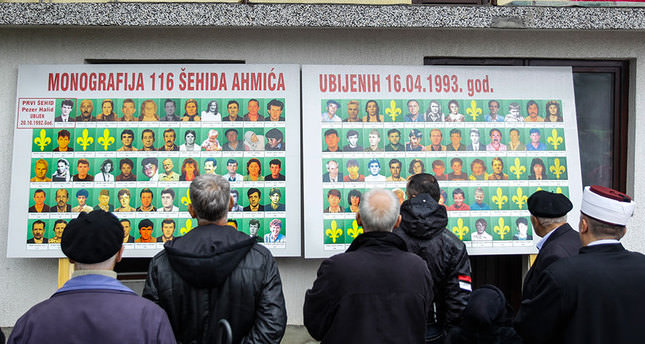
The silence descended on the village of Ahmici in central Bosnia on Wednesday which marked the 21st anniversary of the massacre of 116 Bosniak civilians which was perpetrated by members of the Croatian Defense Council on April 16 1993.

The massacre in Ahmici, where Bosnian Croats turned against Bosnian Muslims, has been defined as the single most savage example of ethnic cleansing in the Balkans. One year before, Bosniak Croats and Muslims fought together against Serb army and military forces. The massacre is honored every year by families of the victims in Ahmici on 16 April.

During the past 20 years, 86 people out of 116 killed were found and identified while 30 still remain missing, according to Elvedin Kermo, President of the "April 16 - Ahmici" association.

Kermo said that each passing anniversary is still heart-breaking, as hundreds of family members gather at the local cemetery to lay flowers on the graves and honor the victims. These families cannot take any comfort that the perpetrators of the crime have been brought to justice.

"As the direct perpetrators of the crimes in Ahmici court were prosecuted, only two - Drago Josipovic, who is already on the loose and Miroslav Cicko Bralo were sentenced to 20 years in prison. They were convicted for the death of three people. Who killed the other 113 people?" asks Kermo.

Members of the Croatian Defense Council (CDC) at dawn on April 16 1993 committed war crimes against civilians in this village killing 11 minors, 32 women and 73 men. The youngest victim was a three-month-old baby and the oldest, an 81-year-old woman.

International Criminal Tribunal of the Former Yugoslavia (ICTY) ruled that the murders in Ahmici were crimes against humanity.

Dario Kordic, one of the commanders of the CDC was sentenced to 25 years in prison and former member Miroslav Cicko Bralo, to 20 years in prison. Three members - Zoran Kupreskic, Mirjan Kupreskic and Vlatko Kupreskic, who were sentenced to 6 to 10 years in prison for participation in massacres, had their conviction overturned by the appeals chamber one year later in 2001.

Zivko Budimir, President of the Federation entity of Bosnia and Herzegovina was present in Ahmici at the ceremony marking the anniversary of the massacre.

Budimir commented that in Bosnia there are many who "are trying to stop the prosecution of those responsible for the war crimes."

"Unfortunately, it is often the case that all three nations are trying to portray these people as heroes. They are not heroes. They are people who committed a crime, who were in the service of evil, and need to appear before the court for what they have done," added Budimir.

Abdulah Ahmic (50) told the the Anadolu Agency that he came to honor his mother, three sisters, father and brother who were killed on April 16. He has also lost one more brother who was killed as a soldier on the front line. "Of eight members of my family, I am the only one alive. I survived the shooting, the bullet went through my cheeks. I survived the concentration camp too," said Abdulah.

Recalling that fateful day, he said that shooting woke them up.

"It was a general attack. Houses were torched. Our house was surrounded very quickly. They broke into the house, took me and my father out of the house where my brother was already killed. One of the soldiers cocked his rifle and killed my father. He did not shoot at me precisely, the bullet passed lower, so I remained lying, I pretended that I was dead," he said.

Huso Ahmic lost his parents that day. Showing the house in which the murder happened he said:

"United Nations Protection Force took nine corpses out of this house. Seven neighbors came here to hide before that. There were all killed, including a woman with three daughters," said Huso.

In 1992, in the northwestern Bosnian town of Prijedor and the surrounding area, the Serbian army and military forces committed mass killings of inhabitants and detained Bosnian Croats and Muslims together in notorious concentration camps Omarska, Keraterm and Trnopolje.

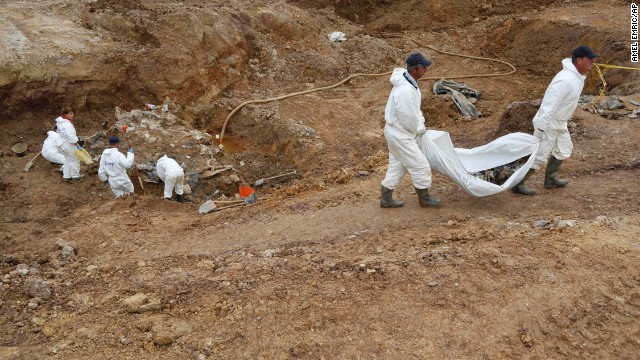
In September 2013, the extent of the mass killings at the camps are still coming to light since the mass graves in Tomascia were discovered by former member of the Army of Republika Srpska. These graves are now considered to be the biggest in Europe after the second world war. It is assumed that it hides the bodies of nearly 1000 missing civilians who were detained in the camps.

During the past seven months, nearly 500 bodies were found whose identification is currently ongoing and based on DNA analysis, 49 victims have been identified so far.

The Anadolu Agency team on Wednesday visited the Sejkovaca Center for Autopsy and Identification in the town of Sanski. Most are families who come to see the bones of their loved ones who have been identified.

The wife of victim Said Visic told the AA about her fate: "I was with my husband in the back yard in July 20 1992, when our neighbors came, took him out on the road and killed him," said Ismeta Visic.

"Today I am here with my son who was three-years-old when his father was killed. He came to see his bones. Bones do not speak, but it's time to witness, speak and acknowledge what happened," she added.

"This is a difficult day for me. But I have to stand it," said Abaz Hergic who came to see the bones of his two sons who were 23 and 24 when they were killed."

"This is so difficult but also a relief for me because I will bury them finally," said Asim Hupovac, also father of two sons Jasin and Husein.

According to the information in the Center, most of the victims were killed with a bullet in the nape of the neck.

The bodies were hidden below artificial embankments under several meters of soil.

Lejla Cengic, a spokeswoman for the Institute for Missing Persons in Bosnia and Herzegovina also found and identified bodies of her three uncles. Lejla hopes to identify one more uncle. "They were killed in front of their houses, and then they were moved. After 22 years, their bodies were found in the Tomasica mass grave. Based on DNA analysis, three were identified and we are awaiting the confirmation of the DNA analysis for the fourth uncle," said Lejla.

She added it is difficult to be 'on the other side' when you need to inform your family. The bodies of Lejla's relatives were found during the excavations which are ongoing since Tomasica was discovered. This week families are coming to the Center for the autopsy to identify them officially. Lejla is among them.

"It is difficult now as it was in the moment when they were killed. Exhumation and identification means facing the past. It is very painful and traumatic," Lejla concluded.

Identification of bodies found takes place in the Sejkovaca Center from April 16 to 23 and the exact number of those identified will be known after the end of this takes place.

In the area of northwestern Bosnia, since the end of the war, 131 mass graves have been found.

According to the IMP, 8,400 people still remain missing after the war.

Friday 18 April 2014

http://www.dailysabah.com/balkans/2014/04/17/more-than-8000-still-missing-in-bosnia

continue reading

Thursday, 17 April 2014

S. Korean military begins excavating Korean War remains


The South Korean military has begun a seven-month project to excavate remains of fallen soldiers who fought in the 1950-53 Korean War, the defense ministry said Thursday.

About 100,000 soldiers will dig out sites in 74 regions across the nation until the end of November to find remains of missing servicemembers, the ministry said.

The excavation team will analyze the registry of missing soldiers and conduct DNA tests to trace their families after retrieving their remains, it said.

Since 2000, the South Korean military has yearly conducted the excavation project based on records of former battle sites and registered soldiers during the three-year conflict to repatriate the remains to their family.

A total of 8,744 bodies have been recovered, with 7,658 of them identified as South Korean soldiers, according to the ministry.

Thursday 17 April 2014

http://www.globalpost.com/dispatch/news/yonhap-news-agency/140417/s-korean-military-begins-excavating-korean-war-remains

continue reading

S Korea ferry: Bad weather hampers search for survivors


Bad weather, murky water and strong currents are hampering the search for survivors of the South Korean ferry disaster.

Emergency services are still searching for nearly 300 people missing after a ship carrying more than 470 people sank.

Officials say 179 people have been rescued. Most of the passengers were pupils at the same high school.

South Korea's president visited the wreck and urged rescuers to hurry.

Park Geun-hye said that time was running out and that every minute and every second was critical.

At least nine people are confirmed to have died, with dozens more injured.

Military divers have been fighting high wind and waves to try to access the vessel. Three divers were swept away in recent attempts but rescued by a fishing boat.

Naval and coastguard vessels used floodlights and flares, to maintain a search now involving more than 500 divers, 169 vessels and 29 aircraft.


But distraught relatives gathered in a gymnasium on nearby Jindo island insisted more should be done, and vented their grief and frustration to anyone who would listen.

"Get my child out of that ship! Dead or alive," one distraught father repeatedly shouted to rescue and local government officials."

The vessel was travelling from Incheon port, in the north-west, to the southern resort island of Jeju.

Some reports say the ferry went off its course and passengers' relatives are also questioning the role of the captain, who's being interviewed by police.

It is not yet clear what caused the ship to list at a severe angle and flip over, leaving only a small part of its hull visible above water, but some experts have suggested the ship may have hit an underwater obstacle.

The captain was being questioned, Yonhap news agency reported. "I am really sorry and deeply ashamed. I don't know what to say," Lee Joon-seok was shown saying on television.

Yonhap said the nine dead include four 17-year-old students and a 25-year-old teacher as well as a 22-year-old female crew member. Identities of the other three were not immediately known.

The latest figures say 475 people were on board, with 287 still unaccounted for. Figures issued by the government have changed several times, prompting criticism.

Efforts are concentrated on the ship, which sank in about 30m (100ft) of water.

"We carried out underwater searches five times from midnight until early in the morning, but strong currents and the murky water pose tremendous obstacles," said Kang Byung-kyu, minister for security and public administration.


Privately, some officials admit it is unlikely the remaining passengers will be found alive.

"Honestly, I think the chances of finding anyone alive are close to zero," a coastguard official told an AFP journalist on a rescue boat.

The US Navy has sent an amphibious assault ship, the USS Bonhomme Richard, to assist with the search.

Captain Joey Tynch told the BBC conditions were difficult.

"We found ourselves in challenging weather conditions today - very low cloud ceilings and reduced visibility and rain, and we're working a search area around the site in close co-ordination with the South Korean on-scene commander," he said.

The ferry sent a distress call at around 09:00 local time (00:00 GMT) on Wednesday, about 20km (12 miles) off the island of Byungpoong. It sank within two hours, reports said.

At least 325 of the passengers on board the ship were students from Danwon high school in Ansan, near the capital, Seoul.

The students, aged 16 and 17, were heading on a field trip to Jeju island with about 15 teachers.

Survivors say they heard a loud thud, before the boat began to shake and tilt.

Some of the passengers managed to jump into the ocean, wearing life jackets, and swim to nearby rescue boats and commercial vessels.


But several survivors have said that they were told by crew members not to move.

"We must have waited 30 to 40 minutes after the crew told us to stay put," one unnamed rescued student was quoted as saying by AFP news agency.

"Then everything tilted over and everyone started screaming and scrambling to get out," he said.

Koo Bon-hee, 36, told the Associated Press that the rescue was not "done well". "If people had jumped into the water... they could have been rescued. But we were told not to go out."

Some of those trapped managed to send text messages to their relatives.

"Dad, don't worry. I'm wearing a life vest and am with other girls. We're inside the ship, still in the hallway," one girl told her father, AFP news agency reported.

But in a subsequent message she said she could not get out. "The ship is too tilted. The hallway is crowded with so many people."

Police, meanwhile, were investigating a text message reportedly sent to a relative of a missing student claiming some passengers had survived in an air pocket, Yonhap news agency said.

Police said they had not ruled out the possibility that the message was a prank, the agency said. There are no verified reports of communication from inside the sunken ship.

Kim Young-boong, an official from the company which owns the ferry, has apologised.

Japan's prime minister offered "heartfelt sympathy" to the victims and their families, and his government offered help with the search - a rare moment of detente between the feuding neighbours.

Shinzo Abe, whose strident nationalism has raised tensions between the two countries, said his thoughts were with those caught up in the tragedy.

The vessel - named Sewol - is reported to have a capacity of up to 900 people and is 146m (480ft) long.

Correspondents say this could turn out to be South Korea's biggest maritime disaster for more than 20 years.

Major maritime accidents in South Korea

1970: Sinking of passenger vessel Namyoung leaves 323 dead
1993: Sinking of passenger vessel Seohae Ferry leaves 292 dead
2007: Sinking of freighter Eastern Bright leaving 14 sailors missing
2009: Sinking of cargo ship Orchid Pia after a collision leaves 16 sailors missing

Thursday 17 April 2014

http://www.bbc.co.uk/news/world-asia-27056653

continue reading

Chitradurga bus fire: With no passenger records, cops left in the dark


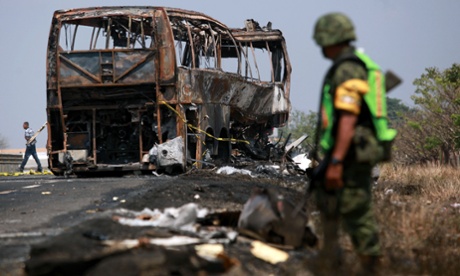
Identification of the six bodies stored at the Chitradurga government hospital morgue has become virtually impossible for police, as they are no records of the passengers travelling on the sleeper bus from Davanagere to Bangalore.

Police initially planned to compare the list of passengers with the injured, and those who escaped, thus identifying the bodies. However, while questioning of bus driver Firoz, police learnt that many of the passengers had not reserved their seats, which were filled up as the bus made multiple stops during its journey.

Officers at Hiriyur police station said not all passengers were going to Bangalore; some were to disembark at Chitradurga and Tumkur.

Police officers said the bodies had been sent for a DNA test to help identify them, though they had not heard from anyone yet, and no one had come forward to claim any of the bodies. "We're not sure if the families are aware of the accident, and the deaths. It might take them a couple of days to realize their family members are missing. Only after they make any claims can we compare the DNA samples," Chitradurga police said.

Enforcement officials in transport department rubbished rumours that it was a 'non-booked trip'. The third such bus accident in the state, which left six persons charred to death and several others injured, has raised several questions on the compliance of safety directives and enforcement by the transport department.

Sources told TOI the bus is not a factory product, that it was locally built by coach builders, and the engine could have been assembled. An executive with SPR Travels also said the bus was scrapped seven months ago, but the actual owner, Santosh, chose to operate it by picking up passengers without proper bookings.

But the transport department said there were no such violations. "The vehicle is insured and has a valid fitness certificate too. The driver has a valid driving licence too," an official told TOI. However, investigations to ascertain the reason behind the fire in the engine are directed by the transport department. The officials are also trying to get details of the vehicle from the owner and operator of SPR Travels.

The department said a list of passengers is available at the starting point of the journey in Davanagere. The list was being sent to the department headquarters in Bangalore, officials said.

Despite this claim, no passenger records were found in the operator's Bangalore office on Dr Rajkumar Road in Rajajinagar. "No one is available in the booking offices in Bangalore and Davanagere," he said.

As per the order issued on November 17, after two bus infernos in Mehbubnagar and Haveri rocked the state, a copy of the passenger lists should be available at the starting and destination points, and one copy with the crew. Copies of the vehicle's documents should also be available with the crew and at the operator's headquarters.

Wednesday 17 April 2014

http://timesofindia.indiatimes.com/city/bangalore/With-no-passenger-records-cops-left-in-the-dark/articleshow/33836142.cms

continue reading

Bosnians make pilgrimage to see new mass excavation of graves


Denisa Hegic pulled her scarf around her nose to guard against the stench and drew back the plastic shroud. Shaking, she reached down to touch her mother’s skull and caressed it.

The last time she touched her mother she was bleeding on the floor of the family home, slain by Bosnian Serb soldiers storming their tiny village in northwestern Bosnia. On Wednesday, mother and daughter were reunited in a cavernous building used to house the remains of victims newly excavated from the mass grave in Tomasica, 125 miles northwest of Sarajevo.

“I found her body,” said Hegic, who is now 30.

Hegic’s experience is being repeated by many survivors of Bosnia’s 1992-1995 war this week, as experts begin allowing families to view the remains meticulously pulled from the earth and identified through DNA analysis. Hundreds of families are expected to make the sad pilgrimage to see the dead.

So far, 430 victims have been found in the Tomasica grave, a vast pit about 30 feet deep and covering 54,000 square feet. The mass grave contains victims of Bosnian Serb military units who killed Muslim Bosniaks and Roman Catholic Croats in hopes of creating an ethnically pure region.

Many believe more people were originally buried there. Diaries confiscated from former Bosnian Serb Gen. Ratko Mladic suggest that some of the bodies in the Tomasica pit were dug up and moved.

But some progress has been made. Family members coming to view remains are also offering statements to local prosecutors to assist in efforts to prosecute Mladic, who is being tried on war crimes charges at the U.N. tribunal in the Netherlands.

On July 20, 1992, when Hegic was 8, people in Biscani heard the Bosnian Serbs were coming. Her parents hid their only child in the basement. When the soldiers came, they shot her mother, her father, her grandparents, her three uncles and her three cousins.

Hegic and an aunt, survived. She eventually settled in Germany and married a boy from her village that she knew as a child.

They both gave DNA samples to identify relatives who died in the attack. They were called Tuesday and drove back to Bosnia as soon as they heard.

Here, at the Sejkovaca Identification Center, they bring the families in one at a time, where they are faced with bodies placed on shelves, preserved in salt and covered in plastic.

Most people spend only a short amount of time with the dead. They will wait to mourn, gathering for a mass funeral in July.

Wednesday 17 April 2014

http://www.detroitnews.com/article/20140416/NATION/304160138

continue reading

Number of missing in Washington mudslide drops


The number of people missing in the massive Washington state landslide has dropped to six.

The Snohomish County sheriff’s office said Wednesday it has removed one name from the missing list. Earlier Wednesday, officials announced that the death toll had risen to 39.

The Snohomish County medical examiner’s office said it was identifying the three bodies most recently discovered and notifying families. They could be among those listed as missing, but officials didn’t say if one of them led to the list being whittled down.

Incident management team spokeswoman Koshare Eagle says one body was found Monday and two were found Tuesday in the southeast corner of the debris field where the Corps of Engineers erected a berm last week.

Wednesday 17 April 2014

http://koin.com/2014/04/16/number-missing-washington-mudslide-drops/

continue reading

Wednesday, 16 April 2014

California bus crash: Coroner positively identifies three of 10 victims


The coroner in Glenn County released the names Tuesday of three of the 10 victims of a fiery crash last week between a FedEx truck and a charter bus.

Family members of the three victims and the driver’s employer had confirmed to reporters that they had died, but authorities had to rely on dental records and DNA samples to identify and release most of the bodies, which had been burned beyond recognition.

All the autopsies were completed by Sunday, Chief Deputy Coroner Richard Warren said, and a forensic dentist began the process of matching the remains to dental records that day.

Causes of death will not be released for up to six weeks, pending the results of toxicology tests.

Until now, many of the victims had been identified by their families, who have been organizing memorials and vigils.

Officials were still trying to determine what caused the crash. The California Highway Patrol said it was seeking witnesses, as well as photos and videos.

Wednesday 16 April 2014

http://www.latimes.com/local/lanow/la-me-ln-fatal-bus-crash-3-victims-identified-20140415,0,6494824.story

continue reading

Database for unidentified patients or bodies soon


The Punjab government has decided to establish a database for unidentified patients or persons who died of any reason at hospitals or elsewhere, TheNation has learnt.

The Home Department has issued policy guidelines in this regard, a source said. As per standard operating procedures (SOPs), Punjab Information Technology Board (PITB) in collaboration with the Punjab government will prepare and run the databank while details of unidentified bodies will be provided by Station House Officers of the respective area and Medical Superintendents of the hospitals where an unknown patient was died.

It will be responsibility of the same SHO to shift the body to hospital for post-mortem. The same officer will ensure arrangements for finger prints, face images and other information. The body will be kept in mortuary till all the legalities were met.

Moreover, the standard operating procedures said that the police will give advertisements in the national dailies and ten-day (or four weeks in special cases) time period will be given for the purpose. After the time is over, a DNA test will be organised and if after completion of the exercise, if failed to identify the corpse, the police will hand over the body to anatomy department of any teaching hospital.

The record of the case will also be handed over to the hospital authorities. If the hospital needed no bodies, it will be handed over to any welfare organisation for burial. The burial of the unidentified body will be duly made in presence of the SHO or Union Council Secretary, the SOPs said. The same officers will ensure the entry of the burial of the person in the register on the spot.

Moreover, the SHO will give the relevant section at DPO office within 24-hrs that will be added on the website. The same will be done at the District Headquarters Hospitals by the Medical Superintendents. The PITB will share the data with the DPOs, RPOs, DCOs, and MS’ besides making training arrangements to the police and the hospital staff.

An expert said the SOPs will help people deal with the psychological impact of such disasters besides making binding on the police to follow them. Earlier, he said, the police were used to declare the body unidentified and arrange the burial without ensuring ads in national newspapers as it lacked funds for the purpose.

A police officer appreciated the government’s initiative and said that SOPs will not serve the purpose without provision of funds for executing procedures. He said that the government did not ensure funds for burial of unidentified persons and the police have to arrange for it on their own.

The WHO recommended capacity for a field morgue is 10 bodies per 10,000 population and storage temperature 4ยบC, the official said and grieved over lack of such facilities even in big cities like Lahore. He said that the government should also provide funds for the purpose. He said that it must be deemed that visual identification was not scientific and in emergency cases this was even more difficult.

The process of identification, the police official said, must begin even before a body is found or as soon as a person is reported missing. This involves collecting ante-mortem data that refer to any information collected during a person’s life. The services of NADRA, he said, might be of great use in this regard.

If available such information includes details how a person was dressed at the time of their disappearance. He said that he visited many countries that maintain post-mortem as well as ante-mortem records as an essential component of the identification process.

He said that the coordination among PITB, NADRA, district administration and police, hospital authorities and cooperation of people was must to make the exercise productive. Commenting on the Punjab government’s move, a medical expert said that an autopsy is normally performed by a pathologist and other professionals like dentists, anthropologists (if the body is decomposed) are asked to examine the remains.

If possible, the medical experts should collect fingerprints and samples for DNA analysis and their expertise be used in court. The medical expert also demanded the government to provide special salary and training to the staff dealing with autopsy and maintaining morgue at hospitals.

Wednesday 16 April 2014

http://www.nation.com.pk/national/16-Apr-2014/database-for-unidentified-patients-or-bodies-soon

continue reading

Five dead, three missing in China chemical plant blast


At least five people were killed and three others were reported missing following a blast and fire in a chemical plant in east China's Jiangsu province, authorities said Wednesday.

Rescuers found two bodies on the scene and three people succumbed in hospital after the blast occurred at 10.03 a.m. at Shuangma Chemical Plant in Rugao City, Xinhua reported citing the city's publicity department.

Nine other people injured were receiving treatment at hospital.

Firefighters extinguished the flames and a search for the missing persons was under way.

Shuangma Chemical Plant was incorporated in 1997 and mainly produces edible palm oil, or stearic acid.

An investigation into the cause of the blast was on.

Wednesday 16 April 2014

http://www.dnaindia.com/world/report-five-dead-three-missing-in-china-chemical-plant-blast-1978965

continue reading

Flight MH370 and 7 other planes that have never been found


1. Flying Tiger Line Flight 739

The chartered military flight from California to Vietnam in 1962 was carrying 107 passengers, including 93 U.S. soldiers when it disappeared.

After refuelling at Guam (a teeny tiny island in the western Pacific Ocean) the flight headed towards the Philippines before disappearing totally from radar without any distress calls to radio operators, prompting investigators to suspect the aircraft had exploded in flight. No wreckage was ever found, despite 200,000 square miles being searched over eight days.

Another military plane, carrying secret cargo rather than soldiers, also departed from the same Californian airport at a similar time to flight 739. It too crashed.

2. Northwest Orient Airlines Flight 2501

It’s the evening of June 23 1950 and flight 2501 has set out from New York to Seattle with 55 passengers and three crew members. Its last known location was 3,500 feet over Lake Michigan when it suddenly disappeared from radar, only moments after requesting clearance to drop to 2,500 feet.

Despite the lake being dredged and search teams investigating, no wreckage was ever located. Although in 2008, a researcher believed that she had found an unmarked grave containing the bodies of the victims, that had been buried by locals without the authorities or families’ knowledge after they had washed up on shore.

3. Glenn Miller’s plane

In case you didn’t know (we didn’t) Glenn Miller was a big name in the Forties. He was a big band musician from the swing era and was travelling to entertain U.S. troops in France during WW2 when the plane he was travelling on went missing over the English Channel.

There’s several theories about what happened to him, including that his plane was accidentally bombed by friendly fire when military planes flying back from Germany offloaded their remaining artillery into a designated space that then clashed with Miller’s flight route.

4. Frederick Valentich and his plane

The 20-year-old Australian UFO enthusiast was taking a routine 150-mile training flight in a light aircraft when he mentioned to radio controllers that there was another plane following him.

Seconds later he declared ‘it’s not an aircraft’ and his transmission was interrupted by scraping, metallic noises.

He was never seen again (this was in 1978, BTW). Officials speculated that Valentich had become disorientated and had seen his own reflection in water, seeing as there was no known air traffic near him, but fellow UFO fans believe he was abducted. Others believed he staged his own disappearance.

5. Atlantic C-124 disappearance

In 1951 a military flight, from New Mexico to Suffolk, England, had to stage an emergency landing in the sea following an in-flight fire. Despite the landing going well and a successful evacuation taking place, when rescuers arrived on scene there was no sign of any of the 53 passengers of the aircraft.

The rafts and flares had, however, been spotted earlier when another plane had flown over the area. So where had they gone? Some speculate that Soviet submarines operating in the area at the time (about 500 miles west of Shannon, Ireland) snatched them.

6. Canadian Pacific Air Lines Douglas DC-4

A routine flight from Vancouver, Canada to Japan in 151 turned sour when it failed to turn up to its scheduled stopover in Anchorage, Alaska.

Visibility at the time of the flight was 500m, with heavy rain and ice reported.

The aircraft and its 37 passengers were declared missing but no wreckage has even been found. In fact, there’s not even a recorded probably cause. No one has any idea what happened?

7. BSAA Star Ariel

The pilot of the BSAA Star Ariel, flying from Bermuda to Kingston, Jamaica, reported that he had ‘excellent visibility’ as he flew the 13 passengers over the Atlantic Ocean in 1951.

His last check-in with air traffic controllers was to let them know he was descending to a lower flying level, but at no point showed any sign of distress.

In the search that ensued, no debris, oil slicks or wreckage were found. The fact that there was no May Day call, bad weather or plane defects caused many to believe that it had been lost to the legendary Bermuda Triangle.

Wednesday 16 April 2014

http://metro.co.uk/2014/04/16/flight-mh370-heres-7-other-planes-that-have-never-been-found-4699974/

continue reading

4 dead, almost 300 missing after South Korean ship sinks


Almost 300 people were missing after a ferry capsized off South Korea on Wednesday, despite frantic rescue efforts involving coastguard vessels, fishing boats and helicopters, in what could be the country's biggest maritime disaster in over 20 years.

The ferry was carrying 459 people, of whom 164 have been rescued, coastguard officials said.

It was not immediately clear why the Sewol ferry listed heavily on to its side and capsized in apparently calm conditions off South Korea's southwest coast, but some survivors spoke of what appeared to be an impact prior to the accident.

"It was fine. Then the ship went 'boom' and there was a noise of cargo falling," said Cha Eun-ok, who said she was on the deck of the ferry taking photographs at the time.

"The on-board announcement told people to stay put ... people who stayed are trapped," she said in Jindo, the nearest town to the scene of the accident.

Survivors there huddled on the floor of a gymnasium, wrapped in blankets and receiving medical aid. One woman lay on a bed shaking uncontrollably. A man across the room wailed loudly as he spoke on his mobile phone.

Furious relatives of the missing threw water at journalists trying to speak to survivors and at a local politician who had arrived at the makeshift clinic.


Most of the passengers on board the ferry appeared to have been teenagers and their teachers from a high school in Seoul who were on a field trip to Jeju island, about 100 km (60 miles) south of the Korean peninsula.

An official from the Danwon High School in Ansan, a Seoul suburb, had earlier said all of its 338 students and teachers had been rescued. But that could not be confirmed by the coastguard or other officials involved in the rescue.

The school official asked not to be identified.

The Ministry of Security and Public Administration earlier reported that 368 people had been rescued and that about 100 were missing.

But it later described those figures as a miscalculation, turning what had at first appeared to be a largely successful rescue operation into potentially a major disaster.

There was also confusion about the total number of passengers on board, as authorities revised the figure down from 477, saying some had been double counted. It added to growing frustration and anger among families of the passengers.


Witnesses said many people were likely to be trapped inside the vessel.

According to a coast guard official in Jindo, the waters where the ferry capsized have some of the strongest tides of any off South Korea's coast, meaning divers were prevented from entering the mostly submerged ship for several hours.

The ferry began to list badly about 20 km (12 miles) off the southwest coast as it headed for Jeju.

A member of the crew of a local government ship involved in the rescue, who said he had spoken to members of the sunken ferry's crew, said the area was free of reefs or rocks and the cause was likely to be some sort of malfunction on the vessel.

There were reports of the ferry having veered off its course, but coordinates of the site of the accident provided by port authorities indicated it was not far off the regular shipping lane.

Several survivors spoke of hearing a "loud impact" before the ship started listing and rolling on its side.

Within a couple of hours, the Sewol was lying on its port side. Soon after, it had completely turned over, with only the forward part of its white and blue hull showing above the water.

Coastguard vessels and fishing boats scrambled to the rescue with television footage showing rescuers pulling passengers in life vests out of the water as their boats bobbed beside the ferry's hull.

Other passengers were winched to safety by helicopters.

The ferry left from the port of Incheon, about 30 km (20 miles) west of Seoul, late on Tuesday.

It sent a distress signal early on Wednesday, the coastguard said, triggering a rescue operation that involved almost 100 coastguard and navy vessels and fishing boats, as well as 18 helicopters.

A U.S. navy ship was at the scene to help, the U.S. Seventh Fleet said, adding it was ready to offer more assistance.

The area of the accident was clear of fog, unlike further north up the coast, which had been shrouded in heavy fog that led to the cancellation of many ferry services.


The coastguard said one person was found dead inside the sinking ferry. An official from the Mokpo Hankook hospital on the mainland said another person died soon after arriving at its emergency ward. That person was identified as one of the students on the school trip.

Four people were confirmed dead in total.

The ship has a capacity of about 900 people, an overall length of 146 meters (480 feet) and it weighs 6,586 gross tons. Shipping records show it was built in Japan in 1994.

In 1993, the Seohae ferry sank, and 292 of the 362 passengers on board perished.

Wednesday 16 April 2014

http://www.reuters.com/article/2014/04/16/us-korea-ship-idUSBREA3F01Y20140416

continue reading

Japan: Dental data standardization eyed to help identify victims


An effort to standardize dental data records, including the results of dental treatments, is attracting attention as an effective method to help quickly identify bodies of victims in major disasters, in the wake of the Great East Japan Earthquake.

Because massive casualties are forecast in the event of the anticipated Nankai Trough earthquake, the government aims to establish a uniform national format for the records.

The standardization could also be utilized if Japanese fall victim to terrorist attacks or disasters overseas.

An adult has 32 permanent teeth. The proposed standard would convert the condition of each tooth into numerical data or codes using uniform rules and encode the information digitally.


This card, containing dental information used in Niigata Prefecture, shows various items, such as treatment methods, in easy-to-understand terms for experts.

For example, a tooth without cavity could be recorded as “1,” a filled tooth as “2,” a crowned tooth as “3” and a missing tooth as “4.”

The Yomiuri Shimbun last month asked Prof. Takafumi Aoki of Tohoku University to run search software using the proposed standardization method. Aoki was involved in confirming the identities of bodies after the Great East Japan Earthquake.

Aoki, an information engineering professor, demonstrated how the condition of teeth from a dead body could be input into a computer with 32 digits.

Aoki entered a series of numbers, “433134...,” and clicked the search command button. The computer cross-checked the data with dental records gathered from 1,000 living people that had been registered in the system’s database.

The software ranked the registered dental patterns in the database from No. 1 to 1,000, based on the extent of matching.

Aoki said, “The larger the number of unidentified victims, the more effective the system will be.”

In the worst-hit earthquake areas it was very difficult to identify bodies with few clues to their identities.

Dental data became a key focus as an effective method for confirming identities, because teeth change very little, even with the passage of time.

However, it was difficult to collect dental treatment records that could serve as base data of the victims while they were alive. The fact that local dental clinics had used differing formats to record dental information compounded this difficulty.

Recalling the experience, a local dentist said, “Making a random cross-check one by one just wasn’t realistic.”

The stress from the hard work took its toll on many dentists who felt physically and mentally ill.

This is what inspired a team of researchers led by Aoki to develop specialized software for this purpose two months after the disaster.

According to the Miyagi prefectural police, the search software narrowed down searches from around 500 unidentified victims to a much smaller number of possible matches. Police were able to combine the results from the dental software scan with results of DNA analysis and other techniques to accelerate the process.

After the disaster, Aoki’s team received inquiries from local governments in areas forecast to be hit hard by the envisaged Nankai Trough earthquake, including Shizuoka and Kochi prefectures. Tohoku University has distributed more than 100 sets of the software.

The Health, Labor and Welfare Ministry also became involved in the standardization plan, conducting experiments in Niigata Prefecture until March.

In the experiments, the accuracy of the scans was improved by increasing the number of options for describing the condition of teeth, and computer-score sheets were introduced to record the data.

The experiments treated data from 1,763 people as dental records from victims, removing the data for half of their teeth, as though those teeth had been destroyed or lost after death. The results gave the highest ranking to the correct records 87.5 percent of the time. The accuracy rate for the top 18 results was 99 percent.

The health ministry praised these results, with one official saying the system was able to “narrow down the results to correctly identify [a 'victim'] with great accuracy.”

The ministry plans to create a uniform nationwide format for the data so the system can be employed wherever a disaster occurs.

Hisako Saito, an associate professor of forensic medicine at Chiba University who is knowledgeable about methods used to identify people overseas, said the proposed method “will be useful to identify Japanese victims of disasters overseas.”

The health ministry will consider the possibility of linking the standardized data with similar databases in other countries in experiments planned later this fiscal year.

The government is interested in the disaster victim identification system used by Interpol. That system includes data on treatment using a code consisting of three letters.

Data organized using the Interpol method could be used as a global common language for this purpose.

Finland adopted such measures after some of its nationals went missing in the earthquake off Sumatra in 2004. Data standardized using Finland’s methods were converted to the Internet standard. By cross-checking the data with bodies found in the disaster-hit areas, authorities were able to identify 112 victims.

Citing these precedents, Saito said, “Japan should act quickly to standardize data across the nation.”

Many experts in the field point out that the standardization method will also be useful to identify foreign nationals who die in Japan.

Because the number of inbound foreign visitors is certain to rise as the 2020 Tokyo Olympics and Paralympics approach, it is possible that the proposed system will be put to use for a wider range of purposes.

Privacy concerns become roadblock to dental ID

Many experts believe that unless record-keeping is integrated into an envisioned government standardization plan, identifying victims in large-scale disasters will remain difficult.

Dental records are important for swiftly identifying disaster victims, but many dental clinics and records were destroyed in the Great East Japan Earthquake and ensuing tsunami in March 2011.

This prompted calls for a database where such records can be stored, but government ministries and agencies are cautious about establishing such a database.

The major bottleneck lies in the issue of privacy. The government is concerned that people will regard their dental records as privileged information.

Though the government has been proceeding with a project to standardize its record-keeping by gaining people's agreement, it is difficult to secure individuals’ consent in preparing the database.

A senior police official, who is in charge of identifying disaster victims, said, “The Health, Labor and Welfare Ministry should manage patients’ information gathered while they are alive.”

However, some health ministry officials said their job is to ensure people remain healthy, not collect data that could be used to identify dead people.

According to a 2012 government forecast, a massive earthquake in the Nankai Trough would, in the worst case, kill 320,000 people in Tokyo and 29 other prefectures.

“In preparation for the next large-scale disaster, we should discuss the standardization and creation of a dental database in an integrated manner, and swiftly introduce it,” said Prof. Toshinobu Komuro of Nihon University, who specializes in forensic medicine. He is a member of a ministry panel discussing how to standardize dental identification.

Wednesday 16 April 2014

http://the-japan-news.com/news/article/0001191496

continue reading

Tuesday, 15 April 2014

Deadly cyclone Lusi claims 11 lives in Vanuatu


Vanuatu is still reeling from monster cyclone Lusi that took at least eleven lives and caused millions of dollars in damage to gardens and properties early March. Yet in this rare instance, the cyclonic winds were not the central villain in the plot. Cyclone Lusi was first noticed as a ‘tropical disturbance’ near Vanuatu’s largest island of Espiritu Santo on 7 March and the system moved north-northeast, becoming a tropical depression on 9 March. Late on the same day, it had developed into a category one tropical cyclone called Lusi.

Prior to that announcement, Vanuatu had been blessed with a cyclone free summer /wet season. After going throughout the entire 2012/2013 season narrowly missing a couple but officially being without any sign of that deadly circular pattern on our weather maps, residents were beginning to feel confident that 2013/2014 would follow suit. How wrong we all were.

Ahead of Lusi being born, the Vanuatu Meteorology and Geo-Hazards Department issued tropical cyclone warnings to four of the six provinces - Torba, Sanma, Penama and Malampa. For those of us living in Efate, the island that is home to the nation’s capital of Port Vila, Cyclone Lusi was not a major event. Winds gusts around 80-90kmh and lots of rain marked this cyclone, with little damage evident, although some flooding.

But sadly, other islands did not fare so well. And it was the large volume of rain that accompanied Lusi that has marked her as the most deadly in Vanuatu’s recent history. In fact it was the most deadly in Vanuatu since Cyclone Uma all but destroyed Port Vila in February 1987 with its category four intensity claiming 50 lives throughout Vanuatu and causing US$150 million in damage. Lusi gave the northern islands a real pounding and drenching, claiming its first life in North Pentecost. An Anglican priest, Father Austin Hinge, was killed instantly when hit by a branch of a tree blown down as he was returning to his village of Lavusi on 10 March.

Details of the next two fatalities remain sketchy weeks later as communications on many of these outer islands is primitive at best, but one was an elderly man killed by another falling tree branch and the third was an infant swept away in flood waters. But the biggest drama unfolded in south Espiritu Santo at the small village of Puarante. Initial reports were that a landslide had destroyed all 60 houses in the village and cost several lives.

Then a senior Santo chief explained it was not a landslide that wiped out his village but a flash flood measuring a monstrous 17 metres high. The chief explained the village’s night of terror to Prime Minister Moana Carcasses and the Acting Director General Albert William who visited the village by helicopter days after the cyclone.

He said that some days earlier following persistent heavy rain, an entire hill side had collapsed into the river three kilometres behind the village in the mountains.

He said a huge body of water collected behind the makeshift wall and he had sent his son repeatedly to Puarante village to warn the villagers to move to higher ground, but they refused to budge.

Finally all hell broke loose and a flash flood equivalent to a five storey building roared through as the villagers slept, killing at least eight people, the distraught chief told the Prime Minister.

Two of the bodies have not been found, another two male villagers suffered serious injuries and all witnesses to the scene said it was amazing that there were survivors as there is no sign that a village ever existed where it stood.

There are always ‘amazing escape’ stories in any disaster and in this case, it belongs to Marae village on the island of Emae. Here, a three metre deep torrent bisected the village, literally cutting it down the middle, but there were no fatalities although more than 50 homes were destroyed.

Weather experts told Islands Business that the slow movement of Lusi coupled with the sheer volume of rain led to the sobering list of fatalities.

“You look at Port Vila and the infrastructure is terrible and in many areas of the capital there is no drainage at all,’’ said an expert, who declined to be named as he is working on a major government project.

“Flooded, damaged, pot holed roads in Port Vila would vanish immediately if there was proper drainage,’’ he said. “So imagine what hope do you have in a village where there is no thought of drainage at all.’’ Vanuatu’s National Disaster Management Director Shadrack Welegtabit said that a search and rescue team was sent to Santo as soon as possible to search for those still missing.

He said disaster officials conducted aerial surveillance in remote parts of the country to assess the damage and establish where aid was needed as a priority.

Apart from the loss of lives, 120 people were left homeless and about 12,000 households were affected. Welegtabit said there were widespread crop losses throughout the country and aid would be needed to feed many people until new crops were available. UNESCO, the Australian High Commission, World Vision, provincial councils, the police and local communities and businesses provided aid and assistance to the victims and it is still ongoing in some areas.

The general consensus was the National Disaster Management team and their plan worked well in the aftermath of Lusi. The one clear negative involved the government run Vanuatu Broadcasting and Television Corporation (VBTC) which faces regular criticism for the poor quality of their radio transmissions in certain parts of the country - which they counter by claiming lack of funding.

In the days leading up to the formation of Cyclone Lusi, the island of Futuna, which is the easternmost island in the country, had no radio transmission from the government radio.

Fortunately, word about Lusi was received via an antiquated radio telephone which is often not working as well and members of the local disaster management committee were able to go to each village and warn people to prepare for Lusi. Futuna was not badly affected in the cyclone, but questions have been asked about the leadership and standards in the VBTC.

Tuesday 15 April 2014

http://www.islandsbusiness.com/2014/4/pacific-update/deadly-lusi-claims-11-lives-in-vanuatu/

continue reading

15 April 1912: Titanic disaster dead remembered


Relations of those who died on the Titanic have gathered in the city where the doomed liner was built to commemorate the anniversary of the sinking.

The Titanic Memorial Garden in the grounds of Belfast City Hall witnessed a poignant memorial service as relatives laid flowers in memory of those lost 102 years on from the disaster.

The White Star Line vessel, which foundered on her maiden trans-Atlantic voyage after striking an iceberg, was built less than a mile away in the city’s once thriving docklands.

Each year on the day of the April 1912 tragedy, a solemn ceremony is held at the memorial garden where all 1,512 victims are listed on bronze plaques.

As well as relatives of Irish victims, relations of a number of international passengers who died travelled to today’s event in Belfast.

President of the Belfast Titanic Society John Martin, whose great uncle Dr John Edward Simpson – one of the liner’s two doctors – died on board, said many people retained an interest in the ship.

“Some with a direct family connection to people on board, some who were perhaps related to people who built the ship and then there are others who are more interested in why she sank and all the disaster management type of aspect of the story, so it’s important for a lot of people,” he said.

“But the importance of today – the anniversary – is very much about the people who died and that’s what we are here for, just to commemorate those people and to think about all the years that they lost, all their lives cut so short.”

Belfast Lord Mayor Mairtin O Muilleoir was among those who laid wreaths at the foot of the main Titanic memorial, which was erected in 1920.

“Whenever we gather to pay our respects to the dead I think it is a very special time and very solemn time for Belfast,” he said.

“It’s a real tribute to the Titanic Society that they have kept the memory of the Titanic dead alive for us today and their spirit and heritage and history and memories live on.”

Tuesday 15 April 2014

http://www.irishexaminer.com/breakingnews/ireland/titanic-disaster-dead-remembered-627946.html

continue reading

37 bodies recovered in Oso landslide; 7 names remain on missing list


The Snohomish County Medical Examiner’s Office has received a total of 37 bodies from the Oso mudslide, although seven other people are still listed as missing since the March 22 disaster.

The death toll rose to 37 Tuesday morning, as searchers continued to scour the massive debris field for more victims.

The full list of the identified fatalities is available at the bottom of this story. One body remains unidentified. The slide leveled at least 35 houses and 14 other homes and dammed the North Fork of the Stillaguamish River on March 22.

The debris field stretches over one square mile. Some survivors were rescued in the immediate aftermath of the mudslide on that Saturday morning, but hundreds of searchers, including local volunteers scouring the area for family members and friends, and specially trained dogs have found no signs of life since then.

http://q13fox.com/2014/04/15/church-services-honor-mudslide-victims-painful-search-enters-2nd-week/

Tuesday 15 April 2014

continue reading

Monday, 14 April 2014

Search for MH370: Underwater vehicle Bluefin-21 deployed to find plane's wreckage


To sink underwater by the height of Britain’s tallest tower would still only cover 7 per cent of the descent to the floor of the Indian Ocean, 4,500 metres down, where the black boxes from Malaysia Airlines flight MH370 are presumed to lie.

Even at those 300 metre comparative shallows, all is dark. The furthest anyone has dived in a protective suit is a little over twice that. And only a handful of manned submarines have gone more than half the depth of the ocean being searched, underlining the scale of the challenge facing search teams.

Australia’s Prime Minister, Tony Abbott, said on April 11 that naval teams leading the international hunt were confident that they now knew the position of the black box flight recorder to within some kilometres.

But Angus Houston, the search co-ordinator, issued a statement saying there had been no major breakthrough. A possible signal detected on Thursday by Australian air force planes was ruled not to have been a fifth ping — diminishing hopes that the black boxes from the missing Boeing 777 were still signalling, beyond the cusp of their expected 30-day battery life. The joint agency co-ordination centre said a 46,713 square kilometre area of the Indian Ocean was still being searched for the plane, which went missing with 239 people aboard on March 8.

When transmissions from the underwater locator beacons cease, that search will become harder, but not impossible — Air France flight 447’s black boxes were found two years after signals stopped. But every ping detected allows search teams to triangulate further, rapidly narrowing the possible location.

The next likely stage, according to Prof Ian Wright, director of science and technology at the National Oceanography Centre, would be a coarse mapping of the sea floor using ships’ sonar. This would provide a base map for underwater robots. The same autonomous underwater vehicles found the AF447 wreckage at 3,900m. The ocean floor now being searched is 600m deeper still — a depth at which, in an apt analogy supplied by the US National Oceanic and Atmospheric Administration, the crushing weight of water is the equivalent of one person carrying 50 jumbo jets. This is at the limits of the Bluefin-21 robot, a 5.3 metre yellow torpedo-shaped machine which can create a high-resolution map of the seabed through sonar pulses.

While the manufacturers are confident it can work in such an extreme environment, William O’Halloran, of Bluefin Robotics, told the BBC: “To conduct surveys and searches in the subsea world, things move at about three nautical miles an hour — not very fast.” At that rate, it would take the Bluefin six years to map the search area.

Despite the greater depth, the comparatively flat Indian Ocean floor could be easier to search than the area around the mid-Atlantic ridge where AF447 was eventually found. Wright says: “That was a very young sea floor — it was very difficult to image that wreckage using sonar systems because of the rough topography and lack of sediment cover.” In the current search, the echo sounding systems should be much more effective in detecting anything unusual and providing a high resolution image. Wright says: “You would see wreckage or not. Then you would deploy an ROV.” The ROV is a remotely operated underwater vehicle that can film, scan and, crucially, pick up things from the seabed. It is tethered to a ship by an 8,000 metre cable, which not only holds the weight of the vehicle but powers it and contains fibre optics to transmit instructions and receive data.

The Remora, which can function at 6,000 metres, was used in the salvage of AF447 and other crashed planes, as well as the inspection of the Titanic. Its two hydraulic arms could either tie debris to a winch or place things in a sample basket, ideally including the flight data recorder and cockpit voice recorder.

While the robot takes care of business on the ocean floor, work remains hard on the surface. “It can run for about 24 hours. It’s a bit like being on a space mission — you’ve got a wall of TV cameras and controls. You’re talking about 50 tons of equipment and a team of six to eight people to run and maintain the ROV.” The impending southern hemisphere winter may further delay operations. The extent of the recovery will also be affected by just what damage was done on impact. While sections of fuselage have remained after some crashes — and the tailfin of AF447 was retrieved almost intact — other planes have been utterly destroyed. The investigation into Swissair flight 111, that crashed in 1998 off the coast of Nova Scotia, recovered around 2m fragments from relatively shallow waters. Decisions on recovery will be shaped by the human tragedy of MH370. The authorities are now working with the assumption that somewhere, possibly trapped within the wreckage or elsewhere in the ocean, are the remains of the 239 passengers and crew who took off for Kuala Lumpur to Beijing five weeks ago. In the wake of AF447, one of the questions that divided grieving families was whether the deceased should be left in the ocean. Just over half of the bodies were eventually brought to the surface. In the Swissair crash, most could only be identified by dental records or DNA traces.

The black boxes of a plane are made of superstrength components, designed to withstand extreme temperature, shock and the high pressure of the ocean depths — but Swissair investigators needed to recover wreckage to establish how fire had caused that crash. A cockpit voice recorder only stores the last two hours of conversation — long after the crucial manoeuvres apparently took place on MH370.

It takes two hours for the Bluefin-21 to reach the sea floor. At walking pace, it will then search for 16 hours, before taking another two hours to return to the surface. It then takes four hours to download the data the vehicle has detected.

The vehicle is equipped with side-scan sonar which transmits an active pulse. This produces a high-resolution three-dimensional map of the sea floor.

Meanwhile, ADV Ocean Shield detected an ‘‘oil slick’’ in the range of its search zone on Sunday, Mr Houston said.

However, it will be days before the origins of the oil can be investigated by experts on shore.

As many as 11 military aircraft, one civilian jet and 15 ships were searching an area about 47,644 square kilometres for the missing flight on Monday.

There have been no acoustic detections picked up in the underwater search area since Tuesday, JACC has confirmed.

The centre of the search zone is 2200 kilometres north-west of Perth, Western Australia, which has become the headquarters for the recovery operation.

Although the search is now in its fifth week, not a single piece of physical evidence has been located to confirm the whereabouts of MH370.

The Bluefin-21 Artemis autonomous underwater vehicle can operate at a depth of 4.5 kilometres and travels at a maximum speed of 4.5 knots, or less than nine kilometres an hour.

Prime Minister Tony Abbott gave the last indication of the underwater search zone, of about 2000 square kilometres, when speaking to Chinese media on Saturday.

Under optimal conditions the submersible can complete a 25-hour mission if it maintains a speed of three knots, according to its manufacturer, Bluefin Robotics.

It has been more than a week since the batteries from the flight’s two black box beacons was due to expire and six days since signals consistent with aircraft black box ‘‘pings’’ were last detected.

On Saturday in Beijing Mr Abbott said the search was still focused on an area measuring 40 kilometres by 50 kilometres in size.

He said search authorities had hoped to reduce the area to within one kilometre before deploying the Bluefin-21.

On Monday, Mr Houston stopped short of saying he believed the batteries were dead, but he has previously said the submersible would not be dropped to the ocean floor until there was absolutely no hope the black boxes would emit another signal.

Malaysian Airlines flight MH370, with 239 people on board, vanished after mysteriously changing course during a flight from Beijing to Kuala Lumpur on March 8.

It is hoped the plane’s two black boxes: a flight data recorder, and a cockpit voice recorder will hold vital information about what happened in those final hours.

Earlier today Malaysian authorities revealed they were uncertain about what to do with the black boxes from Flight 370 if they are located and brought to the surface.

The country’s Attorney-General, Abdul Ghani, has flown to London to consult with the United Nations Civil Aviation Organisation and other experts about who should get custody of the boxes.

Although Malaysia is the head of the investigation under international law, the government has called on international experts from countries including the United States and Britain to assist with the investigation.

As the suspected final resting place of MH370 falls within Australia’s search and rescue zone, Australia has been the lead agency for coordinating the search Indian Ocean search effort

Monday 14 April 2014

http://www.thehindu.com/opinion/op-ed/robots-search-sea-bed-for-mh370/article5908527.ece

http://www.smh.com.au/national/search-for-mh370-underwater-vehicle-bluefin21-deployed-to-find-planes-wreckage-20140414-36n2k.html

continue reading

Victims of Pinochet government reburied in Chile after 40 years


The remains of six men have been reburied in Chile more than 40 years after they were killed by the military government of Augusto Pinochet.

Their bodies were discovered in an unmarked grave in 1992.

The men were among dozens of people killed by a military unit in late 1973, just weeks after General Pinochet came to power in a coup.

His officials flew around the country in helicopters, and executed political prisoners by firing squad.

The men - Carlos Berger, Carlos Escobedo, Luis Moreno, Hernan Moreno, Mario Arguelles and Jeronimo Carpanchay - were killed in the northern Chilean city of Calama.

Mr Berger, a lawyer and journalist, had been arrested on 11 September 1973 after refusing to broadcast a government message at the radio station where he worked.

His and the other men's remains were identified after extensive forensic tests in Europe, and finally buried in a ceremony at the main cemetery in the Chilean capital, Santiago.

Caravan of Death

The six men were murdered by what became known as the Caravan of Death, in one of the most notorious episodes of the Pinochet government.

The General sent the "delegation" of military men to Chile's provincial towns because he was reportedly annoyed that some commanders there had been "soft" on political opponents.

The Caravan of Death is thought to have killed 97 opponents of the military coup.

The BBC's Gideon Long in Chile says the military wanted to punish its opponents, but also strike fear into the Chilean people.

According to official figures, 40,018 people were victims of human rights abuses during the 1973-1990 Pinochet government and 3,065 were killed or disappeared.

Augusto Pinochet died in hospital on 10 December 2006, aged 91.

Monday 14 April 2014

http://www.bbc.co.uk/news/world-latin-america-27014505

continue reading

36 reported dead after bus hits parked truck along Mexico highway


A passenger bus slammed into a broken-down truck and burst into flames, killing at least 36 people Sunday in southern Mexico, the Veracruz state government reported.

Both state and federal officials said that four people survived the crash, which occurred shortly after midnight in the southeastern state of Veracruz.

A communique from the state civil defence agency said the victims were business people from the region who were travelling from the Tabasco state capital of Villahermosa to Mexico City.

The agency’s emergency director, Ricardo Maza Limon, said the victims apparently burned to death inside the bus, which was so badly charred that the tires melted and the markings on its sides were unreadable.

The federal highway department, which earlier gave the death toll as 34, said the three-axle bus was on a highway in the area of Acayucan when it struck a five-axle tractor-trailer owned by a milk protein company that had broken down and was parked along the roadside.


Via Twitter, Mexican President Enrique Pena Nieto sent a message of condolences to the families of those who died.

The state government of Tabasco said it was setting up an attention centre for the families of the victims, some of whom were suffering from nervous crises. The centre’s operations co-ordinator, Dr. Teresa Hernandez Marin, said the centre will provide social workers, psychologists and psychiatrists to help people.

Hernandez said experts will start identifying the bodies overnight, using DNA tests when necessary.

Bus crashes and road accidents occur frequently in Mexico. In 2012, at least 43 people died when a truck hit a bus in Veracruz, and a couple of months later more than 30 more were killed in an accident in Guerrero state.

Monday 14 April 2014

http://globalnews.ca/news/1268562/36-reported-dead-after-bus-hits-parked-truck-along-mexico-highway/

continue reading

S. Korea repatriates body of sailor to N. Korea


South Korea handed over to North Korea the body of a man found dead off South Korea's southern coast where a Mongolian cargo ship carrying North Korean sailors sank earlier this month, an official said Monday.

The repatriation took place at the border village of Panmunjom inside a military buffer zone that separates the two Koreas, according to the government official.

The move came three days after North Korea confirmed the man's identity. On Friday, South Korea asked North Korea to help identify the man by sending photos of the body through a dialogue channel at Panmunjom.

South Korea also informed the North on Friday that it had ended the operation to search for 10 other sailors who remained missing.

The 4,300-ton ship went down in rough seas 76 kilometers off South Korea's southern port city of Yeosu on April 4 on its way to Shanghai, China, from the north's eastern port city of Cheongjin with a cargo of 6,500 steel products.

Of the ship's 16 crew members, all North Koreans, two were found dead and three were rescued soon after the accident, the South Korean Coast Guard said.

On April 6, South Korea repatriated the three surviving North Korean sailors to their homeland along with the bodies of two others who died.

Monday 14 April 2014

http://english.yonhapnews.co.kr/national/2014/04/14/7/0301000000AEN20140414003900315F.html

continue reading

Fire rages through Valparaiso, killing 12 and destroying at least 2,000 homes


A raging fire leaped from hilltop to hilltop in this historic Chilean port city and stubbornly burned out of control in places more than 24 hours later, killing 12 people and destroying at least 2,000 homes. More than 10,000 people were evacuated, including more than 200 female inmates at a prison.

With hot dry winds stoking the embers, some of the fires that authorities had declared contained broke out again as a second night fell.

The blaze began Saturday afternoon in a forested ravine next to ramshackle housing on one of Valparaiso’s 42 hilltops, and spread quickly as hot ash rained down over wooden houses and narrow streets that lack municipal water systems. Electricity failed as the fire grew, with towering flames turning the night sky orange over a darkening, ravaged horizon.

Neighborhoods on six hilltops were reduced to ashes, including one hill several blocks from Chile’s parliament building. Flames later broke out again on at least two of those hills, burning out of control and threatening to consume other nearby neighborhoods.

“It’s a tremendous tragedy. This could be the worst fire in the city’s history,” President Michelle Bachelet said as 20 helicopters and planes dropped water on hot spots.

The fire destroyed at least 2,000 houses by Sunday evening, and the death toll rose to 12, Interior Minister Rodrigo Penailillo said. Authorities warned that the toll could rise once the fires cool enough for them to search for bodies. Patricio Bustos, who directs the national forensics service, said DNA tests would be needed to identify some of the remains. More than 500 people were treated at hospitals, mostly for smoke inhalation.

It was already the worst fire to hit the picturesque seaside city of 250,000 people since 1953, when 50 people were killed and every structure was destroyed on several of the city’s hills.

The fires were contained to the hills, but Bachelet declared the entire city a catastrophe zone, putting Chile’s military in charge of maintaining order.

While 1,250 firefighters, police and forest rangers battled the blaze, 2,000 Chilean sailors in combat gear patrolled streets to maintain order and prevent looting.

“The people of Valparaiso have courage, have strength and they aren’t alone,” said Bachelet, who canceled a planned trip to Argentina and Uruguay this week.

Valparaiso has a vibrant port and is home to Chile’s national legislature, but it owes its status as a UNESCO World Heritage Site to its colorful architecture, with neighborhoods hugging hills so steep that people use staircases and cable cars to reach their homes.

Unfortunately, many homes in the densely populated poorer areas above the city center were built without proper water or natural gas supplies, and many streets are too narrow for fire trucks to enter.

“We are too vulnerable as a city. We have been the builders and architects of our own danger,” Valparaiso Mayor Jorge Castro said Sunday in an interview with Chile’s 24H channel.

Chile’s emergency response system generated automatic phone calls to each house in danger as the mandatory evacuations expanded. Many people stuffed their cars with possessions after getting these calls, and streets quickly became impassible. Water trucks and firefighters were stuck downhill as people abandoned their vehicles and ran. Some carried television sets and others took canisters of natural gas, fearing an explosion if flames reached their homes.

With so many hills aflame, water was in short supply even in established neighborhoods downhill. A water emergency was declared, cutting off non-essential supplies.

Shelters were overflowing. Bachelet toured some and announced that on Monday she would meet with each of her ministers to hear what they are is doing in response.

“The situation is dramatic, but help is already arriving,” she said.

Maria Elizabeth Diaz, eight months pregnant and trying to rest with her two sons in a shelter set up in Valparaiso’s Greek School, said she had been hesitant to flee her home in Cerro Las Canas when she first learned that the hilltop above her was on fire.

“I didn’t want to move because I was afraid they’d rob me, but I had to flee when I saw the fire was coming down the hill,” she said. “I lost everything. Now I’ve been ordered to rest because I was having contractions. My little one knows that he can’t arrive quite yet.”

Another evacuee, Erica Gonzalez, 74, said her daughter and some neighbors had to carry her to safety because the fire burned her wheelchair.

“I was left in the street. My house was completely burned, and that of my daughter a block away,” she said, visibly upset as she hugged a grandchild.

Some people returned home Sunday to discover total destruction.

“It’s frightening, everything is burned,” said Francisca Granados, who had spent the night with friends in the neighboring city of Vina del Mar.

Thick clouds of smoke surrounded the city prison, where nine pregnant inmates were transferred to a detention facility in the nearby city of Quillota. Another 204 female inmates were being evacuated to a sports arena. More than 2,700 male inmates will remain at the prison for now, prison guard commander Tulio Arce said.

Monday 14 April 2014

http://www.japantimes.co.jp/news/2014/04/14/world/fire-rages-through-chile-killing-12-and-destroying-at-least-2000-homes/

continue reading