Thursday, 5 December 2013

Waiting for the dead of Lampedusa


Relatives of those who died in one of the worst boat disasters off the shores of Europe in living memory are still waiting to be allowed to take their family members for a proper burial. A total of 366 people - mostly from Eritrea - died when the boat carrying them sank close to the Italian island of Lampedusa.

Church bells sound on the late afternoon breeze as Alem Araya walks through the cemetery in the little Sicilian village of San Biagio Platani.

"Emotional, yes," he says quietly. "It's not easy."

Mr Araya, 49, an Eritrean who has lived in Germany for much of his life, passes row upon row of ornate tombs, pictures of the Virgin Mary and Jesus looking down on him as he heads for the open ground at the bottom of the hill.

There, against a wall, are five basic graves, each with a headstone.

He stops in front of them, crosses himself, bows his head slightly and then, after a moment, breaks down in tears. His sobs echo across the grave of his brother, and the four others lying now at his feet.

"They were all together in the boat from Libya to Lampedusa," he says quietly. "Four persons from Eritrea and one person from Ethiopia. All of them just young people."

His brother Bimnet was 36 years old. A former basketball player for the Eritrean national team. He had studied at university in London.

"He needed peace," Mr Araya says, wiping away a tear. "He's not alone. All of the generation of my brother have no future in Eritrea. That's why they left. To make another life in Europe. But their life ended in Lampedusa."

Bimnet could no longer stand the political situation in Eritrea, so like many others he crossed the border into neighbouring Sudan. From there he travelled to Libya to take a boat to Europe.

"I was against this travel to Libya," his brother says.

"I tried to bring him legally from Sudan to Germany. But he has many friends, and they were ready to go to Libya. He decided in a short time: 'No I cannot stay here - I will also take my chance with them.'"

There was no morgue big enough to store the bodies from the shipwreck, so for days they decayed in the heat of a hanger at Lampedusa's airport.

Then they were shipped off to Sicily and buried - stored essentially - at cemeteries across the island.

Most of the dead are identified only by a number - either placed next to their grave or etched into the concrete behind which they are entombed.

Some graves have been decorated with pictures of those buried inside. Next to one is a picture of a young couple and their baby girl. Number 93. Her name is Fthi.

Most likely the pictures were placed there by relatives who live in Europe who can visit, and who have been able to find their family members.

So far though - because there has been no proper identification process - they have not been able to take the bodies home for a proper burial. And most relatives cannot come - they cannot get the visa to leave Eritrea.

A massive DNA-testing programme is needed. In a clinic in the southern Sicilian town of Agrigento, Alem Araya is one of the first to have blood and a saliva swab taken.

He hands over 150 euros (£124; $203) to pay for the test, after struggling to make himself understood by the assistant who does not speak much English.

He has the money and resources to do this, and because he is a European resident he can come to Sicily. Most relatives of those who died cannot.

But even for him it has been very difficult to get this far.

"The problem is the Italian government is not ready to help us," he says. "The situation is very, very difficult and they know that. But I don't think they are ready to help me quickly."

When the boat sank, Italy's prime minister promised to do all he could to help the relatives.

Yet two months later, at the anonymous graves with their scratched in numbers, it is as if they have been forgotten, the evidence of Europe's worst maritime tragedy in years literally buried away.

The Italian government would not comment on Alem Araya's allegations.

He believes local officials are doing all they can, and yet for him and for his elderly mother, who is waiting back home in Eritrea for her son's body to be returned, it is all too painfully slow.

"For my mother when I say one more day, it's for her one year of pain," he says.

"It's too long. And not only for my mother, for all of the victims who have family in Eritrea and elsewhere. They are waiting for all the bodies to go back to Eritrea."

Up on a promenade close to the centre of Agrigento, he leans on a railing, the sun's light bouncing up off the Mediterranean Sea far below him.

"It's hard," he says. "Very, very hard to think about the situation in Lampedusa. I can't forget it."

His voice trails off, as he looks out at the sea. The sea in which his brother died.

Thursday 5 December 2013

http://www.bbc.co.uk/news/world-europe-25220047

continue reading

‘Yolanda’ death toll reaches 5,818


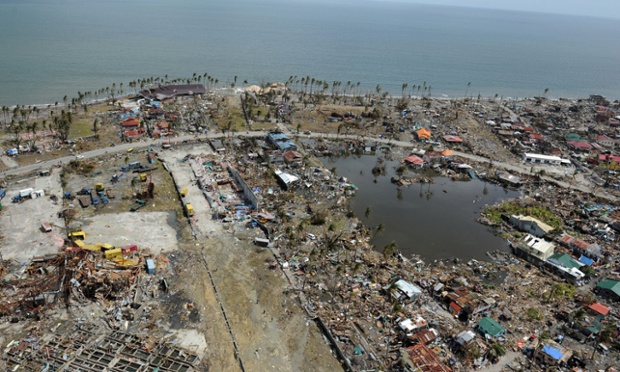
The death toll in the wake of Supertyphoon “Yolanda” (international name: “Haiyan”) on Wednesday neared the 6,000 mark, nearly three times the initial estimate made by President Aquino days after the strongest typhoon to hit land battered Eastern Visayas.

There were still discrepancies in the numbers, however, highlighting the government’s inadequate system of assessing the physical damage from natural disasters.

Latest reports from the National Disaster Risk Reduction and Management Council (NDRRMC) and field reports showed there were 5,818 fatalities from Yolanda, nearly the majority of whom drowned in the storm surge that caught many residents by surprise.

Of the figure, the NDRRMC said that 2,116 were from Tacloban City.

On Wednesday, field reports from Tacloban City showed that authorities had already recovered 2,215 bodies.

It was not even clear whether there were really a hundred bodies found floating in mangroves in San Juanico Bridge on Tuesday.

Senior Supt. Pablito Cordeta, an official of the Bureau of Fire Protection office here and the commander of the Task Force Cadaver in Tacloban City, said that his group recovered 25 bodies on Tuesday, bringing the total to 2,215.

He said another seven bodies were retrieved from the San Juanico Bridge on Dec. 2.

Cordeta debunked reports that more than 100 bodies were discovered by a Chinese humanitarian team floating at the famed bridge connecting Samar and Leyte across the San Juanico strait.

“That’s not true. We are belying that. There was no coordination with the task force. I am the task force commander and we do not know those foreigners and what they were claiming,” Cordeta said in Filipino.

Earlier estimates of fatalities from the supertyphoon were pegged at 10,000, which President Aquino lowered to between 2,000 and 2,500.

As the number of fatalities breached the 5,000 mark last week, Aquino conceded that the death toll could actually be higher. He said the low estimate he gave was based on the initial confirmed dead reported to him.

Government also criticized the United Nations Office for the Coordination of Humanitarian Affairs for giving an initial estimate that was double than what President Aquino had earlier announced.

Establishing the death toll from a calamity is an important measure in assessing the impact of a natural disaster, enabling governments to establish their disaster risk reduction policies and measures.

Thursday 5 December 2013

http://newsinfo.inquirer.net/540749/yolanda-death-toll-reaches-5818

continue reading

14 killed, 10 injured in Burkina Faso mine accident


At least 14 workers have been killed and 10 others injured when an illegal gold mine collapsed in western Burkina Faso, an official says.

The cave-in happened at around 1 a.m. local time (0100 GMT) on Sunday as miners were using dynamite inside an 80-meter (260-foot) deep mineshaft located in the town of Bagassi, just southwest of the capital Ouagadougou, said district administrator Tingande Nehemi Zoundi on Wednesday.

“Just after that dynamiting, a rock situated two meters below ground level became detached. All the people situated at the level below were struck,” the administrator said.

It took 17 hours for Emergency personnel to recover the bodies, all of whom are buried now, Zoundi added.

Interior Ministry official Sadou Sidibe blamed the accident on “anarchic” mining practices -- usually carried out by miners who work at unregulated mines and often with no protection.

The Burkina Faso government has prohibited artisanal mining during June to September -- the wet months -- but experts say officials do not have the means to enforce the ban.

The Bagassi site has been illegally mined for 17 years, with Canada-based miner Roxgold tasked with chasing out illegal miners while awaiting a mining permit.

Illegal and informal mining accidents are widespread during the rainy season throughout West Africa, where gold deposits can be found.

Thursday 5 December 2013

http://www.presstv.ir/detail/2013/12/04/338268/14-killed-in-burkina-faso-mine-accident/

continue reading

Maharashtra staff Uttarakhand-bound to certify missing persons


The state will soon send officials from the Disaster Management Unit to Uttarakhand to clear confusion, coordinate and ensure that the death certificates are issued to all the 166 missing from the state.

There has been uncertainty over the number of people missing in the Uttarakhand floods.

However, the Uttarakhand government about two months ago released a list of 4,120 persons missing, of which 165 have been from state.

According to the state disaster management department, the number of people missing from Maharashtra totals to 165 besides one more person from Mumbai has been added to the list.

“There was some confusion about the 166th person missing as the family members had approached the Uttarakhand government directly. Therefore, we had no idea about this person,” said the official.

“As a matter of procedure, no death certificate is issued until the passage of seven years in case of missing persons. In this case, the central government has made an exception considering the circumstances of the disaster and the practical difficulties of finding their bodies or identifying them with tools such as DNA matching etc,” the official added.

Until the certificate is issued by the Uttarakhand government, compensation will not be granted to the family by the Uttarakhand government. “We are sending officials from to Uttarakhand.

Following which, the District Magistrate of the home district of the missing person will co-ordinate with the District Magistrate where the person may have gone missing in Uttarakhand. Once the co-ordination and procedures are followed, then a certificate will be issued by their state government for the victim. Once the death certificate is issued, then the compensation too would be given,” said the official.

Thursday 5 December 2013

http://www.dnaindia.com/mumbai/report-maharashtra-staff-uttarakhand-bound-to-certify-missing-persons-1929919

continue reading

GenSan's missing fishermen, a year after typhoon Pablo


Exactly a year ago on Wednesday, December 4, some 377 fishermen from General Santos City were caught in the middle of a perfect storm.

Nobody knew what their fate were until well into the late afternoon of the following day, 5 Dec 2012, when a worried Dominic Salazar said only 3 crew members of a light boat owned by their company, Thidcor Fishing, have been found alive from a fishing fleet that consisted of one catcher vessel, a light boat and a ranger boat.

They were the fortunate to have survived the 30-feet waves that battered their boats for more than 12 hours. Their 24 other companions did not. They were never found.

So were the remains of 328 others.

Of the 377 fishermen who were officially accounted for, only 17 survived and only 8 of the missing were found. The rest were long ago presumed already dead, when the government rescuers gave up the vain search for their bodies two weeks after Super Typhoon Pablo (Bopha) hit Mindanao.

Such was the wrath of Pablo that it brought death and devastation both inland and in the high seas.

On 3 Dec 2012, Pablo approached and battered eastern Mindanao like no other typhoon in its recorded history. It hit landfall just after midnight.

Pablo left on its wake more than 1,043 dead, most of them in the provinces of Compostela Valley and Davao Province. The figure includes the fishermen for General Santos City and Sarangani.

General Santos City Mayor Ronnel Rivera said the story of the brave fishermen who lost their lives in the storm is not lost in memory. Without them and the more than 25,000 directly employed in the fishing industry, this city would not have earned its moniker as the Tuna Capital of the Philippines.

But a year into their tragic agony and death, no one seems to remember them anymore.

Even the promised marker to honor their memory has been lost in the conversation among city officials.

The city council, many of members not yet elected when the tragedy happened, does not seem to care despite expressing interests in honoring the dead and missing fishermen as soon as they were elected into office in May.

The previous city council was even worse. When then city councilor Rivera introduced a resolution to erect a monument in honor of the dead, he was immediately met with skepticism from the then majority block identified with former city mayor Darlene Antonino Custodio.

Custodio herself promised to seriously consider the proposal. It apparently got lost along the way as nothing ever came out from city hall.

Neither has the Socsksargen Association of Fishing and Allied Industry seriously pursued its commitment to set aside funds for the construction of such memorial.

Fishing boat owners have seemed to move on, having settled most of their promised obligations to the families of the victims of Pablo – some for a mere P50,000 cash assistance.

Maybe the more devastating Super Typhoon Yolanda (Haiyan) already buried the memory of Pablo.

But for the wives and children, mothers and fathers who were left behind, the memory and the wounds are as fresh as they were a year ago.

Angelina Nemeรฑo, whose husband Cornelio as among those whose body was never found, said coming to terms for her and children’s loss is a reality they have already embraced. But the pitiful assistance they got from the owner of the fishing boat is still too painful to ignore.

Cornelio, then 51, was the piyado – boat skipper – of F/B Queen Mary owned by Thidcor Fishing.

All she got from the company was P70,000 despite the 26 years of service her husband had rendered for the company. She also received P20,000 burial assistance and another P14,000 as death benefits from the Social Security System (SSS). Angelina says she will begin receiving pension from the SSS in January 2014 – for P1,000 a month.

Like Angelina, Alma Andaya also received P50,000 in cash assistance from RA Fishing Industry for her husband Rolan Dampog who likewise was declared missing.

All families of the victims – dead and the few who survived – also got P10,000 each from the local government and grocery items.

But after that, they were left to fend for their own as the fishing companies were insistent that sans the employer-employee relationship, they are not required to give beyond that assistance they have agreed to offer – P50,000.

Sadly, not one of those interviewed said their husbands and sons left some insurance policies for such eventuality.

Sr. Susan Bolaรฑo who is helping organize the families of the victims to secure justice said they have been preparing legal actions against the fishing companies where the missing fishermen worked prior their presumed deaths. But for some, they have given up hope and chose to suffer in silence.

They chose December 4 as the day to remember their departed – the tomb markers and epitaphs etched in the blue waters.

In a heart-rending commemoration of the tragic fate of their loved ones, they offered flowers to the sea – hoping the memory of their dead will not be lost in the city made famous by its brave fishermen.

Thursday 5 December 2013

http://www.rappler.com/nation/45306-general-santos-missing-fishermen-a-year-after-pablo

continue reading

Wednesday, 4 December 2013

INS Sindhurakshak: Navy divers still looking for bodies of missing sailors


Even after submarine INS Sindhurakshak sank following a huge explosion and fire here on Aug 14, Navy divers are still looking for bodies of missing sailors in the wreckage of the warship, said sources.

According to a statement made by Vice-Admiral Shekhar Sinha, chief of Western Naval Command the navy divers had not stopped the search operation. "Our divers are still at the job. We are trying to find out if human remains can be found."

Till now only 11 bodies have been recovered while 18 Navy personnel, including three officers, were on board at the time of the mishap.

A huge explosion rocked the submarine, commissioned in 1997, leading to the frontline warship's sinking in what was seen as a major dent in the Indian Navy's firepower capability.

"A team of divers, who had rehearsed with a similar type of submarine, were made to operate in zero visibility and then sent for rescue operation," he said.

Immediately after the Sindhurakshak disaster, Navy did an audit of all other submarines, their loaded weapons and the crew manning them, said the Western naval command chief.

Wednesday 4 December 2013

http://daily.bhaskar.com/article/MAH-MUM-ins-sindhurakshak-navy-divers-still-look-for-bodies-of-missing-sailors-4453323-NOR.html

continue reading

Tuesday, 3 December 2013

Biggest exhumation underway from Peru conflict


Valentin Casa can't shake the recurring nightmares. And this day certainly isn't helping.

The 36-year-old farmer looks on as forensic investigators unearth a pair of finger bones and two copper rings from a mass grave in the village of Huallhua on the eastern steppes of Peru's Andes. The grave contains the long-buried remains of two women and 13 children, and Casa believes the bones and rings belonged to his mother.

As a boy 27 years ago, Casa watched from behind trees as soldiers and their paramilitary allies dismembered and killed his mother and other women and children left behind by fleeing Shining Path rebels. Civilians suspected of backing the rebels were hunted down and killed. Two weeks later, troops and their civilian confederates caught and killed men from Casa's village, including his father, whose throat they slit.

Three decades later, this isolated corner of Peru is witnessing the biggest exhumation to date of victims of the nation's 1980-2000 internal conflict. The worst of its carnage occurred on these hills between the Andes ridge and Amazon jungle.

"Everybody here is traumatized," Casa says as he watches the work underway. "Whoever says he isn't is lying."

Authorities in distant Lima have been painfully slow to dispatch teams to dig up the dead from a brutal conflict that, according to a 2003 truth commission report, claimed an estimated 70,000 lives. Just over half were slain by Maoist-inspired rebels, over a third by security forces, the commission found. Human rights activists blame politics, including resistance from the military, for the delay in exhuming the bodies. Fifty criminal investigations were only launched into the killings in 2011, said the prosecutor in charge, Gloria Pareja.

In November, forensic anthropologists began their work in the Chungui district and expect to remove 202 bodies in all — mostly women and children. At least 1,384 people were killed in Chungui, which is slightly larger than Hong Kong geographically but has only 6,000 inhabitants.

People there are constantly uncovering bones but very few graves have been exhumed by professionals.

The killing fields are an 18-hour walk from the nearest road in a region known as "Oreja de Perro," or Dog's Ear. It is a place where health care, schools, police and other state institutions barely exist. There are no roads, electricity or phones. The hills are still patrolled by Shining Path rebels, and drug traffickers flaunt the state's absence.

At the edge of a shallow pit, Casa provides security for the forensic team while armed with a worn Mossberg 500 shotgun. He watches the technicians uncover a skull here, a swath of clothing there and finds himself overwhelmed by memories.

"I drank my own urine to survive," Casa remembers after his mother was killed and he fled into the forest.

The exhumers gather the diminutive bones of children, 26 found so far in the district, in boxes made to hold sweet bread.

Tuesday 3 December 2013

http://www.utsandiego.com/news/2013/dec/02/biggest-exhumation-underway-from-peru-conflict/

continue reading

Clutha pub disaster bodies recovered after helicopter wreckage is winched clear


The remaining two bodies from the Glasgow helicopter tragedy were ­recovered yesterday after the mangled wreckage was winched from the roof of the Clutha Vaults pub.

Rescuers used a crane to remove the shattered aircraft, whose crew – two police officers and a civilian pilot – were killed along with six people inside the building in Friday night’s disaster.

The rotor blades and part of the tail had been taken away on Sunday but yesterday the fuselage was secured and winched slowly off the roof.

The wreckage was taken by lorry to the Air Accidents Investigation Branch base in Farnborough, Hampshire.

Removing the Eurocopter EC135 T2 allowed the rest of the devastated building to be searched. Last night police announced that the search and ­recovery operation had concluded, with no further victims inside.

Police Scotland Deputy Chief ­Constable Rose Fitzpatrick said: “I can confirm that the search and recovery operation has now concluded and we are satisfied there are no further ­fatalities at the scene.”

The pub had been packed with revellers enjoying a local ska band. Only five of the nine dead have been formally identified.

Some relatives told yesterday of their anger at the length of time it has taken to recover and identify the bodies.

John McGarrigle, 38, whose father, John senior, 59, is thought to be among the dead, said: “What about the dignity for the human beings underneath that police helicopter? I want my dad out of there. I know he was in there. It’s like a piece of machinery is more important than the people underneath there.”

Mark O’Prey, 44, is also among the missing. His father Ian and sister ­Louise criticised the delay.

Ian said: “If they had made a better attempt on the Saturday, they could have got them out a lot earlier.”

Louise added: “We just need to know. We feel as a family that the ­priority is given to keeping that helicopter intact, which is no use to us.”

Louise said she continues to call Mark’s phone in the hope he will pick up. Police boss Ms Fitzpatrick said: “We are working hard to formally identify the remaining victims as soon as ­possible in order to bring some ­certainty to the families who have been waiting for news since the tragic incident on Friday. As many have acknowledged, it has been a difficult and complex recovery operation.”

Captain Dave Traill and officers Kirsty Nelis, 36, and Tony Collins, 43, died on board when the aircraft hit the pub as it returned from a police operation. Gary Arthur, 48, from ­Paisley, and Samuel McGhee, 56, from Glasgow, were among those killed in the pub. Eleven people remain in ­hospital, three in intensive care.

Tuesday 3 December 2013

http://www.express.co.uk/news/uk/446453/Clutha-pub-disaster-bodies-recovered-after-helicopter-wreckage-is-winched-clear

continue reading

Namibia: Investigating team sent to Bwabwata plane crash site, DNA tests conducted


Prime Minister Hage Geingob has officially dispatched the team of investigators to dig deep into the Mozambican flight disaster, which killed 33 people in Kavango East on Friday.

Geingob briefly told the media that he had been assigned by President Hifikepunye Pohamba to ensure that the team is sent off. The team consists of experts from Botswana, Angola, Mozambique, Brazil, China, the USA and Namibia, who is leading the probe.

The Namibian understands that the premier was briefed by the investigators on their preliminary findings. It is believed the plane crashed a few minutes after 13h00 in Bwabwata National Park, while en route to Angola from Mozambique. Among those on board were six crew members and 27 passengers, of whom 10 were Mozambicans, nine Angolans, five Portuguese, one Portuguese-Brazilian, one French and one Chinese. By yesterday afternoon, only 31 bodies had been found and airlifted to Windhoek. Paul Ludik, the Director of the National Forensic Science Institute in Namibia, who is part of the DNA testing team said they were busy at work but declined to give more details.

"The media will be informed later. We are are still busy and it will be difficult to say what time we will finish, considering the bodies and processes involved," he said.

Officials in the ministry of works also said they are going to comply with the International Civil Aviation Organisation rules, which state that a preliminary report should be compiled within 30 days after the accident. It is not yet clear what caused the accident but officials said the plane, an Embraer SA 190, went missing on Friday in bad weather, which caused poor visibility.

DNA tests

Experts carried out DNA tests Monday to identify the 33 people who were on a Mozambique Airlines plane that crashed in Namibia killing all on board, an official said.

Thirty one bodies had by late Sunday been pulled from the charred wreckage of the plane in the swamps of northern Namibia's Bwabwata National Park.

“We are still busy,” Paul Ludik, director of the Namibia's national forensic science institute, told AFP, adding “it will be difficult to say what time we are going to finish, considering the processes involved.”

The institute is leading the probe into the crash and the processes to identify the victims.

“Namibia, as the country where the accident occurred, will lead the investigation,” the airline said in a statement.

Other investigators will be drawn from Angola, Brazil Mozambique and the US National Transport Safety Board.

The plane's black boxes have also been recovered along with two voice recorders, Captain Ericksson Nengola, director of aircraft accident investigations at the Namibian transport ministry, told AFP on Sunday.

Mozambique was to declare a national period of mourning for the victims, who came from Mozambique, Angola, Brazil, China, France and Portugal.

The crash was one of the worst incidents in Mozambique's civil aviation history.

The passenger craft came down in torrential rains on Friday in the remote Namibian region killing its six crew and 27 passengers.

The victims' bodies were transferred by helicopter to the Namibian capital Windhoek from the crash site some 1,000 kilometres (600 miles) to the northeast.

The plane, which went down en route from Mozambique to Angola, was a Brazil-manufactured Embraer 190 aircraft and the newest plane in the airline's fleet.

“We have also begun making arrangements for a memorial service for the families, loved ones, friends and colleagues of everyone who was on board,” the airline said

Tuesday 3 December 2013

http://allafrica.com/stories/201312030357.html

http://dawn.com/news/1060014/tests-begin-to-identify-mozambican-plane-crash-victims

continue reading

‘Yolanda’ death toll at 5,680; 1,779 still missing


Almost a month after Supertyphoon “Yolanda” (Haiyan) ravaged Eastern Visayas and nearby provinces, the death toll continues to rise, with 5,680 bodies recovered as of Tuesday morning.

The National Disaster Risk Reduction and Management Council (NDRRMC) in its latest report said 1,779 people remained missing, especially in Leyte and other areas hit by the deadly storm surge.

Most of the fatalities were from Eastern Visayas, with 2,077 coming from Tacloban City in Leyte alone. This was followed by the municipalities of Tanauan and Palo which recorded death tolls of at least 1,000 each.

Retrieval and clean-up operations in the last few weeks have contributed to the death toll increase as bodies were continuously recovered underneath debris left by the typhoon.

The NDRRMC has also been able to issue a detailed list of fatalities on their website with the names of the victims and their cause of death. Many drowned or died from injuries after being hit by debris at the height of the typhoon last November 8.

With 587,035 houses totally destroyed and another 593,802 houses damaged, the government is shifting its focus to the rehabilitation and reconstruction of typhoon-hit areas.

On Monday, former senator Panfilo “Ping” Lacson spoke with media on his plans as the “rehabilitation czar” for areas affected by the super typhoon.

The total cost of damages to infrastructure and agriculture has been pegged at P34 billion, with roads, bridges and other structures sustaining P14 billion worth of damages.

Also pressing is the lack of electricity in many provinces under Regions IV-B, V, VI, VII and VIII.

Tuesday 3 December 2013

http://newsinfo.inquirer.net/539469/yolanda-death-toll-at-5680-1779-still-missing

continue reading

Monday, 2 December 2013

Forensic doc feels 'burned' after helping gov't


Dr. Raquel Fortun, a well-known forensic expert, will have to think twice next time the government seeks her help in identifying cadavers.

Fortun, who has been instrumental in identifying bodies in past tragedies, said she and her colleagues have been “burned” after being set aside five days after putting in place a system by which to identify the victims of super typhoon Yolanda.

“If the government asks for help? I don’t know. When I got in, I thought that was it. We had authorization from no less than the Office of the President to do something. If I had known on the fifth day they would just drop us, I would not have said yes. For future requests, I think I’ll have second thoughts, napaso na ako e,” she told ANC.

The forensic expert said a system is very important in identifying the thousands of bodies in areas affected by super typhoon Yolanda.

Fortun and her group started on November 18 but had to pack their bags after five days. This was after the National Bureau of Investigation (NBI) questioned their mode of identification.

NBI officer-in-charge Medardo de Lemos already apologized, noting it was only a misunderstanding between the two camps. Fortun was with experts from the Department of Health and World Health Organization, while the NBI sought the help of the Interpol.

Fortun said she does not know if there is a system in place right now after they left.

How hard is the task now? “Is it impossible? The answer should be no. You have to try and you have to be fast. With decomposition, you lose information. I don’t know what’s happening now. Have we not been stopped…we were already averaging 100 bodies a day," Fortun said.

Earlier, Fortun twitted the slow reporting of the casualties of Yolanda. President Benigno Aquino III was reported as saying, “It’s because you have to make sure that there is the certification or a coroner’s report before it is made official.”

In her Twitter account, she answered back: “Certification of a coroner’s report is needed before a body is counted? Do you know Mr. President that we don’t have coroners in the Philippines?”

She also said the system was better during President Gloria Arroyo’s time.

“Arroyo’s term may not have been spanking clean. But at least there was a sense that we were governed,” she noted.

“With former President GMA, you throw all the problems at her and she will deal with them. But the one who is sitting now is allergic to bad news,” she said.

Differences in system

Fortun said NBI already questioned their mode of identifying the bodies since they first met for a meeting on the deployment to Tacloban.

“The NBI was pushing for an Interpol kind. [That of] WHO is more practical…there was no systematic taking of DNA samples, [we] had no dental charting because we don’t even have dentists,” she said.

NBI wanted to do the routine process of gathering DNA, such as swabbing the insides of the mouth of the bodies, she explained.

“Why take routine DNA samples from each body. You can’t just do swabbing because the bodies are already decomposing and may have been contaminated.”

She said the best way to take the DNA is from the bones, but this is out of the question because of the thousands of bodies that they had to work on.

“Imagine the thousands of samples you have to deal with. These are forensic cases so you have to be careful in packaging and labeling. Where will you get your storage facility? How do you manage thousands upon thousands of bodies,” she asked.

She said their system was more basic and simpler.

“We get the basics. We [determine] the sex. Is it an adult or infant? We describe the clothes. For the dental records, it was just photography.”

The bodies are then buried temporarily in trenches, where there will be a numbering system.

A deduction method will then be in place. She said a group will be in charge of antemortem information, where relatives can describe the missing.

“Then maybe we’ll have a database. For example, we look at all male adults for recognition, personal effects. We determine where the bodies are buried. After that, the process becomes more definitive,” she explained.

She said the NBI system was “just not possible.”

She surmised: “I don’t even know if [they] have identified the agency that will do antemortem.”

Monday 2 December 2013

http://www.abs-cbnnews.com/focus/12/02/13/forensic-doc-feels-burned-after-helping-govt

continue reading

More than 2,000 ‘Yolanda’ victims unidentified


More than 2,000 fatalities remain unidentified in Tacloban City, over three weeks after Supertyphoon “Yolanda” ripped through Eastern Visayas.

Last week, retrieval teams from government agencies and volunteer organizations recovered more bodies under the rubble, raising the possibility the number of dead could reach 10,000 as earlier estimated by a police official.

The official tally of the National Disaster Risk Reduction and Management Council (NDRRMC) remained at 5,632 dead, with 1,759 persons still missing. The 2,000 unidentified victims were among the 5,632.

In its latest advisory, the NDRRMC on Sunday said only 108 fatalities from Guiuan, Eastern Samar, and Matag-ob, Leyte, had been identified by their relatives.

Monday 2 December 2013

http://newsinfo.inquirer.net/538641/more-than-2000-yolanda-victims-unidentified-ndrrmc

continue reading

The Clutha Tragedy: Identification of helicopter crash victims will take time


Their thirst for knowledge about every detail is completely understandable.

At the Clutha Vaults it can appear there is an inordinate delay in answering that most basic question for some of the families, 'Is my loved one, one of the dead?'.

I have no doubt the authorities want to confirm those facts and break the news, but great care has to be taken to get this right.

The law demands it, and a mistake in such a sensitive area is unforgiveable.

It's like a doctor giving a patient a wrong diagnosis, or a miscarriage of justice.

It is clear that the Clutha incident scene remains a very challenging site.

It looks like the remains of the helicopter are holding up the building and vice versa.

Body recovery has to be done safely and professionally and this is going to be a slower process than anyone would want.

I've also no doubt the emergency services will have full regard to the dignity of the deceased of the sort that was apparent in incidents including Piper Alpha, Lockerbie and Stockline.

Meantime, I've no doubt that the list of potential victims held by the police is a larger number than the real number.

Despite appeals, some people won't have checked in with their families to say they are safe and will currently be listed as missing.

I have also heard no confirmation that the final number is eight.

That number won't be confirmed until all the rubble is painstakingly searched.

It is not a clear cut situation.

The police will have appointed a Senior Identification Manager (SIM) with a very distinct role from the well known Senior Investigating Officer (SIO) who investigates the incident.

The job of the SIM is to co-ordinate body recovery, mortuary arrangements, and identification procedure.

An Identification Commission will have been set up which will include the SIM, the procurator fiscal, a pathologist, odontologist, and forensic support.

They look at all the identification evidence available to determine if identification has been established.

I have no doubt that, regrettably, because of problems in accessing and recovering the bodies they will not have all the evidence they really need, which would include visual identification, fingerprints, dental records, DNA, supplemented by things such as personal effects, clothing, scars, tattoos and the like.

It's easy to ask for patience, but also easy to understand the distress the time it is taking is causing. I know the authorities will be working as quickly as humanly possible.

I am also sure the families of potential victims will be having the challenges and procedures explained to them, notably by Family Liaison Officers who will be attached to every family will provide as much information and support as they can.

Finally, my own commiserations to all the families involved in this tragedy.

Monday 2 December 2013

http://www.eveningtimes.co.uk/news/the-clutha-tragedy-identification-will-take-time-144126n.22846505

continue reading

Mozambique airline crashes in Zambezi killing all 33 on board


Investigations are underway to determine what precisely caused the horrific plane crash that killed all 33 people aboard the Mozambican national airline plane that went down in the Bwabwata National Park in the Zambezi Region on Friday afternoon.

The plane went missing on Friday mid-day, but the Namibian police only managed to locate the wreckage late on Friday afternoon a few kilometres from the border between Namibia and Botswana, in the Bwabwata National Park, and had to guard the scene from lions and other predators until the arrival of inspectors of the Directorate of Civil Aviation the next day.

“We could not really tell how many people were on board [at the time], because it was just bodies and plane parts scattered all over the place. All the bodies were shredded to pieces, it was an ugly scene because none of the bodies were [intact],” said Regional Crime Investigations Coordinator, Deputy Commissioner Willie Bampton, who was one of the emergency and security personnel first to arrive at the scene.

Namibia’s aircraft accident investigation unit is leading the investigation, which comprises of seasoned investigators from civil aviation authorities from Mozambique, Angola, Brazil and the National Transportation Safety Board (NTSB), an independent United States federal agency.

Mozambique’s national airline, Linhas Aereas de Mozambique (LAM), has also sent its own response team yesterday to assist and provide support to Namibian authorities with the investigation.

“We have mobilised Kenyon International, a global specialist disaster and emergency management organisation to assist in the search and recovery of the victims remains and also their personal possessions. For the families, this is important, as it will enable the positive identification of each person who was on the aircraft. The Kenyon team is en-route from the UK to the accident site and by tomorrow we hope to have a clear assessment of the situation there,” said LAM Chief Executive Officer Marlene Manave yesterday morning.

According to senior investigators on the ground, information available so far indicate that the Embraer 190 aircraft started descending uncontrollably from 38 000 feet at about 13h09 on Friday, while still within Botswana airspace until it hit the ground.

Flight TM 470 was a scheduled service from Maputo to Luanda, carrying 27 passengers and six crew members. The 93-seater plane was still under the control of the civil aviation authorities in Botswana when it started its fatal descend.

The 33 people on the plane included 10 Mozambicans, nine Angolans, five Portuguese, one French, one Brazilian and one Chinese national. The remains of the deceased were transported to the Rundu State Hospital mortuary on Saturday evening and flown to Windhoek yesterday morning aboard a Namibian Air Force aircraft.

The accident took place at a time that African countries are working hard to shed off the negative reputation of accident-prone African airlines, the majority of which are still banned from flying over European Union airspace due to stringent EU safety standards. Currently there are only five African countries and their airlines, which are permitted to fly over European airspace, of which Namibia is one.

Linhas Aereas de Mozambique (LAM) said the plane was purchased brand new in late 2012 and had completed 2 905 flight-hours when it crashed. Bampton said the aircraft skidded over 500 metres on the ground before coming to a standstill.

“If it was not for the trees and bushes in the area the plane might have skidded further over the ground,” said the deputy commissioner.

The Mozambican government said it would declare a period of national mourning for the victims.

Yesterday the Namibian government also extended its condolences to the government of Mozambique and the bereaved families. The Minister of Works and Transport, Erkki Nghimtina, said there were no casualties on the ground and indicated that the names of the deceased cannot be released until their next of kin have been informed.

The Minister of Safety and Security, Immanuel Ngatjizeko, who was at the site on Saturday afternoon, described the accident as horrendous.

“What more can one say with destruction such as this, it is a loss for the people of Mozambique and the Southern Africa Development Community (SADC). I understand there were minors on the plane,” said Ngatjizeko.

He also explained that he had to visit the accident scene in order that he could brief President Hifikepunye Pohamba as to what transpired. “Investigations must be done as soon as possible, but of course we want it to be done properly,” Ngatjizeko said.

LAM has also expressed its condolences to the bereaved families. “At this time, our thoughts and prayers are with the families and loved ones of the passengers and crew who were on board the aircraft and it is their well-being and taking care of their immediate needs that is and must take priority,” Manave said in a statement yesterday morning.

As an initial form of assistance, LAM has established family liaison centres in the Maputo and Luanda airports. At the same time, the airline is also providing advice to the families about the international legal processes that have to be followed following a fatal air accident.

LAM further says the aircraft was manufactured in Brazil and was powered by two General Electric CF34-10 turbofan engines. It was delivered brand new from the factory and entered service with LAM on November 17, 2012, said the airline. “Until yesterday [Friday accident], the aircraft had logged 2 905 flight-hours in 1 877 flights,” Manave said.

Sunday 2 December 2013

http://allafrica.com/stories/201312020287.html?viewall=1

continue reading

Sunday, 1 December 2013

Relatives mark 50th anniversary of Trans-Canada Air Lines crash that killed 118

It took Robert Page nearly 50 years to come to grips with the death of his father in one of Canada's worst air disasters. On Friday, he wasn't alone. He and about 350 relatives of the 118 people who died in the Nov. 29, 1963, crash of a Trans-Canada Air Lines flight came together in the community where it happened to mark the tragedy's half-century anniversary. People who had never met but were connected through sorrow listened as the names of the victims were read aloud in a private service. "They're spending time talking and getting to know each other and remembering their loved ones," Page said in an interview Friday. "I hope it's a time of healing." The world was still reeling from the assassination of then-U.S. president John F. Kennedy when witnesses reported seeing Flight 831 catch fire and then explode shortly after takeoff from Montreal's Dorval airport. A federal Transport Canada investigation reported in 1965 it couldn't determine an exact cause because the DC-8 jet, the biggest in the airline's fleet, had disintegrated. Page was 16 when his father John, a vice-president with H.J. Heinz of Canada, boarded the flight. John Page, 48, grew up in Toronto and was an accountant by training. After service as an air force navigator in the Second World War, he joined Heinz and worked his way up the ranks, being named vice-president of sales and marketing in 1963. "He was on his first trip to the Maritimes," Robert Page recalled. "Coming back was when he was killed." The aircraft crashed around 6:30 p.m. in a muddy field near Ste-Therese-de-Blainville. It created a crater about 45 metres long by 22.5 metres wide. Debris was spread across an area 800 metres long and 75 metres wide. The impact of the crash was reported to have shattered windows in the area and knocked over household items. "It fell into a field that was quite marshy," said Martin Rodgers, a local historian. "It was cold, it was raining." Hunks of metal littered the ground and what appeared to be clothing hung from tree branches. A cacaphony of sirens wailed along the Laurentian highway adjacent to the crash site as rescuers rushed to the scene. Fires crackled in the wreckage. Areas turned into a swamp by the heavy rains of the previous days complicated the work of rescue workers, who had to wait for heavy machinery to open a path from the main road to the crash site. Then the hunt began for not only bodies but pieces of the aircraft so that a cause could be determined. Rodgers also said no intact body was found either, only parts. There were 111 passengers and seven crew aboard the flight. Authorities scrambled to get organized. "In what was the parish of Ste-Therese-de-Blainville, there was one police officer, Mr. Aubertin, who somehow maintained security," said Rodgers, who also oversees recreation for the town. "But he was quick with people who tried to rob the dead and it's said he even had to fire a few shots into the air to deter some people from making off with watches or wallets." There have been only two air crashes in Canada more devastating than the one in 1963. On Dec. 12, 1985, the crash of Arrow Air Flight 1285 in Gander, Nfld., left 256 dead. Swissair Flight 111 crashed in the Atlantic Ocean off Nova Scotia on Sept. 2, 1998, killing 229. Page, whose family was living in Leamington, Ont., at the time, says he grappled with his father's sudden death for years and that five years ago he sought to find out how others were handling the tragedy. "The numbers were so overwhelming that I think that people felt to some extent connected but at the same time, in 1963, isolated." He explained that while the crash happened in Quebec, most of the victims were from Ontario and the West. "The families really were separated and didn't grieve together particularly," he explained. "There's been a complete range of emotions that I've experienced from people who have said to me 50 years after the fact 'I can't talk to you. It's still too sore, it's too raw a memory' — (compared) to others who are here today to join together and remember." Page has since helped compile the story of the crash and its victims in a book, "Voices From A Forgotten Tragedy." There's also a website dedicated to the crash. Page recalled that he wondered about his own grief for a long time. "I didn't feel I had grieved appropriately. I didn't remember a lot of tears and, in looking back now, I've come to realize that what happened was I emotionally shut down. (It took) this project and about 48 more years for me to experience that emotional grief and release." The crash has also marked the community where it happened. Blainville Mayor Richard Perreault said in a message on his city's website that the memory of the crash is still fresh for many and he has heard from people who tell him about a friend or relative who witnessed rescue efforts. Rodgers echoed the mayor's feelings, saying that any resident who was around at the time has a memory of the historic incident, regardless of age. "In one way or another, everyone has been pretty much touched by that event and, even today when we talk to people, memories are quite vivid." An exhibit on the crash is also on display at the Joseph-Filion museum and relatives of the victims will be able to to take shuttle buses Saturday to see the crash site and a memorial plaque installed at the local cemetery. Trans-Canada Air Lines, which later became Air Canada, created a memorial garden near the crash site. Saturday 30 November 2013 http://www.ottawacitizen.com/news/Relatives+mark+50th+anniversary+TransCanada+Lines+crash/9229811/story.html

continue reading

Rescuers find 8 bodies in Indonesian landslide


Eight bodies were found on Sunday and a person remained missing after landslides on Saturday night in North Sumatra province of Indonesia, official said.

Heavy rains were blamed for the disaster in Berastagi sub- district of Tanah Karo district at about 20:30 p.m. Jakarta time, said Bowo Asa, senior official of the provincial disaster management and mitigation agency.

"Eight corpses were found this (Sunday) morning. Three of those are children. Another child is still missing," he told Xinhua over phone from the province.

Most of the bodies were pulled from the wreckage of homes at the slope of a hill after being crumpled by piles of soil, said Asa.

Searching for the missing child has been underway, he said.

Heavy rain has often triggered widespread flooding and landslide across much of Indonesia, a vast archipelago country with a population of over 238 million.

Sunday 1 December 2013

http://www.globalpost.com/dispatch/news/xinhua-news-agency/131201/1st-ld-writethruu-rescuers-find-8-bodies-indonesian-landslid

continue reading

Thursday, 28 November 2013

Two months on, unidentified body lies preserved at JJ morgue


Two months after the Babu Genu building collapse in the Dockyard Road area, the body of an unidentified male continues to remain in the cold preservation unit of the state-run JJ hospital's morgue.

The man, along with 61 residents in the building, had succumbed to suffocation and multiple injuries after the ground-plus-four-storey building caved in early morning on September 27. All 61 bodies were identified and claimed by respective families.

According to the hospital's forensic department, the body was sent for DNA analysis to Kalina Forensic Science Laboratory more than a month ago. Dr M K Malve, director of the laboratory, said, "The genetic analysis results have been handed over to the Sewri police. If a relative comes to claim the body, DNA sampling can be done and the body can be handed over."

A fortnight after the collapse, claims of a BMC peon — Vijay Narayan Jadhav's body going missing — had come up. While Vijay Narayan was the same age as the unidentified body, his uncle Vijay Dhondu Jadhav claimed that it was not his nephew's.

"We have a capacity for storing 130 bodies, of which the hospital has space for 45 bodies and police department can keep 85. Until we get a police notification, we will keep it preserved," said Dr Ashok Rathore, acting dean in JJ hospital.

Usually, a body is kept for a week or so, this body has been preserved for two months now. Sunil Babar, additional commissioner of police, Wadala division, said, "We usually wait for a month at the most and then cremate unidentified bodies. However, this case is serious and anyone can come to claim the body as well as BMC's compensation. Therefore investigations are still on." The only identification known to the doctors, so far, is that the body may be of a Muslim in his early 40s.

Thursday 28 November 2013

http://www.indianexpress.com/news/two-months-on-unidentified-body-lies-preserved-at-jj-morgue/1200549/

continue reading

Wednesday, 27 November 2013

Nine killed after roof collapses at Chinese factory under tons of heavy snow


Nine people have been killed in China after a factory roof collapsed under tons of fresh snow.

China's state news agency Xinhua said the accident in the country's northeast Heilongjiang Province happened at around 1.10pm yesterday in blizzard conditions, in the city of Mudanjiang.

Nine people were buried in the rubble of the three-storey factory, where workers assembled household goods in round-the-clock shifts.

Rescuers worked for nine hours to clear the debris, but have now recovered all of the bodies.

Survivors said they ran for their lives after hearing cracking and groaning as the roof caved in.

Officials are now preparing to check the safety of buildings across the city as very heavy snowfall puts extra pressure on standing structures.

Heavy snow has been falling across northeastern China, forcing roads to close and leading to flights being cancelled.

Wednesday 27 November 2013

http://www.mirror.co.uk/news/world-news/chinese-factory-roof-collapse-nine-2856947

continue reading

Boat with Haitian migrants capsize in Bahamas; up to 30 feared dead


A sailboat passing through the southern Bahamas islands with about 150 Haitian migrants on board capsized after running aground, killing up to 30 people and leaving the rest clinging to the vessel for hours, authorities said Tuesday.

The exact death toll remained uncertain. Authorities on the scene confirmed at least 20 dead and determined the number could reach 30 based on accounts from survivors, said Lt. Origin Deleveaux, a Royal Bahamas Defense Force spokesman.

The remains of five victims had been recovered and the Bahamas military and police were working with the U.S. Coast Guard to recover additional bodies as they pulled survivors from the stranded sailboat.

"Right now, we are just trying to recover as many bodies as we possibly can," Deleveaux said.

Authorities believe the migrants had been at sea for eight to nine days with limited food and water and no life jackets, Coast Guard Lt. Cmdr. Gabe Somma said. Many were severely dehydrated when the first rescue crews reached them. The boat, in addition to being overloaded, likely encountered rough weather, Deleveaux said.

"It was obviously just grossly overloaded, unbalanced, unseaworthy," Somma said. "An incredibly dangerous voyage."

The capsizing of overloaded vessels occurs with disturbing frequency in the area, most recently in mid-October when four Haitian women died off Miami. There have also been fatal incidents near the Turks and Caicos Islands, between Haiti and the Bahamas, and in the rough Mona Passage that divides the Dominican Republic and Puerto Rico.

"Unfortunately we see these types of tragedies occur on a monthly basis," Coast Guard Chief Petty Officer Ryan Doss said. "Every year we see hundreds of migrants needlessly lose their lives at sea taking part in these dangerous and illegal voyages."

It's common enough that the Coast Guard recently developed a public service announcement that will run on TV and radio in Florida, Haiti, the Bahamas and the Dominican Republic urging people not to risk the deadly ocean voyages.

This latest incident occurred late Monday near Harvey Cays, about 80 miles southeast of New Providence, the island that includes the capital of Nassau, and 260 miles southeast of Miami.

Fishermen spotted the dangerously overloaded sailboat and alerted the Bahamas military, which asked the Coast Guard for assistance in locating the vessel, Somma said. By the time it was spotted, the 40-foot boat had run aground in an area dotted with tiny outcroppings and reefs and then capsized.

Photos taken by the Coast Guard showed people clinging to every available space on the overturned vessel. Some were taken to a clinic on nearby Staniel Cay for treatment for dehydration.

By late Tuesday afternoon, the Coast Guard and Bahamian authorities had rescued about 110 people, including 19 women. Deleveaux said there were no children on board. Smugglers will often seek to blend in with the migrants when they are captured and authorities did not announce any arrests.

Migrants have long traversed the Bahamian archipelago to reach the United States. Thousands have also settled in the Bahamas in recent years. Deleveaux said those rescued from the boat near Harvey Cays would be taken to a military base on New Providence, processed and then repatriated to Haiti.

Wednesday 27 November 2013

http://www.foxnews.com/world/2013/11/26/10-haitian-migrants-die-100-cling-to-capsized-boat-in-bahamas/

continue reading

Search teams in Tacloban in need of K-9 units


Search and retrieval teams in typhoon-devastated Tacloban City are in need of more K-9 units as the search for bodies feared buried under the rubble has yet to be finished.

Bureau of Fire Protection Region 8 Director Pablito Cordeta, who also heads Task Force Retrieval, said two K-9 units from the United States, 4 from The Netherlands, and 2 from South Korea are set to wrap up their work and leave the city.

Cordeta said the K-9 units are important in retrieving the bodies which are now in decomposing.

The BFP has so far retrieved 2,004 bodies in Tacloban.

A separate and official government report from the National Disaster Risk Reduction and Management Council (NDRRMC) said 1,932 died in Tacloban City, while 594 remain missing.

In its 6 a.m. Wednesday update, the NDRRMC said 207 more have been confirmed dead in Tacloban; 46 in the rest of Leyte province; and 7 in Eastern Samar. This brings the death toll from the typhoon to 5,500.

The death toll is expected to rise further as 1,757 remain missing: 1,668 in Leyte; 38 in Samar; 20 in Eastern Samar; 14 in Antique; 6 in Capiz; 5 in Cebu; 4 in Iloilo and 1 each in Guimaras and Capiz.

The number of injured rose to 26,136.

Wednesday 27 November 2013

http://www.abs-cbnnews.com/nation/regions/11/27/13/search-teams-tacloban-need-k-9-units

continue reading

Tuesday, 26 November 2013

Winter halts digging at Bosnia's largest mass grave


Forensic experts will quit exhumations during the winter at a mass grave in northwestern Bosnia believed to be the largest found so far from the Bosnian 1992-95 war.

The remains of 430 people have been exhumed since work began in August at the Tomasica grave. The victims were Muslim Bosniaks and Croats from around the nearby town of Prijedor who were killed by Serbs trying to drive non-Serbs out of the area.

In 2001, forensic experts found 373 victims they believe were originally buried at Tomasica, then reburied at the Jakarina Kosa, a nearby secondary grave. In the years since, 36 more bodies have been found at Tomasica.

"If we take into account the bodies found at Jakarina Kosa and later at Tomasica, we can say with certainty for now that 850 bodies had been buried at Tomasica," said Lejla Cengic, a spokeswoman for Bosnia's Institute for Missing Persons, which conducts and coordinates the digging.

Exhumations will resume in the spring, Cengic said, when more bodies were expected to be found. Around 1,200 people are still missing from the Prijedor area.

On Monday, Theodor Meron, the president of the United Nations war crimes tribunal for the former Yugoslavia, paid his respect to the victims at Tomasica. Standing at the edge of the muddy grave, Meron, a Jew who survived the Holocaust in Poland, Meron said the site had a very special "resonance" for him.

"It looks a little bit like the quarry not far from the city where I spent my war years ... in Poland, where my mother was killed," he said. "And this means more to me than theory of international justice."

The Hague-based U.N. war crimes tribunal has sentenced 16 Bosnian Serbs to a total of 230 years in prison for atrocities in the Prijedor area.

Tuesday 26 November 2013 http://www.trust.org/item/20131125165315-ov5ek

continue reading

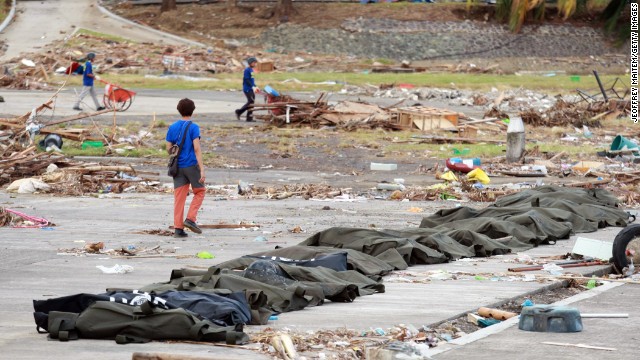
57 more bodies recovered in Tacloban


The Philippine National Police (PNP) has recovered 57 more cadavers in this city on Sunday, 17 days after super typhoon "Yolanda" (international code name: Haiyan) struck Eastern Visayas provinces.

Senior Superintendent Emmanuel Aranas, deputy director for operations of the PNP crime laboratory, said in a briefing Monday morning that more bodies have been recovered everyday as the national government launched massive clearing operations.

"We have to dispose cadavers immediately since it's already in the advanced stage of decomposition. Since they perished from natural calamities, families of victims don't even bother to identify dead bodies," Aranas said.

Dead bodies were retrieved by the 300 police personnel in the hardly hit coastal villages of Magallanes, Anibong and San Jose district. Clearing operations paved the way for the recovery of more bodies.

Since November 9, policemen have recovered 1,932 bodies in the typhoon-ravaged Tacloban, a city of more than 200,000 population, the capital of Eastern Visayas.

Of the total number, 235 bodies are still unidentified by the police scene of the crime operatives, according to Aranas.

"We are asking the National Bureau of Investigation to lead the identification of cadavers to facilitate the disposal of bodies," the official said, citing an administrative order of the health department designating the NBI as the lead agency in cadaver identification after natural calamities.

Police admitted that disposing these bodies have been hampered by lack of equipment that will transport cadavers to mass grave sites in northern villages of Suhi and Basper.

The Department of Public Works and Highways (DPWH) deployed only six trucks to transport dead bodies from villages to mass grave sites.

The National Disaster Risk Reduction and Management Council (NDRRMC) reported the number of casualties has reached 5,235 when super typhoon "Yolanda" hit central Philippines on Nov. 8. There are still 1,613 missing persons.

Deaths have been reported in 35 towns in Leyte, eight towns in Eastern Samar, and two towns in Samar, according to the Department of the Interior and Local Government.

In typhoon-stricken Leyte towns of Palo and Tanauan, public plazas were converted by the local government as mass grave sites.

However, in many villages, residents tagged burial sites for their relatives. Some are located along roadsides, residential areas, vacant lots and near the shores.

Paula Sydiongco, assistant regional director of the Department of Health Eastern Visayas, said this practice is unlawful considering the health hazards posed to the community.

"We will look into that problem, but our priority for now is addressing other health risks arising from the disaster such as leptospirosis and water-borne diseases," Sydiongco said.

Aranas confirmed there are some illegal burials in Tacloban but they have to tolerate that for now considering the lack of resources to collect all cadavers.

"I think we should tolerate that for now, but we just make sure that burial sites are not close to water sources," he noted.

Tuesday 26 November 2013

http://www.interaksyon.com/article/75608/57-more-bodies-recovered-in-tacloban

continue reading

Mexico: Tally of bodies exhumed from clandestine grave grows to 42


The number of exhumed bodies now stands at 42 -- and the digging continues at the latest clandestine mass grave to be discovered on Mexican soil.

This month, Mexican authorities declared that they had exhumed 19 unidentified bodies from the unmarked burial ground along the Lerma River, in the western state of Jalisco. The site is near the border with Michoacan, a state reeling from the presence of violent drug cartels.

Since the initial announcement of the discovery, the number of exhumed bodies has continued to grow as officials continue their grisly work. It is unclear, however, how much closure the discoveries will bring for the families of the thousands who have disappeared in this country in recent years: Thus far, none of the 42 bodies have been identified, a spokesman for the federal prosecutor’s office in Jalisco told The Times on Monday.

Such killing fields are a distressingly common reality in modern Mexico, where more than 26,000 people went missing during the 2006-2012 term of President Felipe Calderon. Then, as now, Mexico was reeling from a host of problems connected to organized crime, corruption and the federal government’s attempt to push back against the power of the narco groups. The disappeared include ordinary people, rival drug cartel members and police as well as U.S.-bound migrants, who were a favorite kidnapping target for criminal groups.

The current grave site was discovered after two federal police officers disappeared in Michoacan. Suspects detained in the case later tipped off authorities to the presence of the burial ground.

However, the remains of the policemen have not turned up among the 42 bodies, a spokesman for the federal attorney general’s office said.

Authorities this month also discovered the remains of six men and a woman buried in a lime grove near the Pacific tourist city of Acapulco.

In May, President Enrique Peรฑa Nieto announced the creation of a task force to search for the missing.

Tuesday 26 November 2013

http://www.latimes.com/world/worldnow/la-fg-wn-mexico-mass-grave-20131125,0,7743678.story#axzz2ljy2NUpZ

continue reading

10 dead, 16 missing after cargo ships sink off east China


Ten bodies were recovered Monday and more than a dozen people remained missing after two cargo vessels sank off east China in two separate accidents, rescue workers said on Tuesday, with officials blaming strong gales and high waves as the likely cause of both sinkings.

The first incident happened at around 9 p.m. local time on Sunday when the local cargo vessel XINGLONGZHOU65 sank off Yantai, a coastal city in northeastern Shandong province. The 88-meter (288-feet)-long vessel, which was loaded with stone, was carrying a total of twelve crew members, of whom rescuers had recovered three bodies by Tuesday while the other nine remained missing.

The second incident happened hours later, just before 3 a.m. local time on Monday, when the local cargo vessel ZIHAISHUN sank off Weihai, which is only about 60 kilometers (37 miles) east of Yantai. The cargo ship was carrying fourteen people when it sank, and rescue workers were able to recover seven bodies while the other seven remained missing.

Rescuers using boats and helicopters continued their search on Tuesday, but authorities said it was unlikely any of the missing were still alive. The Shandong Maritime Safety Administration said strong gales caused the first cargo vessel to begin leaning after it lost power, and contact with maritime officials was lost about six minutes later.

Tuesday 26 November 2013

http://wireupdate.com/10-dead-16-missing-after-cargo-ships-sink-off-east-china.html

continue reading

Sunday, 24 November 2013

On 24th of every month, they mourn


November 24 marks one year of the terrible fire at Tazreen Fashions, a garment factory in Nischintapur area of Ashulia, and seven months into the deadly collapse of Rana Plaza at Savar that took place on April 24.

The 24th day comes every month, but sufferings of the survivors, and family members of the missing and deceased workers remain unheeded. On this day, they gather on the premises of the two buildings; they did it again on Sunday and demonstrated under the banners of different workers’ bodies and left-leaning organisations.

Most of them lost the only bread earners of the family, while many survivors lost their limbs for which they will not able to work anymore in future. Bangladesh Garments Workers Federation and Bangladesh Garments Workers Solidarity organised programmes on Rana Plaza premises and Tazreen Fashions demanding actual compensation and arrest of Tazreen’s owner Delwar Hossain.

They also demanded a complete list of missing workers. Around 1,000 survivors and family members of the missing and deceased workers gathered at the two places.

They also brought out a rally on Dhaka-Aricha highway and paid tribute to the deceased workers at the Rana Plaza premises. At Savar, the victims’ family members alleged that they had not got any financial support from the prime minister. They said they had already spent a lot of money to prepare documents.

They also expressed anxiety why only some family members had been given compensation. Coordinator of BGWS Taslima Akhter said: “The government officials say the number of missing workers from Rana Plaza collapse is 379, the army says 261, but we found 291 graves at Jurain graveyard.

Show us the actual number of missing workers of these two incidents.” Kanchon Mala, Kamal Hossain and Amina khatun used to work at Phantom Apparels of the 3rd floor of Rana Plaza. Their family members told to this reporter that despite being parents of the deceased, they had to hear from Dhaka Medical College Hospital authorities that the DNA reports did not match.

Those victims family showed original documents to the Dhaka tribune. Prof Anu Muhammad of Jahangirnagar University told the Dhaka Tribune: “We have estimated that the amount of relief gathered in the prime minister’s fund are enough to provide compensation to the survivors and families of the deceased workers.

“If those money is provided properly, the victims’ families will get Tk4.8m each while the survivors Tk2.4m. But we cannot understand why our honourable prime minister is yet to announce the compensation in these two incidents,” he added.

Sunday 24 November 2013

http://www.dhakatribune.com/bangladesh/2013/nov/25/24th-every-month-they-mourn

continue reading

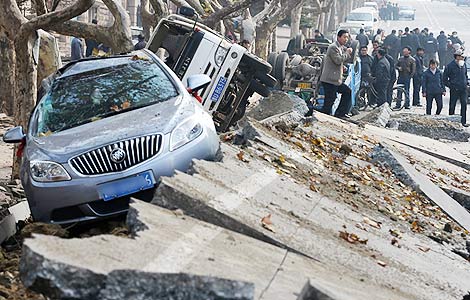
Death toll from China oil pipeline blast rises to 52, 11 missing


The death toll from Friday's oil pipeline blasts in east China's Shandong Province rose to 52 as of 1pm today after four more bodies were found at the scene, rescuers said.

Reports and investigations showed that 11 others were missing in the deadly accident, the rescue headquarters said.

Among the dead, four have not yet been identified, according to the rescue headquarters for the blast accident, which occurred at Huangdao district in Qingdao City.

Six of the dead were professional firefighters with the Huangdao oil warehouse of Sinopec, China's largest oil refiner.

Rescue efforts continued today despite rainy weather. The complicated situation and the remains of flammable gas at certain sections in the explosion area hindered the debris-clearing progress.

Crude oil began leaking from an underground pipeline operated by Sinopec at 3:00am Friday in Huangdao District of Qingdao, according to the municipal government. The valves of the Huangdao oil warehouse were shut about 15 minutes later.

The oil spill then flowed into the city's rainwater pipe network, which empties into Jiaozhou Bay. Two blasts occurred at around 10:30am Friday when workers were repairing the ruptured pipeline.

The damaged pipeline was put into use in July 1986. It is the second pipeline linking Dongying City in Shandong with Huangdao. The pipe measures 711 mm in diameter and runs 248.5 km, with an annual oil transfer capacity of 10 million tonnes.

Ten of the 136 hospitalized are in critical condition, according to provincial health authorities.

About 18,000 residents were evacuated following the explosions, which ripped through roads, overturned vehicles, and shattered the windows and bricks of nearby buildings.

Sinopec's board chairman, Fu Chengyu, apologized for the accident yesterday. He vowed all-out efforts to handle the rescue, relief and aftermath and to cooperate with the investigation team of the State Council to find the cause of the accident.

Sunday 24 November 2013

http://www.shanghaidaily.com/national/Death-toll-from-China-oil-pipeline-blast-rises-to-52-11-missing/shdaily.shtml

continue reading

Saturday, 23 November 2013

Latvia store collapse: Deaths rise as Riga rescue continues


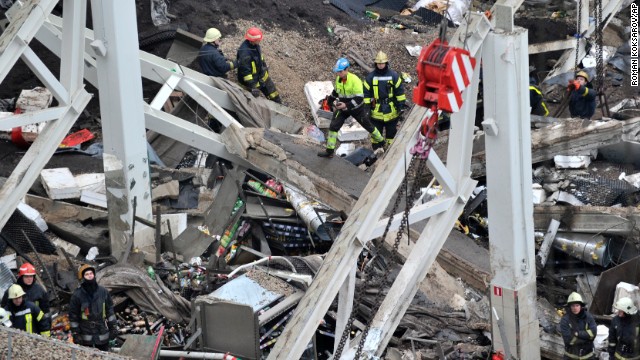
Rescue workers pulled bodies from the ruins of a collapsed supermarket in the Latvian capital Riga on Friday as the death toll rose to 51 in the Baltic state's worst disaster in decades.

Cranes lifted large slabs from the wreckage of the Maxima store, in a Riga suburb of grey, Soviet-era housing, to find those trapped when the roof collapsed late on Thursday. The supermarket was full of shoppers on their way home from work.

Rescue workers cleared away rubble from the store, which had occupied around 1,500 square meters (16,150 square feet), as ambulances and fire engines stood by.

Police said the death toll had reached 51 as of 2000 GMT, including three rescue workers. Thirty-eight more were injured. They said no survivors had been found in the past few hours.

"We're still having moments of silence to listen for voices of people trapped, but unfortunately the only voices out there are of firefighters working," state police spokesman Toms Sadovskis said.

Around 80 firefighters and 56 trainees from a firefighting college continued relentlessly to search for people still trapped more than 24 hours after the accident.

To help rescuers, police created a map, based on security camera footage, showing where shoppers were standing at the time of the collapse.

State rescue service chief Oskars Abolins told TV the search was slow because the rubble was up to 2.5 meters (8.2 feet) deep. Firefighters

were clearing it by hand and with shovels. Abolins said rescue work was expected to continue all night. Firefighters still had to search around 400 square meters for any people, dead or alive.

Riga Mayor Nils Usakovs tweeted that around five people might be still trapped.

Ambulance chief Armands Plorins said cold, damp and the passage of time were all reducing the chance of finding survivors. "But, of course, hope always remains."

The cause of the collapse remains unknown, although police have opened a criminal investigation focusing on the construction of the building.

Interior Minister Rihards Kozlovskis said: "It is clear that there has been a problem with fulfillment of construction requirements."

Local media said workers had been building a roof garden on the supermarket, a single-storey building located about a 30- minute drive from the city center. Soil, grass and parts of a new walkway could be seen dangling from the edges of the collapsed rooftop.

Prime Minister Valdis Dombrovskis announced three days of mourning from Saturday. He said the collapse had shattered Latvia, a former Soviet republic which joined the European Union nearly a decade ago and will become a member of the euro zone next year.

"In our thoughts we are together with all those stricken by this tragedy," Dombrovskis said. "No matter what the cause of the tragedy is, the number of victims is too big."

Among other post-Soviet disasters to hit the country of 2 million, 23 Latvians perished along with about 800 others in 1994 when an Estonian ferry sank in the Baltic Sea. Twenty-six people died in 2007 in a blaze at a Latvian care home.

Earlier on Friday, about 50 people gathered near the ruins for news of relatives, while others brought candles and flowers.

"I have a wife there. There is no information about her, whether she is dead or alive. Wherever I call, there is no information," Igor Umanov told Reuters Television. He said he believed his wife was alive.

A girl at the scene told public radio she had gone into the shop with her mother when a concrete block collapsed between them and that she was nearly buried in rubble. She managed to escape but had not yet found her mother.

Other witnesses said there was a loud noise and the store went dark. People escaped through holes in the windows.

Rescue workers were called late on Thursday to the store, which according to local media had been awarded an architecture prize when it was completed in 2011. Several were injured by a second collapse because of the building's weakened structure.

Saturday 23 November 2013

http://www.reuters.com/article/2013/11/22/us-latvia-collapse-idUSBRE9AK15F20131122

continue reading

Typhoon Haiyan death toll jumps to 5,235 in Philippines


The death toll from this month's Typhoon Haiyan in the Philippines has spiked to 5,235, a national agency reported early Saturday.

That figure -- posted at 6 a.m. (5 p.m. ET Friday) on the National Disaster Risk Reduction and Management Council's website -- marks a significant increase from counts earlier in the week. On Thursday, for instance, the toll stood at slightly more than 4,000.

The same agency also reported that 23,501 were injured due to the epic storm, with 1,613 reported missing. The missing amount is 31 higher than a day earlier.

The monster typhoon left behind a catastrophic scene after it made landfall on six Philippine islands on November 8, leaving many without immediate access to food and medical care.

Saturday 23 November 2013

http://edition.cnn.com/2013/11/22/world/asia/philippines-typhoon-haiyan-deaths/

continue reading

Friday, 22 November 2013

Relatives call mobiles to find missing in Latvia


Rescuers have been calling for silence at the scene of a collapsed supermarket in the Latvian capital Riga as they try to locate victims by calling their mobile phones.

At least 45 people have died and more are feared missing in the rubble after the building's roof fell in on Thursday.

Victoria Sembele from Latvia's State Fire and Rescue Service said the exact number of people still to be recovered was unknown.

Friday 22 November 2013

http://www.bbc.co.uk/news/world-europe-25051321

continue reading

INTERPOL experts assist to identify typhoon victims


A group of forensic experts from the International Police (Interpol) will fly to Tacloban City this weekend to assist local authorities in identifying the remains of those who died during the onslaught of Super Typhoon Yolanda.

Justice Secretary Leila de Lima made the announcement after meeting on Thursday with the Interpol’s disaster victim identification (DVI) team, which will help the National Bureau of Investigation forensic team identify thousands of cadavers.

The Interpol team is composed of experts from Canada, United Kingdom, Cameron, Jordan, Bosnia and South Africa.

“They said they’re willing to help and they’re willing to extend assistance and give advice to the whole process of DVI. This weekend, they will go to Tacloban City to make an initial assessment so that they will be able to craft or formulate proposals on how to go about the DVI given the magnitude of the casualties,” De Lima said, in an interview.

“That’s the initial team and depending on the exact process, I think more experts from the Interpol will fly to the country,” the Justice Secretary said.

De Lima said the Interpol’s assistance in the DVI operations would be very helpful, citing the same help extended by the international body during the “Princess of the Star” tragedy off Romblon in June 2008.

With this, the integrity of the whole process of identifying the casualties will be ensured with the help of the foreign forensics experts.

“They (Interpol) explained that identifying the corpses is a tedious process. You don’t determine the identity of the dead bodies on the basis of their shirt or their belongings. So what is needed here, according to the Interpol, is a scientific process of identifying the bodies, like DNA testing,” De Lima said.

“It will add further to the anguish of the family if you give them the wrong cadaver,” she added.

The first batch of NBI experts flew to Tacloban Tuesday last week. It was composed of 15 to 20 forensic experts. A second batch followed over the weekend.

According to De Lima, the NBI forensic team is planning to set up apartment-type tombs to be able to identify an initial batch of 700 collected cadavers.

She said the ideal setup – as agreed upon by the Department of Health and volunteer private pathologists - is to put 10 to 20 corpses in a tomb.

Friday 22 November 2013

http://manilastandardtoday.com/2013/11/22/interpol-gets-into-the-act-in-yolanda-s-wake/

continue reading

US retrieval team finds more bodies in Tacloban


The team that helped in the search and retrieval of victims in the World Trade Center after the Sept. 11 terror attacks in the US was among those who retrieved 84 more bodies in typhoon-devastated Tacloban City on Wednesday.

The US team, along with their French counterparts, worked under the Joint Task Force led by Senior Superintendent Pablito Corbeta.

He said the Joint Task Force had recovered a total of 1,678 bodies on the sixth day of retrieval operations.

Corbeta said the latest retrieval came mostly from the areas of Sagkahan and Anibong in Tacloban.

With the mass graves already filled, Corbeta said the task force, in coordination with the city government, is digging another burial site in Barangay Suhi, an area located in the northern part of the city.

Corbeta said they are submitting a daily update to Interior and Local Government Secretary Manuel Roxas II and the Office of Civil Defense (OCD).

The National Disaster Risk Reduction and Management Council (NDRRMC) had already stopped counting the dead.

As of yesterday, for still unclear reasons, the NDRRMC’s fatality figure remained at 4,011 with 18,557 injured and 1,602 missing.

The NDRRMC only said the government’s 1,526 evacuation centers are now serving 929,893 families or 4,400,697 people displaced by Super Typhoon Yolanda.

The government, meanwhile, has tapped forensic experts from the International Criminal Police Organization (Interpol) in the identification of casualties.

Justice Secretary Leila de Lima said the Interpol team, who came from various countries, would meet with the NDRRMC to get official data and statistics before flying to Tacloban this weekend.

“The team will make initial assessment to be able to formulate proposals on how to go about the DVI (disaster victim identification), given the magnitude of casualties,” De Lima said.

She added more members of the Interpol team would arrive in the next days.

De Lima explained the DVI is a tedious and thorough process which cannot be rushed.

“They said we cannot just identify cadavers based on clothing. There will come a time when all the corpses will look alike, so there will be a need to use a scientific method like DNA sampling,” De Lima said.

On the other hand, a group promoting child rights said it will provide assistance in helping recover pertinent data or records of children of families affected by the typhoon.

Airah Cadiogan, Advocacy Officer of Plan International Philippines, said their staff can help in data recovery of documents such as birth registration, especially of children.

“While we are doing assessment of the birth registration status in the country, in our own little way, apart from data recovery... we are also helping in the rehabilitation efforts being conducted by the government and several other organizations to help victims of the super typhoon,” Cadiogan said.

She explained that in almost all emergencies – armed conflicts, natural or manmade disasters and mass population displacements – children can become separated from their families or caregivers.

“Without the protection and care of their families, they are vulnerable to abuse, exploitation and recruitment into armed groups. Unregistered children are particularly at risk as there is no legal evidence of their existence, making them far harder to trace and perpetrators much more difficult to prosecute,” Cadiogan said.

Friday 22 November 2013

http://www.bbc.co.uk/news/world-asia-china-25050300

continue reading

Oil pipeline blasts in eastern China kill 35


Leaked oil from a ruptured pipeline in an eastern Chinese port city exploded Friday, killing at least 35 people, injuring 166 and contaminating the sea in one the country's worst industrial accidents of the year, authorities said.

The leaked oil triggered two huge blasts, one of them tearing up concrete along a city road in Qingdao. Photos posted online showed ripped slabs of pavement, bodies, overturned vehicles and shattered windows in nearby buildings. Black smoke rose above gigantic fuel silos and darkened much of the sky.

The pipeline owned by China's largest oil refiner, Sinopec, ruptured early Friday and leaked for about 15 minutes onto a street and into the sea before it was shut off. Hours later, as workers cleaned up the spill, the oil caught fire and exploded in two locations, the city government said.

The Beijing News cited a resident surnamed Gao, who works in logistics, as saying he was driving past Qingdao's Huangdao district when he felt the force of the blasts, and then realized the ground in front of him had fractured. The air was pungent, many cars on both sides of the road were overturned and there was dark smoke rising in the distance, he said.

"It felt like an earthquake, and I was dumbstruck," Gao said, adding that there was chaos on the street as people ran, panicking, in all directions.

Authorities ruled out terrorism but the incident remained under investigation, it said.


President Xi Jinping urged local officials to go all out in finding missing people, treating the injured and in finding the cause of the accident, state TV broadcaster CCTV said.

Calls to Sinopec's headquarters in Beijing were not immediately answered, but a statement online offered condolences to victims. "We will investigate the incident with responsibility and give timely reports," Sinopec said.

The Qingdao Environmental Protection Bureau said barriers had been set up to contain the oil as it spread into the sea, but that a mixture of gas and oil from a storm sewer exploded and caught fire over the sea.

More than 3,000 square meters (32,000 square feet) of sea surface was contaminated, the city government said.

Authorities said the oil had seeped into underground utility pipes, which could have been a factor in the blasts, but they did not elaborate. They assured the public that the explosions did not affect any petrochemical plant or military facilities in the seaside district and that air quality remained good after the disaster.

The accident is likely to add to growing concerns among the members of the Chinese public about safety and environmental risks that come with oil pipeline projects.

It was China's third deadliest industrial accident this year, behind a chicken factory fire in June in Jilin that killed 121 and a mining accident in March, also in Jilin, that killed 36.

Friday 22 November 2013

http://www.bellinghamherald.com/2013/11/21/3331176/oil-pipe-blast-in-east-china-kills.html

continue reading

Latvia store collapse: Deaths rise as Riga rescue continues


At least 45 people have died after the roof of a supermarket collapsed in the Latvian capital Riga.

Rescue efforts continued through the night and police have launched a criminal investigation.

Three of those killed were emergency workers who were helping people trapped when more of the roof came down.

The number of deaths makes this the former Soviet republic's worst disaster since independence in 1991, the country's main news agency says.

It is unclear how many more people could still be inside.

The cause of the collapse is unclear although reports say a garden was being constructed on the roof at the time.

British pilot Paul Tribble, 27, was shopping in the store with his partner Elizabeth when the roof fell in.

"I was taken down by shelving falling on me, which skimmed my shoulder and forced me to the ground but I was still able to move," he told the BBC.

"There were torrents of water coming down off the roof. We headed into the back of the supermarket, the aisles were covered in produce and concrete and people lying on the floor."

Mr Tribble said a crane had been loading sand and building materials onto the roof for the past few weeks. He said he believed a lack of drainage following heavy rains had contributed to the fall.

"The police have started the investigation already," said Prime Minister Valdis Dombrovskis after visiting the scene.

"The criminal process has started about violating building standards."

Interior Minister Rihards Kozlovskis told Latvian TV it was "clear" there had been a problem meeting building regulations.

Latvian rescue services spokeswoman Viktorija Sembele said three firefighters were among those killed.

"We do not know the number of people who are still inside," she told the BBC.

She said people were being asked to call the mobile phones of relatives feared missing to help rescuers find them in the rubble.

TV footage showed rescue workers using mechanical cutters to clear debris from the single-storey concrete and glass building. Cranes were brought in to remove slabs of concrete.

More than 60 soldiers were helping the rescue effort, the army said on its official Twitter feed.

The initial collapse happened just before 18:00 (16:00 GMT) on Thursday, when the store was busy with customers.

Walls and windows also crumbled, leaving the shell of the building piled with rubble, witnesses said.

About 20 minutes later another part of the roof caved in, trapping rescue workers who were trying to reach survivors.

Dangerous work The rescue services believe a total of about 500sq m (5,300sq ft) of roof caved in, according to reports.

Witnesses said customers tried to run out after the first part of the roof collapsed but the supermarket's electronic doors closed, trapping them inside.

Leta news agency said the collapse represented the largest loss of life from a disaster since the restoration of independence in 1991, worse than a fire at a nursing home in 2007 that killed 25.

Normunds Plegermanis, deputy head of rescue services, said emergency teams faced difficult conditions at the supermarket.

"Falls are happening from time to time... it is very dangerous to work inside," he said.

Local media said the store, part of the Maxima retail chain, had been awarded a national architecture prize when it was completed in 2011.

The reason for the collapse is not known. Some have blamed the weight of soil being used to plant a winter garden on the supermarket's roof.

Friday 22 November 2013

http://www.bbc.co.uk/news/world-europe-25045879

continue reading