Monday, 22 April 2013

The long arc of justice in Guatemala


Thirty years ago, a "scorched earth" counterinsurgency strategy in the Quiche region of Guatemala left 1,771 Maya Ixil dead, tens of thousands displaced, and ruptured the social fabric of the community. This ruthless campaign of state repression was carried out by General Jose Efrain Rios Montt during the darkest chapter of the 36-year conflict, in which 200,000 Guatemalans died, the vast majority of whom were indigenous Mayans, and another 50,000 disappeared. Today, despite a pervasive culture of impunity in Guatemala and a veil of silence still surrounding those years, Rios Montt and Jose Mauricio Rodriguez Sanchez, his chief intelligence officer, are being prosecuted in Guatemala for genocide and other crimes against humanity, a day many never thought would come.

The selection of intrepid Attorney General Claudia Paz y Paz in 2010 ushered in a new era in Guatemala's struggle against impunity. Long accused of atrocities, Rios Montt enjoyed immunity from prosecution as a member of Congress for 20 years, but was charged shortly after his departure from office in 2012. His prosecution sets a historic precedent for the people of Guatemala and the global community, representing the first time a head of state stands trial in a national court for the crime of genocide.

At the front of the cavernous courtroom, three judges sit closely together, occasionally huddled in conference, along a substantial wooden bench that stretched the length of the courtroom. On the wall above hangs the Guatemalan coat of arms: crossed rifles to signify defence of territory, swords emblematic of honour, and the date of Guatemalan independence from Spain etched across a scroll upon which a quetzal is perched, all against a backdrop of bay leaf branches symbolising victory. These lofty symbols however are imbued with a more ambiguous meaning to the vast majority of Guatemalans.

One of the most savage periods in the internal conflict occurred after the bloodless coup that installed General Rios Montt as military leader on March 23, 1982. During his 17 month tenure, Rios Montt escalated and systematised a reign of terror initiated by his predecessor Lucas Garcia. By the time Rios Montt was deposed in a subsequent military coup, a grisly trail of blood laid bare his ruthless counterinsurgency strategy of murdering of men, women, children, the frail, and the elderly, accompanied by the calculated destruction of the fabric of their ancestral communities.

Unable to easily crush the small armed insurgency and the widespread popular movement among many of Guatemala's marginalised people that seemed to escalate along with the repression, Rios Montt developed a new strategy to crush the guerrillas: "If you cannot catch the fish, you must drain the sea". Based on the manipulated assumption that sympathetic indigenous populations provided logistical and ideological support for the insurgents, Rios Montt set out to decimate those communities. This strategy was developed and implemented with both tacit and overt US support: training in counter-insurgency tactics at the School of the Americas, and intelligence and military aid and assistance. Ronald Reagan continued to provide support to the Guatemalan military even after widespread reports of atrocities, claiming that "President Ríos Montt is a man of great personal integrity, and commitment... I know he wants to improve the quality of life for all Guatemalans and to promote social justice".

Documents declassified during the late 90s, however, prompted then US President Bill Clinton to apologise. Recognising the evidentiary weight and power of both the declassified documents that contained categorical evidence of US complicity in the atrocities and the UN Historical Clarification Commission's nine-volume report, Clinton stated, "It is important that I state clearly that support for military forces or intelligence units which engaged in violent and widespread repression of the kind described in the report was wrong." Some critics denounced the apology as hollow and misleading for failing to acknowledge that American support for Guatemalan military repression was an intentional effort to advance its own political and economic interests, despite the unspeakable and incalculable suffering it engendered.

After the conflict's end, the Historical Clarification Commission concluded that the military was responsible for 93 percent of the deaths, and that in four areas, the State of Guatemala committed genocide against its indigenous Mayan population. The Recovery of Historical Memory report [SP] of the Catholic Church echoed those findings. The department of Quiche was home to the Maya Ixil, considered by the military to be courageous and recalcitrant, and unusually resistant to dispossession from their ancestral lands. The military concluded that the insurgents had succeeded in the complete indoctrination of the Ixil, enjoying the support of 100 percent of the population in that area, though the reality was far more complicated and nuanced. Unable to easily suppress the resistance, the military fixated on the annihilation of the "internal enemy" through killing zones, a strategy documented by witnesses and memorialised in detailed military plans, including Operation Sofia.

'Scorched earth'

In the early days of the genocide trial, survivors of Rios Montt's "scorched earth" policy testified in harrowing detail about the abuses they suffered and the horrors they witnessed. Supporters populated the court to bear witness to the testimony of their companions, mere yards from the man accused of devastating their communities. Experts testified about their painstaking forensic work that documented causes of death and helped grieving families reclaim and rebury their loved ones. After weeks of gut-wrenching testimony, the next phase of the trial centred on demonstrating the carefully designed military plan of the Guatemalan military to "exterminate the subversive elements" of the Ixil. To achieve that goal, the military killed men, women, children, infants, aged and infirmed people, and deliberately ruptured the fabric of their communities by burning crops, slaughtering animals, destroying cultural artifacts and severing sacred spiritual connections to their ancestral lands.

The past was inextricably linked to the present, when Hugo Ramiro Leonardo Reyes, a former army mechanic, testified by video from an undisclosed location, fearing reprisal. The witness elicited audible gasps from the audience by implicating sitting president Otto Perez Molina in the crimes committed in Quiche in 1982, when he served as a field commander. This echoed other accusations from human rights groups that Perez Molina was complicit in war crimes in that region. These allegations are substantiated by a video of Major Tito, the nom de guerre of Perez Molina, standing over the bodies of guerrillas who witnesses say were tortured before being summarily executed in Nebaj in 1982. Perez Molina confirmed to the Prensa Libre in 2000 that Major Tito was his pseudonym, though he later denied the connection.

The US supported brutality was contextualised by various witnesses as occurring in the panic after the Cuban Revolution and the Cold War, when the US was particularly apprehensive about the geopolitics of the hemisphere. The US-sponsored coup in 1954 overthrew democratically elected Jacobo Arbenz, whose incipient agrarian reform efforts inflamed US concerns that Guatemalan land reform would compromise US military and political hegemony and private commercial interests in the region. Many analysts condemn the US's "wretched record of military cooperation" that led to deadly state repression against its own people throughout Central America during that era, a charge that continues to this day.

The defence endeavoured to exculpate Rios Montt on several substantive grounds, and engaged in an orchestrated strategy to delegitimise the trial. Denying that genocide occurred, defence witnesses attributed many of the atrocities to the insurgents themselves, while other deaths were characterised as unintentional collateral damage in the internal conflict for which Rios Montt bears no responsibility. Moreover, the defence argued that groups were targeted for ideological reasons, and politically motivated repression does not constitute genocide. The defence further claimed that Rios Montt did not exercise command responsibility over those on the ground in Quiche and elsewhere, and that he was unaware of and could not control rogue members of the military who perpetrated massacres. Rios Montt's own words, memorialised in an interview by Pamela Yates in 1982, came back to haunt him: while the notably less vigorous Rios Montt sat passively at the defence table, a younger, smiling and animated version played on a screen above his head, confidently declaring in response to a question of his control that "if I can't control the Army, then what am I doing here?"

A protracted trial

Amplifying the voice of the victims is important and meaningful, and their testimony has reinvigorated a historically stunted national dialogue about the dark side of Guatemala's recent past. But progressive elements of Guatemalan society are not sanguine about the transformative potential of a conviction. Survivors, lawyers, judges, witnesses and human rights defenders continue to receive threats. A conviction would clearly not be the end of the tortuous legal road on which this sordid story has travelled. Even before the trial's inception, defence attorneys have engaged in dilatory tactics and have been carefully laying the groundwork for multiple avenues of appeal, voicing their objections at every stage of the proceedings and engaging in a what critics characterise as a deliberate campaign to undermine the legitimacy of the trial. The appeals process could easily outlast an ageing Rios Montt's natural life, and would certainly endure past Paz y Paz's tenure as Attorney General.

Despite international condemnation of the genocide and the recent publicity engendered by the trial, many Guatemalans are either unaware of or deny that genocide occurred, including President Perez Molina and members of the business elite. Some who were hopeful that the public spotlight of trial would advance truth, memory and justice are sobered by the tenor of the regressive discourse it has generated. As we sat in the courtroom, the founder of the Foundation Against Terrorism was surrounded by press photographers, posing with a copy of the 20 page document he paid to distribute in the national newspaper that day. Replete with photographs, the gruesome document presents a starkly different narrative of the past, accusing the insurgents and their supporters of committing the atrocities and inflaming an already bitterly divided populace. The next day's newspaper sported a full page advertisement, decrying the trial and accusing survivors and their advocates of polarising the country and rubbing raw old wounds, a narrative many feared would incite violent reprisals. A reckoning will not come easily to Guatemala.

Some people believe that irrespective of the trial's outcome, members of ravaged Ixil communities have finally been provided with a public forum to recount their excruciating truths and honour the memory of their dead. As I sat with a group of massacre survivors around a long table draped with traditional artisanal cloths, my belief in the importance of reconciliation was deepened. The group thanked us for accompanying them in their struggles, told us they drew strength from our solidarity, and shared their stories of profound sorrow and incalculable loss. We absorbed their anguish and horror, and were humbled and inspired by their fortitude, dignity, faith and steely determination to unearth truth, preserve memory and seek justice, to honour the dead and to ensure that history never repeats itself. As tears trickled down my cheeks, a soft-spoken man across the table held my gaze, and with the poignant gesture of a gentle nod and a subtle smile, conveyed his appreciation that we had come to bear witness and affirmed our shared humanity.

The survivor's unwavering faith in ultimate justice would be tested only hours later, when the judicial process took a turn that shocked even hardened observers. The initial judge to hear the charges had just annulled the proceedings, a decision poised to cost survivors and their lawyers even more time and strain already depleted financial and emotional resources. When Judge Jazmin Barrios indicated that the proceedings would continue, prompting defence attorneys to stage a theatrical walkout, in violation of their professional and ethical responsibilities.

At the much anticipated session in court the next morning, an unflappable and resolute Judge Barrios electrified the packed courtroom as she read her eloquent and impeccably supported legal arguments, declared her commitment to uphold the rule of law, and vowed that the trial would continue. Given the legal and political manoeuvring, Judge Barrios suspended the proceedings pending a final decision from the Constitutional Court. Court observers erupted into elated applause, and gathered outside to march to the Constitutional Court, amid the rhythm of drums and banners of solidarity proclaiming that "We are all Ixils". In a process marked by irregularities and setbacks, it is hard to predict what comes next. But one thing is clear: justice may be delayed yet again, but the resilient survivors, fiercely determined lawyers and their supporters will continue to wage this struggle.

No panacea, but cathartic

While symbolically important, no one believes that Rios Montt's ultimate conviction would be a panacea. Guatemala faces seemingly insurmountable challenges, and a guilty verdict would not curtail the violence plaguing the country, nor dismantle the country's deeply entrenched structural inequality, legendary impunity, endemic racism, pervasive and severe poverty, corrupt institutions, ongoing land rights struggles, femicide, targeted killings of community leaders, or mayhem attributed to drug trafficking and gangs. But truth, collective memory and healing are essential for survivors of atrocities and for the country as a whole, as societies that do not reckon with a violent past will continue to suffer from its enduring legacy.

It is remarkable that survivors who lost everything but their humanity somehow possess the grace, courage and unshakable faith that despite everything, justice will be served. For a country with a notoriously corrupt judicial system, Judge Barrios is an inspiring beacon of integrity, impartiality, independence and professionalism. The next weeks will be perilous for human rights defenders, survivors and their supporters, as threats to unleash violent reprisals intensify. In these harrowing times, the accompaniment and solidarity of the international community can make a measurable and meaningful difference for the morale and safety of these brave and irrepressible souls.

The arc of history is long in Guatemala, but perhaps the survivors will be vindicated in their unwavering belief that charges against Rios Montt will bend the future towards justice.

Monday 22 April 2013

http://www.aljazeera.com/indepth/opinion/2013/04/2013422115046800678.html

continue reading

Trash slides common in less developed countries like Philippines


Last Friday's trash slide in Rodriguez town in Rizal province that buried at least three people highlighted once more the danger faced by people—sometimes whole families—who make a living out of scavenging trash.

Dave Petley, executive director of the Institute of Hazard, Risk and Resilience at Durham University in the United Kingdom, wrote on his blog that trash slides usually occur in less developed countries where a number of people make a living scavenging garbage, looking for objects—bottles, mineral water containers, plastic cups—that could be sold in junk shops.

He said those buried in the dump often die due to toxic gases released by the garbage. Petley added that garbage may also generate heat, causing hyperthermia.

“Life in such an environment is hard – garbage dumps are by definition unhealthy places that are also physically dangerous. Ironically, of course, these people are performing a valuable public service by recycling metals, plastics, etc., from which the rest of us benefit,” Petley wrote on his personal blog in 2008.

Of all trash slides in recent Philippine history, the one that occurred in July 2000 was the deadliest. In this incident, more than 500 people living on the slums of Payatas were buried alive when a mountain of garbage collapsed due to typhoon Edeng. Only 150 dead bodies were recovered.

The Irisan trash slide in Baguio City last August 2011 occurred when Typhoon Mina flooded the dumpsite and caused a retaining wall to collapse, sending an avalanche of trash down on the community below. At least five people, two of them children, were buried.

The following month, Typhoon Pedring triggered a landslide at Barangay New Cabalan in Olongapo City, killing a woman and her one-year-old daughter.

As of Monday, April 22, authorities were sifting through the trash that avalanched in Brgy. San Isidro in Rodriguez, Rizal, last Friday afternoon in hope of finding the three people reportedly buried there. Rescuers, however, were no longer optimistic that a survivor will be found.

Monday 22 April 2013

http://www.gmanetwork.com/news/story/304979/news/nation/trash-slides-common-in-less-developed-countries-like-phl

continue reading

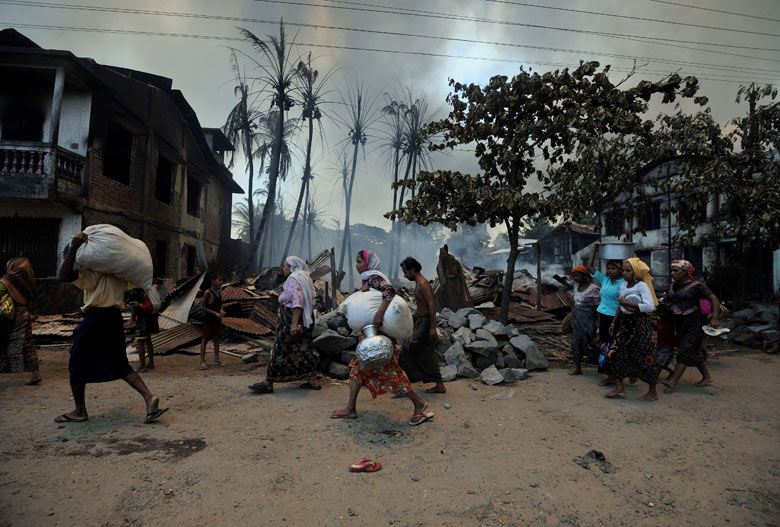
HRW report: massacres in Arakan State


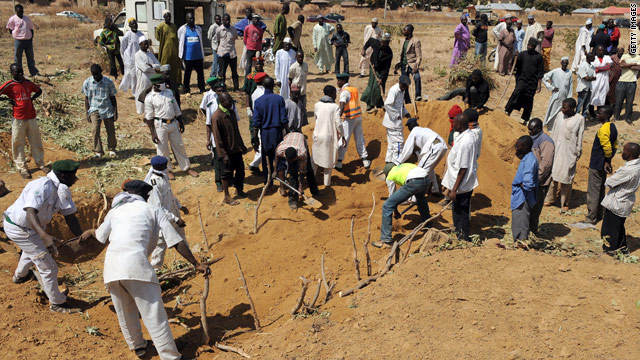
Evidence of official involvement in the massacres that left hundreds dead was gathered by HRW researchers at 27 different sites in Arakan State, including at four mass graves dug between June and October last year.

The report is the most comprehensive evidence yet that the Burmese government colluded in a wave of ethnic attacks and was released just hours before the EU was due to drop sanctions on the Burmese regime as a reward for reformist pledges at a meeting in Luxembourg on Monday.

At one mass grave near the town of Sittwe, local residents took photographs of the 18 bodies dumped in a freshly dug grave. The corpses had their hands tied behind their back with plastic strips used by the police.

"They dropped the bodies right here," a Rohingya man, who saw the bodies being dumped and later buried told HRW. "Three bodies had gunshot wounds. Some had burns, some had stab wounds. One gunshot wound was on the forehead, one on the chest. Two men's hands were tied at the wrists in front and another one had his arms tied in the back."

More than 100 witnesses to the violence, which was speared by Buddhist monks and a nationalist political movement in the region, Rakhine Nationalities Development Party, cited repeated cases in which the police and army would arrive at the scene prior to an attack. Having reassured locals with a cordon, they would then breach promises by allowing attacks and joining in the violence. Related Articles

In the worse single massacre of the three month outbreak more than 70 people, including 28 children were hacked to death in a day long massacre at Yan Thei village.

"The policemen were telling us to go back in to the village. At that time the Arakanese were coming toward us. We were trapped," said one man. "First they said they would protect us but when the violence started they took sides with the Arakanese people."

Muslims are resented in the region as immigrants who have crossed illegally from Bengal into Burma, even though most of those affected have lived in the area for several generations. "The Burmese government engaged in a campaign of ethnic cleansing against the Rohingya that continues today through the denial of aid and restrictions on movement," said Phil Robertson, deputy Asia director at HRW. "The government needs to put an immediate stop to the abuses and hold the perpetrators accountable or it will be responsible for further violence against ethnic and religious minorities in the country."

More than 125,000 were displaced in the violence last year and the UN yesterday warned those still living in camps face a catastrophe from adverse weather and poor conditions over the summer months.

"UNHCR is seriously concerned about the risks facing over 60,000 displaced people in flood-prone areas and in makeshift shelters," Adrian Edwards, a spokesman for the United Nation's refugee organisation said.

"From May to September, the monsoon season is expected to unleash heavy rains and possible cyclones in Rakhine state, where more than 115,000 people remain uprooted after last year's inter-communal violence," he warned.

Abu Tahay from the National Democratic Party for Development, which represents the Rohingya, said Burma's world renowned democracy campaigner Aung San Suu Kyi has an "obligation" to speak out against the Burmese government involvement in the attacks.

Allies of Miss Suu Kyi, who has given the Burmese government crucial international backing by refusing to join outright condemnation of the violence have acknowledge the predictament has damaged her authority.

"There was some damage to her moral authority because of this situation. Daw Suu also knows about it," Win Tin, a co-founder of her National League for Democracy said.

But experts in Burmese politics said Miss Suu Kyi cannot offend the core segment of ethnic Burmese voters who symathise with the anti-Muslim groups.

"Aung San Suu Kyi has an election to win in 2015. She risks alienating politically potent Buddhist elements among her own supporters if she appears too cosy with the Rohingya, or other Muslims," said Nicholas Farrelly of the Australian National University. "Western human rights activists and international opponents of anti-Islamic prejudice will not have a vote in who runs Myanmar in the years ahead," he said.

Monday 22 April 2013

http://www.telegraph.co.uk/news/worldnews/asia/burmamyanmar/10008702/Burmese-officials-filled-mass-graves-with-Muslims.html

continue reading

Mahakam boat survivor search concludes with death toll at 19


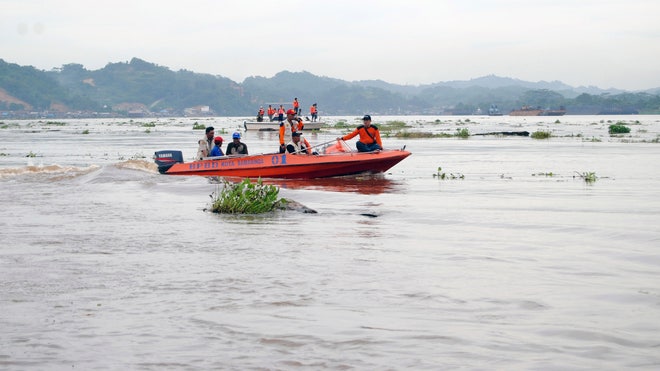
fficials in Samarinda, East Kalimantan, are winding down efforts to search for more survivors from a boat that capsized in the Mahakam River last week, saying the chances of finding anyone else alive are minute.

Hakes, the operations and control coordinator at the East Kalimantan Disaster Mitigation Agency (BPBD), said on Sunday that today would mark the final day of the emergency response period, during which rescuers typically focus on finding survivors of a disaster.

Twenty-one people were rescued after the boat capsized on Wednesday while carrying workers from two timber companies, while 19 people are confirmed dead.

All the recovered bodies have been identified and handed over to the respective families for burial.

Search and rescue officials say four more people remain missing but at this stage are feared dead.

However, there are conflicting reports of just how many people were on board the boat when it sank after reportedly being hit by a large wave.

The boat was supposed to have a capacity of just 44 people, but the passenger manifest listed 50 people.

There have also been 68 families who have come forward saying that a relative was on board at the time, and this higher figure is also consistent with the accounts given by the survivors and witnesses.

However, following a meeting with Governor Awang Faroek Ishak, the BPBD went with the most conservative figure of 44 people, saying that they were now only searching for four more victims.

“If it turns out to be more than that, then the search for the remaining people will be the responsibility of the companies [that hired the boat],” Hakes said.

Mugiono, the BPBD operations head, said separately that rescuers would try to salvage the wreck of the boat from the bottom of the river in the hope of recovering more bodies.

Last September, 21 people died when a ferry capsized after hitting a log in the Mahakam River, the largest in the country, a few hours after leaving Samarinda.

The river also claimed the lives of 38 people who fell to their death when the Mahakam II Bridge in Kutai Kartanegara district collapsed in November 2011.

Monday 22 April 2013

http://www.thejakartaglobe.com/home/mahakam-boat-survivor-search-concludes-with-death-toll-at-19/587241

continue reading

China mine blast kills 18, injures 12


China's state news agency says a coal mine explosion has killed 18 and injured 12 in the northeast part of the country.

The Xinhua News Agency cites local authorities as saying the Saturday afternoon blast occurred in Helong city in Jilin province.

The report says rescue work has ended, but an investigation into the cause of the explosion continues.

China's mines are the deadliest in the world. Safety has tightened in recent years, but regulations are often ignored.

Monday 22 April 2013

http://www.timesonline.com/news/world/asia/china-mine-blast-kills-injures/article_0bcd8bcf-45cd-5f38-aa8d-9452f6478f2f.html

continue reading

Mass Grave Discovered In Parwan


Local official in Parwan have reported discovery of a mass grave in Bagram district, BNA reported.

The head of Parwan’s provincial council, Ahmad Zaki Zahid said that the mass grave was found by the labors who were busy in transporting sands and stones to a construction site.

Zahid also added that the grave contains skulls and bones of the dead bodies, adding they might have been killed during the former Soviet Union’s invasion in Afghanistan.

Recently, such mass grave was found in northern Samangan province as well.

Monday 22 April 2013

http://www.bakhtarnews.com.af/eng/social/item/7170-mass-grave-discovered-in-parwan.html

continue reading

Sunday, 21 April 2013

Chinese aid workers battle landslides and narrow roads to boost rescue efforts after earthquake leaves thousands injured


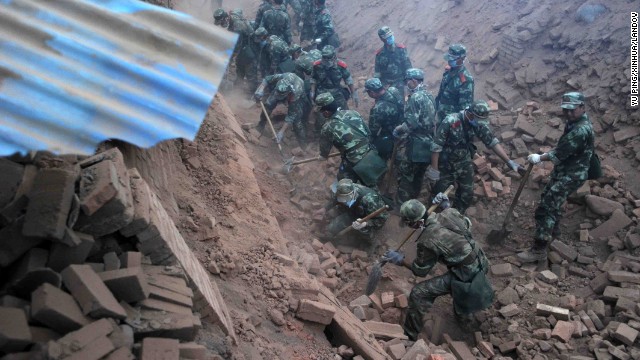
Chinese aid workers managed to reach remote areas of south-western China today giving a much-needed boost to rescue efforts following a powerful earthquake on Saturday which has left more than 200 people dead and thousands badly injured.

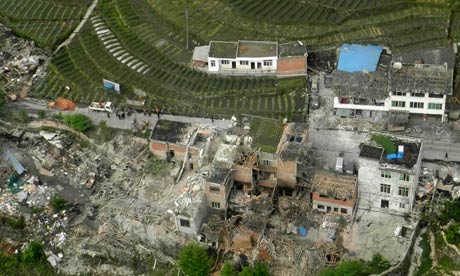
Landslides and narrow roads have made it difficult for aid and rescue workers to reach areas of Sichuan province, though some managed to get through to the remote Baoxing country on foot yesterday. Limited access and a disrupted communications networks had prevented a clear picture of the devastation from emerging.

Saturday’s earthquake, which was measured by China’s earthquake administration at magnitude 7.0 and by the US Geological Survey at 6.6, had its epicentre in Lushan county, near the city of Ya’an, on the Longmenshan fault, where the Wenchuan earthquake in 2008 killed over 90,000 people five years ago. “Relief is getting through but much more slowly than we would like to see,” said Francis Markus, spokesman for the International Federation of Red Cross and Red Crescent Societies.

“It’s obviously difficult for people who have been through this disaster to spend a day without supplies,” said Mr Markus. The earthquake, which struck at 8am on a Saturday when schools and offices were closed and many people in farming communities were out in the fields, has mostly affected rural areas.

“We lost everything in such a short time,” 20 year-old college student Luo Shiqiang told the Associated Press. He said his grandfather was just returning from feeding chickens when their house collapsed and crushed him to death.

“I was working in the field when I heard the explosions of the earthquake, and I turned around and saw my house simply flatten in front of me,” said Fu Qiuyue, a 70-year-old rapeseed farmer in Longmen.

China’s earthquake response has become a well-drilled machine since the 2008 Wenchuan earthquake. State media said Beijing was quick to mobilise troops and rescue workers. In all, 18,000 soldiers and officers from the different wings of China’s military, including the army, the armed police and the paramilitary reserves, have been mobilised. So far 10,000 have reached areas that were worst hit, the Chengdu Military Area Command (MAC) said.

But some residents said little had been done after Wenchuan to build up earthquake defences in Lushan and Baoxing counties, which were worst hit at the weekend.

“Maybe the country’s leaders really wanted to help us, but when it comes to the lower levels the officials don’t carry it out,” said Luo Shiqiang. In some parts of Baoxing country, more than 60 per cent of buildings had suffered damage and roads to towns in the affected area were wrecked by landslides.

“There are still some pockets that rescuers are working to get into but gradually the picture is becoming clearer,” said Mr Markus. “There are some areas where all the houses were destroyed.”

In some ways, the damage was less devastating than it could have been because many of the houses which collapsed were simple rural dwellings with timber construction.

Rescue workers brought excavators and other heavy machinery as well as tents, blankets and other emergency supplies. Two soldiers were killed after their vehicle slid off a road and rolled down a cliff.

Premier Li Keqiang visited an intensive care unit today, and epicentre of the quake in Lushan County on Saturday, in a gesture reminiscent of his predecessor Wen Jiabao’s hands-on approach during the Wenchuan quake five years ago.

“Be relaxed and relieved. Doctors here will make their utmost efforts to help you recover as soon as possible,” Mr Li told Yue Anhong, a local resident who was buried under rubble and seriously injured.

Sunday 21 April 2013

http://www.independent.co.uk/news/world/asia/chinese-aid-workers-battle-landslides-and-narrow-roads-to-boost-rescue-efforts-after-earthquake-leaves-thousands-injured-8581903.html

continue reading

Shutterbug captures the lifeless


Who is not game for clicking pictures of events and tourists spots? But taking snaps of the dead is not everyone’s cup of tea.

Decomposed and mutilated bodies offer a revolting sight; but for Hussain Khan, clicking such pictures is part of his profession. The 65-year-old, a retired police head constable, has been doing it for the last many years at the Osmania General Hospital mortuary.

It all started after Mr. Hussain retired from the Government Railway Police (GRP) in 2005. As per rules, the police keep a photograph of victims of unnatural deaths in its record. And it is here that Mr. Hussain’s services were required.

“I was used to seeing and handling bodies of train accident victims so I did not find the job difficult. I was entrusted with the job of conducting ‘panchanama’ and shifting the bodies to the mortuary,” he says.

The 65-year-old now takes photographs of all bodies, including unknown ones, and preserves them.

“If anyone comes in search of missing persons, I show them [pictures of] the bodies. Many people have identified their relatives through the photographs,” he says.

His service is free for unknown bodies, though he collects some money from the relatives of those identified.

“I spend a considerable amount in getting the photographs developed at a local studio. But at the end of the day, I do manage to make some money. The relatives of the dead offer money recognising my service,” he says. For the sexagenarian Mr. Hussain, however, the job has now become something of a social service.

Sunday 21 April 2013

http://www.thehindu.com/news/cities/Hyderabad/shutterbug-captures-the-lifeless/article4640559.ece

continue reading

Pakistani army recovers avalanche body as operation resumed in Gayari district


A body of a Gayari Shaheed was recovered Sunday afternoon as operation to recover the bodies of remaining soldiers buried under heavy avalanche last year.

A total of 122 Jasde Khaki of Shuhada have been recovered so far. Today first body of a shaheed was recovered after resumption of Gayari search operation, the army said.

It may be recalled that on 7 April 2012, 140 soldiers and civilians of 6 Northern Light Infantry Battalion came under a huge snow slide at Gyari and embraced shahadat. 121 x bodies of Shuhada were recovered before suspension of Operation Gyari due to winters on 27 November 2012.

After opening of weather and melting of snow, search for remaining 19 x Shuhada commenced on 15 April,2013 by employing 228 x military personnel and 29 x heavy engineering equipment pieces including excavators, dozers and drill machines.

It is once again reiterated that these sustained efforts would continue till recovery of last man.

Sunday 21 April 2013

http://www.newspakistan.pk/2013/04/21/pak-army-recovers-soldier-body-operation-resumes/

continue reading

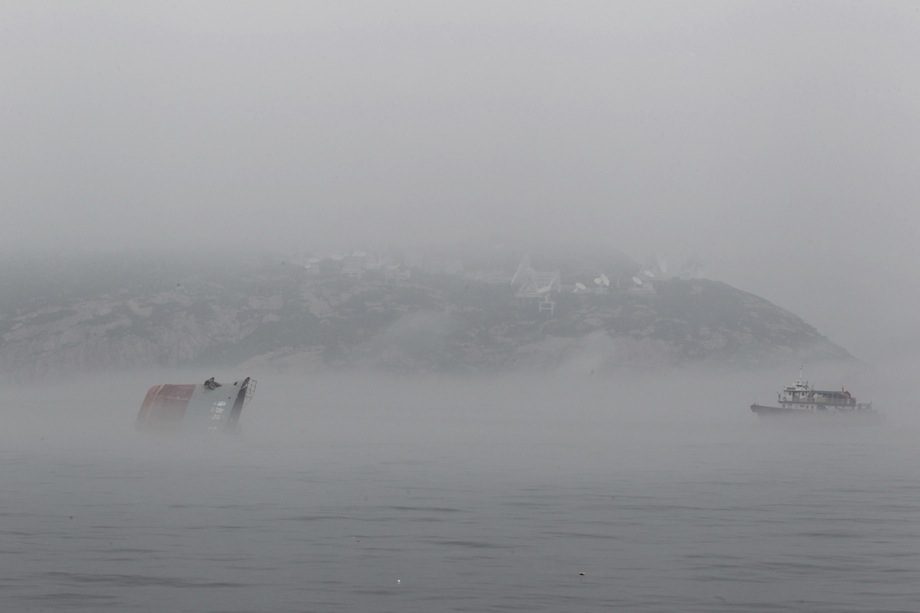
Three bodies found after Hong Kong boat collision


Hong Kong underwater search teams have recovered three bodies, a day after two boats collided in fog in the city's busy waterways, with three crew members still missing.

Police meanwhile arrested the two captains.

The incident Thursday night refocused attention on Hong Kong's maritime safety, and came after a ferry crash in October claimed 39 lives in the city's worst sea disaster in 40 years.

Search teams were deployed after a boat with 11 crew from mainland China carrying construction waste collided with another vessel on the southeast of the island and began to sink. Five crew were rescued soon after.

"The fire department's diving rescue personnel found three dead males inside the sunken cargo vessel tonight," the police said in an statement late Friday.

Officers arrested four people from both vessels, aged 30 to 58, including both captains, on suspicion of "endangering the safety of others at sea", the statement said.

The October catastrophe saw a high-speed passenger ferry collide with a pleasure boat carrying around 120 people. The captains of the boats involved were charged with 39 counts of manslaughter last week and face life in prison if convicted.

Sunday 21 April 2013

http://www.mb.com.ph/article.php?aid=8581&sid=1&subid=6#.UXRQGZNzA34

continue reading

China rescuers rush into remote areas after quake kills 186


Rescuers in China pushed into remote villages in Sichuan province, hit by an earthquake that has killed 186 and injured more than 11,000 as survivors make do living in cars or makeshift tents.

Dozens remain missing, mostly in the rural communities around Ya'an city, along the same fault line where a devastating quake to the north killed more than 90,000 people in Sichuan and neighbouring areas five years ago in one of China's worst natural disasters.

The Lushan and Baoxing counties hardest-hit on Saturday had escaped the worst of the damage in the 2008 quake, and residents there said they benefited little from the region's rebuilding after the disaster, with no special reinforcements made or new evacuation procedures introduced in their remote communities.

Relief teams flew in helicopters and dynamited through landslides Sunday to reach some of the most isolated communities, where rescuers in orange overalls led sniffer dogs through piles of brick, concrete and wood debris to search for survivors.

Many residents complained that although emergency teams were quick to carry away bodies and search for survivors, they had so far done little to distribute aid. "No water, no shelter," read a hand-written sign held up by children on a roadside in Longmen.

"I was working in the field when I heard the explosions of the earthquake, and I turned around and saw my house simply flatten in front of me," said Fu Qiuyue, a 70-year-old rapeseed farmer in Longmen.

Fu sat with her husband, Ren Dehua, in a makeshift shelter of logs and a plastic sheet on a patch of grass near where a helicopter had parked to reach their community of terraced grain and vegetable fields. She said the collapse of the house had crushed eight pigs to death. "It was the scariest sound I have ever heard," she said.

Aftershocks continue

The quake -- measured by China's earthquake administration at magnitude 7.0 and by the U.S. Geological Survey at 6.6 -- struck shortly after 8 a.m. on Saturday. Tens of thousands of people moved into tents or cars, unable to return home or too afraid to go back as aftershocks continued to jolt the region.

The quake killed at least 186 people, left 21 missing and injured 11,393, the official Xinhua News Agency quoted the provincial emergency command centre as saying.

As in most natural disasters, the government mobilized thousands of soldiers and others, sending excavators and other heavy machinery as well as tents, blankets and other emergency supplies. Two soldiers died after their vehicle slid off a road and rolled down a cliff, state media reported.

The Chinese Red Cross said it had deployed relief teams with supplies of food, water, medicine and rescue equipment to the disaster areas.

Lushan, where the quake struck, lies where the fertile Sichuan plain meets foothills that eventually rise to the Tibetan plateau and sits atop the Longmenshan fault, where the 2008 quake struck.

The seat of Lushan county has been turned into a large refugee camp, with tents set up on open spaces, and volunteers doling out noodles and boxed meals to survivors from stalls and the backs of vans.

A large van with a convertible side served as a mobile bank with an ATM, military medical trucks provided X-rays for people with minor injuries, and military doctors administered basic first aid, applying iodine solution to cuts and examining bruises.

Patients with minor ailments were lying in tents in the yard of the local hospital, which was wrecked by the quake, with the most severely injured patients sent to the provincial capital. With a limited water supply and buildings inaccessible, sanitation is a problem for the survivors.

Sunday 21 April 2013

http://www.cbc.ca/news/world/story/2013/04/21/china-earthquake.html

continue reading

Saturday, 20 April 2013

Hong Kong continues search for 6 missing crew after boat crash


Hong Kong search teams held out hope on Friday for six boat crew members missing at sea after a collision, as officials investigated the cause of the latest incident to hit the city's busy waterways.

It comes after a ferry crash claimed 39 lives in October in the city's worst sea disaster in decades, and also follows a collision between a passenger ferry and a barge earlier this month, in which more than 30 people were injured.

The 11 crew from a 96-metre-long (315 foot) boat carrying construction waste were thrown into the water after it collided with another vessel and started to sink off Stanley, on the southeast of Hong Kong Island on Thursday evening.

Five were rescued but search teams were still looking for the other six, all from mainland China, as the light faded Friday.

"The priority of the marine department now is to find the six missing crew, not their bodies," a spokeswoman told AFP.

She said investigators were looking at whether the boat crews tried to take evasive action before the crash.

After poor visibility hampered the overnight search, nine boats and a helicopter took part in the efforts Friday, although the aircraft was called off after about five hours because of fog.

The marine department said visibility at the time of the crash was measured at 0.5 nautical miles (0.93 kilometres).

A police spokeswoman said officers had taken statements from seven crew members from the two boats.

The city's worst maritime catastrophe in 40 years last October saw a high-speed passenger ferry collide with a pleasure boat carrying around 120 people to watch national day fireworks.

The captains of the boats involved were last week each charged with 39 counts of manslaughter and face life in prison if convicted.

Fatal accidents are rare in Hong Kong despite its crowded waters, which often see high-speed hydrofoils vying for space with tourist junks, luxury yachts and a century-old public ferry system.

Saturday 20 April 2013

http://www.channelnewsasia.com/news/asiapacific/hong-kong-searches-for-6-/643616.html

continue reading

Derry: Photos recall graveyard collapse in 1934


These remarkable photographs reveal the extraordinary scenes witnessed by passers-by when a church graveyard collapsed into a Derry street nearly eighty years ago. The following story - compiled by local historians Sean McMahon and Trevor Temple for their book, “Derry: Day by Day” - tells the truly grisly tale of the day when tombstones, coffins and human remains ended up scattered across a busy city street.

The Long Tower churchyard, Derry, was the scene of a serious landslide on January 8, 1934, caused by the collapse of the eastern boundary wall.

People living in the neighbourhood were startled and terrified by a crash, when the wall opposite Stanley’s Walk gave way and tons of earth, headstones, and a number of coffins came toppling down to the street with a great noise.

Only two people, it was believed, witnessed the landslide, and neither of them was in close proximity at the time, and nobody was injured, though a youth was struck by a flying piece of stone.

On going to investigate, the residents of the locality were met with a tragic and gruesome scene. They were shocked at the disaster, which had occurred.

Strewn amongst and protruding at places were the remains of human bodies, bones of arms and legs, and skulls, as well as bits of rotted coffins and broken headstones.

The wall, which was forty yards long and twenty feet high, was on the eastern side of the graveyard, and was built in a semi-circular shape on the steep incline leading to Lecky Road.

Practically the whole of this boundary wall cracked and collapsed, and a landslide of the cemetery, for a distance of sixty yards, for a breadth of twelve feet, and to a depth of about nine or ten feet, followed.

The human remains, as far as possible, were gathered together and placed in a box.

A graphic story, typical of the experience of many people in the houses nearby, was given to press representatives by Mrs Maggie McNelis, of Foster’s Terrace, whose house was nearby.

She said she was sitting in the kitchen nursing a baby when she heard a terrible crash and noise like thunder, so loud was it.

She had a terrifying time with the shock that she received. She rushed out with the child in her arms to witness the catastrophe.

One of the eye-witnesses was George Dornan who said he was coming from his home when he saw a big crack in the wall.

Suddenly the wall gave way with a terrific crash, which could be heard over a wide area, and collapsed in a piece.

A piece of flying stone struck James McCloskey, a young man who was standing at a corner ten yards away.

Young children were passing to go to school at the time, and some of them actually saw stones falling on the street, and they ran up the church steps out of the way.

The roll was called in the schools, and every child was accounted for, while in the houses in the district a check was made of all the inmates, and police were later that day satisfied that nobody had been caught by the collapse of the wall, barring the slight chance of a stranger being there at the time.

Later also that day, the human remains found at the place were buried in the graveyard temporarily near the chapel.

POSTSCRIPT: In 2009, priests in the Long Tower parish authorised the excavation of a piece of land in the grounds of the church.

A “mound” - located in one of the upper graveyards at Long Tower Street - contained the remains of the graveyard and wall which collapsed into Lecky Road in 1934.

A local undertaker and members of the Long Tower Restoration Group conducted an investigative “dig” of the mound with a small earthmover.

While no human remains or coffins were found, anything unearthed belonging to a grave was collected and put to one side with a memorial to the ‘Holy Souls of the Long Tower’.

Saturday 20 April 2013

http://www.derryjournal.com/news/local/photos-recall-graveyard-collapse-1-5017481

continue reading

Update: 19 dead in Mahakam boat accident, 4 still missing


It was announced on Friday that 19 people are dead and 4 others still missing on the third day after KM Karya Indah, a wooden ship leased by PT Kalamur, sank in the Mahakam River, in Samarinda, East Kalimantan.

Rescue workers found 16 bodies on Friday, some more than a kilometer downstream from the site of the tragedy.

East Kalimantan Disaster Mitigation Agency (BPBD) head Wahyu Widhi Heranata said that there were a total of 44 people onboard. Twenty-one passengers are known to have survived.

The announcement was made after East Kalimantan Governor Awang Faroek Ishak visited the search and rescue command post in Loa Janan.

It was previously reported that up to 68 people were on board when the accident took place.

Wahyu blamed the lack of a manifest for hindering the swift identification of the missing after the accident.

Only one passenger, Nurhayati, 41, has been identified.

The BPBD is coordinating with the local office of the National Search and Rescue Agency (Basarnas) and the public order agency.

“Search and rescue work will continue until at least Tuesday in the emergency response stage,” Wahyu said.

Human error was blamed for the accident. Passengers crowded the bow of the boat, leading to it sink according to the East Kalimantan Police intelligence unit chief Sr. Comr. Hari Prasojo.

Most of the passengers were women, according to reports. While the vessel reportedly was well equipped with life vests, the passengers did not use them.

Bodies of the unidentified victims have been taken to the Abdul Wahab Syahrani General Hospital in Samarinda.

The ship carrying employees of PT Kalamur, sank about 7:30 p.m. local time (6:30 p.m. Jakarta time) on Wednesday when ferrying the employees from PT Kalamur wharf at their work site to their dormitories some 500 meters away in Loa Janan Ilir district in Samarinda.

The ship was only about 50 meters from the Loa Janan wharf, when the high river tide swamped it and it sank.

The victims are all employees of plywood companies PT Kalamur and PT Melapi Timber.

The firm will provide compensation for victims through Jamsostek.

Meanwhile, the Samarinda Port Police has named KM Karya Indah skipper, Teddy Noor Arifin, 20, as suspect in the accident, Antara news agency reported.

“We have named one suspect, the ship’s skipper, and he is has already been detained,” said Samarinda Port Police chief Comr. Harun Purwoko.

The initial investigation revealed that the ship was overloaded. The capacity was only 30 passengers but there were more on board at the time of accident.

“If his negligence which directly led to the death of at least 19 women, the suspect may get five years in jail,” he said.

Meanwhile, Kompas.com reported that the ship’s owner, Suriansyah, said that PT Kalamur had contracted his ship to carry employees since 1992 without any problems.

“But sometimes they recruit outsourcing workers if there is more work and those contract workers can sometimes be unruly ignoring safety precautions,” he said when questioned at the Samarinda Port Police station

Saturday 20 April 2013

http://www.thejakartapost.com/news/2013/04/20/19-dead-mahakam-boat-accident-4-still-missing.html

continue reading

Earthquake hits south-west China, at least 102 dead


At least 102 people are dead and more than 2,200 injured after a powerful earthquake rocked Sichuan, in south-west China, on Saturday morning, officials said.

The 6.6-magnitude shock is believed to have been on the same fault as the devastating quake that left 70,000 dead and another 18,000 missing in the province five years ago. It struck close to Ya'an, a city of 1.5 million people west of the provincial capital, Chengdu, at about 8am local time.

State television said 102 people had been confirmed dead with more than 2,200 injured, 147 of them seriously.

Officials said almost all the buildings in Longmen village collapsed and nearly 10,000 houses throughout Lushan county were damaged. In some areas, roads were cut off, power failed and telecoms service was intermittent.

Residents in Chengdu and Chongqing, hundreds of kilometres as away, fled their buildings as they felt the tremor and repeated aftershocks.

More than 6,000 soldiers have been dispatched to aid rescue efforts in the mountainous area, state media reported.

China's president, Xi Jinping, and the premier, Li Keqiang, called an emergency meeting to co-ordinate the response and Li has flown to the disaster zone to supervise work, the official broadcaster reported.

Initial reports suggested the worst damage was in rural villages around Ya'an, which lies on the edge of the Tibetan plateau. The state news agency Xinhua reported major building collapses and damaged roads in Shuangshi and Longmen townships.

"We are very busy right now. There are about eight or nine injured people; the doctors are handling the cases," a doctor at a Ya'an hospital told Reuters.

A man who answered the phone at the Jiajia Hotel in Ya'an said many houses had collapsed and many people were injured.

Another man living nearby said officials and company bosses had evacuated everyone to outdoor spaces. "It is very chaotic everywhere and people have no idea what we can do," he said. "We were the frontline of [the 2008] earthquake, so in most companies, departments or organisations there are emergency resources, but we need more. Hopefully we can get over it soon, and it won't be as bad as last time."

Chinese seismologists recorded the quake at magnitude 7, while the US Geological Survey recorded it at magnitude 6.6 at a depth of 12km. The USGS said it appeared to be on the Longmenshan fault, the source of 2008's 7.9-magnitude shock.

Chengdu airport was briefly closed to flights after the shock hit and railways officials halted 82 trains, China Daily reported.

Saturday 20 April 2013

http://www.guardian.co.uk/world/2013/apr/20/earthquake-china-yaan-sichuan

continue reading

Twelve dead, 15 missing in Brazil boat accident


At least 12 people died and around 15 were missing Friday after a boat capsized in the Ariri river in the Brazilian Amazon, firefighters said in a revised toll, as an investigation got under way.

"Twelve bodies, including those of children, have now been recovered," Colonel Carlos Alberto Moreira Reis told AFP by telephone.

"The boat had more than 70 people aboard -- 41 of them were found alive, including nine who were hospitalized," he said.

Earlier in the day, he gave a toll of four dead and 25 unaccounted for. Reis said the captain of the boat, identified as Luis Inacio Lima, initially "lied and said there were only 49 passengers aboard," before later admitting that there were in fact more passengers than the maximum capacity allowed.

"I was at the helm when the boat capsized. I did not hit anything. I cannot understand what happened. It was so fast," the G1 website quoted the captain as saying.

The boat sailed from the town of Chaves on Marajo island for a 10-hour journey to Belem, the capital of the northern state of Para, according to Reis, who said the accident occurred as most of the passengers were asleep.

Two helicopters, six divers and a ship are taking part in rescue operations, the official said. An investigation is expected to last up to 90 days.

Saturday 20 April 2013

http://www.thenews.com.pk/article-97582-Twelve-dead,-15-missing-in-Brazil-boat-accident

continue reading

Friday, 19 April 2013

Update: 9 victims identified in West explosion, official death toll climbs to 14


Two days after the fertilizer facility exploded in a blinding fireball, authorities announced that they had recovered 14 bodies, confirming for the first time an exact number of people killed. Grieving families quickly started planning burials.

At least three of those who perished in Wednesday's blast were firefighters, according to family members. The dead included Uptmor and Joey Pustejovsky, the city secretary who doubled as a member of the West Volunteer Fire Department, as well as a captain of the Dallas Fire Department who was off-duty at the time but responded to the fire to help.

The explosion was strong enough to register as a small earthquake and could be heard for many miles across the Texas prairie. It demolished nearly everything for several blocks around the plant. More than 200 people were hurt.

Texas Department of Public Safety Sgt. Jason Reyes said he could not confirm how many first-responders had been killed. Efforts to search devastated buildings in a four-block radius around the blast site continued Friday.

Texas Sen. John Cornyn told television station WFAA that search-and-rescue workers had a list of several dozen people who are unaccounted for and were checking that list against those people who are still hospitalized, staying with relatives or evacuated because their homes were destroyed.

"So, hopefully that number will come way down, hopefully to zero," Cornyn said.

Friday 19 April 2013

http://abcnews.go.com/US/wireStory/crews-seek-survivors-bodies-texas-blast-18994785#.UXG_wadzA34

continue reading

Waco Siege 20th Anniversary And 18 Years Since Oklahoma City Bombing


The Boston marathon bombing and the massive explosion at a fertiliser plant in Waco, Texas, have made this week a particularly grim one for America.

Unfortunately, US domestic terrorism and the town of Waco are no strangers to the news.

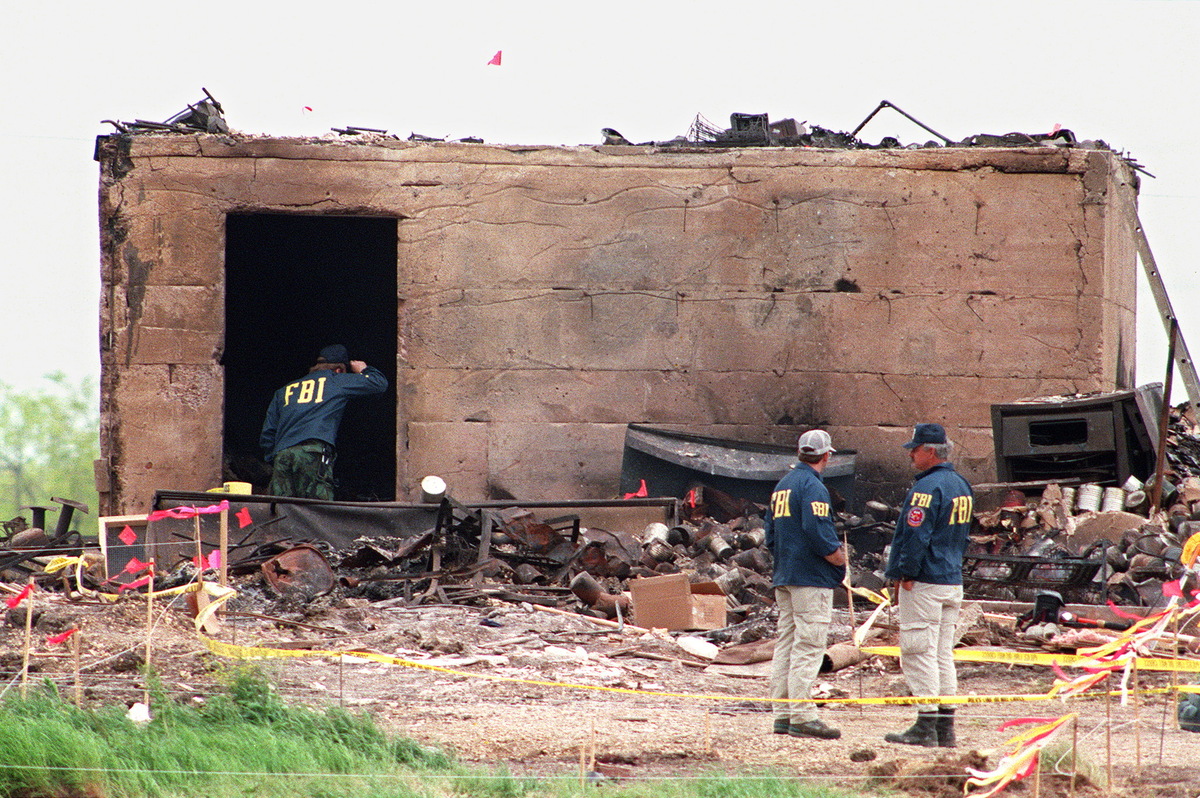
In the early hours of a Texan Monday morning 20 years ago today a 51-day stand off between the FBI and a heavily armed Messianic cult came to an end.

Federal agents (ATF) raided the compound Feb. 28, 1993, trying to arrest sect leader David Koresh for stockpiling illegal weapons. But the group had been tipped off about the raid and a shootout ensued. Four agents and six Davidians were killed.

David Koresh, formerly known as Vernon Wayne Howell, was the leader of the cult, an offshoot of a Protestant sect known as the Branch Davidians.

Koresh had changed his name in honour of two biblical kings and convinced his followers he was to lead the second coming in the forthcoming Apocalypse he had prophesied.

He also convinced the male members to observe a life of celibacy while he had sexual relations with their wives in order to establish a "House of David".

The Branch Davidians lived in a compound in the Texan town of Waco. They came to the attention of the Alcohol, Firearms and Tabacco (AFT) department who believed they were stockpiling weapons and making methamphetamine.

A siege now ensued led by the FBI. Despite using sleep deprivation techniques, cutting power to the compound and shooting holes in their water tower, the occupants refused to leave.

During this period a 24-year-old Gulf War veteran called Timothy McVeigh visited the compound. He would come to the attention of the world in devastating style two years later.

The decision to force entry was made, ostensibly for the welfare of the children who were inside, on 19 April.

Tear gas was pumped into the compound followed by heavily armed FBI agents and armoured vehicles.

Around noon three fires had broken out which quickly spread through the compound's buildings suffocating and burning all those inside, including Koresh.

The actual sequence of events is still disputed. Doubt remains over who fired the first shots and whether the fires were deliberate or could have been prevented.

The ensuing gunfight and blazes that resulted, 76 people died including 28 children.

Twenty-three of the dead were British.

After the siege had ended McVeigh returned to the scene in Waco. Incensed by what he saw as federal suppression of US citizens he decided to take revenge.

Along with another conspirator, Terry Nichols, McVeigh constructed a massive 3.2-tonne truck bomb.

On the second anniversary of the Waco siege, 19 April 1995, the bomb was detonated outside the Alfred P Murrah Federal Building which housed a number of government agencies.

It also had a creche and among the 168 people killed in the blast including were 19 children under the age of 6.

McVeigh was executed in 2001 for what was the worst incident of terrorism on US soil until 9/11. Nichols was sentenced to life in prison.

Friday 19 April 2013

http://www.mysanantonio.com/news/us/article/Davidian-survivors-mark-20th-anniversary-of-siege-4447019.php

http://www.huffingtonpost.co.uk/2013/04/19/waco-siege-oklahoma-bomb_n_3114649.html?utm_hp_ref=uk?ncid=GEP#slide=2352998

continue reading

10 killed, over 40 injured in Pakistan accident


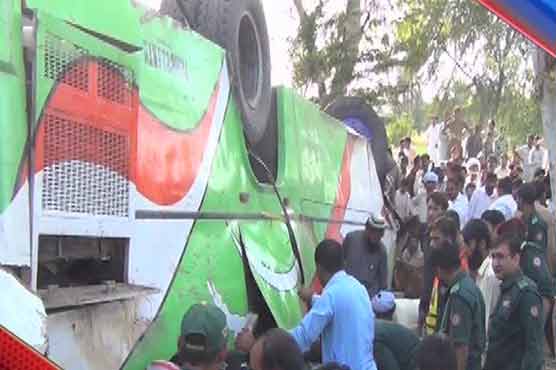
At least 10 people were killed and 46 others injured Friday when their bus overturned in Pakistan's eastern province of Punjab, a media report said.

The over-speeding bus overturned when one of its tyres burst in Hasilpur area of Bahawalpur city, Xinhua reported citing Urdu TV channel ARY.

The bus with over 70 people on board was on its way to Multan.

The injured were taken to a hospital where several of them were said to be in critical condition.

Friday 19 April 2013

http://in.news.yahoo.com/10-killed-over-40-injured-pakistan-accident-142434608.html

continue reading

Death toll in Indonesia boat sinking climbs to 18


The death toll from a boat accident in the Indonesian part of Borneo island rose to 18 on Friday with five people still missing, a provincial governor said.

The boat carrying workers from a plywood company sank on Wednesday after being hit by a huge wave as it travelled across the Mahakam River in East Kalimantan province.

Provincial governor Awang Faroek Ishak said a total of 18 bodies had now been pulled from the water, up from a death toll of three on Thursday.

"Twenty-one people have been rescued, and we will continue to search for the five passengers still missing," Ishak said in a statement.

There had been conflicting reports about the numbers on the boat, but the governor said it was now confirmed it had been carrying 44.

Disaster agency official Wahyu Didit said none of the bodies recovered were wearing life jackets.

Boat accidents are common in Indonesia, where vessels have a poor safety record and the population of 240 million is scattered over a vast archipelago of more than 17,000 islands.

Friday 19 April 2013

http://www.globalpost.com/dispatch/news/afp/130419/death-toll-indonesia-boat-sinking-climbs-18

continue reading

Official: 12 Bodies Recovered After Texas Blast


The bodies of 12 people have been recovered after an enormous Texas fertilizer plant explosion that demolished surrounding neighborhoods for blocks and left more about 200 other people injured, authorities said Friday.

Texas Department of Public Safety Sgt. Jason Reyes said it was "with a heavy heart" that he confirmed 12 bodies had been pulled from the area of the plant explosion.

Even before investigators released a confirmed number of fatalities, the names of the dead were becoming known in the town of 2,800 and a small group of firefighters and other first responders who may have rushed toward the plant to battle a pre-explosion blaze was believed to be among them.

Reyes said he could not confirm Friday how many of those killed were first responders.

The mourning already had begun at a church service at St. Mary of the Assumption Catholic Church the previous night.

"We know everyone that was there first, in the beginning," said Christina Rodarte, 46, who has lived in West for 27 years. "There's no words for it. It is a small community, and everyone knows the first responders, because anytime there's anything going on, the fire department is right there, all volunteer."

One victim Rodarte knew and whose name was released was Kenny Harris, a 52-year-old captain in the Dallas Fire Department who lived south of West. He was off duty at the time but responded to the fire to help, according to a statement from the city of Dallas.

Authorities spent much of the day after Wednesday night's blast searching the town for survivors. Reyes said those search and rescue efforts continued early Friday.

Friday 19 April 2013

http://abcnews.go.com/US/wireStory/crews-seek-survivors-bodies-texas-blast-18994785

continue reading

Libya: Progress on Missing Persons investigations assessed


The President of the General National Congress Muhammad Maqrif met with the Director-General of the International Commission on Missing Persons (ICMP) Kathryne Bomberger in Tripoli this afternoon to discuss the progress of the Commission’s operations in Libya.

Four months ago, Bomberger and the then Minister for Martyrs and the Missing, Naser Jibril Hamed, signed a cooperation agreement to help process the cases of those who went missing during the 42-year Qaddafi regime and the revolution as well as those who have gone missing since.

As part of that agreement, the ICMP is helping set up a Libyan Identification Center (LIC) to work on cases of missing persons. According to an ICMP statement at the time: “The LIC will allow for the development of a DNA laboratory system, starting with a facility to collect and store biological samples for DNA identity testing and possibly culminating in the creation of a high throughput DNA laboratory. The LIC would also enable Libyan authorities to coordinate the domestic process, as well as international assistance.”

Part of Bomberger’s current visit is to try and deal with some of the problems facing the Commission in its work in Libya. To that end, she will meet in the next couple of days with the present Minister of Martyrs and the Missing, Ali Gadour, and the chairman of Congress’ Medical Committee, Omar Al-Obeidi.

Friday 19 April 2013

http://www.libyaherald.com/2013/04/18/progress-on-missing-persons-investigations-assessed/

continue reading

Search continues in rubble of Texas fertilizer blast


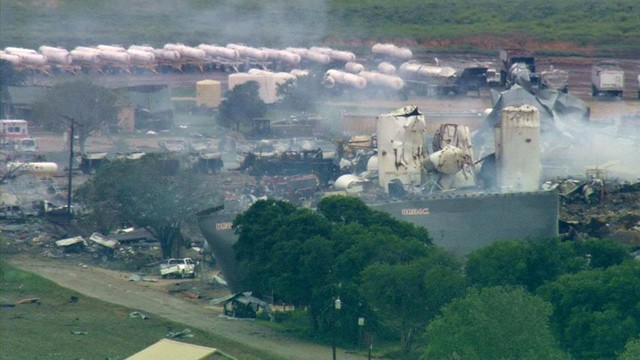
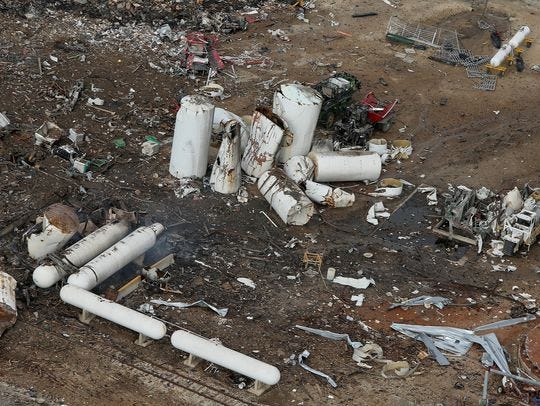
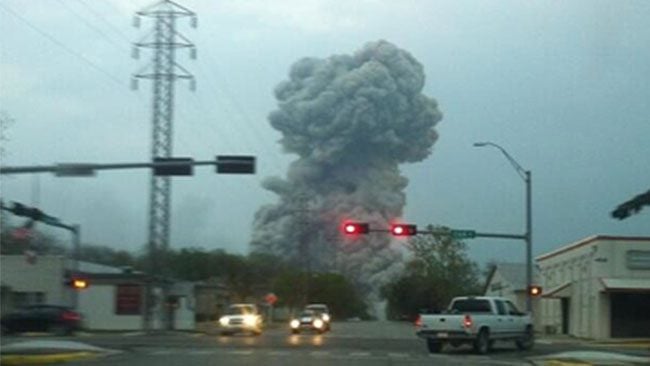
Emergency teams went house to house through mounds of debris Thursday searching for bodies and possible survivors of the earthquake-like blast at a fertilizer company Wednesday night, which sent a ball of fire and burning embers into nearby homes.

State investigators would not confirm the number of deaths from the explosion at the West Fertilizer Co., in this small town 20 miles north of Waco. As many as 160 others were injured. Initial reports put the count as high as 15, and later estimates provided to the mayor's office put the toll at more than 30.

But in an interview with USA TODAY late Thursday, West Mayor Tommy Muska said revised estimates put the death toll closer to about 15 people, including 10 first responders.

Muska said the dead include five members of the West Volunteer Fire Department who were trying to put out a still-unexplained blaze, four EMS workers and an off-duty Dallas firefighter who pitched in. Not all the bodies have been recovered but all are assumed dead.

Two volunteers who showed up to help fight the blaze are also missing and presumed dead, he said.

The remaining fatalities include fertilizer company workers and residents in several devastated blocks of this north-central Texas agricultural town about 80 miles south of Dallas.

"It's just a tragic, tragic incident," Muska said.

Between 50 and and 75 homes and buildings — including an apartment complex, the junior high school and a nursing home — were destroyed or seriously damaged.

"The apartment complex looks like it was the site of a bombing, the kind you see in Baghdad," Texas Attorney General Greg Abbott said at an afternoon news briefing. "It's utterly destroyed."

He also said railroad tracks to the west of the blast site were fused together and a playground was obliterated.

The blast, which rocked the ground with the force of a magnitude-2.1 earthquake, could be felt as far as 45 miles away.

"We risk our lives everyday. Those firefighters knew what they were going into," Waco police Sgt. William Patrick Swanton said. "They went in there to save lives, and that's what they did. A few of them lost their lives in doing so."

Officials said there was no initial indication that the blast was anything but an industrial accident, although agents from the federal Bureau of Alcohol, Tobacco, Firearms and Explosives were on the scene investigating, along with the U.S. Chemical Safety Board.

The facility, which receives fertilizer by rail and distributes it to local farmers, declared in a risk-management plan filed with the U.S. Environmental Protection Agency in 2011 that it did not have sprinklers or other fire-safety measures in place because it was not handling flammable materials, the Associated Press reported.

Last summer, records show, the company paid a $5,250 fine and took "corrective actions" after the U.S. Pipeline and Hazardous Materials Safety Administration found safety violations, including not having a security plan to transport flammable anhydrous ammonia and not properly labeling the tanks.

The state requires that all facilities handling anhydrous ammonia to have sprinklers and other safety measures, a top official with the Texas Commission on Environmental Quality told AP.

The commission last inspected the West Fertilizer facility in 2006, another agency official said. Records also show that the last time the federal Occupational Health and Safety Administration visited the business was in 1985, when an inspector fined it $30 fine for a serious violation in storing anhydrous ammonia.

As a storm front moved through the area Thursday morning, teams were carefully sifting through the charred remains of the explosion for survivors, looking under beds, inside collapsed closets, and rummaging through debris for any sign of life.

Swanton said that it was a good sign that emergency teams were still in a "search and rescue" mode because it indicated that they still hoped to find more survivors.

"A lot of tedious, meticulous searching," he said. "They want to make sure they don't miss anyone."

Texas Gov. Rick Perry called the devastating explosion "truly a nightmare scenario" for the small farming community. He declared a state of emergency for McLennan County and dispatched National Guard troops.

The governor also said that President Obama called him from Air Force One en route to Boston to offer federal aid.

Earlier, Mayor Muska told reporters that his town of 2,800 people needs "your prayers."

Officials said it did not appear that the town was threatened by chemical fumes from the plant, which was still smoldering hours after the explosion.

Emergency teams had responded to a fire call at the plant at 7:29 p.m. CT. The explosion erupted 24 minutes later, as the firefighters, police and paramedics were battling the blaze and attempting to evacuate nearby residents.

"They were responding to the scene and were actively fighting the fire at the time the explosion occurred," Swanton said.

First responders to the West Rest Haven Nursing home removed 133 residents, many in wheelchairs, from the rubble.

Jimmy Girad, 27, a builder, was in his home about 7 miles from the blast site when the explosion rattled windows and scared his two young sons. His initial thought: a training jet from a nearby military base must have crashed nearby. Then he saw smoke coming from the fertilizer depot and began getting calls from family members. He hopped in his truck and sped off toward the smoke to help.

He arrived at the West Rest Haven Nursing Home and began wheeling elderly residents there away from the blast site, he said. Nearby, relatives' homes had collapsed roofs and there were piles of charred rubble where friends' homes once stood. The destruction and chaos reminded him of the devastation he witnessed while volunteering on the Gulf Coast in the wake of Hurricane Katrina in 2005.

"It's hard to take it all in, that this happened here," Girad said.

He said the depot had been there so long that no one thought it could inflict so much damage.

"It never crossed my mind something like that could happen," Girad said.

Bill and Polly Killough had just sat down to watch TV when the explosion roared into their living room. The front door blew in and the windows exploded at the same time, followed by the roof collapsing and a thunderous boom, Polly Killough, 64, said.

Her first thought was: tornado. But after clawing out from under the debris and stepping outside, she saw no thunderclouds or storm.

"What the hell just happened?" she asked.

Around her, neighbors homes were stripped of siding, their roofs caved in and doors and windows blown in. The scene reminded her of TV images she'd seen from Iraq.

"Now I know what soldiers go through when they go through an [improvised explosive device]," she said. "In an instant, just total destruction."

In one video, posted on YouTube, a young girl, Khloey Hurtt, is taping the fire from about 300 yards away while sitting in a truck with her father, Derrick. The force of the blast knocks them both backward.

In the video, Khloey can be heard pleading with her father, "Please get out of here, please get out of here, Dad, please get out of here. I can't hear anything."

Derrick Hurtt later told NBC's Today show, "I'm pretty sure it lifted the truck off the ground. It just blew me over on top of her. It all happened so quick that things just kind of went black for a moment."

"The injuries that we are seeing are very serious,'' said Glenn Robinson, CEO of Hillcrest Baptist Medical Center. "There are a number of patients that will be going to surgery. ... It's a very, very unfortunate situation.''

Robinson said that 10 or 12 of the injured were in critical condition. Two people were in surgery as he spoke and two more were awaiting surgery, he said.

Robinson said an unknown number of people with minor injuries were being treated at a triage center set up by emergency medical personnel at a high school football field.

Swanton, who was one of the first officers on the scene, said the chaos and devastation was staggering.

"I've been policing for 32 years and seen some pretty rough stuff in that time," he said. "I've never seen anything of this magnitude."

The blast and ball of fire reduced a middle school to rubble and seriously damaged least 50 houses. A 50-unit apartment building looked like a "skeleton," according to one state trooper. Some structures as far away as a half-mile were destroyed.

Julie Zahirniako said she and her son, Anthony, had been playing at a school playground near the fertilizer plant when the explosion occurred. She was walking the track, he was kicking a football.

The blast threw her son 4 feet in the air, breaking his ribs. She said she saw people running from the nursing home and the roof of the school lifted into the sky.

"Hit the ground, hit the ground," Zahirniako heard a neighbor yell.

"The fire was so high," she said. "It was just as loud as it could be. The ground and everything was shaking."

The West Independent School District announced that it will be closed until Monday, when students will resume classes on the high school and middle school campus in Connally, about 10 miles from the blast zone. Other nearby districts are providing supplies, furniture, personnel and other needs for the displaced students.

Texas Trooper D.L. Wilson said the damage was comparable to the destruction caused by the April 19, 1995, bomb blast that destroyed the Murrah Federal Building in Oklahoma City.

Muska, who is a firefighter as well as mayor, urged residents to stay indoors as protection from the possibility of chemical fumes in the area.

Wilson said half the town had been evacuated due to damage or the threat posed by the fumes.

"When that north wind changes, we might have to evacuate the other side of town,'' Wilson said.

There were no immediate details on the number of people who work at the facility, which was cited by the Texas Commission on Environmental Quality in 2006 for failing to obtain or to qualify for a permit, the Associated Press reported. The agency acted after receiving a complaint in June of that year of a strong ammonia smell.

In 2001, an explosion at a chemical plant killed 31 people and injured more than 2,000 in Toulouse, France. The blast occurred in a hangar containing 300 tons of ammonium nitrate, which can be used for both fertilizer and explosives. The explosion came 10 days after the Sept. 11, 2001, terrorist attacks in the U.S., and raised fears at the time it was linked. A 2006 report blamed the blast on negligence.

Friday 19 April 2013

http://www.usatoday.com/story/news/nation/2013/04/18/waco-texas-plant-explosion/2092769/

continue reading

Thursday, 18 April 2013

Search operation for remaining 19 avalanche victims resumed in Gayari sector


he search operation for the remaining bodies of the victims of April 2012 avalanche in Gayari area near the Siachen glacier has resumed after opening of weather and melting of snow, according to a statement issued by the Inter Services Public Relations (ISPR) on Thursday, DawnNews reported.

At least 140 people including personnel of Pakistan Army and civilians were martyred on April 7 last year when an avalanche struck an Army camp high in the mountains of Kashmir after which a search operation had commenced to recover the bodies of the buried soldiers.

The search operation was suspended on November 27 2012 due to winters season. 121 bodies have been recovered so far whereas 19 bodies are yet to be found.

The statement once again reiterated that the sustained efforts would continue till recovery of last man.

Heavy engineering equipment pieces including excavators, dozers and drill machine along with 228 personnel have been employed for the task.

Thursday 18 April 2013

http://dawn.com/2013/04/18/search-operation-resumed-in-gayari-sector-ispr/

continue reading

3 killed, 30 still missing in Indonesia's capsized boat


Rescuers managed to retrieve 3 dead bodies on Thursday from the capsized boat in East Kalimantan river of Mahakam as the search for 30 missing passengers continues, a senior official at Indonesia's National Disaster Mitigation Agency (BNPB) said.

Sutopo Purwo Nugroho, the BNPB spokesperson said that 30 people managed to survive from the mishap that occurred on Wednesday afternoon. Citing to several sources passengers onboard the ill- fated Arinda boat were 63 people.

"According to data provided by the rapid response post command, total number of passengers was 63 people. Other sources said that they were 64 people onboard. Further verification on the exact number of passengers is conducted by the authority at the moment," Sutopo told Xinhua by phone.

Due to lack of passengers manifest document, the BNPB estimated earlier that passengers onboard the ill-fated boat that capsized at 18:00 middle Indonesian time (WITA) were 50 people.

Thursday 18 April 2013

http://english.peopledaily.com.cn/90777/8213416.html

continue reading

Chemical blast brings echoes from ship explosion disaster 66 years earlier


The deadly explosion at a fertilizer plant that ripped through the town of West, Texas, on Wednesday, stirred echoes of one of the worst industrial accidents in United States history, which struck the state 66 years ago earlier this week.

On April 16, 1947, the French cargo ship SS Grandcamp, anchored in Texas City, was being loaded with a cargo of ammonium nitrate fertilizer when a fire broke out on board.

At 9:12 a.m., the ship exploded and took much of the town with it, according to the archives of Moore Memorial Public Library in Texas City. A second blast rattled the area 16 hours later.

It remains one of the worst industrial disasters ever to hit the United States.

To this day, there is no definitive death toll. The Texas State Historical Association notes that 576 people are listed on the site's memorial wall but that many more may have died.

Because so many victims were so horribly mangled, and because of the number of foreign sailors and itinerant dockworkers, it is impossible say how many people actually perished, both the library and the historical association say.

About 1,000 homes and businesses were either heavily damaged or destroyed in the explosion, which caused a 15-foot-high tidal wave, killed 28 firemen and destroyed all the town's firefighting equipment. Contemporary accounts say the blast shattered windows 40 miles away in Houston and was felt 250 miles away in Louisiana.

About 150 embalmers worked at a temporary morgue, and identification of bodies continued through mid-June. Even students from regional dental schools were called in to try to identify remains.

The deaths in Texas City were not necessarily in vain.

Experts examined industrial safety and in particular the handling and storage of chemicals.

There was a new awareness of the danger of ammonium nitrate, which had been abundant as wartime munitions were converted to fertilizer.

And governments around the country saw the need for coordinated emergency response and disaster relief.

In many ways, people are probably safer today because of the explosions in Texas City, and the town recovered financially in the years after the disaster, remaining home to a thriving petrochemical industry. The Census Bureau shows that the population is bigger than ever, with more than 45,000 people calling Texas City home.

But the effect left by the disaster is difficult to overstate.

After a June 22 public funeral, an editorial in the Texas City Sun said those touched by the event had been "bound together by a great and common tragedy for which there is no ready word of solace."

Thursday 18 April 2013

http://usnews.nbcnews.com/_news/2013/04/18/17805986-chemical-blast-brings-echoes-from-ship-explosion-disaster-66-years-earlier

continue reading

20 dead in car accident on Benin-Asaba highway


No fewer than 20 persons reportedly lost their lives along Benin-Asaba expressway yesterday in an auto-crash which occurred at about 5.30pm.

Eyewitness said that apart from the 18-seater bus with registration number AA 246 XX which crashed into the bush around Onicha-Ugbo leaving the 18 passengers dead, another lorry driver lost his brakes and veered off the road almost at the same scene, killing himself and his conductor instantly.

LEADERSHIP gathered that the 18-seater bus lost two of its tyres while on top speed before crashing into the bush.

Road safety officials who were on hand to evacuate the dead bodies, but craved anonymity, blamed the driver of the bus for reckless driving.

The trailer was said to have leapt out of the lorry after he lost the brakes of the vehicle while the lorry was still in motion in an attempt to save his life, but jumped into broken bottles, while his colleague died under the trailer after it crashed into the bush.

LEADERSHIP checks reveal that frequent accidents on the expressway in the last six months has left no fewer than 75 persons dead, a situation road safety officials blamed on reckless driving.

At the time of filing the report, relations of the victims were seen at the scene of the accident wailing.

Only last Sunday, two tankers were involved in a head-on collision in which four people reportedly died.

Thursday 18 April 2013

http://www.osundefender.org/?p=98244

continue reading

Team seeks to return Vietnam artifacts


During the Vietnam conflict, Australian soldiers souvenired personal items from the bodies of slain Viet Cong and North Vietnamese soldiers.

There's nothing especially unusual about this - soldiers have done the same in every war.

The veterans - plus various museums, military history rooms and even RSL clubs - hold letters, certificates, diaries, photos and more that belonged to the dead.

Now a team of University of NSW researchers at the Australian Defence Force Academy (ADFA) wants to find these items and return them.

The group wants federal government help to repatriate the materials to families and present unclaimed documents to appropriate institutions in Vietnam.

But appeals to the Department of Defence were rejected, as was a request to the Department of Foreign Affairs, while the Department of Veterans Affairs said it wasn't its area of responsibility.

"We are a couple of retired folks who are doing this on the smell of an oily rag," team leader Dr Bob Hall, a Vietnam war veteran said.

"We reckon the government has an obligation, moral and legal, under the Geneva Convention to do this and it ought to bloody well chip in some support."

The Geneva Convention specifies that at the end of hostilities, opposing sides must notify locations of war dead and return artifacts.

But Australia has officially done neither, even though Vietnam helped in the search for the six Australians missing in action in Vietnam - all of whom were found and their remains returned to family.

Hall and his team's mission grew out of a long-running project analysing operations of the Australian task force in Vietnam in 1966-71.

"The intellectual gold to be found out of Vietnam is much greater than you can currently find out of Afghanistan because all the records are available," Hall said.

"All the records of the Australian embassy in Saigon are now publicly available.

"You can go into the archives and look through all the discussions inside the embassy."

The records include more than 4500 combat after-action reports filed by Australian soldiers.

Using the raw information, a detailed database has been created that's still useful today.

For example, it shows when, where and in what circumstances firefights started and even how many shots were needed to inflict a casualty.

It also includes details of enemy dead, who - under the practice of the time - were buried at the battle site.

"We realised we had the location of where the Australians buried all the Vietnamese we killed," said fellow researcher Derril De Heer, also a Vietnam veteran.

It appears some 3796 bodies were hastily interred in unmarked graves.

The discovery coincided with the finding of the remains of Australia's last two servicemen missing in action from the Vietnam war - Flying Officer Michael Herbert and Pilot Officer Robert Carver - who died when their Canberra bomber crashed in November 1970.

"There's a belief in Vietnam that if you die violently or die where you are not known, your spirit will wander," De Heer said.

And so Operation Wandering Souls was conceived as a private humanitarian venture to help find some of Vietnam's estimated 300,000-600,000 missing dead of the Vietnam conflict.

Hall's team transposed all the burial site grid references onto Vietnam-era topographical maps, converting them to latitude and longitude locations on Google earth images.

Then in 2010, then-defence minister John Faulkner presented the database to Vietnam's deputy defence minister.

But there was more.

Some Australian intelligence reports, based on documents found on the bodies, gave actual names.

So the team realised they could put names to some of the Vietnamese dead by matching People's Army of Vietnam (PAVN) casualty records against dates and locations in the Australian records.

From this discovery came another significant development.

Victorian Vietnam veteran Laurens Wildeboer contacted the team to reveal he had a scarf, notebook and book of poetry from his time in Vietnam and asked if they could help give back the artifacts.

In a widely reported ceremony in Vietnam last year, the scarf and notebook were handed over to the dead soldier's mother.

"As a result, people have been giving us artifacts that have been taken from bodies - letters, photographs and other stuff," De Heer said.

"We now have about 120 letters. We have certificates, photographs. We know there is more around Australia either in private museums or people have held onto it. Some is in defence museums or history rooms."

Among the cache is a collection of 40 pencil and charcoal sketches taken from the body of a soldier killed at the 1966 Battle of Long Tan. Other material is likely being held at the Australian War Memorial and RSL clubs. One military museum is believed to hold a gold ring taken from a dead soldier.

So Operation Wandering Souls is now appealing to anyone with such material to pass it over.

"We will try and find the families. If not, we will hand it to the Vietnamese government," De Heer said.

But without federal help, the mission will have to be funded out of the team's own pockets.

Last year's visit required De Heer to hire a 30-seater bus to transport a Vietnamese media contingent and feed them, all out of his own funds.

The team reckons about $130,000 would be enough, considering the goodwill their efforts have produced in Vietnam, and would cover travel within Australia to collect items and travel to Vietnam to present them.

"We believe the costs should be met by the Australian government, since we are fulfilling the government's legal responsibilities under the Geneva Convention," De Heer said.

Thursday 18 April 2013

http://www.theaustralian.com.au/news/breaking-news/team-seeks-to-return-vietnam-artifacts/story-fn3dxiwe-1226623455153

continue reading

Many casualties in Texas Waco fertiliser plant blast


Scores of people are injured and an unknown number are dead after a huge explosion at a fertiliser plant near Waco in the US state of Texas.

Dozens of homes and buildings have been destroyed, and several are still on fire, after the West Fertilizer plant exploded at about 19:50 (00:50 GMT).

Some people are thought still to be trapped in buildings and a number of firefighters are reported missing.

Emergency services officials said ammonia may have caused the explosion.

It has been reported the company had 54,000lbs (20 tonnes) of anhydrous ammonia on site.

Firefighters had been tackling a blaze at the plant when the explosion in West, a town of about 2,700 people some 20 miles (32km) north of Waco, occurred.

Police said the half the town had been evacuated, amid fears of possible further explosions or a leak of toxic gas.

The plant is right on the edge of town, only a few hundred metres from houses, a school and nursing home.

Sgt William Swanton of the Waco police department said power to the town had been shut off to prevent further accidents.

He confirmed there were deaths, but could not give a figure.

Police have been conducting house-to-house searches to check for casualties.

'Like a war zone'

TV images showed streams of emergency vehicles descending on the site and ambulance crews using a nearby sports field as an emergency treatment area. The injured were being carried to hospital not just in ambulances but in police squad cars and helicopters.

Glenn A Robinson, chief executive of Hillcrest Baptist Medical Center in Waco, told CNN that his hospital had received 66 injured people including 38 who were seriously hurt.

He said the hospital was seeing "everything from orthopaedic injuries to patients that are experiencing serious blood loss".

McLennan County Sheriff Parnell McNamara said: "It's a lot of devastation. I've never seen anything like this. It looks like a war zone with all the debris."

A nursing home was caught in the explosion and some people were believed trapped inside.

Witness Debby Marak told the Associated Press news agency that she had seen smoke coming from the area near the plant and had driven over to see what was happening.

She said that when she arrived, two boys ran towards her screaming that the authorities had told them to leave because the fertiliser plant was going to explode.

She said she drove a short distance before the blast happened.

"It was like being in a tornado," she said. "Stuff was flying everywhere. It blew out my windshield. It was like the whole earth shook."

Another resident told KWTX-TV that she heard several explosions from 13 miles (20km) away.

"It sounded like three bombs going off very close to us,'' said Lydia Zimmerman.

Texas Governor Rick Perry said in a statement: "We are monitoring developments and gathering information as details continue to emerge about this incident.

"We have also mobilised state resources to help local authorities. Our thoughts and prayers are with the people of West, and the first responders on the scene."

The Dallas Morning News reported that West Fertilizer had told the Environmental Protection Agency that it presented no risk of fire or explosion.

The newspaper said it had seen documents in which the plant said it stored large amounts of anhydrous ammonia, but the worst scenario envisaged was a release of ammonia gas that would harm no-one.

Thursday 18 April 2013

http://www.bbc.co.uk/news/world-us-canada-22195495

continue reading

Planned mass burial for slain 12 policemen in Bayelsa rejected


The Inspector-General of Police, Mohammed Abubakar, has turned down the proposed plan by the Bayelsa State Police Command to conduct a mass burial for the burnt and decomposed corpses of the 12 Policemen killed a fortnight ago by armed men suspected to be ex-militants.

LEADERSHIP gathered that the Bayelsa Police Command led by Commissioner, Mr. Kingsley Omire, had been under pressure from families of the slain policemen to release to them the corpses of their loved ones.But such request was turned down by Kingsley Omire with the claim that the identity of the deceased officers cannot be determined.

Indications however emerged yesterday that the Inspector-General of Police, Mohammed Abubakar, has kicked against request by the Bayelsa State command to conduct a mass burial for the 12 policemen killed by gunmen in Bayelsa State.

According to Police sources, the IG and other top police officers at the Headquarters argued that the idea of mass burial for the slain policemen is derogatory and insisted that a medical examination must be conducted on the mutilated bodies to ascertain their identities.

A senior police officer told our correspondent that the IG had already sent a team of qualified pathologists to conduct the examination. The Medical Team, according to the security source, is headed by an Assistant Commissioner of Police, "they have commenced investigations"

"The IG has ordered medical investigations to know e identities of persons killed by the gunmen. The IG is against burying them in a mass grave despite the fact that their bodies were burnt beyond recognition. The inquiry is ongoing and the team which is led by an assistant Commissioner, a pathologist, has commenced the investigation", he said.

Attempts to speak with the Police Public Relations Officer, Mr.Alex Akhigbe, failed as he did not answer his calls and neither reply text messages to him.

Thursday 18 April 2013

http://leadership.ng/nga/articles/52249/2013/04/17/ig_rejects_planned_mass_burial_slain_12_policemen_bayelsa.html

continue reading

Boat capsizes on river in central Indonesia; 2 confirmed dead and dozens missing


Officials say a boat carrying about 50 people has capsized while crossing a river in central Indonesia, leaving at least two people dead and dozens believed missing.

Rescue official Mujiono, who uses one name, says 11 people were rescued after the boat sank Wednesday in the Mahakam River in East Kalimantan. He says the bodies of two women were recovered.

The boat was believed to be carrying about 50 workers. National Disaster Mitigation Agency spokesman Sutopo Purwo Nugroho said the exact number of missing was unclear because no passenger manifest exists.

Rescue efforts were hampered by strong winds and currents.

Ships are a key mode of transportation in Indonesia, the world's largest archipelago. Boats are often overcrowded and in poor condition.

Wednesday 18 April 2013

http://www.foxnews.com/world/2013/04/17/boat-capsizes-on-river-in-central-indonesia-2-confirmed-dead-and-dozens-missing/

continue reading

2 children die in Kenya landslide; 41 flood deaths


Kenya's Red Cross says two children buried in a landslide overnight have died, as the country's death toll from heavy flooding rose to 41.

The Red Cross said Wednesday that the landslide in Narok County happened after a heavy downpour that destroyed houses and farms. The two children were buried alive while sleeping.

A search and rescue mission to find the children was hampered by impassable roads. The bodies were recovered in the afternoon.

Kenya's annual long rains have brought heavy flooding around the country, displacing thousands of people. The Red Cross says 41 people have died from floods in recent days.

Wednesday 18 April 2013

http://www.huffingtonpost.com/huff-wires/20130417/af-kenya-floods/?utm_hp_ref=media&ir=media

continue reading