Sunday, 7 April 2013

Nigeria: How poisoned cows sparked killings, arson on uphill villages


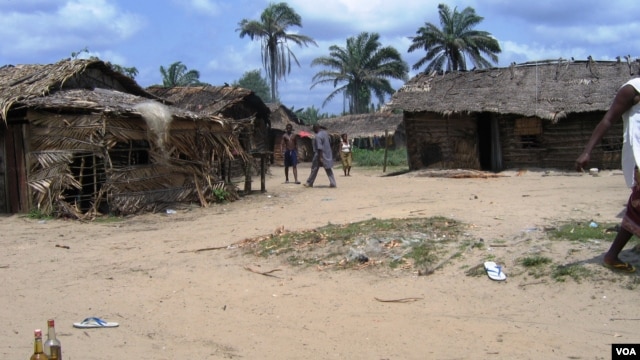
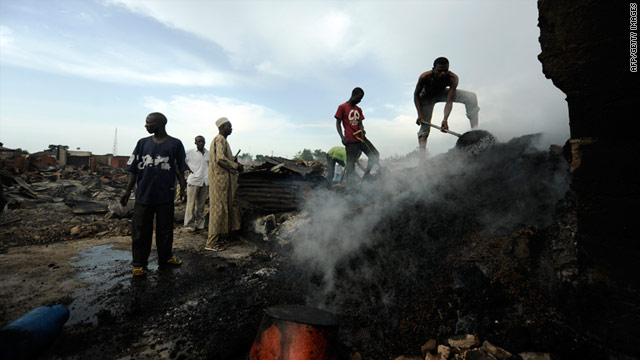
Like a little bush fire turned into a ravaging inferno, the discovery of two dead Fulani cows,allegedly poisoned in Zankan, an uphill village in Fadan Atakad Chiefdom, Kaura Local Government Area of Kaduna State, ignited a bloodbath in Atakad villages in Kaduna and Plateau States in the past three weeks.

Alhaji Ibrahim S Abdullahi, Kaduna State Chairman of Miyeti Allah Kautal Hori Socio-Cultural Association – Fulani umbrella body – told Sunday Vanguard that the Fulani considers the cow as the equivalent of cash deposit in bank, and would do anything to take vengeance anytime his cow is hurt.

The national body of Miyeti Allah Kautal Hori Socio-Cultural Association was headed by the deposed Sultan of Sokoto, Alhaji Ibrahim Dasuki.

Members of the House of Representatives from Southern Kaduna wore forlorn looks last Wednesday when they visited one of the refugee camps holding some 10,000 Atakad refugees displaced from the violence and assured them of help and justice, while asking for calm.

The Atakad people live on lush plains and fertile valleys served by perennial stream high up the Atakar hills, that form part of the Kagoro mountains linking the Jos plateau.Unlike most southern Kaduna people, the Atakad are known to take dry season farming seriously, thus making them relatively prosperous among other tribal groupings of the area.

Also rich in fodder for grazing, Fulani nomads find the Atakad hills very attractive, and there had been cordial symbiotic relationship between the two groups as long as some of the oldest Atakad elders could recall to Sunday Vanguard, until the last three weeks.

On Monday, the Chairman of Kaura LGA, Mr Kumai L J Badung spoke to Sunday Vanguard at the refugee camp of Fadan Atakad on how the incident started. Said Badung:”There was a young man, Aboi Stephen (21), in Mafan, who had been complaining that some cattle had been grazing on his dry season farm. I was told that the cattle destroyed a good portion of the farm, and that there was no end in sight to the destruction.

”About two weeks ago, two Fulani cows were found dead, allegedly of poisoning. The owner of the cows was said to have publicly warned Aboi of the grave consequences of his action. I don’t know if it was Aboi that poisoned the cows, or even if they died of poisoning. ”Then one day, Aboi was found missing. A search by the villages found his corpse.

He had deep machete cuts all over his body, and his throat was slit.”Upon that discovery, women and children mobilised to the palace of the chief of Atakar, Tobias Nkom-Wada, and accused him of inviting the Fulani into Atakar land in the first place. They vandalised the palace.

The chief is now living in his personal house in Tachire, around here. ”On seeing what the women and children did, the Fulani started moving out en masse to their kins in Kanawuri areas of Plateau State, which also has some number of Atakar speaking villages.”On their way, they shot a young man that same day in Kanawuri area.

That pitched them against the Atakar in Plateau State and they fought for days. The fighting led to the burning of some Atakar villages. The affected ones had to move to this local government, where we opened the first refugee camp for them at Mifi. But we have closed it and merged it with the other two because it was vulnerable.

”When the army moved in last week, the Fulanis left Kanawuri in Plateau State back to this place with their arms.”Last Saturday, by 3pm they attacked Mafan, Zalang, Taliki and Zangkan villages up those hills, while able bodied men had gone to the farms or the market.

They went on unchallenged till Sunday morning. When the army arrived the scene on Sunday morning, the officer in charge told me that they counted 19 bodies. All the houses in the villages had been burnt.”They made no arrest, because the attackers had left before the came.”Right now, soldiers have escorted some men back to the villages to bury the dead.”We have not less than 5,000 refugees now, and that is a huge challenge to us.

The governor of Kaduna State, Alh. Muktar Ramalan, has done very much and is still doing more to help”.But events later revealed that the casualty was higher than the one given by the Council Chairman, when the House of Reps members came to find out what transpired.

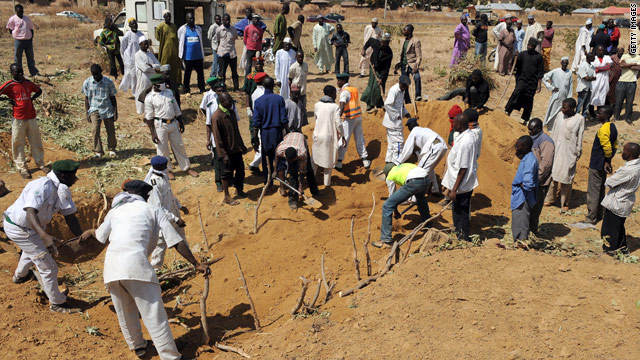
The chief of Atakad chiefdom, Chief Tobais Nkom_Wada, while receiving the lawmakers, led by Hon Godfrey Gaya (Jaba/Zangon Kataf Federal Constituency), corroborated the story of Badung, but added that the death toll had shot to 28, the four villages left in ruins with the Fulani fully occupying them as their captured territory.”We gave 28 bodies mass burial, with the victims being mostly women and children.

The Fulani have fully taken over the villages. No one can enter,” he said. ”Now, the rains have started. Some have lost family members and are living as refugees. Yet they cannot go back and farm, after their entire food crops have been burnt. Next year will be terrible.”I am pleading with government to send securitymen so that we can go back and start our lives all over again.”As Christians, I call on my people to forgive, and keep living in peace with the Fulani like we have ever done ever since”.

The National President, Atakad Community Development Association, Mr. Ishaya Kudien told the visitors that the refugee figure had increased.”We heard the refugee was given as 5,000. That is far below the truth. As at yesterday, we have about 100, 000 refugees from the violence. Many are living with relations, some are staying with family friends, and some have relocated, more have joined the camps,” he said.

”There may be outbreak of epidemic, because everyday we take dozens of children for emergency treatment because of poor hygiene and feeding here.”We need relief materials and we want to go back home. We will always forgive, but we want government to help us get back our villages from the Fulani”.

Other members of the House of Reps from southern Kaduna were: Hon. Gideon L. Gwani (Kaura Federal Constituency), Hon. Adams Jagaba Adams (Kachia/Kagarko Constituency), Hon. Simon Arabo (Kauru Federal Constituency) and Hon. Shehu N. Garba ( Jema’a/Sanga Constituency).Meanwhile, Kaduna State Chairman of Miyeti Allah Kautal Hori Socio-Cultura Association, Abdullahi, spoke to Sunday Vanguard on behalf of the Fulani.”I was told that the corpse of a mentally deranged man was found in a bush in one of the Atakad villages. The Atakad youth attack the Fulani, and burnt their huts.

They even burnt the palace of their chief, who is peace loving man.”I am told that 20 Fulani were killed, and that the Fulani cannot go to the hills to bury their dead.”Let me tell you something that many people don’t know about us the Fulani. We don’t have bank accounts.

The cattle you see the Fulani with, represent his bank account. Therefore, if you hurt any of his cows, he can go to the end of the world and hide the remaining cows, then he will surely come back for vengeance.”But, we don’t want such crisis.

The Atakad and the Fulani have lived for decades and have even inter-married. It is sad that this is happening. I am still making more findings, and I will let you know next time”.

Sunday 7 April 2013

http://www.vanguardngr.com/2013/04/fulani-atakar-war-how-poisoned-cows-sparked-killings-arson-on-uphill-villages/

continue reading

Sri Lanka to probe mass grave with more than 150 dead


Sri Lanka is setting up a presidential commission to investigate a mass grave with the remains of more than 150 people, an official spokesman said on Sunday.

Two reports submitted to a court last week said that the human remains, in the town of Matale 142 km (88 miles) north of the capital, dated back to the period 1986-1989 when Sri Lanka faced a Marxist insurrection.

"The president has decided to appoint a presidential commission to inquire into the mass grave. This will be apart from the ongoing police inquiry," Mohan Samaranayake, President Mahinda Rajapaksa's spokesman, told Reuters.

The decision to set up commission comes five months after the mass grave was found at a building site near a hospital.

Ajith Jayasena, the judicial medical officer at the hospital, said the excavation was still going on and there may be more remains in the grave.

Marxist rebels of the Janatha Vimukthi Peremuna (JVP), or People's Liberation Front, launched the second phase of an insurrection in the late 1980s after the first one in 1971.

The security forces responded ruthlessly and many rebels were killed or disappeared. The JVP later transformed itself from a rebel group into a political party.

Sunday 7 April 2013

http://news.yahoo.com/sri-lanka-probe-mass-grave-more-150-dead-145207026.html

continue reading

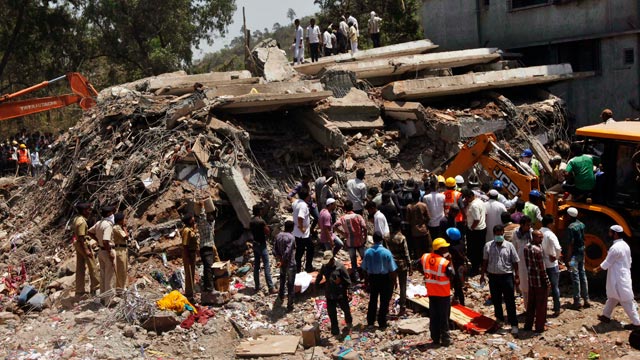
Thane building collapse: Nine victims yet to be identified


Nine bodies, recovered from the debris of the unauthorised building in Shil Phata area in the district, which crashed on Thursday killing 74 people, are yet to be identified. Officials said four bodies were at the Civil Hospital here, while five were at CSM Civic Hospital in Kalwa. All other bodies have been identified.

Meanwhile, bodies of 11 labourers hailing from Malda in West Bengal, who were among the victims, were flown back to their home state on Saturday night. Many of the victims were construction workers from Karnataka, Andhra Pradesh and West Bengal.

The seven-storey unauthorised building at Shil Phata in Mumbra in the district had come down crashing in a heap on Thursday evening, in the worst tragedy of its kind in Maharashtra, which left 72 people dead so far.

Sunday 7 April 2013

http://ibnlive.in.com/news/thane-building-collapse-nine-victims-yet-to-be-identified/383776-3-237.html

continue reading

Nigeria: 36 bodies recovered from Benin-Ore road accident:


Rescue operation by officials of the Federal Road Safety Commission (FRSC), the Police and Edo State Fire Service continued yesterday at the scene of Friday multiple accident that claimed several lives at Ugbogui along the Benin- Ore-Lagos expressway.

Speaking to Sunday Sun, Edo Sector Commander of the FRSC, Mr. Kenneth Nwagbe said that one more body was recovered at the point where the vehicles collided and was taken to the University of Benin Teaching Hospital (UBTH) mortuary. He said 36 bodies have been recovered from the scene adding that from the manifest of the Luxury bus involved in the accident, a total of 36 people died in the accident.

Mr. Nwangbe revealed that relatives of some of the dead victims have identified them. He advised motorists to put their vehicles in good order mindful that the rainy season has set in. On whether the FRSC was considering mass burial for victims who could not be identified, Mr. Nwangbe said: “That has a process. We will follow due process. We are not the only agency on ground; the Police are also on ground and are involved.” Another official of the FRSC who spoke on condition of anonymity said: “Our duty is to clear the debris on the road and arrange to take the bodies to the mortuary. It is the duty of the Police to arrange for mass burial.”

Speaking on the rescue operation, Edo State Commissioner of Police, Mr. Folusho Adebanjo who led policemen to the scene, stated that the traffic situation of the road was okay. “We have been able to remove the Luxury bus; it remains the tanker. We suspect there is PMS. The last time we tried to remove it, there was fire. We are waiting for officials of the Fire Service”, he said.

The accident occurred when a trailer carrying cement reportedly had a burst tyre and rammed into a fuel tanker that in turn, hit a luxury bus conveying passengers from Lagos to Enugu. Consequently, the tanker exploded and burnt most of the passengers beyond recognition, while only three persons were rescued. Natives count losses Many natives of Ugbogui community, scene of the fire incident that resulted from the multiple accidents on Friday, suffered loses.

“I lost everything I worked for to the disaster. I sell foods and drinks here (pointing to her burnt shop). I was outside the shop when the accident occurred. Inside the shops were two large deep freezers that I used to cool the drinks. “ Apart from that, there were at least 10 crates of mineral, cartoons of beer, plastic chairs and other items. I cannot quantify what I lost to this inferno but all that I live on is gone.

I just don’t know where to start but I thank God that I’m still alive. I thought the world had come to an end”, said Madam Dupe Abiola, a food and drinks seller. For Florence Olufemi, a palm oil seller, when the accident occurred, she thought the world had come to an end. “I just heard a gboom sound from nowhere and I saw people running to different directions. Inside my store, I had 50 kegs of 50-litre palm oil that I was planning to sell soon.

I also had plantain and bananas inside of the shop. Now, everything is gone and I don’t even know where to start again”, she said. Jimoh Olaniyi, mechanic and car spare parts seller lost his entire shop.

“In our shop here, we lost no less than five cars. Personally, it is a huge loss for me because apart from my shop, I also lost my Gulf car to the inferno. All the tools in this shop were burnt and I am sure they are now useless. I pray that somebody will just come to our assistance,” he said.

Sunday 7 April 2013

http://www.osundefender.org/?p=97240

continue reading

Saturday, 6 April 2013

Anniversary of the deadliest submarine disaster in U.S. history; sinking of the USS Thresher


It was a radio transmission 50 years ago that first alerted Norman Bower to the trouble on board the USS Thresher.

It was April 10, 1963, and U.S. Navy ships had lost contact with the nuclear-powered submarine. Bower, who was serving as chief of the USS Albacore at the time, remembered hearing radio chatter about the Thresher’s disappearance.

His thoughts jumped to the fate of the crew, a group of 129 men that included three former shipmates. Among them was Wayne Lavoie, a father of five from Gonic.

Bower remembers it was another 16 or 20 hours before the Navy officially announced the ship had plummeted to the ocean floor, taking the crew members with it.

Now 77 and retired, Bower has worked over the years to help preserve the memory of the Thresher disaster. The tradition will continue this weekend, as Bower and hundreds of others gather on the Seacoast to reflect on the 50th anniversary of the ship’s sinking.

The Thresher catastrophe marked a turning point in the Navy’s safety operations. It also changed the trajectories of countless lives, including that of Peter Charron, of Rochester. Charron grew up never knowing his father, Robert Charron, a civilian sonar technician who perished on the ship. Peter Charron was 16 months old at the time.

Now 51, Charron said the circumstances of his father’s death propelled him toward his career in funeral services. As a high school sophomore, Charron decided to enter the field to help provide closure to other families in pain.

“I decided, ‘OK, I’m going to do for other people what dad couldn’t have,’” he said.

Charron will attend a memorial service at Portsmouth High School this afternoon with his 89-year-old mother, two sisters and two brothers. U.S. Submarine Veterans Incorporated Thresher Base, the group organizing the ceremony, anticipates that hundreds of surviving family members will be on hand.

The event is closed to the public, but the Defense Video & Imagery Distribution System is planning to broadcast the event live on the Internet. The ceremony, which starts at 1 p.m., is expected to be viewable online at http://www.dvidshub.net/webcast/2935.

A separate service will also take place in Kittery, Maine, on Sunday morning. The Thresher Memorial Project Group will dedicate a new 129-foot flagpole in the center of Memorial Circle to the victims. Ship’s bells will also ring every 10 seconds during the 9 a.m. ceremony.

The Thresher was the world’s most advanced fast attack submarine when it was commissioned in 1961. Built at Portsmouth Naval Shipyard in Kittery, and based in Groton, Conn., the ship featured a cigar-shaped hull and nuclear propulsion. The 278-foot-long submarine could travel underwater for long distances, and it could dive deeper than earlier submarines, enduring pressure at unforgiving depths. The Cold War-era vessel was also designed to be quieter to avoid detection.

The Thresher was conducting sea trials off the coast of New England with another ship when it sent a message at 9:13 a.m. stating, “We are experiencing minor difficulties, we have a positive up angle, and are attempting to blow. Will keep you informed.”

Only minutes later the other ship, the USS Skylark, received two garbled messages, followed by high energy, low frequency disturbance. The sound was the mangling of the ship, which had fallen below crush depth.

One hundred and twenty nine men perished, including crew members, Portsmouth Naval Shipyard officer observers, civilian workers and contractor technicians.

A special inquiry later determined the submarine likely sank due to a piping failure, loss of power and an inability to blow ballast tanks rapidly enough. An extensive search found the ship some 8,400 feet below the surface. The dead included 16 officers, 96 enlisted men, and 17 civilians.

For the families, the silver lining is that subs are now safer. The Navy accelerated safety improvements and created a program called “SUBSAFE,” an extensive series of design modifications, training and other improvements.

People involved in the SUBSAFE program are required to watch a documentary about the Thresher that ends with an actual underwater recording featuring the eerie sounds of metal creaking and bending as a U.S. Navy submarine breaks apart with the loss of all hands.

“It’s important because the real legacy of Thresher is the SUBSAFE program that the Navy initiated after the loss of Thresher, which has kept submarines and their crew safe since then,” said Lori Arsenault, of Gorham, Maine, whose father perished in the accident. “And the real important thing to understand 50 years later is the people making decisions are too young to remember that day, and so by consciously remembering it, we can keep working at making sure that it doesn’t happen again.”

Arsenault’s father, Tilmon J. Arsenault, was a World War II veteran who served as chief engineman on the Thresher. Lori Arsenault says her father was her mentor, and he got her interested in music and technology. She is now director of operations and concert manager for the School of Music at the University of Southern Maine.

“I sort of got my passion for these things from him,” she said.

Arsenault was 8 at the time of her father’s death. She recalls that her mother learned of the tragedy while attending a PTA meeting at the local school in the evening.

“The families — the Navy was trying to contact the families throughout the day, so it was even late at night and they were still trying to contact my mom. She was at a PTA meeting, and then they finally found her at the school. She came home — she doesn’t remember the drive home — but she came home and we all huddled in the kitchen and cried.”

Barbara Currier, whose husband, Paul, was a civilian worker on the Thresher, was shopping with her daughters when she heard the news on the radio in a store. What followed was a blur of activity for her family. Navy officers in dress whites showed up on doorsteps. Friends and neighbors brought food.

After the submarine was declared sunk, President John F. Kennedy ordered the nation’s flags lowered to half-staff. International leaders sent condolences.

“The men, they were heroes. Most of them were doing what they wanted to do for their country to keep the country safe,” said Currier, 86, who never remarried and still lives in the same house in Exeter, N.H. “They were pushing things to the limit.”

Because of their tender ages, and the lack of a body or proper grave site, children like Vivian Lindstrom, who lost her father, Samuel Dabruzzi, a Navy electronics technician, were unable to grieve properly.

Thanks to the reunions, they at least know they’re not alone, said Lindstrom, of Glenwood City, Wis.

“We’ve experienced the same things, felt the same things,” she said. “We feel like family. We call ourselves the Thresher family.”Foster’s staff writer Jim Haddadin and David Sharp of The Associated Press contributed to this report.

Saturday 6 April 2013

http://www.fosters.com/apps/pbcs.dll/article?AID=/20130406/GJNEWS_01/130409498/-1/FOSNEWS

continue reading

Death toll in Mumbai building collapse hits 72


Rescue workers on Saturday finished a two-day search for survivors in the collapse of a residential building being constructed illegally in India's financial capital. At least 72 people, 17 of them children, were killed.

Another 70 people were injured when the eight-story building on forest land in the Mumbai suburb of Thane caved in Thursday evening, police said. Thirty-six of the injured were still in city hospitals and the rest were discharged after medical treatment, said Sandeep Malvi, a spokesman for the local municipality. Many had head wounds, fractures and spinal injuries. Hospital officials searched in vain for the parents of an injured 10-month-old girl rescued from the rubble after 12 hours.

Rescue workers using sledgehammers, chain saws and hydraulic jacks worked through the mound of steel and concrete Friday night in their search for survivors, police officer Dahi Phale said. Six bulldozers were brought to the scene. Twenty bodies were recovered overnight and the rescue work ended at noon Saturday after 42 hours, the municipal spokesman Mr. Malvi said. Police with dogs were still searching.

Prithviraj Chavan, the top elected official of Maharashtra state, said that a government probe had been ordered, and that a deputy municipal commissioner and a senior police officer had been suspended for dereliction of duty.

At the time of the collapse, between 100 and 150 people were in the building. Many were residents or construction workers who were living at the site as they worked on it, the spokesman Mr. Malvi said.

Local police commissioner K.P. Raghuvanshi said rescue workers saved 15 people from the wreckage, including a woman who was rescued 36 hours after the accident.

At least four floors of the building had been completed and were occupied. Workers had finished three more floors and were adding the eighth when it collapsed, police Inspector Digamber Jangale said.

It wasn't immediately clear what caused the structure to collapse, but police commissioner Mr. Raghuvanshi said it was weakly built. Police were searching for the builders to arrest them, he said.

Building collapses are common in India as builders cut corners by using substandard materials, and as multistory structures are built with inadequate supervision. The massive demand for housing around India's cities and pervasive corruption often result in builders adding unauthorized floors or putting up illegal buildings. In one of the worst recent collapses, 67 people were killed in November 2010 when an apartment building in a congested New Delhi neighborhood crumpled. That building was two floors higher than legally allowed.

The neighborhood where the building collapsed was part of a belt of more than 2,000 illegal structures that had sprung up in the area in recent years, said Mr. Malvi, the municipal spokesman.

"Notices have been served several times for such illegal construction," he said. "Sometimes notices are sent 10 times for the same building."

The building that collapsed was illegally constructed on forest land, and the city informed forestry officials twice about it, Mr. Malvi said.

Saturday 6 April 2013

http://online.wsj.com/article/SB10001424127887323646604578406121029978946.html

continue reading

New theories emerge into tragedy on board the ferry ‘Scandinavian Star'


Persons other than the truck driver accused of setting a fire on board the cruise ferry Scandinavian Star may have been responsible for the tragedy that killed 159 persons during a voyage from Oslo 23 years ago. New theories are emerging from a working group that’s conducted its own probe into the disaster.

The newly remodeled Scandinavian Star was sailing from Oslo to Frerikshavn in Denmark when fire broke out in the early morning hours of April 7, 1990. The fire broke out in international waters in the Skagerrak, and the smoldering vessel was later towed to Lysekil, Sweden. Of the 159 victims of the fire, 134 were Norwegians, nearly twice as many as those killed in the terrorist attacks of July 22, 2011.

Lack of closure

While those attacks have sparked massive investigations, memorials, the killer’s lengthy trial and compensation for victims, the Scandinavian Star tragedy has never resulted in any clear answers and some survivors still feel a lack of closure or justice. It was difficult to establish who actually owned the vessel at the time, even though two Danish shipowners and the vessel’s Norwegian captain were sentenced to jail terms for various offenses like deficiencies in fire alarm systems and testing. The vessel was later even repaired and put into service again in the Caribbean, but was scrapped in 2004.

Norwegian Broadcasting (NRK) reported Friday that a report due over the weekend suggests that several fires were actually set on board the vessel, after the accused arsonist had been killed by the fire himself. The working group made up of shipping experts from Skansen Consult AS, firefighters and arson investigators, also claims, according to NRK, that insurance fraud may have been involved.

Norwegian police at the time identified a 37-year-old Danish truck driver, earlier convicted of arson, as the arsonist. The case against him was dropped, however, because he also perished in the fire on board the car ferry.

Lack of willingness to investigate

Ingvar Brynfors of the fire brigade at Frรถlunda n Sweden was the first firefighter to be hoisted on to the smoldering ship after around 200 passengers had been rescued. NRK reported that he claims it would have been impossible for the Danish truck driver to have set the fatal fire. Brynfors doesn’t think the Norwegian police investigation was adequate, noting that he was never called in for questioning himself.

“I saw the various places where fires were set around the ship,” he told Sveriges Television (SVT). “I was only asked one question by Norwegian police and then he disappeared.”

A survivors’ group asked Norwegian authorities to reopen the investigation into the fire, but was turned down last year. The group has complained of a lack of willingness by the authorities to investigate, while circumstances around the tragedy have also been controversial, not least the unclear ownership details of the vessel.

Saturday 6 April 2013

http://www.newsinenglish.no/2013/04/05/new-theories-emerge-into-tragedy-on-board-the-ferry-scandinavian-star/

continue reading

Nigeria: 110 die in multiple accidents on Benin-Lagos, Onitsha-Owerri roads


No fewer than 110 people died yesterday in multiple accidents on Benin-Lagos expressway and Onitsha-Owerri expressway. This is coming barely one week after 18 persons perished in an auto crash on Lokoja-Abuja road. In the Benin-Lagos expressway accident, over 80 persons were roasted to death in multiple accidents involving a trailer, tanker, luxury bus and other vehicles, while in the Onitsha-Owerri road accident about 30 people lost their lives when a trailer collided with two mini-buses at Ihiala.

Saturday Sun gathered that among the dead in the Benin-Lagos expressway accident are the driver of the trailer, his assistant and 57 passengers in the luxury bus and occupants of other vehicles affected. Three passengers of the luxury bus, who survived the accident, were badly burnt. According to eyewitness, the accident occurred at Ugbogui, near Ofosu, in Ovia South-West when a cement-laden trailer reportedly had a burst tyre and rammed into a petrol tanker carrying fuel. The fuel tanker had hit a fully loaded luxury bus, which burst into flames.

It was gathered that the spillage of petrol on the road had set other vehicles on fire, including commercial and private cars. About 20 other vehicles were burnt in the process. At the accident scene, there were charred bodies of the passengers in the carcass of the burnt luxury bus and other vehicles. Some passengers in other vehicles, who had got down, were seen shedding tears over the horrible death of the victims. The accident had caused a heavy traffic jam, as personnel of the Federal Road Safety Corps (FRSC) stopped vehicular movement on both sides of the expressway to avoid further disaster.

Confirming the story, an official of FRSC, who pleaded anonymity, explained that the trailer was coming from Lagos, while the tanker and luxury bus were travelling in the opposite direction. FRSC personnel and the police had mounted rescue operation at the scene of the accident. The injured were taken to a nearby hospital, while the road was being cleared to create a thoroughfare for vehicles. Also, firefighters, who later arrived the scene of the accident, battled to put out the fire caused by the explosion of the tanker.

A passenger, who was travelling to Lagos from the East, said they were stuck in traffic for close to four hours because of the accident. “We were in one spot for about four hours. Movement on both sides of the road was stopped by FRSC. We had to make a detour through a bush path, through villages to cross the scene of accident,” he said. In a related development, 30 persons lost their lives, while six others sustained various degrees of injury yesterday, when a trailer collided with two mini-buses at Ihiala, on Onitsha-Owerri expressway.

The two commuter buses, which were said to belong to Rivers State Transport Company, were heading for Onitsha from Port Harcourt when the accident occurred at Ihiala in Anambra State, along the ever-busy Onitsha/Owerri expressway, Anambra State. The trailer, it was gathered, was joining the expressway, after offloading crates of beer when the two buses rammed into it.

Thirty passengers died on the spot, while some others sustained injury. When Saturday Sun visited the scene, the vehicles involved in the accident were lying there, while officials of the Federal Road Safety Corps (FRSC) and policemen were taking the dead to the morgue, while the injured were rushed to nearby hospitals. Commenting on the incident, Chairman of Ihiala branch of Nigeria Bar Association (NBA), Chief Emmanuel Egbunonu, expressed shock at the spate of auto accidents in the area.

He appealed to the Federal Government and the FRSC to help the communities along the expressway. He also advised motorists to always observe speed limits and traffic rules in order to minimise accidents on the road.

Saturday 6 April 2013

http://sunnewsonline.com/new/cover/110-die-in-multiple-accidents-on-benin-lagos-onitsha-owerri-roads/

continue reading

Kenya: Search on for six Narok flood victims


KENYA Red Cross, Police, KWS rangers and the public are still searching for bodies of six victims who drowned in a river in Narok South District on Tuesday evening.

Four bodies have been recovered and taken to Narok District Hospital mortuary. Yesterday, Area MP Korei ole Lemein joined the searching rescue teams for the second day to comb the river banks.

The 7pm incident occurred after the Toyota G-touring car they were traveling in was swept away by raging floods at Entoroboni River which burst its bank.

Ten people including four children, four women and two men died on the spot while other six escaped. They were traveling to Nkareta trading after attending market day at Ololulunga town.

Narok county coordinator Ali Juma said the visibility and the water levels of the river have hampered rescue efforts. "After a grueling 12-hour search, we found the four bodies of victims and we are still doing what we can afford to get more bodies," said Juma.

He feared the bodies could have been washed hundreds of kilometres downstream adding they would not relent on the search until all residents are accounted for.

Juma asked residents to be on the lookout especially on the riverbanks and flood waters to avoid causing more catastrophes. "I am appealing to them not to underrate any water especially this time rains is pondering most parts of the country," he said.

Narok governor Samuel Tunai, who is attending governors' induction course in Naivasha, sent a message of condolence o the affected families.

He urged the government to send military and provisionally divers to assist in the search for more bodies. Tunai assured the bereaved families that his administration will help them during this time they have lost their loved ones.

The meteorological department has issued warnings to Kenyans that the current heavy rains and flash floods being experienced in most parts of the country will not subside any time soon.

So far, 18 people have been killed by floods and displacing thousands across the country since the heavy rains started.

Saturday 6 April 2013

http://allafrica.com/stories/201304051626.html

continue reading

Friday, 5 April 2013

Nigeria: 36 killed as luxury bus, petrol tanker collide long Benin-Ore road


At least 36 persons were reportedly burnt to death Friday in a road accident that occurred at about 1.30 pm in Ugbogui village, near Ofusu, the boundary town between Edo and Ondo state.

An eye witness account disclosed that the accident which took place the Benin- Ore dual carriage way involved three vehicles which included a trailer loaded with cement and belonging to the Dangote Group, a luxury bus said to be owned by the Young Shall Grow Motors and a petrol tanker loaded with fuel.

An official of the FRSC who spoke on condition of anonymity who confirmed the incident at press time said that three of the passengers were rescued luxury bus that was said to be carrying a full load of passengers just as he added that the bodies of the victims had littered the scene.

According to the eye witness, victims of the accident included drivers and motor-boys of both trailer and the tanker including 30 passengers in the luxurious bus.

Four people from the tanker died as well as two children who were at a nearby mechanic workshop.

Mr Agwu said the fire which erupted from the accident quickly "spread to a nearby mechanic workshop where eight other vehicles got burnt. A nearby local market also got burnt".

The highway links Nigeria's commercial capital Lagos with eastern and southern states of the country.

The cause of the multiple accidents it was gathered, was attributed to the trailer which had a flat tire, hit the tanker which also in the process hit the luxurious bus that subsequently burst into flames.

It was gathered that the accident had caused heavy traffic along the ever busy highway which forced vehicles to divert into feeder roads along the express road.

Nigeria has one of the worst road accident records in Africa, with poor roads, badly maintained vehicles and reckless driving killing thousands every year.

Eighteen people were killed and nine others seriously injured Wednesday when their bus veered off its lane and collided with another bus along a highway linking the capital Abuja to the central city of Lokoja, officials said.

Friday 5 April 2013

http://www.codewit.com/nigeria-news/7148-nigeria-60-killed-as-luxury-bus-petrol-tanker-collide-long-benin-ore-road

http://www.key103.co.uk/news/uk-and-world/20130405-nigeria-petrol-tanker-explodes-killing-36/

continue reading

Wahine disaster remembered 45 years on


There was no need for the band to play on as the Wahine was sinking – the passengers were already singing There’s a Hole in my Bucket.

As it entered Wellington Harbour in a ferocious storm 45 years ago, on the morning of April 10, 1968, the Lyttelton to Wellington ferry’s radar became useless and a massive wave hit the ship. It was pushed side-on towards Barrett Reef.

Thirty minutes later Captain Gordon Robertson, attempting to steer it from trouble, ordered the ship full astern, washing it on to the reef.

The Wahine ground along the jagged rocks, causing extensive damage to its workings. Water started flooding in.

From that moment, an inquiry later found, ‘‘she was a doomed ship’’.

It would be almost seven hours before the ‘‘abandon ship’’ order was given to the 734 passengers and crew, of whom 51 were to lose their lives that day. Two others subsequently died.

With ludicrous gaiety in the brunt of one of the most ferocious storms in Wellington’s history, someone started a ‘‘sing-song’’, survivor Kay McCormick wrote in her diary after the tragedy.

Grimly prophetic tunes such as There’s a Hole in my Bucket and We Shall Not Be Moved, with the line ‘‘we’re on our way to Heaven’’, were ringing out as 14-metre waves tore through the harbour heads. Just after 1.25pm, these words came over the PA system: ‘‘We are abandoning ship. Would all passengers proceed to the starboard side of B Deck. The starboard side is the right-hand side facing the front of the ship.’’ Ms McCormick never heard the announcement, but it was clear what was going on. ‘‘I had seen the sea that morning and just didn’t believe we would stand a chance on a raft in those waves. But [friend and fellow student nurse] Anne said she was staying with the crowd, so I said I would stay with her. ‘‘I remember an old Maori lady standing on the deck, giving up her beautiful rich singing voice to the sound of the wind and rain. A young man climbed onto the rail to jump overboard and swim and was stopped by loud screams. He turned around like he had just been woken up. ‘‘Standing waiting in the corridor, with a tight grip on the rail to stay standing, I remember trying to persuade myself I might be going to die. But it was so impossible – to be happening in the middle of Wellington Harbour, and to be happening to me – that I just could not believe it.’’ From the moment she woke that day, she thought she would die. ‘‘The sea was just so terrible,’’ she said this week. TWO STORMS COLLIDE National Institute of Water and Atmospheric Research meteorology principal scientist Mike Revell said the storm, now known as the Wahine Storm, formed when tropical cyclone Gisele arrived from Norfolk Island at the same time as an upper-level trough approached from the west. Neither system in itself was extreme but their combination was. ‘‘Each one sort of fed of the other.’’ The average wind at the airport at 3am was southerly 18kmh; by 6am it was about 110kmh and stayed that way until about midday. Official readings put gusts at the peak of the storm at 200kmh, and less reliable ones at 250kmh. Either way, they were the highest gusts recorded in Wellington. Visibility dropped from 1km to 200m in the hour before 7am as already massive waves peaked in the shallow water at the harbour heads. It was into this chaotic scene of water and waves that Ms McCormick, then 19, jumped with the first mate. She was one of the last off the ferry, and on to a raft getting ‘‘colder and colder’’, until a tug arrived.

‘‘A rope was thrown out. I caught it and we were hauled in. The waves were washing up deck height on the tug and all the men on board were standing around the deck, inside the rail. We were safe.

‘‘‘Darling,’ I heard – and a big laughing bearded man picked me up in his arms and put me down on the tug deck. I waited until Anne was lifted on board too and then we went inside - into such warmth.’’

Elsewhere, passengers were making dry land. Others were plucked from the water by boats. Some were greeted by locals at Seatoun with flasks of tea and blankets.

Each year, survivors still gather on April 10 in Wellington.

‘‘We all say, it’s a day we would never want repeated but we would never want it taken out of our lives,’’ Ms McCormick says.

Bill Spring doesn’t usually make it south from Auckland for the reunion. This year, he will.

With his mate Brian Goldsmith, he was at the top deck and saw the reef coming. ‘‘You could see the rock out the window, you could almost touch it.’’

The ship hit with a ‘‘clunk’’. It stayed there getting ground against the rocks in the pounding waves. If it had not floated off, pushed by a turn in the wind, Mr Spring is clear: ‘‘Nobody would have survived.’’

During the six hours and 39 minutes that followed, crew told passengers they would be docking soon.

Passengers were still making plans for the day – ones that didn’t involve facing death in Wellington Harbour.

Looking for a lifejacket, Mr Spring went to the crew quarters, where a local radio station announced the ship would dock within an hour.

‘‘The crew were going, ‘Boo, what a load of crap.’ They knew the boat was sinking.’’

When the order to abandon was given, the Wahine was listing heavily, meaning none of the lifeboats on the higher, port side could be lowered.

Mr Spring and others clambered towards the stern, hanging on to the handrail. ‘‘You could almost walk along the side of the ship.’’

There was a small patch of calm water in the ship’s lee, a 20m jump away.

Some were breaking legs and arms as they jumped. For others, the poorly designed lifejackets were forced up by the water, snapping their necks.

The fact that Mr Spring forgot to tie his jacket ‘‘probably saved my life’’, he said.

‘‘You saw some terrible sights and heard some terrible things. I heard, jumping in the water, a young girl starting to scream and when she stopped screaming she died.’’

Mr Spring spent three hours in the water, floating across the harbour then out towards the heads. There were bodies all over.

‘‘It’s nightmarish, I thought I was going to die. You couldn’t see anything.’’

He and his mate were plucked to safety near the jagged rocks of Pencarrow by a tug, already packed with 50 people.

A woman who had lost her child was on board. ‘‘She was literally pulling out her own hair.’’

DOCUMENTING DISASTER

Ian Mackley, Evening Post photographer, was at Seatoun beach when lifeboats started being lowered to the water. One photo, now famous, catches the ship listing heavily as packed lifeboats escape in a heavy swell.

As he finished work, Mr Mackley decided to detour past the coast around from Eastbourne. ‘‘Police were lined up along the edge of the harbour [looking for bodies]. It was an horrific sight.’

The ship remained on the reef for four years, a clearly visible reminder from the beach at Seatoun, before scrap cutters removed it.

Weather expert Erick Brenstrum said there were several mistakes that night and morning that led to the disaster.

His belief is backed by master mariners who took part in an official inquiry into the case. They agreed to sign the decision, which cleared Captain Robertson, only if their concerns were noted in an appendix, Mr Brenstrum said.

It was clear as the Wahine left Lyttelton that the storm warning it had received was for a 10 to 20-year event. The ship was not expected to be sailing into the worst of it, but had little margin for error.

Off the Marlborough coast, with the captain asleep, the crew continued on despite having trouble steering in the large waves.

The ship was already near the harbour heads when the captain woke, and it was very late to attempt a successful turn away.

Following normal practice, the ship was cut to half speed, meaning it was travelling at the same speed as the waves, rendering steering useless.

Then, between the ship first being hit by a large wave shortly after 6am and and hitting the reef half an hour later, engine tapes – a ship’s equivalent of a black box – show the captain had it facing back out of the harbour then seemingly attempting to steer it back in.

It seems he turned the ship to face Breaker Bay. It is likely the crew realised they were looking at the lights of the homes on land and thrust the ship into reverse, back on to Barrett Reef.

Ms McCormick still gets nightmares about that day. She recently cancelled a ferry crossing to Picton.

‘‘I couldn’t face travelling at this time of the year.’’

Friday 5 April 2013

http://www.stuff.co.nz/national/8516445/Wahine-disaster-remembered-45-years-on

continue reading

Philippines recorded most disaster-related deaths in the world in 2012


The Philippines had the greatest number of disaster-related deaths in 2012, with 2,360 fatalities, according to a report in the Centre for Research on the Epidemiology of Disasters (CRED) newsletter.

Around 1,901 of these deaths were caused by Typhoon Pablo (international name: Bopha). Debarati Guha-Sapir, CRED director, said in the report that Pablo was the strongest tropical cyclone on record that hit Mindanao, having also affected at least six million people. Pablo was also responsible for $2.6 billion worth of property damage.

For 2012, the Brussels-based CRED recorded about 310 natural disasters globally, which claimed about 9,930 lives and affected over 106 million others. These disasters resulted to $238 billion in economic damages.

“There were no mega-disasters in 2012 in terms of human impact,” said the CRED report. It also pointed out that the number of deaths in 2012 much lower than the 10-year average (from 2002 to 2011) of 106,809 deaths per year.

Broken down into continents, Asia was once again the most affected by natural disasters, both in terms of occurrence, persons killed and persons affected.

Meanwhile, about 63 percent of economic losses occurred in the Americas. Hurricane Sandy, which had hit the Eastern seaboard of the United States in October, cost the US about $50 billion. Meanwhile, a drought that affected 62 percent of the United States incurred a $20-billion economic loss.

“Though the majority of economic damages from natural disasters in 2012 came from developed nations, the impact of disasters on less-developed economies should not be overlooked,” CRED stressed.

As an example, the report cited the damage the damages caused by Cyclone Evan on Samoa, which represented almost 20% of the country’s GDP. Also Pakistan lost the equivalent of 1.7% of GDP because of floods.

Friday 5 April 2013

http://www.gmanetwork.com/news/story/302460/news/nation/phl-recorded-most-disaster-related-deaths-in-the-world-in-2012

continue reading

Cote d’Ivoire exhumes bodies from post-election violence mass graves


Ivory Coast has begun exhuming dozens of mass graves containing bodies from the country’s 2010-2011 post-election violence. At a ceremony in Abidjan’s Yopougon district on Thursday, officials said the process would provide closure to families and help bring perpetrators of crimes to justice.

A government census has identified 57 graves for exhumation in the commercial capital of Abidjan, and many of those are believed to contain multiple bodies. A national census of mass graves has yet to be conducted, but officials have said the exhumation effort will eventually extend throughout the country.

An Ivorian Red Cross worker photographs an area claimed to be a mass grave on May 4, 2011 during a mission to collect corpses in Yopougon, a district to the west of Abidjan.An Ivorian Red Cross worker photographs an area claimed to be a mass grave on May 4, 2011 during a mission to collect corpses in Yopougon, a district to the west of Abidjan.

The violence in Ivory Coast was triggered by former President Laurent Gbagbo’s refusal to step down after losing the November 2010 presidential runoff vote to his rival, current President Alassane Ouattara. More than 3,000 people died in five months of fighting, according to the United Nations.

On Thursday, Justice Minister Gnenema Coulibaly presided over a ceremony at the site of the first grave to be exhumed. The grave is located on the grounds of a mosque in Yopougon, and contains the bodies of four men who were killed in an attack on the mosque in April 2011.

We have identified 57 mass graves in Abidjan, 36 of which are in Yopougon,” said Coulibaly Gnenema, Minister of Justice, at the ceremony launching the exhumation in Yopougon, a neighbourhood of the country’s commercial capital.

“The authorities have exhumed four bodies from the first mass grave near a mosque,” he said, adding that “the operation is expected to continue over the next few months as part of a government investigation”.

Youpougon is one of the city’s most densely populated areas and largely remained loyal to ousted President Laurent Gbagbo during the post-election conflict.

Battles between armed forces backing President Alassane Ouattara and Mr. Gbagbo supporters took place there.

Some 3,000 people died in the chaos that followed Mr. Gbagbo’s refusal to concede defeat to Ouattara. The ousted president is in custody at the International Criminal Court (ICC).

A decision is due on whether there is enough evidence to try him on four counts of crimes against humanity.

Rights group, Human Rights Watch (HRW), said that president Ouattara has failed to deliver on his promise to bring to justice all those responsible for the violence.

“President Ouattara’s expressed support for impartial justice rings urging more concrete action to bring justice for victims of crimes committed by pro-government forces,” said Param-Preet Singh, a senior analyst with HRW.

The organization has called on the ICC to “investigate crimes committed by those on the Ouattara side, and based on evidence, to seek arrest warrants.”

Coulibaly said exhumations of hastily dug graves were an important part of moving on from the conflict.

“Two years after this tragedy, many bodies remain at rest in public spaces, including places of worship,” he said. “It’s absolutely necessary to proceed with exhumations to allow families to grieve, and to permit judicial investigations to find the truth.”

Coulibaly said that 36 of the 57 graves identified for exhumation were located in the Yopougon district, a part of the city where fighters loyal to both Gbagbo and Ouattara allegedly committed killings on a large scale, according to reports from journalists, rights groups and the U.N.

Issiaka Diaby, president of the Collective of Victims in Ivory Coast, said it was difficult for residents of the district to embrace reconciliation when their dead relatives had not been properly laid to rest.

“The exhumation of these bodies is a very good thing, because it was not easy for the parents to come to this mosque and pray when their relatives were buried just outside,” he said. “And when you think about cases where bodies were buried in houses and other places, the exhumation process will reduce the suffering of their parents and also reduce the desire for revenge.”

The ceremony on Thursday included prayers led by Muslim and Christian leaders, as well as a moment of silence for victims of the fighting.

Friday 5 April 2013

http://www.voanews.com/content/ivory-coast-exhuming-dozens-of-mass-graves/1635002.html

http://premiumtimesng.com/news/foreign/128271-cote-divoire-exhumes-bodies-from-post-election-violence-mass-graves.html

continue reading

Genocide Memorial Centre to Be Constructed in Tanzania


The governments of Rwanda and Tanzania are currently in talks on the possibility of constructing a Genocide memorial site in the latter's Ngara district to accommodate the remains of victims of the 1994 Genocide against the Tutsi that were discovered in Tanzania.

Speaking to The New Times, the executive secretary of the National Commission for the Fight against Genocide, Jean De Dieu Mucyo said plans are in the final phase to have the memorial site built.

"The talks between the two countries are about the ownership of the land where this memorial site will be located. As soon as the countries agree, the construction will begin," said Mucyo.

Martin Muhoza, the in-charge of conservation and exhibition at CNLG said that, CNLG officials visited the place, made a report and handed it over to the Ministry of Foreign Affairs.

Currently, there are remains of 917 Genocide victims buried in Ngara District of Tanzania.

In 2009, CNLG was tipped by someone that there were Genocide remains buried in Tanzania. Since then, several trips were made by officials to Tanzania and indeed found that some remains that floated on Kagera River in 1994 were buried there.

During the Genocide, victims were dumped in the Akagera and Nyabarongo rivers-both tributaries of Lake Victoria-and were washed down and landed at different shores of East Africa's biggest lake.

It is reported that Everready Nkya, a Tanzanian national, took up the initiative of burying the bodies in 1994 in Ngara, located three kilometers away from the Rusumo border that divides Rwanda and Tanzania.

The bodies were buried in a mass grave but not accorded a decent burial; an issue the Genocide commission says is being considered by both Rwandan and Tanzanian authorities.

The discovery in Tanzania follows several others that were made in Uganda, Burundi, and the Democratic Republic of Congo (DRC).

Uganda leads in numbers with remains of over 10,000 victims buried there in parts of the country's Mpigi, Masaka and Rakai districts.

Friday 5 April 2013

http://allafrica.com/stories/201304050045.html

continue reading

Memorial service held for Tibet landslide victims


A memorial ceremony was held for the victims in the March 29 landslide in southwest China's Tibet Autonomous Region on Thursday, as rescuers continued their search for the remaining missing amid snowy weather.

A monument, which is made of grey granite and about two meters high, was erected on an open land of Serbo Village, some six to seven kilometers from the site of the landslide which buried 83 mine workers in Maizhokunggar County, about 68 km from regional capital Lhasa.

Meters behind the monument was a long black banner hanging high with both Chinese and Tibetan characters in white color, reading "deeply mourning" the dead in the disaster.

Chen Quanguo, Communist Party chief of Tibet and other top regional officials, stood in silent tribute, made bows and offered chrysanthemum flowers at the monument.

"Take care" and "live on for a good life," Chen told more than 10 relatives while shaking hands with each of them.

Thursday marked the seventh day of the landslide, which occurred on the early morning of March 29 when an estimated 2 million cubic meters of mud, rocks and debris swept through workers' camps of the Jiama Copper Polymetallic Mine. The mine is run by Tibet Huatailong Mining Development Co., Ltd., a subsidiary of the country's largest gold producer, China National Gold Group Corporation.

According to Chinese tradition, the seventh day after the death of a person is an important memorial occasion for his or her relatives.

China's Tomb-Sweeping Day, also known as the Qingming Festival, also fell on Thursday this year. On this day, family members tend to the graves of their loved ones by leaving food and liquor at their burial sites, as well as by burning fake money as a form of offering.

Several hundred people, including rescuers and local people, were present at the ceremony. Looking sad, they lined up to offer flowers or hada, a strip of raw silk and linen for good blessing, in front of the monument.

"I have many words I want to say to my mother," said tearful Yan Zhanbing, a young man whose mother Huang Tianxiu was among the 83 miners.

Yan is a native of Wuji County, north China's Hebei Province. He said his father will arrive in Lhasa on Friday.

As of Wednesday afternoon, rescuers had pulled 66 bodies out of the debris. Seventeen others remain buried.

The names, genders and registered permanent addresses of all 83 victims were released by the rescue headquarters on Wednesday. Of the 83, only four were females,including Yan's mother. They were mainly from northeastern Jilin Province, northwestern Shaanxi Province, southwestern Sichuan and Guizhou provinces.

Chinese leaders ordered all-out rescue efforts after the accident. Several thousand people have joined the rescue efforts, despite the bitterly cold weather, an altitude of 4,600 meters above sea level and threats of further landslides.

The identification of the retrieved bodies is under way. The cause of the landslide is still being investigated.

Friday 5 April 2013

http://www.china.org.cn/china/2013-04/05/content_28451368.htm

continue reading

Dozens killed as illegal building collapses in India


At least 32 people were killed and 69 injured when a building under construction in a town near Mumbai collapsed Thursday evening in an all-too-common case of illegal and shoddy construction ending in disaster.

Rescuers continued Friday to pull bodies from the rubble in Thane. The dead included 11 children and 9 women, according to media reports, as well as at least a dozen men, some of them construction workers.

Construction workers and their families often live in crude shacks at construction sites, exposing women and children to significant risks.

“Illegal construction is a major problem in the Thane area,” said Sandeep Malvi, public relations officer of Thane Municipal Corporation. “Each time we demolish a building, someone builds again. We demolish it, and they build.”

The price of land in many Indian cities has grown so high that contractors routinely build on public property – sometimes after bribing public officials. If enough buildings are built in a particular area and enough time passes, these makeshift settlements become politically impossible to demolish.

The collapsed building in Thane was built on protected forest land, according to Mr. Malvi. And because of the uncertainty surrounding the fate of such buildings, the quality of the construction is often very poor.

More than 20 people remained missing and three floors of the building were still to be searched, said RS Rajesh, an official with the National Disaster Response Force who was at the scene.

"All the three floors are sandwiched ... so it's is very difficult for us," he said, adding that rescuers were continuing to pull survivors from the wreckage.

At least four floors of the building had been completed and were occupied. Workers had finished three more floors and were adding an eighth floor when it collapsed, police inspector Digamber Jangale said. Some of the dead were construction workers staying in the building as they worked on it, he added.

Police with rescue dogs were searching the building, which appeared to have buckled and collapsed upon itself. Rescuers and nearby residents stood on the remains of the roof trying to get to the people trapped inside. Mr Raghuvanshi said rescue workers had saved 15 people from the wreckage.

The building did not have the necessary clearances from local authorities, he said.

“Because these buildings come up so quickly, the quality is always very bad,” Mr. Malvi said.

The police said it was not immediately clear what had caused the structure to collapse.Vivek Prakash/Reuters The police said it was not immediately clear what had caused the structure to collapse.

Local police officials have filed murder charges against the builders, who have yet to be found.

Building collapses aren’t unusual in India because of unsafe and illegal constructions tacked onto structures. In 2010, a five-story tenement collapsed in New Delhi, killing at least 64 people, mostly migrant workers.

A government study, published in 1998, noted that, ”The number of unsafe buildings is increasing every day.”

The problem is not a lack of construction standards, just an indifference to them, the study concluded.

But even high-quality construction projects defy contracting norms that are enforced in places like the United States. For instance, New Delhi bans large cement trucks from entering much of the city during the day. The result is that concrete for even very large homes is often made in a batch process on site, which can result in substandard buildings with significant structural flaws.

Indian cities are being flooded with migrants from rural areas for which few cities are providing any kind of planning or infrastructure. The result is vast slums and illegal construction. A recent survey found that more than 17 percent of Indian households live in slums that are considered unlivable by the Indian government. In greater Mumbai, the share of people living in such slums is 41 percent.

When such a large share of the population lives in such destitute circumstances, illegal construction — even with its inherent risks — becomes a welcome alternative for millions of people.

Friday 5 April 2013

http://india.blogs.nytimes.com/2013/04/05/mumbai-building-collapse-kills-at-least-30/

http://www.independent.co.uk/news/world/asia/dozens-killed-as-illegal-building-collapses-in-india-8561045.html

continue reading

Argentinian rescuers search for bodies after devastating floods


Argentinian police and soldiers searched house to house, in creeks and culverts and even in trees for bodies on Thursday after floods killed at least 57 people in the province and city of Buenos Aires.

As torrential rains stopped and the waters receded, the crisis shifted to guaranteeing public health and safety in La Plata, the provincial capital of Buenos Aires province with a population of nearly 1 million people. Safe drinking water was in short supply, and more than a quarter of a million people were without power, although authorities said most would get their lights back on overnight.

Many people barely escaped with their lives after seeing everything they owned disappear under water reeking with sewage and fuel that rose nearly two metres (6ft) high inside some homes. The wreckage was overwhelming: piles of broken furniture, overturned cars, ruined food and other debris.

Their frustration was uncontainable as politicians arrived making promises. The president, Cristina Fernรกndez de Kirchner, the governor Daniel Scioli, the social welfare minister Alicia Kirchner and the mayors of Buenos Aires and La Plata were all booed when they tried to talk to victims. Many yelled: "Go away," and: "You came too late."

"I understand you, I understand you're angry," Kirchner said before she and the governor fled in their motorcade from an angry crowd.

"There is no water, there is no electricity. We have nothing," said Nelly Cerrado, who was looking for donated clothing at a local school. "Terrible, terrible what we are going through. And no one comes. No one. Because here, it is neighbours who have to do everything."

The nearby Ensenada refinery, Argentina's largest, remained offline after flooding caused a fire that took hours to extinguish in the middle of the rainstorm, the state-run YPF oil company said. YPF said it would take 36 more hours just to drain excess water from the damaged refinery, and at least another seven days before the refinery could renew operations. The company also said it was putting into place an emergency plan to guarantee gasoline supplies, and would invest $800m to replace a damaged coking unit where the flood had caused a fire with a newer, higher-capacity unit.

Scioli said the death toll had risen to 51 people in and around La Plata following six deaths in the national capital from flooding two days earlier. But he said nearly all of the missing had been accounted for.

The victims included a member of the Grandmothers of the Plaza de Mayo human rights group, Lucila Ahumada de Inama, who was found under about 1.7 metres of water inside her home. She died without having found her grandson, born in captivity after her pregnant daughter-in-law was kidnapped by Argentina's dictatorship in 1977.

Some flooded residents were being lauded as heroes. Alejandro Fernรกndez, a 44-year-old policeman who was off-duty when the rains started, pulled out his rubber boat and shuttled about 100 neighbours to higher ground. His neighbour, Dr Jose Alberto Avelar, turned his home into a clinic, treating dozens for hypothermia.

Fernรกndez "won't say it because he's too humble, but what he did was incredible", Avelar said. "His action got everyone else helping as well."

A store and an elementary school were looted, but police and troops were helping residents guard neighbourhoods to prevent more crimes. In addition to 750 provincial police officers, the national government sent in army, coast guard, police and social welfare workers.

Mobile hospitals were activated after two major hospitals were flooded, and government workers were handing out donated water, canned food and clothing. The provincial health minister Alejandro Collia said hepatitis shots were being given at 33 evacuation centres, and that spraying would kill mosquitoes that spread dengue fever.

"The humanitarian question comes first. The material questions will be resolved in time," said Scioli, who promised subsidies, loans and tax exemptions for the victims.

Scioli also thanked Pope Francis for sending a message of support. The governor said: "This has to give us all the strength to accompany these families."

Argentina's weather service had warned of severe thunderstorms, but nothing like the rainfall that fell this week.

More than 400mm drenched La Plata in just a few hours late on Tuesday and early on Wednesday – more than has ever been recorded there for the entire month of April.

In both Buenos Aires and La Plata, sewage and storm drain systems were overwhelmed, and low-lying neighbourhoods looked something like New Orleans after Hurricane Katrina, with all but the upper parts of houses under water.

And in both cities, politicians sought to fix blame on their rivals as residents complained that the government in general was ill-prepared and providing insufficient help.

It didn't help that the mayors of both cities were on holiday in Brazil when disaster struck.

The Buenos Aires mayor, Mauricio Macri, said the president needed to foster expensive public works projects to cope with storms that will become more frequent because of climate change.

The La Plata mayor, Pablo Bruera, meanwhile, arrived home to an additional, self-inflicted disaster: while he was in Brazil, a tweet sent from his official Twitter account falsely claimed he had been "checking on evacuation centres since last night". The tweet even included an old picture of Bruera handing out bottled water.

Bruera told reporters on Thursday that he would not resign over the false claim, and that he had instead fired the people responsible for what he called a "mistake by my communications team".

Friday 5 April 2013

http://www.guardian.co.uk/world/2013/apr/05/argentinian-rescuers-search-bodies-floods

continue reading

Thursday, 4 April 2013

Nigeria: Decomposing bodies endanger ecosystem in Bakassi


There is increasing danger of environmental and ecological problems arising from the threats posed by decomposing bodies of Nigerians that were attacked, killed and thrown into the Bakassi waters last week as they are reportedly being washed ashore.

Fishes, birds, animals and other insects are said to be feasting on these bloated bodies and the stench oozing out is said to be disturbing to the people left behind at the settlement, which Bakassi leadership insists is the traditional homeland of the Bakassi people.

Last week, Cameroonian authorities stormed the Efut Obot Ikot settlement where Nigerians of Bakassi origin lived even as they had forcibly accepted the sovereignty of Cameroun.

According to reports, 1800 of them, including 600 were displaced and presently the children have been exposed to severe dangers even as many are now without parents and wives without husbands having been killed or missed during flight, warranting the Chairman of the Bakassi Local Government Council of Cross River State, Dr Ekpo Ekpo Bassey to raise alarm when he spoke to journalists.

He confirmed that there were more than five people that were killed by the gendarmes when they invaded the settlement, adding that at least 11 have been declared missing.

He said that following the forceful ejection of over 1800 Nigerians from that settlement last week by the Cameroonian authorities, the health of 600 children now identified have become exposed to health hazards and strongly appealed to the Nigerian government and international communities to urgently come to their aid in order to avoid epidemic.

"We strongly appeal to kind-hearted individuals, Nigerian government and foreign agencies to look into the plight of women particularly the identified 600 Nigerian children whose health has been endangered as a result of the forceful ejection of their parents from their traditional homeland in the Bakassi peninsula.

"Their forceful ejection has now produced refugee problem for the Cross River State government and in particular, Bakassi LGA which shares a common boundary with the Cameroon Republic", he said.

He was worried that the killing which was becoming continual was also an outright violation of the Green Tree Agreement of the International Court of Justice which ceded the peninsula to Cameroon.

As at yesterday when former special adviser to ex President Olusegun Obasanjo, Senator Florence Ita-Giwa, alongside paramount ruler of the Council, Etinyin HRM Etim Okon Edet, officials of State Emergency Management Agency (SEMA) and others visited the displaced peoples camp at St Mark Primary School, Ikot Eyo Edem near Akpabuyo LGA to donate foods and other relief items, the decomposing bodies were yet to be attended to thereby raising much concerns.

At their meeting with the displaced Nigerians, Senator Ita-Giwa again emphasized the need for the people to be properly resettled in their chosen place in order to avoid continual maiming and slaughtering of Bakassi indigenes in Cameroon Republic.

According to one of the affected persons, 65 year old Elder Archibong Edet who spoke to some journalists, he confirmed that when the Cameroon military attacked them in an effort to evict them forcefully, they severely manhandled and maimed many of them and others killed.

He said that some of them that tried to resist because they wanted to look back to pack their vital belongings were shot by the gendarmes. "At least, 10 of us, including women and children were shot and killed. Their bodies were thrown into the rivers by the Cameroonian soldiers", he said.

Mrs Affiong Nsa said she had a farm close to the estuary; that she could count some bodies that were brought out by the sea and that these bodies were still there by the time she took flight to avoid been arrested or raped by the gendarmes.

While praying that the attack should stop, she appealed to the authorities to ensure that the bodies are removed so that they no longer pose dangers to the health of the people or to marine lives.

Thursday 4 April 2013

http://allafrica.com/stories/201304040442.html

continue reading

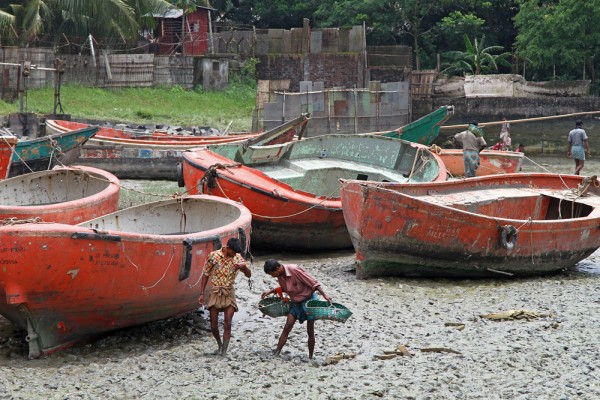
6 more bodies found after pirate attack in Bay of Bengal; toll 27


Six more bodies of the fishermen killed in last week’s pirate attack were recovered from the Bay of Bengal in the last two days, taking the death toll to 27.

Thousands of fishermen living in the coastal villages under Banshkhali upazila have braved the turbulent sea for fishing on engine-run wooden boats all their lives, but the recent attack by pirates has shaken their courage.

They are now thinking of leaving the profession for lack of security.

Fishermen are no strangers to pirate attacks. Many of them have experiences of torture or kidnap in the past, but the brutal killings of so many of their fellows came as a shock they have never known.

No one knows for sure why the pirates had to kill all these fishermen, but relatives say it was perhaps because some of the pirates were known to the fishermen.

Armed robbers on Monday swooped on the fishermen when they were returning home after fishing. The robbers kidnapped 31 fishermen along with two trawlers. The four other bodies are still missing.

Most of the victims are from Guillakhali, Boloimajhirpara, Tekpara and Gondamara villages under Banshkhali in Chittagong. Meanwhile, mourning for the shell-shocked family members, relatives and neighbours of the victims seems never to end.

For Jannatul Ferdous, wife of victim Nur Islam of Tekpara, the trauma is insufferable. Four months ago, her husband had been kidnapped by pirates. He had been released a few days later on ransom of Tk one lakh.

Nur Islam had not gone fishing for the last four months; but he had at his home mouths to feed. And the sea was his only resort to look to for that.

“He was hesitant about going fishing all these months, but necessity forced him to return to the sea,” said Jannatul, who was born and raised in a fisherman’s family.

Before leaving home on Monday, Nur Islam promised to Jannatul that it would be his “last trip to the sea” and that he would find some other work on return.

Those words keep coming back to Jannatul.“I won’t let my son to go fishing on the sea,” she said.

Abdullah, 46, of the same village has lost a brother at the hands of the pirates. Himself a fisherman, he has two more brothers who live on fishing. But Abdullah has seen enough.

“After their return [from the sea] I won’t let them fish again,” he told this correspondent.

NO SECURITY ON SEA

More than three hundred fishing boats go sailing from an area stretching from Farir Mukh Ghat to Sarkarbazar of Shekherkhil. Fishermen say they get no security from any agencies in case of pirate attacks.

Nurul Kabir, a fisherman, says pirates usually kidnap fishermen and demand ransom.

He adds that police can find them by tracking the phone calls of those who demand ransom.

Conducted, Officer-in-charge Kamrul Islam of Banshkhali Police Station said they were looking for the pirates involved in last week’s incident.

Lt Commander Abdullah Yusuf, staff officer of Bangladesh Coast Guard’s east zone, said it was difficult for them to respond to emergency call for help due to manpower shortages.

But, he added, they deployed patrol teams in different areas, including Chittagong Port outer anchorage, Banshkhali, Maheshkhali, Cox’s Bazaar, Kutubdia channel and St Martin’s Island.

Thursday 4 April 2013

http://www.thedailystar.net/beta2/news/6-more-bodies-found-toll-27/

continue reading

Border Patrol seeing immigrant deaths spike in Rio Grande Valley Sector


As warmer temperatures make their way to the Rio Grande Valley, U.S. Border Patrol officials are seeing a rise in the number of immigrants dying amid their quest for the American dream.

In the first three months of 2013, Border Patrol agents in the Rio Grande Valley Sector have encountered the bodies of 70 immigrants who have died trekking through the brush while trying to circumvent checkpoints or who drowned in the waters of the Rio Grande. That compares with 150 for all of 2012, and 66 for all of 2011.

Another dismaying trend is an increase in sexual assaults against immigrants by human smugglers, said Henry Mendiola, Border Patrol spokesman. While the Border Patrol doesn’t have statistics for such attacks, he said field agents have seen an increase in those cases.

“Human smugglers don’t value human life,” he said. “Their victims are just cargo that can be used and sold without any concern for their well-being. They are only thinking of profit.”

‘The elements’

While the Rio Grande proves a dangerous adversary with treacherous currents, the deadlier threat has been the harsh terrain through which many have trekked in an effort to avoid the Border Patrol checkpoints in Falfurrias and Sarita, Mendiola said. Those checkpoints sit along the main highways heading out of the Rio Grande Valley.

“People don’t realize the dangers that come with walking through unknown terrain,” Mendiola said.

Human smugglers typically cram immigrants who have entered the country illegally into stash houses for days, and once there they are given little food or water before they are moved north, Mendiola said. That means that when many set out, they are already malnourished and dehydrated.

“They begin their journey in a weakened state as it is,” he said. “There have been times when we have had to rescue our own agents who have gotten lost and fallen ill from the elements.”

Brushy areas, like the routes many take to get around the Falfurrias checkpoint in Brooks County, hold many hidden dangers, said Rafael Hernandez, the leader of Angeles del Desierto. The rescue group searches for missing immigrants and too often ends up finding their bodies.

Hernandez, who is based in California, began taking a closer look at the Rio Grande Valley in 2012 after receiving numerous calls from people saying their loved ones went missing as they left the Rio Grande Valley.

While the number of immigrants who die along the way continues to climb, the actual numbers may be much higher since bodies are generally found along transited areas or by coincidence, Hernandez said.

“There are large expanses of land in that area that haven’t been searched,” Hernandez said in Spanish.

Hernandez has reached out — unsuccessfully — to various ranchers to get access to their properties to try to bring closure to the hundreds of families that wait for a phone call to learn the fate of their loved one.

“Getting lost, the heat, the wildlife, the lack of water can easily kill a person,” he said.

Thursday 4 April 2013

http://www.themonitor.com/news/local/article_b1526bae-9c11-11e2-b5fb-001a4bcf6878.html

continue reading

Africa: The cost of death


Interesting insight into burial rituals and community impact in Africa:

One family in Nigeria that had to bury their father seven times because he was a prominent man. This is in accordance with tradition.

Six good cows and a goat were slaughtered because the man had six male children and one female child. Each of his children had to conduct his/her own burial ceremony for their late father. This was mandatory and they would otherwise not be allowed to partake in village activities and the villagers would snub the family's future functions.

Cost of living has escalated; multiply that with the global recession and the steep poverty datum line. Poverty is a worldwide pandemic that has seen many governments come to crumble at its stronghold. There is also the issue of bogadi, which is also very expensive to an extent that a wedding has absolutely been a commoditised profit making scheme. To add salt to injury, the cost of dying is also one of those occurrences that leave the family robbed of its wealth within just a week. Insurance companies have also seized this loophole, in a sense that people pay money to subscribe for lifetime policies that will in turn assist them with funeral costs in the future. For some it's a waste of money, its true, but the rich can afford such expensive practices, so as to have prolific and dignified funerals.

Nowadays when somebody dies, the bereaved mourn not only due to the loss but the high cost of the funeral. Families come together for fund raising meetings to meet the cost of the funerals. Some even prefer that the bereaved save some money, which can be used in the event that they pass away. We put ourselves under unnecessary pressure because we are trying to meet societal 'standards' of how a funeral should be. Why spend all that money on someone who is dead when you couldn't lend them a penny when they were alive?

There are many people suffering from different diseases, some in the hospital, some at home, some of them can't even afford drugs but as soon as they are confirmed dead their funerals are turned into a celebration of sorts. In Setswana tradition when someone dies, members of that household will cook for those who come to grieve with them; neighbours, friends and extended family members contribute food and other things to lessen the burden on the bereaved family. However, people start strolling into the bereaved' house all week and expect to be fed breakfast, lunch and dinner! Some can even call you and ask you what variety of food and drinks are on offer, forgetting that death is a time for mourning and not merriment. At the funeral some people wear expensive Armani suits and come to show off their well-established city lives. It's funny when you see some scampering for food, and others taking the meat to their homes while some would even show up with their ravenously-skeletal dogs that often end up fighting and disturbing the services.

Why wasn't that money spent on the deceased while they were still alive, why do we find it hard to celebrate our loved ones while they are still alive? Some communities in the northern part of Africa have banned elaborate ceremonies during burial. One stipulates that if you must 'refresh' attendees, then it must be only tea and bread. That just goes to show how people have suffered concerning high burial costs. It's not only just a waste of money, but resources, time and energy. Just imagine the money, time and space consumed in the name of burial ceremony in most cases. The Anglican Communion in Zimbabwe dioceses has long banned expensive burials. They did it by making sure burials are done on weekdays instead of weekends so as to attract less people that will expect to eat and drink. Also dead bodies get buried within two weeks else the Church will not partake in the burial. Although the church may not have any right dictating how people should bury their loved ones, their primary responsibility is to perform the requiem ritual and go. The deceased's family can opt to bring in a philharmonic band from overseas or rent fleas to mourn their dead, it's their business and not anyone's. However, burials are moments of grief and its completely different from a wedding or birthday celebration, so I see absolutely no reason why it should be ambiguous. It should be as simple as possible, but today its a joyful moment, if there is little cash in the family they say it is shameful.

Thursday 4 April 2013

http://www.mmegi.bw/index.php?sid=6&aid=223&dir=2013/April/Wednesday3

continue reading

Death toll rises in PNG bus crash


he death toll in what local authorities have described as "the worst road accident" in Papua New Guinea's Western Highlands has risen to 25.

Seventeen men, seven women and a toddler were among those killed when a bus they were travelling in ran off a cliff and plunged 50 metres into the bank of a river, 20 minutes drive from Mt Hagan in PNG's Western Highlands province.

33 passengers, all from a village in the district of Baiyer in Western Highlands, were on board the 25-seater PMV bus.

Director for medical services at Mt Hagen General Hospital, Dr Guapo Kiagi, told Radio Australia 23 of the victims died on impact and the driver survived the crash but later died on arrival at the hospital.

One other woman was treated for a ruptured spleen and died this morning.

Seven more people remain in a critical condition and one person has been treated and discharged.

Dr Kiagi says it looks like the driver was severely overworked and had had very little sleep in the days preceding the accident.

It's believed he fell asleep at the wheel.

Locals and relatives say they were heading to the Kagamuga airport in the capital, Mt Hagen, to pick up the casket of a villager who died in the PNG capital, Port Moresby.

PNG's local newspapers, the National and Post Courier, have carried horrific pictures of locals and police retrieving and lining up the remains to identify the bodies.

The National newspaper has reported the Western Highlands Provincial Police Commander, Martin Lakari as describing the deaths as "PNG's worst road accident involving a public motor vehicle".

Local ward councillor Kuri Rani told the National he was supposed to travel on the bus but decided not to at the last minute.

"They are my people from the Epika tribe... and it's a big loss to the rest of my tribesmen," he said.

"We were all travelling into town to pick up a casket and didn't know such a thing would happen."

Police are continuing their investigations into the possible cause.

Several years ago, 17 people died in a similar accident along the same stretch of the road.

Thursday 4 April 2013

http://au.news.yahoo.com/latest/a/-/article/16545524/death-toll-rises-in-png-bus-crash/

continue reading

Now in China’s rivers: Decomposing humans


“Based on our overall measuring results in past years, water quality not only remained normal, but in some cases has even improved,”said Li Lei, deputy environmental bureau chief of Lanzhou, last week.

The reassuring words, carried by aHong Kong newspaper, were in response to a controversy triggered by Shanghai’s Oriental Morning Post, which last October reportedthat since the 1960s at least 10,000 human corpses were found in an 80-kilometer stretch of the Yellow River in and near Lanzhou, the capital of inland Gansu province.

On Thursday, Lanzhou authorities announced that about 100 bodies are retrieved from the Yellow River each year. That figure, however, is well wide of the mark. Just one “body fisher,” Wei Jinpeng,collects about 80 to 100 corpses each year from his spot 18 miles downriver from Lanzhou, and he is just one of many involved in this profitable, but gruesome, trade. The Shanghai paper also reported that in recent times there has been an annual increase of 200 to 300 corpses retrieved in and around Lanzhou.

The presence of decomposing humans in the waterway is not just limited to the area around the Gansu capital. Body fishers work most of the Yellow River, Asia’s second longest, from west of Lanzhou to Shandong province at its mouth.

Corpse-filled waterways in China are not exactly a new problem, yet they have attracted heightened attention in recent weeks because of the dumping of more than 16,000 pig carcasses—many of them disease-ridden—into the Huangpu River, which runs through the middle of Shanghai and provides more than a fifth of the city’s drinking water. Farmers also unloaded more than a thousand lifeless ducks into the Nan River in Sichuan province.

China’s great rivers are becoming morgues for humans, birds, and animals. Wei Jinpeng, the busy Lanzhou body fisher, keeps his inventory of dead people floating in a Yellow River cove facedown until customers buy the remains of their loved ones.

That practice slows decomposition, but it also further contaminates the river. Mr. Li, the Lanzhou environmental official, claims rotting corpses have not affected the water quality of the Yellow River, but his assertions do not ring true. “If these bodies are left untreated in the water to decompose, the ensuing impact of pollution is far more severe than that caused by the dumping of household waste,” states a 2005 report from Daxia Hydropower Company, referring to the Yellow River. An October 2012 article in the semi-official Global Timesdocuments how river water, polluted by human remains and mixed with well water, is unsafe for drinking.

And it is not only the water in the Yellow River, which flows through nine provinces, that is at risk from contamination. Incredibly, bodies, prior to identification, are allowed to float in at least one reservoir in the Lanzhou area.

The Lanzhou government cremates some unclaimed remains and notes it already has procedures to deal with the situation. Yet the reality is that, for the most part, the city turns a blind eye and has done little since 2006, when it promised to crack down on body fishing.

Why the slow response? As Daxia’s 2005 report states, “procedures are complicated to properly dispose of these corpses, so many law enforcement departments are unwilling to get involved in the problem.”

How can law enforcement remain uninterested? The Global Times believes crime accounts for only 5% of the bodies. Lanzhou authorities downplay foul play even more. Huang Xiaoping, the city’s police spokesman, said accidents or suicides were to blame. Of the 417 corpses fished out between 2008 and last year, only two were the result of crimes, he said.

Those statistics fly in the face of circumstantial evidence. “Most of the bodies that are not claimed by relatives are female migrant workers who had moved to Lanzhou,” Wei Jinpeng told McClatchy Newspapers. “Most of them have been murdered.”

The authorities obviously cannot solve a problem they refuse to acknowledge. As a consequence, decomposing humans continue to plague Yellow River communities. Lanzhou officials, for instance, do not in fact stop body fishers from cutting loose unclaimed corpses and letting the current take them away, thereby contaminating downstream water.

In China, the zombies float, not walk.

Thursday 4 April 2013

http://www.namviet.us/blog/now-in-chinas-rivers-decomposing-humans/#.UVzplZP9aCA

continue reading

Bodies recovered in Tibet landslide rises to 66, 17 still missing


Rescuers dug out 66 bodies of the 83 workers buried in a huge landslide at a gold mine in Tibet as China on Wednesday released the names of the victims of which only two were local Tibetans.

Rescuers had pulled 66 bodies out of the debris so far, five-and-a-half days after the landslide swept through workers' camps of the Jiama Copper Polymetallic Mine, official media reported.

The government also released the names, genders and registered permanent addresses of all 83 victims of the landslide.

According to a rescue headquarters statement, 27 of the 83 mine workers who have been confirmed dead or are still buried under rocks and mud were natives of northeastern China's Jilin province and 26 were from the northwestern Shaanxi province.

Thirteen were from southwestern Guizhou province, six were from the neighbouring province of Sichuan, and three were from northeastern China's Liaoning Province.

Two were from a village in Gyangze county of Tibet and two came from the municipality of Chongqing and the remaining four were from provinces of Hebei, Henan, Shandong and Heilongjiang in the mainland.

Of the 83, four were women. The mine is run by Tibet Huatailong Mining Development Co Ltd, a subsidiary of the country's largest gold producer, China National Gold Group Corporation.

Overseas Tibetan groups have accused the company of aggressively carrying out the mining disregarding the environmental dangers. They also accused the government of employing more workers from mainland and few from Tibet.

Thursday 4 April 2013

http://www.hindustantimes.com/world-news/China/66-bodies-retrieved-in-Tibet-landslide-17-still-missing/Article1-1036876.aspx

continue reading

Wednesday, 3 April 2013

Argentina floods: Dozens dead in La Plata and Buenos Aires


Dozens of people have died in the province of Buenos Aires in Argentina after heavy rains caused flash floods.

One of the heaviest storms recorded moved through the province hitting both the capital, Buenos Aires, and the city of La Plata.

In La Plata, between 300mm (12in) and 400mm of rain fell in a few hours.

At least 35 people were killed there, said provincial governor Daniel Scioli, adding that the city "has never seen anything equal" to it.

Mr Scioli said city authorities had been discovering the bodies as the flood waters slowly receded.

At least another six people had died in the city of Buenos Aires on Tuesday.

About 280,000 people remain without power in Buenos Aires province, according to figures given by National Planning Minister Julio de Vido.

"Our job is focused on restoring service, but we're going to wait until the equipment dries to guarantee the safety of the electricity workers, because we don't want any deaths," said Mr de Vido.

Refinery fire

Mr Scioli said that many of those who died in La Plata were drowned or electrocuted after taking shelter in their cars in the suburb of Tolosa.

"We are giving priority to rescuing people who have been stuck in trees or on the roofs of their homes,'' he added.

Some 2,500 people have been evacuated from their homes.

The city's oil refinery was flooded and then had to close due to a fire. YPF, the company which runs the facility, said "an extraordinary accumulation of rainwater and power outages in the entire refinery complex" caused the fire.

In Buenos Aires, one of those who died was a worker for the city's underground system who was electrocuted while trying to pump water from a flooded station.

Buenos Aires Mayor Mauricio Macri said about 350,000 people had been affected by the torrents of rain.

Thousands of cars were carried away by floods and hundreds of families had to be evacuated from their homes.

The city authorities said it was the heaviest April rainfall in a century.

Wednesday 3 April 2013

http://www.bbc.co.uk/news/world-latin-america-22016255

continue reading