Monday, 11 February 2013

5 Chibombo accident bodies remain unclaimed


Five bodies from the Chibombo Post bus accident still remain unclaimed, according to Ndola district commissioner Rebby Chanda.

But police say that 51 people died in the Chibombo accident on Thursday February 7, 2013 and that they had all been identified and accounted for.

On Saturday, authorities in Ndola said they had failed to account for nine bodies out of the over 50 that died in the accident and intensified the search for the said bodies.

But in an interview at Mitengo Cemetery yesterday, Chanda disclosed that out of the nine, four had been identified and family members were sent to Kabwe General Hospital to collect the bodies.

He said the government was still making frantic efforts to have the remaining five bodies identified so that they could be buried together.

"At the moment, what we have is that one victim was buried yesterday Saturday, four will be buried today Sunday and the rest will be buried tomorrow.

The postmortem is going on right now and four children from Arthur Davison Hospital will be transported to Ndola Central Hospital for postmortem while we are still waiting for the other bodies from Kabwe," Chanda explained. Meanwhile, a visit to Mitengo Cemetery found gravediggers preparing the graves in a place secured for burial.

About 31 graves had been prepared by press time while graders were clearing the area as part of the burial preparations.

And police deputy public relations officer Charity Munganga-Chanda stated that they were concerned about the different figures being passed on to members of the public regarding the number of people who died in the Chibombo accident.

She said according to their investigations and records, 51 people died in the Chibombo accident on Thursday, and that they had all been identified and accounted for.

"Twenty bodies were transported to the Copperbelt on the actual day of the accident. One person who was seriously injured died on the way to UTH and the body was deposited in the UTH mortuary. This brings the total number of bodies evacuated on February 7, 2013 to 21.

On February 8, 2013, 26 bodies were again taken from the Liteta and Kabwe mortuaries to the Copperbelt after positive identification by relatives of the deceased persons. The total number of bodies that were transported to the Copperbelt is 46. The body of the person who died on the way to UTH is still lying in the UTH mortuary," Munganga-Chanda stated.

She stated that as of yesterday four bodies were still in Kabwe General Hospital mortuary, adding that one of them was to be buried in Kabwe, while the three awaited confirmation of place of burial by relatives. She stated that the scene of accident was thoroughly combed and searched and that all the bodies were picked from there.

"We wish to reiterate that the total number of people who died on February 7, 2013 is 51 and all the bodies have been positively identified, autopsy conducted and are ready for burial," she stated.

And Central Province division criminal investigations officer Andrew Mbewe said Van eedem Abraham, the Mkushi farmer who is believed to have caused the accident, was still in police custody for security reasons.

Mbewe said even though the offence committed by Abraham was bailable, police did not want to release him because he may not be spared by the general public.

"It doesn't matter whether it's bailable or not.

We don't give bond there and then. Giving a bond is not a must. Bond is just a prerogative of the police, looking at the nature of the offence. We are talking about a multitude of people; if he is released, the general public can't spare him," Mbewe said.

He wondered why authorities in Ndola were saying that nine bodies were missing, saying they were alarming the nation.

And the Anglican Church in Zambia said driving in Zambia had become risky because of careless and indisciplined drivers.

Anglican Archbishop of the Diocese of Northern Zambia most Reverend Albert Chama said many drivers had no courtesy for other road users.

"We are all very sad for the loss of lives in the accident. We will be praying for the families who have lost their beloved ones. The Church has also observed that driving in Zambia can be risky because of many careless and indisciplined drivers. Many such drivers have no respect or courtesy when on the road," Rev Chama said in a statement.

Archbishop Chama hoped and prayed that the authorities tasked to look into the cause of the tragedy would work tirelessly in order to establish what really happened and find ways of avoiding such accidents in future. The church has since urged the Road Transport and Safety Agency (RTSA) and the government to improve all highways and institute stringent measures to deter road traffic offenders.

Monday 11 February 2013

http://www.postzambia.com/post-read_article.php?articleId=30233

continue reading

Bus packed with Muslim pilgrims runs off bridge in Bangladesh, killing at least 17 people


At least 17 people, including five women, were killed and several others injured when a bus carrying a group of Muslim pilgrims plunged into a nearly dry river in south-eastern Bangladesh today, officials said.

The bus carrying 43 people had started from Gazipur on Saturday to join a Muslim spiritual function at Maizbhandari shrine near the south-eastern port city of Chittagong.

The accident happened in Cox’s Bazar district, 296 kilometres south of the Bangladeshi capital.

“Sixteen of them died instantly and a minor boy succumbed to his wounds as he was being rushed to the hospital,” a police official told PTI.

Five of the dead were women and 18 people were injured in the incident, the Daily Star reported.

The bus fell into a dry part of the Matamuhuri river early morning after breaking the railing of Matamuhuri bridge some 30 feet above the sandy river bed.

The police official said most other passengers were critically wounded as the bus plunged into the river. Army troops from a nearby military installation joined the rescue campaign.

The police official said the passengers were residents of suburban Gazipur at the outskirts of the capital Dhaka and they had gone to join the Muslim spiritual function.

They planned to visit the beach retort town of Cox’s Bazar during their journey back to home.

Barua said the bus was carrying 43 people returning from a shrine of a local Muslim saint Mujibur Rahman Maizbhandari.

Road accidents kill about 10,000 people every year in Bangladesh, the government says. Crashes often are blamed on rash driving and faulty vehicles.

Monday 11 February 2013

http://www.startribune.com/world/190625891.html?refer=y

continue reading

103 dead in cattle raid in South Sudan


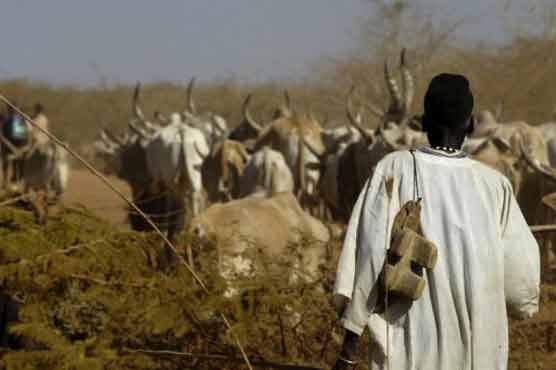
At least 103 are dead in a cattle raid in South Sudan, according to reports.

A heavily armed militia attacked tribesmen during a weekend cattle drive in strife-wracked South Sudan, a government official reported Sunday, leaving behind dozens of dead and possibly kidnapping hundreds of others.

Unarmed civilians “were murdered in cold blood” while herding their livestock to camps along the Sobat River, near the Ethiopian border, Akobo County Commissioner Goi Jooyul said in a statement on the attack. He identified the assailants as members of the Murle ethnic group and the victims as the Lou Nuer, two factions that have been battling over grazing lands and water rights in the world’s newest nation.

The attackers overwhelmed government troops who were guarding the herders, killing 14 of them, Jooyul said. In all, 103 bodies had been found and hundreds of families were missing, he said.

“The survivors have narrated use of heavy weaponry including RPGs by the assailants and use of spears and machetes by some,” he said. Meanwhile, he said poor roads were hampering the search for those still missing, including an undetermined number of children, as well as thousands of head of cattle.

The Murle-Lou Nuer conflict is centered in Jonglei state, which borders Ethiopia. Sporadic attacks have persisted despite a peace accord signed in May, Jooyul said.

South Sudan became independent in July 2011. In January 2012, the central government declared Jonglei a humanitarian disaster area and called for international assistance in restoring security.

Monday 11 February 2013

http://wtvr.com/2013/02/10/103-dead-in-cattle-raid-in-south-sudan/

continue reading

Russia coal mine explosion kills nine in Komi region


An underground explosion at a coal mine in the Komi region of northern Russia has killed at least nine miners, officials say.

Rescuers are searching for eight others feared trapped underground. About 250 miners escaped to the surface.

The explosion at the Vorkutinskaya mine is thought to have been the result of a methane gas build-up.

Accidents are frequent in Russia's huge coal mining industry despite recent efforts to improve safety.

The coal mine outside the city of Vorkuta in the Russian Arctic is operated by the steel-making giant Severstal.

Monday 11 February 2013

http://www.bbc.co.uk/news/world-europe-21409680

continue reading

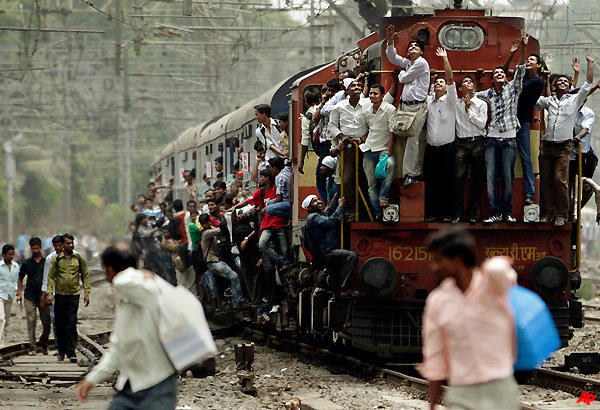
Update: Death toll risen to 36 in Allahabad train station stampede


Officials say the death toll from a stampede during a Hindu festival in northern India has risen to 36.

Medical superintendent Dr P Padmakar of the main state-run hospital said Monday that at least 30 other pilgrims were injured in the crush at the main rail station in the pilgrim city of Allahabad.

Twenty-seven of the dead were women, mostly elderly and poor. An eight-year-old girl was also crushed to death. A Reuters witness saw a woman weeping at the train station, surrounded by six bodies dressed in brightly colored saris. Tens of thousands of people were in the station when a section of a footbridge there collapsed, leading to the stampede late on Sunday.

Indian railway minister Pawan Bansal said the stampede happened in the Allahabad train station on Sunday evening. News reports said tens of thousands of people were in the station when a section of a footbridge there collapsed, leading to the stampede.

Television showed large crowds pushing and jostling at the train station as policemen struggled to restore order.

"There was complete chaos. There was no doctor or ambulance for at least two hours after the accident," a witness told NDTV news channel.

An estimated 30 million Hindus were expected to take a dip at the Sangam, the confluence of the Ganges, the Yamuna and the mythical Saraswati rivers on Sunday, one of the holiest bathing days of the Kumbh Mela, or Pitcher Festival. The festival lasts 55 days and is one of the world's largest religious gatherings.

The auspicious bathing days are decided by the alignment of stars, and the most dramatic feature of the festival is the Naga sadhus ascetics with ash rubbed all over their bodies, wearing only marigold garlands leaping joyfully into the holy waters.

According to Hindu mythology, the Kumbh Mela celebrates the victory of gods over demons in a furious battle over nectar that would give them immortality. As one of the gods fled with a pitcher of the nectar across the skies, it spilled on four Indian towns_Allahabad, Nasik, Ujjain and Haridwar.

The Kumbh Mela is held four times every 12 years in those towns. Hindus believe that sins accumulated in past and current lives require them to continue the cycle of death and rebirth until they are cleansed. If they bathe at the Ganges on the most auspicious day of the festival, believers say they can rid themselves of their sins.

Deadly stampedes are common at India's vast pilgrimages and religious festivals. In 2008, 145 people died when a panicking crowd pushed people over a ravine near the Himalayan temple of Naina Devi. Thousands of police and volunteers are used for crowd control during the Kumbh Mela, manning the river bank when the pilgrims and naked, dreadlocked ascetics dash into the water to bathe. The festival has its roots in a Hindu tradition that says the god Vishnu wrested a golden pot from demons containing the nectar of immortality. In a 12-day fight for possession, four drops fell to earth, in the cities of Allahabad, Haridwar, Ujain and Nasik. Every three years a Kumbh Mela is held at one of these spots, with the festival at Allahabad the holiest of them all. The festival grows in size every time it is held and is considered the world's largest temporary gathering of people. Officials said some 30 million visited the site on Sunday, considered the most auspicious day to bathe in the river. More than 2,000 years old, the festival is a meeting point for Hindu "sadhu" ascetics, some of whom live in forests or Himalayan caves and who belong to dozens of inter-related congregations. The sects have their own administration and elect leaders, but are also known for violent clashes among themselves. Monday 11 February 2013

http://www.guardian.co.uk/world/2013/feb/10/allahabad-train-station-stampede

continue reading

Sunday, 10 February 2013

Ten killed in stampede at Kumbh Mela festival India


At least 10 people were killed and a dozen more injured Sunday after a stampede broke out at a train station in the northern Indian town where millions of devout Hindus gathered for a religious festival, a senior government minister said.

Pawan Bansal, India's Railway Minister, told reporters that the stampede took place as massive crowds flooded the Allahabad train station on Sunday evening.

At least two television channels, NDTV and CNN-IBN said as many as 20 people were feared dead and 30 others injured. News reports said the large crowds caused a section of a footbridge at the station to collapse leading to the accident.

News reports said tens of thousands of people were at the train station at the time. Television showed large crowds pushing and jostling at the train station as policemen struggled to restore order.

"There was complete chaos. There was no doctor or ambulance for at least two hours after the accident," an eyewitness told NDTV news channel.

An estimated 30 million devotees were expected to take a dip at the Sangam, the confluence of 3 rivers - the Ganges, the Yamuna and the mythical Saraswati - on Sunday, 1 of the holiest bathing days of the Kumbh Mela, or Pitcher Festival. The festival lasts 55 days and is 1 of the world's largest religious gatherings.

The auspicious bathing days are decided by the alignment of stars, and devout Hindus believe a dip in the sacred river on 1 of these days will wash away their sins and free them from the cycle of death and rebirth.

The festival brings together millions of devout worshipers and thousands of religious leaders and ascetics.

The most dramatic feature of the festival is the Naga sadhus - ascetics with ash rubbed all over their bodies, wearing only marigold garlands - leaping joyfully into the holy waters.

According to Hindu mythology, the Kumbh Mela celebrates the victory of gods over demons in a furious battle over nectar that would give them immortality. As 1 of the gods fled with a pitcher of the nectar across the skies, it spilled on four Indian towns_Allahabad, Nasik, Ujjain and Haridwar.

The Kumbh Mela is held four times every 12 years in those towns. Hindus believe that sins accumulated in past and current lives require them to continue the cycle of death and rebirth until they are cleansed. If they bathe at the Ganges on the most auspicious day of the festival, believers say they can rid themselves of their sins.

Sunday 10 February 2013

http://www.wafb.com/story/21094124/millions-of-hindus-bathe-in-ganges-to-cleanse-sins

continue reading

Ndola Mass Burial for 36 Set for Monday


Copperbelt minister Mwenya Musenge has said 36 bodies of the Zampost Bus accident will be buried in Ndola on Monday at a mass burial.

Five bodies will be buried in Lusaka, one in Mansa, one in Nakonde and three bodies in Kabwe.

Most of these people are residents of Ndola where the bus was coming from to Lusaka, the Zambian capital when it collided head on with a truck in Chibombo.

Our Copperbelt Correspondent described the situation in Ndola as sad saying the city was in mourning. It is sad, the funerals are being held in the city’s townships and the mood is solemnly as you drive around Ndola, Zambian Eye Copperbelt province Correspondent said Saturday evening.

Musenge said the church service will be held on Monday at Levy Mwanawasa stadium then burial will later take place at Mitengo cemetery.

He said the burial date was agreed upon after government discussed with relatives of the family on the day of burial.

He said one of the accident victims, Margaret Chilufya, was a relative of President Michael Sata.

The Zambia Postal Services has since agreed to meet all the funeral expenses including the buying of caskets.

Starting from Sunday 6am, President Michael Sata has declared a three days National Mourning in honor of the victims. During this period the flags will fly at half mast and all programmes of entertainment nature will be suspended.

Sunday 10 February 2013

http://zambiareports.com/2013/02/10/ndola-mass-burial-for-36-set-for-monday/

http://zambianeye.com/?p=5291

continue reading

Ayacucho remembers its long years of suffering


They say the past is a distant land and people are different there.

But Adelina Garcia Mendoza recalls the events of Dec. 1, 1983, as if they were part of a film that’s unreeling still, as if she were the same woman she was then — a young wife and mother, just as helpless, just as afraid.

“I remember it all as if it were a moment ago,” she says.

Those were terrible times, the long, dark years of the 1980s and early ’90s, when this handsome colonial town high in the central Andes of Peru was haunted by two murderous forces — an eerie Maoist insurgency known as Sendero Luminoso, or Shining Path, pitted against the Peruvian police and military.

Now a woman of 50, with her long black hair streaked with filaments of grey and pulled back from her bronze, oval face, Garcia huddles at a small wooden table on the second floor of a building that houses the aptly named Museum of Memory. The structure stands on a street called Liberty in the western reaches of Ayacucho, the city where the Shining Path was born, where it thrived for more than a decade, and where it finally collapsed amid a poisoned legacy of murder, grief and enduring loss.

Just now, Garcia is recalling the night three decades ago when Peruvian soldiers in balaclavas burst into the home she shared with her husband and their two infant daughters at 282 Avenida Arenales.

“The wounds suffered by the people were very hard, very sad. Even now, the people haven’t escaped this situation. There are indelible memories.”

It was after midnight, a curfew was in force, and Garcia and her family were asleep in their beds.

The soldiers seized her spouse of four years, a self-employed welder, aged 27. His name is Jose Zosimo Prado, or at least it was. They muscled him out of the house.

“The soldiers hit me when I tried to grab him,” Garcia says. “We couldn’t follow them because of the curfew. We couldn’t go in the street.”

And so her husband joined the growing ranks of los desaparecidos.

The disappeared.

It is a defining trait of this benighted species that, when they vanish, they vanish forever, and Garcia has never seen her husband again.

She insists he took no part in subversion. She believes some neighbours must have denounced him — out of jealousy or spite — and the soldiers did the rest.

Tens of thousands of innocent people were killed during those years, in Ayacucho or the smaller towns or villages scattered across this lofty hinterland. Some of the bodies have been found and identified. Thousands more are missing still, and their fate continues to engender a special category of suffering.

Like Ayacucho itself, Garcia is trapped between an unresolved past and an uncertain future.

In the years since her husband disappeared, the population of her city has nearly doubled, and life is peaceful now, although troubles persist.

Poverty remains widespread; transportation routes are better but still inadequate; industry is non-existent; and it’s a rare foreign tourist who finds his way here.

That’s a shame, for Ayacucho is a stately city graced by more than 30 churches, where sturdy stone porticos and clay-tile roofs surround an airy plaza ornamented by jacarandas, pepper trees and palms. Steep green hills rise on all sides.

You would not guess that this was once a place of terror and bombs, of torture and death.

“The wounds suffered by the people were very hard, very sad,” says Amilcar Huancahuari Tueros, the mayor of the city. “Even now, the people haven’t escaped this situation. There are indelible memories.”

Late last month, white coffins containing the remains of 78 victims of the conflict were turned over to family members in a daylong ceremony in Ayacucho. The dead included pregnant women, children and seniors, whose remains were found in more than 50 mass or individual graves in the district of Chungui.

Established in 1971, the Shining Path was originally a faction of Peru’s Maoist-line Communist party. Its founder and leader was a 42-year-old philosophy professor named Abimael Guzman, who taught at the University of San Cristobal de Huamanga in Ayacucho and initially trolled for acolytes among the school’s students and faculty.

Better known by his nom-de-guerre — Presidente Gonzalo — Guzman had a grandiose vision of himself and his cause, holding himself up as the fourth pillar of world revolution, in a league with Marx, Lenin and Mao Zedong.

In 1975, Guzman and his followers launched the clandestine phase of their struggle, melting into the slums of Ayacucho or fanning out into the impoverished hamlets in the surrounding hills, to proselytize among the urban poor and the rural peasantry.

Five years later, just as Peru was returning to democratic rule following 12 years of military dictatorship, the Shining Path emerged from the shadows, launching an armed guerrilla struggle against the newly established authorities.

Harsh, murderous and relentlessly destructive, the rebels soon squandered whatever early sympathy they may have enjoyed. Worse, their armed campaign provoked the government into acts of equal violence.

In 1983, Lima sent in the armed forces, clamping Ayacucho and the surrounding region under martial rule.

The result was a two-sided horror story, with the senderistas on one side, the military on the other, and the mainly indigenous population caught in the middle.

“It was very hard to distinguish one side from the other,” says Humberto Hernandez Arribasplata, now rector of the university in Ayacucho. “I couldn’t say this side did more, that side did less. Both sides invaded and destroyed.”

On Jan. 26, 1983, a group of eight Peruvian journalists — most of them from newspapers in Lima — travelled from Ayacucho to an outlying village called Uchuraccay, home to roughly 400 people.

For reasons that are still fiercely debated, some of the villagers turned on the journalists, hacking and bludgeoning them to death and then burying their bodies and their equipment.

The eight were among the first fatalities of the conflict who hailed from outside this isolated region, and their deaths shocked people all over Peru and captured the attention of newspaper readers and TV audiences in other parts of the world. Something sinister — and very deadly — was happening in Peru.

The focus of the trouble remained fixed in the central Andes, with Ayacucho at its epicentre, but the killings and sabotage, the terror and suspicion, soon spread to other parts of the country. Here in Ayacucho, death became an intimate affair.

At the military garrison by the airport at the edge of town — a facility then known as Cuartel los Cabitos — soldiers installed four large ovens, which they used to cremate the bodies of those they’d tortured and killed, including children.

According to Hernandez, the university rector, portions of more than 500 bodies have so far been discovered buried beneath the land adjoining the garrison. Only about 50 have so far been identified, he said.

Maybe some of those bones belong to Adelina Garcia’s husband, but nobody knows.

In the weeks following his capture, Garcia made repeated forays to the garrison to plead for information. She learned nothing. Three weeks after her husband vanished, she heard that some human cadavers had turned up in a village not far from Ayacucho. She and others hurried there.

“We found five dead, all nude,” she says now. “We couldn’t recognize the faces.”

She knew her husband had a large scar on his right leg, and she searched frantically for that.

“But I didn’t find him,” she says. “I have never found him.”

In the ensuing years, Peru has managed to put a portion of its nightmares to rest.

Guzman, the Shining Path founder, has been behind bars since 1992 — an old and bilious man now, cursed with chronic psoriasis. In 2003, a government-appointed tribunal called the Truth and Reconciliation Commission presented its final report — 12 volumes in all — confirming that at least 69,280 lives were lost in what commission chairman Salomon Lerner called a time “of horror and disgrace for Peruvian society and the state.”

Nowadays, memorials to the dead abound, including innumerable plaques, as well as the modest gallery — the Museum of Memory — in Ayacucho.

In Lima, the Peruvian government constructed a more ambitious museum devoted to those times. The finished project, occupying the sixth floor of the Ministry of Culture headquarters, is both chilling and unnerving.

Despite these efforts, the pain and suffering of people such as Adelina Garcia persist.

Like thousands of others, she wants to ensure that what happened years ago in these remote mountains will never be forgotten. As president of a national organization that represents the families of the dead and disappeared, Garcia is also pressing for what she calls a “dignified indemnity” to compensate the families of those who died or disappeared.

The money would undoubtedly help, but it would not drain the sorrows that still haunt these lands. It would not remake the future. It would not erase the past.

“We are always going to have this pain,” Garcia says, “especially the families of the disappeared.”

Sunday 10 February 2013

http://www.thestar.com/news/world/2013/02/10/peruvian_city_of_ayacucho_remains_a_museum_of_memory_and_sorrow.html

continue reading

Five dead on Canary Islands cruise ship


Five crew have been killed after a lifeboat they were in fell from the Thomson cruise ship Majesty while it was docked in the port of Santa Cruz de la Palma in the Canary Islands.

The accident happened during a routine safety drill at about 12:00 GMT. Three others were also hurt as the lifeboat fell into the sea, trapping occupants.

Those killed include three Indonesians, a Filipino and a Ghanaian.

The MS Thomson Majesty is operated by UK-based Thomson Cruises.

The UK Foreign Office said it was aware of the incident and was "urgently investigating".

No passengers were involved in the accident, local reports say.

Sunday 10 February 2013

http://www.bbc.co.uk/news/world-europe-21403419

continue reading

Turkey: Search For Sierra Turns Spotlight On Families Of Missing People


The Turkish police last week performed excellent work in their operation to locate missing US tourist Sarai Sierra, whose body was found near the ancient city walls of Istanbul, causing much agony to her family but also affording them closure.

To much media hype, the search for Sierra was carried out with great care and effort, with the police going through hours of footage from city and private security cameras to trace Sierra down, following every single clue as to her whereabouts, which caused some Turkish columnists and Internet users to express feelings of resentment, in a country where thousands have disappeared at the hands of the authorities.

But not all missing person cases have a political background and last week during the search for the missing woman, one search party stood out from the crowd. The Association of Families of Missing People (YAKAD) also aided in the search efforts, putting up posters for the missing US woman and passing out flyers bearing her photograph.

The association publicly said it would look for Sierra as it would for a missing person of their own family, and did its best until the search ended tragically with the discovery of the unfortunate woman's body. But do the police, which mobilized all of their resources to find the US visitor, take the same effort when searching for others? And if not, has this caused any bitterness among people who have been looking for missing family members for years?

"This caused some resentment in society; there were comments on social media. But we don't discriminate on the basis of nationality. To whomever this happens, we do the same thing. Sarai Sierra's family suffered a lot, and as families of missing people, we felt their pain," said Zafer ร–zbilici, the president of YAKAD, which was established by his father when the family's second son, his brother, went missing years ago. "Sarai Sierra is a daughter of ours, too. The treatment she received, the immense effort, was absolutely right. This is how it should be for all missing people. This is how we should be looking for them."

Laws obstruct searches

Although the way the authorities generally handle cases of missing people is far from the special care shown to Sierra's case, there have been some improvements in the past few years in YAKAD's experience. Technological instruments are increasingly being employed in the search for the missing, particularly since the much-publicized incident of the three children who went missing in Kayseri in 2009.

Their tragic fate was found out only in 2011 when their bodies were discovered buried near a lake in the province after months of intense searching. Their killer, who raped one of the children before the murders, was also captured in 2011. However, even in the case of the Kayseri children, the police did not work as meticulously as they did towards the end from the start. "When a child is missing, if they are kidnapped or found by a pedophile, their rape and murder usually take place within the first hour after they go missing. A rapid response system should be set up," said ร–zbilici.

"The concept of a 'missing person' should be in the law," the YAKAD president said, noting that current legislation at times works against carrying out a speedy search. For example, obtaining permission from the prosecutor to track down cellphone signals can take up to a week, which might be too late in some cases. He also said that Turkey lacked a crucial resource: a region-based sex offender registry, which can be life-saving in cases of missing children. "In cases of missing children, all parties should act as they would in the case of an extraordinary situation," he said.

According to ร–zbilici, 9,000 children go missing in Turkey in a year. He stated that even the police can run up against obstacles due to loopholes in legislation. For example, there is no law forcing private cellphone network operators to share communications information about a missing person if it is requested on a weekend or a holiday.

He said the only recognition of missing people in law is when a family, which has given up their search after an extended period of time, can apply for a status called "gaiplik" in Turkish law, which falls slightly short of a dead in absentia certificate. For legal matters, the missing person is presumed dead but their rights are reserved in case they return, which is extremely rare.

ร–zbilici also noted that about 3,000 missing people are currently in the police's missing persons database, which can be viewed online, but added that the statistics are not reliable.

Pinar Bozkurt, whose sister went missing on the morning of Feb. 5 but turned up the night of Feb. 6, said as much as she was relieved to have her sister back, the police hadn't been helpful at all. "They said we had to come back in 48 hours. We had to ask a friend to crack her ask.fm and Facebook passwords to track her down," she said. Bozkurt said: "If that was the child of a police officer or a judge, would they still act with such indifference? I think not."

ร–zbilici said it was a common misconception that a certain period of time needs to elapse before a missing person's report can be made. Of this family, he said: "Possibly, the police officer they talked to at the station wasn't a Missing Persons Department officer. I am surprised though that this misconception still exists. We used to hear about a 24-hour gap needed for filing reports, but this isn't true either." He said 90 percent of the people reported missing usually turn up later, and the police might sometimes act dismissively based on these figures.

Mehmet Halil Gรผldรผren has been looking for his son, Harun Gรผldรผren, for the past 15 years. Harun went missing in 1997 in Gรผmbet, located near the town of Bodrum. "He went to Gรผmbet for work. He disappeared. We put up his photos everywhere, at every police station in Bodrum." Gรผldรผren, who is still actively looking for his son, who should be 34 years old now, said he couldn't complain about the work the police have done and said the officers he is currently in touch with are very helpful. But when asked about if he could confidently say that the local police in Bodrum did their best to help, at least initially, he said: "We couldn't find any clues. We couldn't get any information."

YAKAD has been in contact with deputies in Parliament to push for better laws to assist in cases of missing people. They have even tried getting dairy manufacturers to print photos of missing people on milk cartons as happens in some other countries, but companies have been reluctant and public campaigns without the help of legislation forcing companies or other agencies to share information about missing people are difficult to organize. However, lawmakers seem to be reluctant to address the issue, ร–zbilici noted.

"The pain of looking for a missing loved one is worse than the pain of losing a loved one," ร–zbilici said, adding that families of missing people, for lack of closure, commonly had to deal with various psychological issues.

"What happened to Sarai Sierra could happen to anyone. The risk of having a loved one go missing is something that is present at all times," ร–zbilici noted as a reminder.

Sunday 10 February 2013

http://en.haberler.com/search-for-sierra-turns-spotlight-on-families-of-254386/

continue reading

5 Dead After Costa Rica Motel Fire


Five people died and another two were injured Friday when a small motel burned down in the rural community of Puriscal, some 40 kilometers (25 miles) west of the Costa Rican capital.

All the victims were people aged between 50 to 70 years. Two more people were badly burned and taken to hospital.

The Health Ministry said that on Dec. 19 he declared the Las Aguilas Motel uninhabitable due to the disrepair of its wooden construction and electrical system, and set Jan. 30 as the latest date for shutting it down, but the owner, who is wanted by police, refused to close it.

The fire began at 1:24 a.m. local time (0724 GMT), apparently from a short circuit, and spread rapidly, fire chief Hector Chaves said.

The motel guests had little time to escape, Chaves said, adding that one of the bodies was found just a few meters (feet) from the exit.

The injured were taken in grave condition to hospitals in San Jose.

Las Aguiles Motel was surrounded by a number of tents that were also damaged by the fire, which took two hours to put out. Residents told the media that the motel owner escaped across the roofs of neighboring establishments.

Sunday 10 February 2013

http://www.hispanicallyspeakingnews.com/latino-daily-news/details/5-dead-after-costa-rica-motel-fire/21994/

continue reading

At least six dead after torrential rains and floods in Arequipa, Peru


At least six people have been killed after torrential rain in the southern Peruvian city of Arequipa caused flooding, inundating hundreds of homes.

Authorities reported that three of those who perished were found trapped in their vehicle in high water on a flooded road underneath a bridge, presumably having driven in not knowing the depth of the water.

A regional meteorologist quoted by the Andina state news agency said nearly 12.3cm of rain fell on Arequipa, the country's second-largest city, during a seven-hour period that began on Friday afternoon.

Police officer Cesar Villegas told The Associated Press on Saturday that homes were destroyed and cars flipped over by surging floodwaters in the city of 800,000 residents.

Video broadcast on Peruvian television showed muddy torrents tearing apart dirt streets.

Regional Governor Miguel Guzman said at least two bridges have collapsed and several outlying towns were cut off.

Sunday 10 February 2013

http://www.aljazeera.com/news/americas/2013/02/20132103251746617.html

continue reading

Mumbai Government Railway Police failed to identify 1,111 bodies in 2012


The Mumbai Government Railway Police (GRP) failed to identify 1,111 unclaimed bodies out of 3,541 found on railway premises in 2012. The bodies included those of beggars and drug addicts. This means a little less than one third remained unidentified and were later disposed of.

According to the GRP, Kalyan (157), Kurla (143), Thane (103) and Vasai (103) reported the highest number of unclaimed bodies.

Every year, thousands migrate to Mumbai, with many of them settling near religious places or on railway premises. They more often than not face starvation and suffer from malnutrition or some other illnesses.

“When we come across the body of an unidentified person on railway premises, we take a photo of the deceased and, along with his/her detailed description, circulate it to all police stations across the state, control rooms of other states, and also broadcast it via Doordarshan and publish it in newspapers to trace the person’s relatives. While we wait for a claimant to turn up, the body is kept in the morgue of a government or civil hospital for eight days,” said a railway police officer. If it remains unclaimed for long, the railway police dispose of it, he added.

Saying it was a challenge to trace the relatives of a beggar or drug addict, deputy commissioner of police, railway, GS Bhandare said, “Thanks to the GRP’s efforts, the number of unclaimed bodies has dropped from 1,392 in 2008 to 1,111 in 2012.”

He added that the Mumbai GRP commissioner Prabhat Kumar launched the website http:// shodh.gov.in in June 2012 to trace the identity of accident victims found on tracks. People can search for missing people by giving their physical description on the website.

Railway activist Sameer Zaveri, who filed a PIL in the Bombay high court in 2008 in this regard, said, “As per the HC’s direction, the Western and Central railways in January 2011 started a website to post details of the accidents where the public are given all details of the victim.”

Saturday 9 February 2013

http://www.dnaindia.com/mumbai/report_last-year-grp-failed-to-identify-1111-bodies_1797204

continue reading

65,000 Soldiers For ‘DNA Banking’


Soon, the ever-popular ‘Unknown Soldier’ and mass burial resulting from the inability of medical personnel to identify members of the Nigerian Armed Forces, who die in certain circumstances would be consigned to history with the introduction of latest medical technology.

The Defence Headquarters (DHQ) has built a molecular laboratory complex, the DNA Banking and Analysis Centre in Abuja, which would be commissioned before the end of March.

A member of the DHQ visiting team to the Federal Institute of Industrial Research (FIIRO), Oshodi, Lagos, Lt. Commander Livinus Ukachukwu of the DNA Centre, said mass burial and the inability of medical personnel to identify the exact identity of soldiers, who die on active service in the Nigerian Armed Forces, would now be solved with advancement in science and technology.

Ukachukwu said after the Potiskum carnage in which a military truck conveying soldiers on their way back to base, collided with a fuel truck was burnt and the men beyond recognition, a committee was set up to determine the best way to identify deceased persons.

The committee, he revealed, came up with the recommendation that led to the establishment of the laboratory.

For optimal usage of the centre, Ukachukwu disclosed that about 65,000 soldiers already have their DNA materials in the Centre’s bank from which any necessary identification would be carried out.

He said other services that can be offered, even to the public; include proof of paternity, forensics with respect to criminal matters and researches as deemed necessary by the Army Command.

Saturday 10 February 2013

http://www.ngrguardiannews.com/index.php?option=com_content&view=article&id=113006:65000-soldiers-for-dna-banking&catid=1:national&Itemid=559

continue reading

Saturday, 9 February 2013

Proposed mass burial of Baldia fire victims slammed

Speaking at the press conference, organised by the Pakistan Institute of Labour Education and Research (Piler) at the press club on Thursday, they demanded that the payments be made through a commission set up by the Sindh High Court and headed by retired Supreme Court judge Rehmat Hussain Jaffery.

Karamat Ali of Piler, Nasir Mansoor of the National Trade Union Federation and trade union leaders Noor Mohammad, Nawab Ali and Rehana Yasmeen criticised Sindh Health Minister Sagheer Ahmad over his reported statement that the bodies being kept in the Edhi morgue would be buried together. They questioned the move for mass burial of the bodies through the district administration. They asked the government to decide about the burial of the bodies in consultation with the Sindh High Court and the commission it constituted.

Despite conducting DNA tests thrice and waiting for so long, they said it was unfortunate that the bodies had still not been identified, indicating weaknesses in the country’s DNA testing system.

They demanded that the government compensate the relatives who had provided their DNA for testing. Twenty two families who had received the bodies should be immediately provided compensation without further loss of time, they said. They explained that about 262 workers had lost their lives on Sept 11, last year. While relatives of 210 deceased had received compensation cheques, the heirs of 22 victims who received their bodies later were not handed over compensation cheques, they said.

Yet another 17 bodies being kept at the Edhi morgue had not been identified, they added.

They said the factory owners must have a record of all the workers. That record should be recovered to determine the exact number of workers in the factory, they added.

The speakers criticised the Employees Old-age Benefit Institution (EOBI) for providing to the families the pension documents that were valid for five years only. They demanded that the families of all the victims should be given lifelong pension.

They also demanded that the compensation amount given by the government, factory owners, certification authorities and a German company, KIK, should be pooled for permanent rehabilitation of the families of the factory fire victims.

They further demanded that Justice Qurban Alvi’s commission report be made public.

The speakers also noted that the promise made by the prime minister about payment of death grant from the workers’ welfare fund had not been fulfilled.

Saturday 9 February 2013

http://dawn.com/2013/02/09/move-for-mass-burial-of-fire-victims-slammed/

continue reading

Six people Killed in Landslide in Tibet Autonomous Region


Six people, part of a rescue team, were killed in an avalanche in southwest China's Tibet Autonomous Region, Chinese Ministry of Civil Affairs said on Friday.

The six victims were members of a rescue team that was on their way to rescue two herdsmen.

The team consisted of seven local residents in a village in the Zanda County of Ngari Prefecture.

The other villager in the rescue team is currently in a deep coma, state-run Xinhua news agency reported.

Saturday 9 February 2013

http://zeenews.india.com/news/world/six-killed-in-avalanche-in-tibet_827850.html

continue reading

Chibombo Tragedy bodies await Identification


37 out of the 47 brought in dead (BID) cases from the Chibombo tragedy lying at Kabwe general hospital mortuary have been identified and efforts are being made for relatives to collect the bodies, and hospital authorities have called on relatives and members of the public to help identify the remaining bodies.

And Police have arrested the driver of the Toyota Landcruiser ABH 2214, believed to have been the lead cause of the accident in which 51 people died, the vehicle has also been impounded pending further investigations.

On Thursday around 07:00hours, a Lusaka bound Post bus Mercedes Benz registration number ABV 4020 collided with an oncoming Mercedes Benz foreign truck registration number 1791AB05 belonging to Hermis Trucking company killing the drivers of both vehicles and other passengers on the spot.

47 bodies were taken to Kabwe general hospital mortuary, where as the two other survivors also at the same hospital are said to be in a stable condition. Hospital acting medical superintendent Dr. Sylvester Kasonde disclosed to the Daily Nation in Kabwe that the 2 male victims suffered fractures and lacerations but their condition was stable.

“We received 47 BID cases and two survivors, whose condition is stable but we would like to call upon relatives and members of the public to help identifying the other 10 remaining bodies, so far 37 have been identified and arrangements are being made to have the bodies collected by relatives for onward burial,” said Dr. Kasonde.

Meanwhile central province police division criminal investigations officer (DCIO) Andrew Mbewe has revealed that a white man, the driver of the Land cruiser believed to have been the lead cause of the accident has been arrested.

“We impounded the vehicle and arrested a man whose identity I can only give as Mr. Eeden of Mkushi and he is currently detained at prospect police pending further investigations,” said Mbewe. It is suspected that Eeden, while driving the land cruiser attempted to overtake the bus wrongly but met the truck and as the truck driver tried to avoid hitting into him, lost control of the truck which eventually collided with the bus carrying over 65 people.

And Central province Alliance for Democracy and Development (ADD) chairman Fredrick Mulando says his party is saddened by the death of so many people at once and has called for quick traffic reforms by RATSA, if more deaths are to be avoided.

Saturday 9 February 2013

http://zambiadailynation.com/2013/02/09/chibombo-tragedy-bodies-await-identification-police-arrest-landcruiser-driver/

continue reading

At least 15 dead in Chile bus accident


At least 15 people were killed and 19 injured on Saturday when a bus carrying soccer fans plunged into a ravine in central Chile, a local official said.

The accident occurred near the town of Tome, in Biobio province, at about 1:00 am (0400 GMT), said Luciano Parra, a spokesman for the Tome mayor's office.

"The information that we have right now shows that, unfortunately, 15 people did not survive, and 19 others were injured," Parra told 24 Hours, a television news channel.

"Seven of those injured are in critical condition at the regional hospital," he added.

The bus was carrying soccer fans from a game that was played the night before in the town of Talcahuano to their home town of Rancagua.

Parra said rescue teams had rushed to the scene but the fall had transformed the bus into a mangled mass of metal, slowing down the rescue process.

Police officers and firefighters were forced to extract survivors one by one, using saws, pliers and other equipment. The exact cause of the accident is being investigated.

Tome is located about 500 kilometers (310 miles) south of the capital Santiago.

Saturday 9 February 2013

http://sg.news.yahoo.com/least-15-dead-chile-bus-accident-150413811.html

continue reading

Floods wash up bodies from the killing fields


Local people who've recently travelled into Sri Lanka's killing fields, where an estimated 40,000 people perished in 2009, say skulls and human bones have risen to the surface after this year's flooding and abandoned belongings are strewn all over the landscape. "It is a horrible scene," said one visitor, "there are still bunkers visible with saris, kid's clothing and suitcases left open under the bushes; you can't imagine what it must have been like for those people to have been crammed into that tiny place so close together". This man was too scared to go close or collect the human remains lest there were mines or unexploded ordinance.

Mullivaikkal is the coastal village where the Tamil Tigers made their last stand in May 2009, along with more than 150,000 starving terrified Tamil civilians. It's synonymous with the worst suffering and slaughter of the decades long conflict - the Srebrenica of Sri Lanka. It's here that war crimes and crimes against humanity were committed, according to UN experts.

The photographs show the last belongings of people who may well be dead now. By the time they reached this sandy spit of exposed land, some had already been displaced 40 times in five months. They'd shed almost everything they owned and expected to die. A Catholic priest writing to the Pope in the final days reported more than 3000 deaths and 4000 injuries in just one night: "It was a barrage of artillery, mortar, multi-barrel shelling and cluster bombs, which Sri Lankan government denies using on the civilians in the 'no fire zone'.

The cries of woes and agony of the babies and children, the women and the elderly fill the air polluted by poisonous and unhealthy gases and pierced the hearts of fathers and mothers, of elders and peasants, of old men and women of all walks of life".

The priest disappeared without trace after being seen by many witnesses surrendering to the army.

For the last three and a half years, Mullivaikkal has been off limits - strictly controlled by the Sri Lankan military. Even today locals say there are large numbers of police and army personnel who operate in pairs on motorbikes stopping anyone straying from the main roads. Visitors say local residents are terrified to talk about politics to outsiders. Widows are particularly vulnerable to sexual abuse; some in isolated areas described being visited and questioned by male security officials.

Sri Lanka's war zone area has partially opened up so survivors can return home, but also to enable a macabre tourist trail the military have set up primarily for people from the majority Sinhala community to see where their defeated enemy lived.

For decades these northern parts of the country under rebel administration were largely off limits to people in the South. Now busloads of Sri Lankan tourists are coming to see the rebel leader's house and his underground bunker, swimming pool and shooting range. All the exhibits are neatly labeled - "Terrorist Swimming Pool" for example - and in the rebels' erstwhile capital there's even a souvenir shop next to the destroyed landmark of the water tower. Next to each of these sites, there is a cafe where visitors can enjoy a cup of tea prepared by a Sri Lankan soldier. In the official history there's no word of the tens of thousands of civilians who died here - the majority as a result of a brutal government offensive that involved deliberately and repeatedly attacking hospitals, safe zones and food queues. And yet this is an area where almost every Tamil family lost someone in the 2009 war.

"The government has destroyed the childhood home of the rebel leader Prabhakaran, as well as rebels' cemeteries, but has kept the Tiger bunkers and constructed war museums. Why? What kind of argument is being made here?" asks Amarnath Amarasingam, a post-doctoral fellow at York University in Toronto, Canada. "In a strange way, it amounts to a subtle building-up of the Tigers, a kind of glorification of the threat that they posed - openly on display at the war museum in Puthukkudiyiruppu. The government can then point to it and say, 'look what we were able to destroy' and, of course, 'if we're not careful, look what can re-emerge'", he says.

Clearly this sort of triumphalist tourism does little to foster reconciliation between communities, nor does it do much to benefit the local economy. There's a stark contrast between luxury tourist guest houses and the local living conditions nearly four years after the end of the war. In the war zone the tops of palm trees are now blackened stumps - an indication of the heavy fighting. Most buildings are said to have been destroyed, often razed to the ground. Visitors say most houses or huts along the coast are still without roofs - those that rebuilt them did so by borrowing or receiving money from relatives abroad. Some local families have been reduced to scavenging for scrap metal - often cooking pots or gold that people buried during the final phase of the war in the hope that they'd live to come back to reclaim their property.

Saturday 9 February 2013

http://uktamilnews.com/?p=8824

http://articles.timesofindia.indiatimes.com/2013-01-19/south-asia/36432013_1_tamil-tigers-sri-lankan-sinhala

continue reading

How debris buried Compostela village; Lessons of Typhoon ‘Pablo’


On December 4, 2012, Typhoon “Pablo” (international name “Bopha”) made landfall in Mindanao. Classified as a Category 5 typhoon by US meteorological experts, Pablo packed winds with an average speed of 185 kilometers per hour (kph) and gusts reaching 210 kph. Pablo’s eye crossed Mindanao through Davao Oriental, Compostela Valley, Agusan del Sur, Bukidnon and Misamis Oriental.

It continued west-northwest to Negros Oriental, then to Sulu Sea, crossing Palawan before reaching the West Philippine Sea where it reversed course toward northern Luzon. It dissipated before making landfall.

Despite advanced warnings and preparations by communities, Pablo exacted heavy damage in Mindanao with 1,067 deaths, 834 missing and P37 billion worth of damage to infrastructure and agriculture.

Compostela Valley recorded the biggest number of deaths at 612. Davao Oriental saw 395 dead, mostly from the coastal towns of Cateel and Baganga, where the typhoon had made landfall. The municipality of New Bataan suffered 128 fatalities and 450 missing.

SATELLITE images of part of Barangay Andap before and after debris flows buried it. The first image was taken on Oct. 22, 2010 and the second on Dec. 12, 2012. Before photo from Google Earth, After photo from Sentinel Asia

Barangay Andap in New Bataan suffered the most, overwhelmed by a rapid downward moving mass of material that was fluid as wet cement. The mass was composed of boulders, gravel and sand. In its wake, it left a pile of rubble called a debris flow deposit.

Barangay Andap is at the mouth of a mountain drainage network at the base of steeply sided slopes and on the path of a debris flow spawned by intense rainfall during Pablo.

Satellite images and field work in New Bataan reveal a large amount of remobilized debris in Pablo’s aftermath. A total volume of 25-30 million cubic meters is estimated for the debris flow deposit, equivalent to the load of about 2.5-3 million 10-wheel dump trucks full of rocks.

The rubble was spread over a distance of more than 13 km and an area of 2,472 hectares, nearly as large as Makati City. Most of the deposits were less than half a meter thick but in Barangay Andap, including an evacuation site where more than 200 people had sought refuge from floods, boulders piled up to as thick as 8-9 m.

The levee of rocks is characterized by gravel and sand at the base, which increases in size toward the top of the heap. The largest boulders in the debris field measure up to 9 m in diameter.

In interviews, residents of Barangay Andap, who saw the debris flow happen, narrated a short-duration event of 5-10 minutes at between 6:30 a.m. and 7 a.m. of Dec. 4.

Given the length of the deposit field and analysis of video footage at the onset of the event, the speed of the debris flow is estimated at 30-60 kph.

Scour marks in newly incised river channels, some reaching 5 m into the subsurface, reveal the highly erosive power of this flow. Stacks of logs occupy streams and creeks in reaches where gravel and sand deposits dominate. In the center of the poblacion in New Bataan, a stream was clogged by clumps of fallen trees and was the site where dozens of dead bodies were recovered. Old debris flow deposits

Similar but older debris flow deposits with the characteristic large boulders scattered on top of the debris field are found in Barangay Andap. This means that in the past, debris flows smaller in scale, but nonetheless significant, flowed into the municipality.

The rain record in the municipality of Maragusan, about 19.5 km southeast of Barangay Andap, reveals heavy (7-15 mm/hr) to intense rainfall (15-30 mm/hr) over a five-hour period from about 2:30 a.m. to 7:45 a.m. of Dec. 4. Torrential Rains reached torrential values (>30 mm/hr) from 6:30 a.m. to 7 a.m., with the peak rain rate of 51.82 mm/hr occurring at 6:45 a.m. This is the kind of rainfall wherein the fastest wiper speed will fail to make a vehicle driver see the road.

Rainfall from 12 a.m. to 12 p.m. on the day of the disaster totaled 172 mm, mostly delivered during the early morning. Such rainfall intensity is within the initiation-threshold values of studied debris-flow occurrences in the Philippines, in particular those that happened on Mayon and Pinatubo volcanoes.

Other contributory factors that led to the generation of debris flows may have been the strong winds of Pablo and the presence of the Philippine Fault Zone (Mati Segment).

Gusts reaching 210 kph uprooted hill slope trees in the 240-square-kilometer upper watershed area of New Bataan and lowered the absorptive capacity of the ground, which in turn triggered soil slips and erosion by storm-induced surface runoff.

Similar in terms of changing the absorptive capacity of a watershed to rainfall, forest and bush fires are known to lower the rainfall initiation thresholds for debris flows.

The Philippine Fault Zone most likely contributed to the weakening of rocks through fracturing. This caused instability of the mountain slope that could have been easily triggered into rock slides and slumps by intense rainfall.

Numerous landslide scars were identified in the upper watershed where the debris flows originated. The material in these smaller landslides fed the debris flow mass that devastated Barangay Andap.

In Compostela Valley, landslides are often blamed on small-scale mining and the attendant destruction of the forest. However, New Bataan is the rest-and-recreation site of Compostela Valley.

No mining activities were observed in the mountainsides from the vantage point of Barangay Andap and the poblacion of New Bataan, validating claims by local officials.

Clearly observed is denudation of the forest and encroachment of coconut plantation fields.

Mindanao has rarely experienced typhoons in the past, but they are now increasing in frequency and intensity. Pablo occurred only a year after Tropical Storm “Sendong” devastated the island, killing 1,268 people and causing P1.8 billion in damage to property. Before Sendong, the last major event was Typhoon “Nitang” in 1984. The residents’ unfamiliarity with such intense cyclones in Mindanao, and the massive landslides and debris flows they generate is reflected in the large number of fatalities.

Decision-makers need a better understanding of these lethal phenomena and a sense of their increasing frequency in order to plan mitigation measures more effectively.

It is important to realize that a massive debris flow transforms the landscape. The next one can be expected to flow along paths other than the newly raised ground. The debris flow, which formed a new channel that passed directly through New Bataan proper, should be addressed before the next typhoon season.

Detailed, community-scale hazard maps are necessary, especially in view of the rapid growth of the Philippine population, which unavoidably expands into other areas, including possibly hazardous ones.

Regional-scale hazard maps are good only for regional planning; the specific siting of new communities requires rigorous evaluation of the hazards in a given area. Safe zones and access to them during emergencies need to be identified and prepared. A developing country has difficulty funding mitigation measures and the best recourse is for individual families to develop an emergency plan. Such planning, of course, requires accurate, accessible, understandable and timely government input.

There is hope. Cagayan de Oro during Pablo was swamped by floods caused by a 6- to 7-meter rise in river water level. Despite the deluge, Kagayanons prevented a repeat of Sendong because they were well-informed and knew exactly what to do. Their model for mitigating natural hazards can be an answer to our disaster dilemma and needs to be replicated elsewhere without delay.

Saturday 9 December 2013

http://opinion.inquirer.net/46563/how-debris-buried-compostela-village

continue reading

Five killed in plane crash in Belgium


Belgian media say that a small tourist plane has crashed near Brussels, killing five people, three of them children.

The plane had a problem on takeoff, immediately tried to return to the airport in Charleroi, but crashed beside the runway, the website of the newspaper Le Soir reported.

According to the news website sudinfo.be, the victims were a 68-year-old grandfather, his 39-year-old daughter-in-law, and his three grandchildren, aged 7, 6 and 3. The victims were from Brussels, and the children's father was on his way to the airport, news reports said. They were said to be Belgian nationals from Uccle.

The accident is reported to have taken place around 10 a.m. local time, 0900GMT. Photographs showed the plane to be partially disintegrated.

Officials said operations had been suspended at the airport, which is a hub for low-cost carriers such as Ryanair.

The officials said they hoped operations would resume in the afternoon but could give no timetable.

The twisted wreckage of the plane could be seen on the runway, with little but the rear section intact.

Airport spokeswoman Melissa Milioto said: "There was a problem on take-off and they tried to come back, but unfortunately the plane crashed."

She added: "Our priority is dealing with this drama. Flights are being diverted to Liege and Brussels."

Flying conditions at the time were reported to be poor, with freezing fog causing difficulties.

Charleroi is Belgium's second international airport after Zaventem in Brussels, and is busy with half-term travel.

On its website, Ryanair listed five flight cancellations for Saturday - all flying out of Charleroi.

Belgian Prime Minister Elio Di Rupo expressed his condolences on Twitter, as did Didier Reynders, the country's foreign minister.

David Gering, a spokesman for Brussels South Airport, told the broadcaster RTBF that an investigation into the cause of the crash was under way. Charleroi is about 35 miles (60 kms) south of Brussels.

Saturday 9 February 2013

http://www.independent.co.uk/news/world/europe/charleroi-airport-closed-after-five-killed-in-plane-crash-in-belgium-8488222.html

continue reading

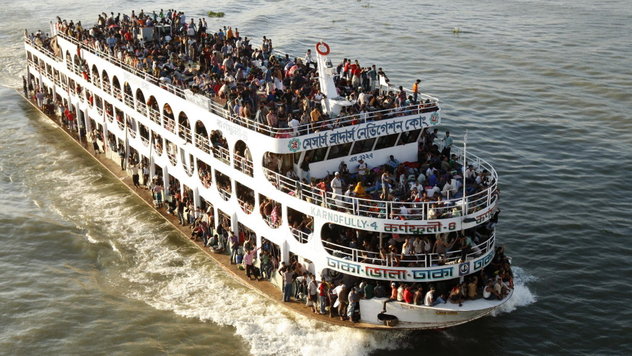
14 bodies recovered after ferry capsizes in Bangladesh, 5 still missing


At least 14 people died and five were still missing after a ferry carrying 50 people collided with a sand barge and sank on Bangladesh's giant Meghna River on Friday, officials said on Saturday.

"Rescuers found 12 dead bodies inside the salvaged ferry, while two bodies were recovered yesterday," said Mohammad Saiful Hassan Badal, administrator of Munshiganj district, where the accident happened.

Six of the dead were children, aged between two and 10.

"We called off the rescue operations with five people missing," he said, adding that about half the passengers managed to swim ashore and some were rescued by local villagers.

Local government administrator Mohammad Saiful Hassan said the search for survivors was called off after Saturday's recovery, but some relatives say their loved ones are still missing.

There was confusion over the number of passengers on board the ferry. Ferry accidents are common in Bangladesh, and it is frequently unclear how many people are aboard the often overcrowded vessels.

The Meghna River is one of three rivers that forms the Ganges Delta.

Ferry accidents are common in Bangladesh, and it is frequently unclear how many people are aboard the often overcrowded vessels. Unregulated and overcrowded ferries often run in to trouble on low-lying Bangladesh's extensive network of rivers. Hundreds of people are killed in accidents every year despite government vows to crack down on unlicensed operators.

Saturday 9 February 2013

http://www.reuters.com/article/2013/02/09/us-bangladesh-ferry-idUSBRE91801V20130209

continue reading

AIB wanted Dana crash’s autopsy restricted to pilot, co-pilot, pathology tells coroner


The Consultant Pathologist and Chief Medical Examiner of the Lagos State University Teaching Hospital, LASUTH, Friday, said that the Accident Investigation Bureau, AIB, had insisted that post mortem examination be restricted to the bodies of the pilot and co-pilot.

Professor John Obafunwa stated this during a coroner’s inquest into the cause of the June 3, 2012 Dana air mishap.

“Two engineers of AIB that we met with at the Board Room of LASUTH on June 5 (2012) told me I did not need to carry out post mortem on all the victims but should be restricted to the pilot and co-pilot,” Mr. Obafunwa said, during a cross examination by Babatunde Irukera, AIB’s counsel.

During his testimony, last month, Mr. Obafunwa had stated that the bodies of Peter Waxtan, 55, the American pilot, and Mahendra Rathore, 34, the Indian co-pilot; and nine others may have been “completely incinerated.”

In what appeared to be a shocking revelation, Mr. Obafunwa also cleared the air on why Kunbi Banjo, a pathologist at the hospital, was excluded from the team of pathologists who conducted the post mortem examination on the crash victims.

Mrs. Banjo, a Professor of Anatomical Pathology, doubles as a consultant for AIB and had been involved in the agency’s past air accident investigations

The consultant pathologist said that Mrs. Banjo had also tried to dissuade him from carrying out post-mortem tests on all the crash victims.

“If we did not carry out autopsy on all the victims, how do we identify the pilot and the co-pilot? That is a question nobody could answer,” said Mr. Obafunwa, a Professor of Forensic Pathology.

“If we did not do the autopsy on all the victims, we would not have been able to identify them and we would have adopted the old method of mass burial which is the old method we insisted we were not going back to,” he added.

Mr. Obafunwa also said that there is a dearth of pathologists in Nigeria, noting that there are about four forensic pathologists in the entire country.

The rest are anatomical pathologists, according to Mr. Obafunwa.

Oyetade Komolafe, the coroner, adjourned till February 28 for further hearing.

Sunday 9 February 2013

http://premiumtimesng.com/news/119354-aib-wanted-dana-crashs-autopsy-restricted-to-pilot-co-pilot-pathology-tells-coroner.html?utm_source=rss&utm_medium=rss&utm_campaign=aib-wanted-dana-crashs-autopsy-restricted-to-pilot-co-pilot-pathology-tells-coroner

continue reading

Friday, 8 February 2013

Scores missing as ferry collides with boat and sinks in Bangladesh


A rescue operation is underway for scores of people said to be missing after a ferry carrying around 100 passengers sank in a river in Bangladesh after colliding with another boat. The incident took place in the same spot and in similar circumstances to an accident last year that left more than 125 people dead.

Reports said that local people had managed to rescue around 40 of the passengers and that others had managed to swim to shore. However, there was no final word on casualties.

“So far we have gathered that the ferry was carrying around 100 people and some have swum to the banks,” a senior local police official, Jahangir Hossain, told AFP. District administrator Saifuddin Badal said that more than 50 people were still unaccounted for

The incident happened on the Meghna river in the district of Munshiganj, located around 20 miles south of Bangladesh’s capital, Dhaka. Local media reports said the ferry, the MV Sarash, was making a journey between Narayanganj city to Matlab, in the south of Bangladesh, when it hit another vessel. It was said to be heavily crowded with passengers at the time of the collision.

Ferries are a common and cheap form of transport in the delta region of Bangladesh, a low-lying nation of around 153m people. Accidents are common-place on the vast river network, partly as a result of over-crowding on the vessels and partly because safety measures are routinely ignored. As many as 4,000 people are estimated to have lost their lives in ferry accidents since 1977.

In March 2012, at least 125 perished when a packed ferry carrying at least 250 people capsized on the Meghna River in the Munshiganj district. In that incident, the MV Shariatpur-1 sank to the bottom of the river after colliding with a cargo ferry. After rescue operations were completed, divers had to be called in to recover the bodies of dozens of victims that were trapped in the wrecked vessel.

Friday 8 February 2013

http://www.independent.co.uk/news/world/asia/scores-missing-as-ferry-collides-with-boat-and-sinks-in-bangladesh-8486277.html

continue reading

Thursday, 7 February 2013

Examiners try to ID victims in Casa Grande plane crash


Medical examiners on Thursday were working to identify at least two people who died after a small plane crashed near the runway at Casa Grande Municipal Airport on Wednesday morning.

It is still unclear how many people were in the Beechcraft King Air, a twin-engine turbo-prop plane, that crashed shortly after 11:30 a.m. Wednesday, just north of the runway.

The plane was destroyed by fire, said Jim Morgan, assistant fire chief of the Casa Grande Fire Department.

The charred remains of the two people were visible at the crash site. It is possible that more remains could be found in the crash, Morgan said.

The medical examiner is working to identify the bodies at this time.

An investigator from the National Transportation Safety Board was on the scene Thursday, and plans to have the wreckage removed to a Phoenix storage facility by the evening.

The investigator, alongside an investigator from the Federal Aviation Administration is scheduled to do a physical examination of the wreckage Friday.

The plane is registered to a Tuscon company, said Ian Gregor, a spokesman for the Federal Aviation Administration.

Additional information was being withheld until officials notify relatives of the deceased.

The National Transportation Safety Board will be the lead agency in the investigation, although it could take months to determine the cause of the crash, Gregor said.

The plane was flying from west to east as it began to land, Morgan said.

“The airplane made a sudden ascent and a sudden descent where it crashed,” Morgan said.

A firefighter working outside a nearby fire station told investigators that as the plane approached the runway, it went straight up about 200 to 300 feet, made a sharp left turn and crashed.

“It could have been what is known as a stall,’’ Morgan said.

One witness apparently saw the plane, which looked like a six-seater, try to land on the runway when it kicked up and flipped over. Gary Couch, a retiree, was at the airport having coffee with friends when he heard the crash and saw the aftermath.

“We saw a lot of black smoke and a lot of flames,” Couch said. “You just feel sorry for the people in the plane.”

Morgan said it’s been several years since an accident like this occurred in Casa Grande.

Officials said several flight schools around Phoenix use the airport for training. The airport is often used as a halfway point between Tuscon and Phoenix. It does not have a control tower, so instrument landing rules are in effect.

Instructors and their students often practice touch and go drills, where they land and take off without coming to a full stop

Thursday 7 February 2013

http://www.azcentral.com/community/pinal/articles/20130207casa-grande-plane-crash-examiners-try-id-victims-abrk.html?nclick_check=1

continue reading

Denied closure, families of Baldia factory fire victims agree to mass burial


Tired of waiting for the remains of their loved ones to be identified, families of this subset of Baldia fire victims have agreed to the government’s proposal to hold a mass burial for charred corpses that are lying at Edhi morgue.

“I have been waiting to get my son’s body for months, and now they tell me that I won’t be able to get it,” said Muhammad Rauf, whose 18-year-old son, Muhammad Haris, was among the victims.

On Wednesday, Sindh Health Minister Sagheer Ahmed had announced that a mass burial of the 17 charred bodies that are lying at the Edhi morgue would be held on Sunday. The minister’s statement was lambasted by trade unionists during a press conference on Thursday.

The unionists, as well as activists, of various human rights organisations demanded that the independent commission formed by the Sindh High Court, headed by former Supreme Court judge Rehmat Hussain Jaffery, should be made responsible for disbursing all compensation among the victims’ families.

Speaking on the occasion, National Trade Union Federation’s Nasir Mansoor said that 22 families had received the bodies of their loved ones, and they should be immediately compensated. He claimed that around 262 workers had lost their lives in the ill-fated Ali Enterprises factory, and that 17 unidentified bodies were still lying in Edhi morgue. Officials have yet to compensate around 59 families, he added.

On the one hand, some relatives of the Baldia fire victims are being tormented by the knowledge that they would never be able to look at their loved ones for a last time. On the other hand, they know that they stand a chance of getting financial compensation offered by the government and other private organisations if they agree to the mass burial.

Until this point, these families faced a dilemma, as they did not have any documentary proof that their relatives had died in the fire. This, in turn, had essentially disqualified them from getting any kind of compensation.

Nazia, whose husband, Riaz Ahmad, died in the inferno, said that she and relatives of other unidentified victims had met MPA Hanif Sheikh on Thursday. The lawmaker had assured them that they would be given the death certificates of their loved ones after the mass burial. “What choice did we have except to say yes. If I had received my husband’s body and had looked at him for the last time, it would have given me [closure].”

Imran, who lost his brother and sister-in-law in the fire, said that he didn’t trust the government to hand out compensation to all the remaining families, even after the mass burial. “We ran from pillar to post for their bodies, but got nowhere. The same thing is likely to happen with the government’s promise to give compensation.” He feared that authorities were likely to pose questions over the “real” heirs of the victims when it came to giving compensation.

Human rights activists said that it was shameful for the government to be unable to identify the remaining victims of the inferno. Asad Butt of the Human Rights Commission of Pakistan said that the bodies should not be buried until each one of them had been identified. “Even [medieval] bodies can be identified these days. What is the government’s excuse for not being able to [identify bodies of Baldia fire victims] and hand them over to their families,” he asked.

Karamat Ali of the Pakistan Institute of Labour Education and Research said that the government should have sent the DNA samples abroad for identification. Meanwhile, a spokesperson of the Edhi Foundation, Anwar Kazmi, said that authorities had yet to contact the philanthropic organisation over the mass burial.

Thursday 7 February 2013

http://tribune.com.pk/story/504193/denied-closure-families-of-baldia-factory-fire-victims-agree-to-mass-burial/

continue reading

Man’s body unidentified for two years


On the evening of Feb. 21, 2011, a motorist travelling through a small town north of Trois-Riviรจres called 911 to report a fire in a wooded area along Highway 155.

When firefighters arrived on the scene, they made a gruesome discovery. Among the debris was the badly burned body of a man abandoned at the side of the road. When the Sรปretรฉ du Quรฉbec began investigating, they asked the public for help in solving the mystery.

The body was taken to the provincial crime lab in Montreal for an autopsy, but a coroner was unable to identify the man.

One day earlier, on Feb. 20, 2011, the worried family of Collin Anthony Williams, of Chรขteauguay, called Montreal police to report that he gone missing. Williams, 38, visited his mother in LaSalle that day and was on his way to a bar in the neighbourhood when he vanished.

About 10 days later, Montreal police notified the media about Williams’s disappearance. “He is not in the habit of leaving people close to him without news,” the police report said. Anyone with information was asked to call police investigators.

After Williams vanished, his name was added to a database of missing persons that police forces across Canada can access. Police also have access to a list of all unidentified bodies in Quebec.

Despite the existence of both databases, it took police almost two years to identify Williams as the man whose badly burned body was found on the side of the highway near Trois-Riviรจres.

While family and friends have spent almost two years wondering what had become of Williams, his body was lying in the Montreal morgue on Parthenais St.

The SQ said on Wednesday that they were able to identify Williams after a sample of his DNA was entered into a DNA database.

The SQ and the Montreal police could not say why it took two years for them to figure out that the man who was reported missing on Feb. 20, 2011, was the same person who was found near Trois-Riviรจres the next day.

SQ Sgt. Eloise Cossette said the match was made after Montreal police put a sample of Williams’s DNA in a police database, but she wouldn’t or couldn’t say when that was done.

“You have to ask the Montreal police,” she said.

Cossette defended the provincial police’s handling of the case, saying all the SQ had to go on “was a badly burned body.”

“When people disappear, it is not systematic that we (police) get a DNA sample,” Cossette said. “It is after time, when the person doesn’t come back and we are out of options, (that it’s done).”

Montreal police spokesperson Yannick Ouimet said he couldn’t provide any details of why it took police two years to identify Williams. He said he didn’t know when, and wouldn’t find out when, the DNA sample had been entered into the database by Montreal police.

“DNA can take 12 to 18 months unless it is an emergency,” Ouimet said. “This is not CSI Miami, where everything takes place within 24 hours.”

Cossette said she couldn’t release any more details about the case because the SQ is conducting a homicide investigation.

Williams had three children and worked at the Jewish General Hospital at the time he disappeared. Police have no motive for his killing.

His family could not be reached for comment.

Thursday 7 February 2013

Read more: http://www.montrealgazette.com/news/body+unidentified+years+family+hoped+return/7928415/story.html#ixzz2KEpc5lLe

continue reading

Police remains recovered in Baragoi


Police in Baragoi have recovered bones believed to be the remains of one of the three missing police officers who were murdered in the bungled operation that left more than 40 officers dead last November.

The bones and skull were recovered from a thicket by a special squad of police sent from Nairobi on Wednesday.

Officers on the ground say that the operation to recover the remaining missing bodies is on-going. They added that preliminary findings showed that the remains recovered on Wednesday belong to an officer who worked with the Anti-Stock Theft Unit.

Police headquarters confirmed the recovery, explaining that it happened following an intensive search after it was established the three had not been accounted for almost three months after the incident.

Police say they are yet to recover 30 of the 33 guns that were stolen from the officers after the November ambush.

There were 108 policemen and 49 reservists who were involved in the operation.

It took months for six bodies of those recovered to be identified at the mortuary, leading to a confrontation between different families- each claiming the remains.

The November 10 incident was a culmination of investigations following an attack by Turkana raiders on Samburu homesteads where some 500 livestock were stolen on October 20.

A week later, Samburu raiders also attacked Turkana homesteads and stole animals during which 12 of the raiders were killed.

Several people have since been charged in court over the murders and robbery of the guns.

Police imposter Joshua Waiganjo has also been drawn into the saga after it emerged he accompanied the team of officers who went there prior to the operation amid speculation he could have leaked information on the same.

A team formed to investigate the saga said they could not conclusively state if Waiganjo leaked information on the operation and called for further investigations.

The Waiganjo saga has led to the sacking of two senior police officers.

Samburu County is rocked by insecurity partly due to proliferation of small arms that has promoted the culture of cattle rustling over the years.

The Government has failed to explain the destination of the raided animals with some suggesting that prominent figures are involved in the illicit shipment and sale of the stolen cattle.

Thursday 7 February 2013

http://www.standardmedia.co.ke/?articleID=2000076786&pageNo=2&story_title=Kenya-Police-remains-recovered-in-Baragoi

continue reading

More bodies identified in Henan bridge collapse


The official death toll from the fatal Yichang bridge collapse last week has risen to 13 people, according to on-site authorities heading rescue and investigation efforts.

It is the second time this week that the official list of victims has been revised, raising concerns amongst the public that there may have been a deliberate cover-up.

Forensic tests were able to confirm and identify the bodies of three men aged 34, 45 and 54, the Beijing News reported.

One of the victims was the driver of the cargo truck carrying the illegal fireworks that had exploded, leading to the bridge’s collapse.

A CCTV report on Wednesday said authorities had omitted the death of the 34-year-old driver, Shi Yanfei. It questioned why authorities had failed to include his name on the original list five days after the accident.

The earliest media reports had put the death toll at 26, but rescuers eventually reduced it to 10, the figure which most media reports have used since.

Thursday 7 February 2013

http://www.scmp.com/news/china/article/1145168/more-bodies-identified-henan-bridge-collapse

continue reading

Police say at least 51 killed in Zambia road accident


At least 51 people died on Thursday when a bus and a truck collided about 100 km (60 miles) north of Zambian capital Lusaka, police said.

Police spokeswoman Elizabeth Kanjela said the death toll could rise as soldiers and firefighters were still checking the wreckage for trapped bodies.

"So far we have counted 51 bodies but there could be one or two people more that are still trapped," Kanjela said. The cause of the accident was under investigation, she said.

According to reports, the bus was operated by the Zambia Postal Service, which provides passenger services on buses which carry post, and was full of people.

There was serious speeding by all the vehicles involved, Harry Kalaba - an official in the vice-president's office - told AFP news agency from the crash site.

A survivor was quoted as saying the bus had been swerving to avoid an oncoming vehicle.

Some 22 dazed or unconscious survivors were being treated in a nearby missionary hospital, AFP said, while more seriously injured casualties had been taken to hospital in Lusaka.

President Michael Sata conveyed his government's "deepest condolences to the beloved families on the death of their beloved ones" and wished the injured a speedy recovery, AFP said.

Police are investigating the cause of the crash, Ms Kanjela said.

Zambian roads are extremely dangerous and buses and other vehicles are often overloaded or poorly maintained.

Thursday 7 February 2013

http://www.reuters.com/article/2013/02/07/us-zambia-accident-idUSBRE9160JB20130207

http://www.bbc.co.uk/news/world-africa-21373965

continue reading

Solomon Islands tsunami; death toll rising


Aid workers struggled to reach remote villages in the Solomon Islands on Thursday as the death toll rose from a tsunami triggered by a powerful undersea earthquake.

At least nine people were killed when an earthquake set off a small but powerful tsunami that sent 1.5-metre (4ft 11in) waves roaring inland on Santa Cruz Island, in the south Pacific, on Wednesday. Around 100 homes across five villages were damaged or destroyed.

Elderly people and at least one child were among those who died after being sucked under the rushing water, said George Herming, a spokesman for the prime minister.

Dozens of strong aftershocks were keeping frightened residents from returning to the coast, Herming said.

"People are still scared of going back to their homes because there's nothing left, so they are residing in temporary shelters on higher ground," Herming said.

The tsunami was generated by a powerful 8.0-magnitude earthquake that struck near the town of Lata, on Santa Cruz in Temotu, the eastern-most province in the Solomons. Temotu has a population of about 30,000.

Smaller waves were recorded in Vanuatu and New Caledonia.

The damage appeared to be concentrated on the west side of Santa Cruz, with five villages wiped out, Herming said. Authorities were still struggling to reach the remote area but an estimated 100 homes had been damaged or destroyed, he said.

The tsunami flooded the nearest airstrip and left it littered with debris, preventing relief workers from reaching the region by air. Smaller islands may also have sustained some damage but workers had not yet reached those areas, Herming said.

More than 50 people were killed and thousands lost their homes in April 2007 when a magnitude-8.1 quake hit the western Solomon Islands, sending waves crashing into coastal villages.

The Solomons comprise more than 200 islands with a population of about 552,000 people. They lie on the "ring of fire", an arc of earthquake and volcanic zones that stretches around the Pacific rim and where about 90% of the world's quakes occur.

Thursday 7 February 2013

http://www.guardian.co.uk/world/2013/feb/07/solmon-islands-tsunami-death-toll

continue reading

33 families criticize the search for the disappeared from the Araguaia massacre [translated]


Relatives of disappeared politicians want to reduce the number of soldiers in the group created by the government to locate and collect the bodies of guerrillas who worked in the Araguaia Guerrilla. For 33 families who signed document with this request, delivered to the defense minister, Celso Amorim, two weeks ago, the presence of military expeditions in the Araguaia Working Group (GTA) "scare" the locals where the searches are made, increases the costs of operation and has no guaranteed results in the location of the remains. The document was handed to Amorim at the first meeting of the minister with relatives of victims of the dictatorship, the Department of Human Rights.

Since the group was created in 2009 pursuant to a court order, the military has provided logistic support to operations. The GTA is composed of military, families of the disappeared, observers and researchers. Each expedition involves, on average, 135 people: two-thirds and one-third are military, civilian. The Ministry of Defence spent with the expeditions of 2011 and 2012 was R $ 3.9 million, of which R $ 2.4 million with daily tickets and transportation, including car rental and fuel. The Ministry of Justice and Human Rights Secretariat also pay expenses of its members, but with much lower values.

"The participation of a more effective military is justified due to the characteristics of the region and is responsible for the military security activities, transportation, communication, health, mapping, among others, relating to logistical support liability under the Command of the Army," said the Ministry of Defence.

But in a statement, family members dispute the number of troops. "We understand that the number of troops in expeditions should be reduced, since only scares the locals and also the very onerous amount of spending that is shown without the need for so many pictures, apparatus and equipment available in the logistics," says the document.

Family members also claim that the best results were obtained in the search in the absence of the military. "Most of the information obtained by the relatives were only really possible when they were unaccompanied by military forces in 1981, 1991 and 1996, when the government apparatus was small."

But the position of family members is not unanimous. Many parents support the work of the group, as Diva Santana, who represents the family Committee Political Deaths and Disappearances, and believe that this is the best possible route.

Thursday 7 February 2013

http://oglobo.globo.com/pais/familias-querem-mudar-grupo-que-busca-mortos-no-araguaia-7206332#ixzz2KAXIHzQm

[In Portuguese; translated with Google Translate]

continue reading

Tokyo Police Introduce Trucks for Autopsy on Disaster Victims


The Metropolitan Police Department of Tokyo has introduced two large trucks to be used for autopsies in case of disasters such as a powerful earthquake hitting the Japanese capital, informed sources said Wednesday.

The trucks, which cost 14 million yen each, will carry tents and water purification equipment to disaster-hit areas, the sources said.

The MPD assumes that it could face difficulties conducting on-site postmortem examinations for a large number of victims in the event of large-scale disasters. In each of the tents, autopsies can be conducted on three bodies at the same time, according to the sources.

Each of the trucks weighs about 5.1 tons and has the maximum loading capacity of 2.8 tons. The police department plans to introduce more such trucks, the sources said.

When the 9.0-magnitude quake and huge tsunami hit northeastern Japan in March 2011, police officers for identifying bodies found it difficult to carry out their activities partly because facilities for housing bodies were destroyed and there was a lack of washing water.

Wednesday 7 February 2013 http://jen.jiji.com/jc/eng?g=eco&k=2013020600830

continue reading