Tuesday, 6 November 2012

Kashmir women seek justice in cases of disappeared people

Srinagar, Indian Administered KASHMIR: For over two decades, it has been an endless wait for families in the Indian Administered Region of Kashmir.

Missing what they fondly call “their dear ones” these families have experienced what they describe as “immense pain” for family members who have disappeared from the region as the unexplained silence of India’s government officials and the denial of justice in the cases continue.

What is left of the cases now are many unanswered questions.

On August 30, 2012 on the eve of International Disappearances Day, numerous Kashmir families took a pledge that they would fight the legal battle to prove that enforced disappearances in Kashmir have occurred over the past two decades. Women who have husbands or sons who are part of the ‘The Disappeared’ have also promised they would continue to work and not shy away from bringing justice forward.

Even though detailed documents of proof are currently available through the Association of Parents of Disappeared Persons (APDP) in Srinagar that point to crimes involving security forces in Kashmir, the cases of those who suffered under enforced disappearance has met little formal investigation.

APDP is one of the organizations that is championing the cause of disappearance in Kashmir. Working to document the number of widows who have been impacted during years of conflict in the region, the organization is focused on human rights for victims who have often not been able to trust local authorities or the larger Indian government for help.

“Enforced Disappearance is abduction or kidnapping, carried out by State agents, or organized groups and individuals who act with State support or tolerance, in which the victim ‘disappears’,” outlines the APDP. “Authorities neither accept responsibility for the dead, nor account for the whereabouts of the victim… ….Increasingly the international community considers Enforced Involuntary Disappearance as a specific human rights violation and a crime against humanity,” continues the APDP.

Wearing white head bands with “Stop Disappearances” written on them in black, relatives with a majority of them women, came together on August 30 to form a ‘sit-in’ at Pratap Park in the Lal Chowk section of Kashmir’s capital city of Srinagar. This was their way to pay tribute and to bring international attention to those who have been subject to a denial of their rights under enforced disappearances.

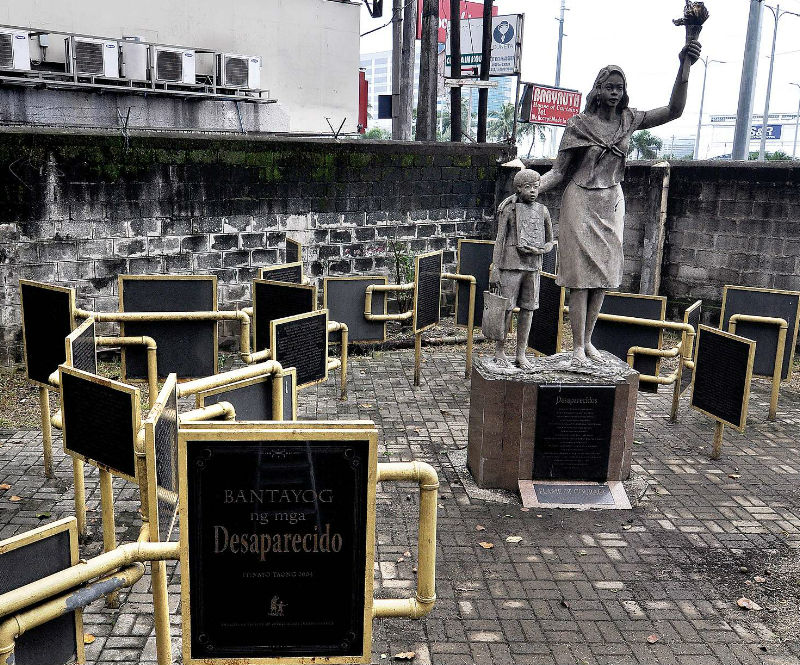
Along with activists and volunteers, the memorial rally moved to land donated by APDP for erecting a statue which will be dedicated to all ‘The Disappeared’ in the valley.

“We have come here with a cause. I lost all my four sons to conflict. I was fortunate to get the dead bodies of two sons and others two sons are disappeared. I tried to search for my two sons everywhere but of no avail,” outlines Taja Begum, an elderly woman who has come to Srinagar from Kashmir’s northern mountainous Bandipora district to participate in the sit-in.

“I have no wishes. All I want is that before I’ll die I should be able at least to know whether they are alive or dead,” she said of her missing family members.

Begum is one of the thousands of Kashmiri victim families whose members are lost in the midpoint between officially missing and confirmed dead.

In a region where numerous police reports can be left with little to no official investigation, impacts for tracking crime in Kashmir falls on the homes of those most vulnerable. It does not help that the situation surrounding ‘The Disappeared’ has included a complex group of quarreling political forces in the region who have been juggling power for over the past twenty years. The players include regular security forces – the Indian Army, the Border Security Force (BSF) and the Central Reserve Police Force (CRPF), as well as moving paramilitary groups in the region.

“…More than one hundred cases of detainees disappearing in the custody of the security forces have been documented by human rights groups since the conflict began,” said Human Rights Watch in a detailed report made over 15 years ago in 1996. Today the situation for many women has caused them and their families to get caught in the crossfires.

Even with continued pressure from global human rights organizations as well as attorneys, since the year 1996, government transparency and accountability has not been forthcoming.

“Lawyers in Kashmir have filed more than 15,000 habeas corpus petitions since 1990 calling on state authorities to reveal the whereabouts of detainees and the charges against them. However, in the vast majority of cases, the authorities have not responded, and the petitions remain pending in the courts,” said Human Rights Watch in 1996. “Even when the High Court has ordered state authorities to produce detainees in court or release those against whom no charges have been brought, state and security force officials have refused to comply. Lawyers have also filed petitions charging officials with contempt for non-compliance, but these petitions have also received no response,” added the 1996 report.

Today in 2012 the situation has not much improved, the Association of Parents of Disappeared Persons (APDP) is now working with over 300 families who have relatives who are still unaccounted for. Many are husbands or sons who were taken away under unexplained arrests.

To answer the need for families to find answers, the APDP has demanded publicly that the government of India should implement all recommendations of the United Nations Universal Periodic Review-2 (UPR2), which calls for all violations of human rights in the region to be fully investigated.

“We have documented cases in [the] district Srinagar and out of all cases, almost 82. 25 per cent, have eyewitness accounts of the direct involvement of the security forces. Despite having all the first-hand accounts, no action has been taken against the perpetrators,” said Parveena Ahanger, President of the APDP. “Instead, the criminals are getting awards for killings and other human rights violation[s] in the name of ‘exemplary work’,” she added.

A formal petition by APDP partner, the Jammu Kashmir Coalition of Civil Society (JKCCS), was also made with APDP to the Jammu & Kashmir State Human Rights Commission branch of India’s National Human Rights Commission. It outlines 507 unsolved cases.

This isn’t the first petition. In 2011 JKCCS asked for the Jamu Kashmir Police Force to investigate other cases, but no response from the police came forward.

Out of the recent 507 systematically documented reports of disappearance, 369 of the missing are from the district of Baramulla, along with 138 cases from the Bandipora district.

Under a situation where families face what might include torture and extra-judicial killings in their family, stress and grief for the women who have been left behind is undeniable. Psychological trauma may also include episodes of heightened depression and chronic wishes of suicide. Children of fathers who have gone missing also often face the similar psychological fate as there mothers.

When a husband has not been declared dead, nor alive, by local and/or national Indian authorities, their wives exist in a prolonged twilight that forces life to stay in a shallow limbo. Even after many years these ‘half-widows’ cannot remarry easily.

While India’s law allows a widow to file for divorce after her husband has been missing for 4 years, half-widows in Kashmir must also prove that their husband has never been involved in any actions that might be interpreted as ‘politically suspect’. Because half-widows are denied the full rights of other widows, they often live in poverty without the usual 100,000 rupees assistance given to widows by the Indian government.

35-year-old Tahira Begum’s husband, Tariq Ahmed Rather, has been one of those missing since 2002. Like other half-widows Tahira has been struggling on two fronts — trying to earn a living to survive without her husband as the only head-of-household; and fighting an ongoing legal battle to seek transparency and justice for her family.

“I don’t know whether my husband is dead or alive,” Begum shared during a tearful interview with WNN – Women News Network.

“Enforced disappearance is one of the worst human rights violations and a large number of people throughout the world are affected by this war crime,” outlined Tahira. “As a civil society, it is imperative for all the organizations who are working for a cause and governments to forge solidarity in bringing to an end the practice of enforced disappearance.”

According to JKCCS, a low estimate of disappearance cases in Kashmir currently shows numbers reaching up to 8,000+ mysteriously missing people with more than 1,500 half-widows now living in the Jammu and Kashmir region. Numerous victims continue to say that their helplessness has been compounded, rather than addressed, by the legal and administrative remedies currently available to them.

“We have sought SHRC’s intervention [the State Human Rights Commission which is the regional part of the larger India's National Human Rights Commission] to probe all the enlisted cases of disappearances. The victim families of these disappeared persons fear that their loved ones might be buried in some unmarked graves across Jammu and Kashmir,” adds Tahira Begum.

Adding her wish that families of relatives who have gone missing can get India’s government to carry out investigations at these unmarked graves by using all modern available means of investigation, Begum outlined that investigations using DNA testing and other forensic methods could answer many questions.

“The government of Kashmir has rejected wide-scale DNA testing of bodies in thousands of unmarked graves despite pleas by the families of those who disappeared during two decades of fighting in the restive region,” says Forensic Magazine, a bimonthly publication that brings the most accurate and up-to-date information on forensic science available to the public.

New technologies for DNA forensics have been expanding greatly. Rapid DNA Analysis Systems have been developed to enable law enforcement agencies to process DNA samples with amazingly fast results, in 84 minutes. These and other new forensics technologies are now available to aid in the mystery of mass graves worldwide.

JKCCS claims today that there are more than 2,000 unmarked graves and mass graves in three districts of northern Kashmir. Their fate and the fate of their families may be dependent on DNA driven investigations.

“A police investigation in 2011 by the Jammu and Kashmir State Human Rights Commission (SHRC) found 2,730 bodies dumped into unmarked graves at 38 sites in north Kashmir,” recently outlined Human Rights Watch in World Report 2012: India. “At least 574 were identified as the bodies of local Kashmiris. The government had previously said that the graves held unidentified militants, most of them Pakistanis whose bodies had been handed over to village authorities for burial. Many Kashmiris believe that some graves contain the bodies of victims of enforced disappearances,” continued the 2012 report.

Three years ago, Dr. Angana Chatterji and other members of the International People’s Tribunal on Human Rights and Justice in Kashmir brought forward a witness who’s testimony cannot be denied. When 68-year-old gravedigger, Atta Mohammad from Chehal Bimyar, Kashmir, shared his compelling first-hand witness account from the Baramulla district the case of extra-judicial killings may have been brought to light.

Stating clearly during his testimony at the Tribunal, Bimyar admitted that he had personally been involved in the burial of 203 bodies between 2002-2006: “I have been terrorised by this task that was forced upon me. My nights are tormented and I cannot sleep, the bodies and graves appear and reappear in my dreams. My heart is weak from this labour. I have tried to remember all this… the sound of the earth as I covered the graves… bodies and faces that were mutilated… mothers who would never find their sons. My memory is an obligation. My memory is my contribution. I am tired, I am so very tired.”

Under years of documents and legal petitions, as the year 2013 approaches, Indian government officials in Jammu and Kashmir have now promised to start a formal process toward investigation. But the prosecution of numerous cases may find many challenges to reach even a measured amount of success.

“…the identification and prosecution of perpetrators will require the cooperation of army and federal paramilitary forces. These forces in the past, have resisted fair investigations and prosecutions, claiming immunity under the Armed Forces Special Powers Act (AFSPA) and section 197 of the Criminal Procedure Code,” says Human Rights Watch in their latest 2012 World Report on India.

‘The Disappeared’ in Indian Administered Kashmir has been been part of a decades long story that has asked for government involvement to solve the crimes. At the very bottom of the crimes though the families, especially its women, are its ongoing victims.

“If my husband is alive I want to see him,” says half-widow Tahira Begum. “If he has been killed let authorities hand over his body to me,” Begum added.

Tuesday 6 November 2012

http://www.trust.org/trustlaw/news/kashmir-women-seek-justice-in-cases-of-disappeared-people

continue reading

Migrants killed by the elements identified by the personal items left behind

TUCSON - On a quest for a better life, migrants south of the border risk it all in their trek into the U.S. Their dreams are often cut short in an attempt to get here.

A cultural anthropology grad student at the University of Arizona, Robin Reineke, began volunteering time at the Pima County Medical Examiner's Office. She fields calls from families worried their child or parent may be lying on the examination table.

She began collecting names from all over the world to form a list of people who may have been killed by the harsh Arizona desert climates. The result was the Pima County Missing Migrant Project.

When they die they leave behind personal items. It's an important part of the puzzle Robin is trying to solve.

"You can sense that there's a lot of hope for this next chapter of their lives," Reineke said. "To me it reminds me of going off to college for the first time. You carry in your backpack all your favorite stuff."

They often die with the essentials like money, and the clothes on their back, but some of their items like rosaries and jewelry reveal a more personal story.

"This is Orlando Bloom on the back of his mirror here. So maybe he was a fan," said Reineke.

It's a never-ending job. Despite reports of illegal immigration going down, Reineke says the number of bodies the medical examiner sees is holding steady.

"Right now we have about a total of 700 unidentified bodies. So that 700, I am comparing to the missing and people that are reported missing from their family members... I have about 1,300 of those reports," said Reineke.

The difficult part for Reineke is identifying a foreign national, especially when they have been exposed to the elements.

"Sometimes the items, you know the bracelet he had or a wedding ring, for example, can be the only thing the family recognizes. The person doesn't have a face anymore."

The Missing Migrant Project recently became the only entity in the country to be allowed to enter known missing migrants into the National Missing and Unidentified Persons System (NamUs). It's expediting the process in alerting families of their loved one's whereabouts.

Tuesday 6 November 2012

http://www.kvoa.com/news/migrants-killed-by-the-elements-identified-by-the-personal-items-left-behind/

continue reading

Disappearances on the rise

Police have reported that the number of disappearances and recovering of bodies is on the rise in the country. According to a report issued by the Police Media Unit, the body of a 25-year-old youth, Dammika Bandara of Maha Medagama, Thalathuoya who had been reported missing was recovered by the Police at Kalukella Idama, Mahamedagama on 4 November.

Another dead body was found on the beach near the Wadduwa Railway Station. The deceased has been identified as Nihal Ranjith Rajapakshe who had disappeared on 2 November after he went to Kalutara town to buy clothes.

Police have recovered another body stuck among two stones near the reservoir behind Weheragala Padaviya. According to investigations it was a headless body. The T-shirt he was wearing was blue and black, the words ‘Sri Lanka Army: 1949-2009 60th Anniversary’ was printed on it.

Another body was found in a pool of water at Dimbulduwa, Ambalangoda. Police have recovered a mobile phone, National ID and pair of shoes believed to belong to the deceased. He has been identified as Dinesh Kumara (25) of Ahungalla. Another male body was recovered floating on the Kalu Ganga, near the Jumma Mosque, Kalutara on the 4th . The lower part of the body had been eaten by some animals.

Tuesday 6 november 2012

http://www.ceylontoday.lk/51-16241-news-detail-disappearances-on-the-rise.html

continue reading

9 tsunami victims’ remains misidentified, given to wrong families

A Japanese newspaper has uncovered that there was a misidentification of the bodies of nine tsunami disaster victims, and thus returned to the wrong families. Japan’s National Police Agency told the Yomiuri Shimbun that in their efforts to return the remains to relatives looking for closure as quickly as possible, they did not allow enough time for a thorough examination of dental and DNA records.

The authorities say eight those incorrectly identified were from different towns in Iwate Prefecture, consisting of one man and seven women, all in ages from their 60s to 90s. The ninth was found in Miyagi Prefecture, and police say it was given to family looking for a 78 year old man almost immediately after the March 11th, 2011 disasters. In the first month alone after the earthquake and tsunami, roughly 13,000 bodies were taken to makeshift morgues in order to be identified. Police officers, doctors, and dentists were among those confronting the task, but there was often little power or water supplies, and the greatest hurdle was that so many dental and medical records were lost in the tsunami‘s waves.

Because of these circumstances, some bodies were given to families who insisted that they had found and identified their missing relatives. The misidentifications were discovered when the real families of those given away came to police after seeing photos taken of those who were at the morgues. The issue was corrected and the police of Iwate had given apologies to all the families involved by August, as well as got the remains back to their correct relatives.

Tuesday 6 November 2012

http://japandailypress.com/9-tsunami-victims-remains-misidentified-given-to-wrong-families-0617906

continue reading

Monday, 5 November 2012

11 victims from the Riyadh explosion unidentifiable

RIYADH: Two days after the Riyadh explosion, families are still looking for their relatives’ names on the information boards in hospitals, while medical teams prepare the bodies coming from the morgue.

Al-Hayat newspaper reported yesterday that Al-Shumaisi hospital in Riyadh received charred and severed bodies, 11 of which could not be identified.

In the meantime, Dr. Adnan Al-Abdul-Kareem, director general of health affairs in Riyadh, stated that 79 injured people were released from hospitals after receiving the necessary treatment 35 of whom were Saudis and the rest from different nationalities.

Al-Abdul-Kareem further added that there are still 54 people receiving treatment in different hospitals, 20 of which are Saudis and 34 from other nationalities.

Captain Mohammad Al-Hammadi, civil defense spokesman in Riyadh said “The civil defense department in the Al-Salam district in Riyadh received all the aggrieved people and will continue registering the damage throughout the next ten days.”

Monday 5 November 2012

http://www.arabnews.com/11-victims-riyadh-explosion-unidentifiable

continue reading

Sunday, 4 November 2012

Families of missing Kosovo Albanians protest at talks with Serbia

Some 1,000 people protested Saturday in Pristina saying Kosovo should not restart talks with Serbia before it clarifies the fate of more than 1,700 people still missing from the 1999 conflict, Beta news agency reported in Belgrade.

"Before talks with Serbia can begin, we want all of the missing to be identified and their bodies returned," said Igbala Rogova of the Women‘s Network, one of the organizers of the protest.

The Vetevendosje party, the third-strongest group in parliament which strongly opposes any negotiations with Serbia before it recognizes Kosovo, joined the protest.

Kosovo is Serbia‘s mostly Albanian former province that declared independence in 2008. The area was the scene of an insurgency against Belgrade‘s rule in 1998-99 and Serbia‘s heavy-handed response that ended with NATO intervention.

During the conflict, Serb forces embarked on a campaign of terror, including mass expulsions and killings. In a bid to hide the crimes, Belgrade ordered the transport of hundreds of victims from Kosovo for secret burial in mass graves in Serbia proper.

Serbia‘s rejects Kosovo‘s secession, but has agreed to hold talks under European Union auspices.

The talks were interrupted in February after seven rounds because of Serbian general elections in May. They are expected to restart in November.

Serbia had vowed never to recognize the sovereignty of what it still regards as its territory.

But Kosovo Prime Minister Hashim Thaci said Saturday, during a visit to a highway construction site, that the EU-facilitated talks "will end with mutual recognition."

Sunday 4 november 2012

http://en.europeonline-magazine.eu/families-of-missing-kosovo-albanians-protest-at-talks-with-serbia_247270.html

continue reading

Storm death toll in U.S. rises to 109

The death toll in the United States from Superstorm Sandy rose to 109 victims on Friday, as Pennsylvania reported four additional deaths and New York City reported two more fatalities. Mayor Michael Bloomberg warned: “There could be more fatalities.”

Two bodies were recovered Friday on Staten Island. The toll in the nation’s largest city is now 41 deaths, according to the governor’s office. However, the New York Police Department had reported 40 deaths in the city.

Half of the city’s deaths were on Staten Island and Bloomberg noted the deaths there of two brothers swept from their mother’s arms in the storm surge.

“It just breaks your heart to think about it,” Bloomberg said.

Sunday 4 november 2012

http://www.wnd.com/2012/11/storm-death-toll-in-u-s-rises-to-109/?cat_orig=us

continue reading

Chakwal: Bus accident leaves 6 dead

CHAKWAL: A passenger bus turned-turtle in the wee hours on Sunday killed at least six people and wounded thirty here, Geo News reported.

Motorway police said that driver’s reckless driving of the ill-fated bus caused the accident. The passenger bus was on way from Nowsehra to Raiwind when it went overturned near Allah interchange. Most of the passengers belonged to the ‘Tablighi Jamaat’.

The corpses and the injured were shifted to the Chakwal District Headquarter Hospital.

Hospital sources told that the three persons among the dead namely Muhammad Amin, Muhammad Aslam and Muhammad Hussain belong to Nowsehra.

Sunday 4 november 2012

http://www.thenews.com.pk/article-74061-Chakwal:-Bus-accident-leaves-6-dead-

continue reading

Crew, captain blamed for S Korean ship tragedy

An investigation into the sinking of a South Korean trawler southeast of New Zealand with the loss of 22 lives two years ago has found the captain and crew to blame.

The Insung I sank on December 13, 2010, in the Antarctic Ocean and inside the New Zealand search and rescue region. Of the 42 people on board, five bodies were recovered and 17, including the captain, were never seen again.

The Korean Maritime Safety Tribunal found the vessel sank because the crew failed to keep the trawling and fishing gear passageway doors shut while sailing in bad weather, allowing sea water to flow in and destabilise the ship.

The tribunal’s report, released by New Zealand’s Transport Accident Investigation Commission Saturday, also found the loss of life “indicates the captain’s failure to evacuate the ship in a timely manner”.

The ship management was blamed for failing to provide adequate safety instructions and training in languages the crewmembers, who were from five different countries, could all understand.

Sunday 4 November 2012

http://www.thenews.com.pk/Todays-News-1-141008-Crew-captain-blamed-for-S-Korean-ship-tragedy

continue reading

Korean War soldier’s body identified after 62 years

A Korean War soldier who went missing 62 years ago has been buried with full military honors in a North Carolina veterans cemetery after his remains were finally identified.

The Fayetteville Observer reported Saturday that Army Pfc. James Curtis Mullins was buried in Sandhills State Veterans Cemetery in Spring Lake. It was the third burial of his remains.

His older brother, Clayton Mullins, said Friday’s service brought closure.

“It brings closure to a lot of questions I had in my mind,” he said. “Where he was at. What could possibly have happened to him. It made me happy that they finally identified him, and it made me sad in another way.”

James Mullins was 18 when he headed for South Korea at the onset of the Korean War in June 1950. He went missing a month later, when his unit was overrun and scattered near the village of Yugong-ni.

Remains of nine U.S. soldiers were recovered from the battlefield. Only one body could not be identified – now known to be Mullins’.

All nine were buried in South Korea.

The bodies were exhumed a year later. Mullins’ remains were recorded as X-14 and sent to the Army’s identification unit in Japan for analysis. Still unidentifiable, the remains were transferred to Hawaii and reburied in the National Memorial Cemetery of the Pacific.

They were exhumed again this year and identified through radiography, dental records and other evidence.

Mullins was presumed dead on Dec. 31, 1953. Records show that Army units had searched the battlefield and surrounding areas in 1952.

Clayton Mullins, a retired master sergeant with Fort Bragg’s 505th Parachute Infantry Regiment, said their father never stopped hoping his little brother survived.

When he encouraged his father to think of other things, he responded, “It’s just hard to do. You can’t think of nothing but where he’s at, what he’s doing.”

Mullins says of his father, “He had hopes that he (James) was just lost out there. He kept hoping until he left here.”

He said he last saw his younger brother in boot camp at Fort Jackson, S.C.

The military counts 7,940 troops still unaccounted for from the Korean War. Of those, 196 are from North Carolina.

Technology advances are allowing more remains to be identified – 39 in 2011, and 31 so far this year, said Maj. Carie A. Parker, a spokeswoman for the Department of Defense POW/Missing Personnel Office.

Sunday 4 November 2012

Read more here: http://www.charlotteobserver.com/2012/11/03/3642433/korean-war-soldiers-body-identified.html#storylink=cpy

continue reading

Migrant boat sinks off Libyan coast killing 11, 70 rescued

Italy's coastguard has rescued 70 boat migrants who had spent hours clinging to the hull of a capsized vessel while attempting to cross the Mediterranean Sea from Libya. Rescuers have recovered 11 bodies.

The Italian news agency ANSA said a Maltese aircraft had first sighted the capsized boat about 65 Kilometers (40 miles) off Libya's coast on Saturday afternoon.

The survivors - 62 men and eight women, one of whom was pregnant - were transferred to an Italian Navy ship for medical care. Many of them were suffering from hypothermia.

The Italian coastguard and navy recovered the bodies of 11 Somali nationals about 35 miles (56 km) from the Libyan coast on Saturday and Sunday after the motorised raft they were using to try to get to Italy sank, the coastguard said.

The Italian news agency ANSA said a Maltese aircraft had first sighted the capsized boat about 65 Kilometers (40 miles) off Libya's coast on Saturday afternoon.

The survivors - 62 men and eight women, one of whom was pregnant - were transferred to an Italian Navy ship for medical care. Many of them were suffering from hypothermia.

Two coastguard boats and a navy ship pulled 70 other Somalis from the water, according to a statement sent on Sunday. The survivors and the dead were being taken to the Italian island of Lampedusa.

The coastguard, an Italian tug boat, and a navy helicopter are continuing to search for survivors.

Each year, thousands of people, mostly from Africa, attempt to cross the Mediterranean from north Africa to Europe in overcrowded and frequently unseaworthy vessels.

In September, dozens of people – believed to have been from Tunisia – went missing when the fishing boat carrying them sank near Lampedusa.

At a subsequent meeting of European and north African leaders on Malta last month, Tunisian President Moncef Marzouki called for the creation of a regional task force.

Marzouki said coordinated responses must be established to deal with what he called a "humanitarian disaster."

Solutions to the problem, he said, lay in finding solutions to instability, persistent poverty and high youth unemployment in Africa.

Italy's government recently said that between the start of the year and September 8,000 clandestine migrants landed on Italy's coastline.

Italian Interior Minister Maria Cancellieri said cooperation, especially with Tunisia and Libya, had led to a reduction in the numbers reaching Italy since the Arab Spring popular uprisings of 2011.

Thousands of people have been killed attempting the dangerous crossing from North Africa to Europe in overcrowded and frequently unsafe vessels. In the past few years, Italy has become the main destination for maritime migration to southern Europe, which is usually from Libya.

Sunday 4 November 2012

http://www.dw.de/boat-migrants-rescued-off-italy/a-16354433

continue reading

Indian scientists devise unique radiation-decontamination wipes

They look like the facial wipes available in the market, but what makes them different is that they are meant to clean off radioactive material from the body during a nuclear disaster. Developed by India's Defence Research and Development Organisation (DRDO), the unique decontamination wipe is catching the attention of vendors who cater to NATO forces.

Scientists working on it claim the wipe, developed at the DRDO Institute of Nuclear Medicine and Allied Sciences (INMAS) here, can remove over 95 percent of the contamination.

At Rs.10 (20 cents), the 5cm x 5cm wipe - the size of a face wipe - is easy to use and dispose of.

According to the scientists, these decontamination wipes will be useful for people working in nuclear plants and those living around them, as also during any nuclear disaster like what happened at Fukushima in Japan.

"This is one-of-a-kind product not known to have been developed by anyone else," R.K. Sharma of INMAS's CBRN (Chemical, Biological, Radiological and Nuclear) division, told IANS in an interview.

"The decontamination procedure with the use of soap and water removes most of the external contaminants. But the accidental release of a number of radio-isotopes in the environment could contaminate water also, thereby limiting its availability or sometimes it may be scarce," he said.

"In view of this, the self-usable skin decontamination wipe has been developed for immediate application after the release of the contaminant," Sharma added.

Named radio-decontamination wipes, the project costs Rs. 495,000 ($9,200) and INMAS has already initiated the process for patenting the technology.

"Once we get it patented, we would propose keeping this wipes not just with disaster management forces like NDRF (National Disaster Response Force) but also at Metro stations and with local authorities like the state police," Sharma said.

Following a major earthquake, a 15-metre tsunami disabled the power supply and cooling chambers of three of Fukushima's Daiichi reactors Mar 11, 2011. There were no deaths but over 100,000 people had to be evacuated from their homes to prevent exposure to radiation.

The decontamination wipe causes no skin toxicity and has been found to be safe, effective and non-irritant.

INMAS has already received a request from British-based Branco Diagnostics and an Indian company, Novel, for transfer of technology for mass production of the decontamination wipes.

An email from the Branco Diagnotics in October said: "We understand that you are developing radiation decontamination wipes and have completed efficacy studies and skin safety studies under the Drug and Cosmetics Act 1940."

"We are interested to take this technology from your organisation for commercializing the same. Branco produces reactive skin decontamination lotion (which removes chemical warfare agents), which is used by the US Department of Defense and military forces in NATO countries," the letter said.

INMAS has sent both the requests to the DRDO's marketing wing - the Directorate of Industry Interface and Technology Management (DIITM).

The wipes come in a small packing along with a sealed disposal zipper bag so that the contamination doesn't spread further after wipe is used.

The institute has also published the results of its study in the International Journal of Pharmaceutics in September, the official said.

Sunday 4 November 2012

http://www.deccanherald.com/content/290066/indian-scientists-devise-unique-radiation.html

continue reading

Mining experts look at Pike River recovery plan

Families of the Pike River disaster victims are hoping a group of international mine safety experts will be able to give its approval to a plan aimed at re-entering the mine.

The families have enlisted the help of New Zealand mining expert David Feickert, who has been advising the Chinese Government on mine safety.

Mr Feickert and two British mining experts are in Greymouth for five days and will meet with Solid Energy, Mine Rescue and other experts in the area.

Mr Feickert says it could be possible to enter the main shaft of the mine to retrieve some of the bodies.

But he says they'll need to ensure the mine is safe enough to re-enter.

Mr Feickert is expected to sign off on the families' plan, which aims to overhaul health and safety standards in mining.

A spokesperson for some of the families, Bernie Monk, says the approval must happen before the plan can be presented to Solid Energy.

On Monday, the Royal Commission's report on the Pike River disaster will be presented to the families of the 29 men who died in explosions at the coal mine in 2010. The report will be released later in the day.

Sunday 4 November 2012

http://www.radionz.co.nz/news/national/119903/mining-experts-look-at-pike-river-recovery-plan

continue reading

Bodies of two more sailors handed over to relatives

For the families of the five sailors who perished in Cyclone Nilam, it was finally all over as they received the bodies of their dead kin.

While three of the families returned home on Friday night after receiving the bodies, the families of Jomon Joseph and Krishna Chandra returned home on Saturday.

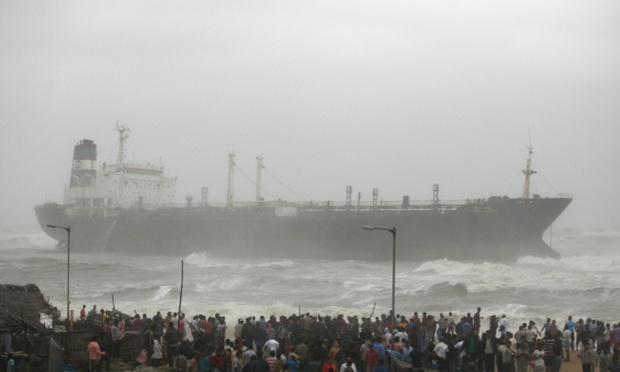
The bodies of Jomon Joseph and Krishna C.P. Purayil were identified by their relatives at the Ponneri Government Hospital on Saturday morning. Jomon was among the five sailors who were declared missing when they did not return to the shore on Wednesday after the oil tanker MT Pratibha Cauvery ran aground at Elliot’s Beach in Besant Nagar.

Jomon’s family, who began their hunt for him on Thursday, had sought fishermen’s help to take them through every canal. They managed to find Raj Ramesh Khamitkar’s body on Friday afternoon.

Even when there was confusion over identification of Raj at the Rajiv Gandhi Government General Hospital here, they were sure that it was not Jomon. “He is taller, around 5feet 8inches, and this body is that of a shorter person,” one of his uncles maintained.

Jomon’s body had washed ashore in Minjur and been sent to the GH around 5 p.m. on Friday. Jomon had worked on an oil tanker in the Gulf for a year and took up a job on MT Pratibha Cauvery six months ago. His uncle said he loved cricket and was a fun-loving person who wanted to become a sailor. His father K.J. Joseph had been in no position to talk, late on Friday evening. When contacted by The Hindu he had said, “I am very tired now. I don’t feel like talking.”

On Saturday, a body clad in blue uniform was found near Ennore Creek. It was identified as that of Krishna Chandra by his relatives at Ponneri GH. Krishna’s uncle and cousins received the body. His father P.P. Chandrasekar works as a bank manager in a co-operative bank.

The bodies of K. Niranjan, Rushub Jadhav and Raj Khamitkar were handed over to the respective families on Friday evening after the mandatory autopsy.

Sunday 4 november 2012

http://www.thehindu.com/news/cities/chennai/chen-news/bodies-of-two-more-sailors-handed-over-to-relatives/article4062530.ece

continue reading

Saturday, 3 November 2012

Last 'president-in-exile' reburial after misidentification

Smolensk disaster victim Ryszard Kaczorowski has been re-buried at Warsaw's Temple of Divine Providence after exhumation confirmed he was originally buried in the wrong grave.

After a mass celebrated by cardinal Kazimierz Nycz, the Metropolitan Bishop of Warsaw, the remains of Ryszard Kaczorowski, Poland's last president-in-exile, were interred in the Pantheon of Prominent Poles.

Ryszard Kaczorowski was one of ninety six victims of the plane crash in Russia in April 2010, in which President Lech Kaczynski was also killed.

Last month it was revealed that as a result of a mistake in the identification of the bodies of the victims, the body that had been buried in the Temple of Divide Province in 2010 was not that of President Kaczorowski.

His remains were mixed up with the body of another victim, buried at Warsaw’s Powฤ…zki cemetery. The two exhumations were carried last month.

The re-burial follows a similar mix-up over the remains of Anna Walentynowicz – one of the initiators of the 1980 Solidarity strikes – who also died in the Smolensk disaster.

The Royal Sigismund Bell, which hangs from the tower of the Wawel Cathedral in Krakow, tolled during the ceremony on Saturday. Regarded as one of Poland’s national symbols, the bell tolls on religious and national holidays, as well as on very special occasions.

Among those attending the re-burial ceremony, apart from the late President’s family, were the First Lady Anna Komorowska and the Head of the Presidential Chancellery Jacek Michalowski.

Prime Minister Donald Tusk expressed his deepest sympathies for those who had to endure such dramatic and sorrowful moments in connecetion with the necessity for exhumations and reburials. An apology was also made by Jacek Najder, former deputy foreign minister, who was directly responsible for the wrong identification of Ryszard Kaczorowski’s body.

Ryszard Kaczorowski was born in 1919. In 1940 he was arrested by the Soviet NKVD police and sentenced to death for his activities in the Polish Scouting Association. The sentence was later changed to ten years in a concentration camp in Siberia.

Following the Sikorski-Mayski Agreement of 1941, Kaczorowski was set free and joined the General Anders’s Army and fought in most battles of the Polish Second Corps, including the Battle of Monte Casino.

After the war, he settled in Britain as a political รฉmigrรฉ.

In July 1989, he was appointed Poland’s president-in-exile and held the post for seventeen months.

On 22 December 1990 he handed over the insignia of the presidential power to Lech Waล‚ฤ™sa, the first democratically elected president after World War Two.

Saturday 3 November 2012

http://www.thenews.pl/1/10/Artykul/117302,Last-presidentinexile-reburial-after-botched-remains-identification

continue reading

18 die in fire caused by gun attack on bus

At least 18 people were killed and five others injured when a bus was attacked by gunmen on the outskirts of Khuzdar on Friday.

The attack on the bus which was at a fuel station ignited petrol drums which caused a massive blaze that claimed most of the lives.

According to District Police Officer Fasihuddin, the bus had stopped at the station for refuelling when it came under attack.

The fire also engulfed adjoining shops and other vehicles.

The dead included eight women and four children.

Passengers who suffered burn injuries were admitted to hospital. A woman who was in a serious condition was taken to Karachi.

Some of the deceased who were identified are Dawood, Rehan, Waris, Haji Mohammad, Yasir, Reza Mohammad, Gul Bano, Hureen, Rashida, Kulsoom Bibi and Khatoon Bibi.

Chief Minister Nawab Aslam Raisani called the Khuzdar deputy commissioner and sought a report.

According to a statement issued here, the chief minister expressed displeasure over growing lawlessness in the district and directed the provincial home secretary and Inspector General of Police to visit the city.

AFP adds: Senior local official Abdul Mansoor Kakar said four gunmen had opened fire on the van with automatic rifles.

There was no immediate claim of responsibility for the attack.

A number of stalls selling petrol smuggled from Iran were engulfed in the fire, Mr Kakar said, with stallholders among the dead.

“Four attackers riding motorbikes opened fire on these petrol stalls and ran away after the attack,” he said.

Dr Akbar Harifal, the top administrative official in Khuzdar, confirmed the death toll.

Eleven of the 18 bodies have been identified, Mr Kakar said, but hospital officials reported that some were burned so badly that recognition was difficult.

Saturday 3 November 2012

http://dawn.com/2012/11/03/18-die-in-fire-caused-by-gun-attack-on-bus/

continue reading

Cyclone Nilam: Bodies of all missing sailors found

Chennai: The bodies of two sailors of the ship MT Pratibha Cauvery, which was grounded by cyclone Nilam, have been found near Chennai today. The two were part of the five crew members who went missing on Wednesday after a lifeboat they were using to leave the ship capsized. The bodies of three of their colleagues were found yesterday.

The body of one of the sailors was washed ashore near the Chennai harbour on Wednesday while the other was found near Adyar Estuary. Another body was found at sea later in the afternoon. All the bodies are yet to be identified.

The ship had run aground near the Besant Nagar beach in Chennai on Wednesday. While 16 managed to escape from the ship that had 37 crew members on board, one drowned while five others went missing.

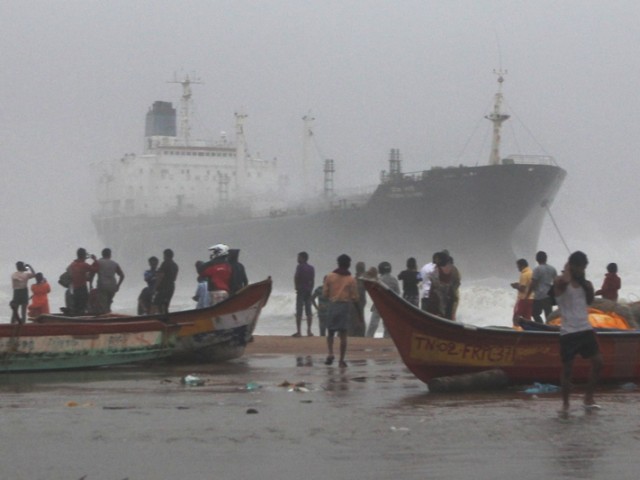
Coast Guard helicopters had on Thursday rescued 15 more sailors who were trapped in the ship. The initial rescue operations on the day of the cyclone were carried out by fishermen.

When the cyclone made its landfall, the ship's captain had sent out a distress call, but got no response. The Coast Guard and the Tamil Nadu government's Coastal Security Group were unable to launch rescue operations immediately; they said the gusty winds and bad weather didn't allow it.

A Coast Guard official had said: "We do not monitor ships at ports, not even on a cyclone day. We rescue only when there is a call."

Chennai Port officials said the ship's captain had ignored instructions to leave for safe waters following the cyclone alert.But the family of one of the sailors who died while trying to abandon the ship has filed a petition in court alleging that the vessel was not sea-worthy and had no food or fuel on board. The family has also demanded an interim compensation of Rs. 25 lakh and an eventual payment of Rs. 1 crore in its petition. Following this petition, the Madras High Court yesterday ordered that the ship not be moved from its current location, off the Besant Nagar beach. An emergency tow vehicle though is on its way to Chennai to pull out the ship when it can.

Saturday 3 Novemeber 2012

http://www.ndtv.com/article/india/cyclone-nilam-bodies-all-missing-sailors-found-287880

continue reading

Remains of Pinoy truck driver in Riyadh explosion may be repatriated next month

Philippine Ambassador to Saudi Arabia Ezzedin Tago said the remains of the Filipino truck driver who was killed in a fuel tanker explosion in Riyadh may be repatriated to the Philippines in four to five weeks.

In an interview over GMA Network’s “News To Go” program on Friday, Tago said the family of the victim — Florentino Santiago — has been informed about the procedure for repatriating his remains.

“Hindi po kami ang unang nagbigay ng impormasyon [sa kanyang pamilya] kung ‘di yung kamag-anak niya rin dito at yung mga kasamahan niya sa trabaho,” Tago said.

He explained that the documents needed for the repatriation, which usually takes four to five weeks to be processed, are:

Police reports

Report of death

Morgue report, and

Approval of the Office of the Emir

Tago also said the next of kin in the PHL must fill-up an affidavit of acceptance of remains.

“This could be done at the DFA-Office of the Undersecretary for Migrant and Workers Affairs or in regional consular offices,” he said.

Meanwhile, in a text message to GMA News Online, Department of Foreign Affairs (DFA) spokesperson Raul Hernandez, said Santiago ”was positively identified by his brother in law. His remains is now in Riyadh Central Mortuary at Shumeisy Hospital.” Hernandez also said Santiago was “just in the area when the explosion occured.”

Massive explosion

A report of the Reuters news agency said at least 23 people were killed when a fuel truck crashed into a flyover in the Saudi capital Riyadh on Thursday, triggering an explosion that brought down an industrial building and set fire to nearby vehicles. State-owned Ekhbariya television news channel reported on that the death toll had risen to 23 and emergency workers were still searching the collapsed building for more victims or survivors. Health ministry spokesman Saad al-Qahtani said 135 people were injured, mostly men and including some foreigners.

Although the incident took place near the headquarters of the Saudi Arabian National Guard and the Prince Nayef Arab University for Security Studies, officials speaking on state television said it was an accident.

Neither the guards’ complex nor the security university appeared to be damaged in the blast, which flattened a showroom for tractors, bulldozers and other industrial vehicles as well as damaging a busy flyover.

US ally Saudi Arabia is seen as a prime target for the al Qaeda branch based in neighbouring Yemen but the last successful attack inside the conservative Islamic kingdom was in 2006. Riyadh has cracked down on Islamist militants over the past decade, detaining thousands of suspects.

The civil defense department said a gas tanker had hit the Khureis Road flyover in eastern Riyadh, causing a gas leak and an explosion in the Zahid Tractor company’s showroom and warehouse, according to the state news agency SPA.

“The truck driver was surprised by a road accident on its route, causing it to crash into one of the pillars of the bridge,” spokesman Captain Mohamed Hubail Hammadi said.

Driver blamed

The civil defense chief, Saed al-Tweijri, said the fire had been brought under control. He blamed the tanker driver for the accident.

The warehouse, several storeys high, was levelled by the blast, which also caused severe damage to neighbouring buildings. Rubble, twisted metal and shattered glass littered a wide stretch of the surrounding area.

“I was inside the building when the blast came. Then boom, the building collapsed. Furniture, chairs and cabinets blasted into the room I was in,” said survivor Kushnoo Akhtar, a 55-year-old Pakistani worker, who was covered in dirt and bleeding from multiple cuts on his face and hands.

“My brother is still inside under the rubble. There are lots of people in there,” he said.

The blast at around 7:20 a.m. local time occurred on one of the capital’s busiest roads but because Saudi Arabia is still observing the Eid al-Adha holiday, traffic was lighter than normal.

An hour after the explosion, fires still raged in cars and trucks nearby and a column of black smoke billowed over the area.

By Thursday evening state television was still showing a large emergency operation at the site as workers picked through the flattened building with the aid of digging machinery.

Dozens of burnt-out vehicles surrounded the scene of the blast, including a small bus and other cars on top of the flyover, which was left buckled by the explosion.

Television footage and pictures posted on social media showed a body lying beside smoking vehicles and at least two charred bodies seated in a car. Another blackened corpse was visible in the remains of a truck.

More than 100 emergency personnel were combing through the wreckage on the flyover and searching for victims in the rubble of the building, one of two Riyadh outlets listed on the website of Zahid Tractor, a distributor of heavy machinery.

Saturday 3 novemebr 2012

http://pinoyoverseas.net/news/saudi-arabia/remains-of-pinoy-truck-driver-in-riyadh-explosion-may-be-repatriated-next-month.html

continue reading

Death toll from India cyclone rises to 20

The death toll from a cyclone that hit southern India rose to 20 on Friday as people started to return to their homes after the storm died down.

Cyclone Nilam, packing winds with speeds of up to 65 mph, made landfall Wednesday at Mahabalipuram in the Tamil Nadu state. About 13,000 people from low-lying areas in Tamil Nadu and the neighboring Andhra Pradesh state were evacuated.

Tamil Nadu disaster management chief Jatindra Nath Swain said five more deaths had been reported in rain-related incidents in the state since Thursday.

Separately, bodies of three of the five missing sailors of an oil tanker that ran aground off Chennai, were found washed ashore, the broadcaster NDTV reported.

On Thursday, the death-toll had stood at 12.

Swain said the impact of the storm had not been as serious as expected. He rejected reports that 150,000 people were displaced, saying the number would at most be a few hundreds.

"The cyclone toppled 5,000 electric poles and damaged 250 transformers causing blackouts in some areas. We are also assessing agricultural losses, as large areas of paddy crop was destroyed," he said.

"The situation is normal now with most people from coastal areas returning to their homes and schools and colleges opening today," he said.

The Indian Metereological Department in its final bulletin on the cyclone, said the storm had weakened into a "low pressure area" that would bring rains in Andhra Pradesh and neighboring states.

Saturday 3 November 2012

Read more here: http://www.bellinghamherald.com/2012/11/02/2752822/death-toll-from-india-cyclone.html#storylink=cpy

continue reading

In disaster, Google and Twitter become tech first responders

The first wave of terror struck shortly before 3 p.m. on a Friday. "The ground, the thing that doesn't move, was moving," recalled Tomoko Sudo, who was at work when the magnitude-9.0 earthquake hit Japan last year. "It felt like it was a living creature."

Then the second shock hit: She couldn't reach family members for days in some of the hardest-hit regions in the disaster that caused some 16,000 deaths.

So Sudo, 28, turned to Google's Person Finder, which the company's engineers had up and running within two hours after the shaking stopped. The service, created after the 2010 Haiti earthquake, is a tool to help track down the missing after a disaster. When the earth convulsed that March day, the Internet was for millions of Japanese the only link to critical information and to one another.

Google, Twitter, Cisco Systems and other technology companies were thrust into the role of technological first responders, underscoring a new dimension to the services offered by Silicon Valley tech companies as the Internet becomes ubiquitous and is often more reliable than other communications systems.

One by one, Sudo tracked down loved ones, including a cousin whose house was swept away by the tsunami. She said she was "shivering" with joy as she got word that they were all right.

This help, said Gisli Olafsson, emergency response director at NetHope, a nonprofit that promotes collaboration between major tech companies and global aid organizations, is worth much more than corporate cash donations. "You have really smart people working on really difficult problems," Olafsson said. "That becomes extremely valuable."

Google employees, themselves shaken up by the quake and their inability to reach family members, immediately set about deploying services for a traumatized nation from the company's Tokyo high-rise headquarters. Some worked on their laptops throughout the night.

Saturday 3 November 2012

Read more at: http://phys.org/news/2012-11-disaster-google-twitter-tech.html#jCp

continue reading

Staten Is. has grim Sandy aftermath

Nineteen of the city's 40 deaths are attributed to Sandy were on Staten Island.

Development on New York's Staten Island made the borough more vulnerable to the wrath of Hurricane Sandy, an educator said.

Nineteen of the city's 40 deaths attributed to the storm were on Staten Island, where roads, houses and bridges took away natural elements that would have helped absorb some of the shock when Sandy made landfall Monday, The New York Times reported.

William J. Fritz, interim president of CUNY College of Staten Island, said the borough no longer had what he called "sponges that absorb the energy of hurricanes."

"Jamaica Bay is a natural sponge with dunes and marshes that can do that," Fritz told the Times. "Barrier islands in North Carolina did that. What have we done on Staten Island? We've hardscaped our sponge. We've made roads and parking lots and houses and paved over the sponge. We've created an urban area, and you no longer have a sponge."

Fritz said the development was "one of the reasons we have that much property destruction, and I think some of the deaths."

Among the 19 dead were two neighbors who drowned in their homes, the Times said, and two boys who were wrenched from their mother's grasp by a wave as they tried to flee.

In a wooded lot, rescuers found the bodies of an 89-year-old man and his 66-year-old wife on Thursday -- the couple lived less than 500 yards away from where the bodies were found, the Times said.

Dr. Alan Benimoff, a geology lecturer at CUNY-Staten Island, said Staten Island was geographically in the wrong place when Sandy hit the Times said.

"The water didn't have anywhere else to go," he said.

Some residents of Staten Island were upset with what they perceived as a slow effort to get help into the borough, the Staten Island Advance reported.

Resident Donna Solli said she's happy that relief arrived but "I wish they had been here yesterday."

"This is a start," she said.

Saturday 3 November 2012

http://www.disasternews.net/news/article.php?articleid=5224

continue reading

Cyclonic grief for sailors’ parents running pillar to post

If death is hard to come to terms with, identifying dead kin is probably harder.

On Friday, families of the crew of beleaguered ship MT Pratibha Cauvery, rushed from one government hospital mortuary to another, to identify the bodies of their relatives. The bodies of three of the five missing sailors, who had jumped ship reportedly on their captain’s orders on Wednesday, were washed ashore and recovered by police and sent to the hospitals.

A few families at the Rajiv Gandhi Government General Hospital (GGH) were in denial, leading to some confusion over identification.

For several hours Namrata, Raj Ramesh Khamitkar’s mother, maintained that one of the bodies was not that of her son, as his hair had been shorter.

“He passed HSc. and did a course in nautical science. He spoke to us a few days before the cyclone. I used to work but gave up after he started working. He had taken a loan for his education and he told me he would take me around the world,” Ms. Namrata said amid sobs. “Now he will never come back. There is no one here and we have been sitting on the road from morning.” like beggars.” The shock of losing her son and not being comforted by familiar people was too much for her. She and her husband had their first cup of tea around noon.

Raj’s body was found around 3.30 a.m. by the family of another sailor, Jomon Joseph, and a few fishermen. “We had been searching for Jomon and we saw a body in an orange uniform under the bridge. It was wedged beneath the Napier bridge, and was finally brought it to the hospital around dawn,” said Jomon’s uncle.

As news of the recovery of the second body came, Jomon’s family arrived. His father K.J. Joseph works in a sea food company and his uncles waited as Mr. Joseph tried to bring himself to enter the mortuary and identify the body. Once in, he was relieved that it was not his son. “He worked in an oil tanker in the Gulf for a year and took up this job six months ago,” Mr. Joseph said. Jomon’s uncle said he loved cricket and was a fun-loving person person who wanted to become a sailor.

Around 7.30 a.m., Tiruvottiyur residents informed the police about a body on the beach. It was shifted to Government Stanley Hospital.

Sailor Niranjan’s father K. Kothandapani, went there to see if the body was that of his son’s. Born in Arakonnam, Niranjan completed his maritime engineering in Coimbatore. “His father is an agriculturist. Niranjan always wanted to study maritime engineering,” said his cousin, T. Satish, a software professional in the city. “He called me on Tuesday and told his mother that the ship had come ashore and he was getting into a lifeboat. He said he would be home soon,” Mr. Kothandapani added later. “There was a lot of wind and because of it we could not hear much. Then the line went dead.”

After seeing the drifting ship on a TV channel, the family came to Chennai. Mr. Kothandapani who was dressed in white dhoti and shirt, was later escorted to the Royapettah GH mortuary where he identified his son. “Niranjan was a very easy going guy with no bad habits,” said Satish, before moving on to console his uncle.

Kshitij Jadhav and his family realised that the body at the GGH was not that of Rushub Jadhav. He had stayed with his cousin, Dr. Kshitij’s family in Mumbai to finish a course in electronics. Rushub was a deck cadet.

The search is on for two more sailors – Jomon Joseph and Krishna C.P. Purayil, a trainee seaman. Krishna’s uncle Sunil Kumar described him as a happy youngster who enjoyed being on the ship. He last spoke to his family on Tuesday around 3.30 p.m. The family is still hoping Krishna will return home.

Saturday 3 November 2012

http://www.thehindu.com/news/cities/chennai/cyclonic-grief-for-sailors-parents-running-pillar-to-post/article4059186.ece

continue reading

Friday, 2 November 2012

Cyclone Nilam: Bodies of three missing sailors found

The bodies of three of the five missing sailors of ship MT Pratibha Cauvery, which was grounded by cyclone Nilam, have been found.

One of the bodies was washed ashore near the Chennai harbour while the other was found near Adyar Estuary. Another body was found at sea this afternoon. All the bodies are yet to be identified.

Meanwhile, the two other sailors remain

The ship had run aground near the Besant Nagar beach in Chennai on Wednesday. The five sailors went missing after a lifeboat they were using to leave the ship capsized.

So far, three sailors have lost their lives in the tragedy.

Coast Guard helicopters had on Thursday rescued 15 trapped sailors from the ship. The initial rescue operations on the day of the cyclone were carried out by fishermen.

When the cyclone made its landfall, the ship's captain had sent out a distress call, but got no response. The Coast Guard and the Tamil Nadu government's Coastal Security Group were unable to launch rescue operations immediately; they said the gusty winds and bad weather didn't allow it.

A Coast Guard official said: "We do not monitor ships at ports, not even on a cyclone day. We rescue only when there is a call."

Chennai Port officials said the ship's captain had ignored instructions to leave for safe waters following the cyclone alert.

Friday 2 November 2012

http://www.ndtv.com/article/india/cyclone-nilam-bodies-of-three-missing-sailors-found-two-still-to-be-traced-287414

continue reading

Delay in DNA tests for Baldia factory fire victims

At the only morgue in Pakistan’s largest city lie the blackened remains of 32 people killed in one of the worst industrial accidents in the country’s history, wrapped in white plastic body bags waiting for DNA tests to determine who they are.

That means an excruciating wait — so far more than a month — for families whose relatives are believed to have been killed but have not been accounted for.

One of those in the morgue may be the daughter-in-law of Aisha Bano. Bano’s son and his wife both were working as stitching machine operators in the warehouse-factory producing jeans and other clothes when it was ravaged by a Sept. 11 blaze. The son is known to have died. His wife is still missing.

Bano says her grandchildren have continuous nightmares about their missing mother, dreaming that she’s trying to get home.

“Almost every midnight one of them wakes me up to tell me somebody is outside the house calling their names and pleading to open the door,” said Bano, tears rolling down her cheeks.

The fire horrified Karachi, and residents are still struggling to deal with the extent of the tragedy. According to official figures, 259 workers died in the fire, but there are indications the toll may be even higher. The inferno laid bare the dangerous conditions at some Pakistani factories, as well as the limitations of facilities in this port city of more than 18 million people.

It took rescue workers more than 36 hours to put out the blaze. Investigators haven’t determined what caused the fire but suggested that it might have been a short circuit that ignited material and wood. Between 300 and 400 workers were inside working. An investigation found that the emergency exits were permanently locked, and the main doors were locked after the fire broke out to prevent theft.

Many of the dead suffocated to death in the basement when it filled with smoke. Those on the top floors of the five-story building could be seen on television images desperately breaking through the metal bars blocking the windows and then jumping to the ground below.

When authorities were finally able to make their way into the blackened building, they found dozens of bodies, many charred beyond recognition.

Most of the dead have been identified and handed over to their families, many in the first couple of days because the bodies were intact.

Those remaining are at the Edhi Morgue, identifiable only by DNA.

There’s no place in Karachi to do the DNA tests, so samples have been sent to a laboratory in Islamabad, said officials. Despite reassurances from the government that the dead would be quickly identified, the turnover has been slow. The lab provided results on nine bodies so far, leaving 32 still at the morgue, said Inspector Jahanzeb Khan with the Karachi police.

“We sent a lot of reminders to the laboratory to expedite the DNA match process,” he said.

Bano’s family received the body of her son, Muhammad Javed, from the hospital the day after the fire. But his wife Samina’s has still not been identified. Bano and her other sons initially thought Samina might still be alive and visited all the city’s hospitals. When realization struck that she was likely dead, they began visiting the morgue.

“We checked all the unidentified bodies so many times. We visited the Edhi Morgue 17 days in a row,” she said, sitting next to her three grandchildren and younger son.

The doctors took a DNA sample from one of the relatives and told them it would take up to three days to confirm Samina’s body, Bano said. When they contacted the police, they were told the samples were sent to Islamabad and were told to wait.

The lack of identification has also made it difficult for families to receive compensation promised by the government.

Muhammad Siddiq lost his son Muhammad Shehbaz in the factory. His son came home for lunch that day with a fever but he brushed aside his mother’s urging to stay home and returned to work. Provincial government officials told the family they have to prove they have lost a family member before they can receive compensation. So they need confirmation of his body.

Siddiq said the compensation pales in comparison to the family’s need to bury their son.

“All I need is my son’s body so his soul can rest,” he said. “His mother has almost lost her senses.”

A recent survey by a Karachi union suggests even more people might have been killed.

The Hosiery Garment Textile Workers Union along with the Pakistan Institute of Labor Education and Research surveyed families in the neighborhood where the factory was located as well as another neighborhood nearby where many workers lived. They found 65 families who said they were still missing relatives after the blaze. Some of those could be among the unidentified at the morgue, but the numbers indicate many might not be.

“If they have died, the casualties are much higher than reported,” said Rehana Yasmin from the union.

Two of the owners of Ali Enterprises, which owned the factory, are in a Karachi prison awaiting trial on murder charges for allegedly telling guards to lock the doors after the fire started to prevent theft. A third owner was allowed to stay out of jail because of poor health. Police have also arrested the factory’s general manager and three private security guards on murder charges for carrying out the orders to lock the doors.

The Federal Investigation Agency, one of the country’s highest law enforcement agencies, was tasked with investigating the fire and recently submitted a report blaming the owners and relevant government departments for not following safety and labor laws.

The second floor, where most of the casualties were reported, was not even in the approved map of the factory, the FIA found. Water hydrants did not work, and workers had not been given rescue training by the city’s civil defense department, the FIA found. The factory was not registered with the provincial labor department, in violation of the country’s labor laws.

Friday 2 Novemebr 2012

http://www.washingtonpost.com/world/asia_pacific/delay-in-dna-tests-means-families-wait-for-bodies-of-loved-ones-after-deadly-pakistani-fire/2012/11/02/6979c45a-24b9-11e2-92f8-7f9c4daf276a_story.html

continue reading

Families await bodies after Pakistan factory fire

KARACHI, Pakistan—At the only morgue in Pakistan's largest city lie the blackened remains of 32 people killed in one of the worst industrial accidents in the country's history, wrapped in white plastic body bags waiting for DNA tests to determine who they are.

That means an excruciating wait—so far more than a month—for families whose relatives are believed to have been killed but have not been accounted for.

One of those in the morgue may be the daughter-in-law of Aisha Bano. Bano's son and his wife both were working as stitching machine operators in the warehouse-factory producing jeans and other clothes when it was ravaged by a Sept. 11 blaze. The son is known to have died. His wife is still missing.

Bano says her grandchildren have continuous nightmares about their missing mother, dreaming that she's trying to get home.

"Almost every midnight one of them wakes me up to tell me somebody is outside the house calling their names and pleading to open the door," said Bano, tears rolling down her cheeks.

The fire horrified Karachi, and residents are still struggling to deal with the extent of the tragedy. According to official figures, 259 workers died in the fire, but there are indications the toll may be even higher. The inferno laid bare the dangerous conditions at some Pakistani factories, as well as the limitations of facilities in this port city of more than 18 million people.

It took rescue workers more than 36 hours to put out the blaze. Investigators haven't determined what caused the fire but suggested that it might have been a short circuit that ignited material and wood. Between 300 and 400 workers were inside working. An investigation found that the emergency exits were permanently locked, and the main doors were locked after the fire broke out to prevent theft.

Many of the dead suffocated to death in the basement when it filled with smoke. Those on the top floors of the five-story building could be seen on television images desperately breaking through the metal bars blocking the windows and then jumping to the ground below.

When authorities were finally able to make their way into the blackened building, they found dozens of bodies, many charred beyond recognition.

Most of the dead have been identified and handed over to their families, many in the first couple of days because the bodies were intact.

Those remaining are at the Edhi Morgue, identifiable only by DNA.

There's no place in Karachi to do the DNA tests, so samples have been sent to a laboratory in Islamabad, said officials. Despite reassurances from the government that the dead would be quickly identified, the turnover has been slow. The lab provided results on nine bodies so far, leaving 32 still at the morgue, said Inspector Jahanzeb Khan with the Karachi police.

"We sent a lot of reminders to the laboratory to expedite the DNA match process," he said.

Bano's family received the body of her son, Muhammad Javed, from the hospital the day after the fire. But his wife Samina's has still not been identified. Bano and her other sons initially thought Samina might still be alive and visited all the city's hospitals. When realization struck that she was likely dead, they began visiting the morgue.

"We checked all the unidentified bodies so many times. We visited the Edhi Morgue 17 days in a row," she said, sitting next to her three grandchildren and younger son.

The doctors took a DNA sample from one of the relatives and told them it would take up to three days to confirm Samina's body, Bano said. When they contacted the police, they were told the samples were sent to Islamabad and were told to wait.

The lack of identification has also made it difficult for families to receive compensation promised by the government.

Muhammad Siddiq lost his son Muhammad Shehbaz in the factory. His son came home for lunch that day with a fever but he brushed aside his mother's urging to stay home and returned to work. Provincial government officials told the family they have to prove they have lost a family member before they can receive compensation. So they need confirmation of his body.

Siddiq said the compensation pales in comparison to the family's need to bury their son.

"All I need is my son's body so his soul can rest," he said. "His mother has almost lost her senses."

A recent survey by a Karachi union suggests even more people might have been killed.

The Hosiery Garment Textile Workers Union along with the Pakistan Institute of Labor Education and Research surveyed families in the neighborhood where the factory was located as well as another neighborhood nearby where many workers lived. They found 65 families who said they were still missing relatives after the blaze. Some of those could be among the unidentified at the morgue, but the numbers indicate many might not be.

"If they have died, the casualties are much higher than reported," said Rehana Yasmin from the union.

Two of the owners of Ali Enterprises, which owned the factory, are in a Karachi prison awaiting trial on murder charges for allegedly telling guards to lock the doors after the fire started to prevent theft. A third owner was allowed to stay out of jail because of poor health. Police have also arrested the factory's general manager and three private security guards on murder charges for carrying out the orders to lock the doors.

The Federal Investigation Agency, one of the country's highest law enforcement agencies, was tasked with investigating the fire and recently submitted a report blaming the owners and relevant government departments for not following safety and labor laws.

The second floor, where most of the casualties were reported, was not even in the approved map of the factory, the FIA found. Water hydrants did not work, and workers had not been given rescue training by the city's civil defense department, the FIA found. The factory was not registered with the provincial labor department, in violation of the country's labor laws.

Friday 2 November 2012

http://www.lcsun-news.com/ci_21911686/families-await-bodies-after-pakistan-factory-fire

continue reading

Jnaneswari victims' kin to move court

KOLKATA: Miffed over delay in issuing death certificates, members of 16 families, who lost their kin in the Jnaneswari Express accident on May 28, 2010, are planning to move the court. According to them, they can't even claim their jobs and succession documents in the absence of the death certificates.

Of the 150 victims of the tragedy, about 40 bodies were heavily mutilated and later many were identified through DNA matching. Still 23 bodies are still of the train accident are lying in the morgues for identification. As several DNA profiles did not match, the state, in June, 2012, the state government's home (political) department issued a missive to the relatives of 11 victims of the Jnaneswari express advising them to take legal route. The state had said that under the provision of law it's not permissible to issue death certificates unless the bodies are identified.

Juthika Atta, whose husband Prasenjit was in the S-3 compartment, is shattered. "His body could not be traced. DNA test didn't help. I got Rs 10 lakh as compensation. But I need a job to take care of my daughter Poulami (7) and the ailing in-laws. So, I need the death certificate.",the railways won't give me a job."

The compensation package included Rs 5 lakh from the railways, Rs 2 lakh from the PM's Relief Fund and Rs 3 lakh from the CM's Relief Fund.

For Rajesh Kumar Bathra, life came to a halt, as his wife Indu Devi, daughter Sneha (17) and son Saurav (13) were in the train on the fateful day. While Sneha could not be found, an injured Saurav died in a hospital on May 31,2010. He received his wife's body on December 26, 2010. "I visit Midnapore and Kharagpur regularly to find out Sneha."

Surendra Singh, who lost his wife Nilam (37) and sons Rahul (17) and Rohit (15), goes to Midnapore every month to find traces of missing Nilam and Rahul. Rohit was found dead on the spot. "My younger son Raju gave samples thrice for the DNA test. But Nilam and Rahul are still untraced. Raju had applied for a job in the railways, but they turned it down stating that he was only eligible in his father's absence."would have if the father had died then he would have been eligible."

Unnati Mondal lost her husband Swapan Mondal and with one-year old niece Latikais yet to get their death certificates.

Hisabuddin Sheikh is lobbying with the railway officials for a job for his nephew Selim Sheikh (19), as his brother Ayajuddin died in the accident. on his way to the middle-east.

But the death certificate is an impediment.

65-year old Suresh Gajbhiy's son Amit (31) and daughter-in-law Sunita died in the accident. "It is difficult for me to come from Nagpur for the death certificate." Similarly, Pankaj Upadhyay of Madhya Pradesh finds it difficult to come frequently to Kolkata for his brother Pradip's death certificate.

For 73-year-old Sushil Kumar Sil and his 65-year-old wife Mallika, life is of little value as they lost their son Tapas (42), daughter-in-law Chaitali (31), daughter Sujata Das (35), son-in-law Shyamal Das (38) and grandsons Srijit (10), Srinjay (3) and Siddhartha (7). They shifted to Sodepur from their Dunlop residence as it was impossible for them to stay in the same house.

Former chief justice of Calcutta high court Chittatosh Mookerjee said a petition before the court can help the kin get death certificates. He said that under the Evidence Act, a person, who had not been heard of for seven years, is presumed to be dead. "But the court, through inference, can direct for providing a death certificate, if it is proved that they had died due to the accident."

It is unending wait for 16 family members, who lost their dear ones in the Jnaneswari Express on May 28, 2010. They are yet to get death certificates of their relatives and so they are now moving high court for relief. Without it many are unable to claim jobs or get succession certificate.

Friday 2 November 2012

http://timesofindia.indiatimes.com/city/kolkata/Jnaneswari-victims-kin-to-move-court/articleshow/16998964.cms

continue reading

Six Indian ship crew missing after cyclone crash

Rescuers in southern India searched Thursday for six tanker crew that went missing after their lifeboat capsized as a cyclone slammed into the coast overnight, forcing thousands to flee and killing eight.

The crew of the Pratibha Cauvery oil tanker was forced to abandon ship when it ran aground on the southern edge of Chennai, and one sailor was confirmed to have drowned.

The ship, which had unloaded its oil in Chennai port, was stranded on a beach close to the shore on Thursday as three helicopters and small vessels took the 15 remaining crew members ashore.

"One sailor is dead and we are searching for six other crew members," said Jayraman, a disaster management official in Chennai.

Shipping authorities had reported that the Pratibha Cauvery was not badly damaged and that a plan to refloat it was being drawn up, he said.

The overall death toll from the cyclone reached eight, with thousands of people also forced to flee from coastal towns to seek shelter in schools and government buildings.

One other person drowned, two were killed when a wall collapsed, one person was electrocuted and three died when a tree fell on their hut.

"We have managed to restore power in all districts after the storm," Jayraman said. "Food and drinking water have been provided to all the 5,000 people who have been evacuated from their homes."

Government authorities on Thursday said the storm had weakened substantially though heavy rains continued to lash some parts of Tamil Nadu and Karnataka states.

Friday 2 November 2012

http://www.globaltimes.cn/content/741820.shtml

continue reading

Pinoy among 22 dead in tanker blast in Riyadh

At least one Filipino was killed while ten others were hospitalized in a fuel truck explosion that killed at least 22 people in Riyadh, Saudi Arabia Thursday, the Department of Foreign Affairs said.

In an update posted on his Twitter account, DFA spokesman Raul Hernandez indicated three more Filipinos were injured but have been discharged.

"One Filipino was killed in the Riyadh fuel truck explosion, nine (are) in hospitals, three (have been) discharged," he said.

In Riyadh, Vice Consul Redentor Genotiva said there is a tenth injured Filipino also being given medical attention.

The gas tanker truck exploded on a main road in the Saudi capital on Thursday, killing at least 22 people, including one unnamed Filipino. The explosion also injured about 111 others—eleven of them Filipinos—and left a trail of destruction, officials said.

The lorry veered into a bridge pylon at a junction on Khurays Road in Riyadh at about 7:30 a.m., causing a gas leak that spread out and then burst into flames, destroying nearby cars and a business, the officials told AFP.

An injured man after an explosion in eastern Riyadh on November 1. At least 10 people were killed when a fuel truck crashed into a flyover in the Saudi capital Riyadh, triggering the blast that caused the collapse of an industrial building. Al Arabiya and Al Jazeera television stations reported that aside from the fatalities, at least 50 people were injured.

Philippine Ambassador to Saudi Arabia Ezzedin Tago, in an interview on GMA News' "State of the Nation," cited initial reports indicating the deceased was brought to a morgue but was not immediately identifiable. He added they are coordinating with the deceased's kin.

He also expressed condolences with the family of the deceased, and assured the families of the injured the embassy is coordinating with Saudi authorities.

In a radio interview Friday, Vice Consul Genotiva said they will coordinate with the victim's employer for the repatriation.

"Makikipag-ugnayan tayo sa employer para mapadali ang pag-uwi ng labi sa Pilipinas," he said in an interview on dzBB radio.

He said the fatality was identified by a brother-in-law.

While he withheld the name of the fatality for the moment, he described the fatality and the brother-in-law as workers for a tractor company.

Genotiva also said their latest figures indicated 10 Filipinos, nine of them employees of the tractor company, were injured in the incident.

The injured were being treated in four hospitals in the Kingdom, he added.

Genotiva also said the Embassy will coordinate with the victims' employer to make sure the injured receive medical attention.

"Sila naman ay legal worker ng kumpanya. Under Saudi law sila ay required bigyan ng insurance ng employers," he said.

He said the Embassy will talk with the injured workers and ask them if they want to continue working in the Kingdom or be repatriated.

"Pag-uusapan natin batay sa decision ng worker kung gusto manatili o umuwi," he said.

An AFP photographer at the scene of the explosion reported widespread damage to the area, with dozens of cars mangled by the blast and burned out.

A bus that had been gutted by the fire stood idle on the flyover, with witnesses saying that the vehicle had been transporting workers whose fate remained unknown.

Another truck fell off the bridge due to the impact of the explosion, the witnesses said.

Amateur video footage posted on the Internet showed thick black smoke billowing from different spots around the flyover whose pylons were also damaged.

Civil defense personnel carried two "completely charred" bodies from the site.

"The death toll of the gas truck fire in Khurays has increased to 22 people, in addition to 111 wounded," a civil defense official said.

Earlier, a civil defense official who requested not to be named told AFP that at least 14 people were killed and around 60 others hurt "in the explosion of the truck when it hit a bridge pylon."

Civil defense spokesman in Riyadh, Mohammed al-Hammadi, said the explosion took place after gas leaked from the tank of the lorry, according to SPA state news agency.

"The explosion and fire happened after leaked gas filled the area. Huge damage happened, in addition to many traffic collisions," he said, adding there were fatalities without specifying how many.

Hammadi said a nearby show yard of construction machinery was severely damaged by the explosion.

Friday 2 November 2012

http://www.gmanetwork.com/news/story/280584/pinoyabroad/news/pinoy-among-22-dead-in-tanker-blast-in-riyadh

continue reading

OR crime lab helps solve nameless mysteries

In murder investigations, detectives are usually searching for a killer. But in dozens of cases, the mystery also includes unidentified remains.

Clackamas County Sheriff's forensic artist, Joyce Nagy, helps identify those nameless victims.

"I need to do the best job I can to give (each victim) a voice," said Nagy. "It's a process, takes a lot of prayers and good intuition to make the drawings turn out the way they should look," she said.

To develop the drawings, Nagy uses information gleaned by Oregon State Police forensic scientist, Nici Vance.

"You'd be amazed by the things we can tell by the skeleton," said Vance. "When you have a truly unidentified individual, you're starting at a deficit," she said.

That's where Portland Police detectives found themselves last June, when park rangers discovered the remains of a young woman in Washington Park. Her face was decomposed beyond recognition, her fingerprints nowhere on file.

DNA ultimately led detectives to the victim's suspected killer, Mark Beebout. He's also a suspect in an unrelated Southeast Portland murder from July.

But they still didn't know who the victim was, so investigators turned to Vance and Nagy for help.

Vance used special tools to measure the victim's skull, cranium and jaw. She then used a formula to calculate the measurements which helped determine the victim was likely a teenage girl, possibly mixed race, likely Hispanic-- all critical clues.

Nagy used that information in her drawing. After photographing the victim's skull, she used a light table to trace over the photo and develop a sketch. As they do with all unnamed victims, Nagy and Vance submitted the sketch and case information into a national online database that tries to link unidentified human remains with missing persons cases.

The National Missing and Unidentified Persons System can be accessed at www.NamUs.Gov. Anyone can search it, including parents of missing people and law enforcement agencies.

Ultimately, dental records pointed investigators in the Washington Park case to 15-year-old Mayra Sophia Cruz Rodriguez, a reported runaway from San Diego County, California.

A photograph of Cruz Rodriguez revealed an uncanny resemblance to Nagy's forensic sketch.

"We have a truly exceptional forensic artist on our hands," said Vance. Nagy, said she's just thankful for closure in that part of the case.

"To allow the family to close that chapter on that life... It just brings a tear to your heart," Nagy said.

Vance said investigators are now trying to identify the remains of 81 other homicide victims in Oregon, hoping to bring some sort of closure to their families.

To accomplish that, she hopes more people will post missing persons information on NamUs.gov, which could help investigators identify more victims.

Friday 2 November 2012

http://www.kgw.com/news/local/Naming-the-nameless-victims-176705891.html

continue reading

Families remember missing loved ones

Erlinda Malicdem still remembers the last words her husband, Jimmy, uttered in Filipino before the urban poor leader disappeared on Oct. 8, 1987: “When the time comes, you’ll understand what I’m doing.”

“He was always there when they needed him,” she told the Philippine Daily Inquirer in a phone interview. She was 29 when she last saw her husband, then 34, in Sucat, Paraรฑaque City.

Now 54, Erlinda has been visiting Bantayog ng mga Desaparecido at Redemptorist Church in Baclaran, Paraรฑaque, since the memorial was erected in 1994. Tomorrow (Thursday), she will be visiting with her three children and five grandchildren, and over 60 other families.

“The families come here every year because they have no tomb to visit on All Souls’ Day,” said Wilma Tizon, deputy secretary general of the Families of Victims of Involuntary Disappearance Inc. (FIND), an organization of families, friends and colleagues of the disappeared, as well as surfaced “desaparecidos” (disappeared).

FIND has documented 1,838 cases of disappearances since 1971. Nearly half of the cases (878) happened during the martial law regime of President Ferdinand Marcos. “Every All Souls’ Day, we make it a point to visit the memorial to remember our loved ones,” Erlinda said.

She remembers Jimmy as a man for others. “Before he disappeared, every time somebody called on him for help, that person becomes his priority.” “He’s been gone for a long time, but the pain is still there,” she said.

For families and friends of the disappeared, the Bantayog stands as common ground for remembrance. The memorial lists the names of Jimmy Malicdem and hundreds of other missing people etched in granite panels.

Unveiled in September 2004 in time for the 23rd anniversary of martial law, the memorial is the refurbished “Flame of Courage Monument,” which was originally unveiled by FIND on July 13, 1994, the ninth anniversary of the disappearance of Redemptorist priest Rudy Romano.

Romano, a well-known human rights activist, was abducted in Cebu in 1985, allegedly by military agents. To this day, he has not been found.

Designed and created by sculptor Lito Mondejar, the Flame of Courage features a mother carrying a torch, which symbolizes the courage of those left behind and continuing the struggle for justice.

A child holding the picture of his father represents hope that one day, the families will be reunited with their missing loved ones, according to FIND.

Tomorrow’s (Thursday) program will carry the theme “Paggunita at Pagdiriwang sa Buhay at Pakikibaka ng mga Desaparecidos” (Remembering and celebrating the lives and struggles of the Desaparecidos).

A thanksgiving ceremony will also be held for the passage of the Anti-Enforced Disappearance Bill earlier this month. “We will also again call for President Benigno Aquino III to sign the bill immediately,” Tizon said.

“Now that Congress has approved the bill and it is now in President Aquino’s hands, we hope he will sign it soon,” Erlinda said.

“We don’t want more disappearances. We don’t want more families experiencing the pain that these enforced disappearances cause,” she added.

The first in Asia to criminalize enforced disappearances, the bill was approved by the Senate and the House of Representatives on Oct. 16, It is now pending approval by the President.

The bill defines enforced or involuntary disappearance as “the arrest, detention, abduction or any other form of deprivation of liberty committed by agents of the state or by persons or groups of persons acting with authorization or support from the state, followed by a refusal to acknowledge the deprivation of liberty or by concealment of the fate or whereabouts of the disappeared.”

The maximum penalty for offenders is life imprisonment, or equivalent to 20 years and one day to 40 years in prison. Victims of enforced disappearance and their kin will also be entitled to compensation, restitution and rehabilitation.

The crime has no prescription period, unless the victim has surfaced. This means that the perpetrators can still be prosecuted regardless of how long the time of disappearance has passed.

“Every year, the families pray for justice to be served, and for their loved ones to be eventually found,” Tizon said.

Simultaneous rites will be held in FIND chapters in provinces in Central Luzon and Bicol, Cebu, Leyte, Negros, Panay, Northern Mindanao, Southern Mindanao and Western Mindanao.

Source: Families of Victims of Involuntary Disappearance (FIND), “Beyond Disappearance: Chronicles of Courage”

Friday 2 November 2012

http://newsinfo.inquirer.net/299438/families-remember-missing-loved-ones

continue reading