Monday, 8 June 2015

China completes DNA collection to identify ship dead


China has completed the DNA collection needed to identify the 432 bodies recovered so far from last week's deadly Yangtze boat disaster.

The Eastern Star, mostly carrying elderly tourists, capsized on 1 June near Jianli in Hubei province.

Just 14 of the 456 passengers and crew are known to have survived.

A search is continuing for eight people who remain missing. Authorities have extended the search area to 1,000km (621 miles) downriver. The sinking was the worst maritime disaster China has seen in decades.

DNA matching

Authorities are now planning to collect DNA from family members for matching purposes.

A spokesman for China's public security ministry, Min Jianxiong, told reporters that they expect to finish matching the DNA within the next few days, and added that a number of victims had already been identified.

Meanwhile authorities have begun cremating victims so that they can return their ashes to their families for burial, as per Chinese custom.

The BBC's Celia Hatton in Beijing says activity has moved from the hollow shell of the capsized cruise ship to a nearby morgue.

Relatives were seen weeping as they arrived at the morgue in Jianli to have one last look at their loved ones before cremation, AP reported.

On Sunday - a week after the disaster took place - many congregated by the shore of the Yangtze to hold mourning ceremonies.

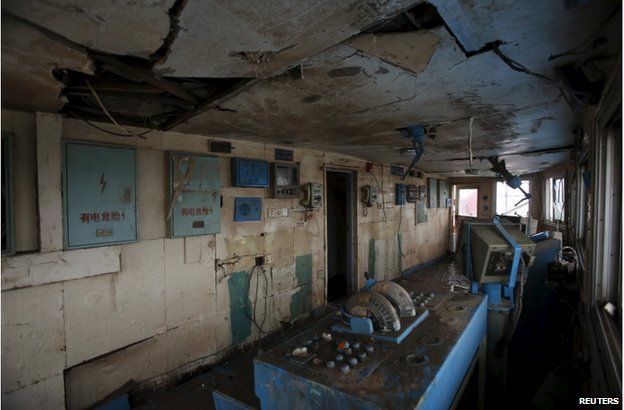
Meanwhile new pictures emerged of the interior of the Eastern Star - known as Dongfangzhixing in Chinese - which was pulled upright on Friday for search operations over the weekend.

Searchers said rooms were "severely ruined" and strewn with debris.

The top floor was crushed and rescuers had to break into rooms using chainsaws, according to Reuters news agency.

Our correspondent says questions still linger as to how the massive ship sank in just a few minutes, without anyone issuing a distress call.

Some in the Chinese state media argue that modifications to the ship's interior made it more difficult for those on board to escape in an emergency.

Others point to the possibility of human error and have questioned the decision to continue sailing in rough weather.

The Chinese authorities arrested the ship's captain and chief engineer, who were among the survivors, but they have not announced plans for a criminal inquiry into the disaster.

The cause of the sinking is not yet known, but survivors have spoken of an intense storm which flipped the boat over in minutes.

Monday 8 June 2015

http://www.bbc.co.uk/news/world-asia-china-33044963

continue reading

Saturday, 6 June 2015

Nepal says civilians were on crashed US copter, toll now 13


A U.S. military helicopter that crashed in Nepal last month on an earthquake relief mission was carrying five more passengers than first thought, raising the death toll to 13, Nepal's army said Friday.

Authorities initially said six U.S. Marines and two Nepalese soldiers were killed.

According to Army Spokesperson Brigadier General Jadish Chandra Pokharel, the confirmation was made after matching the DNA samples of the deceased family with the samples of their family members. The Army had collected the DNA samples of the relatives of the missing locals last week. The search for the five people was started only after they could not be found at any hospital in Kathmandu even 13 days after they were airlifted from the district. “We are preparing to hand over the bodies to the family members,” Pokhrel said. The body of Lieutenant Tapendra Rawal was handed over to his family in Dailekh where his last rites were performed last week. The body of Warrant Officer Basant Bahadur Titara will also been handed over to his family soon, according to the Army. The US Embassy in Nepal said that Nepali and US armies have been coordinating on the identification of the remains of the five civilians who lost their lives in the crash. “We offer heartfelt condolences to all those who lost their lives in this tragic accident,” said Susan Parker-Jones, director of Public Affairs at the Embassy. The UH-1 "Huey" helicopter crashed May 12 in the northeastern mountains, and the wreckage was found after days of intense searching. The first three charred bodies were retrieved by Nepalese and U.S. military teams, and the rest were found a day later.

The U.S. relief mission was deployed after a magnitude-7.8 earthquake hit Nepal on April 25. A magnitude-7.3 quake struck on May 12 and hours later the helicopter crashed.

Four of the Marines were part of the Marine Light Attack Helicopter Squadron 469 of the 3rd Marine Aircraft Wing based at Camp Pendleton near San Diego, California. Two other Marines were combat cameramen based in Japan.

The cause of the crash has not been determined. U.S. military officials have said that an Indian helicopter in the air nearby heard radio chatter from the Huey about a possible fuel problem.

Earlier this week, a private helicopter chartered by Doctors Without Borders crashed after hitting power cables, killing all four people on board. Three victims were Nepalese and the other was a Dutch woman.

The government and aid agencies have used helicopters to carry relief materials to mountainous regions where earthquake damage or the lack of existing roads has made delivery of aid all but impossible.

The two earthquakes have killed more than 8,700 people, injured thousands and destroyed many buildings. Saturday 6 June 2015

http://www.aol.com/article/2015/06/05/nepal-says-civilians-were-on-crashed-us-copter-toll-now-13/21191888/

continue reading

11 dead, 8 missing on Malaysian peak after earthquake of 6.0 magnitude


The strong earthquake that jolted Malaysia's Mount Kinabalu left at least 11 people dead and another eight missing on Southeast Asia's highest peak, a government official said on Saturday.

"As at noon time, 11 bodies have been recovered (2 identified) and eight people are still missing," Masidi Manjun, the tourism minister for the Malaysian state of Sabah on Borneo island, said on his Twitter feed.

The 6.0-magnitude quake struck near the picturesque mountain, a popular tourist destination, on Friday, sending landslides and huge granite boulders tumbling down from the 4,095-metre peak's wide, jagged crown.

The quake was centered northwest of Ranau district in Sabah state on Borneo at a depth of 54 kilometers (34 miles), Malaysia's meteorological department said.

Local media said rescuers recovered two bodies from 4,095-meter Mount Kinabalu believed to be of a local guide and a 12-year-old female Singaporean student.

Sabah police chief Jalaluddin Abdul Rahman confirmed two fatalities but couldn't give further details. Sabah Parks director Jamili Nais said several injured climbers had been brought down the mountain.

Most of the 137 stranded people were cautiously trying to descend with the help of park rangers and guides, and some were expected to reach the base camp by early Saturday, he said. Some were foreigners, but it wasn't clear how many.

The climbing route was apparently blocked or made dangerous by rocks and boulders loosened by the quake and small aftershocks, Jamili said.

Helicopters were unable to land because of bad weather and the high altitude, he said. The quake damaged roads and buildings, including schools and a hospital on Sabah's west coast.

Saturday 6 June 2015

http://www.dnaindia.com/world/report-11-dead-8-missing-on-malaysian-peak-after-earthquake-of-60-magnitude-2092875

continue reading

Ghana: 28 days to claim bodies of floods, GOIL fire victims


Families of persons who died as a result of last Wednesday’s flood and the fire at the GOIL fuel station have up to July 2, 2015 to claim the bodies.

According to the Manager of the Korle-Bu Mortuary Department, Mr George Denkyi, the law permitted unidentified bodies to be buried within 28 days of being received at the morgue.

In effect, bodies at other public health facilities will be affected by this ultimatum.

He explained that a mass burial would be held for the unclaimed bodies after July 3, 2015.

“Postmortem examination will be performed on the bodies to find the cause of death. The unclaimed ones would then be buried in a mass grave after the July 2 deadline,” Mr Denkyi told the Daily Graphic in Accra yesterday.

Meanwhile, the remains of 64 people who died as a result of floods and the fire outbreak at a GOIL fuel station at Kwame Nkrumah Circle in Accra have been identified.

More than 150 people have been killed by the floods and fire that occurred on Wednesday, June 3, 2015 in some parts of Accra.

The 37 Military Hospital has received 65 victims and out of that number, 32 have been identified, but two are charred beyond recognition. Four persons are currently receiving treatment at the Intensive Care Unit (IOU).

“There are 65 bodies in our morgue right now. They are 22 females and 43 males while 22 people are currently on admission. A male child is among those admitted.

Sources at the various health centres disclosed these figures to the Daily Graphic in Accra and said that the public was welcome to identify either the deceased or injured persons.

Fifty-seven bodies are in the Police Hospital morgue. Families have managed to identify 30 bodies at the time of going to press yesterday. The Korle-Bu Teaching Hospital received 11 bodies. Six of the deaths were flood-related.

The heavy downpour recorded in some parts of Accra left in its wake death and misery as some persons are still unaccounted for.

Scores of family members have been trooping to various health centres in search of their missing relatives.

At the time of going to press yesterday, devastated Ghanaians were moving from one hospital to another in search of either bodies or family members receiving treatment.

Some found their relatives alive and badly injured, while others have either managed to identify their dead relatives or could not identify them due to the devastating effects of the fire outbreak on their bodies.

There was a sad spectacle at the 37 Military Hospital in Accra yesterday as scores of people were in misery as a result of their inability to locate their missing relatives.

Hospital authorities have made arrangements for the general public to view and identify deceased persons and those on admission.

Troubled family members who spoke to the Daily Graphic indicated they had been to the major hospitals in Accra but were yet to locate their missing relatives.

Saturday 6 June 2015

http://www.ghanaweb.com/GhanaHomePage/NewsArchive/artikel.php?ID=361225

continue reading

Accra floods and fire disaster: Identification of the dead begins


Relatives and friends of people who died in the flood and fire disaster at the Kwame Nkrumah Circle have trooped to various hospitals in Accra to identify their loved ones.

According to reports, there are long queues at 37 Military hospital and Police hospital in Accra as relatives make desperate attempt to find missing relations nearly 48 hours after the incident.

Joy News’ Kwakye Afreh-Nuamah who went to the military hospital reported that most people could not identify their loved ones at the morgue.

“Most of the bodies have been reduced to ashes so only a DNA test will help family members identify their corpse,” he noted.

A distraught man whose sister reportedly drowned in the flood said all efforts to identify the body have proven futile.

He said his late sister who works at the Ministry of Education was going home in a pickup vehicle which was carried away by the floods.

Another man who spoke to Joy News said his friend was part of those who got burnt at the Goil filing station but he has not been able to identify the body.

126 dead bodies from Filling Station disaster sent to three hospitals

The Korle Bu Teaching Hospital, the 37th Military and the Police Hospitals have so far received 126 dead bodies from the Wednesday, June 3, Goil Fuel Filling Station disaster at Kwame Nkrumah Circle in Accra.

The breakdown at the various hospitals is as follows: Korle Bu Teaching Hospital, 3; the 37th Military Hospital, 66; and the Police Hospital, 57.

Mr Mustapha Salifu, the Head of the Public Relations Department of the Korle Bu Teaching Hospital in an interview with the Ghana News Agency, said 15 victims of the disaster were brought to the hospital of which three died through their injuries.

He said six were treated and discharged while another six are on admission; of which four are in critical condition.

He said one of the four in a critical state is yet to be identified.

At the 37th Military Hospital, Major Evelyn Ntiamoah Asamoah, Deputy Director, Public Relations in-charge of Protocol, said the Hospital recorded 46 admissions.

She said 17 persons have been treated and discharged, while 29 are on admission, with four in the intensive care unit.

Police Corporal Faustina Afia Nunekpeku, Public Relations Coordinator, Police Hospital, said the corpses comprised 31 men, 21 women and five children.

She said so far 30 bodies have been identified.

Cpl Nunekpeku said five people are on admission, while five others have been treated and discharged.

Saturday 6 June 2015

http://www.spyghana.com/126-dead-bodies-from-filling-station-disaster-sent-to-three-hospitals/

http://www.ghanaweb.com/GhanaHomePage/NewsArchive/artikel.php?ID=361097

continue reading

Stricken Chinese cruise ship lifted from Yangtze River; hundreds of bodies recovered


The death toll from China ferry disaster has risen to almost 400, making it China’s worst maritime disaster in more than 60 years.

The Eastern Star Cruise ship that capsized and plunged to the bottom of the riverbed during a storm on the River Yangtze on Monday.

Authorities said Saturday afternoon that after working through the night, they had recovered a total of 396 corpses and their search of the vessel was now complete. Fourteen people survived Monday night’s tragedy, and 46 people remain unaccounted for. Only six of the 396 recovered bodies were found outside the ship.

Yesterday a rescue operation managed to stabilise the boat and turn it upright. Hundreds more bodies were discovered by divers last night.

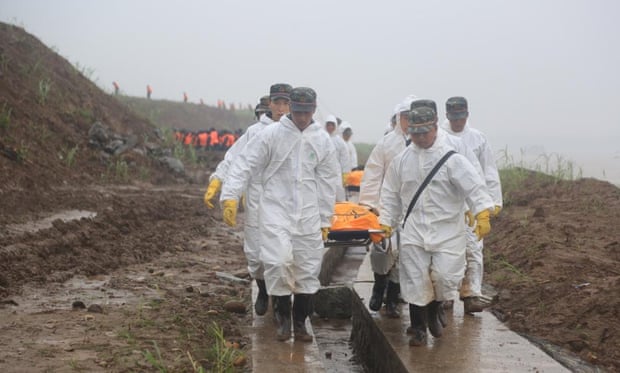
As soldiers and other personnel worked through the night wearing white hazmat suits and life jackets, searching with flashlights, they said they encountered hallways jammed with furniture and other debris. At times, the stench inside the ship was overpowering and many bodies were swollen, stiff or decomposed. Locked cabin doors and rooms filled with mud and silt also hampered the recovery work, and firefighters were called in at times to clear passageways.

More than 700 troops were tasked with removing the victims; a team of six was assigned to each body. Because the Eastern Star overturned in a remote area, the bodies had to be carried more than two miles to the closest road, then transported in vehicles to the mortuary in Jianli, a small agricultural town.

“When we entered the cabins, we all felt overcome by emotion,” said Zeng Xianmei, chief nurse at the paramilitary hospital in the nearby metropolis of Wuhan, choking up at a news conference.

Liu Xiaowu, chief of staff of a brigade from Guangzhou, said he was particularly determined to recover the remains of the youngest passenger, a 3-year-old girl on a trip with her grandparents. Her body was found in a first-class cabin on the upper deck.

“When our soldiers finally discovered her body, they all cried,” he said. “We all have children.”

Liu and other officials said work would now begin to collect victims’ personal effects from the Eastern Star.

Zhang Shifeng of the Ministry of Civil Affairs said authorities had worked out a standard for processing the bodies and that DNA had been collected from the 387 corpses that had arrived at mortuaries by Saturday afternoon.

Peng Jun of the local Hubei Province office of the Ministry of Civil Affairs said authorities had spent over $1.6 million buying more than 400 freezer caskets for the victims. Earlier, hundreds of refrigerated coffins were brought to Jianli but those were later deemed inadequate given how long the bodies were in the water.

Peng said that once positive DNA matches were made, family members would be allowed to see the remains of their loved ones, though he cautioned that many were disfigured. Eighty-one undertakers have been brought to the area to help prepare the bodies.

In China, the seventh day after a death is the first important day of commemoration. Asked if there were any plans for a group commemoration or memorial service on Sunday, the seventh day after the disaster, Zhang said there were no such plans because a group service would not be in accordance with Chinese tradition. But the Ministry of Transport later announced that a ceremony would be held Sunday morning.

Relatives of the passengers, many of who were tourists over 60, have asked why the vessel continued its voyage despite a severe weather warning in the Hubei province and increasingly violent winds.

Both the captain and the first engineer have been held in custody, although there has been no official cause for the accident, with the accident blamed on sudden, severe winds.

Angry relatives yesterday protested near the site of the accident, which is being tightly controlled by authorities who have confirmed they do not expect to find any more survivors.

The 76-metre vessel, travelling from Nanjing to the south-western city of Chongqing, was caught up in the heavy rains that swept across the Yangtze area on Monday evening – killing another 15 people and leaving eight missing.

The disaster has now caused a higher toll than the sinking of a ferry in South Korea in April 2014 that killed 304 people, most of them children on a school trip. It is also China's worst shipping catastrophe in seven decades.

More than 1,400 family members have come to Jianli in the central province of Hubei, where the ship went down, with many expressing frustration at the lack of information from the government.

The government says that it is doing everything possible to help the relatives, including providing free accommodation and medical services, and on Saturday state television ran an interview with a tearful family member saying how happy she was with all their help.

Peng Jun, head of Hubei province's civil affairs bureau, told reporters the treatment of the families was "meticulous".

As for the crematorium, which some family members had tried in vain to enter to see the bodies of their loved ones, he said it had a reception center that would work with families.

Authorities would work to "satisfy their reasonable demands, and provide all conveniences to them", he said.

But relatives speaking to Reuters have expressed concern about security apparently being aimed at them, including the number of police cars parked outside of hotels where they are staying.

On Saturday morning, a daily government briefing for family members was cut short after an argument broke out with a representative of the local government. One woman was carried out of the briefing after she fainted.

"There is no information at all. Everyday we're here procrastinating, wasting time. There's no clear-cut answers, there's no progress to inform us of," said Wang Shuang, 24, whose mother and uncle were on the boat.

The government is bringing in equipment to store the bodies, many of which are in an advanced state of decomposition, as well as DNA experts to help with identification.

In a sign of respect for the victims, state television will suspend certain programs and advertisements that "highlight celebrations" for the next three days, Xinhua news agency said.

Saturday 6 June 2015

http://www.reuters.com/article/2015/06/06/us-china-ship-deaths-idUSKBN0OM00L20150606

continue reading

Friday, 5 June 2015

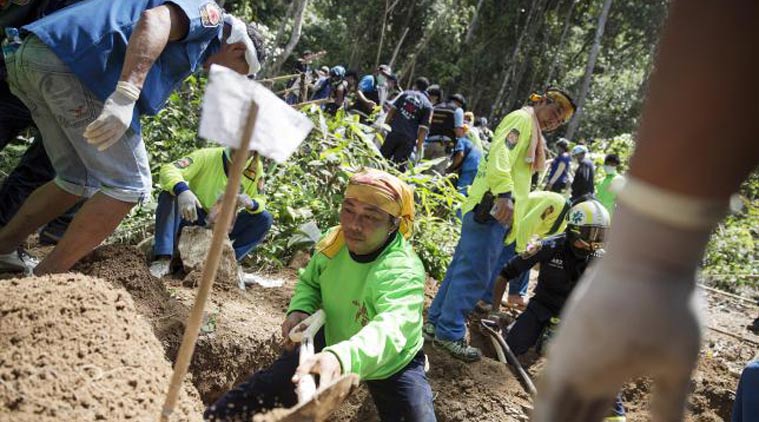
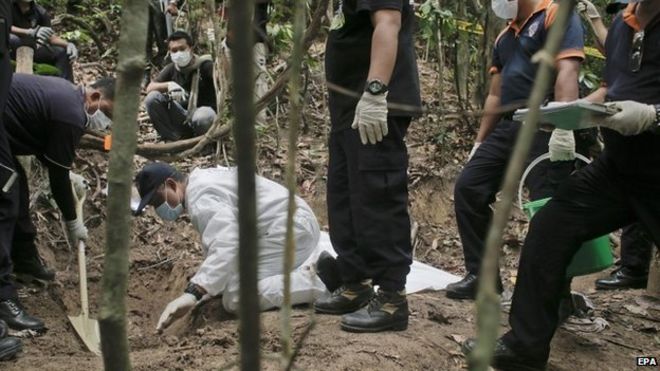
14 more bodies recovered in Perlis jungle graves


Fourteen more bodies believed to be those of human trafficking victims were found in 12 graves which were exhumed in the Mata Air forest reserve, here today.

According to Perlis Police Chief SAC Shafie Ismail the location, known as Kubur 24 in Malaysian territory, was located about 100 metres from the Malaysia-Thai border.

“Two of the 12 graves contained two bodies. All the bodies were found properly shrouded,” he said when contacted, adding that the Kubur 24 location had 91 graves.

A total of 35 bodies had previously been brought out from Bukit Wang Burma in Wang Kelian after the Inspector-General of Police Tan Sri Khalid Abu Bakar announced on May 25 the discovery of 139 graves in 28 camps, believed to have been the transit sites of the human trafficking syndicate.

Shafie said the forensic team and the General Operations Force took more than an hour to bring down the bodies on stretchers and arrived at the Felcra Lubuk Sireh field here at 6.30 pm.

He added that all the bodies were taken by police vehicles to the Sultanah Bahiyah Hospital in Alor Setar for pathology tests.

According to Shafie, if the weather permitted, work to exhume the remaining 79 graves at Kubur 24 was expected to be completed by Tuesday.

He said the main obstacle faced in bringing down the bodies was the rocky and steep terrain which made it impossible to use the services of a helicopter.

Friday 5 June 2015

http://www.themalaymailonline.com/malaysia/article/14-more-bodies-recovered-in-perlis-jungle-graves

continue reading

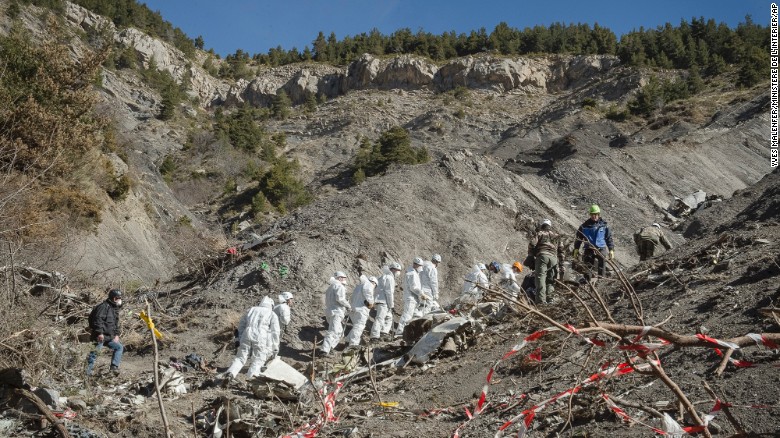
Burials from Germanwings flight are delayed by paperwork errors


More than two months after a Germanwings co-pilot deliberately crashed his airliner into the French Alps, the families of the 150 people who perished in the disaster had, at long last, been preparing to put their loved ones to rest.

They had already endured weeks of anguish as French gendarmes recovered human remains from among the blackened wreckage scattered across a mountainside and still more as forensic experts then painstakingly isolated the DNA of all who had been aboard the doomed March 24 flight en route from Barcelona, Spain, to Dรผsseldorf, Germany.

Funeral announcements had been sent. Travel arrangements had been made. In Germany, home to 72 of the dead, preparations were in the final stages for a ceremony at Dรผsseldorf Airport as early as Tuesday to receive the coffins as they arrived on a dedicated cargo flight from Marseille, France. Police escorts had been ordered to accompany the hearses home.

So it was no small shock when relatives in 17 countries received an email from Lufthansa on Wednesday informing them that the plans had been upended by a bureaucratic mistake in France. The return of the remains, the families were told, had been “temporarily interrupted” for an indeterminate period because of unspecified “new official instructions,” a development that dumbfounded and infuriated relatives who had until now largely maintained a stoic public silence.

On Thursday, the families of 16 10th graders and two teachers from a high school in the German town of Haltern am See, in North Rhine-Westphalia, published a statement directing their “rage and despair” squarely at Lufthansa, the parent of Germanwings and the main interlocutor for the families since the crash.

“All this tore away loved ones from families,” the statement read. “Must more agony really be added to this pain?”

According to airline and government officials, the delay was linked to the discovery early this week of errors in the information entered into the victims’ death certificates, which rendered them invalid. According to one French official, certain details, including birth dates, were incorrectly transcribed or translated into French from their original language on more than a dozen documents.

Lufthansa and Germanwings on Thursday expressed their dismay over the delays and vowed to move forward with preparations for the repatriation while the families waited for new documents. But it remains unclear when the return of the remains can be rescheduled.

“When we have a fixed date, we will communicate this to the families,” said Heinz Joachim Schรถttes, a spokesman for Germanwings. “We are working hard to be able to have this as soon as possible.”

The death certificates had all been signed by Bernard Bartolini, the mayor of the alpine village Prads-Haute-Blรฉone near the crash site, who along with the mayors of two neighboring villages had been awarded medals from King Felipe VI of Spain on Tuesday during a state visit for their “exemplary” handling of the crash’s aftermath.

Mr. Bartolini acknowledged to a German news agency on Thursday that the documents contained typographical and spelling errors, though he indicated that the number of cases was in the low single digits.

The delay set off a broader outpouring of anger by some of the families over the circumstances of the crash and questions about whether the airline could have done more to monitor the mental health of the 27-year-old co-pilot, Andreas Lubitz, and to maintain safeguards against the suicidal intentions of a single crew member.

“Not only because Lufthansa allowed a depressed pilot to fly,” the families from Haltern am See said in a statement, explaining their frustration. “Not only because Lufthansa failed to monitor the depression through its medical controls. Not only because Lufthansa, unlike many other international airlines, was too proud” to adopt rules requiring two people in the cockpit at all times.

The new bureaucratic setback comes as prosecutors in Germany are continuing their investigations into Mr. Lubitz’s medical history and whether the nature and severity of his psychological troubles were understood by the doctors — including flight doctors employed by Lufthansa — who had seen him in the months before the crash.

Separately, prosecutors in France are moving toward a criminal investigation. They are expected in the coming days to formally appoint an investigative magistrate, who will be charged with determining whether there are grounds to pursue Lufthansa or any of its employees for criminal negligence. Legal experts said that investigation, which is similar to a grand jury proceeding in the United States, could take years.

Since the crash, Lufthansa has begun a thorough review of its pilot selection and monitoring procedures. Meanwhile, a German task force involving airlines, regulators, aircraft manufacturers, pilots, psychologists and other experts has been studying the circumstances that enabled Mr. Lubitz to deliberately crash his plane and how to minimize the risk of such disasters in the future.

Similar working groups have been established over the past month by European Union regulators and by the United States Federal Aviation Administration.

The German task force is expected to publish an initial report this summer, which could include some initial recommendations for changes to cockpit door-locking mechanisms or enhanced psychological monitoring of pilots.

Carsten Spohr, the chief executive of Lufthansa, recently proposed that regulators consider introducing random blood tests of pilots to screen for the presence of medications that can be prescribed for certain psychological conditions.

But many airline and pilot groups remain wary of any rush to introduce new rules which might have unforeseen consequences for air safety.

“All pilots are aware that at least you must take a look into all the details to find a way to reduce the likelihood of this happening again,” said Markus Wahl, a spokesman for Germany’s largest pilots’ union, Vereinigung Cockpit. He stopped short of rejecting the idea of testing for antidepressants or other drugs, but he cautioned that “whatever measures are considered must be checked against the chance that this drives sick pilots underground.”

Even if national authorities do manage to eventually agree on new measures, regulators said it could still be years before such steps could be adopted by the international aviation bodies charged with setting global safety standards.

For the families of the Germanwings victims, however, the answers to these larger questions can wait.

At the cemetery in Haltern am See, the city is planting a memorial garden with 18 trees, arranged in a classroom formation, to honor the dead from the town’s Joseph-Kรถnig-Gymnasium high school. As spring turns to summer, bereaved friends and relatives hold out hope that their loved ones can soon be laid to rest in their shade.

“They want to have their children back,” said Ulrich Wessel, the school’s principal. “And to bury them in their home soil.”

Friday 5 June 2015

http://www.nytimes.com/2015/06/05/world/europe/families-of-germanwings-victims-lash-out-as-return-of-remains-is-delayed.html?_r=0

continue reading

China controls info, isolates boat victims' relatives


Two men with earpieces stand outside the Colorful Days Hotel in downtown Jianli, the city closest to China's worst boat disaster in recent history. At the approach of a journalist, one steps forward, arm extended in an unmistakable sign to come no further.

The hotel is one of dozens in Jianli where relatives of the victims of Monday's cruise ship tragedy are being held, part of the ruling Communist Party's standard response to major disasters.

Closing off the disaster scene, isolating victims' families and restricting or barring media access are all common in such cases. The actions appear rooted in the party's fear that grief and anger could morph into broader criticisms. They worry that other people with similar grievances or political causes might coalesce around such tragedies to form an even bigger challenge.

The government has tightly controlled information about the disaster, which is feared to have killed more than 400 people, though only 75 bodies have been recovered so far. It has focused on the heroism of rescuers, including navy diver Guan Dong, who pulled two people to safety. A day after the disaster, state television began running highlight reels of rescued victims and valiant divers, with a stirring musical soundtrack.

Steve Tsang, professor of contemporary Chinese studies at University of Nottingham, said that since smartphones and social media allow virtually anyone to broadly transmit images, the party must keep strict control over disaster sites to "maintain its monopoly on the truth and the narrative."

"Once you have an alternative narrative of any sort that departs from the narrative that all Chinese media are required to follow, then questions will be asked as to what actually happened, who were to blame, did the government handle it properly," Tsang said. "All this could potentially raise questions about the legitimacy of the party to govern."

Since taking power in 1949, the Communist Party has sought to monopolize the news and control the narrative, no less so than in the case of disasters — both man-made and natural. News of the cataclysmic famine of the Great Leap Forward, in which around 30 million died — was kept from the public for decades. The 1976 Tangshan earthquake that killed a quarter-million went unreported as the slow and vastly inadequate response rumbled into action. Even an event as recent as the bloody military suppression of the 1989 student-led, pro-democracy protests centered on Beijing's Tiananmen Square remains a taboo subject.

On Thursday afternoon, official cars carried small groups of relatives to the Colorful Days Hotel, a few kilometers (miles) from where rescuers were cutting into the Eastern Star, which capsized in the Yangtze River in stormy weather. Most carried small amounts of luggage and were accompanied by escorts.

Authorities booked out many hotels in Jianli to keep family members isolated from journalists or other visitors — and to ensure a sufficient supply of rooms in the relatively underdeveloped community. As of Thursday afternoon, about 1,200 relatives of 279 of the passengers — just over half — had arrived in Jianli.

Plainclothes officers stood guard outside designated hotels and notices were issued ordering all government departments and hotels in Jianli to post duty officers on watch around the clock.

Despite the close supervision, one pair of relatives, a brother and sister, went Thursday to Jianli's Rongcheng Crematorium, where they were directed to a reception tent.

Wailing and shouting could be heard from inside as they talked with police officers and government officials, although they were relatively calm when they emerged. They were able to speak briefly to reporters before being bundled into a minivan and driven off.

"Mom was a wonderful person. She didn't deserve to die like this," said the daughter, who gave only her surname, Zhang, and said she was from the northern city of Tianjin.

She said her 60-year-old mother was retired and had been aboard the cruise with six work friends. "We came here because we just wanted to see her face for the last time."

Zhang, who was sobbing, said the authorities had brought them to Jianli and would arrange a visit to the disaster scene later. Civil Affairs Ministry officials said visits now to the accident site could hamper rescue work.

If victims' families do not comply with government demands, it can affect the compensation and treatment they receive. Dissenters can face harassment or worse. In one of the most egregious cases, parents of children killed in poorly built schools during the 2008 Sichuan earthquake were detained after demanding a thorough investigation into why the buildings collapsed while government offices survived.

In Shanghai, where many of the passengers had booked the cruise, relatives have scuffled with police as they demanded help from authorities. At least two relatives have expressed fears that their phone conversations were being monitored.

Another relative, Qin Meiping, whose 73-year-old father and 49-year-old brother were on the boat, said sadly that they had asked authorities to take them to the site, but that she still didn't know when this would happen.

AP writer Louise Watt in Beijing and news assistant Fu Ting in Shanghai contributed to this report.

Friday 5 June 2015

http://www.thenewstribune.com/2015/06/04/3824862_china-controls-info-isolates-boat.html?rh=1#storylink=cpy

continue reading

Death toll in twin fire, flood disaster hits 200


The death toll in the twin fire, flood disaster has hit 200 with some relatives still desperately searching for their loved ones.

Torrential rains Wednesday night left Accra in crisis as dozens drowned in a sea of flood that washed away humans, properties, pulled down houses and left tunnels, drains choked with debris.

In the midst of the storm, tens of passengers, drivers, petrol station attendants were also burnt to death in a horrifying fire incident at the Goil Filling Station close to the Kwame Nkrumah Circle in Accra.

Most of the deceased persons were seeking refuge at the filling station and houses and shops nearby but were burnt to death when an explosion occurred at the station.

Charred bodies were retrieved from the scene of the fire but the devastation left behind by the fire will take days or even weeks if not months to repair.

Hospitals have been flooded, not by rainwater but by human bodies driven in several vehicles and dumped at the various morgues.

The 37 Military Hospital has taken 65 dead bodies with 35 survivors on admission at the Intensive Care Unit of the hospital.

Hospital officials say they are sad about the incident but not overwhelmed.

Joy News' Matilda Wemegah who was at the 37 Military Hospital said lots of people who have besieged the hospital are still in a confused state.

They have looked at the surviving victims at the intensive care units, the morgue but still cannot locate their lost relatives.

According to them, the lost relatives cannot be contacted. All their phones are off.

They can't tell if they are alive or dead but they fear the worse.

Meanwhile, rescue efforts are over. Security officers are busy cleaning the debris left behind by the flood and fire.

So far, five cars swept by the floods from unknown destinations and which were trapped in a drain behind the Paloma Restaurant have been pulled out by the Military.

Quite a number of vehicles are yet to be salvaged, the military officials told Joy News Latiff Iddrisu.

Meanwhile, officials are said to be planning a national response strategy to ameliorate the impact of the disaster.

President John Mahama has described the incident as "catastrophic, almost unprecedented."

After touring some of the worst-hit areas, the president said, "we shouldn't continue to behave like the vultures," who would promise to cover its roof but fail to do so once the rain season is over.

He called for a change in attitude by all Ghanaians.

The flagbearer of the opposition New Patriotic Party, Nana Akufo-Addo, described the disaster as the "dark moment" in the history of the capital.

In the wake of the visitation by political players, the Bureau of Public Safety says in memory of the lost souls practical steps must be taken to solve this perennial problem once and for all.

He said officials must with urgency desilt all drains in Accra and demolish all structures in watercourses.

Friday 5 June 2015

http://www.ghanaweb.com/GhanaHomePage/NewsArchive/artikel.php?ID=360970

continue reading

Capsized Chinese ship righted as rescuers find 97 bodies so far; hundreds still missing


A search for survivors on the Yangtze River has turned into a recovery operation, as Chinese officials acknowledged that hundreds of cruise passengers had died in what is likely the country’s worst maritime disaster in 65 years.

Authorities on Friday morning said they had righted the capsized cruise ship, the Eastern Star, signaling that they had given up on finding any more survivors.

A spokesman for China’s Ministry of Transport had hinted Wednesday that hope was fading fast, saying rescuers were holding out for a miracle.

Attempts to find survivors by cutting through the capsized hull were fruitless. The Transport Ministry spokesman, Xu Chengguang, was somber at a news conference Thursday night: “What makes us deeply, deeply regretful is that our search of the areas where there was possible presence of survivors didn’t yield any discovery, didn’t create a miracle,” he said. “With no likelihood of survivors, we can start the work of righting and lifting the ship.”

Righting the vessel “will enable an audit of all the cabins to be carried out as quickly as possible and will be good for searching for the missing in the shortest period of time,” the official Xinhua News Agency said, citing the emergency-response command center. The salvaging would be done “to preserve the dignity of the dead to the utmost extent,” the command center told Xinhua.

“We have to face this,” said Jin Weifu, 40, whose father-in-law was on board the Eastern Star. “I believe most of us were already prepared for the worst.”

The Eastern Star was carrying 456 people, many of them elderly tourists, when it sank after running into what authorities said was a small tornado. Fourteen survivors have been found, including the captain and the chief engineer. The official death toll rose to 97 on Friday, leaving 345 still missing.

If they are all confirmed dead, the Eastern Star’s sinking would mark China’s worst nautical disaster since the waning moments of its civil war in the late 1940s, when two steamships packed with people fleeing the fighting sank. In 1999, a fire on a ferryboat, the Dashun, traversing the Bohai Bay left 280 people dead. Preparations for salvage work began Wednesday when two 500-ton barges with cranes were maneuvered into place around the capsized vessel, footage on state broadcaster China Central Television showed. Overnight emergency crews cut three holes along different sections of the hull in what CCTV said was a last check for signs of life. Afterward, divers girded the hull in eight places with steel cables to be used in righting the ship.

Built in 1994, the Eastern Star had a maximum capacity of 584 people. A retrofit in 1997 extended the ship’s length by 11 meters, the Transport Ministry’s Mr. Xu said. It underwent another retrofit in 2008 that cut its capacity to 534 people. In both cases, the ship conformed with technical regulations, Mr. Xu said.

Earlier on Thursday, authorities had ordered Chongqing Eastern Shipping Corp., the owner of the Eastern Star, to suspend operations of its sister ship, the Eastern Pearl. The company was also ordered to conduct a comprehensive inspection of the rest of its fleet, according to Xinhua. The Eastern Pearl has the same design as the Eastern Star, it said.

An executive at Chongqing Eastern, Qin Yuping, declined to comment, referring questions to local authorities in Chongqing.

Relatives of those aboard the ship were streaming into Jianli, the county seat nearest the site of the accident. The county government had received more than 1,200 people hoping to see the remains of their loved ones, CCTV said.

Some gathered at the sole funeral parlor in Jianli as hearses carrying bodies drove past lines of paramilitary police.

Officials told relatives they would have to wait to enter the funeral parlor, sparking at least one outburst from a couple that had traveled to Jianli from the northern city of Tianjin.

“She’s my mother! I just want to see the body, see her one last time!” Zhang Hongyi shouted, referring to her 63-year-old mother, Cao Xia, who was traveling on the Eastern Star with five friends. Ms. Zhang’s husband, Hao Guanli, asked whether his mother-in-law’s body would be cremated before they could see it.

Chinese authorities have attributed the accident to sudden high winds just before 9:30 p.m., but also have placed the surviving captain and first engineer under police custody. Passengers’ relatives have raised questions about whether the boat should have continued on after the storm started and despite a weather warning earlier in the evening.

In a sign of potential unrest among the hundreds of relatives who have descended on the small Hubei province county of Jianli, one distraught family member burst into a gathering of journalists to complain about their treatment and demand an investigation into possible human error.

“All the emphasis is on a natural disaster … but we think that this is unjust,” said Xia Yunchen, a 70-year-old university lecturer. “Apart from natural disaster were there other causes? Is this not rational to ask?”

Xia, whose older brother Xia Qinchen, from the eastern coastal city of Qingdao, was a passenger, demanded that relatives be allowed to view their loved ones’ bodies before they are cremated. In past disasters, authorities have instead cremated bodies and delivered ashes to the victims’ families, in keeping with the tight management of the aftermath of disasters and fears of spiraling unrest.

“Why do you view the common people as your enemies?” Xia cried out. “There’s no human feeling, can’t we change this habit?”

Many of the more than 450 people on board the cruise ship were reported to be retirees taking in the Yangtze’s scenic vistas. With 97 confirmed dead and more than 340 missing, the capsizing is likely to become the country’s deadliest boat disaster in seven decades. The 14 survivors of the capsizing including three pulled by divers from air pockets in the overturned boat on Tuesday after rescuers tapped the hull and heard responding yells from inside.

Most of the passengers on the Eastern Star were from Shanghai and cities in nearby Jiangsu province. Family members in Shanghai were told on Wednesday that district governments where they lived would arrange transportation to Hubei.

Among those preparing to travel from Shanghai to Jianli was Mr. Jin, who planned to go there with his wife. “The next step is to focus on appropriate funeral arrangements,” he said.

Friday 5 June 2015

http://www.wsj.com/articles/relatives-flock-to-scene-of-chinese-ship-disaster-1433410530

continue reading

Thursday, 4 June 2015

Malaysian team enters Thailand to find more human smuggling mass graves


Malaysian police and forensic experts have entered Thailand to find out at least 91 more human smuggling graves believed to be located at a reserve forest near the shared border.

The route via Ban Talok in Thailand will only take about an hour because the path is not as steep as the Wang Kelian route, where another transit camp had been discovered earlier, reports Malaysian news network Astro Awani.

Six land rovers and pick-up trucks were seen leaving the Padang Besar police station at about 9am. The vehicles are believed to be part of the logistics team which will be bringing the equipments to dig the graves.

Malaysian police had earlier said that Thai authorities have granted them five days to enter the camp and bring out the bodies through Thailand’s Banh.

Thailand police in early May had found secret human-trafficking camps on their side of the border and dozens of shallow graves. They launched a crackdown on human-smuggling following the discovery of the mass graves.

Meanwhile, 35 human skeletons found in the Bukit Burma jungle in Wang Kelian and believed to be victims of the human trafficking syndicates have been taken to a hospital for pathological processes.

To date, 139 graves at 28 temporary camps of the human trafficking syndicates were found between Kampung Wai in Kuala Perlis and Tangga 100 at Felcra Lubuk Sireh in Padang Besar.

Thursday 4 June 2015

http://www.dhakatribune.com/world/2015/jun/04/malaysian-team-enters-thailand-find-more-mass-graves

continue reading

Flash floods kill 13 in southwestern Pakistan

Br> A government official says flash floods triggered by heavy rains have killed at least 13 people in a remote village in southwestern Pakistan.

Deputy District Commissioner Wahid Shah said Thursday that rescuers were still looking for seven people who went missing following the overnight flooding in Khuzdar district in the Baluchistan province.

Shah says the floods damaged or destroyed several homes built near the embankment of a stream. Khuzdar lies 400 kilometers (240 miles) south of Quetta, the capital of Baluchistan.

Flash floods are common during South Asia's summer monsoon season. But pre-monsoon rains have also caused a lot of damage.

Thursday 4 June 2015

http://myrepublica.com/world-news/item/22098-official-flash-floods-kill-13-in-southwestern-pakistan.html

continue reading

Langtang locals returning home to recover their dead


After more than a month of sheltering at Yellow Gomba monastery at Swayambhu in the capital, the locals of Langtang VDC have begun to return to their villages in Rasuwa district in hopes of recovering the bodies of dead relatives and learning about the condition of their settlement.

The catastrophic 7.8 magnitude earthquake of April 25 triggered massive a avalanche in Langtang, which caused great loss of life and property. They locals were forced to relocate due to reoccurring avalanches.

With the earthquake aftershocks now slowly receding, they are heading back to Langtang in hopes of at least recovering the bodies of relatives who perished, if not finding them still alive.

"We've decided to go back as the government has been deaf to our requests to excavate the sites where our families remain buried, even a month after the incident," said Phinjo Tamang of Thangshap, Langtang-7.

Tamang lost his younger brother and mother in the avalanche. Like him, many locals remain unable to perform the final rites of their deceased as the bodies remain unrecovered.

Although the district administration office has prohibited entry to the incident site citing the hazards, 40 local quake victims are heading from Kathmandu to reach the site within two days. As many as 488 displaced locals from Langtang have been sheltering at the Yellow Gomba.

"Of late, the bodies of the deceased can be spotted as the snow has started melting," added Tamang.

Dawa Tsering Tamang of Langtang-5, who lost both his parents, said he is returning home in hopes of recovering their bodies. "Had the Nepal Army not rescued us on time, we too would have been buried. But we are returning as we've heard that tthe snows are melting," he added.

After losing his father, mother, brother and sister, Singey Tamang of Langtang-5 has hardly had any good sleep. He said another reason the locals are returning is that the climate in Kathmandu does not suit them. They are more used to colder climatic conditions.

Another local, Prenurba Tamang, also said that they found it very difficult to adjust to the climate in Kathmandu. Tamang, who lost six members of his family, said, "Mosquitoes don't let us sleep at night. Besides going back to recover our dead, we'd prefer the colder climate there despite the avalanche risks," he added.

"Although the government has categorized our family as 'missing' rather than 'dead', the hopes of finding them alive are very slim. We are returning to at least recover the bodies," said Singey Tamang.

They plan to start recovery operations as soon as they reach back there. They also said they will find safer places to settle in as the government failed to help them relocate properly.

As many as 210 people; including 70 locals, 40 tourists, their guides and porters, have been categorized as 'missing' from Langtang.

According to Gautam Rimal, assistant chief district officer of Langtang, 128 bodies have been excavated from the VDC so far, among which 14 are those of foreign nationals.

Thursday 4 June 2015

http://myrepublica.com/t20/item/22058-langtang-locals-returning-home-to-recover-their-dead.html

continue reading

China boat sinking: 10 more bodies recovered, death toll now 75

A local official says 10 more bodies have been recovered from the overturned ship, bringing the death toll to 75 with more than 360 still unaccounted for.

Jianli county chief Huang Zhen released the figure in an update to reporters on the recovery efforts Thursday afternoon.

Meanwhile, in Beijing, The Communist Party's Poliburo Standing Committee, the country's highest power, convened a meeting and issued a directive for officials to step up efforts to control public opinion about the disaster response.

It ordered them to both "understand the sorrow of the families" and "concretely preserve social stability."

Some relatives have demanded help from officials in Nanjing and Shanghai to travel to the site in unruly scenes that have drawn a heavy police response.

Bodies are being brought to the Jianli's Rongcheng Crematorium, where at least two relatives of passengers are trying to identify loved ones.

One of them, a woman from the northeastern city of Tianjin who identified herself only by her surname, Zhang, says her mother was aboard the ship. She says authorities told her viewings would not be arranged until later.

"Mom was a wonderful person. She didn't deserve to die like this," Zhang says.

The death toll in the Yangtze River disaster reached 65 on Thursday. More than 370 people remain missing and are feared dead, and 14 have been rescued.

Rescuers have now cut holes into the overturned hull of the cruise ship in three places — near the bow, middle and stern — to search for additional survivors, but have found none so far.

After checking each location, the workers are welding the removed sections of the hull back on and sealing them to maintain the ship's buoyancy and balance.

At the same time, divers are working in three shifts underwater to search the ship's cabins one by one.

The weather has been rainy since last night, but is tapering off as the day goes on.

Earlier Thursday, dressed in white scrubs, dozens of medical workers were standing next to rescuers as they pulled out more bodies from the ship. On the nearby shore of the Yangtze River, relatives of some of the hundreds of victims still unaccounted for cried after being barred entry to the mortuary to seek information about their loved ones.

Access to the site remains blocked by police and paramilitary troops stationed along the Yangtze embankment, and the only information coming out is from the state-run media.

Angry relatives staged a protest near the site and broke through police cordons to demand information.

The Chinese government said rescuers would "take all possible measures" to save the injured and promised a "serious investigation", according to state news agency Xinhua.

"We will never shield mistakes and we'll absolutely not cover up anything," Xu Chengguang, a spokesman for the Ministry of Transport, told a news conference.

But the area around the ship was being tightly controlled, with police checkpoints blocking journalists' access to the river and to local hospitals.

And China's Central Propaganda Department instructed editors not to send reporters to the river and only to use state news agency information.


Large numbers of refrigerated coffins were seen being delivered to a local funeral parlour in Jianli, Hubei province, as authorities braced for hundreds more corpses.

The majority of the victims are believed to be elderly.

Scores of relatives of the passengers have travelled to Jianli to be near the wreck, many from Nanjing where the cruise began in late May.

The families have raised questions about the disaster, including how the ship could have sunk so quickly and why the alarm was apparently slow to be raised.

On Wednesday night, several dozen people pushed through police lines set up to control access to the site and marched towards the river. Officials have now promised to take them to the rescue site on Thursday.

Another group of relatives staged a protest in Shanghai, where the tour company most passengers had booked through, Xiehe Travel, is based. Ji Guoxin, whose parents were still missing, said Xiehe Travel had just given them a hotline number and told them to make their own way to Jianli.

Another protester told reporters: "We want somebody from the local government to receive us and tell all family members what we should do."

The relatives are furious that no-one is providing detailed information about the rescue efforts. Hundreds of relatives are holed up in a nearby hotel lobby, watching the same state television reports for information, furious that no-one is providing them with detailed updates on the rescue efforts.

http://www.fireengineering.com/ap-news/2015/06/04/the-latest-on-china-boat-sinking-relatives-identify-bodies.html

http://www.bbc.co.uk/news/world-asia-china-33002802

continue reading

Ghana petrol station inferno kills 90 in Accra


More than 90 people have died in a fire at a petrol station in Ghana's capital, Accra, the fire service says.

A GOIL fuel filling station located near the GCB bank towers at Circle in Accra was exploded after it caught fire unexpectedly, destroying several houses and shops including a drugstore and a forex bureau.

Several vehicles parked at the fuel station and commuters who were taking shelter during the rainstorm at the filling station and bus stop all perished in the explosion.

the fire occurred around 10pm.

It is unclear what could have started the fire but Agya Kwabena, Peace FM's Senior Reporter, who was at the scene, quotes eyewitnesses as saying the fire trapped many who had sought refuge from the torrential rains that had cut off several communities from major roads.

According to him, the police, military and NADMO officers are still on a rescue mission, as the nation still counts the cost.

The fire started as people in the city are trying to cope with two days of heavy rain, which has left many homeless and without power.

The flooding hampered the rescue efforts, the BBC's Sammy Darko reports from Accra.

There are fears that the death toll could rise as the search for bodies continues.

Emergency workers, soldiers and police were recovering bodies from the scene, with graphic footage on national television showing corpses being piled onto the back of a truck, with charred bodies trapped in the wreckage.

Billy Anaglate, a spokesman for Ghana Fire Service, said: "We are still trying to salvage the site of the accident before we can come out with an accurate figure."

A police officer said the fire service alone had retrieved 73 bodies, while Red Cross disaster management coordinator Francis Obeng put the death toll at "more than 70".

Local hospitals said morgues were full, with the death toll likely to rise, according to security officials.

It is thought that people were in the petrol station sheltering from the downpours when the fire broke out, our correspondent says.

President John Mahama has visited the burnt-out petrol station and appealed for calm as the authorities try to cope with the aftermath of the fire and the flooding.

He praised the rescue workers for their work and the lives that they did manage to save but said he was lost for words to express his feelings for those who died.

Two days of heavy rain has brought much of the city to its knees.

There are chaotic scenes with cars being carried away by the water and many roads blocked off.


Hundreds have been trapped in their offices and some have been forced to spend the night in their cars as traffic came to a standstill.

Parts of Accra have been left without power as electricity sub-stations have been damaged in the flooding, which is making the ongoing energy shortages even worse.

Many homes have been inundated and people have been wandering around in their nightclothes after being forced to leave their beds.

One man told a local radio station that he had put his children on top of a wardrobe to save them from the water coming into his house.

President Mahama said that "people building in waterways [and] littering the drains" had contributed to the flooding in the city. Weather forecasters are saying that more rain is on its way.

Thursday 4 June 2015

http://www.bbc.co.uk/news/world-latin-america-33002674

http://news.peacefmonline.com/pages/social/201506/243875.php

continue reading

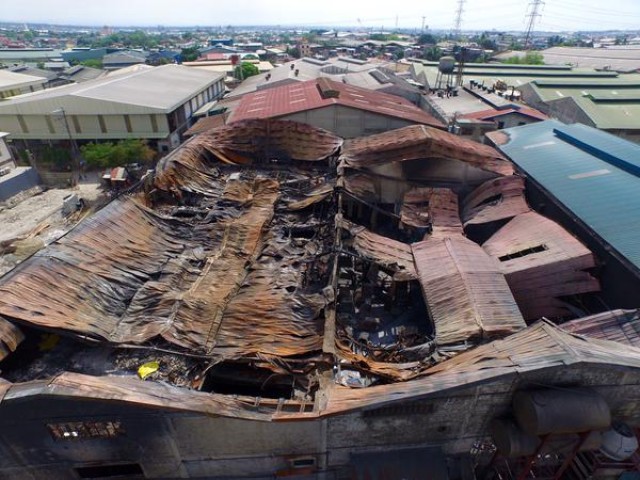
Valenzuela fire: 63 bodies identified


Sixty-three of the 72 victims of the fire that hit Kentex Manufacturing Corporation in Valenzuela City last month have been identified, forensic investigators said on Thursday, June 4.

Sixty of the bodies were identified through DNA testing conducted by members of the Philippine National Police Scene of the Crime Operations (PNP SOCO) team, while 3 were identified upon retrieval from the fire-hit footwear factory on May 13.

Of the recovered bodies, 26 were male, while 37 were female, according to PNP crime laboratory deputy director for operations Emmanuel Araรฑas.

Araรฑas said it would not be possible to recover DNA samples from one of the 9 remaining unidentified bodies because it had been too burned. The SOCO team will continue working to identify the last 8 bodies, he added.

The PNP earlier said it would take two months to identify the bodies because most had been burnt beyond recognition.

But the process of matching DNA samples recovered from the bodies with the samples obtained from the relatives of the victims was completed in 15 days – "one of the fastest in Philippine history," Araรฑas said.

“The standards we got immediately matched so the process was fast,” he added.

The PNP official attributed the speed of the DNA identification process to their upgraded equipment, 24/7 workforce, and the support of the city government.

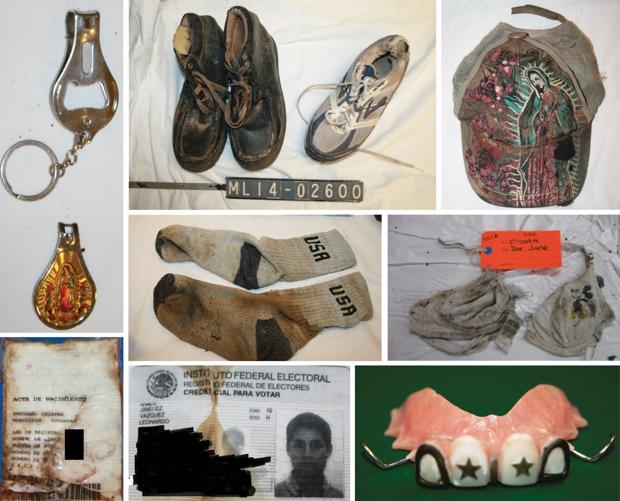
Aside from DNA testing, forensics investigators also sought the help of the victims' families, asking them to identify the personal belongings of their loved ones.

On Thursday, the PNP met with the families of the identified victims to issue death certificates.

The families may opt to exhume the bodies currently interred at the Arkong Bato Cemetery for burial in their hometowns. They may also opt to have the remains cremated.

On May 13, a fire sparked by a welding activity tore through Kentex Manufacturing Corporation, killing 72 workers. Most were trapped on the second floor of the building, unable to escape due to the steel bars on the windows.

The incident has prompted calls to review labor violations and the Fire Code of the Philippines, after it was revealed that Kentex was able to operate despite the lack of a fire safety inspection certificate (FSIC).

The Valenzuela city government has ordered the closure of all businesses without FSICs.

Thursday 4 June 2015

http://www.rappler.com/nation/95277-valenzuela-fire-bodies-identified

continue reading

Wednesday, 3 June 2015

Arizona border deaths down as deadliest part of the year begins


April saw the fewest recovered border-crosser remains in more than a decade, but the triple-digit temperatures of the deadliest months have just arrived.

As of May 30 this fiscal year, the remains of 57 people trying to come into the United States through Southern Arizona have been recovered, data from the Pima County medical examiner show. But there were five bodies found in both April and May. That’s about half the number of bodies found during those months over the last decade.

The number of remains is not the actual number of people dying but the number of people found.

“We will continue to find remains for years to come even if nobody crosses,” said Gregory Hess, chief medical examiner in Pima County

As people tried to cross through more rugged terrain to avoid being caught, the number of border deaths jumped. Since 2001, at least 2,300 migrants have died in the attempt to cross through the desert.

Even with fewer migrants coming across the border, the rate at which people were dying didn’t decrease until fiscal year 2014. This year seems to be following that trend.

The Border Patrol reports 70 deaths in the Rio Grande Valley, one of the other deadliest sectors along the U.S.-Mexico border, plus 416 rescues as of May 19.

Wednesday 3 June 2016

http://tucson.com/news/border-deaths-down-as-deadliest-part-of-the-year-begins/article_eb602cfc-d719-578c-a90b-41254ae88fc4.html

continue reading

Netherlands' plans to complete DNA tests on bodies of Malaysian Boeing crash victims by July 1


utch experts plan to complete the DNA tests on the remains of passengers of the Malaysian Boeing downed over Donbas in summer 2014 by July 1, 2015 and provide the remains to the victims' relatives a month later, the Ukrainian Security Service has reported.

"They [the Netherlands] have set the task to complete the DNA tests by July 1 and return the remains to the relatives by August 1," Vasyl Vovk, the head of the Main Investigative Department of the Ukrainian Security Service, told a briefing in Kyiv on Wednesday.

Vovk said the Netherlands is now completing the tests on the victims' remains.

"Another 4,000 remains have been collected. Of these body parts, 2,600 can be identified," he said.

A Malaysia Airlines Boeing 777 en route from Amsterdam to Kuala Lumpur crashed in the Donetsk region on July 17, 2014, killing all 298 people on board.

Wednesday 3 June 2015

http://en.interfax.com.ua/news/general/269545.html

continue reading

India heatwave: death toll passes 2,500, post-mortem procedures changed


As the block of ice under her husband's body melted, Chanaga Ratnam wondered whether local officials would arrive in time to verify that he did indeed die from India's extreme heatwave, thus qualifying her for compensation.

The 55-year-old could not afford more ice to preserve Aankaiah's remains for much longer, and was keen to cremate him as quickly as possible in line with local custom.

The southeastern state of Andhra Pradesh, which accounted for around two-thirds of 2,500 Indians who died from the recent searing temperatures, has responded to such concerns, easing conditions for paying compensation of 100,000 rupees ($1,600).

"Now the procedure has been changed; no post-mortem report is required," said Y. Maithreya, local administrator of Venkatagiri, a town near the village where Ratnam lives.

Most families are reluctant to conduct post mortems as superstitions abound about the removal of organs from the dead.

Chief Minister N. Chandrababu Naidu's state government, which initially insisted on a post-mortem report to award compensation, realised it was impractical.

Now, three local officials will inquire into deaths reported to be from the heat. If bodies have been cremated, five witnesses, usually neighbours or friends, are called together to determine the cause of death.

"We have to verify all of this, since the compensation has to reach the right people; not those who have died of natural causes or heart attacks," said Maithreya.

The change comes as no comfort to Ratnam, widow of Chanaga Aankaiah, a 59-year-old farm labourer who died of sunstroke on Friday after going to work in fields around the village of Madhu Reddy Colony, near Gudur.

"They called him for some odd jobs in the fields and he went enthusiastically," she sobbed. "He came home, said he was unwell, drank some water and just died."

EASILY AVOIDABLE

The Chanagas are among the poorest people in Andhra Pradesh, and work as farm labourers earning 150 rupees ($2.35) a day.

Doctors and support workers have fanned out across the state to hand out relief materials like rehydration drinks and saline solutions, advising people not to go outdoors in the afternoons.

"These deaths are easily avoidable," said M. Sudhir Kumar, a civil assistant surgeon at Dakkili Primary Healthcare Centre.

"All they need to do is follow basic precautions like avoiding working in the sun. Not many listen. What can we do? It's a problem of poverty." Recent natural disasters have highlighted India's vulnerability to the effects of climate change. Following floods in Uttarakhand, northern India, that killed nearly 6,000 in 2013, the heatwave is the next danger sign.

May was the hottest month on record in Andhra Pradesh for nearly four decades. A reported 1,677 people died from the heatwave in the state alone, up sharply from last year.

The U.N. Intergovernmental Panel on Climate Change (IPCC) warned in 2014 that freak weather patterns in India due to global warming could become more frequent, resulting in huge loss of life and crops.

"The problem is made worse by people living in little huts with asbestos sheets for roofs," said V. Haripriya, Deputy District Medical and Health Officer at Venkatagiri.

"In villages in Andhra Pradesh it is very common for children to leave ageing parents behind while they seek a living in faraway cities. There is no one to care for the elderly."

Officials dismiss reports that Naidu's offer of compensation has led to over-reporting of heatwave deaths in Andhra Pradesh.

"It is wrong to say that the death toll figures include deaths due to old age or other reasons," said Tulasi Rani, the state's Special Commissioner for Disaster Management.

Heat or no heat, Aankaiah's wife Ratnam will have to head to the fields once her husband is cremated. With no sons to support her, she has no choice but to work to feed herself.

Wednesday 3 June 2015

http://www.telegraph.co.uk/news/worldnews/asia/india/11645731/India-heatwave-death-toll-passes-2500-as-victim-families-fight-for-compensation.html

continue reading

China ship capsize: Hopes fade of finding Yangtze survivors


On the second morning after what may turn out to be China’s worst boat disaster for more than 60 years, state television showed the grim scene as military and police frogmen continued to pull bodies from the hull of the Eastern Star, which now lies upturned just a few dozen meters from the bank of the Yangtze in central Hubei province. One body was shown on live TV, lying partially covered on the hull of the boat.

State media also showed pictures of Premier Li Keqiang and other officials, who had arrived at the scene on Tuesday, bowing in respect to the bodies of two victims as they lay covered on the deck of a nearby boat. Previously, reports said, Li had held meetings “throughout the night,” as the increasingly desperate attempts to find survivors continued. By early afternoon on Wednesday, a total of 19 bodies were reported to have been recovered, including a number of bodies found further downstream the previous day.

Officials said there were now more than 200 frogmen at the site; many worked overnight under floodlights from a nearby salvage vessel, and holes have been cut in the hull to facilitate access. The water level on the river has also been lowered by about 20 inches, China Central Television (CCTV) reported, by closing sluice gates on the giant Three Gorges Dam upriver, in an attempt to make working conditions easier.

With almost no underwater visibility, navy divers used their hands to feel their way through sections of the submerged vessel, Zhang Jianxin, a transport ministry official, told Chinese television.


However, 40 hours after the ship sank while travelling from Nanjing to Chongqing, hopes that others might be rescued were fading fast. “The chances are small,” said Shi Chengming, who was leading a team of civilian rescue workers from a Buddhist charity in Chongqing to the disaster site.

Instead, staff at the Rongcheng crematorium in Jianli – the town nearest to the wreckage – were preparing to receive the dead. Shen Yuanhai, the owner of a coffin factory in Henan province, said he had driven through the night in a convoy of four lorries, each stacked high with refrigerated caskets. “We have brought 200,” said Shen, whose factory is more than 400 miles from Jianli in the city of Zhengzhou.

After being unloaded by a forklift truck, the caskets, which have transparent, flower-covered lids, were packed side-to-side into four halls where wakes will be held over the coming days.

Xie Xuening, a coffin factory employee, said the scale of the loss had shocked him. “I feel upset,” he said. “It is a disaster.”

By Wednesday morning, the bodies of seven victims had arrived at the Rongcheng crematorium. Their identities were not immediately clear. A black-and-white noticeboard had been placed outside one of the halls for staff to record the names and ages of victims, alongside their photograph. The majority of the Eastern Star’s passengers were tourists aged between 50 and 80, state media has reported, although a three-year-old boy was also on board.

A funeral parlour employee, who declined to give his name, said staff were expecting the worst. “We’ve contacted all of the crematoriums around here so that if we don’t have room we can send the bodies there,” he said.

As the families of Eastern Star passengers began arriving in Jianli, dozens of local women gathered at the Rongcheng Crematorium to watch the grim preparations. “I would tell the families not to be sad,” said Zou Jinlin, 40. “It was a natural disaster. It wasn’t human error.”

Zhang Jianxin, deputy head of the rescue department of China’s Transport Ministry, told CCTV that the divers were taking turns to swim through the boat’s corridors, going from cabin to cabin in the hope of finding someone alive trapped in an air pocket. Officials said they were also considering using salvage vessels to right the ship, but suggested that this would not happen until it was clear there were no further survivors.

Experts quoted by state media acknowledged that more than 36 hours after the boat capsized, the chances of finding more survivors was getting slimmer – but officials said rescue attempts would continue: “We will not give up until we are sure there is no hope [of finding anyone alive],” Yin Jie, director of the General Office of China’s Maritime Search and Rescue Center, told CCTV.

TV reports also emphasized that six nearby hospitals had prepared beds for possible survivors, while earth-movers had cleared roads to the river bank to make it easier to move anyone found onboard. Searches by boat and helicopter were also continuing on a 137-mile stretch of the river downstream.

State TV also showed an interview with Zhang Hui, a tour guide from the company that organized the group of 406 mainly elderly passengers on the boat, in which he described how he had jumped from the boat and floated downstream for nine hours, before finally being washed ashore.

Meanwhile speculation has continued as to how the boat, a 76.5-meter luxury cruise ship, overturned so quickly that its crew apparently did not have time to issue a distress signal -- and most passengers did not have time to jump into the river. Reports say the ship was hit by a tornado and capsized within little over a minute. There are also reports that the boat may have tried to turn around on the river, in an attempt to anchor as the storm got worse.

But some Chinese media have questioned whether a renovation of the ship’s upper cabins may have affected its center of gravity. Internet users have also asked questions about why the ship’s captain and first engineer were among the small number of confirmed survivors: some accused them of deserting the ship -- though state TV said it was possible they had gone out on deck to check what was happening and had simply been thrown into the river, though it said this had not been confirmed. Both officials are being held by police for questioning.

Meanwhile, following angry scenes at a local government office in Shanghai on Tuesday, when family members of those on board demanded more information from the government after finding the travel agency’s offices closed, officials set up a temporary center for relatives to get more information in an old railway depot. However, local officials said they had no plans yet to take family members to the scene of the accident, as some had demanded, saying it was more important to focus on rescue work, according to Shanghai’s Dragon TV.

The government of Nanjing, the capital of Jiangsu -- the home province of about half those on board -- appears to have responded faster: on Tuesday evening the deputy secretary general of the municipal government and other officials held a meeting for family members at a local hotel, at which its deputy head Xu Ming responded to sometimes angry questions from relatives, and arranged places for those from out of town to stay the night, according to Dragon TV. Officials said the city had made preparations to take family members to the scene, and said this would happen -- but they had to wait until authorities at the scene gave them permission.

However, on Wednesday afternoon, the state-run shipping company that operated the boat was reported to have arranged to transport 80 relatives of the boat’s crew from Chongqing, where the company is based, to a town in Hubei close to the scene of the accident. A number of foreign journalists were also given access to the site of the accident on Wednesday afternoon -- after some were reportedly prevented from getting close to the scene on Tuesday by police.

Wednesday 3 June 2015

http://news.yahoo.com/hope-fades-families-head-stricken-china-ship-092641975.html

http://www.ibtimes.com/china-cruise-ship-disaster-bodies-pulled-eastern-star-grim-search-survivors-continues-1949956

continue reading

Tuesday, 2 June 2015

Helicopter on quake relief mission crashes in Nepal


A small helicopter on an earthquake relief mission crashed in high mountains in northeast Nepal on Tuesday, killing at least four people, the army said.

The aircraft, operated by private company Mountain Air, crashed in the district of Sindhupalchowk, about 60 km (38 miles) northeast of Kathmandu.

Sindhupalchowk, which borders Tibet, was one of the regions worst hit by the April 25 and May 12 earthquakes that killed 8,700 people. A massive international relief and rescue operation was carried out for the victims of the disaster.

"We have recovered four bodies from the crash site," said Brigadier General Jagadish Chandra Pokharel, spokesman for the Nepali army.

Some media reports said the chopper hit electric power lines before it crashed, but Pokharel said the cause of the crash was unclear.

Six American and two Nepali soldiers were killed when a U.S. Marines UH-1Y Huey helicopter, also on a relief mission in the neighboring district of Dolakha, crashed in dense mountain forests on the day of the second big earthquake.

Authorities have found DNA evidence at the crash site indicating that five more people may have been on board the U.S. helicopter when it came down, a U.S. military spokesman has said.

Tuesday 2 June 2015

http://news.yahoo.com/helicopter-quake-relief-mission-crashes-nepal-124852317.html

continue reading

Malaysian police get permission to exhume remains via Thai territory


Malaysian police have received permission from the Thai authorities to use a route in Thailand to begin exhuming bodies from graves at a transit camp in the Mata Ayer Forest Reserve, Lubuk Sireh.

Perlis police chief, Senior Asst Commissioner Shafie Ismail said as many as 91 graves had been identified in that area.

“The transit camp is quite far from the camp at Wang Kelian (where several bodies were exhumed). Operations at Wang Kelian have ended and the police and forensic teams will rest before starting operations on Wednesday,” he said when contacted by Bernama today.

Yesterday, Minister in the Prime Minister’s Department, Datuk Seri Dr Shahidan Kassim disclosed the new transit camp located about 100 metres from the Thai border.

The camp is guarded by General Operations Force personnel.

Tuesday 2 June 2015

http://www.themalaymailonline.com/malaysia/article/malaysian-police-get-permission-to-exhume-remains-via-thai-territory

continue reading

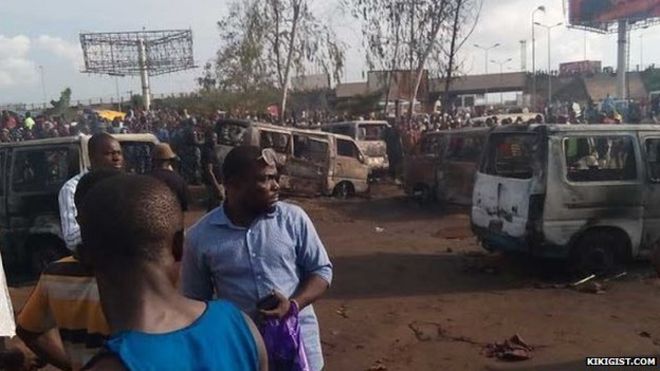
57 bodies identified as Onitsha tanker fire death toll rises to 70


More than 60 people have died in south-eastern Nigeria after a fuel tanker crashed into a busy bus station and caught fire, officials say.

Eyewitnesses say the driver lost control of the tanker as it was going downhill in the city of Onitsha.

Rescue workers say 12 other vehicles caught fire in Sunday's incident, which police say was an accident.

The tanker loaded with petrol on Sunday hit a house and exploded in a huge ball of fire, killing 69 residents.

The death toll went up by one yesterday.

Among the dead were four members of the Onitsha Newspaper distribution, Directors Association (ONDDA).

This was confirmed by the vice chairman of the association, Mr. Emmanuel Uwakwe.

Besides, the Vice Chairman of the Red Cross Society of Nigeria in Anambra state, Prof. Peter Katchy, said yesterday that one of the drivers who was taken to the hospital on Sunday after the incident had died, bringing the death toll to 70.

Katchy said 57 of the hospitalised victims burnt beyond recognition had been identified. Thirteen are yet to be identified.

The Red Cross helmsman said the evacuation of bodies was continuing at Toronto Hospital in Onitsha to the Nnamdi Azikiwe Teaching Hospital for forensic analysis.

Vice Chairman of the Vendors Assocaition in Onitsha, Mr. Uwakwe, said the association lost two distributors and two vendors – Ifeanyi Nzekwe, one simply identified as “local man”, Ifeoma and a new vendor whose name he did not remember.

Uwakwe said: “We are in pains and agony. We have visited the injured ones at the hospital. Honestly, what happened on Sunday was a national calamity”.

The senator-elect for Anambra Central Zone, Hon. Uche Ekwunife, has condoled with the families of those that died.

Ekwunife, who cut short her official engagement to visit the scene at Upper Iweka, was sad over the loss of lives and property.

Anambra Central Zone comprises seven local government areas, including the Upper Iweka Area where the incident happened.

Ekwunife said: “It is unfortunate that we continue to lose our loved ones in such careless and difficult situations.

“I want to express my deepest condolences to the families that lost their loved ones in the ugly incident and pray for the repose of the souls of the deceased”

“I promise to make legislation alongside my fellow senators that would put an end to such horrible incidents on Nigerian roads,” Mrs Ekwunife said.

In 2012 more than 100 people died in a blaze as they tried to get oil from an overturned tanker in southern Nigeria.

Tuesday 2 June 2015

http://thenationonlineng.net/new/57-bodies-identified-as-onitsha-tanker-fire-death-toll-rises-to-70/ http://www.bbc.co.uk/news/world-africa-32959825

continue reading

Sinkings in South Korea and China present divers different tests


As divers scramble to save hundreds trapped in a capsized cruise ship in China's Yangtze River, the scene in some ways evokes Northeast Asia's last major maritime disaster: the ferry sinking last year that killed more than 300 people off South Korea's southwest coast. Yet even at this early stage, there are far more differences than similarities.

Here are some key points comparing the South Korean and Chinese sinkings:

RESCUE SPEED

Already, Chinese divers have reportedly pulled two survivors from the cruise ship, with four others located. It took divers in South Korea more than three agonizing days just to enter the ferry Sewol after it sank on April 16, 2014. By that time, all they could do was retrieve bodies. For those three days, as TV cameras filmed the ferry as it sank, and a stunned nation watched, divers and rescue workers failed repeatedly to get into the ship. Officials said the extreme currents around the South Korean islands where the ferry sank, the cold water temperature and the unpredictable weather made it too dangerous for divers to enter.

SHOWING ANGER

Outrage will likely take a different form in China than it did in South Korea, where families of victims sometimes accosted and screamed at officials who visited the scene of the disaster. That anger lingers among many here who see the rescue operations as criminally botched. For the last year, dozens have camped in a major South Korean square to protest the government's handling of the disaster. So great was the uproar that South Korea's president eventually disbanded the much-maligned coast guard, creating a new body meant to oversee national safety issues. Though families in China's capsizing are already expressing their anger, it seems unlikely something similar could happen in their authoritarian country, where crackdowns on dissent are common.

THE CAPTAINS

One similarity: Both captains survived. It is too early to say what will happen in China, of course, but the Sewol captain is one of the most hated men in recent South Korean history. He was among the first to escape, filmed by cameras leaping in his underpants from the sinking ship onto a coast guard vessel. He was arrested on suspicion of negligence and abandoning people in need. The rage that he escaped early and unhurt was compounded here by claims that he and his crew botched the evacuation, telling the mostly schoolchildren inside to remain where they were, even as the ship sank and capsized. In April, the captain was given a sentence of life in prison by an appellate court on a homicide conviction.

RESCUE CHALLENGES

It's not clear how successful the Chinese rescue operations will be or, if largely unsuccessful, how long the recovery of bodies will take. But the Sewol recovery operations dragged on for seven months, until November when the government called them off. By that time, they'd searched for more than 200 days and recovered 295 bodies; nine are still missing. The physical toll was extreme. Every day divers would gather at a dock and check the weather and currents. If allowed to dive, they had to feel along the side of the ship until they could find a window they could crack open with hammers. Thick sediment inside often made flashlights useless, and divers had to creep along using their hands to feel where they were. Their only lifeline was a 100-meter oxygen hose, and it was a constant battle to keep it from getting snagged. Several divers had to make rapid ascents to the surface, risking decompression sickness, also known as the bends, which in severe cases can be fatal. Two divers died in the Sewol operations.

Tuesday 2 June 2015

http://www.whig.com/story/29215106/sinkings-in-s-korea-china-present-divers-different-tests

continue reading

Hundreds missing, many elderly tourists, after ship capsizes on China's Yangtze


Rescuers fought bad weather on Tuesday as they searched for more than 400 people, many of them elderly Chinese tourists, missing after a cruise boat was buffeted by a freak tornado and capsized on the Yangtze River.

The accident on Monday night is likely to end up as China's worst shipping disaster in almost 70 years.

Divers and other rescue workers pulled five people they found trapped in the upturned hull of the four-deck Eastern Star, a fraction of the 458 people state media reported were on board when the ship capsized.

Distraught relatives of some of the passengers scuffled with officials in the city of Shanghai, where many of those on board booked their trips, angry about what they said was a lack of information.

Dozens of rescue boats battled wind and rain to reach the ship, which lay upturned in water about 15 meters (50 feet) deep.

The Xinhua news agency said rescuers could hear people calling for help from inside the ship's hull and television showed rescuers cutting through it with an angle grinder.

One of the people pulled from the capsized boat was a 65-year-old woman. Divers fixed breathing equipment to her nose and mouth to bring her up from under the water.

About another dozen people had been rescued and six bodies recovered, media reported, leaving more than 430 people unaccounted for.

China's weather bureau said a tornado hit the area where the boat was, a freak occurrence in a country where tornados do happen but are not common.

The disaster could bring a bigger toll than the sinking of a ferry in South Korea in April 2014 that killed 304 people, most of them children on a school trip.

The People's Daily, which published a passenger manifest on its microblog, said those on board the Eastern Star ranged in age from three to more than 80.

Tour guide Zhang Hui, 43, told Xinhua the boat sank very fast and he scrambled out a window in torrential rain, clutching a life vest as he could not swim.

"Wave after wave crashed over me; I swallowed a lot of water," Zhang said, adding that he was unable to flag down passing boats and finally struggled ashore as dawn broke holding onto a branch.

President Xi Jinping had ordered that no efforts be spared in the rescue and Premier Li Keqiang went to the scene of the accident in central Hubei province, Xinhua said.

About 60 family members gathered outside a travel agency in Shanghai and demanded information.

"I only found out about this on the television news while I was at work and I came here," said 35-year-old Wang Sheng, whose said his mother and father were on board. "I cried all the way here and here I can't find anyone, the door is locked."

CAPTAIN DETAINED BY POLICE

The ship's captain and the chief engineer, who were among the few to be rescued, had been detained by police for questioning, Xinhua said.

According to the Yangtze River navigation administration, the pair said the ship sank quickly after it was caught in the tornado.

Xinhua reported that initial investigations had found the ship was not overloaded and it had enough life vests on board for its passengers. Those rescued were wearing life vests, Xinhua said.

Among those on board were 406 tourists, many of them elderly, along with 47 crew members and five tour guides, the People's Daily said.

State radio said the ship went over in about two minutes and no distress call had been issued. Seven people swam to shore to raise the alarm, media said.

Fishing boats were among the dozens of vessels helping in the search and rescue, Xinhua said, and more than 1,000 police with 40 inflatable boats had also been sent.

The Eastern Star, which has the capacity to carry more than 500 people, was heading to southwestern Chongqing city from Nanjing, capital of Jiangsu province. It sank at around 9:28 p.m. in the Jianli section of the Yangtze, Asia's longest river.

Accidents of this magnitude are uncommon in China where major rivers are used for tours and cruises. A tug sank on the Yangtze while undergoing sea trials in January, killing 22 of 25 people on board.

In the worst previous incident of its kind in China, the steamship Kiangya blew up on the Huangpu river in 1948, killing more than 1,000 people.

The Eastern Star is owned by the Chongqing Eastern Shipping Corporation, which runs tours along the Three Gorges section of the Yangtze.

Wang Jianhua, its vice general manager, said it had never suffered an incident of this magnitude. The official Hubei Daily said the company has been operating since 1981.

Tuesday 2 June 2015

http://news.yahoo.com/chinese-ferry-458-aboard-sinks-storm-12-rescued-001452986--finance.html

continue reading

Monday, 1 June 2015

Nepal quake deaths now reach 8,699


The toll in the devastating 7.9-magnitude earthquake that struck Nepal on April 25 has reached 8,699, police said on Monday.

Among the victims, 4,801 were females and 3,896 were males. The gender of two of the victims is yet to be identified, said the latest update provided by the Central Police News Room of Nepal.

Police said that 79 bodies discovered after the quake were those of foreigners.

Among the dead, 1,729 people were from the Kathmandu valley.

As per the region-wise break-up of the toll, 58 people died in the eastern region, 6,455 in the central region, 455 in the western and two in the mid-western region. No deaths were recorded in the far-western region.

Authorities have handed over 8,671 bodies to their family members, while 193 Nepali nationals and 80 foreigners are still missing, police said.

The number of injured people receiving treatment at various hospitals stands at 4,653.

Monday 1 June 2015

http://www.business-standard.com/article/news-ians/nepal-quake-deaths-now-reach-8-699-115060101284_1.html

continue reading