Showing posts with label Religion. Show all posts

Thursday, 27 June 2013

Understanding the role of local culture in disaster victim identification


Culture can be defined as the predominating attitudes and behaviour that characterize the functioning of a particular group or society. This may include belief systems, religion, (ancestral) traditions and values, modes of expression and community structures and functioning. Cultural attitudes can differ from person to person, region to region and country to country. Death is not only a biological phenomenon but also a sociocultural event with resultant behaviours, ceremonies, rituals and beliefs (Bahar et al., 2012). Attitudes surrounding death are more deeply rooted in some cultures and a disaster may therefore have long-term implications if inappropriately handled without due care for cultural sensitivities. Appropriate actions by the Government to identify and inter the victims according to locally accepted traditions can further stimulate economic recovery and community reconstruction. Invaluable lessons for both disaster management and victim identification have been learned in the aftermath of the 2004 South East Asia tsunami.

Due to the variation in cultural attitudes, best practice guidelines to incorporate cultural behaviours in disaster victim identification (DVI) are not widely described. The Interpol DVI guide states that “(…) the specific religious and cultural needs and national idiosyncrasies or laws and directives of the Member States must be taken into consideration during an operation, but will not be discussed any further in the explanations of the Guide. It is also not possible to deal with all conceivable operational scenarios”. As stated in the Interpol guidance, national laws and directives need to be followed although the guidance acknowledges that application of international standards should apply in multinational DVI operations. Many of those member countries are faced with a complexity of group structures involving tribal, indigenous, ethnic and remote communities. While it is recommended to compliment the Interpol best practice guidelines with Standard operating Procedures (SOP’s) and Memorandums of Understanding (MoU’s) between collaborating parties, not many reports have been published on specific cultural problems encountered during international DVI operations.

Religion is a key force behind the way the community or society interacts with notions of disasters (Reale, 2010). Religious organisations and leaders are frequently involved in important community dynamics and power structures, providing health services, education and emergency relief and those bodies understand the local culture and speak the local language. Disasters may be interpreted as an ‘act of god’ or revenge from evil forces with bloated unrecognisable bodies (often referred to as ‘monsters’) used as ‘proof’ of supernatural intervention and punishment for sins committed by affected communities or sinful behaviour of foreign tourists. Following the 2004 Tsunami in South-East Asia for example, locals, unfamiliar with post-mortem processes, interpreted the facial changes as a sign of superhuman intervention and ‘dehumanisation’ of the victims (Merli, 2009). Indeed, much of those responses find its origins in the lack of awareness of post-mortem processes or the causation of natural events.

In remote (particularly poverty-stricken) areas, forensic awareness may be limited and the need for proper identification procedures poorly understood. If a disaster occurs in small communities, locals may retrieve the bodies and bury them according to local burial customs. State-ordered burials of disaster victims in mass graves out of misguided fears of health implications caused by decomposing bodies have led to much public resistance. Bodies and body parts may be removed as quickly as possible and/or identified visually by relatives and handed over on-site without appropriate identification and documentation procedures. Indeed, secondary and tertiary identifiers according to the Interpol standards are still seen and accepted as primary identifiers in many global regions. Additionally, the Interpol standards may be endorsed at the ‘top-level’ (e.g. Governments or central police authorities), the disaster response may not be recognised at ‘low-level’ remote communities who still rely on traditional ancestral practices in dealing with disasters. This has been increasingly recognised by NGO’s and local organisations and this has led to initiatives to raise awareness of disaster management in remote tribal communities mainly in Africa and Australia. Forensic and coronial practices may cause considerable distress to indigenous peoples who may have no societal or religious mechanisms for dealing with the consequences of such investigations (Byard and Chivell, 2005). Most religions and cultures find autopsies acceptable under special circumstances such as for the purposes of identification or to investigate the causes of an accident. Religious leaders may issue a decree (fatwa) to approve specific autopsy procedures, rituals and burial arrangements to deal with the special circumstances of a disaster. It is also not uncommon in certain countries that bodies remain unclaimed by relatives, placing an additional burden on mortuary capacity and local authorities to arrange the disposition of those remains. Remote communities are more than often dependent on local resources to sustain their livelihood, e.g. fishing or livestock. Following (natural) disasters and resultant loss of income and livelihood, stories of looting, theft of bodies from local hospitals for ransom, and grave robbing have been reported.

The importance of rituals and proper burial is embedded in many religions and form part of the healing process following a sudden loss. Spirituality and religiosity give individual guidance on how to behave and assess a situation, what action should be taken, as well as what and how coping strategies to be selected to address the situation. Superstitious and spiritual phenomena are commonly encountered after disasters such as the 2004 Tsunami and 2010 Great Earthquake and Tsunami in Japan. The presence of ‘spirits’ of those who died, has had profound social and economic effects in terms of the mourning and healing process, ante-mortem data collection, rebuilding communities, and tourism. Performance of proper burial and body rituals are therefore of pivotal importance to overcome those fears, even in the absence of a missing person’s body which may never be recovered.

Disasters in areas of conflicts may pose additional problems for the recovery, identification and repatriation of local and foreign nationals. In this respect, similar issues may arise in collapsed and failed States where no or hardly infrastructure is in place to handle large-scale disasters. NGO’s, religious organisations and leaders may be able to mediate between parties. Periods of truce between fighting factions may be initiated to manage a disaster, for example the agreement between Philippine Government forces and Maoist rebels following Typhoon Bopha. Additional problems in conflict areas may arise if bodies of the victims are used as a negotiation tool or for ransom demands. Regions of (post-)conflict are characterised by deep distrust in the Government or local authorities and this may lead to difficulties in ante-mortem data collection. The Interpol guidance does not address those issues, particularly when dealing with disasters in conflict areas. Additional recommendations are needed to deal with the presented issues above. Guidance from religious organisations and NGO’s with extensive experience in working with remote communities may prove beneficial to address cultural sensitivities.

Abstract of oral presentation: presented by Dr Jan Bikker at the 2nd Annual Forum for Disaster Victim Identification, Royal College of Pathologists, London

References

Byard, R.W., Chivell, W.C. (2005) The interaction of death, sorcery and coronial/forensic practices within traditional indigenous communities. Journal of Clinical Forensic Medicine 12 (5); pp. 242-244.

Merli, C. (2009) Religious interpretations of Tsunami in Satun province, Southern Thailand: reflections on ethnographic and visual materials. Svensk Religionshistorisk Rsskrift. 14; pp. 154-181

Reale, A. (2010) Acts of God(s): the role of religion in disaster risk reduction. Humanitarian Exchange Magazine 48, October 2010.

continue reading

Friday, 24 May 2013

Nigeria: Ancient tree tragedy in Imo State


[Updated: see post] This is not the best of times for Imo State and its people given the harvest of tragedies recorded in the state recently. The most recent is the ancient ancestral tree that fell in Umudagu, Ihitte Isi Mbieri community, Mbaitoli local council area of the State late Thursday night of May 16, killing no fewer than 50 people, with a yet to be ascertained number critically injured. The tall tree known as Osisi Ukwu Uko, collapsed on buildings as well as those transacting their businesses in a market located under the tree.

Vanguard Metro, VM, gathered that the collapse of the tree followed a heavy torrential rain that was accompanied by a ferocious windstorm and thunder. The devastating rainstorm, which started at about 6pm on the fateful day, continued throughout the night and spilled over to the morning hours of Friday. It was also gathered that most of the victims were either traders, who were selling their wares in the market, their customers, some passers-by and others who were taking shelter in the town hall building and the surrounding houses.

Lamenting over the ugly incident, the former state chairman of Peoples Democratic Party, PDP, Chief Marcellinus Nlemigbo, whose ancestral home is a shouting distance away from the tragic scene said "the incident is most devastating and has thrown the entire community into deep mourning".

Continuing, Nlemigbo said: "The tree was a symbol of the community and no living person in our community can fully narrate the history attached to the tree. The tree had always been there until yesterday (Friday night)".

While debunking the rumour now making the rounds that the tree had fetish attachments to it, Chief Nlemigbo, however, expressed unhappiness that some elders in the community had severally resisted earlier arrangements to fell the tree. He said he was not at home when the incident occurred and was only told about it through the telephone and had to rush home to assist in evacuating the casualties.

"I am aware that the tree provided a natural canopy for people. There is also a market set up by our ancestors in the place, which was sustained till date. There is also the likelihood that some people must have run into the town hall building to take shelter. So, the casualty figure can be any person's guess," Chief Nlemigbo said.

He, however, recalled with grief that when some parts of the tree were trimmed about 20 years ago, the two individuals, who were engaged to execute the job, died unexpectedly after about a week, adding that this lent credence to the belief that the gods residing in the tree had been angered.

Some villagers around the scene confirmed to VM that a middle aged mad woman had May 14, 2013, warned the traders, who usually sold their wares close to and under the tree, to relocate from the place soonest or be prepared to face the looming but unpleasant consequences.

Obviously, the villagers ignored the advice, especially as it came from a mental patient!

Most sympathisers could not help but join close relations of the dead in a chorus of wailing and lamentations the scene of the tragedy. This was while joint rescue operation from patriotic and sympathetic Umudagu youths, Nigerian Security and Civil Defence Corps, NSCDC, the Fire Service, policemen and men of the State Emergency Management Agency led by the Executive Secretary, Mrs. Uche Ezeonyeasi was on to evacuate the dead and the injured, and restore a semblance of order at the place.

A lot of credit must be given to Mbieri youths who came out in their numbers, defying the uncertainties of the dark night, the devastating torrential rain, lightening and thunder, to assist their dying relations and friends.

But for the determination and patriotism of these youths, more people would have died, even as it is being speculated that the death toll may have increased in view of the severity of the injuries and the distance from the scene of the incident to the Federal Medical Centre, Owerri.

Some people willingly made their private cars available for the evacuation of the dead and injured. Some were seen giving first aid to the victims of the tragedy before they were taken to the hospital. The eventual arrival of government's emergency team added some fillip to the efforts of the youths.

Meanwhile, the lifeless bodies of the victims, most of which are yet to be identified, were deposited in morgues, including the Federal Medical Centre, the State Specialist Hospital and Aladinma Hospital, all in Owerri.

But the tragedy is one that will haunt the villagers for a long time. The picture was gory. Human limbs scattered all over the place. Although rain water washed away the blood coming from the dying people, traces of human blood and stench can still clung to the scene.

For the people, it was a colossal loss of life and property. Their prayer is that such should never come the way Umudagu, Ihitte Isi Mbieri.

Friday 24 May 2013

http://allafrica.com/stories/201305230850.html?page=2

continue reading

Saturday, 18 May 2013

Nigeria: Falling tree kills over 30 people, injures 16 in Imo Community


A 300-year old tree fell and killed over 30 people on Thursday evening at Umudagu, Ihitte Isi Mbieri in the Mbaitoli council area of Imo State.

Local people said the large-framed ancestral tree had wide and strong branches and a broad base, explaining that it had traditionally served as the community’s commercial nerve centre for 24-hour trading.

The tree, which they said belonged to a dreaded deity in the community was uprooted at about 7:30 PM, when trading was in progress, by a wind storm that preceded a heavy rainfall in Owerri and its environs.

A resident of the community, Mr. Nnaemeka Emenyonu, told that the tree fell on the affected persons about 7:30 PM.

He said the tree also destroyed the village hall.

“The big tree fell suddenly, killing 31 people on the spot and injuring 16 others. Those injured were taken to the hospital.

“The victims include two sisters, who were selling tomatoes. Honestly, this is the saddest event in the history of our community,” he said.

The traditional ruler of the community, Eze Godwin Duru, lamented that such a tragic incident had never occurred in the community.

When THISDAY visited the scene, officials of the State Emergency Management agency, led by the Executive Secretary, Mrs. Uche Ezeonyeasi were retrieving the trapped bodies, amid wailing and lamentations by relations of the victims.

A white ambulance Nissan bus with registration number “ Imo LG 25 NGN bearing the inscription ‘Health at your door step’ was was among the vehicles taking corpses to the Federal Medical Centre (FMC), Owerri, the state general hospital at Umuguma and Aladinma Hospital Mortuaries.

An eye witness, who gave his name as Amarachi Obumunaonye blamed the havoc on the refusal of the elders of the community to cut the tree as earlier directed by the community.

According to him, two individuals, who trimmed the tree's branches several years ago died shortly after, rousing suspicion that the gods of the land had been provoked.

A young woman called Lucy also hinted that a middle aged mad woman, whose mother hails from the area had on Tuesday warned traders to relocate or be prepared for unpalatable consequences but that the warning was ignored by the desperate traders.

The traditional ruler of the community, Eze G.C. Duru could not be reached for comment but the president general of the community, Mr. Maurice Anyanwu only described the incident as unfortunate and declined further comments.

Saturday 18 May 2013

http://www.thisdaylive.com/articles/falling-tree-kills-over-30-people-in-imo-community/147763/

http://www.punchng.com/news/falling-tree-kills-31-injures-16-in-imo/

continue reading

Tuesday, 23 April 2013

Lighter of pyres


No DVI but an encouraging insight into burial customs (note blogger):

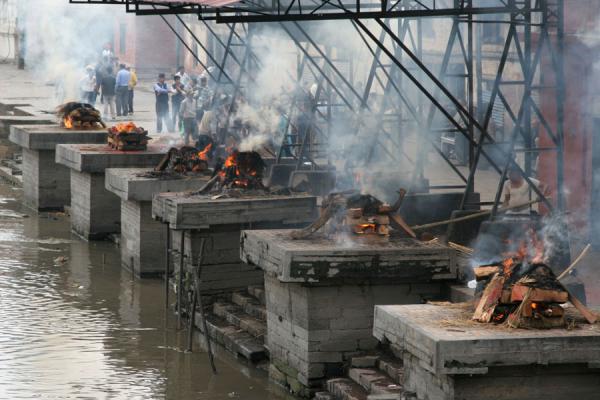
There is nothing extraordinary about the way she looks. Yet Shanti Behera, 52, a resident of Sambalpur, is unique. For the last decade she has been running the local crematorium. According to traditional Hindu customs, women are not even allowed to go the crematorium, leave aside participating in the funeral rites. But compelled to provide two square meals for her family after the demise of her husband, Shanti willingly took on the job of being the full-time keeper at the Kamlibatar Rajghat crematorium.

Married at 15 years, she had just turned 40 when she lost her husband to multiple illnesses. “I had no work and six children, including four daughters, to support. I was thinking of seeking work as a domestic worker but destiny, I guess, had something else in store for me. My husband was the caretaker of this cremation ground. He worked there on a daily wage basis and so when he fell severely ill and was bed ridden, I had to take over his duties or else he wouldn't have got any money,” Shanti recalls.

“As this is the only crematorium in the area, thousands of households were dependent on it. My husband was the only keeper there and his absence would have posed a huge problem,” she adds.

Her journey from being a housewife to becoming the manager of a crematorium was a difficult one. There were several personal as well as social hurdles. Initially, she found it very difficult to look at the bodies being brought for cremation. She also faced opposition from her relatives and friends because she was daring to go against tradition. But Shanti grew stronger as time passed.

“My husband was cremated at the same ground where he worked. I had to take over just after a few days after his death. It was very painful for me but I went ahead. Then, a few months later, my son died in a road accident. I don’t know how I set the pyre for his funeral. It was a heart breaking moment for me. But ever since, I have learnt to face pain and hardship. I sincerely took to doing the job on a full-time basis, despite being aware that customs dictate that women are strictly prohibited from working at a cremation ground.”

Her job is certainly not for the faint-hearted. Arranging the wood for the pyre, setting it alight, and ensuring that it burns properly — she is always on her toes, come rain or shine, performing her job to the best of her ability. Often she has to work until the wee hours to ensure that everything is done right.

“I work round the clock, and am there whenever the need arises. In fact, I have had to come here at midnight braving terrible storms, too. Over the years, I have realised that this work is not only a means of livelihood but has a higher purpose. I believe I am helping the dead souls rest in peace and that gives me immense satisfaction. The only thing I find difficult is to see a family cremate a child. It reminds me of the worst experience of my life — cremating my own son,” she says.

For the first five years, Shanti worked for free because the municipal authorities did not believe that she would be able to manage the crematorium properly. During that period the family survived on tips, which was insufficient. Later, she started receiving a monthly payment of Rs. 1,500 from the municipality. Managing expenses for the whole month on this meagre salary, however, has only gotten tougher in recent years.

“I have to pay Rs. 600 as rent for the single room where we are staying. I don't even have a Below Poverty Line (BPL) card so that I can get subsidised rice. I have run from pillar to post to get a BPL card, but to no avail.”

While making ends meet is still a struggle for Shanti, she is glad that at least the community’s attitude towards her has changed. While the local people were once shocked by her bold move, today they respect and admire her courage.

Says local resident Padmabati Behera, “She is a great woman and everybody respects her. She is doing a job that no other woman had dared to do. I have seen her over the years and feel proud of her. She is working selflessly without any expectations.”

Families visiting the cremation ground also draw great comfort from her presence.

Many hope that Shanti’s example will inspire other women to opt for unusual professions. Says Abhida Nanda Mishra, an academic from Sambalpur, “For me, Shanti's work in the crematorium is not just a livelihood issue but, looked at from a broader prospective, is about women's empowerment and acceptance in society. It represents positive change.”

Tuesday 23 April 2013

http://www.thehindu.com/news/cities/Delhi/lighter-of-pyres/article4644118.ece

continue reading

Wednesday, 6 March 2013

Santa Muerte, symbol of vengeance prayed to by cartels


Popular in Mexico, and sometimes linked to the illicit drug trade, the skeleton saint known as La Santa Muerte in recent years has found a robust and diverse following north of the border: immigrant small business owners, artists, gay activists and the poor, among others — many of them non-Latinos and not all involved with organized religion.

Clad in a black nun’s robe and holding a scythe in one hand, Santa Muerte appeals to people seeking all manner of otherworldly help: from fending off wrongdoing and carrying out vengeance to stopping lovers from cheating and landing better jobs. And others seek her protection for their drug shipments and to ward off law enforcement.

“Her growth in the United States has been extraordinary,” said Andrew Chesnut, author of “Devoted to Death: Santa Muerte, the Skeleton Saint” and the Bishop Walter F. Sullivan Chair in Catholic Studies at Virginia Commonwealth University. “Because you can ask her for anything, she has mass appeal and is now gaining a diverse group of followers throughout the country. She’s the ultimate multi-tasker.”

Exact numbers of her followers are impossible to determine, but they are clearly growing, Chesnut said.

The saint is especially popular among Mexican-American Catholics, rivaling that of St. Jude and La Virgen de Guadalupe as a favourite for miracle requests, even as the Catholic Church in Mexico denounces Santa Muerte as satanic, experts say.

Her image has been used on prayers cards citing vengeance and protection, which are sometimes found at scenes of massacred bodies and on shipments of drugs.

U.S. Marshal Robert Almonte in West Texas said he has testified about La Santa Muerte in at least five drug trafficking cases where her image aided prosecutors with convictions. Last year, Almonte testified that a Santa Muerte statue prayer card, found with a kilogram of methamphetamine in a couple’s car in New Mexico, were “tools of the trade” for drug traffickers to protect them from law enforcement. The testimony was used to help convict the couple of drug trafficking.

Almonte has visited shrines throughout Mexico, and given workshops to law enforcement agencies on the cult of the saint.

“Criminals pray to La Santa Muerte to protect them from law enforcement,” Almonte said. “But there are good people who pray to her who aren’t involved in any criminal activity, so we have to be careful.”

Small statues of La Santa Muerte have been spotted in religious stores as far as Minneapolis, and an art show in Tucson, Arizona features all La Santa Muerte images.

Devotees said La Santa Muerte has helped them find love, find better jobs and launch careers.

Gregory Beasley Jr., 35, believes he landed acting roles on “Breaking Bad” and the 2008 movie “Linewatch” after a traditional Mexican-American healer introduced him to La Santa Muerte.

“All my success … I owe to her,” he said. “She cleansed me and showed me the way.”

Some devotees pray to the saint by building altars and offering votive candles, fruits, tequila, cigarettes — even lines of cocaine in some cases — in exchange for wishes, Chesnut said. A red La Santa Muerte, her bestselling image, helps in matters of love. Gold ones aid with employment and white ones give protection. Meanwhile, a black Santa Muerte can provide vengeance.

“She’s my queen,” said Arely Vazquez Gonzalez, a Mexican immigrant and transgender woman who oversees a large altar inside her Queens, New York apartment. Against one wall of her bedroom altar is a tall, sitting Santa Muerte statue in a black dress surrounded by offerings of tequila.

Gonzalez, who sports a tattoo of La Santa Muerte on her back, holds an annual event in August in the saint’s honour, with mariachis and a feast.

“All I have to do I ask for her guidance and she provides me with what I need,” she said.

The origins of La Santa Muerte are unclear. Some followers say she is an incarnation of an Aztec goddess of death who ruled the underworld. Some scholars say she originated in medieval Spain through the image of La Parca, a female Grim Reaper, who was used by friars for the later evangelization of indigenous populations in the Americas.

For decades, though, La Santa Muerte remained an underground figure in isolated regions of Mexico and served largely as an unofficial Catholic saint that women called upon to help with cheating spouses, Chesnut said.

It wasn’t until 2001 when a devotee unveiled a public La Santa Muerte shrine in Mexico City that followers in greater numbers began to display their devotion for helping them with relationships and loved ones in prison. Economic uncertainty and a violent drug war against cartels that has claimed an estimated 70,000 lives also are credited for La Santa Muerte’s growth.

Oscar Hagelsieb, assistant special agent in charge for Homeland Security Investigations in El Paso, said agents have found that most members of the Gulf and Zeta Cartels mainly pray to Santa Muerte while those from the Sinaloa and Sonora Cartels honour folk saint Jesus Malverde.

“Altars are very intricate. We have found some with food and others with blood from animals,” Hagelsieb said.

The association with cartels and denunciations by some priests has resulted in some non-devotees destroying makeshift roadside altars. Recently, assailants smashed a life-size statue of La Santa Muerte in a South Texas cemetery. Police in Pasadena, California recently found human bones at a home with a Santa Muerte altar outside. The owners say they bought the bones online.

But the vast majority of devotees aren’t crooks.

Kiko Torres, owner of the Masks y Mas art store in Albuquerque, said sales of La Santa Muerte statues, incense, and oils have skyrocketed in recent months.


“Most people who buy the stuff are regular people who just recently found out about her,” he said. “Some probably have no idea about her connection to that other world.”

One such devotee is Steven Bragg, 36, who said he was introduced to La Santa Muerte in 2009 and began praying to her for a variety of different reasons, including a plea for a life companion. Recently, the New Orleans man built a public chapel to her and holds rosary services that attract around a dozen people.

He also just formed a non-profit to support the “New Orleans Chapel of the Santisima Muerte,” the official name of his public altar.

“It’s something I decided to do after all that La Santa Muerte has provided,” Bragg said. “She has never failed me.”
Wednesday 6 March 2013

http://www.drugwar101.com/blog/archives/6139

continue reading

Friday, 25 January 2013

Earthquake in China Linked to Idea of Divine Retribution


An earthquake that struck close to the site of a known concentration camp in China was seen by netizens as having possible divine portent—given the ancient Chinese belief that misdeeds by rulers are punished by heaven.

The 5.1- magnitude quake hit the border region of Liaoyang City and Shenyang City in northeast China’s Liaoning Province at 12:18 p.m. on Jan. 23, according to the China Earthquake Networks Center.

The epicenter had a focal depth of seven kilometers and was located near the Sujiatun District of Shenyang, capital of the province, and county-level city Dengta of Liaoyang. The quake lasted about 30 seconds, and was felt not only in the areas of Liaoning, but also its neighboring Jilin Province’s Siping, Liaoyuan, and Changchun.

No casualties or severe damage was immediately reported, though the external walls on some old houses were cracked or split, and at least eight chimneys collapsed, according to Beijing Times.

One frightened young man in Shenyang, with a blanket wrapped around his shoulders, was reported to have run from the 21st floor of his residential building to the ground in a single minute.

Shenyang residents said that buildings continued to tremble after the earthquake, making them especially anxious about aftershocks. Many companies evacuated their workers because of safety concerns.

Communications were disrupted in Dengta, where houses in the hardest-hit areas were visibly cracked. This is the second earthquake in that city in the past year.

Some commentators online linked this earthquake, and other earthquakes and natural disasters in China, with the Chinese belief in “heaven’s will.” One Hunan netizen remarked: “There have been so many earthquakes these days … Jiangsu, Liaoning, and Shandong … .”

In Chinese history the end of a corrupt dynasty has often been marked by unusual or catastrophic weather or natural disasters. Xinhua, the Communist Party’s mouthpiece, in 2008 devoted a long article to attacking and dismissing the idea.

The Chinese scholar Zhu Xueqin wrote in the liberal Southern Metropolis Daily that the disastrous earthquake in Sichuan in May 2008, in which tens of thousands died, must have been “divine punishment.”

He wrote: “Isn’t this punishment by heaven? But that doesn’t mean that those who died committed sin. If it weren’t divine punishment, why did the earthquake happen on the birthday of the Buddha?”

Xinhua, in attempting to dismiss the concept, described the view of ancient Chinese people: “Every time there was a natural disaster in society, people took it as a matter of course that it was due to shortcomings in government policy. It was even to the extent that every time there was an earthquake or natural disaster, the emperor would write a ‘declaration of fault.’”

Some Chinese continue to make the same associations between a corrupt polity and natural disasters. A netizen from Jiangsu wrote: “Everyone says: ‘Google Sujiatun and you will know why they were hit by this earthquake!’ What goes around comes around.’”

The reference was almost certainly to the reports of a concentration camp that held Falun Gong practitioners, and used them as a live organ bank.

Reports emerged in 2006 that thousands of Falun Gong practitioners were housed in a Sujiatun hospital and labor camp—the allegations said that they were being harvested for their organs while still alive, with their bodies then being cremated after the organs were removed and sold.

The U.S. State Department sent staff to the site, but could not corroborate that specific claim. However, further investigation by independent researchers found that tens of thousands of Falun Gong practitioners have been killed for their organs—an activity that may still be continuing in China.

Later, experts concluded that the time lag—about three weeks—from when the reports about the Sujiatun death camp emerged, and when State Department personnel arrived, was enough for Chinese officials to have thoroughly cleaned up.

Friday 25 January 2013

http://www.theepochtimes.com/n2/china-news/earthquake-in-china-linked-to-notions-of-divine-retribution-340004.html

continue reading

Wednesday, 16 January 2013

Vietnam’s Buddhist response to disaster


Buddhist monks, nuns and their followers have long contributed to Vietnam’s disaster relief efforts. Sometimes equipped with canoes filled with instant noodles, woollen hats and psychosocial counsellors, this local cadre may lack standard operating procedures, but it constitutes a largely undocumented and significant disaster relief system running parallel to governmental efforts.

Buddhist temples’ (or any religious organization’s) contribution to disaster relief is still under-studied by international donors and NGOs working on disaster response, despite their growing role in a number of places, says Ian Wilderspin, a technical specialist on disaster risk management for the UN Development Programme (UNDP) in Hanoi.

However, Bui Viet Hien, a UNDP programme analyst, co-authored a 2011 study in collaboration with the Ministry of Sciences and Technology on the role of informal organizations in boosting community resilience to flooding in a district of the coastal Binh Dinh Province in south-central Vietnam.

Groups identified in the study included, among others, business leaders in the rice industry; boat owners who lived closest to the pier and provided emergency transportation during flood seasons; and dyke protection brigades nominated by village elders to supervise dykes during rainy seasons. The study broke down each group’s contribution to boosting resilience, concluding that people in the above three groups had the most impact on their villages’ ability to get through disasters.

There has not been a similar effort to assess informal organizations’ contribution to disaster response, she told IRIN last September. “It is an important question to ask [religious organizations’ contribution to disaster relief and prevention], but we simply do not know.”

Eric Debert, a programme manager with international NGO CARE in Vietnam, said though religious groups are not targeted directly in CARE’s work with communities on disaster risk reduction, they may be represented in other community associations and groups CARE consults.

Nevertheless, it could be a “gap”, he noted. Since 2006 CARE has coordinated the Joint Advocacy Network Initiative (JANI) funded by European Union aid body ECHO.

JANI includes 18 international and local NGOs as well as mass organizations (like Vietnam’s Women’s Union, whose stated membership is 13 million) which promote a community-based approach to help residents in disaster-prone areas face increasingly frequent and more intense natural hazards.

Buddhist operating procedures?

“They [Buddhist temples] have good intentions, but little strategy,” said Nguyen Huu Thang, the vice-director of social welfare and disaster for the Vietnam Red Cross (one of two groups nationwide authorized to receive disaster relief donations) which has collaborated with Buddhist temples organizing relief trips. Temples’ lack of formal training in humanitarian response can lead to “confusion or chaos” if relief groups deliver goods haphazardly without coordinating with local officials, said Thang.

But the leader of Quan Dinh temple on the outskirts of Hanoi, who goes by her Buddhist `dharma’ name (given during an initiation ceremony), Sister Peaceful Light, told IRIN the temple always goes through an official structure, whether it is Vietnam Red Cross or provincial authorities.

Pagoda leaders in or close to disaster-stricken areas often meet and guide arriving groups on hikes or by canoe to provincial authorities, who then direct them to villages most in need.

Thang said Buddhist temples were more active in organizing disaster responses than other religious groups.

In a country where more than half the population declares itself Buddhist, the network is wide - some 25,000 temples staffed with monks or nuns nationwide as of five years ago - Vietnam’s Buddhist Association reported to international media.

But the count then, and now, is only approximate. “Not all temples are registered with us. Some villages put joss sticks in an urn with rice and have a nun that visits occasionally. Is that a temple? Perhaps, but not known to us,” said an association staff member.

Tracking informal giving

“Why do you need to know how much we gave? Is it not enough that we did?” asked the nun overseeing one of the most well-known Buddhist pagodas in the central city of Hue, Tay Linh temple, who goes by the name of Sister True Compassion.

Buddhist temples file annual reports with the national Vietnamese Buddhist Association which lists donation amounts and how the money was spent: Surviving families of canoes which sank; children in a leper colony; cancer patient’s home visit. And in late 2011 when storms battered the southern tip of Vietnam, killing an estimated 85 and forcing another 13,000 families from their homes, Tay Linh temple’s disaster relief activities filled almost an entire page.

In 2011, the temple’s charity board, which Sister True Compassion heads alongside her position as vice-director of the regional charity board representing all Buddhist temples in Hue, calculated it gave some US$24,000 to communities hit by disaster.

When IRIN asked the national Buddhist association for a breakdown of how much money from overseas was sent to Buddhist temples in Vietnam, and how much money was donated to disaster relief efforts, officials said they had not formally analysed giving or disaster relief activities.

Not an uncommon response, noted local NGO Vietnam Asia Pacific Economic Centre, which published a study in 2011, with support from Asia Foundation, on philanthropic giving in Vietnam. The study noted that while in recent decades there has been “substantial individual giving... to alleviate the suffering of others particularly in times of disaster,” there has not been “systematic research or reports on giving patterns”.

Based on interviews with 200 households and 100 businesses nationwide, the NGO learned that “informal channels” - including pagodas, churches and community groups - received most charitable giving, while “official channels”- corporate organizations and funds for the poor - received but a fraction (27 percent in urban areas, 9.4 percent in rural ones).

“We do not work like formal organizations. Please do not call me a leader of anything,” said Sister True Compassion. “We are only trying to alleviate suffering and build compassion. That is all.”

Wednesday 16 January 2013

http://www.irinnews.org/Report/97256/Vietnam-s-Buddhist-response-to-disaster

continue reading

Saturday, 22 December 2012

Followers of Unapproved Faiths Denied Rights


A seminar on agnostics and ancestral beliefs revealed that agnostics and followers of unofficial religions are often denied civil rights in Indonesia because the state only recognizes six religions.

Participants from 35 remote communities who inherited their faith from their ancestors attended the seminar.

“The [blank] strip on the religion column in their identification card [KTP] often caused them to lose their civil rights such as birth, marriage, death certificates and even denied health services,” Eva Kusuma Sundari, of House Commission III which oversees legal affairs, said on Friday. “They are also denied their rights to education and jobs because they don’t have a religion.”

“You can say that the discrimination against followers of ancestral beliefs is systematic from the day they were born until the day they die. The public often rejected their bodies to be buried in public cemeteries,” Eva said.

Eva said that Law No.23/2006 does not require agnostics and followers of unofficial religions to fill in the religion column in their KTP, but to simply put a strip on the column or leave it vacant.

“However, the Home Affairs Ministry’s breakthrough to allow agnostics [and followers of other religions] to provide a letter from their organizations didn’t help solve the discrimination problem,” she said.

She added that the government’s authority to determine whether or not a religion is official has been straightened out by the Supreme Court, which ruled that the government does not have the authority to determine the legality of a religion.

“Therefore, the decision which said that the state only recognizes six religions is automatically invalid. Based on the Supreme Court’s ruling, the Home Affairs Ministry, including the directorate general of civil administration, should implement the law. This means the requirement to fill up the religion column is no longer in accordance with the Constitution,” said Eva.

Saturday 22 December 2012

http://www.thejakartaglobe.com/news/followers-of-unapproved-faiths-denied-rights-eva/563110

continue reading

Friday, 6 July 2012

In the Aftermath of the "Himalayan Tsunami"

During the months of May and June pilgrim-tourists in the millions make their way up into the mountains of the north Indian state of Uttarakhand. Their destinations include the divine sources of the Yamuna and Ganga rivers, the abode of the god Shiva in Kedarnath, the famous residence of the god Vishnu in Badrinath, and the Sikh site of Hemkund Sahib, associated with Tenth Guru of the Sikh tradition, Guru Gobind Singh. This year in mid-June the monsoon rains came early and poured down upon the Land of the Gods with the sort of unexpected intensity that comes once in centuries. Flash flooding, landslides, and rising waters stranded tens of thousands of visitors and destroyed roads, buildings, livelihoods, and bridges. It is too early to know how many people have died but the number will probably be in the thousands. The numbers may be low compared to global-scale disasters of recent years, but there is a wrenching poignancy to what is happening in Uttarakhand right now. Many of the forces that frame daily life in South Asia are suddenly on display like a raw wound: the wages of development and globalization, the power of the natural world, divine agency, altruism, self-interest, and the political nature of both government action and religious ritual. The immediate impact of this flooding on Uttarakhand is extreme. The lasting impact on family life, labor patterns, regional economy, and levels of education, as Ravi Chopra and Malavika Vvawahare have passionately observed, will be an even deeper wound. Flooding has hit the entire state hard, but one memorable face of this disaster will be what happened to the pilgrimage site of Kedarnath, a place about which I have been researching and writing for much of the past decade. It appears that a cloudburst fell with such intensity that it caused a lake located above and behind Kedarnath village to suddenly break its boundaries. Water and rock rushed down onto the site, killing hundreds and marooning thousands. About seven kilometers south this surge utterly destroyed the village of Rambara. As I write this I still do not know in perfect detail which of my friends and acquaintances survived. I do know, however, that a very good friend did not. I have since managed to speak with several other friends who were in Kedarnath and managed to escape. In speaking of what those moments were like, one said “I saw Shiva’s tandav” (the god's dance of destruction). I said I could not imagine. “Good,” he replied. Early Indian media coverage, as well as state and central government relief efforts, focused on the famous site of Kedarnath and the plight of those visitors to Uttarakhand who needed to be physically rescued. In 2013, even Himalayan pilgrimage tours can reasonably be expected to be somewhat safe, beyond the occasional threat of landslide—it is not like in earlier days when setting out on pilgrimage meant the possibility of never returning. The grief and shock of surviving a natural disaster is thus for many intertwined with a sense of bewilderment and ambush that renders such accounts all the more compelling. Yet the arresting images of post-flood Kedarnath and intense pathos of interviews with survivors who were visitors to the region displaces attention from local concerns. The relative lack of attention to those who call Uttarakhand home is perhaps even more distressing because it re-enacts the ways in which the health of local communities has in recent decades taken a backseat to the development of infrastructure for visitors, the building of hydroelectric dams, and logging projects. Particularly since Uttarakhand became a separate state (first as Uttaranchal) in 2000, the region has seen a massive rise in the number of visitors to the region, especially by the growing Indian middle class. Roads widened and hotels and visitor services grew exponentially. Building a new hotel or a restaurant by the side of the road felt like a smart investment—even when the road was near a river. Kedarnath saw the building of new cell phone towers, a railway reservation office, helicopter landing pads, lodges with hot water available in the room. Prices soared. When a wave of water and rock crashed down upon Kedarnath last month it crashed down upon a site bursting at the seams—had this event happened twenty years ago deaths and destruction would have been far, far less. This disaster feels to me like the bursting of a bubble. For many the floods wear the face of divine agency. Shiva has demonstrated his destructive power, it is said, because he is angry with the de-sacralization of pilgrimage and the lack of care with which the Himalayan environment has been treated. But the mixed flow of mountain rock and water is about more than Shiva’s power to destroy. This can be seen in what is emerging as one of the visual memes of this tragedy: an AP photo of the submersion of a statue of Shiva dozens of feet tall that has been a landmark in recent years of the city of Rishikesh. This now-iconic image—the god's head and shoulders battered by flood waters—is not just an indication of how high the river rose, it is also an index of Shiva’s nature. Shiva’s matted hair cushions our world from the full power of the goddess Ganga as she descends for our human benefit in the form of the Ganges river. Shiva cannot be separated from shakti, the cosmic energy found in forms of goddesses such as Ganga. One of the most common ways to worship Shiva is to pour water onto his physical form: the aniconic shaft of the linga, held in its ovoid yoni base. This ritual act of pouring water re-enacts the union of male-female, the indivisible nature of energy and matter. From my mostly helpless location in Stevens Point, Wisconsin I have been following events through telephone, Internet media, and Facebook postings. On June 24, 2013, the Hanuman Fan Club on Facebook, a group devoted to the deity Hanuman, posted an old pre-flood image of the Kedarnath temple. Hindi text introduces the image, noting that of all the structures in Kedarnath only the temple survived because “It was connected to the faith of millions and therefore Mahadev [Shiva] did not allow it to tremble.” It should be noted that cell phone towers also appear to have survived. The range of sentiment expressed in the comments this posting generated, of which at last count there were 2133 (along with 2917 “likes”), is striking. Some express the opinion that this destruction is the direct result of frank commercialism. Others take issue with Shiva’s seeming whimsy at choosing who lived and who died, or ask why the survival of the temple matters when family members are dead. But the majority of the comments are expressions of praise and reverence: “Long live the lord of Kedarnath” (“Jai Kedarnath baba ki”), “Long live Bolenath [sic] ( “Long live the lord [Shiva] who is innocent and simple”), or simply “O god of gods, destroyer, destroyer” (“har har mahadev”), an acknowledgement of human limits in the face of such power and tragedy. Connecting these events to Shiva is also a way of thinking about human agency and human responsibility. As Chitra Padmanabhan notes in her editorial in The Hindu, the story of how the goddess Ganga descends honors the humility of her human supplicant, the king Bhagiratha, a humility that Padmanabhan argues should be mapped onto how humans relate to their physical environments. Many voices in the last two weeks have said that this is exactly what has not been happening in Uttarakhand. Both the flash flooding itself and the resultant destruction—both of human life and of property—may have partially derived from a terrible combination of pre-existing conditions: unplanned construction without regulation, deforestation, hydro-electric dam construction, and an unwillingness to slow down the pace of development in the face of ever-rising numbers of visitors to the region. Ravi Chopra has noted that for the careful observer of Indian weather patterns of the last two decades the intensity of the flooding should not have come as the utter surprise that it did. These broader trajectories underlie what is happening now. From the safety of my office, as I read the news and engage with observers online, I am observing two opposite trends developing: gratitude and praise for countless examples of human heroism and generosity, and outrage at reports of acts of unimaginable selfishness and the intrusion of politics into relief efforts. On the one hand, evacuees cross a river on a bridge whose floor consists entirely of Indian soldiers. Residents of affected areas provide shelter and food for those who have survived. On the other hand, there are stories of shocking venality, ranging from post-flood looting in Kedarnath to tales of price-gouging. People are criticizing the government the way Americans did after Hurricane Katrina. While the state government insists it is doing everything possible, for many this is a tragedy of largely human origin—and to even attempt to connect these events to divine agency is an affront. In the days, and now weeks, after the flooding, Kedarnath continues to draw national attention. A simple Google search for “Kedarnath” now turns up hundreds of articles, images, and videos produced in the last two weeks. The resources of an entire nation notwithstanding, the difficult location has meant that evacuations are only possible by helicopter and then only when the weather permitted, forcing events to unfold very slowly. Hundreds if not thousands of dead are trapped in the mud and rubble both in Kedarnath and south towards Rambara and beyond. The Uttarakhand government is in the midst of addressing several connected problems, each of which has begun to generate controversy: the disposal of the bodies to prevent the spread of disease, the identification of the bodies so that families can be notified, and the mass cremation of the bodies in a way that is religiously appropriate. Some Uttarakhand residents protested this decision, saying that the state government was proceeding with mass cremation in order to prevent the true number of deaths in and around Kedarnath from ever being known. One of the government organizations involved in rescuing survivors reportedly refused to assist with cremations. Even as the state government continues to conduct disaster relief there has been a wincing degree of political theater. A debate is developing about how the Badri-Kedar Temple Committee, the state governmental organization in charge of Kedarnath, has chosen to preserve the continuity of ritual worship of Shiva in his Kedarnath form. Chief Minister of Uttarakhand Vijay Bahuguna, who is affiliated with the Congress party and whose office makes him the lightning rod for criticism about both disaster prevention and disaster relief, has rebuffed the efforts of Narendra Modi, Chief Minister of Gujarat, to be officially involved with the rebuilding of Kedarnath. Modi is one of the most famous faces of the Bharatiya Janata Party, the main national rival of the Congress party. At the same time, Uttarakhand has announced that the rebuilding of Kedarnath will take place in partnership with the Archaeological Survey of India, a national organization connected to the central government. The temple is going to be rebuilt, better than ever, with safeguards in place against future flooding. The families of those who died in the Uttarakhand floods will probably receive some compensation from either state or federal governments. The state government is planning special economic compensation for those residents of the Kedarnath valley whose livelihoods were destroyed. It is very unlikely that this compensation will be sufficient unless it is long-term and continuous. At least in the short term, it is clear that questions of responsible development are now going to be front and center in Uttarakhandi public conversations. But the impact of this flooding cannot be erased—in a seasonal tourist economy, it is difficult to catch up once you are several years behind. Malavika Vyawahare has painfully and eloquently charted the impact the flooding will have on the village of Joshiyara, located in Uttarkashi district of Uttarakhand. One of the people she interviewed, Amod Singh Panwar, said “I don't see the point of starting over.” As time goes on the impact of these terrible days will be harder and harder to see unless we insist upon following up on local stories. This means moving beyond legible points of engagement like famous temples and the anger of a well-known deity. Kedarnath is a religious symbol of such cultural, political, economic, and historic significance that one way or another, it will surely re-open with a better long-term plan for the development of the site. But I am worried about the kind of rebuilding that is only occasionally newsworthy. I am worried about what will happen to the families like those of the men and few women who were caught by the waters in the small village of Rambara where I used to stop for lunch on the walk up to Kedarnath. It is now buried in mud. I am worried about my friend Vikram who has a B.A. in economics and who bought ponies to carry people to Kedarnath instead of trying to find salaried work because it was far more lucrative—and whom I have not yet been able to reach. Saturday 6 July 2013 http://www.religiondispatches.org/archive/culture/7185/in_the_aftermath_of_the__himalayan_tsunami_/

continue reading