Showing posts with label Missing persons. Show all posts

Tuesday, 3 November 2015

Thailand: Coordination committee of missing persons and unidentified bodies to be set-up


A coordination committee will be set up to handle cases of missing persons and unidentified bodies, said Deputy Prime Minister Wissanu Krea-ngam.

Mr Wissanu said authorities who receive complaints about a missing person or are informed of an unidentified body must forward the information to the committee.

Usually information about missing people or unidentified bodies is kept at police stations where complaints are lodged, he said.

The committee will act as a database of missing persons and unidentified body cases with the help of the Central Institute of Forensic Science (CIFS) under the Justice Ministry. This will help speed up investigations, the deputy prime minister said.

Region-based coordinating panels will also be set up across the country. The southern panel will be based at Prince of Songkla University, the northern panel at Chiang Mai University and the northeast panel at Khon Kaen University.

Mr Wissanu said the university campuses were chosen as they all have hospitals.

The idea for a coordinating panel was proposed by Khunying Porntip Rojanasunan, former CIFS director-general, before her retirement in September, he said.

Mr Wissanu said the centre was essential and in line with international practices. The country must have a central point of contact especially when it faces a crisis like a tsunami, he added.

Tuesday 3 November 2015

http://www.bangkokpost.com/news/general/752180/missing-persons-panel-set-up

continue reading

Wednesday, 30 September 2015

With 1,200 missing persons in Orange County, authorities reach out to families for DNA


For over 20 years, the identity of a human femur that washed ashore in Seal Beach and a jaw bone found elsewhere on the coast remained a mystery.

Meanwhile, the family of Percy Ray Carson wondered in anguish for two decades what had happened to the 26-year-old Long Beach resident and Army veteran, who disappeared while swimming off the coast of Huntington Beach on July 19, 1992.

It wasn’t until June that authorities connected the DNA of the remains with that of Carson’s family, identifying the bones as his.

Although Carson’s case was finally solved, another 1,200 active missing persons cases remain in Orange County, according to the Sheriff’s Department. About 100 human remains have been collected but never identified, sheriff’s Lt. Jeff Hallock said.

For the first time, Orange County coroner and law enforcement officials are reaching out to people with missing family members in a public event Saturday, encouraging them to give DNA in the hopes that improving DNA testing technologies will lead to answers.

At the event, titled “Identify the Missing,” law enforcement and forensic officials will speak with relatives who wish to file or add to missing persons reports, submit DNA cheek swabs, and provide medical and dental information, photographs and fingerprints of their loved ones. Authorities can use the records to search The National Missing and Unidentified Persons System’s federal database, which has information on 10,000 unidentified bodies.

“We’re providing a venue that’s going to encompass all of the law enforcement and community professionals that families would need in this situation,” Allison O’Neal, the Orange County supervising deputy coroner, said after a press conference announcing the program Tuesday.

Representatives from several county police agencies, the National Center for Missing and Exploited Children, the California Department of Justice, National Missing and Unidentified Persons System and the Mexican consulate in Santa Ana are expected to participate.

Similar events have been held in Michigan, New York, Texas and Missouri.

Coroner officials said they regularly send remains to the California Department of Justice for DNA testing to close the books on the thousands missing and unidentified persons cases they see annually.

“We’re resubmitting material all the time on these older cases to try to make a match,” said Tiffany Williams, a senior deputy coroner.

However, many missing people go unreported, officials said. Sometimes family members are afraid of how DNA samples would be used, but assistant chief deputy coroner Bruce Lyle said the DNA will only be used to help identify remains.

The new outreach approach is the result of meetings with Southern California coroner offices, where some agreed to hold similar events in the coming months.

The San Bernardino County coroner’s office held theirs in June, but turnout was reportedly low, Sheriff’s officials said. They said they hope to avoid that in Orange County by spreading the word.

At San Bernardino County’s event, a Redlands mother filed a missing persons report for the daughter she had not seen in 12 years. A detective discovered that the daughter was OK and living in Los Angeles.

Sheila Tubbs, of Newport Beach, hopes to find the same resolution for her brother, Gary Patton, who went missing during a short trip to Mexico.

Patton, of Westminster, was 64 years old when he went missing in September 2013 while on a three-day trip to photograph whales and a fishing tournament in Baja California, Mexico.

They filed a missing persons report with the Westminster Police Department, passed out fliers near where he possibly went missing, hired a private investigator and placed ads in Mexican newspapers, to no avail.

Tubbs said she and several of her siblings will submit to cheek swabs on Saturday.

“The family wants to get closure if something did happen to him,” Tubbs said. “I’m trying to be the eternal optimist.”

30 September 2015

http://www.ocregister.com/articles/missing-685262-persons-county.html

continue reading

Austria migrant truck tragedy: relatives trying to identify their familymembers


Omar Abd-Mugeeth stared at his TV in Dubai. He felt hot, then sick. Police had found an abandoned refrigerator truck on an Austrian roadside with at least 50 dead aboard.

“ Mahmoud…my little brother. I knew he was one of them,” said Mr. Abd-Mugeeth, a 44-year-old Iraqi who last week traveled nearly 3,000 miles to try to confirm the fate of his brother and his brother’s wife.

Austrian authorities eventually extracted 71 decomposing bodies from the truck last month, one in a string of recent tragedies that has put the migration crisis at the top of Europe’s political agenda. Undertaking risky travel over land and sea has drawn global attention to the desperation of families fleeing war-torn and impoverished lands in the largest mass migration since World War II.

Mr. Abd-Mugeeth and other relatives now wait as a lab in the Austrian capital processes DNA samples to find matches with the tissue of victims who would otherwise be nearly impossible to identify. He flew Thursday to Vienna and then drove to meet with police in the Burgenland region, where the truck was found. En route, he stared past cornfields and small medieval-era houses, crying silently. “My mother,” he said, “she is crushed.”

His 29-year-old brother Mahmoud Abd-Mugeeth had married Zina Kaylany, 24, shortly after they had met at a wedding five years ago, Mr. Abd-Mugeeth said. It was love at first sight. “She was a very strong and respected woman,” he said. “Mahmoud adored her.” The couple lived in Baghdad, where his brother’s wife, nicknamed “Light Eyes,” sang for her husband at home.

As Mr. Abd-Mugeeth waited to speak with authorities at the Eisenstadt police station, he asked officers, “How big was the truck? How many meters?” No one could tell him exactly. On a piece of paper, Mr. Abd-Mugeeth drew a square in red ink with small circles inside.

“Seventy one,” he said. “My brother. No space.” Rising suddenly, he stood on one leg, holding his arms up. “This is how he was standing,” he said. Then Mr. Abd-Mugeeth fell back into his chair and rested his head in his hands.

His brother Mahmoud was an Iraqi army officer, a Sunni who had grown fearful that neither he nor his country could protect his wife and family from violent extremists, according to Mr. Abd-Mugeeth and other family members.

Mahmoud Abd-Mugeeth researched flights, spoke with friends who had already left and discussed possible routes with his wife, Zina, who had two brothers already living in Germany.

In mid-August, the couple decided to leave. Mahmoud Abd-Mugeeth didn’t tell his commanding officers, family members said. They flew out of Baghdad, traveling in a group that included Zina’s sister and a brother. They arrived in Izmir, a city on Turkey’s Mediterranean coast.

Mr. Abd-Mugeeth said he asked his brother to stay in Turkey, where other family members lived. But his brother told him his wife and her two siblings wanted to join their brothers in Germany.

“Mahmoud would follow Zina anywhere,” Mr. Abd-Mugeeth said. “I tried to talk him into staying in Turkey, I warned him that the trip might be dangerous, that he didn’t know what to expect, but he wouldn’t listen.” Mahmoud Abd-Mugeeth planned to start a money transfer and exchange business in Germany, his brother said, similar to the one that Mr. Abd-Mugeeth was running in Dubai.

Before leaving Izmir, the group left their passports with relatives. A smuggler recommended by friends who had already made it to central Europe told them they would get new identities. Many Iraqi migrants are told it is easier to gain asylum in European countries by changing their identities and using, for example, Syrian passports.

Mahmoud Abd-Mugeeth also left $10,000 with his older brother, who would transfer the savings when he arrived in Germany.

The group traveled by boat to Greece, where they found another smuggler who drove them by van through Macedonia and Serbia, as far as the border with Hungary. On this leg of the trip, Mr. Abd-Mugeeth said, he and his mother were in constant contact with Mahmoud through calls and text messages.

‘“In the beginning, he was very happy,” Mr. Abd-Mugeeth said, showing a picture of his smiling brother as he posed at a town on the Greek shore.

As they progressed deeper into Europe, Mr. Abd-Mugeeth said, his brother no longer smiled in photos he sent. “I could see it in his eyes,” Mr. Abd-Mugeeth said. “He had a scared look.”

In one of the last pictures sent, he said, his brother’s face was shaded in a tree’s shadow—behind him, other migrants sat on the ground and talked while others slept amid strewed trash and discarded leftovers.

Mr. Abd-Mugeeth last spoke with his brother on Aug. 25—two days before the abandoned truck was discovered by authorities. His brother had told him he was worried about his wife sleeping on the ground in the Serbian forest, Mr. Abd-Mugeeth said. His brother also confided the couple hadn’t eaten for two days, except for some foraged fruit.

Mr. Abd-Mugeeth said he told his brother to return to their family in Turkey, that there was no point to more suffering. But his brother refused, he said, saying he had spoken to a smuggler who had promised to retrieve them that evening at the Serbia-Hungary border and take them to Germany for €1,800 (about $2,022) a person.

“I should have been harder on him,” Mr. Abd-Mugeeth said. “I should never have let him go.”

The group was expected in Germany by the Kaylany brothers—Ahmed, 28, and Sarmad, 25—who were waiting to welcome their sister Zina, her husband, Mahmoud Abd-Mugeeth, another sister and a brother, Ali Amer.

Mr. Amer had texted his brothers on Aug. 24, saying the group was waiting at the Serbia-Hungary border for a transport. Don’t worry, he said.

Sitting in their apartment in Aachen, a small town on the border with the Netherlands, the Kaylany brothers said Sunday that they heard nothing for a week after that message. They had tried calling. At first, the phone rang. But after awhile, even the ring tone went silent.

“The world fell apart,” said Ahmed Kaylany, sitting on a green velvet sofa, elbows resting on his knees. “It is as if God chose to take the best people in the world. They wouldn’t even have hurt an ant.”

The two brothers now spend their time waiting—for a decision by German authorities on their asylum applications, filed in May, and for a call from Austrian authorities about the DNA samples they sent out a week ago. For weeks, they have had trouble sleeping and eating.

“The wait is the worst part,” Sarmad Kaylany said, tears in his eyes. “I only think about my family, my parents back home who still have hope…My little sisters, my brother.”

Austrian investigators said working with frustrated and distraught relatives has heightened the emotional challenge for officers working on the case. “We see people doing all they can to provide us with DNA samples, some traveling across half of the world,” a police spokesman said.

Providing relatives with a clear answer is taking much longer than anyone wants, the spokesman said, and it could drag on for several more months because of the forensic complexity of the case, as well as the logistics of communicating with foreign authorities.

“Our priority has to be to not, not ever, make a mistake,” the spokesman said.

Authorities have arrested six people in the case, including the alleged driver.

. At the Eisenstadt police station, an officer arrived to speak with Mr. Abd-Mugeeth. A second man asked him to open his mouth so he could take a swab of saliva. He looked at Mr. Abd-Mugeeth’s passport and wrote down his name, birth date, and address on a form.

Mr. Abd-Mugeeth asked when he would get an answer about his DNA sample. “In two to three weeks,” the officer said.

The officer started looking through some papers in front of him, then pulled out a photograph of a head scarf from the stack.

“Have you seen this before?” he asked.

“I’m not sure,” Mr. Abd-Mugeeth said.


The officer showed him a picture of a small pouch. Mr. Abd-Mugeeth flicked through the photos his brother had sent on his phone. In one shot, of his brother and his wife in the forest in Serbia, Mr. Abd-Mugeeth saw that she wore the same pouch around her hips.

“And look,” Mr. Abd-Mugeeth said, pointing at his phone. “It’s the head scarf. It’s the same.”

The officer pulled out one last photo that showed a golden necklace with Kurdish letters.

“It’s Zina’s, 100%.” Mr. Abd-Mugeeth said. “The letters say ‘Mahmoud.’ ”

Mr. Abd-Mugeeth asked whether he could see the bodies of his brother and sister-in-law, or at least pictures of them. The officer said he couldn’t until the bodies were identified.

“You would not be able to recognize them,” the officer said. “The bodies are not visually recognizable.”

“But her hair color,” Mr. Abd-Mugeeth said. “You must have been able to see her hair color.”

The police officer looked down at the table.

“I’m so sorry,” he said. “But no, we couldn’t even recognize her hair color.”

Mr. Abd-Mugeeth said he had felt as though his brother’s presence lingered after the truck’s discovery. He could see on Facebook that his brother was online for several days after they last talked, a sign his phone must have been in use. But his brother didn’t reply to messages.

When Mr. Abd-Mugeeth called, no one answered.

Mr. Abd-Mugeeth said he was convinced smugglers took away the phone—which police never found—and forced his brother and the others into the truck.

“Mahmoud was very jealous,” he said. “He would not have wanted his wife to be in a place like that with so many men and so little space. He would never have entered that truck without being very scared.”

After the couple had learned early in their marriage that they couldn’t conceive children, Mr. Abd-Mugeeth said, his brother’s wife offered a divorce so her husband could remarry and have children with someone else.

“He told her he loved her, and that he would always stay with her, with or without children,” Mr. Abd-Mugeeth said. “He said…that he would live with her and die with her. And he did.”

Wednesday 30 September 2015

http://www.wsj.com/articles/a-month-after-migrant-truck-tragedy-a-grim-wait-1443576982

continue reading

Thursday, 24 September 2015

American Legion raises money to assist recovery of MIAs


Past District Commander Philip Baker the POW/MIA Chairman for the Department of Missouri and Post Vice Commander, along with members of Post 281 raised awareness of the 37 Missouri MIA's still remaining in Vietnam. “They all deserve to be brought home and the Piedmont American Legion will continue to work towards that goal,” concluded Cmdr.

Baker at a recent helmet drive conducted on Saturday, to help in the recovery efforts of MIA's in the Viet Nam theatre. With the Republic of Vietnam improvement of efforts in the recovery of bodies of U.S. soldiers missing in action they wanted to assure that U.S. teams be funded. The downside to this is the U.S. Government had yet to come up with resources to properly fund the repatriation of those remains still remaining in the Vietnam theater of operations.

The official POW/MIA recognition day is always the third Friday in September. Legion members worked in shifts to participate in the helmet drive that was held at the stop light in the center of town. Thanks to the generous community that was receptive to their impassioned plea they raised in one day over $2,222 which will be forwarded on to assist in recovering remains of MIA's in Vietnam. Last year they raised in two days over $4,600.00 and their efforts led to the recovery of one of our 38 Missouri MIA's earlier this year by the returning of the remains of a Missouri soldier killed more than four decades ago when his Army helicopter crashed in Cambodia during the Vietnam war. The remains of Rodney Griffin arrived April 23rd at St. Louis Lambert International Airport. Patriot Guard motorcyclists led the hearse to Griffin's native mid-Missouri home in Centralia, Mo.

Thursday 24 September 2015

http://www.waynecojournalbanner.com/news/city/article_65223b3c-6203-11e5-a650-d3fb0e9255ff.html

continue reading

Sunday, 20 September 2015

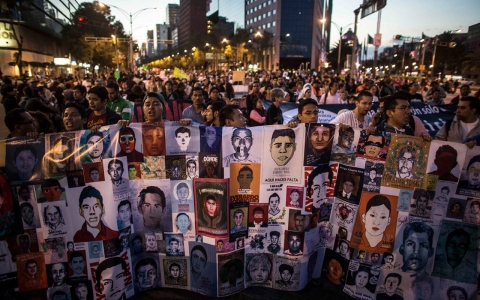
Thousands of Mexican families mourn the ‘other disappeared’


On the morning of her high school graduation, Berenice Navarijo Segura was delayed for a hair and makeup appointment by an explosion of gunfire in the center of town. Her mother was up before dawn preparing stewed goat and beans for the celebration, and didn’t want her to risk going out. Her sister, who had made enough salsa for 60 guests, tried to hold back the spirited 19-year-old with questions: “Do you have your wallet? What about your phone?”

But there was a reason the family called Berenice “Princess.” She’d already paid the salon and was determined to look her best for her big day. Accustomed to dodging gunbattles in a region overrun by drug cartels, she waited for only 20 minutes after the shooting subsided before rushing out the door with a promise to be quick. She hopped onto the back of her boyfriend’s motorcycle and vanished into the ranks of Mexico’s missing.

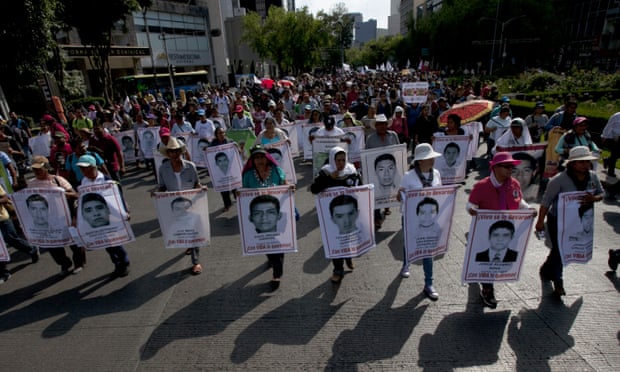
Sixteen other people, including Berenice’s boyfriend, disappeared from Cocula on that day, July 1, 2013 — more than a year before 43 students from a teachers college were detained by police in nearby Iguala and never seen again. For all those months, most of the Cocula families kept quiet, hoping their silence might bring children and spouses home alive, fearing that a complaint might condemn them to death.

“What if I report it and my daughter is nearby and they know I reported it, they hurt her or something?” reasoned Berenice’s mother, Rosa Segura Giral. Then the disappearance of the students from the Rural Normal School of Ayotzinapa became an international outrage. The government rushed to investigate the crime and announced with great fanfare its official conclusion that the youths had been killed and the ashes of their incinerated bodies dumped in Cocula.

Emboldened by the sudden attention to abductions, the families of Cocula began coming forward, and hundreds of other families from the state of Guerrero emerged from silent anguish. They spoke of their misfortune to each other, often for the first time, and signed lists, adding the names of their loved ones to the government’s growing registry of 25,000 people reported missing nationwide since 2007. They swabbed the inside of their cheeks for DNA samples. And they grabbed metal rods to poke in the craggy countryside for traces of the family members whom they started calling “the other disappeared.”

Sometimes they found evidence of bodies, and sometimes the authorities dug up graves. More than 100 bodies have been pulled from the soil. But like the students of Ayotzinapa, all but one of whom are unaccounted for, so far the remains of only six of the other disappeared from around Iguala have been identified and given back to their families.

The others are still missing. And their families are the other victims.

At least 292 people have been added to the list of missing from the Iguala area since the 43 students disappeared there on Sept. 26, 2014. The poor region of the southern state of Guerrero, about 110 miles south of Mexico City, is home to some 300,000 residents, many of them farmers, cab drivers and laborers. While most families are too scared to talk publicly about their loss, The Associated Press has interviewed relatives of 158 of the “other disappeared.” Still fearful but also furious, they speak hesitantly of children, parents and siblings dragged away before their eyes, of those who left home for work or stepped out to buy milk and seemed to be swallowed by the Earth.

Or of a daughter who went out to get her hair styled for graduation and never came home. Precisely what happened to Berenice is a matter of conjecture. Her mother recalls hearing a convoy of pickup trucks skid along the gravel road in front of her cinderblock house on its way to the center of town early that morning. The sound of automatic gunfire pierced the corrugated metal roof over her smoke-blackened hearth, and hours later Segura Giral heard trucks speed past the house again on the way out of Cocula. She never dreamed that Berenice and her boyfriend might be inside one of them.

On the day Berenice disappeared, so did José Manuel Díaz García, 43, a farmer and appliance repairman in the nearby community of Apipilulco who heard the trucks stop outside his house before dawn. When the men called for him, he yelled at them not to shoot because he had children. Minerva Lopez Ramirez, his wife, said he went peacefully with five masked men. Three days later, she got a call demanding a ransom of about 300,000 pesos ($30,000), which she eventually refused to pay because they would not put her husband on the phone.

Carlos Varela Muñoz, a 28-year-old cab driver, was at his home across the river in Atlixtac when armed men arrived around 5 a.m. in three white pickups without license plates. They broke windows and forced the door. The masked men claiming to be federal police made his wife lie on her stomach as they took Varela away. There has been no ransom demand and no return.

Cocula sits in a valley in Guerrero’s mountainous north, surrounded by fields of corn and browsing goats — a bucolic setting for a valuable drug trafficking route. Opium paste collected from poppies grown in the mountains makes the journey to consumers in the United States through Cocula and Iguala. The Guerreros Unidos gang controls the route, and often defends its territory in armed clashes with its competitors La Familia Michoacana and their associates.

The authorities are of little help. Residents say they have seen local police escorting gangsters through town and consider them to be a uniformed extension of Guerreros Unidos.

That relationship was reinforced by the government investigation into the case of the 43 students, which concluded that Iguala and Cocula police had turned them over to members of Guerreros Unidos, who then killed them and disposed of the incinerated remains in Cocula. Berenice’s house sits near the turn in the road that leads out to the dumpsite, where the government said most of the human cinders were too burned even to yield DNA.

The barrage that Berenice’s family heard on graduation day came from 20 to 30 men shooting their way into the home of 23-year-old Luis Alberto Albarrán Miranda and his 14-year-old brother, José Daniel. They took the unarmed brothers away barefoot.

Less than a mile to the east of the Albarrán Miranda home, over a small hill and across a short bridge, armed men also shot their way into the home of their cousin, 15-year-old Victor Albarrán Varela. The gunmen were looking for his brother, but they took Victor instead, “as insurance,” his mother, Maura Varela Damacio, said. Cocula Mayor César Miguel Peñaloza heard the shooting through the phone when his father called him from downtown on the morning of the abductions, but said he didn’t send his force out to stop them because there were only seven police on duty and 50 gunmen. In the days that followed, he tallied 17 citizens who disappeared from his town.

Families of the missing live in limbo.

A mother with neither a child to embrace nor a grave to visit tells of checking her son’s Facebook page every evening, two years after he went missing. A young man keeps dialing his brother’s cellphone nearly four years after his disappearance, hoping someone will pick up. Every new report of a body sends them back to the morgue to face a sickening mix of relief and disappointment when they do not find their relative.

“You have three children and you say, ‘You know what, right now it is one [missing], if you keep looking, it’s going to be all three,’ ” said Guadalupe Contreras, whose 28-year-old son, Antonio Iván Contreras Mata, disappeared in Iguala in 2012. “You better keep the two you have left and forget the one who is already gone. There’s no reason to lose two more children. It feels bad. It sounds bad. But you have to make these decisions.”

Some families said they were so convinced of police complicity they did not dare report a disappearance, while others who did file a report described bureaucratic indifference, a hand held out for a bribe or a subsequent ransom demand.

They want to escape. And yet, they cannot bring themselves to move away. What if a missing child comes home one day and they aren’t there? Many of the disappeared were breadwinners in poor families; some illiterate parents were unable to offer a confident spelling of a child’s name. Men or boys accounted for all but 15 of the 158 disappeared and ranged in age from 13 to 60 years old, with the majority younger than 30.

Families left behind often spiraled into financial crisis as jobs were abandoned to search for the missing, or money was borrowed to pay a ransom. Belongings and even homes were sold. Meanwhile, many relatives said they became isolated after the disappearances. Either they withdrew because they didn’t feel they could trust anyone, or friends and neighbors pulled away, as though the tragedy that had befallen them could be contagious.

Ninfa Gutiérrez Pastrana said that after her husband, Eliseo Ocampo Ávila, a lawyer and politician in Iguala, disappeared in April 2012, even her pastor was too afraid to visit.

“You’re left completely alone,” she said. “My family used to come to see me. This happened and they left my son and me totally alone. Not even my family that lives here in Iguala visits. No one visited us. We are alone.”

Iguala is in the news again a year after the disappearance of the 43 students. Suddenly, the government’s explanation that the students’ ashes were dumped in Cocula has come into question, rejected by experts from the Inter-American Commission on Human Rights after a six-month investigation. If such high-profile disappearances remain unsolved, it does not bode well for the families of the other disappeared, who also want answers.

On Berenice’s graduation day, relatives began arriving, packed into the bed of pickups, merry and ready to celebrate Berenice’s accomplishment. They were met by anguished faces, instead.

In the days that followed, Segura Giral retreated to her bed inside a darkened house. For months, she did not go out. For more than a year, she refused to make the pizzas that were her livelihood.

But she has not lost hope for her daughter. Berenice’s dusty, gift-wrapped graduation presents still await her return atop a cabinet. “One has to learn to survive. I tell you, I hope that my daughter shows up. I always have had this impulse,” Segura Giral said, her voice fading to a whisper. “I feel like any day she is going to come back. I feel so much like she has been traveling.”

Sunday 20 September 2015

http://news.yahoo.com/mexico-arrests-cartel-figure-disappearance-43-students-205905910.html

continue reading

Friday, 18 September 2015

Texas Border Sheriff works with Mexico to find missing persons


A Texas border sheriff and Mexican officials have begun working together in a unique partnership of sorts that has resulted in finding answers to missing persons cases as well as in capturing U.S. fugitives hiding in Mexico.

The partnership, which has already resulted in various successful extraditions, began when Roberto Rene Rodriguez (pictured above), an agent assigned to a task force with the Coahuila Attorney General’s Office and Mexico’s Attorney General’s Office, reached out to the Maverick County Sheriff’s Office, said Sheriff Tom Schmerber this week during an interview with Breitbart Texas.

In years past, Coahuila had been a stronghold for Los Zetas and over time law enforcement cooperation between the two countries had come to a halt. That changed when Schmerber and Rodriguez began to work together and over time Coahuila and Maverick County have closed multiple cases pertinent to both sides of the border.

Both lawmen travelled to Arizona to speak about their quest for answers and to invite other border sheriffs in an effort to expand the cooperation.

One of the key ways the two sides work deals with running missing person’s name by individuals in prisons and jails on both sides of the border. The lawmen also share DNA results of bodies found in clandestine graves. Other areas of cooperation include sharing information of missing illegal immigrants and those that have been deported.

Breitbart Texas spoke with Rodriguez after the conference about some of the cases that his agency has been able to close.

In searching for missing individuals, Rodriguez has found that in some of the cases, individuals reported missing in Coahuila have in fact crossed over to the United States and have been arrested for various criminal charges that include drug trafficking, human smuggling, robberies, and murder.

“This has helped us to give answers to the relatives in Mexico,” Rodriguez said. “It has been our experience that many times the relatives did not know that their loved one had crossed into the U.S. and much less that their loved one was involved in criminal activity.”

Friday 18 September 2015

http://www.breitbart.com/texas/2015/09/17/texas-border-sheriff-works-mexico-find-missing-persons-criminals/

continue reading

Korean War: Julie Bishop in renewed push to find 43 Australian servicemen still missing in action


Foreign Minister Julie Bishop will lead a renewed diplomatic effort to retrieve the remains of Australian servicemen still listed as missing in action in Korea.

Of the 17,000 Australians who served in the conflict, 340 were killed and the bodies of some of those men were never brought home.

There are 43 Australian servicemen officially classified as MIA in Korea.

The Federal Government will again ask North Korea for access to sites along its demilitarised zone and attempt to recover any Australian remains.

Assistant Defence Minister Stuart Robert has a personal interest in the Korean War. His uncle was the first RAAF pilot shot down over North Korea in July 1950.

Although his uncle's body was brought home, Mr Robert knows many others families were left in limbo.

"I have enormous empathy for the families of the ... Australians whose remains aren't recovered," Mr Robert said.

While Pyongyang was not "welcoming us with open arms", he said the Government remained hopeful the North Koreans would grant Australia access to these sites.

"We hope for a break in the ice, as our Foreign Minister connects slowly with theirs," he said.

"But this may be a long waiting game."

'I'll give up when they identify remains'

Private John Philip Saunders was among the Australian soldiers who never returned from Korea.

Ian Saunders was just four years old when his father left for the war.

He has spent decades trying to locate the remains of his father and the other Australian servicemen.

"I'll give up when they identify remains, preferably all," Mr Saunders said.

He has maintained daily email contact with a tight-knit group of families and veterans, and written countless letters to defence bureaucrats and politicians in Australia and overseas.

Mr Saunders has been recognised with an OAM for his service to the families of Australian MIA soldiers in the Korean War.

US Army recovers 1,000 remains, almost 400 unidentified

"We do believe that there have been some [remains] recovered and they could only be described as unknown," he said.

The United States Army has recovered the remains of some 1,000 Korean MIAs, but almost 400 are yet to be identified.

Some of those bodies are stored at a US defence facility in Hawaii.

Mr Saunders believes some Australians could be among them and he has collected dozens of DNA samples from relatives of the missing men.

He now wants the Government to work with the Americans to try to find a match.

The Government said it was open to the idea.

"We've certainly made it very clear to our American friends that if they choose to do that work, then we'd be very keen to see what the results are," Mr Robert said.

More than anything else, Mr Saunders wants a headstone for his father and the 43 other men still listed as MIA.

"Let's drop the tag that it's the 'Forgotten War' and do something about it and don't forget to bring them back," he said.

Friday 18 September 2015

http://www.abc.net.au/news/2015-09-18/fresh-push-to-locate-bodies-still-missing-from-the-korean-war/6787500

continue reading

Thursday, 17 September 2015

Remains of second Mexican student identified


Forensic experts in Austria have identified the remains of a second Mexican student who was among a group of 43 who vanished after they were detained by police, as the first anniversary of their disappearance approaches.

Mexico’s attorney-general Arely Gómez said that DNA evidence from bone fragments analysed by the University of Innsbruck corresponded to Jhosivani Guerrero de la Cruz. It represented a “step forward” that would “strengthen the investigation” into the tragedy

They disappeared in the town of Iguala in Guerrero state.

He confirmed the identification of Jhosivani Guerrero de la Cruz, found in a rubbish dump outside the city.

Austrian forensic officials have been carrying out tests. The remains of another student Alexander Mora Venancio were identified last December.

The group disappeared in September last year when they were on their way to take part in a demonstration.

Relatives of the students have questioned the account of the Mexican authorities who said corrupt local police handed over the students after to local drug gangs who had then killed them and burnt the bodies.

This month the government was embarrassed when a team of independent experts appointed by the Inter-American Commission on Human Rights demolished the official “historic truth” that the students had been burnt to ashes on a funeral pyre on a rubbish dump in the western state of Guerrero, and their remains thrown in bags into a nearby river.

The report found there was no evidence to support such a thesis and that such a bonfire was scientifically impossible.

Ms Gómez, making the announcement on Mexico’s independence day, said Mr Guerrero de la Cruz had been identified from mitochondrial DNA analysis. Mexico last year sent 17 bone fragments to Austria, but experts there initially succeeded in identifying only one student, Alexander Mora Venancio. Guerrero de la Cruz was identified after a third DNA test, the attorney-general said.

The Mexican government said it would send forensic experts to the area.

The attorney-general’s office and an Argentine forensic team assisting in the investigation had initially selected the 17 best preserved bone fragments, among some 63,000 found on the dump or in bags thrown into the river, to send to Austria for testing. The other fragments would be reassessed to see whether others could be sent to Innsbruck, Ms Gómez said.

In their report, based on an assessment from a fire expert, the independent team concluded that there was no evidence in the rubbish dump that there could have been a pyre of the dimensions required to cremate 43 bodies. The official Mexican investigation had been based on confessions by the alleged perpetrators, but the independent experts said there was evidence the confessions were made after they had been tortured.

The fire expert, José Torero, immediately found his conclusions and credentials questioned by pro-government commentators. The attorney-general has already announced that a new team of fire experts will assess the rubbish dump in an attempt to establish what happened, and said Mexican authorities “will not rest” until the disappearance has been solved and the perpetrators brought to justice.

Mexico also faces questions, which the authorities have yet to address, raised by the independent experts’ report into the events of last year, when the students came under fire by police after commandeering five buses to take them to a rally in Mexico City.

The experts highlighted the possible involvement of federal police in the incidents, although the government has laid the blame on corrupt local police in the pay of a drug gang.

The experts also questioned why an army intelligence officer appeared to have been fully aware of the attacks but did nothing to stop them and why there had been a communications blackout at a security forces communications control centre at times while the attacks on the students were under way. It also called for clarification of the identity of a man who had appeared to be directing the attacks.

Thursday 17 September 2015

http://www.bbc.com/news/world-latin-america-34275894

http://www.ft.com/cms/s/0/1903c0b8-5cdb-11e5-97e9-7f0bf5e7177b.html

continue reading

Thursday, 3 September 2015

20 years on, Bougainville families haunted by missing


In the late 1980s, long-standing tensions over an Australia-run copper mine saw the region of Bougainville descend into a decade-long civil war for independence from Papua New Guinea.

It was after PNG imposed a blockade on the region in 1990 that Celine Pururau's brother, Paschal, left to take up arms and join the conflict, compelled by what she says was a motivation to save Bougainville from being wrecked by mining and environmental destruction.

"We tried to stop him," she said in an interview 25 years later. "But he did not listen to us, he said he had to sacrifice to save Bougainville."

Paschal, who before the war was a passionate football fan who worked with children around the town of Buka, left to fight Papua New Guinea government forces on Buka island.

His family never saw him again.

"They tell us the story that they buried him in a mass grave," Ms Pururau said. Her situation is not unique.

Almost twenty years since the war's end, the International Committee for the Red Cross says many families still have no idea what happened to their relatives during the war.

The official end of the conflict was in 1997, when a ceasefire was signed after protracted efforts to negotiate a peace between the two sides.

Estimates put the death toll at about 15,000, but the ICRC's Bougainville delegate, Tobias Koehler, says that nearly 20 years later, there's still no idea just how many are missing.

"There's simply no data on this and there's also, in terms of missing persons, no clear knowledge," said Mr Koehler. "Every time we come to a new district or we come to a new village and we talk about these issues people do come forward and mention this."

"It'll be at least more than 100, but it'll probably be less than a couple of thousand." Mr Koehler said many of the families of the disappeared have suffered psychologically as a result of the uncertainty, especially in a culture where returning a dead person to their home village for burial is of utmost importance.

"Basically, their family members have no idea of their fate and whereabouts, what has actually happened to them, if they are dead, if they have been killed or have died of a disease, if they are buried at a certain place or their bodies are lost at sea," said Mr Koehler. "There are a lot of families who are completely left in the dark about the fate of their loved ones."

It was that uncertainty that spurred Peter Garuai to form the Bougainville Families of the Missing Persons Association.

Mr Garuai's 20-year-old brother, Benedict, joined the fight in 1993 and was killed later that year. His family never heard what happened to Benedict.

"He was killed during the combat here in Arawa," said Mr Garuai. "The defence force killed him, but we've never known where he was buried. It was a dirty little war, here in Bougainville."

"I formed this association because of the pain that lingered in my mind that my brother, he has to come back," he said. "So this association tries to bring back normalcy to the lives of the missing people's families."

The now Autonomous Bougainville Government, formed under the peace agreement signed at the end of the conflict, adopted a policy on missing persons late last year, but little has come from it so far.

That's prompted many of the relatives of the disappeared to march through the towns of Buka and Arawa this week in an effort to highlight their ongoing battle for answers, and to call for more to be done to ensure that remains are returned to home villages.

Peter Garuai says the government needs to take note of the families' cries in order to build a foundation for a referendum on possible independence for Bougainville, which is likely to be held in 2019.

Bougainville's president, John Momis, says he accepts the ABG does need to do more to work out the whereabouts of the missing, but funding has been an issue.

"The ABG first of all has to engage people who are in the know and also find funds to fund it because it won't be done for nothing," said Mr Momis. "I'm not saying it hasn't been the top priority, we have had problems with the National Government giving us our legitimate financial budgetary allocations, and all these things have taken up our time."

John Momis said he hopes to work with the Red Cross and donor countries to make the missing persons policy more effective.

Thursday 03 September 2015

http://www.radionz.co.nz/international/pacific-news/283179/20-years-on,-bougainville-families-haunted-by-missing

continue reading

Wednesday, 2 September 2015

Mexico asks Austria lab to test missing students' clothes


Mexican authorities delivered on Tuesday clothing and objects linked to last year's disappearance and presumed massacre of 43 students to an Austrian laboratory in a new bid to identify the victims.

The 53 items were handed over to the University of Innsbruck, which has only managed to confirm the identity of one of the students among 17 sets of charred remains sent by Mexico late last year.

The pieces of clothing and other objects were sent to Austria on a request by international experts of the Inter-American Human Rights Commission, which has been conducting its own investigation into a case that caused international outrage.

The items were "reviewed and catalogued" by prosecutors and members of the Argentine Forensic Anthropology Team, the attorney general's office said in a statement.

The Argentine team has worked on the case at the request of relatives of the missing because they do not trust the authorities.

In a July report, the Inter-American commission sharply questioned why prosecutors had not used clothing that was found of the missing students as evidence.

The commission's experts asked the authorities to process the items, photograph them and undertake genetic tests, which were conducted in late July.

Prosecutors say the 43 students were abducted by corrupt police in the southern Guerrero state town of Iguala on Sept 26 and delivered to a drug gang, which slaughtered them and incinerated their bodies.

International human rights groups criticised the government's conclusion, saying it relied too much on the testimony of suspected criminals instead of physical evidence.

Wednesday 2 September 2015

http://www.thesundaily.my/news/1540060

continue reading

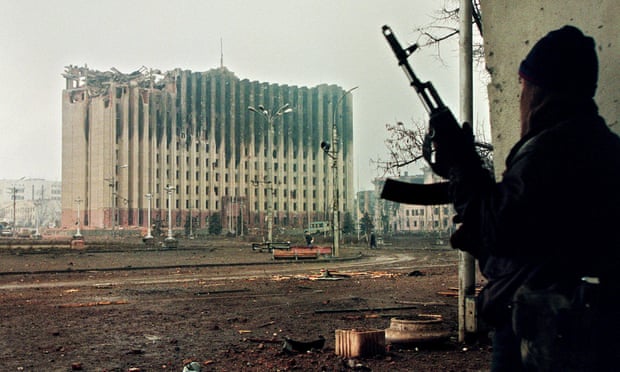
20 years after Chechen war, families still searching for missing bodies


Zura Batayeva carefully holds a small black-and-white photograph between her fingers. Creased and faded, it shows an earnest man with curly black hair.

The picture is all that remains of her son, Visit Batayev, who disappeared without a trace shortly after Russian tanks rolled into Chechnya more than 20 years ago – launching the first of two devastating wars against separatist rebels in the North Caucasus republic.

“The worst is not knowing what happened to him,” she says. “Only the thought that we will be together after I die brings me solace.”

This agonising uncertainty is shared by many Chechens.

Rights groups say an estimated 5,000 people are still missing from the two wars – the first of which began in December 1994, when federal forces launched a bloody attack on the capital, Grozny.

Like the Batayevs, many families still searching for their relatives accuse authorities of turning a blind eye to their plight.

Ramzan Kadyrov, Chechnya’s Kremlin-appointed leader, has overseen a massive campaign to rebuild Grozny with the help of cash injections from Moscow. But as glistening skyscrapers go up around the city, the grim task of laying the war dead to rest has fallen chiefly to human rights activists.

“No one needs us. The government has left us with our problem,” says Batayeva’s husband, Abuyezid Batayev. “We have received a lot of help from ordinary people, but they have their own problems. Many have missing relatives, too.”

Rights groups say there are still unopened graves in fields, courtyards, and basements throughout Chechnya.

‘These bodies need to be identified’

Visit Batayev was 27 years old when he disappeared, along with his neighbour, Musa. Witnesses say the two men were seized by Russian soldiers as they hid from shelling in the basement of a Grozny hospital.

Musa’s body eventually surfaced in a morgue in Moscow, and although the circumstances of his death remain unknown his parents were able to give him a proper funeral in Chechnya.

Visit Batayev’s continued absence, however, has prevented his parents from coming to terms with their loss. “Sometimes I close my eyes and I see my son. It’s as if he had returned,” Batayeva says. “I see him speaking to me. I see us having lunch together under the summer canopy of our house. I see him in my dreams, too.”

Zainap Mezhidova, a rights campaigner whose own son is missing, knows of at least three mass graves that she says contain the remains of hundreds of people.

“These bodies need to be identified. We know where they are located,” she says. “The authorities should be looking for our children.”

‘When I hear a child calling for his mother in the street, I turn around’. Zura Batayeva remembers her son.


Promises Despite Kadyrov’s repeated promises, Chechnya still has no forensic lab of its own. Remains exhumed from mass graves are sent either to Moscow or Rostov-on-Don for identification before being returned for burial in Chechnya.

Batayev says he has combed through numerous mass graves in search of his son, sifting through human remains with his bare hands.

He was once told that the body of a man matching his son’s description had been found in a mass grave close to Grozny’s cannery. Documents on the body gave Visit as the man’s first name.

The Batayevs immediately rushed to the site. “There were about 250 bodies there,” Batayeva recalls.

The body, however, did not belong to their son. “That day I collapsed and I hit my knee very hard,” she says. “It still hurts today.”

Desperate to find his son, Batayev travelled to a forensic lab in distant Rostov-on-Don. He says he saw many bodies there, but his son was nowhere to be found.

Today, he and his wife no longer have the strength to search for his body.

But Batayeva, despite the odds, refuses to give up hope of finding him alive. “When I hear a child calling for his mother in the street, I turn around,” she says. “I still have some hope of being reunited with my son one day.” Wednesday 2 September 2015

http://www.theguardian.com/world/2015/sep/02/chechnya-anniversary-missing-people-remain

continue reading

Tuesday, 1 September 2015

The issue of missing persons demands a global solution


Well over 2,000 migrants have drowned in the Mediterranean in 2015 and untold numbers have perished crossing the Sahara en route to ports in Libya and elsewhere. The statistics on missing migrants constitute a horrific backdrop to activities organized to mark the International Day of the Disappeared.

And the numbers of those who go missing on dangerous migration routes – across the Mexican-US border, for example, or south from the Bay of Bengal – are dwarfed by the numbers of those who are disappearing in parts of Central Africa, in Syria, Iraq, Yemen and other conflict zones, not to mention the thousands who are victims of enforced disappearance and extrajudicial killings as a result of repressive government or paramilitary policies.

“The International Day of the Disappeared is an appropriate occasion on which to recall that the issue of missing persons represents a global challenge that requires a global solution,” ICMP Director-General Kathryne Bomberger said in a statement issued today. “As governments around the world struggle to come to terms with missing persons crises it is essential that the issue is addressed in a way that focuses on strategic and institutional solutions.”

Ms Bomberger stressed that “whether a person is missing from conflict, human rights abuses, disasters or other causes, it is a complex issue that entails securing the rights of families of the missing,” and she added that as the only international organization exclusively dedicated to accounting for the missing, ICMP is working with governments, civil society organizations, justice institutions, international organizations and others throughout the world to tackle the problem in a comprehensive way, including through legal and political initiatives.

Established in 1996 to help the relevant authorities account for the 40,000 people reported missing at the end of the conflict in former Yugoslavia, ICMP has led an effort that has resulted in more than 70 percent of these missing persons being accounted for. This is an achievement unsurpassed anywhere.

Since 2003 ICMP has been active beyond the Western Balkans, and today it is working to develop institutions and civil society capacity, promote legislation, foster social and political advocacy, and develop and provide technical expertise to locate and identify the missing in every part of the world.

Since moving its headquarters from Sarajevo to The Hague this summer, ICMP has begun preparations for a Global Forum on Missing Persons, which will bring together policymakers, legal experts, academics, civil society activists and others to share expertise and coordinate activities. It is also establishing an Interagency Committee on Missing Persons in The Hague that will include representatives from international organizations and others, to facilitate cooperation in addressing missing persons cases from conflict, human rights abuses, disasters and other causes.

“The Mediterranean migration crisis has clearly demonstrated the need for effective coordination by multiple agencies,” Ms Bomberger said. “This will be a key step forward in resolving some of the challenges that have been highlighted today in events to mark the International Day of the Disappeared.”

Tuesday 1 September 2015

http://www.icmp.int/news/the-issue-of-missing-persons-demands-a-global-solution/

continue reading

Serbia, Bosnia Mark ‘Day of the Disappeared’


Families of people who went missing during the 1990s conflicts and have not been found marked the annual Day of the Disappeared by urging the authorities to do more to find their relatives’ bodies.

Events and ceremonies were held on Sunday and Monday in Serbia and Bosnia and Herzegovina to draw attention to the fact that around 10,000 people still missing from the Yugoslav wars, according to estimates by the International Committee of the Red Cross.

Serbian and Kosovo Albanian families whose relatives have been missing since the end of the Kosovo conflict in 1999 read out a joint letter at a conference in Belgrade on Monday addressed to the authorities in both Belgrade and Pristina, criticising them for failing to establish the whereabouts of around 1,650 people.

“We are convinced that the number of missing persons would be lower if officials in Belgrade and Pristina had the genuine political will to start dealing with this issue jointly,” the letter said.

Veljko Odalovic, the head of Serbian Commission for Missing Persons, told the conference that the biggest problem in finding those who are still unaccounted for is the lack of the information.

“We need precise, credible information from witnesses who will be able to come with us anywhere in Serbia so we can check together,” Odalovic said.

Matthew Holiday, the head of the International Commission on Missing Persons (ICMP) Western Balkans Programme, said that more than 40,000 people went missing as a result of the 1990s conflicts and that 70 per cent of them have been found and identified.

But another problem is the issue of misidentification due to the lack of precise methods used before DNA analysis was introduced, Holiday said.

“With no new secret graves being found, ICMP would call on the responsible institutions, the Serbian Commission on the Missing Persons, Kosovo Commission, EULEX [the EU rule-of-law mission in Kosovo] and the [EULEX] Department for Forensic Medicine to seriously address this issue of misidentifications,” he noted.

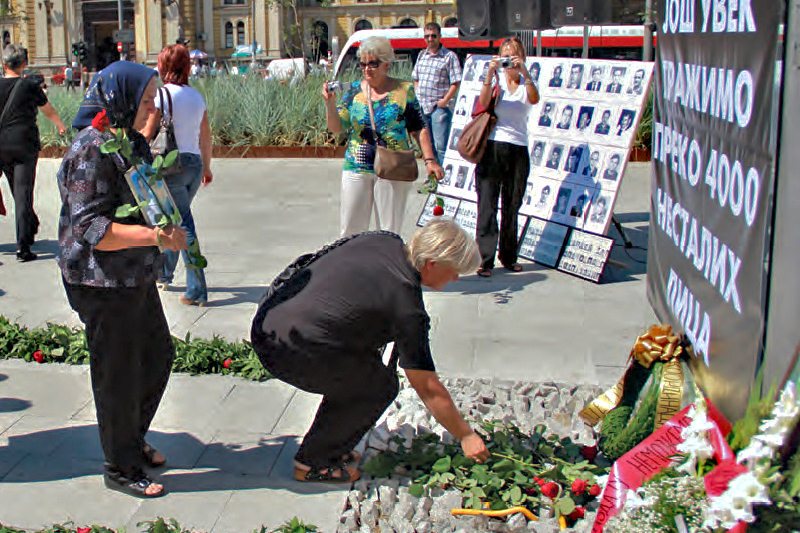
The previous day, missing persons associations and relatives of the missing gathered at the Belgrade Assembly to mark the International Day of the Disappeared, then walked to the nearby Tasmajdan Park and laid roses at the memorial dedicated to the Serb victims killed from 1991 to 2000 in the Yugoslav wars.

“We ask the authorities to resolve the destinies of the missing persons so that families can bury them, to punish those responsible and to provide assistance to the families of those killed,” said Dragan Pjevac, the president of Serbia’s Coalition for Missing Persons.

The International Day of the Disappeared was also marked across Bosnia and Herzegovina on Sunday, with ceremonies taking place in Sarajevo, Prijedor, Srebrenica, Bijeljina, Ozren and other cities. Families of missing persons used the day to call on the government to speed up the search for the remaining 8,000 people who have not been found since the 1992-95 conflict.

Bosnia’s human rights minister Semiha Borovac said that issue of missing persons was one of the toughest the county was facing.

“The ministry for human rights and refugees will try to prioritise the issue of missing persons and try to start activities which will solve the problems of families of missing persons,” said Borovac.

In central Sarajevo on Sunday, the International Commission on Missing Persons organised a presentation of sculptures with messages for the authorities like “Demand truth and justice” and “We are still looking for 8,000 citizens”. People also signed a petition which will be sent to the authorities to in a bid to encourage more support for the search for missing persons.

Amnesty International also issued a plea to the Bosnian authorities on Sunday, calling on them to finally start implementing the state-level law on missing persons which was adopted in 2004.

“This law demands that Bosnia and Herzegovina opens a fund to support families of missing persons, which is key for these families to achieve social and economic rights.

These families are often poor and in many cases they lost the head of the family,” Amnesty International said in a statement.

The president of the Women of Srebrenica association, Hatidza Mehmedovic, said at a ceremony in Srebrenica that was is important that the Day of the Disappeared was commemorated in “the place where genocide took place”.

“Everything went well and we sent out nice although sad messages. One of them is that Srebrenica should be a warning so that we build something safer and more just,” Mehmedovic told media.

Tuesday 1 September 2015

http://www.balkaninsight.com/en/article/serbia-bosnia-mark-missing-persons-day-08-31-2015

continue reading

Thursday, 13 August 2015

Nepal: Kin of quake missing want relief, compensation


Sange Sherpa of Khijiphalate-5 in Okhaldhunga district had gone missing in a landslide triggered by the April 25 earthquake in Langtang, Rasuwa. His body has yet to be recovered four months after the disaster.

Three months into his disappearance, Sange’s family gave up hope of finding him alive and performed his final rituals. Now his wife Kami and two children are struggling with their lives. “Our house was destroyed in the quake and we are staying under tarpaulins now,” said Kami, adding that they hardly have enough to eat. Some social organisations did provide them some food stuffs but they were insufficient.

“We are in pitiful condition and don’t know how to lead our lives,” she said. The kin of Lucky Sherpa of Khijiphalate-6 too have similar story to tell. Lucky, who went to work in a Langtang hotel, has been missing since the day of the devastating quake. As Lucky was the sole bread winner in her house, the family has found itself in lurch. Lucky’s father, Pasang, said they have not received government relief till date.

Seventeen people from Okhaldhunga had gone missing in the avalanche on that fateful day in Langtang. Of them, nine were from Patle, three from Khijiphalate, four from Khijikatika and one from Bhusinga in Okhaldhunga district. But victims’ families are unable to retrieve the bodies of those missing. The victims’ families demanded that the government declare them as deceased persons and provide relief and compensation amount. Rinji Sherpa, a relative of one of the missing persons, said the government should provide facilities as their family members are no more alive. “The authorities are dilly-dallying in providing compensation,” he said.

When asked to clarify the situation, Assistant Chief District Officer of Okhaldhunga Nagendra Poudel said the Home Ministry had not sent a letter of missing persons in the district. “We have not received the list of missing persons even from Rasuwa,” he said, adding that eight of the missing persons had been identified in the district.

Thursday 13 August 2015

http://www.ekantipur.com/the-kathmandu-post/2015/08/12/news/kin-of-quake-missing-want-relief-compensation/279485.html

continue reading

Tuesday, 11 August 2015

Pentagon still searching for lost WW2 veterans


Long dead but little forgotten, US soldiers who disappeared across the globe during World War II are being reunited with their loved ones in a push to find and bring home their bodies.

From the forests of Germany to the jungles of Papua New Guinea, US experts employed by the Defense POW/MIA Accounting Agency -- among them historians, archeologists and forensic experts -- are the main sleuths.

When recovery of a body is possible, the Pentagon specialists turn the remains over to an ultra-modern lab in Hawaii for identification and then wait for the ultimate reward: bringing the bereaved back together with their long-lost relatives.

Stephen Johnson, a historian-investigator, recalled how a delighted woman, whose father had been found in a German forest, exclaimed: "You gave me back my daddy."

"I think of her when I work on a case," Johnson said.

The woman, now a mother and grandmother, "had come to peace" after finding out the exact fate of her father, who died when she was 18 months old, Johnson said.

Sandi Jones, who lives in Montana, said she felt immense joy when the agency called her in June 2014 to say that her uncle had been found 70 years after his plane went down in the jungles of Papua New Guinea.

"I was flabbergasted," the 60-year-old said.

The uncle, whose photo Jones kept even though her grandparents refused to speak of him, was buried near the family ranch with honors in the presence of US Air Force officials.

The agency also gave the family his Masonic ring, which was discovered among the crew and deduced to be his since he was the only member of a Masonic Lodge.

Johnson said the willingness to return a soldier at any cost dates back to the nation's birth.

President George Washington, the first head of the US military, thought that "the allegiance of the Army to the nation was directly tied to the allegiance of the nation to the Army," he said.

"You don't stop being a member of the US military because you die," he added.

It is this logic that has driven the POW/MIA agency to take on a project to exhume 388 sailors and Marines who were killed aboard the battleship USS Oklahoma at Pearl Harbor on December 7, 1941.

At the time, remains of most of the crew could not be identified after spending weeks in the water, and the bodies were interred at the National Memorial Cemetery of the Pacific in Honolulu.

Now the agency hopes to identify remains through dental and DNA analysis -- a daunting task considering that the bones are mixed together, Johnson said.

The agency, which uncovers around 70 bodies a year, has fallen short of Congress' goal of 200 bodies annually.

Meanwhile, private associations are aiding in the effort.

History Flight, whose multi-disciplinary team includes historians, archeologists and soil specialists, is searching for the remains of several dozen Marines on the Tarawa Atoll in Kiribati, from the war's Pacific theater.

The quest began in 2007 and has cost nearly $1.5 million, according to History Flight president Mark Noah, who decided to search for the missing planes after becoming interested in lost flights.

"For us, it's a humanitarian issue" said Noah, an airline pilot for 50 years, explaining that many of the children and relatives of the disappeared are still alive.

Just over 73,000 US World War II soldiers are still missing or unidentified according to official figures.

Tuesday 11 August 2015

http://news.yahoo.com/pentagon-still-searching-lost-wwii-veterans-023755027.html

continue reading

Monday, 10 August 2015

Mexican missing-student activist killed in Guerrero state


A Mexican community activist who helped families search for their missing relatives has been killed.

Miguel Angel Jimenez Blanco's body was found near his home in a town in the south-western state of Guerrero.

He had led search parties after the disappearance of 43 students in the nearby town of Iguala last year threw light on hundreds of other missing people.

Guerrero is a region plagued by gang and drug violence.

At least 15 people were killed there over the weekend.

Mr Jimenez Blanco's body was found in the taxi he owned in the small town of Xaltianguis.

He had been part of an organisation which had supported the search for the students in the hills around Iguala. He had also helped dig up a number of graves of murdered people that were found during the search for the students.

He had helped organise a group called The Other Disappeared, mostly women who meet every Sunday to search the hills for the remains of their loved ones.

'This area is a cemetery'

The search parties started in November last year, a few months after the 43 students were abducted and presumably killed in Iguala on 26 September.

Since the group began work, it has found 129 bodies, which were handed over to the authorities for identification.

In a BBC interview, Mr Jimenez Blanco said that after Iguala, 300 families had come forward saying they had missing relatives too.

"We have been saying from the start that this area is a cemetery," he said at the time.

David Cienfuegos, government secretary of the state of Guerrero, told the BBC that many families had stayed silent for decades for fear of retribution.

"Many crimes linked to the disappearance of people need a statement to the police so the case can be taken up.

"In the last decade in Guerrero there have been few statements taken because the families are afraid. They fear the police themselves are involved in the disappearances."

In an interview with the Los Angeles Times, one of Miguel Jimenez Blanco's friends, Mario Vergara, whose brother went missing last year, said that he motivated hundreds of families.

"He taught us how to search and how to push and every day he would give us the energy to carry on."

The case of the missing 43 students promoted a national and international outcry. The parents of the students and many other Mexicans still reject the government's version of events.

The administration of President Enrique Pena Nieto has insisted the students were killed by gang members on the orders of corrupt local police.

The bodies were then burnt, and the remains dumped in a river, but so far only one student has been identified.

The case highlighted hundreds of other people missing in Guerrero - Mexico's most violent state.

Guerrero is a major opium-producing state and a battleground for a number of different criminal gangs.

More than 20,000 people are missing across the whole country

Monday 10 August 2015

http://www.bbc.com/news/world-latin-america-33843774

continue reading

Tuesday, 4 August 2015

One year of PINAK 6 capsize: No luck for the families of missing victims


One year ago, 21 unnamed dead bodies were buried at a local graveyard in Shibchar of Madaripur.

All of them died in one of the deadliest ever maritime mishaps on August 4 last year, when heavily loaded ferry Pinak 6 capsized in Padma River killing over a hundred passengers.

Rescuers retrieved 49 dead bodies at the time. Official count shows that 61 people are still missing from that accident, although many more families have claimed to have lost members.

The authorities were supposed to find out the identities of the bodies buried at that graveyard through DNA tests. But that has never happened.

They collected DNA samples from some families but most of them have been left out. It has been a year and the DNA test results have still not come.

The caretaker of that graveyard said that neither have anybody come there looking for the dead bodies, nor have anyone come to collect DNA samples since they were buried here one year ago.

As a result, these families – mostly from the low-income group – have not been able to get the cash compensation that the administration had announced after the accident.

Only those families who could identify or show proof that their members were among those deceased, got the money.

Suraton Nesa, a widow from the Sannashichar village in Shibchar, lost four members of her family – son, daughter, son-in-law and grandson – in that accident.

But since none of their bodies have been found, she failed to avail compensation. She does not even know if any of them are lying in that graveyard.

“We were already poor. Moreover, I had to spend most of my savings searching for the dead bodies after the accident. My son was the only bread-earner. I have been living from hand to mouth since. I have not got any compensation from the government because none of their dead bodies have been found,” Suraton said.

When contacted, Kamal Uddin Biswas, deputy commissioner of Madaripur district, said: “Except for one, each of the victim families were given Tk1.05 lakh as compensation. Any other victim families can apply for compensation by producing appropriate proof that they have missing members.”

Siblings Heera and Swarna and their cousin Lucky – all killed in that capsize – belongs to the family that did not accept compensation.

Nurul Haque, father of the siblings, said: “My daughter Heera was still alive when she was rescued and brought to the Mawa terminal. But she died before we took her to the government hospital in Munshiganj. If we could give her primary treatment at the Mawa terminal, we could have saved her life.

“This [Mawa] is such an important ferry terminal. But there are no first aid facilities here,” he said.

After the accident last year, Jahangir Bhuiya, inspector of the Mawa terminal, filed a case against Pinak 6 owner Abu Bakkar Siddique and five workers of the ferry. On August 14, ten days after the capsize, Siddique got arrested but there have not been much progress in that case since.

The ferry itself was never found. The Bangladesh Internal Water Transport Authority (BIWTA) tried with state-of-the-art sonar equipment but in vain.

Locals said that there was strong current in the river when the accident took place and this might have taken the ferry a long way downstream where it might now be resting on the river under a thick cover of sand.

The last time he spoke on the incident, Water Transport Minister Shajahan Khan said their priority after the accident was to hand the dead bodies over to their families; that was why they gave up on the operation to retrieve the ferry.

Tuesday 4 August 2015

http://www.dhakatribune.com/bangladesh/2015/aug/04/no-luck-families-missing-victims

continue reading

Wednesday, 29 July 2015

As peace talks advance, Colombia struggles to find its missing


"I know the grave was here," says the ex-combatant, Andres Martinez, wiping his brow as a forensic expert starts in with a shovel near the rural town of Chaguani.

Though it's only mid-morning, the motley team of forensic staff, prison guards and ex-rebels from the Revolutionary Armed Forces of Colombia (FARC) have already dug one trench in heavy rain, hoping to find the bones of a victim of the 50-year conflict.

The missing man, who the FARC says was a member of a rival group shot in battle, is one of at least 52,000 Colombians who have disappeared during a long war between Marxist rebels, government troops and right-wing paramilitaries.

Most were killed and buried in unmarked graves across the country.

As the government wades through complex peace talks with the FARC, rights advocates and families of the disappeared hope the rebels will reveal grave locations as part of a deal for them to avoid long prison terms and be allowed to enter politics.

Victims' groups warn that unless more bodies are exhumed, identified and returned to their families, Colombia risks handicapping its post-conflict development.

"The past is going to haunt them," said Christoph Harnisch, head of the International Committee of the Red Cross's (ICRC) office in Colombia.

An estimated 220,000 people have been killed in the war.

The violence, and the unknown fate of so many missing people, has stalled Colombia's development. The government is hoping for a peace deal this year and says its could add 2 percentage points to annual growth, but that would be at risk if implementation goes badly.

Even with an easing of the conflict over the last decade, work inside Congress is often stalled as lawmakers dissect each others' links to different armed groups.

Experts say the challenge facing Colombia could be even greater than in Argentina, Chile and Guatemala - where the disappeared of late-20th century conflicts were largely victims of the government - because so many armed groups are involved, complicating efforts to collect information.

Handcuffed to a prison officer, the ex-FARC fighter Martinez, who will serve just eight years in prison in exchange for information about bodies, points to where he thinks the grave is.

"Length-wise, this way."

"Is the body dismembered or whole?" excavation official Hugo Villalobos asks.

"Whole."

Apart from locating graves, usually in remote jungle or mountain terrain, the biggest obstacles to identification are investigators' lack of training, funding and equipment.

The workload will balloon if a peace deal is signed.

"Obviously it would mean an increase - an exponential increase," says Alvaro Polo, head of excavations for the attorney general's office in Bogota, where forensic staff pore over skeletons in their morgue. He says his team would need to double in size from roughly 70 now.

The ICRC calculates that nearly 70,000 people remain unaccounted for, more than the government's estimate, though some disappearances may be unrelated to the war.

The numbers are high even by the standards of Latin American conflicts. In Guatemala's brutal civil war, up to 45,000 people went missing. About 30,000 "disappeared" under military rule in Argentina, while 3,000 went missing during Chile's dictatorship.

UNIDENTIFIED BODIES

"Until we have bones, something we can say goodbye to, he's still alive," said Marcela Granados, 28, cradling a photo of her father Jose, who was taken by paramilitaries from their ranch in northeast Colombia in 2003.

Despite testimony from a neighbor, who saw him beaten, and the capture of one perpetrator, his remains were never found.

Polo's unit has excavated 6,000 bodies since 2007, more than 10 percent of the government's missing count.

Nearly half of the remains have been returned to families, but another 3,000 bodies lie unidentified in morgues.

Some have preliminary identifications, based on witness testimony or other evidence, but the majority are "pure unidentifieds" - meaning investigators have zero leads.

Victims mostly come from poor, isolated rural families who lack decent communication, hobbling efforts to get DNA samples to match with bodies that have been found.

Rights groups say investigators rely too much on testimony from ex-fighters and fail to use other techniques: interviews with communities, records of armed groups' movements or satellites and radar.

Stefan Schmitt, a German forensic expert who has met with Colombian officials, said Colombia should compile a definitive database of the disappeared because once "flashy exhumations" finish the unidentified stop being prioritized.

"You end up with warehouses full of remains," he said.

Finding the disappeared is easier said than done.

Staff often carry equipment for hours through inhospitable terrain to reach sites and few are certified to use technologies like ground-penetrating radar, said Polo.

Excavations in dangerous areas require army protection or helicopter transport. Captured insurgents sometimes withdraw testimony following threats, canceling exhumations.

Even when digs do occur, they fail to turn up remains at least half the time.

"Peace will bring something big," said forensic anthropologist Maria Alejandra Marino, packing up her equipment after eight hours work at the Chaguani excavation, where no remains were found.

Wednesday 29 July 2015

http://ca.reuters.com/article/topNews/idCAKCN0Q228820150728?sp=true

continue reading

Tuesday, 28 July 2015

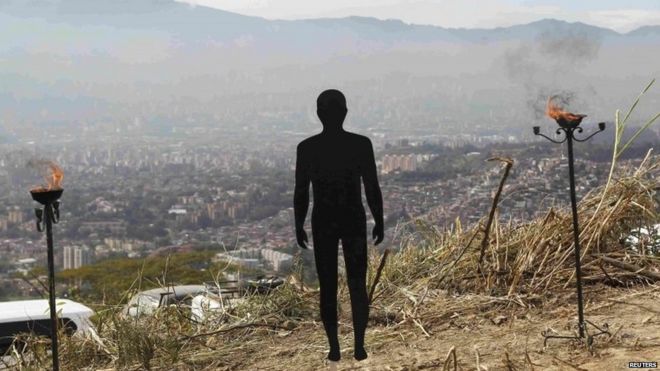
Colombia searches dozens of bodies at Medellin landfill site


Forensic experts in Colombia have begun a search for dozens of bodies at a landfill site believed to be one of the largest urban mass graves in the world.

Relatives of possible victims held a ceremony at the site on the outskirts of the city of Medellin before the excavation started.

The bodies of 90 to 300 people are thought to be buried there.

The disappearances date from 2002, when the army launched an operation against left-wing rebels in the area.

The operation was ordered by Colombia's president at the time, Alvaro Uribe.

Right-wing paramilitaries filled the void when the rebels left the Comuna 13 shantytown area and they are blamed by many for most of the killings.

Criminal gangs are also accused of involvement in some of the disappearances.

Medellin was once considered one of the world's most violent cities.

It was the home of the Medellin Cartel, the drug-trafficking organisation led by Pablo Escobar, who was killed in 1993.

Some 20,000 tonnes of earth will be removed over the next five months in the search for the bodies, reports the BBC's Natalio Cosoy in Bogota. 'Drop of hope'

A ceremony at the site, including a religious service, marked the beginning of the excavation.

"It took us 13 years to get here. This is a drop of hope," said Luz Elena Galeano, leader of an organisation of women fighting for justice for their missing relatives.

Relatives laid flowers and images of their loved ones on the site.

"The ceremony was moving and a commitment to peace and reconciliation," said Colombia's Interior Minister Juan Fernando Cristo.

More than 200,000 people have been killed since hostilities between the army and Colombia's main rebel group, the Farc, began in 1964.

Both sides have been engaged in nearly three years of peace negotiations, which are being held in Cuba.

Earlier this month, the Colombian government announced a de-escalation of attacks against the rebels, who had announced a unilateral ceasefire.

The talks are aimed at ending hostilities, which would lead to the Farc giving up its armed struggle to join the legal political process.

Tuesday 28 July 2015

http://www.bbc.co.uk/news/world-latin-america-33684670

continue reading

Search for missing Mexican students turns up 129 bodies unrelated to case


The search for 43 Mexican student teachers who disappeared after they were attacked by cartel gunmen and corrupt municipal police officers in September has unearthed the bodies of at least 129 other murder victims.

The corpses were found in 60 clandestine graves across Guerrero, the southern state where the youths vanished 10 months ago, the attorney general’s office said on Monday. None is thought to be linked to the case of the students from the Ayotzinapa teacher training college.

The new figures, which were released following a freedom of information request by the Associated Press, have prompted fresh anger at the government’s failure to tackle Mexico’s epidemic of disappearances – and its refusal to investigate allegations that the army may have also played a role in the Ayotzinapa attack.

Only 16 of the 129 bodies have so far been identified; 20 were women, 92 were men, while the gender of the rest has yet to be determined.

Many of the bodies were discovered by grieving families who launched their own search parties after the attack on the Ayotzinapa students.

The attack, in the town of Iguala about 190km (120 miles) south-west of the capital, left six dead and 43 trainee teachers missing. The case has prompted mass protests across Mexico and widespread international condemnation.

So far 110 people have been charged in relation to the attack, but no one has yet been prosecuted.

Scepticism about the official version of events continues to grow, and some relatives of the missing students still cling to the hope that they may still be alive.

Last week, the National Commission for Human Rights said it had found at least 30 omissions in the official investigation.

The government has so far rejected calls by an independent team sent by the Inter-American Commission on Human Rights to investigate the army’s possible involvement.

Omar García, who survived the attack, told the Guardian: “We’re living in a very serious situation where anyone can be disappeared and murdered, buried in a secret grave and be forgotten, unless their families look for them. The fact that only 16 people have been identified out of 129 shows the state’s lack of will to investigate. Mexico has forensic scientists and anthropologists capable of doing the work, but they’re not given access because there is no political will.”

In Guerrero, the actual number of bodies found since the students disappeared is likely to be higher as the new figures released by the attorney general includes graves discovered between October and May, and only those where specialists were involved in the exhumations.

Nonetheless, the staggering number of mass graves discovered in a single state has refocused attention on Mexico’s disappearance problem.

More than 23,000 people have been reported missing since 2006, and the whereabouts of most remain unknown. Meanwhile around 15,000 bodies have not been identified. Investigations are seriously hampered because there is still no reliable missing persons and DNA database.

Claudia Rangel Lozano, professor of sociology and history and expert in disappearances at Guerrero Autonomous University, said: “While the case of the 43 students has international attention, there are many more families in Guerrero, and all over Mexico, looking for disappeared relatives who the government has no interest in helping.

“It is outrageous and very sad that the state is more interested in issues like energy reform than helping families find their disappeared relatives. There are no trials, no one is punished, and no effort to understands the patterns of violence or the role played by the army, and so the terror continues.”

Meanwhile the relentless violence in Guerrero continues as warring drug cartels battle over opium growing territory and trafficking routes.

The latest murder figures released today revealed 943 murders in Guerrero in the first six months of the year – a 20% rise on the previous year.

Guerrero’s murder rate – 26 per 100,000 people – is four times higher than the national average.

“This latest macabre revelation confirms what we had already found: the sheer magnitude of the crisis of enforced disappearances in Guerrero and elsewhere in Mexico is truly shocking,” said Amnesty America’s Erika Guevara Rosas.

Tuesday 28 July 2015

http://www.theguardian.com/world/2015/jul/27/mexico-search-missing-students-129-bodies

continue reading