Tuesday, 15 September 2015

Makkah accident dead laid to rest


The morgue in Mina has begun releasing the bodies of the victims of Friday’s crane crash tragedy, with those conclusively identified by their relatives and consulates buried at a local graveyard on Monday.

“The funeral prayers for 10 of the 11 Indian victims were held at the Grand Mosque in Makkah after Isha prayer,” said Indian Consul General B.S. Mubarak.

Of the two Britons who died in the accident, one, Qasim Akram, from Bolton, was buried in Makkah after Fajr on Monday, said British Consul General Mohammed Shokat.

The second confirmed victim from the United Kingdom, Kamran Khan from Slough, is yet to be buried because his relatives are expected to arrive from their home country.

Meanwhile, Turkey has confirmed that eight of its nationals died in the accident. Ekrem Keles, vice president of Turkey’s Religious Affairs Directorate, said the bodies of the Turkish pilgrims would be buried in the holy land as requested by their families.

The Egyptian ambassador to Saudi Arabia, Afifi Abdul Wahab, said the Egyptian victims can either be buried in Makkah or their bodies sent back to their relatives if this request was made.

Tuesday 15 September 2015

http://www.arabnews.com/featured/news/806486

continue reading

At least 22 migrants drown as boat capsizes in Aegean Sea


At least 22 migrants, including four children, have drowned while 211 migrants have been rescued after a Kos-bound boat capsized in the Aegean Sea.

The 20-meter wooden boat, which was also used for boat tours, capsized at around 6 a.m. on Sept. 15 off the coast of Turkey’s southwestern Datça district.

The boat was en route to the Greek island of Kos with an unknown number of migrants.

Five coast guard boats were dispatched to the crash site, and 211 migrants were rescued while the bodies of the 22 drowned migrants were recovered from the sea.

Rescued migrants are being brought to Turkey's Aegean coastal town of Bodrum via coast guard boats, alongside the sunken boat.

Meanwhile, two Syrian migrants attempting to reach a Greek island drowned on Sept. 14 after their dinghy capsized off the coast of İzmir’s Seferihisar district.

A fishing boat spotted the migrants at around 10:55 a.m. and started rescue efforts. Coast guard boats soon joined the effort and managed to rescue 11 migrants while recovering the bodies of two others.

Tuesday 15 September 2015

http://www.hurriyetdailynews.com/at-least-13-migrants-drown-as-boat-capsizes-in-aegean-sea.aspx?pageID=238&nid=88492

continue reading

Dozens of migrants drown as boat capsizes in Aegean Sea


The Greek Coast Guard recovered the bodies of 34 migrants, including 15 children, on Sunday in the Aegean Sea after their wooden boat flipped over in strong winds as it attempted the short but often perilous crossing from nearby Turkey.

Four babies and 11 young children -- six boys and five girls -- were among those on the stricken wooden boat when it sank off the island of Farmakonisi.

Eight of the victims were found by coastguard frogmen in the hold of the boat.

Rescuers, who were alerted shortly before dawn by a resident of Farmakonisi, found most of the bodies floating near the wreck.

The victims’ nationalities were not immediately known.

A total of 34 people were found dead, while another 68 were plucked alive from the sea and a further 30 managed to swim to safety on a beach on the island, according to latest coastguard figures.

The exact number of those aboard remains unknown but the ANA said the boat was overcrowded and went down because of high winds in the area.

A Greek navy ship was taking the bodies to Rhodes while the survivors were being transported to Leros.

After nightfall, Coast Guard vessels continued to scour the area for survivors. Rescuers were also searching for four children who had been missing since Saturday after their boat capsized off the island of Samos, north of Farmakonisi.

The coastguard was also still searching on Sunday for four children missing after another boat capsized on Saturday off Samos, a Greek island just off the Turkish coast.

The latest tragedies follow the death of a Syrian toddler whose lifeless body was photographed washed up on a Turkish beach last week, becoming a heartwrenching symbol of the plight of refugees fleeing war.

The International Organisation for Migration has said more than 430,000 migrants and refugees had crossed the Mediterranean to Europe so far in 2015, with 2,748 dying or going missing en route.

Sunday’s wreck was the latest in a catalog of drownings that underscored the desperation of thousands of refugees fleeing war and of migrants seeking better lives in Western Europe. For most of those who make it, Greece is just a stop on a journey through the Balkans aimed at wealthy nations like Germany and Scandinavian countries like Sweden known for generous welfare programs.

Tuesday 15 September 2015

http://www.nytimes.com/2015/09/14/world/europe/greece-migrants-refugees-drown-in-agean.html?_r=0

http://news.yahoo.com/migrant-tragedy-off-greece-athens-dismisses-criticism-131745580.html

continue reading

Anthropology in action: Identifying missing migrants


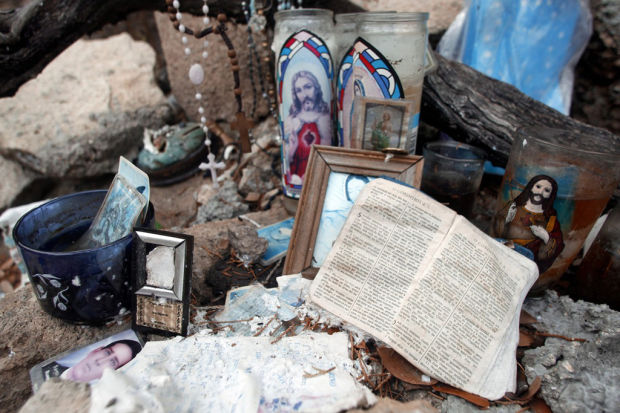
A hairbrush. A bus ticket. A stuffed purple dinosaur. A container of Vaseline.

These are among the many items left in the desert by immigrants who attempt to cross into the U.S. from Mexico. And they are sometimes the best clues authorities have for identifying those who die traversing the rugged terrain.

In Arizona, an average of 170 men, women and children lose their lives crossing the U.S.-Mexico border every year. Because of harsh desert conditions, their bodies often are unrecognizable by the time they are found, making it nearly impossible to identify them and notify their families in Mexico.

Robin Reineke, a UA anthropology doctoral student, is committed to finding out who they are.

"Thousands of families are suffering without answers, and anthropologists have a duty to show up," she says. "These are vulnerable people from places traditionally studied by anthropologists, and they're losing their lives in the city where we live."

Reineke is executive director and co-founder of the Colibrí Center for Human Rights, a family advocacy organization that is working to end migrant deaths.

The center works with families and forensic scientists to collect missing person's reports and to identify those who die in the desert. The organization also works on policy reform, and partners with artists and storytellers to raise awareness of humanitarian issues on the border.

Reineke began her efforts in 2006, during her first year as a graduate student in the UA School of Anthropology. She was interested in how cultural anthropology could be applied in conjunction with forensic anthropology to help in a disaster or conflict.

Aware of the crisis on the U.S.-Mexico border, she reached out to forensic anthropologist Bruce Anderson in the Pima County Office of the Medical Examiner.

Reineke was inspired by Anderson's efforts to identify the bodies of border crossers. It's not typically the job of a medical examiner's office to manage the missing person's side of an investigation, but because immigrants are not U.S. citizens — and therefore local law enforcement doesn't handle their cases — Anderson had taken it upon himself to help families identify their loved ones, using detailed physical descriptions and clues such as jewelry and other personal effects found with bodies.

"I was really motivated to work with him because I recognized him as someone with an intense moral compass," Reineke says. "In addition to having the highest caseload in the country of any forensic anthropologist, he was also taking down information from the family members who were calling his office directly looking for their relatives."

As the number of migrant deaths increased over the years, the job had become too big for one person, so after meeting with Reineke, Anderson enlisted her help. And thus the Missing Migrant Project was born.

Anderson had started the project with a three-ring binder of about 250 hard-copy missing person's reports that had been called in to the Pima County Office of the Medical Examiner.

Over the next seven years, Reineke took hundreds more of those calls as the office's in-house missing persons family advocate.

"Robin's a special person, and her drive and intellect and passion for this makes her the best person for this job," says Anderson, a UA alumnus and adjunct assistant professor in the School of Anthropology.

Reineke began managing a digital database of missing migrant reports. As word got out, her caseload grew to a whopping 1,300, and the need for more help became clear.

In 2013, with support of more than $100,000 from the Ford Foundation, Reineke and William Masson, a UA Eller College of Management alumnus, co-founded the Colibrí Center for Human Rights to continue and expand upon the work of the Missing Migrant Project.

The word colibrí is Spanish for hummingbird, which is a common Mexican symbol of safe passage and a messenger between the living and the dead. The center's name was inspired by a man who died crossing the border in 2009; among his remains was a small, dead hummingbird carried in his pocket.

Today, anyone who calls the Pima County Office of the Medical Examiner to report a missing migrant is routed through the nonprofit Colibrí Center, which operates two offices — one inside the medical examiner's office and one in downtown Tucson. There, staff, volunteers and interns from the UA Honors College process the information and see if they can make a match to data about unidentified remains produced by Anderson and others at the medical examiner's office.

Call frequency can range from as few as three a week to as many as 15 a day during peak summer months, when deaths in the desert are at their highest, Reineke says.

With so many people missing and often very few clues, making a positive identification is challenging, but when successful, it can help bring families closure, she says.

"Those notification calls are some of the hardest things any of us have ever done in our lives, but in general it's cathartic for the family," Reineke says. "There's a lot of crying, there's a lot of pain, but very often they also express gratitude. For someone to express gratitude when they are hearing such terrible news, you know that that experience of having a missing person must have been torture."

Reineke's work with Anderson on the Missing Migrant Project and with the Colibrí Center has attracted national and international attention from media outlets such as the New York Times, Los Angeles Times and the BBC, among others.

The center now maintains the largest, most comprehensive database of missing migrants in the nation, and Reineke hopes to share the Colibrí Center knowledge and tools with other border communities.

"Part of what we're trying to do at Colibrí is take the knowledge and experience that we've gained working with the exceptional humanitarians and scientists here in Pima County and share that with smaller, less well-funded counties," she says.

For Reineke, the work is far more than just a job.

"There is a mass disaster occurring in our backyard," she says. "I feel very strongly that it's a moral obligation and duty to utilize my expertise and my training as an anthropologist to do the best I can for my fellow human beings who are living a nightmare very close to where I live."

Tuesday 15 September 2015

http://uanews.org/story/anthropology-in-action-identifying-missing-migrants

continue reading

13 more Trigana Air victims identified


Using DNA testing, Indonesia’s Disaster Victim Identification (DVI) team has identified the bodies of 13 more victims from the Aug. 16 Trigana Air plane crash in Oksibil, Papua, Papua Police chief Insp. Gen. Paulus Waterpauw has said.

The team had already identified 27 victims through examining primary and secondary data at Bhayangkara Hospital in Papua’s capital Jayapura.

“Today the DVI team succeeded in identifying 13 more victims’ bodies at the National Police Headquarters’ laboratory through a series of DNA tests,” the Papua Police chief said.

He added that with the addition of the 13 newly identified bodies, the DVI team had now successfully identified 40 out of the 54 people on board the Trigana Air flight.The 13 bodies have now been handed over to victims’ families.

The bodies include two cabin-crew members, Mario Reso Bintoro and Ika Nugraeni Sukmaputri.“So, all cabin-crew victims have been found,” Insp. Gen. Paulus asserted.

Police have also identified all four bodies of the Jayapura post-office workers who were carrying Rp 6.5 billion (US$465,000) in cash on board for delivery to low-income residents of Pegunungan Bintang, Police Commissioner Ramon Amiman, head of medical affairs at Papua Police Headquarters, said.

“DNA identification takes time, but we will never ever give up on identifying all victims,” Ramon said.

Area manager for PT Trigana Air in Papua Bustoni Eka Prayitno said that of 27 identified bodies; the families of only 12 of them have received insurance coverage.“We hope [the remaining] relatives will complete the administrative requirements for making an insurance claim,” Bustoni said.

Tuesday 15 September 2015

http://www.thejakartapost.com/news/2015/09/14/13-more-trigana-air-victims-identified.html

continue reading

Death toll rises to 7 in rain disaster, 15 missing


The bodies of three men were found in inundated areas in Ibaraki and neighboring Tochigi prefectures on Sunday, bringing the total death toll from recent heavy rain and flooding to seven in the two prefectures and Miyagi Prefecture.

One of the bodies was discovered in a submerged minivehicle in the city of Tochigi in Tochigi Prefecture around 7:30 a.m. The Tochigi prefectural police department identified the man as Osamu Ogura, a 68-year-old nearby resident. He drowned, the police said.

The other two were found in Joso, Ibaraki Prefecture, which has been heavily damaged by floodwaters from the Kinugawa river after a levee of the river collapsed Thursday. The body of a 51-year-old man was detected in a rice paddy about one kilometer east of the breached levee around 11:45 a.m. Sunday, and that of Kanaya Kurita, 71, was found in a rice field about one kilometer southeast of the levee around 2 p.m.

In Joso, areas east of the Kinugawa river have been flooded, and nearly 4,000 people were rescued by Self-Defense Forces helicopters or boats, or by other means, in three days.

Still, 15 other people in the city remained unaccounted for. The Ibaraki prefectural police are working to confirm their whereabouts. A total of 1,880 firefighters, Self-Defense Forces troops and police officers searched flooded areas in the city on Sunday.

The inundated areas in Joso, which had peaked at about 40 square kilometers, shrank to about 15 square kilometers Sunday. But about 2,700 Joso citizens remained evacuated.

In a related move, Joso Mayor Toru Takasugi offered an apology Sunday for not issuing an evacuation order for residents in the city’s Kamimisaka district, which is near the broken Kinugawa river levee, before the breach.

Admitting his mistake, Takasugi said at a press conference: “I didn’t think the levee would collapse. I’m very sorry.” The Kamimisaka district was heavily damaged by the flooding of the Kinugawa river.

The levee breached around 12:50 p.m. Thursday. An evacuation order was issued at 1:08 p.m. for areas east of the Kinugawa river, including Kamimisaka, part of the Misaka area, while such an order was in place by 10:30 a.m. the same day for some other parts of the Misaka area.

Meanwhile, the Japan Meteorological Agency on Sunday issued a warning against heavy rain and thunder for some areas in Ibaraki Prefecture toward late Sunday night.

Flood damage could expand in areas around the swollen Kinugawa river. A flood warning has been issued in Joso and Chikusei, also in the prefecture.

Tuesday 15 August 2015.

http://the-japan-news.com/news/article/0002421591

continue reading

Saturday, 12 September 2015

At least 80 killed, over 50 injured in cylinder blast in Jhabua district


At least 80 persons were killed and at least 50 others were injured in a massive explosion near a busy bus stand in Petlawad town of Jhabua district on Saturday morning, said Chief Medical Health Officer Arun Sharma.

The police initially thought that LPG cylinders in Sethia restaurant exploded but later said explosives stored in the adjacent house went off killing most of its occupants. The dead included at least eight to nine employees of the restaurant and customers who were having breakfast.

The explosion was of very high intensity and affected nearby houses and vehicles. Additional SP (Jhabua) Seema Alawa said 25 bodies had already been sent for post mortem.

Gelatin sticks and detonators were stored in the house that was rented. The house and the restaurant were completed damaged in the explosion. Rajendra Kumar Kaswa, the house owner, reportedly had a license.

Authorities said rescue work was on because some people could still be buried under the debris. The injured were rushed to Ratlam, Indore and Jhabua. Chief Minister Shivraj Singh Chouhan has announced an ex-gratia of Rs 2 lakh each to kin of the deceased and Rs 50,000 for those injured.

ome Minister Babulal Gaur, who left for the spot with top bureaucrats and police officers, had said LPG cylinders kept in the restaurant exploded. Meanwhile, a team of National Disaster Response Force (NDRF) has been dispatched to Jhabua to help in the salvage operations of the collapsed building.

“A team equipped with gadgets to operate in collapsed structures has been sent to the accident site in Jhabua from Vadodara in Gujarat.The team will assist local administration in retrieval operations,” NDRF Director General O P Singh told PTI in Delhi. PM Narendra Modi expressed grief over loss of lives in the explosion.

Saturday 12 September 2015

http://indianexpress.com/article/india/india-others/at-least-20-feared-dead-in-gas-cylinder-explosion-in-mp/

continue reading

India 7/11 bombings: Forensic lessons learnt from 2006 blasts


Until 11.30 pm, five hours after seven bombs rocked Mumbai local trains, the civic-run Sion hospital, which was nearest to the spot had 43 dead bodies, more than double its morgue capacity. Like the 1993 blasts, over 100 deaths were reported in less than an hour in city hospitals.

The bodies were badly mutilated. Sion hospital morgue had a capacity of 22 bodies (now upgraded to 78).

It took hours to vacate an OPD ward to place the increasing number of mutilated bodies. “We realized then, that resource management needs to be improved,” assistant professor at forensic department Dr Rajesh Dere said.

There were talks of a system to grade the injured to ensure treatment is first given to the severely injured during disasters, but it has not been implemented.

While National Disaster Management Authority (NDMA) recommends identification of warehouses for storing bodies in case of mass casualties, doctors at tertiary-care hospitals admit no such back-up options are present, either under the state government or the civic body guidelines.

The 2006 blasts had something forensic experts were not used to, bodies mutilated beyond recognition. In the days that followed the blasts, relatives had to run from one hospital to another looking for bodies.

The difficult part was showing mutilated limbs or body parts for identification, forensic experts admit. “The disaster made us realize that a centralized system needs to be generated where, whenever there is a disaster, pictures could be clicked of dead bodies and their belongings and numbered. Relatives could view the picture for identification.

This would save them the trouble of running around,” Dr Harish Pathak, KEM Hospital’s forensic department head said. No such system is in place. In case a disaster strikes, each civic and state hospital documents dead bodies without co-coordinating with the other hospitals. The disaster plan sets guidelines for a nodal officer in each public hospital to be the point of contact.

For the 24 civic hospitals, just one nodal officer has been assigned, apart from another nodal officer at JJ hospital. Additionally, the triage system continues to remain in books. According to Dere, in case of mass casualties, social workers and police officers first identify critical patients and send them to the nearest hospital. “Currently, it is like first come, first admit.

In such cases, those in need of urgent medical attention may be left behind. By the time they are transported to a hospital, they lose the golden hour period,” Dere said. According to experts, in a triage, patients requiring immediate attention are marked ‘red’ while those with less serious injuries are marked ‘yellow’. The dead are marked ‘black’ and can be attended to last.

“Police need to be sensitized on the triage method. This will help in saving lives,” Pathak said

Last to be disposed — skull of ‘bomber’

A part of the skull bone, half frontal face with a cracked maxilla and broken cheekbones were the last remains of a body disposed off after the 7/11 Mumbai train blasts. The skull, buried 186 days after the blasts, was suspected to be of a terrorist named Salim, though it could never be confirmed. He was the 187th person to be buried in the weeks that followed the blasts.

In the years that followed, two other victims— Ashfaq Khan and Parag Sawant— passed away bringing the death toll to 189.

Forensic experts, part of the investigation in 2006, remember how the half charred face was brought to them within hours of the blasts on July 11, 2006. In the next three days, 186 of the 187 bodies, rather parts of bodies, were identified and claimed by relatives. Except that one skull.

“We then suspected that the skull may belong to the bomber himself,” said Dr Harish Pathak, then associate professor at forensic department of civic-run Sion hospital, where the skull was kept in the morgue. The hospital contacted ATS who arranged for facial reconstruction for identification.

A team of plastic surgeons, dental surgeons and forensic experts reconstructed the face, said Dr Rajesh Dere, currently assistant professor in Sion hospital’s forensic department. The half skull bone had broken into over a dozen pieces which had to be carefully put together, he said.

“The maxilla (part of upper jaw and palate) had cracked and we required a dental team to fix it. In the process of reconstruction, we realized that the deceased must have been very close to the bomb when it went off,” Pathak said. The forensic experts believe that the bomb was either in the backpack or close to the mid-riff of the “bomber” and the explosion blew almost the whole of his body.

The team took a week to reconstruct the facial bone following which plastic surgeons helped in creating a cosmetic skin. The probable face structure was generated on computer and an artist was called to make a sketch. “The sketch was circulated among investigating agencies, but nothing came out of it,” a doctor, who was part of the team, said.

Saturday 12 September 2015

http://indianexpress.com/article/cities/mumbai/711-verdict-lessons-learnt-from-2006-blasts/

http://indianexpress.com/article/cities/mumbai/711-verdict-last-to-be-disposed-skull-of-bomber/

continue reading

Mecca crane collapse: 107 dead and at least 238 injured after crane comes down on Grand Mosque


At least 107 people have died and at least 238 injured after a huge crane toppled over and crashed through the roof of Islam’s most holy site in Mecca.

A violent rainstorm and strong winds brought down the crane at the Grand Mosque as constructions workers were trying to make the huge complex safer for the millions of visiting Hajj pilgrims expected in the coming weeks.

Tons of rubble and debris rained down scores of people gathering in the mosque for 6.30pm prayers when a section of the crane crashed through the roof.

Footage showed the crane toppling towards a three-storey section of the mosque complex, before smashing into the roof.

Photographs of the disaster show a grisly scene, with police and onlookers attending to numerous bodies strewn around the polished mosque floor in pools of blood.

Other footage showed bodies and blood amid the rubble, while dazed and bloodied survivors staggering past debris in the immediate aftermath of the tragedy.

Saudi Arabia's civil defense authority provided a series of rising casualty numbers on its official Twitter account as ambulances whisked the wounded to area hospitals.

The nationalities of those caught up in the disaster were uncertain last night and the Foreign Office was making inquiries to establish if any Britons had been killed or injured. Thousands of Britons are already in Mecca or are heading there for the Hajj.

Sympathy and tributes were offered by people from around the world last night and the Muslim Council of Britain tweeted: “1000s of British people are undertaking #Hajj and we hope they are safe tonight as tragedy in #Makkah unfolds. Prayers for all the victims.”

Omer El-Hamdoon, President of the Muslim Association of Britain, said: “Our prayers are directed to those who have died that God shower them with His mercy.

"Our thoughts are with the families and friends, at this difficult time, whilst waiting for news. As we pray to God that He gives full and speedy recovery to all those injured.”

The Foreign Secretary Philip Hammond said: "I'm shocked and saddened to hear of the accident in Mecca involving a large number of fatalities amongst those attending the Hajj. My thoughts are with the families of those affected."

Ahmed bin Mohammed al-Mansouri, spokesman for the presidency of the Mecca and Medina mosque affairs, said in a statement that the accident happened during a severe storm carrying strong winds and heavy rain.

The governor of the Mecca region, Prince Khalid al-Faisal, quickly called for the formation of a committee to investigate the cause of the accident.

He directed all appropriate authorities to provide support for the injured.

The Grand Mosque - the Masjid al-Haram - contains the Kaaba, the black cube-shaped building which Muslims face when they pray wherever they are in the world and is Islam’s most sacred shrine.

Muslims are expected to perform pilgrimages to the Kaaba at least once during their lifetimes and once there they walk around it seven times anti-clockwise in a rite known as Tawaf.

The accident took place as the Grand Mosque prepared to welcome the millions of pilgrims who will gather there later this month for Islam's annual Hajj pilgrimage, one of the largest religious gatherings in the world.

The crane struck a third floor area on the eastern side of the Grand Mosque around 5.45pm, while the building was packed with the 6.30pm Friday prayers approaching. The crane’s arm crashed into the top edge of the building and, crumpling under its own weight, the top section smashed down into the roof.

Several cranes surround the mosque to support an ongoing expansion and other construction work that has transformed the area around the sanctuary.

The $60 billion redevelopment is being carried out by the Saudi Binladin Group - owned by Osama Bin Laden’s family.

In the past, Hajj at Mecca has been the scene of tragedies including stampedes which left many pilgrims dead - in 2006 several hundred people died in a stampede.

The huge complex covers more than 88 acres and includes indoor and outdoor prayer areas. It is open 24-hours a day.

Steep hills and low-rise traditional buildings that once surrounded the mosque have in recent years given way to shopping malls and luxury hotels — among them the world's third-tallest building, a giant clock tower that is the centerpiece of the Abraj al-Bait complex.

The Binladin family - also built the Abraj al-Bait project - has been close to the ruling Al Saud family for decades and oversees major building projects around the country.

The project to expand Mecca’s Grand Mosque was launched in 2011 by the late King Abdullah bin Abdulaziz.

In July, King Salman bin Abdulaziz announced a further five projects to increase the capacity of the complex, including more tunnels and squares.

Eventually the development is expected to double the area around the Kaaba for pilgrims, enabling the number who take part to rise from three million annually to seven million by 2040.

Security services often ring Islam's sacred city with checkpoints and other measures to prevent people arriving for the pilgrimage without authorization, and last year the number of pilgrims was restricted as a safety measure because of the construction work.

Saturday 12 September 2015

http://www.independent.co.uk/news/world/middle-east/mecca-crane-tragedy-at-least-65-dead-after-giant-crane-collapses-in-grand-mosque-10497335.html

continue reading

Thursday, 10 September 2015

Remembering 'The Great Storm of 1900' 115 years later


On a balmy evening 115 years ago Tuesday, the breeze blowing off the Gulf of Mexico became unusually gusty on Galveston Island. Water rose on The Strand and other streets near the port and the weather became so rough some businesses decided to send their workers home early.

Still, nobody suspected the barrier island was about to fall victim to an apocalyptic hurricane that would go down in American history. The city was about to befall a catastrophe at least twice as deadly the 21st century's Sept. 11 terror attacks.

'It was the biggest loss of life in any kind of natural disaster that we've ever experienced in the United States," said Dr. Neil Frank, the former director of the National Hurricane Center and retired KHOU meteorologist.

In 1900, Galveston dominated the Texas coast serving not only as the state's most significant port, but also as a commercial hub with aspirations to become the Wall Street of the South. A lively tourist trade was served by bath houses on the beach and a trolley line running along the shore.

On the morning of September 8, 1900, the rising waters from the Gulf attracted little attention from anyone except children playing in what seemed like just another anomaly of life on a barrier island. But Isaac Cline, the head of the local weather service station, recalled noticing unusual wind and wave action coupled with rapidly declining barometric pressure. All day long, he monitored the conditions and sent warnings to Washington DC and in his memoirs he claims he rode a horse along the beach warning people to seek higher ground.

However, by nightfall, nowhere on the island seemed safe as much of the city was swallowed by a massive storm surge that shoved a huge wall of debris across most of the city. Cline's own home, supposedly built to withstand hurricane conditions, collapsed with dozens of people inside. One survivor recalled winds sounding like the cries of a thousand demons drowning out the screams of men, women and children.

Nobody knows how many people died in what people in Galveston came to call "The Great Storm of 1900," but the most conservative estimates roughly calculate the death toll at 6,000. So many corpses piled up in what used to be streets, bodies were weighed down and loaded onto barges that carried them out to sea. When the dismembered corpses began washing back onto shore, they were stacked into pyres and burned.


"And for days after the storm, that smell of dead flesh burning permeated the entire island," Frank said.

In the years after the storm, Galveston finally followed through on a long-discussed plan to build a seawall. Every building on the island was raised on jacks and the land beneath was filled with silt from Galveston Bay, effectively raising the level of the island.

Today, visitors driving toward the Gulf from the bay side of the island will notice that the land rises as it approaches what's now Seawall Boulevard, evidence of the mammoth engineering effort undertaken to protect Galveston the inevitable next great storm.

Thursday 10 September 2015

http://www.khou.com/story/news/2015/09/08/remembering-the-great-storm-of-1900-115-years-later/71907324/

continue reading

One more body in boat capsize tragedy found


The body of another victim in last Thursday’s boat capsize tragedy in Sabak Bernam waters, was found yesterday evening, bringing the number of fatalities to 64.

The Malaysian Maritime Enforcement Agency’s (MMEA) Klang district director of operations, Maritime Commander Mohamad Faaiz Mohd Nor @ Samah said the body of the male adult was discovered around 6pm, about 52.3 km or six nautical miles from the location of the incident.

“The body was sent to Kuala Lumpur Hospital. We will continue with our search operation today to find the bodies of the remaining victims.

“If no more bodies are found, we will consider whether to still continue or end the search operation, depending on the directive from our headquarters,” he said at a press conference, here, today.

Mohamad Faaiz said the search operation, which entered its seventh day today, was now focused towards the south, from the Sabak Bernam waters to the Kuala Selangor waters, using two boats and a ship belonging to the MMEA.

Last Thursday, a 40-foot boat carrying several Indonesians, believed to be illegals, capsized while on its way from Kuala Sungai Bernam to Tanjong Balai, Indonesia.

There were only 20 survivors in the tragedy.

Thursday 10 September 2015

http://www.freemalaysiatoday.com/category/nation/2015/09/09/one-more-body-in-boat-capsize-tragedy-found/

continue reading

Tuesday, 8 September 2015

Indonesia`s DVI team to identify bodies of boat mishap victims


A Disaster Victim Identification (DVI) team of the Indonesian police has left for Malaysia to identify the bodies of victims of a recent boat mishap, Foreign Minister Retno Marsudi said.

"The DVI team of the Indonesian police has departed for Malaysia and will communicate with the DVI team of the Malaysian police to identify the bodies of the victims," the minister said here on Tuesday.

The DVI team had found it hard to identify the bodies as many of them were not found intact. Furthermore, only a few personal belongings of the victims were found, she said.

Therefore, she added that the DVI team would focus on identifying the bodies through DNA samples.

"We are identifying the bodies of the victims. The DVI team has been to the scene. We are also cooperating with three provincial police forces to help identify the dead," she stated.

To identify the bodies, the DVI team must follow at least two main processes, she said.

The first process includes postmortem identification of the bodies, for which the Indonesian police has sent a team to gather postmortem samples from the bodies.

The second process is gathering postmortem samples by cooperating with the police of North Sumatra, Aceh and East Java provinces where the victims came from, she said.

So far, 18 bodies of Indonesian citizens, who became victims of a boat mishap have been identified and sent to their hometowns for burial.

"This morning 11 bodies were readied to be flown to their hometowns. Six of them will be flown to Aceh, three to Medan and two to East Java," he said.

The Executive Director of DVI Indonesia, Senior Commissioner Anton Castilani, stated on Monday that the six-member DVI team from the Indonesian police comprises of two forensic specialists, a forensic dentist, a DNA specialist, and two fingerprint specialists from the Indonesia Automatic Finger System (Inafis).

The team is part of a joint operations team of the Indonesian police and the Foreign Ministry, he noted.

By Monday, the Malaysian SAR team had discovered 57 bodies of the victims of the boat mishap. Twenty people have survived the accident.

A boat carrying 70 Indonesian citizens had capsized in the waters of Sabak Bernam, Selangor, Malaysia on Thursday.

The Indonesian passengers, who were illegal migrants, were believed to have departed from Kuala Sungai Bernam and were on their way to Tanjung Balai Asahan, Indonesia, Kosmo Online reported.

Tuesday 08 September 2015

http://www.antaranews.com/en/news/100376/indonesias-dvi-team-to-identify-bodies-of-boat-mishap-victims

continue reading

Monday, 7 September 2015

Search on for eight missing after South Korea boat capsize


South Korean coastguard and navy vessels, backed by rescue aircraft, are still searching for eight people missing after a fishing charter boat capsized, leaving 10 passengers dead.

The 9.77-tonne Dolphine, believed to have been carrying 21 passengers, capsized near the southwestern island of Chuja on Saturday night.

Three were rescued by fishermen after holding on to a floating piece of the boat for more than 10 hours, while 10 bodies including the captain were found on Sunday.

More than 70 coastguard, navy and civilian fishing vessels, supported by helicopters and search aircraft, combed the area around the island on Monday.

Many passengers were not wearing life vests when the boat capsized, local media quoted survivors as saying.

A lack of safety measures and inaccurate passenger records prevalent among ship operators were heavily criticised after the Sewol ferry disaster that killed about 300 people in 2014.

Officials had vowed to overhaul public safety and toughen penalties for violations, but critics say little has been done.

"Nothing has changed even after the Sewol," ran the front page headline of the Dong-A newspaper.

It accused the coastguard of a slow and insufficient response and criticised the "lack of safety concerns" that led the boat to sail despite bad weather.

"How many deaths do we need to make the government and people set things right?" the newspaper said in an editorial.

Monday 07 September 2015

http://www.9news.com.au/world/2015/09/07/03/16/ten-dead-after-s-korea-boat-capsizes#VzyLP6buK4ZcME63.99

continue reading

Death toll hits 61 in Malaysia boat tragedy


Malaysian authorities have found the bodies of 11 more Indonesian migrants including a young girl, taking the toll from last week's boat tragedy to 61, a coastguard official said Monday.

The 11 bodies were fished out from the sea late Sunday, Mohamad Aliyas Hamdan, a Malaysian Maritime Enforcement Agency official, told AFP.

Thirty-seven of the victims were men, plus 23 women and a three-year-old girl.

Twenty Indonesians who have been rescued are in good health and are being detained by the coastguard, he added.

Officials have said the overcrowded wooden boat capsized and sank in rough seas about 16 kilometers off central Malaysia's Selangor state before dawn on Thursday.

Aliyas said the group were leaving Malaysia to return to Sumatra, across the Malacca Strait.

Survivors have reportedly said there were up to 80 people on the small vessel but local fishermen who helped in rescue efforts said there could have been up to 100.

Malaysia is Southeast Asia's third-largest economy and a magnet for migrant workers from its poorer neighbors, with the vast majority coming from Indonesia.

About two million Indonesians, many of them working illegally, are now in Malaysia doing a range of generally low-paid jobs.

Deadly accidents in the strait are not uncommon, with travellers typically attempting the crossing in rickety vessels and often at night to avoid detection.

In June 2014 more than a dozen people drowned when a boat overloaded with around 100 Indonesians sank while taking passengers home for the Islamic fasting month of Ramadhan.

Monday 07 September 2015

http://www.thejakartapost.com/news/2015/09/07/young-girl-among-dead-toll-hits-61-malaysia-boat-tragedy.html

continue reading

Sunday, 6 September 2015

M'sia resumes search and rescue for missing immigrants


Malaysian authorities have resumed their search and rescue operation for missing immigrants from the boat that capsized off the Sabak Bernam coast on Wednesday.

Malaysian Maritime Enforcement Agency (MMEA) Klang chief First Admiral Mohd Aliyas Hamdan said about 400 rescuers in nine boats and two aircraft set off from Hutan Melintang yesterday to continue searching for 24 more victims.

He said the officers were covering 1,000sq km search area but were facing strong winds and rough waves as the weather worsened.

“So far, it is not something we can’t handle. We’ll continue the search until we are positive that all the victims have been recovered,” Adm Mohd Aliyas said at the MMEA’s base about 15 nautical miles from where the boat carrying about 70 Indonesians capsized.

Other agencies involved in the search are the Selangor Fire and Rescue Department, the police, Civil Defence Department and local fishermen.

So far, 40 have been pulled out of the water, including 24 of those who died.

The bodies were brought to the Hospital Raja Permaisuri Bainon in Ipoh for post-mortem.

In Klang, the 19 survivors rescued earlier were issued with remand orders by the Kuala Selangor magistrate’s court. They were placed under police custody for 14 days, pending investigations.

Officers also rescued an Indonesian man who survived despite being out in open waters for over 28 hours. He was found floating in the sea on Friday afternoon.

The victims were said to have crammed on a small boat, which left Kuala Sungai Bernam for Tanjung Balai in Sumatra, Indonesia, in the early hours of Wednesday.

It is believed the victims were heading home for the Hari Raya Haji celebrations.

In June last year, a wooden boat with 97 passengers capsized about two nautical miles off Sungai Air Hitam in Banting.

Fourteen of them drowned, including 12 women and a five-year-old girl while 61 were rescued.

Sunday 06 September 2015

http://www.thejakartapost.com/news/2015/09/06/msia-resumes-search-and-rescue-missing-immigrants.html

continue reading

South Korean fishing boat capsizes; at least 10 dead


At least 10 people died and about eight were missing after a South Korean fishing boat capsized, a coast guard official and media reports said on Sunday.

The boat was found capsized earlier this morning, after it lost radio contact late on Saturday, a coast guard official in the southern island of Jeju said by telephone.

The bodies of 10 people were recovered in the waters near the island of Chuja, which lies between the mainland south coast and Jeju, the official said.

Three people were pulled from the water and airlifted to hospitals, the coast guard official said, adding they were expected to survive.

"There were six people without life jackets including the captain hanging onto the capsized boat," one of the survivors said in an interview with Yonhap. "One by one, those who lost strength slipped away."

Another survivor was quoted as saying that around five others failed to escape the boat when it turned over. However, the coast guard official said no one was found trapped in the boat during their search for more survivors.

Around 21 people are expected to have been on the boat, a spokesman from the Korea Coast Guard said during a briefing.

Most of those on board were on a fishing expedition to Chuja, a popular fishing area, a second coast guard official said. Some of them were from an online fishing club based in Busan.

President Park Geun-hye has called on the rescue and recovery services to do their utmost in the search for the missing, her office said in a statement.

In April 2014, a passenger ferry, Sewol, sank off the southwest coast killing about 300 people, most of them children on a school outing, triggering a national outrage over what was seen as an ineffective rescue operation.

Sunday 06 September 2015

http://www.reuters.com/article/2015/09/06/us-southkorea-ship-idUSKCN0R602C20150906

continue reading

Authorities struggle to identify dead in migrant tragedies


Adal Neguse, an Eritrean immigrant whose brother drowned in a smuggler's boat while trying to reach Italy in 2013, knows all too well what might be in store for the relatives of those dying now in similar accidents in the Mediterranean.

The emotional pain of looking at photos of badly disfigured corpses.

Red tape and wasted time with bureaucrats who "just talk and talk" but don't keep their promises.

As record numbers of desperate people from the Middle East, Africa and Asia flood into Europe, hundreds are also dying in risky journeys arranged by unscrupulous smugglers, and authorities are struggling to identify those victims.

When the body of 3-year-old Aylan Kurdi washed up on a Turkish beach along with those of his mother and brother, he came to represent others who also have perished trying to seek a better life. But unlike the young Syrian refugee, many of them remain anonymous and unclaimed.

As of Sept. 1, at least 364,000 people have crossed the Mediterranean to Europe this year. More than 2,800 have died, or are lost and presumed dead, according to the International Organization for Migration.

Only about a third of the bodies recovered are ever identified, said Frank Laczko, head of the IOM's Global Migration Data Analysis Center in Berlin.

"If each person has 10 relatives, that's close to 30,000 people who are affected," Laczko said. Besides the emotional pain, survivors must cope with legal issues such as property ownership to the right to remarry.

When Austrian authorities opened a truck apparently abandoned by smugglers on a highway near Vienna on Aug. 27, they discovered 71 badly decomposed bodies of men, women and children, and officials said some may never be identified. Another tragedy that same day left Libyan authorities with the task of identifying scores of bodies from two boats that sank off the coast.

In a commercial disaster like a plane crash, authorities have passenger manifests, electronic tickets, credit card records and data from travel agencies to work with. But human traffickers understandably usually keep no records when they arrange passage to Europe for those paying cash, so there are no emergency contacts and no way to contact relatives. And many refugees carry no ID.

Laczko said his agency wants a Europe-wide database for families to provide information about missing relatives and for authorities to distribute details about bodies they have found. He also wants far more attention paid to mining data from cellphones found on victims.

In the case of the truck ditched in Austria, experts are studying documents found with the dead but also have taken their fingerprints, DNA samples and dental information, in addition to data from 10 cellphones, police spokesman Helmut Marban said.

A hotline with Arabic, English and German speakers received more than 100 calls in its first two days. The victims included Syrian, Iraqi and Afghan refugees, police said Friday, but no identities have been established. Marban would not disclose if any relatives have been located, citing an ongoing criminal investigation.

Some 2,576 people, mostly Eritreans and other sub-Saharan Africans, have died or are missing this year in the longer and more hazardous sea route from Libya to Europe, and most of the estimated 600 bodies recovered have ended up in Libya or Italy, according to the IOM. At the same time, about 116,649 have arrived safely in Italy.

Greece has logged 245,274 arrivals via the shorter route from Turkey, with 102 people dead or missing. Sixty of those bodies were recovered and most of them were brought to Greece, while some were sent to Turkey, the IOM said.

When the bodies end up in Italy, its main forensics team, based in Sicily, gathers what information it can: fingerprints, a DNA sample, dental information and a list of tattoos and any other distinguishing marks.

Italy has plenty of experience, dealing with maritime disasters involving smugglers' boats for years. But two tragedies in 2013 off Lampedusa, a tiny island 70 miles (115 kilometers) closer to Africa than the Italian mainland, changed much about how the world views the waves of migrants.

On Oct. 3, 2013, a trawler sank near the island, and authorities recovered 368 bodies, mostly of Eritrean refugees. Eight days later, there was another shipwreck south of Lampedusa in which nearly 200 people are believed to have drowned.

Until recently, the bodies found were recorded in Italy's missing persons' register sparely: "African ethnicity," or even "shipwrecked." The minimal descriptions belied an official view of the futility of ever getting a positive identification.

"Before there was the view that we only needed to identify Italians. In reality, that's not the case," said Vittorio Piscitelli, who took over the government office for missing people in 2013.

The office recorded 1,300 missing people through June 30, 2014, most of them Italians and some dating back decades, but also including hundreds of migrants. From Oct. 18, 2013, through Aug. 26, 2015, Italy has received a total of 382 bodies, the Interior Ministry said.

Piscitelli and his team joined with other organizations to create a protocol for identifying the dead from the October 2013 tragedies. This year, they began reaching out to migrant and refugee communities in Europe to find relatives to help with the process. North America is next.

The physical descriptions in the Italian missing persons' ledger have grown more robust, and DNA samples were taken of all the October 2013 victims to help resolve more cold cases.

So far, the official protocol applies only to the October 2013 shipwrecks. DNA samples were not typically taken of migrant victims prior to those tragedies, and the identification process is otherwise handled by local police, meaning relatives must figure out which jurisdiction to contact. Piscitelli hopes to be able to expand it to apply to more recent wrecks.

Of the 368 bodies recovered from the Oct. 3, 2013, sinking and the 21 bodies in the second shipwreck, 195 were identified right away, Piscitelli said. Under the new protocols, nine more bodies have been identified, with tentative IDs on another 19.

One of the dead from Oct. 3 was the 26-year-old brother of Neguse, the Eritrean immigrant.

Neguse considers himself "the lucky one" to have his brother Abraham identified.

In an interview in a park near his Stockholm home, Neguse said the process took 18 agonizing months — from the moment smugglers in Libya confirmed his brother was aboard to the final DNA confirmation.

He went to Lampedusa immediately to seek information about his brother's fate, looking at hundreds of photos of the dead and eventually giving up under the emotional strain of seeing so many badly disfigured faces.

"I was there one week, and I couldn't find him. But I talked to his friend who was there. He told me ... he drowned. But I didn't get an official answer to my questions," Neguse said.

No one took a DNA sample from him on that visit. He finally gave one when he was there again for a memorial on the tragedy's anniversary. While there, he was told results would come in a month; the positive identification actually took six months.

"They promised a lot of things, but they don't keep their promises," he said.

Neguse said officials told him that Abraham is buried in Sicily in a grave that is marked with a number but not a name.

Piscitelli said identifying the remaining bodies from the October 2013 wrecks will require help from relatives, many of whom are out of reach inside oppressive nations or in conflict zones.

A group called the Oct. 3 Committee, meanwhile, works with the Eritrean diaspora in Europe, seeking both DNA samples and documents.

Gergishu Yohannes, an Eritrean living in Germany for 30 years, assists others who are struggling with the uncertainty of a vanished relative.

She is motivated by the loss of her brother, Abel, who disappeared in 2009 while on a small boat from Libya to Italy and has never been found.

The craft, carrying 85 people, ran out of fuel near Malta. Adrift and out of food and water, the passengers began dying one by one, and their bodies were thrown overboard. When Italians finally rescued three weeks after they had set off, only five remained alive, Yohannes said.

She helps others, she said, "so that they won't have a fate like me, waiting every day, and can identify their loved ones."

Until her brother's body is found, Yohannes said she cannot rest.

"One waits every day, and I'm still waiting today," she said. "I cannot give it up."

Sunday 06 September 2015

http://news.yahoo.com/authorities-struggle-identify-dead-migrant-tragedies-160128298.html

continue reading

Friday, 4 September 2015

Donan cementerio para cadáveres de desconocidos (in Spanish)


Los “entierros” o inhumaciones masivas dejarán de ser consuetudinarias en Honduras, al confirmarse que en el kilómetro 14 de la carretera que conduce a Olancho se construirán al menos 300 nichos en donde se ubicarán los restos de personas que no fueron reclamadas en la morgue del Ministerio Público (MP) o que fueron ingresados como cadáveres de desconocidos.

El pasado 19 de agosto, el jefe de misión del Comité Internacional de la Cruz Roja (CICR), Juan Carlos Carrera, junto a la directora de Medicina Forense, Semma Julissa Villanueva, dio a conocer el proyecto para Tegucigalpa y San Pedro Sula para evitar saturación de los cementerios Divino Paraíso y Rivera Hernández, al tiempo de tener un manejo digno y organizado, pero el problema era la falta de terreno y el término de plazo para el financiamiento de la obra.

Ante esta situación, el alcalde Nasry Asfura manifestó que desde el año pasado se viene trabajando sobre el tema, ya que a este tiempo presentó una preocupación por la falta de espacio y en el caso de Tegucigalpa con la donación de 800 varas ya representa un alivio para la construcción de los primeros 300 nichos financiados por el CICR.

“Hoy con la Cruz Roja Internacional, Medicina Forense y Alcaldía Municipal nos sentimos satisfechos, muy contentos de que juntos podamos hacer algo y poder atender a la población en este tipo de problemas”, expresó Asfura luego de sostener una reunión de trabajo con Villanueva y Carrera, quienes posteriormente fueron a conocer el terreno que fue donado directamente por el dueño del cementerio tras sostener conversaciones con el alcalde.

Se hará el primer edificio de nichos a la mayor brevedad posible, añadió Asfura, quien adelantó que existen otros proyectos más para atender la demanda en todo el Distrito Central, pero mientras tanto la respuesta se ha dado para comenzar la obra en el terreno en donde se ubica el Parque Memorial Jardín de Los Ángeles.

HONDURAS CUMPLIRÁ MANEJO DIGNO DE CADÁVERES

La cifra más reciente de inhumaciones de cadáveres de personas desconocidas o que no fueron reclamados por sus familiares, en la morgue del Ministerio Público (MP), es de 46 y corresponden hasta el 18 de julio de 2015, pero los cuartos fríos de Medicina Forense continúan llenándose, y pronto se programará otro entierro masivo en el Cementerio Divino Paraíso.

Por esta razón, además de la construcción de 300 nichos se urbanizará un área de fosas para que en determinado tiempo algunos cadáveres sean depositados, habiendo tenido un registro más específico y tiempo prudencial para rehabilitar el espacio del nicho para cuerpos más recientes y así controlar la demanda, explicó el jefe de misión del CICR, Juan Carlos Carrera.

Es decir que de dos a tres años podrían permanecer los cuerpos en los nichos, antes de ser enterrados en una fosa, con el fin de tener un mejor manejo de los cadáveres y facilitar una posible identificación o reclamo de sus familiares, aún cuando ya se encuentren los restos en estado de avanzada putrefacción o cadavérico, se informó.

“En toda América se utilizan mucho las fosas comunes y se realizan entierros masivos porque no hay una conciencia sobre el manejo de cadáveres, se habla mucho del vivo y dicen para qué nos vamos a interesar en el muerto, pero un muerto tiene vivos al lado que son sus familiares y por ende merece el tema un manejo humanitario, hoy en día es una exigencia”, expresó al tiempo de destacar que el país se colocaría en el primero de Centroamérica.

Entendido eso, Carrera manifestó que cada Estado debe tener en cuenta que se debe hacer un manejo correcto a cada cadáver, porque si no se irrespeta la dignidad humana, “el Estado como tal lo debe enterrar dignamente y no meter hasta treinta personas en un mismo hueco, por eso la idea nuestra es porque hemos trabajado en muchos conflictos armados en donde hay muchos cadáveres”.

Por su parte, la directora de Medicina Forense, Julissa Villanueva, explicó que en el manejo de los desconocidos existen varias etapas en las que se trabaja, la primera se centra en la identificación del cuerpo para la posible entrega a familiares en un determinado tiempo.

“Pero en este momento no estamos capacitados para que a la demanda de una persona de querer venir a reclamar un cadáver, aún cuando hemos dado un tiempo de seis meses y hasta de un año, los metemos a una fosa común y luego pretendan reclamarlo, aparecen preguntando por ese cadáver lo que representa un problema en materia de la salubridad, falta de equipamiento, descomposición, es un manejo completamente inadecuado”, lamentó.

Por ello el primer punto es manejar adecuadamente el cadáver de los desconocidos con la finalidad de promover su identificación a corto, mediano y a largo plazo, por lo que tenerlos en los nichos representa ese orden, refirió.

PERFILES DE DESCONOCIDOS

Pero los anhelos para mejorar respecto al tema, no se quedan ahí, ya que Villanueva adelantó que el siguiente paso será la creación de perfiles de cadáveres de desconocidos sujetos a comparaciones futuras con ADN de supuestos parientes ante reclamos.

En cada nicho podrían guardarse dos cadáveres, cada módulo o edificio (120 nichos), según el borrador inicial es de 9.90 metros de largo por 4.60 de ancho. En cada nicho podrían guardarse dos cadáveres, cada módulo o edificio (120 nichos), según el borrador inicial es de 9.90 metros de largo por 4.60 de ancho.

“Para cuando se programe un entierro en fosa común de determinada cantidad, ya tendríamos en un tiempo prudencial, el registro de huesos, para identificar y comparar en futuro con una muestra de ADN y con un perfil de desconocidos que representará el otro proyecto a llevar a cabo para Honduras”, afirmó.

“Cuando venga un familiar equis que busca a un fallecido de hace varios meses y hasta años, le podremos responder con la base de datos de los perfiles recabados en donde nos dirá en qué nicho se encuentra ese cadáver o en qué momento se trasladó a una fosa y en qué área se encuentra, es un derecho de los ciudadanos que sufren esta situación, aún cuando sea un trabajo arduo, haremos que ese proceso de identificación sea más ordenado, con mayor procedimiento y uso de tecnologías que ayudan a la ciencia”, detalló.

Mientras tanto, el ingeniero Ricardo Castillo, quien es el encargado de Proyectos de Agua, Saneamiento y Hábitat del CICR, expuso que también se prevé la construcción de estacionamientos para descarga de cadáveres próxima al módulo de nichos, estacionamiento para el personal del complejo y personal transitorio, bodega de equipos, controles, materiales y otro equipo para manejo de fosas comunes.

Friday 04 September 2015

http://www.latribuna.hn/2015/09/02/donan-cementerio-paracadaveres-de-desconocidos/?utm_campaign=Diario%20La%20Tribuna%20Honduras&utm_content=1441265714-a5048373-90a2-4970-b232-30f25a4361df&utm_medium=social&utm_source=hull

continue reading

Boat overturns on Malian lake amid heavy winds; at least 18 bodies found


Authorities say at least 18 people are dead in central Mali after a boat overturned on a lake there during heavy winds.

The Malian government announced that at least four others remaining missing following the accident late Wednesday. Others at the scene said at least 20 bodies had been pulled from the waters of Lake Debo.

Boat accidents are common this time of year due to weather conditions, and many vessels are overladen with more passengers and cargo than they should be carrying.

In 2013, at least 75 people died during a boat accident also in the central region of Mopti.

Friday 04 September 2015

http://www.foxnews.com/world/2015/09/03/boat-overturns-on-malian-lake-amid-heavy-winds-at-least-18-bodies-found/

continue reading

Great East Japan Earthquake: Mystery man found dead among 3/11 rubble finally identified


A body pulled from burned debris after the March 11, 2011, Great East Japan Earthquake and tsunami has finally been identified as that of a 63-year-old man, according to the Miyagi Prefectural Police.

The police said Thursday that the charred body was found in May 2011 in an area in Kesennuma, Miyagi Prefecture, that had been severely damaged by fire.

He had lived alone and there was no report of a missing person from his family or relatives.

According to the Mainichi Shimbun, the police started to make a list in January of people who did not resume receiving public assistance after the disasters, and they eventually came upon the missing man.

Before that, they had released information to the public about what the man was wearing when he was found, though no one came forward with information.

The police found his relatives based on his family register and confirmed that their DNA and that of his remains matched. The remains were handed over to the relatives on Wednesday, the Mainichi reported.

The police said there are still 16 unidentified bodies in Miyagi Prefecture alone, according to the newspaper.

Friday 04 September 2015

http://www.japantimes.co.jp/news/2015/09/04/national/dna-check-identifies-mystery-man-found-dead-among-311-rubble/#.VelFxukcTuh

continue reading