Monday, 20 July 2015

Colombia to begin large-scale excavation of mass grave


Colombian officials will soon begin exhumation of a mass grave that could prove to be the largest in the country's history, authorities said Friday.

The grisly work of unearthing the mass grave in Medellin, Colombia's second-largest city, will begin on July 27 and will likely take months to complete. The bodies are believed to be the result of years of fighting among right-wing paramilitaries, leftist guerrillas and drug traffickers.

Workers could discover more than 100 bodies, according to national prosecutor's office spokeswoman Caterina Heyck, though it's hard to know in advance what they will find.

She said it could be "the largest" judicial exhumation in Colombia's history. Officials received information on the mass burial site from demobilized paramilitary fighters.

The country's five-decade long civil war has left the landscape pockmarked with unmarked grave. In recent years, officials have exhumed thousands of bodies and attempted to return the remains to family members. Workers use DNA to match bodies with people reported missing.

The government has been negotiating with the guerrilla group the Revolutionary Armed Forces of Colombia in Havana for two and a half years to end the conflict.

Saturday 18 July 2015

http://www.nytimes.com/aponline/2015/07/17/world/americas/ap-lt-colombia-exhumation.html?_r=0

continue reading

Remains of 86 Jewish Holocaust victims used for human experiments by Nazis found hidden in Strasbourg lab


The remains of 86 Jewish people sent to Nazi gas chambers in 1943 have been discovered at a forensic medicine institute in eastern France.

The bodies of the victims were brought from German holocaust camps to the then Nazi occupied city of Strasbourg in eastern France where they were used by Nazi anatomy professor August Hirt for experiments, according to news agency AFP.

Some of the bodies remain intact while others are dismembered and burnt.

It was thought that the bodies had been buried in a common grave in 1946, following the liberation of the city by Allied forces two years earlier. However, historian Raphael Toledano found that some remains were still lying undiscovered in the institute 70 years on.

Toledano, along with the director of the institute Jean-Sebastien Raul, identified many of the body parts including a jar of “skin fragments” from a gas chamber victim.

Test tubes containing intestine and stomach were also found, according to news agency reports.

The remains had been preserved by a forensic professor from Strasbourg’s medicine faculty, Camille Simonin, as part of an investigation into Hirt’s crimes.

A letter written by Simonin in 1952 gave Toledano a clue as to the location of the remains which mentioned jars containing “samples taken in the course of judicial autopsies carried out on the Jewish victims of the Struthof gas chamber“.

A statement announcing the bodies’ discovery said that labels on each piece refer to the register 107969 and “match the number tattooed at the Auschwitz camp on the forearm of Menanchem Taffel, one of the 86 victims".

Local authorities are reportedly planning to return the newly discovered remains to the Jewish community of Strasbourg where they will be buried at the cemetery of Cronenbourg.

Hirt was an SS-captain who served as a chairman at the Reich University in Strasbourg during World War II. During the war he worked together with other Nazi experimenters to collect human corpses from among inmates at Auschwitz in preparation for an anthropological display at the university.

Hirt killed himself in 1945 before he could be tried for war crimes.

Monday 20 July 2015

http://www.independent.co.uk/news/world/europe/remains-of-86-jewish-holocaust-victims-used-for-human-experiments-by-nazis-found-hidden-in-strasbourg-lab-10400263.html

continue reading

Saturday, 18 July 2015

Forensic Imaging Software: A Tool to Break Cold Cases?


One group pioneering this technology is the National Center for Missing and Exploited Children (NCMEC), a nonprofit organization that works with law enforcement agencies and families to aid in cases of missing and exploited children. The NCMEC utilizes a variety of functions to fulfill its mission of helping to find, aid, and protect children. The agency has had great success in the past through its initiatives, as it has assisted in the recovery of more than 208,000 children.

Computer generated imagery is a relatively new technology, although it has been used heavily in recent years in cases of missing or unidentified children and has proven to be vital in investigations. This unit was first instituted by the NCMEC in 1990, and has been used so far in 6,000 age progressions, 1,300 of them leading to children being found or identified through the pictures. CNN reports, “forensic imaging and age progression are often fairly accurate and can help find the missing or unidentified children.” When comparing images created by forensic artists to real life photographs, it is evident that they are very close to the real thing, and are an integral tool in most cases.

For example, a recent case in Massachusetts has renewed focus on the benefits of forensic imaging technology. The remains of an unidentified young girl, who is believed to have only been about four years old and has been dubbed “Baby Doe,” were found in a trash bag on a Boston Harbor beach about three weeks ago. Even though the following computer-generated image of her has been seen by millions of people, authorities have had little to no luck in their efforts to identify her. This tragic case has mystified law enforcement and captivated the hearts of Americans nationwide, as people continue to search for any clues that could lead to the identification of this girl.

Authorities are working furiously to find any possible lead that could help them to identify the girl, perplexed as to how no one has recognized her yet. It is not clear whether her death was accidental or intentional, and investigators are desperate for any information at all that could lead to her identity or the cause of her death. Law enforcement in Massachusetts has teamed up with the NCMEC since this agency is well trained in these types of situations and offers many useful resources, including its expertise in forensic imaging.

The image of Baby Doe was created by Christi Andrews, a forensic artist who works with the NCMEC and who tried to make the face of the girl look as realistic as possible using Adobe Photoshop. In order for Andrews to join the Forensic Imaging Team and become a specialist, a job she has had for twelve years now, she had to first receive extensive training in order to master the software. She constructed the image by studying the precise details and photos from the autopsy. The picture has been shared hundreds of thousands of times on multiple different social media platforms and seen by over fifty million people, but unfortunately, no valuable tips have arisen.

This type of software is instrumental in many cases because it assists investigators in their efforts to identify deceased victims, create realistic, up-to-date photos of missing people that can be used when searching for them, and can garner useful information from the public once released. In the case of Baby Doe, Andrews was limited to pictures and information given from the coroner, although when creating age progression images, artists can often utilize pictures of family members to analyze similarities and use this to generate life-like images. Our culture’s obsession with taking photos has actually proven to be useful when it comes to creating these age progression images because it gives the specialists more to study and compare to.

After these images are produced, they are distributed to the masses via a variety of platforms, such as social media, billboards, flyers, through news stations, or other sources. The goal is to have as many people view it as possible so that the likelihood of someone recognizing the subject and contacting the police increases. This tool is especially helpful in cases of children who have been missing for many years, because the age progression feature gives investigators a glimpse of what the children might look like currently. This is crucial because not only does it increase the chances of other people recognizing this person, but also the missing person themself might see it. There might be children out there who were abducted at too young of an age to remember and are raised in a new family, so if they were to see these images displaying missing children that resemble them, this might cause them to recover old memories or even come forward if they suspect that they could be the child. Forensic imaging software is a critical tool for a multitude of reasons, although most importantly, it can be used to solve cases that seemingly have come to a screeching halt.

Saturday 18 July 2015

http://lawstreetmedia.com/blogs/crime/forensic-imaging-software-tool-break-cold-cases/

continue reading

MH17 dead honoured in Eastern Ukraine


Late in the afternoon of July 17 last year, Marina Volkova was nearly killed by a dead body.

Her husband, Yevgenny, a miner, was watching television and she was on the computer when two powerful blasts reverberated through their home in the village of Rosipnoye, Ukraine.

In the context of war, the explosions did not come as much of a surprise. Knowing that combat aircraft had been operation in the region, she assumed the village had come under attack.

"We'd already spoken about what to do," she told The Daily Telegraph a few days later. "So we dashed across the yard to the cellar."

It was then, as she opened the door of the house, that something crashed into the yard.

It was the body of a woman. They still do not know her identity.

Almost everyone in the villages of Rosipnoye, Grabovo, and Petropavlivka has similarly horrific memories of the moment Malaysian Airlines flight 17 was destroyed 10,000 metres above their homes exactly a year ago.

But for many, July 17 2014 was just one particularly dark day in a nightmarish war.

The war between the Ukrainian government and Russian-backed separatists has now killed more than 6,000 people. The grim reality, as Mrs Volkova put it last week, is that people were already living in fear when MH17 crashed, and they continued to do so for months afterwards.

Shortly after the disaster, the war washed over the crash site like a tide, leaving shell holes and bits of rocket scattered amongst the chunks of fuselage, airline seats, and personal effects that remained here for months before being moved.

Compared to other towns, Grabovo got it "relatively light," said Vladimir Berezhnoi, the local mayor, talking about the war as one would the weather. "We were only in our basements for a couple of nights."

The war has now retreated. Rebel gains over winter pushed the front so far away that you can now visit the crash site without seeing a single soldier, and the locals are making a stab at returning to normal.

But the approach of the anniversary brought back memories that many had repressed.

"I didn't sleep for nights, and it wasn't because I was busy," Mr Berezhnoi said last week as he recalled last summer. "I had never seen anything like that - bodies, bits of bodies, hands, legs, heads - and I never want to again."

"The smell is still there - not so much the bodies, but definitely still the fuel. And we still find bits. Bits of plane, bits of people," he said.

Eight lorries of such "fragments" have been dispatched to the Netherlands in the months since, he said. Many more likely remain in the earth.

For Mr Berezhnoi, who says villages have voluntarily brought in money, laptops, and phones found around the crash site, the reports of looting that circulated at the time were both offensive and confusing.

"It was a surprising thing to read. How could we have done? The soldiers set up checkpoints on both ends of the road straight away. We couldn't even get to the site."

"I think the Dutch didn't believe those stories, because the last time they were here the investigators offered everyone in the village humanitarian assistance," he said.

In fact, says Mr Berezhnoi, the tragedy and the war have in many ways brought out the best in people.

"We have a saying: tragedy brings people together. Before the war, if I tried to organize a subbotnik, or voluntary clean up, I'd get 15 or 20 people at most. When a shell made a big crater in the road I just had to say the word and hundred people showed up to help," he said.

Much as the recovery effort fell to the locals, so too has the business of remembrance.

Each village was holding a memorial service Friday - a modest attempt to honour the foreign dead.

And the villagers have also raised the only monuments to the disaster.

In Grabovo, the road-side cross that greets travellers entering the village has taken on the role of a shrine. Its traditional inscription of "save and protect" assuming a new, more sombre meaning since the centre section of MH17 fell in an inferno of black smoke and flame in the meadow across the road.

One of the few relatives of the dead to make the difficult journey here has left photographs of a victim pinned to it. The locals maintain a wreath there.

It is a fact lost on few that Grabovo itself escaped destruction by a margin of a little over 10 metres - a strange stroke of fate that Mr Berezhnoi thinks the village priest may find worth mentioning in his memorial sermon.

Across the road, on a telegraph pole next to the still charred earth of the centre-section fire, someone has affixed a placard with a poem of remembrance.

A new memorial at Grabovo, funded by donations from across the region, was unvieled at a ceremony attended by representatives of the separatist government on Friday.

At Rosipnoye, an Orthodox cross has been raised on the spot where the cockpit ploughed into a sunflower field.

A modest flower bed is arranged at its foot, and in front of it have been placed two tiny plastic hinges with American serial numbers - the kind of wreckage that can still be found in any garden or field in the area.

Mrs Volkova, who planned to lay flowers from her garden at the site, says she would like to see something more permanent.

At the Volkova's house, 100 yards away, the roof destroyed by the falling corpse has been repaired and the window that it hit bricked up.

Under the same eaves, a family of house martins has built a nest - a sign for good fortune for a house in Russia and Ukraine, and in many ways the very opposite of the tragedy that occurred here a year ago.

"They say that's a good sign," said Mrs Volkova. "So we're hopeful."

Saturday 18 July 2015

http://www.newindianexpress.com/world/MH17-Dead-Honoured-in-Eastern-Ukraine/2015/07/18/article2927167.ece

continue reading

Friday, 17 July 2015

Lahore: consistent procedure needed regarding unidentified bodies


Muhammad Younas, an official at the Edhi Welfare Foundation Lahore, throws a pile of files at a big table. The record, carrying pictures and available details about hundreds of unidentified bodies, have been compiled for years.

“All these bodies, temporarily buried in Miani Sahib, — one of the oldest and biggest graveyards of the town, have a permanent status now because the percentage of the bodies’ identification is quite low,” recalls the officer. Photographs are meant to be shown to those who come looking for their missing loved ones.

In the past six months, Edhi Foundation in Lahore has buried as many as 170 unidentified bodies with the help of police and Municipal Corporation. Most of the unidentified bodies are of men.

The number of unidentified bodies, sadly, is growing day by day in the dense cities of the country where law and order is fast becoming a challenge. The reason of death changes from area to area due to circumstances like heat wave, use of drugs, murder etc.

The procedure of identifying such bodies is delayed or overlooked in some cases.

In February this year, the federal government told the Supreme Court of Pakistan that as many as 4,557 bodies were found in the country over the past four years. The Punjab police submitted a report before the apex court stating that as many as 1,299 unidentified dead bodies were found in the province in the last two years. Out of them 1248 were buried and 51 were sent to the mortuary.

According to the stated procedures, police told the court, “If a body is unidentified, the officer making the investigation shall record a careful description of it — all marks, peculiarities, deformities and distinctive features. He shall take the finger impression in addition to taking all the reasonable steps to secure identification, have the body photographed and in cases where such action appears desirable, a description published in the Criminal Intelligence Gazette.” These unidentified bodies are temporarily buried in a graveyard of the concerned union council.

In the past six months, Edhi Foundation in Lahore has buried as many as 170 unidentified bodies. Most of the unidentified bodies are of men. In case unidentified bodies have been handed over to a charitable organisation for burial, the concerned secretary of the union council will follow through the burial proceedings. Law also binds the police to carry post-mortem of every unidentified body to know the cause of death and, if the person is known to have been murdered, the police are supposed to make all investigations into the matter.

However, an old worker at Edhi Foundation, asking not to be named, says the procedure is not implemented in letter and spirit. “The usual practice is to have postmortem of the body which is then handed over to Edhi for burial. If the police discern the dead person’s status, they store the body in the official mortuary for a certain period.” However, a senior police officer Ejaz Shafi Dogar says that police cannot rule out the defined procedure to handle unidentified dead bodies. “We are supposed to do maximum effort for the identification of the body and maintain the record.”

“There is need to make sure that police take finger prints of the unidentified body soon after its recovery for NADRA identification,” the Edhi official suggests, adding, “with the increasing population in big cities, the number of unidentified bodies is increasing gradually which should be a matter of concern for the government.”

Not many people know that the unidentified bodies, kept in the official mortuary, become the property of the dead house after six months, and are usually sold to medical colleges for dissection purposes.

“In many cases, police neglect can be seen in delaying or overlooking the procedures. Sometimes, the bodies are kept unidentified because their identification can expose some crime, adding to the police work which they don’t like to do,” says Dr Naseeb R Awan, Head of Forensic Department of King Edward Medical College. “There is no system followed so the concerned departments also try to shift their responsibilities to others,” he says. “There is need for serious efforts to review the laws, rules and procedures regarding unidentified bodies so that they are identified. It is also important to make the efforts transparent.”

Friday 17 July 2015

http://tns.thenews.com.pk/nameless-miseries/

continue reading

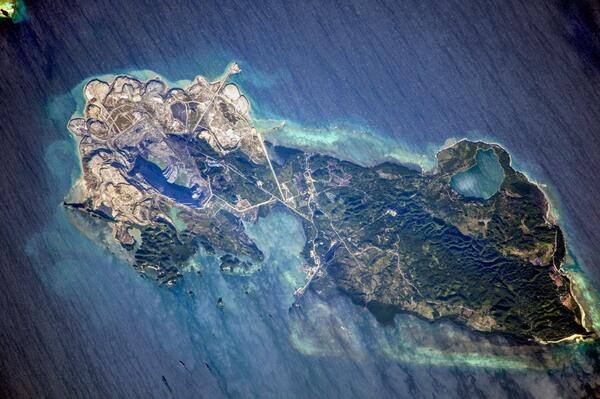
Philippines coal mine collapses, 3 dead, 6 missing


Three people were killed and six others were still unaccounted for when an open pit coal mine in the central Philippines collapsed on Friday due to heavy monsoon rain.

Antique provincial governor Rhodora Cadiao said three people had died and rescue workers are digging to recover six workers who were buried alive at the Panian coal mine site on Semirara island.

"Three workers were found and brought to a hospital but they were declared dead on arrival," Cadiao said, adding rescue teams are using heavy equipment to recover the six people buried by the collapsed coal mine.

She said it was raining heavily for days on the mine site, on an island off the main island of Panay in the central Philippines. "The accident happened around 3 a.m. while the workers were working on a water system," said Cadiao.

There were only nine workers at the site when the accident happened, said Isidro Consunji, CEO of Semirara Mining & Power Corp, confirming all were buried alive.

"Three bodies have been recovered as of this time and digging continues to look for six others," he said. "That's as far as I know. Some of our mining equipment has also been damaged. We don't have the complete details yet."

The Department of Energy on Friday suspended operations at the mine and a government panel will investigate the landslide, said Zenaida Monsada, the officer-in-charge at the department.

"We have directed Semirara Mining Corporation to focus on search and rescue operations," Monsada said in a statement.

Semirara a unit of Philippine conglomerate DMCI Holdings Inc , is the country's largest coal miner.

In a statement, the company said it complied with the suspension order but is "coordinating with national and local authorities to keep them updated on other necessary measures, including ensuring the adequate supply of coal for power generation".

In 2013, five people died and five others were missing in a landslide in the coal mine on Semirara island.

Friday 17 July 2015

http://uk.reuters.com/article/2015/07/17/philippines-mining-disaster-idUKL4N0ZX24520150717

continue reading

It never happened: How to deny genocide in the face of science


Scientific advances in DNA identification over the past 15 years have helped war-crimes investigators document to an unprecedented extent the massacre of 8,000 Bosnian Muslim men and boys around this town in 1995.

Yet even as these technological advances uncovered more damning evidence, many Bosnian Serbs have grown increasingly more resolute in their denial.

Last Friday night, two Bosnian Serb men standing beside a memorial to Serb war dead were a telling example. They insisted that Serbs are the victims of an international plot. They fervently argued — despite 93 mass-grave exhumations and 6,827 DNA identifications of the dead — that the mass killings have been grossly exaggerated.

Biased historical narratives, of course, have existed throughout history. The identification of the dead in Srebrenica demonstrates the ability of technological advances to produce a flood of factual information. Yet in many cases, the scientific statistics appear to have only given those willing to manipulate the numbers more arrows in their quiver.

The two Bosnian Serbs contended that roughly the same number of victims died on each side during the 1992-1995 war. When I asked how such a vast subterfuge had been carried out, one said the answer was simple. “As far as the Muslim side,” he told me, “there is a bigger lobby in America.”

The following morning, interviews with a dozen other Bosnian Serbs living near Srebrenica produced similar answers. As tens of thousands of Bosnian Muslims drove past their homes to commemorate the 20th anniversary of the mass killings, Serbs dismissed the gathering and the idea of 8,000 dead as a “farce,” a “circus” and “make believe.”

“It’s definitely not correct,” said Budimir Todorovic, a 60-year-old electrician, as he calmly drank coffee with his family in his front yard as busloads of Bosnian Muslims drove by. “It’s not 8,000.”

Milan Rakic, a 48-year-old store owner, accused Muslims of stealing the bodies of Orthodox Christian Serbs and interring them in the town’s sprawling cemetery complex.

“There are a lot of Serb bodies buried in this memorial,” he said.

One elderly widow said that some Bosnian Muslims listed as dead in the Srebrenica memorial were, in fact, living in Germany. “The number is exaggerated,” she said. “There are many living people whose names are engraved on the gravesites.”

The woman, like the other Serbs interviewed, was genial and polite. The Serbs expressed regret about the war — the woman declared it “horrible, horrible.” But they echoed the arguments of Bosnian Serb nationalists who still dominate politics here. The nationalists contend that foreign powers, primarily the United States and Britain, stage-managed everything from the war itself to the burial of bodies in Srebrenica.

They dismissed the annual commemoration as a “provocation” also organized by meddling outsiders. They said the crowds were so large because “Western NGOs” paid people to attend.

“Everything is well coordinated,” one man standing at the memorial for Serb war dead told me. “No one from here is guilty for what happened.”

Denial is evident outside Bosnia as well. Disparate groups, including left-leaning academics, Russian government-controlled media and some right-wing Americans who talk about a Muslim takeover, scoff at the number of 8,000 dead.

In fact, the annual commemoration and cemetery here have become a global symbol of the international community’s failure to stop the killing in Bosnia. U.N. officials arrived in Srebrenica in 1993 and declared it a United Nations protected “safe area.” When Serb forces attacked it two years later, Dutch peacekeepers and U.N. commanders did little to defend the enclave, and it fell to Serb forces on July 11, 1995. Two weeks of mass expulsions and mass executions followed.

Twenty years later, an estimated 50,000 Bosnians and several thousand foreigners attended the anniversary commemoration last weekend. Dozens of foreign dignitaries did as well, with former President Bill Clinton saying the world must prevent more such killings.

In the largest DNA identification project ever, a nonprofit group called the International Commission on Missing Persons has collected 22,268 blood samples from Srebrenica survivors and matched them to 6,827 bodies.

“Huge advances in DNA identification have made it possible,” said Kathryne Bomberger, director of the project. “The science is moving rapidly.”

Along with 93 mass graves that have been exhumed, investigators have found bodies at 314 “surface sites” in the surrounding mountains. Yet the work is not over. With 8,000 men reported missing from Srebrenica and the nearby town of Zepa, another 1,200 bodies are believed to be scattered in the woods or in mass graves not yet located.

Finding the dead has been vastly complicated by a grisly Bosnian Serb effort to conceal evidence. Several months after the executions, Bosnian Serb forces dug up many of the mass graves and reburied the bodies in dozens of locations. In the process, many corpses were dismembered.

Body parts from single victims have been found at multiple sites. In one case, parts of the body of one victim, 23-year-old Kadrija Music, were discovered in five different mass graves 20 miles apart.

While the DNA identification of the bodies has received widespread praise, the uneven sentencing practices of the U.N.-created International Criminal Tribunal for the former Yugoslavia has elicited scorn from both Muslims and Serbs.

Bosnian Muslims hailed decisions from the tribunal, as well as the United Nations International Court of Justice, that ruled genocide had occurred in Srebrenica. But they criticized some of the sentences as far too short.

Meanwhile, Serbs insist they have been the victims of the court. They assailed the tribunal for ultimately acquitting Naser Oric, commander of Bosnian Muslim forces in Srebrenica, though they say he is responsible for many deaths

“How many Serbs need to be killed for people in the world to see that Serbs are people, not animals?” asked Rakic, the store owner, who said his uncle was one of Oric’s victims. “Animals have rights but not the Serb people?”

International war-crimes investigators, however, say there is no proportionality in the deaths in Srebrenica or Bosnia as a whole. The say several hundred Serbs died in the fighting around Srebrenica, but the vast majority of them were Serb military forces.

Across the country, Bosnian Muslims made up 65 percent of the war dead and Serbs 23 percent, according to prosecutors. Yet Bosnian Muslims made up 44 percent of the population, according to a census conducted two years before the war. Serbs made up 31 percent.

Meanwhile, Bosnian Serb news accounts lay out a different narrative. They report that 1,300 Serb civilians died around Srebrenica, and a total of 3,267 Serbs were “murdered” across eastern Bosnia.

Dismissing the Bosnian Serbs’ statements as irrelevant conspiracy theories would be easy. But their assertions had an eerie familiarity. In conversations around the world, extremist Muslims, Jews, Hindus and Buddhists, as well as some on the far right and far left of U.S. politics — have all featured similar arguments.

The stories usually involve a nefarious plot by outsiders to destroy their culture or faith, or future. They say they have had to act in self-defense. As the victims of the plot, they have no choice but to respond.

There is usually some distant, all-powerful covert force — the CIA, the Mossad, oil-rich Arab potentates — deftly stage-managing each event. Local people are helpless victims, with no responsibility for what occurs.

When I asked the Bosnian Serb men about the future of the former Yugoslavia, they said it would be decided in London and Washington. “Basically, how the English and Americans decide,” one told me. “That’s how it will be.”

Though there had been a decade of progress in Bosnia after the 1995 peace accord ended the war, the country has been moving steadily backward over the past 10 years. Bosnian Serb denial of the Srebrenica massacre is growing. Bosnian Muslim resentment of that denial is simmering.

Violence erupted at the 20th anniversary commemoration. Groups of young Bosnian Muslim men hurled stones and slurs at Serbian Prime Minister Alexander Vucic, a wartime ultranationalist now turned pro-Western moderate, forcing him to flee.

The International Commission on Missing Persons, meanwhile, is expanding internationally and applying the DNA identification system it developed to tragedies in other parts of the world. It is identifying the missing in Iraq, Chile and South Africa, as well as victims of typhoon Haiyan in the Philippines and the passengers shot down in a Malaysian airliner over Ukraine.

Yet scientific and technological advances seem to have changed few views. One new conspiracy theory circulated by Serb nationalists is that the remains recently buried in the Srebrenica memorial are Filipinos who died in typhoon Haiyan.

Friday 17 July 2015

http://blogs.reuters.com/great-debate/2015/07/17/it-never-happened-how-to-deny-genocide-in-the-face-of-science/

continue reading

MMDA asks owners of funeral homes to ready body bags, Philippines prepare for disaster


With the “Big One” likely to cause 35,000 deaths, owners of funeral parlors are not only being asked to participate in the “Metro Manila Shake Drill” but also prepare to provide cadaver bags.

The exercise to be conducted by the Metropolitan Manila Development Authority (MMDA) is scheduled on July 30 to prepare residents for what the Philippine Volcanology Commission says is a 7.2-magnitude earthquake that is due to hit the capital anytime.

In a news briefing on Thursday, MMDA Chair Francis Tolentino urged members of the Philippine Mortuary Association (PMA) to participate in the disaster simulation as well as to extend their services should the worse happen.

Public service not business

Urging morticians and funeral parlors to view this as a public service and not as a business, Tolentino requested each member of the 400-strong PMA to provide 500 cadaver bags.

He said operators of mortuaries had an important role to play in times of disasters, such as taking care of the dead and the prevention of the outbreak of epidemics.

“We need to establish definite roles for every sector involved in disaster preparedness and management as each and everyone should be ready to provide necessary services to the public in times of disaster,” Tolentino said.

The MMDA has projected 35,000 deaths in case of a massive earthquake, with Manila and Quezon City expected to have the most number of casualties.

Mass burial site identified

Earlier, the MMDA identified an area in Macapagal Boulevard as the designated mass burial site during the earthquake simulation. The MMDA and National Disaster Risk Reduction and Management Council (NDRRMC) are set to sign a memorandum of agreement with the PMA on Monday on disaster preparedness and response.

The deal includes the training of at least five of the MMDA’s personnel in embalming with the help of the PMA and the Department of Health. In turn, the MMDA and NDRRMC will provide training in rescue operations for funeral parlor personnel and community coordination in their barangays in times of disaster.

For their services, Tolentino said the government would pay them back with the barangays (villages) expected to pay for the cadaver bags used in their respective areas.

Ready to help

According to PMA chair Renato Dychangco, the group was prepared to deploy personnel to assist in preserving and identifying the bodies in the event of a massive earthquake.

The Metro Manila Shake Drill, amid the ringing of alarm bells and audio recording of a rumbling earthquake, has been scheduled on July 30 from 10:30 a.m. to 11:30 a.m. in the capital region, except in Pasig City, where it will be held from 7:30 p.m. to 8:30 p.m.

Friday 17 July 2015

http://newsinfo.inquirer.net/705783/mmda-asks-owners-of-funeral-homes-to-ready-body-bags

continue reading

Thursday, 16 July 2015

S Korea ferry disaster: Temp teachers discriminated, even in death


On April 16, 2014, 26-year-old Kim Cho-won and 31-year-old Lee Ji-hye, teachers from Danwon High School, rushed downstairs from their fifth-floor cabin as the ferry they were on began to list.

They ran across the doomed vessel in a desperate attempt to get as many students to safety as they could. It was the last time they were seen alive, as the two teachers were among 304 killed when the Sewol ferry capsized on that fateful day.

Earlier this week, the Ministry of Personnel Management said the two could not be subject to the screening process to be considered "killed in the line of duty." The reason was that they were temporary teachers. This effectively barred their families from being compensated in the same way as those of the nine other teachers who died in the accident.

"I cannot accept that my daughter is being discriminated in her death. I urge the people to help me so my daughter's honour can be restored," Kim Seok-woo, the father of late Kim Cho-won, said Tuesday at a press conference in front of Seoul Government Complex. He and Lee Jong-rak, father of Lee Ji-hye, visited the government officials and submitted a petition to reconsider their decision, signed by 120,000 teachers across the country.

The incident was a reminder of the discrimination temporary teachers in the country still face, even the ones who had perished in what is widely considered a heroic death.

In Korea, one wishing to acquire a permanent teaching job at elementary, middle and high schools must receive a teacher's credentials from certified colleges or universities. Then they must pass a state-commissioned test and be appointed by the government to receive the status of "education civil servant."

Those who were college-certified but did not pass the state test can only get temporary jobs, which deprives them of many benefits other teachers are entitled to. This includes job security, joining the civil servant pension programme, and providing financial compensation to government officials who are killed on the job.

Temporary teachers say they often fall victim to discrimination at work, both from the school administration and their coworkers.

"My students received an award from a state-sponsored competition, so I filed a report on it. But then I learned that temporary workers cannot claim credit for their contribution, so I had to fill in the forms under the name of another teacher who held a permanent post," said a 31-year-old temporary teacher at a Seoul-based middle school.

Temporary teachers are also the first in line for doing remedial classes, he added. Some faculty members, like the principal, even ask them to run personal errands.

In 2012, the local court ordered schools to pay bonuses to the temporary teachers. The case is currently pending decision by the Supreme Court.

Whether or not the temporary teachers should be considered education civil servants has sparked controversy here. The Personnel Ministry stated that Kim and Lee could not receive benefits for education civil servants, as they had different working conditions and did not contribute to the civil servants pension programme.

But a study by the National Assembly Research Service ― commissioned by Rep. Jeong Jin-hoo of the minor Justice Party ― found that the current law implies that temporary workers should be subject to the education civil servant law.

Clause 32 of the education civil servant law states that those appointed as temporary teachers are considered "education workers," and clause 2 of the same law stipulates that education workers working at an educational institute are considered education civil servants.

Last month, 69 lawmakers including Jeong proposed a joint resolution that urged the government to recognise Kim and Lee as education civil servants killed on the job.

Local teachers' groups have also voiced complaints about the temporary teachers not being entitled to privileges.

"Teachers exist for students. And a teacher trying to protect lives of students should be respected above all, whether one is a temporary teacher or not," said Kim Dong-seok, the spokesperson for the Korea Federation of Teacher's Associations. He said that compensating the deceased teachers as education civil servants can contribute to boosting the morale of all temporary teachers, since it delivers a message that the government respects teachers who are willing to sacrifice themselves for students.

The Korea Teachers and Education Workers' Union on Tuesday submitted a petition ― signed by 90,000 citizens ― urging the government to compensate all teachers equally.

"Both Kim and Lee tried their best even though they were treated unfairly. But now they are being discriminated in their death," said the KTU. "We will continue fighting with the families (Kim and Lee) until our demands are accepted by the government."

While Education Minister Hwang Woo-yea has expressed hopes for the two teachers' recognition, the ministry's efforts have been limited. "In principle, we hope that it will happen. But there isn't much we can do since it is really not up to us," said a high-ranking ministry official Wednesday, denying earlier reports that the education and personnel ministries had agreed to pursue policies to compensate the two teachers as education civil servants.

Kim Seong-wook told local media that he would not give up until his daughter receives what he believes is the proper treatment as a teacher at Danwon. "Her students came up to me and asked why she was discriminated (in the government compensation). To them, she was their teacher. They don't care if she held a temporary job or a permanent one," he said.

Thursday 16 July 2015

http://news.asiaone.com/news/asia/s-korea-ferry-disaster-temp-teachers-discriminated-even-death

continue reading

Natural disaster and extreme weather death toll on the rise


In the first half of 2015, 16,000 people died worldwide in natural tragedies, including earthquakes and heatwaves, up from 2014. There has been a major global spike in deaths resulting from natural catastrophes, including earthquakes and heatwaves, in the first half of 2015, according to data from the largest reinsurance company in the world, Munich Re.

The mid-year natural disaster assessment was marked by catastrophic earthquakes in Nepal and intense heatwaves in India and Pakistan, together amounting to some 12,000 fatalities. "The natural catastrophes in the first half of the year show us once again that vulnerability to natural catastrophes needs to be reduced, particularly in emerging and developing countries,” said Munich Re Board member Torsten Jeworrek in a statement.

In total, in the first six months of the year, 16,000 people worldwide died as victims of severe weather and earthquakes.

The number is a major increase from 2,800 natural disaster deaths in the same period in 2014, the reinsurance company reported. In Nepal's 7.8 magnitude earthquake in April alone, at least 8,850 people were killed and thousands of homes and institutions left in ruins.

But while the death toll is on the rise, the cost of disasters is down by about US$7 billion, falling to US$35 billion from US$42 billion, according to Munich Re. Some of this year's extreme weather is related to the strong El Nino event predicted for 2015, a climatic phenomenon in the Pacific Ocean that can trigger floods, droughts, and other extreme conditions around the world.

"The currently already intense El Nino phase is expected to become even stronger as we head into the autumn," said Munich Re. But El Nino's disruption of regular climatic patterns could also mean fewer Atlantic hurricanes in the U.S., even while it unleashes tornadoes in southern U.S., scorching heat in Asia, drought in the Caribbean, floods in South America, and other extreme weather.

The frequency and intensity of extreme weather events like heatwaves are expected to increase with climate change. Scientists have warned that the world could face climate and public health catastrophe in ten years if decisive action is not taken.

Thursday 16 July 2015

http://www.telesurtv.net/english/news/Natural-Disaster-and-Extreme-Weather-Death-Toll-on-the-Rise--20150716-0004.html.

continue reading

A year later, MH17 relatives grieve, wait


A year on from the grotesque calamity that killed all 298 people aboard MH17, the Dutch Safety Board, which has coordinated the investigation, is yet to present conclusive evidence as to the cause.

The relatives of victims have requested to be sent seeds from the field of sunflowers that encircle the crash site.

On their son Bryce's birthday this year, Silene Fredriksz-Hoogzand and her husband Rob went to a Dutch air base, watched pall bearers solemnly unload seven coffins from a military cargo plane and wondered if they contained parts of the remains of Bryce or his girlfriend Daisy Oehlers.

For many families of the 298 people killed when Malaysia Airlines Flight 17 was brought down July 17 last year over eastern Ukraine, uncertainty and agonising waiting is still woven into the fabric of life a year later.

"Your world stops with a bang," Silene said at her home in Rotterdam, where flowers and mementos to Bryce and Daisy still dominate the living room. The couple's bedroom is still the same disorderly mess it was the day they left for a Bali holiday.

"Everything around you continues. You try to participate, but it's just hard."

As if waiting for remains of loved ones was not bad enough, families also have still not received conclusive answers to many questions about the crash: who brought down the plane? Will the perpetrators ever face justice? Why was the Boeing 777 heading from Amsterdam to Kuala Lumpur even flying over a war zone?

International investigators say it will be October before they publish the official cause of the crash. A Dutch-led criminal investigation into the downing won't be done until the end of the year - adding to family frustrations.

"I understand their impatience. They want to know exactly what happened. They want answers," said Fred Westerbeke, the prosecutor leading the probe.

"Many big criminal investigations do take a lot of time and because of all the circumstances this investigation is not an easy one."

Along with the impatience, there is understanding from some relatives.

James Rizk, a 22-year-old real estate agent from Melbourne, is confident that the slow but methodical investigations will eventually mean that the killers of his parents Albert and Maree Rizk will face justice.

"I've got confidence in our government. They're doing a good job and I believe they're on the right track at the moment," Rizk said.

The investigation is focusing on a Buk surface-to-air missile downing MH17 as the most likely scenario, but is also working to rule out other possible causes.

The Dutch Safety Board said in a preliminary report that the plane was hit by multiple high-energy objects, a conclusion experts said bears the hallmarks of a missile strike.

Ukraine blames Russian-backed separatist rebels, Moscow blames Ukraine. Countries who lost citizens in the disaster are trying to establish a United Nations tribunal to prosecute any suspects eventually identified.

The disaster was a second and tragically familiar blow to the extended Rizk family in only four months. Maree Rizk's stepmother Kaylene Mann lost a brother Rod Burrows and sister-in-law Mary Burrows on Malaysia Airlines Flight 370, thought to have plunged mysteriously into the Indian Ocean on March 8. That plane and all its 238 passengers and crew remain missing.

At least James Rizk didn't have to wait too long for his parents' bodies to return home. They were the first of the 38 Australian permanent residents and citizens killed on Flight 17 to be repatriated, six weeks after the tragedy.

Others have had a hard period of uncertainty. Evert van Zijtveld buried only partial remains of his 18-year-old son Robert-Jan and 19-year-old daughter Frederique in December.

"You can't keep saying 'I'm not going to do anything'," he said.

"We got something back - small as it was - so we gave it a place. The graveyard is close to our home."

But since the funeral, later Dutch missions to recover human remains from the scorched crash site in eastern Ukraine have returned with more fragments of the teenagers, confirmed through DNA analysis by a team that has, since the crash, positively identified remains of all but two of the victims.

Now "we don't know what to do. It's very difficult to take the decision to open the grave to add pieces of bone," Van Zijtveld said.

On Friday, families will again gather and hold commemorations.

James Rizk is going to Canberra, where MPs are interrupting their six-week mid-year break for a memorial that includes the unveiling of a plaque in the House of Representatives garden listing the victims' names.

The family will then fly from to Melbourne for commemorations at their beloved Sunbury Football Club the next day. James Rizk plays at the Aussie rules club, where his father was a committee member and his mother volunteered in the canteen. Albert and Maree will be remembered with a plaque on a grandstand to be built within the next year.

In Rotterdam, Silene and Rob take comfort from friends and family as the anniversary approaches, but the pain of their loss, if anything, is just getting worse.

"We're a year further, but actually we've made no progress," Rob said.

"For us, every day is July 17."

Thursday 16 July 2015

http://news.yahoo.com/later-mh17-relatives-grieve-wait-043404706.html

continue reading

6 illegal migrants die after boat sinks off Çanakkale coast


Six illegal migrants were killed while one went missing on Tuesday night when the boat they were in sank off the northwestern province of Çanakkale in the Aegean Sea while trying to reach to the island of Lesbos in Greece through Turkey.

The Cihan news agency said the boat was carrying Syrians. Ten passengers were saved while search and rescue efforts were under way for the missing person. Four of the dead were children, according to the Doğan news agency.

The migrants were taken to the Ayvacık and Ezine state hospitals for treatment while the bodies were sent to the Bursa Council of Forensic Medicine for autopsy.

Thursday 16 July 2015

http://www.todayszaman.com/national_6-illegal-migrants-die-after-boat-sinks-off-canakkale-coast_393844.html

continue reading

The missing: 275000 Britons disappear each year


ODD place, Britain. Every day, 13 million CCTV cameras track our movements. We’re PINnumbered, databased, credit-rated, nannied, Neighbourhood Watched, Facebooked, e-mailed and GPS-ed.

You wouldn’t think any of us could slip away unnoticed.

But we do, in ever-increasing quantities. An Independent on Sunday investigation has established that the numbers of Britons who disappear each year is now at record levels. Missing People, the charity that helps both the disappeared and those left behind, told us that 250 000 missing persons reports each year — more than 30 000 higher than any previous total — is “probably an underestimate”; others put the total nearer 275 000.

This, the equivalent of the entire population of Plymouth being spirited away, means that, across the country, one person goes missing every two minutes.

The vast majority are swiftly found, or return of their own volition, but many don’t. Some disappear for decades, and sources, including some inside the police, say the number of people in Britain who have been missing from family, friends and usual haunts for more than a year is at least 16 000 and could be as many as 20 000.

Among them are people like Melanie Hall, last seen in a Bathclub nightclub in 1996, whose parents had to endure 13 years of waiting and wondering before her remains were found, a week ago, beside the M5.

She had been murdered. Nor does death always bring closure. At any one time, there are an estimated 1 000 unidentified bodies lying in the country’s mortuaries and hospitals. Many have been there for years — unknown, unclaimed citizens. The long-term missing inhabit a looking-over-their-shoulder world of false names, cash-in-hand jobs, hostels and short lets.

For their families, they leave behind not only trauma, grief, guilt, anger and despair, but also, if they are breadwinners, more practical problems. Missing people are deemed neither dead nor properly alive, so salaries are stopped, insurance companies won’t pay out, bills can’t be paid and corporate “helplines” won’t discuss the disappeared’s affairs because of the Data Protection Act. But, most of all, the long-term missing leave behind an aching sense of mystery: what has become of them, and why did they go?

This is the story of Britain’s long-term disappeared — of people such as Joyce Wells, Alan Hobbs and Janet Cowley; of those as young as seven-year-old Daniel Entwhistle, missing from his Great Yarmouth home since May 2003, or as elderly as 88-year-old Mary Ferns, missing from West Lothian for 16 months now. All an agonising riddle.

Why did the Gloucester librarian Angela Bradley leave her spectacles in her car, the keys in the ignition, and walk away one January day in 1995? What happened last November to Quentin Adams, a 40-year-old father of three from Banchory, Aberdeenshire?

He popped out to buy cigarettes and has not been seen since. And where on earth is the 14- year-old Doncaster schoolboy Andrew Gosden? Some 93 percent of the children who go missing do not live in a two-parent household, and single children are more likely to run away than those with brothers and sisters. Andrew fell into neither category, happily living, according to testimony from his caring family, with his mother, father and elder sister, Charlie. He was doing well at school, and no one had noticed him behaving in any way that would set alarm bells ringing.

And yet, one day two Septembers ago, he left for school, waited for his parents to go to their work as speech therapists, returned to the house, changed his clothes, went to a cash machine, withdrew £200 of his savings, and boarded a train to London. We know this because he was seen on CCTV arriving at King’s Cross, a slight figure dressed in black jeans and T-shirt. No one has seen him since.

The despair, the not knowing, hit his father, Kevin, like a truck. He tried to commit suicide, hanging himself from the banisters, and his life was saved only because the vicar — who had a key to the house — arrived at that moment. The efforts to find Andrew could not have been greater. Police were swiftly alerted, as was Missing People and local media.

His face is on the web, on posters, and on 15 000 leaflets that were distributed in London by three coachloads of family, friends, schoolmates and teachers, who travelled to London and searched for him a year after his disappearance.

His 14-year-old face stares from a page on the Missing People website, increasingly a reminder of what he once was, rather than an aid to recognising him now. The Andrew who left the house in his school uniform is no longer the Andrew who might be found.

So an age-progressed face will feature on a new leaflet, to be emailed to snooker halls and, if permission is granted, to be handed out at a Muse gig, one of Andrew’s favoured bands. Back in Doncaster, his family keep his childish things, and the clothes that will no longer fit him, in a room unchanged since that day in September 2007.

They can still look and hope. What they cannot do is grieve. Kevin Gosden told us: “We have all reacted differently in our house. It’s been a battle with depression for me. I haven’t reached the point where I can give up — there’s always another chance to find him. Sometimes it feels like we’re going round and round in circles, like we’re trapped in a work by Escher.”

Children make up the bulk of the missing persons reports in Britain. But, as teenagers who stay out a night or two from their care or foster home, or who sleep on a friend’s sofa to cool down after a row with a parent, they are also likely to be the cases that are resolved within a few days. Teenage runaways are overwhelmingly female: 71 per cent of missing 13- to 17-year-olds are girls. With adults, it is different. Men predominate, with 73 per cent of all disappeared people over the age of 24 being male. Adult missing cases are also far less likely to be resolved quickly, or at all.

A 2003 study found that only 20 per cent of missing adults traced by Missing People decided to return to the place they had left, and 41 per cent of those located were not prepared to make contact with those who were looking for them.

The conclusion is that they’re fleeing something — in their own minds or in reality — far more deep-seated than the cause of a teenager’s tiff with Mum, Dad, a step-parent or friends. There have always been the elderly and confused, the alcoholics, drug addicts and obsessive

There have always been the elderly and confused, the alcoholics, drug addicts and obsessive loners who drift out of contact, until the family, wishing to try again, finds there is no forwarding address. And there will always be the utterly inexplicable disappearances — people such as Anne Simpson, a mother of 60, who went for a walk near her home in Ingoldmells, Lincolnshire, in September 2004 and never returned.

But the most intriguing of the missing are those ordinary folk who have some discernible pressure in their lives, but one which seems on the surface no worse than that experienced by the millions who simply keep battling on.

It might be job stress, money worries (the recession is a major cause of a rise in missings), or relationship breakdown. But what is it that tips them over some invisible edge and compels them to make a sudden bolt for the door? And what is it like to be the family left behind? To find out, we sat down with Anne and Peter Langridge, sister and nephew of Bernard Coomber, who went missing in January this year. His story contains many of the ingredients of other missing cases.

You could call it “A Very Average Disappearance”. Bernard was 55, unmarried, and lived alone in Sevenoaks, Kent. He was an outdoor person, who often went walking and the job he liked best was landscape gardening.

“That was his first love,” says Anne, “but he had back problems, so he went into a factory that made parts for showers. He worked for an agency that made him redundant; he was taken on again when the work picked up, then they made him redundant again.” By early this year, he had not worked for two years and “had totally run out of money”. So she gave him £50.

One day in late January Anne was called by one of Bernard’s neighbours. The woman could get no reply at his house.

Anne went round, let herself in, and found the house empty. On the kitchen table were laid out Bernard’s mobile, and beside it was the £50 Anne had lent him. He was, she explained, a proud man and hated accepting money. “He took nothing with him,” says Anne.

“Not a bank card, small change, not a rucksack or holdall. He just walked out with whatever he’d got on. His coats were still in the house. And it was a bitterly cold day.” It was, in a phrase used by so many families of the missing, “totally out of character”. Peter says: “He was a loner, really. He led a simple life, but he was quite a grounded sort of person.” He was, however, “a bit down, having problems finding a job”, says Peter. And, like many on benefits, things did not run smoothly.

Anne says: “He had flu at Christmas and, because he didn’t sign on by phone, they signed him off and he didn’t get his money. So, within a month, there was no money coming in . . . he didn’t get on with the man at the Jobcentre and wanted to be referred to another one, but they wouldn’t allow that.”

Bernard’s last words to Anne were: “I’ve got myself in a mess, and I’ll get myself out of it.” Like quite a few of the mature missing, Bernard had been a sort of carer, to his father, who died seven years ago. “Bernard did have one girlfriend,” says Anne, “but, sadly, my dad made that one fizzle out. He was frightened of being left on his own.”

Instead, with his money problems, bad back and a troublesome recent hernia operation, it was Bernard who was left on his own. Kent Police have carried out extensive searches, traced all possible contacts, travelled to interview Bernard’s friends up north, talked to his doctor, publicised his details, and checked any bodies that have turned up.

Appeals have appeared in local newspapers, on the net, in The Big Issue, and on posters besides the paths where he used to walk. But nothing. Anne says: “My only feeling is that he may have taken his own life in the old quarry, where he knew he wouldn’t be found, because he wouldn’t want to put me through the cost of a funeral. If he’s taken his own life, he’ll have put himself

want to put me through the cost of a funeral. If he’s taken his own life, he’ll have put himself somewhere we won’t find him for a long time.”

As soon as the leaves are off the trees, police will use a helicopter with thermal-imaging equipment to see if any remains can be found in Bernard’s favourite rural spots. Anne and Peter say that Missing People (who call regularly), and the police, both the Kent force and the National Policing Improvement Agency’s missing persons bureau, “could not have done more”.

The offices of the charity Missing People are the closest this country has to a nerve centre for the disappeared.

Above a supermarket on a busy west London street is an operation that looks like a police incident room. Phones are constantly manned, and, on the wall, there are wipeboards with lists of names, and when and where they were last seen. Missing People, founded 20 years ago in the wake of the disappearance of Suzy Lamplugh, who lived near by, runs three helplines — for young runaways, missing adults, and the families of the disappeared, all manned 24 hours a day.

They receive 120 000 calls a year. The chief executive, Martin Houghton-Brown, says they can barely cope with the volume. In the early hours of last Monday morning, for instance, the two volunteers had 30 calls in an hour.

They included sightings, relatives making initial reports and the missing phoning in. A recent sample: “James” (13) missing from care and sleeping rough on a park bench, angry and upset, who agreed to be put in touch with a social worker; “Paula”, a long-term disappeared who had swallowed a large amount of paracetamol and drink, who eventually allowed Missing People to call an ambulance; “Adrian” (50) who had walked out on his wife, but wanted to let her know he was safe; and “Aina” (24) from Bradford, whose parents had her booked on a flight that night to go to a forced marriage.

She was frantic; Missing People put her in touch with organisations such as the Asian Women’s Domestic Helpline.

Mr Houghton-Brown and his policy and research director, Geoff Newiss, are clear about what needs to be done to help Britain’s missing and their families. First, a government department needs to take responsibility for the issue. Second, comprehensive information on the missing needs collating and analysing centrally (we are better at keeping tabs on missing cars than missing people, according to Helen Southworth, Labour MP for Warrington South and a long-time campaigner for the missing). Third, all agencies must have a duty to co-operate. And, fourth, underpinning all this, these responsibilities need to be statutory.

“It means resources,” says Mr Houghton-Brown, “but we’re talking about people dying every day.”

Adults, unless illegality is involved, have a perfect right to go missing, assume a new identity, and live out of contact with their former friends and family. (One man who disappeared told Missing People when he was traced: “How dare you look for me!” — and threatened to sue.) This has fed the myth that the police regard any missing case which is not that of a child, or where a crime is suspected, as beyond their remit. It may once have been true, but not now. In Bramshill, Hampshire, the NPIA’s missing persons bureau logs and helps investigate cases. And it is thanks, in part, to its work that families such as Bernard Coomber’s testify to the lengths to which most forces go to find their lost loved one.

Down in Surrey, police still keep active Operation Scholar, the search for Ruth Wilson, a sixthformer who went missing 14 years ago. She left Dorking just after 4pm on 27 November 1995, and, instead of going home, took a taxi to an isolated pub on Box Hill. Intriguingly, she had ordered flowers for her parents to be delivered two days later. More significantly, police later learned that Ruth, the bookish-looking daughter of two teachers, was in the habit of going to the remote spot on the way home from school. (As an example of the almost limitless trials facing families of missing persons, the Wilsons were asked if they were willing to appear on a game show where the audience would vote on the best step the family could next take to try to get their daughter back. They declined.)

Although Missing People uses a specialist in age-progressed likenesses to portray people missing over the long term, there is a limit to what it, and the police, can do. So families hand out leaflets, put up posters, tramp the streets, offer rewards (£10,000 is not an uncommon amount), hire private investigators (an extensive search can cost more than £15,000), and even, as Kent Police told us, consult mediums. They also start groups on Facebook, and launch websites such as the one for Nicola Payne, who went off to collect clothes for her baby in December 1991, took a short cut across fields, and has not been seen since. Among the poignant messages on the site is one from her son Owen – now 17, but just seven months old when his mother disappeared: “I envy my older cousins who remember her well, and they tell me what a fun-loving girl she was… My one wish would be to have my mum found and to be able to understand the confusion, mystery and heartbreak of the past 17 years.”

Some do return. About 10 disappeared persons a week are found through the work of Missing People, among them Billy Andrews, who went missing from his family after his marriage broke up. He began sleeping rough, and defied all the efforts of his mother, Kathleen, and his four sisters to find him. Twelve years went by, and then Kathleen saw an advertisement for Missing People and rang. Within four weeks, the charity’s case managers had found him. Kathleen says: “One day I was watching my favourite soap when the phone rang. It was Billy. We both wept.” Billy says: “I was so happy when I got the phone call from Missing People telling me that my mum was trying to find me. To be back in touch with her and my sisters after so long was a dream come true.” So why did he lose touch? He felt he had let them down and was ashamed of the state he was in. He is now settled, and has remarried. “It is,” says Kathleen, “a second chance for all of us.”

Thousands of Billies, Bernards, Ruths and Andrews will join the ranks of the long-term missing this year. Maybe it isn’t so curious that they can elude all the tabs kept on us, all of our petty nannyings and risk assessments. We may have officials logging missing cars, we might microchip our dogs, and indelibly mark our possessions, but we’re awfully casual about lost humans. After all, in 2009 there is no government department responsible for listing and finding them. Odd place, Britain.

The trafficked girls

Among the passport pictures of the disappeared staring out from the Missing People web pages a sizeable number are of teenage girls of Far Eastern origin. Xia Wang, 17, has been missing from Westcliff-on-Sea, Essex, since November 2006; Qin Wang, 16, from Bournemouth since January 2007; Yan He, 17, from Worthing since July 2007; Dung Thi Nguyen, 17, from Catford since April 2007; Lihua Hi, 16, from Birmingham since June 2006. There are many others. Having been brought to this country illegally, such girls – whose only common characteristic, says Missing People, is their region of origin and their vulnerable prettiness – are warned by those who transported them to trust absolutely no one. They are taken into care, but, a short while later, are often seen getting into a car driven by an older male oriental. They have been trafficked.

Britain’s unclaimed bodies

Who was the man known as Mr Seagull, whose body was found on Chesil Beach, Dorset, in 2002? Who was the white man aged between 30 and 40 killed at Canterbury by the Londonbound train in October 2001? Who was the man whose badly burnt remains were found on Parley Common, Dorset, when firefighters tackled a heathland blaze in August 2006? Their bodies, and hundreds more, lie refrigerated in Britain’s mortuaries, awaiting identification. One reason there are so many is because there is no database of the DNA of missing people, which Dr Tim Clayton of the Forensic Science Service has described as “a national disgrace”. And an investigation in Scotland by the Daily Record last January found that police there have the DNA of just 34 of 450 long-term missing cases on their books.

Thursday 16 July 2015

http://www.herald.co.zw/the-missing-each-year-275-000-britons-disappear/

continue reading

Lithuanian chief rabbi protests excavation of WWII mass grave


The chief rabbi of Lithuania appealed to authorities to prevent the excavation of a mass grave of Holocaust victims in the country’s north. Rabbi Chaim Burshtein issued the statement Tuesday about the mass grave discovered this week during road construction work in Siauliai, a city located 120 miles northwest of Vilnius, Lithuania’s capital.

“Please halt all disturbance and moving of these human remains,” Burshtein wrote in reference to the work, which he called “the humiliation of the excavation of the human remains of hundreds of people from the Holocaust-era mass-murder grave uncovered this week.”

Originally written in Russian, the statement was translated to English and reproduced by Dovid Katz, an American scholar of Yiddish who runs the defendinghistory.com website on Jewish issues in Lithuania.

Though some human remains were unearthed during construction, a forensic excavation has not yet begun, though a local government commission gave its approval for one on Monday, the Delfi news agency reported.

“It’s been decided to excavate the remains, do anthropological tests and then rebury them and also mark this place,” archaeologist Audrone Sapaite, who is in charge of the investigation, told the BNS news agency. She said that the remains of 40 people were found at the burial site. In all, approximately 700 people shot dead by the Nazis were buried there. The reports by BNS and Delfi did not mention Jews.

According to halachah, or traditional Jewish law, Jewish burial sites are not to be disturbed unless there is danger to the dignity of the dead or other special reasons. For this reason, archaeologists’ desire to conduct forensic tests on mass graves has prompted fierce opposition by rabbinical groups throughout Eastern Europe.

Before World War II, Siauliai was home to some 6,600 Jews, according to the Yad Vashem Holocaust museum. Many escaped to the Soviet Union, but the Nazis and Lithuanian collaborators murdered hundreds of those who stayed in 1941 and in later mass killings. Some Jews from the city were conscripted to forced labor.

According to Sapaite, the bodies found in the mass grave belonged to “prisoners of various nationalities.”

Thursday 16 July 2015

http://www.jewishjournal.com/lifestyle/article/lithuanian_chief_rabbi_protests_excavation_of_wwii_mass_grave

continue reading

Wednesday, 15 July 2015

Without war, Dover mortuary, lab roles shift


For the better part of 14 years of war, the transfer cases and bodies never seemed to stop arriving at Dover Air Force Base.

"We used to look at the casualty board and hope for a break," said James Parsons, an embalming technician with Air Force Mortuary Affairs Operations, the only U.S.-based funeral home dedicated to the nation's fallen military. "Now? Now it's good."

In 2007, the worst year of the fighting in Iraq and Afghanistan, some 1,020 military casualties were shipped home, according to Air Force Col. Dan Merry, AFMAO's commander. Last year, the overall total fell to 60. "And it has gone down gradually since," said William Zwicharowski, Port Mortuary branch chief, who was with AFMAO, and the agencies that preceded it, for the entirety of the conflicts.

So trimming, and training, are now the watchwords at AFMAO. Its next-door neighbor at Dover, the Armed Forces Medical Examiner System, has also shifted gears, from performing autopsies on every returned casualty from Iraq and Afghanistan to studying lessons learned, taking on more emerging historical DNA identification work and helping non-defense agencies with medical legal death investigations.

"We're staying busy," said Army Col. Ladd Tremaine, director of AFMES, noting the group's increasingly worldwide responsibilities for the federal government. "Most of our work is not done back in that autopsy suite. Most of my examiners are on the road."

It's been a remarkable shift. A total of 6,852 U.S. military personnel have died overseas since 9/11. All were carried off a cargo jet ramp, one by one, and into the complex that houses the two agencies. Even as stunned family members were welcomed, comforted, even counseled, the remains were being scanned (for explosive material), catalogued, autopsied, embalmed and prepared for burial.

Now, the number of dignified transfers from overseas has slowed to a crawl.

"We are not used to it," said Zwicharowski, a former Marine. "We've almost slammed the brakes on now. Which is great. ... It's probably the best problem I've ever had in my life, [which] is to not have 10, 20, 30 bodies to process a day. So it's a good problem to have."

The slowdown is giving AFMAO time to take stock of itself. Recently borrowed mortuary personnel are being returned to other bases - as well as to Dover's Air Force Reserve unit, the 512th Airlift Wing, which it has relied on heavily during the wars. AFMAO could get even smaller, Merry said.

AFMAO has 50 personnel assigned, but that could be halved "if we stay this way for a year or two," Merry said – adding that this could quickly change if the U.S. keeps increasing its small combat presence in theater.

"If we get 30 or 40 thousand boots on ground, in harm's way, we'd start plussing back up," Merry said.

To prepare for the unexpected – a mass casualty event, e.g. – Merry is implementing a more efficient rapid "recall" system. "We're looking at a system where we can hit a button and get everybody we need back here, fully trained, fully checked out, ready to go," he said.

"It's not a matter of if," Zwicharowski said. "It's a matter of when, unfortunately."

That was the case when 11 Louisiana National Guardsmen were killed in a March helicopter crash during training in Florida. All the troops were brought to Dover; AFMAO reached out to the Navy to borrow licensed embalmers to help out, Merry said.

With fewer permanent personnel on staff, Zwicharowski said, "We're turning to training on mannequins, restorative art training, embalming training, and licensing."

Training is particularly important for specialists who sometimes handle bodies in far worse shape than those that typically arrive at a mortuary. Roadside bombs were the No. 1 killer in these wars.

Tremaine's AFMES is responsible not only for worldwide U.S. military autopsies but medical legal death investigations for the entire federal government across the globe – agencies such as the FBI and NASA – which is why his examiners often find themselves traveling.

"The sheer numbers have decreased," Tremaine said. "The complexity of our cases has increased. Department of Justice has been using us extensively over the past year." He pointed to the police shooting death of Michael Brown in Ferguson, Missouri, which was investigated by the FBI.

"When something like Ferguson occurs, you're going to have the locals investigate it, and … the same thing happened here in Baltimore recently – you're going to have the family request a second autopsy," Tremaine said. "Who's going to be the ultimate arbitrator or make sure that everybody's playing on an even field? Who's the honest broker? Well, we've essentially become that honest broker. We come in as a federal entity; we get to see all the evidence and information; and potentially do a tertiary post-mortem examination, independently. And then we present that to the Department of Justice."

In addition to its autopsy work, AFMES recorded in detail war injuries with an eye toward improving combat trauma care. Tremaine wants to make that database more easily accessible.

"All throughout the war, we've been very active in identifying the glaringly obvious, and getting that information out quick," he said. "Now it's time to sit back and look at all the information in its totality, and discover those non-glaring issues that will only be captured through more in-depth research. Can we discover something else that can potentially change techniques, tactics and procedures in the future?"

AFMES' DNA Lab will also stay busy performing DNA analyses on remains from past conflicts, such as those of the sailors and Marines who died at Pearl Harbor aboard the USS Oklahoma who were buried, unidentified, in mass graves in Hawaii and are now being exhumed.

Wednesday 15 July 2015

http://www.delawareonline.com/story/news/nation/military/2015/07/14/without-war-dover-mortuary-lab-roles-shift/30162767/

continue reading

South Korea selects China consortium for Sewol ferry salvage


A Chinese-led consortium was selected Wednesday as the preferred bidder to take on the massive task of raising the South Korean passenger ferry that sank last year with the loss of more than 300 lives, most of them schoolchildren.

The 6,825-tonne Sewol ferry sank off the southwest coast in April 2014. A total of 295 bodies were recovered, but nine remained unaccounted for when divers finally called off the dangerous search of the sunken vessel last November.

The Sewol lies 40 metres (130 feet) down on the sea bed and bringing it to the surface represents a substantial technical challenge. The salvage operation is scheduled to begin in September and take as long as one and a half years.

The Ministry of Oceans and Fisheries said it would begin negotiations next Monday with the consortium involving China's state-run Shanghai Salvage Co. and a South Korean firm, which beat six other competitors including European and US firms.

Shanghai received good marks for its experience in salvaging sunken vessels, including a cruise ship that sank in China's Yangtze River with the loss of more than 400 lives last month, it said.

The ministry said it would talk with the second candidate -- a consortium led by China's state-run China Yantai Salvage -- if negotiations with Shanghai fail.

Shanghai offered to lift the ferry for 85.1 billion won ($74 million) by using a frame built with metal beams on the sea floor instead of drilling holes into its side.

"We regarded Shanghai Salvage's idea as safe ... because the Sewol's hull remains fragile," Yeon Yeong-Jin, a ministry official in charge of salvage, told reporters.

The overloaded Sewol was carrying 476 people, including 325 students from the high school in Ansan, when it sank. Only 75 students survived. Strong currents and muddy waters at the site of the sunken vessel greatly hampered the search efforts last year, leaving two divers dead and dozens injured.

The families of those still missing had led a campaign for the ferry to be brought to the surface.

The shock accident -- blamed on the ship's illegal redesign and overloading left unchecked by regulators -- prompted calls to overhaul the nation's lax safety standards and tackle deep-rooted corruption.

Wednesday 15 July 2015

https://uk.news.yahoo.com/south-korea-selects-china-consortium-sewol-ferry-salvage-050346113.html#6qTOsSw

continue reading

Japan tsunami: Diving into the world of the dead to find their relatives


Twice a month two Japanese men put on scuba gear and go diving. One is looking for his wife, the other for his daughter, both of whom were swept away by the devastating tsunami that struck Japan four years ago. They know they are no longer alive, but the hope of finding something - anything - gives them a much-needed sense of purpose.

Underneath the glittering waters of Onagawa Bay, in Japan's north-eastern Miyagi Prefecture, fridges, TVs, cars, trucks and fishing gear lie scattered on the sea floor, under a layer of mud.

"Imagine a big city, put it in a grinder and throw it all into the ocean," is how one oceanographer described the effect of the Japanese tsunami.

Under water, things are still mostly where they were left by the violence of the waves.

In the sunlight up above, on the other hand, everything has changed.

Fishing boats are again going about their business - the Japanese diet is built around seafood and it's a key part of the local economy.

The wreckage of a thriving port has been cleaned away. In its place there is now a vast expanse of concrete - empty except for, in one corner, a modest shrine made up of some laminated pages of A4, a pink plastic chrysanthemum, and, rather incongruously, a Christmas tree.

This is where the Onagawa branch of the Shichijushichi (77) Bank used to stand and the shrine is there to commemorate it.

When the tsunami warning sounded at 14:50 on the afternoon of 11 March 2011, the bank's employees were busy tidying up the damage caused by the earthquake that had shaken the building a few minutes earlier.

Their manager was out seeing clients. Driving back along the coast he could see the sea sharply withdrawing - a sure sign of an imminent tsunami. As soon as he walked in he told everyone to stop and to climb on to the roof of the two-storey building as quickly as possible.

Sure enough, as soon as they got there, they heard the siren and the municipal broadcast warning people to evacuate to high ground - just a few hundred metres away were the steep slopes of Mount Horikiri, where some people were already seeking shelter.

One employee asked if she could go home because she was worried about her children. The manager said he couldn't stop her, so she ran to her car, which was parked 300m away, and drove home.

The manager told those remaining to watch the sea, just 100m away in normal conditions, and to listen out for further news. The radio warned that a 6m-high tsunami would hit at 15:10.

Among the 13 bank employees up on the roof that day was 47-year-old Yoko Takamatsu. Her husband Yasuo had dropped her off by car that morning, though they only lived a few minutes' drive away. During the short short journey they had talked about what to have for dinner. "Don't say: 'Anything is fine!'" she had said.

With Yoko on the roof was her colleague, 26-year-old Emi Narita, from the neighbouring town of Ishinomaki, where her father Masaaki ran a fish-processing plant. She had seen him just the night before, when she went over to pick up her dinner - her grandmother still liked to cook for her.

As the workers stood nervously on the roof they debated whether there was time to flee to the nearby hospital - a much taller and stronger building, but they decided to stay. After all, a 6m-high tsunami would only reach the first floor. Some went down to get their coats - it was cold, there was still snow on the ground.

Yoko sent her husband a text message: "Are you safe? I want to go home."

The tsunami swept into Onagawa moments later. Footage filmed by a survivor shows how the dark water moved swiftly and relentlessly into town, pushing over everything in its path. Buildings gave way and cars and trucks were picked up like toys, and acted like floating battering rams adding to the wave's destructive power. Within minutes the sea had engulfed areas that were once considered safe.

The bank flooded quickly - it took just five minutes for the water to fill half the building. The workers decided to climb up even higher on top of an electrical room standing on the roof of the two-storey building. As they climbed the 3m vertical ladder the strong wind almost blew them off.

Many people witnessed their desperate bid to escape to safety. A Facebook post reads: "We get a lump in a throat every time we think about the female bankers who, wearing skirts, had to climb the ladder with unimaginable fear, and male bankers who threw off their coats at the last minute regardless of the cold weather, their fear, despair and regret."

The tsunami turned out to be far, far bigger than anyone expected.

The town's defences had largely been based on the worst tsunami in living memory - a 6m-high tsunami in Chile in 1960. But this one reached more than three times higher.

As a consequence many designated shelters were inundated - even the hospital was flooded, killing four people in the building itself and an estimated 16 in the car park.

Onagawa was one of the areas hardest hit by the tsunami," says Tsutomu Yamanaka, a relief co-ordinator who arrived a week after the disaster for the aid organisation Japan Platform.

The coastline of the region is a series of submerged river valleys shaped "like the teeth of a saw", he says, and tsunamis reach great heights as the water funnels into the crevices.

A town has little chance in this battle between ocean and mountain. Satellite pictures show how the sea reached in and clawed the town away. More than 5,000 buildings were washed away or damaged beyond repair.

"Buildings had been torn from their foundations," says Yanamaka, describing the scene he witnessed when he arrived in Onagawa. "A train had been swept to the hill far from the station."

The morning after the tsunami Yasuo Takamatsu made his way to the municipal hospital to find Yoko. He soon had to abandon the car and push a path through the wreckage.

He was stunned to find she wasn't there.

"There were lots of people taking refuge there, but I was told she'd been taken away by the tsunami," he says. "After that I just couldn't stand up. I'd lost all my strength like it had been washed away."

It took Emi Narita's father, Masaaki, longer to find out about his daughter's fate in the chaotic days after the disaster.

He himself had only just driven to safety with his mother-in-law, the tsunami "coming over a few cars behind us".

For four days he was unable to contact his wife, who was working as a nurse away from home. It was she who told him Emi was missing. "I couldn't believe it. I can't believe it even now," he says. "Until that moment, I had no doubt that she would be safe."

Local authorities were overwhelmed by the scale of the disaster, the staff reeling from their own personal losses, on top of massive practical and logistical problems.

Almost one in 10 of the town's residents was dead or missing. The majority of survivors were staying in special accommodation for evacuees. They spent their days searching for loved ones, picking through the chaos and walking for miles along the breakwaters on the shoreline.

Takamatsu was there too, looking for his wife, Yoko. "I searched everywhere for her, but she was nowhere to be found," he says.

The only thing that was eventually recovered was Yoko's mobile phone, found in the parking lot behind the 77 Bank building. At first, Takamatsu thought it wouldn't work because it had been soaked with water, but months later, he took the phone out and tried it.

Miraculously, it came to life. Then he saw she'd tried to send another message that never reached him. It said: "The tsunami is disastrous."

The 77 Bank building, just over 10m tall, was knocked over by the force of the tsunami.

Of the 13 people on the roof, one, amazingly, survived - he held on to floating debris and was swept out to sea, almost losing consciousness in the icy water before he was rescued by a fishing boat hours later. The bodies of four bank staff were found, but eight are still missing, Emi and Yoko among them. The worker who left the building by car survived.

"I couldn't understand why they escaped to the rooftop," says Narita. "There's no more escape there. If they had escaped to the mountain, they could have climbed to a higher place. I thought evacuation to the mountain was a matter of course."

The toppled building itself was cleared away along with all the other buildings in the port area, bar one, which was left as a memorial. Although the town began to rebuild, for the bereaved families it was hard to move on.

"We are still stuck in 2011," says Narita.

Takamatsu is haunted by the message Yoko sent. "I have this feeling that she still wants to come home," he says.

"I wish I had gone to pick her up at the bank after the earthquake struck, but I'm still not sure what would have been the right decision. The tsunami warning told us to stay away from the shoreline, and if I'd gone down to pick her up, chances are I would have been taken out by the tsunami as well.

"But at the same time, I wish I'd gone and saved her."

Two years ago, when he saw divers from the Japanese Coast Guard out searching for the remains of the missing, it gave him an idea: he could do the same, and perhaps bring Yoko home.

"So I learned to dive. I felt like I could meet her one day as long as I kept diving," he says.

Takamatsu needed to qualify for a diving licence, and he began taking lessons at a diving school. When he talked to Narita about it, and offered to look for Emi too, Narita decided to join him.

Learning to dive was a challenge for these men, both in their mid-50s. Takamatsu was terrified by the thought of his oxygen failing, and having to come up for air. "At 5m below, I could swim up without much trouble, but at 20m deep it gets dangerous - thinking about those things always scared me," he says.

Narita had other problems. "I didn't get scared, but I couldn't control my body under the sea at all," he says. He found it hard even to regulate his breathing. "I never considered quitting, but I struggled."

After months of training, the two men qualified last summer, and have since completed more than 80 dives. The search has given them purpose and lifted their spirits.

"I couldn't do anything before I started diving, but after I decided to find my daughter by myself, I could become positive about it - a bit. I get encouraged by searching for her," says Narita.

"It was depressing not doing anything," says Takamatsu. "At first I just wanted to find my wife, but now I hope I can find others too."

It's hard work. The bay is very deep and most objects are buried under a thick layer of mud, which, when disturbed, also makes it hard to see. They have good days. On one they found a child's calligraphy box with his name on it, and a wedding album.

Anything with a name goes back to the owners. Wallets, bank books, and stamps are handed to the police. Photographs can often be restored. An estimated five million tonnes of debris was dragged into the sea by the tsunami. Two-thirds sank just off the coast, covering the sea floor and damaging the marine environment. About a third floated away, in giant patches that could be tracked on satellite images.

Boats, buoys, propane tanks and refrigerator doors are still washing up on the shores of North America and Hawaii.

But much of the tsunami debris has joined the "plastic smog" that collects in oceanic gyres. Marcus Eriksen, from the 5 Gyres Institute, led an expedition to the debris field in June 2012 - 5,000 miles east of Tokyo they spotted buckets, laundry detergent bottles, half a boat, and a still-inflated truck tyre. "One day a shoe drifted by," says Eriksen. "What was eerie was that the laces were still laced at the top - it left us thinking."

The bodies of more than 2,000 people, of the 16,000 estimated to have died, have never been recovered.

So what about those missing from Onagawa - how far could they have travelled? Not far, says Hiroshi Kitazato from the Japan Agency for Marine-Earth Science and Technology. "I think they sank immediately in the bay. I talked to fishermen in Onagawa town, they said that in the past couple of years they've found no bodies in their fishing nets. This means that in the first two or three years they dredged up dead bodies."

Kitazato points out that, coming from a small community, those fishermen would probably have known who they had fished up. "They would have felt very bad," he says.

Four years on, this is less likely to happen - organic matter will have mostly "returned to nature", says Kitazato. "Now, we seldom find bodies or their belongings during research activities."

Kitazato's work is aimed at helping ecosystems recover, but after the tsunami many people "felt awful about the sea" he says, and part of his remit is to explain to them how the ocean works. His team goes into schools to show its positive side - "how ocean organisms are beautiful and how the oceanic system is useful for human life."

Many of Onagawa's citizens moved away to escape their memories of the disaster - and to find work. Takamatsu stayed, and, through diving, has a new-found appreciation of the sea. "I found creatures which I had never seen, beautiful fish such as lumpfish," he says. "You cannot see such worlds usually."

Despite the seeming hopelessness of their task, Takamatsu and Narita have no intention of giving up. "I still have a hope we can find something - maybe a human body, regardless of whether it's my daughter's or not," says Narita.

His only memento of Emi is a painting he commissioned after her death, which has pride of place in the living room - all of his own photographs were lost, along with the family home.

"I want to search for my daughter as long as my body allows me to. If I just give up, there's zero chance. If I keep searching, I might have a chance at least."

Takamatsu feels the same way. "I want to continue my search as long as my strength lasts, even though the chances of finding her are slim. I know that she has already passed away, but I don't want her to be left alone under the sea.

"Honestly, I still want to find her and bring her home."

Wednesday 15 July 2015

http://www.bbc.co.uk/news/magazine-33294275

continue reading

As many as 100 bodies believed to be sub-saharan migrants wash up on Libyan shore


As many as 100 bodies believed to be sub-saharan migrants have been found in the sea and the shores of the Tajoura, a coastal town about 10kms east of Tripoli, according to spokesman for the capital’s anti-immigration department.

Details are still a bit sketchy but a the spokesman said there were women and children among the dead. He could not confirm their numbers or indicate their nationality. They are believed to be the victims of a shipwreck off Tajoura, which is known as a sending spot for migrants heading for Europe on boats.

The bodies recovered in Tajoura are being transferred to a hospital in the capital. More details throughout the day.

If the number of dead is confirmed it would be the biggest tragedy by far since April 18 when 850 migrants are believed to have lost their lives in a single shipwreck off Libya.

A record 1,780 migrants had lost their lives in the Mediterranean up to that point but the deaths slowed down after EU leaders reacted by expanding the search and rescue effort to unprecedented levels. In a statement on Friday, the UN refugee agency (UNHCR) put the number of migrant deaths in the Mediterranean up to that point at 1,900.

On the same day the statement was issued, however, 12 migrants were recovered dead after the boat they were on capsized off Libya. Earlier in the week, Turkish and Greek coastguard mounted a search for 19 people believed to have drowned while crossing between the two countries.

Wednesday 15 July 2015

http://migrantreport.org/breaking-dozens-of-bodies-wash-up-on-libyan-shore/

continue reading