Friday, 27 September 2013

Mont Blanc climber finds £205,000 worth of Indian jewels believed to be from plane crash on glacier


It was an unexpected find for the young French alpinist as he approached the summit of Mont Blanc. Poking out of the ice and snow on the shoulder of western Europe's highest mountain was a metal box containing precious gems – including emeralds, rubies and sapphires – worth hundreds of thousands of euros that had lain hidden for about 50 years.

The precious stones, around 100 in total, were neatly packed into sachets, some marked with "Made in India". It soon became clear that the historic haul, which has since been valued by jewellers at up €246,000 (£205,000), had belonged to someone on one of two Air India flights that crashed in 1950 and 1966, killing a total of more than 100 people.

The climber carried the treasure down the mountain and straight to local police. The prefect's office is now contacting Indian authorities to see if it is possible to trace the owner or their relatives.

"You can say the climber who made this find is someone very honest," local gendarme chief Sylvain Merly said.

"He saw very well that what he had in his hands was something very valuable, realising straight away that it was precious stones that had been very carefully wrapped.

"He was a mountaineer, he knew the history of the two plane crashes here and realised that this find was likely linked to those crashes. "Maybe he didn't want to keep something that had belonged to someone who died. So he handed it in."

Merly said the find was made on the Bossons glacier, which had often spewed to the surface "all sorts of remnants" from the Air India crashes. These have included newspapers from the flights, letters, shoes, cables and fragments of the planes, or even human remains.

Last year, two climbers on the glacier discovered a well-preserved bag of Indian diplomatic mail neatly marked "Ministry of External Affairs" that had been on the Boeing 707 flight from Mumbai to New York that crashed near the summit of Mont Blanc on a January morning in 1966 .

That crash killed all 11 crew and 106 passengers, including the pioneer of India's nuclear programme, Homi Jehangir Bhaba. The plane hit the mountain just below the summit after its experienced pilot had radioed confirming everything was okay, and was expected to land at Geneva airport in Switzerland to refuel.

The cause of the crash was never fully established. The mail bag, found 46 years later by a mountain rescue worker and a fellow climber in 2012, was handed back to the Indian government.

In 1950, another Air India flight, a four-motor propeller plane, crashed near the same spot killing 48 passengers and crew as it was expected to land at Geneva.

The prefect's office of Savoie will now contact the Indian authorities to try to return the jewels to the family of the original owner. It is thought that the jewels are more likely to have come from the 1966 crash. The local French paper, the Dauphiné Libéré reported that if an owner is not found, under French law, the jewels could be given back to the climber, who has not been named.

Mont Blanc, hailed as one of the world's most beautiful mountains, also has a deadly history of dangerous storms and fatal avalanches.

Arnaud Christmann, one of the men who found the diplomatic mail last year, warned it could spark a "gold rush".

He said he was worried inexperienced climbers might be tempted to try to seek their fortune on the glacier, which is easy to access but dangerous.

Friday 27 September 2013

http://www.theguardian.com/world/2013/sep/26/mont-blanc-climber-indian-jewels

continue reading

Kenya shopping mall attack: UK forensic teams lend expertise to search through Westgate rubble


Britain, the US and Israel are among the five nations sending their own forensic experts to help search the rubble of the Westgate shopping centre in Nairobi to find and identify the bodies of those killed.

In the immediate aftermath of the attack which began last Saturday, Prime Minister David Cameron phoned the Kenyan authorities to offer any assistance that Britain could provide.

That offer was accepted, according to the Foreign and Commonwealth Office, with a team of forensic experts arriving in Nairobi on 23 September.

The key focus of their role is to work with the British High Commissioner and ascertain the full extent of the UK casualties in the attack. The number of British people reported to have been killed has already been revised a number of times, between a low of three and a high of six, and could yet rise again.

The experts will also help with the work coroners in the UK need to do in carrying out necessary inquests, but their role is not exclusively in a British capacity.

Involvement in response to a number of recent disasters across the world means that the UK has some of the most experienced investigative teams for dealing with this kind of incident.

Karen Squibb-Williams, director of communication and in-house counsel for the Forensic Science Society, told the BBC: “The experts who have been sent to Kenya will most probably be crime scene managers who are used to attending scenes of major homicides on a regular basis.

“In the wake of the experience of 9/11, and to some extent as a result of the 7/7 bombing in London, the UK has developed considerable skills in assisting with violent incidents.

“In particular we played an enormous part in helping with the aftermath of identification challenges after the tsunami.”

She said the UK police and forensic scientists working in tandem now have a “very strong capability” in what is known as disaster victim identification.

“This could include setting up temporary mortuaries and, if necessary accessing dental records as well as, where appropriate, having effective processes to access information efficiently,” she added.

“DNA analysis is also, of course, a forensic field in which the UK has a particularly strong reputation for capability and innovation.”

Part of the Westgate mall collapsed towards the end of the four-day siege following last Saturday's attack, burying bodies and slowing investigations, although experts have started work even while the army continues to comb the building for further explosives.

Officials say the death toll of 61 civilians, six members of the security forces and five militants is unlikely to rise much further, although some of the attackers’ bodies may still be buried.

However, the Red Cross has said there were still 71 people listed as missing.

Kenya’s chief pathologist, Johansen Oduor, said his team was removing bullets and shrapnel from victims to find out exactly how they were killed, then handing them over to police as evidence.

‘‘A lot of them died from bullet wounds - the body, the head, all over,’’ he said.

‘‘Some also died from grenades, shrapnel.’’

He refused to reveal how many bodies were in the morgue but said he was told to expect more - though he would not say how many.

It was the largest terrorist attack in Kenya since the 1998 bombing of the United States Embassy, and FBI agents were dispatched to do fingerprint, DNA and ballistic analysis on the bodies. They were joined by investigators from Britain, Germany and Canada.

As the investigation continued into the mall attack, FBI agents from New York City, including members of the Joint Terrorism Task Force, bomb squad technicians and evidence recovery specialists arrived in Nairobi, a US law enforcement official confirmed.

The international investigation is being coordinated by Interpol, which sent an incident response team that arrived in Nairobi on Wednesday, the Kenyan government said.

The Interpol team includes disaster victim identification and data specialists who will carry out real-time comparisons of evidence collected inside the mall against the France-based agency’s database on DNA and fingerprints from its 190-member country network, said Interpol official Jean-Michel Louboutin.

‘‘Whether it be through comparison of information against Interpol’s global databases, or the issuance of a notice to identify a victim, locate a wanted person, or seek additional information about suspects, we will offer all necessary assistance to help bring those responsible to justice,’’ Louboutin said in a statement.

Teams with sniffer dogs entered the bullet-riddled mall, apparently to check for explosives and victims buried under the rubble of a collapsed part of the building.

Forensic teams could take at least a week to gather evidence, Interior Minister Joseph Ole Lenku said. "The army told us we would get access to the bodies yesterday, but then said it was too dangerous," a Red Cross official said.

Friday 27 September 2013

http://www.independent.co.uk/news/world/middle-east/kenya-shopping-mall-attack-uk-forensic-teams-lend-expertise-to-search-through-westgate-rubble-8843660.html

http://www.theage.com.au/world/kenya-attack-victims-relatives-frustrated-20130927-2ui0p.html

continue reading

Pacific Southwest Airlines' Flight 182 disaster marks 35th anniversary


Wednesday marked 35 years since 144 people lost their lives in the PSA Flight 182 disaster.

While flying over San Diego in 1978, Pacific Southwest Airlines’ Boeing 727 collided with a Cessna mid-air.

The planes crashed in San Diego's North Park area, killing 135 people onboard the Boeing, two men on the Cessna and seven people on the ground. A total of 22 surrounding homes were destroyed or damaged.

To commemorate the victims of the plane crash, San Diegans gathered on Wednesday around noon near the crash site at Dwight and Nile Streets. They set up a makeshift memorial with candles, flowers, newspaper clippings from 1978 and pictures of the victims.

Their names were etched in chalk along the sidewalk.

The PSA Flight 182 crash is still the deadliest aircraft disaster in California’s history.

Friday 27 September 2013

Source: http://www.nbcsandiego.com/news/local/PSA-Flight-182-Disaster-35-Years-Later-225252592.html

continue reading

Death toll rises to 356 in quake-hit Balochistan, rescue plagued by militant attacks


The death toll from a massive earthquake that jolted southwest Pakistan rose to 356 on Thursday, with officials saying that thousands have been left homeless and about 300,000 people had been affected in remote parts of Balochistan province.

The 7.7-magnitude quake struck Tuesday afternoon in the province, toppling thousands of mud-built homes as it spread havoc through Awaran and Kech districts and the southwestern parts of the country.

At least 356 people have been confirmed dead and 619 others wounded, according to Balochistan government spokesperson Mohammad Jan Buledi.

Buledi told Dawn.com that six more bodies of earthquake victims were retrieved from Awaran district of Balochistan on Thursday.

He added that communications systems in the sparsely populated province were badly affected as a result of the earthquake and that rescue workers were facing difficulties in reaching survivors in remote areas of the province.

"I fear there may be more bodies buried under the rubble," Buledi further said.

However, the National Disaster Management Authority (NDMA) said it would use its own available resources for the rescue and relief, despite offers for help by the United Nations agencies, international donors and some countries.

“We have enough resources to cope with the situation that has emerged after the earthquake in Awaran and Kech, although international donors and some friendly countries have also offered their cooperation,” NDMA Chairman Maj Gen Mohammad Saeed Aleem said.

Over the next several days, survivors and rescue workers will experience dry conditions with light winds. However, temperatures during the middle of the day will be near 100, possibly causing issues with dehydration and heat stress for both rescuers and those affected by the earthquake.

The death toll is expected to increase along with reports of damaged and destroyed buildings throughout the region as the rescue efforts continue. Authorities estimate that 21,000 houses have been destroyed.

Pakistan appeals to militants over earthquake

Officials in Pakistan have made an appeal to separatist militant groups in the south-western province affected by the deadly earthquake to halt attacks.

A spokesman for the Balochistan regional government said insurgent attacks were hampering rescue and relief efforts in some districts.

At least 348 people died and hundreds were injured when a 7.7-magnitude quake hit the region on Tuesday.

Rescue teams are still trying to reach affected areas.

The government said that official rescue teams have not been able to reach many affected areas because of poor road networks, says the BBC's Shahzeb Jillani, in Quetta.

Officials estimate that about 300,000 people in six districts have been affected by the earthquake. Survivors need more provisions like food and water and there is also a lack of doctors and medical supplies.

Pakistan's official paramilitary force, the Frontier Corps, has been leading rescue and relief operations.

It already had thousands of soldiers deployed in the area because it is fighting a long-running separatist insurgency by Baloch nationalist rebels.

On Thursday an army helicopter carrying the head of Pakistan's national disaster agency, Maj Gen Alam Saeed, escaped a rocket attack, reports say.

Later, members of the Frontier Corps also came under fire in Awaran, the district worst affected by the quake.

The force stands accused of enforced disappearances and rights abuses in the impoverished and lawless province.

Western aid workers and international charity groups have long been discouraged from working in Balochistan - Pakistan's largest but least populated province.

The quake occurred at a depth of 20km (13 miles) north-east of Awaran, the US Geological Survey said. Many houses were flattened, forcing thousands of people to spend nights in the open.

Awaran is considered a hotbed of the separatist movement and is also the home of a leading separatist militant, correspondents say.

Tuesday's quake was so powerful it was felt as far away as India's capital, Delhi, and Dubai.

Friday 27 September 2013

http://www.bbc.co.uk/news/world-asia-24294266

http://dawn.com/news/1045322/death-toll-rises-to-356-in-quake-hit-balochistan

continue reading

Somaliland: National Massacre Investigations Committee appeals for support


Citizens have been asked to deter from establishing homesteads or settling in known sites of mass graves anywhere in the country.

According to the National Massacre Investigations Committee-NMIC the encroachment on mass grave sites is a major encumbrances to national efforts geared towards chronicling the sites which is the committee's main mandate.

At a press conference held at the NMIC headquarters in Hargeisa the committee's Chairperson Kadar Ahmed Lekey urged regional and local authorities to help protect the mass graves sites in their areas by deterring encroachment.

The National Massacre Investigations Committee is the body mandated with investigating sands unearthing crimes against humanity committed during the reign of dictator Mohamed Siad Barre especially in the 1980's when over 50,000 somalilanders were butchered and a majority haphazardly buried in Mass graves.

"If the current trend of settling in known mass graves sites observed by NMIC is not reversed then the only evidence of Barre's crimes against humanity shall be minimal thus difficult to pursue prosecution of perpetrators wherever they are" said Lekey.

On the issue of expanding the committee's activities nationwide Mr. Lekey who informed that only the headquarters in the capital city Hargeisa is currently operational said, "We are in the process of establishing regional offices once budgetary constraints are overcome"

While urging concerted efforts by all somalilanders towards preserving the mass graves the NMIC also appealed for support especially regards to suspected sites of mass graves.

In 2012 an exercise to unearth mass graves in the country jointly undertaken by the The Peruvian Forensic Anthropology Team – EPAF and the Somaliland National Massacre Investigations Committee-NMIC the revealed the existence of over 200 mass graves officially recorded thence target for subsequent exhumations that saw the EPAF mission manage only a few within Hargeisa and Gabile regions.

While informing that most of the mass graves documented has a minimum of 12 corpses the national Massacre investigations committee, which is supported the EPAF gave the following breakdown of mass graves so far identified:

I. Hargeisa (Maroodi-Jeeh region) - 200 mass graves

II. Berbera (Sahil region) - 12 mass graves

III. Burao (Toghdeer region) - 8 mass graves

IV. Sheikh (Sahil region) - 1 mass grave

V. Erigavo (Sanaag region) - 2 mass graves

VI. Arabsiyo (Gabile region) - 1 mass grave

The joint EPAF and NMIC exhumations result from the enforced disappearances, extrajudicial executions, torture and other human rights violations perpetrated during the reign of dictator Siad Barre whose underlings are credited with the over 60,000 deaths and hundreds of unexplained disappearances

One of the main perpetrators in this case is General Mohamed Ali Samatar, who was Vice President and Defense Minister of the Democratic Republic of Somalia from 1980 to 1986. In January 1987, Samatar took over as Prime Minister of Somalia, until the fall of Barre dictatorship in 1990.

The Peruvian Forensic Team-EPAF which also trained local forensic personnel and college students of biomedical sciences in order to avail of the country relevant forensic expertise is a non-profit organization that promotes the right to truth, justice, and guarantees of non-repetition in cases of forced disappearance and extrajudicial execution. EPAF seeks to contribute to the consolidation of peace and democracy where grave human rights violations have taken place by working alongside the families of the disappeared to find their loved ones, gain access to justice, and improve the conditions affecting their political and economic development.

Friday 27 September 2013

http://somalilandsun.com/index.php/politics/government/3848-somaliland-national-massacre-investigations-committee-appeals-for-support

continue reading

Up to 70 feared trapped in Mumbai building collapse


A five-storey residential building collapsed in Mumbai at daybreak on Friday in the latest accident in India's financial capital, with up to 70 feared trapped inside.

Crowds formed around the rubble of the completely flattened block, owned by the city's civic administrative body the Brihanmumbai Municipal Corporation, in the east of the city.

"My son is inside. I'm waiting for them to get him out," distraught 62-year-old retiree Mithi Solakani told AFP as rescue workers scrambled over tonnes of debris.

Several diggers were pressed into action to lift some of the larger slabs of concrete, allowing teams of rescuers to begin the grim task of taking out bodies.

One was removed covered in dark red cloth and carried to a waiting ambulance on a stretcher. Crowds of women waiting nearby could be heard sobbing.

Local people estimated between 40-60 people lived in the destroyed block, while the National Disaster Management Authority (NDMA) said preliminary information indicated 22 families were housed there.

"We think up to 70 people are trapped," Alok Avasthy from the NDMA told AFP at the scene.

Local city administrator Manisha Mahiskar had earlier put the number of missing much lower, at around 20.

Seven people had been pulled out alive, she said.

Five other apartment blocks have collapsed in or close to Mumbai in recent months, including one in April that killed 74 people.

They have highlighted poor quality construction and violations of the building code, caused by massive demand for housing and endemic corruption.

Friday 27 September 2013

http://www.globalpost.com/dispatch/news/afp/130927/70-feared-trapped-mumbai-building-collapse

continue reading

19 killed in bus accident in Sirmaur district of Himachal


Nineteen people were killed and another critically injured when a bus rolled down a 600-feet deep gorge near Ransua-Jabrog village in Sirmaur district on Friday morning.

The bus with 20 passengers on board was on its way from Uchha Takkar to Renuka when the mishap occurred.The bus broke into pieces and some of the bodies recovered from the wreckage were mutilated beyond recognition.

While 18 persons died on the spot, an injured person succumbed to his injuries in Dadhau hospital, Sirmaur Deputy Commissioner, Vikas Labroo said from the spot.

Bodies of all the 18 persons have been recovered from the gorge and a critically injured passenger has been rushed to a hospital at Dadahu.

The bodies were brought to roadside by rescue teams led by SDM, Sangrah, Harish Negi and local people and sent for post-mortem.

Search operations were hampered as some of the bodies were covered under thick grass and the slopes had become slippery due to rains.

The bodies are being identified but almost all the victims hail from Uchha Takkar, Ransua-Jabrog and surrounding villages.

Himachal governor Urmilla Singh, chief minister Virbhadra Singh, transport minister G S Bali and former Speaker Ganguram Musafir expressed grief over tragedy and conveyed their condolences to bereaved families. SHIMLA: Nineteen people were killed and another critically injured when a bus rolled down a 600-feet deep gorge near Ransua-Jabrog village in Sirmaur district on Friday morning.

The bus with 20 passengers on board was on its way from Uchha Takkar to Renuka when the mishap occurred.The bus broke into pieces and some of the bodies recovered from the wreckage were mutilated beyond recognition.

While 18 persons died on the spot, an injured person succumbed to his injuries in Dadhau hospital, Sirmaur Deputy Commissioner, Vikas Labroo said from the spot.

Bodies of all the 18 persons have been recovered from the gorge and a critically injured passenger has been rushed to a hospital at Dadahu.

The bodies were brought to roadside by rescue teams led by SDM, Sangrah, Harish Negi and local people and sent for post-mortem.

Search operations were hampered as some of the bodies were covered under thick grass and the slopes had become slippery due to rains.

The bodies are being identified but almost all the victims hail from Uchha Takkar, Ransua-Jabrog and surrounding villages.

Himachal governor Urmilla Singh, chief minister Virbhadra Singh, transport minister G S Bali and former Speaker Ganguram Musafir expressed grief over tragedy and conveyed their condolences to bereaved families.

Friday 27 September 2013

http://timesofindia.indiatimes.com/india/19-killed-in-bus-accident-in-Sirmaur-district-of-Himachal/articleshow/23144914.cms

continue reading

13 drown, seven missing in Rukwa boat accident


At least 13 people drowned and seven others are missing after a boat they were sailing in capsized near Kasere Village in Kalambo District, Rukwa Region, on Lake Tanganyika on Wednesday, police said.

The Rukwa Regional Police Commander (RPC), Mr Jacob Mwaruanda, said the boat had 30 passengers and only 10 survived after they either managed to swim to the shore or rescued. “We have launched a manhunt for the pilot of the ill-fated boat, one Lazaro Sikapote (26).

“He is alleged to have overloaded the boat. He is among those who swum to the shore,” the RPC told the ‘Daily News’ from the scene of the accident.

Mr Mwaruanda said the boat is owned by Mr Jestars Sikazwa and had the capacity to carry 25 passengers only, but had 30 passengers on the material day.

“Both the boat pilot and the owner disappeared after the accident, but we are still hunting them for causing the accident and operating the boat without registration,” he said. Mr Mwaruanda said two out of the 11 bodies, were of women.

The rest were children aged between two and five years old. He said they were travelling from Kasere to Kipwa. “They are believed to have been mothers who were taking their children to a clinic at Kipwa village for vaccination because Kapere village has no clinic,” said the RPC.

Mr Mwaruanda pointed out that the people had to use boats or canoes because there is no other way to reach Kipwa village other than using boats or canoes.

The deceased’s bodies were handed over to their families yesterday morning at Kasere village.

According to the RPC, the rescue exercise, jointly carried out by the Surface and Marine Transport Regulatory Authority (SUMATRA) and the Police Force was still going on.

Friday 27 September 2013

http://www.dailynews.co.tz/index.php/local-news/22769-13-drown-seven-missing-in-rukwa-boat-accident

continue reading

Thursday, 26 September 2013

Update Costa Concordia: Divers discover human remains in shipwreck


Divers have discovered what they believe to be two bodies amid the wreckage of the Costa Concordia.

A 19-hour salvage operation began to upright the wreckage last week after the ship struck rocks on 13 January 2012, capsizing and killing 32 people.

Bodies of two of the dead were never retrieved from the vessel, which lay submerged on it's side for 20 months. The side of the ship is badly smashed in after taking the impact of the crash.

Specialised police divers were going into the sea to remove the remains, which will be examined by forensic experts on the mainland in Tuscany.

Four thousand holidaymakers and crew were aboard when it was steered into rocks after coming dangerously close to the rocky coast of Giglio, Italy.

Ship Captain Francesco Schettino is charged with manslaughter, causing the shipwreck and abandoning ship before the cruise liner's passengers and crew could be evacuated.

Schettino is now the only person currently standing trial over the tragedy in Italy and faces up to 20 years in prison if convicted.

The head of the civil protection agency Franco Gabrielli told reporters the remains were “absolutely consistent” with the two missing people, an Indian man and an Italian woman.

The remains were spotted in the sea near the central part of the ship, where survivors had said the two were last seen.

However, their identities can only be definitively confirmed after DNA testing is conducted.

Now the ship is resting upright and sitting upon a man made platform on the seabed, it is expected to be towed away from the Italian island in early 2014.

Thursday 26 September 2013

http://www.independent.co.uk/news/world/europe/costa-concordia-divers-discover-human-remains-in-shipwreck-8841847.html

continue reading

Remains found on Costa Concordia


Human remains have been found on the wrecked Costa Concordia, possibly answering what happened to the last two missing passengers of the cruise liner that ran aground off Italy's Giglio Island in 2012, a spokesman for the head of Italy's civil protection agency said Thursday.

Divers will try to recover the remains, which were found on deck 4, on Thursday afternoon, the spokesman said.

During a search in the water near the central part of the ship, coast guard and police divers found remains which still have to be identified with DNA," Italy's civil protection agency said in a statement on Thursday.

An Indian waiter, Russel Rebello, and Italian passenger Maria Grazia Trecarichi were reported missing, presumed dead, after the disaster.

Civil protection chief Franco Gabrielli told reporters on Giglio that relatives of the two were notified after divers saw remains on Thursday morning, the Associated Press news agency reports.

The remains were spotted in the sea near the central part of the ship, where survivors had said the two were last seen, the agency adds.

The discovery comes a week after engineers finally righted the ship, which capsized when it ran aground in January 2012, killing 32 of the 4,200 people on board.

The toll of 32 includes two people whose bodies have yet to be recovered: Russel Rebello of India and Maria Grazia Trecarichi of Sicily.

Thursday 26 September 2013

http://edition.cnn.com/2013/09/26/world/europe/italy-costa-concordia-remains/?hpt=hp_t2

http://www.bbc.co.uk/news/world-europe-24286183

continue reading

BiH: Remains of 13 bodies found near Visegrad


The remains of 13 bodies, most likely Bosnian civilians killed in 1992, were exhumed from secondary mass graves at the site Hrtar, near Visegrad.

Spokeswoman for the Missing Persons Institute of Bosnia and Herzegovina, Lejla Cengic, said that with the remains documents of two persons were found – Sahman Kadric and Suljo Vila.

“Parts of their skeletons were found in the mass graves Kurtalici 12 years ago and Perucac 3 years ago. This is a secondary mass grave that is most probably moved from the primary site Kurtalici,” said Cengic.

According to her, large number of bullet casings was found in the graves.

After the exhumation the remains were transported to the Center for autopsy and identification Gorazde. The exhumation was led by Prosecution of Bosnia and Herzegovina.

< Thursday 26 September 2013

http://inserbia.info/news/2013/09/bih-remains-of-13-bodies-found-near-visegrad/

continue reading

700 may be dead in Pakistan earthquake, doctors warn


Up to 700 people may have been killed in an earthquake which destroyed thousands of homes and wiped out entire villages in a remote province in Pakistan, doctors have warned.

The doctor in charge of the largest hospital close to the epicentre in Balochistan province told The Daily Telegraph his staff were working in chaotic conditions and with poor facilities to save lives but many victims remain stranded in remote villages beyond the reach of the rescue services.

"It's a complete chaos here at the hospital. And we do not have 4x4 ambulances, so its really tough to reach out to the affected areas, to bring the injured or even the dead bodies to the hospital," said Dr. Noor Baksh Bizenjo, medical superintendent of the district hospital in Arawan.

He was speaking as Pakistan's National Disaster Management Authority (NDMA) confirmed the official death toll had reached 328, with 445 injured being treated at medical facilities, 190 of whom are in a critical condition.


Brigadier Mirza Kamran Zia, director of the MDMA, said it would be three days before rescue specialists were able to reach all the affected areas and assess the full scale of the destruction. Army rescue units are trying to cover 8,000 square miles of one of Pakistan's most remote regions, while satellite and other images will locate the worst hit areas.

"We just can't say how many homes were destroyed. Most of the homes were very small mud houses. In some areas entire villages of a 100 or 200 houses have been razed to the ground. Telecommunications have suffered pretty badly," he said.

The earthquake was of greater magnitude – 7.8 – than the 2005 quake which killed 100,000 people and displaced 3.5 million from their homes along Pakistan's North West frontier and into India's Jammu and Kashmir state.

The first tremors were felt at 4.29pm on Tuesday and caused buildings to shake in Karachi, the Baloch capital Quetta, towns throughout Balochistan and Sindhi and as far away as New Delhi and Dubai. In both Karachi and Ahmedabad in India's Gujarat state office, workers fled buildings in panic.

Casualties are expected to be far fewer than in 2005 because the affected area is remote and sparsely populated with little infrastructure. Officials expect the final number of injured and displaced to be thousands.

Many of them are being treated in small hospitals and clinics in Balochistan's Awaran, Kech and Panchgur districts. An emergency was declared in each of them and in a further three neighbouring districts.

Officials said 30 per cent of homes in Awaran district had been destroyed, but some districts had lost 90 per cent of their buildings.

Pictures and video taken with mobile phones were broadcast on Pakistan's television channels showing lifeless children laid out on the back of a truck, homes reduced to mud bricks and dust blowing in the wind.

Survivors at Arawan's district hospital said they had left people trapped in the rubble of their homes.

"We fear there are people still trapped under the rubble", one resident, Rehmatullah Muhammad Hassani, told Dawn newspaper.

He added that authorities had yet to launch an effective rescue operation to retrieve people stuck under the rubble and that there were too few doctors or surgical facilities to treat those injured.

"There is nothing, patients are dying ... There are no doctors and paramedics," he said.

Villagers in Dalbedi were found by the AFP news agency desperately digging through the rubble with their hands to recover their possessions.

"We have lost everything, even our food is now buried under mud and water from underground channels is now undrinkable because of excessive mud in it due to the earthquake," Noor Ahmed, a 45-year-old farmer, said.

Sayed Essa Nori, a Balochistan member of the National Assembly said the full scale of the Disaster had yet to emerge.

"We are having difficulty reaching all the affected areas. Most of the destruction has happened in far-flung villages in the border area, where there are hundreds still missing, with many villages completely destroyed. Many of the injured already being treated are in critical condition.

Thursday 26 September 2013

http://www.telegraph.co.uk/news/worldnews/asia/pakistan/10334538/700-may-be-dead-in-Pakistan-earthquake-doctors-warn.html

continue reading

NASA's New FINDER Scans for Breathing Bodies in Disaster Rubble


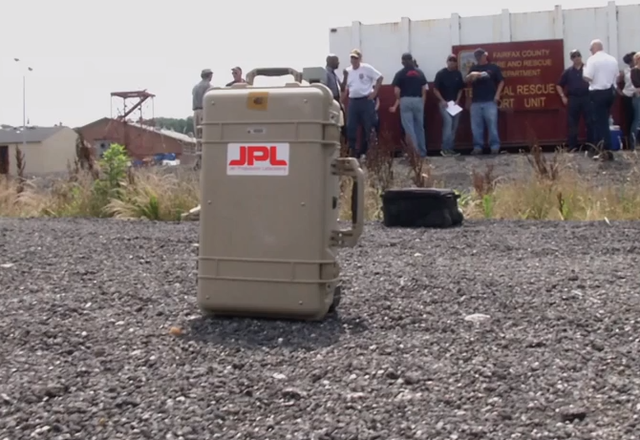
NASA and the U.S. Department of Homeland Security are collaborating on a first-of-its-kind portable radar device to detect the heartbeats and breathing patterns of victims trapped in large piles of rubble resulting from a disaster.

The prototype technology, called Finding Individuals for Disaster and Emergency Response (FINDER) can locate individuals buried as deep as 30 feet (about 9 meters) in crushed materials, hidden behind 20 feet (about 6 meters) of solid concrete, and from a distance of 100 feet (about 30 meters) in open spaces.

Developed in conjunction with Homeland Security's Science and Technology Directorate, FINDER is based on remote-sensing radar technology developed by NASA's Jet Propulsion Laboratory in Pasadena, Calif., to monitor the location of spacecraft JPL manages for NASA's Science Mission Directorate in Washington.

"FINDER is bringing NASA technology that explores other planets to the effort to save lives on ours," said Mason Peck, chief technologist for NASA and principal advisor on technology policy and programs. "This is a prime example of intergovernmental collaboration and expertise that has a direct benefit to the American taxpayer."

The technology was demonstrated to the media today at the DHS's Virginia Task Force 1 Training Facility in Lorton, Va. Media participated in demonstrations that featured the device locating volunteers hiding under heaps of debris. FINDER also will be tested further by the Federal Emergency Management Agency this year and next.

"The ultimate goal of FINDER is to help emergency responders efficiently rescue victims of disasters," said John Price, program manager for the First Responders Group in Homeland Security's Science and Technology Directorate in Washington. "The technology has the potential to quickly identify the presence of living victims, allowing rescue workers to more precisely deploy their limited resources."

The technology works by beaming microwave radar signals into the piles of debris and analyzing the patterns of signals that bounce back. NASA's Deep Space Network regularly uses similar radar technology to locate spacecraft. A light wave is sent to a spacecraft, and the time it takes for the signal to get back reveals how far away the spacecraft is. This technique is used for science research, too. For example, the Deep Space Network monitors the location of the Cassini mission's orbit around Saturn to learn about the ringed planet's internal structure.

"Detecting small motions from the victim's heartbeat and breathing from a distance uses the same kind of signal processing as detecting the small changes in motion of spacecraft like Cassini as it orbits Saturn," said James Lux, task manager for FINDER at JPL.

In disaster scenarios, the use of radar signals can be particularly complex. Earthquakes and tornadoes produce twisted and shattered wreckage, such that any radar signals bouncing back from these piles are tangled and hard to decipher. JPL's expertise in data processing helped with this challenge. Advanced algorithms isolate the tiny signals from a person's moving chest by filtering out other signals, such as those from moving trees and animals.

Similar technology has potential applications in NASA's future human missions to space habitats. The astronauts' vital signs could be monitored without the need for wires.

The Deep Space Network, managed by JPL, is an international network of antennas that supports interplanetary spacecraft missions and radio and radar astronomy observations for the exploration of the solar system and the universe. The network also supports selected Earth-orbiting missions.

Thursday 26 September 2013

http://www.jpl.nasa.gov/news/news.php?release=2013-290

continue reading

Cebu ferry disaster: Unknown casualties buried


White balloons and butterflies were released by relatives of the missing passengers of the ill-fated MV St Thomas Aquinas as the remains of the 46 unidentified casualties of the Aug. 16 sea tragedy were laid to rest yesterday at the Carreta Public Cemetery in Cebu City.

A total of 733 survived the collision between the St Thomas Aquinas and the MV Sulpicio Express Siete, a freighter owned by the Philippine Span Carriers Corp. in waters near Lauis Ledge in Talisay City. The Aquinas, which was en route to Cebu City from Nasipit, Agusan del Norte, was carrying 870 passengers and crew.

Divers retrieved 72 bodies from the Aquinas which sunk after colliding with the bulk carrier while 44 others were retrieved from other areas.

According to Luz Torevillas, 2GO passage manager, the bodies of the 70 identified passengers were transported to their respective hometowns.

A total of 21 passengers and crew remain unaccounted for, according to the coast guard.

The 46 bodies were transported from the Cosmopolitan Funeral Homes to the cemetery Tuesday night and were placed in individual vaults near the burial site of the victims of the 2008 sinking of the MV Princess of the Stars.

Sulpicio Lines was renamed Philippine Span Asia Carrier Corp. following the sinking of the Princess of the Stars.

Labels were placed on each coffin for easy identification once the results of the DNA tests conducted by forensic experts from the PNP Crime Laboratory become available. The results are expected to be released within three months, officials said.

An official of 2GO shipping lines, the operator of the MV St Thomas Aquinas told Cebu Daily News that relatives of the casualties may opt to have the remains of their kin exhumed.

Some of the relatives of the 21 missing passengers who attended yesterday’s interment ceremony, together with city officials led by Cebu City Mayor Michael Rama and Talisay City Mayor Johnny delos Reyes, coast guard, police and fire officials were ushered to tents set up by funeral coordinators from Cosmopolitan Funeral Homes and representatives of 2GO shortly before 8 a.m yesterday. Cebu Gov. Hilario Davide III arrived after the ceremony ended.

The 21 may be still within the wreck of the Aquinas, which sank after the accident.

There was no representative from the Philippine Span Asia Carrier Corp.

Cebu Archbishop Jose Palma, who presided over the Requiem Mass, comforted the grieving families and prayed that similar tragedies will not happen.

After the speeches, Palma blessed the burial site. White balloons and butterflies were released as the song “I will be here” played in the background.

Thursday 26 September 2013

http://newsinfo.inquirer.net/495643/unknown-casualties-buried

continue reading

Wednesday, 25 September 2013

Fate of 64 missing in Nairobi attack unknown


The fate of the 64 people reported missing in the terror attack on a Nairobi mall remained a mystery Wednesday with authorities remaining tight-lipped on what has transpired at the operational level over the past two days.

Kenyan police and government officials have not made public any details of the latest developments attack that started Saturday, leading to widespread speculation that the 64 may have died, or are trapped in the rubble of the building whose three floors have since collapsed.

So far 67 people, including six soldiers involved in the operation, have died and five terrorists confirmed dead, according to Kenyatta’s Tuesday night televised address.

Dozens of Kenyan-Indians have also lost their lives, as well as businesses. Third generation Indians are dominant residents in the the area where the mall is located.

At least five of the bodies have already been interred at the local Ismailia cemetery.

Forensic specialists from Israel, the US, Britain, Germany, Canada and Interpol have been called in to help with investigations, according to cabinet secretary Francis Kimemia.

The United States Ambassador to Kenya says U.S. experts are helping Kenyan forces search for bodies and evidence in the collapsed mall that Islamic terrorists held for four days.

An official tells The Associated Press that Nairobi's city morgue is preparing for the arrival of a large number of bodies of people killed in the Westgate mall terrorist attack in Kenya.

The government official says morgue employees were told to prepare for many bodies. Morgue employees were dressed in smocks early Tuesday, though no bodies had been delivered. Most of those bodies were already taken to the morgue, either directly or from hospitals.

According to the Kenya Psychological Association (KPA), lack of information is causing anxiety among people whose kin have been missing since Saturday.

KPA Chairperson Gladys Mwiti told journalists on Tuesday that the lack of information was affecting the families' and victims' psychological wellbeing.

"We do not have right now actual data of who lost their family member or a relative but we can say that some of the cases that we have seen include those that do not know where their relatives are," she said.

"That is very worrying and very anxiety provoking." The last media brief that the government gave was on Monday at around 3pm. Government agencies have however been randomly tweeting information surrounding the attack, but this information might not be accessible to everyone.

The Kenya Red Cross has so far registered 64 people as missing but information from the non-governmental agency has also not been forthcoming.

"Right now I can only tell you that we have recorded 64 people as those that are missing but I cannot disclose any other details," said a Kenya Red Cross official who declined to be named.

The Visa Oshwal Centre is being used as a tracing and counselling facility but it is not very easy to get in for security reasons. KPA Secretary Sammy Wambugu said that more counselling centres would be opened up with one at the Uhuru Park and another at the City Mortuary.

"We are aware that most Kenyans have been flocking the Uhuru Park and so we want to set up a facility there by tomorrow morning. We also know that people have been going to the morgue to look for their relatives and we will also have a team there to help in the grieving process," he said.

Hostages who were rescued as well as security personnel and children who witnessed the attack are being counselled and given psychological support.

There are also schools that have requested the counselling teams to visit their pupils but Red Cross refused to reveal any details or even number of these schools.

Mwiti said that it was important to counsel them so as to ensure they are able to overcome the emotional suffering they might have endured as a result.

"Some people may suffer false guilt and for instance someone might start asking himself why he allowed his wife and child to go shopping at Westgate instead of the Sarit Centre and there will be people who are grieving and identifying bodies in the morgue so the impact will be huge," she said.

Wednesday 25 September 2013

http://www.daijiworld.com/news/news_disp.asp?n_id=191209

http://allafrica.com/stories/201309250111.html

continue reading

Heavy rains kill 36 in Vietnam, Cambodia


Heavy monsoon rains exacerbated by Typhoon Usagi have pounded parts of Vietnam and Cambodia killing at least 36 people, authorities said Tuesday, with many swept to their deaths in floods.

Despite not being directly hit by Usagi, the world’s most powerful storm this year, parts of Southeast Asia have seen a worsening of their annual rainy season as the typhoon barrelled through the Philippines and China in recent days.

Central and southern Vietnam have been hit by bad weather since early last week, inundating fields and villages, with 24 dead and six missing, according to a 10-day update from the country’s flood and storm control department.

In Cambodia, officials said low pressure from the typhoon caused heavy rains, swelling the Mekong river with floods sweeping across several provinces.

At least 12 people, including six children under six years old, have died in the deluge, said Keo Vy of the National Disaster Management Committee.

Typhoon Usagi killed at least two people in the Philippines and some 25 people in southern China as it swept across the region over the weekend.

Strong winds and torrential rain lashed the Chinese coast after making landfall in Guangdong province northeast of Hong Kong on Sunday evening.

As the typhoon bore down on Hong Kong, operators shut down one of the world’s busiest sea ports and nearly 450 flights were either cancelled or delayed on Sunday.

At least 18 further deaths have been reported in the Philippines in monsoon rains worsened by the typhoon, which also unleashed landslides and power outages across southern Taiwan at the weekend as it ploughed through the Luzon Strait with ferocious winds and heavy downpours.

Some 7,000 houses were inundated and more than 5,000 hectares of crops have been damaged in Vietnam, officials said, although much of the water has since receded.

Early this month, the communist country reported 21 deaths as flash floods and landslides ravaged northern mountainous areas.

Last year, more than 260 people were killed in floods in Vietnam.

Wednesday 25 September 2013

http://www.arabnews.com/news/465728

continue reading

Mexican storm death toll rises to 130


The death toll from the recent two devastating storms in Mexico has jumped to 130, after more bodies were found from a landslide, authorities said.

The bodies were recovered in Acatepec in the Pacific coast state of Guerrero, one of the hardest-hit states by Tropical Storm Manuel last week, said Interior Minister Miguel Angel Osorio Chong.

Chong said in a radio interview that more bodies had been recovered from a devastating mudslide that buried 40 homes in the mountain village of La Pintada in southern Guerrero state.

Osorio Chong and President Enrique Pena Nieto oversaw recovery efforts in La Pintada, where dozens are still feared missing under the mud. Pena Nieto said over the weekend there was little hope that anyone had survived the village mudslide.

Guerrero, home to the battered Pacific resort of Acapulco as well as some of the country's poorest rural communities, has seen the worst damage after Tropical Storm Ingrid and Hurricane Manuel last week drenched the country with torrential rains.

Mexico's national meteorological service has warned that a new low pressure zone would bring more moderate to heavy rains to the state of Guerrero later on Tuesday, Xinhua reported.

Ingrid and Manuel, the two storms that hit Mexico's Pacific and Atlantic coasts respectively within 24 hours last week, have affected about 1.2 million people in 24 of the country's 32 states.

A total of 312 cities in 14 states declared a state of emergency due to heavy rains caused by the two storms. About 59,000 people have been evacuated nationwide, of whom 39,000 are still living in shelters, according to the Interior Ministry.

Wednesday 25 September 2013

http://www.tasnimnews.com/English/Home/Single/149226

continue reading

Zambales death toll reaches 31


Some 31 people have already died from floods and landslides triggered by the southwest monsoon, most of them buried alive in landslides in Zambales.

1Lt. Yvonne Ricaforte, Army 24th Infantry Battalion civil-military operations officer, said 28 people died in landslides in four barangays in that province. Nineteen were from Subic town.

Twelve bodies had been recovered in Barangay Wawandue near Barangay Cawag, while seven were retrieved in Barangay San Isidro in that town, Ricaforte said.

Authorities also recovered four bodies in Barangays Aglao and Balanawan in the municipality of San Marcelino.

Five other bodies were retrieved in Barangay Malaybalay in Castillejos town.

Speaking to reporters, National Disaster Risk Reduction and Management Council (NDRRMC) executive director Eduardo del Rosario said the failure of residents to move to safer places caused the death of these people.

“These areas are high-risk areas,” he said. “Our countrymen were advised to relocate already or resettle, but the problem is because of their financial consideration, they could not relocate and transfer to new sites. In this incident, they did not evacuate immediately despite the warning.”

Voluntary pre-evacuation must be made in disaster-prone areas to prevent loss of lives, Del Rosario said.

The Office of Civil Defense Central Luzon said 10 people were reported missing due to the southwest monsoon.

NDRRMC said the southwest monsoon has affected a total of 18,231 people or 3,751 families in 60 barangays. Of this number, 11,169 people or 2,388 families were taken to evacuation centers.

In Abra, the 53-year-old wife of a barangay chairman went missing after a boat ferrying 10 people capsized in the Abra River in Bucay town Monday night.

Mary Torres Loy along with 10 others, including her husband, swam their way out from the strong currents of the Abra River.

Police said the Torres couple and other passengers were crossing the river when the boat’s engine suddenly stopped. Abra River is one of the five largest rivers in the country.

Wednesday 25 September 2013

http://www.philstar.com/headlines/2013/09/25/1237838/zambales-death-toll-reaches-31

continue reading

Pakistan earthquake: Death toll passes 200


The powerful earthquake which struck yesterday in south-western Pakistan has claimed more than 200 lives, according to sources.

The 7.7-magnitude quake hit the Awaran district of Pakistan's impoverished Balochistan province Tuesday afternoon, at a depth of 20km.

Homes and businesses have been reduced to rubble as survivors begin the task of burying the dead. The latest figures state that 208 people have been confirmed dead, but many more are missing and the death toll is expected to continue to rise

Abdul Rasheed Baluch, a top local official, said that 90% of homes in the stricken area had been destroyed. Many of them were simple mud huts not designed to withstand anything like the massive tremors which struck yesterday.

"We have been busy in rescue efforts for the whole night and fear we will recover more dead bodies from under the rubble during the daylight," he said.

A state of emergency has been declared in the stricken districts of Awaran and Chagai.

The earthquake was so strong that it led to the creation of a small new island 600 meters off the Pakistani coast, near the port of Gwadar.

Balochistan province is home to Pakistan's minority Baloch ethnicity, who have long complained of discrimination at the hands of the Pakistani government and whose traditional homeland, Balochistan, has been occupied by Pakistan and Iran since 1948.

Wednesday 25 September 2013

http://www.israelnationalnews.com/News/News.aspx/172220#.UkKqq3fWb2Y

continue reading

At least 16 dead, others missing in Bolivia landslide


At least 16 people died and a dozen others went missing after a mudslide triggered by heavy rainfall swept vehicles off a road and into a river in Bolivia's northeastern Amazon region, officials say.

A bus, a minibus and a car were swept off the road on Monday near the village of Caranavi, about 180 kilometers (110 miles) north of La Paz, Colonel Juan Cuevas, a traffic police official, said Tuesday.

The vehicles were travelling along Bolivia's "Death Road" before falling down a 100-meter ravine and into the Cajones River, the official said.

The persistent rain has complicated rescue efforts, though officials marked the death toll as high as 16, stressing that it could rise further due to fears that more bodies are buried under the landslide.

Around 10 people have survived the accident.

The event marked the latest landslide disaster in Bolivia. In February 2011, over 300 homes were destroyed by a massive landslide in the country’s capital city, La Paz.

Wednesday 25 September 2013

http://www.presstv.ir/detail/2013/09/24/325781/at-least-16-dead-in-bolivia-landslide/

continue reading

Search under way for Italy cruise wreck's missing bodies


The search for two bodies still missing 20 months after Italy's Costa Concordia cruise ship tragedy began Tuesday off the Tuscan island of Giglio, Italy's civil protection agency said.

Salvage workers who pulled the doomed vessel upright from its watery grave last week in an unprecedented operation "have ensured the ship is secure and given the green light to begin the search," a spokeswoman said.

"Specialist divers from the coastguard, fire brigade and police have begun scouring the area between the righted ship and the land," she added.

The team is looking for the corpses of Italian passenger Maria Grazia Tricarichi and crew member Russel Rebello, whose bodies were not recovered after the nighttime disaster on January 13, 2012, which left 32 people dead.

They will also be assessing how best to carry out the search within the wrecked liner if necessary.

Franco Gabrielli, head of Italy's civil protection agency, had earlier said that the righting of the ship would allow searchers to reach parts of the vessel that had been inaccessible since the accident.

"When the ship toppled, corridors became deep wells. Now she is upright, we can get to areas previously off limits," he said, adding that there would likely "still be areas it is difficult to access and search".

The Concordia had 4,229 people from 70 countries on board when it struck rocks just off Giglio after veering sharply towards the island in a bravado sail-by allegedly ordered by its captain, Francesco Schettino.

It lurched over onto one side during a chaotic and delayed evacuation, throwing terrified people into the freezing sea and preventing some lifeboats from deploying.

Wednesday 25 September 2013

http://www.france24.com/en/20130924-search-under-way-italy-cruise-wrecks-missing-bodies

continue reading

Tuesday, 24 September 2013

Grieving in the 21st century: Tattoo tributes, mobile memorials and virtual visitations


"Ashes to ashes, dust to dust" may be the traditional view when it comes to death. But "ashes to tattoos" is one unconventional way people have found to honor their dead, as mourning goes skin-deep, mobile, wearable and virtual this century.

It's all part of new methods of denying the "messiness of the corpse" and "returning" the dead to us, whether by paying tribute through car decals, T-shirts, online memorials or tattoos etched in conventional ink or even mixed with "cremains" -- cremated human remains, says Baylor University scholar and author Candi Cann, Ph.D.

"With 'do-it-yourself' memorials, people are creating their own ways of memorializing the dead, particularly in a more secularized society," said Cann, an assistant professor of religion in Baylor's Honors College. "Some people are alienated from some common traditions such as a long funeral Mass. Cohesive rituals may not be part of their lives."

She made a presentation on "bodiless" memorials at the recent international conference, "Death, Dying and Disposal," of the Association for the Study of Death and Society. Photos of unconventional tributes are in her forthcoming book Virtual Afterlives: Grieving the Dead in the 21st Century, based on interviews with the bereaved.

Such memorials are "the opposite of what occurs in the religious realm with martyrs and saints, and with relics," she said. "Martyrs and saints bring us closer to holiness and to God through their bodies and narratives of their suffering."

In a secular setting, movies and television shows increasingly dwell on the spectacle of corpses -- everything from a vampire's gory victim to a body on an autopsy table as a pathologist and assistant chat nearby. But when death is up close and personal, mourners are increasingly uncomfortable with the reality of the corpse, Cann says.

Granted, death has never been pretty, and humanity has dealt with that through embalming, purchasing elaborate headstones, and, more recently, embedding ashes in ocean reefs -- or even giving the departed a sendoff with a fireworks display that includes ashes.

But modern-day bodiless memorials are increasingly "returning" the dead to us through visual or virtual "replacements" that are more personal than a memorial in a cemetery or in nature.

With tattoos as tributes, "The idea may seem new, but it's not that far removed from the customs in Victorian England" or the Civil War, when people might wear a lock of a loved one's hair or a photo in a brooch or watch chain, Cann said.

"People simply want to carry the dead with them," she said. "They see a tattoo as forever."

In one photo in Cann's book, a father displays a tattooed likeness of his son's smiling face. The young man, who drowned, had longed during his life for a tattoo of Hawaii; in the image on his father's back, the son sports such a tattoo.

Generally, it's young people who get tattoos to express grief, Cann said. "Often, they choose one of their grandparents that died, because that's their first loss."

To memorialize her grandmother, one young woman opted for a tattoo of a bottle of window cleaner, accompanied by the sentiment "Put some Windex on it" -- a frequent admonition of her grandma.

Then there are tattoos from cremains that are etched into the skin after blending microscopic ash with tattoo ink. Medical experts caution that such tattoos may be risky, and many tattoo artists refuse to do them to avoid legal complications. Some balk at other types of memorial tattoos, too, Cann learned in interviews with them.

"The artist wants to do something personal, yet they also want to do something representative of their work," she said. "They might see flowers or angels as boring or cliché, and that's not how they want their work to be represented."

Other expressions of grief are just as personal, but temporary.

All-black apparel at funerals has long been an expression of grief, but these days, a "mourning T-shirt" may be the deceased person's favorite color. It may display dates of birth and death, an image, and an affectionate nickname.

"A T-shirt also is a way for people who aren't family or allowed time off from work to say, 'I am grieving,'" Cann said.

Car decals, as well as shoe polish or liquid chalk on vehicle windows, are being used to pay tribute to the dead, not just support for causes and sports teams or good wishes for newlyweds.

And while it has long been common to leave teddy bears or erect wooden crosses at the scene of a tragedy, people are becoming more imaginative and personal. One of Cann's photos shows a snow-white "ghost bike," festooned with a maroon Christmas garland and placed at the site of a bicycle accident.

But "the bike is a clean, pristine version - not the one that was mangled," Cann said.

Besides funeral home websites that allow "virtual visitors" to sign guest books, online mourning has evolved to include Facebook's "R.I.P." permanent memorials, as well virtual tombstones, which allow people to use their smartphones to scan headstone codes and launch websites with an interactive life story for those who visit the grave in person or online.

While spontaneous public memorials with flowers and teddy bears sprang up in Newtown, Conn., after the mass murders at a school, as well as after the Boston Marathon bombings and the fertilizer plant explosion in West, Texas, "those spaces are becoming smaller in geography and time," with people differing over how much is enough, Cann said.

After the shootings at a theater in Aurora, Colo., memorials were allowed to remain for three months, and then moved to the city's archives for a future public memorial, while in Newtown, they were removed after two weeks, she said.

But when such public memorials are removed, Cann said, they almost invariably return in "the virtual realm . . . The dead will return to haunt us if we do not acknowledge them."

Tuesday 24 September 2013

http://www.baylor.edu/mediacommunications/news.php?action=story&story=133098

continue reading

Difficult duty: Recovering those who have been lost at sea


Closure can be hard to come by when a loved one dies at sea. Sometimes a boat is found the next day. Other times, the weather conditions make an immediate search impossible. Families sometimes must hold funeral services that can feel incomplete, and seafront communities create memorials to bring a sense of finality.

In Maine, there are some 23 trained divers among the state's police, marine patrol and warden service who work hard in sometimes dangerous conditions to help families achieve closure when tragedy strikes at sea. Though the divers go about their task with the professionalism needed, they know they are making a difference for families and friends of those who die on the water, said Mike Joy, dive team leader for the warden service.

"Every diver knows how important their job is," Joy said in an email interview.

If a body is lost in saltwater, the recovery effort is usually led by the Maine State Police, who maintain a team of ten divers. All are full-time police officers who mostly operate on land but have special diving and aquatic police work training, said Trooper Matthew Grant, the force's dive team leader.

The team is augmented by three divers from the Maine Marine Patrol, which also provides logistical support. If the body recovery effort is needed in inland waters, the ten-diver team of the Maine Game Warden Service takes the lead, but each team stands ready to help the other when needed.

In some ways, the work the divers do is similar to the work they are trained to do on land. On land or by sea, it can involve dealing daily with death and grieving families. Standard police training helps divers examine a scene they may find underwater to evaluate the situation for safety and look for evidence, said Grant.

"When you’re looking for evidence or making a recovery, you have to sort of shift into low gear and kind of do the best you can, given the conditions. You take a moment and sort of analyze things," he said.

But in other ways, diving work is much more dynamic and dangerous than much of the work the wardens or police do on land, Joy and Grant agree. The environment of a scene of a water accident may change completely every five minutes. And conditions often are treacherous, said Joy. Sometimes recovery efforts may need to be delayed for weeks or months to make sure divers are safe, even though such a delay may grieve a family awaiting word.

"We often dive in locations where people would not dive," Joy said. "Every dive we conduct is in a black-water condition, zero visibility."

Both the warden service and the police force also have support systems in place to help divers process their experiences after recovery efforts are complete. Whether an incident happens on land or in water, there are procedures in place to evaluate the emotional well-being of wardens and police and to give them the space to talk about their feelings.

The divers also learn to lean on each other for emotional support, Joy said. It's emotionally difficult work, but wardens and police, by necessity, train themselves to maintain an emotional distance in their work, said Grant.

"I wouldn't necessarily say you become hardened," said Grant. "But you do become accustomed to it."

Body recovery work does make the divers evangelical about boating safety, however. Too often, Grant said, he recovers bodies of fishermen who do not have on the gear that gives them the best chance for survival. The newest generation of survival suits is designed to be more lightweight and easier to wear, but too often fishermen can underestimate the danger of their conditions, or overestimate their swimming ability, Grant said. They keep the suits nearby and think they will have time to don the suits should trouble arise. In his work, Grant says he knows otherwise.

"An inch too far away is still too far away," he said.

Tuesday 24 September 2013

http://www.workingwaterfront.com/articles/Difficult-duty-Recovering-those-who-have-been-lost-at-sea/15583/

continue reading

Five more bodies pulled from massive mudslide in Mexico


Rescuers have pulled five bodies from a massive mudslide that buried part of a village in southwestern Mexico, where 68 people were reported missing, the interior minister said Monday.

Interior Minister Miguel Angel Osorio Chong did not indicate whether the bodies belonged to any of the people who were declared missing in La Pintada following deadly storms that battered Mexico last week.

President Enrique Pena Nieto said over the weekend that there was little hope of finding anybody alive in the village, which was swamped by a mudslide as people celebrated independence day on September 16.

Osorio Chong told Radio Formula that authorities found Monday eight bodies in a mudslide “very similar to La Pintada” in the town of Acatepec in the mountains of Guerrero state. He said two other people were found drowned in a river.

Authorities said late Sunday at least 110 people have died nationwide since last week’s double impact from tropical storms Ingrid and Manuel.

The death toll does not include the 68 missing from La Pintada and Osorio Chong did not give an updated body count.

Abel Barrera, director of the Tlachinollan Human Rights Center of the Mountain, told AFP that local authorities have confirmed an additional 42 deaths linked to landslides and drownings in the region.

Tuesday 24 September 2013

http://www.rawstory.com/rs/2013/09/23/five-more-bodies-pulled-from-massive-mudslide-in-mexico/

continue reading

Monday, 23 September 2013

Landslides kill 20 in Philippine provinces weakened by typhoon Usagi


Torrential monsoon rains have hit the north-west Philippines, triggering landslides and killing 20 people in areas already weakened by a powerful typhoon, and raising the death toll to 47 from storms across Asia.

Philippine officials said soldiers and villagers were also searching for at least seven people missing in mountainside villages hit by the landslides on Monday in the province of Zambales.

In China, where typhoon Usagi struck after passing by the Philippines, officials said the storm killed 25 people in the southern province of Guangdong, 13 of them in the city of Shanwei where it struck the coast late on Sunday.

Two people drowned when a passenger boat capsized in north-east Aurora Province in the Philippines.

Jeffrey Khonghun, mayor of Subic, Zambales, said 15 bodies were dug out in two landslide-hit villages in his town. Five people also died in landslides in two other towns in Zambales, according to army officials and police.

Rescuers used their hands, pots and shovels to dig through the muck that buried a cluster of houses, while relatives of two other missing residents waited in the rain in the village of Wawandue.

"This is the first after a long time that we were hit by this kind of deluge," Khonghun told Manila's DZBB radio network. He had to stop the interview when another body was pulled out from the mud near him.

Typhoon Usagi enhanced the torrential monsoon rains that drenched the main northern Philippine region of Luzon over the weekend. The powerful typhoon blew away late on Saturday and a new tropical storm off southern Japan was continuing to intensify the downpours in Luzon, government forecaster Samuel Duran said.

Many low-lying areas of the Philippine capital, Manila, and outlying regions were swamped on Monday, prompting authorities to close schools and offices.

In Hong Kong flight schedules were returning to normal on Monday after major disruptions caused by Usagi, which was the season's strongest storm. At its peak it forced about 250 flight cancellations in Hong Kong, before weakening to a tropical depression over the southern Chinese province of Guangdong.

Train and airline services around Guangdong had returned to normal after the storm, China's state broadcaster CCTV said.

China's national weather centre said the storm would continue to weaken as it moves north-west.

Monday 23 September 2013

http://www.theguardian.com/world/2013/sep/23/landslides-kill-20-philippines-typhoon-usagi

continue reading

Typhoon Usagi kills 25 in south China


A powerful typhoon hit Hong Kong and the southern China coast on Monday with winds that blew cars off the road, crippling power lines and causing flooding and the deaths of at least 25 people.

Typhoon Usagi, the strongest storm to hit the Western Pacific this year, began pounding southern China late Sunday. More than 370 flights were cancelled, and financial markets closed for at least part of the morning. Shipping and train lines were also shut down before the Usagi weakened to a tropical depression over the southern China province of Guangdong on Monday.

Earlier on Sunday, China's National Meteorological Centre issued its highest alert, with more than 80,000 people moved to safety in Fujian province and authorities deploying at least 50,000 disaster-relief workers, state Xinhua news agency reported.

China said 25 deaths occurred in Guangdong, where the typhoon made landfall late Sunday near Shanwei with record sustained winds for the city of 109 miles per hour.

The victims included people hit by debris and others who had drowned. One man was killed by a falling window pane. Winds toppled trees, cranes and blew cars off roads in some areas, and brought down three major power lines in coastal Fujian, cutting off electricity to about 170,000 households, Xinhua said.

"It is the strongest typhoon I have ever encountered," Luo Hailing, a gas station attendant in Shanwei, told Xinhua. "So terrible, lucky we made preparations.”

On Saturday the storm had been a super typhoon when it passed between Taiwan and the Philippines, sparing both of them the brunt of the winds. However, Philippine officials said eight people were dead from drowning and landslides, and Taiwan authorities reported nine people hurt by falling trees.

The storm wreaked havoc on travel plans just as many passengers were returning home after an extended weekend for the Chinese mid-autumn festival.

More than 250 incoming and outgoing flights were canceled in Hong Kong, and an additional 200 were delayed, Airport Authority Hong Kong said. Intercity trains including the high-speed rail to Beijing, Shenzhen and Hong Kong were suspended until Tuesday, the official Xinhua news agency reported.

Despite earlier warnings that the typhoon could pose a severe risk to Hong Kong, the city suffered only minimal damage and no fatalities, though dozens of trees were reported down. Seventeen people had sought medical treatment and eight of these were admitted to the hospital, according to the Hong Kong government's information services department.

The Hong Kong Exchange delayed the start of trading on securities and derivatives markets due to the typhoon.

Usagi lashed the east and south coasts of Taiwan on Saturday after slamming into the Philippines' northernmost islands, where it cut communication and power lines and triggered landslides.

Parts of Manila remained submerged Monday and classes were cancelled. Landslide deaths occurred in two villages in Zambales province west of Manila, Subic town mayor Jeffrey Khonghun said Monday, and two drowning deaths were reported previously.

Monday 23 September 2013

http://america.aljazeera.com/articles/2013/9/23/typhoon-usagi-kills25insouthernchina.html

continue reading

U.S. migrants' DNA could help ID missing Guatemalans


Aracely Garrido returned to her native Guatemala last month to bury one of 13 family members who disappeared during the country's decades-long civil war and was identified years later through DNA from surviving relatives.

The 55-year-old tax preparer now living in a Los Angeles suburb is among a small group of Guatemalan immigrants in the area who have given DNA samples in hopes of finding loved ones who vanished during the fighting from 1960 to 1996. Many more soon will be able to do the same as forensic experts who run a Guatemalan lab that matches victims' remains to the living are expanding their outreach to Guatemalans abroad.

"Being able to find him was at least some relief," Garrido said of her cousin, a construction worker and political activist who she said was seized by authorities along with his teenage son.

She hopes the Forensic Anthropology Foundation will locate the remains of her other missing relatives, many of whom were targeted by the government because they were politically active.

"It is important to clarify the past, to try to find out the truth. That will at least give us a personal sort of peace," she said.

For the last two decades, the foundation has exhumed the remains of victims from mass graves. More recently, it has searched for victims of "forced disappearances" carried out by wartime governments by matching DNA from the remains of unidentified victims found in military installations and cemeteries with samples from living relatives.

More than 7,000 survivors have given DNA samples, including about 20 Guatemalans in Los Angeles when foundation members made a brief trip here last year, said Fredy Peccerelli, the organization's executive director and a Guatemalan who grew up in New York.

The move to expand efforts abroad comes as the Guatemalan conflict takes center stage in a California courtroom. The trial and its intersection with the DNA program underscore that while the conflict that killed an estimated 200,000 people has ended, the effects of the war endure for survivors.

While ex-military personnel have been convicted in recent years in Guatemala of atrocities committed during the war, one of the country's former soldiers is preparing to stand trial in the U.S. on charges of lying on his American citizenship application about his role in one of the era's most violent episodes — a massacre that killed more than 200 people in the village of Dos Erres in 1982.

One of the key witnesses for the U.S. government's case against former special forces commander Jorge Sosa is Oscar Ramirez, a Guatemalan immigrant living in Framingham, Mass., who learned two years ago — through the DNA program — that he had been seized as a toddler and raised by one of Sosa's comrades after nearly his entire family was killed in Dos Erres.

Sosa, 55, was arrested in Canada last year and extradited to the U.S. to face charges of lying on his naturalization application. His trial is scheduled to begin on Tuesday in Riverside, where he lived.

Federal prosecutors say Sosa was one of the commanders of a special patrol that descended upon Dos Erres on Dec. 7, 1982, and oversaw the killings. Men, women and children were bludgeoned with a sledgehammer, their bodies falling into a well. Sosa fired a rifle and threw a grenade into the well to kill any victims who were still alive, according to federal court filings.

While he is not being tried for war crimes, the case is expected to include testimony from former members of the Guatemalan special forces and survivors of the conflict, including Ramirez.

If convicted of making a false statement and procuring naturalization unlawfully, Sosa also could face up to 15 years in prison. Federal prosecutors also want to strip Sosa of his American citizenship, something that could pave the way for his return to Guatemala.

A spokesman for Guatemalan prosecutors says they will seek to extradite Sosa to face charges for "crimes against humanity."

While the trial will bring Guatemala's gruesome past to an American courtroom, 50 miles away in Los Angeles, Peccerelli will be continuing his work to bring closure and answers to survivors.

He hopes Ramirez, who will also speak with community members about the DNA program, can help win the trust of Guatemalans still scarred by the war. Since learning his true identity, Ramirez met family he never knew he had — including his father, who was not in Dos Erres the day of the massacre — and obtained political asylum to stay legally in the U.S., something his lawyer, Scott Greathead, said might be a possibility for other survivors.

Monday 23 September 2013

http://abcnews.go.com/US/wireStory/migrants-dna-id-missing-guatemalans-20334605

continue reading

Bodies pile up in Texas as immigrants adopt new routes over border


By the time the woman perished, she had probably slogged 25 miles through dry ranch lands in her quest to enter the United States. She was found just feet from a highway where she might have been picked up and taken to Houston with other migrants making the same journey.

A flag marked the spot where the remains of a person believed to have been an immigrant were found in Falfurrias, Tex., in May.

Not long ago, her body would have been taken to a funeral home for a cursory attempt at identification, then buried in this town an hour north of the Mexico border under a sign reading “unknown female.”

Her death, probably from hypothermia, is part of a mounting body count that has overwhelmed the sparsely populated Brooks County, providing further evidence that immigrants are shifting their migration routes away from the well-worn paths into Arizona and instead crossing into deep southern Texas. The changing patterns have put an extra burden on local governments with limited experience in such matters and even fewer financial resources.

“There are some counties that have the economic wherewithal to take on these issues, and there are other counties that just don’t have any money, so that puts them into a real bad bind,” said Raquel Rubio-Goldsmith, coordinator of the Binational Migration Institute at the University of Arizona, which researches immigration issues.

But Brooks County is trying to step up to the challenge. Now, all newly recovered bodies and skeletal remains of people suspected of being immigrants will travel 90 miles to nearby Webb County for autopsies, DNA sampling and more intense efforts at identification.

It is a big step for Brooks County, which has a population of just over 7,100 and where on a recent morning the chief deputy mopped the floors of the sheriff’s office himself. He will also be making the weekly trips to deliver corpses to the medical examiner in Laredo.

The county handled 129 bodies last year, which Judge Raul Ramirez, the county’s top administrator, says blew a hole in the budget. And even though he and most other local officials see illegal immigration as a federal problem, federal money has not followed.

Last year, Brooks County trailed only Pima County, Ariz., in the number of immigrant bodies recovered, and it already has 76 this year. Nearly a million people live in Pima County, and the 171 bodies found in 2012 were consistent with annual totals dating back to 2004, according to a report by the migration institute. Brooks County, on the other hand, averaged 50 to 60 dead before last year.

Border Patrol apprehensions in the area have soared. The number of immigrants detained in Rio Grande Valley border sector in South Texas outpaced the historic leader, the Tucson sector, by more than 30,000. Those numbers are an imperfect measure of the overall flow of migrants, but most of the growth has involved Central American immigrants, who often take the more direct route to the United States through Texas.

Immigrants typically die in Brooks County trying to circumvent a Border Patrol checkpoint. They are usually dropped off with guides south of the checkpoint and forced to hike for two or three days to a pickup spot north of the checkpoint.

Dr. Corinne Stern, the Webb County medical examiner, puts her office’s identification rate on nonskeletal remains at 65 to 70 percent. But the woman from the ranch remains a Jane Doe for now. Found on Aug. 26, her body was already in an advanced stage of decomposition.

There are clues, though. She was wearing earrings and a ring on the middle finger of her left hand. She wore a Gold’s Gym T-shirt and pink Converse sneakers with pink laces. She carried several phone numbers, which have not turned up anything yet.

Tucked into one pocket of her shorts was a photograph of a boy about 5 years old. He is wearing a suit and what appears to be a graduation cap.

In the past, unidentified immigrants were crammed into the local cemetery without DNA samples being taken. The cemetery did not even have accurate records for the dead. In May, Lori Baker, a Baylor University anthropologist, led a team to Falfurrias to exhume unidentified immigrants’ graves.

Ms. Baker identified 54 marked graves but found 63 burials. In some cases, the team opened a body bag expecting to find one person and found four other bags of remains. Some of the remains carried tags indicating that they came from a neighboring county.

She plans to return for more exhumations next year, and she is encouraged by the county’s progress, noting that the short-staffed sheriff’s office is going to start taking DNA samples from family members who come looking for missing loved ones.

Three days before the woman was found on El Tule Ranch, the ranch manager, Lavoyger Durham, proudly showed off his personal contribution to addressing the problem: a 55-gallon blue plastic drum holding one-gallon water jugs. The water station is topped with a 30-foot pole and a large blue flag.

Mr. Durham, 68, said it was the first water station in Brooks County, and he has plans for several more. He would prefer for the government to erect a double-layer border fence. But in the meantime, he does not want to see people continue to die on the ranch. He estimates he has found 25 bodies on the property in the last 23 years.

“I’m trying to expose the killing fields of Brooks County,” Mr. Durham said. “If dead human beings don’t catch your attention, what the hell else is going to? We’re just trying to be human about it.”

Monday 23 August 2013

http://www.nytimes.com/2013/09/23/us/bodies-pile-up-in-texas-as-immigrants-adopt-new-routes-over-border.html?_r=0

continue reading

Mexico landslides: Rescuers dig in mud and rain for dead

Fourteen hours per body.

That's how long search crews with shovels, hydraulic equipment, anything they can muster, are averaging to find the victims of a massive landslide that took half the remote coffee-growing village of La Pintada, leaving 68 people missing.

The Mexican army's emergency response and rescue team slogged in several feet of mud and incessant rain with rescue dogs, recovering a total of five bodies as of Sunday, including a man found wedged under the collapsed roof of a dirt-filled home.

Lt. Carlos Alberto Mendoza, commander of the 16-soldier team, said it's the most daunting situation he's seen in 24 years with the army.

"They are doing unbelievable work, hours and hours for just one body," he told The Associated Press. "No matter how hard the day is, they never get tired of working."

La Pintada was the scene of the single greatest tragedy in destruction wreaked by the twin storms, Manuel and Ingrid, which simultaneously pounded both of Mexico's coasts a week ago, spawning huge floods and landslides across a third of the country. The official death toll has grown to 115, the Interior Ministry said Sunday night.

"As of today, there is little hope now that we will find anyone alive," President Enrique Pena Nieto said after touring the devastation at La Pintada, adding that the landslide covered at least 40 homes.

Survivors staying at a shelter in Acapulco recounted how a tidal wave of dirt, rocks and trees exploded through the center of town, burying families in their homes and sweeping wooden houses into the bed of the swollen river that winds past the village on its way to the Pacific

The scene by Sunday was desolate, a ghost town where 50 people still awaited evacuation. One man remained to care for abandoned goats, pigs and chickens that seemed disoriented as they roamed about.

When the rains get too hard, the crew has to stop for fear of being buried themselves by another slide, Mendoza said.

"The fundamental problem continues to be the rain," said Ricardo de La Cruz, national director of Civil Protection. "It complicates the rescue work not only by putting residents at risk, but the military and support crews as well."

Monday 23 September 2013

http://www.huffingtonpost.com/2013/09/22/mexico-landslides_n_3972611.html

continue reading

Sunday, 22 September 2013

20 years later: Memories of the 1993 Amtrak Sunset Limited crash


At 2:48 a.m. on September 22, 1993, Amtrak's Sunset Limited train crossed Bayou Sara while a majority of its 220 passengers and crew members slept, unaware that in just a few short minutes they would witness the worst disaster in Amtrak's history to date.

Fog was thick over the water below as the 11-car train started its trek across Big Bayou Canot at 2:50 a.m. About one-third of the way across the bridge, passengers and crew members were suddenly woken as more than half the train plunged into the murky waters below.

Fuel tanks ruptured and flames leapt into the air, patches of fire springing up on the water where the fuel floated. Panicked passengers swam toward the shore, many drenched in still more fuel. Screams filled the air as other passengers reached the surface of the water, some no longer living.

It would be three days before officials could recover the 47 men, women and children killed of drowning, fire or smoke inhalation. More than 100 passengers were injured.

"It's not something we talk about all the time," said Steve Huffman, spokesman for the Mobile Fire-Rescue Department, "(but) it never goes away -- especially when September rolls around."

Huffman was in his third year as MFRD spokesman when the towboat MV Mauvilla hit the bridge over Big Bayou Canot, displacing one of the bridge's support beams by approximately 38 inches -- enough to cause the derailment.

He viewed the wreckage from a U.S. Coast Guard boat as personnel on the Department's fireboat, the Ramona Doyle, worked to clear the wreckage. The Ramona Doyle stayed at the accident site for three days with crews swapping out occasionally for rest.

Fire crews cleaned each of the seven rail cars recovered from the water with fire hoses as divers with the Daphne Fire Department, Marine Corps Reconnaissance and other agencies worked with volunteers to recover bodies in water so murky they "couldn't see their hands in front of their faces," Huffman said.

"It was hard to fathom how that had happened," Huffman said. "As much as you hate to say it, it was people who survived and people who died. There was no in-between."

After the accident was cleared the whole department, including secretaries who fielded calls about the crash, underwent critical incident stress debriefing to help cope and recover from the grim scene at Big Bayou Canot.

One MFRD employee quit after the accident, citing stress from the Sunset Limited wreck.

"Some had more difficulty dealing with it than others," Huffman said. "He said he just couldn't deal with it."

Several months before the disaster MFRD had participated in a multi-agency drill, involving approximately 30 agencies, to deal with a simulated plane crash in the Mobile River, Huffman said.

The drill got agencies, which were typically on separate radio frequencies, speaking with one another and helped identify issues with communication.

Those issues hadn't been resolved by the time the Sunset Limited hit the water, affecting agencies' emergency response time.

"We lacked the ability to communicate with each other," Huffman said. "We are just now on a system where we can all communicate with each other... That's why we switched radio systems (in January)."

The Department has since added a fleet of at least four smaller boats to respond to similar disasters. They've also created mass causality trailers to carry large amounts of bandages and other necessary first aid equipment in case of a disaster.

"We have a lot of equipment now that we didn't have back then," Huffman said.

He said emergency responders have not had to use the mass casualty trailers yet, although they were on hand when the Carnival Triumph came to town in February, in case passengers were injured in the journey to land.

Sunday 22 September 2013

http://blog.al.com/live/2013/09/20_years_later_memories_of_the.html

continue reading

Identities of Rana Plaza victims: DNA test results expected in 3 weeks


Experts from the Federal Bureau of Investigation (FBI) of the USA on Sunday finished setting up a software called the Combined DNA Index System (Codis) in the DMCH DNA Laboratory

The relatives of those who went missing after the Savar Rana Plaza tragedy have been waiting for nearly six months to know what has actually happened to their loved ones.

Out of the 1,115 bodies pulled from under the rubble of the collapse, 234 that could not be immediately unidentified mainly because they had decomposed beyond recognition, were buried to the Jurain Graveyard in the capital.

The authorities, before burying the bodies, kept DNA samples from each of the bodies so that they could be later identified; but did not have the necessary apparatus to do the tests.

Apart from these 234, the rescuers could not find any trace of 87 other people who were reportedly inside the building when it collapsed.

Finally, the ill-fated relatives can now see a ray of hope at the end of the tunnel as the National DNA Laboratory of the Dhaka Medical College Hospital sets up the software needed for doing the DNA tests.

Experts from the Federal Bureau of Investigation (FBI) of the USA on Sunday finished setting up a software called the Combined DNA Index System (Codis) in the DMCH DNA Laboratory.

The Codis will be used to match the DNA profiles of those who had been buried at the Jurain Graveyard with the samples collected from the relatives of those when have been missing.

The FBI has supplied the advanced computer programme completely free of cost, which would have otherwise cost Bangladesh government more than Tk10m.

The team of FBI experts finished installing the software on Sunday morning and subsequently started a four-day technical training programme for the 12 scientific officers who work at the DNA laboratory.

The laboratory is expected to start the process of matching a total of 321 DNA profiles on Thursday following a visit by US Ambassador to Bangladesh Dan W Mozena.

“Hopefully, we will be able to know the results of the DNA profile matching in two to three weeks,” said Dr Sharif Akteruzzaman, chief of the DMCH laboratory.

Some 550 people, who said their relatives had been missing since the tragedy, have so far provided DNA samples.

At present only 68 laboratories in 34 countries use the advanced Codis software. After Singapore, Hong Kong and South Korea, Bangladesh is the fourth country to whom the FBI has given the software free of cost.

Generally, preparing a DNA profile from blood samples takes about seven to eight days. The process takes a little bit longer if the profile is to be made from bone samples.

The nine-storied Rana Plaza, that housed five garment factories, came down on April 24 with thousands trapped inside.

Sunday 22 September 2013

http://www.dhakatribune.com/law-amp-rights/2013/sep/23/identities-rana-plaza-victims-dna-test-results-expected-3-weeks

continue reading