Friday, 22 March 2013

Missing bodies: Araria police to investigate organ smuggler syndicates


Are bodies of those who died due to thunder being smuggled and sold at an exorbitant price in foreign countries by a smuggler syndicate operating along the Indo-Nepal border? ArariaSPShivdeepLande, replying in the affirmative, said the racket of smuggling of human organs and that of human bodies will be busted soon. Although these villagers are Hindus, they are buried when they die of thunder. Poverty makes it extremely difficult for their relatives to collect firewood for their last rites.

The disappearance of buried bodies of villagers who died due to thunder from Madhulata village under Raniganj PS in Araria district, 35 km from here has posed a problem for the police. Lande said two such bodies were taken out from the grave by a gang of smugglers and when the villagers objected to it, the smugglers' gang paid a sum of Rs 3,000 each to their sons and asked them to come to their Forbesganj office to receive Rs 15,000.

The smugglers, posing as government officials, told villagers that the bodies had been exhumed to verify the claim and payment to be made to their kin. The bodies, which had been taken out from the grave by the smugglers, were that of Neti Rishideo and Naibat Rishideo, Lande said.

Their relatives including sons as well as villagers narrated a shocking story of theft of bodies by the gang members whom they can recognize on seeing. Lande has visited the village twice on the complaints of the relatives of Neti Rishideo and Naibat Rishideo. Within three days of their death, the bodies were taken out clandestinely by the smugglers, the SP said.

All this came to the fore after ivory was recovered from the possession of one, Abdul Mazid Khan, who is in jail facing charges of theft of animal bone and subsequent confessional statements of some of his accomplices. The judicial magistrate himself recorded statements in some cases of theft of ivory and antiques and subsequent recovery.

Meanwhile, bodies of Kumod Singh and his wife, Rina Devi, of Kamalpur village under Raniganj PS (lightning killed them), were exhumed by the smugglers from their graves near Kajradhar, 28 km from here. On the complaint of villagers, the SP, who visited the burial ground from where the bodies were stolen, said smugglers stole only bodies of those who died of lightning or thunder.

The villagers told police that smugglers came and gave some money to them and told them that they were government officials and had come here to verify the bodies so that their family members could get compensation and then took away the bodies with them.

Meanwhile, a smuggler, Abdul Majid Khan, posing to be a member of a Kolkata-based company was allowed by the CJM court, Araria, to be taken on remand on the prayer of the police and SSB, Araria, to quiz him.

Friday 22 March 2013

http://timesofindia.indiatimes.com/city/patna/Araria-police-get-after-vital-organ-smugglers/articleshow/19118768.cms

continue reading

The city of the dead


One of the most extraordinary areas of Cairo is the city of the dead, as a testament to the interest of people in the afterlife while their worldly lives continue.

Travellers and chroniclers, like the famous Moroccan Ibn-Batuta who visited Cairo in the fourteenth century, were impressed by the Al-Qarafa or Al-Gabana district. They were fascinated by the strikingly ornamented domes and mosques, its well-organised districts and gardens, and amazed by the fact that this pleasant neighbourhood was established entirely for deceased residents. According to Egyptian historians the Al-Maqrizi, the Al-Qarafa is named after a Yemeni tribe called Qorafa which dwelt in the area.

Al-Qarafa extends from the Moqattam hill in East Cairo to Al-Azhar Street in the heart of Fatimid Cairo; the place was historically known as the city of domes due to the high number of domes and mosques. Since the Mamluk era kings and princes built mosques and domes as their final resting places in this area of the city, although the habit of building a specific building for burial began much earlier in Egypt with the pyramids. The practice did not disappear with the pharaohs, but continued into the Islamic era.

The first man to develop this area of the city was a Mamluk Sultan called Beibers. Sultan Beibers established in Al-Qarafa, which then was outside Cairo’s boundary walls and gates, a racetrack which staged horse races and competitions between knights and princes. Beibers also exploited the area as a training ground for the soldiers in his army.

The first to build a tomb for himself in Al-Qarafa was Sultan Al-Zaher Barkouk and the remains of the dome can still be seen. Sultan Farag, the son of Al-Zaher imitated his father and built a tomb and a Khanqa that carries his own name. Khanqa is a Persian word, which was the language of the Mamluks and the Egyptian elite at the time; it means a large mosque which includes a school for teaching Islamic jurisprudence and rooms for foreign students and teachers.

Many sultans and princes followed Sultan Farag’s lead and built mosques and domes in the area as shrines, like Sultan Enal, Sultan Al-Ashraf Bersbay and Sultan Qaytbay. Most of them, however, were not buried in their mosques for many reasons; some died in battles outside Egypt and many others were killed by conspirators and their bodies were thrown in the Nile.

The miraculous structure and adornment of these mosques means the City of the Dead is a perfect historical tourism site. “Many tourists come to visit Al-Qarafa and the number of tourists increased after the revolution, despite the volatile security situation,” said Abdullah Saad, archaeologist and manager of the monument area.

Al-Qarafa is divided into two areas, West Al-Qarafa, teeming with Mamluk mosques and tombs, and East Al-Qarafa, at the foot of the hill of Moqattam. “The eastern area was used as a graveyard even before the domination of Islam in Egypt,” Saad said. “Egyptians believed that they were blessed by burying their dead at Moqattam because they thought it was a part of heaven.”

It is said that after the Muslim conquest of Egypt, the old Egyptian rulers offered a huge bid to purchase the Moqattam Mountain from the Muslim rulers due to the honour and revere Copts and Egyptians hold for this location. Many Sufi sheikhs and imams were also buried in East Al-Qarafa, including Ibn Al-Fared and Al-Shafei.

In the recent past a project was submitted to the former minister of monuments and antiquities Zahi Hawas to restore and renovate the complete Al-Qarafa area and turn it into a closed tourist area, but the project was rejected.

“The government must do something in favour of this historic area, all renovation projects were stopped and the view of the monuments is disappearing between the highrising housing blocks that encroach on the area. It would be a big mistake to neglect such a rich area as Al-Qarafa,” Saad said.

Friday 22 March 2013

http://www.dailynewsegypt.com/2013/03/21/the-city-of-the-dead/

continue reading

Death toll from heavy rains climbs to 30 in Brazil

,br> The death toll from torrential downpours lashing the mountain areas of southeast Brazil has reached 30, Civil Defense authorities said yesterday.

Rescue workers found two more bodies that had been buried by a landslide in Petropolis of Rio de Janeiro state, and two people were still missing, the authorities said.

Rescuers were searching for the missing in another area where a landslide buried several homes.

Latest report from the Civil Defense said 44 people were injured because of the heavy rains, and three of them in critical condition.

As many as 1,234 local residents were displaced, either because of the risk of more landslides or their badly damaged houses.

Petropolis, a mountain resort with a distance of 70 km from Rio and home to 300,000 inhabitants, was hit hard by torrential rains on Sunday and Monday.

Friday 22 March 2013

http://www.shanghaidaily.com/article/?id=526620&type=World

continue reading

Bringing back the missing of WWII


From World War I through the Gulf War, the United States military suffered 631,628 casualties and had 94,416 brave souls missing and unaccounted for. World War II alone accounts for 405,399 of those casualties and 78,978 missing soldiers.

“That is a staggering amount of missing men. And you have to think to yourself, each one of them had a family that loved them.”

Ken Crawford is a 1969 graduate of Wabash College and returned to the Lovell Lecture Room in Baxter Hall to talk about his work to bring home the missing World War II servicemen from battlefields in Europe.

As chief of the Engineering Division for the 21st Theater Support Command, Crawford supported the search and recovery missions by the U.S. Army Memorial Affairs Activity, Landstuhl, Germany, with the Joint POW/MIA Accounting Command throughout Europe, from 1997 through 2002.

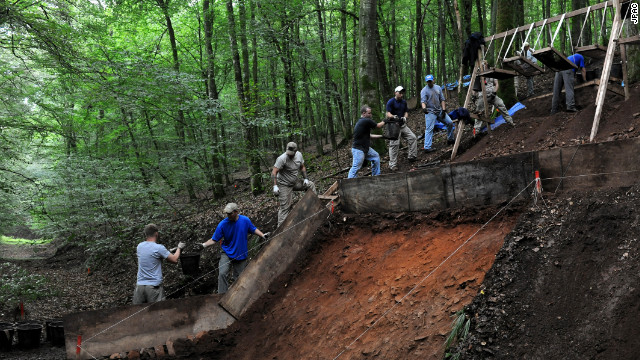
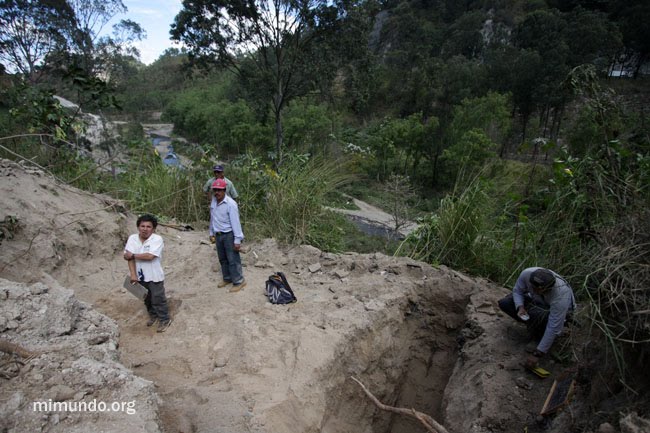
Through specific examples of excavations that he was a part of, Crawford detailed the process of recovering a missing soldier even five decades after his death.

“First there is the investigation, which can get very interesting. Often times we receive tips from locals who can still recall the plane crashes and point out where they went down,” he said, adding that many of the tips come from people searching for American .50 caliber guns or scrap metal from the engines.

The next step is search and recovery, which can take a very long time. First they need to identify the type plane by way of serial numbers and then hopefully find the tail number. That should be able to give them a list of the flight crew and narrow their search down.

“It’s a very methodical process, digging in four by four squares one foot deep at time.”

Archaeologists, engineer and translators run the dig, but much of the heavy lifting and sifting is done by special forces units.

One example Crawford gave was of three American soldiers who all died in their foxhole in Belgium. They appeared to take mortar fire and the Germans simply covered their foxhole when they marched through.

Once their bodies were identified, the families of the soldiers decided to have them buried together in a cemetery in Belgium.

“They died together, so we buried them together,” Crawford said. “It was a beautiful ceremony.”

Another example, also in Belgium, was of a pilot who went down with his P-38. The surviving brother of the pilot was at the site, and when the team recovered the pilot’s Second Lieutenant bars, they presented the brother with them in a small ceremony.

“That was really touching to see.”

There are 146 national cemeteries, including Arlington Cemetery in Washington D.C. and the Normandy American Cemetery in France. Crawford said men he helped recover have been laid to rest in many of them. Many cemeteries have a wall of the missing; the wall in Normandy contains 1,500 names alone.

“Whenever we recover a body and lay him to rest, his name receives a rosette next to it which signifies he’s been recovered.”

Through his talk it was apparent that although it was a dirty job at times, Crawford took joy in the bright moments. He gave one surviving airman a piece of his recovered B-17 bomber that crashed over Germany after the pilot flew too low and he presented a farmer in Romania with a helmet, a rifle and bayonet that were uncovered with the body of an American soldier in his garden once the investigation was through.

“It is a long and difficult trail to find everyone. We were lucky to find as many as we did,” Crawford said in his closing. “There are so many guys that went missing. That’s just a fact of war. But the important thing is this — the Department of Defense is still searching.”

Friday 22 March 2013

http://www.journalreview.com/news/article_fdf1bc58-928e-11e2-be06-0019bb2963f4.html

continue reading

Dignity in death is passé with rise in number of unclaimed bodies


While dignity during life time can be ensured by the living person, it becomes the bounden duty of the near and dear ones of that person to ensure that there is dignity in death. While some are lucky in getting a dignified send off, some are not. There are those who are left to die uncared for by the roadside, some whose identity is not known, others who are abandoned in hospital after being admitted, and some others who are abandoned in hospital after death.

All this because there are no family members in some cases, in others the family members do not have the means to do the last rites, while in some cases there is no inclination. Organisations that are involved in giving a dignified burial to such unclaimed bodies are getting more and more number of bodies with each passing month.

From eight bodies a month in 2004, ‘Thozhar Trust’ now buries more than 30. And, it only seems to be on the increasing trend, according to P. Shanthakumar, Managing Director of the Trust. The Trust has so far buried 1,850 unclaimed bodies from the morgue in Coimbatore Medical College Hospital (CMCH) with the help of volunteers who include women and college students.

Mr. Shanthakumar says: “Couples without children or with a single child are increasing. Even those who have money are in a situation where the only son or daughter is abroad and someone else has to do the last rites in the event of them not able to arrive at short notice.

In the case of economically weaker sections, it is still worse with sons or family members dumping the dead body, or one who is about to die, on the road”. In addition to these cases are those who have lived as beggars, in old age homes, who die in accidents without identity proof.

There are many children who themselves call up an organisation and express their inability to bury their parent. The minimum cost involved in a burial without religious rituals is estimated to be Rs. 4,000. There is also another side to this state of affairs. There are many elders who call the members of the organisation and ask them to take care of their last rites.

Friday 22 March 2013

http://www.thehindu.com/news/cities/Coimbatore/dignity-in-death-is-pass-with-rise-in-number-of-unclaimed-bodies/article4533456.ece

continue reading

At least 30 die in boat capsize off Gabon


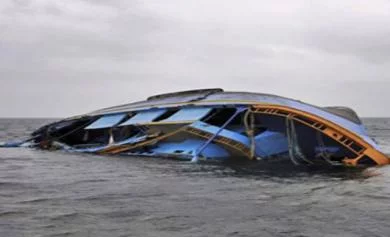
At least 30 people died when their boat capsized off the Gabonese capital Libreville, AFP journalists and rescue workers said Thursday, the latest disaster off the west African coast.

Police said the boat, which was carrying 65 people thought to be illegal immigrants, capsized in stormy weather overnight as it was travelling from Nigeria to Libreville.

AFP journalists counted 30 bodies lying along the shore, with the boat still visible in the waters of Cape Esterias, which lies about 40 kilometres (25 miles) north of Libreville.

A gendarme who requested anonymity said there were at least eight survivors among the passengers thought to be illegal immigrants from Togo, Benin and Burkina Faso.

Last week, a boat carrying an estimated 128 people sank off Nigeria's southern coast. An emergency official said Thursday that 29 people have so far been rescued in that accident, but that the search for survivors is still ongoing.

Thursday 21 March 2013

http://au.news.yahoo.com/world/a/-/world/16419711/at-least-30-die-in-boat-capsize-off-gabon-afp/

continue reading

Thursday, 21 March 2013

Official details of boat mishap unavailable, six days after 160 people feared dead


The fatal boat mishap in which about 160 Nigerians were feared killed at the weekend happened four days before any Nigerian agency got wind of it, some residents of the area claim.

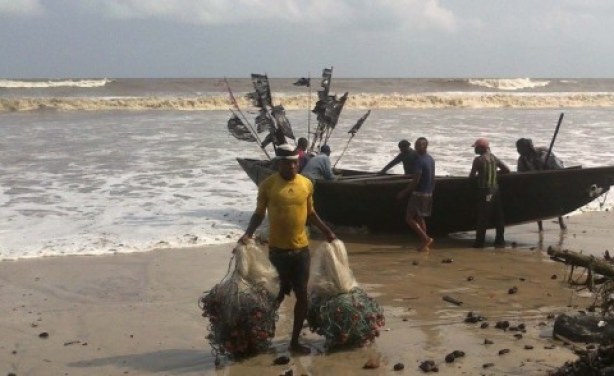
The wooden transport boat, which reportedly set out on the ill-fated journey on Friday night from Oron in Akwa Ibom State, capsized at a location near Malabo, 40 nautical miles from Calabar, Cross River State, on its way to Gabon.

Most of the victims were said to be Igbo traders from the South Eastern part of the country who joined others in Oron, Akwa Ibom State, to board the wooden boat because of its cheap fares.

Though news of the incident was reported in the media late on Tuesday, it was gathered that the incident happened on Friday evening.

None of the government agencies is yet able to give the full details of the incident. All government agencies contacted could not provide specific information about the boat on Tuesday evening when news of the incident first broke. Information like where the boat originated from, it’s destination, the exact number of passengers at the time of the accident, the exact location and time the boat capsized, as well as number of victims and survivors.

As of Tuesday night, the Nigerian Navy, which is charged with the responsibility of protecting Nigeria’s territorial waters, was not aware of the incident even though it probably occurred four days earlier.

Yushau Shuaib of the National Emergency Management Agency, NEMA, which responded immediately it was notified on Tuesday, said in a telephone interview on Wednesday that all his agency could volunteer was the information that only two survivors were rescued, while nine bodies so far recovered were taken to the morgue at the University of Calabar Teaching Hospital.

“The truth is that nobody knows exactly when the incident happened. All what we can tell you is that two survivors were rescued and taken to the hospital, while nine bodies have been recovered. Any other information any other person might say is all speculation, because nobody knows exactly what happened,” Mr. Shuaib said.

The two survivors, a young boy and a lady, reportedly clung to a gas cylinder till they were rescued by fishermen.

Both were received late Tuesday evening by a team of officials from NEMA, the Cross River Emergency Management Agency; the Navy; Nigerian Maritime Agency for Security and Administration, NIMASA; and others at the Eco Marine, ECM, jetty in Calabar.

The Assistant Director of Information with the Cross River Emergency Management Agency, David Akate, who confirmed the rescue, declined further comment.

All the other agencies declined comments on the incident, claiming investigations were on-going and the two survivors were being treated.

It was gathered that following the incident, local fishermen in the area rallied efforts and mobilised a rescue team on Sunday that managed to recover 45 bodies, most of them women. They were reportedly wrapped in body bags and deposited in the hospital morgue on Tuesday.

NEMA has however said it will provide more information on the catastrophe as soon as it can get them from the two survivors.

Thursday 21 March 2013

http://premiumtimesng.com/news/126139-official-details-of-boat-mishap-unavailable-six-days-after-160-people-feared-dead.html

continue reading

Police looking for bodies missing from Bihar graves


Police have announced a cash reward of Rs.1,000 each for information about the bodies found missing from graves in Bihar's Araria district, an official said.

The announcement came after bodies of about 50 people killed in various lightning incidents were found to have been exhumed from graves in Raniganj and Simraha areas of Araria, about 350 km from here.

"We are serious about helping people whose kins' bodies are missing from their graves," Superintendent of Police S.W. Lande told IANS.

The appeal has been made to help police ascertain the total number of missing bodies, he said.

Lande said that a gang involved in secretly digging up graves was busted recently. "The gang was involved in selling human organs for medical research in Nepal, China and other countries."

"One of the main accused named Mohammad Majid is already in jail in connection with smuggling of tusks," the police officer said, adding they are on a lookout for two more people in this connection.

"It is really shameful to remove bodies from graves for a few thousand rupees," Lande said.

According to him, human organs or bodies are sold to medical colleges and those who are involved in clandestine medical research in several countries.

In Araria, most of the deaths due to lightning go unreported owing to religious beliefs, Lande said.

Wednesday 20 March 2013

http://www.newstrackindia.com/newsdetails/2013/03/20/277--Police-looking-for-bodies-missing-from-Bihar-graves-.html

continue reading

‘Identity of Ratnagiri bus mishap victims established'


A day after 37 people were killed in a bus mishap in Maharashtra's Ratnagiri district, identity of 34 victims has been established, a senior police officer said Wednesday.

"We have so far handed over 34 bodies to their relatives after they identified the victims," said in-charge of Khed police station, Mahendra Singh Pardeshi.

He said the remaining three bodies will be identified once their relatives reach here from Uttar Pradesh.

At least 37 people were killed and seven injured when a speeding Mumbai-bound luxury bus plunged into the Jagbudi River near Khed village in Ratnagiri district in the wee hours of yesterday.

Police said, out of seven persons injured in the mishap, two were shifted to Goa by their relatives while one was discharged by the local hospital in Dervan where they were admitted.

He said the remaining four persons were out of danger.

Maharashtra government has already announced compensation of Rs 2 lakh each to the kin of the accident victims.

Wednesday 20 March 2013

http://zeenews.india.com/news/maharashtra/identity-of-ratnagiri-bus-mishap-victims-established_836796.html

continue reading

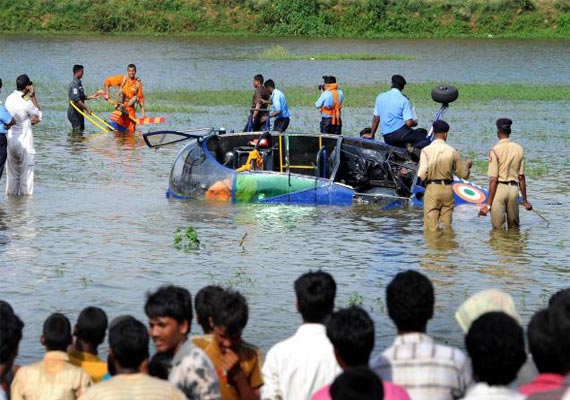
3 dead, 12 missing after ferry sinks on the Minjiang River


Three bodies have been retrieved and 12 others remain missing after a ferry sank on the Minjiang River in east China's Fujian Province, local authorities said Wednesday.

The accident occurred during a rainstorm around 9 a.m., when the boat sank near a dock in Xiadao Township, Nanping City, according to sources with the Nanping municipal government.

Search and rescue work is underway.

Wednesday 20 March 2013

http://english.peopledaily.com.cn/90882/8176542.html

continue reading

Sunk Nigerian boat was carrying trafficked migrants: survivors


A boat that sank off the Nigerian coast with up to 166 people on board, killing at least 45, was carrying illegal immigrants being trafficked to Gabon, survivors interviewed by Reuters said on Wednesday.

Nigerian authorities were still searching for survivors from a wooden boat that sank on Friday some 40 nautical miles offshore on its way from Oron, in Cross Rivers state, to Gabon.

Vincent Aquah, director of the Cross Rivers State Emergency Management Agency (SEMA), told a news conference that a rescue operation had recovered 27 people so far.

He said only nine bodies had been fished out, although a doctor at a local mortuary told Reuters on Tuesday there had been 45 bodies brought in from the accident.

Survivor Kive Sani, 27, from Togo, said he had paid money to a Nigerian "master" to get him a good job in Gabon. Part of his agreement was that he give the master a portion of his wages for an indefinite period.

"A huge wave swept onto the boat and knocked out the engine, then everything started sinking," he said.

He survived by clinging to an empty gas cylinder for nearly two days, he said.

Most poor West Africans who risk their lives each year to seek a better life head for Europe, usually via Spain's Canary Islands. But Gabon's oil-funded relative prosperity has also made it a favorite destination.

In July 2008, the bodies of 37 suspected illegal migrants were found dead on the seafront of Gabon's capital Libreville, after a boat capsized taking the same Nigeria to Gabon route.

With investment from former colonial ruler France, Gabon was one of the first sub-Saharan African countries to exploit its crude oil reserves, which have made its 1.5 million people among the continent's richest on a per capita basis.

But many of the migrants who arrive find only low paid jobs with little security, and are often indebted to traffickers.

Hafsat Zakare, 13, a Nigerian survivor, said many of the people on board were women and children from around West Africa.

Aquah said belongings recovered during the rescue mission showed some people on the boat were Ghanaians.

Boat accidents are relatively common in Africa. As many as 138 people died when an overloaded boat carrying passengers and goods capsized in rough water on a river in Democratic Republic of Congo in 2010.

Wednesday 20 March 2013

http://www.reuters.com/article/2013/03/20/us-nigeria-accident-idUSBRE92J1C720130320

continue reading

Malaysia: temporary burial for bodies of 28 intruders


The bodies of 28 Sulu intruders kept at the Lahad Datu and Tawau hospitals will be buried temporarily pending any possible claim by their next-of-kin.

Tan Sri Khalid said the decision on the temporary burial was made at a meeting attended by representatives from the Home Ministry, Foreign Ministry, PM's Department, AG's Chambers, Royal Malaysian Police and Interpol on Monday.

He added that those wanting to claim the bodies are required to produce their DNA sample.

He also said relatives from abroad can claim the bodies by registering with the Foreign Ministry while those in the country can go to the police.

Wednesday 20 March 2013

http://www.ntv7.com.my/7edition/local-en/DIGP_MAYAT.html

continue reading

Gilgil district: Claim your dead, residents told


Gilgil District Public Health have decried the number of unknown bodies being dumped at the mortuary.

This is after they were given a court order to bury ten more unclaimed bodies by the Naivasha Law Coutrs, only a day after they held a mass burial for 16 bodies.

District Public Health Office Gerald Maina raised a red flag over the increase of the unclaimed bodies, saying that they had overstretched the capacity of the district mortuary.

“Ideally the mortuary should cater for twenty four bodies but now there are more than fifty people being attended to in the mortuary,” added Mr maina

He appealed to the relatives of the dead people to help identify the, saying that majority were accident victims of the Gilgil Olkalau Road.

Mr maina added that the huge capacity for the dead bodies was also because they catered for a huge population, saying that people from as far as Olkalau and Soy Sambu Brought their dead to the facility. He also appealed to the Ministry of Health to plan on expanding the facility

Wednesday 20 March 2013

http://www.the-star.co.ke/news/article-112994/claim-your-dead-residents-told

continue reading

New mass grave found near Sirte


A grave reportedly containing six bodies has been found in Nufaliyah, between Ras Lanuf and Sirte.

The bodies, discovered close to the main road on Tuesday by members of the Libya Shield Battalion, Second Force, in cooperation with the Libya Shield of Ajdabiya, are thought to be those of revolutionaries.

The Assistant Commander of the Libya Shield, Second Force, Mohamed Hamad Aribi, was reorted by the Libyan news agency LANA as saying that the bodies were discovered with the legs tied and that they may have been buried alive.

A similar grave with seven bodies was found nearby last May.

Wednesday 20 March 2013

http://www.libyaherald.com/2013/03/20/new-mass-grave-found-near-sirte/

continue reading

15 Goans among Ratnagiri bus crash victims


The Goa government has confirmed the identity and deaths of 15 Goan passengers in a Ratnagiri bus crash that killed a total of 37 persons.

Transport Director Arun Desai called for a late night press conference Tuesday to inform about the number of Goans who boarded the ill-fated Mahakali bus from three boarding points in Goa, and their present status.

The official figures show that 18 Goans among 37 others including a foreign national had boarded the bus from Margao, Panaji and Mapusa. Four other Goan-origin passengers had boarded the bus from Sawanwadi and Kankavli, located on Goa-Maharashtra border.

“Among the 18 locals, 15 died and three are admitted to Chiplun (Ratnagiri) hospital undergoing treatment for serious injuries,” he said.

Two teams headed by RTO inspectors are presently in Khed, the accident spot, coordinating with the local authorities to help families bringing the bodies to Goa and assist the injured victims.

The bus, with a capacity of 51 seats carried equal number of passengers in addition to two drivers on All India permit.

Desai said that from the total passengers killed, three bodies of a woman and two men are yet to be identified. The unidentified female body is said to be one Maria Fernandes.

“We are yet to ascertain. A Mumbai family had approached us and we have asked them to identify the body in the Ratnagiri hospital,” the director said.

The speeding bus had careered off Jagbudi River Bridge landing with headfirst on a dry patch of land next to low-lying water in the river.

The government has announced in the State Legislative Assembly to render all possible help to the families of the victims.

Wednesday 21 March 2013

http://www.indiablooms.com/NewsDetailsPage/2013/newsDetails200313j.php

continue reading

Wednesday, 20 March 2013

Landslides in Rio mountains kill 24


Landslides triggered by heavy rains killed at least 24 people in the mountains above Rio de Janeiro and prompted Brazilian President Dilma Rousseff to call for tougher action to eradicate precarious dwellings.

Firemen on Friday recovered the bodies of three children who were swept away by floods in the worst hit neighbourhood called Quitandinha, a suburb of Petropolis, where dozens of homes were demolished by the landslides.

Most of the dead, including two civil defence rescuers, were buried under landslides caused by 17 inches (420 mm) of rain that fell on the mountainous region in just 24 hours, almost double the rainfall average for the month of March in the area.

Rousseff, who is in Rome for the investiture of Pope Francis, said Brazilian authorities will have to take "more drastic" measures to stop people building homes in dangerous places.

"We have offered people conditions to move away from areas that are at risk, but they always refuse to move," Rousseff told reporters in Italy. "So we will have to be tougher."

Floods and landslides killed about 1,000 people in the mountain region north of Rio de Janeiro in 2011 in the worst natural disaster on record in Brazil.

Works promised by local authorities to prevent new disasters have not materialized, though sirens installed in the region helped reduce the number of deaths this year, officials say.

Wednesday 20 March 2013

http://uk.reuters.com/article/2013/03/19/uk-brazil-landslides-idUKBRE92I14P20130319

continue reading

Boat Carrying 166 Passengers Sinks in Calabar


David Akate, the Assistant Director, Information, Cross River Emergency Management Agency, confirmed the incident to National Mirror.

The National Emergency Management Agency (NEMA) in Nigeria had earlier reported nine people dead and two survivors however eyewitnesses told our correspondent that the passengers were traveling in a massive wooden boat that took off from Oron, Akwa Ibom State, and headed for the French-speaking west African nation of Gabon. The boat capsized off the waters in Malabo, Equatorial Guinea.

A source at the University of Calabar Teaching Hospital (UCTH) confirmed that the corpses of 45 victims of the disaster had been deposited at the hospital’s morgue. He added that the hospital and other hospitals in the area were getting ready to receive more bodies as they were discovered.

David Akate, the assistant director for information at the Cross River Emergency Management Agency (SEMA), also confirmed the incident, but did not give further details.

But a correspondent of SaharaReporters spoke to several eyewitnesses. One of them said the boat was carrying 168 passengers. The source added that frantic efforts were underway at the scene of the disaster. “We are trying our best to rescue any of the passengers and to recover corpses,” the source said.

Official sources said the victims’ corpses were brought to the the University of Calabar Teaching Hospital instead of Malabo, where the mishap occurred, because they were believed to be Nigerians. One source revealed that some corpses were also taken to hospitals in Oron, Akwa Ibom.

A Marine Transporter at the Calabar Inland Waterways, Ikechukwu Egwu confirmed the incident to National Mirror adding that the passengers of the boat were mostly Igbo traders who were travelling to Gabon. He said they boarded the wooden boat because it was cheaper.

Wednesday 20 March 2013

http://www.bellanaija.com/2013/03/20/boat-carrying-166-passengers-sinks-in-calabar/

continue reading

Tuesday, 19 March 2013

Lawyers learn the power of forensics


Lawyers, including judges and prosecutors, are being taught how forensic evidence can be used in cases involving political violence.

Some 50 advocates are learning about a range of forensic skills, including techniques for surveying and excavating mass graves and recovering human remains, as well as analysing and identifying them. The course will also look at the preparation of reports and ways of presenting forensic evidence in court.

The five-day event is being run at the Ministry of Justice by the Argentine Forensic Anthropology Team (EAAF). This is an NGO that was set up in Argentina in 1984 to deal with some 30,000 cases of missing persons, the South American country’s legacy from six dictators. EAAF has also worked in Columbia and Mexico.

“Physical evidence is very important in cases of political crimes,” Luis Fondebrider from EAAF told the Libya Herald, “because people lie, and people forget.”

Forensic skills are particularly useful when looking into crimes committed a long time ago. “Identifying skeletons is much harder than actual bodies,” Fondebrider said, “so DNA has been playing an increasingly important role.”

Organised by the international NGO No Peace Without Justice (NPWJ) in cooperation with the Ministry of Justice, the training will also look at how to work with the families of missing persons.

“It is terrible for families not to know if someone is alive or dead, not to have a body or a grave,” Fondebrider said, “every family has the right to know what happened to a loved one.”

Tuesday 19 March 2013

http://www.libyaherald.com/2013/03/19/lawyers-learn-the-power-of-forensics/

continue reading

Hex River crash: families identify victims


It has been three days since a Khayelitsha family heard that a relative, Boniswa Kodwa, 34, was on the ill-fated bus that crashed on the Hex River Pass on Friday.

Twenty-four people died, including the driver.

On Monday, Kodwa’s partner, Fumanekile Mbondlololo, and cousin, Lindeka Zilindlovu, 33, were among the 22 families that travelled from Khayelitsha to Worcester to identify the bodies of their loved ones.

But Mbondlololo and Zilindlovu set off from the Site C sports and recreation centre on Monday with high hopes, believing Kodwa was alive and recovering at an unknown hospital.

Zilindlovu said there had been different stories about what had happened to her cousin: “Some people who were in the bus told us they left her on the floor, trapped between seats, and that she was still alive.”

At the morgue, Zilindlovu and Mbondlololo could not find her among the dead.

They were then told to look for her at Worcester Hospital. Their hopes spiralled when hospital staff found a person on their list who matched Kodwa’s description.

But when they went up to the ward they discovered it was not Kodwa.

After going through pictures of the dead and looking at the bodies again, they finally found her. Mbondlololo said most bodies were “badly damaged and it was almost impossible to identify them from their faces”.

Mbondlololo and Kodwa had two children together, aged 6 and 7.

“I was so relieved when I thought she was alive,” said Mbondlololo.

“What am I going to tell them (the children) now? They’ve been asking for her every day. They are so young and they need her… to bath and feed them.”

The families of the dead queued to take their turn at the Worcester Forensic Pathology Laboratory morgue.

The double-decker bus, owned by Atlantic City Liners, was carrying members of the Twelve Apostles Church in Christ in Khayelitsha. The group, most of them women, were returning from a national prayer gathering in Secunda.

After identifying his wife - Babalwa Mbele, 31 - an emotional Lwazi Mbele, 37, said her face had been “smashed flat”.

“It was very difficult seeing her like that - hurt so bad. I checked for moles on her feet and back to make sure it was her,” he said.

At the morgue, a representative from the Road Accident Fund, Jacques Furter, told the families that the fund would assist with burial costs.

The church’s leader, Dumisani Ximbi, said the families had been counselled before and after the process. “We made sure they knew what to expect inside as the bodies were badly hurt,” Ximbi said.

Tuesday 19 March 2013

http://www.iol.co.za/news/south-africa/western-cape/hex-river-crash-families-identify-victims-1.1488671#.UUhwtkfVWCA

continue reading

10 people dead in fatal Agogo accident


Ten people have been reported dead and several others have been seriously injured in a fatal accident at Agogo in the Ashanti region.

An eyewitness who spoke to XYZ News from the Agogo Hospital said the 207 vehicle was traveling from one of the villages in the Agogo Township to the Central market.

She however added that it not clear exactly what led to the fatal accident but added that the dead bodies have been deposited at the Agogo General Hospital for identification.

She added that the injured have also been rushed to the Agogo General Hospital and other near-by hospitals for treatment.

The number of deaths is yet to be confirmed by the Ashanti regional Police Command.

Tuesday 19 March 2013

http://vibeghana.com/2013/03/19/10-people-dead-in-fatal-agogo-accident/

continue reading

War of Independence ‘disappeared’ recalled


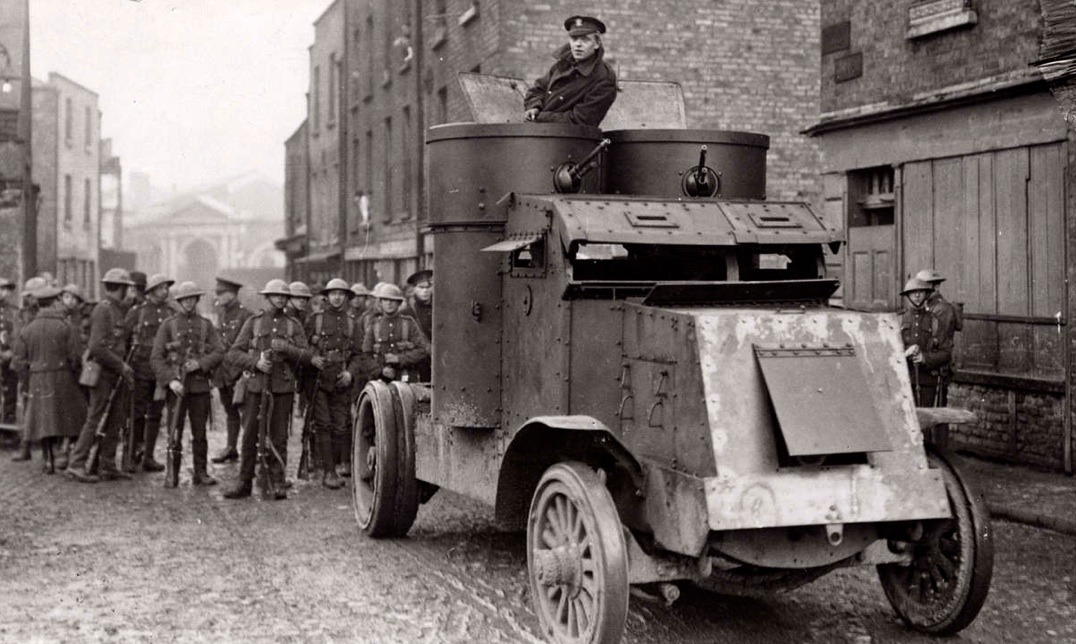
In the War of Independence, people were abducted, executed and secretly buried, not by the British, but by the Irish Republican Army. A new TV3 series, In The Name Of The Republic, investigates the ‘disappeared’ of 1919 to 1921, as Eunan O’Halpin, professor of contemporary Irish history at Trinity College, attempts to identify them and tells their shocking stories. Of these civilians killed by the IRA, O’Halpin asks “were they spies, were they informers? Some were, some were not.” Buried in unmarked graves or weighed down and dumped into lakes and rivers, they are the forgotten victims of Ireland’s struggle for independence. In his decade of research, Professor O’Halpin discovered executions carried out upon the slightest of evidence. “These deaths cast a dark shadow over the struggle for independence,” he says. With the centenaries of major moments in Irish history looming — 1916, partition, independence and the Civil War — it is timely this darker passage is being revealed.

In the first instalment of the TV series, O’Halpin travelled to Laois to investigate the rumour that the bodies of executed men were dumped on a farm during the War of Independence. Using modern technology and the expertise of an archaeological firm to find evidence of human burials, he tries to establish the identities of the alleged victims.

The only clue he had to work with was a claim that the executed men were from north Tipperary. O’Halpin’s journey took him to the National Archives, where files provided evidence of abduction, executions, and burials. The programme also told the story of Major Compton-Smith, who had commanded the 10th Royal Welch Fusiliers during the First World War. After the war, he served with the 2nd Royal Welch Fusiliers in Ireland, where he was taken hostage in 1921, before being shot in retaliation for the execution of IRA prisoners. The body was returned, prompting O’Halpin to ask: “Why would the body of an English soldier be returned, but not the bodies of so many Irish people?” Delving deeper into the disappearances was about more than just spies and informants, but about covering up local leadership incompetence and settling old scores.

One of the few bodies recovered from this period was that of Captain Noel Lemass, older brother of the future Taoiseach. One of the last killed during the Civil War, he was abducted in 1923, only for his body to be discovered by chance, four months later, at a remote spot in the Dublin mountains. “Sean Lemass knew his brother’s killers, but never sought revenge,” O’Halpin said.

O’Halpin grew up in a home where stories from the Civil War were knitted into the family history. Both his grandfathers were senior officers in the IRA and his grandmother, Katie Barry, was a leading anti-Treaty activist. Two of his great uncles were killed during the conflict — Kevin Barry, hanged in Dublin in 1920, and Paddy Moloney, shot in Tipperary in 1921. During the years 1920 and 1921, 200 people were abducted, executed and their bodies disposed of — including 180 civilians, as well as policemen and soldiers. “All sides engaged in acts contrary to the conventions of war,” he said. “For the IRA, one of the lasting legacies was that of the disappeared.”

Many files in the National Archives are still not available to public scrutiny, almost a hundred years later. “Many of the Department of Defence files are still closed. It is surely time that we knew what these contain,” O’Halpin said. “The families of the dead, and the public generally, have a right to know how, and why, these people died.”

In the second programme, which screens next Monday, O’Halpin travels to Cork, the county where the War of Independence was most fiercely fought. He uncovers the disturbing story of Martin Corry, a 40-year Fianna Fáil TD, who had a graveyard on his farm for victims he, and associates, executed during, and after, the Troubles. O’Halpin also delves into the activities of the No.1 Brigade and the killing of Lord Mayor Thomas MacCurtain by a Crown murder squad, and the series of revenge deaths that followed, which did not stop until the Civil War ended.

Most chilling is O’Halpin’s visit to an old cemetery outside the village of Knockraha, where the IRA used a medieval vault, nicknamed Sing Sing, as a holding cell. Most of those held there were later marched to a nearby bog, known as The Rea, where they were shot and buried. O’Halpin estimates there could be anywhere from 30 to 90 people buried in the bog.

Tuesday 19 March 2013

http://www.irishexaminer.com/lifestyle/war-of-independence-disappeared-recalled-225827.html

continue reading

Bus falls off bridge in India, killing at least 37


A bus packed with passengers crashed through a guard rail and fell off a bridge in western India early Tuesday, killing at least 37 people and injuring another 15, police said.

The overnight bus was carrying passengers from the beach resort state of Goa to Mumbai when it crashed in Ratnagiri district of Maharashtra, said Mahendra Singh Pardeshi, a police official present at the site. The area is about 200 kilometers (125 miles) south of Mumbai.

The cause of the accident was not immediately clear.

The driver was among those injured in the pre-dawn accident.

The bus had a capacity of 55 passengers, but Pardeshi said it was not known how many people were on board.

Early, blurred video if the accident showed that the bus broke through the guard rail on the bridge and fell several meters to the bank of the Jagbudi River below.

Tuesday 19 March 2013

http://abcnews.go.com/International/wireStory/bus-falls-off-bridge-india-killing-37-18760864

continue reading

11 dead, 2 missing as ship sinks off China


At least 11 crew members were killed after a container ship with 14 on board sank off the east coast of China, authorities said today.

Two rescue vessels retrieved 11 bodies while one person was rescued by a helicopter, state-run Xinhua news agency reported.

Rescuers are still searching for two missing crew members.The ship, named Guangyangxingang, capsized around 40 nautical miles northeast of Longkou in Shandong Province last evening amid strong winds, the report said.

The ship was travelling from the northern coastal city of Tianjin to Taizhou in eastern Zhejiang Province.

Tuesday 19 March 2013

http://www.deccanherald.com/content/320008/11-dead-2-missing-ship.html

continue reading

Monday, 18 March 2013

Forensic Age Estimation Study


Request for assistance in a forensic age estimation study:

I am a PhD student with the Centre for Anatomy and Human Identification and I am currently running an online study concerning the age estimation of children from facial images.

The questionnaire contains 30 faces for evaluation and should not take up much of your time (a few seconds per image - although you may take as long, or as little time as you require).

To access more information and take part in this research, please follow the link below:

https://www.surveymonkey.com/s/WDZC9H9

To obtain more information about the project, or for any questions you may have, please contact Eilidh Ferguson, Centre for Anatomy and Human Identification at; e.l.ferguson@dundee.ac.uk

Monday 18 March 2013

continue reading

Polish 'racial genocide' case too old to be solved


Back in June of last year, prosecutors for the Institute of National Remembrance reopened the 70-year-old case of 20 Jewish women who were raped and murdered in Bzury, a town in northeastern Poland. Polish authorities were unable to name the victims or perpetrators.

The crimes which Prosecutor Radosław Ignatiew called “racial genocide,” occurred in the summer of 1941, when the women, aged between 15 and 30, were sent from the Szczuczyn ghetto in northern Poland to work on a farm in the village.

There, a group of villagers robbed the women, beat them, raped and finally murdered all 20. Their bodies were buried in the nearby forest.

Only one of the perpetrators, Stanisław Zalewski, was arrested – by communist authorities after the war – and stood trial. He spent 15 years in prison for his crimes. Six others were involved but did not face any charges.

In an interview with The Jerusalem Post Mr Igniatew explained that he had no other choice. “None of [the perpetrators] remain alive, we know that for sure. However, we found some evidence that two or three other people may have taken part in this crime. After all the time that has passed, we were unable to find any evidence of their guilt. After making every possible inquiry, I decided to close the case.”

Mr Ignatiew added that he is now investigating a similar case that occurred in Wąsosz, where, on the night of July 5, 1941, more than 100 Jews were killed by their Polish neighbors.

Monday 18 March 2013

http://www.wbj.pl/article-62187-polish-racial-genocide-case-too-old-to-be-solved.html

continue reading

UN High Commissioner for Human Rights hails start of genocide trial in Guatemala


The UN High Commissioner for Human Rights Navi Pillay on Monday welcomed the ground-breaking trial of Guatemala’s former head of state and former head of intelligence, due to begin on 19 March, and urged the authorities “to take all necessary measures to ensure that judges, prosecutors, lawyers and others involved are protected from intimidation and reprisals.”

The trial of Guatemala’s former head of state Efraín Ríos Montt, and former head of intelligence José Mauricio Rodríguez Sánchez, for genocide and crimes against humanity is set to start on Tuesday, after the Constitutional Court rejected a writ of protection (‘amparo’) filed by Ríos Montt’s defence lawyers that cited a 1986 amnesty law.

"I welcome the beginning of this historic trial, and I hope that it will signal arrival of long-awaited justice for thousands of victims of gross human rights violations and crimes against humanity committed during the murderous 36-year conflict in Guatemala," Pillay said. “I also commend the decision of the Constitutional Court – genocide and crimes against humanity should never be covered by amnesties. Along with war crimes, these are among the gravest crimes known to mankind.”

“This is the first time, anywhere in the world, that a former head of State is being put on trial for genocide by a national tribunal,” she said. “Until quite recently, no one believed a trial like this could possibly take place in Guatemala, and the fact that it is happening there, 30 years after the alleged crimes were committed, should give encouragement to victims of human rights violations all over the world.”

The High Commissioner called on the authorities to uphold their responsibility to guarantee a fair and independent trial.

"The principles of independence of the judiciary imply that judges must be protected from undue influence, inducements, threats or interference, in order to ensure the proper enforcement of justice, with full impartiality and transparency, and due process," Pillay said.

Noting a recent wave of intimidation and attacks against journalists, judicial personnel and human rights defenders, including the killing in February of a lawyer working on corruption cases, the High Commissioner urged the authorities “to take all necessary measures to ensure that judges, prosecutors, lawyers and others involved may carry out their functions without fear for their life, integrity and security, or those of their families. The protection of all those involved in this crucial case is essential, if the rule of law is to be seen to be respected, and truth and justice are to prevail in Guatemala.”

Monday 18 March 2013

http://www.ohchr.org/en/NewsEvents/Pages/DisplayNews.aspx?NewsID=13155&LangID=E

continue reading

23 Pakistani soldiers die in bus crash


A bus crashed into the Indus River in Pakistan, killing at least 23 soldiers, the driver and another civilian, authorities said.

The vehicular accident occurred Saturday in Dassu Tehsil in the Gilgit area of Kohistan district, Dawn reported Monday.

CNN put the death toll at 27, including 25 soldiers.

Dawn quoted local police that an army colonel was among those killed.

Sources told Dawn the driver of the privately owned bus lost control of the vehicle at a sharp turn on the Karakoram Highway, sending it plunging into the river.

The report said the military confirmed the deaths of 23 army personnel along with that of the driver and a bus conductor. The soldiers were with a light infantry battalion and were proceeding on leave.

It was not clear how many people in all were in the bus or how many were injured. Dawn said rescue personnel had retrieved the bodies of the dead from the river.

Monday 18 March 2013

http://www.upi.com/Top_News/World-News/2013/03/18/23-Pakistani-soldiers-die-in-bus-crash/UPI-25611363580250/

continue reading

25 killed in SW China colliery accident


The death toll from a coal mine accident that occurred last week in southwest China's Guizhou Province rose to 25 after the bodies of four missing miners were retrieved, local authorities said Monday.

An outburst of coal and gas at the Machang Coal Mine, which belongs to the Gemudi Company of the Guizhou Water & Mining Group, left 21 miners dead and another four buried last Tuesday.

Nearly 300 rescuers have participated in search and rescue work for the four missing miners, according to the rescue and relief headquarters.

The families of each of the deceased miners will be given 1.036 million yuan (166,648 U.S. dollars) in compensation, the highest compensation level for a mining accident, the headquarters said.

The mine reports an annual output of 450,000 tonnes, and most of the deceased miners were local people from Guizhou.

Deng Feng, head of the Machang Coal Mine, and the mine's technical and security principals, Zhang Changhe and Liu Min, have been removed from their posts and are now in police custody.

Gao Liangyu, chairman and president of Gemudi, and Yu Zhiguo, the company's vice president as well as the person responsible for safety in the coal mine, have been forced to resign.

Further investigation is underway.

Monday 18 March 2013

http://www.shanghaidaily.com/article/article_xinhua.asp?id=131465

continue reading

Granada - the Colombian town determined to break with its bloody past


Thirteen years ago, the town of Granada in Colombia’s northwestern Antioquia province and its surrounding rural areas were at the epicentre of Colombia’s war. Here, right-wing paramilitary groups and rebels from the Revolutionary Armed Forces of Colombia (FARC) fought for territorial control and inflicted a reign of terror on civilians living in this farming region of rolling green hills.

By 2002, warring factions had forced 70 percent of Granada’s population of 20,000 inhabitants to flee their homes. Surrounding rural areas became ghost villages. Today, abandoned homes choked with weeds line the windy road leading to Granada, testimony to the thousands of families who fled.

Colombia’s armed conflict, concentrated in the country’s southern provinces and border areas, continues. But in Granada the fighting is largely over after a 2004 government military offensive pushed rebels into more remote hideouts.

As the security situation improves, displaced families are slowly trickling back to Granada to rebuild their lives. Over the past six months, 700 displaced people, who found refuge in nearby cities, have returned to Granada. They are given local government subsidies for farming and to help rebuild their homes.

It will take at least three years for coffee, fruit and vegetable farms to be fully up and running again. Today, there are around 10,000 people living in Granada, half of the town’s population at its height in 1998.


Granada’s residents have vowed not to forget the town’s tragic past. Next to a church in the town square is a small museum, known as the “Room of Never Again.” It serves as a memorial to Granada’s victims and is the first of its kind in Colombia.

On one entire wall there are 182 photos of Granada’s dead and missing, posted by families of the victims. Photos of boys, some as young as 12, a nun and the town’s mayor sit alongside pictures of community leaders and farmers. From 1998 to 2008, 400 people in Granada were killed by both warring factions and 128 locals went missing. Around 200 children lost either one or both parents in this town alone.

Granada was attacked 10 times by the two main sides of Colombia’s conflict – the FARC rebels and the paramilitaries. In one of the worst attacks in late 2000, over 300 FARC fighters invaded Granada during an 18-hour siege and placed a car bomb outside the town’s police station, killing 17 civilians and 6 policemen.

“We want to raise awareness about Granada’s victims. We only recently started talking about our pain and it’s brought us closer together as a community because you realise you’re not the only one suffering. It’s important to remember what happened here so history doesn’t repeat itself. School children from other parts of Colombia visit the memorial and they have no idea about what Granada suffered,” says Gloria Ramirez, who heads Granada’s victims’ association and who helped set up the memorial in 2007.

Granada’s residents have made a concerted effort to honour and remember the town’s victims, which locals say is crucial for lasting peace.

In a small square, scores of painted stones bear the names of those who went missing between 1998 and 2008. In total, 128 people disappeared at the hands of both warring factions. Locals say their bodies were most likely thrown into the nearby river or into mass graves. In 2008, state forensic experts dug up the bodies of eight people who had gone missing in the rural areas surrounding Granada. Over the next few years, it’s likely dozens more bodies will be exhumed.

Granada’s stone memorial and its museum are just some of the ways in which Granada’s residents are helping each other to deal with their grief. They have set up a weekly ‘hug group’ were families of victims can come together and talk, along with a ritual known as the ‘sale of bad memories’.

“Once we had a sale of bad memories in a market stall. You could come and write down your memory and someone would buy it symbolically with a sweet and chocolates,” said Ramirez.

Monday 18 March 2013

http://www.trust.org/alertnet/blogs/alertnet-news-blog/photo-blog-granada-the-colombian-town-determined-to-break-with-its-bloody-past

continue reading

Toll in Mexico fireworks explosion rises to 16


The number of people killed when a small truck loaded with fireworks exploded during a religious procession in a central Mexican village rose to 16 Sunday, authorities said.

Scores more injured in Friday’s tragedy were still being treated in hospitals, said a statement released by the Tlaxcala state government.

The document said a total of 154 people had been injured in the accident, of whom 72 remain hospitalized.

One witness said he saw “bodies flying” as people ran for cover after a stray firework landed on the truck in Jesus Tepactepec in the middle of a march for the village’s patron saint. Mexicans often set off fireworks during celebrations, but accidents have happened in the past due to the mishandling of the pyrotechnics or a lack of safety measures.

Monday 18 March 2013

http://www.dailytimes.com.pk/default.asp?page=2013%5C03%5C18%5Cstory_18-3-2013_pg4_5

continue reading

Bodies of the Jordan bus crash transferred back to Palestine


Fifteen of the seventeen victims of Saturday's bus crash in Jordan will be returned to their home city of Jenin in Palestine, according to the district governor, Maan news reported on Sunday.

The Jordan Times reported on Saturday that the death toll had risen to 17, with a further 38 injured after a bus slammed in to two other vehicles on the Dead Sea road. So far the other two victims have not been confirmed as part of the set of bodies being returned to Palestine.

The victims were on their way back to Palestine, returning from a religious pilgrimage to Mecca. Jenin governor, Talal Dweikat, confirmed that the bodies would be returned to Jenin, where most of the travelers were from and that the ceremony would be accompanied by a military parade and mass prayer in their honor.

President Mahmoud Abbas reportedly also decided to attend the home coming and deliver a speech at the event.

Monday 18 March 2013

http://www.albawaba.com/news/jordan-bus-crash-477771

continue reading

Sunday, 17 March 2013

DNA samples help identify bodies from Bin Jawad mass grave


Over half of the bodies found in the Bin Jawad mass grave in the Sirte district have now been identified, according to the International Commission on Missing Persons (ICMP).

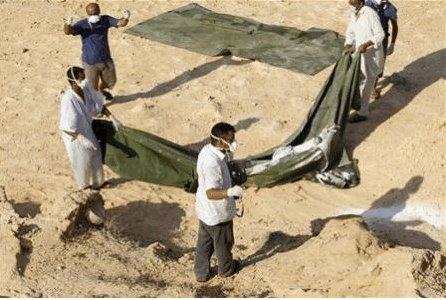
In a statement today, Saturday, it said that its analysis of skeletal and blood-reference samples had produced 93 positive DNA matches connected to the Bin Jawad case.

The ICMP said it: “carried out the DNA analysis in its laboratories and compared the profiles of post-mortem samples with blood reference samples obtained from families of the missing.”

The Libyan authorities who submitted the samples will now need to inform the families that their relatives have been identified and officially close those cases.

“ICMP is committed to assisting the Libyan Government continue to develop its capability to address this painful issue,” said ICMP Director General Kathryne Bomberger. “We hope that by expediting this process we will bring long-awaited answers to families of the missing who have waited to learn the fate of their loved ones.”

Bin Jawad was the scene of intense fighting during the revolution, resulting in up to 60 deaths with a further 700 people declared missing. The mass grave, which was unearthed in December 2011, contained the remains of some 170 rebel fighters killed during the Battle of Bin Jawad.

The ICMP also found two positive matches not connected to Bin Jawad which, it said, pertained to “persons whose unidentified mortal remains were kept in a refrigerator in a Tripoli hospital since 1984.”

This project was funded by the UK, which pledged $650,000 to the ICMP in February this year to help Libya find and name those who disappeared under the old regime.

The Libyan government signed a cooperation agreement with the ICMP in November last year. As part of this project, the organisation is helping to create a Libyan Identification Centre, as well as training Libyans to become experts in the recovery and identification of bodies.

Sunday 17 March 2013

http://www.libyaherald.com/2013/03/16/dna-samples-help-identify-bodies-from-bin-jawad-mass-grave/

continue reading

Victims’ families wait to ID bodies of South African bus accident


There were emotional scenes at Khayelitsha Sports and Recreation Centre in Site C yesterday as families searched through the possessions salvaged from the crash site, including clothing, blankets, suitcases, bags and cellphones.

One woman cried as she picked up a white shirt stained red with blood. Another quietly carried two blood-smeared suitcases out of the hall, using her shirt sleeve to wipe away her tears.

Later, in Worcester, Samuel Zweni and Mcoseleli Hendricks were among the dozens of people going from hospital to hospital trying to determine whether missing relatives were dead or alive.

The two were hoping against hope that doctors would identify Nomtatela Nkalana as one of their patients.

Many of the 24 dead have yet to be identified, and family members were not allowed in to see the bodies yesterday because the forensic investigation was not yet complete.

“Like many people we just don’t know where our loved ones are,” said Zweni.

“I’m scared every time the phone rings that it will be someone calling to let me know that her body has been found. We have gone to all the hospitals we could, but we cannot find her.

“I can’t tell our family in the Transkei what has happened. Every time I see a cellphone number from home my hands tremble when I reach to answer it. All I can tell them is to wait, when their daughter might be dead.”

Zweni and Hendricks were among the relatives who gathered earlier yesterday at the recreation centre in Site C for a prayer meeting and to collect the belongings of their loved ones.

Many victims were members of the 12 Apostles Church in Christ, led by former Western Cape UDM branch leader Dumisani Ximbi. They were returning from a national gathering in Mpumalanga when the accident happened.

Relatives also travelled from the centre to Worcester yesterday, in the hopes of being allowed to view the unidentified bodies in the town’s pathology laboratory.

About 200 people filled the hall.

Xolani Twani said he had not heard from his relatives on the bus since they left Mpumalanga. He was at the hall searching for news about his cousins Nosanele and Zoliswa Tsongo.

He searched through the possessions at the hall but couldn’t find anything that belonged to them.

“We haven’t been able to make contact with them since we heard about the accident. We’ve searched everywhere and no one can tell us anything. The worst part is that no one knows what is going on. They could be dead or alive. We are all devastated,” Twani said.

Western Cape pathology services spokesman Zolani Zenzile said the identification process would begin as soon as post-mortem results were complete.

“At this stage we are still busy, but we hope that the bodies will be ready to be identified by (tomorrow),” he said.

Ximbi said he was disappointed, but understood the constraints.

“It (the delay) was unfortunate, but we understand the circumstances.

“We will continue to hold prayer meetings every night until the date of the funerals. It will be up to the families to decide what kind of funeral will be held,” he said.

He would continue visiting the various hospital to try to identify victims.

Zweni said he, too, would visit some of the hospitals again in the search for his sister, but would otherwise – like everyone else – continue waiting and hoping for goodnews.

“By (tomorrow) we will know, but until then I will be scared to answer my cellphone every time it rings,” he said.

Sunday 17 March 2013

http://www.iol.co.za/news/south-africa/western-cape/bus-crash-relatives-in-agonising-wait-1.1487688#.UUW1ckfVWCA

continue reading

Saturday, 16 March 2013

25th anniversary of the Halabja Massacre in Iraq


Today marks the 25th anniversary of the Halabja Massacre on March 16, 1988 in which more than 5 thousand people lost their lives. On March 16 the massacre is remembered every year.

Thousands of civilians were killed in the chemical bombing attack organized on Halabja by the Iraqi army.

The victims of the Halabja Massacre are remembered every year through various activities in cities in northern Iraq with a Kurdish population.

The rope with which Ali Hasan al-Majid , Saddam Hussein's cousin who ordered the ordered the bombing of Halabja and was nicknamed “Chemical Ali,” was executed by hanging was brought to the Memorial Museum in Halapja.

In memory of the massacre’s anniversary, life stopped for five minutes in the Iraqi Kurdistan capital of Erbil at 11:36, the hour at which the first bomb was dropped. As citizens stopped in place out of respect when the sirens were heard, vehicles also stopped in traffic.

The Martyr Minister of the northern Iraq region, Aram Ahmet, explained to the press that the rope used to execute “Chemical Ali” was delivered to the director of Halabja Memorial, Ala Talabani, this morning.

The massacre

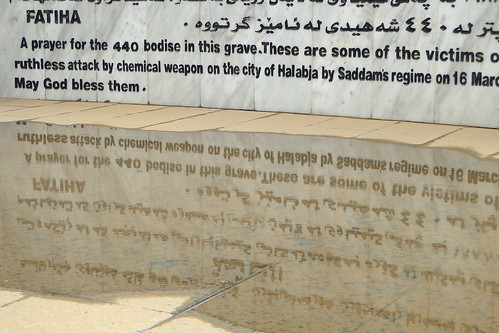
It has been 25 years since the massacre that took place in the Kurdish town of Halabja in Iraqi Kurdistan during the dictatorship of Saddam Hussein, who headed Iraq's Baathists. On March 16, 1988, Halabja became the scene of the largest-scale chemical attack on a civilian population in history. That morning, Iraqi warplanes flew over the city and dropped chemical bombs on the thousands of unsuspecting people living there. Nearly 5,000 people died immediately as a result of the chemical attack, and it has been estimated that a further 7,000 were injured or suffered long-term illnesses.

It seems to have occurred too far in the distant past to be remembered by those who are unfamiliar with this region, remaining a mere fact in a history book; however, it remains an ongoing pain for the people of the region.

Every person in Halabja has a sad story to tell and has lost at least one friend or relative. Most Halabjans say they experienced the apocalypse on March 16, 1988, when every soul struggled for his or her life. Children ran for shelter; some tried to flee the town only to die half way; mothers carried their children in their arms; fathers rushed towards safety -- but there was no safe haven. Those who managed to escape suffered burnt skin, skin malformations or were diagnosed with cancer. Pictures taken right after the massacre depict the chaos and support the apocalypse simile.

As one Kurdish intellect, Kendal Nezan, described Halabja: “The scene that greeted the Halabjans in the morning defied description. The streets were strewn with corpses. People had been killed instantly by chemicals in the midst of everyday acts of life. Babies still sucked their mothers' breasts. Children held their parents' hands -- frozen to the spot like a still from a motion picture. In the space of a few hours 5,000 people died. The 3,200 who no longer had families were buried in a mass grave.” The victims of the massacre do not want to forget their pain nor do they want their wounds to be scabbed over. They have the same mentality as the Khojaly victims, believing that they should continue to talk about their tragedy and keep their memories alive. For this very reason, the Halabjan people mention the massacre and their losses whenever they have gathered together to deal with the pain.

Years later, every one suffers from the poisonous gas. Some have a chronic cough; some have diseases of the lungs or stomach or eyes. Many survivors have cancer, and many more are disabled.

There are three martyrs' cemeteries in Halabja: In one of them, there are 1,500 bodies, 440 bodies are buried in the second one, and the third one has 24 bodies buried one on top of the other. And the rest of the bodies are, sadly, still missing. These cemeteries, which were arranged by the survivors of the massacre, have been turned into mausoleums frequently visited by the local people as well as the relatives of the victims. At the entrance of the cemeteries, it is written “Baath Party members cannot enter!”

Saturday 16 March 2013

http://www.worldbulletin.net/?aType=haber&ArticleID=104843

continue reading

5 dead, 7 missing in Madagascar boat sinking


At least five people are dead and seven remain missing after a passenger boat sank in western Madagascar earlier this week, police said on Saturday.

“We have recovered five bodies so far and identified seven missing among villagers living along the Betsiboka river,” said Ambato Boeni district police commander Lieutenant-Colonel Ramaroson.

No details were given about the cause of the accident.

Official logs show that the “Naina R3” was transporting 30 people to a local market, but the real number was likely to be around 50, Ramaroson said.

Police on Friday put the number of missing at at least 28.

Local media on Saturday said 26 people had survived the accident while around 30 were still unaccounted for.

Saturday 16 March 2013

http://www.iol.co.za/news/africa/5-dead-7-missing-in-boat-sinking-1.1487539#.UURkuUfVWCA

continue reading

Mexico fireworks explosion during religious parade kills at least 11, dozens injured


At least 11 people died and some 70 others were injured Friday when a truck loaded with fireworks exploded during a religious parade in a village near the capital, authorities said.

The blast occurred when a malfunctioned firework landed on the truck in the middle of a march for the Jesus Tepactepec village's patron saint, the civil protection department of Tlaxcala state said.

"We saw bodies flying, then everything went black," said an eyewitness named Isidro Garcia Vazquez.

Survivor Miguel Angel Piscin described the scenes of chaos following the explosion:

“There were lots of bodies lying on the ground, torn apart, no one was helping. I quickly got in my truck, put it in reverse and they pulled up 10 injured people.”

Authorities sent helicopters, ambulance vehilces and soldiers to the scene, about 110 km east of Mexico City, while Tlaxcala Governor Mariano Gonzalez Zarur declared three days of mourning.

Fireworks are commonly used in Mexican holidays and religious celebrations, but mishandling or lack of safety measures often lead to deadly accidents.

Authorities say the death toll could rise as many people were out on the street in preparation for the religious festival.

Saturday 16 March 2013

http://news.xinhuanet.com/english/world/2013-03/16/c_132238356.htm

continue reading

Friday, 15 March 2013

Morbid tradition of ‘ghost marriages’ persists in rural China


It’s a strange and morbid tradition, all but abandoned by modern China. But ghost marriages, the pairing of a deceased bachelor and bride to keep each other company in the afterlife, are quite the moneymaker for those willing to get their hands dirty.

Four men in China’s central Shanxi province were recently sentenced to more than two years in prison each for digging up the bodies of 10 female corpses, cleaning them, tampering with medical records to make them appear newly deceased and selling them on the black market for a sum of $39,000.

The ancient custom, which dates back to the 17th century BCE, rests on the belief that burying an unmarried young man with a “bride” can prevent his soul from becoming restless and lonely. It was outlawed in 1949 when Communist revolutionary Mao Zedong came to power, but is still practised in rural parts of several provinces, including Shanxi, Shaanxi, Henan and Guangdong. In Shaanxi, where coal money has resulted in an affluent but stubbornly superstitious population, families are willing to pay top dollar for suitable dead spouses, sometimes employing a matchmaker or even purchasing remains straight from the hospital morgue. Younger and more attractive bodies tend to cost more.

Demand has led to a spike in illegal activity in recent years: last February, a female was twice exhumed after being married off postmortem by her family, only to be sold again by graverobbers days later. A man from the northern Hebei province murdered six women in 2006 and sold them as corpse brides.

Qingming Festival, or Tomb Sweeping Day, coming up in early April, is thought to be a lucky occasion for celebrating ghost marriages. For the wealthy, ceremonies are accompanied by dowries and a feast with a slaughtered pig or sheep.

But poorer families who also want to offer their sons a companion have few options. Some might purchase an old, cheaper corpse, dress it and reinforce its bones with wire, while others settle for a doll made of straw or a doughy figure with black beans for eyes.

Friday 15 March 2013

http://www2.macleans.ca/2013/03/14/morbid-tradition-of-ghost-marriages-persists-in-rural-china/

continue reading

Digital tombstones: Life, death and Facebook


On Facebook, a billion users around the world document their relationships and share their children’s first steps, growing and aging in plain view. But what happens when they die?

Preserved forever in stark blue and white pixels, comments, photos, observations, and interests don’t disappear when bodies do. Whichever afterlife you believe in, Facebook could be the path to immortality.

An increasing number of mourners struggle with grief stemming from the leftover profiles of lost loved ones. Facebook developers have even created features that attempt to handle this new phenomenon. Physical death and digital death are two very different things.

As I perused vacation photos, drunken Instagram snapshots, and disoriented status updates last summer, my half-asleep eyes landed on a photo. A boy I’d gone to school with and had vaguely known since middle school was pictured on a hospital bed attached to innumerable tubes. Sober, familiar faces surrounded him.

Nap Cantwell died when he was 18 years old, after an accident in which his bike collided with a van. Andrew Imanaka, one of my best friends and one of Nap’s, took the photo.

“I figured it was the last picture anyone would take of him alive, to be honest,” Imanaka said. “How else are they (acquaintances, far away friends) going to find out [about Nap] in this day and age?”

Posts cover Nap’s Facebook wall, with new ones added often. Childhood photos, pictures of tattoos and tags memorializing him, and simple R.I.P.s and thinking-of-yous fill the digitized profile left by a very real human being.

According to UC Irvine Ph.D. candidate Jed Brubaker, who spent the last three and a half years studying the phenomenon of death in social media, 30 million Facebook profiles belong to the deceased, making up a significant proportion of the Facebook population.

“Social media, broadly, does a really bad job of accounting for the fact that people might die,” Brubaker said. “But when I originally began research, people were confused about what I was even talking about. I had to stop and explain myself.”

People don’t think about how they will be survived online when creating their Facebook profiles, but people have attempted to preserve their presence and that of others since the early days of the Internet.

Online memorials began around 15 years ago with personal webpages and cyber obituaries coming from as early as 1996. Early memorials like this were impossible to find unless friends or relatives were looking for them — unlike deceased Facebook members, who can show up on your “people you may know” sidebar.

“A funeral used to be a moment where specific individuals at a specific time and space meet to grieve an individual,” Brubaker said. “Facebook breaks this wide open.”

Liz Litts, a Shoreline, Wash., native, died suddenly in 2010 at the age of 18. She had more than 500 Facebook friends, and within 24 hours of her death at least 100 posts from various people who knew her expressed their sympathy, according to her friend Mackenzie Fenton Conlan.

Empathy, disagreements, and relationships from real life can manifest themselves on Facebook in ways more serious and real than one would expect.

“We had a falling out due to pointless high school drama, and now I regret it more than anything,” said Melanie Yordanova, who was best friends with Litts at one point. “I saw her 24 hours exactly before it happened, and she hugged me and said she loved me. The thing I regret most is not saying I love her back and also deleting her from Facebook and not accepting her friend request when she added me back.”

But dealing with loss over social networks is not for everyone; sometimes comments on a website seem distant, and constant reminders of a lost loved one are overwhelming.

“It took me a while to write on her page, because I didn’t think that people should resort to Facebook to grieve,” Conlan said. “However, it ended up being somewhat therapeutic.”

People who aren’t comfortable with Facebook aren’t really in a position to do anything about it, Brubaker said. In the same way that showing disapproval of the way a funeral is conducted is seen as disrespectful to the deceased, there’s no real way to disagree with the legitimacy of a Facebook memorial. This phenomenon is well-established. The moral and ethical questions it raises aren’t going anywhere.

“What is the proper way to grieve that guy from 20 years ago?” Brubaker asked. “It puts individuals in a tenuous place; they want to be respectful.”

Facebook death is often most uncomfortable for people distantly related to or vaguely associated with the deceased, because there is no social norm for responding to the situation. Before Facebook, these individuals probably would not still be connected to the deceased. Today, not only are they connected, but they have the opportunity to respond to the tragedy no matter where they are.

Facebook has provided the option to “memorialize” a page since 2009, in an attempt to end this problem. Family members must contact Facebook with proof of death for the process to be completed. From there, the page of the deceased will transform into a place to post memories about the person who will no longer show up in “suggested friends” or public searches.

“I have only talked to two individuals that have actually gone through this process, and it takes a long time,” Brubaker said. “It seems, in practice, there’s a lot of ambiguity about who has the right to memorialize an account.”

Various problems come from this ambiguity. Parents can delete friends they didn’t approve of after the death of a child, and new Facebook users cannot be friends with the deceased after the account has been memorialized. Future relatives cannot access it, and friends cannot modify it. There are no real guidelines about how ethical it is to gain access to someone else’s profile or who is allowed to do this.

Even people who don’t communicate with their parents usually have their accounts inherited by them regardless, Brubaker said. There are also questions about inheritance by domestic partners in states that have not legalized same-sex marriage.

“I’m a little suspicious. Should we be relying on these old, traditional values, or are there a broader set of people that should be included in input in an account?” Brubaker said. “These profiles have very rich afterlives; to lock these accounts down can really limit the opportunity for people to connect and remember each other and, in some scenarios, can be downright traumatic.”

Litts’ page has just such a rich afterlife.

“Since she has passed, her page is filled with people sharing memories that they had with Liz,” Conlan said. “I go back from time to time and post on there memories, songs, quotes, whatever. It’s kind of like a little remembrance page.”

Conlan and Yordanova mentioned the way Facebook helped to organize meetings and remembrances in honor of Litts. It also allowed for long-distance relatives and friends away at school to connect and share what they would have said at her funeral, had they been able to make it.

“Losing someone close to you can be one of the most difficult things, especially since you don’t have control, but the support of everyone was a huge help,” Yordanova said. “I got to see everyone express their sorrows in different ways, and in the end I felt less alone.”

Facebook already handles our day-to-day lives. Logically, it should also handle our deaths. Unfortunately, the legal framework governing these memorials is behind the times.

The Stored Communications Act, a federal law enacted in 1986, and the voluntary terms of service agreement used by sites like Facebook prohibit companies from sharing the personal information of users. This includes providing passwords to mourning relatives, and the law prevents estate managers from attempting to access Facebook accounts because of the possibility of being charged with cyber crimes.

Various state legislatures have taken up the cause, including Oregon and Nebraska. Yet it may not reach Congress for some time, as a bill aimed at modernizing the Act failed in the House Judiciary Committee last year.

The mourning process is one of the most intimate and personal of human experiences. Now this process has shifted dramatically into the public sphere, raising a slew of new legal questions.

The more pressing questions, however, have to do with the morality these interactive epitaphs. The line between what should and shouldn’t be online is becoming harder to see.

Friday 15 March 2013

http://dailyuw.com/archive/2013/03/14/arts-leisure/digital-tombstones-life-death-and-facebook#.UUM66UfVWCA

continue reading

Family holds memorial at deadly minivan crash site


News article demonstrating the importance of religious ceremonies at the scene:

The family of three of the seven people killed in a horrific minivan crash earlier this month held religious services at the Highway 36 crash site and the van operator’s garage before as they waited for officials to release the bodies for cremation.

About a dozen relatives of Sukhsan Bunthum, 54; his wife Siriwan, 51; and granddaughter Pinchat Thumcharoen, 7, invited four monks from Rayong’s Natakhwan Temple to the spot near the Bira Circuit race track to perform Buddhist ceremonies aimed inviting the victims’ spirits to pass on. The group then continued to the van operator’s base on Soi Mabyailia 24 in Nongprue where they lit incense and chanted stanzas.

Relatives of the deceased bring monks to the site of the horrific accident to begin the long, painful process of healing their hearts.


Umaporn Bunthum, the 27-year-old daughter of Sukhsan and Siriwan and mother of Pinchat, said her relatives had gone to Bangkok to purchase 200,000 baht in lottery tickets and show their granddaughter around the capital. When they didn’t return on time, Bunthum found out about the accident and checked locals hospitals, only to receive the tragic news.

She said funeral services are planned at Pa Pradu Temple in Rayong. After the three-day service, she plans to meet with the van driver, who was arrested after the crash, and the operator’s insurance company to negotiate a settlement. She said, however, she wants driver Chuchart Photchai, 50, to stand up, take responsibility and explain what happened.

Umporn’s family, plus Jamnien Singhkhet, 51, daughter Suphakorn Singkhet, 38; and son Theeraphat Mingmit, 9 months, died with another unidentified male after the Bangkok-Rayong liquid petroleum gas-powered van hit a “no U-turn” sign and burst into flames May 2. The driver and two others were injured and treated at Queen Sirikit Hospital.

Police said Chuchart cut across lanes and slammed into the post, possibly because he was distracted by conversation or fell asleep. Investigators He was charged with reckless driving resulting in death.

Relatives, naturally, remained traumatized, with several claiming ghosts of the deceased could be heard crying or were causing dogs to bark.

Once relatives departed the crash site, students from Ranjamangala University of Technology Phra Nakhorn arrived to collect information and capture images of the van and the accident for inspection and research to increase preventions and solutions to traffic deaths.

Friday 15 March 2013

http://www.pattayamail.com/localnews/family-holds-memorial-at-deadly-minivan-crash-site-23312?ref=pmci

continue reading

South African bus crash kills 22, toll could rise


At least 22 people were killed in South Africa on Friday when a double-decker bus crashed into the side of a mountain while navigating the dangerous Hex River Pass 140 km (80 miles) northeast of Cape Town, police said.

"It appears as if the brakes failed and the driver lost control," said Kenny Africa, the police traffic spokesman for the Western Cape province. Two children were among the dead and 44 passengers were injured.

"We are recovering more bodies and the death toll may rise," Africa told Reuters from the accident scene, adding it was unclear how many people were on board the bus.

The pass, situated in the picturesque Hex River Valley, is notorious for accidents because its straight and long descent allows vehicles to gather momentum before it leads suddenly into a dangerously sharp left turn.

Road use is the primary means of travel in Africa's largest economy, and the government has introduced tough laws to clamp down on reckless driving and poorly-maintained vehicles as it tries to curb an annual toll of some 14,000 deaths.

Friday 15 March 2013

http://www.reuters.com/article/2013/03/15/us-safrica-accident-idUSBRE92E0JV20130315

continue reading

Vizag chopper crash: two bodies recovered


Almost four days after a Naval helicopter, with four crew members on board, crashed into the sea off Vizag coast in Andhra Pradesh, the rescue teams on Saturday retrieved bodies of a Lieutenant Commander and a sailor from the wreckage landed at the depth of 60 metres.

The deceased were identified as Lieutenant Commander Pranav Likithi and sailor G S Sen, according to a release by the Eastern Naval Command.

Two other crew members had been rescued earlier and are recuperating at Naval hospital INHS Kalyani.

The Chetak 440 helicopter crashed into the sea about 10 nautical miles off Visakhapatnam coast on Tuesday afternoon, soon after it took off from INS Dega at about 2 p.M. On a routine mission.

The rescue teams last night spotted the debris, strewn at a depth of 60 metres, along with the two bodies, at a distance of 8 miles south of Dolphin Light House, the release said.

The bodies were retrieved in the early hours today by the joint rescue teams.

Soon after the crash, an extensive search and rescue operation was launched from the sea and air by the Navy, along with the Coast Guard, Port authorities and Marine Police.

The Navy had already ordered a Board of Inquiry to establish the cause of the accident.

A multi-purpose offshore chartered vessel 'Olympic Canyon' was also roped in with its Remote Operating Vehicle for the salvaging operations.

Meanwhile, bodies of Likithi and Sen were sent for postmortem at state-run King George Hospital, the release said.

Friday 15 March 2013

http://www.indiatvnews.com/news/india/vizag-chopper-crash-two-bodies-recovered-20651.html

continue reading

Pakistani made items found on killed terrorists: Shinde


Interesting news article about the use of personal effects for identification purposes:

Making identical statements in both Lok Sabha and Rajya Sabha, Home Minister Sushilkumar Shinde said some items bearing markings of Pakistan have been recovered from the terrorists who were killed in the encounter after attack on a CRPF camp.

He made the statement after sharp criticism by members from various parties, who said the government has repeatedly failed in preventing terror incidents as well in dealing with Pakistan from where it originates.

"The killed terrorists are suspected to be of foreign origin," he said about the incident in which five CRPF jawans lost their lives while battling the attackers.

When pressed in the Rajya Sabha for clarifications, Shinde said he did not say that the terrorists were Pakistanis and only mentioned them as foreigners.

"From the bodies of terrorists killed, two diaries, one each containing numbers suspected to be of Pakistanis, tube of Betnovate, a skin ointment were recovered.

"Further investigations reveal that this tube was manufactured in Glaxo Smithkline Pak Ltd, at 35 Dockyard, Karachi. The name of the tube mentioned in Urdu and the numbers mentioned in the diaries appear to be of Pakistani origin," he said.

He insisted that the government was dealing with terror strongly. "Yahan koi chudiyan nahin pahna hai. Sabke haath me taakat hai (Nobody is wearing bangles in their hands. Everybody is strong)," he said, responding to members' criticism of being soft.

At the same time, he said, the government "knew there will be such attempts" after the execution of Mumbai terror attack convict Ajmal Kasab and Parliament attack convict Afzal Guru.

The Home Minister said the bodies of the terrorists killed in the encounter were shaven, which confirms them to be fidayeens. "The killed terrorists are suspected to be of foreign origin...Although the responsibility for the incident was owned by an agent of Hizb-ul-Mujahideen, the authenticity of the claim is yet to be ascertained," Shinde said.

He disagreed with contentions that the situation on the terror front in the Valley has turned from bad to worse saying there has been decline in the number of terror incidents as well as infiltration incidents in Jammu and Kashmir in the last few years.

"We are focusing on PoK and we are keeping a watch on the camps there. We are very vigilant. Our intelligence agencies are very serious," the Home Minister said.

He said many an incident is also prevented due to better intelligence coordination but that is not something to be highlighted on a daily basis.

Responding to criticism that the forces were not adequately armed in the Valley and that half of the CRPF jawans do not have guns, the Home Minister said peace process is on in Jammu and Kashmir and the government does not want to do it "by pointing out a gun" all the time and the problem is sometimes also contained with 'lathi' (cane) in hand.

"We want to bring peace in Kashmir by giving a special package there...We, too, do not want to keep the military there for long," he said.

Asserting that "condolence for the dead and compensation for the survived" cannot be the government policy after every such attack, M Venkaiah Naidu (BJP) asked the government to understand the seriousness and go into the core of the issue.

Friday 15 March 2013

http://www.kashmirtimes.com/newsdet.aspx?q=13732

continue reading