Thursday, 9 July 2015

Srebrenica women tell tale of loss through objects of memory


Twenty years ago Saturday, Bosnian Serb troops led by Gen. Ratko Mladic carried out Europe's worst carnage since the end of World War II - a massacre of 8,000 Bosnian Muslim men and boys that a United Nations court calls a genocide. As Dutch peacekeepers stood helplessly by, the Serbs stormed the Srebrenica safe haven, separating men and boys from women. They drove the males away in trucks and massacred 2,000 on the spot. About 15,000 Bosnian Muslim men and boys fled into the woods; the Serbs hunted 6,000 of them down and killed them one by one - some 8,000 in all. The bodies were dumped in mass graves that were bulldozed to hide the evidence, causing remains to be jumbled up into a jigsaw puzzle that has yet to be fully solved. About 1,000 victims remain to be found. Many families have reburied a few bones identified as belonging to their loved-ones through DNA testing.

Two decades later, Srebrenica's women still grieve. Here are some of their stories told through cherished objects.

___

HUSBAND'S SHIRT

Fazila Efendic, 64, keeps her husband Hamed's old terracotta-color shirt in the closet. He was 46 when the Bosnian Serb troops shot him dead in the forest. "When I miss him, I open the closet, touch the shirt and I can't say if I feel better or worse then," she says. "But I must touch it." It's the same thing with the school diplomas of her only son Fejzo, who was 20 when he was killed in the Srebrenica massacre. "He won several regional competitions in math and physics. He was a very good child." She showed a white handkerchief with blue stripes that her son gave her before Srebrenica fell. "I carry it around wherever I go," she said. She found the remains of both men years ago and buried them at the Srebrenica Memorial Center, where they lay with nearly 7,000 other victims. She found Hamed in 2003 in one mass grave and Fejzo - or rather two of his leg bones - in 2013 in another.

___

HANDFUL OF CLAY

Meva Hodzic takes out a tobacco box, a rusted Swiss knife and a key from a plastic box, and with them fall crumbs of clay. She puts the clay back in the bag, because it's a kind of relic, too: It comes from the mass grave where her husband was found after Serbs killed him in the forest, as he fled carrying the three objects. "It belongs to these items and they should stay together. I was asked to give all this up for a museum of items found in mass graves. But, no," she says "how can I do that if it's the only thing I have left from him?" Mujo ran into the forest with the other Srebrenica men after promising to come back to find her in the purported safe haven that was under Dutch peacekeeper protection. Instead, parts of Mujo's body turned up after the war in three different mass graves. He was put together and identified through DNA analysis. "Besides him I lost two brothers, my father, two sons-in-law and my nephews."

___

PICTURE OF SORROW

When Remzija Delic, 58, wakes up in the morning, the first thing she sees on the wall is the picture of her husband Sabit. Then she gets up and looks through the window at the former factory that the United Nations turned into their military headquarters after they declared Srebrenica a safe haven - staring hard at its gate. She goes to the stove and puts the water on boil for her morning coffee. When she returns to the window, she sees her neighbor walking down the street to work, and her face grows dark. She says he was the Bosnian Serb army soldier who separated her husband from her at the factory gate, selecting him to become one of the victims of the massacre. She also lost her father, two brothers and several nephews. As Sabit was trying to board the bus transporting the Srebrenica women to government-held territory, she says, the neighbor grabbed him by the back and yelled: "No. Not you." He pushed him over to the crowd of men chosen for killing, according to Delic. Forensic experts found Sabit, 40, in a mass grave. "You know, all this did not make me hate the Serbs," she says. "There are some wonderful people among them."

___

TOBACCO BOX AND FLINT

Djulka Jusupovic, 65, carefully handles a tobacco box made of cans of U.N.-delivered food, along with a piece of flint used to make fire with during the war. After three years of Serb siege, the population ran out of lighters or matches and improvised just like cavemen did. "Someone would make fire with this in his garden in the morning, then everybody would come with a piece of wood to light it and take it home to make a fire," she said, describing life in a town that was on the brink of starvation before the bloodletting began. She keeps the items in several plastic bags. They are still as dirty as they were found when found on her husband, Himzo, as he was excavated from a mass grave. These days she rarely looks at the objects. Each time she takes them out, she remembers what the forensic experts told her when they handed them to her: Himzo, after being shot, may have still been alive when buried.

___

HOME-KNIT SWEATER

"Once this sweater was white like snow," says 60-year-old Kadira Gabeljic. "I knitted it myself." She points to it in a picture of the clothes wrapped around her husband's skeleton when forensic experts found him. "Now it's black from the dirt of the mass grave they found him in, and it is torn in the middle from bullets that rattled through his stomach when the Serbs shot him." Her only two children, sons Mesud, 16, and Meho, 21, followed their father Abdulah and the other men fleeing through the woods. All three were hunted down and slaughtered. Her 42-year-old husband and Meho were taken to a warehouse in the nearby village of Kravice and locked inside with another 1,000 other men who were hunted down. Then the Serbs threw hand grenades inside and mowed down the crowd through the windows, until they killed all of them. Forensic experts later found their body parts in four different mass graves. "Actually, they only found parts of Meho," she said. "The head and legs. The middle part is still missing. I buried what I had."

Thursday 9 July 2015

http://www.ksby.com/story/29507535/srebrenica-women-tell-tale-of-loss-through-objects-of-memory

continue reading

Scientists are struggling to identify more than 100 mummified migrant bodies in Texas


Bodies in trash bags, bones in milk crates, and skulls wedged between caskets. That’s the horrific scene researchers found when they excavated a county-run South Texas graveyard for suspected undocumented immigrants last year.

Forensic scientists are now struggling to reunite the more than 120 bodies they excavated from Sacred Heart Cemetery, in Falfurrias, Texas, with their families. The process has been slow going: There’s no funding for the scientists’ work, and only three people have been identified so far. Experts say this is likely how many dead migrants are buried across Texas, where this kind of treatment of the dead isn’t against the law.

Usually, counties are supposed to take DNA samples and clearly mark graves of unidentified bodies. Then they upload that DNA data to a national missing persons database. But in Brooks County, Texas, the site of the cemetery, that didn’t happen: no DNA samples were taken, bodies were buried haphazardly, autopsy reports are rife with errors, and the county only has death records for a third of the people in their cemetery.

Baylor University anthropology professor Lori Baker arrived at Brooks County in the summer of 2013 with her students, offering to help identify bodies. She expected to find maybe a dozen bodies they could work on. Instead, they dug up more than 50, in various states of decay, over the course of 10 days. The next summer, they went back and dug up another 70, some dating back more than a decade. And there are still graves left to exhume.

“It was really frustrating to see the lack of respect that the funeral home had for these individuals in their final resting place,” Baker told Fusion. “They didn’t seem to care about them.”

An investigation published in the Texas Observer last week found that the county and funeral home responsible for the cemetery likely violated numerous regulations—but because the state has very vague laws about how to bury corpses, no one was found criminally responsible.

According to the Observer‘s report, the county hired a local doctor with no experience as a pathologist to conduct autopsies of the bodies. And they contracted the burials to a local funeral home, Funeraria del Angel Howard-Williams, which Baker said was the most to blame. “They were the ones getting paid a substantial money for the burial, between $1,100 and $1,400 dollars,” she said. “That’s plenty of money to buy an eight-dollar body bag.” The funeral home declined to comment to Fusion.

About 90 miles north of the border, Brooks County has become a (literal) hotspot for migrant deaths: hoping to avoid a border patrol checkpoint in Falfurrias, the county seat, migrants walk through scrub brush and desert, where temperatures can rise beyond 100 degrees in the summer.

But Brooks is hardly an exception; about half of the 6,300 immigrants who have been found dead near the border since 1998 are still unidentified, the Houston Chronicle reported. Baker, who has started to investigate similar cemeteries in other Texas counties, thinks that bodies of suspected migrants are treated the same way across most of the state. “It’s a bigger problem than I think most people know,” she said.

And while state lawmakers approved $2.3 million to expand the DNA database this year, there’s no funding to identify these bodies, leaving the work to volunteers: Students at Baylor and Texas State University are now trying to identify the corpses and get them back to their families. They comb through missing persons reports, take DNA samples, and share their findings with consulates in Guatemala, Honduras, El Salvador, and Mexico. “It’s a pretty long process when you have a mummified body,” Baker said.

One of the corpses in the cemetery belonged to Elmer Barahona, who was 20 in June 2012 when he left his 2-year-old daughter behind in El Salvador to go find work in Houston. He made it 1,500 miles across Mexico and the U.S. border, but while running across the desert in 100 degree heat to evade the checkpoint in Falfurrias, he hurt his leg and collapsed. The smuggler helping him and others left him behind for dead. County officials found his body and threw him into the cemetery with the others.

Like other unidentified migrants who made it across the border but didn’t survive, he was left nameless and unclaimed until 2013, when researchers excavated the cemetery. They identified him thanks to a brown plaid shirt wrapped around his injured leg. His body is now in a Houston funeral home, waiting for final approval from the Salvadoran government to come home.

The identification finally gave some peace to Barahona’s family, including his aunt, Marta Iraheta, who had been criss-crossing South Texas, visiting morgues with photos of her nephew. “I felt like I was in hell,” Iraheta recalled at a 2013 vigil in Houston. She urged attendees to remember the missing, and asked for their prayers: “Pray for him, for his family, and for those that remain in the desert that came in search of the American Dream.”

Thursday 9 July 2015

http://fusion.net/story/162922/scientists-are-struggling-to-identify-more-than-100-mummified-migrant-bodies-in-texas/

continue reading

Human remains found in Langtang


Remains of a foreigner, who was missing after an avalanche hit the Langtang region following the devastating earthquake on April 25, were found on Friday.

Police suspect that the human remains could be of a French national Renelouis Dutreve.

According to the District Police Office, Rasuwa, the French passport bearing 14 DI 17741 number was recovered for the site.

It has been learnt that the human remains have been sent to the Tribhuvan University Teaching Hospital in the capital city for examination.

Thursday 9 July 2015

http://thehimalayantimes.com/nepal/human-remains-found-in-langtang/

continue reading

Wednesday, 8 July 2015

The 261 unclaimed bodies of the Karachi heatwave; why do they remain unclaimed or identified?


It’s a fear that stalks furtively, the fear of dying alone, unloved and unmourned. Blended in this are worries about physical helplessness, about the indignities of the processes of death. But above all, dying alone seems an indictment of how we have lived, as if the universe itself scrawled ‘could do better’ across a report card untainted by anything of note. As if we never mattered.

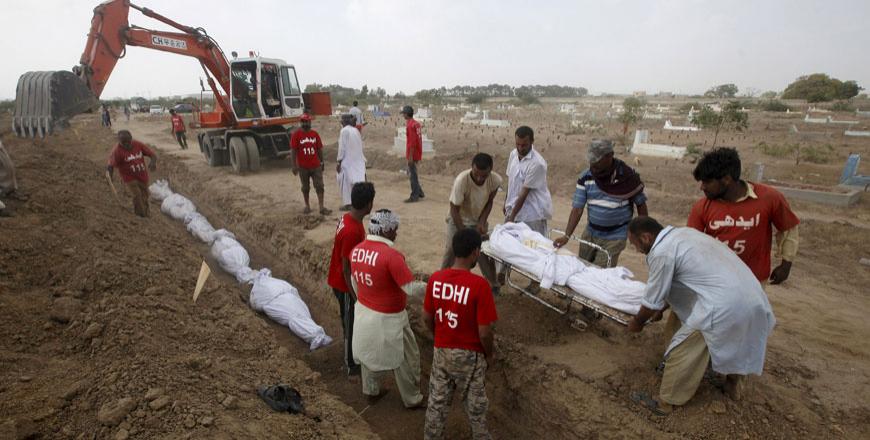
That is why, two weeks after the killer heatwave in Karachi left some 1,233 dead, many are still wondering about the 261 ‘unclaimed bodies’. Who were they, these people only Edhi wept over? Were they once distinguishable in a crush of humanity, these dead who are now a series of numbers in a communal grave? Did they ever matter, even to themselves?

The search for answers takes me to the Edhi morgue.

Set in the sprawling Edhi complex in Karachi’s stolidly middle-income Federal B Area, the morgue is the only one in the city that allows even the indigent the right to dignity in death. The beige marble of the cavernous, 18×24 main hall offers respite from the late afternoon sun and white energy savers dispel the gloam. Three fans suspended from the false ceiling lazily swish around swarms of flies as well as eddies of cool and hot air. And every once in a while, when you’re least expecting it, rises the stench of putrefying bodies.

It’s hard to describe this smell: a strange composition of the stewing juices of decomposing flesh, unwashed human bodies and rotting flowers, laced with traces of formaldehyde. Faint but perceptible are base notes of blood, piss, sweat and shit — reminders that this too was once human, alive. It’s less a scent than a physical being, which clings to and then wafts off the clothes, the bodies of the Edhi staff, pirouettes on the beams of sunlight slashing the marbled floor and seemingly vapourises in the afternoon heat.

Ghulam Hussain has been working here for the last 10 years and we settle down for a chat on the marbled ledge that runs around the room. “It was so hot, you couldn’t sit here; the heat seared through the marble,” he says of the weekend of June 21. “We buried some 300 unidentified people that week, of which 39 were subsequently claimed by relatives.”

We’re interrupted by three women in abayas, stifling sobs; they are here to identify a body. Hussain skims through their paperwork, there’s a rapid-fire exchange in Sindhi. I hear “gunshot victim” and try to quell my curiosity by focusing on two pink spots on the floor (guava juice? bloodstains?) and then the light goes out. A volunteer appears with an emergency light and the three disappear, with their trailing abayas, into the cold storage area to the left.

So who were the 261 they buried? Vagrants? Heroin addicts? Professional beggars? The detritus of society?

Hussain recoils visibly. “No,” he says emphatically. “Some were heroin addicts — between 30 to 35 in total — but the rest were healthy, well-built, well-nourished people.” He seems to grapple for a word, a description that will convince me. “Kaam karne wale log the [they were working class people],” he concludes miserably, as he scans my face to see if I’ve understood.

Before I can cross-question him, the room erupts in wails. The women are back and for the next few moments, Hussain is transfixed. Does it still affect him? “I am a human being,” he says simply. “Doctors, policemen can’t afford to get emotional; it would affect their work. But we…” It’s an ethos Abdul Sattar Edhi personifies. A printed ‘appeal’ in Urdu hangs on the wall at the Edhi office near Mereweather Tower.

Employees and volunteers are reminded that Edhi himself begs for alms on the streets and any person who steps into Edhi offices to donate deserves to be treated with courtesy and respect. “If you can’t do so, please quit your job. This is God’s work; it will continue without you as well.” Under the shadow of this veiled threat, Edhi staff engage in the business side of their work: a man shuffles in, carrying four bright blue polyethene bags. “Kaffan hain [are these shrouds]?” asks Anwar Kazmi, who also functions as Edhi’s spokesperson. The man nods: “Cotton hai [it’s cotton cloth]” These men are intimately familiar with the modalities of death — Kazmi gives me a detailed account of how much graves cost in which part of the city — but, as Hussain shows, they have yet to lose their compassion.

So if less than 15 per cent of the unidentified dead were vagrants, beggars and addicts, why weren’t the other bodies claimed? One of the rumours swilling around the city puts forward economic reasons: meteoric demand fuelled a price hike and the cost of a grave rose from between Rs5,000 and Rs10,000 to as much as Rs50,000 in some cases. Those who couldn’t afford these rates were forced to step back and let Edhi bury their dead. Kazmi finds the idea plausible: “We received more than 10 times the amount of dead people we usually do so it is possible that the high cost of graves pushed people to leave bodies unclaimed.”

But Hussain disagrees vehemently. “It’s very difficult to identify decomposing bodies, even for relatives,” he says, as he leads me to the front desk of the morgue, which doubles as an office. As per procedure, an unidentified body is kept in the Edhi morgue for three days before burial. Apart from the standard autopsy-type details (gunshot/stab wound etc), the Edhi staff also makes a note of the precinct the body was discovered in and takes a photograph of the deceased before burial. These details, along with an assigned death number, are inscribed by hand in fat registers and help claimants identify their loved ones.

The first calls on June 21 started coming in around 11am, when people began fainting across the city. By the time the day ended, there were 280 bodies and Karachi’s administration had collapsed under their combined weight.

Hussain hands me a two-inch thick stack of 4×8 colour photographs, held together with a flimsy rubber band. All are headshots of people in advanced stages of decomposition. As the bodies of the heatwave victims putrefied, they released gases that contorted facial features. Hussain quietly watches me sort through the unending stream of bulbous eyes, protruding, mottled tongues and bloated, blackish-grey faces with thin trickles of blackish-maroon blood. There are faces where the flesh seems to be hanging on the face by a gravity-defying miracle, the skin stretched taut over eye sockets that could have been hewn from stone. There are others where the facial muscles lost the battle against the dead person’s canines and the premolars, the moment frozen in a grotesque grimace. And there are yet others whose features are indistinguishable behind thick plastic sheets.

“Some of the bodies were so decomposed, we had to wrap them in plastic just so we could bury them,” he explains softly. “It’s very hard to identify even your loved ones when they’re in this state.”

According to Kazmi, the first calls on June 21 started coming in around 11am, when people began fainting across the city. By the time the day ended, there were 280 bodies and Karachi’s administration had collapsed under their combined weight. The hospitals were overwhelmed, the city ran out of ambulances, the morgues were filled to capacity and yet the dead kept coming.

The city’s Samaritans are rightly credited for pulling themselves up by their bootstraps and rescuing a city in crisis: doctors at government hospitals pulled 72-hour stints, aid workers pushed themselves to exhaustion and beyond, citizens flooded hospitals with bottled water, ice blocks, juice and biscuits. But the suffocating blanket of heat that enveloped Karachi worked against everyone, undermined everyone’s effort. There were people who collapsed on the streets, Hussain reminds me, and by the time the bodies were picked up by an ambulance and taken to a hospital, pronounced dead and then ferried to a morgue, a couple of hours had passed. There were long queues everywhere: for ambulances, at hospitals, at the morgues, even for burial. “From the time a body arrived at our doorstep, there was a three to five-hour wait before we could put it in storage,” he says.

There was a two-hour wait for even those that brought their relatives to be bathed prior to the funeral. And all this while, the bodies baked in ambulances in the heat. “Do you wonder that people couldn’t recognise their relatives after such advanced decomposition? Some bodies were so bad, we couldn’t even wait the stipulated three-day period before burial,” he grimaces.

We return to the main hall and shortly after, the gunshot victim is wheeled out for bathing, the sheet slipping to show the exit point of the bullet on his forehead.

Now Hussain takes me inside the cold storage area, which comprises two 20×30 rooms. Three-tiered shelves run across both lengths of the first room, with neatly stacked bodies on them, while an empty rack stands in the centre. It’s sparsely populated today: just seven or eight bodies. The built capacity for the unit is 200 — Hussain says they get between 30 and 40 bodies per day on average.

But in the last week of June, the morgue had between 300 and 350 corpses here. “We took out this central stretcher to make space,” he tells me, as he gestures around the room, which is used by families who need to delay burials. “We just put sheets on the floor and began to pack the bodies in — there were three rows there under the AC, another row extending from this corner — there were just so many bodies.”

We walk further down, into the second room, where the corpses professionally trussed up by hospital staff give way to those casually draped with shrouds with ‘Edhi’ stamped across them in blood red. Even in death, the indigent are a separate social category unto themselves. Hussain points towards the exposed feet of one. “The addicts have this weather-beaten colour; just look at his long and dirty toenails, the matted hair and beard. The others are unidentified too but they don’t look like this.”

We return to the main hall and shortly after, the gunshot victim is wheeled out for bathing, the sheet slipping to show the exit point of the bullet on his forehead. A male relative comes up and asks sotto voce about the wound. “Don’t worry; we’ll clean him up well for the funeral,” Hussain murmurs, before he turns to talk to two Pathan boys carrying a child wrapped in a prayer mat. Yet another wants to know what the charges for bathing a five-day-old girl will be. “Don’t worry about that; just get her bathed. You don’t even need to get a receipt,” he says.

I’m suddenly desperate to leave so I make my excuses. Unlike everyone I’ve ever interviewed, Hussain doesn’t bother asking me when this article will be printed. As I walk towards my car, I’m hoping the afternoon sun will sterilise my being and remove the smell — that smell. After 10 minutes in the airconditioned car, I can’t smell it anymore and I relax.

Except the smell doesn’t really dissipate. It just lodges itself at the back of my throat, to rise again when I am safe at home and about to sip my first cup of tea.

Wednesday 8 July 2015

http://tns.thenews.com.pk/261-unclaimed-bodies-after-karachi-heatwave/

continue reading

M/B Kim Nirvana sinking: PCG ends search, rescue ops


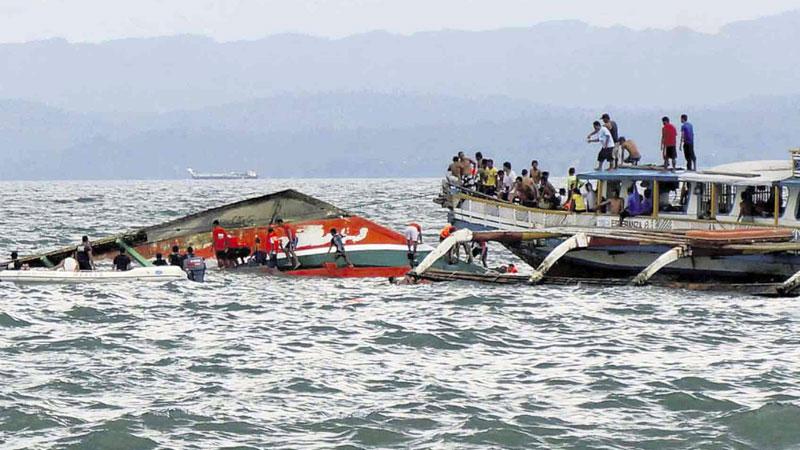
The Philippine Coast Guard has ended its search and rescue (SAR) operations for any survivors from the ill-fated sea vessel M/B Kim Nirvana that capsized off Ormoc City last week, the National Disaster Risk Reduction and Management Council (NDRRMC) said Tuesday.

“The PCG ended their SAR but is still on active monitoring,” the NDRRMC said in a report.

Thirty-five recovered bodies were brought to Pilar, Camotes Island in Cebu via BRP Batangas.

The death toll stood at 61 with one unidentified body. A total of 142 were rescued.

The passenger vessel bound for Camotes Island capsized Thursday last week minutes after it left port.

Authorities are yet to determine why the vessel sank. The number of the passengers in the manifest and the total number of rescued and dead did not match.

Wednesday 8 July 2015

http://newsinfo.inquirer.net/703536/mb-kim-nirvana-sinking-pcg-ends-search-rescue-ops

continue reading

Sierra Leone: "Why should it be a crime to volunteer on the Safe and Dignified Burial Team?"


Before the outbreak of Ebola Virus Disease (EVD) in Sierra Leone, it was a taboo in most parts of the country for young people, especially those of child bearing age, to witness the washing and preparation of corpses for burial. In line with tradition, women prepared female corpses for burial and men would prepare male bodies. However, as the death toll from Ebola escalated and the majority of burial teams were composed of only men, such a provision could not be made for women.

Seeking to preserve the dignity of their deceased loved ones, some families objected to the all-male teams attending to a female corpse. Or, burial teams would arrive in a community to find that the deceased had already been washed and dressed. Such interaction with a potentially contagious body will have resulted in new chains of transmission. To counter this, the Sierra Leone Red Cross Society specifically recruited women to join its Safe and Dignified Burial teams. There are now more than 30 female volunteers embedded into these teams across the country.

Despite their heroic contributions, these courageous women, along with their male counterparts, have frequently been ostracized and stigmatized by their communities, and even loved ones.

Mariatu Kargbo shares her experiences as a member of the Sierra Leone Red Cross Society's Safe and Dignified Burial team, and talks about what motivates her to overcome these social challenges.

Mariatu Kargbo, 38, is married with five children. She became the second female volunteer for the Sierra Leone Red Cross Society's Safe and Dignified Burial (SDB) team serving the Western Rural Area.

"It is a taboo in my tribe for women within child bearing age to witness or wash dead bodies. This often lingers in my mind because I am still within the age of being a child bearer and I want to have another child," says Mariatu.

"It is not easy. Ebola is new in our country, it is contiguous and risky. But if you are self-disciplined and go strictly according to the standard operational procedures, you will never contract it." Mariatu can speak confidently based on her experience of collecting bodies. Sadly this confidence is not shared by her relatives. "All my friends and most of my family members are afraid to come closer to me, they refuse to eat the food I prepare, and some traders in my community don't sell goods to me because I am part of the SDB team." Mariatu poses the question, "Why should it be a crime to be a SDB volunteer?"

Wednesday 8 July 2015

http://allafrica.com/stories/201507070622.html

continue reading

Remains Of 36 WWII Marines Found On Island


The bodies of 36 US Marines have been found on a remote Pacific island more than 70 years after they died fighting the Japanese in the Second World War.

Mark Noah, director of US charity History Flight, said the remains of the men were discovered after a four-month excavation on Betio Island, Kiribati.

The men were killed during fighting in the Battle of Tarawa in 1943.

Mr Noah told Radio New Zealand: "(They) had an expectation that if they were to die in the line of duty defending their country they would be brought home... that was a promise made 70 years ago that we felt should be kept."

Among the bodies is thought to be Lieutenant Alexander Bonnyman, who was posthumously awarded the Medal of Honor for conspicuous gallantry - America's highest military honour.

The citation for the medal said he led a series of assaults when Marines stormed the island, and was fatally injured while attacking a bomb-proof installation that was hindering the Marine's advance.

A statement on the charity's website said Lt Bonnyman's daughters had decided to have his remains interred at a family plot in Knoxville, Tennessee.

More than 1,000 Americans died at Tarawa, and the entire Japanese garrison of 4,800 was wiped out.

Mr Noah said the remains will be repatriated to the US this month and identified using dental records and DNA.

He added that bodies of several hundred more US soldiers still remain on the island.

"There's a lot of work to be done on the island," he said.

Wednesday 8 July 2015

http://www.hindustantimes.com/world-news/bodies-of-wwii-us-marines-recovered-from-pacific-island/article1-1367024.aspx

continue reading

Migrant boat sinks near Greek islands, more than 15 missing


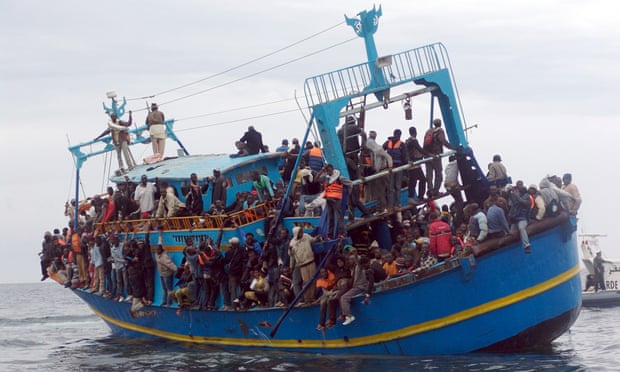
The Greek and Turkish coast guards rescued 21 people and recovered at least one body after a migrant boat sank Tuesday near two small Greek islands close to the Turkish coast. At least 15 people were believed to be missing.

The Greek coast guard said 13 of those rescued near the islands of Agathonisi and Farmakoniki were picked up by Turkish authorities, and the other eight by the Greeks. The survivors told authorities a total of between 37 and 40 people had been on board, and the coast guard said it was still searching for about 15-18 people.

Survivors had earlier told authorities they believed between 33 and 37 people had been on board.

It was not immediately clear why the boat sank, or what the migrants' nationalities were.

Tens of thousands of migrants have made their way from the Turkish coast to Greek islands so far this year, hoping to make their way to more prosperous European Union countries. The numbers have overwhelmed Greek authorities, who have struggled to process and care for the large wave of migrants, most of whom are refugees from Syria and Afghanistan.

Earlier, the coast guard had said it had picked up 518 migrants from Monday morning to Tuesday morning in 14 incidents near the islands of Samothraki, Lesbos, Chios, Samos and Kos. Scores more arrive themselves on the shores of Greek islands in inflatable dinghies.

The Turkish Coast Guard said Monday they had caught or rescued a total of 649 migrants in the Aegean in the past week.

Wednesday 8 July 2015

http://www.ctpost.com/news/world/article/Greek-coast-guard-search-for-missing-migrants-6370034.php

continue reading

Tuesday, 7 July 2015

Darjeeling: Landslide toll mounts upto 42; 16 persons missing


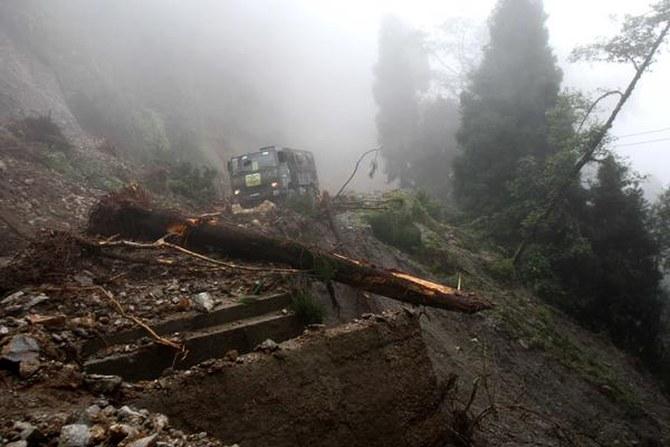
One more body was found on Monday night in the landslide-battered Darjeeling district, taking the toll to 42.

The search operation was on to recover more missing persons by Army, NDRF, SSB and other rescue teams.

Meanwhile, preliminary repair work was going on along those parts of the three national highways where damage by landslides was comparatively light, according to Public Works Department sources.

Rescue operations were underway in Darjeeling, Kalimpong and Kurseong sub divisions, where multiple landslides had also washed away highways and damaged homes.

Darjeeling District Magistrate Anurag Srivastava said the landslide-affected people were put up in camps and three such camps were set up in Mirik where 200-250 families have been sheltered.

National Disaster Response Team, Civil Defence personnel and local volunteers were engaged in the rescue work.

Rescue teams from the Sashastra Seema Bal and the National Disaster Management Authority have also been pressed into service.

Though it was not raining on Friday, the sky was overcast.

Rescue was hampered at Mirik on Thursday evening due to a downpour.

The DM said the roads where minor landslips occurred have been cleared while the ones with major landslides, like Siliguri-Kalimpong route, will take some time.

The landslides had caused extensive damage to NH-10 and NH-55, cutting off vital road links to the region.

Toy train services between Darjeeling and New Jalpaiguri also remained suspended following damage to the tracks.

Boulders had rolled down on the tracks at Nimkidara, 2 km from Darjeeling, Darjeeling Station Manager Suman Pradhan said.

Even after the boulders could be removed, tracks were found to be damaged leading to the suspension of the toy train service, he said.

The chief minister on Thursday visited areas in Mirik which were worst affected by landslides, met families of the victims and distributed relief and cheques.

Banerjee reached the affected area taking a detour as the road was damaged by landslides.

Rijiju visited relief camps in Tingling area besides meeting the injured in hospitals.

Tuesday 7 July 2015

http://www.thehindu.com/news/national/other-states/darjeeling-landslide-toll-increases-to-40-16-persons-missing/article7382673.ece

continue reading

Cyprus: Working together for Missing Persons


The European Commission recently organised an event to mark the EU’s important contribution to the Committee on the Missing Persons (CMP) in Cyprus and to acknowledge the importance of the work carried out by the young Greek Cypriot and Turkish Cypriot scientists working there.

Since 2006, the EU has supported the CMP efforts with a financial contribution of €14.7m.

According to an announcement on the happening, opening remarks at the event were made by Normunds Popens, Deputy Director General in the European Commission, Cihan Sultanoglu, Director of the UNDP Regional Bureau for Europe and the CIS, and the three CMP members, Paul-Henri Arni, Nestoras Nestoros and Gรผlden Plรผmer Kรผรงรผk.

During the event the video ‘The faces of the CMP’ was screened, in which the scientists reaffirmed their strong commitment to the project.

All the speakers highlighted the CMP’s very important work as one of the most successful confidence building measure helping to cope with a painful chapter of the history of Cyprus and fostering cooperation.

Since 2006, the work of CMP helped in the return of the remains of 595 missing persons to their families.

The CMP’s humanitarian mandate contributes to providing relief to the families of missing persons and to build trust and confidence amongst Cypriots, paving the way towards reconciliation in Cyprus. The European Commission stands ready to continue its support to this project.

The CMP was established in April 1981 by agreement between the Greek Cypriot and the Turkish Cypriot communities under the auspices of the UN. This bi-communal committee has the mandate to establish the fate of missing persons without attributing any responsibility for the cause of death.

In order to further improve the trust between the two communities, the project aims to increasingly involve the families of the missing persons in the implementation, adding events all over Cyprus and abroad to the information sessions already carried out in schools.

Tuesday 7 July 2015

http://in-cyprus.com/working-together-for-missing-persons/

continue reading

Hospital workers selling organs of dead bodies for high prices in Uttar Pradesh


In a shocking revelation, the employees of the post-mortem house at the medical college hospital in Uttar Pradesh's Meerut town, about 450 kilometres from here, were found to be "selling" organs of the dead bodies, which were sent there for conducting autopsies.

It was found that the organs were sold to the "tantriks" (exorcists) and practitioners of occultism for hefty prices. A sting operation, conducted by a resident of the town, unearthed the shameful and shocking trade.

Kapil Kumar, who conducted the sting operation, said that the employees at the post mortem house auctioned the organs of the dead bodies to the tantriks and occult practitioners. "The organs were sold to the highest bidders," Kumar said.

He said that the "hearts" of the dead bodies were in great demand and fetched the highest price.

Kumar also said that the employees told him that the "organ trade" was in the knowledge of the senior officials and the doctors. "The money goes to all," Kumar said quoting one of the employees, who, sold him an organ.

As the sting operation video went viral, the district authorities went into a tizzy. A magisterial inquiry was later ordered into the matter. "It is a very serious issue...a magisterial probe has been ordered...we will take stern action against any one found guilty," district magistrate Pankaj Yadav said.

Exorcism was quite common in parts of the state and could be witnessed at some of the ghats of the Ganges at Varanasi and at places Gorakhpur, Mirzapur and some other districts.

There have been reports of sacrifice of little children by the "tantriks" to attain "supernatural" power or trace some hidden treasure.

Tuesday 7 July 2015

http://www.deccanherald.com/content/487543/organs-dead-bodies-sold-high.html

continue reading

Tunisia recovers bodies of Italy-bound migrants


Tunisian coast guards recovered the decomposed bodies of five migrants who apparently drowned at sea as they sought to reach Italy from conflict-hit Libya, an official said on Monday.

The bodies of the African migrants were spotted Saturday afternoon off the coast of Ben Guerdane in southern Tunisia, said the civil defence official.

The report came after coast guards on Sunday rescued 17 Tunisians who had been trying to make their way to Europe on a rubber dinghy, according to the defence ministry.

The boat broke down off the northern coastal town of El Haouria, a spokesman said.

Tunisian and Italian authorities have been at the forefront of rescue efforts for a flood of mainly African migrants fleeing conflict in Libya and bound for Europe on unseaworthy boats that run into trouble.

In June, Tunisia's navy rescued 356 migrants, mainly Africans but also including Syrians and Pakistanis who had left Libya on a makeshift vessel on their way to Europe.

People smugglers have taken advantage of the chaos gripping Libya since the 2011 uprising toppled dictator Moamer Kadhafi to step up their lucrative smuggling business.

But the Mediterranean crossing is perilous and hundreds of migrants have died trying to reach Europe this year alone, while more than 20,000 have reached Italy since the beginning of the year.

Tuesday 7 July 2015

http://www.thelocal.it/20150707/tunisia-recovers-bodies-of-italy-bound-migrants

continue reading

First victims of deadliest migrant shipwreck given funeral in Italy


Italy held a funeral service on Tuesday for 13 migrants who died in the worst shipwreck in the Mediterranean in recent history, while the navy continued its search for other victims of the disaster.

More than 700 people, most of them locked below deck, were believed to have drowned in April. Their overloaded fishing boat capsized after colliding with a ship that had come to their aid some 70 nautical miles off the coast of Libya.

The Italian navy last week retrieved the first bodies from the wreck, which is lying at a depth of about 370 metres (1,200 feet), using remote-controlled vehicles and a submersible basket to haul up the remains.

With the recovery mission still in full swing, simple wooden coffins carrying the bodies of 13 unidentified migrants were carried into the Palazzo della Cultura in Catania, in eastern Sicily, for an inter-religious service.

"Today, we are gathering here to mark the loss of the lives of other human beings, taken away by the sea. Every time it happens we think it is the last time, but unfortunately that is not the case," said Ismail Bouchafa, the imam of Catania.

The bodies were later taken to Catania cemetery but were not immediately buried. The authorities are still deciding where all the victims should be interred.

Tens of thousands of migrants have crossed the Mediterranean so far this year in the hope of reaching Italy or Greece. An estimated 2,000 have drowned.

Tuesday 7 July 2015

http://uk.reuters.com/article/2015/07/07/uk-europe-migrants-italy-idUKKCN0PH10920150707

continue reading

Philippine National Police fails to identify one of 74 Kentex fatalities


One of the 74 victims who died in the Kentex fire last May 13 remained unidentified as the Philippine National Police Crime Laboratory failed to gather DNA samples to identify the body tagged as victim No. 35 that was extracted from the gutted factory in Valenzuela City.

“We have exhausted all means of identification. This is conclusive. One of the 74 victims is unidentified and that’s our findings. We cannot extract DNA from victim No. 35 therefore, we cannot identify him,” Senior Superintendent Emmanuel Aranas, PNP Crime Laboratory acting director, said in a press briefing on Tuesday.

But last June, Kentex Disaster Victim Identification team composed of Crime Laboratory personnel went back to the scene for a final search for the remains of two more victims.

The reinspection yielded the remains of Jony Descallar and Marvi Marcelino. They were added to the previous count of 72 victims in the deadly fire that struck the rubber slippers factory owned by Kentex Manufacturing Corp.

Marcelino and Descallar were added to the 68 victims who were identified through DNA test while three others were physically identified. “Overall, there were 28 male and 45 female victims, with one unknown gender,” Aranas said.

During the final search conducted on June 11, 19, 20 and 22, the DIV team gathered small pieces of bone remnants from different sites of the second floor of the building.

“A fragmented tibia bone was also recovered from the second floor far opposite where most of the burnt bodies were recovered, a strong indication that this could belong to another individual,” Aranas said.

The bodies of Descallar and Marcelino were then identified when the remnants were matched with the DNA samples from the buccal swab samples of their relatives.

“We insisted na kahit dangerous ‘yung area ay nag-search ulit kami right after maalis yung mga nakaharang na debris para ma-identify lahat ng victim,” Aranas explained.

Aranas said that the crime laboratory has coordinated with the Valenzuela City government about the two recently identified fatalities so that death certificates may be issued to their relatives.

While there remains one unidentified victim, Aranas said the DVI team were also not able to identify the relative of one of the 74 claimants. He explained that they cannot simply assume that the unidentified remains would belong to the remaining claimant.

Asked if it would be possible that Victim No. 35 is the relative of the claimant, Aranas said: “Yes, it’s possible. But based on our international system policy, we have to positively identify the victim first through scientific means. We can’t just assume that the claimant is a relative of the unidentified victim.”

This also means the claimant will not be able to avail the benefits as he has no death certificate of a relative to present.

No other means

With the failure to identify his/her remains, Victim No. 3 will remain interred at the Arkong Bato public cemetery in Valenzuela City. “‘Yung skull niya ay masyado nang nasunog. Wala na kaming makuha in any part niya na viable for DNA extraction,” Aranas said.

Asked if there are no other means to identify Victim No. 35, Aranas said: “Yes, but we exerted all our efforts.” He said the DVI had attempted to recover “even the smallest property like a piece of jewelry if she’s a female” of the said victim.

“It was very unfortunate na wala na talaga kaming makuha na pwedeng i-connect sa Victim no. 35,” he said.

But Aranas explained there is an existing law that says that a person may be legally declared dead after five to seven years despite the absence of his remains proving his death.

Tuesday 7 July 2015

http://newsinfo.inquirer.net/703541/pnp-fails-to-identify-one-of-74-kentex-fatalities

continue reading

Families urged to report relatives suspected killed in Hercules crash


The North Sumatra Police’s Disaster Victim Identification (DVI) team has called on people to report to the authorities any relatives feared to have died in a military plane disaster last week.

The team asked families to report to the ante mortem post at Bhayangkara Hospital on Jl. Wahid Hasyim in Medan to help identify 10 remaining bodies and 22 body parts collected from the crash site.

The team chairman Sr. Comr. Setyo Purwanto said that the team had collected DNA from the 10 bodies and the 22 body parts to be matched with DNA collected from family members.

“If the families of the victims do not report to the ante mortem post, the 10 bodies and 22 body parts cannot be released,” Setyo said at the hospital on Monday.

In that case, he said, the bodies and body parts would be kept in cooling crates at the hospital.

Family members were also needed, Setyo said, so that their DNA could be matched with the DNA of the human remains.

Setyo also called on the families to bring documents, such as certificates or unwashed clothes, belonging to missing relatives.

Certificates belonging to the victims, he said, would be needed to be matched with the post mortem data taken from the bodies of the victims, while unwashed clothes were needed to check victims’ DNA.

Since the remaining bodies and body parts were moved from Adam Malik Hospital to Bhayangkara Hospital on Saturday, there have been no reports of missing people.

Setyo revealed that 119 people killed in the crash had been identified. Of them, 114 were the bodies of passengers on board the Hercules C-130 aircraft, while the remaining five identified victims had been on the ground.

Of the 114 bodies belonging to the passengers of the plane, 83 have been flown to different parts of Indonesia; the remaining 31 victims were residents of North Sumatra. All have now been buried by their families.

Flights carrying bodies from a hangar at Soewondo Air Base in Medan ceased on Saturday, but the Air Force said it would re-open the hangar if necessary.

“If more bodies are identified and have to be send to their respective families soon, then the Air Force is ready to fly them at any time,” said the commander of Air Force Operation Command I, Air Vice Marshal Agus Dwi Putranto.

The aircraft crashed into a residential area on Jl. Jamin Ginting, near Polonia Airport in North Sumatra’s capital of Medan, shortly after taking off from the Soewondo Air Base last Monday.

All crew and passengers perished in the crash, and the plane also crushed a number of buildings.

Compensation claims, meanwhile, have begun to be filed by the owners of properties damaged in the accident.

The owner of the Beraspati hotel, Suwondo, said he had suffered financial losses of some Rp 100 million from damage caused by the aircraft.

Earlier, Air Force Chief Marshal Agus Supriatna said that his office would compensate all damage to buildings and other property, including cars, caused by the Hercules crash.

Tuesday 7 July 2015

http://www.thejakartapost.com/news/2015/07/07/families-urged-report-relatives-suspected-killed-hercules-crash.html

continue reading

Darjeeling landslides: Rescue operations nearing end


Rescue operations in landslide-hit Darjeeling hills in West Bengal may be over in another two-three days, an official said here on Tuesday.

"We are apprehensive that more bodies can be recovered in the ongoing rescue operations and it may be over after two-three days," officer-in-charge of the district disaster management cell Anindya Sarkar said.

He said a favourable weather in the hills is aiding the rescue operations.

Thirty-five bodies have been recovered till Tuesday noon. Eight people are still missing.

However, several sections of NH-10 connecting Gangtok and Siliguri have been damaged and some time would be needed for repairing them.

The damage is critical especially in Sheti Jora, around 7.5 km away from Siliguri on NH10, where another landslide has been predicted in the ongoing monsoons.

"It will take time to restore the road (NH-10) and until the monsoons are over the situation may not improve," an official in the district cell had said earlier.

However, the official said that the vehicles are plying under risky conditions in some pockets of the highway.

The General Reserve Engineering Force is carrying out the highway restoration and repair works.

The National Disaster Response Force (NDRF), the Sashastra Seema Bal (SSB), the state disaster management department and the Army are jointly carrying out the rescue works.

Tuesday 7 July 2015

http://zeenews.india.com/news/west-bengal/darjeeling-landslides-rescue-operations-nearing-end_1626068.html

continue reading

Monday, 6 July 2015

Malaysia buries another 24 human trafficking victims


Malaysia provided Muslim burials Monday to 24 human trafficking victims, bringing to 99 the total number of suspected Rohingya and Bangladeshi migrants laid to rest after bodies were found near the Thai border.

Noh Dahya, Islamic Religious Department director in northwest Kedah state, was cited by state news agency Bernama as saying that the seven remaining victims out of the 106 discovered last month would be buried after the Eid ul-Fitr holiday.

Eid ul-Fitr comes at the end of the holy month of Ramadan, and is expected to fall on July 17 this year.

On June 9, police said they had recovered the remains of 106 suspected human trafficking victims from gravesites found in the town of Padang Besar along the country’s northern border.

The rituals held in the early hours of Monday morning were the fourth round of burials, and saw the remains of 24 male victims interred in a single gravesite.

The first burial of trafficking victims was held June 21, when nineteen men and two women were laid to rest in two separate graves, with the rituals attended by residents of Kampung Tualang and other villages.

The remains of 30 other victims were buried June 29, followed by another 24 on July 4.

Police chief Khalid Abu Bakar had earlier said that security forces usually did not patrol the hilly border area where the bodies were found, but began to focus there after Thai police discovered dozens of bodies belonging to Rohingya and Bangladeshi migrants in May.

Following the discovery of human trafficking camps in southern Thailand in early May, authorities launched a crackdown that led to smugglers fleeing and boatloads of migrants then turning up on Thai, Indonesian and Malaysian shores, while thousands more remained at sea.

Since a tri-nation conference on the Southeast Asian boat people crisis May 20, Indonesia and Malaysia have said they will take the Rohingya in for one year, ascertain which are asylum seekers and which are economic migrants, and then the international community will find homes for them.

Monday 6 July 2015

http://news.videonews.us/malaysia-buries-another-24-human-trafficking-victims-0627388.html

continue reading

12 dead in China factory collapse 

Br> Twelve people died after a shoe factory collapsed in eastern China during a weekend shift. More than 30 persons were injured, officials said Sunday.

Three other people were missing in the collapse in the Zhejiang province city of Wenling, and nine people escaped.

Rescuers pulled 42 people from the rubble and sent them to a hospital, where nine of them died, the Wenling city government said on its microblog. They pulled two bodies from the wreckage on Sunday.

The cause of the accident is under investigation.

More than 50 workers were in the building in the city of Wenling in Zhejiang province when it came down on Saturday afternoon, state-run China Central Television (CCTV) and the official Xinhua news agency reported.

Thirty-three suffered injuries, four of them serious, the report said. Nine others escaped and three were unaccounted for.

Xinhua said earlier the cause of the collapse was being investigated.

Photos circulating on Chinese social media showed a man being carried on a stretcher by what appeared to be police officers, while rescuers and other personnel stood on top of the rubble.

Building collapses and other industrial accidents are not uncommon in China, where many structures and facilities are old, safety procedures can be lax and rebuilding has not kept up with the country’s remarkable economic growth.

China’s top safety watchdog in May blamed poor construction and weak safety standards for a fire at a nursing home that left 38 people dead. In April, almost 30,000 people were evacuated after a fire broke out in a Chinese chemical plant which blazed for nearly 50 hours before the flames were finally extinguished.

And in November, a fire at a coal mine in northeastern China killed 26 workers, in one of the country’s most highly accident-prone industries.

Monday 6 July 2015

http://www.arabnews.com/news/772156

continue reading

Colombia to exhume Medellin graves: official


Colombian authorities will this month begin the grisly task of carrying out what could be the largest exhumation of unmarked graves in the conflict-torn country's history, local media reported Sunday.

Caterina Heyck, who is overseeing the operation for national prosecutors, told El Tiempo newspaper that the exhumation would begin July 27 in the Commune 13 neighborhood of Medellin.

Investigators believe this area in Colombia's second city has a large number of corpses of people killed in the country's decades-long conflict.

Heyck said the process would be "complex" because investigators would need to match any eventual DNA samples to those given by relatives of missing people.

The South American nation is still in the grips of a half-century civil war that has drawn in left-wing guerrillas, right-wing paramilitaries and drug gangs at various times, killing more than 220,000 people and uprooting as many as six million.

There is no official number of missing people, though estimates put the figure at between 15,000 and 20,000.

According to Heyck, Colombia has previously exhumed 5,958 bodies throughout the country, of which 3,224 have been returned to families.

The government opened peace talks in November 2012 with the largest rebel group, the Revolutionary Armed Forces of Colombia (FARC).

It has also started talks with another leftist guerrilla group, The National Liberation Army (ELN).

Monday 6 July 2015

http://news.yahoo.com/colombia-exhume-medellin-graves-official-183434965.html

continue reading

Philippine ferry death toll rises to 61


The death toll from a ferry that capsized in Ormoc City has risen to 61, the coast guard said Sunday, indicating that the vessel was overloaded.

Whether the ferry was carrying too many people will be part of an investigation into last week’s disaster that saw the boat’s owner and crew charged with murder.

Coast guard figures released on Sunday showed 61 people had died when the wooden Kim Nirvana capsized, with at least 145 listed as survivors.

This would mean at least 206 people were on board, exceeding the 194 passengers and crew the boat was authorised to carry.

The heavy cargo the ferry was transporting may also have played a role, authorities have said.

'The number of bodies is more than we expected,' said Captain Pedro Tinampay, the regional coast guard chief, refusing to speculate how many might still be missing.

Only 173 passengers and 16 crew were listed on the boat's manifest.

The crew have been accused of reckless behaviour, with an initial police investigation and interviews with survivors indicating the vessel turned abruptly causing it to capsize.

The police investigation is separate from a coast guard enquiry, which will primarily determine the cause of the mishap. However, the coast guard may also recommend criminal and administrative charges.

On Sunday, a coast guard search and rescue vessel transported the bodies of 42 residents of Camotes - where the ferry had been heading - back to their island home for burial.

The bodies were ferried by the Coast Guard’s BRP Batangas.

Relatives watched gravely as rescue personnel carried dozens of white coffins onto the ship.

The Kim Nirvana, which has been lifted out of the water with a crane, lay on a ramp in the background.

As well as passengers the boat had also been transporting sacks of cement, rice and fertiliser which would have weighed as much as 7500 kilos.

Pilar Mayor Jesus Fernandez Jr. said the whole town is in mourning because 39 of those killed were residents of Pilar.

The Public Attorney’s Office also reached out to the families of the victims.

In a text message, PAO Chief Persida Rueda-Acosta said the District Office of PAO in Ormoc will provide legal assistance to the victims and their families.

Monday 6 July 2015

http://www.manilatimes.net/toll-from-ferry-disaster-hits-61/197828/

continue reading