Sunday, 28 April 2013

Fire breaks out at collapsed factory in Bangladesh, 3 rescuers injured


A blaze broke out in the wreckage of a Bangladesh factory block Sunday, killing a woman whose 110-hour battle for survival had touched the nation following its worst industrial disaster, the country's fire chief said.

Earlier, the owner of the complex, property tycoon Sohel Rana, was detained as he attempted to cross into India and was flown back to Dhaka where he will face charges over the building's collapse which has so far claimed 381 lives.

Fire fighters were seen weeping live on television after failing to save the female garment worker, a widowed mother-of-one identified as Shahnaz, whose courageous struggle became a symbol of hope in the wake of the catastrophe.

"The fire broke out as we were cutting a beam to bring out what we believe was the last remaining survivor from the collapsed building. We managed to douse it, but as we came back we saw her dead," Ahmed Ali told AFP.

"She was a brave lady and fought until the end. We worked for 10-11 hours today just to try to bring her out alive. We took the challenge but we lost."

Three rescuers were also injured in the blaze which was put out in a matter of minutes, fire service director Zihadul Islam said. More bodies are expected to be found as workers, who had been digging manually to avoid harming survivors, switched to using earth-moving equipment to lift slabs and reinforced concrete to clean up debris.

Fire fighter Abul Khayer, who spoke to Shahnaz throughout the rescue attempt, said she had an 18-month-old son. "She clung on for the boy... She told me you're my brother, please don't leave me alone."

The eight-storey Rana Plaza, which collapsed Wednesday morning, violated building regulations like many structures around the capital Dhaka.

Rapid Action Battalion chief Mukhlesur Rahman told AFP that tycoon Rana "is the one most responsible for the accident. The building was declared abandoned. But he forced the garment factories and workers to work on the building."

As Rana's arrest was announced, garment workers and relatives of the missing cheered and began shouting "Hang Rana, Hang the killer!"

A police spokesman said they had also arrested Anisur Rahman, owner of Ether Tex garment factory. He is the fourth garment factory owner held by authorities.

By Sunday evening, the confirmed death toll had reached 381, according to police officer Liakot Hossain.

About 2,500 people have been rescued from the scene of the disaster, some only after undergoing amputations to free them from the pancaked slabs of reinforced concrete.

Sunday 28 April 2013

http://www.google.com/hostednews/afp/article/ALeqM5j7AXPhyjej1OKAzJYxAxbALvTUxw?docId=CNG.1c2a4d71622d3abe9dd917fbb9bc4788.51

continue reading

Three more fishermen's bodies found off Goa coast after mishap


The joint search operation by the Indian Navy and the Indian Coast Guard today recovered three more bodies of fishermen who had drowned after their trawler was hit by a Coast Guard offshore patrol vessel on April 25.

"Three more bodies of fishermen who were on board fishing trawler 'Sea Messiah' which capsized after being hit by Indian Coast Guard offshore patrol vessel 'ICG Vaibhav', were recovered from around where the accident happened," Goa region's Indian Coast Guard Commander S D Bhanot told PTI today.

He said that a fleet of six ships – three each of the Indian Navy and Indian Coast Guard, besides a Dornier aircraft and a Chetak helicopter, is still searching for two fishermen who are still missing.

"The search is in full swing," Commander Bhanot said.

With the recovery of three bodies, the total number of casualties in the mishap has gone reached four, after one body was recovered on the day of the accident.

Officials stated that 23 fishermen were on board, of which six went missing, while the rest were saved by another fishing trawler.

The Indian Coast Guard has already initiated a Board of Inquiry into the accident, whose report will be submitted soon, Commander Bhanot said.

Meanwhile, the Goa police have already registered a case in this regard, but events took another twist when police officials from Mumbai's Yellow Gate police station arrived in Goa on Saturday to investigate the incident.

Indian Coast Guard officials had earlier stated that the accident happened 13 nautical miles off the Agonda coast in Goa's southernmost Canacona taluka.

Goa Chief Minister Manohar Parrikar had expressed his helplessness to book the Coast Guard official reportedly responsible for the offence, as the accident happened outside state waters.

Sunday 28 April 2013

http://www.deccanherald.com/content/329064/three-more-fishermen039s-bodies-found.html

continue reading

4 Dead, 4 Missing in SW China's Landslide


A landslide in Bijie, Southwest China's Guizhou Province, on Saturday afternoon had killed three villagers and left five others missing by late Saturday, local authorities said.

Eight villagers were buried after the landslide hit Mawo village near the city of Bijie at 12:50 pm, said an official with the publicity department under the CPC Qixingguan District Committee of the city, which administers the village.

Two residential structures were buried, the official said, adding that an all-out rescue effort is under way.

Firefighters are still detecting the missing with devices.

Sunday 28 April 2013

http://www.globaltimes.cn/content/778107.shtml

continue reading

40000 visitors

To all readers. Many thanks for supporting the DVI blogger website. As of today, this website has attracted over 40000 page visits since its creation just over a year ago with 200-300 page visits on average a day. Its now indeed a global website, attracting readers from over 100+ countries. Visitors are mostly from the United States, United Kingdom, Germany, Russia, Canada, Australia, India, Brazil, France, Italy, Poland, Mexico and African countries. Due to its success, its now highly ranking in Google searches for disaster related news. I hope you will continue to visit this blog and make it one of the prime websites for global disaster victim identification news.

Sunday 28 April 2013

continue reading

Cranes called in at Bangladesh disaster site


Bangladesh rescue teams working at the site of a collapsed factory bloc have called in heavy-lifting equipment with hopes of finding more survivors fading, fire chief Ahmed Ali told AFP Sunday.

"Apparently there is no more sign of life under the rubble," he said. "Together with the army we have decided to use heavy equipment like cranes to remove the debris and slabs vertically from mid-day today.

"Our hope is that we may still find some people alive under the debris."

Sunday 28 April 2013

http://www.globalpost.com/dispatch/news/afp/130428/cranes-called-at-bangladesh-disaster-site-fire-chief

continue reading

Igbogun village motor accident: unidentified victims get mass burial


It was a day of outpouring of emotions, crying and wailing. Friends and family members of victims of the April 5 motor accident that occurred in Igbogui village in Ovia North East Local Government Area of Edo State, created time to say bye-bye to their loved ones at the scene of a mass burial at a cemetery in Benin City. BANJI ALUKO, who captured the melancholic mood of the people at the cemetery, reports.

IF Nnaemeka Anyawu knew that death was awaiting him on the road on Friday, April 5, he surely would not have embarked on the infamous journey that violently took his life that date. According to Judith Anyawu, his sister, Nnaemeka had left that morning to see their parents in Enugu, where they live. “He left early in the morning and I followed him to the door as he waved goodbye. I never knew I would not see him again,” Judith said of his 31-year-old brother who graduated from the Enugu State University of Science and Technology (ESUT) with a degree in Geology and Mining.

At the scene of the mass burial, Judith delivered an elegy-like short speech to the remains of his brother and those of 50 others who were all put into the ground early that morning. Describing her late brother as tall, chocolate-coloured, social and handsome, she asked why death took her brother at his prime. “Nnaemeka, you came to this world and departed quickly. You didn’t tell me it would all end this way. Anyway, God knows the best,” she offered while trying to control the tears that flowed freely from her eyes.

Off course she was not alone as families and friends of the victims of the accident involving an articulated vehicle belonging to the Dangote Group, a fuel-laden petrol tanker and an Enugu-bound luxury bus belonging to the Young Shall Grow Motors besiege the First Cemetery, Benin to pay homage to their departed loved ones. For many of them, the entire episode was like a dream as they watch as the remains of their people were neatly parked in polythene body bags and put into the dug ground that served as the mass grave.

While Judith only lost a brother to the accident, Kelvin Aniekwe was more unfortunate as he lost his wife and two young daughters.

Wearing a pair of black jeans, black shirt and a black sunshade, he could not offer a word throughout the time the bodies of the victims were conveyed from the lorry to the time they were put into the ground; he was just looking. Even when Apostle Barnabas Chukwukere of End Time Soul Winners Outreach, Benin City, prayed for the repose of the souls of the victims, he appeared not to betray emotions as he fixed his eyes on the mass grave in front of him.

His brother, who accompanied him to the site, informed that his brother’s late wife had left Lagos for Enugu with the two little girls to see her mother, the children’s grandmother. He was particularly concerned about the cause of the accident as he shouted, “Government should do something about this needless loss of lives o ! They should really do something. They must ensure that trailers and tankers are not allowed to move at night so that this kind of carnage will not occur on our roads again because if a petrol tanker was not involved in the accident, these people would not have died.”

There was also the pathetic story of Chika Nwafor, an accounting consultant with the Federal Airport Authority of Nigeria (FAAN) whose close friend, Billy Anyaji, said could have missed the accident. “To me, it was one bad dream. Chika Nwafor was not somebody who just passed by. He was a blessing to everyone he came across. The question is what is the reason why good things don’t last? I had accompanied him to Ekene (Motors) that very day and not to Young Shall Grow. When I heard about the accident, I went to Ekene (Motors) because that was where I dropped him. What happened and how he ended up at Young Shall Grow, I don’t know but God understands everything that happened in this world. I think Ekene (Motors) had a problem and he crossed over after I left. He came to Lagos on Thursday from Enugu and slept in my house. The following day, he was on the road again to attend a wedding in Enugu on Saturday and see his family. I was telling him that he was a workaholic and that he needed to give himself a rest. I never knew our friendship would in this world would end this way,” he said mournfully.

The story of Amaka Okonkwo, a final year student of History and International Studies of the Nnamdi Azikwe University, also evokes pity. Ubaka Onochie, his uncle who came from Lagos for the burial said Amaka was returning to Awka from Lagos where she had gone to enjoy the Easter break. “Amaka Okonkwo was a lovely young girl in her early twenties. The last time I saw her was January. Two weeks before the accident, we spoke on phone and she told me that she would be coming to Lagos during the Easter break.

“My sister called me that she learnt she died in a motor accident and I immediately put a call through to his brother, who confirmed that her name was among the people who boarded a ‘Young Shall Grow’ luxury bus that was involved in an accident. I immediately traveled down to Benin where the said the corpse were deposited. On getting to UBTH, I was taken to the morgue but I could not identify the corpse. None of the corpse was identifiable because they were all roasted alive.

Speaking at the scene of the mass burial, the Chief Mortician of the University of Benin Teaching Hospital, (UBTH) Mr Wilfred Aikhonogie, said 51 out of 53 bodies of the accident victims were given the mass burial as their bodies could not be identified while two victims, who could be recognised, were released to their families for burial.

It was not that the family members were contented that there people should be given mass burial anyway. Ani Justin, who lost a brother, Chibuzor, to the accident said he made frantic efforts to identify his brother. “I have no option but to accept the fact that my brother would be buried in another land,” he said while Chika Odiamah said he spent three days at the UBTH trying to identify his brother but when he could not, he finally agreed to the mass burial.

There were also knocks for the transport company over the manner the accident was handled. Billy Anyaji narrated his experience in the hands of the transport company, berating them for what he called their inhuman treatment. “I first went to Ekene Motors because it was there that I dropped my friend. I later went to the Young Shall Grow office at Jibowu. The people there denied that they didn’t have the identity of the people in the bus. They asked us to go to their headquarters at Maza Maza. On getting to Maza Maza, they said I should go to the computer room. From the computer room, they asked me to go to another place at Navy Town. When we got to Navy Town, I knew they were just dribbling us and that my guy had died. Throughout this period at their office, they were loading as if nothing happened.”

The same thing goes for Ubaka Onochie who said that the transport company kept families members of the victims in the dark. “They didn’t show enough concern and there were laxities on their part. They did not provide useful information and they kept turning people around. When I left UBTH on Monday, three days after the accident, none of the managers of the company had visited the hospital,” Ubaka stated.

The families were further peeved when they learnt that officials of the transport company were not present at the cemetery. Even when one of the bereaved family members shouted that the transport company was not present at the burial site, nobody said anything contrary to the effect, accentuating the fact that the transport company did not actually send any representative to the burial.

However, a policeman who spoke with the reporter said the decision of the transport company to shun the burial was understandable. “If they had sent any representative, that person could have been killed here. Remember they were accused of not doing enough when the accident happened. That may explain reason they did not send anybody here,” the policeman said while the burial was ongoing.

Sunday 28 April 2013

http://tribune.com.ng/news2013/index.php/en/component/k2/item/10568-igbogun-village-motor-accident-crying-wailing-as-victims-get-mass-burial

continue reading

Japan: Survivors of 3/11 tsunami disaster issue newspaper to pull people together


Iwate Prefecture—Disaster survivors who lost family members and friends in the 2011 earthquake and tsunami are publishing a newspaper to help others overcome their grief.

The Inochi Shimbun (Newspaper of life) was started in tsunami-hit Kitakami, Iwate Prefecture, to bind people affected by the disaster on March 11, 2011, that killed more than 15,000 people and left 2,600 missing.

Ruiko Sasahara, 40, who has restored about 400 bodies of disaster victims as a volunteer, is the chief editor of the newspaper, which is produced in an office she owns in the city.

“People can live when they have ties with others. But the size of a circle one can connect to is limited,” Sasahara said. “I hope this newspaper can connect people. I hope it will be delivered especially to people who feel isolated.”

Tomoe Ito, one of the editors at the Inochi newspaper, is a 35-year-old part-time teacher at a junior high school in Kitakami. She met Sasahara in March last year, a year after the disaster.

“There isn’t anyone else other than her who can understand my feelings,” Ito said she thought when she read a newspaper article about Sasahara.

Ito, whose 59-year-old mother and 93-year-old grandfather were killed in the tsunami, contacted Sasahara.

“A year ago, all I could do was to live day by day,” Ito said. “After I met Sasahara and talked about many things, I was able to stand and live on my own feet.”

Another editor at the Inochi newspaper is Yuya Kawamura, 28, a resident of Morioka, Iwate Prefecture. His wife, 20, and two sons aged 11 months and 7 days, died in the disaster.

Kawamura had lost his will to live, but after he started working as a mortician, he started to think more about life and death. He also said Sasahara taught him many important things for his job.

The starting point of their activities dates back about half a year ago.

Last fall, the future editors of the Inochi newspaper talked about the meaning of life and death with a young person whose friend died in the disaster. They also discussed how they felt when they identified bodies in morgues.

They came up with the idea of preserving their discussions in written form, and decided to publish a newspaper to share their feelings and thoughts with the outside world.

“I have managed to accept the death of my family members,” Ito said. “But there are still many people around me who cannot. I want to deliver our newspaper to these people and live together with those who read it.”

The first edition of the newspaper was completed on March 4, a week before the second anniversary of the Great East Japan Earthquake.

Sasahara currently distributes the newspaper when she gives speeches across Japan. She said audience members handle the newspaper delicately and take it home.

Sasahara and her colleagues plan to publish the newspaper regularly and are soliciting written contributions.

The address of the Inochi newspaper’s office is: Inochi newspaper editorial desk c/o Sakura Inc., 18-17-5 Kamiezuriko, Kitakami-shi, Iwate Prefecture 024-0071, Japan.

Sunday 28 April 2013

http://ajw.asahi.com/article/0311disaster/life_and_death/AJ201304280041

continue reading

Saturday, 27 April 2013

761 people still missing in Savar tragedy


Rescuers have come up with a list of 761 people who are still missing in the worst building collapse in the country.

The list has been made as per information given by the relatives of those who used to work inside the Rana Plaza, Savar Model Police Station Inspector (Investigation) Aminur Rahman told bdnews24.com.

”We have put the names on the list checking the identity cards and photos of those missing until 12am on Saturday,” he said.

The high-rise commercial building came crushing down on Wednesday morning. According to local people, around 3,500 employees were working in the five garment factories inside when the tragedy struck.

Since then, thousands of people thronged the site with photos to get their relatives dead or alive.

Rescuers have pulled out more than 2,348 people alive from the ruins so far.

A temporary control room has been set up near the Savar Bus Stand close to the site of the disaster to provide the distressed families with information.

Official estimates put the deaths at 304 at 5:35pm Friday, Inspector (Investigation) Aminur Rahman of the Savar Model Station told bdnews24.com

So far, 286 bodies have been handed over to the relatives, he said and added that 23 bodies have been sent to the Dhaka Medical College and Hospital as they had started to decompose.

Shafiul Alam is one of those anxious about the fate of his dear ones at the site.

His niece Nazma Akhter,20, who hails from Barisal’s Tungibaria is missing.

Alam told bdnews24.com Nazma had joined the EtherTex on the fifth floor of the nine-storey commercial building only a year ago.

“I have looked everywhere … nearby hospitals, CMH, the row of dead bodies being piled up on the ground, but did not find her,” he said.

People like Lutfor Rahman, Awal Bepari also have come there from across Bangladesh to locate their relatives.

Saturday 27 April 2013 http://bdnews24.com/bangladesh/2013/04/26/761-people-still-missing-in-savar-tragedy

continue reading

Rescuers find 50 survivors in Bangladesh factory collapse


Rescuers found 50 people alive late Friday in the rubble of a Bangladesh garment factory complex making Western brand clothes that caved in two days earlier, leaving over 300 workers dead.

A total of 304 people are so far known to have died after the eight-storey building collapsed in the industrial area of Savar town on the outskirts of the Bangladesh capital Dhaka on Wednesday morning, according to the army.

"We have found around 50 people still alive at several places on the third floor after digging tunnels. We hope we can rescue them by tomorrow morning," said Sheikh Mizanur Rahman, deputy director of the Bangladeshi fire service.

The discovery of more survivors brought new hope to the thousands of desperate relatives huddled at the disaster site, but an intense stench of decomposition suggested many bodies remain trapped in the rubble.

"We've rescued about 80 people alive from the rubble today (Friday)," Rahman added. More than 2,300 people had been rescued alive since the collapse but many are severely injured, the army said.

Exhausted rescue teams of soldiers, firemen and volunteers using concrete-cutters and drilling machines were racing against time in searing heat to find more survivors from the country's worst industrial disaster.

As night fell, spotlights shone on the mountain of mangled concrete and steel, and relatives held photographs of missing family members waiting for news.

Earlier in the day, police battled to control huge angry crowds of garment workers protesting over the tragedy, the latest to befall Bangladesh's huge garment sector which is a big foreign exchange earner for the poor nation.

Widespread anger has been fuelled by revelations that factory bosses forced workers to return to the building on Wednesday despite cracks appearing in the building the previous day.

Police fired tear-gas and rubber bullets at the workers -- who sew clothes for well-known Western brands for as little as $37 a month -- as they blocked roads and attacked factories and buses in textile-making districts around Dhaka.

"The situation is very volatile," M. Asaduzzaman, an officer in the police control room in manufacturing hub Gazipur, told AFP.

The Rana Plaza building collapsed within minutes on Wednesday morning.

British low-cost fashion line Primark and Spanish giant Mango have acknowledged having their products made in the block, while a host of brands including Walmart and France's Carrefour are investigating.

The accident has prompted new accusations from labour activists that Western clothing companies place profit before safety by sourcing their products from Bangladesh, despite its shocking track record of deadly disasters.

Last November, a blaze at a factory making products for Walmart and other Western labels left 111 people dead, with survivors describing how fire exits were kept locked by site managers.

UN Secretary-General Ban Ki-moon said he was "deeply saddened by the loss of life" caused by the incident, according to his spokesperson, and extended an offer of assistance to Bangladesh.

The New York-based Human Rights Watch (HRW) said the building collapse "shows the urgent need to improveBangladesh's protections for worker health and safety".

With many of the country's 4,500 factories already shut due to protests and fears of damage, manufacturers declared Saturday a holiday and trade unions called a strike for Sunday to demand better working conditions.

"Enough is enough. It's time the government acted. They should save garment workers, not factory owners!" Mosherafu Mishu, a leader of the Garment Workers Unity Forum, told a rally in Dhaka.

Amid frustration about the slow pace of progress, thousands of relatives at one point burst onto the disaster site, prompting police to fire tear gas to disperse the crowd.

At nearby Enam Medical College Hospital, doctors struggled to treat around 1,200 people admitted since Wednesday morning, many with missing limbs or with such bad injuries they required amputations.

"Some have gangrene," doctor Hiralal Roy told AFP.

Police, meanwhile, made a string of raids to track down the factory and building owners after Prime Minister Sheikh Hasina vowed to bring them to justice.

Saturday 27 April 2013

http://www.channelnewsasia.com/news/asiapacific/rescuers-find-50-survivors-in-bangladesh/654842.html

continue reading

20 killed, 25 injured as tractor plunges into gorge


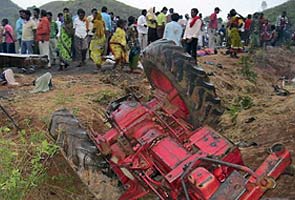
At least 20 persons were killed and 25 injured, 12 of them seriously, when a tractor carrying a marriage party fell into a gorge in Rayagada district today, police said.

The incident took place in a remote area between Uppar Anchal Bari and Hataguma when the tractor, carrying about 60 persons from Hiranpadu village, plunged into gorge after one of its front wheels broke on a hill top.

The victims, including women and children, were returning home at Hiranpadu village after attending a wedding at Seriguma village when the accident occurred, Rayagada SP Rajesh Pandit said.

"So far, we have information regarding death of 20 persons but the bodies are yet to be identified," said Tapan Mohanty, inspector in-charge of Rayagada Police Station.

All the injured persons were taken to Rayagada district headquarters hospital.

Chief Minister Naveen Patnaik announced medical expenses of the injured would be given from Chief Minister's Relief Fund and State Treatment Fund.

He directed the district collector of Rayagada to shift seriously injured persons to a nearby hospital at Vishakhapatnam in Andhra Pradesh.

"The district administration has decided to refer three of them to a hospital at Vishakhapatnam," said Sashi Bhusan Padhi, Rayagada district collector

Saturday 27 April 2013

http://www.business-standard.com/article/pti-stories/20-killed-25-injured-as-tractor-plunges-into-gorge-113042600825_1.html

continue reading

Friday, 26 April 2013

Airplane Debris Found Near World Trade Center Site


Land surveyors working just north of the former World Trade Center site have discovered a piece of an airplane’s landing gear, apparently from one of the two planes that crashed into the twin towers more than 11 years ago, the police said on Friday.

A part of a landing gear, apparently from one of the airplanes that crashed on Sept. 11, 2001, was found on Wednesday in Lower Manhattan.

The landing gear part was found on Wednesday in a narrow space between two buildings, 51 Park Place and 50 Murray Street, the Police Department’s chief spokesman, Paul J. Browne, said in a statement.

The police were treating the area as a crime scene, Mr. Browne said. It is possible that the medical examiner’s office will decide to sift through the soil there in search of human remains, he said.

The surveyors, working for a property owner in the area, were inspecting the rear of 51 Park Place when they found the piece.

On Sept. 11, 2001, the landing gear assembly of one of the planes crashed through the roof of 45-47 Park Place, at the time a Burlington Coat Factory.

Park Place is about three blocks north of the World Trade Center site, and 51 Park Place was part of a plan by a developer to create a mosque and community center.

The landing gear component is about 3 feet high, 3 feet wide and about 18 inches deep, Mr. Browne said. It was wedged between the two buildings, where it remained “out of sight and out of mind for over a decade,” he said.

“The odds of it entering that space at exactly that angle that would permit it to squeeze in there,” he added, “it had to come in at almost precisely the right angle to end up being wedged there.”

He said investigators were working under the assumption that the piece was “a portion of the landing gear of one of the two planes destroyed on 9/11.”

He noted that the artifact bore a Boeing serial number and that personnel from the Police Department’s aviation unit had identified it as part of a landing gear. He also noted that it was found near where other wreckage from the jetliners were discovered shortly after the attacks.

Friday 26 April 2013

http://www.nytimes.com/2013/04/27/nyregion/airplane-debris-found-near-world-trade-center-site.html?_r=0

continue reading

Afghanistan bus accident: Taliban insurgents cause fiery collision that kills 45 passengers


A bus collided on Friday with the wreckage of a truck that had been attacked by Taliban insurgents in southern Afghanistan, killing 45 people aboard the bus in a fiery crash, officials said.

The battered oil tanker had been left in the middle of a narrow road near the border of Kandahar and Helmand provinces for several days after insurgents attacked it. Police considered the area too dangerous to enter, the officials said.

Before sunrise Friday, the bus smashed into the truck and burst into flames, said Abdul Razaq, the provincial police chief of Kandahar.

As police, soldiers and ambulances rushed to the desolate area, where many of the victims were burned beyond recognition, one survivor, Mohammad Habib, cried as he searched for his brother.

"I don't care about my belongings and money that were burned inside the bus, but please help me find my brother, dead or alive," he told AP Television News. "How will I face my mother without him?"

Forty-five people were killed and 10 injured, said Javeed Faisal, the spokesman for the governor of Kandahar province. He spoke to The Associated Press at Mirwais Hospital in Kandahar city, where many of the victims, including men, women and children, were being taken.

Razaq said it would be difficult to identify many of the bodies.

The bus began its journey in the capital of Helmand province and was to stop in Kandahar city, then travel north to Kabul, the Afghan capital, Razaq said.

Friday 26 April 2013

http://www.huffingtonpost.com/2013/04/26/afghanistan-bus-accident_n_3160272.html

continue reading

Grim Greek fate for Syrians fleeing civil war


For most people, it was yet another Aegean Sea tragedy in which a group of would-be migrants in a small boat drowned while trying to reach Greece.

But for Husam Hashash, who lost his brother, his sister-in-law and their three children in the March 6 sinking, the incident was much more profound.

Husam's brother Omar, 40, came as close to any immigrant to realising his Greek dream after 15 years in his adoptive country, where he had managed to start a small textile business that employed some 20 people.

But that dream ended in 2010. When the economic crisis made landfall in Greece, Omar returned home to Syria to start another business. Instead, the civil war caught up with him.

"He had problems there too," recalls Husam, sitting in his sparse Athens living room and holding back tears. "His shop was robbed and business seized up."

Omar decided to return to Greece. But in the meantime, his Greek residence permit had expired and he could not renew it from Syria. He had no option but to attempt to sneak back.

The family first tried the overland route through the Greek border with Turkey, where they were stopped and turned back.

Greece recently completed a 10.3-kilometre (6.4-mile) barbed-wire fence on the border in a general crackdown against undocumented migration assisted by European Union forces and funding.

According to EU figures, a total 11,900 Syrians were caught trying to enter the bloc in 2012 in comparison with just over 3,000 in each of the three years before.

Rights groups such as Amnesty International and Doctors Without Borders regularly accuse Greece and the European Union of endangering the lives of undocumented migrants and refugees.

Greece in particular is also charged with detaining them in inhuman conditions when they are caught.

Thwarted by land, Omar was left the sole option of crossing the Aegean Sea. He found a smuggler and paid 1,200 euros (over $1,500) to make the arrangements.

That night in March, he set off with his wife, children and another four people on board an inflatable dinghy, heading for the Greek island of Mytilene.

"The last time we spoke to our brother was on the morning of his departure," says Husam. "Then he called around midnight to say that he was about to arrive."

That night, all nine people inside the boat drowned. Among them was a pregnant girl in her teens.

"We called his mobile after midnight but he never replied. Even if he had been arrested by the police, he would have found a way to get through to us," says Husam.

In desperation, Omar's other brother rushed to the island of Mytilene, to begin the macabre task of searching among the bodies swept ashore by the sea.

The family received little help from the smugglers who had organised the crossing.

"They lied to us at every turn," says Husam. "They told us that the group had landed on Chios, another island. And while my brother scoured the islands, the authorities were no help either," he adds.

In the end, it was a tourist who found Omar's body on a Mytilene's beach.

But the family's ordeal was not over.

Husam went to extraordinary trouble to have his brother buried in one of the few sanctioned cemeteries for Muslims in Komotini, northern Greece.

The rest of Omar's family were buried with him, save for one of his children whose body was never found.

John Dalhuisen, Amnesty's programme director for Europe and Central Asia, gave the epitaph a few days later as the group mounted fresh criticism on Greece's immigration crackdown.

"It was a tragedy waiting to happen," he said.

Even the survivors of such crossings have little to cheer about, landing in a country mired in recession for the last six years and grappling with soaring unemployment and rising hostility to foreigners.

Over the past year, a once-marginal neo-Nazi party, Golden Dawn, has increased in influence, electing 18 deputies in last year's crisis-marked general ballot.

Golden Dawn's rise has been accompanied by indiscriminate beatings of migrants in various Greek cities by racist gangs.

"We wanted to flee Syria and Bashar al-Assad, now we want to flee Greece," says Ali al-Massoud, a 28-year-old Syrian Kurd who arrived seven months ago with a pregnant wife and three children.

Their village in the north of Syria was destroyed in July in a bombardment, scattering their extended family between Iraq and Greece.

Three generations of the family -- 15 people in all including various cousins -- now live in a small apartment in central Athens.

Ali's father has a job but cannot support the entire clan. In order to eat, his mother gathers third-rate vegetables discarded by outdoor vendors at the end of daily markets.

"And yet, whenever I go to see a Greek employer to ask for a job, they generally cry harder than me," Ali notes.

Friday 26 April 2013

http://www.france24.com/en/20130425-grim-greek-fate-syrians-fleeing-civil-war

continue reading

Search and rescue operations for fishing vessel Sea Messiah


At about 4.30am on 25 April, a fishing vessel Sea Messiah collided with an unknown vessel off the Karwar coast. Whilst 23 out of 29 crew were rescued by other fishing vessels in vicinity, two bodies have been recovered while four others were reported to be missing.

On receipt of this information, Indian Navy ships and aircraft were immediately deployed to supplement the Coast Guard Search and Rescue effort. INS Suvarna and Koswari have recovered parts of the boat, and are continuing the search for the missing fishermen.

In addition, search and rescue helicopters have also conducted aerial surveillance to locate the missing fishermen.

Friday 26 April 2013

http://timesofindia.indiatimes.com/city/mumbai/Search-and-rescue-operations-for-fishing-vessel-Sea-Messiah/articleshow/19736600.cms

continue reading

Training local communities for air disaster rescue operations


Over the years, aviation stakeholders, particularly sundry experts, have tried to ensure that victims of air accident in Nigeria are responded to rapidly to enhance the survival rate.

Despite these efforts, there are still complaints that the responds time to air emergencies in the country is not encouraging; hence at the end of every attempt at rescuing victims of air disasters, nothing is achieved.

For example, when the ill-fated Bellview airlines’ plane crashed October 25, 2005 at Lisa Village in Ogun state, it took several hours before Search and Rescue (SAR) team and the National Emergency Management Agency (NEMA) and others bodies saddled with the job of or aviation emergencies arrived the scene of the accident. Even residents of the local communities who should have been at the scene soon after the accident occurred, ahead of the SAR and NEMA teams, did not know what to do. Also, even if they would have loved to get to the scene to rescue the victims, the fear of security agents who could harass, or even harm them. Eventually, the entire 117 passengers on board died.

Also, on March 15, 2008, a twin-turbo prop 19-seater aircraft belonging to Wings Aviation crashed in Calabar while on a routine flight from the Murtala Muhammed Airport (MMA), Lagos. It took several days for the hunters in communities closer to the crash site to find the carcass of the aircraft and the remains of the victims.

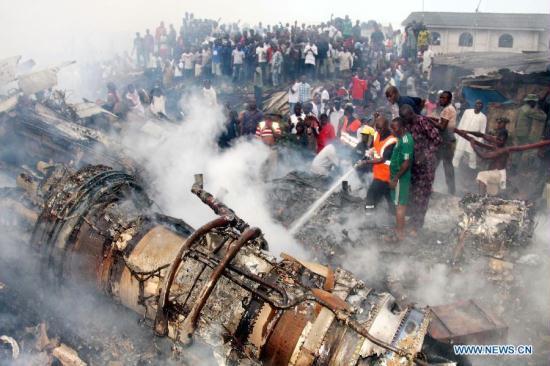
Also, when Dana Air’s MD83 airplane flight 992 crashed on June 3, last year in Iju–Ishaga, the rescue team did not get there on time despite the fact that the aircraft crashed into a residential area. The local communities, rather than trying to rescue victims of the crash, unfortunately watched the victims die. The crowd on the roads leading to the street where the plane crashed, and at the crash site did not help matters as they became a nuisance to genuine rescue activities. The access roads to the crash site were blocked by mostly onlookers, or those who did not have any business being there.

At the end about 160 people aboard the plane and on ground died.

On the other hand, local communities in and around air crash sites oftentimes do not know what to do in the case of emergency, even when they have access to the accident sites.

Lack of training

Aviation stakeholders often argued that the local communities should not be blamed for not helping during air emergencies, because they are not trained to do so, or even given necessary orientation that would enable them even provide information that can help the appropriate agencies. They also argue that there is no way the local communities would join in air accident emergencies when the various agencies concerned with this responsibility are themselves not coordinated.

Oftentimes unfortunately also, according to various respondents, these agencies rather than remain focus for proper coordination of the rescue activities unnecessarily biker over such mundane issues as which of the agency should lead the entire efforts.

Only recent a Boeing aircraft 737-800 series belonging to Lion Air, Indonesia’s largest airline crashed into a river just off the runway of the main airport on the country’s resort island of Bali. All 101 passengers and seven crew members on the flight, which originated from the city of Bandung, were rescued as the aircraft was evacuated after crashing. The feat was achieved because the rescuers responded to the air emergency on time compared to Nigeria where response time usually takes hours.

It was based on the need to ensure that victims of air crashes are rescued on time as done in other countries of the world, and to minimise the casualty rate at such times, that a stakeholders meeting on the matter was convened recently.

Stakeholders speak

The meeting under the auspices of the Airport Emergency Planning Committee was organised to discuss the need to train local communities on air accident emergency and to integrate them into Search and Rescue (SAR).

Speaking at the forum held at the Murtala Muhammed International Airport (MMIA), Lagos, the Chairman, Airport Emergency Planning Committee, Edward Olarerin, said communities around the airport would not only be trained on air emergencies, but be integrated into SARS, National Emergency Management Agency (NEMA) and other bodies that have roles to play in either air emergency or aviation.

He assured that all government agencies at the airport, including the National Emergency Management Agency (NEMA) would partner with the communities in training them for any air emergency situation.

According to him, “we have contacted the local governments around the airport to give us some people that we will train along with our search and rescue operatives. This people will now go back to their communities to enlighten their peers about search and rescue during an air emergency,”

He announced that the Federal Airport Authority of Nigeria (FAAN) and the Nigerian Airspace Management Agency (NAMA) would organised a mandatory two years drill for officials of both agencies.

Speaking at the stakeholders forum, Principal Planning Officer, NEMA, Babatunde Olowokere, said the training of people at the grassroots level is not new to the agency, as it has been training local communities at various local government Areas in the country.

He argued that response to disaster and management should not be left for one agency, and that it should rather be a collective responsibility, if the target goal must be achieved.

According to him, training of grass people “is a continuous exercise, in the sense that we have a goal that disaster is everybody’s business and the more people know what to do during disaster the better for life saving. And it also makes our work easier in the sense that if you give then requisite knowledge and skill on how to manage disaster when it happens, they will be able to do that before because disaster normally happens at a particular place that is the grass root.”

The NEMA official added that if the local communities are trained and equipped on what to do in the event of an air accident, they would know what to do before NEMA and other agencies get to the site of the crash.

He particularly mentioned Ifako-Ijaye, Local Government Areas, as one of the local governments where local communities needed to be trained and equipped on air accident emergences, since according to him, that is the route that aircrafts take.

“If we train them and equipment them on what to do before we even get there they would have started doing something in making sure that lives are not loss and that is what we have been doing. More so, particularly these local government Ifako-Ijaye, we know that, that is the route that the plane takes, we want to carry out advocacy on what you do when there is a crash and also to train them on how to carry out search and rescue operation especially in giving first aids to victims that are trapped, that is the training” he said.

He promised that the agency will carry out advocacy on what you do when there is air crash, adding that NEMA is also training local communities on how to carry out Search and Rescue (SAR) operations especially in the area of administering first aid to trapped victims.

Challenge

Olowokere also pointed out that one of the major challenges faced by the agency was that most of the local government areas in the country are reluctant to collaborate with the agency on disaster.

“The challenge we have is the corporation from the local government, if they are willing to collaborate with us, our job will be simpler. Our men have been trained to carry out such exercise” he said

Speaking on the equipment to carry out rescue operations, he said that all over the world organisations that manage disaster does not have all the equipment used in carrying out operations, adding that they sign a Memorandum of Understanding (MoU) with other organisations.

He added that in Nigeria it is not different, as NEMA already signed MoU with major construction companies such as Julius Berger, Dantata and others, adding that whenever there is any disaster, these companies don’t wait until they are called they just go there because there is an existing MoU.

On his part, an aviation analyst, Mr Olumide Ohunayo, said that it is a good beginning as it is not only aimed at enhancing safety but also improving emergency response time. Ohunayo, hoped that the training will also teach the local communities how not temper with aircraft parts at the site of the accident, adding that is unfair to attribute the inability of rescuers to get to the site of Dana crash on time led to the death of close to 160 people.

According to him, “I quite agree with the committee and look forward to the training and incorporation of those trained in the search and rescue team. It Is to enhance safety, improve emergency responsive time. It is unfair to link with Dana crash; I bet you Nigerians would have gone into that aircraft if there was any semblance of life. They were all dead because of the impact, coupled with internal and external smoke/fire that made it impossible to open the aircraft doors. I just hope the training will also educate them on the need not take anything away from crash site or touch aircraft parts seen at the vicinity of the crash”

An aeronautic engineer, Sheri Kyari, also agreed on the need to train local communities in air emergences, describing it as a step in the right direction, adding that it of the airport emergency plans.

He however, argued that finance to carry out the laudable programme could be a hindrance, urging the Airport Emergency Committee to ensure that the training programme is carried out in collaboration with NEMA so as to tap from its wealth of experience and facilities on emergency response and management.

The President of Aviation Round Table (ART) and former Nigeria Airways Limited (NAL) Pilot, Capt Dele Ore agreed that the committee should ensure training of local communities at local government levels so that when there is air emergency, they know what to do.

According to him, “we are beginning to get to the real issue that has to do with air accidents. They should continue to strive and should not rest on their oars. It is a good step in the right direction.”

He also called for a sensitisation programme for people in the airport environment, where staff of agencies at the airport will be taught on what to do when there is air emergency.

Friday 26 April 2013

http://dailyindependentnig.com/2013/04/training-local-communities-for-air-disaster-rescue-operations/

continue reading

Dozens found alive as Bangladesh tragedy toll hits 250


Dozens of workers were found alive on Thursday as they huddled in the wreckage of a collapsed garment factory bloc in Bangladesh, a rare success for rescuers who have pulled out 250 bodies.

In an announcement greeted by wild applause from thousands of relatives at the scene, an army spokesman initially announced that 40 survivors had been discovered together in a room, but the figure was later revised to 24.

Screams filtering through the cracks in the concrete suggested more survivors were awaiting help, but a steady stream of bodies saw the recorded death toll almost double on Thursday and hundreds remain unaccounted for.

The collapse of the building on Wednesday on the outskirts of the capital is the worst industrial accident in the country’s history and is the latest in a spate of tragedies in the “Made in Bangladesh” clothing sector.

It prompted new criticism of Western brands who were accused by activists of placing profit before safety by sourcing their products from the country despite its shocking track record of deadly disasters.

Hundreds of thousands of workers walked out of their factories in solidarity with their dead colleagues on Thursday as flags flew at half mast and a national day of mourning was held.

“The death toll is now 250,” Moshiuddowla Reza, a senior police officer of Dhaka district, told AFP from the disaster site, adding more bodies were being recovered and that most of those who died are female garment workers.

Safety problems and poor working conditions plague the textile industry in Bangladesh, the world’s second-biggest clothing exporter after China.

Last November a blaze at a factory making products for Walmart and other Western labels left 111 people dead, with survivors describing how fire exits were kept locked by site managers.

Only British low-cost fashion line Primark and Spanish giant Mango have acknowledged having their products made in the collapsed factory bloc, while a host of brands including Wal-Mart and France’s Carrefour are investigating.

Italian fashion line Benetton denied having a supplier in the building but a local workers’ group provided documents showing apparent orders from the company in August and September last year.

The company did not reply to repeated requests from AFP for comment.

Survivors said the building developed visible cracks on Tuesday evening, but factory bosses had demanded staff return to the production lines despite a police evacuation order.

One manager for the New Wave Styles company, one of the five manufacturers in the building, told how the owner had consulted an engineer but then ignored his warnings.

“Those who’re involved, especially the owner who forced the workers to work there, will be punished,” Prime Minister Sheikh Hasina told lawmakers.

“Wherever he is, he will be found and brought to justice.”At the scene of the disaster, relatives desperate for news descended in their thousands, clutching photographs and hoping to see their missing loved ones pulled out by firemen and soldiers.

“I became so thirsty that at one stage I drank my urine,” said an ecstatic Abul Hossain, 23, as he was dragged from the ruins more than 25 hours after the disaster struck at around 09:00 am (0300 GMT) on Wednesday.

But others were less lucky, with body after body laid out on the grounds of a nearby school for identification.

“I’ve seen all the bodies. My sister was not among them. She is also not in any of the hospitals,” said Mukta Begum, holding the photo of her younger sibling Suryaban, a garment worker.

Babul Akhter, head of the Bangladesh Garments and Industrial Workers Federation, told AFP that the factory owners, who have gone into hiding, would likely escape justice despite the outcry.

“Garment entrepreneurs are above the law here. There is hardly any example of an owner being prosecuted for this kind of outright murder,” he said.

“The Western retailers are also complicit because they give a blind eye to the manufacturers’ shoddy practices.”Before the 24 were found, Ahmed Ali, the national fire service chief, told AFP that 20 people had been rescued.

“We could still hear desperate cries for help from several places underneath the concrete heaps. Volunteers sent food and water to them through holes,” he said, adding that rescuers would work through the night under floodlights.

“We’re confident we can find more people alive even on Friday.”

Friday 26 April 2013

http://dawn.com/2013/04/25/dozens-found-alive-as-bangladesh-tragedy-toll-hits-250/

continue reading

Thirty-eight feared dead in Russian psychiatric hospital fire


A fire raged through a psychiatric hospital north of Moscow on Friday and 38 people were feared dead, Russian officials and media reports said.

There were believed to have been 41 people in the building when the fire broke out - 38 patients and three staff members - and three escaped, the Emergency Situations Ministry said. A ministry official said a nurse led two patients to safety.

The ministry said emergency workers had found 12 bodies so far and that the fire, which broke out in the middle of the night, had been extinguished.

A Health Ministry official confirmed that 38 people were feared dead, state-run RIA news agency reported.

Interfax, a news agency, reported it was a “special regime” hospital, meaning that patients were not free to leave.

It is unclear whether this was a factor in the high death toll, as it has been in past fires in psychiatric institutions in Russia.

There were bars on the windows of the single-storey building in Ramensky, 120 km (70 miles) north of Moscow, and some patients apparently died while trying frantically to make it to the main entrance to escape. Many others died in their beds, Itar-Tass cited an unnamed source as saying.

"After the fire alarm went off, a nurse ... saw fire at the end of a corridor. She tried to put it out but could not and led two patients out," RIA quoted emergency official Yuri Deshyovykh as saying.

Fires claim a sad and steady death toll in Russia, far higher than in developed countries. Fire exits are locked, blocked by boxes in storage or simply nonexistent. Barred windows in nursing homes and hospitals have been the cause of horrendous death tolls, as have fires in student dormitories. A fatalistic Russian shrug or a bribe to fire inspectors are all too common responses to dangers.

Fires at state institutions in Russia such as hospitals, schools, drug treatment centres and homes for the elderly or handicapped have caused numerous casualties in recent years and raised questions about safety measures, conditions and escape routes.

More than 12,000 people died in fires in 2011 and more than 7,700 in the first nine months of 2012 in Russia, where the per capita death rate from fires is much higher than in Western nations including the United States.

Earlier this spring the building of one of Russia’s most prestigious theater schools burned, though with no casualties; the attic had been packed with drapes, costumes and the tinder of wooden set materials, all of which burned vigorously and quickly. The Emergency Situations Ministry said the fire started on or under the roof of the hospital at about 2:20 a.m. (2220 GMT on Thursday), but did not give its cause.

Friday 26 April 2013

http://www.reuters.com/article/2013/04/26/us-russia-fire-idUSBRE93P02P20130426

http://www.nytimes.com/2013/04/26/world/europe/36-killed-in-fire-at-russian-psychiatric-hospital.html?_r=0

continue reading

Thursday, 25 April 2013

40 feared dead in Liberia building fire


Over 40 people are feared burnt to death when a building in the Waterside commercial district in central Monrovia was destroyed by an inferno, local authorities said.

The casualties include members of a Lebanese family and looters who had gathered in the building on the pretext of helping to fight the fire that broke out on Wednesday night.

The building, owned by the famous Fouani Brothers and estimated to be more 50 years old, collapsed on the victims.

Capt. Augustine Kolubah of Liberia's National Fire Service said two firefighters were among those who died and that five bodies had been recovered.

He said two others from the Liberia Petroleum Refining Corporation had narrowly escaped death and that five bodies have so far been recovered in the debris.

Armed officers of the United Nations Mission in Liberia (UNMIL) and the Liberia National Police have been deployed to the area to assist in the search for more bodies.

Witnesses said some of the casualties included looters who entered the building on the pretext of fighting the fire. The 50-year-old building collapsed during the fire.

The cause of the fire wasn't identified.

Thursday 25 April 2013

http://www.nation.co.ke/News/africa/40-killed-in-Liberia-fire-outbreak/-/1066/1758208/-/vaoafy/-/index.html

continue reading

Between two earthquakes - Chinese media moves from tabloid to tender


More than 4,000 aftershocks have been recorded since the earthquake that struck Sichuan Province, in the southwest of China, last Saturday.

The death keeps rising, with dozens still missing reports Xinhua. More than 11,470 people were injured in the 7.0 magnitude earthquake.

While the relief effort continues in Sichuan Province, with 22,000 Chinese troops deployed in the area, the disaster has sparked a debate on Chinese Internet about how the press should cover such news, reports Caixin media.

Five years ago, when a massive earthquake struck Sichuan Province, killing more than 80,000 people, numerous photos of dead bodies were shown on television and in the newspapers. The media circus that descended on Sichuan was seen as many as highly insensitive, with journalists hounding the victims’ families and putting on a sensationalist show.

The number of reporters who rushed to the disaster site took up the time and energy of the local authorities, which had other – more important – things to do, obviously.

Xinhua reports on a Chinese student studying in Japan who wrote an article entitled How the Japanese media reported the 2011 earthquake off the Pacific coast of Tohoku, saying that Japanese reporters had stayed calm and “released sufficient information without violating privacy; provided data without being sensational; offered warnings without prompting panic."

According to Caixin media, although China is prone to disasters, its press seriously lacks experience in ethics. This is because of the lasting influence of the propaganda machine.

This time the reports on the Sichuan earthquake focused on rescue efforts and on heart-warming stories – but still avoided talking about important issues.

Many are happy, though, that the Chinese media is starting to show signs of maturity in the way it covers disasters.

The media is also changing the way it is reporting news. The People's Daily newspaper reports out that the Chinese television stations have adopted the foreign media’s practice of interrupting programming to provide updates on the earthquake.

There is also a new phenomenon, a kind of “grassroots Internet journalism,” that has appeared on China’s micro-blogging sites, as well as on WeChat, a popular mobile phone text and voice messaging communication service. These new medias played an important role in the aftermath of the earthquake and during the rescue effort.

Thursday 25 April 2013

http://www.worldcrunch.com/culture-society/between-two-earthquakes-china-media-moves-from-tabloid-to-tender/china-sichuan-earthquake-social-crisis/c3s11502/#.UXl5ApNzA34

continue reading

How do I become… an embalmer?


As an eight-year-old, Kevin Sinclair would fetch the Hoover from the chapel beneath the family flat, see dead bodies in coffins and carry on. "They were just sleeping," he says casually. "That's what my parents would tell me." What the average person would have considered macabre, he saw as normal and merely a matter of getting used to.

And after getting used to it, he followed his father into the funeral business and became an embalmer, a job he has been doing for 22 years. He co-founded the Feltham-based London School of Embalming in 2006, where he embalms and teaches.

A typical day starts with a delivery, but not your standard postal influx. Around eight to 10 bodies released from hospitals, nursing homes or private residences arrive ready for the embalming to begin. During the week, he teaches as he embalms. Under supervision, students have the opportunity to learn the craft with the deceased.

In layman's terms, the practice comes down to a trinity process of "sanitation, preservation and presentation". Once the body is washed, the deceased are then injected through the arterial system with a formaldehyde-based fluid which is used as a preservative as it plasticises the tissues.

The presentational aspect of the procedure is an area a lot of aspiring embalmers mistakenly hope to specialise in, but Sinclair says: "In the UK you have to train in all areas, you cannot specialise to only be a mortician."

Personality is more important than academic prowess for would-be embalmers. Although having a set of GCSEs is essential, an average C grade will do. To get a place at embalming school you will need to get through an interview. This is designed to "get a sense of the person's mental attitude because it can be traumatic", Sinclair says. And after passing a foundation exam which includes a mix of maths and English questions organised by the British Institute of Embalmers, the student begins a two-year course.

An art background will see you a long way; a creative flair teamed with a strong stomach is ideal. Inevitably, Sinclair has seen it all. As a former stonemason his creative skills allow him to restore dismembered bodies, with the aid of a photograph, to a fully identifiable condition. From burns to car accident victims, he uses a special facial wax to rebuild tissues and, if needed, reattach bodily features such as ears. Despite his life-long services to the profession, he is met with a challenge "every day, every day" he repeats. "No two deceased are the same. You have to rectify the situation like a puzzle."

Sinclair displays a very practical but reverential disposition about the procedure. However, he admits that having to embalm children or friend's relatives can be an emotional challenge: "You start associating the love you give your own family to the deceased."

In the embalming room, it's a solo job: Sinclair, the deceased and background music. What does an embalmer listen to? "What do you think, organ music or something?" he roars with laughter. "It's either the radio or my iPod." Being the high-pressure job it is, water-cooler conversations don't exist. The only time he can have a therapeutic discussion about work is during meetings with fellow embalmers where, he says, "you can talk and be understood". It is not a conversation starter at the dinner table.

Word-of-mouth is the gateway to progressing as an embalmer. Once qualified you need to be recommended. With Sinclair's catalogue of contacts in the industry, "people will contact me with an opportunity in an area for an embalmer to start", which gets passed on to students nearing the end of the course.

Jobs can take you across Britain and beyond for a "mini-adventure". Sinclair has provided his services from Afghanistan to the Falklands. Within close proximity to Heathrow he has a "flight-ready kit" for repatriation and rescue operations.

Among the job's many eccentricities are the outfits the deceased have chosen to be dressed in. From the bizarre to the sentimental, Sinclair has adorned people in Father Christmas outfits, cycling gear with aerodynamic speed hats, biker's leathers, and clown costumes. One request was particularly special: "A woman had asked to be put in her wedding dress, made out of parachute silk from the second world war."

It is not a lucrative profession – the average embalmer earns between £18,000 and £27,000 – but the rewards are far richer. The feedback from grieving families who value the achievement of dignifying the deceased with a sense of peace is the mark of a job well done.

Thursday 25 April 2013

http://www.guardian.co.uk/money/2013/apr/25/how-become-embalmer

continue reading