Monday, 29 October 2012

Missing persons event draws relatives of 23 missing people in Arkansas

When a decomposing body was pulled from between two barges on the Mississippi River in Mississippi County on April 19, 2003, investigators were left with few clues to determine its identity.

The barges had traveled from New Orleans, with a planned drop-off in Greenville, Miss., but no missing persons cases immediately matched with the body, which investigators could only determine was that of a white man between 30-60 years old.

One promising clue was dental work inscribed with a name: Thompson.

Several years later, after Chris Edwards began handling unidentified-remains cases for the state Crime Laboratory, attention turned back to the man between the barges and his dental work.

"We got lucky to have that name in there," Edwards said.

Edwards contacted dentists in New Orleans and Greenville to see if they had put the work in place, but he said many dentists no longer write names or numbers on dental work.

He also sent the body's mandible to the University of North Texas Health Science Center's Center for Human Identification in September 2009.

After the center obtained DNA from the bone, came "a waiting period," Edwards said.

On April 1, 2011, Edwards received notice that the remains had been identified by a family's DNA sample as that of an Illinois man named Roy Thompson.

But Edwards' goal is to put a name to all of the skeletons in his closet.

As the unidentified human remains and missing persons coordinator at the state Crime Laboratory, Edwards works to identify the bodies using personal objects, dental work and DNA.

According to the National Missing and Unidentified Persons System, a registry for such cases, Arkansas has recorded 119 unidentified persons since 1970.

Of those cases, only 12 have been closed.

In a small room in the basement of the state crime lab, about 80 of the unidentified bodies are stored in various sized cardboard boxes and plastic bags. Some are complete skeletons, others just a handful of bone fragments.

On a 10-foot-tall metal shelving unit, dozens of these boxes and bags are stacked, each marked with a case number and the year the remains were found.

Inside the containers, every body displays its own history: a jaw wired shut, a broken bone, capped teeth and other dental work.

And as the "straight John or Jane Doe" cases come in, about 10 a year, Edwards chips away at the total.

"The unidentified bodies, I'm not letting those go anywhere," Edwards said. "Those are going to stay until they get identified."

Edwards now has DNA samples on file for nearly all of the unidentified remains in the agency's bone room.

The remaining samples area waiting testing, part of a normal backlog at the UNT Center for Human Identification, said George W. Adams, the national director of operations for NamUs, at the center's Forensic Science Unit.

He said when working with robotics, which run batches of up to 90 samples at a time, a small backlog is needed so the batches are always full.

"We need to make everything as efficient as we can," Adams said. "The more efficient that we can become, the faster we can get the samples out and the more associations we can make."

He said the unit, which operates on grant funding and does not charge law enforcement for testing or expert testimony, is geared toward turning over samples as quickly as possible to move investigations forward.

"In law enforcement, every hour, every day that there's a delay in making an association or identification or getting a result means there's more investigative work going on and that's driving up the cost of operations," Adams said.

Edwards said the DNA work provided by the Center for Human Identification has breathed new life in some cases. He said while reviewing an unidentified body's file, he found scalp hair that he was able to send off to the lab.

In another case, where a hunter found a partial skull in a wooded area in Ozark in1985, DNA testing helped identify the man in 2010 by samples provided by his daughters.

"A single bone makes it very hard, even though I can send that bone off for DNA and get those results back," Edwards said. "If I don't get a hit, it'll stay in the unidentified database indefinitely until there is a hit."

With a lack of clues, he said, getting a family member's DNA into the NamUs system could provide the link to closing an unidentified person's case file.

Edwards has been working directly with law enforcement agencies since February 2011 to pursue the families of missing persons and obtain DNA samples for those cases.

He said he plans to hold several missing-persons events next year after the success of a similar event in August 2011.

Of the roughly 165 missing persons cases in the state at the time, Edwards said he had family contact information for 30. But family members of 23 missing persons came out and provided about 45 samples, which could provide a future match to an unidentified body.

"That's the main thing, is finding families who have missing loved ones and get their information, get them in, get their DNA and send it in to the database," Edwards said.

Monday 29 October 2012

http://www.therepublic.com/view/story/f0575ea192e341b68be2ed4bf1d71ac2/AR--Unidentified-Remains-Arkansas

continue reading

The Unnamed of Calderon Leave Their Mark

Mexico • 24,102 people: the equivalent of half a football stadium or a medium-sized town is the approximate number of bodies that have gone to the grave at the end of the current administration. And most importantly, it is a highly conservative estimate. It does includes full records of Mexico's most violent states, such as Guerrero, Michoacan, Sinaloa and Tamaulipas.

Throughout the six years of Calderon's Presidency, thousands of bodies have been buried in obscurity. Several more bodies are added every week: They are migrants, innocents, homeless, homeless families, criminals, and victims of homicide. There are bones and bodily remains apparently unclaimed without owners, which are often buried and stacked in cemeteries across the country from the U.S. border to the Yucatan Peninsula. These faceless corpses are listed in official records only as NN. No Name.

Extensive research from Milenio, based on over 470 records requests filed with state forensic medical services, municipal governments and even with the administration of small local cemeteries, brings a rough sketch that outlines a national atlas of unidentified bodies.

Among the data emerging from the research are two parallel events: 1) some attorneys general do not want to reveal the numbers of unidentified dead under their power. And 2) the number of bodies sent to grave has climbed every year since the beginning of Calderon's term, on par with the number of executed criminals and victims killed in violence overall. On average, 10 bodies unclaimed name or have been buried daily.

So far, with the figures for 2012 still unfinished and updated only through August 2011, and September, 2011 starts a period in which the remains of more people were placed in public areas, without the benefit of a tombstone which completely ending the identification process: 4, 927 corpses never were claimed in that year, during which, coincidentally, it was the year with the highest number of executions linked to organized crime in all of Felipe Calderón's administration.

The picture painted by the obtained documents clearly shows that in some cities, like Juarez and Monterrey, and Celaya, many corpses were in state of abandonment that were left to he abilities of the cemetery to process.. Consequently, new ditches in cemeteries have had to be excavated. It is a scenario that is repeated across the Republic, with mass graves or cemeteries running out of space, they have begun to recycle their spaces, removing and discarding the remains of seven years old.

Some cities and states saw the number of unidentified -NNs (no-names) rapidly multiply. In Nayarit, the figures tripled in three years. In Baja California, they grew by 100 percent. In Torreón, they multiplied 10 times. In the port of Veracruz, there were over a thousand unidentified bodies in 2011. Durango, they went from having eight bodies buried without a name in 2006 jumped to 438 in 2011 (see graphic above).

Not only that. The lack of control in the management of unidentified remains in many government entities, but also this is found in many private entities as well, as evidenced by several of the responses in this process. The report which took more than three months in development and for which it was necessary to create a database from accumulated data with thousands of figures. But these are the ones that have been recovered: the missing may never be computed. Fifty municipalities have lost their files prior to 2008 and 2009 and many have lost records from the location of bodies which makes later further study, investigation and identification unlikely.

Some states, such as Michoacan, never recognized integrating a state-based data on unidentified bodies and have only just begun that process, although the violence has left thousands killed in that state. The Michoacan Attorney General can not answer how many bodies the medical examiner received in the administration. "No statistic has the" justified reliance.

"The information on unidentified bodies held by government which have entered the medical examiner is not located together in one place or well documented in a single organized relationship over the entire state." But the PGJE-Michoacán said they are already working to correct this deficiency.

Requests for transparency, which will be available for public consultation www.milenio.com not only gives an idea of the general situation of unidentified bodies, but shows different levels of progress in terms of transparency in the country and states.

To obtain the data, it was necessary to use emails and state portals (Infomex, Saimex, Guanajuato Unit), without neglecting numerous phone calls and liaison to Social Communication to correct "mistakes" such as file loss, illegible documents and pages offline for weeks.

A total of 479 petitions submitted under pseudonyms, some were answered but some 191-230 all went unanswered. That is, they were completely ignored by the authorities. Another 40 applications were rejected, declared missing or classified as confidential state security.

Many states and municipalities provided the information without delay, as the Federal District, Sonora, Chihuahua and Guanajuato, among others. Their municipalities administrations relations' prepared detailed statistics, held their forensic medical services and burial administrations open. In general, information was available in 25 of the 31 states and over 210 cities and towns.

It is these responses that arise the well disguised facts detailing how Mexico processes the nameless dead. For example, the bodies in Jalisco after taking a DNA sample are burned. The remaining ashes and a small jar with genetic material remain in niches, waiting for a possible identification. On the other hand, Monterrey is very precise: keeps track of pathological parts, ie limbs, organs retrieved from hospitals or in public. Some cities in Sonora to open their old graves of people who no longer have family and Pachuca records fetuses - aborted, or abandoned - among all the bodies sent to their graves.

But there is the other side. There are states that did their best not to reveal the number of unidentified bodies processed in forensic services. Despite repeated calls, it was impossible to locate any transparency in the Office of Tamaulipas and that agency spokesman, Ruben Dario, said flatly that "there is no such data anyway because there was a transition of government and we do not know what happened before. He went further: Tamaulipas does not collect corpses because "that is the job of the Attorney General."

Some states shaved their numbers or have calculation mistakes. The Attorney General of Sinaloa reported only a few bodies were sent in to their company of calculation. only 54 dead bodies from the mass graves in 2011, and 227 in the entire administration. But a simple review of the medical service page, where scanned images are stored for unclaimed bodies, puts skepticism and doubts on those numbers. Its database of unidentified, unclaimed deceased located a total of 332 people during the administration. 91 bodies in 2011 alone, double the figure reported via transparency-were left in the hands the coroner.

In other states requesting the information, it turned out to be a tangled process and impossible to fulfill. In states like Oaxaca it is asked to bring a printed card facilities its attorney. In Campeche and Chiapas no transparency or even reliable systems: its pages are several months out of service and don't support questions. Baja California Sur has not bothered to open a service at all yet.

The State of Mexico deserves mention. Data from corpses in mass graves were obtained by their municipalities and their central government, which put various obstacles to prevent the information was disclosed. While most municipalities mexiquenses data revealed their bodies were sent to the pit, the Attorney General made "mistakes" attaching files to the responses on its website. the unit promised responsible for its transparency, "It will be resolved quickly," but a month has passed.

Beyond the technical problems, there are the negatives. That was the case of the Attorney General from the Offices of Veracruz and Aguascalientes as well as the prosecution office in Yucatán. The first two entities classified data as confidential, all information relating to the number of bodies received and processed by their respective forensic services (although municipalities delivered their data promptly without any problem). The Yucatan, for instance declared itself incompetent to answer any questions because, they said, that is not within its powers to have the bodies.

With respect to Veracruz, the argument went thus far: they literally said that the permanence of government, its institutions and to the territorial integrity of the state "would be at risk" to be known such data, in addition it would "invade privacy" of the unknown corpses.

Milenio appealed to the Veracruz Institute of Access Information (LAVI) to review that decision convinced that there is no invasion of privacy of a body without identity. Also cited was one of the criteria of the Federal Institute of Access to Information statistics stating that, whatever their nature, is public.

In the end, the LAVI ruled in favor of this newspaper to consider their arguments and held that the argument of the Attorney Veracruz "lacked legal validity." So far, the PGJE has not complied with the mandate to disclose its files of unidentified bodies.

Despite that, some thirty Veracruz municipalities themselves provided the information requested. And it was this that allowed the construction of a map, incomplete but functional, on the situation of unidentified bodies and unclaimed in Veracruz. From this data it was revealed that the state has resorted to more graves. In total, six years so far and still waiting for the state figures that the attorney could generate, municipal administrations have documented burial of 5,245 people. The highest figure in the entire country.

24,102 people is the most concrete figure has been added under this methodology. And yet, it is a conservative figure. Beyond Monterrey, failed to ask the municipal level in violent entities such as Nuevo Leon-Guerrero much less, and the requests that were made to the municipalities of Sinaloa Infomex system disappeared by a "computer error" that two months later, has not been corrected by the State Commission on Access to Public Information. There were lost data from Culiacán, Badiraguato, Mazatlan and Los Mochis that, most likely, it would have increased the number of NNs (no names).

Monday 29 October 2012

http://www.borderlandbeat.com/2012/10/the-unnamed-of-calderon-leave-their-mark.html

continue reading

Powerful storm kills at least 30 in Philippines, Vietnam

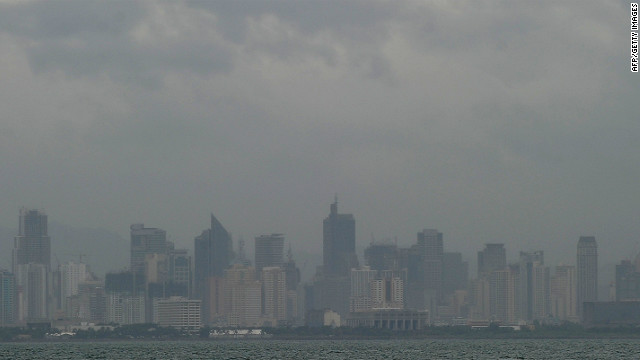
As Hurricane Sandy lashes the East Coast of the United States with wind and rain, Southeast Asia is dealing with the trail of death and damage from a powerful storm that has killed at least 30 people in the region over the past few days.

Tropical Storm Son-Tinh was moving northeast along the northern Vietnamese coast on Monday after tearing the roofs off hundreds of houses and breaching flood defenses overnight, the state-run Vietnam News Agency (VNA) reported.

Son-Tinh was at typhoon level when it thumped into northern Vietnam late Sunday with winds as strong as 133 kilometers per hour (83 mph). It left three people dead and two injured, according to an initial estimate from the Office of the National Search and Rescue Committee reported by (VNA).

More than a 1,300 rescue workers and soldiers have been deployed to work with local authorities on search and rescue efforts in the aftermath of the storm, VNA said. Helicopters were on standby for a search and rescue mission for an oil rig with 35 people on board that became disconnected from its towboats miles out at sea amid strong waves generated by the storm, according to VNA.

And five people were missing Sunday after winds from Son-Tinh sank an engineering vessel near a cargo terminal in Sanya, a city on the southern Chinese island of Hainan, China's state-run news agency Xinhua reported.

Son-Tinh is expected to gradually weaken over the course of Monday, regional weather agencies said. At least 260,000 people in Vietnam had been relocated to safer areas as it approached Sunday.

The storm had already killed 27 people when it swept across the central Philippines during the second half of last week, causing flash floods and landslides, according to the Philippine National Disaster Risk Reduction and Management Council. Nine people remain missing, the council said Monday.

East Asia is buffeted for several months a year by heavy storms that roll in from the western Pacific Ocean. In August, a big typhoon, named Bolaven, killed more than 60 people on the Korean peninsula.

Monday 29 October 2012

http://edition.cnn.com/2012/10/29/world/asia/vietnam-tropical-storm/index.html?hpt=hp_t2

continue reading

Hurricane Sandy: Death Toll Rises To 65 In Caribbean

PORT-AU-PRINCE, Haiti — As Americans braced Sunday for Hurricane Sandy, Haiti was still suffering.

Officials raised the storm-related death toll across the Caribbean to 65, with 51 of those coming in Haiti, which was pelted by three days of constant rains that ended only on Friday.

As the rains stopped and rivers began to recede, authorities were getting a fuller idea of how much damage Sandy brought on Haiti. Bridges collapsed. Banana crops were ruined. Homes were underwater. Officials said the death toll might still rise.

"This is a disaster of major proportions," Prime Minister Laurent Lamothe told The Associated Press, adding with a touch of hyperbole, "The whole south is under water."

The country's ramshackle housing and denuded hillsides are especially vulnerable to flooding. The bulk of the deaths were in the southern part of the country and the area around Port-au-Prince, the capital, which holds most of the 370,000 Haitians who are still living in flimsy shelters as a result of the devastating 2010 earthquake.

Santos Alexis, mayor of the southern city of Leogane, said Sunday that the rivers were receding and that people were beginning to dry their belongings in the sun.

"Things are back to being a little quiet," Alexis said by telephone. "We have seen the end."

Sandy also killed 11 in Cuba, where officials said it destroyed or damaged tens of thousands of houses. Deaths were also reported in Jamaica, the Bahamas and Puerto Rico. Authorities in the Dominican Republic said the storm destroyed several bridges and isolated at least 130 communities while damaging an estimated 3,500 homes.

In the Bahamas, Wolf Seyfert, operations director at local airline Western Air, said the domestic terminal of Grand Bahamas' airport received "substantial damage" from Sandy's battering storm surge and would need to be rebuilt.

Monday 29 October 2012

http://www.huffingtonpost.com/2012/10/28/hurricane-sandy-death-toll_n_2034085.html

continue reading

Smolensk disaster victim identification

th the body of Tadeusz Lutoborski, the chairman of the Katyń Families organization, both of whom were victims of the April 10, 2010 airplane crash in Smolensk that killed 96 people, radio station RMF FM quotes unnamed investigators as saying.

Polish prosecutors haven’t confirmed the reports.

On Monday last week, the bodies of Mr Kaczorowski and Mr Lutoborski were exhumed. They were then transferred to the department of forensic medicine at the Jagiellonian University in Kraków, where the bodies were examined using a CT scan. DNA samples were also taken.

“We are still waiting for the DNA results, and this could take up to seven days,” the Chief Military Prosecutor’s Office spokesperson Zbigniew Rzepa told TVN24 last week.

Earlier in October reports surfaced that an official from the Polish Foreign Ministry had made a mistake and misidentified the bodies during the post-crash identification process. Polish online news provider Onet.pl reported that more exhumations could be in store, all of which are a result of procedural errors made in the aftermath of the catastrophe.

Mr Kaczorowski’s was the sixth body to have been exhumed so far. Prosecutors have decided to go ahead with the exhumation after analyzing medical records, which pointed to errors that could have led to victims’ bodies being misidentified.

In September, the bodies of two Smolensk victims were exhumed, one in Warsaw and one in Kraków. Following DNA testing, prosecutors confirmed that the bodies of Anna Walentynowicz, legendary activist of the Solidarity trade union movement, and Teresa Walewska-Przyjałkowska, vice-president of the Golgotha of the East foundation, had been switched.

Monday 29 October 2012

http://www.wbj.pl/article-60819-spotlight-smolensk-disaster-victim-identification.html

continue reading

Horror crash kills 10

“IT was hell. Everyone was screaming and crying. I do not know what really happened because it was very fast like lightning.”

These were the words of Aino Iitembu (32), one of the survivors of a fatal accident which killed 10 people in the early hours of Saturday morning about 30km from Tsumeb on the road to Oshivelo.

A truck collided head-on with a Namib Contract Haulage Express Services bus after the driver allegedly swerved from his lane and ploughed into the oncoming bus. The bus was carrying 64 passengers while the truck had only two occupants.

Iitembu, a teacher of Bright Hill Pre-Primary School at Babylon in Windhoek, who was on her way to the funeral of a relative, said she did not know how she survived, because she was sitting in the front of the bus where many of the dead were sitting.

“I was sleeping and was woken up by a big bang sound,” she told The Namibian from her bed in the Oshakati State Hospital.

Most of the people in the bus were from the Ongandjera and Uukwaluudhi traditional districts and were on their way home for the weekend from Windhoek.

According to Motor Vehicle Accident Fund’s Catherine Shipushu, nine people died at the scene of the crash, while the 10th person died in hospital. The bus driver was one of those who died instantly.

“Around 28 people sustained varying degrees of injuries, with three confirmed cases of severe injuries. Two of the severely injured patients, one of whom is the truck driver, were airlifted from Tsumeb to Windhoek and are both currently in ICU. The third patient was transported to Ongwediva for further injury management. The ages and gender of the deceased have not been released as yet,” she said.

Health authorities at the Tsumeb District Hospital told The Namibian that they had treated 43 people while five were taken to Tsumeb Private Hospital.

Nine of those who where getting treatment at Tsumeb District Hospital were transferred to Oshakati State Hospital where they are currently getting treatment, the hospital said. All the bodies of those who died in the accident were taken to the Oshakati Police mortuary where relatives started arriving yesterday to identify them.

Oshana Police Commisioner Ndahangwapo Kashihakumwa called on those who might have lost relatives in the crash to go to the Oshakati Police mortuary to identify them. The Namibian arrived at the scene a few hours after the accident.

“When we got here, I couldn’t believe my eyes. Everyone was screaming and crying,” said Fritz Kantewa, an ambulance driver from Oshivelo.

Maria Sheya, a survivor and employee of the Kalahari Sands Hotel in Windhoek, said she was on her way to visit her mother in hospital.

She was also sleeping when the accident happened. So too was another survivor, Fransina Gotlieb (24), whose face was cut by broken glass.

Christofina Andreas (29) was not aware of the accident until people woke her up and told her that they had been in an accident. She also suffered cuts to her face.

Elizabeth Nakale (40) said her baby was ripped from her arms by the impact. Police later found the baby crying in the bush and returned it to her.

Monday 29 October 2012

http://www.namibian.com.na/news/full-story/archive/2012/october/article/horror-crash-kills-10/

continue reading

10 drown in Lagos boat mishap as LASEMA recovers 5 bodies

No fewer than 10 persons were Sunday drowned, when a passenger boat capsized in Ojo River, in Oto-Awori Local Council Development Area of Lagos State.

It would be recalled that last February, similar incident occurred in the council with five passengers, mainly school pupils, drowning.

Vanguard learnt that the boat capsized at about 11:00 a.m., due to the high tide experienced at the early hours of the day, following the rainfall which occurred late on Saturday.

Confirming the report, the General Manager of the Lagos State Emergency Management Agency, LASEMA, Dr. Femi Oke-Osanyintolu, said that five bodies have since been recovered from the river.

Oke-Osanyintolu explained “the boat was en route Imude from Ido-Oluwo, a riverine community in Oto-Awori LCDA.

According to him; “Immediately the agency was contacted, it deployed its search and rescue team to the scene of the incident. And since then, five bodies have been recovered from the river.”

Although he did not disclose the names of those whose bodies were recovered, he said that the five were aged between 10 and 16 years respectively.

When vanguard contacted the Baale of Ido-Oluwo, he declined comments, saying he was yet to be briefed properly on the cause of the incident.

Monday 29 October 2012

http://www.vanguardngr.com/2012/10/10-drown-in-lagos-boat-mishap-as-lasema-recovers-5-bodies/

continue reading

Jnaneswari victims' kin to move court

KOLKATA: Miffed over delay in issuing death certificates, members of 16 families, who lost their kin in the Jnaneswari Express accident on May 28, 2010, are planning to move the court. According to them, they can't even claim their jobs and succession documents in the absence of the death certificates.

Of the 150 victims of the tragedy, about 40 bodies were heavily mutilated and later many were identified through DNA matching. Still 23 bodies are still of the train accident are lying in the morgues for identification. As several DNA profiles did not match, the state, in June, 2012, the state government's home (political) department issued a missive to the relatives of 11 victims of the Jnaneswari express advising them to take legal route. The state had said that under the provision of law it's not permissible to issue death certificates unless the bodies are identified.

Juthika Atta, whose husband Prasenjit was in the S-3 compartment, is shattered. "His body could not be traced. DNA test didn't help. I got Rs 10 lakh as compensation. But I need a job to take care of my daughter Poulami (7) and the ailing in-laws. So, I need the death certificate.",the railways won't give me a job."

The compensation package included Rs 5 lakh from the railways, Rs 2 lakh from the PM's Relief Fund and Rs 3 lakh from the CM's Relief Fund.

For Rajesh Kumar Bathra, life came to a halt, as his wife Indu Devi, daughter Sneha (17) and son Saurav (13) were in the train on the fateful day. While Sneha could not be found, an injured Saurav died in a hospital on May 31,2010. He received his wife's body on December 26, 2010. "I visit Midnapore and Kharagpur regularly to find out Sneha."

Surendra Singh, who lost his wife Nilam (37) and sons Rahul (17) and Rohit (15), goes to Midnapore every month to find traces of missing Nilam and Rahul. Rohit was found dead on the spot. "My younger son Raju gave samples thrice for the DNA test. But Nilam and Rahul are still untraced. Raju had applied for a job in the railways, but they turned it down stating that he was only eligible in his father's absence."would have if the father had died then he would have been eligible."

Unnati Mondal lost her husband Swapan Mondal and with one-year old niece Latikais yet to get their death certificates.

Hisabuddin Sheikh is lobbying with the railway officials for a job for his nephew Selim Sheikh (19), as his brother Ayajuddin died in the accident. on his way to the middle-east.

But the death certificate is an impediment.

65-year old Suresh Gajbhiy's son Amit (31) and daughter-in-law Sunita died in the accident. "It is difficult for me to come from Nagpur for the death certificate." Similarly, Pankaj Upadhyay of Madhya Pradesh finds it difficult to come frequently to Kolkata for his brother Pradip's death certificate.

For 73-year-old Sushil Kumar Sil and his 65-year-old wife Mallika, life is of little value as they lost their son Tapas (42), daughter-in-law Chaitali (31), daughter Sujata Das (35), son-in-law Shyamal Das (38) and grandsons Srijit (10), Srinjay (3) and Siddhartha (7). They shifted to Sodepur from their Dunlop residence as it was impossible for them to stay in the same house.

Former chief justice of Calcutta high court Chittatosh Mookerjee said a petition before the court can help the kin get death certificates. He said that under the Evidence Act, a person, who had not been heard of for seven years, is presumed to be dead. "But the court, through inference, can direct for providing a death certificate, if it is proved that they had died due to the accident."

It is unending wait for 16 family members, who lost their dear ones in the Jnaneswari Express on May 28, 2010. They are yet to get death certificates of their relatives and so they are now moving high court for relief. Without it many are unable to claim jobs or get succession certificate.

Monday 29 October 2012

http://m.timesofindia.com/city/kolkata/Jnaneswari-victims-kin-to-move-court/articleshow/16998964.cms

continue reading

Sunday, 28 October 2012

Flood Sacks Mortuary: Attendants pile corpses on roof tops

The flood that caused havoc across the country has sacked the General Hospital, Patani in Patani Local Government Area of Delta State, forcing officials to stack corpses evacuated from the morgue on an emergency platform that had been inventively constructed between the ceiling and roof of the endangered health institution.

Delta State Commissioner for Health, Dr. Joseph Otumara, confirmed, yesterday, that several other government hospitals were affected by the flood, including the one in Patani, but said he had not received any report concerning the movement of corpses.

However, coordinator of the Rural Health Africa Initiative, RAHI, a non-governmental organization, which is on ground, catering for the victims of the flood in Patani and surrounding communities, Dr. Chris Ekiyor, told Sunday Vanguard, “We saw corpses from the morgue of the Patani hospital affected by the flood floating on the waters, some were standing leg deep in the flood, and others in different awkward position”.

He added, “This was at the initial stage of the flood, but I must commend the mortuary attendant and other officials of the hospital; they understood the effect of the corpses that were washed away by the flood from the morgue, what I saw is not a mortuary, but they were embalming corpses there. They salvaged the corpses from the flood and loaded them up on an over-the –roof platform”.

Ekiyor, who spoke at the RAHI Relief Camp for Flood Victims, situated at New Town, Patani, along the East-West Road, continued: “My concern, among other things, is that there are many shallow graves in this area, and, besides drowned animals like dogs and goats, other dead bodies might have been dug up by the rampaging flood.

“Some of the villagers have not only been fishing in this contaminated body of water, but also cooking with it. It was not until we started educating them on the dangers of what they were doing that they stopped, because they took the floodwater as part of their normal river and were washing with it, fishing inside, bathing and cooking with it”.

The RAHI coordinator pointed out that if not that the mortuary attendant in Patani hospital acted quickly, the floating corpses from the morgue would have been decomposing by now and formed part of the mass of the floodwater that the people were cooking and bathing with.

“This is not a story, RAHI witnessed it, we have been here for more 22 days, there is no other group attending to the health of the victims of the disaster in this area, but us. We also know the kind of cases that the patients are presenting; there are more than 3,000 flood victims in our camp. We feed them and attend to their health problems.

Commissioner Otumara, who opined that there might not be an epidemic because of the measures the state government had put in place, said, “Many government hospitals in Patani, Bomadi, Ogriagbane and other communities were affected by the flood, but are we concerned, first and foremost, by the safety of the people. So, we moved them to government relief camps, there are about 20 of them, where doctors, nurses and other health officials attend to them”.

Specifically on the General Hospital, Patani, he said, “The Ministry of Health is not aware of the development you are talking about. I am not even sure the hospital there has a mortuary”.

Told by Sunday Vanguard that there was a functional morgue in the hospital and the corpses were embalmed and kept there, he said, “Well, no official report was made to the ministry”.

A source hinted our reporter, “The Patani hospital is an old structure and the way flood dealt with the hospital, the health institution is likely to cave in if any attempt is made to use it without major reconstruction. And that will mean that Patani may not have General Hospital for sometime”.

The health commissioner admitted that because of the cut-off of the East-West Road by flood and submerging of the Patani hospital, the state government did not open a relief camp in Patani, but it was collaborating with RAHI in the treatment of victims, as the Ministry of Health had sent drugs to the relief camp run by the NGO.

He said the government ensured that there was proper sanitation and handling of health problems at the 20 relief camps and with the measure of success achieved, he remained optimistic that there might not be an epidemic.

Besides, Otumara said it was initially rowdy in the camps because of the sheer population, but the ministry had been able to combat a lot of diseases by immunizing the children and administering polio vaccination.

The commissioner also said that public health educators from the Ministry of Health had been drafted to affected communities to carry out enlightenment and educate the people on the correct practices to adopt in a situation like the one at hand.

“For instance, people were defecating inside the floodwater but they have stopped it following the enlightenment campaign of the ministry”, he added.

“There is a standing instruction in the camps that if anybody coughs and notices blood, he should report to the health officials, but if the person opts to hide it, anybody who observed it should alert the health personnel so that they will handle it.

“We are also conducing general screening and making plans to handle cases of tuberculosis and cholera in the event that there is an outbreak. We have already ordered for cholera vaccines and like I said, basic hygiene is being observed in the 20 camps because we know that is what will solve the problem”

Otumara said that all treatment carried out in the relief camps were free of charge and, since the governor, Dr. Emmanuel Uduaghan, had set up a Post-Flood Committee, he was sure government would do more and committee would recommend other ways of assisting the Internally Displaced Persons, IDPs.

Sunday 28 October 2012

http://www.vanguardngr.com/2012/10/flood-washes-away-corpses-in-govt-hospital/

continue reading

Hurricane Sandy’s death toll rises to 65 as flooding continues in Haiti

PORT-AU-PRINCE, Haiti — As Americans braced Sunday for Hurricane Sandy, Haiti was still suffering.

Officials raised the storm-related death toll across the Caribbean to 65, with 51 of those coming in Haiti, which was pelted by three days of constant rains that ended only on Friday.

As the rains stopped and rivers began to recede, authorities were getting a fuller idea of how much damage Sandy brought on Haiti. Bridges collapsed. Banana crops were ruined. Homes were underwater. Officials said the death toll might still rise.

“This is a disaster of major proportions,” Prime Minister Laurent Lamothe told The Associated Press, adding with a touch of hyperbole, “The whole south is under water.”

The country’s ramshackle housing and denuded hillsides are especially vulnerable to flooding. The bulk of the deaths were in the southern part of the country and the area around Port-au-Prince, the capital, which holds most of the 370,000 Haitians who are still living in flimsy shelters as a result of the devastating 2010 earthquake.

Santos Alexis, mayor of the southern city of Leogane, said Sunday that the rivers were receding and that people were beginning to dry their belongings in the sun.

“Things are back to being a little quiet,” Alexis said by telephone. “We have seen the end.”

Sandy also killed 11 in Cuba, where officials said it destroyed or damaged tens of thousands of houses. Deaths were also reported in Jamaica, the Bahamas and Puerto Rico. Authorities in the Dominican Republic said the storm destroyed several bridges and isolated at least 130 communities while damaging an estimated 3,500 homes.

Jamaica’s emergency management office on Sunday was airlifting supplies to marooned communities in remote areas of four badly impacted parishes.

In the Bahamas, Wolf Seyfert, operations director at local airline Western Air, said the domestic terminal of Grand Bahamas’ airport received “substantial damage” from Sandy’s battering storm surge and would need to be rebuilt.

28 October 2012

http://www.washingtonpost.com/world/the_americas/hurricane-sandys-death-toll-rises-to-65-as-flooding-continues-in-haiti/2012/10/28/4cb94900-2101-11e2-92f8-7f9c4daf276a_story.html

continue reading

Saturday, 27 October 2012

Edhi buries 200,000th unidentified body as govt apathy to issue persists

KARACHI, Oct 26: The number of unidentified bodies buried by the Edhi Foundation crossed the 200,000th mark earlier this month, as the police and other relevant authorities have failed to devise a system to identify unclaimed corpses despite advanced technological facilities.

The Edhi Foundation said it started the job in the mid-1980s after its founder Abdul Sattar Edhi felt the need for a place where unclaimed bodies could be buried with all religious rituals.

The country’s largest charity since then has buried more than 200,000 bodies at its Mowachh Goth graveyard and the number of deaths in different incidents and accidents has kept growing.

“We started the job in 1984-85,” said Anwar Kazmi, the administrator of the Edhi Foundation. “The then Karachi mayor Abdul Sattar Aghani provided us with a 10-acre piece in the Mowachh Goth area. The need further grew and the authorities gave us two more pieces of land, 10 acres each.”

Since no other system exists, he said, the Edhi Foundation buried every unclaimed body after keeping it for three days at the morgue in Sohrab Goth. A photograph was also taken of the dead to be shown to people visiting the facility in search of their relatives, he said.

“After waiting for three days for claimants, we bury the body in the Mowachh Goth graveyard. Earlier this month we buried the 200,000th body and the number has kept growing. If anyone recognises his or her loved one through the photograph after burial, it’s up to them to shift the body anywhere else.

However, most people do not go for that process and we for their satisfaction remove the number allotted to the grave and put the deceased’s name there,” added Mr Kazmi.

He deplored that despite several attempts by the charity, no system had been developed to identify the bodies. He said the charity reached an agreement with the National Database Registration Authority (Nadra) a couple of years back to trace the family links of the unclaimed bodies after obtaining their fingerprints, but the idea did not materialise.

While the police have been implementing a range of projects costing billions of rupees, ranging from an e-policing programme to an upgrade of the forensic investigations system, they have so far ignored the issue of unidentified bodies, which requires no more complicated a system than a mechanism whereby the fingerprints of the body are taken soon after finding it and matched with a Nadra record.

The authorities recognise that it only takes a few seconds to determine the family links of an individual registered with Nadra, but take no interest in the project.

“In this high-tech era, it’s a simple task and we have all due resources to execute that job,” said Muneer Sheikh, AIG for the forensic division.

“The Sindh police’s forensic division has all the resources through which it can trace family links of any unidentified deceased person. We have identified some eight unclaimed bodies at different times.”

He said under the rules the respective police station should inform the forensic division that was bound to take fingerprint of every unidentified body. The Sindh police authorities had notified the regulations, but they were not being followed, he added.

“If the fingerprints are acquired of each body, we have ample resources to trace the deceased’s family links. It just takes a phone call to the forensic division by the investigation office of the respective police station, but unfortunately there is a sheer lack of seriousness on part of the officers,” added AIG Sheikh.

Saturday 27 October 2012

http://dawn.com/2012/10/27/edhi-buries-200000th-unidentified-body-as-govt-apathy-to-issue-persists/

continue reading

Nermin Sarajlic: Hunt for Missing Gets Harder Each Year

Nermin Sarajlic, a forensic pathologist and head of the Forensic Department of the Medical Faculty in Sarajevo - who has worked for the International Commission for Missing Persons, ICMP, in Bosnia for years - says the search missing persons is becoming harder as time elapses.

According to the ICMP figures, around 30,000 people were missing, presumably dead, at the end of the 1992-5 war in Bosnia and Herzegovina. To date, two thirds of those have been found and identified. Around 10,000 people are still missing.

“A few years after the war we discovered a mass grave with the remains of a wife, mother and two sons,” Sarajlic recalls.

“They were killed near their home but the man managed to escape. He came back the following day and buried them near the house.”

“We came with him and looked for this grave all day. We barely managed to find it. I use this example to show how difficult it can be to find a grave, even when you have all the facts to hand, so imagine what it’s like today, when there are fewer witnesses and the terrain has changed,” Sarajlic told BIRN.

As a forensic pathologist, Sarajlic is the first on the scene when a mass grave is found. He says many problems slow down the identification of remains, ranging from the type of grave to issues of staffing.

If the mass grave is of a secondary or tertiary type, which means that the bodies have been moved from one grave to another, the remains will be mixed up, Sarajlic says. This makes the exhumation difficult, but it is also makes the forensic work and the task of identifying the victims hard as well.

“I am aware that this process seems long and too long to some, but it’s quite common to assemble a single body after conducting as many as eight DNA tests on body parts found in different graves - up to four graves in some cases, where bodies have been moved,” he explains.

Sarajlic says that there are cases when it is impossible to isolate the DNA, for instance when the remains have been burnt.

Another issue slowing the search for missing persons, Sarajlic says, is a combination of poor data about the locations of mass graves and lack of expert forensic pathologists.

“The conditions we work in are poor. The media only cover exhumations, and what comes later, in terms of the identifying and piecing the bodies back together, just isn’t covered. There are only 12 or 13 forensic pathologists in the whole of Bosnia and only seven or eight are working on these issues,” he says.

“It’s not only overall numbers, it’s that we all have other work to do. There is not a single forensic pathologist who is solely dedicated to the work of exhuming and identifying missing persons,” Sarajlic notes.

He blames the Bosnian authorities for not recognizing the need to form centres for forensic pathology.

“I feel that the state has not shown interest. From the very start, the existing forensic departments within medical faculties should have been upgraded. There was an opportunity when the Institute for Missing Persons was formed, to create a forensic division within it, but it wasn’t done. That is why we have such a small number of experts today,” he believes.

Although his job entails engaging with horrific scenes of graves and remains, Sarajlic derives deep satisfaction from the belief that he is helping victims and their families.

“All I can say is that I am trying to do my best,” he says.

“The way I see it, if I do my job well – identifying victims, piecing together bodies – then I am helping people and victims in the only way that they can still be helped. I am trying to focus on getting the job done, but it is never easy,” Sarajlic concludes.

Wednesday 27 October 2012

http://www.balkaninsight.com/en/article/nermin-sarajlic-hunt-for-missing-gets-harder-each-year/btj-topic-missing-persons-latest-headlines/3

continue reading

2 dead in boat adrift in Alboran sea

Another immigrant tragedy took place in the Alboran sea between Morocco and Spain. Two bodies were recovered on Friday from a boat adrift with 49 immigrants on board.

The boat was rescued by Moroccan gendarmerie patrol boat assisted by Spanish sea rescue workers, Spanish ministerial sources said. The drama took place on the heels of the capsizing of a motorized dinghy, overloaded with immigrants, off the coast of the Moroccan city of Al Hoceima on Thursday. Fourteen people of Sub-Saharan origin died in Thursday's accident. Seventeen survivors were found, and at least 40 passengers remain missing. The boat found Friday held 36 men and 12 women in addition to the victims. It had set off at one o'clock in the morning from the shore of Al Hoceima. A search began ten hours later when coastal authorities picked up a distress signal from the boat. The Spanish patrol boat Salvamar Hamal, based in Motril, Granada, and the Serviola 302 airplane, based in Almeria, participated in the search. A Moroccan crew rescued the immigrants from the sea.

Saturday 27 October 2012

http://www.ansamed.info/ansamed/en/news/nations/spain/2012/10/26/Immigration-2-dead-boat-adrift-Alboran-sea_7698892.html

continue reading

Mother who spent 32 years tending son's grave despite doubts it was his body is finally vindicated after DNA proves remains of John Wayne Gacy victim are NOT her boy

As Sherry Marino made her way to the cemetery on Wednesday to tend the grave marked with her son’s name, she got a call from her lawyers - the body wasn't his.

It was the news she had been waiting more than 30 years to hear. Tests had confirmed that the remains of one of John Wayne Gacy’s victims which police told her in 1980 were her missing son Michael Marino did not match her DNA.

In 1978, police identified one of the bodies found on Gacy’s property in Norwood Park Township, Illinois as her son. He was 14 when he disappeared in 1976 and investigators had used dental records to identify him in 1980.

For years Marino had fought to have the grave exhumed and now almost 36 years after her son first disappeared her long-held misgivings were proved to be well-founded.

Scientists at a North Carolina laboratory compared bone DNA of the victim to that provided by Sherry Marino and determined that they could not be related.

'We are very happy that we followed through because her suspicions were 100 percent correct,' Steven Becker, who represents Sherry Marino, told the Chicago Sun-Times.

'She hopes the information about his misidentification will bring more leads to find Michael.'

After years of tending the grave, but convinced that it wasn't Michael, Marino approached Becker and Robert Stephenson of Becker Stephenson, who agreed to work on her behalf, pro bono.

After fighting bureaucracy, they succeeded in finally having the body unearthed.

Late last year, Sherry Marino requested that the body, one of more than two dozen found in the crawlspace of Gacy's home in late 1978, be exhumed to determine if the remains buried at the cemetery were her son's.

Days later, the Cook County Sheriff's department said it had exhumed the remains of several young men believed to be, but never identified, as Gacy victims.

During last year's hearing, Sherry Marino's attorneys said she wondered why the clothes on the remains did not match the clothing she remembers seeing her son wear the day he disappeared.

Further, they said she never understood why it took more than three years to identify her son, despite the fact that she provided dental records shortly after the bodies were discovered.

Even her attorneys has acknowledged that there was strong circumstantial evidence that the remains - identified as 'body 14' - were those of Michael Marino, including that the remains were found in Gacy's crawl space next to those of Marino's friend, Kenneth Parker, who disappeared the same day.

The orthodontist who initially examined Gacy's victims remains convinced his findings are correct.

'The dental identification is just 100 percent solid, absolutely no question,' said Dr. Edward Pavlik. 'We compared 32 teeth, probably half a dozen of them had very distinct fillings and every tooth was consistent with the dental records of Michael Marino.'

The attorneys said Thursday that the lab's findings do not necessarily mean Marino was not a Gacy victim, but that it raises questions, such as whether other victims may have been misidentified.

'We don't know where Michael Marino is but what we do know is he's not buried in Queen of Heaven Cemetery under a tombstone that says "Michael Marino,"' Becker said.

Gacy, a building contractor and amateur clown, was convicted of luring 33 young men and boys to Chicago-area home and strangling them between 1972 and 1978, sentenced to death and executed in 1994.

Saturday 27 October 2012

http://www.dailymail.co.uk/news/article-2223575/DNA-proves-remains-John-Wayne-Gacy-victim-Michael-Marino-NOT-his.html

continue reading

‘Disappeared’ in Kashmir

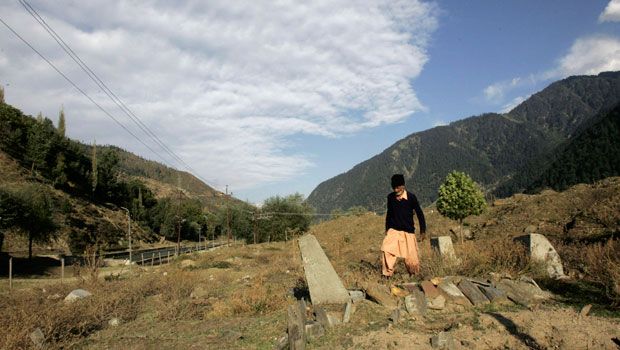
It is not surprising at all that the chief minister of Indian Kashmir, Omar Abdullah’s written statement on the disappeared persons, in the assembly on Oct 8 should have been received with complete disbelief.

He said, “Till ending July 2012, 2,305 persons have been declared missing.” FIRs were lodged only in 182 cases. In the rest of the cases, “missing reports and complaints have been lodged”.

Sana Altaf of the Srinagar daily Greater Kashmir noted “even after 23 years of armed conflict, no authentic official data exists on the number of disappeared persons in Kashmir valley while successive governments continue to come up with contradictory figures”.

According to the National Conference government headed by Farooq Abdullah the official figure of disappeared persons stood at 3,184. The then People’s Democratic Party government headed by Mufti Sayeed informed the assembly in February 2003 that 3,744 persons went missing between 2000 and 2002.

According to the Srinagar-based Association of Parents of Disappeared Persons (APDP) which has rendered yeoman service all these years, at least 8,000 persons have disappeared since the militancy began in 1989. Punjab witnessed a similar pattern of abuse and cover-up during the counter-insurgency operations from 1984 to 1995.

An inquiry by the police investigation team of the Jammu and Kashmir State Human Rights Commission (SHRC) has found 2,730 bodies dumped into unmarked graves in four districts.

The Inquiry Report of Unmarked Graves in north Kashmir, submitted by the investigating police team to the SHRC on July 2, 2011, said that the unidentified bodies had been buried in 38 sites in the Baramulla, Bandipora, Handwara and Kupwara districts. At least 574 were identified as the bodies of local Kashmiris. The government had previously said that the graves held unidentified militants.

Meenakshi Ganguly, South Asia director of Human Rights Watch, said: “For years, Kashmiris have been lamenting their lost loved ones, their pleas ignored or dismissed as the government and army claimed that they had gone to Pakistan to become militants. But these graves suggest the possibility of mass murder. The authorities should immediately investigate each and every death.”

The Inquiry Report recommended that the SHRC call for immediate DNA sampling and other forensic tests to try to identify the bodies by matching them with the next of kin of the people who have disappeared. Seventeen of the bodies found in the four districts have already been reburied by relatives in family graveyards. The investigation found that 18 of the graves contained more than one body. But the Kashmir government has refused to conduct DNA tests to identify the bodies.

New terms have come into vogue. The wife of a ‘disappeared’ man is called ‘half-widow’. International law, especially international humanitarian law, has begun to grapple with the problem. For long the chairperson of the Working Group on Enforced or Involuntary Disappearances studied the record in some countries and reported to the then UN Human Rights Commission at Geneva now replaced by the Human Rights Council.

The International Convention on the Protection of All Persons from Enforced Disappearances defines enforced disappearances as “the arrest, detention, abduction or any other form of deprivation of liberty by agents of the state or by persons or groups of persons acting with the authorisation, support or acquiescence of the state, followed by a refusal to acknowledge the deprivation of liberty or by concealment of the fate or whereabouts of the disappeared person, which place such a person outside the protection of the law”.

The convention grants all persons directly harmed by an enforced disappearance, such as family members of the disappeared, a “right to know the truth regarding the circumstances of the enforced disappearance, the progress and results of the investigation and the fate of the disappeared person”. India signed the convention in 2007 but has not ratified it.

The convention prohibits states from claiming a lack of resources to justify refusing to investigate a possible enforced disappearance by placing a duty on states to guarantee those resources. ‘Security’ cannot justify refusal to release information related to enforced disappearances. No “exceptional circumstances whatsoever, whether a state of war or a threat of war, internal political instability or any other public emergency, may be invoked as a justification for enforced disappearance”.

Mr Ravi Nair, executive director of the South Asia Human Rights Documentation Centre in New Delhi, to whom this writer is much indebted for his assistance, rightly holds that the law is violated if governments impose on the families of the victims the burden to provide information before attempting to identify whether any of the bodies belong to disappeared persons.

The UN Human Rights Committee places the burden of implementing the right to the truth on the state, not the victim’s family: “In cases where allegations are corroborated by credible evidence … and where further clarification depends on information exclusively in the hands of the state party, the committee may consider … allegations substantiated in the absence of satisfactory evidence or explanations to the contrary presented by the state.”

Disappearances blight the lives of whole families. In Kashmir they spread what The Economist aptly called “a war-borne epidemic of mental illness”.

Saturday 27 October 2012

http://dawn.com/2012/10/27/disappeared-in-kashmir/

continue reading

Hurricane Sandy kills 21 in Cuba, Haiti and Jamaica

At least 21 people have been killed in the Caribbean as Hurricane Sandy pummeled the Bahamas in the Atlantic Ocean.

Now upgraded to a massive Category-2 storm, the hurricane swept over Jamaica, Cuba, the Bahamas and Haiti, damaging hundreds of homes, ruining crops and killing 11 people in eastern Cuba.

According to Cuban media reports, nine deaths occurred in Santiago de Cuba Province on Thursday while two bodies were recovered in Guantanamo state, killed by falling trees.

Cuban President Raul Castro is slated to travel to Santiago de Cuba, the country’s second largest city, on Friday to survey the damage.

On Wednesday, Sandy hammered Jamaica, where one person died, and it also unleashed its wrath on Haiti, where nine people were killed and three others were reported missing.

The Bahamas is also largely affected by the storm, with power and phone lines downed, tourists stranded and trees uprooted. Schools, government offices, airports and bridges were to be closed Thursday and Friday.

Forecasters have warned that Hurricane Sandy could combine with North American weather systems and change into a powerful hybrid that media in the United States have dubbed a “Frankenstorm.”

According to predictions of forecast models, the hurricane could collide with a seasonal “nor’easter” weather system before zeroing in on the US East Coast with potentially destructive ferocity.

“The high degree of blocking from eastern North America across the entire Atlantic Basin is expected to allow this unusual merger to take place,” said the Florida-based US National Hurricane Center (NHC).

In Florida, authorities have been already on alert for tropical storm conditions, warning residents to prepare an emergency plan and supplies.

Saturday 27 October 2012

http://www.presstv.ir/detail/2012/10/26/268796/hurricane-sandy-kills-21-in-caribbean/

continue reading

Friday, 26 October 2012

Pakistani death squads spur desperate voyage to Australia

It was 3am when Abid Warasi and his friend clambered into an Indonesian fishing boat, joining 300 other migrants packed into the hold. Only a few days away by sea, Australia seemed tantalizingly close.

Six hours into the voyage, the craft overturned. The two teenagers clung to the upturned hull. One by one, survivors lost purchase and drifted away, their dreams swallowed by the warm waters of the Java Sea.

“When the boat capsized, the dead bodies came floating above the water,” Warasi said, recounting his ordeal in the Indonesian hill town of Puncak, just south of Jakarta. “Our hearts were so sad for them and we were waiting for our own time when we would die.”

The heroism that would ensure the pair survived 48 hours in the water is not merely testament to the bond of friendship that has united Warasi and Muhammad Muntaziri since their childhoods in the Quetta.

Their determination is also a reflection of the ferocity of the persecution unleashed upon their ethnic Hazara community, who are almost all members of Pakistan’s Shia minority.

In the past year, Lashkar-e-Jhangvi, a Sunni extremist group, has turned Quetta into a hunting ground. Gunmen shoot Hazaras every few days while leaflets shoved under doorways warn they are infidels deserving of death.

Thousands choose to face the ocean’s terrors rather than risk an encounter with the death squads stalking their city’s streets.

“Mothers are selling their jewelry so that their sons can leave Quetta for abroad,” said Khaliq Hazara, chairman of the Hazara Democratic Party, a Quetta-based political party. “We are under siege.”

Detention camps

The 10,000-km (6,000 miles) route from Quetta to established Hazara communities in the more genteel environs of Adelaide, Melbourne or Sydney is just one strand in an ever-shifting web of global migration.

But there are few starker examples of the impact troubles in faraway lands can have on domestic politics than Australia, where a growing influx of refugee boats has reignited a polarizing debate over immigration.

The government passed a law in August to revive a scheme to send asylum seekers rescued at sea to detention centers on far-flung Pacific islands.

Human rights groups condemned the move, saying people could be left languishing in malarial camps for years, isolated from relatives and unable to work.

Warasi and Muntaziri’s sheer desperation raises questions over how far the measures will discourage men and women whose quest for a new life has echoes of the voyages of European settlers to Australia in the late 18th century.

“Every day there were killings,” said Warasi, recalling life in Quetta. “We got chicken-hearted, like we were in a cage.”

A city divided

Overshadowed by the forbidding hills that define the wild geography of Balochistan, Quetta was once a town where ethnic groups and sects mingled freely. Today, LeJ is offering Hazaras a choice: leave or die.

In the neatly swept lanes of the Hazara enclave of Mehrabad, the fear is palpable. LeJ has turned swathes of Quetta into virtual no-go zones for Hazaras, who number perhaps 500,000 of the city’s population of about two million.

As members of both an ethnic minority and Shias, Hazaras make particularly attractive targets for extremists.

“If you went out in the morning you cannot be sure that you’d come back home,” said Muhammad Mehdi, who closed his children’s’ clothing shop in an ethnically mixed market after gunmen went on a shooting spree in April. Like many Hazaras, he is now reluctant to set foot outside Mehrabad.

In the cheerfully decorated classrooms of the district’s Ummat Public School, ambitious teenage girls fear their terrified parents will not allow them to venture into the city to attend college.

“We can be like Mark Zuckerberg, we can be like Bill Gates,” said Farheen, 15. “We can show the world that we are talented.”

A few minutes’ drive away, grave-diggers have had to open a new section in the century-old Hazara cemetery to accommodate the rapidly growing number of gunshot and blast victims.

Activists say at least 800-1,000 Hazaras have been killed since 1999 and the pace is quickening. More than one hundred have been murdered in and around Quetta since January, according to Human Rights Watch.

The state’s failure to protect them has fuelled Hazaras’s suspicions that elements within the security forces still support LeJ, which was nurtured by intelligence agencies in the 1990s as a proxy force.

There are no official figures for the number of Hazaras who have left for Australia, but community leaders say thousands of people like Warasi and Muntaziri have paid people smugglers $10,000-$15,000 to attempt the do-or-die trip.

Struggle at sea

Following the traffickers’ instructions, the friends caught buses to Pakistan’s commercial capital Karachi, then flights to Jakarta via Malaysia.

On the night of Dec 18, 2011, they boarded the fishing boat in the port of Surabaya. Like other migrant ships, it was bound for Christmas Island, a speck of Australian territory in the Indian Ocean.

When the boat capsized, Muntaziri held his breath, wriggled through a porthole and broke the surface before finding his friend. After six hours, a fishing boat arrived and 34 people managed to swim to it.

When he thought that Muntaziri would not make it, Warasi swam back to the wreck, ready to drown with his friend.

“Till we both die, we will help each other,” Warasi said.

Several boats passed, saw them but did not stop, Muntaziri said. They kept up their spirits by reminiscing about growing up in Quetta, but gradually passengers began to lose their grip on the capsized boat. By the time a coal ferry picked them up, only 13 remained alive. They had spent 48 hours in the water.

The pair have since sought shelter at a guest house run by UNHCR, the UN refugee agency. For now, their lives are in limbo as they wait for an immigration process that seems designed to frustrate them. The possibility of risking all on another boat is almost too traumatic to contemplate – but so is the prospect of returning home. Muntaziri, a knowledge-hungry 17-year-old who speaks five languages, said all he wanted was to be safe.

“I am the one who has to take care of my family,” he said. “That is why I am going to Australia to start a new peaceful life away from the terror.”

Despite the risks, growing numbers of Pakistanis, Afghans, Sri Lankans and others are attempting the journey.

Australia recorded 5,175 boat arrivals in the fiscal year to July 2011, compared with 690 two years earlier. More than 6,000 people have arrived by boat just in the first three months of the fiscal year that began July 1.

The passage exacts a heavy toll. About 1,000 people have died en route from Indonesia to Christmas Island since 2001, according to an independent report. In the disaster survived by Warasi and Muntaziri, more than 270 were feared drowned. “Pacific Solution”

Battling accusations it is soft on immigration, Prime Minister Julia Gillard’s Labor government has reactivated a plan to process boat arrivals on Pacific islands, reneging on its earlier opposition to it.

The “Pacific Solution” was adopted by Gillard’s Conservative predecessor John Howard, whose tough stance helped him win elections in 2001 and 2004.

People rescued at sea are sent to detention on Manus Island in Papua New Guinea, or the Pacific nation of Nauru. They could spend up to five years in camps with no guarantee of final settlement in Australia. Those granted protection will no longer be able to sponsor their families to join them.

The first group of asylum seekers were sent to a tent city in Nauru in mid-September. When fully operating, Nauru will house around 1,500 people, and Manus Island about 600.

The policy aims to deter people smugglers by ensuring those who board boats will have no better chance of living in Australia than those who apply through official channels.

Survivors argue that many have resorted to the perilous journey precisely because it can take many years to apply for asylum legally, often with scant chance of success. The debate in Australia has largely steered clear of the sort of inflammatory rhetoric seen in the late 1990s, when one lawmaker warned the country risked being swamped by Asians.

But not always: The host of a morning television show, Paul Henry, suggested the government whip asylum seekers arriving in Nauru. He later apologized.

Early signs suggest the “Pacific Solution” may be having an impact. Two groups of Sri Lankans returned home rather than risk being sent to an offshore camp and Hazaras in Karachi say some are reconsidering plans to start the voyage.

“They can’t imagine four years in a detention center,” said Eltaf Hussain, a student. “Why not commit a crime in Quetta and just be locked in jail?”

Friday 26 October 2012

http://tribune.com.pk/story/456782/insight-pakistani-death-squads-spur-desperate-voyage-to-australia/

continue reading

14 Dead, 4 Missing After Migrant Boat Sinks en Route to Spain

The flimsy craft that went down in Mediterranean waters en route from Morocco to Spain was carrying 35 migrants believed to be undocumented African migrants, not the 71 mentioned by one of the survivors, the Moroccan Human Rights Association said Thursday.

One of the survivors said 71 people were aboard the boat when it left Morocco.

Spanish officials said 14 bodies have been recovered from the sea so far, while 17 others - 14 men and three woman- have been pulled alive from the water off the coast of the Moroccan port of Alhucemas.

Some of survivors rescued from the sea were said to be in need of "urgent medical assistance." Authorities in both Spain and Morocco are continuing with operations aimed at rescuing any possible survivors and recovering bodies.

A massive search was launched for the boat on Wednesday after authorities received information that the vessel had left Morocco and was heading to Spain. Media reports suggested that the authorities were tipped off by a family member of a passenger on the boat.

Ammari Hasan, the representative of the human rights association in the northeastern town of Uxda, told Efe that the figure of 35 passengers had been confirmed by several different sources.

If that number is correct, it would leave four of the sub-Saharan migrants aboard the craft unaccounted for.

The Moroccan government has made no mention of the accident, while the official MAP news agency has reported only that one African migrant was rescued at sea and brought to a hospital in Alhucemas in grave condition.

Authorities from both countries began searching for the boat on Wednesday after a tip from someone who feared for the safety of a family member aboard the craft, Spanish officials told Efe.

The boat was subsequently located by a Spanish coast guard plane some 18 miles off the Moroccan coast on Thursday afternoon. Some of those in the water managed to climb into a inflatable raft dropped by the aircraft, which also alerted vessels from both Spain and Morocco about the location of the ill-fated boat.

The Maritime Rescue plane remained in the area to search for additional survivors or victim

Such accidents involving African migrant boats are common in the area, as thousands of illegal African migrants attempt to reach Europe for a better life by crossing the Mediterranean Sea in flimsy boats and dinghies every year.

Until recently, the coveted destination for most African migrants was the Spanish mainland or Spain's Canary Islands off the coast of West Africa. Nevertheless, there had been an distinct reduction in the flow of African migrants to Spain in recent years, mostly due to Madrid's increased cooperation with Morocco and other African countries to tackle the issue.

Friday 26 October 2012

http://www.rttnews.com/1991338/at-least-14-killed-as-migrant-boat-sinks-off-morocco.aspx?type=msgn&utm_source=google&utm_campaign=sitemap

http://www.laht.com/article.asp?ArticleId=618497&CategoryId=12395

continue reading

Thursday, 25 October 2012

For first time, gov’t to grant funds to ZAKA

ZAKA, the voluntary rescue and recovery organization, will for the first time receive funding from the Treasury, according to a decision made Wednesday by the social cabinet.

Finance Minister Yuval Steinitz chairs the body.

The decision did not name ZAKA – which was founded during the second intifada – as the sole recipient, or state the size of the allocations, but described the organization’s activities in handling deceased people who were victims of incidents resulting in unnatural deaths. The money will go toward round-the-clock efforts to help victims of disasters, as well as the recruitment of new volunteers.

ZAKA brings together emergency response teams, most of them Orthodox or ultra-Orthodox, each operating in a police district. The organization is officially recognized by the government for identification of victims of terrorism, road accidents and other disasters, and when necessary, gathering body parts and spilled blood for proper burial.

It also provides first aid and rescue services, and aids in the search for missing persons as well as international rescue and recovery operations. The volunteers are dedicated to ensuring that the bodies of Jewish victims are buried according to Jewish law.

After terror attacks, ZAKA volunteers also collect the bodies and body parts of non-Jews, including suicide bombers, for return to their families. The organization has some 1,500 members, many of whom are also trained medics or paramedics.

The organization preceding ZAKA was founded when a group of volunteers, under the leadership of Rabbi Elazar Gelbstein, gathered to assist in the recovery of human remains from a terrorist attack on Israeli bus line 405 in 1989. The ZAKA network was then established in the early 1990s.

Yehuda Meshi-Zahav, Rabbi Moshe Aizenbach and Tel Aviv Zaka director Rabbi Zvika Rosental founded the Jerusalem ZAKA organization in the 1990s.

The organization is most identified with Meshi-Zahav, who was raised as a member of the anti-Zionist Eda Haredit, and organized protests and sometimes violent incidents against the police and others. Through his volunteer work, Meshi-Zahav became moderate and even agreed to light an honorary beacon on Israel’s 55th anniversary of independence.

ZAKA members deal with an average of 38 deceased persons daily. But as terror attacks have waned in recent years, donations declined, and management problems resulted in deficits that nearly closed the organization. A recovery program put ZAKA back on track, but with government donations, its future will be ensured.

In 2004 and 2005, ZAKA volunteers provided assistance in Thailand, Sri Lanka, India and Indonesia in the aftermath of the 2004 Indian Ocean earthquake. In November 2008, ZAKA volunteers went to Mumbai, India, following terrorist attacks that included a Jewish center among its targets.

Following the 2010 Haiti earthquake, a six-man ZAKA international search and rescue unit was dispatched to Haiti. Teams of ZAKA volunteers were also sent to Japan in March 2011 to assist in search-and-rescue after a devastating earthquake and subsequent tsunami.

Thursday 25 October 2012

http://www.jpost.com/Health/Article.aspx?id=289204

continue reading

Five killed in fire at Masomba traditional market in C. Indonesia

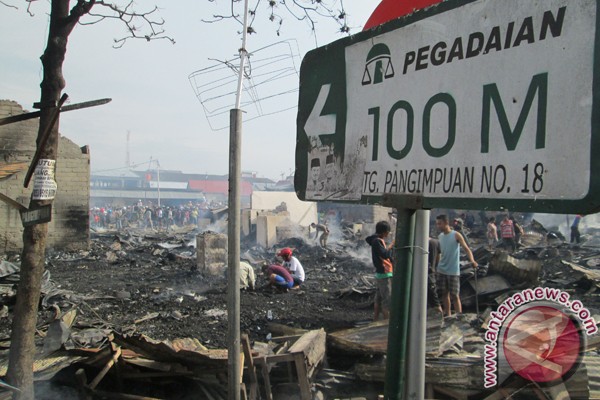
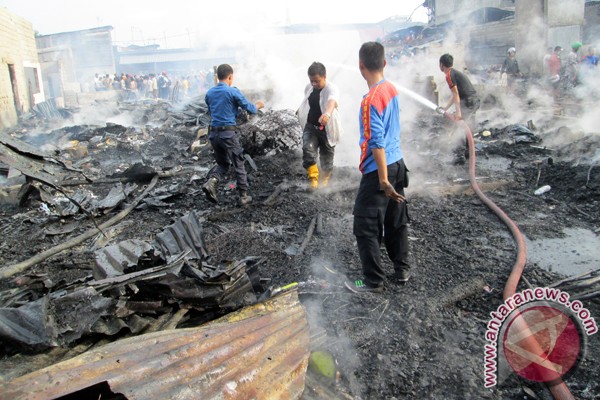
A massive fire took place on Wednesday at Masomba traditional market located in Palu, the capital city of Indonesia's Central Sulawesi province, leaving five dead, local media reported.

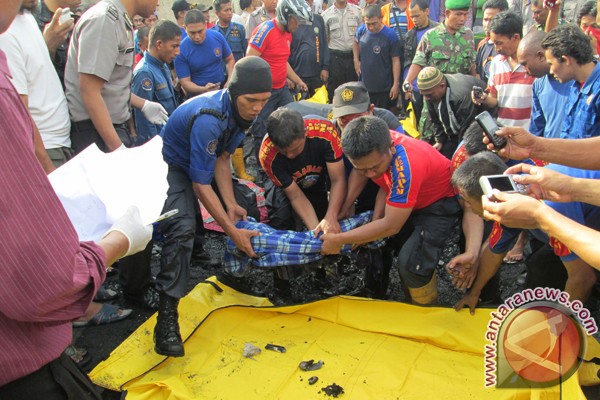
South Palu Police chief Comr. Saimuda Ali said that the five victims were found in the scorched market.

"We haven't been able to identify the victims as their bodies were severely burned," he said

Bodies of the victims were now placed in the Central Sulawesi' s Bhayangkara Police Hospital for further identification process.

Rahman, an eyewitness, said that the fire was originated from the stalls at the market. "I saw the fire came from the stalls that engulfed the whole market quickly," he said.

The fire reportedly started at 03:30 a.m. local time, was extinguished after three hours. The cause of the fire is still being investigated. The Masomba traditional market has previously caught on fire for multiple times due to short circuits.

Thursday 25 October 2012

http://www.china.org.cn/china/Off_the_Wire/2012-10/24/content_26893890.htm

continue reading