Thursday, 18 October 2012

NGO disposes of 55 unclaimed bodies

RANCHI: As many as 55 bodies which were lying unclaimed at the mortuary of the Rajendra Institute of Medical Science (RIMS) here were finally cremated on the bank of Jumar river on Sunday. The forest department provided wood for the cremation of the bodies. A local NGO which came to know about the unclaimed bodies at the RIMS morgue cremated these according to Hindu rituals on river bank.

RIMS director Tulsi Mahto said it was not the responsibility of the hospital to dispose of unclaimed bodies.

"There no time limit prescribed in law for disposal of the bodies which lays unclaimed for long. When it's a dead body where nobody comes forward to claim it then it becomes a state property. Hence it's the states responsibility to dispose of such bodies. Today the 55 unclaimed bodies were disposed of with help on an NGO," Mahto said.

The Ranchi Municipal Corporation (RMC) health officer said, "The problem was from the forest department who were not providing wood for the cremation. Now when they provided the wood the bodies were finally cremated." The forest department provided 155 quintals of wood for the purpose, while the RMC provided labour for cleaning and vehicles to carry the bodies to the cremation site.

"The bodies were in such bad shape that it was difficult to distinguish their sex. Most of them were in a decomposed state and were totally disfigured," Murda Kalyan Committee president Tubul Charkrabarty.

Thursday 18 October 2012

http://timesofindia.indiatimes.com/city/ranchi/NGO-disposes-of-55-unclaimed-bodies/articleshow/16816379.cms

continue reading

What now for Bali's broken hearts?

BROKEN hearts don't mend in 10 years.

Not all of them, not if Bali is any guide.

Some may never heal, not completely.

That much was clear from the 10th anniversary memorial service for those killed in the 2002 bombings.

Such gatherings are important. They allow those most deeply affected to express their grief and to acknowledge their loss, yet again, but also to help each other and feel the solidarity unique to those suffering the same pain.

But the next big public milestone anniversary, whether it be a 15th or a 20th year, is a long way off. For some families there won't be a next one because they have decided to draw a line in the sand now. What is to become of Bali's broken hearts?

Many are travelling pretty well these days, considering what they have been through; others less so.

Many feel 10 years is long enough; it's time to turn a new page and get on with their lives. But brave words and strong intentions are one thing; carrying them out is another.

"Closure is a funny word," said Adam Condon, making his first trip back to Bali since helping to identify six dead teammates from Sydney's Coogee Dolphins rugby league team, including his best friend Josh Iliffe.

"I don't think there is such a thing as closure," he said, a sentiment echoed time and again by bereaved families.

He went back to the morgue at Denpasar's Sanglah hospital, where body bags and body parts were piled up in the grim aftermath of the bombings in 2002.

"It's just something I wanted to get off my back," he said.

"I can't really put words to it. Walking through here was overwhelming. I felt sick to my stomach as soon as I walked in."

Did it help? "That remains to be seen."

The extent of the collective trauma is difficult to quantify, but 88 Australians were among the 202 dead. Multiply that figure by all of their family members and close friends, and it's clear those profoundly affected number in their hundreds and even thousands.

Some family members blame grief for adding to the toll.

Christine Rowland, of Melbourne, whose 33-year-old sister Bronwyn was killed in the terrorist attacks, said: "Mum died two years later of a broken heart, so we lost both of them."

Danny Hanley, who lost his daughters Renae and Simone, spoke at the service, urging mourners to "leave the broken, irreversible past in God's hands, and step into an invincible future with him".

But he told a reporter later he would have expected a lot more healing in 10 years, saying: "A lot of parents feel the same way. Time will never heal them. Families still feel terribly hurt and robbed. Another 10 years onwards it won't make any difference to me. I just can't get it out of the back of my mind."

Harry Wallace, from Byron Bay, NSW, also lost a daughter, 29-year-old Jodi. "She had only been here a few hours," he said. "She didn't even get to sleep in the bed (in the room) she had booked into. That's a pretty hard thing to live with."

Julia Gillard noted how the survivors and families, all this time later, were still at different stages of grief.

She attended last Friday's commemoration as prime minister, having just avoided the bombings as a tourist, ending a holiday with her sister and a nephew the day before.

"Nothing can replace the empty seats at your family table, the graduations and christenings you will never know," she said, but there was a "grim reassurance" in knowing the terrorists did not achieve what they set out to do.

Former prime minister John Howard told the gathering: "A decade on, we renew that effort of comfort and compassion and struggle to understand the continuing pain."

The media has been full of stories of that pain.

Norelle Quayle, whose husband Simon coached Perth's Kingsley football club, which lost seven players, told how she recently opened a box of newspaper clippings she had put away for her husband. "I opened it and read everything, and I finally realised how terrible it was," she said.

For Pat Paltridge, a Kingsley mother whose 20-year-old son Corey died on the dance floor of the Sari Club, the penny didn't seem to drop until someone talked to her about the 10th anniversary.

"It was like it was finally real, that before I didn't believe it had happened," she said. "So this year is probably the hardest for me."

The Kingsley clubhouse will always be open on October 12, the date of the bombings, for survivors to return for a barbecue and a "huddle" together after 11pm, the time of the bomb blasts.

"We've said that we'll keep opening the doors until nobody turns up," said club organiser Jan Pearce, whose son Duane survived the bombings. "I think that'll be a while yet."

Daniel "Shorty" Mortonsen found he had to put physical distance between himself and his old football club, the Dolphins, so he shifted from Sydney to Perth.

He and Adam Condon visited "ground zero" in Kuta's narrow main street, where they placed six cans of beer, one for each of their dead teammates, at the Bali memorial.

"I bet they've opened a nightclub up there, and they're all drinking beer," he said, glancing at the sky. "And by the time we get up there they won't let us in, because we'll be too old."

Thursday 18 October 2012

http://www.theaustralian.com.au/news/breaking-news/what-now-for-balis-broken-hearts/story-fn3dxiwe-1226498551411

continue reading

Families of Disappeared Persons Wait for Answers

Pale face. Faint voice. Tearful eyes. It has been long since they are knocking the doors of human rights organizations in the capital with a faint hope. The prime time of their life has been spent knocking the doors of governmental bodies and are still they are pinning their hope on the rights activists, with the faint hope of getting justice. The questions like why, where and how arise inside them. Issues as family tension, worry of educating and bringing up their children are there; still they are doing their best to find out about their disappeared relatives.

These are the daily routine and the worry of the families of 934 people like Cham Kumari Basnet of Baglung whose loved ones were disappeared by the state and the Maoists during the conflict. Why our relatives were disappeared? Where were they taken? In which situation they are in? How and who will make it public? These are some of the questions haunting them all the time. Our questions remain unanswered, says Jagannath Subedi, father of one disappeared person, Deepak Subedi of Kewalpur VDC-6, in Dhading. We still get goose bumps when I remember the night when our loved ones, sleeping under the same roof, were abducted, arrested and disappeared by either of the conflict parties, says Dhana Kumari Tharu of Rupandehi who says that she is tired of knocking the doors of organization and governmental bodies to find the whereabouts of husband. Her husband was disappeared by the state on August 27, 2005. After that, there is no information about his situation.

According to the INSEC's data, 934 people were the victims of enforced disappearance at the hand of the state and the rebels during the conflict. NHRC recorded that 809 people were disappeared by the State, 227 by Maoists whereas 127 by unidentified groups. On August 30, 2012, ICRC stated that total of 1,401 people were disappeared during the armed conflict.

"The dead bodies are identified and cremated, but we don’t have any information about the situation of our loved one", Nawaraj Luitel of Naubise in Dhading says. "Our demand is either show their dead bodies or show them alive ". Luintel's younger brother Hari Prasad Luitel has been made disappeared since 2003 September 2. Luintel further says that since Hari's disappearance every 'Bhai Tika' or the festival of Brother's Day has been filled with sorrow, grief and distress. Nepal Nagarkoti of Champi in Lalitpur is living through the same distress since then. He says, "Since 2003, every "Bhai Tika brings only with grief and sorrow, our happiness has been shattered by armed conflict". His brother remains disappeared since September 2, 2002." If someone knocks the door at night, I feel like my husband has come back", says Kalpana Manandhar of Dhading.

Act of enforced disappearance has been defined as when a state or non-state agency arrests or abducts someone but fails to publicly acknowledge their detention.. The act of enforced disappearance was practiced in in Panchayat regime;however, it drastically increased after the armed conflict. It is pledged in 7-point agreement signed by the Maoists and the seven political parties and in Interim Constitution that they would be finding out the truth about the people who disappeared during the armed conflict and making them public. The Comprehensive Peace Accord (CPA) signed between the Maoists and the government in November 21, 2006 has stated that whereabouts of the people disappeared during an armed conflict, by state or non-state, would be made public within 60 days. But, it has nearly been six years and neither state nor the Maoists are serious about it. The former rebels, , who has already been at the helm of the state many times, chose to disregard this matter while in contrary to their vowed commitment, their leadership has put a clause of blanket amnesty on" Truth and Reconciliation Commission Ordinance 2012" and submitted it to the President for his approval.

The familiesof the disappeared people were in hope, especially after the CPA. They were quite happy knowing that they will learn about their disappeared loved ones . But six years have elapsed and the problem is intact. There was no happiness in the face of the families of the disappeared who came from different districts during the "Day of the Disappeared Persons " to give pressure to the government. After the Ordinance is presented to the president for approval about giving blanket amnesty, they are worried about being denied of justice they have fought for so long.

Thursday 18 October 2012

http://www.inseconline.org/index.php?type=features&id=5&lang=en

continue reading

Mortuary buries 35 unclaimed bodies in Naivasha

Naivasha district public health department Tuesday night buried 35 unclaimed bodies in a mass grave.

The health body got the permit to bury the bodies from the Naivasha law courts early last month.

Speaking while after overseeing the burying of the bodies on Tuesday night, district public health officer Samuel King’ori called on the Ministry of Health to expand the morgue in the town to ensure a bigger capacity to store more bodies.

He said the number of dead bodies in the morgue increased continuously as people who brought in the dead often gave them falsified information.

King’ori added that in their follow up, they often tried to trace the relatives of the dead in through their phones but were often off.

“Even when we appeal to the relatives to try and trace them but they do not show up,” he added.

The health officer admitted that the mortuary was already overstretched and they needed a bigger morgue.

Thursday 18 October 2012

http://nakuru.hivisasa.com/news/mortuary-buries-35-unclaimed-bodies-naivasha

continue reading

Landslide kills children in Peru's jungle

Several children were among the victims when a mudslide sent a mass of tree and rock debris crashing into homes in Peru's jungle Wednesday, killing at least 11 people.

Ten more people are unaccounted for, according to the country's state news agency.

Heavy rains set off the natural disaster in the San Martin tropical forest in Peru's northeast, which destroyed "at least 10 houses and a pedestrian bridge," Andina news agency reported.

Six of the 11 bodies recovered so far appear to be children. Residents are working with civil defense officials and the military to find victims in the rubble, but the flooding of a local river is hindering their efforts.

At least a dozen homes were swept away as mud and rocks crashed into the village of El Porvenir in the province of San Martin.

The provincial mayor, Ronald Garcia, said at least five children were among the dead and that whole families were unaccounted for.

Heavy rain in the area has triggered several landslides in recent weeks.

"It's a jungle area, next to the village passes a river, houses were on the edge of ejection of this ravine, and the flood swept through those that were there," the head of the National Civil Defence Institute (Indeci), Alfredo Murgueytio, told Peruvian radio.

Mr Garcia said some of the missing people may have fled into the hills to save their lives.

"Whole families are missing," said Mr Garcia. More than 80 families live in the village, he said.

El Porvenir residents are mostly coffee farmers, officials said.

Peru's government is sending humanitarian aid, including tents and sheets, the state news agency reported.

Thursday 18 October 2012

http://www.bbc.co.uk/news/world-latin-america-19987471

continue reading

Search on for burial site of Tarawa coastwatchers

Attempts are being made to locate and identify the remains of Otago coastwatchers executed by Japanese soldiers on Tarawa Atoll 70 years ago.

The New Zealand Defence Force (NZDF) hoped to learn in the next few months whether a potential burial site was worth excavating on the Kiribati atoll.

A team from JPac (Joint Prisoners of War, Missing in Action Accounting Command) would soon be on site to investigate an area identified as a potential mass grave from aerial photographs taken before the atoll was destroyed by naval gun fire towards the end of World War 2.

NZDF director of commemorations, heritage and protocol John McLeod said if the JPac team discovered anything to suggest New Zealand remains were in the vicinity, a full excavation could follow.

But he did not want to get relatives' hopes up and said the search was "one step at a time".

More than 5000 Japanese remained buried on Tarawa, which was extensively damaged in the war.

"The impact of a naval shell will shift a small hill, so if remains were buried two or three feet down and naval gunfire landed anywhere nearby it would shift them. The whole island was hit by naval gunfire, then the Americans bulldozed a lot of it to build a runway," Mr McLeod said.

The defence force was responsible for any New Zealander missing in action, including the 17 coastwatchers beheaded by their Japanese captors on October 15, 1942.

Among them were Clifford Pearsall, of Lawrence, and Arthur Heenan, of Middlemarch.

Mr Heenan's younger brother, Bob Heenan (86), who lives in Mosgiel, said he held little hope of his brother's remains being found and returned.

"It's been such a long time and they don't seem to be making very much progress. There are so many bodies there, it would be very difficult," he said.

Mr McLeod said there had been "quite a few" efforts to locate New Zealand remains on Tarawa, including immediately after World War 2.

In February, the defence force learnt of a possible burial site, identified last year by JPac experts, which was underneath a modern cemetery.

"The plan is to do some exploratory work to identify whether in fact that is a possible location.

"Based on what is found, New Zealand would then look at doing an excavation once we had the necessary approvals from the local authorities," Mr McLeod said.

Remains would have to be forensically examined to see whether they were of New Zealanders.

"Wherever you dig on the island, you'll find bones. That's a fact of life. All we can do is give it our best shot," he said.

The NZDF would keep looking for coastwatchers' remains.

"There's a commitment to provide some comfort for families. We may never find anything, but we owe it to their memory to keep trying," Mr McLeod said.

Coastwatchers were recognised during a commemoration at the National War Memorial in Wellington this week, on the 70th anniversary of the Tarawa execution.

American organisation History Flight had offered to assist any New Zealand effort to locate, identify and retrieve coastwatchers' bodies from Tarawa.

The non-profit organisation had searched out and retrieved missing American World War 2 servicemen from the Pacific and identified three locations on Tarawa where it believed New Zealand coastwatchers were buried.

Thursday 18 October 2012

http://www.odt.co.nz/news/dunedin/230801/search-burial-site-tarawa-coastwatchers

continue reading

Investigators: Factory fire victims were trapped behind locked doors

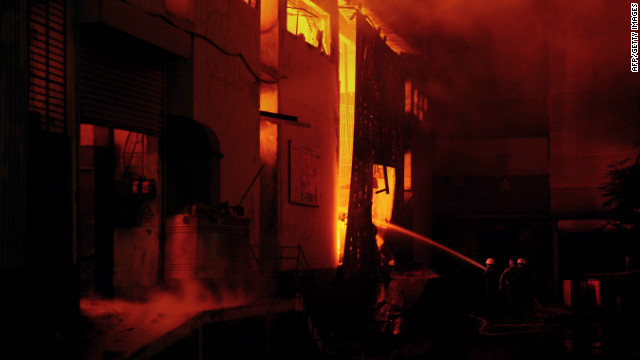
During a factory fire that left more than 250 people dead in Karachi, one of the workers, Abdul Ghani, struggled to find his wife, who also worked there.

"I remember thinking if I can't save her, I hope I burn to death with her," Ghani said.

The father of two young daughters, Ghani described in terrifying detail his account of what happened when a fire broke out at the denim factory where he worked on September 11.

"The fire was so intense I couldn't get in," he said.

While firefighters struggled to control the flames, family members took matters into their own hands and tried entering the burning building to save their loved ones.

"We broke the wall down and found bodies melted onto each other... piled up and completely burnt," Ghani said.

His wife died in the factory fire.

Several trapped workers jumped from the upper floors to escape the flames, said Mustafa Jamal, a senior government official who was at the scene.

Pakistani investigators say most of the victims were trapped behind locked emergency exits -- which is a serious violation of worker safety laws. The company denies the doors were locked and blames a late response by firefighters, who, along with witnesses, say they arrived within minutes.

RINA group-- an Italian company that inspected factories on behalf of an international watchdog group-- confirmed that the factory owned by Ali Enterprises had passed inspection on August 20, a few weeks before the fire.

Its audit report said, "Access to fire extinguishers and passages leading to exits was maintained free from any kind of obstruction. Primary exits and emergency exits are kept unlocked while employees are inside facility."

After the fire, RINA issued a statement on its web site expressing sympathy for the victims and noted that "the certification body is not in a position to verify the day-by-day implementation of the system." The statment also said, "RINA has decided, as a precautionary measure, to voluntarily suspend new certification activities in Pakistan." It has pledged to conduct an internal investigation.

While some 70 bodies have yet to be identified, criminal proceedings against the factory owners will begin as late as next year, said Faisal Siddiqi, the victims' lawyer.

Police officials said the owner of the factory was released due to his deteriorating health, but his two sons Shahid Bhaila and Arshad Bhaila who were involved in the day-to-day function of the factory are being held in jail and could face murder charges.

CNN tried to reach the defendants' lawyer several times, but he was unavailable for comment.

The provincial government has pledged to compensate the families of the victims, but Ghani said he has yet to see any kind of support.

Arif Elahi, the Secretary of Labor, said, so far, more than 173 victims' families have been compensated with up to $9,000 by different government agencies.

"We are still identifying some of the bodies," Elahi said. "As soon as we know who they are, we will compensate the rest of the families."

Siddiqi, the legal counsel for the victims, said that they've "asked the government for a comprehensive inspection of all factories, details of transparent compensation for the victims' families and an independent judicial commission that will investigate the fire."

Both a police investigation and a government inquiry into the fire have been completed and are expected to be submitted shortly.

The fire is believed to be the worst manmade disaster in Pakistan's history, according to the National Disaster Management Authority.

The fire raises new questions about possible lapses in safety measures and the enforcement of factory fire codes in Karachi's booming industrial sector, said Siddiqi.

"It is only a matter of time that something like this could happen again," he said.

Pakistan has one of the largest textile industries in the world, shipping $13.8 billion worth of textiles mostly to the U.S. and Europe this year. Textiles account for 63 percent of Pakistan's exports.

The tragedy in Karachi has forced factory owners to re-evaluate the enforcement of labor laws in their own factories, an owner of a factory told CNN.

"I wish that this kind of tragedy never happens to anyone else," said Ghani, who lost his wife in the fire.

Thursday 18 October 2012

http://edition.cnn.com/2012/10/17/world/asia/pakistan-factory-fire/

continue reading

Wednesday, 17 October 2012

Pakistan floods kill 455, affect five million

ISLAMABAD: Monsoon floods in Pakistan have killed 455 people over the past five weeks and affected more than five million, according to the latest figures from the government's disaster relief agency.

Pakistan suffered devastating floods in the past two years, including the worst in its history in 2010 when catastrophic inundations across the country killed almost 1,800 people and affected 21 million.

As in the previous two years, most of those hit by the latest floods were in Sindh province, where the National Disaster Management Authority (NDMA) said more than three million have been affected, with 890,000 in Punjab and nearly a million in Baluchistan.

More than 260,000 people around the country have sought shelter in relief camps since early September, though this figure is down from the 290,000 reported by NDMA two and a half weeks ago.

The data published by NDMA on Monday said more than 1.1 million acres (450,000 hectares) of crops were affected by the floods.

Wednesday 17 October 2012

http://www.geo.tv/GeoDetail.aspx?ID=71843

continue reading

Poland summons Russian ambassador over plane crash victims' photos

Poland's Foreign Ministry summoned the Russian ambassador to Warsaw on Wednesday to protest against the release of photographs showing mangled bodies from a 2010 plane crash that killed the Polish president and 95 others.

Several Russian websites published photographs depicting what appeared to be the body of President Lech Kaczynski and partial remains of others who died when a government plane crashed in heavy fog in western Russia.

"Deputy Minister (Jerzy) Pomianowski told the Russian ambassador that Poland expects the Russian authorities to take firm measures, promptly launch an inquiry into the matter, and punish those responsible for the leaked images," the foreign ministry said in a statement released after the meeting with envoy Alexander Alexeev.

The appearance of the photographs is another embarrassment for Russian and Polish authorities after prosecutors in Warsaw last month said at least two families received and buried the wrong bodies.

That revelation has raised questions about how many other bodies were wrongly identified after the crash - an event which traumatised the nation and still complicates relations with Poland's neighbour Russia.

The foreign ministry said it acknowledged that Russia, which oversaw the investigation of the catastrophe and the identification of the victims, took steps to block some Russian websites that posted the photographs.

Reuters was able to access one of the websites with links to seven photographs, showing the site of the crash with scattered bodies, remains on a plastic canvas and the body of what appeared to be President Kaczynski on a metal gurney and a black coffin.

Russia's federal Investigative Committee, which answers only to President Vladimir Putin, said in a statement on Wednesday it was looking into the case and seeking to establish who was behind the publication. It added it was also aiming to withdraw the pictures from media.

Russian investigators have blamed the crew of the Polish government Tu-154 for the crash, while a Polish report pointed the finger at Russian ground controllers for allowing the jet to land in heavy fog at a small airport near Smolensk.

Wednesday 17 October 2012

http://uk.reuters.com/article/2012/10/17/uk-poland-russia-idUKBRE89G0SG20121017

continue reading

A Sticky Tragedy: The Boston Molasses Disaster

On January 15th, 1919, in what was probably the most bizarre disaster in United States' history, a storage tank burst on Boston's waterfront releasing two million gallons of molasses in a 15 ft-high, 160 ft-wide wave that raced through the city's north end at 35mph destroying everything it touched.

The wave killed young Pasquale Iantosca, smashing a railroad car into the ten-year-old. It pinned Walter Merrithew, a railroad clerk on the Commercial Street wharf, against the wall of a freight shed, his feet 3 ft off the floor. He hung there as he watched a horse drowning nearby. The wave broke steel girders of the Boston Elevated Railway, almost swept a train off its tracks, knocked buildings off their foundations, and toppled electrical poles, the wires hissing and sparking as they fell into the brown flood. The Boston Globe reported that people 'were picked up and hurled many feet'. Rivets popping from the tank scourged the neighbourhood like machine gun bullets, and a small boat was found slammed through a wooden fence like an artillery shell. By the time it passed, the wave had killed 21 people, injured 150, and caused damage worth $100 million in today's money. All caused by molasses.

At the time, molasses was a standard sweetener in the United States, used in cooking and in fermentation to make ethanol, which in turn could be made into a liquor used as an ingrethent in munitions manufacture, an aspect of the business that had been booming during the First World War.

At 529 Commercial Street in North Boston, the 2.3 million gallon Purity Distilling Co. storage tank was filled to capacity with molasses awaiting transfer to the company's distillery in Cambridge. The weather was mild for January, a relief from the cold snap that had been biting the area for several days. The 50 ft-high tank, which was 90 ft in diameter, dominated the neighbourhood where Commercial Street and the elevated railway tracks made 90-degree turns as they approached the harbour, a congested area densely populated with Italian immigrants and interspersed with pockets of Irish people, who would come to dominate the city. Eighteenth-century American patriot Paul Revere 's house and the home of colonial governor Thomas Hutchinson were in the neighbourhood, along with an area of blacksmith shops, a slaughterhouse, modest homes and the trolley company's freight sheds.

The tank itself was just over three years old. It was constructed of large curved steel plates, seven vertical rows of them overlapping horizontally and held together with rows of rivets, the whole set into a concrete base. Its construction had cost United States Industrial Alcohol (USIA), Purity's parent company, $30,000. It was perfectly located for USIA, just 200 ft from the harbour and ships that brought molasses from Cuba, and near the railroad tracks that would move the molasses from storage.

Yet the five-storey storage facility was never properly tested - by filling it with water - because a shipload of molasses was due only days after the completion of the tank in December 1915. From the beginning leaks had appeared. Streaks of molasses ran down the sides of the tank, and people living nearby filled up cans for home use. Children would scrape the leaks onto sticks to make molasses suckers. Neighbours and workmen had also reported ominous rumbling noises inside the structure.

With the war over, USIA needed to find other markets than the munitions industry. It found a solution in the looming possibility of Prohibition, which was to ban all sales of alcohol in the United States after a one-year grace period. Hoping to cash in on pre-Prohibition demand, USIA retooled its Cambridge plant for grain alcohol and produced as much as it could. On January 15th, 1919, the tank held 2.3 million gallons of molasses weighing an estimated 26 million pounds, almost one-and-a half times as much weight as the equivalent volume of seawater.

It was around 12.30pm, lunchtime for many workers, when the tank broke. Buildings of the nearby Northend Paving Yard were instantly reduced to kindling as the molasses cascaded out. The threestorey Engine 31 Fire House was torn from its foundations, trapping three firefighters who fought to keep their heads above the rising tide. A piece of the tank was blown into the elevated railway tracks, breaking girders and almost forcing a northbound train off its tracks. Seeing a brown mass surging towards him, Royal Albert Leeman, a brakeman for the Boston Elevated, stopped his train and ran up the tracks to stop a second train.

The entire waterfront area was levelled and rails from the overhead railway dangled like Christmas tinsel.

First on the scene were 116 sailors from the lightship USS Nantucket that was docked nearby. They were soon joined by Boston police, Red Cross workers and army personnel. When Suffolk County medical examiner George Magrath arrived, several bodies had already been pulled from the molasses. He said they looked 'as though covered in heavy oil skins ... eyes and ears, mouths and noses filled'. A makeshift hospital was set up at Haymarket Relief Station about half a mile from the waterfront, and volunteers removed molasses from victims' noses and mouths so they could breathe. Those already on duty were soon covered from head to foot with brown syrup and blood,' the Boston Post reported. 'The whole hospital reeked of molasses. It was on the floors, on the walls, the nurses were covered with it, even in their hair.' At the destroyed city stables, police shot injured horses trapped in the molasses.

The rescue continued for days. Bodies were often so covered by a brown glaze that they could not be seen. The body of truck driver Flamino Gallerini was taken from the water underneath the railroad freight houses eleven days after the tank burst, and almost four months after that a final body, that of Cesare Nicolo, was pulled from the water under the Commercial Wharf.

The clean-up eventually took some 87,000 man hours. Fire department pumps groaned as they removed thousands of gallons of molasses from cellars. Workers used chisels, brooms and saws to break up the hardening gunk. The harbour water, used to flush the streets clean, was brown until the summer. Meanwhile, rescue workers, sightseers and residents carried the gooey brown residue on their clothes and boots to other parts of the city, making streetcar seats, trolley platforms and public phones sticky. The whole city smelled of molasses.

In February, a month after the disaster, the Chief Judge of Boston Municipal Court, Wilfred Bolster, made public the results of his investigation into the tragedy and blamed the tank itself, saying evidence indicated it was 'wholly insufficient in point of structural strength to handle its load'. He also held USIA to be guilty of manslaughter. District Attorney Joseph Pellatier then presented evidence to a grand jury, which decided the tank had been built without a sufficient inspection of its plans and construction by the city. But the jury stopped short of charging the company with manslaughter.

Also in February 1919, a professor at the Massachusetts Institute of Technology, CM. Stoffard, examined pieces of the shattered tank and stated that its shell had been too thin and was held together with too few rivets.

By August 1920, 119 separate lawsuits had been filed against USIA. At a preliminary hearing, the company's lawyers and various plaintiffs crammed into Boston's courthouse. In response to the complexity of the case and the number of lawyers and plaintiffs involved, Superior Court Judge Loranus Eaton Hitchcock consolidated the suits with one lead attorney for each side and appointed an 'auditor' to hear evidence and issue a report as to liability and damages. The cases could then move on to actual jury trials, he said, but it was hoped the auditor's conclusions would streamline that process.

Hugh W. Ogden, a Boston attorney who had reached the rank of colonel during the First World War, was appointed auditor. He had served as judge advocate of the 42nd Infantry Division, and had been awarded the Distinguished Service Medal. After the war he had served with the Army of Occupation in Germany as a legal adviser.

During the hearing before Ogden, which began on August 9th, 1920, USIA maintained the failure of the tank had been due to sabotage, probably by Italian anarchists, who were known to be active in the country and in Boston at the time. They claimed a telephone threat against the tank had even been received a year earlier, leaflets threatening violence had been found posted in the neighbourhood only days before the disaster, and a bomb had been discovered at another USIA facility in 1916.

The plaintiffs argued that the tank was the problem. They showed the material used to build it was thinner than that specified and that the man in charge of construction, Arthur P. Jell, had spent his career as a financial officer. He could not read the plans and had sought no engineering advice. The plaintiffs also showed the tank's construction had been rushed and it had not been properly tested.

By the time the hearing was over three years later, Ogden had listened to 921 witnesses. The transcript ran to almost 25,000 pages and lawyers had presented 1,584 exhibits. Ogden was to study the material for another year before issuing his conclusions. It was the longest and most expensive civil suit in Massachusetts's history.

Ogden gave his 51-page verdict on April 28th, 1925 and held the company liable for the disaster. He ruled that USIA's attorneys had given no evidence to support their theory about anarchists. Yet evidence had been supplied of the inferior material and construction of the tank. Ogden wrote: 'The general impression of the erection and maintenance of the tank is that of an urgent job ... I believe and find that the high primary stresses, the low factor of safety, and the secondary stresses, in combination, were responsible for the failure of the tank.'

Ogden recommended around $300,000 in damages, equivalent to around $30 million today, with about $6,000 going to the families of those killed, $25,000 to the City of Boston, and $42,000 to the Boston Elevated Railway Company. Faced with the negative ruling, lawyers for USIA quickly agreed an out-of-court settlement with slightly higher awards for the families of those killed and injured.

As a result of the tragedy, Boston city authorities began requiring that plans for all construction projects be signed off by an engineer or architect and filed with the city's building department, a practice that soon spread throughout America.

The tank was never rebuilt. The site where it stood is now a public park with bocce (Italian boules) courts and Little League baseball fields, slides and swings. All that remains of that terrible day 90 years ago is a small plaque at the entrance of the recreational complex. Yet local residents insist a faint smell lingers to this day. They say that on warm summer days the air is still tinged with the sweet, cloying scent of molasses.

Wednesday 17 October 2012

http://www.historytoday.com/chuck-lyons/sticky-tragedy-boston-molasses-disaster

continue reading

Latin American immigrant deaths soar from desert heat near Tucson

TUCSON — Dr. Bruce Parks unzips a white body bag on a steel gurney and gingerly lifts out a human skull and mandible, turning them over in his hands and examining the few teeth still in their sockets.

The body bag, coated with dust, also contains a broken pelvis, a femur and a few smaller bones found in the desert in June, along with a pair of white sneakers.

“These are people who are probably not going to be identified,” said Dr. Parks, the chief medical examiner for Pima County. There are eight other body bags crowded on the gurney.

The Pima County morgue is running out of space as the number of Latin American immigrants found dead in the deserts around Tucson has soared this year during a heat wave.

The rise in deaths comes as Arizona is embroiled in a bitter legal battle over a new law intended to discourage illegal immigrants from settling here by making it a state crime for them to live or seek work.

But the law has not kept the immigrants from trying to cross hundreds of miles of desert on foot in record-breaking heat. The bodies of 57 border crossers have been brought in during July so far, putting it on track to be the worst month for such deaths in the last five years.

Since the first of the year, more than 150 people suspected of being illegal immigrants have been found dead, well above the 107 discovered during the same period in each of the last two years. The sudden spike in deaths has overwhelmed investigators and pathologists at the Pima County Medical Examiner’s Office. Two weeks ago, Dr. Parks was forced to bring in a refrigerated truck to store the remains of two dozen people because the building’s two units were full.

“We can store about 200 full-sized individuals, but we have over 300 people here now, and most of those are border crossers,” Dr. Parks said. “We keep hoping we have seen the worst of this, of these migration deaths. Yet we still see a lot of remains.”

The increase in deaths has happened despite many signs that the number of immigrants crossing the border illegally has dropped in recent years. The number of people caught trying to sneak across the frontier without a visa has fallen in each of the last five years and stands at about half of the record 616,000 arrested in 2000.

Not only has the economic downturn in the United States eliminated many of the jobs that used to lure immigrants, human rights groups say, but also the federal government has stepped up efforts to stop the underground railroad of migrants, building mammoth fences in several border towns and flooding the region with hundreds of new Border Patrol agents equipped with high-tech surveillance tools.

These tougher enforcement measures have pushed smugglers and illegal immigrants to take their chances on isolated trails through the deserts and mountains of southern Arizona, where they must sometimes walk for three or four days before reaching a road.

“As we gain more control, the smugglers are taking people out to even more remote areas,” said Omar Candelaria, the special operations supervisor for the Border Patrol’s Tucson Sector. “They have further to walk and they are less prepared for the journey, and they don’t make it.”

Mr. Candelaria said the surge in discoveries of bodies this year might also owe something to increased patrols. He noted that some of the remains found this year belong to people who died in previous years. But Dr. Parks said that could not account for the entire increase this year. Indeed, the majority of bodies brought in during July, Dr. Parks said, were dead less than a week.

Human rights groups say it is the government’s sustained crackdown on human smuggling that has led to more deaths.

“The more that you militarize the border, the more you push the migrant flows into more isolated and desolate areas, and people hurt or injured are just left behind,” said Kat Rodriguez, a spokeswoman for the Coaliciรณn de Derechos Humanos in Tucson.

At the medical examiner’s office in Tucson, Dr. Park’s team of five investigators, six pathologists and one forensic anthropologist face an enormous backlog of more than 150 unidentified remains, with one case going back as far as 1993.

Every day, they labor to match remains with descriptions provided by people who have called their office to report a missing relative, or with reports collected by human rights groups and by Mexican authorities.

Since 2000, Dr. Park’s office has handled more than 1,700 border-crossing cases, and officials here have managed to confirm the identities of about 1,050 of the remains.

Investigators sift through the things the dead carried for clues — Mexican voter registration cards, telephone numbers scrawled on scraps of paper, jewelry, rosaries, family photographs. Often there is precious little to go on.

“We had one gentleman who came in as bones, but around his wrist there was a bracelet from a Mexican Hospital that had his picture,” said David Valenzuela, one of the investigators.

If no documents are found, the task becomes harder. Many of the deceased immigrants were too poor to have visited doctors or dentists on a regular basis, so dental or medical records may not exist. Sometimes, a family photograph of the deceased smiling widely is all investigators have to document dental work.

On a recent morning, Bruce Anderson, the forensic anthropologist in the office, was examining the skeleton of an adolescent boy, whose age was somewhere between 14 and 17. His mummified remains were found on the Tohono O’odham Indian Reservation west of Tucson on July 15. The only lead to his identity was a missing front tooth and the neighboring teeth crowded together in the space.

Dr. Anderson called the Coaliciรณn de Derechos Humanos, who had a report of a 13-year-old who had been reported missing this year after crossing the border near Sonoyta, Mexico.

The charity immediately contacted the boy’s family to see if he had lost a permanent tooth. Dr. Anderson was still waiting for a reply.

The process takes time, and remains keep piling up. On Monday, Mr. Anderson faced a backlog of 14 new skeletons, in addition to the 40 active cases he is investigating, he said. “One person can’t keep up with this load,” he said.

The pathologists are also under strain. One day last week, Dr. Cynthia Porterfield did five autopsies, on remains of border crossers who died in the desert.

Dr. Porterfield was able to identify one: Jesse Palma Valenzuela, 30, who died on July 12. Three of his travel companions had tried to carry his body back to Mexico but became tired and abandoned him, wrapped in a blanket and positioned off the ground in a tree to keep animals from eating him. Then they crossed back into Mexico and notified the Border Patrol.

Agents discovered Mr. Valenzuela’s body on July 17, right where his friends said it would be, about two-and-a-half miles east of Lukeville, Ariz., not far from the border. Though decomposed, he was still recognizable.

“He’s got quite a few tattoos,” Dr. Porterfield said. “It is how the family ID’d him.”

Wednesday 17 October 2012

http://www.sanfranciscosentinel.com/?p=82521

continue reading

Arizona county's grim lost and found

TUCSON — She probably never imagined things would go so wrong — that she'd end up here, on a scuffed metal gurney in a coroner's office far from home.

Still, at age 22, she was old enough to know the dangers of stealing across the U.S. border from Mexico onto a lethal desert landscape, where she would have to take crazy chances amid the heat, cold and rattlesnakes to avoid capture by la migra, the U.S. Border Patrol.

Her body was found in early 2009 near a service road, a two-day walk from the border. She had died of exposure: Her system simply shut down in the high desert's frigid winter temperatures.

Within days, workers at the Pima County Medical Examiner's Office conducted an inventory of the left-behind fragments of her short life. Inside her backpack were family photos, a Spanish-English dictionary, lip gloss, four pens, pink-and-white socks and an ID from Oaxaca that described her as a preschool teacher.

Robin Reineke, a cultural anthropology graduate student at the University of Arizona, studies such possessions like pieces of a puzzle. Most important, she said, the belongings can help determine the crosser's identity. They also tell the story of a very human decision — what personal effects to take on a possibly fatal expedition.

In the young teacher's case, Reineke likened her to a teenager heading off to college, carrying the expectations of her entire family.

"Her possessions reminded me of exactly what I would carry to college," said the 30-year-old Reineke, coordinator of Pima County's Missing Migrant Project. "She probably picked out her favorite things because she wanted to look good. Her items, all of them, just screamed of hope."

Paid by federal and private grants, Reineke is helping to chronicle what is a mass human exodus across Arizona's remote Sonoran Desert, an unforgiving environment that delivers an almost daily whiff of death.

"People find the bodies under trees, near rocks, in the brush and in the open," said Gregory Hess, Pima County's chief medical examiner. "Often people die very close to the road they were trying to reach."

Since 2001, more than 2,035 bodies of illegal border crossers have been discovered in the desert south of Tucson. The highest toll comes during summer, when temperatures soar past 120 degrees and as many as 60 bodies a month are pulled from the sagebrush and sand. Some remains have been there for just days; others are scattered skeletons.

Dying of hyperthermia is excruciating: Victims become confused and delusional, Hess said. Border crossers might insist to companions they can't go on. Some tear off their clothing before collapsing. Often, the only items found are those they carried in their pockets.

Over 700 bodies remain unidentified. Reineke and others rummage through the possessions to try to match the dead with 1,300 missing persons reports that arrive from across Central America and Mexico through local consulate offices, from families and human rights groups.

In a row of orange lockers near Pima County's autopsy room, officials keep plastic sleeves labeled "Personal Effects" and a stark designation: "Doe, John" or "Doe, Jane."

Each sleeve reveals a story to the practiced eye: religious relics such as tattered rosaries and laminated cards bearing the names of patron saints, some that suggest a region where the person lived; photographs of wives, children and grandparents left behind; slips of papers carrying the names and numbers of people on the other side, such as a relative in Los Angeles, in one case identified only as "mi mama."

Jonathan Hollingsworth also has pored over the material, for his new book of photographs titled "Left Behind: Life and Death Along the U.S. Border." He looked for the telltale signs of an individual's story, or narrative, like the ticket stub that read "buena suerte," or good luck; the wristwatch, its face so faded the numerals are indecipherable; the tube of Old Spice body spray. He was most fascinated by a tiny yellow pencil stub, the type almost no one would keep, saying it suggested the desperation and poverty of the person who carried it.

One file contained a red comb caked with dirt and a pen that had exploded in the heat, the leftovers of a migrant who — presumably delusional from exposure — hanged himself using his shoelaces.

"Each sleeve represents a life lost — one that ended in a really horrific way," he said. "They put a face on something that transcends politics or national identity."

For Reineke, the sleeves are crucial in identifying bodies often so mummified that fingerprints are impossible to obtain. Because the journey is illegal, ID cards are often forged. But some items bring matches, like a ring or dress a mother might recall buying her daughter as a gift. Others are cultural artifacts: A migrant from Guatemala, for example, might use a cheat sheet to study Mexican slang as a way to go undetected there. One body carried a paper with a sentence handwritten three times: "Soy de Tabasco" — I am from Tabasco.

Other possessions suggest loss. One man carried a small backpack bearing the "Cars" movie logo, rigged with elongated straps, suggesting he may have carried his child's bag as a memento. Inside, investigators found several crayons.

A wrinkled letter in another crosser's pocket was adorned by a child's version of a pony. "Dear Papa," it began. "Don't forget me. I'll miss you. I'll think of you every day." Another note drove home the personal price of the trek. "My Dear," it read in part. "I know I'll never see you again, but I'll cherish our memories together. I only want the best for you."

Wednesday 17 October 2012

http://www.latimes.com/news/nationworld/nation/la-na-migrant-possessions-20121017,0,1313119.story

continue reading

Russian medic rejects blame for Smolensk air disaster identity mix-ups

The Russian doctor in charge of identifications of victims of the 2010 Smolensk air disaster has said that his team cannot be held responsible for mix-ups in the burials of victims in Poland.

“I can only say that absolutely everyone received what they identified,” Dr Viktor Kolkutin told the Polish edition of Newsweek.

“What happened after the coffins departed from Moscow to Poland we do not know,” he said.

“We did not lead the coffins to the graves where they were laid to rest,” he said.

Dr Kolkutin's remarks come after exhumations and second autopsies proved last month that the late Solidarity activist Anna Walentynowicz was buried in the wrong grave (unofficially it has been confirmed that the coffin was confused with that of another victim, Teresa Walewska-Przyjalkowska.)

Dr Kolkutin stressed that the families of the victims were in “shock”, and implied that the Russian medics were not expecting relatives to linger long in the identification process.

“If we are talking about the identification process itself, no one expected heroic acts from the Poles,” he underlined.

However, Kolkutin said that relatives were accompanied by psychologists who made sure that documents were only signed when “they were completely sure that they had identified their loved ones.”

Following a second autopsy last month, Janusz Walentynowicz, son of Anna Walentynowicz, said that “the person on whom the autopsy was conducted today (19 September) is not the person I recognised in Moscow as my mother, it was someone completely different.”

Some 96 people died in the crash near Smolensk, taking in the entire delegation of President Lech Kaczynski.

Dr Kolkutin said that “over two thirds” of the victims were recognisable without great difficulty. In some instances, attempts were made to reconstruct faces, so as the “lessen the shock” felt by relatives.

The Military Prosecutor's Office in Warsaw has already confirmed that four other exhumations are due to take place, owing to possible mistakes, but that the names will remain confidential, owing to requests for privacy from the families concerned.

Anna Walentynowicz was one of the iconic figures of the Solidarity Movement. It was her firing from the former Lenin Shipyard in Gdansk – on account of her participation in an illegal trade union – that prompted the now legendary strike led by Lech Walesa in August 1980.

Wednesday 17 October 2012

http://www.thenews.pl/1/10/Artykul/115423,Russian-medic-rejects-blame-for-Smolensk-air-disaster-identity-mixups

continue reading

Conference Alert: Disaster Management Conference, Brisbane 2013

Australia & New Zealand Disaster and Emergency Management Conference, Brisbane, Mercure hotel 29-31 May 2013

The Australian & New Zealand Disaster and Emergency Management Conference will provide a forum to examine the issues surrounding natural and man-made hazards. It is a joint initiative of the Australian Institute of Emergency Services (Queensland Division) the Australian and New Zealand Mental Health Association Inc and the Association for Sustainability in Business Inc. Each association is a Non-Government, Not for Profit, member based organisation.

The program format will consist of keynote addresses, concurrent sessions and workshops.

The 2013 conference will be held over three days, 29th – 31st May in Brisbane at the Mercure Brisbane.

Website: http://anzdmc.com.au/

continue reading

16 killed in bus-truck collision in Madhya Pradesh

Sixteen people were killed and 24 others injured on Tuesday when their bus collided head-on with a truck near Naugaon Navodaya Vidyalaya, about 20 kms from Madhya Pradesh's Chhatarpur city.

The bus was on its way to Chhatarpur from Harpalpur when it dashed with a Naugaon-bound truck loaded with cement around 7 am, police said.

The accident claimed 12 lives on the spot while four others succumbed to injuries on way to a nearby hospital.

Chhattarpur Collector Rajesh Bahuguna and other officials reached the spot soon after the mishap.

13 persons, eight in serious condition, were admitted in the Chhatarpur district hospital while the remaining are undergoing treatment at Nougaon civil hospital, police said.

The district collector has announced an ex-gratia of Rs one lakh each to the deceased person and Rs 10,000 each to the injured passengers.

Two of the bodies are yet to be identified, police said.

Wednesday 17 October 2012

http://www.thehindu.com/news/national/16-killed-in-bustruck-collision-in-mp/article4001747.ece

continue reading

IFRC: World Disasters Report 2012

According to the Centre for Research on the Epidemiology of Disasters (CRED), 336 natural disasters and 234 technological disasters were reported worldwide in 2011.The number of natural disasters is the lowest of the decade and is 15 per cent below its decade’s average.

The number of technological disasters (234) is the second lowest of the decade, after 2009, far below the numbers reported during the first five years of the decade. The number of deaths caused by natural disasters (31,105) is the fourth lowest of the decade, much lower than the peaks of 2004 (242,010 deaths), 2008 (235,272) and 2010 (297,730). The deadliest natural disaster was the earthquake and subsequent tsunami in Japan in March, which killed 19,846 people. The number of deaths is much lower than those caused by the Indian Ocean tsunami in December 2004 (226,408 deaths) and the earthquake of January 2010 in Haiti (222,570 deaths). Tropical Storm Washi (Sendong), which killed 1,439 people in December in the Philippines, is the second deadliest natural disaster of 2011.

The technological disaster that resulted in the highest number of deaths (203) was the sinking of a ferry in September in Tanzania. A total of 2,085 people died in 45 shipwrecks in 2011, accounting for 50 per cent of all deaths from transport accidents and almost one-third of all technological disasters. Among industrial accidents, an oil pipeline explosion caused 120 deaths in Kenya and the explosion of a fuel reserve led to the deaths of 100 people in Libya.

The number of people reported affected by natural disasters (209 million) is the fourth lowest of the decade, but is much higher than the minimum of 2006 (147 million). In 2011, almost 70 per cent of people reported affected were victims of floods. The most severe occurred in June and September in China (68 and 20 million, respectively). Fifteen other floods affected 1 to 9 million people for a total of 45 million. One hailstorm affected 22 million people in April in China and eight other storms, all in Asia, affected 1 to 3 million people for a total of 14 million. Seven droughts, of which five were in Africa, affected 1 to 4 million people for a total of 14 million. By comparison, the total number of people affected by earthquakes and tsunami (1.5 million) is the second lowest of the decade. The earthquake which affected the highest number of people (575,000) occurred in India in September. The earthquake and tsunami in Japan, in March, affected 369,000 people and the February earthquake in New Zealand affected 300,000 people.

Technological disasters affect, proportionally, very few people. Among the five technological disasters affecting the most people were four fires in slums. The two most severe occurred in the Philippines, affecting 20,000 and 10,000 people, and the two others in Kenya affecting 9,000 and 6,000 people. The explosion of an ammunition depot in Tanzania affected 1,500 people.

Wednesday 17 October 2012

Report downlaodable from: http://www.ifrc.org/PageFiles/99703/1216800-WDR%202012-EN-LR.pdf

continue reading

Tuesday, 16 October 2012

8 mourners die in Mombasa highway dawn crash

NAIROBI, Kenya Oct 16 – Eight family members transporting the body of their kin for burial perished in a road accident on the Nairobi-Mombasa highway on Tuesday morning.

The accident involving their hearse and a truck occurred at Chumvi area, near the Machakos turn-off-according to police.

“They all died on the spot. The ninth body we collected from the scene is the one that was being transported for burial,” a police officer said.

The mourners were moving the body from the coast to western Kenya when the accident occurred.

“The hearse rammed into the truck while overtaking,” the officer said.

All the nine bodies – including the one that was in the coffin have been moved to the Machakos District Hospital mortuary.

Tuesday 16 October 2012

http://www.capitalfm.co.ke/news/2012/10/8-mourners-die-in-mombasa-highway-dawn-crash/

continue reading

Doctor’s Bath for Corpses Reinvigorates Cold Cases

CIUDAD JUรREZ, Mexico — Alejandro Hernรกndez Cรกrdenas took a scorched-looking, decomposed head and five stiff, bloated hands and gently submerged them in his secret solution. After they soak for three days, he said, any scars, lesions or birthmarks the victim might have had will reappear.

Dr. Hernรกndez Cรกrdenas's technique, normally applied to full bodies, can restore clues like wounds and fingerprints.

They did. The putrid head looked human again, with full lips, large pores and a massive bruise on the forehead. The hands had recovered their identifying prints.

“Science advances,” said Dr. Hernรกndez Cรกrdenas, “whenever there are difficult situations.”

The newly revealed details may never lead to a conviction, or even an arrest, but Dr. Hernรกndez Cรกrdenas, a forensic odontologist who works in the Ciudad Juรกrez Forensic Science Lab, has attained the kind of star status that could be produced only in a city like this, with its semidesert climate, exorbitant murder rate and can-do frontier creativity. Dr. Hernรกndez Cรกrdenas developed the rehydration technique, which he primarily uses on full bodies, more or less single-handedly, and he even pays part of the cost for the chemicals that turn back the clock on his brittle subjects.

Forensic experts have long used glycerin injections to reconstitute fingers to get prints, but that is not practical for entire bodies — particularly not in the scorching heat of Ciudad Juรกrez, where bodies decompose and mummify quickly. Only through rehydration does the corpse regain some of its original condition, helping the police by revealing lesions and bringing internal organs back to nearly their state at the time of death.

On most days, Dr. Hernรกndez Cรกrdenas can be found in the lab here rehydrating some of the bodies that were stored or buried without being identified from 2009 to 2011, the height of the violence between competing criminal syndicates in this border city. With nearly 8,000 people killed during that period, he always has plenty to do, and his process tends to include both music and dark humor.

He says he talks to the corpses, consoling them while he works, indulging them with romantic music as they float in the “Jacuzzi,” the chemical-filled tub he uses for rehydration. If the individual features that reappear on a victim’s face look menacing, ballads give way to rap and hip-hop, which fill the impeccably clean but foul-smelling lab.

Dr. Hernรกndez Cรกrdenas, 55, focuses mainly on helping rehydrate the hundreds of unclaimed corpses in his hometown, particularly those of women, so they can be identified and the murderers tracked down. “It would have even been a sin not to do it,” said Dr. Hernรกndez Cรกrdenas, who said his work sometimes keeps him up at night.

“I used to take many girls to bed,” he said, “but not the way you think.”

He has often been frustrated by the lack of justice for those whose deaths he comes to know so intimately. Of the 150 or so bodies he has rehydrated so far, only a handful have provided clues that led to arrests.

Rather casually, he said he also avoids following up to see whether law-enforcement agents have identified the bodies he has worked on, fearing that corrupt officials or criminals will come after him.

“He who knows less, lives more,” he said. “One doesn’t even trust the authorities.”

The biggest supporters of his work are the families of the disappeared, who see in his chemical solutions the chance for closure. Experts, who say Ciudad Juรกrez is the only place where the technique has been deployed, tend to discuss his efforts in more scientific terms. Dr. Hernรกndez Cรกrdenas has a patent application that is due for approval this month.

“If it holds up, I think it would be an accomplishment and an amazing advance,” said Elizabeth Gardner, a professor of forensic science at the University of Alabama at Birmingham, who has witnessed Dr. Hernรกndez Cรกrdenas’s process.

Dr. Hernรกndez Cรกrdenas, a former boxer, never intended to get into this line of work. Married at 17 and a father of three soon after, he struggled to put himself through college, where he studied orthodontics.

He drove a Red Cross ambulance by night to make ends meet, a side job that came to define his destiny. One night in 1977, he delivered 28 bodies — killed in an explosion — to a morgue. The forensic team asked him to inspect their mouths for identifying traits, a fascinating challenge for the self-described obsessive doctor.

Dr. Hernรกndez Cรกrdenas continued splitting his time between his elderly patients’ prosthetic teeth (he still has his practice) and Red Cross duties until he got a break at the forensic lab in 2002. He was put in charge of analyzing the cadavers’ teeth to determine their age. Once he was there, a question that had nagged him for years began consuming his time: could the fingertip rehydration used by forensic specialists throughout the world somehow be applied to entire bodies?

Suddenly, “I had material, I had time, I had authorization” to experiment, Dr. Hernรกndez Cรกrdenas said. He began experimenting with fingers and ears available at the city’s forensic lab, placing them in glass jars — “I kept eating Gerber,” he said — slightly tweaking the chemical proportions each time while enduring his colleagues’ teasing.

One morning, he arrived at the lab to find that one of the jars contained a perfectly intact finger. “I thought my co-workers were playing a trick on me,” he said. But their response left him cold. “We don’t mess with your filthiness,” they assured Dr. Hernรกndez Cรกrdenas.

In 2008, he managed to properly rehydrate his first full body, becoming a quasi-celebrity among the city’s residents and in the country’s forensic science circles.

“He is in high demand,” said Carlos Reynosa, coordinator of the forensic science master’s program at the Autonomous University of Ciudad Juรกrez. Staff members from the American Consulate and the United States Agency for International Development have also inquired about, and observed, Dr. Hernรกndez Cรกrdenas’s method.

Unfortunately, he said, officials and academics are not the only ones interested in his methods.

Now divorced, Dr. Hernรกndez Cรกrdenas said his intriguing reputation follows him everywhere in Ciudad Juรกrez. Women, in the midst of dinner dates, often ask him about his work, demanding details that he refuses to divulge. “I don’t think it’s an adequate subject to talk about with a lady,” he said.

Tuesday 16 October 2012

http://www.nytimes.com/2012/10/16/world/americas/mexican-doctors-bath-for-corpses-reinvigorates-cold-cases.html?pagewanted=all&_r=0

continue reading

Nearly 50 Graves Found On Arthur Dozier School For Boys Grounds

Nearly 50 graves found on the Arthur Dozier School for Boys grounds in Florida offer clues to solving the mystery surrounding the missing bodies of former students. The alleged abuse which occurred at the reform school for boys reportedly left approximately 80 children unaccounted for — until now.

While the bodies of 50 boys are cloaked in secrecy, the remains at the small cemetery may point investigators on a path to finally finding some answers about what happened inside the gates of the now defunct facility.

University of South Florida anthropologist, Dr. Erin Kimmerle, had this to say about the Arthur Dozier School for Boys:

“These are children who came her and died, for one reason or another, and have just been lost in the woods. We found burials within the current marked cemetery and then we found burials that extend beyond that. For the majority, there’s no record of what happened to them. It’s about restoring dignity.”

Dr. Kimmerle is the leader in a research effort to find out what happened at the reformatory for boys in Marianna, according to the Miami Herald. Through the use of ground-penetrating radar, the team has been able to unearth 49 graves so far, leading to the discovery of 18 bodies, Radar Online notes.

The startling abuse allegations at the Arthur Dozier School for Boys include claims of rape and violent beatings. When the boys misbehaved, they were allegedly sent to the “White House” a building comprised of cinder block, as punishment, prompting the phrase “White House Boys” to refer to the scores of young men who claim they were taken to the structure and severely abused.

Ovell Smith Krell, 83, told the investigation team that her brother, Owen, was sent to the Florida reform school after he ran away from home and stole a car in 1940. The family never saw Owen again; they were told that the boy spent the night outside, died due to a cold induced by exposure, and had been buried.

Tuesday 16 October 2012

Read more at http://www.inquisitr.com/364154/house-of-horrors-nearly-50-graves-found-on-arthur-dozier-school-for-boys-grounds/#D8iOwkIIgoR2jhqZ.99

continue reading

Merciless cemetery vendors prey on mourners

THERE are more than a thousand schemes to let out human suffering among most susceptible Zambians.

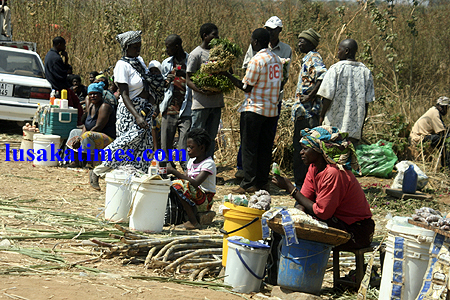
Out of personal creativity and brevity in entrepreneurship, graveyard vendors at Ndola’s Kawama cemetery are teeming with personal conviction to earn whatever they can to sustain their families with food and other basic essential necessities.

The vendors prey on the mourners like starved vultures as they display portably packed water in plastics, flavoured ‘ice blocks’ and other cold drinks to quench the thirst of a mass of wailing mourners who often gather under the blazing sun during the burial processions.

The merchants are always trying to mournfully do the best in their business of selling drinks and water at the graveyard site – roundly shifting marketing positions as they move their cooler boxes nearer to the grave site where mourners gather to pay their last respects to beloved ones.

The hawkers know that it is a healthy business day for them each time there are more people being buried on a particular day.

A limping woman, in her old formative stages of life, exclaims in the full glare of mourners, charging: “How could you set your business of selling these things in front of mourners?” She bursts out as she filters in the mass of weeping and wailing mourners at the grave site: “You do not feel the pain of the mourners, and what type of people are you to enjoy doing what you are doing when people are mourning?”

Then an intoxicated grave digger thunders in a rather satirical tone: “You should also start selling nshima so that mourners could feast during burial processions!” He almost implied that there was no drinking after the cloud of death has engulfed the life of one.

But the vendors are not perplexed as one would have expected from the outbursts but instead elect to go about with their vending chores.

“You see,” Joshua Mulenga begins, “People do not respect the graveyard to an extent that they are freely trading at this rather sacred place of final rest of people. There are people buried here who have died from different ailments and it is a health risk for people to sell consumables here.”

Mr Mulenga, a resident of Pamodzi, says it is important that relevant authorities should address the issue of vending at graveyards with the desired sense of urgency to protect innocent people who are ignorant at the heath-risks associated with buying consumables at cemeteries. Ndola City Council (NCC) senior Press and public relations officer, Esther Banda, acknowledged that it is immoral to carry out any form of vending at the graveyard and that those vending at the necropolis – the resting place – were into their trade illegally.

Almost in a whitewashed tone, Ms Banda comes out clean that vendors at the cemetery are “usually told to do their business outside the boundaries of the graveyard. It is public hazard to sell such commodities at the graveyard and that is why one cannot find uncovered foodstuff being sold at the graveyard”.

As the status of the graveyard vending remains unchanged, it would always be possible for many third class people to eke out a living from the shores of the grave – elevating their lives from the pangs of abject poverty and squalor through a thousand innovative survival designs.

A vendor at the Kawama Cemetery when approached for a comment angrily retorted, almost like a storm in a tea pot: “You are the same people who want us to start stealing to earn a living. You simply keep on saying things about us selling at the graveyard in a negative way in the hope that if you keep writing about us continuously it will become true that we are doing something unacceptable. The Government has not ordered us to stop selling from here because it knows this was how we survive!”

You should have been there to witness the horrid chapter of vending at Ndola cemeteries.

It is the thirsty of mourners under the blazing sun that ignites the temptation to buy the merchandise on display at the graveyard.

At Mitengo Cemetery, vendors selling ice-creams are a common trait and appropriately appear well-informed when mourners were thronging the graveyard to put their loved ones to rest.

At the notorious Kantolomba Cemetery, the story is the same if not worse because the vendors undercover sell consumables and some grave diggers continue to trade in potent alcoholic drinks, including home-brewed beer.

My recent survey revealed that Chibuku Shake Shake – the traditional beer was selling like hot cakes among some mourners and especially the grave-diggers.

Kantolomba Cemetery was also gravely associated with incidences of disgruntled thieves ransacking graves – stealing valuable caskets and coffins, including undressing dead people.

Against this absurd scenario, Ms Banda, dejectedly, responds to a Times query that the ill-act to rummage through the graveyard was synonymous to trespass and against the laws of the land, adding: “It is illegal. That is why it is done in the night. It is a crime”.

At the latent site, nothing was so fatal to vend at the graveyard with such bustle simply creeping and souring at the same affair.

And the pro-profit element of graveyard chores remaining in favour of the paradox of economic survival has wide health implications for mourners who buy consumables from vendors at Ndola’s cemeteries.

Something must be done to serve the surviving innocent souls from the macabre graveyard vending.

Tuesday 16 October 2012

http://www.times.co.zm/?p=15724

continue reading