Tuesday, 18 February 2014

Samjhauta blasts : 7 years after, 19 dead bodies still unidentified


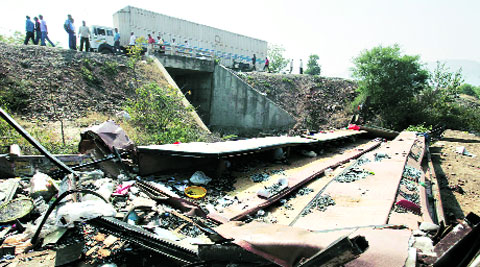
Seven years on, 19 dead bodies of the victims Samjhauta Express twin bomb blasts are lying buried unidentified at Panipat's burial ground. At the same time, kin of victims are running from the pillar to post to get the death certificates.

68 persons, most of them Pakistani nationals were killed in the twin bomb blasts in Attari (Pakistan bound) cross border Samjhauta Express near Deewana railway station on the night intervening February 18 and 19, 2007. Dead bodies of 45 victims were identified. 23 dead bodies were given the mass burial. As on now 19 dead bodies are still unidentified and are lying in the burial ground.

After a four-year-long probe, the National Investigation Agency (NIA) on June 20 last year charged suspected right-wing extremist Swami Aseemanand and four others with triggering explosions in the cross-border Samjhauta Express.

But due to non release of DNA reports by Hydrabad's central forensic laboratory, kins of those believed to be dead are a harried lot these days.

Momin Malik, the Panipat based lawyer, who had been pursuing the cases related to claims of kins of those dead claimed that even after assurance by NIA officials couple of months ago, nothing has happened so far.

Sometimes we feel ashamed due to the attitude of authorities in Hydrabad as well as Indian government. There are four such persons whose families have been wiped out in the incident. Just because of the delay in DNA reports neither those families have got the death certificates nor they have been given the claims,'' Malik said.

There is a girl called Raheela, who has lost her father Mohammad Vakil, the government has neither issued his death certficiate nor government has been able to search him. We ourselves have searched around 90 jails in India so far, he added further.

Tuesday 18 February 2014

http://timesofindia.indiatimes.com/india/Samjhauta-blasts-7-years-after-19-dead-bodies-still-unidentified/articleshow/30572226.cms

continue reading

Monday, 17 February 2014

18 bodies recovered as missing Nepal passenger plane found


Nepalese troops on Monday recovered 18 bodies from the snow-blanketed wreckage of a plane that crashed into a hillside, the latest disaster to hit the country’s internationally-blacklisted airlines.

Body parts and debris from the Nepal Airlines plane, which was carrying 15 passengers and three crew, were found scattered in a village next to the scene of Sunday’s crash in the mountainous west of the country, a police official at the scene said.

Officials dug through snow that had blanketed passengers’ bodies overnight in Arghakhanchi district, 226 kilometres west of the capital, local police official Kiran Khatri said.

“It was horrible, we found burned body parts. Only eight people had undamaged faces,” Khatri said in a phone interview.

The Twin Otter propeller plane, carrying locals and one passenger from Denmark, lost contact with air traffic controllers shortly after taking off from the popular tourist town of Pokhara on Sunday afternoon.

The aircraft from the state-run carrier encountered heavy rain en route from Pokhara to the town of Jumla, 353 kilometres west of Kathmandu.

The torrential downpour eventually forced two helicopters to stop their hunt for the plane Sunday.

Police resumed their search at first light on Monday, finally spotting scattered pieces of the wreckage during an aerial search of Arghakhanchi.

Soldiers have since recovered the bodies of all those on board, an army statement said.

“The bodies will be brought to Pokhara and Kathmandu for post mortem and handed over to respective families,” it said.

The crash, which left the aircraft shattered into small parts, is the latest to raise alarm over Nepal’s aviation industry. It comes only weeks after all the country’s airlines were banned from flying to the European Union.

An airline spokesman said engineers had refurbished the plane in recent weeks, leaving it in “good condition”.

“The preliminary report shows that the cause of the crash was the bad weather,” Ram Hari Sharma, Nepal Airlines spokesman, said. “When the plane took off from Pokhara airport the weather condition was fine... but unfortunately the weather condition en route to the destination worsened,” Sharma said.

“We cannot predict when the clouds cover the land,” he said.

Kathmandu-based aviation expert Hemant Arjyal said that while the weather may have played a part, the accident made it “pretty clear that our safety has not been up to the standards”.

“It’s well below the world average,” Arjyal said.

The Himalayan nation, which counts tourism as a major contributor to its economy, has suffered a number of air crashes in recent years, which have usually been attributed to inexperienced pilots, poor management and inadequate maintenance.

Arjyal, an engineer and member of the non-profit Nepal National Aviation Council, blamed authorities for their reluctance to investigate accidents thoroughly.

“There is a tendency to investigate only if all people on board have died in the crash,” he said.

“This makes the job of the investigating officials easy. Now you can blame the dead crew.”

Instead, he said, officials needed to probe non-fatal accidents as well to understand the reasons behind Nepal’s appalling safety record.

A Chinese tourist and a local pilot were killed when an ultra-light aircraft crashed into a hill in Pokhara last October.

Fifteen people were killed at the same airport in May 2012 when a plane carrying Indian pilgrims crashed into a mountain.

In September 2012 19 people, including seven Britons and four Chinese, were killed after an Everest-bound plane crashed minutes after taking off from Kathmandu in an accident which the government blamed on a panic-stricken pilot.

At the time of the blacklisting last December, EU Transport Commissioner Siim Kallas said the country’s safety record “does not leave us any other choice”.

Government officials said the ban was “unfortunate” and came after months spent on upgrading safety and monitoring aircraft.
“Officials say that they have improved. If we have improved, there should have been no crash at all yesterday,” said aviation expert Arjyal.

Monday 17 February 2014

http://gulfnews.com/news/world/other-world/18-bodies-recovered-as-missing-nepal-passenger-plane-found-1.1292047

continue reading

Saturday, 15 February 2014

Body found near site of Chinese tycoon's Bordeaux chopper crash


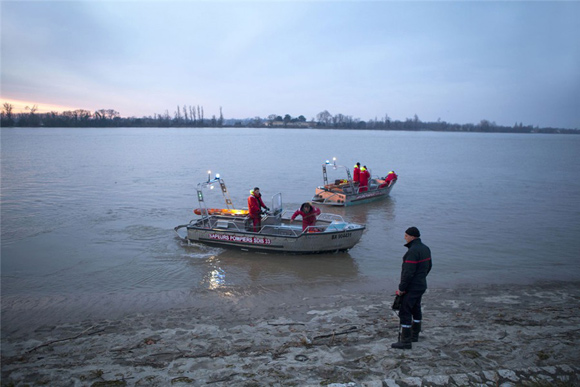
A body was discovered Friday on the banks of the river into which a Chinese tycoon crashed his helicopter as he toured his newly-acquired Bordeaux wine estate in December.

A resident of nearby Saint-Andre de Cubzac found the body, sources in the investigation told AFP on condition of anonymity, but the body was not yet confirmed as Lam Kok's.

"The site of the discovery is located between the site of the crash and the place where the bodies of two other passengers were found," an official said.

"But we have to wait for DNA matches as part of the forensic investigation," the official added.

The 46-year-old tea magnate had invited the press to his lush new property on December 20 to celebrate his $41-million purchase.

He took off on a helicopter tour of the estate -- which he intended to turn into an elite tea- and wine-tasting retreat -- with his 12-year-old son, his financial adviser and the chateau's former owner.

The three other bodies have been found but the tycoon was still missing.

James Gregoire, who died in the crash on the day he handed over the property to Lam Kok, had bought the chateau in 2003 after the previous chateau owner died in a plane crash.

Wealthy Chinese have developed a taste for fine French wines, and their buying power has been credited with pushing prices for certain vintages to record levels.

In recent years they have increasingly taken to buying French vineyards as well.

Saturday 15 February 2014

http://au.news.yahoo.com/world/a/21479049/body-found-near-site-of-chinese-tycoons-bordeaux-chopper-crash/

continue reading

Wednesday, 12 February 2014

One survivor, 77 bodies found after Algerian plane crash


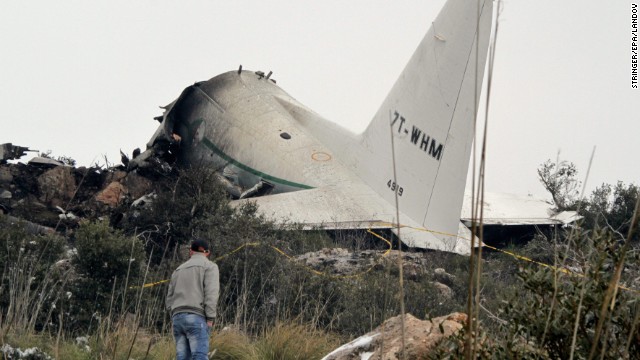
Rescue workers found 77 bodies at the scene of one of Algeria's worst air disasters Tuesday, after a military transport plane carrying troops and family members crashed in the northeast of the country, Algerian state television said.

Only one survivor had been found, an officer from the military's civil protection unit said.

Ennahar TV channel said the survivor was a woman who was rushed to hospital in critical condition. The search for other survivors at the remote crash site in the mountainous Oum El Bouaghi region was continuing.

The Hercules C-130 troop transporter was reported to be carrying 99 passengers and four crew when it crashed just as it was about to start its descent to Constantine airport, about 48 kilometres away.

State radio and television put the number of victims at over 100, but an army officer later told the official APS agency that the plane was carrying 77 people.

Bad weather was believed to have caused the crash. The region has been experiencing strong winds and snowfall.

The aircraft was traveling from the southern desert town of Tamanrasset, according to El Watan newspaper.

A crisis team headed by an air force general was leading the rescue operation.

The accident is one of the deadliest in Algerian aviation history.

In 2003, an Air Algeria passenger plane crashed on takeoff from Tamanrasset airport and burst into flames, killing 102 people.

Last year, an Algerian military cargo aircraft crashed in southern France, killing two soldiers and four civilians.

Tuesday 12 February 2014

http://www.guelphmercury.com/news-story/4362810-one-survivor-77-bodies-found-after-algerian-plane-crash/

continue reading

Forensic Scientists Support El Salvador's Steps to Investigate El Mozote Massacre


Forensic experts from around the world met in El Salvador last week to support the state's first tentative steps toward investigating what is considered among the most heinous atrocities in Latin American history -- the massacre of El Mozote.

By inviting the Human Rights Center at the UC Berkeley School of Law and forensic teams from Argentina, Guatemala, and Bosnia-Herzegovina to El Salvador, the Supreme Court of Justice gave hopeful signs that it intends to comply with the sentence of the Inter-American Court to investigate the massacre that took place in December 1981.

Like the assassination of Archbishop Oscar Romero in 1980 and six Jesuit priests in 1989, the massacre of El Mozote is both a painful reality and a tragic symbol of the darkest days of the war. Over three days in the eastern department of Morazan, the U.S.-trained Atlacatl Battalion terrorized and killed more than 1,000 villagers, among them some 400 children -- the youngest only three days old.

Since the end of the 12-year war in 1992, El Salvador's Amnesty Law has prevented the prosecution of those who committed human rights abuses during the armed conflict. However the Inter-American Court ruled in October 2012 that the massacre of El Mozote violated international law, specifically the American Convention on the "rights to life, to personal integrity and to personal liberty" and other articles related to rape, torture, and the murder of children. The Court sentenced El Salvador to investigate the facts of the massacre, identify and prosecute those responsible, and return remains of the victims to their next of kin.

El Salvador was asked to take action within two years -- by December 2014 -- but the clock ticked for a full year without progress. Until now.

Finally, under the new leadership of El Salvador's provisional Supreme Court President Florentín Meléndez Padilla, who took office last fall, the state has begun to comply. Meléndez and the Supreme Court's Institute of Legal Medicine invited the Argentine Forensic Anthropology Team, the Guatemalan Forensic Anthropology Foundation, the International Commission on Missing Persons in Bosnia-Herzegovina, and UC Berkeley's Human Rights Center to spend four days in El Salvador offering scientific advice and insights.

The meeting has helped to establish progress on El Mozote in case any political winds (and political personnel) shift with the presidential elections -- the second round of which will be held on March 9.

"We do need great wisdom in these four days so that we can agree to an action plan -- not in months but in weeks," said Dr. Cristián Orrego Benavente, director of the Human Rights Center's Forensic Program, at the outset of the meeting, expressing the need to act quickly.

The forensic scientists who visited El Salvador have decades of experience searching for graves, exhuming bodies, identifying remains, and scientifically documenting crimes -- often with the participation of grieving families. The Argentine Forensic Anthropology Team has worked on El Mozote intermittently over two decades under the sponsorship of Tutela Legal, the former human rights office of the Archdiocese of the Catholic Church of El Salvador.

While El Mozote's massacre has been well reported by journalists (most notably Raymond Bonner in The New York Times, Alma Guillermoprieto in The Washington Post, and Mark Danner in The New Yorker) and intensive investigations and exhumations have been performed by the Argentinians, the state itself has never investigated the crime.

During the meetings at the Supreme Court of Justice in San Salvador, the visiting scientists raised critical questions for their Salvadoran colleagues who will conduct the work, including: How will the families of the victims of El Mozote be involved from the very beginning of the process, as mandated by the Court? Are there more graves to exhume and what will happen if family members don't want to unearth them? What are the best forensic tools to use in this investigation? What are the challenges associated with investigating a massacre that happened 32 years ago?

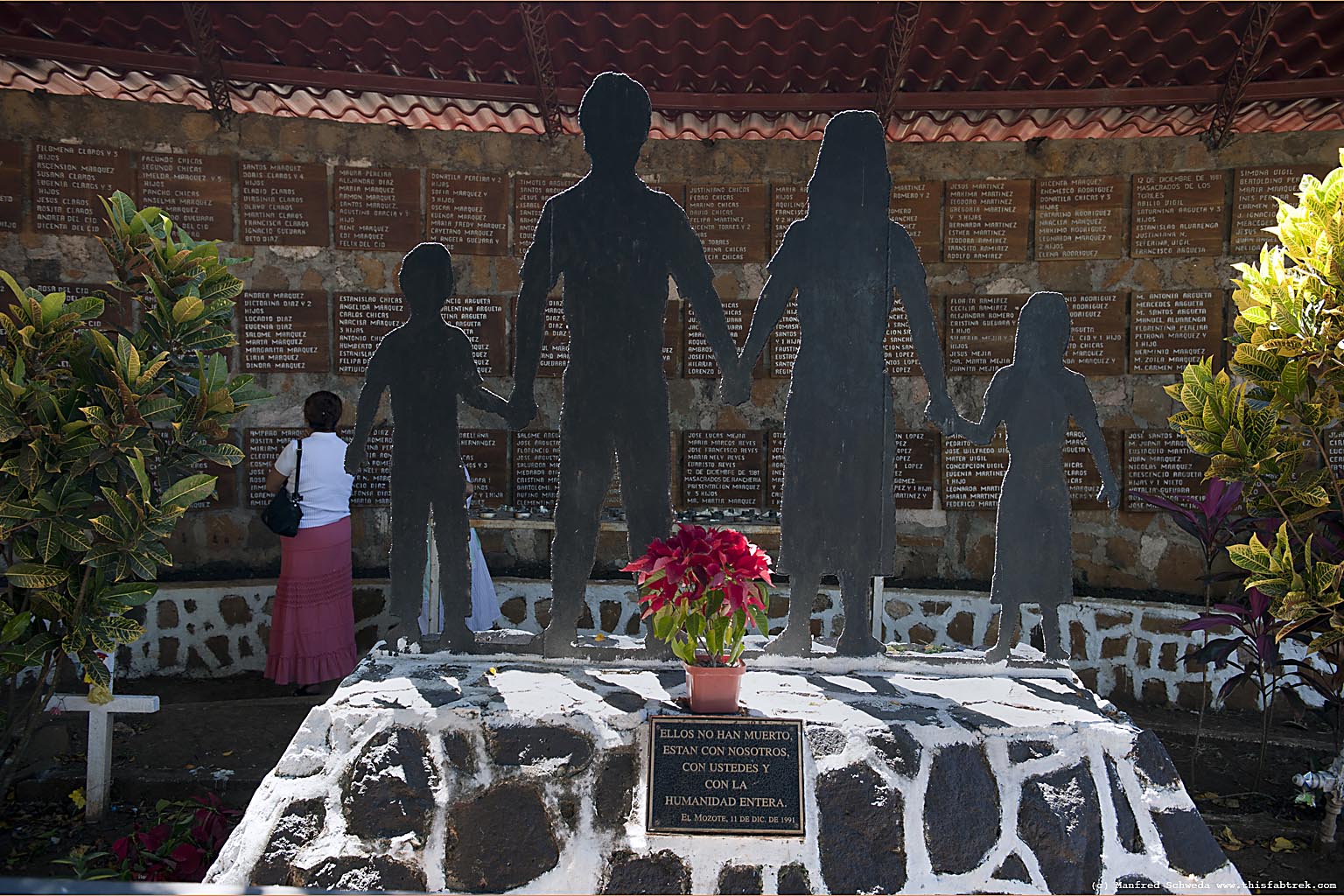
The scientists and Salvadoran colleagues traveled more than three hours east from San Salvador to El Mozote to see the massacre sites and to hear testimonies from victims' family members. They also spoke with the legendary Belgian priest, Father Rogelio Ponselle, who has worked with the community for some 20 years, and visited the monument that honors the victims.

"This is where we found fifteen people -- five from my family and ten from another," said Orlando Márquez, standing on a hill and pointing to a stretch of field flanked by cows where El Mozote's dead were once strewn. It's a story he has told several times in the 32 years since the massacre.

Now, with a new state-sponsored investigation, he and other family members will likely recount their stories again -- this time for the official record.

Despite the ubiquitous history of political violence in the country, Salvadoran forensic investigators simply have not had the means to comprehensively investigate or formally prosecute massacres. Moreover, they are burdened by simultaneously investigating an all-consuming gang war marked by brutality that has produced a steady stream of disfigured and mutilated victims.

All agreed that the scientific expertise of forensic experts who have worked in the trenches throughout Latin America, Africa, and Europe will be critical to the future of El Salvador's investigation of El Mozote.Last weeks' meetings marked an essential step toward revisiting and beginning to repair a wartime atrocity and accurately preserving historical memory -- for surviving families like that of Márquez and for all Salvadorans.

Rapid next steps -- including meetings with families, scientists, prosecutors, and Salvadoran officials -- will hopefully propel El Salvador toward satisfying the Inter-American Court's ruling and seeking a measure of truth and justice for victims and the nation as a whole.

Monday 12 February 2014

http://www.huffingtonpost.com/andrea-lampros/forensic-scientists-suppo_b_4749719.html

continue reading

Hirakud boat tragedy toll rises to 31


With the recovery of three more bodies from the Hirakud reservoir on Tuesday, the death toll in the boat tragedy has gone up to 31.

Of the total 31 victims, 30 persons were picnickers of Lions Club while one has been identified as Amarendra Rout (30), an employee of Hindalco Industries Limited at Hirakud. He was returning from Bandhbahal under Banharpali police limits in Jharsuguda district.

Earlier, the rescue team had recovered 28 bodies - 11 on Sunday and 17 on Monday. The rescue operation was called off after bodies of all missing persons were recovered, Sambalpur Sadar Sub-Collector Surendra Panda said.

Meanwhile, Revenue Divisional Commissioner (North) Pramod Meherda, who is probing the mishap, visited the Sonutikra Ghat here. A case has also been registered at Hirakud police station in connection with the incident. Police have also filed a case against the boat owner Satyanand Pandey of Jagannath Mandir Colony in Sambalpur town and the two boatmen - Akshya Rana and Anjan of Sonutikra area under Sason police limits here. Police said further investigating is on.

The District Governor of Lions Club Padma Charan Nayak along with other senior office bearers also arrived to meet the members of the bereaved families. Thousands of people from across the society gathered at the Rajghat in Sambalpur town where the last rites of the deceased were performed.

Ramesh Agarwal is yet to come to terms with the tragedy. President of the Lions Club, Sambalpur division, Agarwal had never imagined that he would lose many of his fellow members in the boat mishap. He was on board the ill-fated motor-driven country boat. Refuting claims made by the district administration that boat capsized due to overloading, Agarwal said the ferry sunk after water gushed into it from its base. “Overloading was not a factor at all,” he claimed. He said the load was more during their onward journey with around 100 picnickers, besides regular passengers along with 18 motorcycles on board.

“Water suddenly gushed into the boat in the middle of the Hirakud dam reservoir during the return journey and the propeller of the boat stopped working. We tried to evacuate the water with utensils and through a hand pump fitted in the boat. We raised alarm and called our drivers waiting for us on the dyke of the reservoir and friends over mobile phone after we felt that it was difficult to throw water out of the boat,” said a tearful Agarwal.

A rescue boat reached the spot four minutes before the boat capsized. “Every one was in a hurry to board the rescue boat and the boat lost its balance,” he said. Lauding role of boatmen who reached the spot immediately and effort by some fellow members who saved many lives, he said the administration played an important role in the rescue operation. Agarwal said motto of Lions Club is ‘We Serve’ and 101 members of club are always ready to serve people in need.

Wednesday 12 February 2014

http://www.newindianexpress.com/states/odisha/Hirakud-Boat-Tragedy-Toll-Rises-to-31/2014/02/12/article2052324.ece

continue reading

Tuesday, 11 February 2014

Military Plane Crash in Algeria Kills 103


At least 103 people are feared killed as a military cargo plane crashed in north-eastern Algeria.

The breaking news was reported by the local Annahar TV channel, cited by the Bulgarian public radio, BNR.

According to the channel, the plane went down not far from a north-eastern town of Oum El Bouaghi.

No other details are available at the moment.

Tuesday 11 February 2014

http://www.novinite.com/articles/158115/Military+Plane+Crash+in+Algeria+Kills+103

continue reading

Docu-drama on forgotten Leith rail disaster


It was a sunny May morning in 1915 and the troops on board the train were cheery, whistling, comrades in arms.

As the train carrying 500 Edinburgh men bound for the Front approached Gretna few could have anticipated the horror that was about to unfold.

The locomotive smashed into a goods train, bursting into flames.

Then, with people still trapped inside, a Glasgow bound-express train ploughed into the wreckage.

The tragedy that ensued has been likened to the rail industry’s Titanic moment – a disaster which left 215 Royal Scots and 12 civilians dead.

Now, nearly 100 years on, a special docu-drama charting the disaster is to be made – and the programme makers are keen to unravel the events’ roots in Leith, the community from where many of the victims hailed.

Director Robert Rae, of Theatre Workshop Scotland, is based in the former Dalmeny Drill Hall where the ill-fated battalion was based.

He is seeking help to tell the train disaster story, which was not widely reported at the time for fear it would damage home-front morale.

He said: “This is a seminal event in Leith history. “It was the biggest rail disaster in UK history, and yet today many people have never even heard of it.

“Through our research we have found out that the youngest victim of the crash had only just turned 15-years-old. Some families lost all of their children in the disaster.”

Among the officers killed was Lieutenant Christian Salvesen, son of the shipping magnate of the same name.

Robert said: “The bodies were brought back to the Dalmeny Drill Hall and the people of Leith gathered outside and waited to find out what had happened to their loved ones.

“But they weren’t allowed into the building because the injuries were so horrific. It was almost the only time that the war came home in such a direct way. They didn’t even manage to get out of Scotland.”

This isn’t Theatre Workshop Scotland’s first foray into film-making.

Their award-winning feature film The Happy Lands, created with members of the mining communities of Fife, was screened by the BBC, and the team are hoping to repeat that success in Leith. Already, people with a personal connection to the disaster have expressed an interest in taking part.

Robert said: “We have been approached by people who have said their grandfather was involved and that they want to tell their story. You don’t need any experience and we’re keen for people to get involved in everything from acting to the research process.”

Jim Tweedie, from Leith Local History Society, welcomed news of the planned documentary. “I’m all for this tragedy being publicised. It’s an important part of Leith history, but it tends to be forgotten that more than 200 people died.”

“Many people in Leith can trace back to relatives who were involved in this disaster.”

Tuesday 11 February 2014

http://www.edinburghnews.scotsman.com/news/transport/docu-drama-on-forgotten-leith-rail-disaster-1-3300763

continue reading

Expert has hopes for Northern Ireland's Disappeared


The top forensic investigator with the Independent Commission for the Location of Victims Remains said “we would like to think we will have some success in this coming year”.

Geoff Knupfer was speaking in Drogheda last night at the opening of an exhibition on the Disappeared.

There are seven bodies still to be recovered in the Republic. While no dates are in place to resume digs, he acknowledged it is “a tall order,” to ask somebody to identify a site 30 years later.

“These sites were selected with great care for their anonymity, they are barren wastelands and to ask anybody to come along 30 years later is a tall order.”

Amongst those at the opening was Seán Megraw whose brother Brendan was abducted and murdered by the IRA in 1978, and Anna McShane, daughter of Charlie Armstrong whose body was recovered in 2010. He disappeared in 1981.

Tuesday 11 February 2014

http://www.irishexaminer.com/ireland/expert-has-hopes-for-disappeared-258339.html

continue reading

Rescue op for Odisha boat victims in Hirakud called off for the day


As the sun went down the western horizon, the district administration suspended rescue operations for the day today although the bodies of three persons who are still missing following the boat mishap deep inside the Hirakud Dam reservoir on Sunday are yet to be fished out.

Operations, however, will continue on the shores with electric lights, sources in the district administration said.

Rescue operations inside the reservoir will resume at day break tomorrow, the sources added.

A total of 28 bodies have been recovered in two days of rescue operations, according to district administration.

While bodies of three more members of the Lions Club picnic team are to be traced, there is no word yet on the whereabouts of the boatman, the assistant boatman and several others who were also on the boat, leading to apprehension that the death toll could go up further.

Tuesday 11 February 2014

http://odishasuntimes.com/31114/rescue-operations-inside-reservoir-called-day/

continue reading

112 Dhaka collapse victims unidentified


A Bangladesh expert said on Monday he has given up hope of identifying 112 victims of the Rana Plaza factory collapse, almost a year after one of the world's worst industrial tragedies.

The garment factory complex on the outskirts of Dhaka collapsed in April last year, trapping thousands of workers who stitched clothes for Western retailers.

Rescue work ended three weeks later with 1,129 bodies recovered from the ruins of the nine-storey complex.

Authorities buried more than 300 victims whose bodies were so badly damaged or decomposed that they were beyond recognition, but collected their DNA samples to help verify any compensation claims.

Sharif Akhteruzzaman, head of the National Forensic DNA Profiling Laboratory, said his experts have now identified 200 of those victims after matching their DNA samples with those of living relatives.

“Of the 322 people, we have now identified 200 people. Of them 157 were identified earlier and 43 this month,” Akhteruzzaman told AFP.

But Akhteruzzaman said the lab could not identify more than 100 victims, despite re-analysing their samples and trying to match them.

“We don't have any hopes for these 112 bodies as they did not match with any of the 549 people who've come to us for their missing relatives.”

Formal identification means families can claim compensation for the tragedy, amid anger that authorities were not doing enough to help those left behind.

Akhteruzzaman has previously raised concerns about the quality of the DNA samples which were collected.

Akhteruzzaman also said the lab was analysing human remains recovered at the site in recent months to try to identify them, although it was unclear how many new victims have been found.

Police said in December they had recovered remains after street children spotted bone fragments while rifling through debris at the site.

The recovery has reinforced accusations by labour groups that the operation to rescue workers and retrieve bodies ended too quickly, and that the death toll could be higher still.

The tragedy highlighted the appalling safety conditions in the world's second largest garment industry after China, and forced Western retailers and the government to promise factory safety inspections.

Bangladeshi and international labour unions have criticised the government, factory owners and Western retailers for not swiftly and adequately compensating victims and their families.

The government has said it has paid money to families of around 800 victims, including about 40 survivors who lost limbs.

But authorities have delayed compensating the rest, citing a lack of identification, a task made more difficult by inadequate payroll records kept by the factory's managers.

Tuesday 11 February 2014

http://www.iol.co.za/news/world/112-dhaka-collapse-victims-unidentified-1.1644780

continue reading

Mexico finds 100s of skeletal remains along U.S. border


Mexican officials have discovered hundreds of skeletal remains scattered on ranches in a stretch of towns along the U.S.-Mexico border as they carried out a wide search to locate missing people.

The remains were burned and extremely hard to identify, said Coahuila state prosecutors' spokesman Jesus Carranza on Monday.

News of the grisly finds came at the same time 12 bodies were unearthed from clandestine graves in the southern Mexico state of Guerrero and about two months after 67 bodies were found in western Mexico. Such discoveries remain common despite government claims that the number of killings has gone down in the past year.

Police in Coahuila haven't said whether an organized crime group is suspected in the skeletal remains, but the area is known to be dominated by the violent Zetas drug cartel. Officers have arrested 10 men, including four police officers suspected of aiding a criminal group, the state attorney general's office said in a press release.

The police operation took place on ranches in 11 different towns around the border city of Piedras Negras, right across Eagle Pass, Texas, after interviews with family members and at least 32 former local officials. Usually, remains like these have been found in mass graves, but these were left on the surface in the region known as Five Springs, Carranza said.

At some of the ranches, investigators found bullet casings as well as barrels of diesel fuel that was likely used to burn bodies.

"We are still not sure how many skeletal remains and how many victims we are talking about," Carranza said. "But this operation was launched to try to locate missing people."

An organization that supports families of missing victims has gathered 321 cases between 2007-13 in just Coahuila. Families were worried Monday that the government contaminated the crime scenes because of images from local media showing the use of heavy machinery at the search sites.

"It makes you want to cry. It's unbelievable how they handle evidence. It just complicates the identification of the remains," said Guadalupe Fernandez, a member of Forces United for our Disappeared in Coahuila and the mother of Jose Antonio Robledo, an engineer who went missing in 2009.

The state prosecutors' office said it followed protocols of preservation in crime scene investigations.

In Guerrero state, the attorney general's office said a dozen bodies were found Sunday in the town of Mexcaltepec by military personnel after they received an anonymous tip Saturday night.

In the same state and only a few days before, members of armed self-defence groups found a clandestine grave in the town of Cajelitos near the state capital of Chilpancingo and reported the skeletons of three men and two women.

Two months ago, authorities excavated for several days in recovering 67 bodies that had been bound or gagged in a remote town by Lake Chapala, a popular spot with tourists and American retirees.

It is a region where the Knights Templar and New Generation drug cartels are fighting each other. Local police officers who confessed to handing over people to the New Generation organization led investigators to the scene, officials said.

Tuesday 11 February 2014

http://www.cbc.ca/news/world/mexico-finds-100s-of-skeletal-remains-along-u-s-border-1.2531629

continue reading

Monday, 10 February 2014

Madinah hotel blaze kills 15 pilgrims


Fifteen pilgrims died and 130 others were injured in a fire that broke out at a hotel in Madinah on Saturday, the Madinah Governorate said in a statement.

The fire occurred at the Ishraq Al-Madina Hotel at 2:33 p.m.

Eyewitnesses said the victims were of different nationalities and included Egyptians and Turks.

Civil Defense firefighters were able to put out the blaze by 5 p.m., the governorate said.

Madinah Gov. Prince Faisal bin Salman has been following up on the incident.

An investigation to ascertain the cause of the fire has been launched, sources said. Preliminary reports indicate that the fire occurred as a result of a short circuit during maintenance work.

Thirty of the injured were treated on the spot, while others were sent to King Fahd Hospital and the Ansar Hospital. According to one report, Ansar received four bodies and 91 injured.

Most pilgrims died of suffocation, the statement said. There were about 700 guests in the hotel at the time the fire broke out. Authorities evacuated guests and closed off streets leading to the hotel on Sitteen Street. Some pilgrims who were trapped inside the hotel climbed to the roof of the building for safety.

A large number of people had gathered in front of the hotel, obstructing rescue efforts.

Eighteen fire-fighting teams were dispatched to put out the blaze, while the Red Crescent deployed 14 first-aid teams and Madinah’s Health Department eight teams.

An Indian pilgrim staying at a nearby building said she saw a huge plume of dark smoke coming out of the hotel as she was returning from the Prophet’s Mosque at around 2:45 p.m.

“We saw some people waving through the windows for help. We also saw several firefighters engaged in rescue operations. A large number of people had gathered in front of the hotel. It was a frightening scene,” she said. There were conflicting reports about the number of Egyptian casualties.

Ahmed Zaki, an official at the Egyptian Consulate in Jeddah, said they had received information about the death of four Egyptians. Another report said that as many as 12 of the 15 victims were Egyptians. Egyptian Ambassador Afifi Abdel-Wahab was quoted as telling an Egyptian television channel that “15 Egyptians died in the fire.”

Prince Faisal has ordered hotel guests to be relocated.

Monday 10 February 2014

http://www.arabnews.com/news/522796

continue reading

51 dead in Burundi flood disaster


At least 51 people perished in flooding and landslides in a night of torrential rain in the Burundi capital that swept away hundreds of homes and cut off roads and power, officials said Monday.

Police in Bujumbura said the toll was the highest in living memory from a disaster caused by freak weather, with more than 100 people also injured.

“The rain that fell in torrents overnight on the capital caused a disaster,” Security Minister Gabriel Nizigama told reporters.

“We have already found the bodies of 51 people killed when their houses collapsed or were swept away.”

Police said several hundred homes were destroyed after torrential rains began battering the city late Sunday.

Houses in the poorer parts of town are often built from mud bricks, which offer no resistance to torrents of water and mud.

“It’s the first time in the history of Bujumbura that we have seen damage on this scale,” Bujumbura mayor Saidi Juma said, calling for “solidarity on a national and international scale” to help the city cope.

In the district of Kinama in the hardest hit north of the city, a stream broke its banks, with waters rising to shoulder level in some places.

By midday the flooding had subsided, leaving scenes of devastation.

Zawadi, a mother-of-five, stood in the ruins of her Kinama home, feeding her five-month-old baby surrounded by jerry cans and muddy clothing.

“I heard the children shouting during the night,” she said, recounting how she had gone into their room to find them standing up on their bed, which was already under water.

The whole family was able to run outside before the walls caved in, but one neighboring family was less fortunate, with the parents and their three children crushed to death.

On the western outskirts of Bujumbura, residents told similar stories.

“Around midnight we heard something cracking and we all ran outside for fear the house would fall on us,” said Gaudence Nyandwi, whose father Venant was being transferred from an improvised stretcher to a car, his face contorted in pain.

“My father went back inside to see if he could save anything and the house fell on him. We think he might have a broken leg,” Nyandwi told AFP.

Nizigama said burials of the victims would begin on Monday because there was not enough space for their bodies in the capital’s mortuaries.

He was speaking at a police station in the worst affected northern part of Bujumbura, where an AFP journalist saw 27 bodies covered in white sheeting.

Nizigama, touring the disaster zone with other ministers, promised food aid to those who lost their homes and said the government would bear the cost of burying relatives and would provide new housing.

Torrential rain fell solidly for 10 hours overnight, causing power cuts in whole areas of the city which lies on the northeastern shore of Lake Tanganyika.

The road leading out of the capital to neighboring Rwanda was blocked because of a landslide while a bridge was washed away on the road to the Democratic Republic of Congo.

Monday 10 February 2014

http://www.arabnews.com/news/523716

continue reading

43 more victims identified thru' DNA tests


The National Forensic DNA Profiling Laboratory of Dhaka Medical College has identified 43 more bodies that had been buried at the Jurain graveyard after those were recovered from the Rana Plaza collapse site.

These bodies were among the around 290 bodies buried at the Jurain graveyard, as those could not be identified.

So far, 200 such bodies that were burned beyond recognition have been identified through DNA test, said Sharif Akhtaruzzaman, the national technical adviser of the lab, yesterday.

DNA samples of another 112 bodies are still to be identified while the lab is working on 10 other samples, he added.

“A list of the 43 identified workers has been sent to the labour ministry,” he said.

The Rana Plaza building collapsed on April 24 last year, killing at least 1,135 and injuring hundreds.

Nearly 10 months into the disaster, families of the workers whose bodies were not found have received little compensation from the authorities.

Monday 10 February 2014

http://www.thedailystar.net/frontpage/43-more-victims-identified-thru-dna-tests-10709

continue reading

Bolivia mudslide buries village; 4 dead, 9 missing


Heavy rains caused a mudslide that buried much of a small mountainside settlement in central Bolivia, killing at least four people, local officials said Sunday. Nine more people were listed as missing.

Jimena Alegre, an official for the Morochota municipality, told The Associated Press by telephone that the slide occurred Saturday night in the Quechua community of Chuypakasa and buried the homes of 15 families.

Rescue squads were digging through the site in hopes of finding more survivors. The first responders were from Cochabamba, which is about 220 kilometers (135 miles) east of the capital of La Paz.

Heavy rains have been falling across most of Bolivia since November and civil defense officials say 46,850 families have been affected.

The government news agency ABI said Sunday that 40 people have been killed, including 10 who died two weeks ago in a mudslide in the Amazon town of Rurrenabaque.

Monday 10 February 2014

http://www.utsandiego.com/news/2014/feb/09/bolivia-mudslide-buries-village-4-dead-9-missing/

continue reading

Odisha Boat Disaster Toll Mounts To 24; Seven Still Missing in Hirakud reservoir


Thirteen more bodies were recovered today taking the toll in the boat capsize incident in Odisha's Sambalpur district to 24 even as efforts were on to trace at least seven more missing persons.

The bodies were found as scuba divers were engaged in the morning to trace the missing persons after the boat capsize in Sambalpur district yesterday, Special Relief Commissioner P K Mohapatra told PTI.

He said at least seven persons were still missing.

"The number of missing persons might vary with additional information being received from local people," Mohapatra said.

The scuba divers also located the sunken boat.

The state government has announced Rs 1.5 lakh ex-gratia for the family members of the dead and free treatment for the survivors.

An administrative inquiry by Sambalpur's revenue divisional commissioner has been ordered.

Recounting the sequence of events in the Assembly, Parliamentary Affairs minister Kalpataru Das said that around 114 family members of the Lion's Club, Sambalpur went on a picnic beside the Hirakud reservoir.

He said the picnickers while returning set sail in a large motorised boat from Tilla Ghat.

In addition, around 30 people, some with motorcycles, from nearby villages also boarded the boat, Das said.

The boatmen asked some of the picknickers to disembark as the boat was overloaded, but this was ignored, the minister said.

Halfway through the return journey, the motor of the boat suddenly stopped creating panic among the passengers with the boat capsizing.

Another boat rushed to rescue the passengers with most of them jumping into the water.

As soon as the district administration received about the capsize, the collector, the superintendent of police, and the fire-brigade launched a rescue operation, Das said.

He said that about 80 persons were rescued by 6:00 pm yesterday. Those in a critical condition were admitted to the district headquarters hospital in Sambalpur, VSS Medical College Hospital in Burla and JMJ Hospital at Bareipali.

Those with minor injuries were discharged after first-aid.

Monday 10 February 2014

http://www.newindianexpress.com/states/odisha/Boat-Disaster-Toll-Mounts-To-24-Seven-Still-Missing/2014/02/10/article2048963.ece

continue reading

Sunday, 9 February 2014

Greece recovers bodies of four migrants


Greek divers recovered the bodies on Friday of four migrants who drowned while their boat was being towed by a coastguard vessel last month.

The bodies of two adults and two children were brought to the surface from the wreckage of their boat, 73 meters (240 ft) below the surface of the Aegean Sea, the coastguard said in a statement.

“There were also other bodies ... who could not be recovered,” it said.

Two people were confirmed drowned and ten declared missing on January 24, when the boat capsized.

Greek prosecutors launched an inquiry after the U.N. refugee agency UNHCR, human rights groups and political parties asked whether the coastguard itself had caused the accident by trying to tow the boat toward Turkish waters, as some of the survivors have said.

Migrant drownings are not uncommon in Greece, a gateway to the European Union, but the latest incident has drawn accusations that Greece breached EU law by trying to push the 28 migrants back to Turkey, where they had set to sea.

The coastguard says they were towing the boat towards Greek waters, not to Turkey.

Prime Minister Antonis Samaras has made illegal immigration a priority for his government and for Greece's six-month stint as holder of the rotating EU presidency. Greece has long complained of being overwhelmed by migrants and its economic crisis has boosted anti-immigrant sentiment.

Criticism of the government's handling grew after television footage showed survivors arriving at the port of Piraeus near Athens, recounting in tears how they watched their children drown as coastguard officials looked on.

Sunday 09 February 2014

http://www.iol.co.za/news/world/greece-recovers-bodies-of-four-migrants-1.1643896

continue reading

Friday, 7 February 2014

Death toll from Colombian prison fire climbs to 16


The death toll from a prison fire in Colombia's northern city of Barranquilla has climbed to 16, local authorities said on Thursday.

The fire on Jan. 27 at the city's Modelo Prison started when inmates set fire to mattresses after wardens used tear gas to stop a clash between members of rival gangs.

On Thursday, Alma Solano, local health secretary in Barranquilla, said the death of inmates who had been taken to hospital for injuries brought the toll to 16.

"Between yesterday and today, the death toll has climbed to 16 from 14. One of the inmates had burns over 40 percent of his body as well as (damage to) his respiratory system," she said.

Prison authorities said 15 inmates are still hospitalized and security measures have been strengthened at the hospitals after one of them attempted to escape.

Friday 07 February 2014

http://english.cri.cn/6966/2014/02/07/2941s811722.htm

continue reading

14 killed, 7 injured in western Nepal bus accident


Fourteen people were killed and seven injured when their bus plunged into a river in western Nepal, police said on Thursday.

The bus fell into a river at Chidipani village in Palpa district early on Thursday morning, Xinhua reported.

The identities of the deceased are yet to be established. The injured passengers have been rushed to a local hospital.

“We are investigating the cause of the accident and rescue operations are going on,” police officer Shiva Kumar Shrestha said.

Local residents, police and army personnel are carrying out the rescue operations.

Bus accidents take place frequently in Nepal due to poor road conditions, lack of trained drivers and overloading of passengers.

Friday 07 February 2014

http://www.khaleejtimes.com/kt-article-display-1.asp?xfile=data/international/2014/February/international_February142.xml§ion=international

continue reading

At least 14 dead in bus accident in northern Philippines


Fourteen people, including two foreign-tourists, were killed after a passenger bus from Manila fell into a 120-meter ravine in a mountainous area along the Banaue-Bontoc Road in sitio Paggang, Barangay Talubin in Bontoc town on Friday morning.

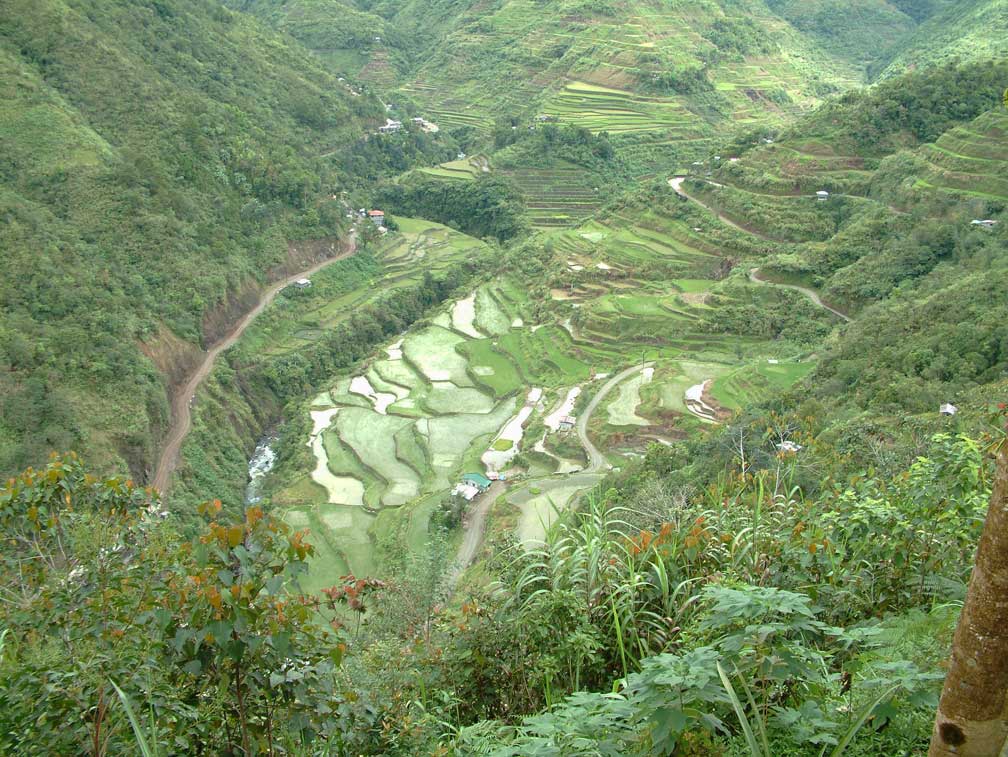
The crash happened in Bontoc, a resort town 280 kilometres (175 miles) north of Manila known for its mountainside rice terraces.

Thirty-one others were injured, said Police Provincial Director Oliver Enmodias.

Police reported that a Florida (TXT 872) passenger bus was negotiating a difficult part of the road in Bontoc town, near the boundary of Ifugao and Mountain Province when it plunged into the ravine.

The Office of Civil Defence said the bus from Manila had about 47 passengers on board. Fairlane Amungan, a provincial disaster response official, said authorities were still determining the exact number of people on the bus as they searched for more victims.

The bus came from its terminal in Sampaloc, Manila. The accident happened at around 7:20 a.m.

Supt. Ramir Saculles, Mt. Province deputy police director for Operations, said that most of the recovered bodies were mutilated due to the impact of the crash.

Fourteen of the passengers died on the spot including a Canadian and a Dutch national, he said.

Among the injured were a Dutch woman and the driver of the bus, who were taken to hospital, Enmodias added.

Local police spokesman Superintendent Davy Vicente Limmong said they suspect human error or a mechanical problem was the cause of the accident, as there was no traffic and the weather was clear

Saculles said that there is a possibility that the driver of the bus dosed off. He also mentioned that mechanical trouble could have also caused the accident.

Mt. Province Gov. Leonard Mayaen assured that the local government will do its best to be able to provide the needs of the victims.

Poorly-maintained buses are the backbone of land transport in the Philippines but they have been involved in frequent accidents, leading to calls for tighter regulations

Friday 07 February 2014

http://www.theprovince.com/news/crashes+ravine+Philippines+killing+injuring+including+Dutch/9478976/story.html

continue reading

Investigating genocide in Somaliland


Hargeisa, Somaliland – Frankincense wafts through the air of a quiet building on the outskirts of Hargeisa, in the self-declared republic of Somaliland. It masks the odour of the remains of 38 men, whose skeletons are packed into cardboard boxes.

The tattered containers will be opened this month with the arrival of a forensics team on February 10. Somaliland officials want to show that the men were victims of a clan-based killing spree carried out by Somalia’s government in the 1980s.

They say as many as 200,000 men, women and children were executed and buried in mass graves. They accuse Somalia’s late dictator, Mohamed Siad Barre, of atrocities and want to put his alleged henchmen on trial.

“Everybody is missing a relative. Fathers, mothers, brothers, cousins,” said Khadar Ahmed Like, who runs the territory’s War Crimes Investigation Commission. “It is about getting the perpetrators in court. Unless we learn lessons, heads of state can do what they want.”

This month’s post-mortems mark the latest bid to secure justice for Somaliland’s victims. The atrocities date back to when Somaliland was part of Somalia and governed by Barre from the capital, Mogadishu.

In the 1980s, his increasingly authoritarian regime cracked down on the rebel Somalia National Movement (SNM) and targeted members of the Isaaq clan from northwestern Somalia who had created the group.

National forces arrested Isaaq clansmen suspected of having links to the SNM between 1984-88, commissioners say. Men, women and children were bound and frogmarched to the edges of towns and executed.

Somalilanders recount gruesome stories of Isaaq schoolchildren being killed and having their blood drained to provide transfusions to injured soldiers.

Grisly crackdown

Yusuf Mire, 58, is still angry about what happened. He points to the amputated stump of his left arm, where he was shot by Somali national forces during a crackdown in the central Somaliland town of Burao in 1988.

“My relatives were taken from the house to be slaughtered,” he told Al Jazeera. “We want recognition that genocide took place in Somaliland. We will send this to the UN and get the right to be separated from the rest of Somalia.”

In 1988, Barre sent aircraft and troops to the SNM stronghold of Hargeisa, killing more than 40,000 people and reducing the city to rubble. But the campaign backfired and consolidated the opposition forces, which took Mogadishu in January 1991.

Four months later, Somaliland broke away from Somalia. While Somalia collapsed into more than two decades of civil war, Somaliland gradually developed better security, a livestock trade, its own currency and democratic elections.

Evidence of atrocities emerged in May 1997, when heavy rains washed away dirt to uncover skeletons from Hargeisa’s mass graves. But efforts to raise the profile of the atrocities failed to gain traction beyond the isolated region.

“We are now going to bring this to the international arena,” Somaliland’s Foreign Minister Mohamed Bihi Yonis, told Al Jazeera. “The perpetrators are hanging around, living a normal life. Those who are living in the West, we must go after them.”

This latest drive, funded by the US-based Center for Justice and Accountability (CJA), saw the 38 bodies exhumed in September 2012. This month’s visit by an eight-person team will study the skeletons for evidence of systematic killings and will excavate a second site.

“Hargeisa is a graveyard,” said Jose Baraybar, a forensics expert who manages the team. “Some say there are 200,000 bodies under the ground. Others say 60,000. Nobody really knows. That’s why we have to get the record straight.”

Gathering evidence

They will look for bindings, close-range headshot wounds and other signs of systematic killing, said Baraybar, who has worked on probes in Haiti, Bosnia and elsewhere. Evidence that victims hailed from the same clan could indicate genocide, rather than mass-murder.

The three-year project will train locals to unearth Somaliland’s 226 known mass graves. The commission has listed 33 suspects for prosecutions. They include Barre’s son-in-law, Mohamed Said Hirsi, better known as “General Morgan”.

But there the project hits a snag, because Somaliland is not recognised by other countries.

Officials in Hargeisa lack the clout to push for a UN-backed tribunal, such as those that prosecuted the criminals of Rwanda and Yugoslavia. Legally, Somaliland is part of Somalia, which has not joined the International Criminal Court.

“They are a long way from launching prosecutions,” said Baraybar. “All of the killers have left Somaliland – they’re in Somalia, the US and Europe. Prosecution is very difficult for a country that is not a country yet.”

Down south in Mogadishu, there is little appetite for war crimes tribunals – either for Barre’s brutality in Somaliland or any other atrocity that has occurred in years of violence between rival clans, Islamists and foreign forces.

Like, a 64-year-old father-of-eight who lived in exile in the 1980s, said the suspects include members of Somalia’s government and parliament – although he declined to reveal their names for fear of repercussions.

Some live in Somalia, but others are in Kenya, Europe and the US, he said. Prosecutions must begin soon because the atrocities started almost 30 years ago, and some of the masterminds have already died.

Not all perpetrators have escaped justice. In 2012, seven Somali victims secured a $21 million judgement against Mohamed Ali Samantar, a Barre-era prime minister, for planning the torture and killing of Isaaq clansmen, in a US court.

It was one of three civil cases that the CJA has helped bring against Somalis who migrated to the US, using a statute that provides civil remedies for overseas abuses. But such cases fall short of the criminal tribunal that many in Somaliland want.

‘We remember’

The bombing of Hargeisa and other atrocities cast long shadows across the breakaway region. Few Somalilanders want to rejoin Somalia, despite recent security gains under a UN-backed government in Mogadishu.

Somaliland parents tell their children stories about the cruelties. The cash-strapped government spends $50,000 on the war crimes commission each year, and is building a $300,000 museum to showcase skulls and weapons from the bloody era.

“When the former Somali government controlled the country, many Somaliland people were killed,” said Mohamed Jamal Emil, a 21-year-old who lives in a hut on the outskirts of Hargeisa. “It was a long time [ago], but we remember. My parents told me.”

Somaliland diplomats are in talks with counterparts from Mogadishu over long-term autonomy and independence. The atrocities and prospects for a tribunal could feature in the negotiations.

For Baraybar, the war-crimes sleuth, there is more to this probe than the prosecutions it may yield.

“While perpetrators die, the dead remain where they are. As long as they remain where they are, they tell us a story. That story has a healing power. Hearing that story is the right of those who survived, and of future generations,” he said.

“The grandchild must know what happened to his grandfather.”

Friday 07 February 2014

http://somalilandpress.com/investigating-genocide-in-somaliland-2-48059

continue reading

Ritual killings on the rise in Zambia


Mutilated bodies – often missing arms, tongues, lips, genitals or skin – are being found with increasing frequency in different parts of Zambia in what authorities say are ritual killings.

"We're amazed by the increased number of bodies discovered with parts missing," Police Deputy Inspector-General Solomon Jere told Anadolu Agency.

"This is a mystery we need to solve," he asserted.

"Sometimes, we're forced to agree with… people claiming that these acts are nothing less than acts of ritual killing," Jere said.

Recently, the dismembered body of a 19-year-old student, from which certain body parts and facial skin had been removed, was discovered in Lusaka.

Earlier, the body of a 70-year-old woman – from which the nipples had been severed – was found in the town of Sesheke in the Western Province.

A number of other victims in the Central Province had their hands and legs chopped off.

In the Sinazeze Township in the Southern Province, two businessmen were recently arrested after being caught attempting to purchase a cadaver – along with a number of body parts – for 45,000 kwacha (roughly $882).

In Kabwe, capital of the Central Province, another man was arrested after attempting to sell his children to a witchdoctor for $58,000.

Spiritual fortification

Professor Mubanga Kashoki, a former lecturer at the University of Zambia, said ritual killings were perceived by some as acts of "spiritual fortification."

"The use of human body parts for medicinal purposes is based on the belief that it is possible to appropriate the life-force of a person through its literal consumption by another," he told AA.

"More often than not, these crimes evade the spotlight because they're largely unreported, or recorded merely as murder," Kashoki said.

He added that perpetrators usually target vulnerable members of society – such as the poor, women, children, the disabled or albinos – whose families lack the resources to obtain justice.

Lusaka businessman Julius Mebelo, for his part, believes the crimes constitute ritualistic murder.

"I wonder why most victims are young girls whose lips, tongues, genitals and other organs have been removed," he told AA. "I agree with the people who feel the missing parts of the body are used for rituals."

Such killings have already led to violent attacks on those accused of practicing ritual murder.

Police official Jere said protests had recently been staged in different parts of the country against the troubling phenomenon.

He said that in Mansa, provincial capital of Luapula Province, three people had been burnt to death by angry residents following rumors that they had hired ritual killers to abduct children and use their body parts to make magical charms to boost their wealth.

"Not only did residents kill these businessmen, but they looted all their goods and threatened to kill anyone using human blood to get rich," Jere said.

Sanaula Ibrahim, a 51-year-old Indian business owner in Luapula, narrowly escaped with his life after angry protesters looted his chain of shops and torched his home.

He had been accused of involvement in ritual murder – a charge he vehemently denies.

"I was accused of ritual killing," he said, "but I don't want to talk about it now."


Friday 07 February 2014

http://www.worldbulletin.net/news/128344/ritual-killings-on-the-rise-in-zambia

continue reading

Thursday, 6 February 2014

ASFM Annual Conference, Abuja (Nigeria), 3-7 March 2014 - Management of Bodies of Victims following Disasters


The theme for the conference is "Management of Bodies of Victims following Disasters"

Forensic and Anatomical Pathologists, and allied practitioners across Africa and beyond, will share their experience on management of disaster victims.

Other relevant stakeholders on this subject will also be part of expanding knowledge and improving practice in this area.

http://www.asfmonline.org/mainpage.html

continue reading

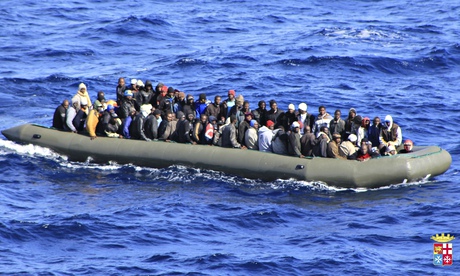
Italy rescues more than 1,100 migrants in rafts south of Sicily


The Italian navy has rescued more than 1,100 migrants from nine large rafts in the waters south of Sicily.

Patrol helicopters identified the overcrowded rafts about 120 miles south-east of Lampedusa on Wednesday and four navy vessels participated in the rescue which ended early on Thursday. The navy gave no details about the nationalities of the migrants.

Meanwhile Moroccan authorities say emergency services have recovered the bodies of seven people who drowned after attempting to swim to the Spanish enclave of Ceuta. Authorities told the state news agency that at least 200 migrants tried to swim to the enclave, which is on a peninsula jutting out from the Moroccan shore.

Italy is a major gateway into Europe for migrants, and sea arrivals more than tripled in 2013 from the previous year, fuelled by Syria's civil war and strife in the Horn of Africa.

In October, 366 Eritreans drowned in a shipwreck near the shore of the Italian island of Lampedusa, which is located about halfway between Sicily and Tunisia. More than 200, mostly Syrians, died in another shipwreck a week later.

With two Spanish enclaves on its coast, Morocco is a magnet for immigrants from all over Africa seeking jobs in Europe.

Every month, hundreds of immigrants attempt to force their way into Ceuta, near the city of Tetouan, and Melilla to the east.

Over the past two decades, Italy, Greece and the Mediterranean island of Malta have borne the brunt of migrant flows and have urged the EU to make a more robust and coordinated response.

Thursday 06 February 2014

http://www.theguardian.com/world/2014/feb/06/italy-rescues-migrants-rafts-sicily

continue reading

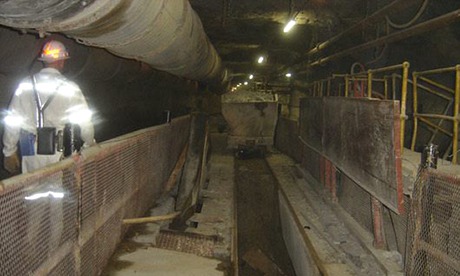
Eight bodies recovered after fire and rockfall at mine near Johannesburg


Rescuers recovered eight bodies and continued to search for another missing worker on Thursday after a fire and rock-fall at a Harmony Gold mine near Johannesburg, the worst accident in South Africa's mines in nearly five years.

Mineral Resources Minister Susan Shabangu ordered an investigation into the incident at the Doornkop mine, 30km (20 miles) west of the city, after initial reports that the fire was triggered by a small earthquake on Tuesday evening.

"The situation is deeply regrettable," Shabangu said in a statement. "We must ensure that we do all we can to get to the bottom of what caused this incident in order to prevent similar occurrences in future."

It is the most serious accident in South Africa's mines since nine workers died in a rockfall at a platinum mine in July 2009.

Rescue teams battled through smoke and debris nearly a mile underground on Wednesday to reach eight miners who had managed to flee to a refuge bay equipped with a telephone and other survival gear. They were brought to the surface unharmed.

South Africa's gold mines are the deepest in the world and were ranked as some of the most dangerous during the apartheid era.

Since the end of white-minority rule in 1994, the government, unions and companies have worked to improve safety, but 112 people were still killed in 2012, the last year for which records are available.

The National Union of Mineworkers (NUM) and Harmony said the fire broke out on Tuesday evening after an earthquake damaged ventilation and water pipes as well as power cables.

However, NUM questioned safety standards at the mine, saying the rescued miners reported that the ventilation system in one of the refuge chambers was letting in fumes.

"It does tell us that the rescue chambers were not according to safety standards," said NUM secretary-general Frans Baleni. "We cannot just say that it is regrettable. Heads most roll should the investigation find that there was negligence."

A Harmony spokeswoman said it was possible the refuge bays had been compromised either in the earthquake or the fire that followed. An investigation by government, union and the company's officials was under way, she said.

Thursday 06 February 2014

http://www.theguardian.com/world/2014/feb/06/bodies-mine-doornkop-johannesburg

continue reading

13 dead in Ukraine train accident


At least 13 people were killed and five injured when a commuter train hit a shuttle passenger van at a level crossing in East Ukrainian region of Sumy, the regional prosecutor's press center said on Tuesday (February 4).

An official said the driver of the van which was carrying 18 passengers, ignored the warning sign of an approaching train and tried to cross the railway track when the collision happened.

"A bus that followed the route from Vorozhba to Sumy didn't stop on a red light at a railroad crossing and got hit by train from Vorozhba to Sumy. As we know now, today we have 12 people dead and six are in town of Sumy, they get medical treatment," Victor Chernyavskiy, the first deputy head of the Sumy regional administration said.

One of the injured later died in hospital, raising the number of deaths to 13. Five people, including a child, were in hospital.

Ukraine's Channel 5 showed the crash site with bodies of the van's passenger lying by the tracks.

The crash happened at about 3:35 p.m. local time near Vyry, about 25 kilometers south of Ukraine's border with Russia.

None of the train passengers was injured, the Ukrainian railways said.

The driver of the van was not killed in the accident, regional prosecutor's office said.

Road police said signals on the railroad crossing were working normally, local media reported.

Thursday 06 February 2014

http://www.solarnews.ph/news/world/2014/02/05/13-dead-in-ukraine-train-accident

continue reading

The volunteers who provided dignity for the dead following Typhoon Haiyan


The snap of latex gloves in the back of the truck is the only sound as a group of Philippine Red Cross volunteers tasked with one of the most difficult jobs in the typhoon aftermath head out to work.

They are the body retrieval team and they have just had call out.

The team of four have been undertaking this grim task since the day after the disaster. They have collected dozens of victims and although they admit it is a grisly and often traumatic job, they recognise they’re helping those survivors who are desperate to determine the fate of their loved ones. On this particular day, the team had been called to collect two bodies in the San Fernando area of the city.

As the Red Cross truck pulled up on the roadside close to where the remains were believed to be, Annalou Atterberry approached. The 27-year-old teaching assistant said she had come to Tacloban from Manila to bring basic supplies for her family in Leyte and Samar. When she arrived, she was told her 15-year-old nephew Romuel Capilos was missing.

Romuel had quit school in order to earn extra cash for his family and two days before Haiyan hit, he took up a gruelling job in a fish processing factory in Tacloban. He was working up to 21 hours a day for 1,500 pesos a month – the equivalent of about $35 US dollars.


He and between 15 and 20 of his colleagues had worked on the day of the typhoon instead of evacuating.

Annalou hitched a ride from Bongdo Julita village in Leyte, where most of her family live, and came to find Romuel. And that morning she did find him – she found his body wedged under a wall. She’d crawled over the rubble of his workplace until she caught sight of the green t-shirt and shorts she knew he had been wearing on the day of the storm.

She explained Romuel’s mother had been having a recurring dream that her son was trapped underneath something. “That’s why I came,” Annalou said. “Because she kept having the dream that he was saying ‘mum, please help me, please get me out.’ Hopefully, now we can.”

The retrieval team went to assess the scene and deemed it too dangerous. They enlisted the help of the police and their heavy-lifting equipment before heading off to continue collecting the two bodies from the initial call out. The team found them next to each other – they were the bodies of an adult woman and a baby girl, about one year old. The skilful volunteers were able to retrieve the pair and prepare them for burial with dignity, as a crowd of neighbours look on.

Francis Hidalgo, 36, has been a central member of the retrieval team since the operation began. As a father, he admits the job can be harrowing and led to nights when sleep evades him but he said: “It makes me think of my family and how I want to be with them and keep them close. But helping people gives me and all the guys energy. This is one part of being a Red Cross volunteer and I feel it is very important.”

Thursday 06 February 2014

http://www.ifrc.org/en/news-and-media/news-stories/asia-pacific/philippines/the-volunteers-who-provided-dignity-for-the-dead-following-typhoon-haiyan-64363/

continue reading

Ten killed, 39 injured as bus falls into trench at Khambatki ghat


Ten people from Porbandar in Gujarat, including seven women, were killed and 39 were injured when the private bus they were travelling in went off the Pune-Bangalore highway and fell into a trench. The driver reportedly lost control on a slope that had a sharp turn near the Khambatki tunnel in Satara district on Monday night.

Another major accident at the same spot was averted after four persons in a car, that had halted near the accident site, suffered minor injuries when the car was hit by a truck that also went out of control on the slope just few minutes after the first accident. The truck went on to hit another car and a tempo before turning turtle into a roadside trench.

About three weeks ago, nine persons had lost their lives after a heavy container had crushed a tempo at the same spot.

The bus with 47 pilgrims — most of them conservancy staffers from Porbandar Municipal Corporation — had started from Porbandar on January 10. They were on the way back after visiting Tirupati, Rameswaram and several other pilgrimage sites in South India. They took a halt at Karad in Satara and had resumed their journey at 7 pm on Monday.

Deputy Superintendent of Police Rahul Makanikar said, “About a km after the bus crossed the Khambatki tunnel, the driver reportedly lost control on the second turn of the sharp S-shaped curve, that also has a slope. The bus was going at a very high speed and turned turtle as it fell into the trench.”

The injured were rushed to nearby hospitals initially by some people who stopped by to help and the police, and later by ambulances. Ten of them, including the driver and the cleaner, were declared dead on arrival at hospitals. The injured are being treated at three hospitals in Satara town, Shirwal and Khandala-Pargaon and all are said to be out of danger. The injured also include some children. The injuries of the four persons from the second accident are minor, police said.

Mohan Chudasama, one of the survivors, said, “We could see that the driver was not able to control the bus on the slope and many of us got up from our seats. We thought the brakes had failed. We were very scared and the next thing we know was that the bus was in the trench and many of us were injured.”

Satara Regional Transport Officer Bhalchandra Kulkarni said, “The vehicle be examined and only after that will we be able to comment on whether there was any fault in the vehicle or not.” Rajesh Jethwa, another injured, said, “We were to complete our journey by February 1 but the bus broke down several times. All of us are civic conservancy staffers; some had even borrowed money for this pilgrimage.”

The bodies were being handed over to the relatives till late on Tuesday at Khandala hospital after post-mortem examination.

Thursday 06 February 2014

http://indianexpress.com/article/cities/pune/ten-killed-39-injured-as-bus-falls-into-trench-at-khambatki-ghat/

continue reading

A family's struggle to find a missing loved one in post-Haiyan Philippines


The poster shows two pictures of a smiling boy - one in a shirt, tie and trousers looking dapper, and the other in the arms of a family member. “Have you seen this boy?” the headline asks in thick black letters.

Three-year-old Tarin Sustento has not been seen since the morning of Nov. 8, 2013 when Typhoon Haiyan bore down on the central Philippines with tree-snapping winds and tsunami-like waves. Mildly autistic, Tarin cannot speak and does not know his name.

The boy is one of the 1,785 people the government has declared as missing following the storm, which killed more than 6,000.

The bungalow in Tacloban that Tarin used to share with his parents and four other relatives is now an abandoned wreck.

“Keep walking, nothing to see here,” ordered a message scrawled in capital letters on the white metal gate. Yet the remaining members of the family have not given up hope of finding him.

“We’re hopeful somebody took him in because my brother placed a lifejacket on him,” said Joanna Sustento, Tarin’s aunt and one of two known survivors in the family, as she sat in the living room of a relatives’ house in Palo, a town next to Tacloban.

Tacloban, a coastal city that bore the brunt of the storm, is slowly beginning the long and difficult task of rebuilding. For people whose loved ones remain missing, moving on is a challenge. Posters asking for information of their whereabouts still adorn the walls of churches and bus stops three months after the typhoon, locally known as Yolanda.

“Even if we gave people food, shelter and water, the psychological trauma from being separated from their families is still a big problem for them,” said Beverly Kalingag, social services officer with the Philippines Red Cross (PRC), which has been tracing missing people with support from the International Committee of the Red Cross (ICRC).

LOVED ONES SWEPT AWAY

The posters of Tarin, whose father was a well-known tattoo artist, and a Facebook campaign set up by his other aunt, received many responses. Most were from people asking for money but that has not deterred Tarin’s relatives in tracking down each lead.

“A friend of my brother’s said that a doctor he knows told him that another doctor brought a three-year-old child from Tacloban to Manila about two months ago”, Sustento said.

“But we’re not sure if the child’s a boy or a girl,” added Sustento, who lost her parents, her eldest brother and his wife during a harrowing two-hour fight for survival.

On the day of the storm, strong winds woke up the whole family in the early hours. Around seven at the breakfast table they noticed water coming in through the kitchen door.

“Our house is near the coast but we have not experienced flooding before, and we never expected a storm surge,” Sustento said.

Within minutes, the water was at chest level. As they rushed out of the house, she saw a snake, she recalled.

“I freaked out but I tried to stay calm as I didn’t want to worry my father. He had a heart surgery in August and the doctors told us one more attack and that would be it,” she said.


“I looked at Tarin and even though he didn’t say anything I could see he was worried and afraid,” she added. Her sister-in-law got bitten in her thumb as they were struggling to hold on to the window grill. She sucked the poison out of her but when Sustento looked again, after helping her parents, her sister-in-law had drifted away.

Only Sustento and an unmarried brother survived the typhoon. The body of their father is yet to be found.

NEED FOR CLOSURE

The Philippines Red Cross set up a welfare desk immediately after the disaster and informed survivors they could request for help to find missing loved ones.

The ICRC, which has decades of experience in restoring family links, says it has resolved 504 cases of missing persons in two of the worst-affected provinces, Samar and Leyte.

This is done using rudimentary but effective methods such as making door-to-door enquiries and talking to neighbours and community leaders.

More than 120 cases remain open in Tacloban, including that of Tarin, according to PRC’s Kalingag. This means they have not been able to determine whether the person is dead or alive.

Sustento said Tarin’s family is exploring all options including waiting for the National Bureau of Investigations to process the dead bodies in Tacloban, of which 2,542 have yet to be identified. The government has warned it will be a costly and time-consuming task.

Bodies are still being recovered too. On the day this correspondent visited Tarin’s former home, almost three months after the storm, four fresh body bags lie on the side of the road some 100 metres away from the house.

“We are hoping that we will still find Tarin,” Joanna said. “Dead or alive. Just for closure.

Thursday 06 February 2014

http://www.trust.org/item/20140205115838-yncd7/

continue reading

Call for fast-tracking compensation for missing workers


A labour organisation yesterday demanded the missing victims of the Rana Plaza building collapse be declared dead through inspection instead of solely depending on DNA tests, so that their families can be compensated.

The families that have been waiting for closure for the last nine months have lost hope of finding the graves of their loved ones through DNA tests, as human remains are still buried at the site, the organisation said.

As the bodies recovered were decomposed beyond recognition, some families took home the wrong bodies, making it harder for DNA sampling to identify the victims, it said.

Speaking at a press briefing at Topkhana Road in Dhaka, a garment worker's organisation—Bangladesh Garment Sramik Samati— demanded a fresh search for human remains at the Rana Plaza site.

“The discovery of Obaidul's skeleton at the site, followed by around 300 bones, proves that the rescue mission at Rana Plaza site was flawed, incomplete,” said Taslima Akhter, convenor of the organisation.

The discoveries suggest that the actual death toll in the disaster is much higher than the official figure of 1,135, she said.

The families of the missing workers received little in the form of compensation, and there is confusion over the death toll as no one could confirm how many people were inside the building when it collapsed on April 24, she said.

There were three families at the event, whose DNA samples matched in the tests, but could not find their loved ones among the unidentified graves.

Thursday 06 February 2014

http://www.thedailystar.net/business/call-for-fast-tracking-compensation-for-missing-workers-10091

continue reading

Expert faults Nigeria’s disaster management policy on corpses


Nigeria’s management and preparedness for disasters have been criticised for its lack of sensitivity on handling of bodies of victims as well as the communities affected following disasters. Dr Uwom Eze, a Forensic Pathologist at the University College Hospital (UCH), Ibadan, said what would be needed to close this gap was going to be the thrust of the African Society of Forensic Medicine (ASFM) Annual Forensic Conference early in March, 2014, at Abuja.

The annual conference, with the theme; “Management of Bodies of Victims Following Disasters” is to have in attendance, forensic and anatomical pathologists, medical laboratory and mortuary workers, law enforcement agencies, coroners, legal practitioners, NEMA officials, Red Cross and other stakeholders in disaster management.

Eze, saying that disasters were unfortunately inevitable, declared that often times the mental and psychological health issues that affected the community where the disaster occurred were neglected.

The expert who emphasised that there were so many medico-legal issues that need to be considered in relationship with such incidences, said in restoring sanity after disasters, government needed to first of all identify those who were involved.

“Bodies of victims are usually neglected. People are admonished to forget the dead but the dead is never dead because they leave traces of memory, life and consequences for their dependants and for their communities. That is why we are focusing on the management of bodies of victims”.

“Often we do mass burial and this may imply that the family of the missing may never get to know whether the person is actually dead; they never get to give the person appropriate burial and that is a perpetual mental and psychological torture for all people who are involved.

“The affected communities never come to closure and this distorts community health.

“Furthermore death certificates cannot be issued for such victims that were not identified, so you could imagine families, children and wives who depend on them will not be able to claim their property and investments in formal institutions.

“I reckon there is huge fortune, perhaps running into billions of Naira in Nigeria banks that may never be accessed by families of deceased following disasters. If the right processes and procedures were followed, the event could be less traumatic on the families and friends of the deceased and their dignity and rights preserved even in death.”

Eze said that the principles of forensic medicine, a medico-legal practice and an investigative aspect of medicine, if applied in disasters could also help unravel its cause.

According to him: “Some signs and features we could see on bodies of victims may be able to tell us whether the disaster is really an accident or an event that appeared to be an accident or may even be staged to be an accident. “For example, the evidences pieced together can tell if there was an explosion inside the plane, for example, or if it crashed due to some other mechanisms. The nature and circumstance of each incident may be seen through peculiar features on the bodies of victims.

“Imagine you are investigating a crash and a known terrorist is identified, it may imply there may have been some terrorist’s activities resulting in the crash and it may help direct the investigation in appropriate circumstance. So the bodies are not just bodies that are dead, they are very important in determining the cause of death and circumstance of event.

“So there is a lot of prevention initiatives that could come from investigating bodies of victims, especially in ensuring emergency preparedness.”

Eze acknowledging that Nigeria had experienced unprecedented disasters both man-made and natural disasters, noted that many of the bodies in these incidences were not properly investigated and managed.

“In Nigeria, every thing is lumped under one headline, and the problem is we do not usually go into details. Unfortunately what has not been carefully studied and addressed will keep repeating itself and we continue to look in the wrong direction. This is our sad story but it does not have to remain that way. The forthcoming pan-African Forensic Conference will attempt to address these issues with some relevant stakeholders in Nigeria and across Africa,” he concluded.

Thursday 06 February 2014

http://www.tribune.com.ng/news2013/index.php/en/health-news/item/32682-expert-faults-nigeria%E2%80%99s-disaster-management-policy-on-corpses.html

continue reading

The 2004 Morecambe Bay cockling tragedy


Retired police chief Mick Gradwell led the probe into the 2004 cockling disaster in which 23 Chinese cocklers lost their lives. Operation Lund, as the investigation was called, was an enormously complex prosecution involving more than 1.5million pages of evidence. The trail eventually led to a Chinese gangmaster being found guilty of 21 counts of manslaughter and jailed for 14 years in March 2006. Reporter Michelle Blade spoke to Mick about the events of that fateful night and the ensuing police investigation.

Over an illustrious 30 year career, Mick Gradwell has worked on a series of high profile police investigations, including the Sophie Lancaster murder enquiry, the Haut de la Garenne child abuse investigation and the Morecambe Bay cockle pickers tragedy.

But in 2004, as senior investigating officer for Lancashire Constabulary, Mick Gradwell was thrown into the murky world of Snakehead gangs, and international people trafficking when 23 Chinese cockle pickers drowned in the bay.

Mick said: “I’m a Lancashire lad, used to dealing with crimes in Lancashire, not international organised crime gangs and human trafficking - its not what you expect, not on the landscaped shores of Morecambe bay.

“Until then I had investigated domestic murders, one punch murders, bad on bad murders.

“I was thrown into areas of the shellfish industry I didn’t know about. I didn’t know a cockle from a mussel. I didn’t know about safety issues within the industry, or Snakehead gangs.”

Mick was informed about the disaster the morning after the rescue operation.

As daylight came, eight bodies had been washed ashore - then Mick had another call saying the body count had gone up to 14.

Over time it became known that 23 people had died.

Mick said: “The crime scene was 120 square miles, there were vehicles and bodies and evidence in Morecambe, Liverpool and elsewhere.

“You get used to seeing a lot of horror and gore but seeing that many bodies who looked like they could wake up at some point was shocking.

“The investigation kicked off. We needed to find out where the cockles were going and who was organising the human trafficking.”

Police discovered how money was filtered down to 12 accounts in China from sub accounts in London.

The people who owned the accounts in China made millions.

But Fujian province, where the Chinese cocklers hailed from was one of the poorest places in the world.

Mick said: “Most of the family houses were just shacks. They are some of the poorest people in the world and they were grafting to send money back to their families.

“Most of them were farmers who were quite well qualified but had to get down in the dirt to raise money. The gangmasters tried to abuse people like that.

“One of the family members needed to go abroad to find work. They would have to pay £15-£20,000 to the Snakehead gang to get trafficked, in this case the UK. A large number of Chinese managed to illegally get into Britain, either on the back of a van or a plane.

“They would produce their passport and apply for asylum and told to come back in two weeks whilst their application was processed.

“The vast majority never went back. In 2003 cockles in the EU got the lurgy and became unfit for human consumption. The value of cockles increased greatly.

“Lin Mu Yung started the cockling enterprise which did really well.

“His English girlfriend didn’t speak Mandarin but looked after the illegal immigrants.

“They kitted the cocklers out with equipment and made sure they were looked after and safe. Lin Liang Ren was the cousin of Lin Mu Yung and was a far more nastier business manager and accountant.

“He started to cut things down and provided cheap waterproofs and bought eight year old Toyota Previa vehicles that wouldn’t get stuck in quicksand.

“There was a double tide on February 5.

“On the evening he sent 20 people out and they would two thirds fill a HGV. He would then leave the workers on the beach and return for the morning tide when they would fill up the rest of the HGV.

“When they set off from Liverpool one of the vehicles broke down and 35 people didn’t set off.

“If they had done, there would have been more deaths.

“It was the wrong end of the tide and the worst time you could have gone out cockling.

“Local cocklers were coming in and told the Chinese cocklers not to go out but because of the language differences they didn’t understand.

“A flat pick-up got stuck and was wiped out and it was quite clear he (Lin Liang Ren) had sent them out too late. By 7pm they were already goosed and it was all going wrong.
Lin Liang Ren rang his cousin and asked to be taken out of the area.

“Some of the 35 people out in the bay made their way back on foot to the car park.

“Lin Mu Yung’s girlfriend decided to ring the coastguard and kicked off the rescue.

“By this time it was way too late, 9.15pm. At 9.20pm one of the cocklers called 999 and you can hear them drowning.

“Only one guy, Li Hua, was saved at Priest Skear. He is still in witness protection.

“Lin Liang Ren never admitted anything - we had to prove it by identifying DNA, fingerprints, and using telephony analysis and forensic analysis.

“We had to seize the rent books and documents and prove he was the guy paying the money.

“We had to prove he was the guy who bought the vehicles.

“His fingerprints were on the credit card receipts used to buy equipment.

“The European cocklers said that he was the man in charge.

“There were thousands of telephone calls and the forged fishing permits had links to human trafficking.

“The trial was over six months long because he would never admit to anything.

“It was a huge investigation to send people to China to identify the deceased, and there were language differences and huge forensic accounting issues. It was a very tragic job but we had to offer justice to those who died.

“No matter what we did we were never going to bring a satisfactory conclusion to the job because all the families want is their loved one.

“It isn’t just a bit of paperwork and we do become aware of the personal tragedy and its effects.

“It was such a terrible tragedy, such a needless waste of life.”

Operation Lund won Britain’s top criminal justice award, the Justice Shield, in 2006.

The cockle pickers trial was one of the most complex ever staged in Lancashire.

Survivors who disappeared after the tragedy had to be tracked down, statements proved difficult to obtain because of language barriers and witnesses being fearful of gang reprisals and vast quantities of evidence had to be presented to the court.

New technology was introduced during the trial to provide the jury with location footage and video and audio evidence – with translations where appropriate.

In total, 23 lives were cruelly wasted in Morecambe Bay that night.

Nineteen of those who died were men, four were women, and all but one of them had children.

Two of the cocklers who were not found at the time, were later pronounced dead.

The skull of one of them, Liu Qin, was found eight years later. Their 13-year-old son was left orphaned.

The remains of Dong Xin Wu have never been found. One of the cocklers, Li Hua, made it on to a raised area of rocky sand called Priest Skear and was spotted by a helicopter crew and was picked up by the emergency services.

Li Hua was the only person to be rescued.

Chinese detectives and British police worked for three months after the tragedy to identify the victims.

They used post-mortem photographs and some of the cocklers’ meagre possessions found either on their bodies or on the foreshore. Investigating officers met with families in China and compared DNA samples from relatives.

All of the 23 people who perished were eventually named in May 2004.

When some of the cocklers’ bodies were returned to China, the Chinese government compounded the families’ grief and tried to teach them a callous lesson by getting soldiers to leave the coffins in the street. The families also had to contend with the snakehead gangleaders to whom they owed tens of thousands of pounds.

Thursday 06 February 2014

http://www.thevisitor.co.uk/news/local/slideshow-morecambe-bay-cockling-tragedy-who-were-the-victims-1-6417639

http://www.thevisitor.co.uk/news/morecambe-bay-cockling-tragedy-evil-world-of-snakehead-gangs-1-6417865

continue reading