Saturday, 24 August 2013

Belongings of victims accurately recorded


Cash bills wrapped in plastic turned up in the oil-soaked clothes of a woman, one of the fatalities of the sunken MV St. Thomas Aquinas.

The clothes were being washed by Charles Tubio, a criminology intern, one of 76 assigned since Tuesday to help in the ongoing victim identification process at the Cosmopolitan Funeral Homes.

Tubio turned over the bills, which ran to several thousand pesos, to the head of the Scene of the Crime Operatives (SOCO).

“I pity the victim who died,” the intern told Cebu Daily News, when asked about the discovery.

He said the woman, who remains unidentified, reminded him of a student who travels at sea bringing her tuition fee money in her pocket.

The clothes or any jewelry, personal effects or even body tattoos or scars are sometimes the only clues to the identity of unclaimed bodies recovered at sea after the Aug. 16 sea tragedy.

Senior Supt. Nestor Sator, regional chief of the PNP Crime Laboratory, said each item is documented and safeguarded.

When a cadaver is brought to the funeral home, crime lab personnel tag the body, place the human remains in a body bag which is also tagged, and take photographs. Another tag is placed on on the plastic bag holding the belongings of the victim – apparel, gadgets, jewelry, etc.

All items are documented in the presence of the Scene of the Crime Operatives (SOCO) and Cosmopolitan staff before they are turned over to the evidence custodian.

Sator said fingerprint and dental examination are made as the main source of information in the Disaster Victim Identification (DVI) process.

DNA testing is used as a last resort if families are unable to produce dental records of their loved ones or fingerprint records from the National Bureau of Investigation (NBI) or police clearances .

The student interns who help out belong to the graduating class. Part of their duties is to tape numbers on the hands of cadavers so the victims can be easily located once they are identified by the families.

The bodies are bloated and face features are unrecognizable after days in the water.

“We pray before we head to work for the eternal rest of their souls,” said one of the interns.

Intern Concepcion Avenido said that last Tuesday, after she helped SOCO, she skipped lunch and dinner and she could hardly sleep at night.

“After the hands-on experience, we had a hard time eating our meals because the smell of the dead clings to our nostrils and body,” she said.

Nevertheless, the interns said the experience makes them count their blessing that their own families are safe.

Last Tuesday, SOCO allowed the public viewing of a slideshow of photos of the recovered victims and their belongings in the lobby of the funeral home to speed up identification of the victims by their families.

However, this was stopped on Thursday after the Department of Health advised that it was traumatic for the families to see deformed faces and bodies of their kin.


With this, Chief Inspector Benjamin Lara of the PNP Crime Laboratory -7, changed the procedure and showed only personal belongings of the victims like clothing one by one to the families.

“We stopped the viewing because it adds to the families’ trauma. Viewing only prolongs their agony,” Lara said.

This time, staff conduct interviews and ask families to describe in detail their missing loved one as well as their belongings to avoid spurious claimants.

DNA tests are done in Camp Crame in Metro Manila and would take months.

“The relatives should understand the sheer volume of the specimens taken from the victims and the sheer volume of specimens taken from the relatives. Take note, there are more than 80 relatives who are looking for their missing loved ones,” Lara said.

Saturday 24 August 2013

http://newsinfo.inquirer.net/473463/belongings-of-victims-accurately-recorded

continue reading

Three bodies found, fourth missing, as helicopter crashes off Shetland


The Super Puma L2 aircraft went down at 6.20pm last night, around two miles west of Sumburgh airport on Shetland as it was returning to the island from the Borgsten Dolphin platform in the North Sea.

Fourteen of the 18 people on board the helicopter were taken to safety during the immediate rescue response.

A major search operation, involving the coastguard, police, RAF and RNLI, was extended overnight to hunt in the darkness for those who remained missing.

This morning, Police Scotland confirmed the bodies of three people have been recovered.

A fourth person remains unaccounted for, a spokeswoman added.

The families of those affected have been informed.

Jim Nicholson, RNLI rescue co-ordinator, said he understands two of the bodies were recovered in the area where the helicopter crashed.

"The bodies came to the surface close to the helicopter wreckage," he said.

"The helicopter was in a pretty inaccessible place but the lifeboat crew were able to get to them using an inflatable craft.

"It's fortunate there were not more casualties in a helicopter crash of this kind.

"There appears to have been a catastrophic loss of power which meant the helicopter suddenly dropped into the sea without any opportunity to make a controlled landing."

The rescue team then spent hours securing the helicopter and moving it to a more accessible location where it is waiting to be loaded on to a vessel.

Mr Nicholson added: ''The helicopter is being held in position but no one has been able to board it yet.

''Once the helicopter has been loaded on to the vessel it can be searched.

''It may be that a body is recovered on the helicopter.''

He praised the efforts of the rescue agencies involved.

''I think it's been a very long night and I think the crew have been tremendous.''

Saturday 24 August 2013

http://www.heraldscotland.com/news/home-news/three-bodies-found-fourth-missing-as-helicopter-crashes-off-shetland.1377324649

continue reading

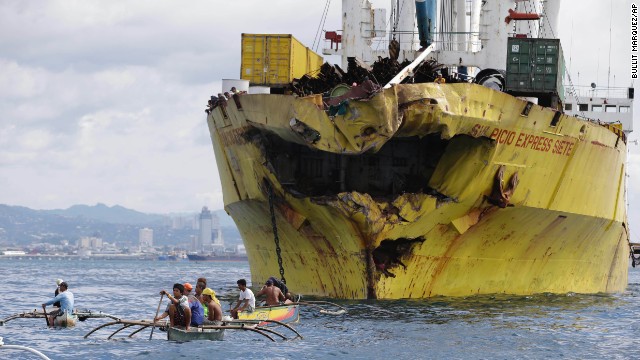
Cebu collision death toll rises to 80


The Philippine Coast Guard (PCG) yesterday said the death toll from the ill-fated M/V St. Thomas Aquinas has gone up to 80 as five more bodies were seen floating near Cordova town in Cebu.

PCG spokesman Commander Armand Balilo said as of 4:45 p.m., the recovered bodies from the St. Thomas Aquinas, which collided with M/V Sulpicio Express 7 off Cordova town last Aug. 16, consist of 76 passengers and four crewmembers.

The current death toll brings down the number of missing persons to 40.

There were 750 survivors of the accident, the PCG said.

The Cebu Provincial Disaster Risk Reduction and Management Council is the overall agency handling and supervising the search, rescue and retrieval operations on the country’s latest maritime disaster.

Day of mourning

The city government of Butuan declared yesterday as a “Day of Mourning” in sympathy to the victims of St. Thomas Aquinas, some of whom came from Butuan.

Butuan City Mayor Ferdinand Amante Jr. also directed all the city’s public institutions to lower the Philippine flag at half mast for three days beginning yesterday.

Amante said they will also provide legal, moral and financial support to the victims and their families.

Saturday 24 August 2013

http://www.philstar.com/headlines/2013/08/24/1128641/cebu-collision-death-toll-rises-80

continue reading

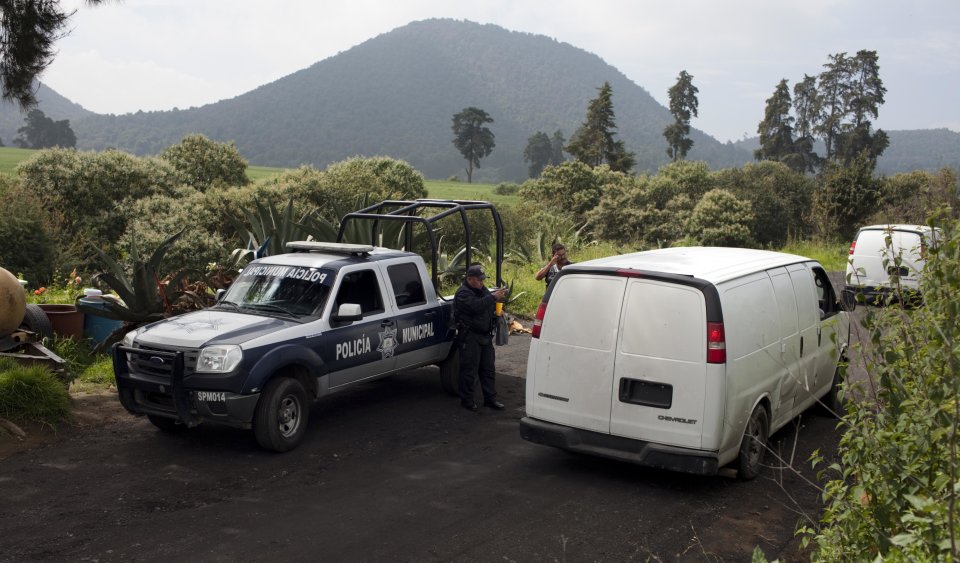
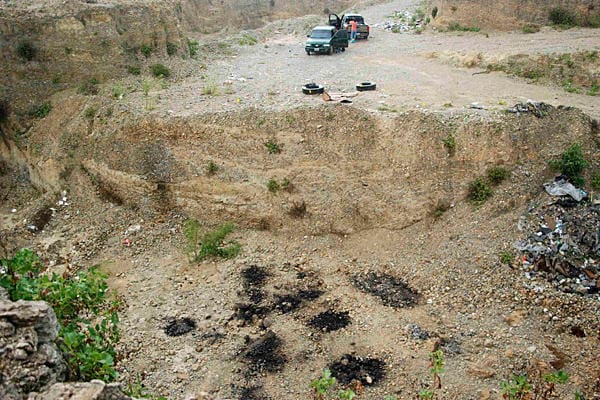
Mexico officials identify 5 mass grave bodies as those of missing 12 kidnapped teenagers


Mexican authorities said Friday they have identified five bodies pulled from a mass grave as some of the 12 people kidnapped three months ago from a Mexico City bar.

Assistant attorney general Renato Sales told reporters that 13 badly decomposed bodies have been pulled from a mass grave covered with cement, lime and asbestos discovered Thursday on a rural ranch east of Mexico City.

Officials said the remains are at federal labs, where experts are using DNA tests, and they expect to have all of them identified soon.

The young bar-goers vanished from the Heaven club at midday May 26, just a block from the leafy Paseo de Reforma, the capital's equivalent of the Champs-Elysees.

The bizarre disappearance resonated across the city of 9 million people because many had come to believe it was an oasis from the rampant drug violence that had led to discovery of mass graves elsewhere in the country.

Authorities set up a perimeter more than a mile (1.5 kilometers) from the excavation site on a hilly ranch known as La Negra, where federal police and attorney general's trucks and large white vans were seen working the operation. The private property next to Rancho La Mesa Ecological Park is walled and surrounded by oak and pine trees.

The federal Attorney General's Office said agents had received information about possible illegal weapons on the property and obtained a search warrant. When they started looking around, they discovered the grave.

"They found a home that looked like a safe house," Murillo Karam told reporters Thursday. "We were operating under the belief it was a weapons case."

Prosecutors have said the abductions from the Heaven bar were linked to a dispute between street gangs that control local drug sales in the capital's nightclubs and bars. They say the gangs are based in Mexico City's dangerous Tepito neighborhood, where most of the missing lived. The families insist the missing young people were not involved in drug trafficking.


Surveillance cameras showed several cars pulling up to the bar at midday and taking the victims away. A witness who escaped told authorities that a bar manager had ordered the music turned off, told patrons that authorities were about to raid the establishment and ordered those inside to leave.

Saturday 24 August 2013

http://news.yahoo.com/mexico-officials-id-body-5-missing-12-221806955.html

continue reading

Three missing after helicopter crashes off Shetland


Three people are missing after a Super Puma helicopter, carrying 18, crashed into the sea near Shetland.

The Coastguard confirmed that 15 people had been rescued from the sea and were taken to a hospital in Lerwick. An air and sea search is continuing.

The incident happened west of Sumburgh Airport at about 18:20 BST.

The L2 helicopter, carrying 16 people and two crew, was operated by CHC for Total, taking people to and from oil and gas platforms in the North Sea.

Jim Nicholson, RNLI rescue co-ordinator, told the BBC the helicopter was in an "inaccessible" position and that the weather in the area was not "particularly good"

He said: "There was a fresh wind, not overly strong, visibility is not particularly good and it was misty in the area but I doubt if that would have had any impact on causing whatever happened to the helicopter.

"I believe that the helicopter is in a fairly inaccessible position at the moment near the cliffs. There's quite a lot of tide in that area so any person in the water could be carried some distance away.

"It will be becoming much more difficult with darkness but I have no doubt that those involved are putting in every effort to try to obtain the best possible outcome."

One rescue helicopter flew nine people into Lerwick. One was taken off the flight by stretcher. The rest walked off the flight.

A coastguard spokeswoman said passengers had suffered a range of injuries.

She said: "The people that were involved are in varying stages of injury, no-one has walked away from this without a scratch."

Major incident

A CHC spokesman said: "We can confirm that an L2 aircraft has landed in the water, approximately two miles west of Sumburgh.

"The aircraft was on approach to Sumburgh Airport at approximately 6.20pm when contact was lost with air traffic control.

Jim Nicholson, rescue co-ordinator for the RNLI, speaks to the BBC as footage shows the rescue operation taking place "We can confirm there were 16 passengers on board, and two crew."

He said the company's Incident Management Team had been mobilised. CHC has set up a helpline for concerned relatives on 01224 296 866.

Michael Bull, whose son Samuel was rescued, said: "We understand he was on his way back from a rig and the helicopter lost power suddenly and immediately ditched into the water.

"He managed to escape straight away because he was right by an exit and I understand soon afterwards that the helicopter turned over."

Police Scotland said a major incident had been declared.

A spokesman said 15 people had been taken to Gilbert Bain Hospital in Lerwick.

Sumburgh Airport has been closed to allow emergency services to deal with the incident.

Airport spokesman Donald Morrison said the helicopter had been making an approach at 18:15 BST and lost radar contact with air traffic control.

Three helicopters and two lifeboats are involved in the search.

Rescue helicopters

The coastguard said the helicopter's life rafts were found empty and wreckage from the helicopter was starting to wash up at Garth Sneff near Sumburgh Head.

A spokeswoman said: "There is still an ongoing search and rescue mission for the three missing people."

Sq Ldr Dave Webster said RAF Kinloss had received a call at 18:27 BST, saying a Super Puma had ditched to the west of Sumburgh - about three or four miles offshore.

A ferry travelling between Shetland and Aberdeen was diverted to the scene and the RNLI launched Aith and Lerwick lifeboats.

Northlink Ferries confirmed that one of its ferries, which had left Shetland and was heading to Aberdeen, had been diverted back to the incident.

A spokeswoman said: "I can confirm that the Hjatland passenger ferry and Helliar freight vessel are providing support.

"We believe there are 201 passengers on board the Hjatland, which was on its way to Orkney to pick up more passengers."

The helicopter was flying from the Borgsten Dolphin oil platform in the North Sea to Sumburgh Airport.

A specialist medical team has been flown from Aberdeen Royal Infirmary to Lerwick by the RAF helicopter from Lossiemouth.

Investigators from the Air Accidents Investigation Branch (AAIB) are travelling to the scene.

A spokesman for the Department for Transport said: "The AAIB is aware of the incident and has deployed a team".

Previous incidents

The Unite union's Scottish secretary Pat Rafferty said: "Our immediate thoughts are with those people and their families and we can only hope for good news although as time goes on the situation becomes more worrying."

He added: "Fifteen people have thankfully been rescued and accounted for, unfortunately some with injuries, and their rescue is testimony to the bravery and skills of the rescue services.

"This brings into sharp focus once again the very precarious nature of the transportation of workers to and from offshore platforms. The health and safety of working people is our priority and we will be watching events closely as they happen."

Tavish Scott, the MSP for Shetland, said: "The first thought has to be with those who are unaccounted for. One can only think of families and loved ones who must be desperately worried at this time."

The Moderator of the General Assembly of the Church of Scotland, the Right Reverend Lorna Hood, said: "Our thoughts and prayers are with all those involved in the Super Puma helicopter crash off Shetland and especially those waiting news of their loved ones."

Last year, two helicopters ditched in the North Sea only six months apart. All passengers and crew were rescued in both incidents which were found to be caused by gearbox problems.

In October, 17 passengers and two crew were rescued from life rafts by a passing vessel after the helicopter, which was carrying an oil crew from Aberdeen to a rig 86 miles north-west of Shetland, was forced to ditch.

Previously, in May 2012 all 14 passengers and crew members on a Super Puma helicopter were rescued after it ditched about 30 miles off the coast of Aberdeen.

The helicopter was on a scheduled flight from Aberdeen airport to a platform in the North Sea at the time.

Super Puma EC 225s were grounded in the wake of the two incidents but were given approval to fly again and services resumed earlier this month.

In April 2009, 16 people died when a Super Puma plunged into the sea. Its gearbox failed while carrying the men to Aberdeen.

The Bond-operated aircraft was returning from the BP Miller platform when it went down off the Aberdeenshire coast.

Saturday 24 August 2013

http://www.bbc.co.uk/news/uk-scotland-north-east-orkney-shetland-23821083

continue reading

Friday, 23 August 2013

Genting bus accident: Public appeal to identify remaining victims


Six out of 37 victims of the Genting Highlands bus tragedy had yet to be identified as none of their next-of-kin had come forward to identify the bodies.

Health Minister Datuk Seri Dr S. Subramaniam made an impassion plea to those with missing family members who had used Genting bus services on the fateful day to help identify the bodies at the Kuala Lumpur Hospital's (HKL) Forensic Department.

"The next-of-kin are advised to bring photos of their family members for identification purposes," he told reporters after visiting injured victims of the crash at HKL here, today.

He said HKL were working with the police to locate the next-of-kin of the victims - two men and four women - as no one had come forward to claim the bodies.

Commending on quick response from medical teams in attending to the crash victims, he said this reflected public hospitals high level of preparedness in the face of tragedy.

"We have four response teams comprising trained doctors and support staff equipped with adequate equipment to provide good treatment to crash victims.

"This shows that hospitals in the country are ready to face any eventualities and disasters," he said.

On injured passengers, he said they were recuperating well and beginning to undergo psychological treatment and counselling to overcome trauma due to the tragedy.

Meanwhile, Kuala Lumpur Hospital (HKL) issued an appeal for the next-of-kin of two victims who were killed in Wednesday's bus tragedy in Genting Highlands.

A HKL spokesman said one them was a fair skinned man likely to be a Chinese while the other is believed to be an African woman.

"The man is 170cm tall, has hands of a person probably doing manual work. He had on him a green keychain with two car keys, one believed to be of a Nissan model," he told reporters at HKL's mortuary today.

He also said the man wore a silver necklace, a grey T-shirt of the Spalding brand and green trousers worn over a pair blue boxer shorts.

The accident, the worst ever road disaster in the country, claimed 37 lives and left 16 others injured, some critically.

Meanwhile, as at noon today, the bodies of four of the victims had been claimed by their next-of-kin.

They were Loh Kim Lan, 78, Kwan Chin Yii, 22, Udamjit Singh (age not available) and Yap Moi, 60.

Yap Yop Peng, 57, who came to claim Yap Moi's body, said she only came to know about her sister's missing after her (Yap Moi's) employer told her that she did not turn up for work yesterday.

"I had not seen her for sometime. I doubted she would be a victim but when I checked, found out she had made a bank withdrawal at Genting Highlands.

"I came here after hearing about the tragedy and identified her as my elder sister. I could recognise her eyes and nose although she had multiple injuries," she said.

Photos of some of the personal effects found on the unidentified bodies can be found here.

Friday 23 August 2013

http://www.nst.com.my/latest/font-color-red-genting-bus-tragedy-font-public-appeal-to-identify-remaining-victims-1.342814?cache=03D163D03edding-pred-1.1176%252F%253FpFpentwage63Dp%253A%252Fhe3D03Dn63Frea-rti3D19.3D163D03edding-pred-1.1176%252F%253FpFpentwage63Dp%253A%252Fhe3D03Dn63Fre%253Fpage%253D0%253Fpage%253D0

continue reading

North and South Korea hold talks on family reunions


North and South Korea have begun talks on resuming the reunions of families separated by the Korean War in 1950-53.

Korean Red Cross officials met at the border village of Panmunjom in an attempt to restart the reunions last held in October 2010.

The two sides remain technically at war because the conflict ended in an armistice and not a peace deal.

The talks come as the two countries last week reached a deal on a joint industrial zone.

Many families were separated at the end of the war by the dividing of the peninsula.

South Korean President Park Geun-hye last week called for the resumption of the reunions, urging North Korea to "open its heart".

The aim is for some of them to meet during a festival holiday in September.

However, the two sides have yet to agree on the venue, size and date of the possible reunions.

In South Korea, more than 70,000 people have registered for the reunions.

Kim Kyung-ryun said that she had been trying for decades to reunite with her parents and siblings in the North.

"So many reunions have passed, and I've never been picked," she said.

"So I wonder whether my chance will ever come, and I'm just a bit too tired to worry about it now."

The current talks are the latest signs of tensions easing on the peninsula.

In April, North Korea withdrew its workers from the Kaesong joint industrial zone, angered by the expansion of UN sanctions after its 12 February nuclear test and annual US-South Korea military drills.

The deal reached last week came after six rounds of talks ended unsuccessfully.

Meanwhile, it was reported that a North Korean man apparently defected after he was found on South Korea's Gyodong Island.

It was not immediately known how he had crossed the border in stormy weather. South Korean officials said he was now being questioned.

Defections by crossing the border via land and sea is said to be rare, and most are made by North Koreans entering another country before going to South Korea.

Friday 23 August 2013

http://www.bbc.co.uk/news/world-asia-23791117

continue reading

Genting bus crash: Six victims yet to be identified


Police have yet to identify six victims of the 37 dead bodies pulled out of the bus wreckage here.

Bentong OCPD Supt Mohd Mansor Mohd Nor said 20 bodies, 19 Malaysians and one Indonesian, have been claimed by their families.

"As for the remaining six, we are sifting through the clothes, valuables and documents found in the ravine to match them. I call on those missing relatives in Genting to come forward to assist in investigations," he said.

Of the dead, 22 were males and eight were females.

Of the bodies that have been identified, three of them were foreigners: a Bangladeshi, a Nepalese and a Korean.

Of the 14 Malaysians identified, two were Malays, 11 Chinese and one was Punjabi.

Dr Jeyaindran said six families, all Malaysians, had already claimed the bodies of their loved ones.

He advised the beneficiaries to come to HKL and bring personal documents to claim the bodies.

"All those who had been brought out of the bus alive, are still alive and in stable condition.

"There have not been any more deaths,"he said.

At the scene of the bus crash along KM3.5, a large tractor has been brought on site to hoist up the wreckage from the ravine.

Puspakom officials are also carrying on site investigations to ascertain what could have caused the crash.

It is expected that the wreckage will be taken to the Bentong police headquarters for further investigations.

When asked if police have spoken to the surviving victims from the crash, Supt Mohd Mansor said they would wait a few more days.

"Many are still recovering and are not in the right frame of mind to present their accounts yet," he said.

Search continues for body parts, belongings of crash victims

Search and rescue personnel were today still combing the slopes of a ravine for body parts and belongings of the victims of the bus tragedy that killed 37 people on Wednesday.

Earlier in the day, personnel deployed in the operations had recovered two severed legs scattered around the site where the ill-fated bus, carrying 53 people, had crashed in what is the worst road accident in the nation's history.

The limbs have yet to be traced to the victims as many bodies had been mangled, some beyond recognition.

About 160 policemen, including VAT 69 commandos and General Operations Force personnel, were also combing the area to recover victims' belongings.

Post mortems on the 37 victims conducted at the Kuala Lumpur Hospital found that they all died from multiple injuries due to the impact of the crash.

Only 16 passengers, including nine foreigners, survived and are being treated at the Kuala Lumpur, Sungai Buloh, Selayang and Bentong hospitals.

Recounting the search and rescue operation on Wednesday immediately after the crash at 2.15pm, Genting Highlands fire department chief M. Mahendran, who was first to arrive at the scene, told reporters he heard screams of pain from the survivors.

Mahendran said the accident was the worst he had seen in his 26 years of service.

He also described the difficulties the rescuers had faced.

"We had to wait until the bus stabilised in case it plunged further down the ravine before we could start rescue works.

"When I finally climbed into the bus, I saw dead bodies on top of some of the survivors," he said.

Bentong OCPD Supt Mohd Mansor Mohd Nor stressed that the death toll remains at 37, and dismissed rumours that there were bodies that had yet to be found and that more had died in the accident.

He said that investigations performed by Puspakom, the Chemistry Department and police forensics branch were still underway at the site.

"The bus is badly damaged as it plunged off and rolled down the ravine for 60 metres before it came to a halt against a tree. Otherwise, it would have gone down another 100 metres," he said.

Two heavy-duty cranes are expected to be used to haul the wreckage of the bus out of the ravine tomorrow.

Mohd Mansor urged the families or friends of people who have been missing since Wednesday's crash to contact the Bentong district police headquarters or Kuala Lumpur Hospital.

Friday 23 August 2013

http://www.thestar.com.my/News/Nation/2013/08/23/Genting-bus-crash-victims-20-identified.aspx

http://www.malaysia-chronicle.com/index.php?option=com_k2&view=item&id=149482:search-continues-for-body-parts-belongings-of-crash-victims&Itemid=2#axzz2cmPyji8N

continue reading

Cebu ferry disaster: Cadavers’ photos taken down to prevent trauma


Forensic experts heeded the advice of the Department of Health 7 and temporarily stopped showing photos of cadavers at the Cosmopolitan Funeral Homes.

The Regional Crime Laboratory 7 will instead direct relatives of missing passengers of last Friday’s ferry collision to a private area, said Chief Insp. Benjamin Lara.

Pictures of retrieved bodies were projected on a screen at the mortuary’s lobby so these could be identified.

"We only did it to help collect data and possible description of the passengers," Lara said, adding that they had no intention to cause any trauma.

As of yesterday, 75 bodies were taken to funeral homes. Some 29 remain unidentified.

Lara urged relatives of missing victims to go home and await results of their investigation.

DNA testing

Forensic experts started processing the bodies for Disaster Victim Identification (DVI) last Tuesday. They took specimens for a deoxyribonucleic acid (DNA) examination.

They also took specimens from the missing passengers’ relatives for DNA comparison.

Lara said the results may take up to a year, depending on the cross-matching of the DNA.

"They have to understand the sheer volume of the samples that were taken from the cadavers and their families," he said.

To speed up the identification, he also urged relatives to submit dental and fingerprint records of their missing loved ones.

Dr. Dindo Herrera, a dental expert from Camp Crame, arrived in Cebu yesterday to help with the examination of the bodies.

Delays

“They don't have to worry because we will notify them once Camp Crame will release the results," Lara said.

As of 6 p.m. yesterday, 18 cadavers were released from the funeral homes, said Rosalina Allorada of the Department of Social Welfare and Development (DSWD) 7.

Meanwhile, Cebu City Mayor Michael Rama wants to speed up the release of the bodies retrieved from the sunken passenger vessel of 2Go Group Inc. mv St. Thomas Aquinas.

He learned from the Cosmopolitan Funeral Homes that the dispatching of the bodies was delayed because claimants have yet to fulfill all requirements.

Bong Ebo of Cosmopolitan said claimants need to secure clearances from the National Bureau of Investigation, the Talisay City Health Department, 2Go and the DSWD.

Jenifer Abastillas of DSWD said they require the spouse of a victim to present a marriage certificate.

If the claimant is a mother or father, they have to submit a birth certificate of their child.

For those who cannot present a marriage certificate or a birth certificate, she said they can present a certification from the mayor of their local government units or barangay captain and any ID issued by a government agency.

Fewer requirements

Ebo said the requirements should be cut down to hasten the release.

The mayor said the matter will have to be addressed immediately.

Based on the records of Cosmopolitan, of the 47 bodies that have been identified, 19 have yet to be released. The 47 bodies form part of the 75 bodies that have been retrieved from the sunken vessel.

Ebo said the 19 bodies are ready for shipment but there’s no available vessel to ferry them to their respective places.

In a related development, Rommie Cal, who is a representative of Surigao del Norte Gov. Sol Matugas, said they will extend a P5,000-financial assistance to survivors from their province.

He said that based on the initial data they’ve, there are 10 passengers from Surigao who survived the incident, 10 deaths, and 20 who remain missing.

Cal and Matugas were in Cebu City yesterday.

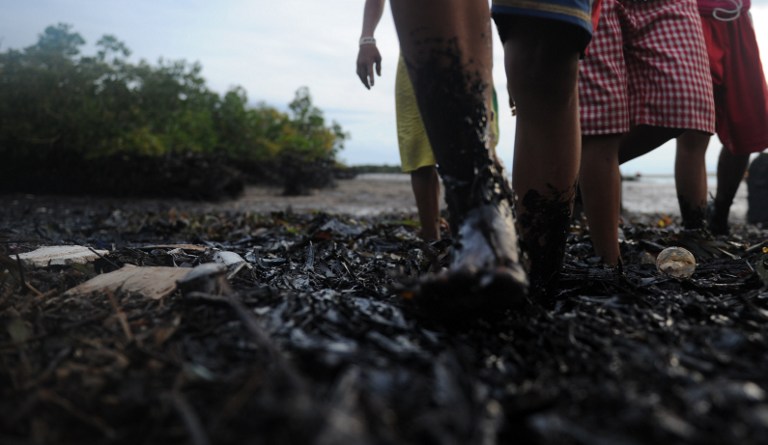
Meanwhile, Engr. Noel Kimmayong of Malayan Towage said they already plugged three holes on mv St. Thomas Aquinas that were identified as the sources of the oil leak.

As a result, the oil leak of 300 liters per hour in the past days became 150 liters per hour yesterday. "This is very good news," he said.

Kimmayong said they and the team from Nippon Salvage will today dive to the site where the vessel sank to see if there are still other holes that need to be plugged.

Friday 23 August 2013

http://www.sunstar.com.ph/cebu/local-news/2013/08/23/cadavers-photos-taken-down-prevent-trauma-299306

continue reading

Thursday, 22 August 2013

Genting bus crash: A day rescuers would rather forget


For the men of the Fire and Rescue Service Department, the rescue mission in Genting Highlands is one that they would rather forget.

For fireman Abdul Malik Mohd Jan, 60, who is retiring this year, it was one of the worst scenes he had ever encountered.

Based at the Hang Tuah fire station for 40 years, he said: “I don’t want to speculate, but I guess it’s fated that this accident was meant to happen,” adding that his main priority was to search for survivors.

Abdul Malik said the crash site was a horrendous scene of splattered blood and bodies mangled beyond description.

A rescuer from the Special Malaysia Disaster Assistance and Rescue Team (Smart), who declined to be named, said he had never seen carnage on such a scale.

The rescuer, who has been with Smart since 2002, said that while he was used to seeing gory situations at accident sites, this is by far the most tragic accident site he has ever worked on.

“Most of us are upset with the incident, and this is definitely one of worst crashes recorded in Malaysia’s history,”

Describing the scene when he first arrived at 2.30pm, Civil Defence Department (JPAM) officer Mohd Safari Nasaruddin, 29, said there was pandemonium with scores of curious motorists stopping their vehicles to gawk at the crash site.

“We had to move fast to cordon off the area and assist in setting up rescue equipment.

“It was a race to find the survivors because we all knew time was running out.

“It was the first time I’ve seen so many bodies and I couldn’t stop to think about it,” said Safari, who is attached to the Bentong JPAM.

A total of 456 personnel were involved in rescue and body recovery operations at the crash site.

Thursday 22 August 2013

http://www.thestar.com.my/News/Nation/2013/08/22/A-day-rescuers-would-rather-forget-Responders-face-most-tragic-accident-site-ever.aspx

continue reading

Hidden grave may hold clues to missing Mexican youths


A clandestine mass grave found near Mexico City may hold the answer to what befell 12 youths who were kidnapped from a bar in the capital back in May.

Federal investigators swarmed a ranch east of Mexico City on Thursday, where they confirmed that at least seven bodies had been found, and that two arrests were made near the location.

A lawyer representing the families of five of the missing, however, told CNN Mexico that he received a call from a source who said the bodies of the youths may be found there. The lawyer did not reveal his source.

The apparent kidnapping of the 12 youths from an after-hours club called Heavens shocked residents of Mexico City, who for the most part have been spared from the violence seen in other areas.

The lawyer, Ricardo Martinez, said his source told him there were 13 bodies found at the ranch, possibly in two mass graves, one that held the remains of the males, and the other, the females.

Mexico City's attorney general on Thursday said there was one grave so far that was being investigated.

Officials have not confirmed the identities of the bodies, and CNN could not independently confirm the claims of the attorney. Martinez said that a suspect in the disappearance of the youths led authorities to the ranch.

Mexico City Attorney General Rodolfo Rios said investigators were taking DNA samples to identify the remains, which could take several days.

The site where the bodies are found is the town of Tlalmanalco, in the state of Mexico, about 30 miles east of Mexico City, the state-run Notimex news agency reported.

Local, state and federal police were all at the scene.

A gang was involved in the mass disappearance, officials have said.

The May 26 incident at the after-hours bar jolted the capital city, given it took place in daylight on a Sunday morning.

Video footage shows a gang of about 17 people arriving in eight vehicles at the fashionable Zona Rosa district, according to authorities.

The owner of the bar, a co-owner and two bar employees have been arrested in the case.

Thursday 22 August 2013

http://edition.cnn.com/2013/08/22/world/americas/mexico-bodies-found/index.html?hpt=hp_t3

continue reading

Genting bus crash: Search and rescue restarts amid claims from relatives that family members are still missing


Search and rescue efforts have been restarted following claims from relatives that family members are still missing.

Bentong Deputy OCPD Deputy Supt Wan Azharuddin Wan Ismail said a total of 21 personnel from the Police General Operations Force (PGA) Battalion 4 and Battalion 7 and Fire and Rescue have rappelled down the 200ft slope to search for more victims at around 9.45am.

"We have reports from relatives who could not contact their loved ones.

"The search and rescue efforts will continue until we are satisfied that there are no more victims," he told reporters at the site of the accident on Thursday.

He added that the search team would also be looking out to recover identification documents or valuables from the wreckage.

"22 bodies have yet to be identified and we hope to retrieve documents that may help to identify them," he said.

DSP Wan Azharuddin said once the personnel conclude their operations, a briefing would be held to determine when the wrecked bus could be hoisted up.

Meanwhile, Malaysian Institute of Road Safety (Miros) deployed a remote controlled hexacopter equipped with a high definition camera to assess the scene.

Officials from both Miros and Road Safety Department (JKJR) are at the scene to get a clearer picture of how the crash occurred.

As at 8.30am a total of 24 postmortems have been completed. 10 bodies have been identified and 6 have claimed family members.

Family members were seen waiting patiently around the Hospital Kuala Lumpur forensic area to identify and claim the bodies of their loved ones.

Some of the family members of the deceased in Genting bus crash grieving the loss of their family members outside HKL mortuary area

The crash, which occurred at around 2pm on Wednesday claimed the lives of 37 of the 53 passengers aboard.

Survivors claim the brakes on the bus failed before it hit the divider and plunged into the ravine.

Thursday 22 August 2013

http://www.thestar.com.my/News/Nation/2013/08/22/Genting-bus-crash-Search-and-rescue-restarts.aspx

http://www.nst.com.my/latest/font-color-red-genting-bus-tragedy-update-font-10-bodies-identified-6-have-been-claimed-1.342022

continue reading

Beggars, junkies and mentally-challenged persons among 18,000 bodies found in Mumbai railway premises in 5 yrs


The Mumbai Government Railway Police (GRP) disposed of as many as 6,190 unclaimed bodies found on the Mumbai railway premises over the past five years.

The GRP, which provided these shocking figures, said that the deceased included beggars, drug addicts and the mentally challenged.

A total of 18,084 persons were found dead within the jurisdiction of the Mumbai Railway Police Commissionerate, of which 11,894 bodies were claimed by relatives. The Mumbai GRP later disposed of the remaining unclaimed (6,190) bodies, or one-third of the lot.

They said each year, thousands of people migrated to Mumbai, the nation’s commercial capital. Many settled near religious places or on the premises of railway stations. The problem arose when these settlers died due to starvation or illness on the premises.

“If the body of an unidentified person is found on the railway premises, the police take a photograph of the deceased and later circulate it to police stations across the state, the police headquarters of other states through the state DGP’s office and Doordarshan to trace the relatives or next of kin of deceased.

The body is kept in the morgue of a government or civil hospital for eight days until a claimant comes,” said an officer attached to the Mumbai Railway Police. If nobody comes forward, the railway police dispose of the body.

Deputy Commissioner of Police of Mumbai GRP SN Sirsat said It’s a challenge to trace the relatives of a beggar, drug addict or a mentally challenged person.

“Thanks to the joint efforts by GRP personnel and Manavta, an NGO, we have succeeded in bringing down the figure of unclaimed bodies from 1,392 in 2008 to 1,111 in 2012.”

He added the GRP commissioner Prabhat Kumar launched the website http://shodh.gov.in in July 2012 to identify the accident victims. People can trace missing persons by furnishing their physical description on the website.

Railway activist Sameer Zaveri, who filed a PIL in the Bombay High Court in 2008, said, “As per HC’s direction, the Western and Central Railways in Jan 2011 started their websites to post details of accident victims.”

Thursday 22 August 2013

http://www.dnaindia.com/mumbai/1878024/report-beggars-junkies-and-mentally-challenged-persons-among-18000-bodies-seen-in-mumbai-railway-premises-in-5-yrs

continue reading

Cebu ferry disaster: 44 bodies identified, 50 still missing


The death toll of the Aug. 16 sinking of the MV St. Thomas Aquinas reached 71 yesterday.

But only 26 recovered bodies were released to their families as of yesterday afternoon.

Kinfolk were able to complete the paperwork, such as presentation of birth or marriage certificates, said social worker Edna Regudo.

Other documents required for identification are barangay certificates and valid IDs of both the claimant and the dead.

On the fifth day of the search, rescue and retrieval operations, 69 bodies, one arm and one leg were recovered. A total of 45 cadavers have been identified.

Fifty persons remain missing.

The body parts recovered have not yet been determined to belong a single person, and have not been counted as recovered said Dr. Assuncion Anden, regional director of the Department of Health in Central Visayas.

DNA matching , which takes a month, will be used for those who can not be physically identified.

DNA samples of the cadaver and a close blood relative will be sent for cross matching by the laboratory of the Philippine National Police in Camp Crame in Quezon City.

Thursday 22 August 2013

http://newsinfo.inquirer.net/472125/44-bodies-identified-50-still-missing

continue reading

Genting bus crash: Families still identifying victims at HKL


Family members of victims of the Genting bus tragedy are still waiting for confirmation on their loved ones' fate.

All the bodies have been brought to Hospital Kuala Lumpur (HKL) for the families to go through the identification process.

A foreign worker from Punjab, India who declined to be named, said he heard about the accident through a friend and then checked the information on the Internet.

He said his co-worker Authur Malik, 40, and a relative, Sukvir Singh,24, who is here as a tourist, were in the ill-fated bus.

"I have been trying to call my friends but there is no answer. We came here after checking with Hospital Selayang," he said.

He added that he still did not know if they are dead or alive.

Others faced a similar dilemma as they awaited their turn to view the bodies and find out if their family member or friend had met with a horrible fate.

Meanwhile, the post mortem started around 11.20pm and is expected to take nine hours to complete.

Health deputy director-general Datuk Dr S. Jayaindran said a team of 12 medical personnel was conducting four post mortem processes simultaneously.

"We understand the position of families waiting for the victims to be identified and we are doing our best to speed up the process," he said.

He, however, said the identity of victims would not be disclosed to anyone not a family member.

Thirty-seven people were killed and 16 injured when a bus they were travelling in plunged into a ravine near Genting Highland Wednesday afternoon.

Thursday 22 August 2013

http://www.thestar.com.my/News/Nation/2013/08/21/Genting-bus-crash-victims-families.aspx

continue reading

Tribunal delays return of Srebrenica victims’ belongings


Damir Alic, lawyer for the victims of the 1995 Srebrenica massacres, says he fears that the International Criminal Tribunal for the Former Yugoslavia, ICTY, will not hand over the stored items of victims that were found in mass graves any time soon.

Alic, who represents the victims together with a team of lawyers, recalled to BIRN that last October they asked the United Nations to abolish the immunity from prosecution of Carla del Ponte, former chief prosecutor of the Hague Tribunal, so she could be prosecuted over the destruction of items found in the mass graves.

Several years ago, the lawyers launched an investigation regarding the destroyed items, which showed that about 1,000 items found in the graves were destroyed in 2005 and 2006.

They hold del Ponte, chief prosecutor of the tribunal from 1999 to 2007, responsible for this action.

“We collected a lot of evidence that points out exactly to del Ponte and the persons around her,” Alic said.

However, since the ICTY clearly did not want to process del Ponte over the matter, the lawyers last October asked the UN to remove her immunity and so allow her prosecution.

Prosecution remains highly unlikely. Just over six months ago, the UN appointed her as lead investigator into the civil war in Syria.

Meanwhile, Alic recalled, the Hague Prosecution has said that the preserved items of the victims will not be returned to Bosnia until the war crime trials are not completed.

“We want this resolved as soon as possible, rather than in 2015 or 2017,” he said.

According to him, Serge Brammertz, the tribunal’s chief prosecutor, promised to submit photographs of the preserved items, such as glasses, ID's or parts of clothing, to be placed in the Memorial Center in Potocari so that the families can start the process of identification.

“He promised last year that he would send high-resolution photographs that could be used for identification, to determine what belong to whom,” Alic said.

“But we did not get these photos. It is obvious that this is down to the bureaucratic slowness in The Hague Tribunal and for these reasons we are not satisfied,” he added.

Alic maintains that about 90 per cent the preserved items should be classed as personal, and it is essential that they be returned.

Lawyers representing the victims of Srebrenica and Brammertz have different opinions over whether some items - such as the bandages used to tie the hand and cover the eyes of the victims before they were killed - are personal belongings.

“In our interpretation, the bandages used for the hands and eyes [of victims] are also private property,” he said.

“These items were found in mass graves. However, Brammertz’s stance is that bandages used specifically for eyes cannot be called private property,” Alic said.

The matter of seeking the removal of del Ponte’s immunity continues.

“Till now, we have no more information about what is happening within the UN. We know it is going very slowly,” Alic said.

“However, we have unofficially learned that the Department of Legal Affairs is in the phase of preparing a case.

“So, we assume that the commission that should investigate all the actions undertaken by del Ponte since artefacts from the Srebrenica victims were destroyed will be formed soon,” he said.

Alic added that the liability of other employees of the Hague Tribunal would also be investigated.

“We will seek to establish the responsibility of other persons who still work at The Hague Tribunal for the destroyed artefacts,” Alic said.

Thursday 22 August 2013

http://www.balkaninsight.com/en/article/interview-tribunal-delays-return-of-srebrenica-victims-belongings

continue reading

Argentina probes hospital morgues after 200 bodies go missing


Argentine authorities are investigating the operation of several Buenos Aires morgues after the disappearance of more than 200 bodies, officials confirmed to Efe.

Court-ordered raids on several capital hospitals over the past several weeks revealed other irregularities such as unidentified human remains, body parts scattered among different refrigerated rooms and bodies in advanced stages of decomposition.

The investigation was launched after the municipal government requested the burial of 23 bodies that had been held in the morgues of four hospitals for years.

The official tasked with relaying that request, Judge Roberto Gallardo, discovered serious irregularities in the lists of entry and exit of human remains at the morgues and ordered that the health centers be closely examined.

Gallardo determined that dozens of bodies had gone missing from those hospitals after they had been listed as delivered to the morgues.

Representatives of the hospital workers attributed the situation to chronic staffing shortfalls and not to negligence.

Alarmed by what was found in the initial four inspections, Gallardo expanded the review to the other 18 hospital morgues that also fall under municipal responsibility.

The audits revealed that a total of 216 bodies were missing from six of the 22 morgues examined.

Thursday 22 August 2013

http://www.globalpost.com/dispatch/news/agencia-efe/130821/argentina-probes-hospital-morgues-after-200-bodies-go-missing

continue reading

Wednesday, 21 August 2013

Express bus plunges down Genting ravine, 33 confirmed dead


A passenger bus has plunged into a deep ravine while travelling downhill near a Malaysian highland resort, killing 33 people, an official said.

Sixteen people survived the accident, which occurred on a winding slope in central Genting Highlands, a popular destination that houses Malaysia's sole casino on Wednesday, said fire department official Azizan Ismail.

The bus, which fell about 60 metres into the ravine, was carrying mostly Malaysians and several tourists believed to be from the Middle East, Azizan said.

He said one body had been recovered from the bus, with 32 more bodies remaining inside the vehicle.

The bus was reported to have crashed at about 3pm today, some 2km from the Chin Swee Caves Temple on the popular getaway, en route to Kuala Lumpur.

The daily also reported that traffic had backed up on the narrow mountain road, to prioritise rescue personnel working to reach the scene of the fatal accident.

Bernama reported that Fire and Rescue Department and Civil Service department rescuers are using a crane to get down into the ravine and bring up the victims.

Two bodies had been reported taken to the mortuary at Kuala Lumpur Hospital. Their identities remain unknown.


Road fatalities involving express buses have been a recurrent issue in Malaysia.

Today’s crash may be the most deadly in recent years.

The record for the highest fatalities previously was December 20, 2010 when an express bus, also on its way down from Genting Highlands, hit a divider and overturned, killing 27 people onboard, including the driver.

A year before that, 10 people died on December 26, when the northbound bus they were in crashed into the guardrail at the Ipoh toll plaza.

Another 10 died on December 7, 2008 died when their express bus skidded and overturned in Pagoh, Johor.

Another incident with high fatalities happened on August 13, 2007 when 22 people, including the driver, died when the express bus they were traveling in crashed near the Bukit Gantang, Perak rest area on the North-South Expressway.

More recently, a teacher and three students were killed on November 11, 2011 when their chartered bus collided with a tanker while they were on their way up Genting Highlands from Kulim, Kedah.

Rescue operations are still ongoing.

Wednesday 21 August 2013

http://www.themalaymailonline.com/malaysia/article/express-bus-plunges-down-genting-ravine-15-feared-dead

http://www.theaustralian.com.au/news/breaking-news/killed-in-bus-accident-in-malaysia/story-fn3dxix6-1226701619862

continue reading

India pilgrimage disaster recalls other mass-casualty religious events


An express train traveling through the eastern Bihar State of India plowed through a group of pilgrims Monday on their way to a holy site, killing dozens and injuring many more. Officials said the driver had been given clearance to pass through the remote station, but hundreds of people were crossing the tracks on a pilgrimage to a nearby temple to offer holy water to the Hindu god Shiva. Indian officials are still arguing over whether the government should be held responsible for the accident, with the chief minister of the state calling the incident “the rarest of rare tragedies.”

Though this event may seem rare, the history of pilgrimage is marked by tragedy. Many disasters have occurred during the hajj, the annual pilgrimage to Islamic holy sites that each Muslim is required to make at least once in their lifetime, as one of the Five Pillars of Islam. As the world’s population grows, so does the number of pilgrims trying to reach the same holy sites year after year. Many pilgrims are aware of the possibility for disaster and yet embark on the pilgrimages anyway, believing the benefits of the journey to outweigh the dangers.

Below are some of the more notable pilgrimage disasters from recent history:

June 2013 – Flash floods in the northern Indian state of Uttarakhand killed at least 1,000 people and stranded at least 40,000 others. Most of the affected were on a pilgrimage called Char Dham Yatra, which takes Hindus to four of the holiest sites in Uttarakhand between May and November. The Indian military has been called on to aid in the massive rescue operation, but the mountainous valley terrain is hindering efforts to reach the thousands who are still missing. Google created a “person finder” app to help people locate each other amidst the chaos.

February 2013 – At least 30 people were killed in a stampede in India as pilgrims rushed to board trains arriving at platforms. The pilgrims were participating in the Hindu religious festival Kumbh Mela, which occurs every 12 years. Millions of pilgrims gather by the banks of the Ganges and Yamuna rivers, and each event outranks the last as the largest gathering in human history. With a growing religious population in India and other nations, there are fears that mass pilgrimages will only continue to be fraught with disaster if infrastructure cannot meet the demands of population growth.

January 2006 – At least 345 pilgrims died in a human stampede in Saudia Arabia, during the hajj. One portion of the holy Muslim practice consists of throwing stones at a wall in the city of Mina. This event has been accompanied by a large death toll more than once, as pilgrims push forward through crowds to ensure their stone hits the wall.

April 1997 — At least 340 pilgrims were killed and 1,500 more injured when fires swept through the tent city at Mina where thousands of pilgrims stay during the hajj.

July 1990 — In the most deadly hajj disaster of recent times, 1,426 pilgrims traveling through overcrowded tunnels leading to worship sites were killed in a massive stampede in Mecca. Most of the pilgrims were Malaysian, Indonesian and Pakistani.

July 1987 — Security forces in Mecca clashed with mostly Iranian pilgrims protesting U.S. policies in an illegal demonstration, resulting in the deaths of 402 people, with 649 more wounded.

Wednesday 21 August 2013

http://www.globalpost.com/dispatches/globalpost-blogs/belief/history-pilgrimages-plagued-disaster

continue reading

Divers continue search for bodies in submarine


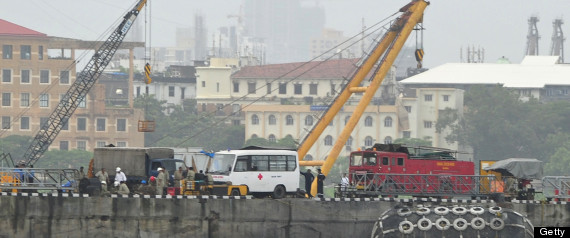
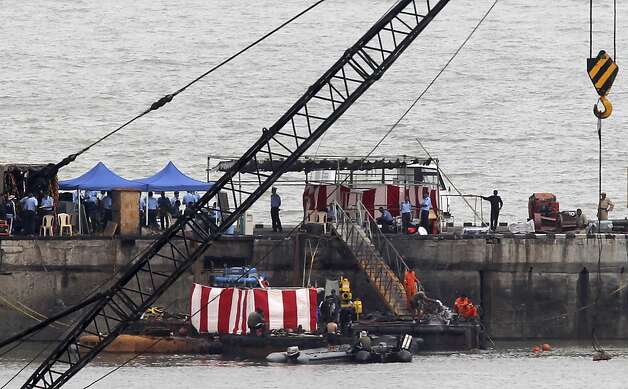
Naval divers continued their efforts on the seventh day to recover bodies of sailors from INS Sindhurakshak, which was rocked by blasts on August 13. The divers have so far recovered seven bodies; there were 13 sailors aboard when disaster struck.

Officials said the search will continue though very high temperature , which melted the submarine's body of steel, would have incinerated bodies in the forward section. "No timeline can be set in such cases. Finding bodies of their loved ones will give a sense of closure to the victims' families and to us for doing our duty towards our colleagues,'' officials said.

The navy has also begun salvage operations. "When the submarine is brought to the surface, we could determine the explosion cause. The bodies which divers could not see underwater can also be recovered,'' officials added.

The divers' biggest impediment is near-zero visibility due to oil-seawater sludge in the submarine and lack of depth.

"Mumbai's port has the dirtiest water. Divers are practically entering blindfolded into an unfamiliar and a constricted, flooded compartment full of live missiles and torpedoes to search for the bodies,'' an official said.

"We cannot even insert underwater material below the submarine, which when done, it gains buoyancy and automatically flats it when we complete pumping, as water continues to enter due to structural damage,'' officials said.

Wednesday 21 August 2013

http://timesofindia.indiatimes.com/city/mumbai/Divers-continue-search-for-bodies-in-sub/articleshow/21946358.cms

continue reading

23 children among missing in Cebu sea tragedy, death toll rises to 71


The death toll from the collision between two ships in Talisay, Cebu last Friday has risen to 71. Around 49 remain missing, including about 23 children.

Technical divers as well as surface search and retrieval teams resumed work early morning Wednesday to find the still missing passengers of MV St. Thomas Aquinas.

Cebu Disaster Management Chief Niel Sanchez, however, could not guarantee that all the missing passengers could still be retrieved.

While the teams will attempt to dive deep into the cabins of the sunken ship, there may be rooms that would be difficult to penetrate.

"Andun ba yun or baka they drifted away to other islands? But we will do our best to return, reunite the bodies with their families para naman may closure,” Sanchez said.

The 23 children missing are all aged 12 years old and below. Almost half are babies, or three years old and below.

He said they don’t have the exact figures as to how many children were really on board since they are often not listed on the ship's manifest because they are free of charge.

Pictures of their happy faces, however, were posted on the wall of the command center, such as that of one-year-old Mark Julius, eight-month-old Christine Joy and nine-month-old Heart Rhianzel.

Bodies in Bohol


Sanchez received information two more dead bodies had already drifted to Bohol.

"May dalawang bangkay na nilibing na daw because of the stench in an islet in Bohol, but we’re still confirming it," he said.

There were also body parts that were found in Lapu-Lapu City. "May torso, leg, an arm, but we list them as body parts.”

At the Funeral Parlor, more families continued to look for their missing loved ones.

Janet Oledan posted a picture of her husband, Nestor Oledan, who is the hotel supervisor of the 2GO ship. She said it was heroism that led to the probable death of Nestor.

He was already at the railings of the ship getting ready to jump according to co-workers, but at the last second went back inside to try to save more passengers.

Nestor is now among the missing. "May mga anak sya na dapat balikan, dapat tumalon sya," Janet lamented.

She said she cannot help but think of their three daughters who now face the possibility of growing up without a father.

The search, rescue and retrieval operations are taking longer than usual because of the sea conditions, Sanchez said. The operations were halted on Tuesday afternoon due to strong underwater current and big waves induced by monsoon rains and winds.

Sanchez said the divers are also being cautious of their safety before plunging at least 120 feet below the surface.

"We also have to consider the safety of the divers with considerations sa water current and also sa oil spill," he said. “That is one aspect that also imposes health concerns.”

Several life vests at the command center were seen drenched in oil after rescuers plunged into the waters to retrieve the bodies.

Wednesday 21 August 2013

http://www.abs-cbnnews.com/nation/regions/08/21/13/23-children-among-missing-cebu-sea-tragedy

continue reading

Bus careens off cliff after brakes fail in West Java, at least 18 dead


A speeding passenger bus lost control and careened off a 12-meter cliff, killing at least 18 passengers after its brakes failed in Cisarua, West Java, Wednesday morning.

The bus, operated by the tourism bus company Giri Indah, was reportedly speeding along Puncak Pass when the driver collided with a pickup truck near Tugu Utara Village, according to a witness. The bus rolled down the cliff side before landing upside down on top of the truck, killing at least 18 people and injuring more than 30 others, police said.

Witness Sugianto, 57, was riding his motorbike behind the bus when it veered off the cliff.

“The road was winding but the bus was running at full speed,” he said. “The bus [then] lost control. It hit a pickup truck and pushed the vehicle off a 12-meter cliff. It flipped twice and hit the ground upside down. The pickup was crushed beneath it.”

According to police, the bus lost control when its brakes failed.

“The cause of the accident is still under investigation but we suspect it was because the brakes did not work based on the driver’s information,” West Java Police spokesman Sr. Cmr. Martinus Sitompul said.

The bus was taking members of the Bethel Church, in Kelapa Gading, Jakarta, back to their homes after a visit to Kota Bunga, a popular picnic destination known for its flowers.

The injured, including bus driver Muhammad Amin, were transported to the nearby Dr. M. Goenawan Partowidigdi Lung Hospital, in Cisarua, Bogor, for treatment.

Wednesday 21 August 2013

http://www.thejakartaglobe.com/news/at-least-16-killed-as-bus-careens-off-cliff-in-west-java/

continue reading

Tuesday, 20 August 2013

Kosovo urged to 'Internationalize' missing persons


As more than 1,700 people remain missing from the conflict in Kosovo, relatives are urging the Kosovo authorities to raise the issue at the upcoming UN Security Council meeting.

“We want the missing persons issue to be resolved in the framework of the dialogue on normalization of relations between Pristina and Belgrade, otherwise the whole negotiation and reconciliation process will be unsuccessful ”, a draft version of the letter that will be sent on Tuesday to the Kosovo Prime Minister, Hashim Thaci, and Foreign Minister, Enver Hoxhaj, reads.

Both officials are asked to bring up the issue in discussions related to Kosovo and the UN mission to the country at the UN Security council meeting due on August 29.

The meeting comes ahead of August 30, the international day of the disappeared.

“The Prime Minister and the Foreign Minister of Kosovo are obliged to read the letter in front of the Security Council members,” Bajram Qerkini, who drafted the letter, said.

Missing persons were a topic for discussion once in the EU-mediated dialogue between Pristina and Belgrade but the issue did not appear in the final agreement on the normalisation of relations, on April 19.

EU officials have described the issue a humanitarian rather than a political one.

Since the end of the conflict in the 1990s, the International Committee of the Red Cross has been arranging contacts between Kosovo and Serbia on the issue, but progress has remained slow.


Family members of the 1,754 missing people now say that “political international pressure” on Serbia is required to push this issue forward. “Serbian authorities and representatives of Serbian institutions have information on places where mass graves are located”, Prenk Gjetaj, chief of Kosovo’s missing persons commission, said.

But of the 36 locations where excavations were planned in 2012, only 19 were carried out, partly because of security concerns.

This year, the Kosovo authorities plan to exhume some 39 suspected mass graves while work to find the bodies of victims is also continuing in Serbia.

Tuesday 20 August 2013

http://www.balkaninsight.com/en/article/families-urge-kosovo-authorities-to-internationalize-missing-person-issue

continue reading

Death toll in Philippines ferry collision now at 63, 57 still missing


Recovered bodies from the search operations of the ill-fated passenger ship in Cebu last week increased to 63, authorities said on Tuesday.

As of 11:25a.m., 63 bodies were retrieved while 57 remained missing. The rescued passengers were still at 750.

The MV Thomas Aquinas collided with MV Sulpicio Express 7 off Talisay last Friday. Both had over 800 passengers and crew.

The province of Cebu was also placed under state of calamity on Monday due to the oil spill from the sunken ship.

Wednesday 20 August 2013

http://newsinfo.inquirer.net/469947/death-toll-in-ship-collision-now-at-63-57-still-missing

continue reading

Boat capsizes in Ganga, 3 drowned, 8 missing


Three children drowned and eight others went missing as a boat capsized on Tuesday in river Ganga in Bihar's Begusarai district, police sources said.

The country boat, with 22 people on board, toppled in the river drowning three unidentified children, while eight others went missing, the sources said. The rest, including two boatmen, swam to safety. The three bodies have been fished as efforts were on to recover the remaining bodies.

District Magistrate Manoj Kumar and Superintendent of Police (SP) Harpreet Kaur were camping at the site to supervise the relief and rescue works. Disaster Management Minister Renu Kushwaha, who was passing through the area after the tragedy, had to face the brunt of the anger of local people who protested against non-arrival of the disaster team to assist relief works.

Tuesday 20 Augustus 2013

http://ibnlive.in.com/news/boat-capsizes-in-ganga-3-drowned-8-missing/415819-3-232.html

continue reading

Dozens saved, five drown north of Christmas Island


Up to five asylum seekers are believed to have drowned after their boat capsized off Christmas Island on Tuesday.

The Australian Maritime Safety Authority received a request for help from a person on board the boat on Tuesday, about 120 nautical miles north of Christmas Island, in an area believed to be in Australian waters. A customs plane spotted the partially-submerged boat shortly after noon.

By 3.30pm, 106 people were recovered from the water. But at 6.30pm on Tuesday night AMSA called off the search.

The navy's HMAS Parramatta was joined by a merchant vessel in conducting the rescue operation.

"The vessel was upright, but partially submerged. A number of people were sighted in the water," an AMSA spokeswoman said of the scene when the navy ship HMAS Parramatta arrived.

"Information received from survivors indicates that up to five people remain unaccounted for.

"After an extensive search of the area for further survivors or bodies, none have been sighted. It is therefore believed any people unaccounted for have gone down with part of the vessel."

There were no details of the nationalities of those missing, nor whether they were men, women or children.

With darkness approaching, the search was suspended and HMAS Parramatta steamed to Christmas Island. Survivors face being sent to Papua New Guinea for processing once medical assessments are made.

The deaths at sea come as the federal government faces a legal challenge to its resettlement plan, which it says would mean no asylum seekers who arrive in Australia by boat would be resettled here.

This is the first reported boat crisis in Australian waters since Labor announced its new asylum seeker policy in late July.

It comes after two boat disasters last month, where a baby boy and four people died in two separate incidents. In June, 13 people died in another disaster.

The government has claimed that boat arrivals have fallen by as much as 30 per cent since the Papua New Guinea plan was announced, although a Fairfax Media analysis showed the drop was less than 20 per cent.

Asylum-seekers are a sensitive issue in Australia as their numbers increase, with more than 18,000 arriving so far this year.

Hundreds have drowned en route, most recently last month when a boat heading for Australia capsized off Indonesia -- leaving at least 15 dead, including six children.

The latest tragedy came as Australian Foreign Minister Bob Carr and Immigration Minister Tony Burke were in Jakarta for regional talks on people-smuggling.

Among others represented in the Indonesian capital are Afghanistan and Sri Lanka -- the origin countries of many asylum-seekers who arrive in Australia after perilous sea journeys.

However, no delegates from Iran turned up even though it is the country that sends the most asylum-seekers into Australian waters.

Tuesday 20 August 2013

http://www.smh.com.au/federal-politics/federal-election-2013/dozens-saved-five-drown-north-of-christmas-island-20130820-2s8l0.html

http://www.google.com/hostednews/afp/article/ALeqM5ieDDGlLdLJ_gpCf-79xOeVvaTpIg?docId=CNG.33c3c5d28d58fd9ae12fc8851d385a37.331

continue reading

'Dead in the Desert' Documentary [video]


Dead in the Desert documents how Pima County medical investigators attempted to identify and repatriate the bodies of two migrants found in June 2011—one in Arivaca, and the other on the Tohono O'odham Nation.

The film also shows how migrants prepare to cross the Arizona-Sonora border, offers a snapshot of a northern Mexican town that depends on migrants, and highlights a humanitarian-aid group that provides water stations for migrants crossing the desert.


Tuesday 20 August 2013

http://www.youtube.com/watch?v=M2K_PRkMhKQ

continue reading

Painful wait for submarine victims' kin


For the families of the victims of the ill-fated INS Sindhurakshak, it is a long agonizing wait before they get confirmation about the loss of their loved ones, which is now almost a foregone conclusion. Kin of the victims have gone to Mumbai to give blood samples for DNA testing and matching with the bodies that have been found. The Sindhurakshak submarine had sunk following a blast, killing 18 Naval officials on board. However, only seven bodies have been recovered so far.

"As of now, we have been told that officials will come and brief us. We have not been permitted to see the recovered bodies since they are beyond recognition," said a heartbroken Simhachalam, brother-in-law of 29-year-old T Rajesh who hailed from Visakhapatnam.

Simhachalam said the Naval officials received them along with the relatives of Sitaram Badapalli from Srikakulam on Monday. Simhachalam, who is accompanied by Rajesh's brother, added: "They have given us accommodation in the mess and Rajesh's brother was asked to give blood samples for the DNA test. In the case of the victims, DNA would be taken from the teeth or bones." In a choked voice, he added that he had always promised his sister Jyothi that he would do anything for her but never bargained for this. "No matter what news I give her, it can never be good news," he said.

Meanwhile, DVN Murthy, brother of 35-year-old Dasari Prasad from Simhachalam, who was among the first ones to reach Mumbai along with Prasad's brother-in-law and one more relative, returned on Monday after giving his DNA samples. "Naval officials used to brief us twice about the developments every day. No time frame has been given but the harsh truth is that neither my brother nor anyone else is alive. You don't take samples for matching DNA with those who are alive," the Vizag Naval Dockyard employee sobbed.

Back homes, Prasad's inconsolable mother Acchiyyama has lost all appetite as she waits for news of her son who had spoken to her a couple of hours before the mishap.

"Acchiyyama had to be given intravenous fluid since she hasn't eaten anything for the past four-five days," said Captain (Retd) Dr P Satya Prasad, zilla sainik welfare officer, Visakhapatnam. He said that the wives of top Naval brass from Visakhapatnam met the aggrieved families on Monday and consoled them.

Another brother of Prasad, Srinu, who had flown down from Singapore on hearing the news, said that Prasad's pregnant wife has still not been told about her loss. "All she knows is that her husband survived with some minor injuries and is under treatment in a military hospital where phones are not permitted. She is hoping that he will join her soon as he had promised before sending her to her parents' place in Vijayawada along with her three-year-old daughter," he said.

Ironically state politicians still could not take out time to meet the bereaved families. "A local minister was expected to come yesterday but cancelled his visit for some 'more important meeting'. In fact, we do not want to see the faces of any politicians now," said a relative of one of the victims from Vizag.

Tuesday 20 August 2013

http://timesofindia.indiatimes.com/city/hyderabad/Painful-wait-for-submarine-victims-kin/articleshow/21926873.cms

continue reading

China floods leave more than 200 missing or dead


Heavy rains brought by a typhoon triggered landslides in southern China that buried homes and vehicles and killed at least 15 people, as the number of dead or missing from recent flooding in the country surged past 200.

Nine people were reported killed in Hunan province and six in Guangxi, where vehicles were covered in mud and rocks along a mountain highway, local flood control offices said.

The deaths come after three people died Sunday in a landslide near the Guangxi city of Wuzhou.

Rains brought by last week's Typhoon Utor have caused severe flooding across Hunan, Guangxi and neighbouring Guangdong province. In Guangdong, 22 people have died and eight were missing in flooding since Friday.

By Tuesday morning, a total of 105 people were reported dead and 115 missing in the extreme south and northeast.

In the deadliest incident, torrential rains over the last week caused the Nei River in northeastern Liaoning province to overflow near the city of Fushun, sweeping away homes, roads and utilities and leaving 54 people dead and 97 missing.

Flooding hits China each summer, but heavy rains have brought greater than usual levels of destruction in some areas.

Tuesday 20 August 2013

http://www.cbc.ca/news/world/story/2013/08/19/china-floods.html

continue reading

Death toll hits 55 in Philippines ferry disaster


Philippine navy divers retrieved bodies Monday from inside a ferry that sank last week after colliding with a cargo ship.

The discovery of more victims' remains brought the number of people confirmed dead from the disaster in the southern Philippines to 55, the Philippine Coast Guard said. Another 65 people remain missing and 750 have been rescued, it said.

The divers found the body of a child Monday near the hull of MV St. Thomas Aquinas, the sunken ferry, the official Philippines News Agency (PNA) reported.

They then managed to enter compartments of the vessel and recover more bodies, the agency said, citing Lt. Cmdr. Gregory Fabic, a navy spokesman.

But PNA reported that dive operations were suspended later in the day because of bad weather.

Another team of divers was expected to arrive within the day to help with the search and rescue efforts, Fabic said.

The collision occurred around 9 p.m. Friday in the Mactan Channel about 2 miles northwest of Cebu City, the capital of Cebu province.

Echoes of a past disaster

The St. Thomas Aquinas was coming from nearby Butuan City when the collision occurred. The cargo ship, the Sulpicio, which had about 20 people aboard, was leaving Cebu for Davao, a region on the island of Mindanao.

The passenger ferry sank, but not before sending out a distress call heard by Coast Guard officials.

The cargo vessel involved in the crash -- along with navy, Coast Guard and commercial vessels -- helped in the rescue efforts. Photos from the scene showed a huge hole torn in the yellow bow of the Sulpicio.

The sinking recalls one of the worst maritime disasters in world history that took place on December 20, 1987, also off the Philippines.

Between 1,700 and more than 4,000 people were killed when the ferry Dona Paz collided with an oil tanker in the Tablas Strait. Reports of the total number of casualties have varied; many claim the Dona Paz was extremely overcrowded.

Tuesday 20 August 2013

http://edition.cnn.com/2013/08/18/world/asia/philippines-ships-collision

continue reading

Fifteen people a day go missing in Rio de Janeiro


Over the last two decades, nearly 92,000 people have gone missing in the Brazilian state of Rio de Janeiro, according to official figures and academic studies.

Most of the cases have been shelved with little or no investigation.Amarildo de Souza, 43, lived in Rocinha, one of the biggest of the favelas or shantytowns that line the hills ringing the city of Rio de Janeiro, the state capital.

His small 10-square-metre house on a narrow alleyway called "Roupa Suja" (dirty clothes) at the top of the hill was home to himself, his wife and their six children.

The neighbourhood has no sanitation, running water, garbage collection or street lighting.

To support his family, de Souza worked in construction and did odd jobs. When he wasn’t working, he would go fishing.

On Sunday Jul. 14 he came home after fishing. At the door to his house he was met by a group of 20 military police officers who said they needed to take him to the local Police Pacification Unit (UPP) for questioning.

The UPPs were created by the Rio de Janeiro state government to establish a sustained police presence in the favelas and drive out the drug trafficking gangs. The community policing and crime prevention strategy launched in 2008 is complemented with social programmes, such as bringing piped water, sanitation, education and other services to the favelas.

Rocinha was “pacified” in September 2012, when the police occupied the vast favela and forced out a drug gang that controlled the area, where heavily armed drug traffickers used to be a routine sight.

De Souza was last seen getting into the police car.

His case became another focus of the near-daily protests that have been held in this city over the last two months. His face can be seen on posters plastered around the city, above the question “Where is Amarildo?"

“There are a series of irregularities in what the police did,” Amnesty International adviser Jandira Queiroz told IPS. “If [de Souza] was wanted for questioning, he would have only had to go to the local police station, rather than UPP headquarters. These mistakes on the part of police merit investigation, in and of themselves.”

Amnesty International is urging its three million supporters worldwide to send letters to the state government and ministry of security calling for a thorough investigation, witness protection, and prosecution of the perpetrators.

“The police say they let him go,” said Queiroz. “Nothing has been found so far, and there is no evidence of where he – or his body – could be. If he died, his family at least wants to give him a decent burial.”

The UPP headquarter’s surveillance cameras, which could confirm the police claim that he walked out of the station, weren’t working that night. And the GPS devices in the police cars that picked up de Souza were not hooked up.

The civilian police are treating the case as a homicide, possibly committed by UPP federal agents or by drug traffickers.

The family is losing hope of finding him alive. The climate in the neighbourhood is one of frustration and a feeling of insecurity and lack of protection.

An indignant Elizabeth Gomes, de Souza’s wife, said: “The UPP police took my husband away, and his documents. He went missing a month ago and I have no money. At least I want his bones, to bury them. I want an answer: Where is Amarildo?”

This high-profile disappearance drew attention to the cases of hundreds of people who have gone missing without leaving a trace. Police officers were the main suspects in many of the unresolved cases.

According to the Public Security Institute, an average of 15 people a day go missing in the state of Rio de Janeiro. The most frequent causes are murders, domestic disputes, and mental problems.

But the statistics are not updated when a missing person case becomes a homicide, for example, after a body is found.

A study by Fรกbio Araรบjo, a sociologist at the Federal University of Rio de Janeiro, found that 91,807 people went missing in the state between 1991 and May 2013.

In 2011, 5,482 people went missing, and in 2012, 5,934. Most of the missing persons are men from the favelas or poor suburbs.

In his report, Araรบjo says the police are “extremely violent,” as are the militias - bands of off-duty members of the police or military involved in extortion and other forms of organised crime - and drug trafficking gangs. “These actors sometimes fight and sometimes cooperate to make bodies disappear,” he said.

On Aug. 13, families of missing persons and activists took part in a public hearing organised by the human rights commission of the Rio de Janeiro state legislature.

“My sister’s car was shot up by the police, and she has been missing for five years,” said Adriano Amieiro, the brother of Patrรญcia Amieiro, a 24-year-old engineer who went missing in June 2008. “I don’t think we’ll ever see her again. Our family has not been able to have closure; we have no body to bury,” he told IPS.

A bill currently moving through the Senate would classify the crime of forced disappearance in a new article in the penal code.

In Brazil, bodies are often made to disappear, because when no body is found, police stop investigating.

“This is a country of impunity when it comes to crimes against life,” Antรดnio Carlos Costa, the head of Rio de Paz, a local NGO, told IPS. “Thousands of people disappear and the authorities don’t worry about finding out what happened to them. Many cases are never even registered in police stations, and the police are among those who carry out this practice.”

According to Costa, although the statistics are “chilling,” the number of people who go missing is actually higher than the official figures, and there are clandestine cemeteries all around the city and surrounding areas.

“We live in a culture of banalisation of the loss of human life, which is reflected in the powers-that-be,” Costa said.

The chair of the state legislature’s human rights commission, lawmaker Marcelo Freixo, said “deep contradictions” emerged in the investigations into de Souza’s disappearance. In the second week of August, he sent an official request asking the prosecutor’s office and the civilian police to clarify the discrepancies.

In the legislator’s view, the police claim that de Souza may have been linked to drug trafficking in Rocinha was an attempt to “discredit the victim” and the complaint that he had gone missing.

Freixo told IPS that there was no indication that de Souza or his family were involved in drug trafficking.

He proposed the creation of a task force involving representatives of the prosecutor’s office and the state ministries of security, social assistance and human rights, to investigate cases of missing persons in the state.

Tuesday 20 August 2013

http://www.international.to/index.php?option=com_content&view=article&id=9344:fifteen-people-a-day-go-missing-in-rio-de-janeiro&catid=268:inter-press-service&Itemid=377

continue reading

Monday, 19 August 2013

‘Himalayan region recipe for disaster’


Uttarakhand disaster was just one of 76 disasters that hits Himalayan region on an average, killing 36,000 people and affecting 178 million people every year, a United Nations-affiliated organisation has told the Planning Commission.

Nepal-based International Centre for Integrated Mountain Development in a presentation to the panel this week said that India’s Himalayan region was hit by 532 natural disasters between 1990-2012, second only to 670 in the Chinese part of the mountain range.

Most of these disasters were trans-boundary in nature, meaning a cloud burst in China ravaged lives in India, which is worst affected because of huge population living on downstream of water flowing from Himalayas.

The Hindu-Kush Himalayan region is source for ten major river basins and home to 1.3 billion people

Monday 19 August 2013

http://www.hindustantimes.com/India-news/Uttarakhand/Himalayan-region-recipe-for-disaster/Article1-1109641.aspx

continue reading

Seventh body recovered from INS Sindhurakshak


Rescuers from the Indian Navy on Monday extricated one more body from INS Sindhurakshak, taking the number of victims recovered from the fire-devastated submarine to seven even as professional savers from reputed companies commenced preliminary survey activities.

According to Naval sources, the body has been taken to state-run J J Hospital for post-mortem.

Battling difficult conditions, the Navy had till Sunday extricated badly charred bodies of six of the 18 victims trapped in the sunken vessel. Also, they had managed to gain access to the forward compartment of the ill-fated submarine by breaking open the jammed hatches.

Earlier, sources had said the Navy divers were carrying out the task of searching within the submarine by “feeling each inch” due to zero visibility within flooded compartments to locate the missing bodies and mark a probable route to be used for further rescue operations.

18 Navy personnel, including three officers, were on board the Russia-made submarine when a devastating fire ripped through the frontline underwater craft following serial explosions on Tuesday midnight.

The Navy has instituted a Board of Inquiry to probe the cause of the explosions and fire which is expected to submit its report within four weeks.

Mumbai Police have also registered a case of accidental death in connection with the worst peacetime tragedy suffered by the Navy.

The Navy medical authorities had also started the process of collecting blood samples of family members of the 18 personnel aboard the vessel.

The blood samples would be needed for DNA profiling of the incinerated bodies of the victims, to establish the identities.

Dental tests on to identify recovered bodies of sailors

While operations are on to fish out the bodies of Navy personnel feared dead in the INS Sindhurakshak disaster on August 14, a battery of tests are being conducted on the bodies of the deceased at naval hospital, INHS Asvini, and the state-run JJ Hospital.

The bodies were sent to INHS Asvini in Navy Nagar, from where they were later transferred to JJ Hospital in Byculla. Till Sunday evening, JJ hospital in Byculla had conducted post-mortems on six bodies.

There is hope that the bodies will be identified through their dental records, which are available with the Navy.

“Doctors at INHS Asvini have sent the bodies for post-mortem after taking records of dental patterns from the bodies. The patterns will be matched with the archived dental records to expedite identification of bodies,” said a doctor at the forensic medicine department from JJ Hospital.

The doctors at forensic medicine department in JJ Hospital are also performing diatom tests on the bodies, which will help ascertain if a deceased died before drowning or after.

“Whenever there are signs of drowning, unicellular algae from the localised water — in this case, the sea — enter the body. We are checking the extent of diatom spread in the bodies of the personnel and will match it with samples of sea water to ascertain if death occurred after drowning,” said another doctor from the department of forensic medicine at JJ Hospital.

The doctor added that they are checking for the presence of diatoms in the liver, spleen, heart and lungs of the deceased.

“In cases where death occurs due to drowning, diatoms are found in peripheral organs like the spleen and liver. This is because the heart, which is still beating as the person drowns, pumps the diatom-laden water inhaled through the lungs to the liver and spleen,” said the doctor.

However, in cases where bodies are thrown into the water after drowning, blood circulation has stopped before water enters the lungs and the presence of diatoms will be restricted to the lungs and heart, explained the doctor.

The bodies that have reached JJ Hospital for autopsies will be lodged in the hospital’s cabinet cold storage capacity, maintained at the temperature of 2-4°C, as the morgue in naval hospital INHS Asvini does not have the wherewithal to maintain such low temperatures, said a source.

Bone and tooth samples from the bodies have been sent for DNA analysis at state-run forensic laboratory in Kalina.

Monday 19 August 2013

http://www.thehindu.com/news/national/seventh-body-recovered-from-ins-sindhurakshak/article5038510.ece?homepage=true

http://www.dnaindia.com/mumbai/1876412/report-ins-sindhurakshak-disaster-dental-tests-on-to-identify-recovered-bodies-of-sailors

continue reading

24 killed in Sudan gold mine collapse


At least 24 people were killed after a gold mine collapsed in Sudan's Northern State, Khartoum's Akhir Lahza daily reported Monday.

"Twenty-four people have been killed at Alboom, one of the civil gold exploration sites in Dalgo area in Northern State, after a 160-meter deep gold mine collapsed," the report said.

"All attempts to discover the bodies have failed as the gold mine collapsed more than three times," the paper quoted an eyewitness as saying.

It added that the concerned authorities were notified with the accident, urging to prohibit exploration at the old gold mines to protect citizens.

Gold mine collapse accidents recently recurred across Sudan, the last of them was in North Darfur State in which scores were killed.

A media report said production from gold mines is an important revenue source for the cash-strapped Sudan government.

Mining produced 41 tonnes of gold worth $2.5 billion in January-November last year.

Monday 19 August 2013

http://www.china.org.cn/world/2013-08/19/content_29761976.htm

continue reading

INS Sindhurakshak: Forensic lab to prioritize Navy DNA samples


The severely shortstaffed Forensic Science Laboratory (FSL) at Kalina will prioritize the DNA profiling of the sailors' bodies retrieved from INS Sindhurakshak and try to send its reports in a fortnight.

The FSL has 1,500 samples that need DNA profiling. However , it will give precedence to the bodies found on the sub. The lab has got samples of five crewmen after their autopsies were performed at J J Hospital; the sixth sample is yet to be received. The lab will start work from Monday.

Director Dr MK Malve said all efforts will be made to provide reports in a fortnight. Viscera samples though will take longer to be evaluated. At least 10,000 viscera samples are lying in state forensic labs for testing. Insiders said the reports cannot be sent sooner partly because there is only one machine for genetic analysis and partly because there is just one senior officer at the helm of DNA fingerprinting in the Kalina lab.

The biology-serology department , which covers DNA testing, is among the busiest. It receives at least 50 samples a month. An analyst said that, given the case sensitivity, samples from the sub accident will be checked twice.

Monday 19 August 2013

http://timesofindia.indiatimes.com/city/mumbai/Forensic-lab-to-prioritize-navy-samples/articleshow/21907964.cms

continue reading