Monday, 19 August 2013

India train accident kills 35 after ploughing into a crowd of Hindu pilgrims


At least 35 people have been killed in eastern India after a train rammed into a crowd of pilgrims and dozens more are injured, a senior police officer told AFP today.

“Until now we have information that 35 people have been killed in the incident and dozens are injured,” S.K. Bharadwaj, an additional director general of police who is overseeing security at the crash site, said.

An Indian express train had ploughed into a crowd of Hindu pilgrims in the country’s east, killing the 35 and triggering a riot as angry crowds went on the rampage, officials said.

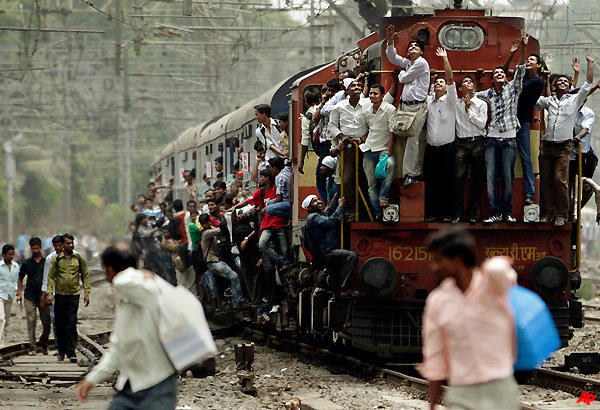
The pilgrims were crossing the tracks at a station in the state of Bihar when the interstate passenger train ran into them, injuring another 12 people, police and Indian Railways officials said.

“Until now we have reports (from the ground) of 15 bodies and over a dozen others injured,” local railway chief Arun Malik told AFP earlier.

“We suspect the toll may rise later in the day because we are not getting all the information from the site because of angry agitation by local people,” Malik said.

Crowds converged on the Rajya Rani Express, setting carriages on fire and ransacking Dharhara station, some 200 km from the state capital Patna, Malik said.

“Six carriages have been set on fire and the station has been ransacked by the mob. Our staff have fled the station fearing attacks,” he said.

A senior railways official said it appeared the pilgrims were not aware of the incoming train.

“Two trains were already stationary on other tracks and the Rajya Rani Express was given permission to pass,” Arunendra Kumar, chairman of the national railway board, told reporters in New Delhi.

“The accident occurred because some people left the platform of the station and came on the tracks,” Kumar said.

Hundreds of thousands of Hindu devotees make annual pilgrimages to holy sites, including the devotees who trek each year through treacherous mountain passes and along icy streams to reach the holy Amarnath Cave Shrine located at an altitude of 3857m, where a Shiva Lingam, an ice stalagmite shaped as a phallus and symbolising the Hindu God Shiva, stands for worship.

There are hundreds of accidents on the railways annually.

In 2012, a government report said that almost 15,000 people were killed every year crossing India’s rail, which it described as an annual “massacre” owing to poor safety standards.

Pedestrians guilty of “unlawful trespassing” walked across the tracks at many unofficial crossing points, the report said, adding that about 6,000 of the deaths occurred in congested Mumbai alone.

Attempts to stop people riding on the roofs of trains have largely failed. Vehicles routinely drive around barriers at crossings, and passengers are often seen hanging out of open doors in the carriages.

The data is not broken down, but a vast majority of these deaths are people falling from the open doors of carriages or being hit on the tracks, which are mostly unsecured.

One of India’s worst rail accidents was in 1981 when a train plunged into a river, also in Bihar, killing an estimated 800 people.

Monday 19 August 2013

http://www.themalaymailonline.com/world/article/indian-train-runs-over-pilgrims-kills-at-least-10

continue reading

Coast Guard: Cebu maritime tragedy death toll rises to 52


The death toll from last weekend's collision of a passenger vessel and a cargo ship in Cebu waters rose to 42 as search operations continued Monday, the Philippine Coast Guard said.

As of 10:50 a.m., the Coast Guard said 52 bodies had been recovered while 68 are still missing and the subject of search and rescue operations.

Some 750 passengers had been rescued so far, it added.

Earlier Monday, the Coast Guard resumed search operations for possible survivors and for bodies of the victims of last Friday's collision.

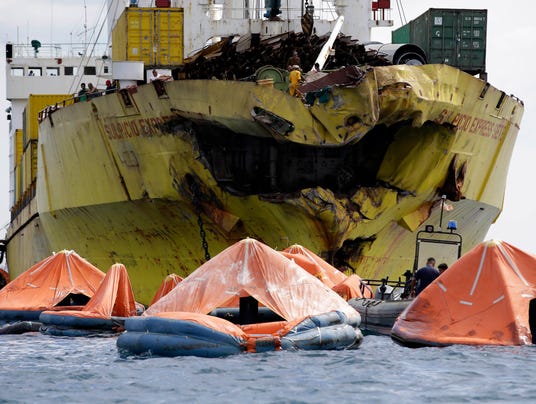
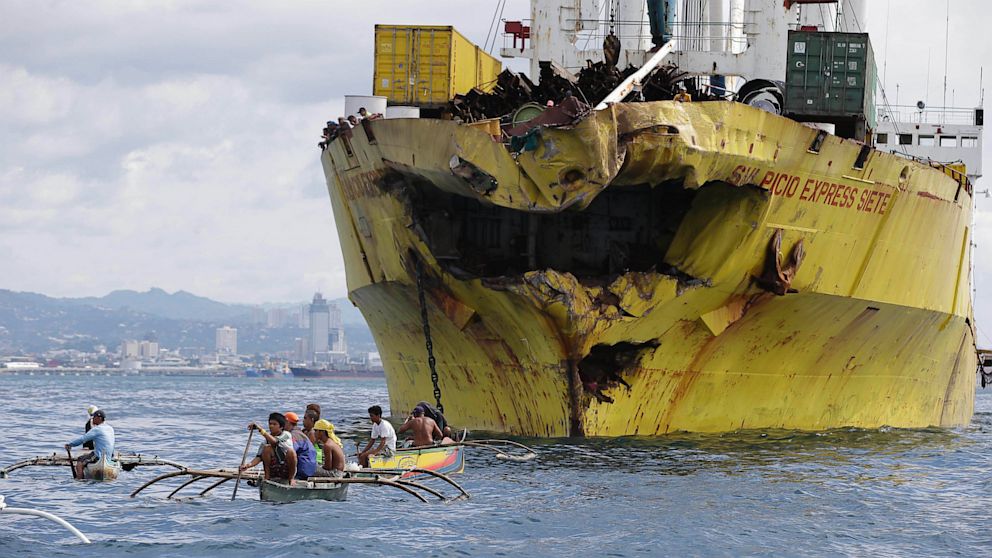
Last Friday, the passenger ship MV Saint Thomas Aquinas 1 sank after colliding with the cargo vessel MV Sulpicio Express 7 off Cebu.

The Maritime Industry Authority suspended the vessels of 2GO, owner of the MV St. Thomas Aquinas, and Philippine Span Asia Carrier Corp., owner of the Sulpicio Express 7.

On Sunday, a television report said an oil spill believed to have come from MV Saint Thomas Aquinas 1 has reached the shorelines of Cordova town in Cebu.

In his report on GMA News TV's Balitanghali, Jun Veneracion said the oil spill has already affected the town's mangrove area.

Quoting residents, Veneracion said the mangrove could die within one to three months if the affected area is not cleared of the oil spill

Monday 19 August 2013

http://www.gmanetwork.com/news/story/322651/news/regions/coast-guard-cebu-maritime-tragedy-death-toll-rises-to-42

continue reading

27 dead, 41 missing in Yemen as flood sweeps wedding party


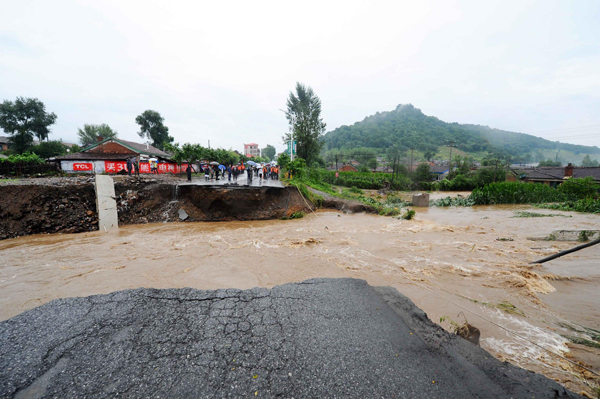
A Yemeni wedding party on Saturday turned into a disaster after floods inundated southern Yemen, causing the death of 27 people and 41 more lost when the vehicle with the wedding party was swept away. The vehicles were driving across Wadi Nakhla, a valley flooded by the monsoon rains, between Taiz City and Ibb province.

Among the victims are three women and four children aboard three vehicles that were accompanying the bride to her new house across Wadi Nakhla. The bride, fortunately survived the accident.

Besides ruining the wedding party and killing relatives of the bride, the monsoon also created flash floods that have killed at least 10 other Yemenis in the past two days and damaged crops.

Twelve bodies were also found in Udayn district, in the central province of Ibb but many motorists are still missing after their cars were carried away by floods, another official said.

Two women were also killed in flash floods in northern provinces, local officials said.

Yemen, at the southwestern tip of the Arabian Peninsula, is prone to floods triggered by monsoon downpours that cause massive damage due to the lack of infrastructure in the most impoverished Arab country.

Monday 19 August 2013

http://au.ibtimes.com/articles/499774/20130819/27-dead-41-missing-yemen-flood-sweeps.htm

continue reading

Ceremony marks 25 years since Ballygawley bus bomb


Some of those who treated the victims of the Ballygawley bus bombing have joined a special commemoration to mark the 25th anniversary of the atrocity this morning (Sunday).

Eight soldiers were killed when the 200lb bomb was detonated at the Newtownsaville junction of the A5 just before 12.30am on Saturday August 20 1988.

The bombing was the worst single loss involving British troops in the North since the Narrow Water attack which claimed the lives of 18 soldiers on August 27 1979.

The Ulster Bus coach had been carrying 39 soldiers of the first battalion of the British Army’s Light Infantry Regiment returning to the camp in Omagh after a short break in Britain.

Picking the soldiers up at Aldergrove Airport, the bus, driven by a soldier, came under attack when an IRA unit lying in wait denoted 200lbs of Semtex and fertilizer by the roadside at the townland of Curr, nine miles from Omagh.

The bus had just passed the bomb’s position as it exploded, sending the unarmoured vehicle careering down the road, catapulting the dead and injured in every direction, before it came to a rest in the ditch against an ash tree.

Among the first onto that scene of panic and pandemonium which ensued were two bus loads of bandsmen from Omagh Protestant Boys and Derry’s Star of the Valley, returning from an event in Portadown.

They were soon joined in the damp darkness by local people reacting to the massive explosion. Their efforts were later bolstered by the arrival of the emergency services, when the scale of the devastation became apparent.

In all, six bodies were laid out in the middle of the road, with the rest rushed to hospitals in Omagh and Dungannon. Two more soldiers would join the list of the dead, with 27 injured.

The dead were Jayson Burfitt (19), Richard Greener (21), Mark Norsworthy (18), Stephen Wilkinson (18), Jason Winter (19), Blair Bishop (19), Alexander Lewis (18) and Peter Bullock (21). All had been returning to Tyrone to complete six months of a two year tour.

Monday 18 August 2013

http://ulsterherald.com/2013/08/18/ceremony-to-mark-25-uears-since-ballygawley-bus-bomb/

continue reading

Casket 5056: The unidentified Palestinian


Exhumed from an Israeli-numbered grave to be handed over to his family for proper burial, the man in "Casket 5056" lies in a Palestinian morgue a year on - unidentified and unclaimed.

Since 1967, Israel has been withholding the bodies of an unknown number of Palestinians interred in numbered instead of named graves. The Palestinian Campaign to retrieve the bodies of Palestinian and Arab war victims and determine the fate of the missing has documented more than 60 cases of missing Palestinians and about 370 others buried in numbered graves in Israeli-controlled cemeteries.

In May 2012, Israel handed the Palestinian Authority (PA) 91 bodies it had been holding for decades. They were all buried except the man in Casket 5056, whom Israel said was Nasser al-Bouz.

Nasser, who would be 48 years old today, was on Israel's most-wanted list for establishing Fatah's military wing during the First Intifada. In July 1989, his family said he received a message from then PLO chairman Yasser Arafat urging him to head to Tunisia for his safety. He was last seen alive near his hometown of Nablus in August 1989.

"We were told he's in an Israeli secret prison," Wael al-Bouz, Nasser's brother, told Al Jazeera. "Some said he was in a Jordanian prison. Others told us they met him in Germany."


Reports about Nasser's whereabouts contradicted each other. The family, however, was eager to learn anything they thought could help determine his fate. "We knew a lot of the reports were rumours," Wael said. "But we were lost. We wanted to believe he was alive."

The family said Israel never acknowledged detaining or killing Nasser. When his brothers learned his name was on the list of bodies Israel was handing over to the PA last year, they were shocked.

The wrong person

Although they were to receive Nasser in a coffin, his brothers thought they would finally get closure. But it wasn't long before their wound was reopened. "When we opened the casket, we knew the remains were not for Nasser," Wael said.

The family was told that the remains were of a Palestinian killed in May 1989 - three months before the family said they last saw Nasser. That aside, dental records, marks from gunshot wounds, and the clothes size made the family even more suspicious.

DNA tests were performed in Jordan, twice. The results both times came back negative: the remains did not belong to Nasser al-Bouz. Worse yet, the remains in Casket 5056, which the Israelis handed over as Nasser al-Bouz, were found to belong to more than one person.

Lawyers at the Jerusalem Legal Aid and Human Rights Center said it was not the first such case. DNA tests had to be performed multiple times in five other cases of Palestinians buried in numbered graves, before the remains were matched with the corresponding details in Israeli files.

"This is indicative of other mistakes," said Issam Aruri, director of the Jerusalem Legal Aid and Human Rights Center. Bodies in numbered graves are often buried in adjacent rows. The tombs are shallow and bulldozers are used whenever an exhumation takes place. Until 2000, the bodies were not buried in boxes, rather interred in graves with metal plates indicating codes of classified files.

"What they did with non-Jewish bodies - they have this kind of discrimination - is that they don't admit that we are entitled to the same rights and to the same dignity, whether alive or dead."

Not far from Nablus, another Palestinian family has been waiting to properly bury its son for 33 years.

Anis Doleh of Qalqilya died in the Israeli prison of Askalan. In August 1980, he collapsed in his prison cell of a heart attack after joining a 30-day hunger strike.

The family tried to retrieve his body from the Israeli authorities several times. They received answers such as that Anis was released on August 31, 1980 - the date he died.

Futile correspondence

For years, the family was caught in a vicious cycle of futile correspondence with the Israeli authorities.

The family petitioned the Israeli Supreme Court to demand the release of Anis' remains, armed by letters he sent while in prison, reports from the ICRC that Doleh was imprisoned and died while in custody, as well as a reference for a post-mortem issued by the Israeli Abu Kabir Forensic Institute dating back to May 3, 1982.

The appeal was turned down in March 2013. In its decision, the Israeli court said that it has been too long since Doleh's death, and given that the search results of various Israeli authorities didn't yield anything, there would be no use in issuing a decision in favour of the family's demand to release Anis' remains.

"They're lying," declared Hasan Doleh, Anis' brother. "He can't just evaporate." The family is not excluding any options. "Did they steal his organs?" Hasan asked. "Did they use his body for medical training?"

Although there is no indication to what might have happened to Anis' remains, Doleh's fears were rendered legitimate a couple of years ago, when Israeli pathologists admitted they harvested organs from dead bodies without permission of their families.

When asked for a justification of the mistakes made, the Israeli army said transferring bodies to the Palestinian Authority was a gesture of goodwill.

"The bodies in question were transferred to the PA bearing the same names as they were given upon their burial," the Israeli army said in a statement to Al Jazeera. "The PA agreed to accept the bodies without conducting a preliminary DNA test."

Because of this, the Jerusalem Center filed another petition earlier this year to the Israeli Supreme Court, this time demanding the establishment of a DNA database.

The Israeli authorities are expected to take samples from the bodies they are withholding, ensure the remains in each casket belong to one person and match the results with their records, Aruri explained. But he is not hopeful. "All we need to fold this page is some effort and good will," he said. "The Israelis are showing neither."

Earlier, the Israeli authorities had offered to hand over about 80 Palestinian corpses. The families were reluctant to receive them, and the Jerusalem Center advised the PA against accepting them - because they were to be handed over unidentified.

"We don't want to get them in a pile," Aruri said. "We don't want to exhume bodies from Israeli-numbered graves to bury them in Palestinian-numbered graves."

Unidentified and unclaimed

At the Abu-Dis Institute of Forensic Medicine lies a body of the man thought to be Nasser al-Bouz. "Technically, the remains can be kept here for another year or two," said Dr Saber al-Aloul, head of the institute.

Since they are unidentified and unclaimed, the remains are to be kept accessible at the morgue for possible DNA matching in the near future. "The procedures to dig a grave are religiously, legally and technically exhausting," al-Aloul said.

According to al-Aloul, the remains belong to a male between 30 and 40 years of age, who died at least 15 years ago. The man in question apparently died of multiple gunshots to his head. "No injuries were found in upper or lower limbs, reinforcing doubts that this person might have been executed," al-Aloul told Al Jazeera.

Somewhere, a family of a Palestinian or an Arab may be living the agony of al-Bouz's family and the fears of the Dolehs - not knowing whether their son is dead or alive. They endure the painful wait to properly bury a loved one, and have his name engraved on a tombstone - where they go to visit, plant a rose, and say a prayer.

Monday 19 August 2013

http://www.aljazeera.com/indepth/features/2013/07/201373184119455266.html

continue reading

Sunday, 18 August 2013

In a year, over 2,000 corpses in Mumbai unclaimed


You have seen them at railway stations, on busy roads and near bus stops. They either stare blankly ahead or indulge in strange antics while speaking incoherently to themselves. These are the 'homeless zombies' who nobody cares for. A recent RTI query revealed that, on an average, more than 2,000 such individuals die unknown in Mumbai, Thane and Navi Mumbai out of the total 95,000 deaths registered every year.

In America, the unidentified dead are often called John Doe or Jane Doe, depending on their gender.

"In our country those who die unknown are mostly the homeless with mental sickness such as schizophrenia, dementia or other problems. They keep wandering around like dazed zombies as there is no help forthcoming,'' said Anil Galgali, RTI activist and chairperson of the Mumbai based NGO Athak Seva Sangh.

Based on his recent RTI findings, Galgali said, "According to the latest National Crime Record data, Maharashtra recorded 5,906 unknown deaths in 2012. This figure includes 1,100 unclaimed bodies in Mumbai's government railway police (GRP) jurisdiction itself. Beyond the railway zone, every year, more than 800 unknown deaths are registered in Mumbai, Thane and Navi Mumbai,'' said Galgali.

Galgali had written to chief minister Prithviraj Chavan to start a dedicated helpline and shelters for the homeless. Despite repeated attempts, Chavan could not be reached.

Pastor Biju Samuel of Panvel's SEAL (Social & Evangelical Association For Love) Ashram for the homeless, said, "It is mainly private NGOs which pick up the really bad homeless cases from the streets to treat them. Otherwise, they do die as John Does or Jane Does, and end up in municipal crematoriums. Why isn't the state government doing anything for these poor, helpless souls?''

Pastor Samuel added that even if conscientious citizens call up the police emergency number '100' to help a homeless person in distress, the aid comes rather late and reluctantly.

"The state government must certainly have a special helpline for mentally ill homeless persons, as they are completely clueless and not even able to beg to survive," said Brijesh Arya of Beghar Adhikar Abhyan. Arya added that on June 25 this year, two women hawkers died in the heavy rains at Mumbai's Girgaum Chowpatty beach as they could not find a proper shelter.

"If the normal homeless can also die due to lack of roof over their heads, imagine what the mentally ill face all alone in their warped frame of mind,'' said Arya.

In 2010, the Supreme Court had ordered night shelters in 62 major Indian cities. BMC also declared seven shelters in Mumbai. Arya, though, said that these shelters are already occupied by permanent residents such as street children. "Why can't the state reserve a few spaces only for the homeless?'' said Galgali.

Monday 19 August 2013

http://timesofindia.indiatimes.com/city/mumbai/In-a-year-over-2000-corpses-in-Mumbai-unclaimed/articleshow/21888965.cms

continue reading

Update: Death toll rises to 38 in Cebu ships’ collision; 82 missing


Rescuers counted 38 bodies and upped the number of missing people to 82 on the second day of search and rescue operations following a ship collision off Talisay City, Cebu, on Friday night.

Thirty-two bodies had been found on Saturday while divers retrieved five more from the sunken MV St. Thomas of Aquinas on Sunday. Of the 751 earlier reported survivors, one died Sunday—a child who has yet to be identified.

The number of missing was earlier estimated at 58 based on the manifest released on Saturday by 2GO Group Inc., the ferry owner, showing 841 passengers and crewmembers on board. But on Sunday, 2GO released a “supplemental manifest” that brought the total number of people on the ill-fated ferry to 870.

After almost 48 hours of search and rescue operations, some of the rescuers feared the toll from the collision may yet reach 120. But Cebu Coast Guard station commander Weniel Azcuna said he had not given up the search for the missing passengers of the ferry that collided with a cargo vessel, the Sulpicio Express Siete, in the Mactan Channel off Lawis Ledge, just 3.2 kilometers from port.

“We are still on search and rescue mode … we are not losing hope. There’s still a possibility that we can find survivors somewhere,” Azcuna said.

He said three simultaneous underwater search operations were being conducted by Philippine Navy and police divers, while Air Force and Coast Guard helicopters scoured the surface for passengers still clinging to debris. Several civilian rescue groups and fishermen have also joined the search.

Azcuna said they feared that some missing passengers were trapped inside the vessel. Technical divers were needed due to the risk in going inside the sunken vessel, which was lying 30 meters deep.

Recovered bodies were taken to the Talisay Fish Port, where the command center for the retrieval operation had been set up. Only 22 of the 38 bodies now at the Cosmopolitan Funeral Homes on Junquerra Street in Cebu City have been positively identified by their relatives.

2GO said the vessel’s authorized capacity was 1,010 passengers and crew, and 160 6-meter containers.

Coast Guard deputy chief Rear Adm. Luis Tuason said divers were also trying to plug a fuel leak to prevent oil from spilling into the sea.

Azcuna said the St. Thomas of Aquinas skipper, Capt. Reynan Bermejo, survived the accident and was on a rescue ship helping look for survivors.

Bermejo was expected to submit his marine protest on Sunday.

The 36 crew of the Sulpicio Express Siete headed by Capt. Rolito Gilo had been instructed to stay on their vessel, which was docked at Pier 5, and were ordered to cooperate with the special board of marine inquiry, which will be held in Manila after the completion of the search and rescue operation.

Gilo submitted a marine protest, but Azcuna said he had yet to go into the details of the document.

Azcuna said the licenses of both the captains and the crew of the vessels were suspended by the Maritime Industry Authority because of the accident.

Meanwhile, relatives flocked to a ticketing office of ferry owner 2GO Group Inc. and put up pictures of their missing loved ones. Others, like Richard Ortiz, waited quietly and stared blankly at the vast sea from the Talisay pier, where Coast Guard and Navy rescuers were encamped.

“I just want to see my parents,” said Ortiz, who clutched a picture of his father and mother. “This is so difficult.” Transportation and Communications Secretary Joseph Abaya said on Saturday there were foreigners among the ferry passengers and all were fine, except for a New Zealand citizen who was taken to hospital.

Abaya said the cargo vessel, which was leaving the Cebu pier, smashed into the right or starboard side near the rear or stern of the ferry, which was coming in from Nasipit and making a short stop in Cebu before proceeding to Manila.

Outbound and incoming ships are assigned separate routes in the narrow passage leading to the busy Cebu pier. An investigation would determine if one of the vessels strayed into the wrong lane and sparked the accident, which happened in relatively calm weather, Coast Guard officials said.

“There was probably a nonobservance of rules,” Melad told a news conference in Cebu on Sunday, suggesting human error may have been a factor in the accident. He stressed, however, that only an investigation would show what really happened.

Sunday 18 August 2013

http://newsinfo.inquirer.net/468569/death-toll-rises-to-38-in-cebu-ships-collision-82-missing

continue reading

Japan: Remains of 114 victims still unidentified from 3/11 Tsunami disaster


With more than 2,600 people still missing in the Great East Japan Earthquake and tsunami, the remains of 114 victims are still awaiting identification in Iwate, Miyagi and Fukushima prefectures.

With the passage of time, almost two and a half years after the March 11, 2011, disaster, it is becoming more difficult to find clues to identify them.

At Kichijoji temple, located on a hill in the Kirikiri district of Otsuchi, Iwate Prefecture, chief priest Eigo Takahashi says, “Good morning,” to all of the 22 wooden boxes being kept there every morning. At that time, he raises his right hand in front of his chest as in prayer and places his left hand on each box.

Each box contains an urn holding ashes that are part of the remains of a victim of the 2011 disaster. Fifteen of the 22 boxes also contain a skull. Each of the other seven boxes contains the bones of body parts from below the neck.

The ages and genders of the 22 sets of remains are unknown. The boxes are identified by number.

On July 20, a person came to the temple to pick up an urn whose remains were identified through a DNA test. It was the first time since November 2012 that an urn placed in the temple was claimed.

“I was very surprised by the visitor because I was thinking that it may be almost impossible to identify remains,” Takahashi said.

In Otsuchi, unidentified remains are currently kept in three temples, including Kichijoji. Takahashi is proposing that the Otsuchi town government build a charnel house at a side of an evacuation center on the hill and place all of the unidentified remains there so that town residents can pray for the victims.

In Rikuzentakata, a grave site was constructed to accommodate the unidentified remains.

“There will be no recovery (of our town) without mourning the dead. I feel that unidentified ashes are asking us not to forget the victims who were killed by tsunami,” Takahashi said.

According to the National Police Agency, the number of remains of unidentified victims of the 2011 disaster stood at 71 in Iwate Prefecture, 42 in Miyagi Prefecture and one in Fukushima Prefecture as of Aug. 9. All of the 114 sets of remains contain skulls. If remains that do not contain skulls are added, the total will be larger.

Temples are keeping those unidentified remains at the request of local governments.

From DNA, teeth, surgical scars, clothing and other materials, police identified the remains of 348 people during the second year from the disaster--from March 11, 2012, to March 10, 2013. Since then, the remains of only 18 victims have been identified.

The number of new clues for identification is decreasing. In addition, there are cases in which missing persons reports were not made to police or DNA was not available for matching because all the family members have died, or the victims had no close relatives.

Showing the difficulty in identifying victims, on Okushirito island, off southwestern Hokkaido, which was devastated by a 1993 earthquake and tsunami, the remains of an unidentified person are still being kept at a temple there more than 20 years later.

Horyuji temple, in the Aonae district in the southernmost part of Okushirito island, is still keeping the remains of an unidentified person found about one kilometer off the coast four days after an earthquake and tsunami struck there on July 12, 1993.

According to police, the remains are those of a woman who is 149 centimeters tall and her blood type is A. She is believed to have been 55 to 85 years old at the time of the disaster.

After the body was found, no one contacted police to report that she could be a family member or relative. After more than one month passed, the remains were cremated. Then, the ashes were placed in Horyuji, the only temple in the Aonae district that survived the disaster.

“I hope that her family members appear as soon as possible. It is best for her to return to her family. I think that she is also thinking so,” a 51-year-old priest of the temple said.

Sunday 18 August 2013

http://ajw.asahi.com/article/0311disaster/life_and_death/AJ201308180028

continue reading

Floods kill 25 in North-East China


The bodies of three people who went missing in a flood in Northeast China's Jilin province were recovered on Saturday, local authorities said.

The latest casualties brought the death toll of floods which also hit neighboring Heilongjiang and Liaoning provinces to 25.

Around 4:00 am on Friday floods hit a residential compound in Hongshi township, Huadian, leaving 11 dead. Three others were reportedly missing before their bodies were recovered Saturday.

About 200 residents from some 70 families have been relocated from their submerged community buildings.

Northeast China has been hit by the worst flooding in decades this summer.

Heilongjiang reported 11 flood-related deaths on Friday and Three people remain missing since the floods began on August 10, bringing water levels in three major rivers in the province to dangerous levels.

Nearly 2 million people in Heilongjiang have been affected, with 140,000 being relocated, according to the provincial civil affairs department.

The floods have destroyed over 2,500 houses and severely damaged at least 12,500 others, with direct economic losses estimated at 7.13 billion yuan (US$1.15 billion).

In Liaoning Province to the south of Jilin, more than 140 reservoirs discharged water after rain from Thursday to Saturday raised levels above warning lines.

Railways and highways were cut off and bridges damaged by the floods in Fushun City where rainfall was the heaviest. Over 300,000 people there have been affected.

Sunday 18 August 2013

http://www.chinadaily.com.cn/china/2013-08/17/content_16901615.htm

continue reading

Sindhurakshak: 6th body recovered from submarine


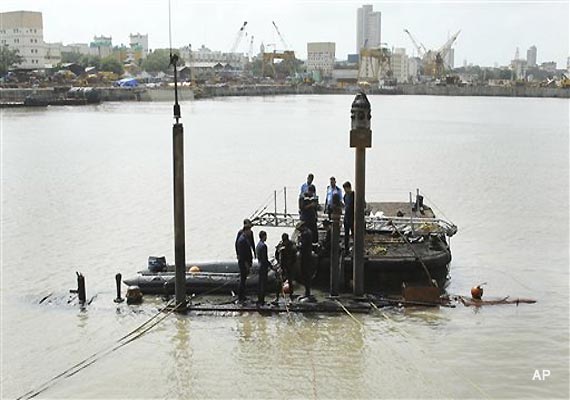
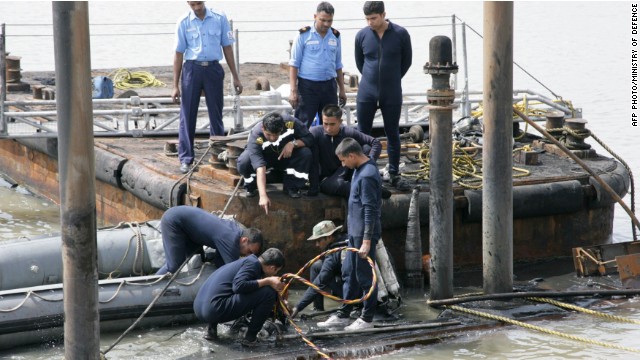
Battling difficult conditions, rescuers from Indian Navy extricated body of one more victim from the submarine INS Sindhurakshak on late Saturday evening, taking the total number of bodies recovered so far to six, naval sources said.

The rescue team had on Friday extricated badly charred bodies of five of the 18 personnel trapped in the craft after gruelling efforts as naval authorities voiced worst fears that others on board might have been incinerated too.

"Body of one more sailor was recovered from the submarine late this evening," Navy sources said.

The divers had managed to open a second access to the sunken vessel during an overnight operation.

Sources said the Navy divers are carrying out the task of searching within the submarine by "feeling each inch" due to zero visibility within flooded compartments to locate the missing bodies and mark a probable route to be used for further rescue operations.

18 Navy personnel, including three officers, were on board the Russia-made submarine when a devastating fire ripped through the frontline underwater craft following serial explosions on Tuesday midnight. The Navy has instituted a Board of Inquiry to probe the cause of the explosions and fire which is expected to submit its report within four weeks.

Mumbai Police have also registered a case of accidental death in connection with the worst peacetime tragedy suffered by the Navy.

Sunday 18 August 2013

http://www.hindustantimes.com/India-news/Mumbai/Sindhurakshak-6th-body-recovered-from-submarine/Article1-1109291.aspx

continue reading

Search suspended for 171 missing in Philippine ferry disaster


Stormy weather forced Philippine rescuers to suspend a search on Saturday for 171 people missing after a crowded ferry collided with a cargo ship and quickly sank, with 31 others confirmed dead.

The St Thomas Aquinas ferry was carrying 831 passengers and crew when the vessels smashed into each other late on Friday night in a dangerous choke point near the port of Cebu, the Philippines' second-biggest city, authorities said.

Coastguard and military vessels, as well as local fishermen in their own small boats, frantically worked through the night and Saturday morning to haul 629 people out of the water alive.

But when bad weather whipped up the ocean mid-afternoon on Saturday, authorities suspended the search with 171 people still unaccounted for.

"It rained hard ... with strong winds and rough seas," navy spokesman Lieutenant Commander Gregory Fabic told AFP.

He also said powerful currents had earlier prevented divers from assessing all of the sunken ferry to determine how many people had died and were trapped inside.

Fabic said rescuers had not given up hope that there were other survivors who were still drifting at sea.

But Rear Admiral Luis Tuason, vice commandant of the coastguard, said the death toll would almost certainly rise from the 31 bodies that had already been retrieved.

"Because of the speed by which it went down, there is a big chance that there are people trapped inside," he said, adding the ferry sank within 10 minutes of the collision.

Pope Francis was "deeply saddened by the tragic loss of life", a Vatican statement said, adding he would pray for all affected in the predominantly Catholic country.

One survivor, Lolita Gonzaga, 57, recalled the terror of falling from the top deck of the ship to the bottom level when the collision occurred, then the horror of escaping the black waters with her 62-year-old husband.

"When we were rescued we had to share the rubber boat with a dead woman. She was just lying there," Gonzaga told AFP from a hospital bed in Cebu where she was nursing spinal injuries.

"We were transferred to the other ship that hit us, but I could not go up the stairs because it was full of dead people.

"They were left hanging there. We thought we were going to die. I just held hands with my husband and prayed to God to save us."

Fisherman Mario Chavez told AFP he was one of the first people to reach passengers after the ferry sank in calm waters between two and three kilometres (around one to two miles) from shore.

"I plucked out 10 people from the sea last night. It was pitch black and I only had a small flashlight. They were bobbing in the water and screaming for help," he said.

"They told me there were many people still aboard when the ferry sank ... there were screams, but I could not get to all of them."

The cargo ship, Sulpicio Express 7, which had 36 crew members on board, did not sink. Television footage showed its steel bow had caved in on impact but it sailed safely to dock.

Tuason said it appeared one of the vessels had violated rules on which lanes they should use when travelling in and out of the port, without specifying which one.

The strait leading into the Cebu port is a well-known danger zone, said the enforcement office chief of the government's Maritime Industry Authority, Arnie Santiago.

"It is a narrow passage, many ships have had minor accidents there in the past. But nothing this major," Santiago told AFP.

"There is a blind spot there and each ship passing through needs to give way in a portion of that narrow strip."

Industry authority head Maximo Mejia later told reporters that both vessels had previously passed safety inspections and were sea worthy, indicating human error was to blame.

The captain of the ferry survived, coastguard authorities said.

Ferries are one of the main forms of transport across the archipelago of more than 7,100 islands, particularly for the millions of people too poor to fly.

But sea accidents are common, with poor safety standards and lax enforcement typically to blame.

The world's deadliest peacetime maritime disaster occurred near the capital Manila in 1987 when a ferry laden with Christmas holidaymakers collided with a small oil tanker, killing more than 4,300 people.

In 2008, a huge ferry capsized during a typhoon off the central island of Sibuyan, leaving almost 800 dead.


Sunday 18 August 2013

http://timesofindia.indiatimes.com/world/rest-of-world/Search-suspended-for-171-missing-in-Philippine-ferry-disaster/articleshow/21890304.cms

continue reading

INS Sindhurakshak tragedy: Indian Navy divers open second access to submarine


Battling the odds, divers from the Navy continued their search for more bodies on board submarine INS Sindhurakshak without any success but managed to open a second access to the sunken vessel during an overnight "challenging but critical" operation.

The rescue team had extricated badly charred bodies of five of the 18 personnel trapped in the craft on Friday after gruelling efforts as naval authorities voiced worst fears that others on board might have been incinerated too.

"The divers have gained a second access to the submarine late last night when they successfully prised open the rear escape hatch which was submerged below and jammed due to high temperature," a release from the Navy said, terming the operation as "challenging but critical."

Also, opening of the jammed forward escape hatch is being attempted for an entry to the front portion of the submarine, it said.

Sources said the Navy divers are carrying out the task of searching within the submarine by "feeling each inch" due to zero visibility within flooded compartments to locate the missing bodies and mark a probable route to be used for further rescue operations.

The identification of the five bodies recovered so far is being given high priority and all means including DNA profiling is being carried out, a defence spokesman said.

Doctors at the state-run J J Hospital here have completed postmortem on the bodies recovered from the submarine.

"DNA samples and dental marks have been taken (to ascertain identity)," said an official, adding all these will be sent for forensic analysis.

Doctors have opined that prima facie the cause of death was burning and drowning. However, other details will be known only after receiving the forensic report, the sources said.

Sunday 18 August 2013

http://articles.timesofindia.indiatimes.com/2013-08-17/india/41420557_1_navy-divers-submarine-escape-hatch

continue reading

Pentagon analyst who tracks down military remains thinks there’s a chance body of Medal of Honor recipient Kapaun could be found


The senior Pentagon analyst in charge of finding Korean War troops missing in action says there is a “better than even” chance that the body of Medal of Honor soldier Father Emil Kapaun will eventually be found buried in a national cemetery in Hawaii.

Finding Kapaun’s remains would be big news, not only to the U.S. military – which awarded him the Medal of Honor in April – but to the Catholic Church, which is deciding whether the Kansas native and Army chaplain will become a saint.

“It would be wonderful,” said Maj. Gen. Donald Rutherford, a Catholic priest who is the chief of chaplains for the U.S. Army. “It would be great, especially as the church is moving toward canonization.”

Friends of Kapaun’s who were prisoners of war say Chinese Army guards buried Kapaun in a shallow unmarked grave after he died of starvation and disease in a North Korean prison camp in May 1951. The assumption since then by the Army has always been that Kapaun’s remains are still there.

But Pentagon analyst Philip O’Brien, an authority on Korean War soldiers missing in action, said he thinks Kapaun’s remains may have been resting since 1954 in the National Memorial Cemetery of the Pacific, the cemetery in Hawaii better known as the “Punchbowl.” Hundreds of unknown soldiers and other veterans from several wars lie there.

“My best belief, a presumptive belief, is that we have a good chance, better than even, of having Father Kapaun in possession right now,” O’Brien said.

Korean War historian William Latham says the fact that O’Brien is saying this on the record is significant.

“When Phil says it’s true, it’s true,” Latham said.

Buried in Korea

Kapaun, a native of Pilsen in Marion County, and other survivors of the 8th Cavalry were overrun and captured in the November 1950 battle of Unsan in North Korea. They were forced to march north to camps picked out for them just south of the Yalu River, on the border with China.

Of the 4,000 Allied prisoners herded into the camp in the village of Pyoktong in late 1950 and early 1951, about 1,600 – including Kapaun – died of starvation, disease and exposure.

Bodies were sometimes stacked up six high outside huts as men died by the dozens overnight. Camp guards gave the prisoners only a handful of grain apiece to eat every day and no water. Prisoners scraped snow off the ground with their fingers to get hydrated.

POW friends of Kapaun’s have told The Eagle for years that they – and sometimes Kapaun himself – helped carry many of the dead across a frozen backwater of the Yalu River to ground on the far side. They buried most of the dead in shallow trenches scratched into frozen rocks and snow there.

They also said some prisoners, including Kapaun, died on the village peninsula in an old pagoda Chinese guards called a “hospital.” The Allied prisoners called it a “death house.”

There, prisoners already near death were deliberately isolated from food and water and left to die. Kapaun’s body was rolled into a single grave near the death house, POWs said.

O’Brien has known these stories for years. He also knew, he said, that when the war ended in a ceasefire in 1953, the Chinese Army dug up about 560 American bodies in and around the hill where the death house stood – and repatriated them home.

One thing the American body recovery teams did, O’Brien said, was unfortunate to future identification. Faced with packages of crumbling bones, they dumped preservative solution on them, not realizing that this would destroy most of what later would be called DNA evidence, which might have helped to identify remains.

Since then, O’Brien’s office has collaborated with military scientists who have meticulously examined bodies a few at a time, slowly identifying which bodies belonged to which long-missing prisoners of war. So most of the “unknown” bodies from Pyoktong “have been identified and been sent, and accepted, by their families,” O’Brien said.

O’Brien said they are down to “55-odd” bodies, and he thinks they will more than likely find Kapaun’s among them.

They are not deliberately looking for Kapaun’s body among those graves, any more than they are looking for anyone else, O’Brien said. But he said it has occurred to them that they might be able to narrow the possibilities.

They know most American soldiers from that war were 20 years old and about 5 feet, 9 inches tall. Kapaun was 35 when he died and was about 6 feet tall, according to his family. Forensics experts can often tell the approximate age of a man from bones.

For Kapaun and many other soldiers, they also have dental records and chest X-rays taken during routine Army medical examinations. The X-rays show what their clavicles and vertebrae looked like, which are good forensic evidence for identification, O’Brien said, because those bones have distinctive edges and marks, “not as good as fingerprints,” but pretty good.

Ray Kapaun, reached at his home near Seattle, said the Army long ago obtained DNA material from his father, Eugene, who was Emil Kapaun’s brother. O’Brien said there is some hope that new advances in DNA research might also allow examiners to use DNA to determine identity even though the bones were treated in the preservative solution.

Identifying remains

Latham, the historian whose book “Cold Days in Hell: American POWS in Korea” came out earlier this year, said he has consulted O’Brien for years during his research.

He said O’Brien for nearly 20 years has been a beloved figure among families of the thousands of Korean War missing. They like him because he does relentless detective work and has often been able to tell families of many of the missing what actually happened to their fathers or husbands or grandfathers.

“He’s beloved not only among the children but the grandchildren of many these missing men,” Latham said.

O’Brien and others in his office have spent years interviewing surviving soldiers, including former prisoners of war who knew Kapaun and many other men who died in Camp 5 in Pyoktong.

In April, when President Obama presented the Medal of Honor to Kapaun’s family, O’Brien showed up, not only to witness the ceremony but also to spend two days with POW friends of Kapaun’s who survived and still have memories. He took notes, accepted documents and questioned a few of them about what happened to Kapaun and other servicemen who died in Pyoktong.

O’Brien, 66, a retired Air Force captain, works for the Defense Prisoner of War/Missing Personnel Office, based at the Pentagon. The office coordinates with civilian and military people around the world to find and return the remains of 83,000 missing Americans lost in many wars. They also collect data and stories.

“I have always felt like we owe it to those men we lost to preserve their stories,” O’Brien said.

O’Brien’s office does what often is a difficult job, given the strained relations between the U.S. and North Korea. He and his office try to find bodies and facts concerning the 7,908 American service personnel still listed as missing in action from that war.

His office also coordinates with scientists who exhume and examine bodies in Hawaii of unknown soldiers from the war. Over the past 18 years since he went to work for the Pentagon, O’Brien said, this work has matched identities to more than 200 bodies, which were then sent to their families decades after the war. Hundreds more were identified before O’Brien started work. Church’s interest

Father John Hotze, the Wichita Diocese priest in charge of the Kapaun sainthood investigation for the Vatican, said finding Kapaun’s remains would be huge news.

The church would step in immediately and coordinate with the family to protect the remains from theft, relic hunters or any other harm, he said.

That’s because the church has historically put more emphasis on venerating saintly relics – such as clothing or bone fragments – than other religions, Hotze said. For example, tiny pieces of Kapaun’s clothes from before he went to Korea have been attached to prayer cards and used in prayer services for the sick.

“The proper use of a relic is to help us honor those people that have lived a virtuous life,” Hotze said. “We ask for their intercession as we pray for our own needs.”

‘A true … hero’

Rutherford, the chief of the Chaplains Corps, said it would be “a great thing” if Kapaun’s remains were ever to be identified. Rutherford gave the invocation and benediction at the White House ceremony when Obama handed the Medal of Honor to Kapaun’s nephew Ray.

Rutherford said he and others are using Kapaun’s story to recruit for and inspire the Chaplain Corps, which he said is in need of priests.

Rutherford said that when he joined the service, there were nearly 200 priests among the 1,600 clergy serving the Army as chaplains. But war has taken a toll.

The work in the war zones can be dangerous; Rutherford himself said he survived several close calls in combat in both Afghanistan and Iraq, including an IED explosion that has left him hard of hearing. The Chaplain Corps is down to about 100 priests now, he said.

“If he’s found, we’d be repatriating a true, proclaimed hero who gave his life for the soldiers and for his nation,” Rutherford said.

Sunday 18 August 2013

http://www.kansas.com/2013/08/17/2948898/pentagon-analyst-who-tracks-down.html

continue reading

Saturday, 17 August 2013

INS Sindhurakshak tragedy: Navy faces its dead; identifying bodies a challenging task


After naval divers fished out what remained of five of the 18 sailors aboard the submarine INS Sindhurakshak, which exploded at naval dockyard on Wednesday, the process to identify them began yesterday.

The DNA extracted from the femurs and teeth of the bodies will be matched with that of the blood samples taken from relatives of all the 18 sailors who were on board the submarine. And unless there is a mismatch in the sampling, the remains will be preserved at the morgue of Naval hospital INHS Asvini.

Today, the samples will be sent to the State Forensic Science Laboratory, Kalina for DNA matching.

A forensic scientist from the lab confirmed receiving a phone call from the Navy. “The officer made inquiries about the process of sending the samples. Only after we get the samples will we be able to ascertain the time required for conducting the tests.”

The bodies were first taken to the naval hospital, where their X-rays were taken. At around 6 pm, two bodies were sent to JJ Postmortem Center. A team of forensic surgeons headed by Dr Sudhir Nanandkar, head of department, forensic medicine, Grant Medical College, conducted the autopsies that lasted for over two hours. Four doctors from INHS Asvini were present for the procedures, which were recorded.

“After the explosion, the sea water in the radius of two kilometers had heated up at very high temperatures,” said a naval officer requesting anonymity.

Surgeons who conducted the autopsy said that both the bodies were first exposed to high temperature and, immediately after, to hot water. This was evident from the fact that the bodies were not completely charred: the burnt skin had peeled off from the face, hands and legs, baring the bones underneath.

However, a few peripheral body parts like the arms, feet and the ears in some bodies were missing,” said the doctor.

Since the bodies had been lying in seawater for more than 48 hours, they did not show any sign of decomposition. The internal organs were found intact. The surgeons suspect that death was instantaneous in both cases, right after the blasts.

After extracting samples for DNA sampling, the surgeons handed back the bodies to the Cuffe Parade police, who took them to the mortuary at the naval hospital.

Around 9.45 pm, two more bodies were brought for autopsy. Surgeons pointed out that these bodies were similarly charred beyond recognition. The autopsy went on until after 11 pm and then the bodies were handed over to the Navy.

Additional Commissioner of Police (south region) Krishna Prakash said, “The Cuffe Parade police were informed by the INHS Asvini sergeant surgeon Dr Gopal Singh Rajput who is also the complainant. After autopsy, these two bodies will also be handed over to the Navy.”

The cause of death for all four bodies was ascertained to be burn injuries with a history of drowning.

Doctors said that the bodies of deceased were charred beyond recognition and that an x-ray of the bones was conducted to ascertain if shrapnel was embedded in the remains.

The DNA analysis results are expected to arrive from the laboratory in seven to ten days. The tests are being expedited due to the urgency of the issue.

Saturday 17 August 2013

http://www.mid-day.com/news/2013/aug/170813-navy-faces-its-dead-identifying-bodies-a-challenging-task.htm

http://www.dnaindia.com/mumbai/1875506/report-drowning-burns-caused-death-says-autopsy-report

continue reading

Releasing bodies of Lac-Megantic disaster to families delayed as coroner investigations continue


The Quebec coroner's office has warned families that it could be weeks before the bodies of the victims of the Lac-Megantic, Que., disaster are released for proper funerals.

Only four victims have so far had funerals, over one month since the train disaster killed 47 people in the small Quebec town of 6,000.

The explosions that followed the train derailment melted oil tankers and pulverized city blocks. The Quebec coroner's office spokeswoman warned at the time that the conditions of the bodies would reflect the intensity of the flames.

Guilbault told families this week that although the coroner's office didn't want to make false promises, the large majority of the bodies will likely be released before Christmas.

"We can't release the bodies right away because it could compromise the chances of identifying others," she explained.

So far, 42 bodies have been found in the rubble of Lac-Megantic's downtown. Recovery teams are still looking for the remains of five people. Thirty-eight of the 42 bodies have been identified.

Fewer than 10 bodies have been released to families.

Only three more funerals are planned for the coming weeks.

"The task is very complex," said Guilbault. However, she said that when a body is ready to be released, "the family is informed within 15 minutes."


Pascal Charest, who lost his partner and two daughters in the tragedy, told QMI Agency he will wait for all three bodies before holding a ceremony. "Of course we will wait," he said. "They left together and they will be buried together."

Saturday 17 August 2013

http://www.torontosun.com/2013/08/16/releasing-bodies-of-lac-megantic-disaster-to-families-delayed-as-coroner-investigations-continue

continue reading

First photo of Iwoto WW2 mass grave found


A photograph of a mass grave for Japanese soldiers who died on Iwoto island was found at the U.S. National Archives, along with a record of 12 soldiers who died while they were held as prisoners of war, it has been learned.

This is the first time that a picture of a burial place on Iwoto for members of the Japanese Imperial Army has been comfirmed. The island, formerly known as Iwojima, was one of the fiercest battlegrounds of World War II.

The record of the 12 Japanese POWs was created by U.S. forces in 1951. It contains each man’s name, military rank, POW number, date and cause of death, and burial place.

The remains of about 12,000 Japanese soldiers have yet to be found on the island. “The records are valuable materials that could contribute greatly to ongoing efforts to recover soldiers’ remains,” a Health, Labor and Welfare Ministry official said.

The new historical data were discovered by Tokyo-based private research firm Nichimy Corp. Under contract with the ministry, Nichimy collected and examined U.S.-held records about Japanese soldiers believed to have died on the island at the archives and other places for four years through fiscal 2012.

Nichimy found the list and photo in July, after its contract with the ministry had ended.

According to a written explanation kept with the picture, the photo was taken by the U.S. Army in November 1946. The explanation reads “Japanese...are buried on [sic] this well-kept plot of ground on the island of Iwo Jima.”

There is an area surrounded by a fence in the upper part of the picture. According to the ministry, previously discovered records indicate that the area is a mass grave located on the western side of a runway belonging to the Maritime Self-Defense Forces’ Iwoto Air Station.

U.S. military documents found in 2010 at the archives say about 2,000 bodies were buried at the site. Subsequent efforts by the ministry turned up the remains of 1,143 soldiers.

The ministry hopes to speed up its work to recover the still-undiscovered remains, using the landscape and the road in the picture as clues to identify the location of the mass grave, a ministry official said. After the ministry began studying documents kept by U.S. forces in 2009, it found records that about 200 Japanese soldiers were buried at Mt. Suribachi on the island. Other documents led to the locations of a field hospital and bunkers where soldiers’ bodies could have been buried.

Based on these findings, the ministry collected the remains of 822 Japanese soldiers in fiscal 2010, about 16 times the number in the previous year. It found the remains of 344 soldiers in fiscal 2011 and of 266 in fiscal 2012.

The U.S. military landed on the island in February 1945 and fought a fierce ground battle with Japanese forces for more than a month through March. About 22,000 Japanese soldiers died.

Saturday 17 August 2013

http://the-japan-news.com/news/article/0000463848

continue reading

13 killed in Nadiad accident


Thirteen persons were killed and one was seriously injured when an over loaded autorickshaw collided with a state transport bus near Nadiad town on Friday.

The accident took place near Andhaj village on Nadiad-Mahemdabad road, nearly seven kilometres from Nadiad.

Police inspector D S Pundiya of Nadiad rural police told TOI, "The bus was on way to Ahmedabad from Pavagadh. Ten of the victims died on the spot, while three succumbed to their injuries while being treated. The bodies were taken to Nadiad Civil Hospital for postmortem." The deceased include the autorickshaw driver.

All the passengers killed were from Devki-Vansol village of Mahemdabad taluka of Kheda district. A pall of gloom descended over the village when the residents came to know about the accident. A large number of villagers rushed to the accident spot despite heavy rain.

Those who died on the spot were identified as Yash Barot (10), Alpesh Barot (35), Sunil Rathod (17), Raoji Parmar (40), Dinesh Parmar (25), Mangal Parmar (24), Manu Parmar (34), Thakore Vaghela (25), Raiji Jhala (30) and Arvind Parmar (30). Those who died while being treated were Saroj Parmar (30), Pratap Parmar (20) and Bhupendra Parmar (34).

The local residents are agitated over a large number of autorickshaws plying on the roads carrying far more passengers than their actual capacity, while the authorities turn a blind eye.

These autorickshaw drivers put the lives of passengers at risk daily.

Saturday 17 August 2013

http://timesofindia.indiatimes.com/city/rajkot/13-killed-in-Nadiad-accident/articleshow/21867341.cms

continue reading

Military men who survived a 1952 bus crash crawled through ‘hell’ to save lives


Some of the soldiers and airmen who boarded a Greyhound bus in Waco in the wee hours of Monday, Aug. 4, 1952, were probably weary from their weekend leaves and settled into their seats for a nap on the way to San Antonio.

And on a northbound bus south of Waco on U.S. Highway 81, lit by a full moon, were a few military men as well, perhaps dreaming of their arrival in Dallas to the arms of wives and sweethearts.

The two buses filled with business travelers and vacationers, as well as these airmen and soldiers, collided just before dawn, about 7 miles south of Waco, in a transportation tragedy that made the record books in that era.

A total of 28 people died in the impact that scattered bodies across the highway and ditches, or in the ensuing inferno of exploding gas tanks. That 25 passengers survived what the first police officiers on the scene termed “a vision of Hades” was deemed a miracle by many, according to Waco Tribune-Herald archived stories, which initially reported that 29 people were killed.

Several of those who escaped with their lives credited some of the military men with keeping cool heads in the ghastly chaos to guide them out of the deathtrap.

Milburn Berry Herring, 24, a young father who had recently left the employ of the Jones Fine Bread Co. of Waco as a shipment driver, was at the wheel of the northbound Greyhound.

Helming the southbound coach was B.E. “Billy” Malone, 23, also a Waco resident and a driver with six months experience.

Investigators with the Interstate Commerce Commission later concluded that Herring, who had been on the job just five days at the time of the collision, likely had dozed off just north of Lorena when he crossed the center line to strike Malone’s vehicle head-on.

Regulators noted that Herring already had worked several cross-state runs in his first four days at work for Greyhound.

One of Malone’s passengers, Leonor Morales Zamudio, had shouted “Look out!” at the glaring oncoming headlights, but it was too late. She and her new husband, long-time Elite Cafรฉ cook Hilario Zamudio, were killed in the collision, according to Tribune-Herald archives.

Leonor’s daughter, Matilda Ledesma, 10, was trapped in the wreckage but was freed by a young black soldier, as was a drive-in waitress named Dora Mae Athey Daniels, a 17-year-old bride from Corpus Christi who grew up in Waco.

Reba Campbell, a reporter for the Waco Times-Herald, wrote:

“In all the burning Hell, an unknown hero, a Negro soldier, returned time and time again to the burning buses and knocked out windows to drag passengers to safety.”

Campbell reported that several survivors lauded the courage of their rescuer, who had initially been thrown free but chose to continue crawling through the flames to aid strangers.

Rhonda Dandridge, of Durham, N.C., said she believes the grandfather she never met was one of those unrecognized heroes of that terrible day.

She said she grew up as a child listening to the whispered conversations in the next room about the heroic black military man lauded in the media in 1952 for saving several lives.

Dandridge’s mother was just a toddler when Staff Sgt. Emual Henry Robinson spent weekend leaves in San Antonio, but rode the Greyhound back to James Connally Air Force Base, where he was assigned to the 65th Medical Squadron, 3565 Medical Group.

Her grandfather, a bookish fellow known in the family as “Snooks,” was on the northbound bus, returning to his duty station.

But he never reported in, his commanders told the newspaper, and it took military forensic specialists several days to identify his remains.

“I never got the chance to meet him, because of what he did that day,” Dandridge said in a recent telephone interview. “But I want people to know there was a name to go with that story.” The Times-Herald reported on several heroes in the days after the tragedy as their stories became better known:


An Air Force sergeant named Shelton; Airman 3rd class Joe Crutchfield, 19;

PFC Charles R. Moncrief, 21, of Midland; and,

Leslie Tyler, a 27-year-old waiter who worked at the Green Tree Cafรฉ.

The remains of the dead sent to the Compton Funeral Home of Waco for identification.

The wreckage was hauled to the yard of the (now defunct) Mosley Machinery Co.

Saturday 17 August 2013

http://www.wacotrib.com/news/waco_history/military-men-who-survived-a-bus-crash-crawled-through-hell/article_9c5094bb-21e8-5282-9693-8349375f6a5b.html?mode=image&photo=0

continue reading

Autopsies performed on five submarine sailors' bodies


Doctors at Sir J.J. Hospital have finished performing autopsies on the bodies of five sailors recovered from the sunken submarine INS Sindhurakshak, hospital sources said.

The bodies were brought to the hospital as the naval hospital INHS Ashvini does not have facilities to conduct autopsies.

Besides the autopsy to determine the causes of death, DNA samples have been taken and dental identification carried out to identify the victims.

Hospital officials said the bodies were brought in a completely charred state though some tissues were intact.

Orthopaedic x-rays carried out to ascertain shrapnel or other foreign bodies embedded on the victims have proved negative.

Prima facie, doctors have concluded death due to burning, asphyxiation and drowning thought the exact cause and timing of death of each will be determined only at a later stage.

The identities of the victims shall be clear after forensic experts give the DNA and dental record reports in the next few days.

Meanwhile, the Indian Navy is under pressure to expedite the work of recovering the remaining 13 missing sailors.

After five bodies were recovered till Friday evening, the naval team of divers is engaged in a round-the-clock operation to find the others.

The chances of finding any survivor have been ruled out from the deep sea fighter vessel which exploded, caught fire and then sank within six hours early Wednesday in the Mumbai naval harbour.

"The state of (the three recovered bodies) and conditions within the submarine leads to the firm conclusion that finding any surviving personnel within the submarine is unlikely," the Indian Navy said in a statement Friday afternoon.

"The damage and destruction within the submarine around the control room area indicates that the feasibility of locating bodies in the forward part of the submarine is also very remote as the explosion and very high temperatures, which melted steel within, would have incinerated the bodies too," the statement added.

However, the Indian Navy is hopeful that some of the armaments inside the deep sea fighter vessel, stored on the rear side, may be recovered undamaged as the flames did not completely gut that portion of the submarine.

The distraught families of all the 18 missing personnel have been contacted "and are being provided regular updates through constant interaction" by the Family Cell headed by a rear admiral and members of the Navy Wives Welfare Association.

Saturday 17 August 2013

http://www.business-standard.com/article/news-ians/autopsies-performed-on-five-submarine-sailors-bodies-113081700902_1.html

continue reading

Over one hundred missing and thirty-one dead in Philippines Thomas Aquinas ferry disaster

At least 31 people have died 171 are missing after an overnight collision between a ferry and a cargo vessel near the central Philippine port of Cebu.

The collision sent ferry passengers jumping into the ocean and left many others trapped. At least 28 were confirmed dead.

The captain of the MV Thomas Aquinas ferry, which was approaching the port late on Friday, ordered the ship abandoned when it began listing and then sank just minutes after colliding with the MV Sulpicio Express, according to local coast guards.

The 138-metre long ferry carried 752 passengers, including children, and 118 crew members, of which 629 have been recued.

Coast guard chief Commander Weniel Azcuna said that 171 people are still missing, some of them possibly trapped inside the ship that sank in waters about 33 metres deep off Talisay city in Cebu province, approximately 350 miles south of the capital Manila.

Navy divers recovered at least four more bodies from the underwater wreck early Saturday. Bodies were seend reportedly coated with fuel and oil that spilled from the ferry.

"There could be more bodies there, but there were ropes inside that our divers could get entangled in," Tuason said.

An investigation will begin after the rescue operation, the coast guard said.

Accidents at sea are fairly common in the Philippine archipelago due to frequent storms, badly maintained boats and weak enforcement of safety regulations.

In 1987, the ferry Dona Paz sank after colliding with a fuel tanker in the Philippines, killing more than 4,341 people in the world's worst peacetime maritime disaster.

In 2008, the ferry MV Princess of the Stars capsized during a typhoon in the central Philippines, killing nearly 800 people.

Saturday 17 August 2013

http://www.independent.co.uk/news/world/asia/over-one-hundred-missing-and-thirtyone-dead-in-philippines-thomas-aquinas-ferry-disaster-8772315.html

continue reading

Friday, 16 August 2013

4 bodies recovered from sunken Indian navy submarine INS Sindhurakshak, bodies will be DNA tested


Four severely burned bodies have been recovered from an Indian navy submarine that sank in Mumbai this week after an explosion and fire on board, authorities said Friday.

The Indian government warned that there was almost no hope of finding any survivors among the 14 other sailors who were in the submarine when it was hit by the unexplained blast at a naval dockyard early Wednesday.

Navy divers have been searching for the trapped submarine personnel for the past two days.

Their task has been complicated by poor visibility inside the stricken submarine's passageways, which are full of oily, muddy water and wreckage. Adding to their difficulties, the heat of the explosion warped some of the hatches inside the vessel, blocking the divers' access to certain areas.

The four bodies they found Friday are unidentifiable because they were so severely burned, authorities said. They have been taken to a naval hospital for DNA identification.

Searching 'every inch'

The state of the bodies and conditions inside the INS Sindhurakshak, a Russian-built submarine, mean that "finding any surviving personnel within the submarine is unlikely," the ministry said.

"The feasibility of locating bodies of personnel in the forward part of the submarine is also very remote, as the explosion and very high temperatures, which melted steel within, would have incinerated the bodies, too," it warned.

But divers will continue to scour "every inch" of the submarine until all the bodies are recovered "or it can be stated with finality that no bodies remain to be found," the statement said.

Authorities say they have contacted the families of all the 18 missing personnel and are keeping them updated. The defense ministry has published the names of the three officers and 15 sailors concerned.

Friday 16 August 2013

http://edition.cnn.com/2013/08/16/world/asia/india-submarine-disaster/

continue reading

New questions raised over Canberra Air Disaster


New questions have been raised about Australia's most significant air disaster, including a claim that bodies of high profile victims may have been incorrectly identified.

The Canberra Air Disaster in 1940 killed 10 people, including three key members of then prime minister Robert Menzies' cabinet and the chief of the general staff.

It shocked the nation and contributed to the fall of the war-time government, it is said that Mr Menzies never really recovered.

The disaster has always generated debate about how it happened on a clear and still Canberra morning, and who was actually at the controls when the Hudson Bomber plane crashed 73 years ago this week.

Was it the listed pilot Robert 'Bob' Hitchcock or the air minister James Fairbairn?

'More uncertainty'

Andrew Tink sought to answer some of those questions in his book 'Air Disaster Canberra: the plane crash that destroyed a government', which was released in April this year.

"I didn't set out with an opinion, but during the course of writing the book it became clear to me that the air minister James Fairbairn was at the controls when the plane crashed," he said.

"I hesitate to use the word definitive.

"I say the evidence is strong and I'm confident in reaching the conclusion I have an expressing it publicly."

It was feedback from his book that led to Mr Tink's concerns about the identification of bodies.

"After I wrote my book someone approached me to say I got one of the ages of the victims wrong, I went and checked and sure enough that was the case," he said.

"I asked myself how could I have made this mistake, but the mistake was in fact made by the person identifying bodies at the morgue."

The bodies from the front of the plane were not identified or tagged at the scene.

They were examined at the Canberra morgue where one was found to be that of an older man, perhaps mistakenly thought to be Bob Hitchcock.

Mr Tink believes that was actually the body of James Fairbairn.

"The mistake was made by the group captain identifying the bodies, who assumed that Hitchcock was 10 years older than he in fact was," he said.

"The reality was that Hitchcock and Richard Wisener the co-pilot were almost exactly the same age.

"The person who was a little bit more than 10 years older, was Fairbairn."

Which body, which grave?

Mr Tink made his claims public this week at a forum at Questacon in Canberra hosted by the ACT Australian Science Communicators and the Australian and New Zealand Forensic Society.

He says the evidence is definitive that mistakes were made in the identification process, but he would not be drawn on what happened after that and whether bodies were eventually buried in the wrong graves.

"I can't say that, I'd prefer not to go there," he said.

"It's more uncertainty as to who was where [in the plane]."

Shadow of calamity

In 2007, then ABC Stateline producer and director Geoff Crane produced a detailed documentary about the disaster called 'Shadow of Calamity'.

The title is drawn from a speech former prime minister Robert Menzies made in parliament after the crash.

"It is a great calamity, the full significance of which even yet is not fully realised," Mr Menzies said.

"Every man concerned was doing an important war service. Each of my three cabinet colleagues was a man of character and intense loyalty.

"Their loss just does not bear thinking about."

During his research for the documentary, Mr Crane came across evidence of confusion in the process of identifying bodies.

"I've gone as deep as I was able to access and there was no evidence to confirm without reservation who was where in the plane when it crashed," he said.

"There are certainly some questions about the identification process, but the focus of my concern was how the bodies of Hitchcock and co-pilot Richard Wisener were identified.

"I believe there is more chance that the pilots identities were mixed up than there is of them getting Fairbairn wrong.

"The really hard part of human nature is to actually accept that there are some things that we may just never know."

Families reflect

Family members representing all 10 victims gathered at the site of the disaster near Canberra this week to mark the 73rd anniversary of the crash.

It is the first time all the families have been represented since Mr Menzies opened the original memorial at the site in 1960.

The memorial is tucked into scrubland at the end of a rough dirt road, several kilometres off the Queanbeyan road near the Canberra Airport.

It has been vandalised and damaged and the gates are usually locked.

James Fairbairn's granddaughter Mary Browne would like to see the site made more accessible and the disaster itself made more prominent in national history.

"My brother and his wife and children visited Canberra a few years ago and were shocked that the access was closed," she said.

"I think it is really vitally important that everybody can come up and see the place where so many men lost their lives on that day."

The ACT Government is looking at ways to allow better access to the site and in turn provide greater understanding of Australia's most contentious air disaster.

Friday 16 august 2013

http://www.abc.net.au/news/2013-08-16/new-questions-raised-over-canberra-air-disaster/4893354

continue reading

Indonesia boat accident death toll rises to 13


Indonesian rescuers found five more bodies on Friday after a boat taking people home following holidays at the end of Ramadan sank, an official said, taking the death toll from the accident to 13.

The small wooden vessel, which was holding more than double its capacity of about 20 people, went down yesterday as it travelled back from Panjang island to a beach in Central Java province.

Thirty-four people were plucked to safety from waters off the main island of Java and sustained only minor injuries, according to local search and rescue official Agung Hari Prabowo.

But search teams found eight bodies immediately after the accident and five more today, he said. There were three children among the dead.

Prabowo warned the death toll could rise. "The problem is that we don't know exactly how many people were on the boat when it sank," he said.

The travellers had been performing a ceremony to mark the end of the Muslim Eid al-Fitr holiday, which comes after the fasting month of Ramadan.

It involved putting an offering of a buffalo head into the sea to ask for good fortune and express thanks to God.

The Eid holiday fell last week in Indonesia, which has the world's biggest Muslim population, but many people are still off work and celebrating.

Indonesia's 240 million people are spread across more than 17,000 islands and are heavily dependent on boats for transport, but the country has a poor maritime safety record.

Friday 16 August 2013

http://zeenews.india.com/news/world/indonesia-boat-accident-death-toll-rises-to-13_869425.html

continue reading

Boat overturned, nine dead on Jepara waters


A motorized boat carrying 47 passengers overturned on Thursday afternoon on the Jepara waters, Central Java, near Panjang Island, killing nine including children and injuring others.

The boat overturned as it was participating in the local traditional lomban ketupat celebration to mark the seventh day after Idul Fitri. Twenty eight of the passengers were treated at the nearby RSUD RA Kartini hospital while six others were outpatients.

“The boat was overcapacity. It should only take 15 to 20 passengers at one time,” Jepara Police Chief Adj. Sr. Comr. M. Taslim Chairudin said, Thursday.

Like previously, the annual tradition was held at the Kartini tourist resort, Jepara, during which locals use fishing boats to travel to the Panjang Island which is located some four kilometers from Kartini Beach to enjoy the beauty of the small island.

The ill-fated boat overturned some 500 meters off Panjang Island as it was heading home to Jepara. The boat already looked sideways as it left Panjang Island due to overcapacity. It never became stable and finally overturned.

As of Thursday afternoon the Jepara Water Police and the Search and Rescue (SAR) was still searching for the missing passengers. The bodies found were sent to the Kartini hospital. Jepara Regent Marzuki visited the victims at the hospital and met with their respective family members.

“On behalf of the local administration we express our condolence,” Marzuki said.

The search was halted temporarily due to darkness. The search effort is to be continued the following morning.

Friday 16 August 2013

http://www.thejakartapost.com/news/2013/08/15/boat-overturned-nine-dead-jepara-waters.html

continue reading

Divers find 3 bodies inside INS Sindhurakshak, 15 still missing


India's navy said on Friday divers had found the bodies of three sailors who were on board a submarine badly damaged by a fire and explosions and that it was unlikely any of 15 other missing crew members would be found alive.

"The state of these bodies and conditions within the submarine leads to firm conclusion that finding any surviving personnel within the submarine is unlikely," the navy said in a statement.

"The damage and destruction within the submarine around the control room area indicates that the feasibility of locating bodies of personnel in the forward part of the submarine is also very remote as the explosion and very high temperatures, which melted steel within, would have incinerated the bodies too."

The sinking of the diesel-powered submarine is the biggest blow for the navy, both in terms of lives and the loss of a vessel, since a frigate was sunk in the 1971 war with Pakistan.

It has turned the spotlight on the navy's ageing submarine fleet even as it spends billions of rupees on aircraft carriers to counter the rising influence of the Chinese navy in the Indian Ocean.

The Sindhurakshak is a Kilo class vessel, which were built in former Soviet and later Russian shipyards for the Indian navy from 1985 to 2000. The navy has 10 of the submarines and four German HDW boats.

A defence source said the navy did not have a deep submergence rescue vehicle that other navies use to save trapped sailors, although in this case the incident occurred while it was docked and not in the deep seas.

The navy said divers couldn't enter the Sindhurakshak for more than 12 hours because of boiling water inside parts of the vessel. Access was "almost impossible due to jammed doors and hatches, distorted ladders, oily and muddy waters".

Only one diver could work at a time initially to clear a path inside the submarine. Divers are trying to reach further inside to find the remaining bodies, the navy said.

Despite putting in their best efforts, rescuers have been finding it difficult to break into the submarine as the heat of the explosion has melted parts of the internal hull deforming the submarine hatches and has prevented access to the compartments. The main hatch was opened last afternoon.

The Navy has also been trying to pump out water from the ship but the operation has met with limited success till now as there has been large scale ingress of sea water into the submarine due to the explosion.

The diesel-electric submarine was commissioned into the Indian Navy in 1997 at a cost of around Rs 400 crore and had gone through a Rs 450-crore extensive upgrade in Russia.

The 2300-tonne Kilo class submarine, powered by a combination of diesel generators and electric batteries, had potent weapons package including the anti-ship 'Club' missiles.

A naval board of inquiry has been ordered into how weapons went off while the vessel was berthed in the high-security Mumbai base.

Friday 16 August 2013

http://zeenews.india.com/news/nation/divers-find-3-bodies-inside-ins-sindhurakshak-15-still-missing_869387.html

http://uk.reuters.com/article/2013/08/16/uk-india-submarine-bodies-idUKBRE97F04G20130816

continue reading

Thursday, 15 August 2013

Sri Lanka launches new probe into thousands missing in war


Sri Lanka's president Wednesday ordered a new investigation into the disappearance of thousands of people in the island's northeast during an ethnic war which ended four years ago.

The announcement comes just days before UN human rights chief Navi Pillay is due to visit the island, amid international criticism of Colombo's human rights record during the war against Tamil separatists.

President Mahinda Rajapakse appointed a retired judge to head a three-member panel to investigate "cases of persons from the northern and eastern provinces who went missing during the war", a statement from his office said.

"The president indicated that the inquiries are being conducted in the interest of public security and well-being and in order to determine what measures should be taken to prevent such incidents," the statement said without giving further details.

Sri Lanka has resisted international pressure for an independent investigation into war crimes despite what UN calls "credible allegations" of up to 40,000 civilians killed in the final battles in 2009.

Instead it has conducted a number of its own probes into disappearances and extrajudicial killings during the conflict, which have resulted in few prosecutions or convictions.

Sri Lankan troops declared an end to 37 years of ethnic war after wiping out the leadership of the Tamil Tiger rebels in May 2009.

Sri Lanka has maintained its forces did not kill civilians while battling Tigers who were known for suicide bombings.

A government survey conducted last year in the war-ravaged north said that nearly 8,000 people were killed during the conflict and another 6,350 were missing. International rights groups say the figures are much higher.

The survey also said that those killed included 550 children below the age of 10, but did not say who was responsible.

The UN's Pillay is scheduled in Colombo on August 25 for a five-day visit, during which she is expected to meet political leaders.

Thursday 15 August 2013

http://www.lankabusinessonline.com/news/sri-lanka-launches-new-probe-into-thousands-missing-in-war/143669287

continue reading

Cambodia landmine blast leaves six dead


Six people in Cambodia have died after their vehicle hit an old anti-tank mine, officials say.

The blast in northern Preah Vihear province also seriously injured another person on Wednesday.

The men, said to be farmers who were inspecting their paddy fields, were driving through a flooded area.

Unexploded landmines, a legacy from Cambodia's civil war, continue to kill and injure civilians despite an ongoing de-mining drive.

"The anti-tank mine was left over from the civil war and it was planted by the Khmer Rouge soldiers to defend their area from the government forces," provincial police chief, Sy Kiri, told Agence France-Presse news agency. He added that the area was a battlefield in the 1980s and had not yet been demined.

The Khmer Rouge, the ruling party in Cambodia from 1975 to 1979, was responsible for one of the worst mass killings of the 20th Century.

The brutal regime claimed the lives of more than a million people - and some estimates say up to 2.5 million perished.

Thursday 15 August 2013

http://www.bbc.co.uk/news/world-asia-23698796

continue reading

93 killed as torrential rains hit Pakistan


At least 93 people were killed and 94 others injured in rain-triggered accidents in Pakistan over the last two weeks, official statistics said Wednesday.

According to data compiled by the country's National Disaster Management Authority, the current monsoon rains affected 84,272 people, destroyed 2,309 houses and affected over 58 hectares of standing crops.

The southern province of Sindh was the worst hit area where 22 people were killed and 10 others injured in various rain-related accidents. The rain-triggered flash floods affected 15 villages in the upper part of the provinces and swept away 193 houses.

Rain water entered houses in low-lying areas of the province and disrupted railway, road and air traffic.

The state of emergency was declared in the rain-hit areas of the province and an emergency cell was formed to carry out rescue and relief operations for bringing the situation under control.

At least 21 people were killed, 13 others injured and 149 houses were destroyed in the country's northwest province of Khyber Pakhtunkhwa. The floodwater affected 337 people and destroyed several bridges and highways.

In eastern Punjab province, heavy downpour killed at least 18 people and injured 65 others. The rain water affected 68,936 people and destroyed 140,799 acres of standing crops.

In southwestern Balochistan province, 16 people were killed and 12 others injured in the rain-triggered accidents.

The northeast area of Pakistan administered Kashmir received heavy rainfall, during which at least four people were killed and four others injured.

The country's northwest tribal area also received heavy rainfall in which 12 people were killed and over 30 others injured.

Monsoon rains hit Pakistan every year in June and the season normally ends in the first week of September. During this period, the country receives heavy rains which cause flooding in various areas.

The most destructive flood hit the country in 2010, sweeping away 20 percent of the land and leaving 1,540 people dead and 2, 088 others injured in part of Khyber Pakhtunkhwa, Punjab and Sindh.

According to a United Nations report, 557,226 houses were destroyed and over 6 million people were displaced in the 2010 flood.

In 2011, flood water killed an estimated 270 civilians in southern Sindh province. At least 5.3 million people were displaced and 1.2 million houses were destroyed.

Thursday 15 August 2013

http://news.xinhuanet.com/english/world/2013-08/14/c_125172583.htm

continue reading

Palestinian Authority to demand DNA tests before Israel returns bodies


The Palestinian Authority has refused to receive the remains of Palestinian fighters held by Israel because its request for DNA testing was denied, a PA minister said Wednesday.

Since the 1960s, Israel has withheld the bodies of hundreds of Palestinians, interred in numbered, rather than named, graves in a cemetery in the occupied West Bank's Jordan Valley.

The Israeli news site Ynet reported Wednesday that Israel had agreed to return the bodies as part of a deal to secure the resumption of negotiations.

Hussein al-Sheikh, the PA minister for civil affairs, said the PA would not accept the bodies unless Israel carried out DNA testing to confirm their identities.

"Israel has leaked this news to the Israeli media because the PA refused to receive the bodies without testing and identifying them," al-Sheikh told Ma'an.

"The PA is willing to receive all the bodies of martyrs but we want to identify them."

The minister said the PA had rejected previous Israeli offers to return the bodies because Israel refused to perform DNA testing.

In 2012, Israel transferred the bodies of 91 Palestinians who were interred in numbered graves in Israel as a "gesture" to President Mahmoud Abbas.

The family of Nasser al-Buz received what was alleged to be his body, but they demanded a DNA test to verify the identity. A sample of the remains was sent to a DNA laboratory in Jordan, which found it was not al-Buz's body.

"I swear when we were carrying the coffin in Ramallah, all my brothers and I felt that it was not our brother Nasser," Nasser's 39-year-old brother Subhi told Ma'an.

"Three blood samples and a saliva sample were taken from me at Rafedia Hospital in Nablus and were sent to Jordan for DNA tests. The results were negative, though the test was done twice," Subhi al-Buz said.

Israel never announced that Nasser had been either killed or detained, the family says.

In 1989 he left home headed to Tunisia, intent on sneaking out of the West Bank via Jordan. He was set to meet late President Yasser Arafat, who was based in the north African country at the time.

The family never heard whether he arrived in Tunisia.

Thursday 15 August 2013

http://www.maannews.net/eng/ViewDetails.aspx?ID=620978

continue reading

India works to salvage stricken submarine, recover bodies


Indian divers and engineers struggled to refloat a stricken submarine in a Mumbai military shipyard Thursday after it exploded and sank with 18 crewpersons on board.

The fully-armed INS Sindhurakshak, returned by its original manufacturer Russia earlier this year after a major refit, went up in flames in a dock on Wednesday and sank to the bottom of the harbour.

Divers had opened the main hatch on Wednesday afternoon and were then expected to secure two water-tight compartments and begin pumping out the water to bring the vessel to the surface.

The disaster is considered the Indian navy’s worst since the sinking of a frigate by a Pakistani submarine in 1971 and premier Manmohan Singh is expected to speak about it in his annual Independence Day speech Thursday.

Defence Minister AK Antony described the explosion as the “greatest tragedy in recent time”.

Defence ministry spokesperson Sitanshu Kar told AFP late Wednesday: “We have not got the bodies so we can’t say they are dead. But we are fearing the worst.”

Navy chief DK Joshi said Wednesday no sign of life had been detected on board.

“While we hope for the best, we have to prepare for the worst,” he told reporters in Mumbai, adding that there was a possibility some crew might have found air pockets but “the indicators are negative”.

The blast came days after New Delhi trumpeted the launch of its first domestically-produced aircraft carrier and the start of sea trials for its first Indian-made nuclear submarine, described by Singh as a “giant stride” for the country.

The world’s biggest democracy has been expanding its armed forces rapidly to upgrade its mostly Soviet-era weaponry and respond to what many in India perceive as a growing threat from regional rival China.

Amateur video footage showed a fireball in the forward section of the Sindhurakshak, where torpedoes and missiles are stored as well as the battery units.

A board of enquiry has been established to probe all possible explanations for the explosions including sabotage, but “the indicators at this point of time do not support that theory”, Joshi said.

Other sailors on vessels berthed near the INS Sindhurakshak were admitted to a navy hospital in Mumbai with burns.

In February 2010 the vessel suffered a fire while docked in Visakhapatnam city in southern India, killing a 24-year-old sailor and leaving two others with burns.

The Indian navy has 15 submarines, but only between seven and nine are operational at any one time because of regular repair and refitting operations.

Joshi admitted that the loss of the Sindhurakshak had left a “dent” in the navy’s capabilities.

The disaster had echoes of a tragedy in Russia in 2000 when the Kursk nuclear submarine sank in the Barents Sea with the loss of all 118 crew on board.

Russia is still the biggest military supplier to India, but relations have been strained recently by major delays and cost overruns with a refurbished aircraft carrier, the INS Vikramaditya.

Thursday 15 August 2013

http://tribune.com.pk/story/590520/india-works-to-salvage-stricken-submarine-recover-bodies/

continue reading