Sunday, 7 July 2013

Despite exhaustive efforts, some bodies never get identified


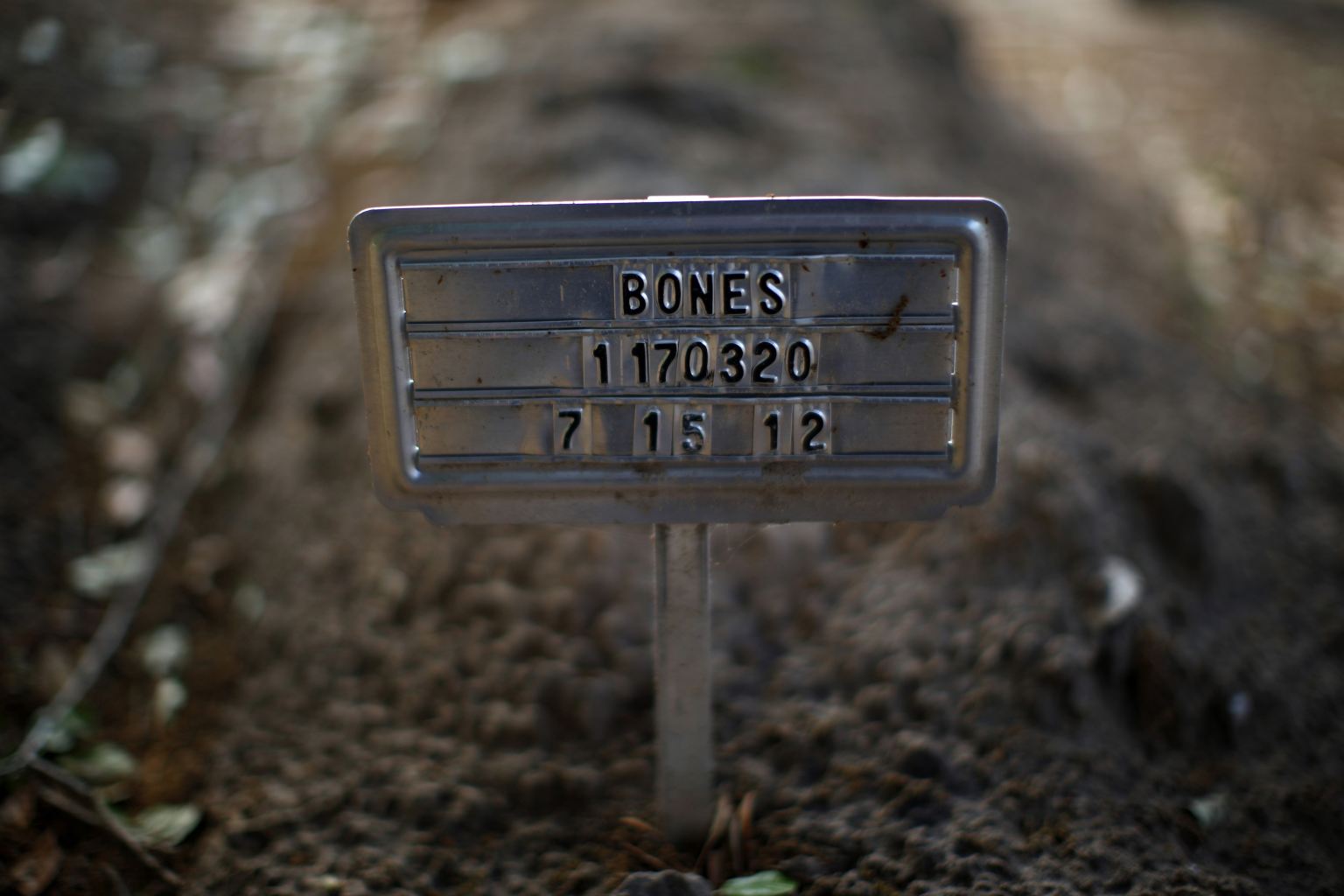
They are not caskets, just plain brown cardboard boxes. There were no flowers. No eulogies. They were not lowered into the earth. They are stacked in neat, tight rows on gray metal shelves at the University of Tennessee’s Forensic Anthropology Center.

They hold the scant remains of people who have never been identified, the secrets of their lives, and in some cases the secrets of their deaths.

One unanswered question common to all of them: Who were you?

A common denominator for all of them: they are missing persons, but many may have never been reported missing.

“Even if there was never an official missing report filed on them, it is obvious that all of them are missing from somewhere, and many of them are probably missed by someone,” said Todd Matthews, communications manager for the National Missing and Unidentified Persons System (NamUs).

The forensic center has 55 of them. Most are cases from East Tennessee, including six from Knox County. Each story is as incomplete as it is different. Some have been there for decades.

It is unknown how many unidentified remains cases there are nationally. Estimates by some authorities range from 40,000 to 60,000.

NamUs (www.namus.gov) is the first national resource center for cases of missing persons and unidentified bodies. It allows anyone to cross-check descriptions of a missing person with information about unidentified bodies. It is available for free to the general public. There is also a section available only to law enforcement and medical examiners for the exchange of confidential investigation.

NamUs estimates there are 4,400 new cases of unidentified bodies each year. Most will be identified within a year. But, despite many advances in forensics and anthropological sciences, about one of every four will not, and of those many remain unidentified for years — maybe forever.

“We are light years away from where we were 40 years ago,” said UT’s Dr. William Bass, founder of the Forensic Anthropology Center. “As the ID processes have matured, we can ID more and more people, and there are organizations and Internet sites that focus on the missing. But there are still some disconnects in the system.”

Some medical examiners and coroners still do not file all of their cases with national databases, such as the FBI’s NCIC or the relatively new NamUs. Also, many law enforcement agencies around the country do not participate in NamUs. And DNA is no guarantee of an identification.

“DNA is a wonderful tool, but for it to be of any help, you still have to find someone whose DNA can be compared to the person it was drawn from,” Bass said.

“If you don’t get them identified fairly soon through forensics, then it becomes more difficult,” said David Davenport, head of the joint cold case squad of the Knox County Sheriff’s Office and Knoxville Police Department. “And the longer you go without getting their name, the less likely it becomes that you ever will.”

There are success stories in even the oldest of cases. In 1982, skeletal remains of a black man who had been shot execution style were found in a wooded area of Knox County. A likeness of his face was circulated. But it was not known at the time that the victim had a beard, so the likeness did not show that.

More recently, an age-regressed likeness of him as a younger man was created, and that was the key that led to his identification, said Amy Dobbs, criminal analyst with KCSO. Family members saw it, and their DNA positively identified him in April of this year.

His case is now an open and very active homicide investigation, Dobbs said.

Many unidentified bodies and unreported missing persons are from the ranks of people who live transient lives: homeless people, drifters, the mentally ill, runaways, street prostitutes or gay male hustlers, said Dr Kenna Quinet, professor of criminal justice at Indiana University and Purdue University. If they disappear, it often goes unnoticed, she said.

“Some of these people do not even have a post office box for a Social Security check,” she said. “They are literally people with no family ties.”

Quinet has studied cases of unreported missing persons. She calls them the “missing missing,” and holds that many of them who turn up dead — perhaps more than realized — are victims of serial killers.

Bass offers an equally chilling scenario: in some cases, unidentified homicide victims may not have been reported missing because their killer is a family member.

The unidentified bodies at the Forensic Anthropology Center were first found in all sorts of sordid locations. Makeshift graves. On roadsides. Left in woods. Floating in lakes or rivers.

Most range in age from teenager to 60. But two of them are infants, their tiny bodies stuffed in a suitcase that was hidden for at least 15 years before they were found.

In some cases, the foulest of play is obvious.

Body on Buttermilk Road

On Oct. 1, 1985, the remains of a white man, about 5-feet-7 and estimated to be 51 to 60 years old, were found off Buttermilk Road in Loudon County. He had been shot twice in the head. He had removable dentures, no teeth, a medical implant in his aorta, and he wore a bracelet. All of that could help identify him.

“You would think that a brother, an uncle, a friend, someone, has to be missing this guy and wondering what happened to him,” said Detective Lt. Patrick Upton of the Loudon County Sheriff’s Office.

The proximity of his body to an Interstate 75 exit led detectives to wonder if he was killed at another location — maybe even out of state — and dumped there.

A likeness of the victim’s face was circulated in the immediate area, but the only result was to exclude one man who was reported missing.

In those days, there was no national database for missing person reports, and it was a common practice of some police agencies to periodically purge unresolved cases of missing adults, Quinet said.

“One of the first things you do in a homicide case is find out who was the last person known to be with (the victim),” Upton said. “That’s pretty hard to do when you don’t even know who the victim is.”

Lady in the Lake

On March 6, 2000, two fishermen discovered her nude body floating in Melton Hill Lake. Oak Ridge police say she might have entered the water upstream, in Knox County.

She had drowned. How and why she went into the water remain unknown. Since March was still a bit chilly for skinny dipping, Oak Ridge Police Detective John Criswell doubts she went in of her own accord.

She was white, appeared to be in her mid-20s, possibly her early to mid 30s. She had long brown hair. She had pierced ears but no jewelry on her.

She had never given birth, had no distinguishing marks and appeared to have been healthy. She had very good dental work, and had perhaps once worn braces.

Despite the circulation locally of five images of her face, she remains unidentified.

Criswell said the quality of her dental work makes it more likely that someone cared enough about her to have filed a missing person report.

“I think the right family person has just not seen (the image of) the facial reconstruction” of the woman found in the lake, Criswell said.

But he faces the same dilemma that the Loudon County case presents: with no clue as to where the victim is from, it is not known where a missing person would have been filed or where information about the case could be circulated.

Hit By a Car

On the evening of May 24,1993, he stepped in front of a moving car on Cedar Bluff Road near Cross Park Drive. Just under 6 feet tall, he and appeared to be about 51 to 60 and had reddish gray hair and a full beard. He wore a black wooden cross on a black cord chain necklace, and an “Advance” brand wristwatch.

There was an orthopedic rod in his right leg, and the bone around it was unhealed, indicating that injury was “very recent,”one. Even more promising, the rod had a number on it. All of that raised hopes for a quick ID, said Dr. Lee Meadows Jantz, the forensic anthropology center coordinator.

“We were thinking ‘Aha! A Quincy moment!” said Jantz, referring to a popular TV show of the early 1980s about a medical examiner who always identified the body and solved the case. “We thought we could identify him.”

But disappointment set in. Records are conflicting, but either the company that made the rod had purged the records that contained the serial number, or the number was only a model number.

Babies in the Suitcase

On Feb. 21, 1985, while cleaning out the crawl space in a house he had just bought in Cleveland, Tenn., a man came across a black leather suitcase. It was cracked and rotting with age, and inside were the bones of two infants, both white. One was wrapped in a baby blanket, the other in a shoebox.

They were no older than six months, and both could have been stillborn. The cause of death could not be determined. It is possible they were twins.

Pieces of newspapers and other items found in the trunk indicated the bodies had been placed in the trunk around 1964 to 1970. Some items suggested possible links to several different towns, including Knoxville and Chattanooga.

“I can still remember going into that crawl space and taking pictures,” said retired TBI Agent Stephen Cole, who worked with the Cleveland Police Department on the case. “It was very frustrating that we never identified them or found out what happened. I still think about that case sometimes.”

DNA science was in its early stage when their bodies were found. Later, when DNA collection from remains at the forensic anthropology center began, it was not initially drawn from the infants.

Jantz said the time frame of their deaths and circumstances of the case made it unlikely that they would have been reported missing, or that there would be a family member’s DNA sample on file somewhere for a match.

But the infants’ DNA is scheduled to be taken soon and placed into the NamUs database. The DNA will tell the infants’ sex and if they were related.

Bass, who retired in 1995, examined the bones when they were found. He vividly recalls the case.

“It isn’t every day that you get a suitcase full of the bones of two kids,” he said. “We did everything we could with the science available at the time to identify them,” and the police and TBI pursued the few aging clues in the suitcase as best they could, he said.

“That case was so different from all of the others,” Bass said. “Wouldn’t it be great if we could solve it?”

Said Matthews: “We will never be able to solve them all, but we can always try to identify them all.”

Sunday 7 July 2013

http://www.knoxnews.com/news/2013/jul/07/despite-exhaustive-efforts-some-bodies-never-get/

continue reading

At least 80 missing in Canada train blaze: firefighter


At least 80 people are missing after a driverless oil tanker train derailed and exploded in the small Canadian town of Lac-Megantic, destroying dozens of buildings, a firefighter back from the scene told AFP Saturday.

The accident in the small Quebec town, located around 250 kilometers (155 miles) east of Montreal, created a spectacular fireball and forced 2,000 people from their homes.

Officials earlier only confirmed one fatality, but had warned the toll could rise. A search for bodies was to begin Sunday at dawn.

The firefighter said on condition of anonymity that there had been at least 50 people in one bar that was consumed by the flames.

"There is nothing left," he said.

Witnesses reported as many as six explosions after the train derailed at about 1:20 am (0520 GMT) in Lac-Megantic, a picturesque resort town of 6,000 residents near the border with the US state of Maine.

Michel Brunet, a spokesman for Quebec's provincial police, said late Saturday the official death toll remained at one but added: "We expect there will be more fatalities."

Radio-Canada had earlier reported that 60 people were unaccounted for in Lac-Megantic, where the blaze was still raging, 20 hours on.

"There have been several reports" from people who said they were unable to reach relatives who lived near the accident site, Brunet said.

"The fire is still raging, our investigators have not yet even be able to get close to the scene," he added, more than 12 hours after the incident.

An initial evacuation zone of a kilometer around the crash site was widened Saturday as a precaution against harmful particles in the air, bringing the total to 2,000 people forced to leave their homes.

Around 150 firefighters were battling the blaze, including some who came across the border from Maine, just 25 kilometers south of the town.

"No conductor on board"

The cause of the crash was still unknown, but a spokesman for the Montreal Maine & Atlantic company, Christophe Journet, told AFP the train had been stopped in the neighboring town of Nantes, around 13 kilometers west of Lac-Megantic, for a crew changeover.

For an unknown reason, Journet said, the train "started to advance, to move down the slope leading to Lac-Megantic," even though the brakes were engaged.

As a result, "there was no conductor on board" when the train crashed, he said.

A team of investigators from Canada's transportation safety agency was quickly dispatched to the scene to investigate.

One witness, Nancy Cameron, posted a photo on social media websites showing one of the train's locomotives spouting flames near Nantes.

Other witnesses were in Lac-Megantic when the train came barreling in.

"When we came out of a bar, we saw cars arriving in the center of town at full speed," Yvon Rosa told Radio-Canada.

"We heard explosions and there was fire everywhere. We ran to the edge of the water," Rosa said.

Prime Minister Stephen Harper offered his "thoughts and prayers" to the community and said the federal government was ready to provide assistance.

The Montreal Maine & Atlantic train consisted of five locomotives and 77 rail cars and was carrying oil from the US state of North Dakota, said the company's vice president of marketing, Joe McGonigle.

But Quebec authorities spoke of 72 cars transporting 100 tonnes of oil each. "Around 10 cars have been secured and separated from the train," the Quebec emergency agency said in a statement.

The Montreal Maine & Atlantic company has a network of more than 800 kilometers through Quebec and New Brunswick provinces and the neighboring US states of Maine and Vermont.

Sunday 7 July 2013

http://www.ndtv.com/article/world/at-least-80-missing-in-canada-train-blaze-firefighter-388896

continue reading

In U’khand, ‘100 Nepalis still missing’


As the Uttarakhand government of India wrapped up rescue work in the flood -ravaged Badrinath-Kedarnath areas, the New Delhi-based Nepali Embassy has said around 100 Nepalis are still missing in the disaster.

In Kathmandu, Foreign Ministry spokesperson Arjun Bahadur Thapa, however, said only 50 Nepalis are missing in the flash flood s that hit the north Indian state on June 16.

Among the missing Nepalis listed by the embassy are pilgrims and migrant workers, mainly from the western part of the country. Officials at the embassy said they are unsure about the exact figure of the missing Nepalis.

“We cannot say anything for certain unless the Uttarakhand government makes an official announcement on the number of deaths,” an embassy official in New Delhi said.

Meanwhile, relatives of the missing persons, who arrived in places like Dehradun, Haridwar and Rishikesh are returning home. With all hopes lost of finding their their missing family members alive, they are filing missing reports at local police stations so that the authorities can reach them should they find the dead bodies.

The Nepali embassy said it is still receiving calls from relatives of missing persons from districts like Salyan, Rukum, Rolpa, Dang and Jajarkot. A majority of these callers are looking for their relatives, who were working in Uttarakhand.

As Nepal and India share an open border, there is no knowing how many Nepali workers and pilgrims were caught in the disaster, how many survived and returned home, or how many are still missing .

Some of the missing Nepalis had reportedly reached Mumbai and Himachal Pradesh after surviving the incident, but that does not suggest the number of missing persons will be any less, Pushpa Raj Panday of the Haridwar Nepali Community said. “There are chances that the number of missing Nepalis could be two-fold more than what has been reported so far.”

Acting Nepali Ambassador to India Tirtha Raj Wagle said the embassy has been providing Rs 2,000 each to the survivors of the flood ing to travel back home. The money being provided to the survivors is from the embassy’s donation reserve. The Nepal government has not provided any money to support the rescue and relief of Nepalis in Uttarakhand.

The famous Hindu pilgrimage sites that once attracted a multitude of faithful is enveloped in miasma of hopelessness and desolation.

According to the estimates of the Uttarakhand government, more than 10,000 people died in the disaster, while 3,064 are missing . The government has said it will wait until July 15 before declaring the missing persons dead and begin the process of handing out compensation to the families of the victims.

Sunday 7 July 2013

http://www.ekantipur.com/2013/07/06/top-story/in-ukhand-100-nepalis-still-missing/374375.html

continue reading

Train hits rickshaw in Pakistan, killing 14


A train travelling through central Pakistan hit an overloaded motorcycle rickshaw at an unmanned railway crossing, killing up to 14 people, a senior police officer says.

Himayun Tarar said the crash Saturday happened near Khanpur village in Shaikhupura district of Punjab province.

Tarar said the rickshaw driver didn't notice the train and tried to cross the tracks.Pakistani police and media officials gather around the bodies of the train accident victims in Khanpur town of district Shaikhupura, Pakistan, on Saturday after the train collided with an overloaded rickshaw.

Reports pegged the death toll at anywhere from 12 to 14.

"Twelve people died on the spot. Four people with critical injuries were taken to hospital, of whom two expired," Muhammad Asim, a senior doctor at the local hospital, told AFP.

"Two of them were children under 12 years old," he said adding that many bodies were mutilated and unable to be identified.

The officer said many people died before rescue workers reached the crash.

Such crashes routinely occur in Pakistan, as the country has hundreds of unmanned rail crossings and motorists driving overloaded vehicles routinely speed through without looking for oncoming trains.

Pakistan has a poor railway system with a track dating back to British rule and old coaches. Many Pakistanis avoid travelling by train due to low safety standards and poor facilities.

Sunday 7 July 2013

http://www.cbc.ca/news/world/story/2013/07/06/pakistan-rickshaw-train-crash.html

continue reading

Saturday, 6 July 2013

Casualties feared in train derailment near Canada-Maine border


A freight train carrying crude oil to Maine derailed and exploded early Saturday outside a small Quebec town near the Maine border, causing widespread destruction and forcing about 1,000 people to flee their homes, authorities said.

While police did not have information about specific casualties, several people were reported missing after the derailment.

Lt. Michel Brunet said it was too soon to determine whether there were any casualties in the town of about 6,000 residents.

“We’re told some people are missing but they may just be out of town or on vacation,” Brunet told a news conference, according to The Associated Press.

Lac-Megantic resident Claude Bedard told AP the scene of the explosions as “dreadful.”

“It’s terrible,” Bedard said. “We’ve never seen anything like it. The Metro store, Dollarama, everything that was there is gone.”

Onlookers said large amounts of oil have spilled into nearby bodies of water, The Associated Press reported.

Several fire departments in Franklin County dispatched trucks and firefighters to help Canadian crews put out the fire, a Franklin County Sheriff’s dispatcher said.

The 73-car train that derailed is owned by Montreal, Maine & Atlantic Railway Ltd., based in Hermon, outside Bangor. The company owns more than 500 miles of track serving Maine, Vermont, Quebec and New Brunswick, according to its website.

Quebec Provincial Police Sgt. Gregory Gomez said the derailment happened about 1 a.m. Police still don’t know what caused the train to jump the tracks, he said.

Gomez said there are several homes and stores near where the explosions occurred, along with a bar that was open at the time of the crash.

“We do fear there are going to be casualties,” he said.

Flames and billowing smoke could be seen for several miles hours after the derailment, the AP reported. Some of the train’s cars exploded and the fire spread to a number of homes.

As of 1:30 p.m., firefighters still were trying to extinguish the oil-fueled blaze, Gomez said.

“It’s still burning as we speak,” he said.

Environment Quebec spokesman Christian Blanchette said a large but undetermined amount of fuel also spilled into the Chaudiere River, according to the AP.

“We also have a spill on the lake and the river that is concerning us,” she said. “We have advised the local municipalities downstream to be careful if they take their water from the Chaudiere River.”

Seven municipalities in Franklin County dispatched eight fire trucks carrying about 30 firefighters to the scene starting around 3 a.m., Franklin County Sheriff’s Office dispatcher Stan Wheeler said. Lac-Megantic is about 20 miles from the Franklin County border.

The firefighters are from Chesterville, Eustis, Farmington, New Vineyard, Phillips, Rangeley and Strong, he said.

Franklin County Emergency Management Director Tim Hardy also went to the derailment site, Wheeler said.

A railcar generally can carry between 25,000 and 30,000 gallons of oil. Given its more than 70 cars, the train that derailed had the capacity to be carrying 1.8 million to 2.2 million gallons of oil.

Saturday 6 July 2013

http://www.pressherald.com/news/Fire-erupts-near-Maine-border-after-train-carrying-gas-derails-in-Canada.html

continue reading

12 years later: Remains of firefighter killed in 9/11 attacks identified


The remains of a firefighter killed in the September 11, 2001, terror attacks at the World Trade Center have been identified, the New York City Medical Examiner's office said Friday.

Lt. Jeffrey P. Walz, 37, was identified after authorities retested remains that were recovered in the months following the attack. Photos: One World Trade Center towers over NYC Photos: One World Trade Center towers over NYC

Of the 2,753 people killed in the attack, more than 1,100 people have not had remains identified, according to Barbara Sampson, acting chief medical examiner.

More than 8,200 bone samples and additional samples require DNA testing, according to a report released by Sampson. Walz, who was last seen in the north tower of the World Trade Center, was survived by a wife and a son, according to an obituary in the Staten Island Advance.

Lt. Jeffrey Walz died in the north tower nearly a dozen years ago.

"My family always felt at some point we would get a phone call," his widow, Rani Walz, tells the New York Post. "I wasn't so sure. This has reopened old wounds."

Walz was 37 when he died, leaving behind Rani and their 3-year-old son, Bradley. He managed to call his wife and parents from the tower before it collapsed, says his sister.

As for that "gentle giant" nickname: "It was obviously because of his height and because he was such a good person," explains his wife. "He was a saint with me."

A city official says the remains of 1,637 World Trade Center victims have now been identified.

"At least we can say he's not missing anymore," mom Jennie Walz tells the Journal News.

Saturday 6 July 2013

http://edition.cnn.com/2013/07/05/us/new-york-9-11-remains

http://www.usatoday.com/story/news/nation/2013/07/06/newser-911-sept-11-firefighter/2494477/

continue reading

11 killed, 10 injured in Damauli bus accident


At least 11 people, including a child, seven men and three women were killed, and 10 injured after a bus plunged into the Madi river Saturday evening.

The bus (4684), which was heading for Mugling from Pokhara, skidded off the Madi bridge and fell into the river.

Driver Basanta Thapa, who was also injured in the accident, told Republica that he lost control over the bus as he tried to avoid hitting a child on the road.

"I saw a boy crossing the road just ahead of the bus," said Thapa, who has been admitted to Ratna Hari Memorial Hospital in Tahanu for treatment. "I changed the bus´s direction to avoid hitting him but could not save the bus from falling into the river."

Along with Thapa, Suman Shrestha of Tanahu, Suman Shrestha of Syangjha and Pabitra Sapkota of Tanahu have been admitted to the same hospital for treatment. One injured has been rushed to Pokhara.

Others injured, including Bishnu Tahap of Tanahu and Padam Biswokarma of Nawalparasi, are receiving treatment at the district hospital of Tanahu. Some others have already been discharged. The police are yet to ascertain the names and addresses of all the injured.

Sapkota, who is undergoing treatment at Ratna Hari Hospital, said she was drowsing in a seat just next to the driver´s. "I could not understand how the bus slipped off the bridge," said Sapkota. "I regained full consciousness only when I felt the cold water. Then, I somehow swam to the river bank." Sapkota says she survived as the ill-fated bus was not swept away by the river. "The bus got stuck where I fell," says she. "So, I got time to get out of the bus and swam out of the river."

The bus had fallen 25 meters down breaking the railing of the bridge. Eye-witnesses said the bus hung from the railing for a while before falling into the river. According to SP Dev Bahadur Bohara, chief of the District Police Office of Tanahu, the death toll from the accident has reached 11 by Saturday night. "The number could go up," said Bohara.

A joint team of Nepal Army (NA) men, Armed Police Force (APF) soldiers, Nepal Police personnel, assisted by the locals, was deployed to rescue the accident victims from the Madi river. As the river was swollen and muddy, the rescuers found it very difficult to search for the bodies and rescue the injured. According to SP Bohara. The deceased child has been identified as 11-year-old Ayush Thapa. Among the women, the bodies of Tika Maya Ale and Manu Thapa have been identified. Likewise, among the men, Hemraj Shrestha and his father Laxmi Narayan Shrestha have been identified. Hemraj, a former Maoist combatant, was returning home after completing Nepal Army training at Khairenitar of Tanahun.

Saturday 6 July 2013

http://www.myrepublica.com/portal/index.php?action=news_details&news_id=57401

continue reading

Friday, 5 July 2013

2 UP cops suspended for disputes over U'khand victim's bodies


The Uttar Pradesh government today suspended two policemen in Muzaffarnagar and Bijnor districts and issued warning to others for getting into border disputes over bodies of Uttarakhand flood victims recovered from the Ganga river, a senior official said here.

"SHO of Ramraj police station in Muzaffarnagar, Arvind Singh Pundir and in-charge of Kotwali police station in Bijnor district Vijay Singh Rana have been suspended with immediate effect," Principal Secretary home R M Srivastava said here.

He said that the policemen have been suspended on charges for not acting as per rules in inquest, post-mortem and identification of unidentified bodies washed away in Ganga river following Uttarakhand tragedy.

Srivastava said that the government has taken a serious note of the policemen, indulging into border disputes instead of taking action.

He said that police chiefs of both the districts and Additional Superintendent of Police and additional district magistrate, who visited the spot, have been reprimanded.

They have been directed that if such incidents occur again then stern action would be taken, he said.

The principal secretary said that directives have been issued to preserve DNA of the unidentified victims and to photograph the post mortem.

BJP had yesterday condemned the state police for indulging into border dispute over bodies of Uttarakhand calamity victims, which were recovered from Ganga. "Indulging into border dispute instead of taking proper action on the part of police is shameful," BJP chief spokesman Vijay Bahadur Pathak alleged while talking to the reporters.

He had alleged that the government was not serious in efforts to track people from the state, who were missing in Uttarakhand. "The CM should ensure proper arrangements for rescue of stranded pilgrims from UP, proper treatment to injured and financial assistance to kin of those killed in the calamity," Pathak said.

Friday 5 July 2013

http://news.oneindia.in/2013/06/25/2up-cops-suspended-for-disputes-over-ukhand-victimsbodie-1245192.html

continue reading

Uganda: To avoid Mulago drama, bring IDs


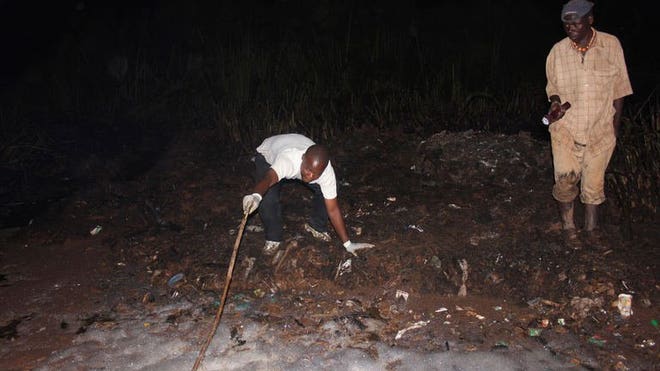
President Museveni's Shs 5m condolence token to each of the families that lost loved ones in the inferno caused by fuel spillage from a tanker at Namungoona last weekend has courted controversy.

Besides restating our clear position that it is hardly sustainable for a president to engage in handouts of that kind, and pointing out the irony of supporting families of youth involved in the criminal activity of siphoning fuel (bystanders and passersby excepted), we shall dwell on the drama at the Mulago hospital mortuary.

The hospital mortuary has since seen many people claiming to be next of kin of deceased persons in a desperate bid to lay their hands on the Shs 5m. In several cases different people have made conflicting claims, forcing the police to consider going for DNA tests so as to get to the bottom of the claims.

In one incident, a man turned up to claim the remains of his 'son' but the same remains had already been taken by other people who said they were the deceased's close relatives. The claimant was reportedly asked to present some documents such as a birth certificate or school report to prove his claim.

But such basic information would have been self-explanatory if Uganda had a national identity card system that incorporates every citizen's bio data. With a functional national database, pathologists, the police or any other authority would be able to establish a deceased person's bio information and their closest relatives or next of kin without much ado.

Besides claiming bodies after such eventualities, which in this case was mainly motivated by the president's Shs 5m contribution, there are many cases of unscrupulous people who take advantage of death to defraud legitimate claimants of the deceased's estate by claiming next-of- kin status.

A robust national ID system would help eliminate or at least minimise such bogus claims. In addition, it would also help in planning, fighting crime, as well as in the management of elections. The sooner this much-talked-about tool comes to life, the better for everyone.

Friday 5 July 2013

http://allafrica.com/stories/201307050324.html

continue reading

Death toll climbs up to 40 as seven still missing in Indonesia's Aceh quake


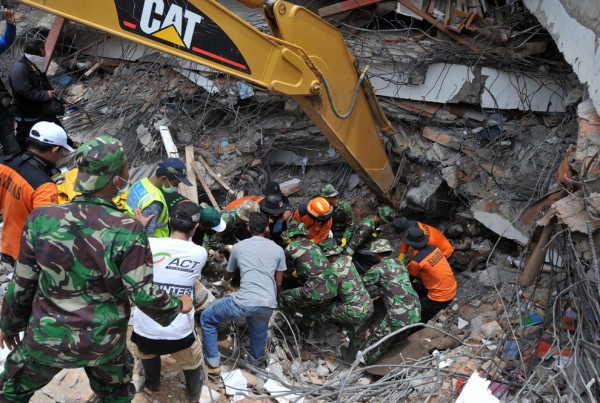
Death toll of Tuesday's major earthquake in central Indonesia's Aceh province has increased to 40 as rescuers and police continue searching the seven people declared missing, a senior police said here on Friday.

"As of 2:00 p.m. today the total number of those perished in the earthquake has increased to 40 following the discovery of five more bodies this morning. There are seven people reported missing in Serampah village and searching activities are now conducted by the police and search and rescue team," Anang R, a police officer who heads the search and rescue operation told Xinhua here.

He said that the identifiable victims have been buried by their families. A number of unidentified bodies were placed in hospitals for further identification before being passed to their families, he added.

According to the National Disaster Mitigation Agency, 275 people are injured and 4,292 houses damaged.

People in Blang Mancung village, the area worst devastated by the earthquake, are still taking refuge in tents erected outside their houses.

They don't want to move farther for fear that their belongings might be taken out of their houses.

Most buildings in the village were flattened by the earthquake and aftershocks.

Anang said that relief aids, including tents, blankets and food, have been passed to them. More than 580 people made homeless after the quake are living in a large shelter center erected by regional governments in a football lawn.

Some 600 police, in cooperation with 80 professional rescuers, have been deployed to undertake search and rescue activities since the earthquake took place on Tuesday, said Anang.

The government has extended the emergency response period from July 9 to July 17.

Friday 5 July 2013

http://news.xinhuanet.com/english/world/2013-07/05/c_132516227.htm

continue reading

Piper Alpha survivors recall disaster 25 years on


The Piper Alpha disaster which killed 167 workers on 6 July 1988 off the coast of Aberdeen is the world's deadliest ever oil rig accident.

Even 25 years on, Charles Haffey's most powerful memory of the Piper Alpha disaster was the overwhelming, deafening noise. The vast inferno created by simultaneous eruptions from ruptured gas and crude oil pipelines sounded like thousands of blow torches alight at full pressure.

A lack of communication at a shift change meant staff were not aware that they should not use a key piece of pipework which had been sealed with a temporary cover and no safety valve. Gas leaked out and ignited while firewalls that would have resisted fire on an oil platform failed to cope with the ensuing gas explosion.

That intense, inescapable roar was accompanied by other sounds, as the extraordinary heat melted steel, fracturing Piper Alpha's vast structure, as glass windows exploded and as its offices, canteens and sleeping quarters disintegrated.

There were three then four vast explosions, each seeming more devastating than the last, spread out over several hours.

When the platform blew 167 out of 228 workers either on the rig or one of the safety standby vessels patrolling it died. The platform was completely destroyed and it took almost three weeks for the fire to be brought under control by famed American wild well controller, Red Adair.

"At the time we felt detached from what was going on because I suppose psychologically your brain can't process what's going on. It was surreal. Your mind can't take it in," Haffey said, in an interview with the Guardian.

"If you take the actual rig itself, the best way you can describe the rig is if you can imagine a welder's blow torch and magnify it thousands of times. The brain switches off; your brain can't accept what's happening. At the back of your mind you're aware that the next step you take could be your last. You have no sense of time."

He remembers the heat: on one effort to find survivors who had jumped into the sea – dozens of men jumped, some from 180 feet or more - they had sailed under Piper Alpha, some 20 to 30 feet from the burning platform.

They were saved from being boiled by the overwhelming heat by water being hosed over their heads from the Tharos, Piper Alpha's semi-submersible fire-fighting and accommodation vessel. "I remember going through this thin mist: somebody on the Tharos had turned the water on to keep us cool," he said. "We managed to get through it and picked these guys up."

Haffey, now a civil servant living in Fife, was on board Piper Alpha's rescue vessel, the Silver Pit, when the rig exploded on the night of 6 July 1988. As one of the men most heavily involved in the rescue effort. He had both a grandstand seat and a hands' on role in the disaster.

He recalled hearing the staccato detonations of explosions, the sounds of men screaming, of retrieving burnt survivors and bodies, and once watching one man drown. Two fellow crew men on the Silver Pit were killed too, on a Zodiac fast rescue boat.

He had had previous experience of violence at sea: Haffey had served in the Falklands war in 1982, as a sonar operator on board HMS Yarmouth, a Type 12 frigate which was heavily involved in the fighting before and after the Royal Marines landed in San Carlos Water.

In his interview for a new documentary on the disaster, Fire in the Night, based on a book of the same name by the journalist Stephen McGinty, Haffey said: "If you're working in a factory, your alarm bell goes, you go into the car park, you are safe, yeah? You get your name ticked off, the fire brigade arrives, yeah? That doesn't happen at sea, particularly not on a ship, particularly not on an oil rig, yeah?

"That fire alarm goes off, if you can't fight that fire, if something happens to you rig, or happens to that ship and you end up in the water, that's when your survival starts. That's the beginning of your problems, it's not the end of your problems, it's the beginning of your problems."

Remarkably, two weeks after Piper Alpha, Haffey was back at sea after resuming his role on board the Silver Pit. It was back on site as a guard vessel. He saw the shattered remains of the platform being sunk into the sea in a muted ceremony to clear the site.

He recalled on Fire in the Night his conflicted feelings. "It kind of reminded me of a squat, ugly crab, you know? [And] you hated this thing, you hated this thing, because it caused so much misery. You didn't want it to be there – you wanted it wiped from the face of the Earth. And yet I was also there when they brought the Piper Alpha down, when they demolished it.

"[Then] I remember thinking 'But there's nothing there any more'. I hated it for being there but when they demolished it, you hated it for not being there, because there was nothing there that said something terrible, something … a great tragedy's happened here."

For many, many other men who survived Piper Alpha, the psychological trauma was intense and far-reaching.

A study published in the British Journal of Psychology by three experts in disasters then based at the Centre for Trauma Research at Royal Cornhill hospital in Aberdeen, Alastair Hull, David Alexander and Susan Klein in 2002 found that significant rates of survivor guilt, anger, acute post traumatic stress and physical injury. Nearly every survivor experienced psychological trauma.

They interviewed 36 survivors: a third of those experienced survivor guilt 10 years after the disaster, and 70% acute guilt. Another 61% had "performance guilt", blaming themselves for their decisions on the night. Nearly every man there lost a friend and 86% saw someone killed or severely injured.

Hull, now with NHS Tayside, said there was one other significant but so far unreported finding as the disaster worsened: very high levels of "collegiate behaviour", or selfless cooperation and comradeliness with men they barely knew.

"We found a huge number of very collegiate descriptions: of men deciding to help others who they didn't necessarily know terribly well, and coming together almost as teams to help each other survive. Quite startling examples," Hull told the Guardian.

"A very high percentage of people thought that they were going to die," he said. "Some of the men had very prolonged escapes." Unlike many disasters which occur suddenly and quickly, the Piper Alpha disaster was drawn out: it was several hours before the final devastating explosions.

Yet the trapped men repeatedly showed altruism was not restricted to friends or workmates. "It was one man's first ever shift on Piper Alpha," Hull said. "It was very very clear they helped whoever was there."

Haffey said his response to the disaster at the time was not to dwell on it – he felt "there was no point for me either regretting it or not regretting it". But he confirms there were some mental scars: anger was one significant after effect. But he no longer feels any anger.

"I'm fed up feeling angry, because no matter how angry you are, you're not going to change anything that night. I was angry, I would say, for about the first ten years but somehow you just have to reason with yourself: no matter how angry you get about this you're not going to bring those guys back."

A report into the disaster by Lord Cullen judged that the operator Occidental Petroleum had used inadequate maintenance and safety procedures. He made more than 100 recommendations about how safety should be improved in the North Sea.

Friday 5 July 2013

http://www.guardian.co.uk/uk-news/2013/jul/05/piper-alpha-disaster-oil-rig-survivors

http://www.guardian.co.uk/business/2013/jul/04/piper-alpha-disaster-167-oil-rig

continue reading

Uttarakhand: Extricating bodies big challenge


Eighteen days after flashfloods and landslides struck Uttarakhand, authorities on Thursday cremated 30 bodies in Gaurikund. Mass cremation in the base camp started on Wednesday and by Thursday evening seven more were consigned to flames, said DIG Amit Sinha.

“Most of the bodies are trapped under debris and safe extrication is a herculean task. We have deployed a seven-member team which is exploring new ways to find out if more bodies are buried under the debris. It may take more days to complete it,” Sinha said and added that in cremation grounds at Kedarnath, Haridwar and Gaurikund, 94 bodies have been properly cremated so far. “We couldn’t extricate several bodies buried in the debris in Kedarnath due to rain. Some bodies that were exposed to the elements were completely decomposed,” he said.

Officials said they will hire experts to extricate bodies from Rambada which was completely destroyed. Two bodies are still in the mortuary, while 102 others were unidentified.

Friday 5 July 2013

http://newindianexpress.com/nation/Uttarakhand-Extricating-bodies-big-challenge/2013/07/05/article1668264.ece

continue reading

Final text from missing American schooner carrying 7 said sails shredded


An American schooner missing in the South Pacific with seven people aboard sent an undelivered text message a month ago saying its sails were shredded and it was travelling at four knots.

Briton Matthew Wootton, 35, from Lancaster, was travelling on board the 70-foot (21m) schooner named Nina with six Americans.

New Zealand's Rescue Coordination Centre has released the last-known message from the Nina after seeking it from satellite phone company Iridium and the US State Department.

The June 4 message with a misspelling read: "Thanks storm sails shredded last night, now bare poles. Goining 4kt 310deg will update course info @ 6PM".

Authorities believe the Nina probably sank in a storm that day but have continued an aerial search, hoping that survivors may have made it into a life raft the boat was carrying or to land. The 85-year-old classic wooden sailing boat had left New Zealand six days earlier bound for Australia.

Nigel Clifford, Maritime New Zealand's general manager of safety and response services, said the message indicated the Nina would update its position about six hours later, which it never did.

"While it shows that Nina had survived the storm up to that point, very poor weather continued in the area for many hours and has been followed by other storms," Mr Clifford said in a statement.

Authorities didn't state why the text message went undelivered or who it was sent to. Maritime New Zealand said it would review its search options again overnight.

The 85-year-old schooner Nina left Opua on New Zealand's North Island on 29 May.

The last known communications with the crew were on 3 and 4 June - when conditions were very rough, said Rescue Co-ordination Centre New Zealand (RCCNZ), with winds of 80km/h (50mph) gusting to 110 km/h and swells of up to 8m (26 feet).

Ms Nemeth called and texted New Zealand meteorologist Bob McDavitt to seek advice on how to cope with the conditions, and was advised to ride it out.

After family and friends failed to hear from the crew, rescuers were alerted on 14 June. They began trying to make contact with the vessel, but were said not to be unduly alarmed as it was equipped with an emergency locator beacon which had not been activated, as well as a satellite phone and spot beacon.

But on 28 June aerial searches began, and two extensive sea-based searches as well as two shoreline searches have yielded no sign of the vessel or crew, said RCCNZ.

Search leader Neville Blakemore said it was now logical to assume the boat sank quickly in a storm, preventing the crew from activating the devices on board - though he added it was still possible survivors could be found.

Friday 5 July 2013

http://www.independent.ie/world-news/sails-text-from-missing-boat-29395148.html

http://www.bbc.co.uk/news/world-asia-23110736

continue reading

Uganda: Fire - seven bodies await DNA results


Last weekend's deadly inferno has so far claimed 40 lives and many people are mourning, but some families are still laying claim to the last seven unidentified bodies.

Government confirmed this week that DNA identity tests have been conducted on the charred bodies and results are expected soon. Sources at the Government Analytical Laboratory in Wandegeya say there were delays in the genetic testing of the remains of the victims of the deadly Northern Bypass fuel blaze because of lack of enough reagents in the country.

According to these sources, the government had last month suspended forensic investigations and DNA tests, citing a lack of the necessary reagents.

"But since the death of these people has been very sensitive, government is trying all means to have enough reagents and test the victims next Monday, free of charge," the source said.

Kampala Metropolitan Police Spokesman Ibn Ssenkumbi confirmed that the death toll had risen to 40 people, with seven of the injured still hospitalised at Mulago hospital. Enock Kusasira, the hospital's public relations officer, said DNA test results would be available on Monday.

Meanwhile, President Museveni has promised to visit the homes of the fire victims to prove whether the Shs 5m he donated to the bereaved and the injured actually reached the right homes, following reports that some people claimed the wrong bodies while others pretended to be injured yet they were not.

According to the police's preliminary report released on July 3, the fire was sparked by jubilant boda boda riders who rode to the scene deliberately pushing their cycle stands on the tarmac, which produced sparks that caused the fireball. Police have arrested the two trailer drivers, Musa Isaac and Victor Onyango, for questioning.

Onyango, the driver of fuel tanker Reg. No. KBT 433F/ZE, which was destined for Nansana, says he warned the people at the scene about the dangers but they refused to heed his warning.

"The driver of vehicle Reg No.UAS 374C, which knocked the trailer that caused the fuel leakage is still missing," Ssenkumbi said, adding that police suspect he might have died in the fire.

Friday 5 July 2013

http://allafrica.com/stories/201307050326.html

continue reading

Indonesian quake toll grows to 35


Rescuers on Friday continued to search for missing people in a mountainous village devastated by a powerful earthquake that struck Indonesia’s westernmost province earlier this week. So far, 35 are confirmed dead, and eight remain missing.

“The local people believe the missing victims were buried by landslides triggered by the quake, or washed out by gusting river water when the sliding earth hit the river,” said Bayu Gautama, a volunteer with Aksi Cepat Tanggap, an Indonesian humanitarian organization. “Most of [the missing] are children who were playing at their yards when the land slide was happening.”

Thousands of people were left homeless in the Bener Meriah and Central Aceh regencies after a 6.1-magnitude earthquake struck inland at 0737 GMT Tuesday, at a depth of just 10 kilometers in the mountainous heart of Aceh. The earthquake triggered landslides and flattened buildings. The tremor was felt strongly for around 15 seconds from Aceh to the neighboring North Sumatra’s capital of Medan.

The Indonesian National Disaster Mitigation Agency said Friday that four more bodies — all children –had been uncovered under the mud in Bah Village in Central Aceh late Thursday. The quake left 275 people injured.

Mr. Gautama said the landslide isolated the Serempah area where Bah Village is located, leaving a difficult, 5-kilometer walk for the rescuers trying to get in.

“The villagers have to sleep in makeshift tents as aid started to trickle in the forms of food and medicines. But these people also need trauma healing,” he added.

The Antara news agency quoted Central Aceh Regent Nasaruddin as saying that the government will find new homes for the villagers because the village is no longer suitable for living.

The quake was triggered by a shift in the 10-kilometer Takengon segment of the Great Sumatra Fault line, Danny Hilman, an earthquake expert from the government-run Indonesian Institute of Sciences, known locally by its acronym LIPI, told the Koran Tempo newspaper. The fault line runs the entire length of the resource-rich island, which centuries ago was named Swarna Dwipa, or Island of Gold, by Indian traders.

Aceh sits on top of more than 200 kilometers of the Great Sumatra Fault Line.

A powerful earthquake off Aceh in 2004 triggered a tsunami, killing around 230,000 people across Asia and causing damage as far as South Africa.

Indonesia is prone to seismic tremors due to its location along the arc of volcanoes and fault line encircling the Pacific Ocean, which are known as the Pacific Ring of Fire.

Friday 5 July 2013

http://blogs.wsj.com/searealtime/2013/07/05/indonesian-quake-toll-grows-to-35/

continue reading

Uttarakhand missing persons' database likely to be ready by weekend


After seeing the massive rescue operation to near completion, the Uttarakhand government, with the aid of Central authorities, is getting ready to release the final list of "missing" persons who may be "presumed dead".

The missing persons' database is expected to be ready by the weekend, or July 8, and officially released thereafter. Sources overseeing the relief work indicated that though the number of missing may be a few thousands, it would be far less than the 10,000-figure being quoted by unofficial sources. The "duly verified" missing persons list will help bring closure to the fate of those untraced even three weeks after the Himalayan tsunami, but also pave the way for release of compensation.

To guard against any slip ups in identifying the "missing" or "presumed dead", the Uttarakhand government, in conjunction with the disaster management authorities, has undertaken a massive verification exercise. This includes aerial survey of the affected regions, verification of missing locals by the village patwari or panchayat, physical checks on the ground, tracking the missing/traced on the net through social media networks, and even a confirmation call to all cellphones active in the flood-ravaged areas between June 14 and 19.

"There are many bodies that are beyond recognition. Though we are taking DNA samples, none of the relatives have approached us for a match. The state of the bodies still buried in the debris or layers of silt is possibly worse," Centre's nodal officer for coordinating relief and rescue operations in Uttarakhand, V K Duggal, told TOI.

Duggal said the missing can be divided into four categories — tourists/pilgrims, locals, registered labour and unregistered labour. Even though rescue operations are almost complete, the authorities recently got the rescue forces to re-survey the villages for any "miracle" survivors. "We got choppers to fly low and spot any stranded survivor. No living person was found, even though some bodies were spotted," Duggal said.

An interactive forum is now active on the Uttarakhand website, with links to social networking sites like Facebook and Twitter, to report the missing/traced. The state authorities have secured records of cellphone numbers, with activated roaming, which were used in the flood-hit zones between June 14 and 19 and are calling these to confirm if the subscriber reached home safely. If not, they will be enrolled as "missing".

The missing locals are also being verified with the help of the village panchayats or patwaris. While the status of registered migrant workers — mule-owners, palanquin bearers, etc — is being tracked with the help of the relevant registering authority, unregistered workers such as tea-stall workers, beggars, sadhus are being classified as missing or traced through interviews at their respective locations.

Those still untraced after this massive verification exercise will be classified according to gender and duly certified as "missing". Uttarakhand government intends to treat these missing persons as "presumed dead" for the purpose of releasing compensation.

Kin of Missing Running Out of Patience

The relatives of over one thousand people, who went missing in Uttarakhand's Rudraprayag district after the deluge last month, are running out of patience and planning to visit Kedarnath and Rambada on their own to look for them.

With no information coming from the administration about their missing kin, they are preparing to visit Kedarnath and Rambada and scour tonnes of debris lying in these areas in search of the bodies of their relatives so that they can perform their last rites.

The relatives of Lambgaudi resident Sandip Bagwadi, who went missing after the tragedy, have been running from pillar to post to get some information about his whereabouts but to no avail.

Now his father Radhaprasad has decided to set out in search of his son on his own. "I can't leave this (search) now to the administration. It is the 19th day of the tragedy and we are still clueless about what happened to my son. I am determined now go on my own quest for him," says Radhaprasad.

The same is the plight of the kin of other missing persons from the district.

Guptkashi resident Dinesh Bagwadi, who lost five of his relatives in the tragedy, says, "We can't wait any more for the officials to disclose information about our missing relatives. We have now decided to go to Kedarnath and Rambada on our own to bring back our relatives alive or dead.

"We have unconfirmed information that some of our missing relatives were seen getting buried in the debris of mud and slush brought by the calamity in its wake. In a situation like this we can't wait till eternity to get information about them from the administration. If we go to these places ourselves we will definitely get a clue of their whereabouts," Bagwadi said.

Disappointed with the "sluggish" approach of the administration, the relatives of missing persons are preparing to go to Rambada and Kedarnath on their own is search of their dear ones, priest Kishan Sharma says.

When contacted, District Magistrate Dilip Jawalkar said he was not aware of any such plans of the relatives of missing persons.

"But if they approach us, the administration would like to consider their suggestions to expedite the process of ascertaining the fate or whereabouts of the missing ones.

"However, amid MeT department warning of heavy rains in parts of the state, it is not advisable for people to go to Kedarnath and Rambada on their own in search of their missing relatives," he said.

Friday 5 July 2013

http://timesofindia.indiatimes.com/india/Uttarakhand-disaster-List-of-those-presumed-dead-by-July-8/articleshow/20920776.cms

http://news.outlookindia.com/items.aspx?artid=802853

continue reading

Relatives search for Bangladesh missing


The deadliest disaster in the history of the garment industry killed 1,129 people, but hundreds more are still missing almost three months after the factory building in Bangladesh collapsed.

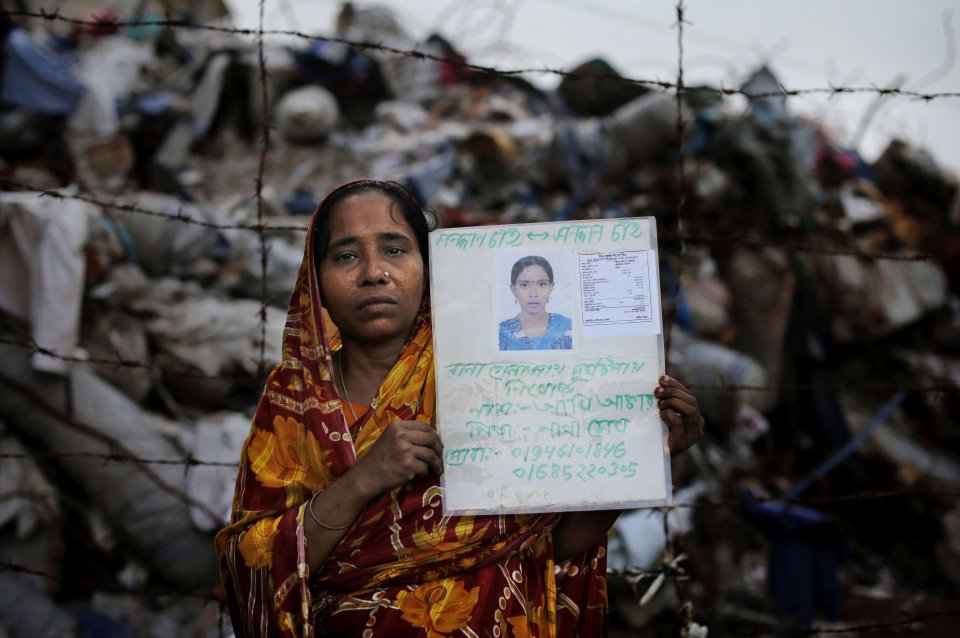
Relatives go to the Rana Plaza site and to hospitals searching for news of their loved ones. They carry passport photos of their relatives and their photo ID tags from the factories. "Missing" posters show their relatives' pictures, name, age, phone number and other details. Some of those searching carry a DNA testing form printed with the picture of the missing person in the corner.

Local officials say they have a list of 332 missing people, but the tally is not final. DNA samples of 318 bodies have been collected, but the results will take at least six months.

The government and garment manufacturers are campaigning to close dangerous factories and prioritize safety in the country's most valuable export industry. But Bangladeshis say they would not be shocked if another disaster happened.

Friday 5 July 2013

http://news.yahoo.com/ap-photos-relatives-search-bangladesh-missing-063552982.html

continue reading

Zimbabwe: 15 Vapositori perish in crash


Fifteen church members of the Johanne Masowe weChishanu branch in South Africa died on the spot after their car collided head-on with a bus along the R510 highway in Rusternburg in that country on Sunday afternoon. The incident occurred between Northem and Rustenburg while the victims were coming from church.

It is reported that the pick-up truck was travelling towards Johannesburg with 15 people on board including the driver.

According to the church's international spokesperson, Mr Edward Manyara the worshippers were all based in SA and were travelling from a church gathering in Ndabezitha in KwaZulu-Natal in their Mitsubishi Colt when the fatal accident occurred.

"We are working on repatriating the bodies of our members back home and we expecting all the bodies to arrive tomorrow (today) morning," he said.

Mr Manyara said relatives of the deceased have since been informed.

He identified the deceased as Andrew Tonderai Dzvairo and his wife Mildred Chimba from Murehwa, Barbsy Marufu from Hwedza, Andrew Mahachi, Stanely Zvichapera and Brian Muzhingi all from Harare, Lucky Takaedza from Mt Darwin, Blessing Zhaware, Blessing Chimbi both from Marange in Mutare, Paida Chiurirayi and relatives Mercia Chiyangwa, Penia Chiyangwa, Pride Chiyangwa from Guruve, Lawrence Mureya from Zvishavane and Evias Mudzamiri from Musana communal lands.

South Africa's North West Public Safety Department spokesperson, Mr Simon Mmope said among those who were killed were 10 men, two women and three children, aged between 8 and 12 years.

"According to traffic authorities the pick-up truck was overtaking another vehicle when it collided head on with a bus.

"As a result all the people in the truck died on the scene," he said.

Mr Mmope said several passengers from the bus were also injured during the collision.

He said both the injured and the deceased were taken to Rustenburg Provincial Hospital.

Zimbabwe's Consular General to South Africa Mr Godfrey Magwenzi said in a telephone interview yesterday that the victims had since been positively identified by their relatives though he could not release their names.

He said they had approached their hosts to assist the relatives in repatriating the victims through the Road Accident Fund.

"We have positively identified the 15 victims with the assistance of their relatives.

"We also approached our hosts who offered them (relatives) assistants in repatriating the bodies and other logistical issues.

"The bodies have since been collected for burial in Zimbabwe.

"On behalf of the Zimbabwean Consulate, I would want to express our heartfelt condolences to the bereaved families on the sudden death of their loved ones.

"At the same time we want to urge motorists to always exercise caution and ensure the safety of the people they will be carrying.

"Some of these accidents are avoidable if will all abide by the basic road regulations.

"It is worrying that we continue to lose lives due to unnecessary road accidents", said Mr Magwenzi.

The bodies are expected to arrive in the country through Beitbridge border post this morning.

The incident comes a few weeks after 13 Zimbabweans were killed in another road accident between Musina and Makhadho towns in Limpopo province when a commuter omnibus they were travelling in rammed into a stationary truck.

Friday 5 July 2013

http://allafrica.com/stories/201307050063.html

continue reading

Thursday, 4 July 2013

U.S. soldier missing in Vietnam since 1970 laid to rest at Arlington National Cemetery


An American soldier, who died while serving his country in the Vietnam War, was finally laid to rest Tuesday at Arlington National Cemetery. The remains of Army Spc. John L. Burgess were buried along with the remains representing two members of his crew, 1st Lt. Richard Dyer and Sgt. 1st Class Juan Colon-Diaz.

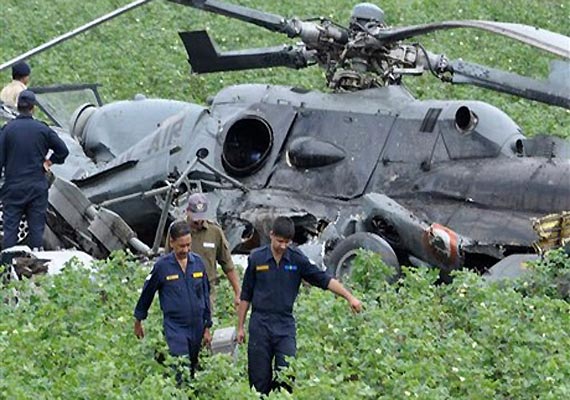
They were part of a crew of five men who were in a helicopter June 30, 1970 near the Cambodian border when they were hit by enemy fire, bringing the aircraft to the ground. The crash resulted in a fiery inferno, claiming the lives of four of the men. Their bodies were taken to a morgue to be identified, but it wasn’t until then that it was discovered that the remains of Spc. John Burgess were missing. Due to enemy presence in the area, the area could not be searched for his remains either.

Although he was presumed dead, his remains were never recovered until years later. More than 40 years after the helicopter crash and after 10 year of investigations and dozens of teams searching the crash site area, Burgess was accounted for using forensics and circumstantial evidence.

Burgess’ family was finally able to conduct a proper burial for him, which included full military honors, at Arlington National Cemetery.

Up until last week, when it was announced that his remains had been recovered, Burgess, who gave the ultimate sacrifice for his country, was one of 807 American soldiers who are unaccounted for in South Vietnam.

Thursday 4 July 2013

http://www.guns.com/2013/07/04/u-s-soldier-missing-in-vietnam-since-1970-laid-to-rest-at-arlington-national-cemetery-video/

continue reading

Missing untraced till July 15 will be presumed dead


The Uttarakhand government on Thursday decided to presume dead those missing in the flood-ravaged state if they remain untraced till July 15 and asked officials to remain vigilant in the wake of warning of heavy rains over the next two days.

Chief Minister Vijay Bahuguna said the exact number of people missing after the tragedy is 3,064 and the deadline for finding them is July 15.

“Considering the magnitude of the crisis, the state Cabinet has decided that if the missing persons are not found by July 15, we will presume that they are dead and the process of paying compensation to their next of kin will begin,” he said.

With the MeT department issuing a warning of heavy rains at places in Kumaon region over the next two days, Mr. Bahuguna said that for the next 50 hours the administration needs to be highly vigilant, adding 250 National Disaster Response Force personnel have been deployed in these areas.

Meanwhile, the Indian Air Force flew 70 civil administration personnel to the Kedarnath temple premises to clean the surroundings there.

A team of seven mountaineers is also engaged in a combing operation in areas adjoining the shrine in search of bodies while over 50 members of a team of experts and volunteers is stationed in Kedarnath to clean the temple premises of tonnes of debris under which more bodies may be lying, an official said.

Mass cremation of bodies in Kedarghati held up for the past few days started with 23 more consigned to flames at Gaurikund and Junglechatti last night, DIG Amit Sinha under whose supervision the exercise is being undertaken told PTI.

In Delhi, the government announced it will rebuild 10,000 houses and undertake other activities to develop infrastructure in all affected municipalities in the state.

“All affected municipalities and notified area councils in Uttarakhand can be covered under Rajiv Awas Yojana as a special case to support reconstruction of houses of the poor and reconstruct and redevelop these devastated houses,” Union minister Girija Vyas said in Delhi.

Thursday 4 July 2013

http://www.thehindu.com/news/national/other-states/missing-untraced-till-july-15-will-be-presumed-dead-bahuguna/article4881509.ece

continue reading

Bodies of hundreds of China’s Korean War dead could be returned home


The remains of hundreds of Chinese soldiers killed in the Korean War may finally return home, 60 years after an armistice ended the fighting.

On a recent visit to China, South Korean President Park Geun-hye offered to send back the remains of about 360 Chinese soldiers buried in a cemetery outside the city of Paju, a friendly gesture highlighting warming ties between the former combatants.

“Families in China must be waiting for their return,” Park said to Chinese Vice Premier Liu Yandong, according to a statement from Park’s office.

Liu promised to pass the message to China’s top leaders, though it’s unknown whether Beijing will accept the offer. Foreign Ministry representative Hua Chunying said Wednesday she didn’t know where China stood on the offer, but that the issue should be “resolved on the basis of humanitarianism.”

The bodies are buried on a hillside just south of the heavily guarded border with North Korea. Most of the Chinese dead have never been identified.

Several hundred North Korean soldiers are also buried at the site because Pyongyang refuses to take back the bodies.

While China remains North Korea’s only real ally, it has also established close ties with the South since the nations normalized diplomatic relations in 1992. China has overtaken the U.S. as South Korea’s biggest trading partner, with two-way commerce hitting $215 billion in 2012.

Beijing has never given a precise number for its Korean War dead because it claims Chinese troops all volunteered to defend a communist ally from what was portrayed as U.S. aggression. However, estimates of Chinese war dead run as high as 900,000, the bulk of them killed in the final year of the war, when the U.S. and its allies unleashed overwhelming firepower to force an end to the conflict.

With its hundreds of fading white wooden grave markers surrounded by forest and rice paddies, the cemetery has become a popular stop for Chinese tourists visiting Paju, according to Kim Dong-hun, the head of a group responsible for maintaining the cemetery.

Despite the potential loss of Chinese visitors, Kim said he was “very positive” about Park’s offer. Sorting and repatriating the bodies would likely take some time, and new Chinese and North Korean remains continue to surface, he said.

Thursday 4 July 2013

http://www.vancouversun.com/news/Bodies+hundreds+China+Korean+dead+could+returned+home/8613394/story.html

continue reading

Missing RAF airman to be finally laid to rest


When Lancaster ED470 was shot down over Holland on its way home from a bombing raid in 1944, among the six men on board to be killed was Flying Officer Derek Heather.

The 22-year-old bomb aimer left behind a heavily pregnant wife, Betty, who gave birth to his daughter Gillian, five months after his death.

Now 68, Gillian Rumsey, who lives in the US, still travels every other year to the RAF memorial at Runnymede, near Windsor, to lay flowers there for the father she never met.

The monument remains the only site at which he is commemorated, because the bodies of Heather and his crewmates were never recovered from the wreckage of their aircraft, which was buried in a Dutch field.

Now, though, officials in the Netherlands announced that they were to excavate the aircraft and recover any remains left inside, to allow them to receive a proper burial.

The dig follows a long campaign by Peter Monasso, a Dutch historian who has traced dozens of missing aircraft from the Second World War.

After nine years of lobbying, the authorities have agreed to the search, which is expected to start in October and will be conducted by a specialist unit from the Royal Netherlands Air Force.

Mrs Rumsey said: “It is wonderful news. I am so pleased that they are going to do this.”

Her parents met before her father joined up, when he and her mother were working for an insurance firm in London. Mrs Rumsey was their only child.

“They lost so many aircraft that my mother said that half of her always thought that something would happen to my father,” she said.

“That’s why she got pregnant. She wanted to keep a part of him - that is what she used to tell me.”

Betty, who died in 1999 remarried in 1951, to a merchant sailor, Albert Myers, and the following year the family moved to Nassau and then, in 1954, to California.

Mrs Rumsey first made the journey to Runnymede at the age of 16 and has returned regularly ever since.

ED470, from 61 Squadron, had set off for its last mission at 7.20pm on September 23, 1944 from its base at RAF Skellingthorpe, near Lincoln.

It was one of 136 bombers, accompanied by five Mosquitos, sent to attack the Dortmund-Ems canal, near Gravenhorst.

The waterway was an important transport link for German industry and at that location, the level of the canal water was well above that of the surrounding area.

Despite thick clouds, the attacking force, which also included aircraft from 617 Squadron - the Dambusters - managed to breach the banks and a six mile stretch of the canal was drained.

ED470 reached the target but it is thought a mechanical fault prevented it from dropping all of its bombs.

Travelling home, it was intercepted by a Junkers 88, a German nightfighter, which attacked it from above and astern. It was repelled by gunfire from the Lancaster, but either the same or a different aircraft attacked again, setting the bomber on fire.

It crashed near a farm just outside the village of Zelhem, near the German-Dutch border.

One of the crew survived the attack - Sergeant John Miller, the rear gunner, had been able to parachute to safety.

In an echo of the war time film One of Our Aircraft Is Missing, Miller, from Warrington, was able to link up with the Dutch resistance, who protected him.

He stayed with a family on a farm until the Allies liberated the country the following year. When he left, he took the farmer’s niece, Tilly Reterink, back to London with him, where they married - although they divorced in 1949. Miller, who later remarried, died in 1992.

Mrs Rumsey said: “After the loss of my father, it was very, very difficult for my mother. For years and years, she thought he would come back, because there was no grave.

“When people go missing, there is always hope. It gave her hope that one of the crew had come back. She thought maybe my father had stayed over there and had another life.”

Mr Monasso said: “After all these years, it is still important for relatives to know where their loved ones came down. They have their whole lives wondering where their father or brother was killed.

“We think its is important to have a proper place of rest for them. It is more satisfying than the memorial to the missing at Runnymede. We always say ‘missing is worse than dead’.”

The other men lost when the aircraft went down were: Flying Officer Albert Hornibrook, 20, the pilot from Queensland, Australia; Sergeant Tegwyn Roberts, the flight engineer, from Denbigh, Wales; Flying Officer John Condon, 24, the navigator, from New South Wales, Australia; Sergeant Robert Stanley Meachen, 23, the wireless operator, from Billingham, County Durham; Sergeant Thomas Brown, 25, the mid-upper gunner from Southport.

The dig will cost 400,000 euros (£340,000), 70 per cent of which will come from the Dutch government, with the remainder provided by the local authority.

British reports initially suggested that ED470 had crashed into the River Waal but Mr Monasso located it by examining local records in Zelhem, which recorded a crash on the evening the aircraft was lost and gave the location.

According to locals, the aircraft exploded a few minutes after crashing as explosives on board went off. Local records say that a small amount of human remains were buried in a local cemetery.

An aerial shot of the area taken later in 1944 showed a large crater near the farm, but there is now no sign of the crash. It is thought that the farmer filled the crater with sand.

Mr Monasso, 63, a former civil servant, then traced the whereabouts and identity of all the other 17 bombers lost that night to determine which one had crashed at the spot.

He has been campaigning to get the local authorities to dig since 2004.

His interest in locating missing aircraft began in 1972, when he stumbled upon part of a Lancaster bomber while out walking in marshland. He has since set up a museum and a foundation involved in investigating cases of missing aircraft.

His team, which covers an area of eastern Holland of around the same size as London, has searched for 400 British, German and American aircraft lost during the war.

Some of the crash sites were fully cleared at the time, by many others were buried.

The team have been involved with about 200 excavations and have helped find the resting places of 22 missing personnel.

Decisions on what will happen to any remains will be made once the dig has taken place. Wreckage from the plane will be put in the foundation’s museum in nearby Lievelde.

Thursday 4 July 2013

http://www.telegraph.co.uk/history/britain-at-war/10156906/Missing-RAF-airman-to-be-finally-laid-to-rest.html

continue reading

Kedarnath valley to be fumigated due to foul smell of bodies


As the rotten smell of decomposed bodies, animal carcasses and floating wood makes it difficult for rescuers to remove the dead buried under mounds of rubble in Kedarnath Valley, the Uttarakhand government is planning to fumigate the area with herbal spray.

That should make it easier for airdropped men to dig out the bodies and cremate them, the state's health minister said.

According to Uttarakhand Health Minister Surinder Singh Negi, the main problem the rescue teams are facing at the moment is to enter the Kedarnath Valley, the worst affected in the June 14-17 incessant rains that triggered landslides.

Hundreds have died and an equal number of people are missing in the state. "At the moment, our prime focus is on the Kedarnath Valley. Our prime need is to take out the bodies buried under at least 10-20 feet of rubble," Negi told IANS in an interview.

"The main question we faced was how to enable rescue teams to enter the area, where it is said many bodies are buried. The teams found it extremely difficult to airdrop in these areas because of the rising stench, which is increasing every day due to the incessant rains," Negi added.

"We are now planning to use herbal sprays which will make the air around that area a little breathable. This will then enable the teams to get down, use the earth moving machines and dig out the dead. The dead can then be given a decent funeral," Negi added.

The minister also said they will use the spray in the entire 14 km stretch that leads to the Kedarnath shrine. While over 100,000 people have been evacuated from the Uttarakhand region, many hundreds are still missing.

According to officials and eyewitnesses, many hundreds have been buried under debris in the Kedarnath Valley.

Negi said they have already sprayed bleaching powder over the Kedarnath Valley to prevent the bodies from decaying. "There are human bodies as well as animal carcasses in the Kedarnath Valley area. The rising stench has made rescue work difficult," Negi said.

He also said there was a fear that the floating bodies in the river and streams could cause an epidemic. "So far, there is no reason for an outbreak. We are monitoring the situation. We are getting the help of central health teams, who are stationed here," Negi said.

Thursday 4 July 2013

http://news.oneindia.in/2013/07/03/kedarnath-valley-to-be-fumigated-due-to-foul-smell-1251420.html

continue reading

Wednesday, 3 July 2013

Uganda fuel tanker fire: Families clash over bodies


There was commotion at Mulago Hospital mortuary when four families claimed two bodies, arguing that they were of their relatives who perished in Saturday's inferno.

The bodies are among the eight that were burnt beyond recognition.

The hospital administration and Police withheld the contested bodies until DNA tests are carried out to establish their identities.

Kampala metropolitan spokesperson Ibin Ssenkumbi said some members of the bereaved families claimed they would be able to recognise the bodies of their relatives who were severely burnt. But four different families ended up claiming two bodies.

He said the relatives of the unidentified victims were told to go back to the hospital on Monday, when the DNA results will be released.

Wednesday 3 July 2013

http://allafrica.com/stories/201307031318.html

continue reading

40 bodies allegedly stolen from cemetery in Puerto Rico


The remains of at least 40 people are missing from a cemetery in the sleepy mountain town of Gurabo, where officials are trying to solve a mystery that has frightened neighbors and left families distraught.

The apparent thefts occurred at the town's oldest cemetery, which was built in 1912 and features rows of white mausoleums located on the outskirts of Gurabo.

"I have spent nine years with the municipality," Public Works Director Jose Roman told The Associated Press on Tuesday. "I have never, never, ever had something like this happen to me."

No one has been able to explain the disappearances, although many residents believe the bones are being stolen for Santeria rituals, practiced by those who follow the Caribbean-based religion that blends Roman Catholicism and the African Yoruba faith.

Roman acknowledged that possibility, as well as a hypothesis that thieves are snatching boxes made of steel that hold the bones to sell them on the black market. However, he said no bones have been left behind.

Government officials made the discovery last month when they tried to exhume several remains to move them to another cemetery, only to find they were gone.

Since then, Roman has asked the owners of the cemetery's more than 300 mausoleums to verify if their loved ones are still buried there.

Amparo Diaz Santana, a 70-year-old homemaker, said the bodies of two of her nephews are missing.

"When we opened the tomb, they weren't there," she said. "We kept looking, and noticed there were a bunch of other open tombs."

Her family filed a report with police, but no one has been arrested and it seems authorities have no leads.

Roman said there are three full-time employees at the cemetery during the day, but that no one oversees it at night. Finding security guards has been a problem, he said.

Roman said police agreed to drive by the cemetery at night as a preventive measure. Police investigating the case could not be immediately reached for comment.

Arlene Gonzalez, a santera, or Santeria priest, with the Templo Yoruba of Puerto Rico, denied people associated with the faith were to blame. She said the faith employs animals, but not human bodies, in its rituals.

She said the disappearance of the remains could be related to Paleria, another syncretic faith that uses human bones in its rites.

Relatives have been devastated by the loss of their loved ones' remains.

Rosa Feliciano, a 78-year-old homemaker, said she learned in late June that the remains of her son were missing. He died 17 years ago.

"This has caused me the greatest pain ever, even greater than the day I lost him," she said.

Wednesday 3 July 2013

http://www.huffingtonpost.com/2013/07/03/bodies-stolen-from-cemetery_n_3540152.html?utm_hp_ref=latino-voices

continue reading

Guatemala case casts spotlight on indigenous group


Life for the indigenous Ixil Mayans in the mountains west of Guatemala City is worn and static like an old photograph.

Seventeen years after the end of a civil war that saw hundreds of their villages razed and thousands of their loved ones killed, the Ixil people still live in mud-and-wood houses in the most rugged and isolated parts of northwestern Guatemala. Most of them have no drinking water, paved roads or basic services such as health and education.

Largely ignored by authorities for centuries, the Ixil came under the spotlight after a Guatemalan court found former dictator Efrain Rios Montt guilty of genocide on May 10 for the scorched-earth policies used against the Ixil during his 17 months in power in the 1980s.

The conviction was annulled 10 days later following a trial that did nothing to change their lives of the Ixil people.

Byron Garcia, a social anthropologist who has worked in the area for a decade, said Ixil Mayans live in the same poverty as always.

"People have been relegated to less productive places, places where you can't grow food, to the mountains made of stone," Garcia said. "The young people who can, sow plots of land. And when they can't, they migrate."

Feliciana Cobo was 8 when soldiers attacked her village. She and her family separated and ran into the mountains, where they hid for several days with nothing to eat.

Cobo said her mother was killed when the army bombed the village and surrounding area, and her grandmother died later after growing sick from the cold and bad living conditions. Her family eventually lost their land and their poverty deepened.

Now a single mother of three children, the 40-year-old Cobo borrows electricity from a neighbor and supports her kids by washing the clothes of neighbors and weaving garments to sell.

"I grew up during the civil war and I don't know how to read or write. I didn't go to school," Cobo said. "All I know is to weave."

Forensic experts are now exhuming bodies from the cemeteries that the Ixil people created to bury loved ones who died of starvation, hypothermia and disease - as well as munitions - while they hid from the soldiers in the mountains.

"I helped exhume my mother," Cobo said. "I don't know if it was the smoke or the impact of the bombs planes were dropping on us but we all left running and when we got back together, my mother had already died."

Garcia, who now lives in the Guatemalan capital, said that victims feel a need to tell their stories, to be heard, to be indemnified, to find the bodies of their loved ones and be able to bury them.

Cobo said she doubts justice will be done, but is glad some fellow Ixil Mayans could travel to Guatemala City to tell their stories at the trial.

"We're not inventing the dead," she said.

Wednesday 3 July 2013

http://www.newsobserver.com/2013/07/03/3007192/guatemala-case-casts-spotlight.html

continue reading

Appeal over 1,000 unidentified bodies on UK missing persons website


There are currently 1,000 unidentified bodies on police files in the UK, some dating back 50 years. Last year, a website featuring facial reconstructions and, in rare cases photos of the dead person's face, was launched in the hope of solving them. So far, none have been solved.

A young man found hanged in secluded woods and a mystery body washed up on a beach are just two unsolved cases which have baffled Teesside detectives for years.

What little is known about them is detailed on the UK Missing Persons Bureau website along with seven other mystery bodies found in the North East and Cumbria.

Det Insp Paul Tait, head of Cleveland Police's force intelligence bureau, is aware the website is a long shot.

"It's clutching at straws a bit, but someone might be looking on the website and some little detail might jog a memory.

"But I don't like having unsolved cases because there is always that possibility that foul play has been involved, and I want to rule that out," he added.

Sometimes all scientist have to work with is a body part or bones.

In 1999, a trawler found a skull, 15 miles off the coast of Blyth, Northumberland.

Scientists determined it was a man, narrowed the age to between 30 and 40 years, and that he had been dead for more than six months, but less than 10 years.

Yet, despite being on the missing person's website for seven months, there have been no new leads.

DNA samples are taken and stored and, if someone believes they may be related to a missing person, their DNA could be tested and compared.

"Within reason if it was a credible line of enquiry - all unidentified bodies found will have a forensic examination conducted," Mr Tait explained.

Foul play

Cleveland Police is informed of 3,000 deaths every year - only a fraction are foul play.

The oldest one is the body washed up in 1970 at Redcar.

It was so decomposed that the sex could not even be determined and the age recorded as anything between 21 and 100.

The only real clue was a black boot, very well preserved but unfortunately not very distinctive.

He said: "The problem with remains from the water is that they can have been there a long time, and have travelled some distance.

"The chances are that a person washed up here could be from abroad," he explains. boot The boot was well preserved, but unfortunately not very distinctive

Another case is that of a young man found hanged near the A178 Graythorpe to Seal Sands Road in Hartlepool in 1981.

Even thought he had only been there a day, was fully clothed and had 'Sayer' written on the inside of his trainers, the case is still open 30 years on.

Police estimate he was aged between 20 and 30 but, although no foul play is suspected, it cannot be ruled out while the case is unsolved.

Badly decomposed

Another inquiry to remain open is that of a body washed up on the banks of the River Wear in 1992.

It was the badly decomposed lower half of a man aged 55 to 65, but with some small, unique features such as a gold, horseshoe earring.

He was also carrying a box of Altoids seriously strong peppermints made in York.

Once the police have finished, it is up to the local authority to bury and cremate any remains.

Certain cases will not feature on the site including babies and partial remains such as single bones, as publicity would be pointless.

A spokesman for the Missing Person's Bureau said: "The aim of site is to bring closure to the families and friends of the people featured.

"With new unidentified person cases we rely on modern forensic techniques but on older cases we believe that publicity is the best chance of getting images recognised."

Wednesday 3 July 2013

http://www.bbc.co.uk/news/uk-england-tyne-22970716

continue reading

Earthquake claims 22 lives at Aceh province in Indonesia


Rescuers battled through landslides and blocked roads on Wednesday to reach survivors from an earthquake in Indonesia's Aceh province that has killed at least 22 people, including several children who died when a mosque collapsed.

More than 200 people were also injured in Aceh's remote, mountainous interior when the strong 6.1-magnitude quake struck on Tuesday, flattening buildings and triggering landslides.

The quake, which struck at a shallow depth of just 10km, has sparked panic in the natural disaster-prone region where more than 170 000 people were killed by the quake-triggered tsunami of 2004.

In Blang Mancung village, Central Aceh district, at least six children were killed when a mosque collapsed during a Koran reading session.

‘Biggest earthquake’

Subhan Sahara, head of the district's disaster agency, previously said a further 14 children were trapped in the collapse. But on Wednesday he said rescuers had not yet found any more bodies in the rubble and were now unsure how many had been inside.

"This is the biggest earthquake we've ever had here," he told AFP.

"People are still frightened, especially after the aftershocks last night. Nobody dared to stay at home. Everyone slept on the roads or in car parks.

"The earthquake triggered many landslides. People could not get out of the area because of fallen trees and mounds of earth blocking roads."

The main hospital in the district was overwhelmed and tents had been set up in the building's car park to treat the flood of patients, he said.

He added supplies of food and water were in short supply but rescuers had succeeded in reaching the remote area.

Buildings, homes damaged

Military, police and local government officials were trying to head to other affected areas on Wednesday by ground and in aircraft but some roads were blocked by landslips, the national disaster agency said.

The agency dispatched a helicopter from neighbouring Riau province to assist in rescue efforts, while an air force plane was also deployed to assess the damage.

"So far 22 people died, 210 people were injured, and thousands of buildings and homes were damaged in the quake," disaster agency spokesperson Sutopo Purwo Nugroho said.

The casualties were spread over the two worst-hit districts of Central Aceh and Bener Meriah, he said. Scores of people were being treated at hospitals across the region.

In Bener Meriah, about 300 people camped out overnight in open spaces, such as football fields, as the area was hit by strong aftershocks, Fauzi, an official from the local disaster agency told AFP.

He said many were in desperate need of food.

"There were strong aftershocks last night and people didn't want to go back home, so they stayed in the open overnight, but we don't have enough tents," said the official, who like many Indonesians goes by one name.

"We have a power outage now and communications are unreliable," he added.

Pacific ‘Ring of Fire’

People ran outside in the provincial capital Banda Aceh as the quake - some 320km away - shook houses, and in Medan city to the south of the province on Sumatra Island.

Aceh, on the northern tip of Sumatra, is regularly hit by quakes. The huge quake-triggered tsunami of 2004 not only killed tens of thousands in the province, but also many in countries around the Indian Ocean.

In April last year an 8.6-magnitude quake struck 431km off Banda Aceh, prompting an Indian Ocean-wide tsunami alert.

Five people died and seven were injured in Aceh in the quake and following aftershocks.

In September 2009 a major earthquake near Padang city on Sumatra killed more than 1 000 people.

Indonesia sits on the Pacific "Ring of Fire" where tectonic plates collide, causing frequent seismic and volcanic activity.

Wednesday 3 July 2013

http://www.news24.com/World/News/Pressure-as-Indonesia-quake-toll-hits-22-20130703

continue reading

Missing ITBP jawans feared to have been burnt to ashes


The two missing ITBP jawans from the MI-17 chopper that crashed on June 25 in Kedarnath valley are feared to have been burnt to ashes. An ITBP team of expert mountaineers including those who have scaled Mount Everest has been looking for them since the crash without much success.

It is now being suspected that the missing jawans must have been close to the fuel tank and the resulting explosion from the crash must have melted their bodies.

"There is no question of them being alive. And even if they had been blasted to smithereens, we would have found some body parts at least. But nothing, not a trace has been found. So we suspect they took the brunt of the fuel tank explosion and were burnt to ashes," said a senior ITBP official adding that the search teams would now soon be called back.

An MI-17 helicopter carries over 1,000 litres of aviation turbine fuel which on explosion can melt anything in its vicinity.

Earlier the search teams had found some body parts that were suspected to be of the missing jawans. However, it was later identified to be that of an IAF personnel who died in the crash. "The IAF identified the body from the boots," said an ITBP official.

A total of 20 security personnel, including five IAF men, nine NDRF personnel and six ITBP jawans, perished in the crash. Bodies of 18 other victims have already been recovered and identified. The 20 men were going back to their camps after being relieved of their duty as they had been in the valley since the beginning of the deluge.

Meanwhile, ITBP claimed to have completed its rescue operations in Uttarakhand and was now in the process of pulling out its troops. On Tuesday, it rescued 63 people and is now reaching out to locals to help them in any manner possible.

Wednesday 3 July 2013

http://timesofindia.indiatimes.com/india/Missing-ITBP-jawans-feared-to-have-been-burnt-to-ashes/articleshow/20887136.cms

continue reading

India floods: The search for missing victims


As India begins to wind down the rescue operations in flood-hit Uttarakhand state, the focus now shifts to families searching for the missing, reports the BBC Hindi's Vineet Khare from Rishikesh.

We are standing outside a crowded bus station in the holy city of Rishikesh in the northern Indian state of Uttarakhand, which has been ravaged by floods and landslides in the last fortnight.

Deepak Sindhwani, who had gone for a pilgrimage to the temple town of Kedarnath, is among some 3,000 people who, officials say, are still missing after the disaster.

More than 800 people are reported to have been killed so far, but the exact number of deaths, say officials, may never be known.

Mr Sindhwani spoke to his sister last on 16 June and said he was trapped in Kedarnath after a bridge collapsed. After that, his phone went dead.

Since then, Ms Sindhwani has been unsuccessfully running from pillar to post to get information about her brother's whereabouts.

'No answers'

Nilesh Ninav, 39, has been camping in Rishikesh for the past fortnight to look for his parents, Dattatreya Ganapat and Lata.

They spoke for the last time on 15 June when his parents rang up to say that they were caught in a traffic jam.

"I have been running around trying to speak to officials, but I am not getting any answers," he said.

Officials admit they have no easy answers to help the distraught relatives of the missing, whose faces are plastered on the walls of railway and bus stations and on billboards and vehicles in Rishikesh.

Swollen rivers have swept away entire villages, where there were many travellers in what is the peak tourist and pilgrimage season.

Several bodies, which were found in a highly decomposed state, have been cremated in the affected areas. Many bodies may have been washed away or remain buried under debris.

"The families want to know the real picture. But considering the scale of the disaster and with so little information available, we cannot give them a definite answer," says Piyoosh Rautela, a senior disaster management official.

A helpline set up for the relatives of the missing has received more than 25,000 calls so far. Officials say the number of calls has reduced, possibly as many people have given up on finding their relatives.

But people like Mitesh Goradia from Gujarat are not giving up yet.

Mr Goradia and his brothers flew to the state capital, Dehradun, looking for their mother Pushaben, cousin Jayprakash and his wife Varsha, who had gone on a pilgrimage and not returned.

They have sought help from the police, the army, politicians and officials. They have recorded video interviews on their mobile phones with returning pilgrims who they think may have met their mother and cousin.

"We have proof they were alive till 23 June. We do not know what happened after that - whether they were killed during the rescue or are still in the villages looking for help," he said.

"We will wait until the last person is rescued. After the rescue mission is called off we will go up the hills ourselves and try to find whether my mother is with the locals."

'Earnings gone'

Deoli-Brahmagram is a village hamlet, 7 kilometers away from Guptkashi.

A small village with a few households, living on the earnings from pilgrims on the 'chaar-dhaam' yatra.

The men of the village, most of them mule operators ferrying pilgrims from one place to another, visited Kedarnath everyday for work.

But things would change from now on. With the pilgrimage facilities halted for a year, this means of earning is gone.

While this is just one side of the coin, village men are worried more about what lies on the flip side.

Most of the men in the village are dead. The gram-panchayat here have reported 57 men missing, presumably dead, branding it as the village of the 'widows'.

As heart-wrenching stories pour in from all quarters of the state, what stuns one is the extent to which the villages in Uttarakhand are bearing the after-math of the calamity.

With most of them inaccessible due to broken roads, even meeting the everyday requirements is a challenge for these people.

20 year old Sangeeta does not know what to do now. She is pregnant with her third child and there is no trace of her husband since the flash floods.

Almost similar to her story is that of Vanitha, who was married just a year ago and is now grieving her husband's death. She has stopped eating and there is no one to console her because the situation is the same in every second household here.

Children too are missing in some cases. Around 13 children between the age of 14 and 18 years have been reported missing here. Students of Rudraprayag Govt School, these children used to Learn the business of mule operators in the Kedar Valley during the peak season.

Afterall, that was to be their bread and butter when they grew. Located on a steep slope, how the village survived the landslide is a mystery. Grief, trauma and loneliness, post- Uttarakhand floods, is a story that is not resctricted to the villages.

Families of the missing and the dead in the cities and the urban areas too are coping with reality.

While some have committed suicide, not being able to face the reality, life for the rest is a routine. Words and phrase like "cannot forget", "dead bodies", "death", "help", "nightmares" are not uncommon for the survivors or the families of the dead.

In fact, some have decided not to re-visit Kedarnath again because that would bring back nightmares.

Lessons learnt or not, this chapter in the history of India has left an indelible mark in the minds of the people, especially those who are trying to live with the memories of the loved ones they have lost forever.

Wednesday 3 July 2013

http://www.bbc.co.uk/news/world-asia-india-23123799

http://news.oneindia.in/feature/2013/surviving-uttarakhand-disaster-report-on-living-dead-1250996.html

continue reading