Wednesday, 3 July 2013

Preparing the dead in Afghanistan

The man who spends his days surrounded by dead Afghan soldiers waits in a faded shipping container across from the morgue. But Noori rarely waits long before he is called to work.

Inside the container is a bed, a fan and a hose for washing the bodies. He has prepared at least a thousand of them for burial over the past decade: victims of roadside bombs, gunshots, mortar rounds and disease, delivered to him in all the shapes death takes.

Noori, 33, removes the soldiers from identical wooden coffins that are draped in Afghanistan’s flag, and he performs his duty, preparing each for burial in the Islamic tradition. He washes off blood and dirt, sprinkles perfume and covers each in a white sheet, or kafan. That’s how their families will see them when they make it home.

What Noori sees first is much more bracing — a relentless procession of bodies just off the battlefield. He takes anti-anxiety medication to help him sleep. He doesn’t tell his family anything about his job at one of the Afghan military’s busiest medical centers, Kandahar Regional Military Hospital.

In Washington, questions about the future of Afghanistan are often phrased in terms of the Taliban’s strength and the Afghan army’s fighting ability. Noori’s perch on the war doesn’t provide clear answers to those impossibly large questions. But it has made him a front-line witness to the massive human cost associated with what’s formally articulated as a “military transition."

As his country’s army inherits the war from the United States and NATO, there are far more of those bodies than ever before. More than 250 Afghan soldiers and police are now killed in Afghanistan every month, many of them in the violent south where Noori works.

On that subject, Noori takes a long view. “The army will keep fighting, and men will keep dying, until there is peace," he said.

Noori was once employed by the group responsible for the death and destruction he sees on a daily basis. For several years, beginning when he was 19, he worked for the Taliban.

In Kandahar, the province where the Taliban was born, the only job he could find was sweeping the floors of the former regime’s main hospital. It was nearly two years before Sept. 11, 2001.

When war came to Afghanistan and the regime was toppled, Noori swept the same floors for the new Afghan government. Because he was a low-level worker, his previous allegiance was forgiven. Soon, he was watching government fatalities trickle in.

The man then in charge of washing bodies needed assistance. It wasn’t an alluring job, but it was an important one, Noori thought.

“It’s religious work," he recalls thinking to himself.

He volunteered. Since then, Noori, typically clad in medical scrubs and an Afghan army windbreaker, has handled corpses nearly every day for the past decade.

“I’ve seen more death than anyone," he said. “The bodies keep coming."

He gets middle-of-the-night phone calls beckoning him to the hospital so that bodies can be washed and buried as soon as possible, according to Muslim custom. He knows exactly what a bomb or a machine gun or a rocket-propelled grenade can do to a human body. Some soldiers look serene, almost untouched, and others don’t look human at all.

He knows to expect anything when he removes the lid of the coffin. Once he saw his neighbor and close friend, Hashmat. Noori mourned quietly while doing his job.

“Anyone would get angry to see a friend like that," he said.

As more Afghan soldiers die, Noori finds himself close to some of the worst violence. His morgue is the destination for those killed in contested swaths of the south and southwest, including several of Afghanistan’s bloodiest districts.

His colleagues ask how he’s holding up, and he often shrugs them off.

“No matter what the body looks like, he does his job," said Sgt. Mohammad Hussein, the head of the morgue. “It’s difficult."

The truth is that Noori can’t sleep without medication. He dispassionately describes himself as “physically and mentally exhausted." He keeps the bed in the storage container, he says, because after washing three or four bodies, he needs to lie down.

This year, just after the Taliban announced the beginning of its “spring offensive," bodies came in one after the next. One afternoon, an ambulance arrived from Helmand Province carrying three dead, all killed by separate makeshift bombs.

Noori was suddenly frenzied. He called to a group of soldiers for help lifting the bodies for washing. But the men walked away brusquely.

“They don’t have the courage to help," he said to himself as he worked alone.

There is a tenderness to the way Noori does his job, washing the men’s hair as if he were caring for a small child. But the circumstances can be brutal. Sometimes, he has to wash severed limbs separately. Sometimes, the clean white sheets turn red as soon as they’re placed on bodies. Sometimes, he sees fresh scars where doctors tried to operate, but failed or ran out of time.

On warm days, all the death and heat make the job nearly unbearable.

Spring and summer are when the fighting is most intense, particularly this year, when U.S. troops are doing minimal combat and Afghan soldiers are dying at a higher rate than Western forces ever did.

“In the summer, it’s too much," Noori said.

Questions about the Taliban’s strength do occupy Noori’s mind. Because he is an employee of the Afghan military but not a soldier, he lives off base, on the outskirts of Kandahar City. Every day, he drives one hour to Camp Hero, the sprawling military installation where the hospital is located.

He knows his unguarded living conditions make him vulnerable to insurgents, especially former Talibs, who target those working for the Afghan government. His colleagues, who live at Camp Hero, worry about him.

“If they find him, they will kill him immediately," Hussein said.

But Noori has taken an approach to his own life that seems to blend defiance and fatalism. He says he isn’t scared of the Taliban, but that he’s ready for death when death comes.

When the hospital calls him in during early morning or late nights, he slips out of bed quietly so that his wife does not wake. He has never described his job to her in any detail, because he worries she would begin to associate his early morning departures with the death of soldiers.

“She wouldn’t be able to take it psychologically," said Noori, who has an infant daughter.

Noori says he can take it, though he thinks often of the families who will be on the receiving end of his work, in whatever Afghan province the soldier called home.

“They deserve to see the bodies clean and neat," he said. “They are the ones who have suffered."

Wednesday 3 July 2013

http://www.bendbulletin.com/article/20130702/NEWS0107/307020369/

continue reading

Tuesday, 2 July 2013

China's rain-related disaster toll rises


China's heavy weekend rains and related disasters have left at least 39 dead and another 13 missing, officials said.

The regions worst hit by the torrential rains and resulting floods and landslides are Inner Mongolia, eastern Anhui and central Hubei provinces, Xinhua News Agency reported, quoting the Ministry of Civil Affairs.

Several other regions also have been affected including southwest Sichuan province and neighboring Chongqing municipality.

In Sichuan province alone, the rains and flooding have affected 2.44 million people and forced the evacuation of 119,500 people, the ministry said. More than 5,600 homes have been destroyed and another 10,000 damaged.

Soldiers used inflatable motorboats to rescue trapped villagers, the report said.

Weather forecasters said heavy rains were expected to hit north and southwest China over the next three days.

Meanwhile, Rumbia, the sixth tropical storm to hit China this year, was expected to head toward Guangdong and Hainan provinces after entering the South China Sea.

Tuesday 2 July 2013

http://www.upi.com/Top_News/World-News/2013/07/02/Chinas-rain-related-disaster-toll-rises/UPI-88331372744140/

continue reading

US offers help in DNA testing for Rana Plaza victims


The US Federal Bureau of Intelligence will provide Bangladesh with the Combined DNA Index System (Codis) free of cost to identify bodies of Savar’s Rana Plaza fatalities.

The software programme will help establish the identities of 321 bodies of unidentified garment workers who died in the building collapse.

A source at the Ministry of Women and Children Affairs said the FBI would also provide technical and vocational support to experts at the DNA Laboratory in the Dhaka Medical College Hospital (DMCH) where the software will be placed.

The US agency recently expressed its interest in voluntarily supporting the women and children affairs ministry’s “Violence against women” project.

National DNA Profiling Laboratory chief, Dr Sharif Akteruzzaman, also professor of Biochemistry at Dhaka University, said the US had been very positive about giving the highly developed DNA software to Bangladesh.

Dr Sharif said a memorandum of understanding would be signed between the two countries very soon.

About 68 laboratories in 34 countries are use the Codis software, Dr Sharif said. The FBI had also provided Codis to Singapore, Hong Kong and South Korea, and now Bangladesh, the fourth country to get this free of cost.

Asked about the status of DNA tests for the casualties at Rana Plaza, the laboratory chief said DNA tests were being done in four phases and specialised software was necessary for this. He however did not say how long it would take to complete the tests.

About 550 people await the DNA test results.

DMCH DNA Laboratory officials are not sure how long it will take to get all the tests done.

The officials attributed the reasons for the delay to the lack of skilled personnel and most importantly, the essential Mass Fatality Identification System (MFIS) software.

They said normally it takes seven to eight days to prepare a DNA profile from blood, and a longer period from bones.

To match the DNA of a large number of unknown bodies will take years, said the officials.

On condition of anonymity, one of the laboratory officials said the DMCH DNA Laboratory had sent a proposal to the finance ministry for the allocation of funds to buy MFIS software, but the finance ministry rejected the proposal.

Tuesday 2 July 2013

http://www.dhakatribune.com/bangladesh/2013/jul/02/us-offers-help-dna-testing-rana-plaza-victims

continue reading

Bereaved mother who defied Argentina’s ‘dirty war’ dictators


It was 1977 and Argentina was in the grip of a military dictatorship. Outside the presidential palace in Buenos Aires, women in white headscarves began demonstrating to demand news of their children who had mysteriously disappeared. Laura Bonaparte had lost three offspring, their father, two sons-in-law and her son’s girlfriend; she became one of these original “Mothers of the Plaza de Mayo”.

Bonaparte, who has died aged 88, went on to work for Amnesty International, reporting on alleged human rights violations by Israeli forces in Lebanon and by the armed forces of war-torn El Salvador and Guatemala. She would later campaign in Bosnia on behalf of Muslim women who had been victims of ethnic cleansing and, back home, for abortion rights as well as for equal treatment of those whose sexuality defied the country’s traditionally macho culture.

All the while, she continued to press the judiciary and successive Argentine governments for information on the fate of an estimated 30,000 desaparecidos (“the disappeared”) during the “dirty war” conducted by the military against domestic opponents until 1983.

Bonaparte lost her 24-year-old daughter Noni even before the 1976 coup against president Isabel Perón. Facing an armed struggle by various leftwing groups, Perón had empowered army and police to “annihilate subversion”. A feared far-right paramilitary death squad called Triple A (Argentine Anticommunist Alliance), joined in. On Christmas Eve that year, Bonaparte learnt that Noni, who had ties to the armed leftwing Revolutionary Army of the People, had been killed.

Her body was never returned. “They offered to give us her hands, conserved in a jar, but I refused and told them: ‘I want my daughter in one piece’,” the mother said. She later assumed that Noni, minus her hands, had been dumped in a mass grave.

Soon after the March coup, Noni’s husband Adrián was assassinated by soldiers but his body never found. In June, soldiers kicked down the door of Laura’s ex-husband, the Jewish biochemist Santiago Bruchstein, shouting: “How can a Jewish bastard judge the armed forces?” She later heard he had been set fire to and burnt to death. The following year, Bonaparte’s son Víctor and daughter Irene disappeared, as did Víctor’s girlfriend Jacinta and Irene’s husband Mario.

Mothers such as she started arriving at the Plaza de Mayo, the square in front of La Casa Rosada (the Pink House of Evita fame), to demand news of their loved ones. One afternoon in 1977, more than a dozen appeared, separately. The authorities had forbidden gatherings of more than three people and told them to leave. Instead, they split into pairs and paraded around the square.

The white headscarves were adopted as a symbol and the Mothers’ ranks swelled to a few thousand as more and more family members vanished. Late that year three of the original Mothers themselves “were disappeared”. Their bodies, as well as those of several sympathisers including two French nuns, were found washed up on the banks of the Rio Plata. Retired naval captain Adolfo Scilingo later said opponents of the military were routinely taken on board vuelos de muerte (death flights), drugged, stripped naked and dumped into the Atlantic so that salt water and fish would destroy the evidence.

Then came June 1978, when journalists from around the world descended on Buenos Aires for the World Cup football tournament and stumbled on the story of las Madres de la Plaza de Mayo. The Mothers went what would nowadays be called viral. In 1986, however, with differing political ideologies, they split into two factions: Bonaparte set up the more moderate Madres de Plaza de Mayo – Linea Fundadora (“founding line”), while Hebe de Bonafini headed the original Asociación Madres de Plaza de Mayo.

In 1988, Bonaparte successfully fought president Carlos Menem’s plan to privatise the Esma naval academy in Buenos Aires, which had “processed” many of the disappeared. Instead it was preserved as a memorial, museum and human rights centre.

Bonaparte was born in the province of Entre Ríos, close to the Uruguayan border, in 1925, daughter of a socialist judge. By the age of 13, encouraged by her father, she was teaching women prisoners to read and write. After qualifying as a psychologist, she helped female hospital patients, many traumatised by abortion issues, in the city of Lanús.

Her work strengthened her belief in women’s rights and she divorced her husband at a time when that was widely considered a shameful sin. They had had five children, one of whom died as a baby, the other four raised in an ambience of art and music, variously playing piano, harp or cello.

Her son Luís Bruchstein, now a journalist, is the only one remaining. Grandchildren Hugo and Victoria Ginzberg, who were babies when Irene and Mario disappeared, also survive her and are involved in human rights. The family story was told in the book Una Madre de Plaza de Mayo – Contra el Olvido (“lest we forget”) by French writer Claude Mary.

This week, Laura Bonaparte’s white headscarf was buried with her.

Tuesday 2 July 2013

http://www.ft.com/cms/s/0/12c7f8e2-de78-11e2-b990-00144feab7de.html

continue reading

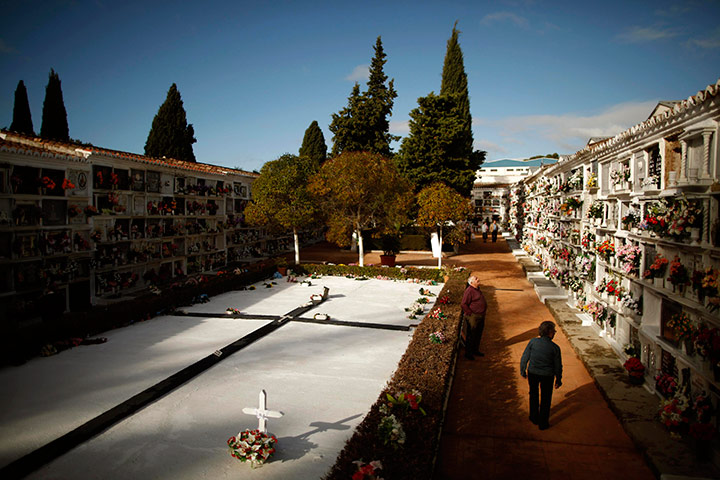
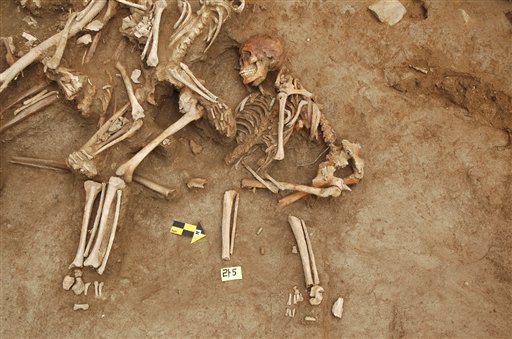
Spanish Civil War mass grave excavated in Ronda


Work has started at the San Lorenzo cemetery in Ronda to identify two possible mass graves where it is thought that between 1,700 and 3,000 Civil War victims could be buried.

The objective of this initial research is to locate and define existing graves in the cemetery as a prelude to exhumation. Up to 3,000 people, mostly Republicans, are thought to have been dumped in pits during the Spanish Civil War.

The project, the first stage of which is being funded by the Directorate General of Democratic Memory of the Junta de Andalucia, is expected to take one year, with the final objective being to honour those who died and giving them a decent and proper burial.

Tuesday 2 July 2013

http://www.nerjatoday.com/nerjanews/2013/06/20/research-into-mass-graves-in-ronda/

continue reading

Probe pending into WWII leader General Sikorski's death


An investigation into the death of WWII prime minister General Wladyslaw Sikorski is nearing completion as Poland marks the 70th anniversary of his plane crash this week.

According to the Institute for National Remembrance (IPN), the state-backed body charged with investigating alleged crimes against Polish citizens, the probe will be the most comprehensive to date.

The Polish leader's death remains a riddle to many, in spite of an official wartime investigation that claimed the crash was an accident.

Sikorski, who headed the Polish government-in-exile in London, died on 4 July 1943 when his Liberator plane crashed into the sea shortly after take-off while returning to England from a reconnaissance trip to Gibraltar.

Although the pilot of the July 1943 flight survived with broken legs, all fourteen other people on board, including British MP and liaison officer to Sikorski Victor Cazalet, died in the accident.

All aboard apparently died immediately, although some bodies were never recovered, further fuelling conspiracy theorists.

Conspiracy theories flourished over the years, with the finger pointed at Russia, Britain and even a clique loyal to Polish military leader General Wladyslaw Anders, who had been at odds with Sikorski.

An official British military investigation blamed the crash on jammed controls in the cockpit.

As revealed in March this year by Piotr Dabrowski from IPN, besides archival work, two witnesses have been interviewed for the current probe in England and Spain.

The first was a radio operator who participated in the British navy's salvage operation, immediately after the plane went down. The second was a diver who helped extract bodies from the wreck.

Claims that Sikorski had been murdered prior to take off were largely dispelled following the exhumation of his remains in 2008 at Wawel Cathedral, Krakow.

Forensic tests ruled out that the general had been shot, stabbed or suffocated. The injuries were considered compatible with those suffered by victims of crashes.

However, noted historian Norman Davies has reflected that “no reputable historian” has ever insisted that sabotage took place.

Likewise, historian Adam Zamoyski, whose father served for a time as aide-de-camp to Sikorski, told the Krakow Post that the Polish leader was “simply not important enough to warrant being liquidated.”

Tuesday 2 July 2013

http://www.thenews.pl/1/9/Artykul/140012,Probe-pending-into-WWII-leader-General-Sikorskis-death-

http://www.thenews.pl/1/9/Artykul/139746,Vintage-beetles-commemorate-WWII-leader-Sikorski

continue reading

The Kaimai crash: 50 years on


On July 3, at 8.05am, it will be 50 years since a DC3 took off from Whenuapai airport in northwest Auckland. It was a veteran of World War II, one of thousands of the big twin-engined cargo workhorse built to haul troops and weapons around.

It had been spruced up and now flew for the National Airways Corporation, (NAC), trolling up and down the country, taking people to work or holidays or home. Flight 441 was to stop in Tauranga, Gisborne, Napier and Palmerston North, before reaching Wellington in the early afternoon.

NAC publicity from the day used shots from inside the upgraded ZK AYZ. Flying was still an event and a bit of an extravagance, with men dressed in suits and mum and the kids in their Sunday best.


Almost all the pictures of the 20 passengers which were to fill the newspapers in the coming days showed the men wearing ties, their hair slicked and parted in the middle, and the women in Jackie O hats. All the window seats were full.

Tauranga air-traffic control heard from the plane at 9.06am when it began its descent into the coastal town. The tower called again at 9.14am, but there was no reply, because by then everyone on board was dead.

Flight 441 had failed to clear the highest ridge in the area by a small margin. It had hit a rock wall in the Kaimai Range. Investigators later estimated the impact speed at about 140kmh, the aircraft going from that to zero in roughly 3.5 metres. It exploded and burned and tumbled down the face of the rock.

It had flown over the quarry at the small settlement of Gordon, about halfway between Te Aroha and Matamata. Workers heard it pass over, low. Then a noise like a door banging far away. Despite the witnesses and a search starting immediately, the terrain and the weather were so bad that the wreck wasn't found until the next day. It was another day until ground crews reached it.

Peter Ryan has flown out of the nearby Matamata airport for more than 50 years. In 1963, he was 21, when his friend Geoff Pullum turned up to tell him that his dad was on a plane missing in the range.

Frederick Pullum, a stalwart in the Auckland community of Birkenhead, was a consulting engineer on his way to a job.

Peter and his friend went to the quarry, where searchers had started to assemble. They went to Te Aroha, where the bodies were being stored. They thought they might help identify them, but it was a waste of time. The impact and fire had left nothing but charred, blackened trunks that could only be sorted out by a pathologist.

As well as the passengers, the plane had two pilots and an air hostess. The 23 dead means it is still the worst air crash to happen on New Zealand soil.

An investigation began into what went wrong. The weather was not supposed to be as bad as it was. It was all right at Auckland and Tauranga, but in between an easterly gusted to 150kmh and visibility was nil. The pilots flew blind. They had radio compasses, but they failed often and were known to be unreliable in the weather conditions on the day.

The DC3 had distance-measuring equipment that would have given pilot Len Enchmarch and first officer Peter Kissel a clue as to where they were, but Tauranga airport didn't yet have a transmitter to talk to the plane. They navigated by the crude device of determining how fast they had been flying for how long.

The wind and lack of technology meant the aircraft flew to the west of the Kaimai Range. The pilots probably thought they had crossed and were tracking down the eastern slopes. Radar coverage in 1963 was sparse and no-one could see their error.

The hills were known to cause a wave effect in the atmosphere as wind struck them - huge downdrafts followed by huge updrafts, like water streaming over a rock in a river.

Investigators talked to another crew that had flown over the Kaimais earlier in the day who told of an extreme downdraft and, to escape from it, the airliner needed to use maximum power. The inquiry reasoned that Flight 441, descending and turning for what the crew believed was an unimpeded run into Tauranga, had been caught in something similar.

If there is an expert on what the pilots on Flight 441 were facing, Peter Ryan is it. He runs Sky Venture Flight Training at the Matamata field. He was also the chief flying instructor at the gliding club for years, specifically teaching the newcomers how to ride the massive waves of air coming over the range, the same ones that affected Flight 441.

He has been in aircraft that climb when idling in the updraft and has dropped parachutists into the air mass and seen them go up instead of down.

He has flown on DC3s and knows exactly how much power they have in reserve. Not too far from here is one that was rated to carry 26 passengers in its flying days, but regularly trucked about six-tonne payloads no bother.

Still, the crew of the ZK AYZ wouldn't have had a chance. By the time they were that low and in the kind of waves that were happening on the day, there was no way out of the accident.

The crash happened before the Accident Compensation Act existed and the families of survivors still had the right to sue. NAC settled the cases out of court.

From his flying school at Matamata, Ryan can see the crash site. Not long after it happened, the SAS blew up the wreck, because people were getting upset at catching glimpses of the smashed metal. Today it is overgrown and hidden by the type of easterly that was blowing on the day of the crash.

The official memorial is near Gordon, nowadays a T-intersection and about six houses. The crash site is over the fields and into the bush about 9 kilometres away.

Next week a crowd will gather to remember the crash. Noted aviation historian Reverend Dr Richard Waugh, who also wrote an excellent book on the accident called Kaimai Crash, will lead a service. An old DC3 will do a flypast and later offer trips out of Ryan's airfield at Matamata.

Visited alone, it is the same as a million other vantage points in New Zealand. Some of the buildings look as if they were here in 1963. It's silent and still and unchanging and unremarkable.

Part of the fascination and sadness that surrounds air disasters is that strangers' lives all end together at some random, lonely place.

There's added poignancy here because, only 16 years later, the circumstances would be echoed when another New Zealand flight crew would become lost in zero visibility, without knowing it, near another mountain in Antarctica.

The memorial service will be held July 3, at 9am at the memorial plaque on Old Te Aroha Rd, 600 metres southeast from the intersection of Old Te Aroha, Gordon Rd and Armadale Rd.

Tuesday 2 July 2013

http://www.stuff.co.nz/waikato-times/life-style/8863466/The-Kaimai-crash-50-years-on

continue reading

Russia: 19 die in helicopter crash in Siberia


Russian authorities say 19 people have died after a helicopter carrying 28 people, including 11 children, crashed in a remote Siberian region of Yakutia.

The Interstate Aviation Committee, Russia's top aviation body, said that a Mi-8 helicopter crash-landed in a remote mountainous area on Tuesday, dozens of miles away from the nearest village, and caught fire.

"There were three crew members and 25 passengers on board," the Interstate Aviation Committee said in a statement. "Nineteen people died, the aircraft burnt down," said the statement, citing the surviving crew members.

Of the 25 passengers 11 were children, the emergencies ministry said in a separate statement without providing further details.

Officials did not immediately comment on the cause of the crash.

The people died when the helicopter performed a hard landing, apparently in bad weather conditions, 45 kilometres (28 miles) northwest of the small town of Deputatsky in the Yakutia region in Russia's north.

A plane with rescuers and medics on board has arrived at the crash site, said the emergencies ministry, adding that helicopters with more medics and rescue workers have also been dispatched to the scene.

Russia's aviation industry remains blighted by repeated accidents involving its ageing fleet of planes and helicopters.

Tuesday 2 July 2013

http://news.yahoo.com/russia-19-die-helicopter-crash-siberia-075000344.html

continue reading

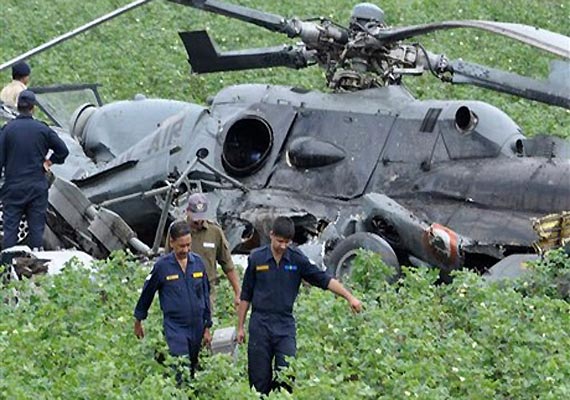
Uttarakhand Chopper accident: DNA analysis of remains of 7 victims completed


The Centre for DNA Fingerprinting and Diagnostics (CDFD) here has identified the bodies of seven ITBP/NDRF personnel who died when their helicopter crashed during a rescue mission in Uttarakhand.

This would enable handing over of the mortal remains to the respective families.

"Samples from the bodies of seven personnel who died in the June 25 crash of an IAF helicopter in a rescue operation in Uttarakhand were received late on the night of June 29 at the CDFD for identification by DNA analysis.

"The individual identifications have been completed by the morning of July 1, by matching of the individual DNA profiles with those of the relatives," a CDFD release said.

Four personnel of ITBP and three of NDRF were identified and the respective agencies have been informed so that the mortal remains can be handed over to their families, it said.

CDFD has also done DNA profiling of relatives of several other deceased personnel in the crash, so that if additional mortal remains are recovered their identification by DNA analysis can be completed, the release added.

Tuesday 2 July 2013

http://zeenews.india.com/news/uttarakhand/chopper-crash-dna-analysis-of-remains-of-7-victims-over_859154.html

continue reading

DNA testing to identify Uganda fuel tanker fire victims; toll rises to 33


At least 33 Ugandans died and 20 sustained severe injuries after a fuel truck caught fire on the outskirts of Kampala on Saturday night.


Ugandan police say 29 people died on the spot and four others died later at Mulago National Referral Hospital.

The accident occurred around 9pm on the northern bypass road about 5km from Kampala city centre.

According to eye witness reports, a station wagon vehicle rammed into the rear of the fuel tanker and the impact damaged the tanker, resulting in a fuel leak.

Fire broke out as locals rushed to the scene of the accident to scoop fuel from the tanker.

It is still unclear what caused the fire, although it is believed to have been ignited by fumes from a motorcycle's exhaust pipe.


"I heard a loud explosion. Fire engulfed the tanker and several other vehicles near it," Mubarak Asimwe, who manages a stall near the scene of the accident.

"After the fire, many charred bodies were near the burnt tanker and vehicles."

Police spokesperson, Judith Nabakooba said "So far the death toll is 33. Twenty nine people died on the spot and four died in hospital.

"More than 20 others are still admitted in hospital in critical conditions. So far 18 bodies have been claimed by relatives".

She said that other bodies were burnt beyond recognition and DNA will be used to identify them.

Nabakooba called on relatives of missing people to report to police with photographs of the deceased and a DNA sample from a close relative.


This is not the first time people had died under such circumstances.


In October 2009, 20 people died in Nwoya District in northern Uganda, as they attempted to siphon fuel from a tanker that had been involved in an accident.


Other such deaths in recent years have occurred in Mukono and Bugiri districts, with the worst incident occurring in the 1990's when more than 100 people died as they collected fuel from an overturned tanker.

Tuesday 2 July 2013

http://www.theafricareport.com/East-Horn-Africa/dna-testing-to-identify-uganda-fuel-tanker-fire-victims.html

continue reading

Monday, 1 July 2013

Exact count of dead in Uttarakhand may remain unknown; lack of travel records impedes search efforts


The exact number of people who have died in flood-ravaged Uttarakhand may never be known even as the state government put the number of missing at 3,000 with rescue operations entering the final phase.

“We will never know the exact number of those dead and the number of people who have been buried or washed away,” chief minister Vijay Bahuguna told news agency PTI in an interview.

As many as 900 stranded pilgrims and locals in Badrinath were left to be evacuated on Sunday as authorities grappled with the grim task of extricating dead bodies from under heaps of debris and performing the last rites.

Rains on Sunday prevented rescuers from reaching Kedarnath town to extricate bodies buried in the rubble even as the National Disaster Management said the death toll could be 'huge' as they gain access to areas ravaged by the flash flood a fortnight ago.

"National Disaster Relief Force team had planned to go to Kedarnath town with heavy equipment to extricate the bodies, but the heavy lift helicopters could not take off with the equipment due to bad weather," M Sashidhar Reddy, vice chairman of National Disaster Management Authority (NDMA), told reporters.

When asked about the death toll, Reddy said Uttarakhand Speaker had put the figure around 10,000, but right now it's not possible to give the exact numbers.

"I can only say that the manner in which the disaster occurred, it indicates huge number of deaths," he said.

The blame game over the June 15 and 16 rains escalated on Sunday with the meteorological department saying it had issued “timely” warnings of heavy rains and landslides but the state government claimed these were not “specific”.

The claims and counterclaims come amid questions whether the administration ignored the warnings and of the large-scale devastation in the hill state could have been averted.

Even after two weeks, the picture remains unclear, with estimates of number of dead varying from several hundreds to several thousands. Assembly speaker Govind Singh Kunjwal said on Saturday that the number of those killed could be more than 10,000 but the CM said the figure was incorrect. The search and rescue operation was likely to end in a day to two, he said. Compensation for the families of deceased who were not from Uttarakhand would be sent to the state governments after getting reports from them.

"If missing persons do not return in the next 30 days, the state government (concerned) will assume them dead and pay adequate compensation subject to the affidavit provided by the family members," Bahuguna said, adding 1,335 villages were still cut off from other parts of the state while power supply to almost 500 villages had not been restored.

Teams of rescuers have started returning. No pilgrims were now stranded in Gangotri, Yamnotri, Kedarnath and Hemkund Sahib, army sources said. A 200-member team comprising policemen, forensic experts, mountaineers, fire fighters and helpers will go to Kedarnath to pull out bodies from underneath the debris, officials said on Sunday.

Half the team will fly from the Guptkashi base station to reach the disaster zone by Monday afternoon. The rest will join them later. No cremation took take place on Sunday because of bad weather.

"The team's takeoff will depend on the weather," deputy inspector general of police Sanjay Gunjiyal told HT.

The exact number of people who have died in flood-ravaged Uttarakhand may never be known even as the state government put the number of missing at 3,000 with rescue operations entering the final phase.

Dearth of travel records impedes search, relief ops

Owing to the lack of records of Nepali pilgrims ’ entry to, and exit from, Uttarakhand, family members of the missing flood victims are going through hard times coping with the police and other government bodies in carrying out efficient search operations.

“Officials ask for the record of the entry of my parents to Uttarakhand, and their last traced location,” said Krishna Chalise, whose parents Kritinath and Jamuna, in pilgrimage to Uttarakhand, went missing in the flood. “But we don’t have any such documented report to submit. I don’t really know where they went missing from.”

Chalise’s parents have been missing for the last 13 days. According to him, he is preparing to go back to Kathmandu as all the search operations have turned futile.

Families of a dozen Nepali nationals who have gone missing in the flood are facing similar problems.

Pushpa Raj Pandey, manager of Anandamayee Aashram at Haridwar, has similar plight. According to him, Nepali nationals who come to visit Uttarakhand are not registered in any of the government agencies. “They don’t have passport, the citizenship certificate or any other document,” he said.

Many have pointed fingers at the open Nepal-India border behind the problems relating to the lack of proper accounts of those crossing the border.

“This has resulted in difficulties for the Nepali nationals not only in search operations but also in claiming relief packages from the Indian government,” said Narayan Panthi, a social worker based in Haridwar.

Raju Rana from Rukum district, who was admitted to the Dehradun-based Jolivent Hospital on Saturday, had similar hardship. “He was never registered with the government and no one really knows how long he has been here,” the hospital management said. Rana has sustained injuries in the spinal cord.

According to the Nepali Embassy in New Delhi, over 100 Nepalis have reported to the Embassy saying that their relatives had been missing. However, none of the reports is an authentic account of the missing person’s arrival in India.

“This has taught both the countries a lesson,” said Surya Bikram Shahi, chairman of the Gorkha Democratic Front in Dehradun. “Both the governments should keep records of every individual crossing the border. Open border does not necessarily mean unaccounted entries.”

Monday 1 July 2013

http://www.hindustantimes.com/India-news/NorthIndiaRainFury2013/Exact-count-of-dead-in-Uttarakhand-may-remain-unknown-Bahuguna/Article1-1084732.aspx

http://www.ekantipur.com/2013/06/30/top-story/nepalis-in-uttarakhand-floods-dearth-of-travel-records-impedes-search-relief-ops/374072.html

continue reading

Bypass fire: death toll rises to 35


The death toll from Saturday night’s fire which broke out following an accident involving a fuel tanker and another car at Namungoona, on the Northern Bypass has climbed to 35.

On Sunday, police put the number of those who died at 33.

Information Minister, Ms Rosemary Namayanja, said on Monday that two more people have succumbed to the wounds they sustained in the Saturday fire.

The accident happened after a Toyota Noah car rammed into a fuel tanker at about 9.30pm, resulting into a spillage of fuel on the road and down into a nearby papyrus swamp.

Minutes later, the place had been swarmed by boda boda cyclists, passersby and local area residents armed with jerrycans, basins and other equipment to scoop the fuel. The scramble would, however, not last long as a fire suddenly erupted, trapping tens in the swamp and burning some of them beyond recognition.

Charred bodies and limbs -- some still scattered and others lined up neatly by rescue workers -- covered the scene of the fire in Kampala's Namungona suburb, an AFP photographer said.

Numerous motorbikes -- some with the petrol tank still on fire -- littered the scene.

Police said many of the victims appeared to have headed to the scene on motorbike taxis, a common form of transport in Kampala.

Mr Enock Kasasira, the Mulago Hospital Spokesperson said 17 bodies have been identified. He said respective relatives have since claimed the bodies.

The accident is the worst of its kind in Uganda since December 2001 when some 90 people perished in similar circumstances in the east of the country, police said.

Meanwhile, President Yoweri Museveni has visited the scene of the accident, where police officers briefed him about the calamity.

Monday 1 July 2013

http://www.monitor.co.ug/News/National/Bypass-fire--death-toll-rises-to-35/-/688334/1900728/-/q752qv/-/index.html

http://www.google.com/hostednews/afp/article/ALeqM5gm-1yiZ8_HUPtsyFSwLN7t-A7tUw?docId=CNG.bf410fd2b50b272b32ae2b68b217fcea.111

continue reading

Presidential Commission on Matale mass grave to commence sittings


The Presidential Commission of Inquiry appointed to probe the Matale mass grave will commence sittings within the next two weeks, Head of the Commission retired Supreme Court Judge Justice S.I. Imam has said.

President Mahinda Rajapaksa appointed the three-member Commission of Inquiry and it has been asked to submit a report within six months.

Other members of the commission are ex- Parliament Secretary General Dhammika Kithulgoda and retired High Court Judge Bandula Atapattu.

Retired Justice Imam has told the media that preliminary arrangements to begin Commission sittings are already under way and the venue is likely to be the BMICH.

A decision on whether the sittings are to be held in public, will also be taken within the next few days, he said.

The Commission has reportedly been told that, in the absence of definitive facts as to whose skeletons they are, the inquiry should attempt to ascertain how and when the victims died and when they were buried, identify those responsible and during which period the events occurred, the manner in which the bodies were buried and identify the victims.

The Commission is also mandated to probe "whether such human bodies came to be buried as a result of an illegal act or acts, and if so, whether any person or persons are responsible."

It is also mandated to inquire into and report back adequate cogent factors or evidence that would lead to identification of the person or persons responsible, in case the deaths were caused by an illegal act, as well as recommend legal action, that could be instituted against those found to be responsible.

Monday 1 July 2013

http://www.srilankamirror.lk/news/8593-presidential-commission-on-matale-mass-grave-to-commence-sittings

continue reading

South Korea’s Truth and Reconciliation Commission uncovers thousands of killings in 1950


With US military officers sometimes present, and as North Korean invaders pushed down the peninsula, the southern army and police emptied South Korean prisons, lined up detainees and shot them in the head, dumping the bodies into hastily dug trenches. Others were thrown into abandoned mines or into the sea.

Women and children were among those killed, many of whom never faced charges or trial.

The mass executions — intended to keep possible southern leftists from reinforcing the northerners — were carried out over mere weeks and were largely hidden from history for half a century.

They were “the most tragic and brutal chapter of the Korean War,” said historian Kim Dong-choon, a member of a two-year-old government commission investigating the killings.

Hundreds of sets of remains have been uncovered so far, but researchers say they are only a tiny fraction of the deaths. The commission estimates at least 100,000 people were executed, in a South Korean population of 20 million.

That estimate is based on projections from local surveys and is “very conservative,” said Kim. The true toll may be twice that or more, he said.

In addition, thousands of South Koreans who allegedly collaborated with the communist occupation were slain by southern forces later in 1950, and the invaders staged their own executions of rightists.

Through the postwar decades of South Korean right-wing dictatorships, victims’ fearful families kept silent about that blood-soaked summer. American military reports of the South Korean slaughter were stamped “secret” and filed away in Washington. Communist accounts were dismissed as lies.

Only since the 1990s, and South Korea’s democratization, has the truth begun to seep out.

In 2002, a typhoon uncovered one mass grave. Another was found by a television news team that broke into a sealed mine.

Further corroboration comes from a trickle of declassified U.S. military documents, including U.S. Army photographs of a mass killing outside this central South Korean city.

Now Kim’s Truth and Reconciliation Commission has added government authority to the work of scattered researchers, family members and journalists trying to peel away the long-running cover-up.

The commissioners have the help of a handful of remorseful old men.

“Even now, I feel guilty that I pulled the trigger,” said Lee Joon-young, 83, one of the executioners in a secluded valley near Daejeon in early July 1950.

The retired prison guard said he knew that many of those shot and buried en masse were ordinary convicts or illiterate peasants wrongly ensnared in roundups of supposed communist sympathizers. They didn’t deserve to die, he said. They “knew nothing about communism.”

The 17 investigators of the commission’s subcommittee on “mass civilian sacrifice,” led by Kim, have also been dealing with 215 cases in which the U.S. military is accused of the indiscriminate killing of South Korean civilians in 1950-51, usually in air attacks.

The commission last year excavated sites at four of an estimated 150 mass graves around the country, recovering remains of more than 400 people. It has officially confirmed two large-scale executions.

In January, then-President Roh Moo-hyun, under whose liberal leadership the commission was established, formally apologized for the more than 870 deaths confirmed at Ulsan, calling them “illegal acts the then-state authority committed.”

Photos taken by an American Army major and kept classified for half a century show the macabre sequence of events.

White-clad detainees — bent, submissive, with hands bound — were thrown down prone, jammed side by side, on the edge of a long trench. South Korean military and national policemen then stepped up behind, pointed their rifles at the backs of their heads and fired. The bodies were tipped into the trench.

Scattered reports of the killings did emerge in 1950 — and some did not.

British journalist James Cameron wrote about mass prisoner shootings in the South Korean port city of Busan — then spelled Pusan — for London’s Picture Post magazine in the fall of 1950, but publisher Edward Hulton ordered the story removed at the last minute.

In 1953, after the war ended in stalemate, after the deaths of at least 2 million people, half or more of them civilians, a US Army war crimes report attributed all summary executions here in Daejeon to the “murderous barbarism” of North Koreans.

Such myths survived a half-century, in part because those who knew the truth were cowed into silence.

The immediate concern of the Truth and Reconciliation Commission is resources. “The current government isn’t friendly toward us, and so we’re concerned that the budget may be cut next year,” commission president Ahn Byung-ook said.

South Korean conservatives complain the “truth” campaign will only reopen old wounds from a time when, even at the village level, leftists and rightists carried out bloody reprisals against each other.

The life of the commission — with a staff of 240 and annual budget of $19 million (€12.3 million) — is guaranteed by law until at least 2010, when it will issue a final, comprehensive report.

Later this spring and summer its teams will resume digging at mass grave sites.

By exposing the truth of such episodes, “we hope to heal the trauma and pain of the bereaved families,” the commission says.

It also wants to educate people, “not just in Korea, but throughout the international community,” to the reality of that long-ago conflict, to “prevent such a tragic war from reoccurring in the future.”

Monday 1 July 2013

http://may131969.wordpress.com/2013/07/01/death-squads-and-mass-graves-the-full-horror-of-the-korean-war-finally-unearthed/

continue reading

8 killed as car plunges into ravine in E. Afghanistan


Eight people were killed as a car plunged into ravine in eastern Afghan capital Kabul on Sunday night, said authorities on Monday morning.

"A Mercedes Benz car with eight people aboard was travelling from Kabul to neighboring province of Laghman but the ill-fated car lost control and slipped into a ravine in Mahipar area of eastern Kabul province," said a statement issued by the Laghman provincial government.

The bodies of the killed, all male, were transported to a hospital in Laghman's provincial capital Mehtarlam city, 90 km east of Kabul, the statement added.

The bodies will be handed over to the relatives of the victims later Monday, it noted.

The crash occurred in a mountainous terrain along the main highway linking Kabul with other eastern provinces.

Although there are no statistics on the road accident related casualties in Afghanistan, careless driving on the congested roads in the war-battered country often claims the lives of thousands of innocent travelers annually.

Monday 1 July 2013

http://news.xinhuanet.com/english/world/2013-07/01/c_132501023.htm

continue reading

11 killed in Ibadan auto crash


No fewer than 11 people were yesterday burnt to death in an auto crash which occurred at the Macmillan area, few metres before Soka bus stop on Ibadan/Lagos Expressway.

It was learnt that the commercial bus was coming from Ogido in Ogun State and heading to Beere in Ibadan to attend a Wolimat programme of a family member with most of the victims dressed in a uniform made of Ankara for the occasion.

According to an eyewitness, the propeller of the bus pulled out and hit the fuel tank, igniting a fire in the process.

The driver of the bus in an attempt to save situation veered off the road and hit a heap of sand by the side of the road which immediately halted the bus , but while the driver of the bus and the two passengers in the front escaped, others were not so lucky as the side door of the bus was locked. The occupants were reported to have impeded one another in their panic to get out and this caused the high casualty figure.

Of the 11 that died, three were children, while 13 others who sustained various degrees of burns, including the driver, were taken to the Adeoyo Hospital and UCH, Ibadan.

The Assistant Corps Commander and Unit Commander Federal Road Safety Corps (FRSC), Oluyole Ibadan/Lagos toll gate, Mr Adeoye Sanya, confirmed the incident, saying that “the FRSC was informed of the accident around 1pm that an Ibadan-bound bus from Lagos was involved in an accident.

“However, I can confirm to you that the bus was badly loaded and from the report of the victims -both survivals and the dead- 13 were injured and 11 were burnt to death; the claim can be established. The driver is among the four male victims taken to the Adeoyo Hospital while nine others – seven adults and two children - were taken to the University College Hospital (UCH).”

Sanya said after being informed of the development, the FRSC quickly deployed its officials to evacuate some of the victims to the hospitals.

The remains of the 11 victims were taken away in sacks by the men of the FRSC in two vans with registration number FRSC 522 RS and FRSC 525 RS.

Meanwhile, a middle-aged man who was among onlookers at the scene collapsed when men of the FRSC were pulling out the scarred bodies from the bus. It took the intervention of some of his colleagues who poured water on his face to revive him.

Monday 1 July 2013

http://leadership.ng/news/010713/11-burnt-death-ibadan-auto-crash

continue reading

Arizona wildfire kills 19 firefighters


Nineteen firefighters died Sunday while battling a fast-moving wildfire northwest of Phoenix, the worst firefighter loss of life in a wildland blaze since 1933.

The firefighters went missing while fighting the Yarnell Hill fire, an out-of-control blaze that had engulfed the evacuated community of Yarnell, population 649, burning down much of the town, officials said. An estimated 200 structures were lost.

The firefighters belonged to the Granite Mountain Interagency Hotshot Crew, an elite unit sponsored by a fire department in nearby Prescott, where residents were grieving through social media after word of the deaths arrived Sunday night.

"This is as dark a day as I can remember," Arizona Gov. Jan Brewer said in a statement. "It may be days or longer before an investigation reveals how this tragedy occurred, but the essence we already know in our hearts: fighting fires is dangerous work."

The fire was started by a lightening strike on Friday and has been gathering momentum over the weekend, rapidly devouring the dry forest amid exceptionally high temperatures and strong winds. Local officials said it has already covered 800-1000 acres.

An additional 130 firefighters and more water- and retardant-dropping aircraft were on their way to the site but officials expected the inferno would destroy around 250 homes in Yarnell - around half of the town.

Officials lost radio contact with the crew at 4:30 p.m., said Steve Skurja, assistant spokesman for the Yavapai County Sheriff's Office. A helicopter crew spotted the bodies, he said.

He said all of the firefighters had deployed their fire shelters – an emergency measure when there is no escape.

Skurja confirmed that 19 members of the 20-person crew had died. One survivor was hospitalized with injuries, he said, but he did not know the firefighter's condition.

"The fire was very aggressive. It just overtook them," Skurja said.

Roxie Glover, a spokeswoman for Wickenburg Community Hospital, said officials had told her to expect injured firefighters. Then the grim news arrived.

"It became clear that the firefighters had been deceased," Glover said. "We were told that we were not getting firefighters."

But homeowners flooded in, suffering from smoke inhalation as well as shock at losing their homes, she said.

Sunday's incident appears to be the deadliest in modern wildland firefighting. The previous highest number of deaths in a fire came in Colorado on July 6, 1994. There, at Storm King Mountain near Glenwood Springs, 14 firefighters were trapped when a wind-driven blaze blew up a hill.

Since the 1950s — until Sunday — only three other wildfires had claimed the lives of 10 or more firefighters, and each prompted changes in safety regulations and training.

According to National Interagency Fire Center statistics, Sunday's deaths were the worst since 1933, when a fire in Los Angeles' Griffith Park killed at least 25 firefighters.

Officials said some of the Arizona firefighters had been found in fire shelters in the area, where winds occasionally exceeding 40 mph helped fan the flames in 95-degree heat.

Deploying a fire shelter is typically a "last desperate step" for survival, said Timothy Ingalsbee, executive director of Firefighters United for Safety, Ethics and Ecology. "That means they have been trapped."

A couple dozen firefighters are killed on average each year, he said, but 19 firefighters dying in one fire is a "horrific tragedy."

When they are fighting fast-moving fires and trying to save lives and property, "firefighters are put into this no-man's land, having to make these heroic stands … against the unstoppable force of wildfires," he said.

Monday 1 July 2013

http://www.latimes.com/news/nationworld/nation/la-na-arizona-firefighters-20130701,0,4762346.story

continue reading

Kin of missing persons still hopeful


On entering a large hall at the Police Lines, visitors looking for missing relatives make a beeline for the notice boards set up on one side. But a grim reality hits home as the boards, besides other information, bear pictures of bodies recovered by rescue teams from the flood-ravaged areas.

As authorities begin to wind up rescue operations to evacuate those stranded, the long, often futile, wait for missing persons is taking its toll on the relatives camping in the region for days.

While some of the dead can be identified, a few pictures displayed are of bodies badly mutilated and almost beyond recognition. Some contain only facial shots. The pictures are displayed next to a food distribution stall that offers free meals, water and snacks.

“The images are unsettling and give you a sense of despair and helplessness,” says Banwari Lal Pandey, a businessman from Gaya, who has been camping in the city for over a week.

“I have been frequenting various helipads and other relief camps to know the whereabouts of my brother and two of his friends, but to no avail,” he says.

Others scour long lists containing the names and particulars of those evacuated from the disaster-hit areas.

With photographs in their hands, they are willing to talk to or listen to just about anyone associated with the rescue operations in a bid to glean some information about the missing.

Thousands have perished in the flash floods and the whereabouts of thousands are still not known. Many rescued pilgrims speak of having seen people being swept away by gushing waters or bodies lying in the area.

The information on the lists is incomplete and at places only the first name is mentioned, adding to the relatives’ woes. In some cases, several families have responded to the same name on the list.

“The lists are being updated on the basis of information collected from those evacuated and inputs from rescue teams,” says a police officer involved in registering FIRs about the missing.

“The person may not have been in a state to converse with his rescuers or have just mumbled a name,” he says. Collecting and collating data involving thousands of persons under such circumstances is a tough task.

Hundreds of pictures, mostly computer printouts, of those missing have been pasted at helipads, bus stands and the railway station across the region carrying appeals and contact details.

As days turn into weeks, despair and anger slowly grows among those seeking information about their loved ones, many of whom are presumed dead.

Some have still not lost hope, praying that their near and dear ones may be stuck in some camp, hospital or village.

“I don’t know how long I will stay here,” says Mahender Singh, who travelled from Delhi looking for his sister and her husband. “It is agonising, but abandoning search is emotionally difficult. I can’t think or decide what to do next,” he says.

Monday 1 July 2013

http://www.tribuneindia.com/2013/20130701/main3.htm

continue reading

Sunday, 30 June 2013

DNA tests to identify nine who died in chopper crash


Grief-stricken families of nine ITBP/NDRF rescuers who died in an IAF chopper crash in Uttarakhand will have to wait longer before they receive the bodies of their near ones. Unable to identify these bodies, the government on Saturday sent DNA samples of the victims' blood relatives to a central forensic lab in Hyderabad to help find matches. Bodies of seven dead personnel are in a mortuary at the Himalayan Institute Hospital, Jolly Grant, Dehradun, two others are yet to be retrieved from the crash site near Gaurikund. The ITBP has deployed mountaineers to locate them.

"We've requested the Centre for DNA Finger Printing and Diagnostic, Hyderabad, to give its report early so that the bodies can be handed over to the families," ITBP chief Ajay Chadha said. The report could be available within a week. Bodies of 11 of the 20 crash victims have, so far, been handed over to the family members. Five of these belonged to that of the IAF personnel, four to NDRF men and two to ITBP jawans.

Sunday 30 June 2013

http://timesofindia.indiatimes.com/india/DNA-tests-to-identify-nine-who-died-in-chopper-crash/articleshow/20837736.cms

continue reading

Uttarakhand: Trafficking of unclaimed children and disposal of dead bodies pose fresh post-disaster challenges


With over a lakh been rescued from the flood-ravaged Uttarakhand, the bigger challenge now lies in reconstructing the lives which were shattered during the flashfloods in the state. People in Uttarakhand might have begun to restore their lives, but what about the children?

Several child rights groups have put the spotlight on the possibility of the trafficking of the large number of children left ‘vulnerable’ by the devastation caused by the floods. They claim that this is the time when child traffickers enter the relief and rehabilitation camps posing as relief workers.

The National Commission for Protection of Child Rights is planning to send a team that will prepare a report on these vulnerable children. Chairperson of the group Kushal Singh said that they plan to help the government in its efforts to rehabilitate them. It has sent an advisory to the state government asking it to take steps to safeguard unclaimed, unattended and vulnerable children. It has asked the state to question people not related to the kids they’re accompanying.

Relief camps have been the source points of trafficking in the past – whether it is the tsunami in 2004, the Kosi floods in 2008 or the cyclone that hit the Sunderbans a year later. An NGA founder said that the children at relief camps end up in vicious networks of prostitution, begging and organ transplant.

It is being reported that three small children’s homes and eight observation homes will not be able to cop up with the large population of the vulnerable children. Although there is no official data on the number of affected children, activists claim that besides kids of locals and pilgrims, there is a large number of minors who worked at local eateries but weren’t registered.

In a case reported from the flood-hit state, a three-year-old girl, who has suffered fractures in both her legs, was found abandoned at Gaurikund. The hunt is on for the missing parents as the minor is unable to communicate anything to the doctors. Reportedly, the pilgrims left the child at a Rishikesh hospital where she was treated for two days and now the Dehdraun Child Helpline has taken charge of the girl. She is being treating in Dehradun district hospital since eight days now.

Meanwhile, with the majority of pilgrims evacuated from Badrinath, disposal of bodies lying in affected areas and transportation of relief material to locals in flooded villages today posed a fresh challenge to authorities in Uttarakhand.

Disposal of bodies in worst-hit Kedarnath Valley is going on but the process is slow due to frequently changing weather. There was no clarity over the number of people killed in the disaster with Chief Minister Vijay Bahuguna saying it may be beyond 1,000 and state Assembly Speaker Govind Singh Kunjwal claiming the figure may cross the 10,000 mark.

200 more pilgrims were evacuated from Badrinath to Joshimath on Sunday in five choppers amid government claims of only 500 remaining there with enough food material, medicines and doctors to take care of them.

Sunday 30 June 2013

http://daily.bhaskar.com/article/CHD-uttarakhand-post-disaster-challenge-unclaimed-children-vulnerable-to-trafficking-4306599-NOR.html

continue reading

Dozens killed in Uganda fuel tanker explosion


A fuel tanker explosion in the Ugandan capital, Kampala, has killed 29 people and left at least 20 others injured, police have said.

The accident happened on Saturday evening on the outskirts of Kampala after the tanker collided with a car.

According to the semi-independent Daily Monitor newspaper, the fuel spilled all over the tarmac and into the drainage channel.

The newspaper said that relatives of the victims had gathered at Mulago Hospital mortuary to identify bodies.

Visitors were being turned away by police and security officials who said doctors and nurses there had been overwhelmed by the number of casualties from the explosion, according to the Associated Press news agency.

Most of the dead were passenger motorcyclists who had tried to siphon fuel from the tanker.

Police were still looking for bodies Sunday morning in a nearby swamp where many of the victims had run to douse themselves after catching fire.

Musa Ecweru, the Ugandan minister for disaster preparedness, described the incident as an avoidable "calamity," saying it was unfortunate that some people had failed to learn from past mistakes.

"We have always told our people to stay away from trucks that involve inflammable products such as petrol," he said. "We thought they would learn from the lessons of the past."

In 2001, a similar accident happened on a highway from Kampala to the western region, leaving nearly 40 people dead. Nearly all of them were burnt beyond recognition.

Sunday 30 June 2013

http://www.aljazeera.com/news/africa/2013/06/20136301173745441.html

continue reading

Saturday, 29 June 2013

Mine collapse toll in CAR rises to 62


The number of people killed when a gold mine in the Central African Republic caved in at the weekend has risen to 62, local officials said on Friday.

The previous toll from the disaster, which occurred on Sunday when a mudslide destroyed a pit at Ndassima in the centre of the highly unstable, landlocked country, stood at 52.

"In all, 62 people died in this drama. Thirty-seven bodies were able to be brought out ... but at least 27 people have been reported missing to date, according to checks and queries made to relatives and friends," a source in the Ouaka district administration said.

The people who have vanished "have remained under the soil at an inaccessible depth. The search has been called off. Relatives who have not seen their loved ones cannot be assured of finding them alive," the source added.

"The entire population of the Ouaka region is in mourning. People can't stop crying. Just imagine, seven members of a same family perished. It is a real tragedy," Didier Ouangai, mayor of the nearby provincial capital of Bambari, said on Wednesday.

Last Sunday, the president's office in Bangui said that the collapse of the pit was brought about by heavy rain. The new head of state, Michel Djotodia, on Tuesday declared three days of mourning throughout the country.

The gold reserves at the Ndassima mine are estimated at about 3.6 million ounces, worth some 4.2 billion dollars at current market value.

The site, initially exploited by Aurafrique, a subsidiary of the Canadian company Axmin, was closed by the CAR government in 2009 on the grounds of "a general opacity to the detriment of the national interest".

Rebels of the Seleka coalition, whose key leaders included Djotodia, took control of operations at the mine during an offensive launched in January. In March, they toppled president Francois Bozize and seized power in Bangui.

The gold and diamond mining sectors are key to the economy of the country. The diamond business provides directly and indirectly for about a quarter of the population of some 4.5 million.

The infrastructure is rudimentary, however, and the CAR has remained one of the world's poorest and least developed countries despite its mineral wealth.

Saturday 29 June 2013

http://www.news24.com/Africa/News/Mine-collapse-toll-in-CAR-rises-to-62-20130628

continue reading

Lab will identify Hammerl’s remains


The family of slain Saturday Star photographer Anton Hammerl are hopeful that his remains will be identified by a Sarajevo DNA laboratory which has set out to identify the remains of some of the thousands of people who are missing after years of conflict in Libya.

This week the laboratory, run by the International Commission on Missing Persons (ICMP), which, through its work in the Balkans, has become a world leader in the field, has generated more than 100 DNA matches since the fall of the regime of slain dictator Muammar Gaddafi.

According to the Scotsman.com, the DNA matches have been made from bone and blood samples submitted to the ICMP by the new Libyan authorities.

Hammerl was shot and killed by troops loyal to Muammar Gaddafi outside of Brega on April 5, 2011 while covering the civil war in Libya.

After his death, Hammerl’s family was led to believe by the Gaddafi regime that he was alive and safe but held in detention in Libya.

His family learnt about his death on May 19 after the release of a group of journalists who had been with Hammerl when he was killed.

According to media reports, on the morning of April 5, 2011, three other reporters were attacked by Libyan soldiers who shot at them in a remote desert location outside Brega.

These included two Americans – James Foley, a freelance reporter and regular contributor to the Global Post, and Clare Morgana Gillis, a freelance reporter – as well as Spanish photographer Manu Brabo.

When the shooting started, Foley and Gillis both heard Hammerl yell out, “Help!” Hammerl was killed and the other three journalists were beaten by the pro-Gaddafi forces and then taken as their prisoners.

In November last year, the ICMP and the Libyan government signed an agreement to co-operate on missing persons cases from the recent conflicts, as well as from Gaddafi’s 42-year regime. So far, 115 DNA matches have been made.

The blood and bone samples are from the notorious case of the Bin Jawad mass grave, in which about 170 bodies were found in December 2011.

The ICMP compared the DNA profiles of post-mortem samples with blood samples obtained from families of the missing.

The Libyan authorities will now inform the families of the missing that their relatives have been identified and legally close the cases.

Although Hammerl’s family had not yet received news about his remains this week, his wife, Penny Sukhraj, is hopeful.

ICMP’s director-general, Kathryne Bomberger, said the ICMP was committed to assisting the Libyan government in continuing to develop its capability to address this painful issue.

“As we do so, we are also assisting them through using our capacity to conduct high-throughput DNA identification testing to assist in resolving large numbers of missing persons cases.

“We hope that by expediting this process, we will bring long-awaited answers to families of the missing who have waited to learn the fate of their loved ones,” said Bomberger.

Jibril Hamed, who is in charge of the identification process at the Ministry for the Affairs of Families of Martyrs and Missing Persons, said that there could be up to 10 000 people missing in Libya – from the recent conflict, as well as those missing from the 1977 war with Egypt, the 1978 war with Uganda, the 1980-1987 wars with Chad and the 1996 Abu Salim Prison massacre.

Saturday 29 June 2013

http://www.thepost.co.za/lab-will-identify-hammerl-s-remains-1.1539481#.Uc8oSjRzA34

continue reading

1,000 still missing in ‘Himalayan Tsunami’


At least 1,000 people remain missing almost two weeks after devastating floods struck India's Himalayan region, killing hundreds and leaving tens of thousands of people in need of aid and rehabilitation, a government official said on Friday.

Dubbed a "Himalayan Tsunami" by the Indian media due to the torrents of water that gushed through Uttarakhand, the floods and landslides swept away buildings and bridges and buried roads. The state government revised down the estimated death toll to 580.

Many inland areas, scattered with remote mountain villages, have been cut off. International charities warn the number of deaths and the extent of the devastation are likely to be much greater once roads are cleared and affected areas become accessible.

"We still do not have an exact figure on the missing. So far it appears to be around 1,000 but that figure could likely go up," Bhaskar Anand, secretary of Uttarakhand's Disaster Management Agency, told Thomson Reuters Foundation by telephone.

The region is a popular Hindu pilgrimage destination due to its four temple towns of Kedarnath, Badrinath, Gangotri and Yamunotri, which make up the site called "Char Dham Yatra", attracting tens of thousands of devotees from all over India and abroad during the peak summer months.

Army and air force personnel rescuing stranded Hindu pilgrims said they hoped to end the mammoth evacuation in the next few days, weather permitting. They will then shift their focus to relief work, clearing roads and pathways and rebuilding infrastructure.

Over 100,000 mainly Indian pilgrims have been evacuated by land and air since heavy pre-monsoon rains triggered floods and landslides on June 15 and 16. Some local media organisations say the operation is the biggest evacuation in India's modern history.

"The information that we are getting is that between 2,000 to 3,000 pilgrims remain to be evacuated," Group Captain Sundeep Mehta, an Indian Air Force spokesman stationed at an air base in Gauchar town, said in a telephone interview.

"The weather here has meant that not many helicopters can take off today, but those survivors that are able are being taken down by foot."

Search for Missing

Local television channels have been running tickers with helpline numbers for relatives searching for their loved ones.

Families from different parts of the country, whose relatives had gone on the pilgrimage, told reporters they had not heard from them since the deluge started as phone lines were down.

Posters with pictures of missing people have been put up on public notice boards across Uttarakhand and local government websites showed photographs of unidentified corpses recovered from the disaster zone.

A medical expert stationed in the temple town of Kedarnath, one of the worst affected areas, told Thomson Reuters Foundation he and his colleagues were trying to identify and dispose of bodies through mass cremations in line with Hindu last rites - an arduous task.

Many bodies could not be photographed due to the extent of decomposition, while others had heads severed or were badly mutilated, he said. Officials were collecting samples of skin and hair to be used later for DNA matching with family members searching for their missing relatives.

The Times of India on Friday reported that 26 bodies had been found downstream in rivers in the neighbouring state of Uttar Pradesh, believed to have been carried there by flood waters.

Charity ActionAid India, which has been distributing relief in the districts of Rudraprayag, Chamoli and Tehri, said initial assessments pointed to a final death toll of as many as 5,000 people.

Approximately 300,000 people have had their lives disrupted by the floods, 50,000 have been displaced from their homes and around 10,000 people have been injured, it added in a statement.

"The priority for ActionAid and partners remains helping the families search, locate and file missing persons' reports and provide immediate relief in the form of food packets to communities," said ActionAid India's Barsha Chakraborty.

Saturday 29 June 2013

http://bdnews24.com/world/2013/06/29/1000-still-missing-in-himalayan-tsunami

continue reading

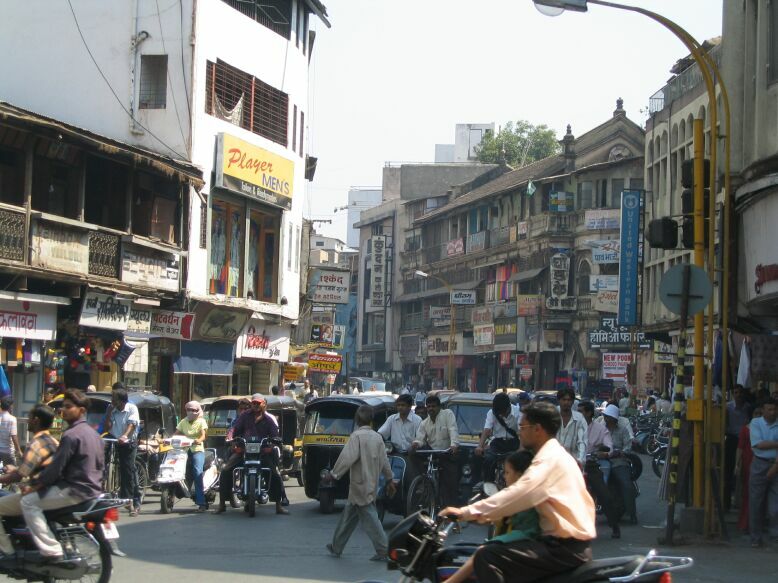
Relatives identify missing loved ones at display


Sisters Sangita Jadhav and Asmita Yadav spent almost two years searching for their brother Deepak Zende, who had been missing since September 2011. Their search met a tragic end on Friday when they found Zende's photograph among the thousands of photographs displayed by the Pune police on the premises of the police headquarters in Shivajinagar.

The Pune police organized a display of as many as 2,227 photographs of unclaimed bodies and murder victims who remain undetected. Besides the sisters, four more people found their missing relatives were able to ascertain the identities of their relatives through the photographs at the display.

Relatives of the missing persons kept coming to the headquarters since morning and anxiously went through the photographs. One of them was 72-year-old Salima Siddiqui.

She had come to the police headquarters to look for her 40-year-old daughter, Nasreen Siddiqui, who is missing for the last two years. "I have checked the photographs displayed by the Pune police as well as those put up at police stations in other cities. But, I could not find her," Salima said. adding, "We are searching for her since she went missing."

Asmita Yadav said, she and her sister were tirelessly searching for their brother Deepak, who was missing since September 15, 2011.

"It is very painful for us is that we came to know that our brother is no more. That, too, on a day when we are performing rituals marking the completion of three months of our father's demise,after our father's death"she said.

Yadav said that while checking the photographs in the display all of sudden she noticed the picture of her brother. She further said, "I was shocked to see the picture of my brother at the display. We will not be able to even perform his last rites as his body has already been disposed of as it was unclaimed. We are now informing our relatives that Deepak is no more."

Rajendra Bhamare, assistant commissioner of police (crime), said as per the directives of the director general of police Sanjeev Dayal, the city police arranged the display of the photographs of persons found dead without any claimants for the bodies and undetected murders.

"Along with the city police, the photographs obtained from the Pune rural police, Ahmednagar police, Satara police and the government railway police were also display," Bhamare said.

He said the Pune police displayed 155 photographs, which included 126 people found dead and 29 photographs of undetected murders, which took place between 2008 and 2013.

The Pune rural police have sent 182 photographs; Satara police, 99 and the Ahmednagar police, 24 for the display. The government railway police have sent 1,767 photographs," Bhamare added.

He said the police received huge response from the people.Since morning the people have started visiting the display.

"We have asked all the police stations in the city to send their data of such persons for the display. Apart from that, we have also sent detailed information about the display to all the complainants, who have lodged the missing person's complaints with the police stations," Bhamare added.

Bhamare said he had maintained a register of such persons, when he was in charge of the social security cell. "We have also kept the register at the display," he added.

Bhamare said along with Deepak Zende (35), the identities of Rameshchandra Karva (50), Satish Pardeshi (40), Shivaji Pawar (60) and Ganpat Kamble (81) were also ascertained by their relatives. "We are expecting more people to visit the display on Saturday," Bhamare said. The display will be open on Saturday between 12 pm to 5 pm.

Saturday 29 June 2013

http://timesofindia.indiatimes.com/city/pune/Relatives-identify-missing-loved-ones-at-display/articleshow/20825990.cms

continue reading

Friday, 28 June 2013

Mass graves of babies scandalize Greece


The unresolved issue of mass graves of babies has made Kaliopi Spanou, Ombudsman in Athens, file a complaint against the administration of Athens cemetery. In 2008, the Ombudsman had prepared a special report on the status and management of the cemetery, but nothing had been done until recently to improve the situation as reported by Greek media. Five years ago, Spanou paid particular attention to the mass burial of babies by cemetery authorities.

She was aware of the problem after the parents of a deceased baby informed that the Athens municipal cemetery authorities had refused to perform the exhumation of the remains of their child. The inspection has made it clear that the cemetery authorities bury all remains of babies in a common grave and cannot carry out the exhumation of a specific child because they do not know to which child the remains belong.

In 2009, the Ministry of Health issued a decree stipulating that deceased babies should be treated like deceased adults and that there should be a separate grave/urn for each of them, indicating the child’s name and surname. "The bodies of babies should be buried separately with all the identifying marks provided by the law for adults, after the issuance of a personalized registration," stipulates the ministerial decree.

The Ombudsman's inspection shows that not only has the right of individual burial been violated but also that the legal procedures as regards the issuance of a permit for a burial place where the remains of the small bodies can be laid have not been met. The investigation of the particular case of which Spanou had been informed found the remains of the buried baby but their exhumation was impossible because the remains of other buried babies would have been removed as well.

The supervising authority has made strict recommendations as regards the procedures which henceforth are to be applied. The municipal services have accepted these observations and the official information indicates that this practice will be over. It is not yet clear whether the municipal cemetery in Athens will suffer some sort of punishment for the creation of unregulated mass graves of babies.

Friday 28 June 2013

http://www.grreporter.info/en/mass_graves_babies_scandalize_greece/9502

continue reading

'Go slow on last rites, bodies don't spread disease'


A group of senior scientists from the Tata Institute of Social Sciences (TISS) has warned the Uttarakhand government, under pressure to finish mass cremations at Kedarnath, against the consequences of burning piled up bodies without a thought to "psychological closure".

TISS's Dr Ravikant Singh, said it's "important" to first try and identify the bodies. "There are the clothes victims have on them. There would be cellphones they've used. Kin need to know if their loved ones have really died," Singh said. "Otherwise, they'll keep hoping that someday the door will open and people they have assumed to be missing — in the absence of concrete evidence of their death — will walk in. There needs to be psychological closure. Else, it might lead to lifelong trauma and hallucinations. What's happening at Kedarnath is wrong."

The doctors said governments often justify mass cremations after natural disasters in the name of diseases bodies spread. "But there are myths that need to be broken," Singh said. "Bodies don't cause epidemics. And have negligible health risks for the public as long as they don't touch or handle dead bodies. Smell is not a health risk in well-ventilated area."

In something that the ITBP hinted at when its DG Ajay Chadda told the Uttarakhand government that "burial of bodies is not in our charter of duties", the scientists said the urgent task is care for survivors. The doctors, who were here first on June 20 and readying a second batch of scientists to reach Uttarakhand, said rapid mass burial of victims is not justified on public health grounds.

Though this might be controversial, the scientists, who said no one was listening to them, have come armed with a presentation for the state that says burial is preferable to cremation. The burial site should be 1.5m deep, at least 200m from drinking water sources, with bodies side by side and not piled up, and with clearly marked spaces for each. "Seeing the body and being able to say goodbye allows an emotional closure," one doctor said.

The recommendations are in keeping with a Pan American Health Organization report of 2004 that has its director Mirta Roses Periago noting: "Regrettably, we continue to be witness to the use of common graves and mass cremations owing to the myths and beliefs that corpses pose a high risk for epidemics."

Friday 28 June 2013

http://timesofindia.indiatimes.com/india/Go-slow-on-last-rites-bodies-dont-spread-disease/articleshow/20808832.cms

continue reading

Death toll rises to 52 after Ndassima mine collapse


The number of people killed when a gold mine in the Central African Republic collapsed at the weekend rose to 52, local officials said.

The previous toll for the disaster, which occurred on Sunday when a landslide destroyed a pit in Ndassima in the centre of the country, stood at 37.

"From the figure of 37 dead on the day of the tragedy, we now have a count of 52 bodies recovered," Didier Ouangai, mayor of the nearby city of Bambari, told AFP.

"The entire population of the Ouaka region is mourning. People can't stop crying. Just imagine, seven members of a same family perished. It is a real tragedy," he said.

Another local official said it was feared the toll could rise even further since 64 miners were known to have been working in the pit, at a depth of around 18m, when the landslide struck.

"We are using moto taxis to transfer the bodies to their families in Bambari," said Jules Gatien Wenceslas Zengagba, a young gold miner taking part in the search effort.

"As soon as this rain-induced collapse happened, it was clear there would be no survivors. In some cases, we retrieved severed heads, this is how we tallied up the casualties," said Mahamat Saleh Ndomakossi, a local official.

The government has declared three days of national mourning from Tuesday.

The gold and diamond mining sectors are key to the economy of the highly unstable, landlocked nation. The diamond business provides directly and indirectly for about a quarter of the population of some 4.5 million.

The infrastructure is rudimentary however, and the Central African Republic has remained one of the world's poorest and least developed countries despite its mineral wealth.

Ndassima lies in territory controlled by former rebels of the Seleka alliance, who ousted president Francois Bozize in March.

Friday 28 June 2013

http://www.news24.com/Africa/News/CAR-gold-mine-collapse-toll-hits-52-20130627

continue reading

No DNA samples, chopper crash victims hard to identify


The bodies of 17 out of 20 IAF, ITBP and NDRF personnel who were killed in Tuesday's helicopter crash are badly mutilated and burnt, and they are still lying at the accident site near Kedarnath, officials said on Wednesday. They said the bodies were beyond recognition and they were in a fix on how to hand them over to the families for cremation as they do not have any previously preserved DNA samples to match with.

Rescue teams are waiting for the weather to improve on Wednesday, when they will fly the bodies to Guptakashi one by one on a smaller helicopter.

"Within 15-20 minutes they would have reached the base at Gauchar. After spending almost a week at Kedarnath under extreme conditions they were finally returning when the helicopter crashed. I did not speak to them but they must have been really happy and excited to return," said Ajay Chaddha, DG ITBP.

Of the 20 men who were killed six belonged to ITBP. The other nine NDRF men who died were also from ITBP and were on deputation.

The next challenge for the officials was to identify the dead. "All of them were in uniform and their bodies are badly burnt. We will preserve the DNA samples but the real challenge would be to hand over the body to the concerned family. As we do not have previous DNA samples stored with us we can match it only with that of the family members, which is a time consuming process," said a senior official. "We will look for some other identification like a ring, chain or any other thing." At least 11 of those killed were aged between 22 and 32.

As of now, 26 ITBP and 60 NDRF personnel were still posted in the Kedarnath, Gaurikund areas. Chaddha said they would be asked to return only after the weather improves.

Friday 28 June 2013

http://www.indianexpress.com/news/uttarakhand-no-dna-samples-chopper-crash-victims-hard-to-identify/1134467/

continue reading

Authorities cremate hundreds of flood victims in northern Indian state of Uttarakhand


Authorities in India on Thursday conducted mass cremations of hundreds of people who were killed by devastating floods and landslides that struck Uttarakhand nearly two weeks ago.

Army helicopters flew Hindu priests to the worst-hit town of Kedarnath in Uttarakhand to conduct funeral prayers before the cremations of nearly 300 bodies that were found buried in silt near the town’s main temple.

State government spokesman Amit Chandola said that authorities had airlifted tons of logs for the cremations, but that the funerals were delayed by intermittent rain. Eighteen bodies were cremated Wednesday before the rain, he said.

With the skies clearing up Thursday, the cremations resumed.

Before being cremated, each body was photographed and DNA samples were collected, Chandola said.

Kedarnath, one of four temple towns in Uttarakhand, is part of a popular Hindu pilgrimage route. Most devout Hindus make the pilgrimage at least once in their lives, and hundreds of thousands of people visit the temples during the summer before the onset of the monsoon season. This year, however, they were caught in early rains in mid-June that led to torrential floods and landslides in the Himalayan region.

India steps up grim search for bodies in flood zone

Rescue workers stepped up the search for bodies Thursday in India’s flood-ravaged north and mass cremations took place as fears grew over outbreaks of disease, officials and reports said.

More than 100,000 mainly pilgrims and tourists have been evacuated from the disaster zone while some 4,000 remain in relief camps after the flash floods and landslides that hit the state of Uttarakhand on June 15.

Rivers swollen by monsoon rains have swept away houses, buildings and entire villages in the Himalayan state, which was packed with tourists and pilgrims travelling to Hindu shrines.

Around 1,000 people have died, the state government has told AFP, although officials have warned the death toll could rise as more victims are found.

Persistent bad weather is hampering evacuations from the relief camps, officials said, and their focus is increasingly on recovering bodies to prevent the spread of disease.

“The remaining people will be evacuated as and when the weather clears,” a senior officer overseeing rescue operations told AFP.

“The bigger worry is finding the scores of dead bodies that may be still buried under debris,” said the officer, who did not want to be named as he is not authorised to speak to the media.

Health officials have warned locals against drinking river water on concerns of contamination from rotting bodies.

Six bodies were found floating in the Ganges in Allahabad on Wednesday, some 650 kilometres (404 miles) downstream from Kedarnath, according to reports, highlighting the difficulty of locating all those who perished.

Rescue workers are clearing away large amounts of debris and scouring remote areas for victims. More than 1,000 bridges have been damaged along with roads, cutting off villages and towns.

A team of police, doctors and firemen has been deployed to the worst-hit Hindu temple area of Kedarnath Valley to recover bodies there, the officer said from the state capital Dehradun.

All survivors in that area have already been picked up. “They are carrying saws, plate-cutters and also saline water which is needed to preserve body parts,” the officer said.

The team includes mountaineers to retrieve bodies found in the jungle, valleys and gorges, and help carry them out on foot, as well as photographers who will send pictures to the police to speed up the identification process.

DNA samples from the bodies are being taken before cremation and are being preserved by the authorities, officials said.

The search for bodies and the cremations came as villagers accused authorities of ignoring the needs of local residents and instead focusing rescue and relief efforts on visiting pilgrims and tourists. “There were 67 houses in our Chandrapuri village out of which 63 were washed away by the Mandikini river,” Birendra Singh, a former army officer, told AFP at a relief camp in Dehradun.

Friday 28 June 2013

http://www.dailytimes.com.pk/default.asp?page=2013%5C06%5C28%5Cstory_28-6-2013_pg14_4

continue reading