Friday, 26 April 2013

Training local communities for air disaster rescue operations


Over the years, aviation stakeholders, particularly sundry experts, have tried to ensure that victims of air accident in Nigeria are responded to rapidly to enhance the survival rate.

Despite these efforts, there are still complaints that the responds time to air emergencies in the country is not encouraging; hence at the end of every attempt at rescuing victims of air disasters, nothing is achieved.

For example, when the ill-fated Bellview airlines’ plane crashed October 25, 2005 at Lisa Village in Ogun state, it took several hours before Search and Rescue (SAR) team and the National Emergency Management Agency (NEMA) and others bodies saddled with the job of or aviation emergencies arrived the scene of the accident. Even residents of the local communities who should have been at the scene soon after the accident occurred, ahead of the SAR and NEMA teams, did not know what to do. Also, even if they would have loved to get to the scene to rescue the victims, the fear of security agents who could harass, or even harm them. Eventually, the entire 117 passengers on board died.

Also, on March 15, 2008, a twin-turbo prop 19-seater aircraft belonging to Wings Aviation crashed in Calabar while on a routine flight from the Murtala Muhammed Airport (MMA), Lagos. It took several days for the hunters in communities closer to the crash site to find the carcass of the aircraft and the remains of the victims.

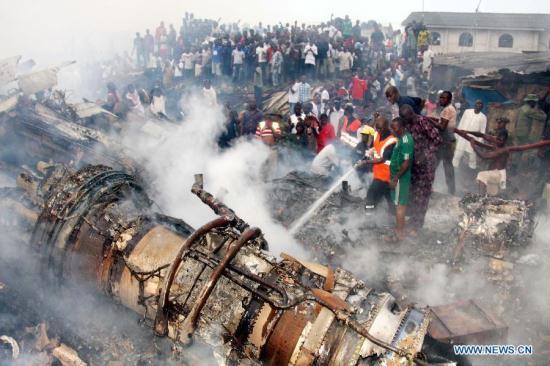
Also, when Dana Air’s MD83 airplane flight 992 crashed on June 3, last year in Iju–Ishaga, the rescue team did not get there on time despite the fact that the aircraft crashed into a residential area. The local communities, rather than trying to rescue victims of the crash, unfortunately watched the victims die. The crowd on the roads leading to the street where the plane crashed, and at the crash site did not help matters as they became a nuisance to genuine rescue activities. The access roads to the crash site were blocked by mostly onlookers, or those who did not have any business being there.

At the end about 160 people aboard the plane and on ground died.

On the other hand, local communities in and around air crash sites oftentimes do not know what to do in the case of emergency, even when they have access to the accident sites.

Lack of training

Aviation stakeholders often argued that the local communities should not be blamed for not helping during air emergencies, because they are not trained to do so, or even given necessary orientation that would enable them even provide information that can help the appropriate agencies. They also argue that there is no way the local communities would join in air accident emergencies when the various agencies concerned with this responsibility are themselves not coordinated.

Oftentimes unfortunately also, according to various respondents, these agencies rather than remain focus for proper coordination of the rescue activities unnecessarily biker over such mundane issues as which of the agency should lead the entire efforts.

Only recent a Boeing aircraft 737-800 series belonging to Lion Air, Indonesia’s largest airline crashed into a river just off the runway of the main airport on the country’s resort island of Bali. All 101 passengers and seven crew members on the flight, which originated from the city of Bandung, were rescued as the aircraft was evacuated after crashing. The feat was achieved because the rescuers responded to the air emergency on time compared to Nigeria where response time usually takes hours.

It was based on the need to ensure that victims of air crashes are rescued on time as done in other countries of the world, and to minimise the casualty rate at such times, that a stakeholders meeting on the matter was convened recently.

Stakeholders speak

The meeting under the auspices of the Airport Emergency Planning Committee was organised to discuss the need to train local communities on air accident emergency and to integrate them into Search and Rescue (SAR).

Speaking at the forum held at the Murtala Muhammed International Airport (MMIA), Lagos, the Chairman, Airport Emergency Planning Committee, Edward Olarerin, said communities around the airport would not only be trained on air emergencies, but be integrated into SARS, National Emergency Management Agency (NEMA) and other bodies that have roles to play in either air emergency or aviation.

He assured that all government agencies at the airport, including the National Emergency Management Agency (NEMA) would partner with the communities in training them for any air emergency situation.

According to him, “we have contacted the local governments around the airport to give us some people that we will train along with our search and rescue operatives. This people will now go back to their communities to enlighten their peers about search and rescue during an air emergency,”

He announced that the Federal Airport Authority of Nigeria (FAAN) and the Nigerian Airspace Management Agency (NAMA) would organised a mandatory two years drill for officials of both agencies.

Speaking at the stakeholders forum, Principal Planning Officer, NEMA, Babatunde Olowokere, said the training of people at the grassroots level is not new to the agency, as it has been training local communities at various local government Areas in the country.

He argued that response to disaster and management should not be left for one agency, and that it should rather be a collective responsibility, if the target goal must be achieved.

According to him, training of grass people “is a continuous exercise, in the sense that we have a goal that disaster is everybody’s business and the more people know what to do during disaster the better for life saving. And it also makes our work easier in the sense that if you give then requisite knowledge and skill on how to manage disaster when it happens, they will be able to do that before because disaster normally happens at a particular place that is the grass root.”

The NEMA official added that if the local communities are trained and equipped on what to do in the event of an air accident, they would know what to do before NEMA and other agencies get to the site of the crash.

He particularly mentioned Ifako-Ijaye, Local Government Areas, as one of the local governments where local communities needed to be trained and equipped on air accident emergences, since according to him, that is the route that aircrafts take.

“If we train them and equipment them on what to do before we even get there they would have started doing something in making sure that lives are not loss and that is what we have been doing. More so, particularly these local government Ifako-Ijaye, we know that, that is the route that the plane takes, we want to carry out advocacy on what you do when there is a crash and also to train them on how to carry out search and rescue operation especially in giving first aids to victims that are trapped, that is the training” he said.

He promised that the agency will carry out advocacy on what you do when there is air crash, adding that NEMA is also training local communities on how to carry out Search and Rescue (SAR) operations especially in the area of administering first aid to trapped victims.

Challenge

Olowokere also pointed out that one of the major challenges faced by the agency was that most of the local government areas in the country are reluctant to collaborate with the agency on disaster.

“The challenge we have is the corporation from the local government, if they are willing to collaborate with us, our job will be simpler. Our men have been trained to carry out such exercise” he said

Speaking on the equipment to carry out rescue operations, he said that all over the world organisations that manage disaster does not have all the equipment used in carrying out operations, adding that they sign a Memorandum of Understanding (MoU) with other organisations.

He added that in Nigeria it is not different, as NEMA already signed MoU with major construction companies such as Julius Berger, Dantata and others, adding that whenever there is any disaster, these companies don’t wait until they are called they just go there because there is an existing MoU.

On his part, an aviation analyst, Mr Olumide Ohunayo, said that it is a good beginning as it is not only aimed at enhancing safety but also improving emergency response time. Ohunayo, hoped that the training will also teach the local communities how not temper with aircraft parts at the site of the accident, adding that is unfair to attribute the inability of rescuers to get to the site of Dana crash on time led to the death of close to 160 people.

According to him, “I quite agree with the committee and look forward to the training and incorporation of those trained in the search and rescue team. It Is to enhance safety, improve emergency responsive time. It is unfair to link with Dana crash; I bet you Nigerians would have gone into that aircraft if there was any semblance of life. They were all dead because of the impact, coupled with internal and external smoke/fire that made it impossible to open the aircraft doors. I just hope the training will also educate them on the need not take anything away from crash site or touch aircraft parts seen at the vicinity of the crash”

An aeronautic engineer, Sheri Kyari, also agreed on the need to train local communities in air emergences, describing it as a step in the right direction, adding that it of the airport emergency plans.

He however, argued that finance to carry out the laudable programme could be a hindrance, urging the Airport Emergency Committee to ensure that the training programme is carried out in collaboration with NEMA so as to tap from its wealth of experience and facilities on emergency response and management.

The President of Aviation Round Table (ART) and former Nigeria Airways Limited (NAL) Pilot, Capt Dele Ore agreed that the committee should ensure training of local communities at local government levels so that when there is air emergency, they know what to do.

According to him, “we are beginning to get to the real issue that has to do with air accidents. They should continue to strive and should not rest on their oars. It is a good step in the right direction.”

He also called for a sensitisation programme for people in the airport environment, where staff of agencies at the airport will be taught on what to do when there is air emergency.

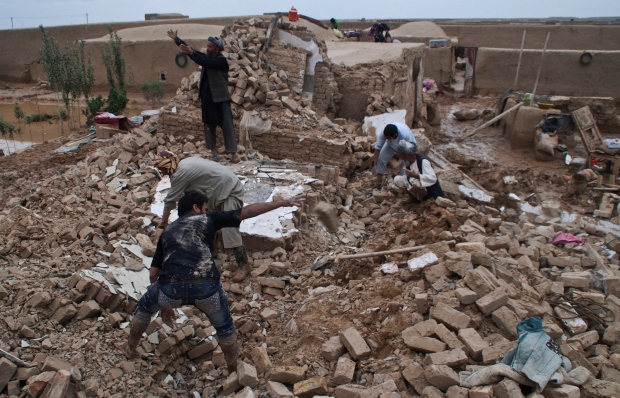
Friday 26 April 2013

http://dailyindependentnig.com/2013/04/training-local-communities-for-air-disaster-rescue-operations/

continue reading

Dozens found alive as Bangladesh tragedy toll hits 250


Dozens of workers were found alive on Thursday as they huddled in the wreckage of a collapsed garment factory bloc in Bangladesh, a rare success for rescuers who have pulled out 250 bodies.

In an announcement greeted by wild applause from thousands of relatives at the scene, an army spokesman initially announced that 40 survivors had been discovered together in a room, but the figure was later revised to 24.

Screams filtering through the cracks in the concrete suggested more survivors were awaiting help, but a steady stream of bodies saw the recorded death toll almost double on Thursday and hundreds remain unaccounted for.

The collapse of the building on Wednesday on the outskirts of the capital is the worst industrial accident in the country’s history and is the latest in a spate of tragedies in the “Made in Bangladesh” clothing sector.

It prompted new criticism of Western brands who were accused by activists of placing profit before safety by sourcing their products from the country despite its shocking track record of deadly disasters.

Hundreds of thousands of workers walked out of their factories in solidarity with their dead colleagues on Thursday as flags flew at half mast and a national day of mourning was held.

“The death toll is now 250,” Moshiuddowla Reza, a senior police officer of Dhaka district, told AFP from the disaster site, adding more bodies were being recovered and that most of those who died are female garment workers.

Safety problems and poor working conditions plague the textile industry in Bangladesh, the world’s second-biggest clothing exporter after China.

Last November a blaze at a factory making products for Walmart and other Western labels left 111 people dead, with survivors describing how fire exits were kept locked by site managers.

Only British low-cost fashion line Primark and Spanish giant Mango have acknowledged having their products made in the collapsed factory bloc, while a host of brands including Wal-Mart and France’s Carrefour are investigating.

Italian fashion line Benetton denied having a supplier in the building but a local workers’ group provided documents showing apparent orders from the company in August and September last year.

The company did not reply to repeated requests from AFP for comment.

Survivors said the building developed visible cracks on Tuesday evening, but factory bosses had demanded staff return to the production lines despite a police evacuation order.

One manager for the New Wave Styles company, one of the five manufacturers in the building, told how the owner had consulted an engineer but then ignored his warnings.

“Those who’re involved, especially the owner who forced the workers to work there, will be punished,” Prime Minister Sheikh Hasina told lawmakers.

“Wherever he is, he will be found and brought to justice.”At the scene of the disaster, relatives desperate for news descended in their thousands, clutching photographs and hoping to see their missing loved ones pulled out by firemen and soldiers.

“I became so thirsty that at one stage I drank my urine,” said an ecstatic Abul Hossain, 23, as he was dragged from the ruins more than 25 hours after the disaster struck at around 09:00 am (0300 GMT) on Wednesday.

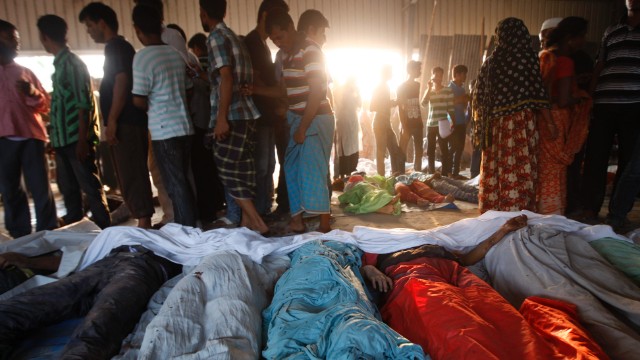
But others were less lucky, with body after body laid out on the grounds of a nearby school for identification.

“I’ve seen all the bodies. My sister was not among them. She is also not in any of the hospitals,” said Mukta Begum, holding the photo of her younger sibling Suryaban, a garment worker.

Babul Akhter, head of the Bangladesh Garments and Industrial Workers Federation, told AFP that the factory owners, who have gone into hiding, would likely escape justice despite the outcry.

“Garment entrepreneurs are above the law here. There is hardly any example of an owner being prosecuted for this kind of outright murder,” he said.

“The Western retailers are also complicit because they give a blind eye to the manufacturers’ shoddy practices.”Before the 24 were found, Ahmed Ali, the national fire service chief, told AFP that 20 people had been rescued.

“We could still hear desperate cries for help from several places underneath the concrete heaps. Volunteers sent food and water to them through holes,” he said, adding that rescuers would work through the night under floodlights.

“We’re confident we can find more people alive even on Friday.”

Friday 26 April 2013

http://dawn.com/2013/04/25/dozens-found-alive-as-bangladesh-tragedy-toll-hits-250/

continue reading

Thirty-eight feared dead in Russian psychiatric hospital fire


A fire raged through a psychiatric hospital north of Moscow on Friday and 38 people were feared dead, Russian officials and media reports said.

There were believed to have been 41 people in the building when the fire broke out - 38 patients and three staff members - and three escaped, the Emergency Situations Ministry said. A ministry official said a nurse led two patients to safety.

The ministry said emergency workers had found 12 bodies so far and that the fire, which broke out in the middle of the night, had been extinguished.

A Health Ministry official confirmed that 38 people were feared dead, state-run RIA news agency reported.

Interfax, a news agency, reported it was a “special regime” hospital, meaning that patients were not free to leave.

It is unclear whether this was a factor in the high death toll, as it has been in past fires in psychiatric institutions in Russia.

There were bars on the windows of the single-storey building in Ramensky, 120 km (70 miles) north of Moscow, and some patients apparently died while trying frantically to make it to the main entrance to escape. Many others died in their beds, Itar-Tass cited an unnamed source as saying.

"After the fire alarm went off, a nurse ... saw fire at the end of a corridor. She tried to put it out but could not and led two patients out," RIA quoted emergency official Yuri Deshyovykh as saying.

Fires claim a sad and steady death toll in Russia, far higher than in developed countries. Fire exits are locked, blocked by boxes in storage or simply nonexistent. Barred windows in nursing homes and hospitals have been the cause of horrendous death tolls, as have fires in student dormitories. A fatalistic Russian shrug or a bribe to fire inspectors are all too common responses to dangers.

Fires at state institutions in Russia such as hospitals, schools, drug treatment centres and homes for the elderly or handicapped have caused numerous casualties in recent years and raised questions about safety measures, conditions and escape routes.

More than 12,000 people died in fires in 2011 and more than 7,700 in the first nine months of 2012 in Russia, where the per capita death rate from fires is much higher than in Western nations including the United States.

Earlier this spring the building of one of Russia’s most prestigious theater schools burned, though with no casualties; the attic had been packed with drapes, costumes and the tinder of wooden set materials, all of which burned vigorously and quickly. The Emergency Situations Ministry said the fire started on or under the roof of the hospital at about 2:20 a.m. (2220 GMT on Thursday), but did not give its cause.

Friday 26 April 2013

http://www.reuters.com/article/2013/04/26/us-russia-fire-idUSBRE93P02P20130426

http://www.nytimes.com/2013/04/26/world/europe/36-killed-in-fire-at-russian-psychiatric-hospital.html?_r=0

continue reading

Thursday, 25 April 2013

40 feared dead in Liberia building fire


Over 40 people are feared burnt to death when a building in the Waterside commercial district in central Monrovia was destroyed by an inferno, local authorities said.

The casualties include members of a Lebanese family and looters who had gathered in the building on the pretext of helping to fight the fire that broke out on Wednesday night.

The building, owned by the famous Fouani Brothers and estimated to be more 50 years old, collapsed on the victims.

Capt. Augustine Kolubah of Liberia's National Fire Service said two firefighters were among those who died and that five bodies had been recovered.

He said two others from the Liberia Petroleum Refining Corporation had narrowly escaped death and that five bodies have so far been recovered in the debris.

Armed officers of the United Nations Mission in Liberia (UNMIL) and the Liberia National Police have been deployed to the area to assist in the search for more bodies.

Witnesses said some of the casualties included looters who entered the building on the pretext of fighting the fire. The 50-year-old building collapsed during the fire.

The cause of the fire wasn't identified.

Thursday 25 April 2013

http://www.nation.co.ke/News/africa/40-killed-in-Liberia-fire-outbreak/-/1066/1758208/-/vaoafy/-/index.html

continue reading

Between two earthquakes - Chinese media moves from tabloid to tender


More than 4,000 aftershocks have been recorded since the earthquake that struck Sichuan Province, in the southwest of China, last Saturday.

The death keeps rising, with dozens still missing reports Xinhua. More than 11,470 people were injured in the 7.0 magnitude earthquake.

While the relief effort continues in Sichuan Province, with 22,000 Chinese troops deployed in the area, the disaster has sparked a debate on Chinese Internet about how the press should cover such news, reports Caixin media.

Five years ago, when a massive earthquake struck Sichuan Province, killing more than 80,000 people, numerous photos of dead bodies were shown on television and in the newspapers. The media circus that descended on Sichuan was seen as many as highly insensitive, with journalists hounding the victims’ families and putting on a sensationalist show.

The number of reporters who rushed to the disaster site took up the time and energy of the local authorities, which had other – more important – things to do, obviously.

Xinhua reports on a Chinese student studying in Japan who wrote an article entitled How the Japanese media reported the 2011 earthquake off the Pacific coast of Tohoku, saying that Japanese reporters had stayed calm and “released sufficient information without violating privacy; provided data without being sensational; offered warnings without prompting panic."

According to Caixin media, although China is prone to disasters, its press seriously lacks experience in ethics. This is because of the lasting influence of the propaganda machine.

This time the reports on the Sichuan earthquake focused on rescue efforts and on heart-warming stories – but still avoided talking about important issues.

Many are happy, though, that the Chinese media is starting to show signs of maturity in the way it covers disasters.

The media is also changing the way it is reporting news. The People's Daily newspaper reports out that the Chinese television stations have adopted the foreign media’s practice of interrupting programming to provide updates on the earthquake.

There is also a new phenomenon, a kind of “grassroots Internet journalism,” that has appeared on China’s micro-blogging sites, as well as on WeChat, a popular mobile phone text and voice messaging communication service. These new medias played an important role in the aftermath of the earthquake and during the rescue effort.

Thursday 25 April 2013

http://www.worldcrunch.com/culture-society/between-two-earthquakes-china-media-moves-from-tabloid-to-tender/china-sichuan-earthquake-social-crisis/c3s11502/#.UXl5ApNzA34

continue reading

How do I become… an embalmer?


As an eight-year-old, Kevin Sinclair would fetch the Hoover from the chapel beneath the family flat, see dead bodies in coffins and carry on. "They were just sleeping," he says casually. "That's what my parents would tell me." What the average person would have considered macabre, he saw as normal and merely a matter of getting used to.

And after getting used to it, he followed his father into the funeral business and became an embalmer, a job he has been doing for 22 years. He co-founded the Feltham-based London School of Embalming in 2006, where he embalms and teaches.

A typical day starts with a delivery, but not your standard postal influx. Around eight to 10 bodies released from hospitals, nursing homes or private residences arrive ready for the embalming to begin. During the week, he teaches as he embalms. Under supervision, students have the opportunity to learn the craft with the deceased.

In layman's terms, the practice comes down to a trinity process of "sanitation, preservation and presentation". Once the body is washed, the deceased are then injected through the arterial system with a formaldehyde-based fluid which is used as a preservative as it plasticises the tissues.

The presentational aspect of the procedure is an area a lot of aspiring embalmers mistakenly hope to specialise in, but Sinclair says: "In the UK you have to train in all areas, you cannot specialise to only be a mortician."

Personality is more important than academic prowess for would-be embalmers. Although having a set of GCSEs is essential, an average C grade will do. To get a place at embalming school you will need to get through an interview. This is designed to "get a sense of the person's mental attitude because it can be traumatic", Sinclair says. And after passing a foundation exam which includes a mix of maths and English questions organised by the British Institute of Embalmers, the student begins a two-year course.

An art background will see you a long way; a creative flair teamed with a strong stomach is ideal. Inevitably, Sinclair has seen it all. As a former stonemason his creative skills allow him to restore dismembered bodies, with the aid of a photograph, to a fully identifiable condition. From burns to car accident victims, he uses a special facial wax to rebuild tissues and, if needed, reattach bodily features such as ears. Despite his life-long services to the profession, he is met with a challenge "every day, every day" he repeats. "No two deceased are the same. You have to rectify the situation like a puzzle."

Sinclair displays a very practical but reverential disposition about the procedure. However, he admits that having to embalm children or friend's relatives can be an emotional challenge: "You start associating the love you give your own family to the deceased."

In the embalming room, it's a solo job: Sinclair, the deceased and background music. What does an embalmer listen to? "What do you think, organ music or something?" he roars with laughter. "It's either the radio or my iPod." Being the high-pressure job it is, water-cooler conversations don't exist. The only time he can have a therapeutic discussion about work is during meetings with fellow embalmers where, he says, "you can talk and be understood". It is not a conversation starter at the dinner table.

Word-of-mouth is the gateway to progressing as an embalmer. Once qualified you need to be recommended. With Sinclair's catalogue of contacts in the industry, "people will contact me with an opportunity in an area for an embalmer to start", which gets passed on to students nearing the end of the course.

Jobs can take you across Britain and beyond for a "mini-adventure". Sinclair has provided his services from Afghanistan to the Falklands. Within close proximity to Heathrow he has a "flight-ready kit" for repatriation and rescue operations.

Among the job's many eccentricities are the outfits the deceased have chosen to be dressed in. From the bizarre to the sentimental, Sinclair has adorned people in Father Christmas outfits, cycling gear with aerodynamic speed hats, biker's leathers, and clown costumes. One request was particularly special: "A woman had asked to be put in her wedding dress, made out of parachute silk from the second world war."

It is not a lucrative profession – the average embalmer earns between £18,000 and £27,000 – but the rewards are far richer. The feedback from grieving families who value the achievement of dignifying the deceased with a sense of peace is the mark of a job well done.

Thursday 25 April 2013

http://www.guardian.co.uk/money/2013/apr/25/how-become-embalmer

continue reading

The disappeared in Turkey: Justice central to Kurdish peace process


Justice for the thousands of state-perpetrated killings and disappearances of Kurdish civilians in the 1990s should be an essential part of the peace process under way in Turkey, Human Rights Watch said today. Human Rights Watch released a video outlining the events of that era, with family members whose loved ones were killed describing the lack of justice ever since. Ongoing talks between the Turkish government and Abdullah ร–calan, imprisoned leader of the armed Kurdistan Workers’ Party (PKK), aim to end a decades-long conflict to further human rights and democracy in Turkey.

“Justice for the crimes of the 1990s is an important element among the human rights steps to resolve the Kurdish issue,” said Emma Sinclair-Webb, senior Turkey researcher at Human Rights Watch. “Ending decades of impunity for security forces and other public officials for the serious human rights violations perpetrated in the 1990s will take a real commitment from the government and prosecutors.”

In the new video, families of victims talk about their long search for justice for the execution-style killings, disappearances, and deaths in custody carried out by state agents in southeast Turkey and in some of the country’s main cities in the early 1990s. The video explains that Turkey’s 20-year time limit on criminal investigations for murder means that without urgent action there may soon be procedural obstacles to pursuing prosecutions in cases from the early 1990s.

The video includes interviews with some of the many families of victims who, in the absence of domestic investigations and prosecutions, brought their cases to the European Court of Human Rights, after they were denied justice in the Turkish courts. In repeated judgments against Turkey, the European Court found violations of the right to life and a pattern of failure to conduct effective investigations. These families continue to seek the prosecution in Turkey’s courts of those who killed their relatives and want to see justice enforced at home too.

In the most recent European Court ruling on April 16, 2013, in the case of Meryem ร‡elik and others, the court held Turkey directly responsible for the July 1994 disappearance of 12 men who are presumed dead, and the killing of another, following a military operation in a village in Hakkari province. The court further ruled that there had been a failure to investigate the 13 cases or the circumstances leading to the death of a fourteenth man whom soldiers allegedly shot dead in the village during the operation. The court ordered compensation to the families totaling €1.4 million.

In spite of many such rulings over the years, the Turkish authorities have taken few steps to put military personnel and state officials suspected of these crimes on trial.

Many of the cases from the period 1993 to 1996 may soon reach the time limit in domestic law for prosecutions, and the responsibility falls to both government and prosecutors to overcome the barrier presented by the statute of limitations in these cases. They can take steps to set aside the statute of limitations, either as a matter of case law or through legislative changes or both. Turkey has an obligation under international law to prosecute these serious human rights crimes and to enforce the findings of the European Court judgments, Human Rights Watch said.

A Human Rights Watch report in September 2012 identified the statute of limitations as a key obstacle to accountability for these crimes.

Human Rights Watch has repeatedly explained why statutes of limitations cannot be applied to prevent prosecutions of serious human rights abuses. It made the case in a legal opinion presented to the justice minister in January that a change in the law to lift the statute of limitations in these cases would allow for their future prosecution and would not violate the principle of legality in international law.

A reform package passed by Turkey’s parliament on April 11 lifted the statute of limitations on investigating and prosecuting the crime of torture. The change offers an opportunity for accountability for acts of torture by security officials in the 1980s and 1990s, for which investigation and prosecution had previously been barred.

“Following the very positive step Turkey’s parliament took in the latest reform package to end time limitations on prosecuting torture cases, the government should ensure that there are no obstacles to justice for killings and disappearances by state forces or officials,” Sinclair-Webb said.

“European Court rulings such as the most recent one concerning the disappearance of 12 villagers in Hakkari are a reminder that the Turkish authorities have a duty to hold to account military, police, and other state officials for killing and disappearing civilians at the height of the conflict with the PKK in the early 1990s,” Sinclair-Webb said. “Prosecuting the crimes of the 1990s era would also help build the foundations of lasting peace.”

Prosecutors in Ankara have invoked the European Court judgments in decisions not to bar some old investigations into political killings despite the statute of limitations, citing a failure to conduct effective investigations in the past and the need to combat impunity. While the prosecutors’ actions should be supported and represent an important step forward, they should be complemented by legal reform that abolishes the application of the statute of limitations for killings involving state officials in the same way as for torture, Human Rights Watch said.

In two cases, Human Rights Watch interviewed relatives of victims who are still seeking justice in Turkey, despite winning cases at the European Court of Human Rights.

Adnan ร–rhan’s father, Selim ร–rhan, an uncle, Hasan ร–rhan, and cousin, Cezayir ร–rhan, were detained by a unit of the Bolu Commando Regiment during a military operation against their hamlet in ร‡aฤŸlayan village in the Kulp district of Diyarbakฤฑr province in May 1994. After a 2002 judgment (ร–rhan v Turkey) in which the European Court held Turkey responsible both for their deaths and for failing to conduct an effective investigation, among other violations, the Turkish authorities took no steps to reopen the investigation to identify and prosecute those responsible.

Despite a DNA test that in 2007 identified bones discovered in a mass grave as belonging to Adnan ร–rhan’s father and uncle, the Diyarbakฤฑr prosecutor’s office has still not actively pursued an investigation or interviewed witnesses. Almost 19 years after the disappearances, without resolute steps to investigate, the statute of limitations in the case will expire in May 2014.

Human Rights Watch also interviewed Resul Kaya, who was among dozens of villagers whom soldiers tortured during a military operation in February 1993 against their village, Ormaniรงi, in the Gรผรงlรผkonak district of ลžฤฑrnak province. Seven among the villagers had to have feet or toes amputated as a result of incurring frostbite and then gangrene after being made to walk through snow then to stand for many days in cold water while in detention. Kaya described to Human Rights Watch how a group of soldiers had set fire to him and attempted to burn him to death.

The villagers from Ormaniรงi took a case to the European Court, which ruled in Ahmet ร–zkan and others v Turkey that the Turkish authorities were responsible for torturing them, for the death of one man, and for burning down their homes. Despite the ruling, no one in Turkey was subsequently put on trial for these crimes.

Kaya also told Human Rights Watch that in June 1994 in a second military operation against the village, soldiers summarily executed his father, Mehmet Kaya, and three other villagers and that there had never been any investigation into the killings. After speaking to Human Rights Watch, Resul Kaya and families of the other villagers executed in June 1994, filed a new complaint with the Cizre public prosecutor and expect to be called in the coming days to testify before the prosecutor as witnesses and plaintiffs in the case.

The third interview in the Human Rights Watch video is with Saadet Dayan and Halil Dayan, concerning the death in custody in January 1994 of Ebubekir Dayan, an imam in Cizre. Saadet Dayan, his widow, told Human Rights Watch that her husband was summoned to the police station and detained for over two weeks. She told how she went to the morgue to identify his dead body, which bore the signs of torture.

She showed Human Rights Watch the possessions her husband had with him when he was detained and that the police had returned to her with his body. For 19 years she has preserved Ebubekir’s watch and takke, the hat he wore during prayer, his comb, belt, and a box of matches.

Halil Dayan, Ebubekir Dayan’s father and himself an imam, told Human Rights Watch that the family is still seeking justice for the torture and killing of Ebubekir.

Thursday 25 April 2013

http://www.hrw.org/news/2013/04/25/turkey-justice-central-kurdish-peace-process

continue reading

Tattoos honor victims of bombings


A week after learning his friends escaped harm in the Boston Marathon bomb attack, Adam Myerson was squirming with pain in a tattoo-parlor chair, fulfilling an urge that had been building for days.

“Anyone who has tattoos, when you have something important you want to mark it,” said Myerson, a professional cyclist and coach who lives in Dorchester. The neighborhood was home to an 8-year-old boy killed in the attack that took the lives of two others and wounded more than 260.

Since the bombings at the finish line of the city’s celebrated marathon, Boston tattoo artists have received a surge of business from people looking to move past the violence of April 15 by putting permanent mementos on their bodies. Some chose the skyline inside a heart, others the outline of Massachusetts. Myerson went with the B logo of the Boston Red Sox baseball team in yellow and blue: marathon colors.

Others have the city’s 617 area code in the tattoo design.

“I did it on my leg for all the people who lost their legs to kind of pay tribute in that way,” said the 34-year-old mother of two.

Mulysa Mayhem, owner of Good Mojo tattoo salon in Beverly, has had customers lined up since Saturday for marathon-related tattoos. Among the popular styles are “B Strong,” “Boston Strong” (set beneath the Boston skyline) and marathon logos. All proceeds from the marathon-related tattoos, which range from $50 to $100, will benefit The One Fund Boston (one
fundboston.org).

“It hit home,” Mayhem 
said. “A lot of those guys who are first responders are people we tattoo.”

Colleen Cushman was one of the first clients Tuesday at Good Mojo to have the skyline and “Boston” tattooed onto the left side of her lower back.

Watching the way the city reacted -- shutting itself down to apprehend the suspects -- “the rest of the country finally understood,” Myerson said. “This is who we are.”

He wanted that local pride on his body, he said, and now it shows just above his elbow on the back of his arm. Feeling Helpless

Tattoo artist Bill Byers said a friend was near enough to the blasts to be engulfed in their smoke and others he knew had nearby businesses or were running. His sister had lost a leg to disease, he said, and he felt for those maimed in the bombing.

“I’ve seen what it’s like to have to learn to walk again,” he said.

He plans to donate the $900 he’s collected in tattooing Boston commemorations to a victims’ charity.


“A lot of people feel helpless and want to do more, and it is our town,” he said. “It’s not like just giving $100 bucks. It’s making a statement.”

Chameleon Tattoo & Body Piercing in Cambridge had about 20 people come in April 20, five days after the bombings, to get Boston-themed ink as part of a fundraiser. The shop raised $5,000 for One Fund Boston, a charity for victims’ medical care, said tattoo artist Reuben Kayden, 40, of Somerville.

“Getting tattooed is a way to never, ever forget. It’s embedded in you,” Kayden said.

Julie Clifford, 33, is a hairdresser whose salon is a few blocks from the second explosion. Many of her tattoos, she said, are a way to commemorate a part of her life.

“I’ve lived in Boston for 15 years and it feels like home,” she said. “It wasn’t fun to have your home rattled.”

She got her newest tattoo, an abstract outline of city landmarks with a small heart overlooking them, from Byers, who also is donating his proceeds to the victims. Her friend and her husband are also getting tattoos, she said.

Other parlors are planning fundraising ink sessions in the days to come, including Regeneration Tattoo in Allston. The shop’s manager, Edwin Marquez, is from Watertown, the suburb where bombing suspect Dzhokhar Tsarnaev was caught by police.

“Birth, death, disaster -- whatever it is, people want to get tattooed,” he said.

Thursday 25 April 2013

http://www.bloomberg.com/news/2013-04-25/tattoo-ink-memorializing-boston-bombings-with-body-art.html

http://bostonherald.com/news_opinion/local_coverage/2013/04/tattoos_honor_victims_of_bombings

continue reading

14 people buried in Ecuador landslide


A total of 14 people were buried by a landslide on Tuesday in Ecuador's coastal province of Esmeraldas, Xinhua news agency reported.

Esmeraldas mayor Ernesto Estupilan said the landslide occurred Tuesday night at a site called Tabete in the Chinca district of Esmeraldas, burying some 14 people who lived in two homes.

Six bodies were recovered from the landslide by rescue units on Wednesday.

The mayor, who had earlier reported 13 buried victims, said search continued for the rest of the victims despite difficulties accessing the tragedy site.

The landslide covered an area of 300 square metres and ranged from 4 to 20 metres in height

Thursday 25 April 2013

http://www.nst.com.my/latest/14-people-buried-in-ecuador-landslide-1.263879

continue reading

Search for survivors continues, evacuation order ignored before Savar building collapse


One day after Wednesday's collapse, as hundreds of rescuers clawed through the rubble, the cries of trapped survivors could still occasionally be heard, with the screams of a woman pinned between concrete slabs mingling with the wails of distraught relatives waiting for news or collecting bodies. An enormous section of the concrete structure appeared to have splintered like twigs.

The disaster in the Dhaka suburb of Savar came less than five months after a blaze killed 112 people in a garment factory and underscored the unsafe conditions faced by Bangladesh's garment workers, who produce clothes for global brands worn around the world.

After the cracks were reported Tuesday, managers of a local bank that also had an office in the building evacuated their workers from the site and suspended their operations. But the garment factories continued working, ignoring the instructions of the local industrial police, said Mostafizur Rahman, a director of the industrial police.

The Bangladesh Garment Manufacturers and Exporters Association had also asked the factories to suspend work starting Wednesday morning, just hours before the building fell.

"After we got the crack reports, we asked them to suspend work until further examination, but they did not pay heed," said Atiqul Islam, the group's president.

2,000 people rescued from wreckage

On Thursday morning the odour of rotting bodies permeated holes cut into the building and rescue workers continued to search for more survivors and victims. Junior minister for home affairs, Shamsul Haque, said that by late Thursday morning a total of 2,000 people had been rescued from the wreckage.

Brig.-Gen. Mohammed Siddiqul Alam Shikder, who is overseeing army rescue teams, said the death toll had climbed to 194 as of Thursday afternoon.

Dozens of bodies, their faces covered, were laid outside a local school building so relatives could identify them.


The garment manufacturers' group said the factories in the building employed 3,122 workers but it was not clear how many workers were in the building when it collapsed.

A clearer picture of the rescue operation is likely to be available by afternoon, officials said.

Searchers worked through the night to probe the jumbled mass of concrete with drills or their bare hands, passing water and flashlights to people pinned inside.

"I gave them whistles, water, torchlights. I heard them cry," said fire official Abul Khayer late Wednesday, as he prepared to work late into the night.

Abdur Rahim, an employee who worked on the fifth floor, said a factory manager gave assurances that the cracks in the building were no cause for concern, so employees went inside.

"After about an hour or so, the building collapsed suddenly," Rahim said. The next thing he remembered was regaining consciousness outside. 3 storeys added illegally to building, official says.

On a visit to the site, Home Minister Muhiuddin Khan Alamgir told reporters the building had violated construction codes and that "the culprits would be punished."

Abdul Halim, an official with the engineering department in Savar, said the owner was originally allowed to construct a five-storey building but he added another three storeys illegally.

Local police Chief Mohammed Asaduzzaman said police and the government's Capital Development Authority have filed separate cases of negligence against the building owner.

Thursday 25 April 2013

http://www.cbc.ca/news/world/story/2013/04/25/bangladesh-building-collapse-garment-factories-evacuation-order.html

continue reading

Two more bodies found in Rizal landfill


Two more workers buried in a mountain of garbage at the Rizal Provincial Sanitary Landfill last Friday were identified Thursday morning, authorities said.

Calabarzon Police director Chief Superintendent Benito Estipona identified the victims as Eddie Malano and Rubidico Olog.

Malano, whose body was found at around 3:30 a.m., was identified through the motorcycle key in his pocket, according to Estipona and Dennis Taguno of the Metropolitan Manila Development Authority (MMDA) rescue team.

Authorities said only half of Malano's body or his lower extremity was recovered. The other half of his body has yet to be found.

The body of Olog, meanwhile, was found at 9:15 a.m.

On Wednesday morning, the rescue team recovered the body of Garry Balahibo inside the backhoe that was also buried in last Friday's accident.

Balahibo was the operator of the backhoe.

Search and retrieval operations are still ongoing for Pablito Esto, also a landfill worker who went missing after the garbage dump collapsed.

The victims were conducting clearing operations for draining water in the area when the incident occurred on Friday.

Thursday 25 April 2013

http://www.abs-cbnnews.com/nation/regions/04/25/13/one-and-half-bodies-found-rizal-landfill

continue reading

Digging up the past in Halbe


In the forests around Berlin lie perhaps tens of thousands of bodies, victims of the fierce battles of WWII and the vagaries of history. One man is digging up this past, determined to give the dead a proper burial.

The Battle of Halbe in Brandenburg, eastern Germany, and many other similar battles during the Red Army’s gradual march towards Berlin, raged in the last days of World War Two, in April and May 1945. Estimates vary as to how many soldiers and civilians died, with the Russians claiming to have killed about 60,000 Germans in Halbe alone, and similarly high losses exacted on the Red Army. It is estimated that more than 100,000 civilians got caught up in the battles too as they attempted to flee westwards ahead of the advancing armies. Hundreds of thousands more were involved in other battles as the Eastern front moved inexorably west.

Today in the cemetery in Halbe, about 29,000 people, so far, have been buried, many in unmarked graves, but tens of thousands more still lie in the Brandenburg pine forests where they fell. The Volksbund's "Waldfriedhof," or forest cemetery in Halbe, (maintained by the German war graves' commission) is heavy with history. Tall pine trees stand silently above row upon row of graves, some bearing names and some just listing a number of soldiers and civilians whose remains have been interred beneath the simple plaques.

One man's battle

Joachim Kozlowski is the man in charge of finding these soldiers in the forests and burying them in cemeteries like Halbe, which is one of the biggest war cemeteries in Germany. He has a personal reason for trying to identify fallen soldiers too.

"My family history is such that my great grandparents were born in Kiel and died there," he tells DW. "But by the time of the Second World War my grandparents had resettled in East Prussia. They had five children: my mother, two sisters and two brothers, Kurt and Max, and the two brothers have been missing ever since the war. One definitely died somewhere in East Prussia, and we have information that the other one was sent to the elite SA unit, the 'Feldherrnhalle' in Berlin in 1944, but then we lost any trace of him."

Kozlowski works mostly on his own on a daily basis, but he's part of a much wider team from the German war graves commission (the Volksbund Deutsche Kriegsgrรคberfรผrsorge) and sometimes he calls in teams of diggers, or bomb disposal experts when he uncovers a big grave. He is not allowed to dig without having the bomb disposal teams on standby; because as well as human remains these forests still sometimes turn up unexploded ordnance too.

'The dead have the right to rest in peace'

Stomping through the forest in his warm winter boots, Kozlowski is practical and determined. "We find the dead in all sorts of places and we bring them to the graveyard. The dead have a right to rest in peace. A dignified burial can only really be in a proper graveyard. It’s not just a case of me finding a mass grave of 500-600 bodies, sticking a cross on top and saying, that’s me done." He explains that once he has found bodies, a process of meticulous identification starts where he uses photos and written records to catalogue everything he finds. Then he has to try and cross match it with war records of the period and lists of the still missing.

Sometimes he also digs up the unmarked graves within the cemetery to further identify who might lie beneath the crosses. "When I find dog tags or other bits of information that might identify the soldiers, that can really help. I send it all to the Wehrmacht's information center. There they have information on millions of soldiers. So it's easier for them to match up information I've found with potential people and then see if there is up to date contact information for that person's relatives so they can be told we've found their missing soldier."

Historical CSI

Kozlowski is a former soldier and paramedic himself, and his job today is like a kind of historical CSI (Crime Scene Investigator), forensically piecing together history from the tiny fragments of a person's life that he finds.

"When I find soldiers in the hills or mountains they often have with them other means of identification. This might be a wedding ring, or a lucky charm, or something that their children or their family gave them to carry, with initials or a name on it. Perhaps an ink pen with initials, or glasses, anything personal."

Identifying as many people as possible is important for Kozlowski, not just for the dead, but the living too. He thinks that grief should be focused on a place and that families need to know, wherever possible, what happened to their loved ones.

The German War Graves Commission, charity donations and the "Bundeswehr", the German army, support and pay for his work. Amazingly, even almost 70 years after the war's end, he is still finding unburied bodies in these forests.

Hidden depths

The equipment Kozlowski uses is relatively simple. He has a series of metal detectors, a spade and a shovel. Although for big areas of forest, he will use earth excavators before finishing the job by hand. Bodies lie at all different depths in the forest, depending on whether they were killed by a bomb and lie in the crater or shot dead or mown down by tanks. Some bodies lie just 50 centimeters below the surface, he says. Others can be one, two or three meters down.

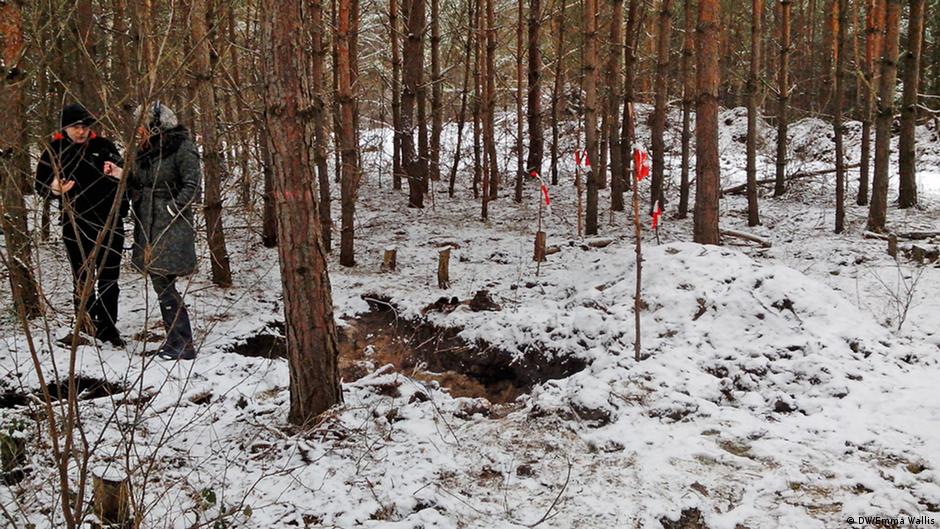
"When big bombs go off, the bodies can lie as deep as 15 meters. The earth's structure is completely changed when a bomb has exploded, so you can tell what happened here. This here is where I found the last two bodies. In this area, I found loads and loads of bomb shards that had just been blown all over the place. Sometimes the bodies are completely blown away, or scattered, but if I've found two bodies here, you can be sure I will find lots more."

Sometimes Kozlowski's work can be complicated by bounty hunters, looking for memorabilia and ordnance from the war. But he quickly sections off the forest when he finds something and starts sifting and digging through the earth so he can maximize his chances of identification.

A boot, relic from the Second World War

We walk towards a spot he's been working on this week. The bones have already been carefully packaged in small purpose built coffin shaped boxes, but one soldier's boot is still in the grave and intact, although rotting.

"One of the soldiers I found here was about 20 years old, and the other one was between 25 and 30. I have to wait for the bones to dry more, and then I can find out a bit more."

Looking all around at the seemingly unending forest, you realize just how vast Kozlowski's task is, but he seems undaunted. "You know it is a great feeling, when you can find out enough from the bodies and the bits around them to identify someone totally. On those days, I feel super. I go and sit in my car, and just listen to some nice old music; it is just such a fantastic moment for me. Of course, other days, I just can't establish anything, even when I try and try and search and search, and those days are very frustrating."

He tells of how some families will phone him up to thank him personally if he uncovered their relatives. Others send money via the Volksbund organization so that he can place flowers on the graves, something he says he is very happy to do as he lives near many of the graveyards.

An inconvenient truth

Kozlowski's work is not just confined to Germany. He has been all over the former battlefields of the East, in Latvia, Lithuania, Estonia, Poland and Russia. In the past things could get complicated with foreign authorities and history still looms large. The wounds of the Second World War are still not healed. This was also true in Germany, until the fall of the Berlin Wall and the collapse of the East German communist regime. Prior to that, no one in the former GDR wanted to waste time or money digging up the inconvenient truth that Germany was once at war with Russia and therefore communism.

"It just wasn't a theme that was talked about during the GDR. No one bothered to look for German soldiers then. There were lots of monuments put up to Soviet soldiers, of course."

Even today, the taint of the Nazi past can make some Germans unwilling to confront what went on here. However for relatives of the dead soldiers, finally knowing what happened to their fathers, brothers, uncles and grandfathers allows them to close a bitter period of history.

'Who is happy when they find a dead body? I am'

"I’m happy when I manage to find and identify a body. That might sound macabre," he smiles. "I mean, who is happy when they find a dead body?" he questions, and then explains: "I am, then I can give that person back to their relatives and they can visit a spot where their loved one is buried."

But the saddest thing about his job, he thinks is finding children and civilians who were caught up in these battles. "I think: what did they have to do with all this horror? So many children paid for this war with their lives, really tiny ones, new born, or two or three years old. And then I think, I want a new job."

A mission

Standing in the latest shallow grave, an eerie sadness fills the air, you start to feel like you are walking on the dead wherever you tread. Joachim Kozlowski, though, remains practical and pragmatic in the face of the enormity of his task. He says the numbers of dead and missing are impossible to quantify, as estimates vary wildly as to how many people fell victim here. But the forests around Halbe and Berlin have potentially hundreds of thousands more bodies lying just a meter or two under the sandy soil beneath his feet just waiting to be found.

Kozlowski, knows that dying is the business of war. But even someone who acknowledges he's seen pretty much everything you can see, can find it hard. But it's almost as if he has got no choice.

"This is a mission, a calling," he confides. "It's not just a normal job. The work gets into your heart, it really does." Deep down, the born optimist is still hoping to find his uncles buried in the sandy soil somewhere during one of his excavations.

Thursday 24 April 2013

http://www.dw.de/digging-up-the-past-in-halbe/a-16762689

continue reading

Wednesday, 24 April 2013

Afghan earthquake kills at least 3; toll may rise as remote districts hit


A tremor jolted Afghan capital Kabul and eastern provinces of Nangarhar, Laghman and Nuristan at 01: 55 p.m. local time on Wednesday, claiming the lives of three people and injuring 70 others, an official said.

“So far three dead bodies and 70 injured people, 23 of them in critical conditions, have been taken to hospitals,” Doctor Baz Mohammad Shirzad, head of public health department in Nangarhar province, told Xinhua.

He also noted that the casualties might go up as the quake hit several districts in Nangarhar, Nuristan and Laghman provinces.

The earthquake measuring 6.2 on the Richter scale was also reportedly felt in neighboring Pakistan.

Meanwhile, officials with Afghanistan Natural Disaster Management Authority have said that assessment is underway to figure out the exact casualties and properties damages in the quake.

Wednesday 24 April 2013

http://www.nzweek.com/world/earthquake-kills-3-afghans-wounds-70-61641/

continue reading

Rescue workers continue search for survivors in Bangladesh building collapse; toll may be higher as bodies taken away by relatives


Rescue workers were searching for survivors late into the night Wednesday after a building containing five garment factories collapsed in Bangladesh, killing at least 113 people.

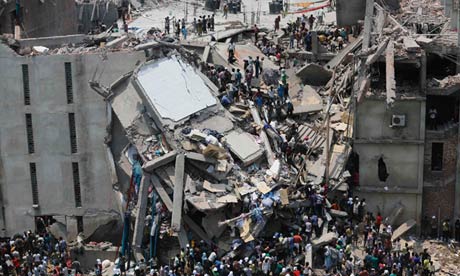
Only the ground floor of the eight-storey Rana Plaza in Savar town just outside the capital Dhaka remained intact when the block - which one minister said was illegally constructed - imploded at about 9am.

Armed with concrete cutters and cranes, hundreds of fire service and army rescue workers struggled in the hope of finding more survivors in the mountain of concrete and mangled steel, which resembled the aftermath of an earthquake.

Corpses and the injured were pulled from the higher reaches of the pile of flattened floors via makeshift slides made from cloth that just hours earlier was being cut into shirts and trousers for export to Western markets.

"The whole building collapsed like a pancake within minutes. Most workers did not have any chance to escape," national fire department chief Ahmed Ali told AFP. "Many people are still trapped".

Fire fighters and soldiers cut through the building's collapsed sixth floor and managed to rescue 20 people eight hours after the accident, he said.

"We will continue searching for survivors through the night, for as long as it takes," he said.

Deputy chief of Dhaka police A.B.M Masud Hossain told AFP that at least 113 people have died in the disaster. "But the toll will be higher because some relatives took bodies without informing police," he said.

The cries of people inside the rubble begging for rescue could be heard as thousands of relatives waited anxiously nearby, some chanting the name of Allah.

"Save us please!" a woman worker cried from inside. "We're 30 people here. Please save us."

Survivors complained that the building had developed cracks on Tuesday evening, triggering an evacuation, but they had been ordered back to the production lines.

"The managers forced us to rejoin and just one hour after we entered the factory the building collapsed with a huge noise," said a 24-year-old worker who gave her first name as Mousumi.

Mustafizur Rahman, head of a police unit created to handle industrial troubles, told reporters the owners, who have gone into hiding, ignored a warning not to open their factories.

"Industrial police told the factory owners not to open their plants. The owners ignored our call and opened their factories anyway," he said.

Two of the factories in the building - New Wave Style and New Wave Bottoms - were making clothing for retailers Mango of Spain and Benetton of Italy, according to campaign group Bangladesh Center for Workers Solidarity.

A spokesman for Benetton however said they "are not suppliers for Benetton".

A spokeswoman for Mango, Marta Soler Morera, told AFP by email that it did not have any suppliers at the building, "although we did have contacts with one of them to produce a test production, as we do with several suppliers".

Tessel Pauli, a spokeswoman for the Amsterdam-based Clean Clothes Campaign, said the accident was "symptomatic" of problems in Bangladesh where foreign buyers often overlook safety problems in their hunt for higher profits.

The accident will likely pile more pressure on the bargain-hunters as the disaster came just months after a blaze in the Tazreen factory, which was making apparel for Walmart and others, left 111 people dead.

In the wake of that tragedy, the US threatened to cut some duty-free facilities for Bangladeshi products.

The Muslim-majority country has the second-biggest clothing industry in the world, but it is plagued by regular accidents and demonstrations by workers demanding better wages and working conditions.

Prime Minister Sheikh Hasina announced a national day of mourning for Thursday when flags will fly at half-mast in memory of the victims.

Hiralal Roy, a senior emergency ward doctor at the nearby Enam Hospital where victims were being taken, said at least 1000 injured people had been treated at the hospital.

"The toll will rise as the condition of some of the injured was critical," he told AFP, adding the hospital had appealed for emergency blood donations.

Bangladesh Garment Manufacturers and Exporters Association said five factories were inside the building and together they employed around 3000 workers.

Local media said the owner of the building was a local youth wing chief of the ruling party. He was rescued alive from the rubble.

Building collapses are relatively common in Bangladesh as developers often flout construction regulations when erecting multi-storey structures.

More than 70 people were killed when a multi-storey garment factory collapsed in the Savar area in 2005.

Wednesday 24 April 2013

http://www.theaustralian.com.au/news/eight-storey-building-collapses-near-bangladesh/story-e6frg6n6-1226628907600

continue reading

Announcement BAHID Conference dates


The next Conference of the British Association for Human Identification (BAHID) will be held at Chancellors Hotel and Conference Centre in Manchester on Saturday 30 November & Sunday 1 December 2013.

A welcome reception will be organised on Friday evening 29 November. Write those dates down in your diary! More details will be announced shortly..

For updates go to www.bahid.org

You can also follow us on twitter: https://twitter.com/BritAssnHumanID

And Facebook: http://www.facebook.com/BritishAssociationforHumanIdentification

More announcements will be made soon...

continue reading

First dental implant identification mobile APP


Have you ever found yourself staring at a new patient’s radiograph puzzled, asking yourself the question, “What implant is that?”

whatimplantisthat.com is a free reference that is working to collect a comprehensive database of implant radiographs to assist dental practitioners in answering this question.

Here you will find a database of implant radiographs categorized by common characteristics. Is your implant threaded or non-threaded? Are there any holes in the apex? Through answering some of these simple questions, you can quickly filter out the radiographs you know are not what you’re looking for, leaving you with similar radiographs to compare yours against. This is designed to make implant radiographic identification easy and practical.


Website: http://whatimplantisthat.com

Wednesday 24 April 2013

http://whatimplantisthat.com

continue reading

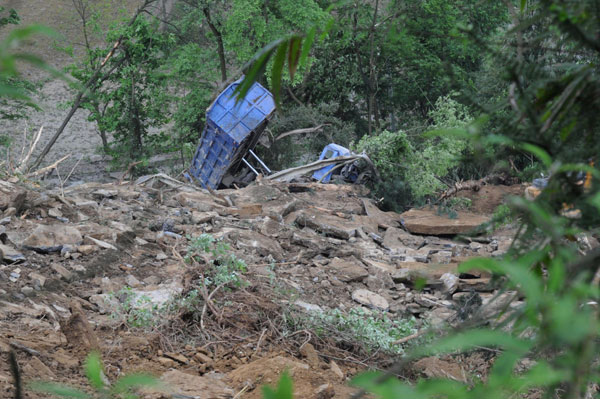
11 confirmed dead in SW China landslide


The death toll following a landslide on Monday night in southwest China's Guizhou Province rose to 11 when two more bodies were retrieved on Wednesday morning, sources with the local emergency command center said.

The landslide occurred around 10 p.m. on Monday, burying construction workers who were repairing a road damaged by a previous landslide in Sinan County.

The accident also left two workers injured, one of them seriously. Both of the injured workers are now in non-critical conditions, sources said.

Search and rescue work ended on Wednesday, and scores of villagers nearby have been relocated to safety, according to the sources.

Wednesday 24 April 2013

http://www.globaltimes.cn/content/777167.shtml

continue reading

No more bodies recovered in West fertilizer factory explosion


Authorities are confident no more bodies will be found in West and the death toll will stay at 15. Mayor Pro Tem Steve Vanek said this afternoon "No more victims. Everything is searched" in the daily press briefing at West City Hall.

Vanek also said the south side of town has water than can be used for cleaning, showers and household uses, but not for consumption. A boil order is still in effect for West.

The city has 100-thousand bottles of water for residents and Vanek encouraged people to use them.

We're also learning more about the investigation into how and why that fire started last week at the West Fertilizer Company.

Assistant Fire Marshal Kelly Kistner said some 70 state and federal agents are on the ground looking for clues, working from the outside in, or from the least damage to the most damaged.

TCEQ Chairman Bryan Shaw told a Texas Tribune forum in Austin Monday he suspected a rail car full of a fertilizer chemical started the fire and exploded, but Kistner Tuesday said that possibility has been ruled out. "The rail car is not the cause of the fire and explosion, it's a victim," he said.

ATF Special Agent Robert Champion said his team measured the crater created by the explosion and it is 93-feet wide and 10-feet deep.

Experts do not know what chemicals were at the plant that day, or the quantities present.

The investigation is looking at four possibilities for what sparked the fire. The first, a natural fire from an act of God or the weather, has been eliminated. The fire could have been accidental in nature, incendiary (which means it was intentionally set) or have an undetermined origin.

Kistner said investigators interviewed between 60 and 70 people Monday trying to piece together clues.

While that probe continues, preparations for Thursday's memorial service to honor 10 fallen firefighters and two civilians are moving forward. That public service at Baylor's Ferrell Center is at 2 p.m., with a firefighter procession beforehand at 11 a.m.

McLennan County Sheriff Parnell McNamara had a stern warning for protestors from the Westboro Baptist Church in Kansas, who have said they will be at Thursday's service.

"Make no mistake, any attempt by a group to disrupt the funeral services for victims of this tragedy will be dealt with swiftly and prosecuted to the full extent of the law," he said.

McNamara added he has the full support of District Attorney Abel Reyna on that matter.

City and county officials as well as representatives from federal and state agencies will be at a town hall meeting tonight at 6 p.m. at the West Knights of Columbus Hall to answer questions from residents about the recovery efforts.

Wednesday 24 April 2013

http://www.kxxv.com/story/22056969/no-more-bodies-in-west-explosion

continue reading

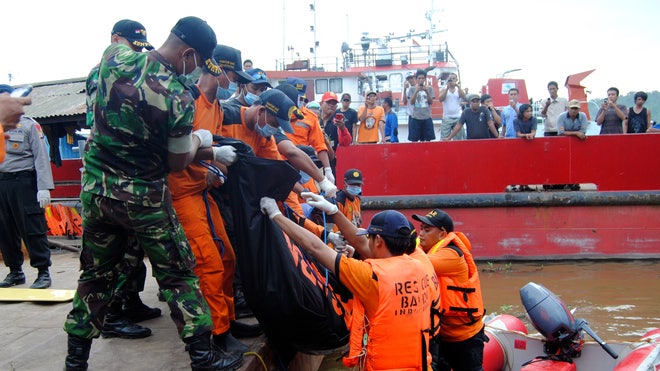
Woman’s body brings death toll in Mahakam boat sinking to 20


Search-and-rescue officers have recovered another body from a boat that sank in the Mahakam River in East Kalimantan last Wednesday, raising the death toll in the incident to 20.

Wahyu Widi Heranata, head of the provincial disaster mitigation agency, or BPBD, said the body found on Tuesday was that of an unidentified woman.

“Search officers found the body floating in the river about three kilometers from the site of the sinking,” he said.

Twenty people have now been confirmed dead in the incident in which the boat, the KM Arinda, carrying timber company workers, sank during a crossing to Samarinda, the provincial capital.

Twenty-one people survived, while three are missing and feared dead.

Wahyu said the search for bodies would continue, but stressed officials held out no hope of finding survivors at this point.

Separately, police said they were deepening their investigation into the incident to build their case against Tedi Noor Arifin, the 21-year-old captain of the boat who has been charged with criminal negligence for overloading the vessel.

“We’ve questioned various people as witnesses, including representatives from the timber company that hired the boat, the company that owned the boat and others,” Sr. Comr. Antonius Wisnu Sutirta, a spokesman for the provincial police, said on Tuesday.

“To date, we’ve only named the captain as a suspect. The local harbor master states the vessel had a maximum capacity of 38 people, but there were at least 44 we know of at the time of the sinking, so clearly this is a case of overloading.”

Under the criminal negligence charge against him, Tedi could face up to five years in prison. Police are considering charging him for operating a passenger vessel without a license.

Wednesday’s sinking was the latest deadly transportation accident in the Mahakam, Indonesia’s largest river, and has prompted calls for an overhaul of transportation management in and across the river.

Last September, 21 people died as a ferry capsized after hitting a log in the river just a few hours after leaving Samarinda.

The river also claimed the lives of 38 people who fell to their death when the Mahakam II Bridge in Kutai Kartanegara district collapsed in November 2011.

Hetifah Sjaifudian, a member of the House of Representatives from East Kalimantan, said the high death tolls there indicated ensuring safety was not a high priority for local transportation operators.

Wednesday 24 April 2013

http://www.thejakartaglobe.com/home/womans-body-brings-death-toll-in-mahakam-sinking-to-20/587654

continue reading

Bangladesh building collapse kills at least 76 garment workers


At least 76 garment workers have been confirmed dead in Bangladesh after an eight-storey building containing clothing manufacturing units collapsed.

Mohammed Neazuddin, the health secretary, confirmed the death toll and police said hundreds of people remain trapped under the rubble.

The building in Savar, about 12 miles (20km) north of Dhaka, the capital, collapsed about 8:30 a.m. and since garment factories in the area routinely work 24 hours a day, it appeared likely that the four housed in the building were staffed at the time.

Firefighters and soldiers using drilling machines and cranes worked together with local volunteers in the search for other survivors from the building, which pancaked onto itself and stood only about two stories tall.

An official of a nearby hospital, where most of the injured were taken, said most of the dead appeared to be female workers.

Bangladesh army units and fire service personnel are conducting rescue operations with the help from local volunteers. An official of the fire service said they had rescued about 1,000 people from under the rubble.

Locals complained that the owner of the building had kept it open even after engineers had ordered the building to be evacuated on Tuesday.

Tens of thousands of people gathered at the site, some of them weeping survivors, some searching for family members. The collapse stirred memories of a fatal fire in a garment factory in November that killed 112 people and raised an outcry about safety in the nation's garment industry.

Brig. Gen. Mohammed Siddiqul Alam Shikder said "We had sent two people inside the building and we could rescue at least 20 people alive. They also told us that at least 100 to 150 people are injured and about 50 dead people are still trapped inside this floor," said Mohammad Humayun, a supervisor at one of the garment factories.

Dilara Begum, a garment worker who survived the accident, said workers were ordered to leave after a crack appeared in the wall of the building on Tuesday. But on Wednesday morning supervisors had asked them to return to work, saying the building had been inspected and was safe.

"The whole world seemed to shake and then all was dark," said Begum, who worked at the Phantom apparels factory on the fourth floor of the building. She said she was pulled out by locals.

The commercial building called Rana Plaza had developed cracks at about 9am on Tuesday. The building housed four garment factories, where an estimated 5,000 workers were employed, a bank and some shops. The bank had pulled its employees on Tuesday, locals said.

The incident is the latest in a series of industrial accidents in Bangladesh. In November, a fire at the Tazreen Fashions Limited factory killed 111 workers. An inquiry committee blamed the factory management for criminal negligence. The November fire at the Tazreen garment factory drew international attention to the conditions workers toil under in the $20 billion-a-year textile industry in Bangladesh. The country has about 4,000 garment factories and exports clothes to leading Western retailers. The industry wields vast power in the South Asian nation.

Tazreen lacked emergency exits and its owner said only three floors of the eight-story building were legally built. Surviving employees said gates had been locked and managers had told them to go back to work after the fire alarm went off.

In 2005, the Spectrum sweater factory in Dhaka collapsed, killing 64 and injuring 80.

Wednesday 24 April 2013

http://www.guardian.co.uk/world/2013/apr/24/bangladesh-building-collapse-kills-garment-workers

continue reading

Doubt cast over Guatemala ex-dictator's genocide trial


The trial of a former dictator accused of genocide has divided the country and pitted judge against judge, becoming the biggest test yet of Guatemala's fragile justice system.

Until a few days ago, a panel of judges was nearing a verdict in the trial of Efraรญn Rรญos Montt, who ruled Guatemala for 17 months in 1982 and 1983.

He is accused of ordering the massacre of hundreds of indigenous Mayans in this highlands region during military campaigns against leftist guerrillas. Mr. Rรญos Montt maintains he is innocent.

Last week, another judge issued a surprise ruling to nullify the trial on technical grounds. That sparked a fight with the trial's presiding judge, who refused to accept it and insisted the case would go on. This week, the country's top court was weighing in as the final arbiter, with a decision likely in coming days.

The uncertainty has stirred anxiety in Guatemala, where the trial has conjured anew memories of the Cold War-era civil war that claimed some 200,000 lives over 36 years.

Perhaps as important, experts say, the case is testing Guatemala's ability to try war-crime cases.

"There are islands of democracy here, but it remains a sea of impunity," said Anita Isaacs, a political-science professor who studies Guatemala at Haverford College, near Philadelphia.


The current president, Otto Pรฉrez Molina—himself a former commander under Mr. Rรญos Montt—had been accused during the trial of also having committed war crimes, something he vigorously denies.


Meanwhile, the U.S. State Department on Tuesday said it was sending a top war-crimes diplomat, Stephen Rapp, to visit alleged victims in the case.

In recent weeks, dozens of people took the witness stand to recall military campaigns, which they said included villages burned to the ground by soldiers and dozens of abductions and killings.

Mr. Rรญos Montt gave a full-throated defense of his de facto presidency, arguing that his targets were armed leftist guerrilla groups, not civilians. He had no knowledge of the worst events, his attorneys said.

The case centers on the killings of hundreds of civilians in an area called the Ixil Triangle, where the main town of Nebaj is surrounded by mountains that were inhabited by guerrilla fighters in the 1980s.

Mr. Rรญos Montt entered office in 1982 after a coup and vowed to stamp out the guerrilla presence in Nebaj and surrounding towns.

He was a controversial figure both then and now, feared by rebels and many indigenous people but supported by others who felt he was turning the tide in Guatemala's long war.

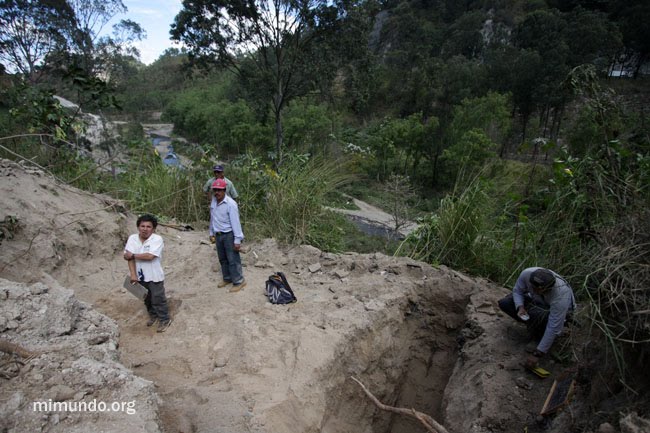
Last week, a team of forensics experts began an exhumation of victims killed during Mr. Rรญos Montt's tenure at a military base on the outskirts of Nebaj. Signs along the road offer Guatemalans free services for DNA testing on the remains of loved ones recovered from clandestine graves as a means of positively identifying the bodies.

Approached by a reporter during the trial, Mr. Rรญos Montt declined to comment. But his attorney, Francisco Palomo, said Mr. Rรญos Montt could not be held accountable for the actions of his soldiers at the time.

Mr. Palomo said that while villages had been burned and civilians were killed by soldiers during Mr. Rรญos Montt's tenure, it didn't qualify as genocide and happened without his client's knowledge.

"Just as the president of the United States might not know the specifics of what his troops have done…he didn't either," Mr. Palomo said.

Guatemala's Attorney General Claudia Paz y Paz, who brought the case to trial, had called the decision last week to annul the case illegal and said that she was confident of getting a conviction.

She says two military documents entered into evidence showed that Mr. Rรญos Montt had knowledge of civilian massacres and suggest that they came at his orders.

"They used the words 'extermination' and 'liquidation' in their documents" when referring to the Ixil people, Ms. Paz y Paz said. "This is a strong case."

Mr. Rรญos Montt's trial was many years in the making.

Charges were first brought to a Spanish judge in Madrid in 1999 by Rigoberta Menchรบ, an indigenous activist and Nobel Peace Prize winner. Ms. Menchรบ's father was killed by authorities while hiding in the Spanish Embassy in 1980 when Mr. Rรญos Montt was a high-ranking military official.

In a recent interview, Ms. Menchรบ said she took the case to Spain "because here in Guatemala they didn't try war crimes." That case remains in court.

But as the investigation in Spain developed, so did Guatemala's attempts to build its own institutions.

In late 2006, it established the International Commission Against Impunity in Guatemala, known as the CICIG in Spanish, a joint venture with international prosecutors and judges sponsored by the United Nations.

The CICIG's mandate—to specifically target top-level Guatemalan officials who had escaped prosecution—was a major step in clearing the way to begin war crimes trials in the country, said Ms. Isaacs, the political-science professor.

U.N. jurists also trained many of the Guatemalan prosecutors who are now involved in Mr. Rรญos Montt's case.

Mr. Rรญos Montt, who had returned to political life as a congressman in the 1990s, was at first shielded from prosecution under Guatemala's immunity laws.

But when his term ran out last year, prosecutors filed the charges against him.

Residents interviewed in Nebaj recently described some brutal scenes from those years involving villages destroyed and relatives lost after the arrest by soldiers.

Nicolรกs Corio, a community organizer who was 10-years-old when Mr. Rรญos Montt took office, remembered his village being bombed by government aircraft. He said soldiers later arrived, burned the villagers' homes, destroyed corn crops and killed livestock.

Elena de Paz, 42, who testified during the trial, said soldiers abducted her mother in 1983 and she never heard from her again. Her grandparents and father had previously disappeared in military custody, she said.

"I am the only one who survived," she said, standing near the remnants of a bomb dropped in 1983. "There are people who say [Mr. Rรญos Montt] is old, let him out. But he still can think, and he knows he's guilty."

Mr. Palomo said that contrary to the trial testimony, Mr. Rรญos Montt still enjoys support in Nebaj. His political party, the Guatemalan Republican Front, still garners many votes there, as it did during Mr. Rรญos Montt's long term in the Congress, although he never represented the area personally.

"If it were true that the military had been so bad, would they still vote for him years later?" he said.

Wednesday 24 April 2013

http://online.wsj.com/article/SB10001424127887323551004578437013856080192.html

continue reading

Another avalanche body of Shaheed soldier recovered from Gayari


The body of another Shaheed soldier was recovered from the Gayari sector of Siachen on Monday, bringing the total number of bodies recovered so far to 123.

According to an ISPR press release issued here, it was the second body of a Shaheed soldier which was recovered after the resumption of the search operation at Gayari. On 7 April 2012, 140 soldiers and civilians of the 6 Northern Light Infantry Battalion came under a huge snow slide at Gayari and embraced Shahadat. In all, 121 bodies of Shuhada were recovered before the suspension of Operation Gayari due to the winter on 27 November 2012.

After an improvement in weather and melting of snow, the search for remaining 19 Shuhada commenced on 15 April,2013 by employing 228 military personnel and 29 heavy engineering equipment pieces including excavators, dozers and drill machines.

Wednesday 24 April 2013

http://www.thenews.com.pk/Todays-News-2-173001-Another-body-of-Shaheed-soldier-recovered-from-Gayari

continue reading

Tuesday, 23 April 2013

Disaster relief efforts fail to reach remote Sichuan villages


As relief materials pile up in major rescue centres in the quake-hit areas in Sichuan province, villagers from rural communities are complaining they have been forgotten by the government.

“It’s been four days, four days. I didn’t see any government official bother to ask us how we have been coping. I have to say I’m not satisfied with the government’s relief efforts,” said 66-year-old villager Chen Zhongfen, from Shengli village, Taiping township on the outskirts of Lushan county, the epicentre of Saturday’s 7.0-magnitude quake that has claimed 193 lives, left 25 missing and injured more than 12,000 people.

“I haven’t got anything yet, and we heard that the aid had all gone to the central areas,” Chen said.

Chen was among more than 2,000 villagers in Shengli who have been struggling to cope with post-quake life. Rain has begun to fall in the area increasing their need for more and better shelter and food.

But four days into the disaster, villagers like Chen in rural communities said they had so far been left out of the government’s disaster relief efforts.

Communist party chief and President Xi Jinping on Tuesday afternoon chaired a special Politburo Standing Committee meeting on relief work in the quake zone, at which he vowed to keep searching for missing people even though the 72-hour window for the best chance of survival passed on Tuesday.

The standing committee meeting promised to ensure “everyone in the quake zone will have food, clothes, clean water, temporary shelter and medicine”.

However, in Shengli, more than 350 villagers have had to share nine tents and about 100 bottles of water. The villagers said that even these few tents were becoming useless as they had no floors and the rain had been quite heavy for the past two days. As well, they were running out of food, and only had corn soup to eat.

“I can endure all these [hardships], but what about the pregnant women and the village elders?” said villager He Xiaobing.

He, a 42-year-old farmer, has had to move his family and all the belongings they could salvage from his house into a self-made tent crammed full of 20 people.

A fight broke out among 50 angry villagers in Taiping township as they scrambled for a few boxes of water and instant noodles handed out by rescuers. Police had to be called in to disperse them.

Villagers questioned local authorities as to why people in Lushan county got more than enough relief materials, while many rural people like them remained starving and homeless.

Wang Dong, party chief of Taiping, urged villagers to stay calm and remain where they were as “a lot of supplies would be coming once the clogged roads were cleared". He said most of the resources were concentrated in Lushan, which is about 30 kilometers from Taiping.

But Zhang Xueming, a rescue worker from Wenzhou-based Blue Sky Rescue Team, said the road conditions were not the main problem.

“Most of the tents are provided by companies and they all want them to be sent to major areas to get more public recognition,” he said.

Official media like Xinhua have given relief efforts a positive spin focusing mainly on the heroic rescue operations centred in Lushan county and Longmen township, especially after Premier Li Keqiang’s visit to the area on Sunday.

Yang Hao, a 36-year-old farmer from Shengli village, said the government and media have focused on the major centres and forgotten the victims in remote and cut-off areas.

“We are the forgotten ones, nobody cares about us. I wish Premier Li had come to our town, then we wouldn’t have problems today.”

Tuesday 23 April 2013

http://www.scmp.com/news/china/article/1221711/disaster-relief-efforts-fail-reach-remote-sichuan-villages

continue reading

6 dead, 5 missing in Guizhou landslide


Six people died, two were injured and another five have been reported missing following a landslide that occurred Monday in southwest China's Guizhou Province.

The landslide occurred at 10:42 p.m., when construction workers were repairing a road damaged by a previous landslide in Sinan County on Sunday evening, said officials from the county government Tuesday.

Monday's landslide buried the workers and excavators which had been fixing the road.

Rescuers are searching for the missing workers.

Tuesday 23 April 2013

http://news.xinhuanet.com/english/china/2013-04/23/c_132332905.htm

continue reading

Lighter of pyres


No DVI but an encouraging insight into burial customs (note blogger):

There is nothing extraordinary about the way she looks. Yet Shanti Behera, 52, a resident of Sambalpur, is unique. For the last decade she has been running the local crematorium. According to traditional Hindu customs, women are not even allowed to go the crematorium, leave aside participating in the funeral rites. But compelled to provide two square meals for her family after the demise of her husband, Shanti willingly took on the job of being the full-time keeper at the Kamlibatar Rajghat crematorium.

Married at 15 years, she had just turned 40 when she lost her husband to multiple illnesses. “I had no work and six children, including four daughters, to support. I was thinking of seeking work as a domestic worker but destiny, I guess, had something else in store for me. My husband was the caretaker of this cremation ground. He worked there on a daily wage basis and so when he fell severely ill and was bed ridden, I had to take over his duties or else he wouldn't have got any money,” Shanti recalls.

“As this is the only crematorium in the area, thousands of households were dependent on it. My husband was the only keeper there and his absence would have posed a huge problem,” she adds.

Her journey from being a housewife to becoming the manager of a crematorium was a difficult one. There were several personal as well as social hurdles. Initially, she found it very difficult to look at the bodies being brought for cremation. She also faced opposition from her relatives and friends because she was daring to go against tradition. But Shanti grew stronger as time passed.

“My husband was cremated at the same ground where he worked. I had to take over just after a few days after his death. It was very painful for me but I went ahead. Then, a few months later, my son died in a road accident. I don’t know how I set the pyre for his funeral. It was a heart breaking moment for me. But ever since, I have learnt to face pain and hardship. I sincerely took to doing the job on a full-time basis, despite being aware that customs dictate that women are strictly prohibited from working at a cremation ground.”

Her job is certainly not for the faint-hearted. Arranging the wood for the pyre, setting it alight, and ensuring that it burns properly — she is always on her toes, come rain or shine, performing her job to the best of her ability. Often she has to work until the wee hours to ensure that everything is done right.

“I work round the clock, and am there whenever the need arises. In fact, I have had to come here at midnight braving terrible storms, too. Over the years, I have realised that this work is not only a means of livelihood but has a higher purpose. I believe I am helping the dead souls rest in peace and that gives me immense satisfaction. The only thing I find difficult is to see a family cremate a child. It reminds me of the worst experience of my life — cremating my own son,” she says.

For the first five years, Shanti worked for free because the municipal authorities did not believe that she would be able to manage the crematorium properly. During that period the family survived on tips, which was insufficient. Later, she started receiving a monthly payment of Rs. 1,500 from the municipality. Managing expenses for the whole month on this meagre salary, however, has only gotten tougher in recent years.

“I have to pay Rs. 600 as rent for the single room where we are staying. I don't even have a Below Poverty Line (BPL) card so that I can get subsidised rice. I have run from pillar to post to get a BPL card, but to no avail.”

While making ends meet is still a struggle for Shanti, she is glad that at least the community’s attitude towards her has changed. While the local people were once shocked by her bold move, today they respect and admire her courage.

Says local resident Padmabati Behera, “She is a great woman and everybody respects her. She is doing a job that no other woman had dared to do. I have seen her over the years and feel proud of her. She is working selflessly without any expectations.”

Families visiting the cremation ground also draw great comfort from her presence.

Many hope that Shanti’s example will inspire other women to opt for unusual professions. Says Abhida Nanda Mishra, an academic from Sambalpur, “For me, Shanti's work in the crematorium is not just a livelihood issue but, looked at from a broader prospective, is about women's empowerment and acceptance in society. It represents positive change.”

Tuesday 23 April 2013

http://www.thehindu.com/news/cities/Delhi/lighter-of-pyres/article4644118.ece

continue reading

Exhumed remains of WWII Soviet soldiers reburied at Poland cemetery


The remains of 431 Soviet army soldiers killed during a World War II battle in Poland were reburied over the weekend, Russian military officials said.

Vyacheslav Polovinkin, the head of the Russian Defense Ministry office in charge of military memorials in Poland, said the remains of the Soviet soldiers killed during the 1945 Siege of Kustrin in western Poland were laid to rest Sunday at an army memorial cemetery at Cybinka, Poland, RIA Novosti reported.

The remains had been exhumed from a 1950s mass grave near the battle site at Kustrin -- what is now called Kostrzyn-on-the-Oder -- after months of painstaking work.

The Soviet soldiers fell during an Eastern Front battle in the final months of World War II at Kustrin, about 50 miles from Berlin. It was one of the final roadblocks between the advancing Soviets and the German capital.

German troops turned the industrial town into a powerful fortified area meant to prevent the advance of Soviet troops to Berlin. The city was severely damaged during the 1945 assault.

A 2011 book about the battle, "The Siege of Kustrin" by British author Tony Le Tissier, said the Germans defended the outpost tenaciously, sending high school students and elderly men to fight against the Soviet soldiers. The Germans were driven from Kustrin after a 60-day siege that resulted in thousands of casualties on both sides.

After its capture, Soviet troops killed in the siege were buried in several mass graves. In 1953, the remains of the soldiers were transferred to a military cemetery near Kostrzyn but over the years it had become clear the work had been carried out hastily and the identities of the soldiers were lost.

Late last year, Polish researchers found the remains of more than 100 soldiers and work continued this spring when more than 300 more remains were found.

The Polish historical group Witez carried out the exhumation work with the help of domestic and foreign volunteers from Russia, Lithuania, Ukraine and Germany, its director, Julian Wierzbowski, told the Polish news agency PAP.

In one of the graves, which contained the remains of 40 soldiers, volunteers found a medal for bravery. The number stamped on it could help officials establish the identity of its owner and that could yield clues to the identities of others buried at the site.

Work on the exhumations is expected to be competed in fall.

Sunday's reburial in Cybinka was preceded by a short service performed by the Orthodox parish in Torzym. It was attended by representatives of the Russian, Belarusian and Kazakh embassies, the news agency reported.

Before World War II, the military cemetery in Kostrzyn was a German sports stadium but over the decades became forgotten and is covered by forest, with its only remaining monument an entrance gate.

Wierzbowski told the Polish newspaper Gazeta Lubuska remains found were mostly incomplete skeletons, which often lacked the head, but there were exceptions in which the remains of several soldiers had been preserved in their entirety.

"Some of the people had with them small personal items like knives, razors or medallions," he said.

Krzysztof Socha, an archaeologist at the Museum of the Kostrzyn Fortress, added some of the bodies had amputated limbs while others were charred, indicating they had died in fires.

Tuesday 23 April 2013

http://www.upi.com/Top_News/Special/2013/04/23/Exhumed-remains-of-WWII-Soviet-soldiers-reburied-at-Poland-cemetery/UPI-78321366689960/

continue reading

One more body pulled out of collapsed pit at Kyekyewere


One more body has been pulled out of the collapsed mining pit at Kyekyewere in the Central region, bringing the number of bodies collected out of the pit to 18.

The taskforce which carried out the rescue mission began the process of closing the pits over the weekend. Lands and Natural Resources Minister, Alhaji Inusah Fuseini said a mass burial will be held tomorrow for the deceased.

Speaking on the AM Show on MULTI TV, Lands and Natural Resources Minister, Alhaji Inusah Fuseini, hinted that illegalising small scale mining will culminate into the formation of a mining association to partner government in regulating the sector.

He however indicated that although they will be buried on the same day, they will not be buried in the same grave.

17 bodies of illegal miners popularly called “galamsey operators” were retrieved from an abandoned mine pit which caved in on them, last Monday 5th April.

The collapsed pit is one of many abandoned by the God First Enterprise Mining Company at Dunkwaw-Kyekyewere.

The victims consist of 15 males and two females, including a couple. Seven of the deceased are natives of Amoafo while the remaining nine are from Kyekyewere.

A Second year student of the Dunkwa Secondary Technical School, Clement Abugri, and his mother identified only as Ayishetu, were among the victims.

Tuesday 23 April 2013

http://edition.myjoyonline.com/pages/news/201304/104836.php

continue reading

Remembrance day for World War II victims in Serbia


Health Minister Slavica Djukic Dejanovic laid a wreath on behalf of the Serbian government at the Old Fairgrounds, the site of a WWII Nazi death camp.

Wreath were also laid by representatives of death camp survivors and association of victims’ families, the Association of the Jewish Municipalities in Serbia, the Roma ethnic minority, Head of the EU Delegation to Serbia Vincent Degert, diplomatic representatives of Israel and Germany, and representatives of the city government.

Lazar Krstajic, aged 88, who was incarcerated at the camp between May and September 1943, told reporters that the thing he remembers most were the mornings, when the dead bodies would be thrown into the river.

Israeli Ambassador to Serbia Yossef Levi said this is one of the places of greatest suffering of Jews, Serbs and Roma in Serbia, noting that most of the victims at the Old Fairgrounds camp were women and children. From this site, prisoners were transported in special vehicles with gas chambers, suffocated in transport and buried on the outskirts of Belgrade, in Jajinci, recalled Levi.

Remembrance day is marked in Serbia on the day of the liberation of the Jasenovac concentration camp, one of the most horrific death camps referred to by historians as the Serbian Auschwitz, formed by the Croatian Ustase at the time of the Independent State of Croatia, a WWII puppet state of Nazi Germany.

April 22, 1945 was the day when a group of 1,075 remaining prisoners tried to break out from the camp, with only 127 finding their way to freedom.

The death camp network in the Independent State of Croatia comprised some 80 camps in the territory of the present-day Croatia and Bosnia-Herzegovina, the biggest of which was Jasenovac.

Based on early exhumations, a state commission in the Federal People’s Republic of Yugoslavia estimated that 500,000 Serbs, 80,000 Roma, 32,000 Jews and tens of thousands of anti-Fascists of different nationalities went missing in the Jasenovac camp. The Simon Wiesenthal Center has since confirmed these estimates.

Around 100,000 prisoners were held at the Old Fairgrounds camp, also located in the territory of the Independent State of Croatia. Of this number, 20,000 – mostly Jews – were killed at the camp, and another 20,000 at execution sites in the vicinity of Belgrade.

Tuesday 23 April 2013

http://inserbia.info/news/2013/04/remembrance-day-for-world-war-ii-victims-in-serbia/

continue reading

Teams hunt for survivors of powerful China quake


Luo Shiqiang sat near chunks of concrete, bricks and a ripped orange sofa and told how his grandfather was just returning from feeding chickens when their house collapsed and crushed him to death in this weekend's powerful earthquake in southwestern China.

"We lost everything in such a short time," the 20-year-old college student said Sunday. He said his cousin also was injured in the collapse, but that other members of his family were spared because they were out working in the fields of hard-hit Longmen village in Lushan county.

Saturday's earthquake in Sichuan province killed at least 186 people, injured more than 11,000 and left nearly two dozen missing, mostly in the rural communities around Ya'an city, along the same fault line where a devastating quake to the north killed more than 90,000 people in Sichuan and neighboring areas five years ago in one of China's worst disasters.

The Lushan and Baoxing counties hardest-hit on Saturday had escaped the worst of the damage in the 2008 quake, and residents there said they benefited little from the region's rebuilding after the disaster, with no special reinforcements made or new evacuation procedures introduced in their remote communities.

Luo said he wished more had been done to make his community's buildings quake-resistant. "Maybe the country's leaders really wanted to help us, but when it comes to the lower levels the officials don't carry it out," he said.

Relief teams flew in helicopters and dynamited through landslides Sunday to reach some of the most isolated communities, where rescuers searched for survivors.

Many residents complained that although emergency teams were quick to carry away bodies and search for survivors, they had so far done little to distribute aid. "No water, no shelter," read a hand-written sign held up by children on a roadside in Longmen.

The quake — measured by China's earthquake administration at magnitude 7.0 and by the U.S. Geological Survey at 6.6 — struck shortly after 8 a.m. on Saturday.

Monday 22 April 2013

http://www.detroitnews.com/article/20130422/NATION/304220331/Teams-hunt-survivors-powerful-China-quake?odyssey=mod%7Cnewswell%7Ctext%7CFRONTPAGE%7Cs

continue reading