Tuesday, 22 January 2013

Child body parts sold at sh0.5m, says report


He was a boda boda rider, and not earning much. Because he wanted to make more money, he resorted to kidnapping people, including children.

“I was doing it for tycoons who came from Kampala and other places. I used to charge them sh200,000 for adults and sh350,000 for children.

“One day, I met a man who I did not know was a witchdoctor. He hired me to get him a young boy to take his teeth, ears, genitalia and heart. After I got the boy, he asked me to help him mutilate the child’s body, but I told him that I feared to do it.

“He pulled out a knife and started cutting off the parts he needed, saying it would stop the spirit of the victim from haunting us. With time, I gained courage in the business and he hired me to start doing this work for him. He increased my pay,” recounts a former child sacrifice agent in Buikwe district.

Another child kidnapper narrates how he was hired to get the blood of a virgin girl. He found a girl walking alone and kidnapped her, later mutilated her body and took selected parts.

“I packed them in my black polythene bag and delivered them to a witchdoctor,” reads the chilling confession.

These are some of the disturbing confessions contained in a 2013 report on child sacrifice and mutilation in Uganda, by Humane Africa, a charity organisation.

The report, which Sunday Vision has exclusively obtained, shows that every week, a Ugandan child is mutilated or sacrificed and body parts removed, often, while the child is still alive. The organs can be sold for between sh500,000 and sh1m, depending on the age of the victim and the period taken to hunt down the victim. One agent admitted to killing as many as 23 children in his lifetime, but from different localities.

The report is due to be released this Tuesday by HumaneAfrica in partnership with the United Nations Children’s Fund (UNICEF).

The research, which took place between June and September 2012, is based on about 140 first hand testimonies from 25 communities in nine districts, including Kiryandongo, Masindi, Wakiso, Jinja, Mayuge, Mukono, Masaka, Kalungu and Buikwe. Data was also collected using UNICEF’s U-report, in which young people used a free SMS-based system to speak out on what is happening in their communities.

Most of the children targeted were aged between three and 18 years. However, there are also a number of cases where mothers in their later stages of pregnancies were attacked and the foetus removed and mutilated.

The preferred body parts

Based on the interviews contained in this report, a total of 177 body parts were mentioned as missing from bodies. The tongue, female and male genitalia and blood seem to be the most sought after parts. Others include the head, legs, hair, throat, fingers, hands, eyes, arms, breasts, intestines, brain, ears, liver, teeth and kidneys. Others are nose, jaws, toes, the belly button and buttocks.

One victim’s mother in Masaka district recounts how her child’s limbs were cut off: “I took one glance at my child and could not take another look. He did not have arms and his legs and head had been cut off. I cried uncontrollably.”

Another father says his seven-year-old boy was found dead in November 2009 in Nyenga village, Buikwe district. “My son’s body had a missing finger, genitalia, his two eyes and one tooth were also missing. He was left naked with a traditional cloth in his mouth.”

What for ?

According to the report, these body parts are taken by people who believe that they will assist with a number of issues that include: Overcoming illness, gaining wealth, obtaining blessings from ancestors, protection, initiation, assisting with conception and dictating the gender of the child.

A woman in Buikwe district told researchers that when she had a bedwetting problem, she was given a young boy’s genetalia to help ease her problem.

“It was black and stiff. I tied it around my knickers for two days,” she says. Another traditional healer’s son said his relatives used to treat people’s illnesses using body organs like fingers and to initiate people into traditional healing.

Way Forward

Simon Fellows, the HumaneAfrica Director, says the report should provide an opportunity for stakeholders to forge a way forward.

Copies of the report will be made available during the launch at UNICEF offices on Tuesday, January 22.

In light of this report, the gender, labour and social development ministry needs to implement a deliberate action plan on child sacrifice.

The deputy Police spokesperson, Ibin Senkumbi, declined to comment before reading the report, but states that 2012 had fewer cases of child sacrifice compared to past years.

Tuesday 22 January 2013

http://www.newvision.co.ug/news/639113-child-body-parts-sold-at-sh0-5m-says-report.html

continue reading

Horn migrants use new, more dangerous, routes through Malawi


On 20 June 2012, a group of undocumented Ethiopian migrants boarded a boat on the shores of Lake Malawi and headed southwards. A few minutes after departing, the overloaded boat sank, drowning 49 of its passengers.

“From the lake shore, one could see what looked like a piece of paper floating on the lake. But when fishermen, paddling their canoes, went to check it out it turned out to be several human bodies,” recalled Grecian Mbewe, Centre for Human Rights and Rehabilitation district coordinator for Karonga, in northern Malawi.

According to Joseph Mwandege*, who claims to be part of a syndicate that smuggles migrants, mainly from the Horn of Africa, through the country in a bid to eventually reach South Africa, the use of boats to cross Lake Malawi gained popularity after land routes became too risky.

“We work with a group of police officers. They are the ones who advise us on security locations. Unfortunately, there are times when a group [of police] that is not involved in the syndicate man’s security check [points]," he said. “When such a scenario occurs, the group [of migrants] can be intercepted any time because all the routes they take are pre-arranged based on advice from our police friends.”

Travelling on the lake at night became the preferred alternative.

Mwandege said groups of migrants entered Malawi near the Songwe border post in Karonga District, on the Tanzanian border. With help from people like him and the police, the migrants waited for night to fall before cramming into small boats to continue their journey southwards. They docked their boats after bypassing several security check points along the roads and moved quickly into the surrounding hills where they could not be seen.

Crackdown

But the events of 20 June brought close scrutiny to the issue of illegal migration. Under pressure from President Joyce Banda, the Malawi Police Service launched a crackdown on those suspected of involvement in the drownings.

Some police officers were suspended and others transferred. Three locals suspected of having connections with the group that died were arrested and initially charged with aiding and abetting illegal entry. The charge was later amended to manslaughter.

The result of the crackdown, according to police spokesperson Solemn Chunga, from Chitipa District, which lies on Malawi's northern border with Tanzania, has been a change in the pattern of migration movement. Illegal migrants now resort to perilous routes through the bush.

Chunga said key among the areas that have been targeted for “smoother passage” was Nyika National Park, a vast wildlife reserve covering some 3,200sqkm. Sitting on Nyika Plateau at about 2,600m above sea level, the park is covered in fog for the better part of the year and is home to a number of dangerous wild animals, including leopards, lions and snakes.

Since June, police in Chitipa have intercepted groups of migrants travelling towards Nyika on seven occasions. In September, they intercepted 47 migrants and their Malawian guide as they tried to enter the northern side of the park. Almost a week later, another 74 migrants were found packed in the back of a truck, heading towards the same area. On being intercepted, one of the migrants gave officials a phone number that turned out to belong to a police officer in Karonga.

Following their arrest, migrants are taken to court and charged with entering the country illegally, said Karonga police spokesperson Enock Livasoni. Undocumented migrants usually face fines of up to 25,000 kwacha (US$71) or sentences of three months of imprisonment with hard labour. After paying the fine or serving the sentence, police hand the migrants over to the immigration department for deportation. "The immigration department just ensures that these people are out of Malawian territory, and it is not necessarily that they are sent back to their home countries," said Livasoni.

IRIN witnessed vehicles taking migrants towards the Songwe border area, where they would presumably be deported across the border into Tanzania. Migrants intercepted by police in Tanzania typically spend several months in prison before being repatriated to their places of origin.

Refugees and asylum-seekers in the mix

Groups of migrants travelling from the Horn of Africa towards South Africa often include asylum-seekers and refugees who make use of the same routes and smuggling networks as economic migrants. According to the UN Refugee Agency (UNHCR), this phenomenon of "mixed migration" often makes it difficult to distinguish between those entitled to access the asylum process and those subject to local immigration laws.

"In Malawi... we try to assist the government through technical advice and support so that screening can be conducted at the border and those that have asylum claims can be assisted accordingly. Sometimes this is not always possible due to limited resources," said George Kuchio, UNHCR's country representative in Malawi.

UNHCR is now focusing its efforts on training newly recruited immigration officers and "offering practical tools that border officials can easily use to determine who is an asylum-seeker."

Red Cross Malawi, which helped connect a number of survivors of the 20 June boat accident with their families, told IRIN that they had not handled any further cases involving undocumented migrants.

"We assume this is the case because the police have tightened security in all suspected entry points," said Horace Nyaka, a Red Cross Malawi communications officer. "Because of this tight security, we have the feeling that the illegal entrants are no longer passing through Malawi. They might have found other routes to get to their final destination.”

*Not his real name

Tuesday 22 January 2013

http://reliefweb.int/report/malawi/horn-migrants-use-new-more-dangerous-routes-through-malawi

continue reading

Five die in blast at Zimbabwe healer's house


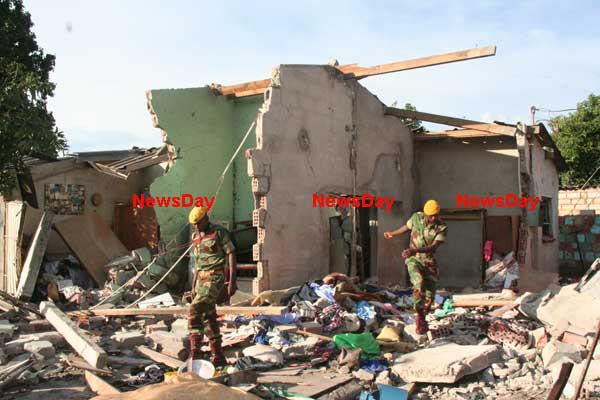
Five people including a traditional healer died in a mysterious blast in Zengeza 2, Chitungwiza yesterday afternoon. While the bodies seemed to have been burnt, there was no fire from the blast, which some people suspected could have been lightning.

The bodies of the dead were burnt while their limbs were strewn all over the place covering a distance of up to 60 metres.

While the bodies seemed to have been burnt, there was no fire from the blast, which some people suspected could have been lightning.

The bizarre incident, which claimed the lives of four male adults and one minor, has left the people in Zengeza 2 dumbfounded.

Number 4 Ndororo Street in Zeneza is believed to be the epicentre of the mysterious explosion whose source remains unclear though its impact caused severe damage to more than 12 houses surrounding it.

Body parts like arms, fingers, and pieces of flesh were picked from rooftops and from nearby houses.

Among the five is a commuter omnibus operator identified as Clever Kamunzeya, who was consulting the traditional healer — popularly known as Sekuru Shumba — Speakmore Mandere (24) who came from Chiweshe.

A seven-month-old baby Kelly Chimina who was sleeping in one of the rooms at the house also died in the blast.

Her mother was a tenant at the property.

Two other people who died were not immediately identified. Identity particulars were picked from the scene but no one could verify whether they belonged to the dead.

Three other people were seriously injured while others with minor injuries were also taken to Chitungwiza General Hospital.

The traditional healer had been given a notice to vacate the property by month-end after the property owner expressed reservations over his traditional healing.

More than 12 houses were destroyed in the blast that witnesses said shook properties as far away as a kilometre.

Walls, roofs and windows were destroyed while property worth several thousands of American dollars was also lost.

By early evening people with destroyed houses were seeking refuge from relatives and friends while those returning from work were shocked to see the destruction that had occurred.

More than 500 people gathered at the scene with police and the army cordoning off the area to investigate the cause of the blast.

Witnesses said Mr Kamunzeya whose damaged vehicle was parked could have been consulting the healer.

He was in the company of two women who were severely injured in the blast. A neighbour whose house was badly damaged said he heard a huge blast and went out to investigate. But he ran away the moment he noticed the damage.

Mr Edmore Mikitayo said the blast caused huge panic that saw some people running from their homes.

Others linked the blast to a marital problem involving a woman who was staying with the traditional healer.

It is believed she had sought a peace order against her husband and had eloped to the n’anga.

Officer-in-charge of St Mary’s police Inspector Daniel Badza said investigations were in progress to ascertain the cause of the blast. He referred further questions to his superiors at the scene who declined comment.

A nephew of the healer Mr Emmanuel Chinwadzimba said his uncle possessed supernatural powers.

He said their family believed that he had a mermaid spirit, having been trained by one when he was a young boy.

Residents assisted in retrieving some of the body parts.

Job Sikhala, the former MP for St Mary’s, said his house is more than 2km from the street where the explosion took place, but it was so huge it shook his house. He said he believed that the house belonged to a tradional healer, who is known to have kept gas cylinders.

‘From what I hear from people in the area, the owner of the house which was apparently obliterated by the blast, belonged to this n’anga, who is well known in the area,’ Sikhala said.

Tuesday 22 January 2013

http://www.thezimbabwemail.com/zimbabwe/15435-mysterious-blast-kills-5.html

continue reading

Ezu River: 18 bodies evacuated as autopsy begins today


Eighteen decomposed bodies evacuated from Ezu River on the border town of Amansea, between Enugu and Anambra states, will today be subjected to autopsy to be jointly carried out by Anambra and Enugu State governments and their police commands.

Anambra State police commissioner, Mr. Bala Nassarawa, gave the figure yesterday while addressing Divisional Police Officers, DPOs, and other senior police officers in the state. Nassarawa confirmed that all the dead bodies were males, adding that three bodies had been selected for the autopsy because the other 15 had become too bad.

He said: “We have also discovered that there were no gun injuries or matchet cuts on their bodies as being speculated and the dead bodies were not up to 30 or 50 as rumored.”

According to him, the Commissioner of Police in charge of medicals, the state Commissioner for Health and pathologists from the two states would be involved in carrying out the autopsy.

Nasarawa stated further that investigations were still continuing on the matter, assuring that the police would be providing additional information on the matter at the right time.

Monday 21 January 2013

http://www.vanguardngr.com/2013/01/ezu-river-18-bodies-evacuated-as-autopsy-begins-today/

continue reading

Matale mass grave traced to 1987-89; Skeletal remains of 79 persons exhumed


Human skeletal remains excavated from a mass grave near the Matale Hospital have been preliminary dated to 1987-89 period, when over 60,000 insurgents perished in extra judicial killings by the then government sponsored death squads during the second JVP uprising.

The preliminary date has been given on the basis of bone colouration and typological analysis on the personal items, including some rings found in the grave along with 78 human skulls and skeletal remains of 79 persons, a senior analyst who declined to be named told The Island yesterday.

Human skeletal remains were first discovered in the site on Nov. 25, 2012 by a group of building workers digging up the earth near the hospital for constructing a bio gas unit. The police had secured the building site and the Matale Magistrate ordered that site be excavated to exhume all human remains.

Excavations were conducted under the supervision of three judicial medical officers.Samples of the skeletal remains have also been submitted for radio carbon dating procedures abroad.

Prof. Raj Somadeva of the Postgraduate Institute of Archaeological Research, who conducted tests on the human remains and submitted a short report said it was too early to draw conclusions as the tests were still be conducted. But, he said he was sure that the remains recovered from the site had no archaeological significance.

"We hope to submit our final report in last week of February. In our short report we have recommended that samples be sent to the US, where they could be further analyzed with the help of a method called Radio Carbon Bomb–Pulse dating procedure, which is the optimum and widely used to analyze artifacts and human remains dating back to the post World War II period. We have to wait till their conclusion," Prof Somadeva said.

Monday 21 January 2013

http://www.srilankabrief.org/2013/01/matale-mass-grave-traced-to-1987-89.html

continue reading

Death toll from Jakarta flooding rises to 26


Widespread flooding in the Indonesian capital over the last week has killed 26 people, police said Monday, with most of the deaths caused by electrocution and drowning.

People sit on an inflatable raft as they move through a flooded street to try to reach higher ground, in the business district in Jakarta on Jan 18, 2013.

Floods peaked on Thursday following days of heavy rains, bringing Jakarta to a near standstill.

Waters have receded in many parts of the megacity home to more than 10 million people, but some areas remained under water.

More than 40,000 people have sought refuge in temporary shelters, according to the National Disaster Management Agency.

Jakarta - 40 per cent of which lies below sea level - is prone to flooding in the wet season, which is made worse by clogged rivers, sewers and storm drains and poor city planning.

Severe flooding in 2007 killed 57 people and forced more than 420,000 to leave their homes in the capital. Officials put the total damage at nearly 695 million dollars.

Monday 21 January 2013

http://www.bangkokpost.com/lite/news/331895/death-toll-from-jakarta-flooding-rises-to-26

continue reading

Six die in Limpopo floods


Six people have died after the Limpopo river burst its banks, the provincial co-operative governance department said on Monday.

"Rescue operations in the area have been completed. On the record we have six people who died," spokeswoman Dieketseng Diale said.

"We have not consolidated the figures we received today and have not received the figures from the police either."

A total of 44 people were rescued at the Mapungubwe Main Gate next to the Kruger National Park, she said.

"At the moment we do not have a precise figure of the number of people rescued."

Diale could not provide more details and said more details would be available after a meeting with the police and rescue teams on Monday evening.

On Sunday evening, rescue operations had to stop after 45 of the 334 people were rescued and resumed on Monday morning.

Residents were stranded when they sought refuge on rooftops and mountains.

The extent of the damage was still being assessed.

"A lot of houses have been damaged, but there is no way to give a figure because certain areas are still inaccessible."

Provincial health and social development MEC Norman Mabasa was expected to visit the Musina hospital and flood victims on Monday morning.

"Such disasters weigh heavily on the response of our health services, so we are visiting Musina to ensure that everything is running smoothly as it should and [the hospital] is able to accommodate the flood victims," he said.

On Monday morning, the SA Weather Service said more rain was expected in Limpopo and Mpumalanga.

"There is a warning for heavy falls in Mpumalanga and Limpopo for today, but it will improve later in the afternoon," forecaster William Msianga said.

No rain was expected in the rest of country until Thursday.

In Mpumalanga, gravel roads and some camps inside the Kruger National Park remained closed on Monday because of heavy rains.

Three children were killed when their homes collapsed during rain in Limpopo over the weekend, a spokesman said on Sunday.

Vhembe district municipality spokesman Matodzi Mulaudzi said the municipality's disaster management team received reports about the deaths of two boys and a girl on Sunday morning.

Earlier, Mpumalanga police spokesman Colonel Leonard Hlathi said three people were killed when lightning struck their houses in Piet Retief during thunderstorms on Saturday morning.

The SA National Defence Force assisted in conducting search and rescue missions in both provinces.

Brigadier General Xolani Mabanga said 60 people were airlifted in the Makhado and Hoedspruit areas.

Monday 21 January 2013

http://www.timeslive.co.za/local/2013/01/21/six-die-in-limpopo-floods

continue reading

Monday, 21 January 2013

Algeria hostage crisis: wives and girlfriends help identify victims


The wives and girlfriends of six Britons killed at the BP gas plant have sent toothbrushes and other items belonging to their loved ones to Algeria so that DNA samples can be taken and matched to the victims’ remains.

Five days after the first British worker was killed, families are still waiting for formal identification to take place, but David Cameron has confirmed that three Britons are dead and three others are missing, presumed killed.

A BP executive from Colombia, who had been living in London, was also killed.

One of the victims was Garry Barlow, 49, a father of two from Liverpool, who was forced to wear an explosive vest. He had phoned his wife during the attack to say that he would be killed if the Algerian army attempted a rescue.

Paul Morgan, a 46-year-old former soldier with the French Foreign Legion, was the first Briton to die in the hostage crisis. Mr Morgan, who was also from Liverpool, reportedly “went down fighting” when the al-Qaeda kidnappers attacked the bus he was travelling in on Wednesday, last week.

Kenneth Whiteside, a 59-year-old father-of-two from Scotland, and Carlos Estrada, a Colombian vice-president of BP who lived in Chelsea, west London, with his wife and children, were also among the dead.

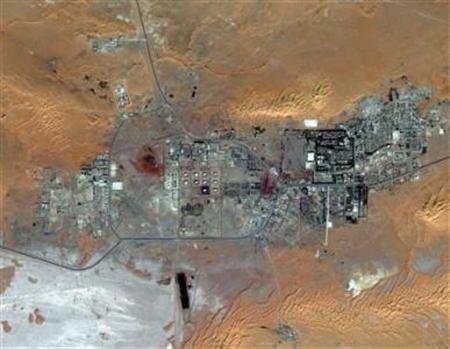
The discovery of 25 charred bodies inside the In Amenas gas plant suggested that the terrorists murdered their captives before being overrun by Algerian security forces.

William Hague, the Foreign Secretary, said that the British hostages had been “executed”.

One Briton was forced to betray his colleagues’ hiding place before he was shot by the terrorists, and another was shot while he tried to give first aid to the injured.

A total of 22 Britons were freed or escaped to safety. As they returned home over the weekend they began to recount the extraordinary stories of how they evaded capture.

Alan Wright, a 37-year-old health and safety officer from Aberdeenshire, hid in a locked office for 24 hours before disguising himself as an Algerian and crawling through a hole cut in a wire fence, in what he described as his own “Great Escape”.

Monday 21 January 2013

http://www.telegraph.co.uk/news/worldnews/africaandindianocean/algeria/9814697/Algeria-hostage-crisis-wives-and-girlfriends-help-identify-victims.html

continue reading

Sunday, 20 January 2013

Fire kills at least six in Pakistan


Officials said at least six people were killed after a fire broke out early Sunday at a building in Lahore City in Pakistan.

The exact number of individuals inside the building at the time of the fire is not known, Geo News reported.

The fire, which destroyed the third floor of the building, also affected four other blocks in the neighborhood.

A fire officials said the blaze reignited after being under control for four hours.

Fourteen fire trucks were on the scene, Geo News reported

Sunday 20 January 2013

Read more: http://www.upi.com/Top_News/World-News/2013/01/20/Fire-kills-six-in-Pakistan/UPI-76181358709825/#ixzz2IXyMAiYe

continue reading

Sense of community begins to develop in ‘Pablo’-hit village in Davao Oriental


It has often been said that tragedy, disasters and unfortunate events often bring out the best and worst in humans; they also unite or divide a people.

Typhoon Pablo (Bopha) was no exception: It galvanized the world, especially local organizations, to positive action to help the survivors cope with the devastation as well as assist their communities get back on its feet.

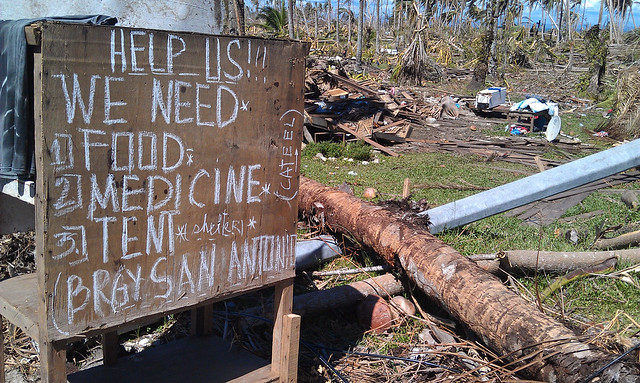
In the eco-tourism resource-rich barangay (village) of Ban-ao, the farthest barangay of this town which borders the municipality of Cateel and Baganga, a sense of community is starting to develop in each survivor—a feeling of unity, commonality and oneness with one another.

A sense of hope for a brighter future is pervading Ban-ao and “visitors” can’t help but notice the unity of the people here.

“I often wonder what the overall feeling in this village before Pablo was. But now, the feeling of unity and oneness is so palpable in everyone that I can’t just feel or sense it but also see it in the people, in the way they help each other cope with the disaster,” Ed Cox, expert disaster response and humanitarian volunteer of the Rotary Club’s Disaster Aid International (DAI) said in a casual conversation with the BusinessMirror on board one of the vehicles of the Balay Mindanaw Group of NGOs (BMG) on the way to Ban-ao from Cateel.

Cox, who admitted his frustration at people who don’t understand his “job,” said that there were times that he felt so frustrated at and disappointed with the response from government and so-called expert disaster response and “But then, I see the survivors and then hope springs back to life. Yes, you can see sadness in their eyes. But you can also see there the fire of hope burning. And it is our job, our work, our responsibility to make sure that this fire of hope in them is not extinguished. It is our job to convert this hope into positive action for them to be able to help themselves. That’s the meaning of assistance,” he said.

And this hope is what’s driving the survivors in Ban-ao forward into rebuilding a devastated community and rebuilding lives, even if it means literally picking the pieces and putting them back together.

Teary-eyed, Punong Barangay Mera Ching said that despite the unfavourable fate they had in the past year, there is always a reason to celebrate a new life, a new beginning. And this should not be missed especially by the little children,” Rochelle “Bibing” Mordeno, executive director of Balay Mindanaw Foundation, Inc. (BMFI) said in BMG’s DR and humanitarian interventions update report to donors, partners and the general public.

Ching, at 42, is ably leading Ban-ao’s slow but sure recovery and rebuilding efforts.

Because of Ching’s leadership, purok (sitio) leaders of Ban-ao are also taking very active roles in the “new Ban-ao,” consisting of several Tent Communities.

“This also helped unload the burden on the part of the punong barangay [as] all of the seven purok leaders are actively involved especially on major decision-making and planning related to the tent community and the barangay in general,” Mordeno said.

Sunday 20 January 2013

http://businessmirror.com.ph/index.php/news/regions/7939-sense-of-community-begins-to-develop-in-pablo-hit-village-in-davao-oriental

continue reading

“We learned so many lessons from Pablo”


Typhoon Pablo taught Compostela Valley “many lessons” and the province now wants to ensure it could respond effectively should another disaster happen by allocating P2 million this year on trainings on disaster preparedness.

“We learned so many lessons,” Compostela Governor Arthur Uy told the Kapihan sa ComVal Thursday morning, as he noted that it was the first time the province experienced a typhoon.

He said they “did prepare” for the typhoon, put in place an evacuation program, but “we came up short admittedly.”

He said the response to the disaster was rather chaotic in the first two weeks and that it was a good thing there were volunteers who helped them.

Uy said they are allocating P2 million this year for disaster preparedness. “We need to capacitate (our people) through trainings, equipment.”

This year’s allocation is more than twice last year’s.

Raul Villocino, head of the Provincial Disaster Risk Reduction and Management Council told MindaNews that last year’s budget for trainings was P950,000.

Uy acknowledged the need to assess and evaluate their disaster preparedness “dahil napakarami palang kakulangan. Medyo kalat tayo” (because we are inadequate.. We’re disorganized).

He cited the handling of the dead as an example, apparently referring to the problem in New Bataan which posted the highest death toll not only in the province but in Pablo’s path across Mindanao, Visayas and Luzon.

Local authorities initially dug two mass graveyards at the public cemetery in Barangay Cabinuangan, New Bataan, only to be told by the National Bureau of Investigation (NBI) that the bodies should be in individual niches or in body bags if placed in compartments.

The NBI also told them there is a process to follow and that forensics teams need to get DNA samplings from the unidentified victims for matching with their surviving relatives.

Uy said the P2M budget will be used for trainings and other capability-building activities, separate from equipment like rubber boats.

He said he has asked the provincial government of Albay, a province used to dealing with typhoons, to conduct trainings in Compostela Valley.

Under RA 10121 or the Disaster Risk Reduction and Management (DRRM) Act of 2010, a declaration of as state of calamity is no longer necessary to access and utilize the DRRM Fund.

The DRMM Fund is to be sourced from “not less than five percent of the estimated revenue from regular sources,” to support disaster risk management activities. These include pre-disaster preparedness programs, including training, purchasing life–saving rescue equipment, supplies and medicines, for post-disaster activities and for the payment of premiums on calamity insurance.”

Sunday 20 January 2013

http://www.mindanews.com/top-stories/2013/01/20/we-learned-so-many-lessons-from-pablo/

continue reading

Bridge collapse isolates devastated town


Another bridge has collapsed in Davao Oriental, making Caraga town isolated. The Caraga Bridge, which connects Caraga town to Manay town, was destroyed around 10:30 a.m. Sunday “by the rampaging water which carried with it uprooted trees,” Mayor William Dumaan told the Inquirer by phone.

The trees could be among those uprooted when Typhoon “Pablo” hit the east coast towns of the province on Dec. 4, he said.

But some residents said although some of the trees still have roots, there were at least “three big cut logs.”

Asked where the logs were, the residents said they were carried away to the sea. Vice Gov. Jose Mayo Almario earlier warned that “the worst is yet to come” with the onset of the rainy season. He said that with no more trees to hold the rainwater, there would be flooding, with rampaging water carrying fallen trees with it.

At the height of Pablo, the Baogo Bridge, which connects Caraga to Baganga town, was destroyed by floodwater that had uprooted trees and logs.

The destruction of the Caraga Bridge has rendered the town totally isolated.

Another bridge in Cateel town is also facing collapse. Only light vehicles are allowed to pass the Papad Bridge, which connects Cateel and Baganga. If the bridge is destroyed, it will mean total isolation of the typhoon-ravaged town of Baganga, which can be reached through Cateel from the east and Caraga from the south.

In General Santos City, tears flowed as wreaths were laid and white balloons were released on Saturday, signifying the end of the 45-day search and rescue operation for the 352 fishermen who went missing at the height of Pablo last month.

Lt. Gen. Jorge V. Segovia, commander of the Eastern Mindanao Command, came here on Wednesday and told the families of missing fishermen that “efforts of the government would be shifted from search and rescue to rehabilitation.”

The fishermen aboard 47 fishing vessels from this city and nearby Sarangani province disappeared when Pablo battered Eastern Mindanao on Dec. 4.

On Dec. 9, massive sea and aerial search and rescue efforts were launched. Using 22 boats, the Philippine Navy, Coast Guard, US Navy, Bureau of Fisheries and Aquatic Resources (BFAR) and different fishing companies scoured the fishing grounds covering some 500,000 hectares near Palau all the way down to Indonesia.

Navy Capt. Lued Lincuna told the Inquirer that 44 survivors were from General Santos City, Sarangani, Davao del Sur and Surigao del Sur. Fifteen bodies were retrieved. Lincuna said the last time the team recovered a cadaver was on Dec. 12, “so, the task force decided to refocus its efforts to helping the families of the victims.”

On Saturday morning, the city government, the fishing federation, BFAR, Philippine Navy, Coast Guard and families of the missing fishermen held a fluvial wreath-laying ceremony on Sarangani Bay.

It was a symbolic mass burial to pay tribute to fishermen who perished at sea together with their fishing vessels.

Despite the holding of symbolic mass burial, Ramona Lacanilao, 42, a resident of Calumpang here, refused to give up hope. “I still believe my husband is alive. I will continue waiting for him,” Ramona said in Bisaya.

Sunday 20 January 2013

http://newsinfo.inquirer.net/343755/bridge-collapse-isolates-devastated-town

continue reading

Building fire kills eight in Russia

Eight workers died in a fire that broke out in an administrative one-storey wooden building in Yekaterinburg in the Urals, the regional emergencies center reported on Sunday, RIA Novosti reports.

The fire erupted early on Sunday and engulfed an area of 200 square meters. The building housed a brigade of workers who were engaged in the construction of a new greenhouse center. It took the firefighters more than two hours to extinguish the blaze.

Previous reports said six construction workers were killed in the fire. “During the clearance of debris the bodies of two more people were found,” the regional emergencies center said.

According to preliminary data, workers from the Perm Region in the Urals were killed in the fire, regional Interior Department spokesman Valery Gorelykh said.

“Criminal investigators found several cars at the scene, including a Volga car with Perm number plates, and a Ford car with Sverdlovsk Region number plates, which was used by the construction brigade foreman, according to some information” the spokesman said.

The location of the foreman has not been determined, it is not ruled out that he may be among the fire victims. The identities of the persons killed in the fire are being established, he said.

Negligence, careless smoking and reluctance to comply with fire safety rules are the most frequent causes of residential building fires across Russia. The number of house fires has risen dramatically in the country after the collapse of the Soviet Union.

Fire safety came into the spotlight in Russia in recent years after a number of high-profile blazes. Over 150 people were killed in a fire at a nightclub in the Urals in December 2009.

Sunday 20 January 2013

http://www.globaltimes.cn/content/756942.shtml

continue reading

Four Dead in Russian Coal Mine Accident


At least four miners died early on Sunday as a result of smoke inhalation during an accident at a coal mine in southwestern Siberia’s Kemerovo Region, local emergencies services reported.

A total of 77 miners were working underground at the mine No. 7 in the Prokopyevsky district when smoke started spreading though the tunnels at around 02.15 a.m. Moscow time [22:15 GMT on Saturday].

An initial report said one miner died and seven were missing, but an update at 04.55 a.m. [00.30 GMT] added three more victims to the death toll. Sixty-nine people have been successfully evacuated.

“Rescuers have discovered three more bodies. The fate of the four missing miners remains unknown as the search for them continues,” the latest official report said. Kemerovo Region Governor Aman Tuleyev is personally leading the rescue effort. Kemerovo is part of Russia’s major coal-producing Kuzbass region.

Specialists and experts have determined the location of the four trapped miners. However, a rescue operation was suspended on Sunday Morning for fear of gas explosion regarding the high methane concentration in the tunnels, emergencies officials said.

A regional emergency center was set up in preparation for further rescue and medical efforts.

Meanwhile, families of the coal mine accident victims will receive three million rubles (100,000 US dollars) in aid, regional authorities said.

Methane explosion is a major cause of fatal accidents in Siberian coal-producing regions. In may 2010, two gas blasts at a coal mine near the town of Mezhdurechensk killed 91 people.

Sunday 20 January 2013

http://www.globaltimes.cn/content/756937.shtml http://en.rian.ru/russia/20130120/178898641.html

continue reading

15 Unidentified Bodies Found Floating on Ezu River in Anambra State


The people of Amansea community in Anambra state woke up to a gory sight on Saturday morning to find about 40 bodies floating on Ezu, a river at the boundary between Anambra and Enugu states.

The decomposing bodies, all male, were without any noticeable body mutilations or injuries and could not be identified by the people of Amansea community who live in the area on Anambra state side of the divide. They added that no member of the community had also been reported missing.

The bodies were discovered in the early hours of the morning when they went to fetch water.

According to Channels TV, the river is the only source of water for the five communities of Amansea, Ebenebe, Ugbenu, Ugbene and Oba-Ofemili and the development had caused a lot of discomfort to the people.

The Enugu State Commissioner of Police, Musa Daura, maintained that Enugu and Anambra enjoy relative peace and so could not decipher where the corpses were coming from. He wondered how the avalanche of dead bodies got there because he had not heard of any communal clash whether in Enugu or Anambra where many people were killed.

The villagers were advised not to fetch water from the river until the bodies are cleared and buried.

This is really shocking and we hope the police are able to unravel the mystery behind this case.

Sunday 20 January 2013

http://www.bellanaija.com/2013/01/20/15-unidentified-bodies-found-floating-on-ezu-river-in-anambra-state/

continue reading

Saturday, 19 January 2013

Glencoe avalanche, four dead, say police


Four people have died after an avalanche in Glencoe in the Scottish Highlands, the Northern Constabulary has said.

A party of six climbers, three men and three women, were caught up in the avalanche on Bidean Nam Bian, at about 14:00.

One male member of the party raised the alarm.

The sixth climber, a woman, is in a serious condition in hospital in Fort William.

It is understood the party were descending from a peak on the south side of the valley, when the slope they were on broke away.

The climbers were descending close to Church Door Buttress, when the snow slope broke away.

Five of them were swept down the mountain and engulfed by ice and snow.

One, who had avoided being swept away, raised the alarm, and a major rescue effort got under way.

One female climber was recovered alive but has serious head injuries.

Nicola Sturgeon, Scotland's deputy first minister, expressed her concerns on Twitter, saying: "Dreadful news from Glencoe. Thoughts with all those affected."

Saturday 19 January 2013

http://www.bbc.co.uk/news/uk-scotland-21101217

continue reading

Skeletons from Bali’s Past: Large Waves Uncover 1965 Killing Field Near Cucukan Village, Gianyar, Bali


The large waves that hit Bali’s eastern shore at Gianyar have wreaked havoc on parts of the shoreline and dredging up a dark page in Bali’s history. The Cucukan Beach front at Medahan Village, Blahbatuh yielded up a number of human skeletons when waves eroded the shoreline on Monday, January 14, 2013.

According to Bali Post, the strong wave hitting the shore reopened mass graves of those executed during the violence following the 30 September Movement (Gestapu) of 1965.

The bones scattered along the beach also yielded up a wristwatch, thought to belong to one of the dead.

Based on reports for local villagers, the area where the bones were found was used for the execution of suspected Communist Party Members in 1965.

Many of the graves are located in an area just west of a private villa owned by former president Megawati Soekarnoputri. One villager estimated there were some 200 unmarked graves located in this area.

Some 20 meters to east of the mass graves, another body wrapped in burial shroud was revealed by the waves. Ida Bagus Arka, the chief of the Cucukan Village, said that the area was also used for the burial of unidentified victims of crime. The body uncovered was buried in 1997 was that of a 19-year-old man brought there by police and hospital workers for burial.

The bones uncovered by the waves will now be gathered and burnt with the ashes to be eventually committed to the seas in accordance with Balinese tradition.

Saturday 19 January 2013

http://www.balidiscovery.com/messages/message.asp?Id=9030

continue reading

Death toll from floods in Indonesia’s capital rises to 14


The death toll from floods in Indonesia’s capital has climbed to 14 after searchers pulled three more bodies from the waters.

Indonesia’s national disaster management agency said Saturday that the body of a 35-year-old member of the city’s search and rescue team was found on the banks of an overflowing river late Friday. Another man was found dead near his flooded home in western Jakarta.

The third body of a male worker was found Saturday in the flooded basement parking of a building in central Jakarta.

The agency said most victims were electrocuted or drowned. Electricity supplies have been cut to several flooding areas to prevent electrocutions.

A dike in central Jakarta collapsed late Wednesday amid floods that swamped Jakarta. Successive governments have done little to mitigate the flooding threat.

Saturday 19 January 2013

http://www.washingtonpost.com/world/asia_pacific/death-toll-from-floods-in-indonesias-capital-rises-to-14/2013/01/19/7e611488-6210-11e2-81ef-a2249c1e5b3d_story.html

continue reading

Body found as bushfires continue across Vic, NSW


One man has been killed and communities in Victoria and New South Wales remain on alert as large bushfires continue to burn out of control.

The fires turned deadly on Friday evening when Victorian police confirmed the death of a man near Seaton in the Gippsland region.

The man's body was found inside a burnt out car in the Glenmaggie bushfire area.

"The body of the male has yet to be formally identified. Police are investigating and will prepare a report for the Coroner," Victoria Police said in a statement.

Five homes have been destroyed by the Glenmaggie blaze which has burnt through 48,000 hectares and is creating spot fires up to 1 kilometre ahead.

The fire has slowed in pace, but is moving steadily toward the farming hamlet of Licola.

About 10 residents have decided to stay in the area and Country Fire Authority (CFA) crews are also there to defend homes.

The CFA says Licola Road is closed and the fire is making its way towards Mount Useful and The Springs.

Fire Services Commissioner Craig Lapsley says the community is well prepared.

"The township itself, those that have stayed behind have said they are willing to fight it out. They've had fires around them before," he said on Friday.

"They, with their fire trucks around them, will have an interesting night. It's a decision that's quite gutsy I think, but they've made that decision to stay and I think they'll do quite well."

All of Friday's emergency warnings in Victoria and New South Wales have been downgraded, but several new fires have started.

Two fires have broken out near the Murray River in Victoria's north-east.

A fire in Mt Lawson State Park, near Tallangatta, is believed to have been caused by a lightning strike on Friday night.

It is burning out of control in remote bushland but is not threatening private property.

Further east, another fire has been reported in the Burrowa Pine Mountain area, near Corryong.

Sydney city sweltered on Friday as it recorded its hottest day since records began, with temperatures getting to 45.8 degrees.

The extreme heat across NSW also made it a busy day for firefighters as they battled over 100 fires.

The state received three emergency alerts on Friday before they were downgraded.

A cool change during the evening also brought strong southerly winds, leading to the loss of two homes and two sheds in a fire at Millingandi, near the Bega Valley.

Authorities say other properties along the Princes Highway are at risk.

NSW RFS spokeswoman Brydie O'Connor says firefighters will be kept busy through the night.

"That southerly change is moving through the state, it's moved through the Hunter area now," she said.

"It brought with it a lot of force, some very gusty volatile winds, winds gusting up to 90 kilometres per hour on some parts of the coast.

"We've still more than 120 fires burning and that's due to that lightening that also came through the state."

A fire is currently burning in the Ku-Ring-Gai Chase National Park, north of Sydney.

The RFS says a watch and act alert is in place for blazes at Cessnock, Deans Gap, Boorowa, Coonabarabran and Millingandi.

Cooler temperatures are expected for Sydney on Saturday, but the extreme heat is set to persist in many other areas of the state.

Saturday 19 January 2013

http://www.radioaustralia.net.au/international/2013-01-19/body-found-as-bushfires-continue-across-vic-nsw/1075552

continue reading

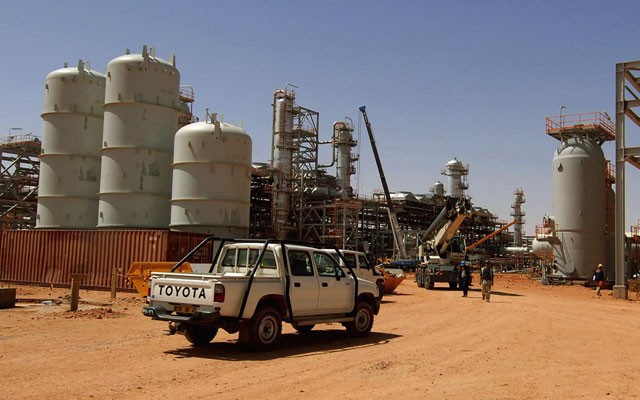
Burned bodies found at besieged Algeria gas plant


The Algerian army on Saturday carried out a "final assault" on al Qaeda-linked gunmen holed up in a desert gas plant, killing 11 of the Islamists after they took the lives of seven foreign hostages.

"It is over now, the assault is over, and the military are inside the plant clearing it of mines," a local source familiar with the operation told Reuters.

The state oil and gas company, Sonatrach, said the militants who attacked the plant on Wednesday and took a large number of hostages had booby-trapped the gas complex with explosives.

The exact death toll among the gunmen and the foreign and Algerian workers at the plant near the town of In Amenas close to the Libyan border remained unclear.

Earlier on Saturday, Algerian special forces found 15 burned bodies at the plant. Efforts were underway to identify the bodies, the source told Reuters, and it was not clear how they had died.

Sixteen foreign hostages were freed on Saturday, a source close to the crisis said. They included two Americans, two Germans and one Portuguese.

Britain said fewer than 10 of its nationals at the plant were unaccounted for.

The attack on the plant swiftly turned into the biggest international hostage crises in decades, pushing Saharan militancy to the top of the global agenda.

Reports earlier put the number of hostages killed at between 12 to 30, with many foreigners still unaccounted for, among them Norwegians, Japanese, Britons and Americans.

The U.S. State Department said on Friday one American, Frederick Buttaccio, had died but gave no further details. The French defence minister said he understood there were no more French workers among the hostages.

Two Norwegians were released overnight, leaving six unaccounted for, while Romania said three of its nationals had been freed. A number of Japanese engineering workers were still unaccounted for.

Scores of Westerners and hundreds of Algerian workers were inside the heavily fortified compound when it was seized before dawn on Wednesday by Islamist fighters who said they wanted a halt to a French military operation in neighbouring Mali.

Hundreds escaped on Thursday when the army launched its operation, but many hostages were killed.

Saturday 19 January 2013

http://sg.finance.yahoo.com/news/foreigners-still-trapped-sahara-hostage-crisis-083141930--finance.html

continue reading

Friday, 18 January 2013

10 killed, 53 injured as bus, trailer truck collide in the Philippines


Ten people were killed while 53 others were injured last Wednesday afternoon when a trailer rammed a commuter bus on the national highway here.

The fatalities were identified as Lyle Carmita, 15, Almira Pamandanan, 36, Cayetana Fernandez, all of Toledo City; Julie Pajamutan and Dionny Pajamutan, of Naga City; Emmanuel Gaudise, 28, of Toledo City; trailer truck driver Antonico Omayag, 40, of Cebu City; Melvin Costanilla of Toledo City, Lilita Etang, 51, of Balamban town, and James Lee Carpentero of Toledo City.br>
Five of the victims died on the spot while the others died at the Vicente Sotto Memorial Medical Center in Cebu City.br>
The injured were rushed to Carmen Copper Hospital and the Toledo City Hospital.br>
Police said the truck, with license plate GUF-405 and driven by Omayag, rammed the BT bus with license plate GWH-253 that was driven by Jimmy Limoran.br>
The truck was cruising along the national highway in Barangay Uling in Naga City when it hit the bus that was traveling toward Toledo City from Cebu City.br>
Police said the trailer truck was hauling a bulldozer and going downhill.br>
Traffic investigator Police Officer 2 Cristino Canono said Omayag lost control of the vehicle when the truck’s brakes malfunctioned.br>
Canono said the bus tried to swerve away from the trailer truck that hit the left side of the bus.br>
The truck dragged the bus several meters and the vehicle fell in a canal.br>
Witness Terry Bacaro, 55, said that she was in a nearby store when she saw the speeding truck honking its horn before it rammed the bus.br>
Marilou Carpentero, 44, of Toledo City, one of the injured passengers, is the mother of one of the fatalities, James Lee Carpentero.br>
Mrs. Carpentero, who suffered a cut in the forehead, said she and her son were on their way home to Toledo.br>
She said they came from the Vicente Sotto Memorial Medical Center in Cebu City where her son was earlier treated for wounds he suffered after he was hit by a tree that fell near their house.br>
Carpentero said they were seated at the back portion of the bus and James Lee was pinned by the metal bars of the bus.br>
Jing Firmeza, mother of injured victim Lyle Firmeza, said that her son was celebrating his 15th birthday that day.br>
She said that her daughter was also on the bus on her way home to Toledo City when she was knocked unconscious by the collision.br>
Friday 18 January 2013br>
http://www.222.philstar.com/headlines/2013/01/18/898290/truck-rams-bus-10-killed-53-hurt-cebu

continue reading

3 dead migrants found off Greek island


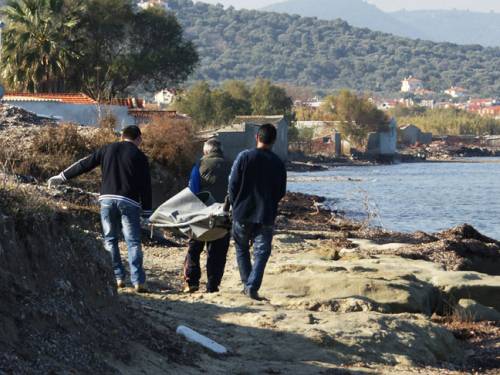
Greece's coast guard says the bodies of three male would-be migrants have been retrieved in the waters off the eastern Aegean island of Chios.

Two bodies were found Sunday morning by fishermen and the third later by a coast guard vessel. The men's national origins were not immediately clear, but they may have been trying to cross into Greece from Turkey.

A coast guard spokesman, speaking on condition of anonymity because he was not authorized to speak on the record to media, confirmed that an autopsy on the first two bodies showed they had drowned.

Tens of thousands of illegal migrants cross into Greece annually, most over the land and sea border with Turkey.

The sea crossing, brief but often through turbulent waters and involving overloaded boats, is sometimes fatal.

Friday 18 January 2013

http://www.huffingtonpost.com/huff-wires/20130113/eu-greece-migrants/?utm_hp_ref=sports&ir=sports

continue reading

Granville train disaster remembered


The 83 victims of Australia's worst train disaster have been remembered in a moving ceremony that also honoured the victims of the Sandy Hook school massacre in the US.

The packed 6.09am train from Mount Victoria to Sydney derailed and crashed as it approached Granville station about 8.10am on January 18, 1977.

The train smashed into a bridge, which collapsed on two carriages. In addition to the death toll, 210 people were injured.

About 250 survivors, relatives, emergency service workers and dignitaries gathered near the crash site on Friday to mark the 36th anniversary.

"The thing that surprised me is that crowds are still very large, even after all these years," said John Hennessey, president of the Granville Memorial Trust.

"It's still very raw and you could hear that in their voices and the stories they tell you."

The ceremony was held around a large granite memorial stone with the names of all the victims inscribed on it.

Twenty-six roses were laid on the stone to commemorate the teachers and children who died in the Sandy Hook Elementary School massacre in the US in December.

The lord mayor of Parramatta, John Chedid, described the Granville tragedy as a "very, very sad day".

The national secretary of the Rail, Tram and Bus Union, Bob Nanva, said the lessons of the crash must never be forgotten.

"The Granville Rail Disaster will live in our memories forever," he said in a statement. "We must ensure we never see another disaster on the same scale."

He urged the NSW government to put more funding into rail maintenance.

A report into the Granville crash concluded that a derailment was "inevitable" because the condition of the track was poor.

Friday 18 January 2013

Read more: http://www.smh.com.au/national/granville-train-disaster-remembered-20130118-2cz0l.html#ixzz2IMNfETAX

continue reading

Eleven dead in Jakarta floods, 18,000 evacuated: Disaster agency


Eleven people have died in flood-related incidents in Jakarta, and more than 18,000 people were forced to leave their homes, Indonesia's National Disaster Mitigation Agency said on Friday.

"Floods are occurring still and since January 15, 11 people have died, five of whom from electrocution," said agency spokesman Sutopo Purwo Nugroho.

Friday 18 January 2013

http://www.straitstimes.com/breaking-news/se-asia/story/eleven-dead-jakarta-floods-18000-evacuated-disaster-agency-20130118

continue reading

Foreigners still caught in Sahara hostage crisis


More than 20 foreigners were still either being held hostage or missing inside a gas plant on Friday after Algerian forces stormed the desert complex to free hundreds of captives taken by Islamist militants.

More than a day after the Algerian army launched an assault to seize the remote desert compound, much was still unclear about the number and fate of the victims, leaving countries with citizens in harm's way struggling to find hard information.

Reports on the number of hostages killed ranged from 12 to 30, with anywhere from dozens to scores of foreigners still unaccounted for.

Norway's Prime Minister Jens Stoltenberg, eight of whose countrymen were missing, said fighters still controlled the gas treatment plant itself, while Algerian forces now held the nearby residential compound that housed hundreds of workers.

Leaders of Britain, Japan and other countries expressed frustration that the assault had been ordered without consultation. Many countries were also withholding information about their citizens to avoid helping the captors.

Night fell quietly on the village of In Amenas, the nearest settlement, some 50 km (30 miles) from the vast and remote desert plant. A military helicopter could be seen in the sky.

An Algerian security source said 30 hostages, including at least seven Westerners, had been killed during Thursday's assault, along with at least 18 of their captors. Eight of the dead hostages were Algerian, with the nationalities of the rest of the dead still unclear, he said.

Algeria's state news agency APS put the total number of dead hostages at 12, including both foreigners and locals.

Norway's Stoltenberg said some of those killed in vehicles blasted by the army could not be identified. "We must be prepared for bad news this weekend but we still have hope."

Northern Irish engineer Stephen McFaul, who survived, said he saw four trucks full of hostages blown up by Algerian troops.

The attack has plunged international capitals into crisis mode and is a serious escalation of unrest in northwestern Africa, where French forces have been in Mali since last week fighting an Islamist takeover of Timbuktu and other towns.

"We are still dealing with a fluid and dangerous situation where a part of the terrorist threat has been eliminated in one part of the site, but there still remains a threat in another part," British Prime Minister David Cameron told his parliament.

A local Algerian source said 100 of 132 foreign hostages had been freed from the facility. However, other estimates of the number of unaccounted-for foreigners were higher. Earlier the same source said 60 were still missing. Some may be held hostage; others may still be hiding in the sprawling compound.

Two Japanese, two Britons and a French national were among the seven foreigners confirmed dead in the army's storming, the Algerian security source told Reuters. One British citizen was killed when the gunmen seized the hostages on Wednesday.

Those still unaccounted for on Friday included 10 from Japan and eight Norwegians, according to their employers, and a number of Britons which Cameron put at "significantly" less than 30

France said it had no information on two Frenchmen who may have been at the site and Washington has said a number of Americans were among the hostages, without giving details. The local source said a U.S. aircraft landed nearby on Friday.

The attackers had initially claimed to be holding 41 Western hostages. Some Westerners were able to evade capture by hiding.

They lived among hundreds of Algerian employees on the compound. The state news agency said the army had rescued 650 hostages in total, 573 of whom were Algerians.

"(The army) is still trying to achieve a ‘peaceful outcome' before neutralizing the terrorist group that is holed up in the (facility) and freeing a group of hostages that is still being held," it said, quoting a security source.

MULTINATIONAL INSURGENCY

Algerian commanders said they moved in on Thursday about 30 hours after the siege began, because the gunmen had demanded to be allowed to take their captives abroad.

A French hostage employed by a French catering company said he had hidden in his room for 40 hours under the bed, relying on Algerian employees to smuggle him food with a password.

"I put boards up pretty much all round," Alexandre Berceaux told Europe 1 radio. "I didn't know how long I was going to stay there ... I was afraid. I could see myself already ending up in a pine box."

The captors said their attack was a response to a French military offensive in neighboring Mali. However, some U.S. and European officials say the elaborate raid probably required too much planning to have been organized from scratch in the single week since France first launched its strikes.

Paris says the incident proves that its decision to fight Islamists in neighboring Mali was necessary.

Security in the half-dozen countries around the Sahara desert has long been a pre-occupation of the West. Smugglers and militants have earned millions in ransom from kidnappings.

The most powerful Islamist groups in the Sahara were severely weakened by Algeria's secularist military in a civil war in the 1990s. But in the past two years the regional wing of Al Qaeda gained fighters and arms as a result of the civil war in Libya, when arsenals were looted from Muammar Gaddafi's army.

Al Qaeda-linked fighters, many with roots in Algeria and Libya, took control of northern Mali last year, prompting the French intervention in that poor African former colony.

The Algerian security source said only two of 11 militants whose bodies were found on Thursday were Algerian, including the squad's leader. The others comprised three Egyptians, two Tunisians, two Libyans, a Malian and a Frenchman, he said.

The plant was heavily fortified, with security, controlled access and an army camp with hundreds of armed personnel between the accommodation and processing plant, Andy Coward Honeywell, who worked there in 2009, told the BBC.

The apparent ease with which the fighters swooped in from the dunes to take control of an important energy facility, which produces some 10 percent of the natural gas on which Algeria depends for its export income, has raised questions over the value of outwardly tough security measures.

Algerian officials said the attackers may have had inside help from among the hundreds of Algerians employed at the site. The attackers benefitted from bases and staging grounds across the nearby border in Libya's desert, Algerian officials said.

U.S. Defense Secretary Leon Panetta said those responsible would be hunted down: "Terrorists should be on notice that they will find no sanctuary, no refuge, not in Algeria, not in North Africa, not anywhere.... Those who would wantonly attack our country and our people will have no place to hide."

WARNING OF MORE ATTACKS

The kidnappers threatened more attacks and warned Algerians to stay away from foreign companies' installations, according to Mauritania's news agency ANI, which maintained contact with the group during the siege.

Hundreds of workers from international oil companies were evacuated from Algeria on Thursday and many more will follow, said BP, which jointly ran the gas plant with Norway's Statoil and the Algerian state oil firm.

The overall commander of the kidnappers, Algerian officials said, was Mokhtar Belmokhtar, a one-eyed veteran of Afghanistan in the 1980s and Algeria's bloody civil war of the 1990s. He appears not to have been present.

Algerian security specialist Anis Rahmani, author of several books on terrorism and editor of Ennahar daily, told Reuters about 70 militants were involved from two groups, Belmokhtar's "Those who sign in blood", who traveled from Libya, and the lesser known "Movement of the Islamic Youth in the South".

Britain's Cameron, who warned people to prepare for bad news and who canceled a major policy speech on Friday to deal with the situation, said he would have liked Algeria to have consulted before the raid. Japan made similar complaints.

U.S. officials had no clear information on the fate of Americans. Washington, like its European allies, has endorsed France's military intervention in Mali.

Friday 18 January 2013

http://www.reuters.com/article/2013/01/18/us-sahara-crisis-idUSBRE90F1JJ20130118

continue reading

Seven dead in Foxconn bus accident


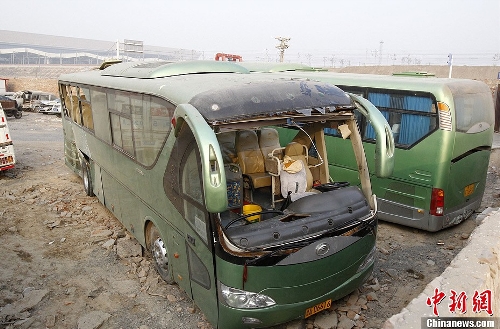
Seven people were killed after two company buses collided in Zhengzhou, capital of Henan province, on Jan 17.

Both buses were owned by Foxconn Technology Group, a PR manager surnamed Cai from the company confirmed.

The accident occurred at a crossing at about 8:40 am, the website of Zhengzhou-based Dahe Daily reported.

More than 10 were injured and sent to hospital, said the report.

Foxconn Technology Group is the world's largest maker of computer components and an important supplier to Apple. Foxconn has about 1 million employees on the Chinese mainland. More than 100,000 of them work at its Zhengzhou factory.

Friday 18 January 2013

http://www.chinadaily.com.cn/china/2013-01/17/content_16134323.htm

continue reading

The Modern Magic in Africa's Witchcraft Industry


Witchcraft beliefs in Africa returned to the news cycle towards the end of 2012 following reports of mass exhumations in Benin. In the dead of night, over 100 corpses were dug up from a cemetery near Porto Novo and mutilated – reportedly so that body parts could be sold on the black market. In recent months, there has also been a string of UN and NGO reports linking African witchcraft beliefs to child abuse, killings and human trafficking.

In coverage of such stories, it is often suggested that witchcraft beliefs, and the abusive practices that can follow, are deeply rooted in African tradition and local cultural heritage. An Al Jazeera documentary about witchcraft accusations and infanticide in northern Benin, for example, stresses the role that witchcraft plays in Beninese tradition and the difficulties faced by authorities in eradicating entrenched superstitions. Similarly, some reports emphasise the “traditions” that inform witchcraft-related child killings.

But while the role played by cultural heritage is undeniable, it is critical to separate ‘traditional’ elements from more modern innovations. Studies suggest that witchcraft-related practices have undergone rapid transformations in the last 20 years. According to a UNICEF report, for example, witchcraft accusations directed at children only date back around 10 or 20 years; prior to this, the accused were typically elderly women.

Today’s witchcraft beliefs and practices are as much products of modern dynamics as they are informed by long-standing tradition. Witchcraft beliefs are not remnants of ‘pre-modern’ cultures but contemporary phenomena embedded in, and partly constituted by, specific and current cultural and socio-economic contexts.

One important factor in these modern witchcraft beliefs is the recent rise of Pentecostal churches and other evangelical religions in West Africa, facilitated by modern media technologies.

Several religious figures, for example, use television and the internet to advertise their usually expensive services as exorcists. Prior to his arrest, "Bishop" Sunday Ulup-Aya in Nigeria earned $261 for each child he delivered from demonic possession. Similarly, Helen Ukpabio and her African evangelical franchise, Liberty Foundation Gospel Ministries, encourage witchcraft and demon-related fears, and call on people to subscribe to the organisation or pay hefty fees for exorcisms. On her website, Ukpabio sells publications and films including titles such as Married to a Witch, The Coven and Unveiling the Mysteries of Witchcraft, the last of which sells for $25.

The use of modern media is not limited to Christian churches however. Benin has also seen the emergence of evangelical Vodun priests such as Dah Aligbonon Akpochihala, who hosts his own radio show and frequently appears on television to dispel misconceptions about the Vodun religion.

Although it is clearly too simplistic to suggest these evangelical practitioners are primarily responsible for driving witchcraft beliefs, their pervasive presence and use of popular media has inevitably contributed to the continued infusion of such beliefs into the general cultural landscape and popular conscience. The magic of the market

Market forces are also central to today’s witchcraft beliefs. Again, although we must be careful not to over-emphasise the importance of such forces, economic dimensions are inextricable from, and central to, contemporary beliefs.

On the one hand, these influences can operate from a top-down perspective. Practitioners such as Helen Ukpabio have helped create a lucrative market in anti-witchcraft goods and services, thus subjecting beliefs to the kind of marketing strategies typical of any modern capitalist industry.

Demand for charms and services that supposedly protect against sorcery have led to some shocking events in West and Central Africa. The corpse mutilations in Benin are one example. “The desecration of graves is about money in this region”, commented Joseph Afaton, director of the cemetery in Dangbo, Benin, where the desecrations took place.

In certain parts of West and Central Africa, people with albinism are said to have magical powers and an IRIN report estimates that a "complete set of albino body parts" – including all four limbs, genitals, ears, nose and tongue – can sell for about $75,000 in Tanzania.

Adding another economic layer to the issue, in many cases children accused of witchcraft end up as child labourers. Several industries in West Africa rely heavily on child labour, including cocoa farming in the Ivory Coast, and witchcraft beliefs are sometimes deliberately manipulated by human traffickers to silence victims and coerce them into accepting their fate.

From selling charms to child labour then, numerous parties stand to benefit from witchcraft beliefs and the human rights violations often facilitated by such beliefs. Toil and trouble

On the other hand, economic forces can be seen to affect witchcraft beliefs from a more bottom-up perspective.

Interestingly, the UNICEF report mentioned above suggests that child witch accusations often take place in circumstances where families are unable to support their own children. A comparative survey published in the report found that impoverished regions of Africa in which children were able to support themselves experience a far lower frequency of child witch accusations even in cases where witchcraft beliefs form part of local tradition.

Additionally, modern scares often enter into discourse about sorcery. For example, a Beninese student told Think Africa Press that, prior to a car journey, he never told anyone where or when he was travelling lest someone employ sorcery to try to kill or injure him in a car crash. Traffic accidents are indeed a significant modern danger in Benin, causing over 2% of all deaths. The UNICEF report also cites urbanisation and the dissolution of the traditional family as factors behind recent transformations in the nature of witchcraft accusations.

Sorcery in Africa is not a simple concept, as Joachim Theis, UNICEF’s child protector in West Africa, explains in an IRIN report: “It has spiritual, economic and social drivers... It gets blurred with all sorts of other beliefs, but it cannot always be put into one box”.

Witchcraft beliefs are complex, varied and dynamic. They are not purely tradition but nor are they merely a response to rapid modernisation. They overlap many areas of life and society, and are intertwined in modern processes and even legal institutions – performing witchcraft is a recognised crime in Cameroon, the Central African Republic, Chad and Gabon, and children can be imprisoned for it.

As well as being mindful of tradition therefore, NGOs and governmental bodies working to prevent child abuse and infanticide need to target these very modern and tangible realities: the explicit ‘witchcraft industry’, anti-witch legislation, child labour and human trafficking, poverty, urbanisation and family dissolution. If all they have left to face in the end is tradition, then they will have made considerable progress.

Friday 18 January 2013

http://thinkafricapress.com/society/african-witchcraft-modern-reality

continue reading

11 killed, scores injured as bus collide with truck


Eleven people died and scores seriously injured in a road accident along the Nairobi-Mombasa highway on Thursday night.

Police and witnesses said eight passengers died on the spot while three others succumbed to injuries at Moi District Hospital.

The bus and trailer drivers were among those killed in the Ndii area near Voi town. The stretch is a black spot.

On Friday, Taita OCPD Samson Kiine said 22 people were seriously injured in the 7pm incident.

“Nine people have so far died in the road accident and 22 others seriously injured and admitted to Voi District hospital,” said Mr Kiine.

A witness, who identified himself as Mwangi said he counted 10 bodies at the scene, while the eleventh victim reportedly died in hospital.

Mr Kiine said the bus belonging to the Star Ways Bus Company, was traveling from Mombasa to Nairobi, while the lorry was heading to Mombasa.

The police officer said the bus driver swerved to avoid hitting a stationary lorry along the highway but collided with truck.

“It appears the bus driver was speeding hence causing the accident. We are however still investigating the cause of the accident,” he told The Standard On Saturday.

He said careless driving was responsible for many road accidents and warned motorists found flouting traffic rules, would face the full force of the law.

The accident comes barely a month after 29 passengers, sustained serious injuries when their bus collided with a trailer at Taita village along the highway during the Christmas festive. More than 3,000 Kenyans die annually from road accidents.

Meanwhile, an aspirant for the TNA nominations in Ndaragwa died after he was involved in an accident along Nyahururu-Nyeri road.

Kennedy Wambugu, who was vying for Kiriita pondo county ward representative died after his vehicle rolled at Kianugu area.

Wambugu,30, was heading to Leshau from Ndaragwa tallying center in preparation for the TNA nominations. He was following up the ballot papers from the station.

According to Nyandarua OCPD Benjamin Onsongo, the vehicle he was in had a tyre burst and rolled.

Two people who he was with, among them his brother, sustained minor injuries and were treated and discharged from Nyahururu District Hospital.

The incident has caused shock among voters who expressed sympathy to his family.

“It is a big loss to us since he is the person that we were voting for. We are now confused on who to vote for the seat,” said Lucy Njoki, a voter.

Friday 18 January 2013

http://www.standardmedia.co.ke/?articleID=2000075351&story_title=Kenya-11-killed,-scores-injured-as-bus-collide-with-truck

continue reading

Dana Air Crash: Bodies Of Pilot and Co-Pilot Not Found


The bodies of the two pilots of the crashed Dana Air’s MD-83 Plane which crashed and claimed the lives of 153 passengers were not found at the site of the crash as they were completely incinerated by the post-crash inferno.

153 body bags were recovered from the site of the Dana Crash of the 3rd of June, 2012. Of that figure, the Pathologists conducting an inquest into the cause of the crash were able to identify the bodies of 148 persons.

These details were given in court on Friday when the Chief Medical Examiner and Consultant Pathologist of the Lagos State University Teaching Hospital (LASUTH), Prof. John Obafunwa, testified before a Coroner Court sitting at the Lagos High Court, Ikeja.

The American Pilot, Mr. Peter Waxtan, 55, and his Indian Co-Pilot, Mr. Mahendra Rathore, 34, whose bodies were not found were among the 153 persons aboard the plane and other persons on the ground, were killed in the crash.

Prof Obafunwa, who along with other experts conducted series of postmortem tests on the bodies recovered from the crash site, said a total of nine persons among the 153 persons aboard the plane could not be identified.

He said the team of experts could not identify the bodies of the Pilot and the Co-Pilot after exhaustive deliberation and consultation.

“Bodies of other crew members were however identified.”

He said apart from Waxtan, and Rathore, who were certain to be on the plane, the other seven names of passengers on the manifest whose bodies were not found, might actually not have boarded the plane.

The consultant testified that “it is either these individuals were not on board the plane or some other passengers used their names to get on board.

“It is also possible some of them were completely incinerated” he added.

According to Prof Obafunwa, among the 148 bodies identified with their names, three of them were identified through the DNA analysis carried out in the United Kingdom and the three were discovered to be among the bodies of those who died on the ground.

Bags of body parts

Led in evidence by the counsel for the state’s Attorney General, Mr Akinjide Bakare, the pathologist said three unidentified bodies were still being kept in the mortuary

He said among the 153 body bags received by his team, two among the bags contained different parts of the body of the same person.

The pathologist also tendered in court the final report of the series of tests carried out on the bodies.

The autopsy reports on the 148 identified bodies with their names and 170 CDs of images also formed part of documents admitted as exhibits at Friday’s proceedings.

The images in the CDs, part of which were shown during the proceedings contained the X-rays, dental structure, bodies of the identified victims and bone samples of some of the victims.

Prof Obafunwa said two-thirds of the bodies removed were burnt beyond recognition, some suffered “heat fracture”, a situation whereby some limbs were completely burnt out, and some were decapitated.

Magistrate Oyetade Komolafe has adjourned till January 25 for lawyers representing Dana Air and other parties to cross-examine the Pathologist.

Friday 18 January 2013

http://www.channelstv.com/home/2013/01/18/dana-air-crash-bodies-of-pilot-and-c0-pilot-not-found/ Note by blogger: Pictures of the alleged (relatively intact) body of Captain Peter Waxtan are circulating on the Internet. If this is indeed the body of the captain, what happened to his remains? Can anyone shed light on this?

continue reading

Thursday, 17 January 2013

Official says stability behind cremations of landslide victims


An official from Zhenxiong county, Yunnan Province, where a landslide recently claimed 46 lives, admitted on Wednesday that it was partially for stability's sake that the county government hastily incinerated the bodies of the victims without approval from the victims' families.

Zhu Henghui, director of Zhenxiong county government administrative office, said stability played a part in the decision making process of incinerating the victims' bodies, which led to protest from local villagers, who blocked the roads and demanded an explanation on Sunday.

Despite the announcement from the government claiming the landslide was a natural disaster, local villagers believe that the Gaopo coal mine, which is 500 meters from the landslide scene, is to blame for the landslide.

Zhu has agreed Wednesday to let villagers, who sent a joint letter to the State Council Wednesday to demand an re-investigation, check the local coal mine after the Chinese New Year, Beijing Times reported on Thursday.

Zhu could not be reached by the Global Times as of Thursday night.

Hu Peiwen, deputy head of the publicity department of Zhenxiong county, told the Global Times that the local government has dispatched work teams to persuade the villagers to claim the ashes of their beloved ones.

"The government's incineration of the bodies was done to prevent emotional distress to the villagers once they see them," Hu said, adding that epidemic prevention is another factor in the decision.

Hu's opinion was echoed by Zhou Chengwu, director of the Zhenxiong funeral parlor, who told the Xinhua News Agency that as the only funeral service provider in the area, the funeral house simply did not have enough ice tanks to store all 46 bodies.

"It's a small town and we only have limited resources. It's routine to incinerate bodies within 24 hours for those who died in natural disasters such as earthquakes and landslides," Zhou said.

As of Wednesday night, no family member of the victims has picked up the urns from the Zhenxiong funeral house, the Beijing Times reported.

"We are working on persuading the villagers. Most of them have showed a certain degree of understanding of our work," Xiong Tao, an official from the publicity department of the Zhenxiong government, told the Global Times.

Despite the government assurances, Luo Yuanshou, the brother of one victim, said he still hasn't picked up his sister's ashes and that he finds the incineration highly inappropriate.

"I don't understand what they mean by maintaining stability. If it is truly a natural disaster like the officials have claimed, there is no need to fear how villagers would respond. The fact that they incinerated the bodies so hastily is a sign of cover-up. I will not claim my sister's urn until I find out what truly caused the disaster," Luo told the Global Times.

Thursday 17 January 2013

http://www.globaltimes.cn/content/756679.shtml

continue reading

Landslide Survivors Demand Investigation of Mine’s Role


Relief efforts continue in Yunnan, where a remote village was decimated by a landslide last Friday. 46 people died, including 19 children. China Daily reported that 29 of the victims were from a single clan, now reduced to just three members. Many survivors are now living in tents, awaiting pre-fabricated housing and the eventual construction of a new settlement nearby.

Crowds of survivors protested outside the local disaster relief headquarters on Sunday night, after it emerged that victims had been cremated without their families’ approval. Local authorities apologized, but explained that they were not equipped to deal with so many dead bodies at once. From Xinhua:

“Why can’t I see my child for the last time?” Luo Yuanju, a migrant worker who hurried home after she got the tragic news that she had lost 29 relatives in the landslide, told the Beijing News. “This cremation was done without our approval. Why couldn’t the authorities wait for one or two days?”

[…] Government authorities had cremated all the bodies by Sunday, triggering anger from the victims’ families. According to the tradition of the village, where dwellers are mostly members of the Yi ethnic minority, the bodies of the dead are usually buried instead of cremated.

Lei Chuying, deputy head of Zhenxiong county, said cremation orders were given due to consideration of epidemic prevention and people’s feelings.

“Many parts of the bodies were missing while the buried were dug out,” Lei said, “The painful scene might cause trauma among relatives.”

An official investigation quickly concluded that the landslide was an entirely natural disaster, but local authorities have still faced criticism over their lack of preparedness. From Global Times:

Jiang Xingwu, a geological expert in Yunnan, told a press conference on Saturday afternoon that the area’s steep incline of 35 to 50 degrees and the composition of the soil made it prone to landslides.

Jiang said that the earthquakes with magnitudes of 5.7 and 5.6 which hit neighboring Yiliang county in September 2012 were also a cause, and the continued rainy and snowy weather over the past month led to the saturation of the slope, with gravity eventually causing the landslide.

The People’s Daily, a flagship newspaper of the Communist Party of China (CPC) Central Committee, Sunday questioned why there wasn’t any early warning given the prolonged rainy and snowy weather over the past month.

[…] Also of concern was the fact that a 2010 geological disaster prevention plan by the Zhenxiong government showed that the local government had compiled files for 184 hazardous sites including 29 major ones areas, but Gaopo village was not on the list.

In addition, some locals continued to voice suspicions that nearby mining activity was really to blame. From Xinhua:

Some villagers believe the landslide may have been triggered by a gas explosion, and they doubt the experts’ conclusion that the coal mine boundary was 500 meters away from the landslide.

“The mining area is right beneath the landslide,” a coal miner in Gaopo said, as quoted by media on Monday.

Witnesses told Xinhua they saw “earth and rocks sprayed up into the air” when the landslide occurred. At the same time, some other villagers said they had not been to the scene and only heard about the “explosion” from others.

[…] Wang Shijun, another person who lost family in the landslide, said a big crack appeared before the landslide. “Big enough to swallow a bull.”

However, some villagers said the crack was 1 meter wide and some said a half meter wide, while others said there was no crack.

Luo Yuanshou, the brother of a victim, initiated the joint letter and sent to the State Council on Wednesday. The villagers believe the Gaopo coal mine, which is 500 meters from the landslide scene, could have played a role in the landslide. Villagers wondered why the hillside remained stable following a 50-day snowstorm in 2008.

Luo told the Global Times that the villagers are demanding the State Council order the State Administration of Coal Mine Safety, the Ministry of Land and Resources and the China University of Geosciences to investigate the landslide. The original investigation “hastily concluded the landslide had nothing to do with the mine without even an on-site investigation of the mine. The hill was not that steep and is covered with vegetation,” said Luo.

Jiang Xingwu, who headed the original investigation, told the Global Times Wednesday that he stands by the results of his investigation, adding he understands that the villagers may want another opinion.

The preference for burial over cremation is not limited to the Yi: see ‘Henan Officials Commit a Grave Error‘ on CDT. Neither is Friday’s landslide the only apparently natural disaster for which human activity has been blamed: see ‘2008 Sichuan Earthquake Likely Man-Made‘.

Thursday 17 January 2013

http://chinadigitaltimes.net/2013/01/yunnan-landslide-survivors-protest-unapproved-cremations/

continue reading

Illegal sale of dead bodies at city hospitals


The number of unclaimed and unidentified dead bodies lying in the government hospital mortuaries’ is increasing every year by almost 10 per cent.

According to the ‘missing people’ complaints filed at the Satya Harishchandra Foundation (SHF), an NGO that cremates unknown, unclaimed dead bodies there is a steady increase over the last few years.

The foundation that cremated 1,145 bodies in 2011, held last rites for 1,330 bodies in 2012, an increase of 184 bodies compared to the previous year.

These bodies are usually received from Osmania government Hospital and Gandhi Hospital.

The NGO officials say that they have established the foundation in 2004 and ever since they have been witnessing a regular increase in the number unidentified, unclaimed dead bodies.

In 2006, a total of 176 bodies were cremated and the figures have doubled in the recent years.

“The density of the population in Hyderabad has also increased with a lot of rural population migrating to the city.

Many people desert their family members in the hospital unable to take care of them,” explains secretary of SHF Mahesh Kumar.

The founder and general secretary of SHF K Rajeshwar Rao, added that while the number of bodies from Gandhi (673) are higher compared to OGH (657) this year, which is usually the other way around.

“This year’s number is still low compared to 736 bodies in cremated from OGH.

The reason is that there is an illegal sale of dead bodies from that hospital to private medical colleges.

Though it is permitted to sell unclaimed, unidentified dead bodies it should be done with the consent of the police, following several other protocols,” says Rao.

Mahesh Kumar also mentions that although both the hospitals sell around 15 dead bodies a month for `15,000 per body, few workers at the hospital sell more dead bodies illegally.

When Express contacted the OGH authorities on the issue, they refused to comment on the topic and said no such illegal sale of dead bodies is taking place.

However, Rao said otherwise.

“Medical colleges require a number of bodies for dissection.

Many bodies are even sent to other states like Kerala, Delhi as the law in those places doesn’t permit the sale of dead bodies, instead encourages people to donate.

He said according to the GO number 231, only unclaimed dead bodies can be also but not unidentified ones.

“Unknown bodies should be given to police,” said Kumar.

Rajeshwar Rao also said that after the number bodies arriving from OGH had declined in 2010 to 533 from 736 in 2009 and he filed an RTI application at all police zones.

“According to the RTI report, 593 unclaimed/unknown bodies were sent from the police stations to the hospitals between January 2010 - September 2011 and they were sent to us for cremation,” he adds.

He says that a majority of these dead bodies are from rural areas, economically poor who cannot afford medical care, mentally disturbed and elderly people left by their children from old city areas.

The attitude of the hospital authorities should change.

The tracing of the missing persons has come down from 27 per cent in 2008 to less than 7 per cent in 2012,” Rao ascertained.

Thursday 17 January 2013

http://newindianexpress.com/cities/hyderabad/article1423715.ece

continue reading