Sunday, 24 February 2013

10 Killed, 17 Injured as tropical cyclone hits Madagascar


Tropical cyclone Haruna and rains that lashed the Indian Ocean island of Madagascar killed 10 people and affected nearly 3 000 this week, the disaster management agency said Saturday.

The cyclone struck on Friday morning in the southwest region and left the island 24 hours later, having claimed six lives and hurt 17, it said. Four other people were killed in torrential rain earlier in the week.

Heavy rains had pounded the island before strong gusts of wind reaching speeds of 200 kmh (125 mph).

The cyclone destroyed around 70 percent of the southwestern city of Morombe, chief ot the National Bureau of Risk and Catastrophe Management, Raymond Randriatahina, told AFP.

The category 2 cyclone was downgraded to a tropical storm after dissipating at sea at 0230 GMT on Saturday.

“This tropical disturbance is expected to bring a lot of rain in southern Madagascar in the coming two days,” a meteorologist, Ndinizara Newsman de Priscofe, said.

About 30 towns in the south of the country had been under threat of violent storms, but only Morombe was severely affected

Sunday 24 February 2013

http://www.iol.co.za/news/africa/10-dead-as-cyclone-lashes-madagascar-1.1475841#.USp1kjDVWCA

continue reading

17 unclaimed bodies buried 5 months after Pakistan factory fire that killed 259


A Pakistani government official says authorities have buried 17 bodies that were never claimed after a factory fire killed 259 workers five months ago.

Ghanwar Leghari says the bodies were buried on Sunday, fulfilling a court order issued in southern city of Karachi.

He says authorities have been trying to ascertain the identities of the victims through DNA testing.

If they eventually can identify the victims through matching DNA, the bodies will be exhumed and turned over to relatives.

The factory caught fire on Sept 11, 2012 in Karachi.

The lack of proper fire safety systems in the factory was blamed for the high death toll.

Sunday 24 February 2013

Read more: http://www.theprovince.com/news/Official+unclaimed+bodies+buried+months+after+Pakistan+factory/8008787/story.html#ixzz2LpuDqZLB

continue reading

After Fukushima: families on the edge of meltdown


Perhaps one day Aiko and Kenji Nomura will laugh about the Birthday Cake Incident. It happened last autumn. Aiko, a care worker from the city of Koriyama in Japan's Fukushima prefecture, was celebrating her 35th birthday. Her husband Kenji decided to surprise her. On the way home from his job at the post office, he picked up the biggest cake he could find. It was filled with whipped cream and decorated with pink roses.

"I couldn't help myself," recalls Aiko. "Kenji had a huge smile on his face, but the first words that shot out of my mouth when I saw the cake were: 'Is the cream safe?'"

Since March 2011, when a triple meltdown occurred at the Fukushima Daiichi Nuclear Power Plant 56km from their home, the Nomuras have avoided buying dairy and other foodstuffs produced in their region. Kenji, 42, confessed to Aiko that he had forgotten to check the cream's origins. "I'm sure it's fine. Please eat some – just this once," he begged her. Aiko refused. She would not let their children have any, either. In silence, Kenji picked up a fork and ate the cake alone, right down to the last crumb. The couple did not speak for two days.

It is almost two years since the colossal earthquake and tsunami in northeastern Japan that killed 20,000 people and caused the world's worst nuclear disaster in 25 years. The Nomuras' home city of Koriyama, an inland commercial hub with 337,000 people and shimmering views of nearby mountains, was spared the tsunami's monstrous waves. But it could not escape the clouds of radioactive particles that spread widely, following multiple explosions at the Daiichi plant. The total amount of radiation released into the air was (depending on who funded the estimate) between 18 and 40% of the quantity released during Chernobyl in 1986 – and over an area of Japan with a population density 10 times greater. In the aftermath, radiation levels in Koriyama spiked at 30 to 40 times higher than legal limits, contaminating the city with caesium and other long-life radionuclides for decades to come.

The Nomuras, who have two small daughters, Sakura aged three and 15-month-old Koto, have managed to hold together their marriage and family throughout the crisis so far. But only just. Over the past two years, they have had to cope with the arrival of a new baby (Aiko was pregnant with Koto when the disaster struck), periods of enforced separation and life in an environment that feels infinitely less wholesome and secure than it did before.

The stress on family life for all two million people across Fukushima has been immense. Marital discord has become so widespread that the phenomenon of couples breaking up has a name: genpatsu rikon or "atomic divorce".

There are no statistics yet, but Noriko Kubota, a professor of clinical psychology at the local Iwaki Meisei University, confirms there are many cases. "People are living with constant low-level anxiety. They don't have the emotional strength to mend their relationships when cracks appear," she explains. Couples are being torn apart over such issues as whether to stay in the area or leave, what to believe about the dangers of radiation, whether it is safe to get pregnant and the best methods to protect children. "When people disagree over such sensitive matters, there's often no middle way," adds Kubota, who also runs a counselling service.

Moreover, now that what Kubota calls the "disaster honeymoon period" of people uniting to help each other in the immediate aftermath is over, long-term psychological trauma is setting in. "We are starting to see more cases of suicide, depression, alcoholism, gambling and domestic violence across the area," says the psychologist. The young are not immune either. In late 2012, Fukushima's children topped Japan's obesity rankings for the first time due to apparent comfort eating and inordinate amounts of time spent indoors avoiding contamination. "From the point of view of mental health, this is a very critical time," says Kubota.

Most unmentionable of all, cases of discrimination against people from Fukushima are arising within Japanese society. Social stigma attached to victims of radiation goes back to the aftermath of the wartime atomic bombings of Hiroshima and Nagasaki, when men could not find work and women were unable to marry due to fears they were "tainted". While the ignorance that remains is far from universal, it is highly insidious. Tales exist of people from Fukushima being barred from giving blood, having their car windows smashed or being asked to provide a medical certificate of their caesium levels on job applications.

A Tokyo maternity hospital advised a new mother not to let her Fukushima-based parents visit their new grandchild, "just to be safe". Prejudice against women is the most pervasive: many negative comments in the media and on websites insinuate that Fukushima women are "damaged goods". Even some people who are supposedly on the side of radiation victims are prepared to throw them on the reproductive scrap heap.

Last year, prominent anti-nuclear activist Hobun Ikeya, the head of the Ecosystem Conservation Society of Japan, said at a public meeting: "People from Fukushima should not marry because the deformity rate of their babies will skyrocket."

Aiko and Kenji are eating lunch when I arrive to meet them at a wooden restaurant just outside Koriyama's city centre. It is a freezing winter's day, but inside there is a charcoal-burning stove and the comforting smell of roasted sesame. The couple are sitting at a low table on a tatami-mat floor eating calmly while their impossibly cherubic girls, Sakura and Koto, clamber all over them.

The restaurant, Aiko says, is their new sanctuary. Called Ginga no Hotori ("Edge of the Galaxy"), it is a former Japanese health-food restaurant that has transformed itself into a place serving something even better for the body: guaranteed non-radioactive meals. "It's relaxing to eat here. I don't have to cook or worry," says Aiko, who is swaddled in a brightly coloured jumper and scarf. "And the food is very tasty."

Enormous effort goes into preparing the tofu burgers, black sesame buns, organic miso soup and other menu items. Hidden behind a rustic partition is a high-tech metal panel with dials and switches that operates a gamma spectroscopy machine. It looks similar to an industrial-size Magimix, except it measures levels of the potentially deadly radioisotope caesium 137. The restaurant's owner, Katsuko Arima, an energetic 50-something in a blue bandana, explains that each food item must first be peeled and chopped before being placed in the machine for 30 minutes. "Samples from everything we use in our cooking are checked and re-checked," Arima says. "It's a lot of work, but I wanted to do this to give people some certainty, some peace, when they eat here."

While the restaurant is one of a kind, numerous citizens' groups with similar machines have set up makeshift offices in shopping centres so people can self-test everything from their groceries to garden soil. "Nobody trusts the government any more," says Arima. She cites recent cases of official incompetence when supplies of beef, rice and vegetables declared safe by the authorities were found to be heavily contaminated. "You can only trust yourself."

Aiko and Kenji Nomura agree. After lunch, they tell me that conflicting information about safety issues has caused countless arguments. "We've ended up screaming at each other," says Aiko. Now they have made a pact to take their health, and that of their daughters, into their own hands as much as possible. "We would rather move away from here altogether, but we can't afford it," says Kenji, a softly spoken man with a fringe that sits neatly on the rim of his spectacles. "I would have to give up my job. It is hard to find new work in the current economy." Koriyama, like many affected towns, is outside the mandatory evacuation zone. The government decreed that the radiation risk to health was "minimal" beyond a 30km radius around the plant and has provided no support to help people leave independently. Kenji says it is afraid of triggering an exodus that would impoverish the disaster-hit region even more.

The official position on radiation risks is based on the fact that very few Fukushima residents received doses over 100 milli-sieverts per year – the level above which some scientific studies show is the threshold for an increased risk of cancer or other serious disease. But other epidemiological studies show that cancer can occur in much lower doses. Last November, UN special rapporteur Anand Grover visited Fukushima and censured Japan for its narrow assessment of potential damage to health. But it is, as they say, complicated.

The science, not to mention the politics of how it is disseminated to the public in a world that is polarised over nuclear power, is a phenomenally intricate business.

The Nomuras believe there are far too many variables and unknowns to feel secure. "If there's one thing we've learned, it's that the government and scientists don't have all the answers," says Kenji. "Even if the risks are low, we must do everything we can to minimise our daughters' radiation exposure." Aiko nods. "As parents who have to live here, it's the only option," she adds.

In practice, this means trying to seal all the leaky edges of their world without turning it into an over-sanitised bubble. It is a difficult balance and Aiko admits she often struggles. "Sakura always wants to pick up flowers and leaves when we're outside, and I hear myself saying things like, 'Don't touch. Get away from that.' It's sad." The family wear facemasks outside and drive instead of walking. They dry their laundry and air their futons inside. They avoid tap water, fish, seaweed, dairy and locally grown rice and vegetables. Like most people, they own a portable dosimeter for measuring external radiation (a popular home brand is Mr Gamma). Although most of Koriyama has been decontaminated through washing and removing topsoil, high radiation levels can return with wind and rain. The periodic discovery of new concentrated radioactive "hotspots" everywhere from playgrounds to parking lots is a constant concern.

Arima brings a tray of radiation-free coffee. It turns out it is also coffee-free coffee. It is her own recipe of steeped bamboo charcoal grains, charred soy beans, azuki beans and crushed brown rice. "It has excellent decontaminating properties," she declares, cheerily. Everyone drinks it down and, like everything else in Arima's restaurant, it is surprisingly delicious.

The next morning I visit Aiko and the two girls at their apartment. Kenji is at work. Their home is in the classic utilitarian Japanese style: low-rise concrete exterior with tatami floors and cream walls inside. We sit at the living-room table, with drying laundry dangling over our heads. Although Sakura and Koto have plenty of cute toys lying around, the girls never stray from their mother during the whole three hours we talk.

Aiko was driving when the magnitude-nine earthquake struck at 2.46pm on Friday, 11 March 2011. As a care worker for the elderly, she was on her way to visit a disabled widower. "The road started shaking and I stopped the car. The quake was so violent the traffic lights were waving like flags." Kenji was at home that day taking care of Sakura, then 15 months old, who had measles. "I managed to call him on my mobile. They were not hurt."

At first, the Nomuras were preoccupied with the news emerging about the annihilation of towns along the beautiful Tohoku coastline. The tsunami reached up to 40m – taller than Nelson's Column – and it was obvious that hundreds, possibly thousands of lives, were lost. "I couldn't stop crying. I'd never seen anything like it," says Aiko. She heard the dulcet tones of the NHK newsreader mentioning the Fukushima Daiichi power plant, but she was not alarmed. "All I caught was that there was not a serious problem." Indeed, it's now emerged the government knew a cataclysmic failure of the cooling systems was likely to occur, but failed to raise the alarm.

On the evening of the disaster, an official spokesman told reporters: "There is no radiation leak, nor will there be a leak." When the hydrogen explosions began, the authorities continued to downplay the severity and misinform the public.

The Nomuras had much at stake when the reactors blew up. Aiko had just realised she was expecting Koto; she was only five weeks pregnant. The joy of learning they were to have another baby quickly turned into frantic despair. "We knew radiation was especially dangerous for unborn babies, so we were terrified." Mollified by continued government reassurances, it took about a week before Aiko decided to flee south with Sakura. This was too late to prevent their exposure to iodine-131, a radioisotope with a half-life of about eight days, that attaches to the thyroid gland. Iodine-131 is believed to be the cause of hundreds of cases of thyroid cancer among children in Chernobyl. As of February 2013, Japan has tested 133,000 children in Fukushima and found abnormal thyroid cysts and nodules in 42% of them. Three cases of cancer were confirmed and another seven were suspected cases "with an 80% chance of malignancy". The issue is bound to escalate further.

Sakura is still waiting to be tested. Aiko went south to friends in Osaka. Kenji remained at home. As stories of major contamination dominated the news, she pleaded with her husband to leave Koriyama, too. "I told him it didn't matter about his job. I didn't care about money." Kenji, she says, grew furious with her. He had worked at the post office since he was 20 years old; he told her that leaving his colleagues would be like desertion. "Some people in Koriyama even put pressure on me to come back. They said if we're all going to die, we should die together – that's the mentality," says Aiko.

In November 2011, near the end of her pregnancy, Aiko left Osaka for Tokyo. The capital had more specialists in the effects of radiation on unborn children and it was closer for Kenji to visit. But their three-year marriage was on the point of collapse. "We wanted to make it work, but it seemed impossible. Neither of us was prepared to budge."

Being alone in the capital, a heavily pregnant nuclear refugee with a young toddler in tow, was almost "breaking point" for her, she says. Koto was born with a "strange mark" on her bottom, but otherwise apparently healthy. The couple were elated. The crescent-shaped mark was so unusual that 10 specialists came to examine it, Aiko says, and none of them could determine what it was. "All the doctors were in the room at once. I felt like we were guinea pigs." They still have no answers about the mark.

When Koto was a few months old, Aiko gave in and moved back to Koriyama. "It was too damaging for the children to be separated from their father, living like gypsies." The atmosphere in Koriyama is very different now, she says, than when she left in March 2011. Fukushima, formerly one of Japan's richest agricultural areas, producing rice, seafood and vegetables, is now trying to recover economically. In the finely calibrated world of Japanese social interaction it is taboo to admit to not buying local produce or even to mention radiation fears. The nearby city of Iwaki even has a superhero called Jangara, a local resident in an Ultraman-type costume, who appears at events for children. His arch enemies are "fools and sloppy people" who complain about radioactivity and spread fuhyo higai – harmful rumours – that the area is not safe to visit.

Aiko understands the desire to regenerate the area and dispel negativity – but not at the cost of downplaying the disaster or the dangers it still poses. She is angry with the government and the power company, Tepco. She is also angry with herself and everyone else in Fukushima who colluded with nuclear power.

"We are all responsible," she says. "We voted for the plant to be built, we wanted the material benefits it would bring." And she worries, terribly, about whether her daughters will face their own problems with fuhyo higai in the future.

Still, the Nomuras' greatest concern is the actual health of their daughters. Serious health consequences of low-dose radiation, which enters the body's tissues and damages DNA, often do not show up for years. As the second anniversary of the disaster approaches, the couple are happy they are rebuilding their family life and that their home region is slowly regenerating. But the passage of time also brings an unwelcome twist.

"It's impossible to recover fully from a nuclear accident," says Aiko. "Each anniversary Kenji and I will be thinking: 'Is this the year that one of our daughters will get sick?'"

Note from blogger:

Not really DVI but an interesting article about the socio-cultural impact of a (nuclear) disaster, particularly the stigmas experienced by people from the Fukushima area in Japanese society

Sunday 24 February 2013

http://www.guardian.co.uk/environment/2013/feb/24/divorce-after-fukushima-nuclear-disaster

continue reading

15 dead in Cianjur road accident


The police report that 15 people have died in a road accident in Cianjur, West Java, after a truck loaded with lubricants experienced a failure in braking system, hitting two small city buses, some motorcycles and houses

“After hitting several cars the truck driver tried to stop by driving into the fence of a house located near the road. The truck then over turned,” West Java Police spokesman Sr. Comr. Martinus Sitompul said on Saturday.

According to the police preliminary accident report, the dead comprised eight men and seven women. He added that the police had as yet only managed to identify two of the victims, Ahmad Noval Fauzi and Zaenal Samsudin.

Martinus said the truck driver, Manan, who is currently in a critical condition, has been named a suspect. Manan will be questioned when he is fit enough.

Sunday 24 February 2013

http://www.thejakartapost.com/news/2013/02/23/15-dead-cianjur-road-accident.html

continue reading

10 killed in home collapse caused by explosion in south Vietnam


A total of seven people were confirmed dead and three went missing after three houses in a small alley in south Vietnam's Ho Chi Minh City's District 3 collapsed following two explosions at dawn on Sunday, said the police.

Local police told Xinhua that rescuers have pulled seven bodies out of the rubble, while three others are still unfound.

The cause of the explosion was initially identified at the house of a man working for Lac Viet company, who produces tools for fires and explosions in movies. Many objects in the shape of guns and grenades were taken out of the house by rescuers.

According to Vietnamese state-run news agency VNA, the explosion broke out in a populated area in the downtown of Ho Chi Minh City where many private houses are located.

Initial information has it that local people living in the alley on Nam Ky Khoi Nghia Street in front of Vinh Nghiem Pagoda heard two explosions in five minutes and later discovered three houses were in flames with walls already collapsing, Tuoi Tre, a Ho Chi Minh City-based daily's website, reported.

Local residents said the explosions occurred at around 0:15 a.m. local time on Sunday.

According to the Tuoi Tre report, after being informed of the incident, hundreds of firefighters on more than 12 fire trucks came to their rescue.

The blast also caused a shockwave that shook houses within a radius of several hundreds of meters and even broke some windows.

Tuoi Tre quoted a local woman named Nguyen Thi Phuong, who was sleeping in her house at the time of the incident, as saying, "My family of four heard a big explosion that shook the whole house. We felt a surge of panic then and later smelt the smoke allegedly coming from fire-crackers. We fled our house to safer areas."

Sunday 24 February 2013

http://news.xinhuanet.com/english/world/2013-02/24/c_132188646.htm

continue reading

UN Urged To Probe Matale Grave


The United Nations (UN) has been called to assist in the investigations into the mass grave unearthed in Matale last year.

In a written statement submitted to the UN Human Rights Council, ahead of the 22nd session which begins tomorrow, the Asian Legal Resource Centre (ALRC), a nongovernmental organization, has said that the UN Working Group on Enforced Disappearances should, through their experts, study the situation and the conduct of inquiries relating to the remains of the 200 or more persons found in Matale and assist the Sri Lankan government to ensure that these inquiries meet international standards.

The ALRC also suggested that the international community assists the Sri Lankan government with expertise, equipment and the necessary financial resources for the proper conduct of investigations as well as the preservation of these remains under ideal conditions, which are required for such purposes.

The ALRC and its sister organization, the Asian Human Rights Commission (AHRC), have documented numerous cases of enforced disappearances to the government and the UN Working Group.

“According to forensic experts who have so far done the preliminary work, the remains of the bodies indicate injuries and therefore the experts now regard the site containing these remains as a crime scene,” the written statement said.

The statement further stated that the assumption so far is that these remains are of persons who were arrested as suspects of the Janatha Vimukthi Peramuna during the period of its second uprising, known usually as the second insurrection between 1987 and 1991.

“Now that it has come to the notice of the authorities of the discovery of these remains in what may be called a mass grave it is the duty of the state to conduct thorough inquiries into the circumstances under which these persons have suffered the injuries which are evidenced by their remains and to ensure a credible course of action leading to the discovery of all the details relating to the alleged crimes,” the statement added.

ALRC says there are serious concerns about the manner in which the remains are being preserved and also the manner in which the inquiries are being conducted.

“There are detailed processes and techniques essential for the scientific investigation of atrocity crimes. These include methods for the location, evaluation, excavation, recovery and recording of mass graves and the analysis of human remains and other evidence in order to establish the identity of victims and the cause and manner of their deaths,” it said.

The ALRC is concerned that if international cooperation is not extended to Sri Lanka in the investigations then there is the possibility of the neglect of these remains which may lead to their destruction as a whole or in part and if the remains are not preserved under proper conditions their evidentiary value may progressively degenerate.

Sunday 24 February 2013

http://www.thesundayleader.lk/2013/02/24/un-urged-to-probe-matale-grave/

continue reading

Bus accident death toll reaches 19


Death toll from the Friday’s bus accident rose to 19 as four bodies were recovered on Saturday from the flooded nullah where the vehicle taking people to a wedding party had fallen, rescuers said.

A spokesman of the 1122 rescue service Aruj Sherazi told Dawn with the latest recovery of four bodies — three children and one woman — the total death toll reached to 19.

However, he said the operation was still continuing and there were chances of recovery of more people.

According to the people of the Badoo Samarbagh village, wherefrom the ill-fated bus started its journey towards Mardan, the death toll might increase.

Local police while referring to the statements of the relatives of the victims said that 11 people were still missing.

Officials said the operation for recovery of the missing people was still going on but it seemed that they might have washed away by the floodwater.

Sunday 24 February 2013

http://dawn.com/2013/02/24/bus-accident-death-toll-reaches-19/

continue reading

No bodies found in capsized NS fishing boat


A local dive team did not find any bodies during a search of the capsized Miss Ally off the coast of Nova Scotia, RCMP announced Saturday evening.

Police said the captain of a private fishing boat, the Slave Driver, announced at about 6:10 p.m. local time that divers from his vessel “visually confirmed that no wheelhouse, or sleeping quarters were attached to the hull of the Miss Ally and that no bodies were located.”

The Canadian Coast Guard vessel Sir William Alexander, with two RCMP members on board, remains at the scene “to provide safety and security” in the area around the capsized vessel.

The capsized fishing boat Miss Ally is shown in an undated Canadian Forces handout photo.

“On behalf of RCMP and Department of National Defence and Canadian Coast Guard, we express our deepest sympathies to the families,” RCMP Supt. Sylvie Bourassa-Muise said in a statement.

The RCMP announced earlier that a Canadian naval ship is en route to the site, and they hope to send an unmanned underwater vehicle to “gather more information and photos from the vessel.”

In a joint statement released Saturday afternoon, the RCMP, Department of National Defence and the Canadian Coast Guard said HMCS Glace Bay had departed Halifax and was expected to arrive in the area overnight. They will begin an assessment in the morning. After days of fruitless searching, the Royal Canadian Mounted Police in Woods Harbour, N.S. said the hull of the 13-metre boat was spotted, intact, at approximately 9:40 a.m. (AT) Saturday in the Atlantic Ocean off southwest Nova Scotia.

Conditions at sea and the position of the ship were making search efforts difficult, the statement indicated.

“The over-turned Miss Ally is located 129 nautical miles South East of Halifax, where the water depth is 900 metres and combined with sea and weather conditions the location of the hull further complicates efforts to investigate the submerged portion of the hull,” it read.

An aerial photo shows what the RCMP believe is a piece of debris from the wreck of the Miss Ally in the Atlantic Ocean on Thursday, Feb. 21, 2013.

Miss Ally, with its crew of five men under the age of 35, was on an extended halibut fishing trip when it became stranded in bad weather and capsized last Sunday.

An aerial search on Tuesday had spotted the hull floating 120 kilometres from shore but both the navy and coast guard left the area after the rescue mission had been called off that evening.

Late Thursday night, RCMP released surveillance images showing what they believed to be debris from Miss Ally’s hull, suggesting the boat had been shattered.

But on Friday, officials said the debris may actually have been items from the deck, and the hull could still be intact. Maj. Martell Thompson, spokesperson for the Joint Rescue Co-ordination Centre in Halifax, said once the rescue mission for the survivors was called off Tuesday at 6 p.m., the navy and coast guard pulled away from the area.

“We don’t do recovery, we do search and rescue,” Thompson told The Canadian Press in an interview.

After the search for survivors was called off, families of the fishermen asked federal authorities to recover the vessel to determine if there were bodies inside.

Saturday 13 February 2013

Read more: http://www.ctvnews.ca/canada/no-bodies-found-in-dive-team-s-search-of-miss-ally-1.1168720#ixzz2LmAcNQ1v

continue reading

Bus plunges into canal, at least 13 dead


At least 13 people, including women and children, were killed and another 12 injured when a passenger bus plunged into a canal in Badhu Samarbagh village on Friday afternoon.

Thirteen bodies have been recovered from the canal, which was flooded due to continuous rain, a Rescue 1122 official said. The injured were shifted to the Lady Reading Hospital (LRH) where their condition was said to be critical, while a few children are still missing, he added.

The overloaded bus was taking passengers to a nearby village to attend a wedding ceremony.

A Khazana police official confirmed the ill-fated passengers drowned in the flooded canal when the vehicle skidded and overturned on the muddy road.

He said that police reached the spot soon after the incident and a rescue operation is underway.

Some of the dead taken to LRH have been identified as Sher Afzal, Kainat, Sherana, Kolai, Godrai, Khalida, Kola and two children — Usman and Mahnoor.

A large number of locals reached the site to help rescue workers, but excessive water in the canal complicated the operation, said residents.

At least two people were said to be missing till the filing of this report. “We have been told that some children are missing and we are searching for them in the canal, but it will take time,” said another rescue worker.

At the LRH, family members were seen searching for their relatives in the morgue and surgical wards. While some were consoling each other, others were screaming and weeping inside the main building of the casualty department.

“Where can I find my brother Zeeshan? He is missing,” shouted Adnan while looking for his younger brother in the morgue. He then fell down on the floor and wept as over a dozen relatives tried to console him. “He is at home, somebody has called me from home,” replied his near-hysteric mother.

Adnan said he told his family not to hire that bus because he knew the driver was inexperienced, but the elders did not listen. “This is the driver’s fault and he escaped from the scene while there are a number of people who are still missing in the water,” he claimed.

Saturday 23 February 2013

http://tribune.com.pk/story/511340/slippery-conditions-bus-plunges-into-canal-at-least-13-dead/

continue reading

Eleven people die in accident on Winneba-Accra road


Eleven people died on the spot and seven others sustained injuries when a 207 Benz Bus on which they were traveling for a funeral collided with a heavy duty tipper truck at Gomoa Mampong, near Okyere, on the Winneba-Accra road in the Central Region, on Saturday.

The Winneba Municipal Commander of the Motor Traffic and Transport Unit (MTTU) of the Ghana Police Service, Assistant Superintendent of Police (ASP) John Paul Akande, confirmed the tragedy to journalists at Winneba.

According to the MTTU Municipal Commander, the 207 Benz Bus with registration number.AS 669 V, which was conveying the mourners from Nsawam to Mankesim, collided with the truck with registration number GB 2756 Z.

He said the injured, five males, including a seven-year old boy, and two women, were receiving treatment at the Winneba District Trauma and Specialist Hospital.

ASP Akande said bodies of four males and seven females yet to be identified had been deposited at the mortuary of the same hospital.

He said it took a combined team of police, fire service officials and the ambulance service personnel about four hours to remove dead persons and survivors from the bus that got stuck under the tipper truck.

ASP Akande said the cause of the accident was yet to be established by the police, who were investigating it.

Saturday 23 February 2013

http://vibeghana.com/2013/02/23/eleven-people-die-in-accident-on-winneba-accra-road/

continue reading

Friday, 22 February 2013

Heroes to the rescue


The first three months of 2011 were an acid test for the Australian Capital Territory's 16-year-old urban search and rescue capability.

In early January two USAR 2-trained ACT Fire and Rescue members, Mark Johansen and Peter Fitzgerald, were sent to Queensland's Lockyer Valley as part of the joint NSW/ACT response to that emergency.

A little more than a month later, nine Canberra search and rescue volunteers were sent to New Zealand in response to the earthquake that rocked Christchurch on February 22. Read more: http://www.canberratimes.com.au/act-news/heroes-to-the-rescue-20130222-2exc5.html#ixzz2LdsVi4Yc

Part of the aftermath of the Christchurch earthquake.

Then, on March 11, 2011, while rescuers were still on the ground in Christchurch, a magnitude 9 earthquake devastated the north-east of Japan, causing a tsunami that peaked at 40.5 metres in some areas.

Canberra's first Urban Search and Rescue course was conducted in 1995, just two years before the Thredbo landslide disaster that killed 18 people and, miraculously, left Stuart Diver alive.

ACT Fire and Rescue's superintendent Pat Jones, the territory's top urban search and rescue expert, a veteran of Thredbo and a member of the third taskforce that was sent to Christchurch in March 2011, says the capability that has since evolved is world-class and that training modules developed in the ACT had become the gold standard adopted across the world.

He said urban search and rescue workers were classified by skill level and fell into one of three categories.

The first category, for which almost all police, SES, paramedics and firefighters have done mandatory training, qualifies a rescuer to be on top of the rubble pile in the event of an earthquake or other catastrophe.

Requirements include a knowledge of situational awareness, safe working practices and search and first-aid techniques.

To become a USAR 2 volunteer is a big step up and involves specialist and demanding training, which is usually carried out in Queensland or Adelaide.

Rescuers can be trained to this level only in specially built environments which simulate disaster zones and give them hands-on experience of working ''in the rubble pile'', one of the most dangerous rescue environments. Jones said that after an earthquake, landslide or building collapse, the rubble formed voids, cavities, tunnels and gaps into which survivors might crawl in search of safety. It was a highly unstable and topsy-turvy world, particularly after an earthquake where aftershocks almost always follow the main event.

''Once you are in the pile, it is surreal,'' he said. ''You don't know what is up and what is down; walls have become ceilings, ceilings floors and you don't know where you are. You are working with police whose job is to gather intelligence and pass it on to you.''

Thredbo was an example of this and police were able to pass on facts such as ''the third floor bathroom has brown tiles''. ''That type of information helps you orient yourself,'' Jones said. ''Thredbo was a very scary situation; I was cutting up [from the hole] and others were cutting down. I'm not a brave person but there would be something wrong if you weren't scared.''

There are currently more than 40 Category 2 qualified urban search and rescuers in the ACT Fire and Rescue Service, a disproportionately high number given the size of the force overall and one that recognises its role as a potential first responder across the alpine villages as well as in Canberra proper.

Veterans of the USAR 2 training told Fairfax it was intended to push participants hard mentally as well as physically. Claustrophobic tendencies are weeded out early and volunteers have to master vertical rescue, confined space and trench rescue techniques.

The training environment is loaded with urban waste, unpleasant fluids and rubble. It is considered the pinnacle of rescue training and participants have to qualify just to do the course.

''For us to have this number of people with such a demanding qualification takes a major commitment,'' Jones said.

The 48-year-old superintendent, who has been with ACT Fire and Rescue for a quarter of a century, is one of a handful of USAR 3 qualified rescuers in the territory. This means he is qualified to carry out the command and control function in a post-disaster environment in addition to having the same skills as the USAR 2 volunteers.

''These are the on-the-spot decision-makers, the people making life-and-death calls that affect their own team members as well as potential survivors,'' an ACT-based USAR 2 volunteer said. ''The only real comparison would be a command role in a battlefield environment.''

Jones was at Kambah for the naming of two new fire trucks on February 22, 2011, when he took the call alerting him to the Christchurch earthquake.

He was part of the third Australian taskforce, which brought together members from all over the country, that arrived in Christchurch on March 5, 2011.

''Over the 13-day deployment, team members worked 178 hours, the equivalent of 22 working days,'' he said. ''I learnt more in that 13 days than I ever would in my career here.''

Unlike taskforces one and two, which had been deployed for rescue and then body recovery, taskforce three was part of a program called ''beyond the rubble pile''.

This meant members went out beyond the devastated Christchurch CBD and worked with residents in the suburbs and areas that had not been so badly affected. Because the sewerage system had been cut, some jobs were as basic as digging toilet holes.

''Taskforce one completed 58 tasks in the rubble pile, recovering seven bodies and carrying out one live rescue,'' Jones said. ''Taskforce two, from Queensland, carried out 94 tasks, recovering 43 bodies and assisting in the recovery of many more.

''What these teams had to do was horrific; the only Australian comparisons you could make in terms of the physical trauma to victims are the Granville train smash, the Thredbo landslide and the Newcastle earthquake - but this was on a much larger scale.''

Jones, who had a good idea of what disaster looked like after the Thredbo landslide and the 2003 Canberra fires, said he was still unprepared for what he saw in Christchurch.

''I had been in Christchurch on holidays just three months previously,'' he said. ''I had walked around the city with my family and places I remembered as happy places had all been destroyed.''

The work of the third taskforce often bridged the gap between ''normal life'' and the disaster in ways members of the first two deployments would have found hard to believe. ''A lot of what we did was humanitarian work,'' Jones said. ''I remember a couple of jobs as very significant.

In one case we went into the ruins of a collapsed doctor's surgery and recovery the records of 1500 patients. This meant [the doctor] was able to set up a temporary surgery, with all her records, outside the CBD.

''We also had a crew access the safe at a restaurant that had been destroyed. The owner was desperate to get his cash out so he could pay his staff. The family, who lost their son in the earthquake, were so grateful they stayed on and cooked for the rescue teams on a volunteer basis.

''Christchurch has built on the Anzac spirit. That bond has been strengthened by what we did and I know that if something bad happened in Australia I'd love to have the New Zealanders here.''

Shocks still being felt

The 6.3-magnitude earthquake that struck Christchurch at 12.51pm on February 22, 2011, was much more devastating than the 7.1-magnitude quake that had struck New Zealand’s second largest city six months before, on September 4, 2010.

While technically weaker, the epicentre of the ‘‘aftershock’’ was much closer to the surface and only 10 kilometres from the centre of the city.

Christchurch is still recovering two years later and the population has fallen from 360,000 to about 355,000. Aftershocks are still being felt.

Five major aftershocks hit Christchurch between 1.04pm and 7.43pm on February 22, 2011. They ranged in Richter magnitude from five to 5.9. These hampered initial efforts to search for survivors and to evacuate the central city.

The Christchurch earthquake killed 185 people, levelled or devastated much of the CBD, and injured between 1500 and 2000 people, 164 seriously.

The first team of Australian urban search and rescue (USAR) workers (72 members, NSW) arrived within 12hours. The second team, from Queensland, arrived on February 24. It had 70 members and sniffer dogs.

A third Australian USAR team was dispatched on March 4 and 5. This team focused on humanitarian work as part of a program called ‘‘beyond the rubble pile’’.

Nine volunteers from ACT Fire & Rescue and ACT Ambulance were among the hundreds of Australians who crossed the Tasman to help.

Craig Perks, Matt Spackman, Chris Lind and Sam Evans were members of the first taskforce. Kaye Bradtke, Col O’Rourke and Superintendent Pat Jones were members of the third taskforce, as were paramedics Darren Neville and Robert Wiggins.

Friday 22 February 2013

Read more: http://www.canberratimes.com.au/act-news/heroes-to-the-rescue-20130222-2exc5.html#ixzz2LdrBhO84

continue reading

After 7 years, Mexico may renew search for missing miners' bodies


Mexico's new government is considering relaunching an abandoned rescue effort to reach the bodies of 63 miners in a coal mine in northern Mexico since 2006, one of the worst mining disasters in the country's history.

The Pasta de Conchos tragedy left 65 dead and exposed poor and dangerous working conditions for miners in one of Mexico's largest but also most under-regulated industries. Relatives of the victims have insisted in protests that the recovery operation be resumed and in recent days sought support from members of the new federal Cabinet.

A methane explosion trapped the miners on Feb. 19, 2006. The recovery effort was abandoned in April 2007 after only two bodies had been brought out.

The Pasta de Conchos disaster deepened rifts between representatives of the victims -- their families and unions -- and Grupo Mexico, the mining conglomerate that owns the coal mine in the municipality of San Juan Sabinas, Coahuila state.

This week, after a fresh push by relatives of the victims before the administration of President Enrique Peรฑa Nieto, the attorney general's office indicated it was open to examining the investigation and possibly reopening the recovery effort.

Speaking Wednesday at Mexico's Senate, the deputy attorney general for human rights, Ricardo Garcia Cervantes, said the Pasta de Conchos case is a reminder that poorly regulated mines known as pozitos should be closed.

"We should prohibit pozitos, because since Pasta de Conchos they've generated an unjustified number of dead," Garcia said. "They're an avoidable human pain."

By one count of victims' relatives, at least 67 more miners have died since Pasta de Conchos in accidents or explosions in Mexico through early 2012.

No dates or guidelines have been been set yet for a reexamination of the case, said Armando Seguro, a spokesman in the attorney general's office.

Juan Rebolledo, vice president for international relations at Grupo Mexico, told The Times that the company has not received any formal petition to reenter the mine and would not comment further.

The explosion occurred during the mine's overnight shift. Some basic figures about the incident, such as at what depth it occurred, remain in dispute. In 2008, widows of the miners and volunteers from other mining regions of northern Mexico converged at Pasta de Conchos and attempted to storm the mine and launch their own effort to reach the bodies.

Friday 22 February 2013

http://www.latimes.com/news/world/worldnow/la-fg-win-mexico-renew-search-for-miners-20130221,0,5873845.story

continue reading

Thursday, 21 February 2013

Discoveries of crossers' bodies now at lowest level in 10 years


The number of illegal immigrants' bodies found last year in the Arizona desert was the lowest in a decade.

During federal fiscal year 2012, 172 bodies were found in the Border Patrol's Tucson Sector, the Arizona Daily Star's border death database shows. That's down from the record in 2010, when 252 bodies were found.

The federal fiscal year ended Sept. 30.

For about 70 percent of the bodies found in the Tucson Sector in fiscal 2012, the cause of death was undetermined, mostly because they were badly decomposed. In the Tucson area, the Pima County medical examiner is responsible for conducting autopsies on and trying to identify the bodies found.

So far this fiscal year, there have been 42 bodies of illegal border crossers found in the Tucson Sector.

One was that of Gerardo Lรณpez de Leรณn, a 41-year-old Mexican national traveling with some relatives through an area near Peรฑa Blanca Lake and Arivaca, said Sheriff Tony Estrada of Santa Cruz County.

He died of hypothermia, the most common cause of death after "undetermined." His body was found Feb. 12.

Estrada said his office has found three remains this calendar year compared with about eight or nine last year.

"The numbers went down tremendously from 20 or so, give or take on average we used to have," he said. "It's been declining, and it has a lot to do with numbers coming through."

The number of Border Patrol apprehensions in the Tucson Sector has decreased from nearly 500,000 in 2001 to 120,000 last fiscal year.

The number of apprehensions is generally used as an indicator of the illegal immigrant flow.

Since 2001, more than 2,200, men, women and children have been found dead trying to cross illegally into the United States through Arizona's desert.

"Who is Dayani Cristal?"

The death toll in the border desert has for years caught the attention of journalists, filmmakers and photographers.

It is now the topic of a new film titled "Who is Dayani Cristal?" by Mexican actor Gael Garcรญa Bernal and director Marc Silver, about a decomposing body found in the Arizona desert in August 2010. It screened at this year's Sundance Film Festival and is scheduled to be shown in Tucson later this year.

The film unravels the mystery about the dead man, who had "Dayani Cristal" tattooed across his chest.

He was found by two ranchers, who called the Pima County Sheriff's Department, said Dr. Greg Hess, the county medical examiner. The man was identified two months later as Dilcy Sanders Martinez, 29.

The film blends interviews and conventional documentary segments with Bernal's travels through Honduras, Guatemala and Mexico to reveal the circumstances that led Sanders Martinez on a 2,000-mile trek that ended in the desert, The Associated Press reported.

The film crew had the rare opportunity to follow the process of identifying the man to completion while it was in Tucson, said Robin Reineke, a University of Arizona graduate student who coordinates the Pima County Missing and Unidentified Persons Project and appears in the film.

Bernal and Silver said the intent was to put a face on one of the thousands - many anonymous - who have died in the Arizona desert, according to the AP.

"It allows you to understand the force that leads him to cross the border and shows you how it's not an individual choice," Reineke said.

BORDER DEATHS

Humane Borders, a local organization that provides water to illegal immigrants crossing through the Arizona desert, collaborates with the the Pima County medical examiner to develop detailed maps of the region that mark the location of every body discovered.

Thursday 21 February 2013

http://azstarnet.com/news/local/border/discoveries-of-crossers-bodies-now-at-lowest-level-in-years/article_203b9754-ecde-5bd9-a98c-c63f61b0a8d1.html

continue reading

Last rites: Court allows Baldia fire bodies to be buried

The Sindh High Court (SHC) on Wednesday finally allowed the burial of 18 unidentified bodies of the Baldia factory fire victims, but ordered the national forensic science laboratory’s project director to complete DNA matching process within 20 days.

Nearly 259 workers were burnt in the country’s worst industrial disaster, when a huge fire reduced the Ali Enterprises to ashes on September 11, 2012. Many bodies were charred beyond recognition.

As the repeated DNA tests failed to determine the identities of all the victims, the bereaved families went to court seeking permission for mass burial.

“Six months have passed, but the officials have failed to establish the identities of our loved ones despite the fact that DNA samples have been obtained at least thrice,” they told the judges on Wednesday.

The relatives of 21 workers, who are believed to have been killed in the fire, had approached the SHC last week seeking permission for burial. “The bodies have been rotting for nearly seven months. What else is there left to do,” asked a parent of one of the victims.

On January 29, the court had directed the additional DIG, Iqbal Mehmood, to look after the identification process, as the matter had not been resolved despite earlier orders of the court.

The court had also directed the national forensics science agency to depute some competent officer or doctor along with technicians and equipments to examine these bodies within four days.

Taking strong exception to the delays, the irate judges on February 15 had personally summoned the additional DIG Karachi and the forensic laboratory’s chief.

On Wednesday both the officers appeared. The laboratory’s project director informed that fresh DNA samples of the families would be obtained within two days in another attempt to identify the victims. He sought time to complete the DNA matching process and submit a report.

With the consent of all the relevant parties, the bench, headed by Justice Maqbool Baqar, allowed the burial of the unidentified bodies within two days.

The deputy commissioner of district West and the police superintendent of SITE town were directed to supervise the burial process. The judges directed them to bury each body separately and mark it differently. The national forensic science laboratory’s project director has been asked to submit his report by March 12.

Thursday 21 February 2013

http://tribune.com.pk/story/510106/last-rites-court-allows-baldia-fire-bodies-to-be-buried/

continue reading

Wednesday, 20 February 2013

Missing identified in SW China landslide


Rescuers have identified the five people who went missing after a landslide in southwest China's Guizhou Province. The disaster struck on Monday morning in Longchang Township in the city of Kaili, burying six work sheds.

About 100 meters away from the landslide, there is a coal mine, called Ping Di. When the landslide happened, about 20 coal miners were doing preparation work inside for the restart of work after Chinese New Year. Hearing the loud sound, all of them rushed out safely.

Coal miner of Longchang, Guizhou Province, said, "I didn't know what happened. I followed the other coal miners and ran out. I just heard some noises."

But at least six sheds of the coal mine have been buried.

Pan Mei, survivor of Longchang, Guizhou Province, said, "I was watching TV at home. I was thinking about going to the market and heard a loud noise. It lasted for about five minutes. I ran out. There was a lot of dust. When I got out, I saw the landslide."

More than one hundred fire fighters have been sent to the scene for rescue work. Traffic control has been carried out day and night. At about eight o'clock in the evening, a huge amount of stones and sands rushed down from the mountain again. This has caused a lot of difficulties in the rescue work.

The landslide is still going on. All the rescue workers and cars have to transfer to safe places.

About 80 residents living around the area have also been evacuated. Although the local government has prepared well for rescue work, experts say it is not a good time for the frequent occurrence of landslides.

Wednesday 20 February 2013

http://www.china.org.cn/video/2013-02/19/content_27997995.htm

continue reading

Sri Lanka: The need for the preservation and proper inquiries into the remains of about 200 bodies found in the mass grave at Matale


A written statement submitted by the Asian Legal Resource Centre (ALRC), a non-governmental organisation with general consultative status

1. The ALRC and its sister organisation, the Asian Human Rights Commission (AHRC), have documented numerous cases of enforced disappearances to the state of Sri Lanka and to the UN Working Group.

2. The question of enforced disappearances in Sri Lanka has been a matter of concern for the Working Group for a long period now. The particular issue that the ALRC wishes to highlight in this submission is the finding of the remains of around 200 bodies at Matale, which is under investigation by the Sri Lankan authorities. According to forensic experts who have so far done the preliminary work, the remains of the bodies indicate injuries and therefore the experts now regard the site containing these remains as a crime scene.

3. The assumption so far is that these remains are of persons who were arrested as suspects of the Janatha Vimukthi Peramuna during the period of its second uprising, known usually as the second insurrection. The period was between 1987 and 1991. According to the reports of the commissions of inquiry into involuntary disappearances there were complaints to these commissions of disappearances of persons numbering around 30,000.

4. Now that it has come to the notice of the authorities of the discovery of these remains in what may be called a mass grave it is the duty of the state to conduct thorough inquiries into the circumstances under which these persons have suffered the injuries which are evidenced by their remains and to ensure a credible course of action leading to the discovery of all the details relating to the alleged crimes.

5. An inquiry must be able to ascertain the identity of the persons whose remains have been found; where they were arrested if these persons were disposed of after arrest, what is the nature of the injuries indicated on the remains and what the historical circumstances that led to their treatment that in turn led to these injuries. Such information should finally lead to the identity of those who caused these injuries which led to the death of these persons. Once such factual details are established it would be possible to decide the course of action needed to ensure justice.

6. However, there are serious concerns about the manner in which the remains are being preserved and also the manner in which the inquiries are being conducted. There are detailed processes and techniques essential for the scientific investigation of atrocity crimes. These include methods for the location, evaluation, excavation, recovery, and recording of mass graves and the analysis of human remains and other evidence in order to establish the identity of victims and the cause and manner of their deaths.

7. The ALRC suggests that the United Nations Working Group on Enforced Disappearances should, through their experts, study the situation and the conduct of inquiries relating to the remains of the 200 or more persons found in Matale, Sri Lanka and assist the Sri Lankan government to ensure that these inquiries will meet the international standards required for such inquiries. The ALRC also suggests that the international community should assist the Sri Lankan government with expertise, equipment and the necessary financial resources for the proper conduct of investigations as well as the preservation of these remains under ideal conditions, which are required for such purposes.

8. The ALRC is concerned that if such international cooperation is not extended there is the possibility of the neglect of these remains which may lead to their destruction as a whole or in part and also that if the remains are not preserved under proper conditions their evidentiary value may progressively degenerate.

Wednesday 20 February 2013

http://www.humanrights.asia/news/alrc-news/human-rights-council/hrc22/ALRC-CWS-22-08-2013

continue reading

Peru returns bodies of war victims to families


Authorities in Peru's southern mountains have returned to their families the remains of 26 people killed in fighting between the army and Shining Path rebels in the 1980s.

The remains, including two women and three children, were exhumed from common graves in the Apurimac region late last year. Investigators managed to identify the remains so that they could be returned to their families for burial.

The bodies were handed over in a ceremony in the city of Cuzco on Tuesday. The families carried the remains of their loved ones in white coffins down the stone streets of the city, which serves as the gateway to the Inca citadel of Machu Picchu.

The victims were believed to be local residents and villagers caught in the cross fire between soldiers and rebels, officials said.

Authorities in southeast Peru have been working in recent years to identify common graves left over from the bloody war between Maoist rebels and soldiers as part of an investigation into human rights abuses.

According to Peru's Truth and Reconciliation Commission, 69,000 people were killed or disappeared between 1980 and 2000 in Peru's armed conflict.

Wednesday 20 February 2013

http://www.utsandiego.com/news/2013/feb/19/peru-returns-bodies-of-war-victims-to-families/

continue reading

Pasta de Conchos mine disaster: ‘bodies must be recovered’


On Tuesday, the seventh anniversary of the Pasta de Conchos mine disaster, the Attorney General’s Office (PGR) announced that it will begin inspecting the site in an effort to recover the bodies of the miners who died in the 2006 accident.

On Feb. 19, 2006, at about 2:30 a.m., an explosion rocked the Pasta de Conchos coal mine in Coahuila, killing 65 people. The mine is owned by Grupo Mรฉxico, the country’s largest mining company. Of the 65 miners buried in the blast, only two bodies were ever recovered.

Now the Labor Secretariat (STPS) has ordered a new investigation, and Secretary Alfonso Navarrete Prida said on Tuesday that it will determine whether or not it will be possible to recover the bodies.

Navarrete Prida said that “in starting a new investigation by the Attorney General’s Office, we can discover the exact technical conditions of the mine at the time and now. This will tell us what the new administration can or cannot do about the situation. “The federal government and President Enrique Peรฑa Nieto express once more their condolences to the families of those miners for the tragedy that occurred several years ago.”

The new investigation comes as members of The National Mining and Metal Workers Union (SNTMMSRM) gathered around the Angel of Independence monument in Mexico City yesterday to commemorate the anniversary of the explosion and demand justice for the families of those killed in the disaster.

At the time of the disaster, the union leader Napoleรณn Gรณmez Sada accused the federal government of colluding with Grupo Mรฉxico to block a thorough investigation of the site, which miners had complained was unsafe.

Navarrete Prida said that more than 200 mining operations have been inspected since December 2012.

He added that the STPS was working with federal and state authorities to determine if the Pasta de Conchos explosion was related to organized crime.

“We want to make sure coal mines, to which there is no economic alternative, are places where conditions are adequate for workers,” he said.

Wednesday 20 February 2013

http://www.thenews.com.mx/index.php/mexico-articulos/6382-%E2%80%98bodies-must-be-recovered%E2%80%99

continue reading

Tuesday, 19 February 2013

Heavy rain suspends search for 5 miners


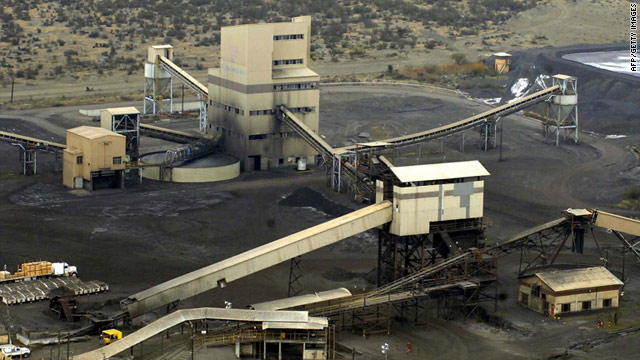
Intermittent heavy rain forced the search for five miners trapped inside a mining pit of Semirara Mining Corp. in Caluya, Antique, to be suspended, an official said Monday.

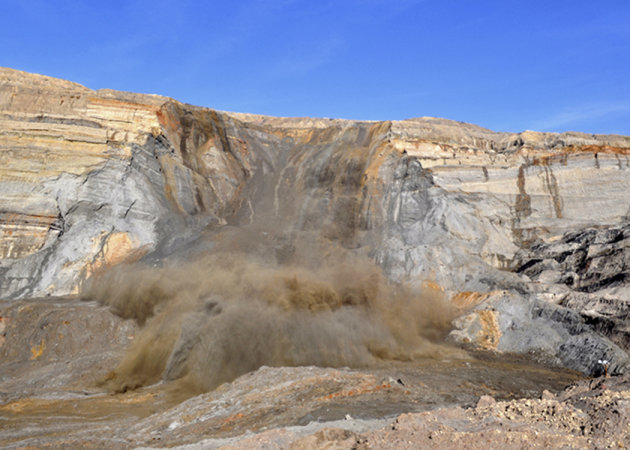
Rescuers stopped their search after two landslides occurred near the west wall pit.

The bodies of five miners have been recovered beneath the rubble after the west wall of the Pani-an pit caved in on the night of Feb. 13, trapping 13 people.

“Retrieval operations are temporarily suspended due to the rainy weather,” said Chief Supt. Agrimero Cruz Jr.

He said the miners who remained trapped had a slim chance of survival, though he was hoping an air pocket would allow them to breathe.

A left arm from a still unidentified miner was recovered after it was seen floating near the Pani-an pit.

The police investigators who were sent to the site to determine what caused the coal pit to collapse were still to file a report, but it appeared that whatever caused it was aggravated by the heavy downpour.

Semirara Mining Corp. on Monday said the operations at the Pani-an site remained suspended as the company and government authorities continued to search for the five missing miners.

The company said in a disclosure to the Philippine Stock Exchange that dogs had been called in to aid in the search.

“Further, the company has guaranteed financial, employment, scholarship and livelihood assistance to the families of those involved,” Semirara said.

Tuesday 19 February 2013

http://manilastandardtoday.com/2013/02/19/heavy-rain-suspends-search-for-5-miners/

continue reading

Yemeni military plane crashes in capital Sanaa, 12 dead


A Yemeni air force plane crashed in the capital Sanaa on Tuesday, killing at least 12 people, security sources said.

State news agency Saba said three women and two children were among those killed when the plane, on a training flight, came down in a western residential district. Eleven people were wounded, security sources said.

Pictures of the crash on social media sites showed one body near burning wreckage of the aircraft. Several cars were on fire and debris littered the street.

A security official said the pilot had ejected from the plane. There was no immediate word on whether he had survived.

"It's terrible and painful," resident Abdullah al-Ashwal said. "The police and medics evacuated five completely burned bodies, they were all unrecognisable."

Abdulsattar Mohammed said he saw a plane burning near houses that were also set on fire. "People were terrified and ambulances arrived late," he said.

A military official said the plane was a Russian SU-22 fighter/ground attack aircraft.

Yemen has 30 SU-22s and four SU-22UM3s in an air force with 79 capable aircraft in all, according to the 2012 Military Balance handbook issued by the International Institute of Strategic Studies.

In November 2012, a Yemeni military transport plane crashed near Sanaa airport and burst into flames, killing all 10 people aboard.

Tuesday 19 February 2013

http://uk.reuters.com/article/2013/02/19/uk-yemen-crash-idUKBRE91I0DL20130219

continue reading