Sunday, 1 November 2015

15 killed, 13 injured in Zambo market fire


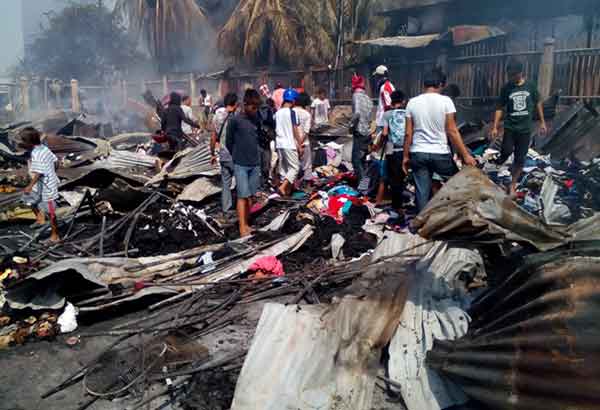
At least 15 people, including six children, were killed and 13 others were injured when a fire broke out at the old public market along Magay street here at dawn yesterday.

Authorities said the fire razed the “ukay-ukay” (used clothing) section of the market and spread to vegetable stalls and an adjacent commercial building.

Police Officer 3 Rafael Salcedo said the blaze started at 2:45 a.m. at the used clothing section after electrical lines sparked when power resumed following a blackout in the area.

The fire reached the third alarm before it was put out two hours later.

More than 300 stalls were destroyed by the fire, according to city fire marshal Dominador Zabala Jr.


Zabala said the fire trucks had difficulty in entering the site due to narrow alleys. He said rescuers recovered some of the bodies in makeshift stalls built above a creek.

The fatalities were identified.

Zamboanga police spokesman Chief Inspector Joel Tuttuh said most of the fatalities were vendors, who had been staying in their stalls with their families.

Some of the victims were taken to the Brent Hospital and the others were brought to the Zamboanga City Medical Center for treatment.

City disaster risk reduction management officer Elmeir Apolinario said the injured victims survived by passing through the sewerage.

Damage to property was placed at P8 million.

Mayor Ma. Isabelle Climaco-Salazar ordered the police and fire bureau to investigate the cause of the blaze.

The local government extended assistance to the victims.

Sunday 1 November 2015

http://www.philstar.com/headlines/2015/11/01/1517080/15-killed-13-injured-zambo-market-fire

continue reading

Sinai plane crash: Search widens for bodies and debris


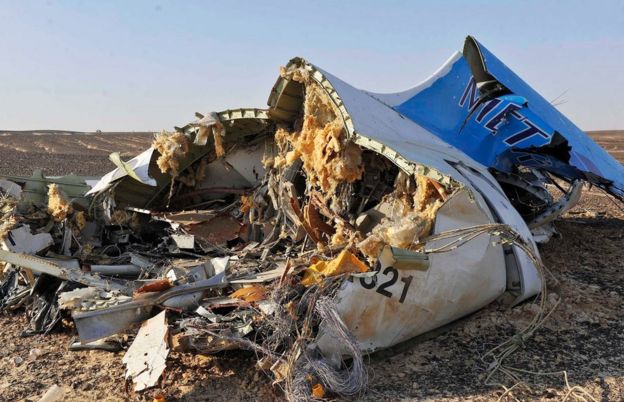
Teams investigating the fate of a Russian airliner which crashed in Egypt's Sinai peninsula on Saturday killing all 224 on board have widened their search for bodies and debris.

So far 163 bodies have been found but the search area was extended to 15km (9 miles) after some were located away from the main wreck of the Airbus 321. Russia is observing a day of mourning after its worst air disaster.

Egypt and Russia dismissed IS claims that its militants were responsible.

Jihadists allied to so-called Islamic State in Sinai, where such groups are active, made a claim on social media that they had brought down flight KGL9268.

But Egyptian Prime Minister Sharif Ismail said experts had confirmed that a plane could not be downed at 9,450m (31,000ft), the altitude the plane was flying at, by weapons the militants are known to possess.

Russian Transport Minister Maksim Sokolov said no evidence had been seen that indicated the plane was targeted.

However, three airlines - Emirates, Air France and Lufthansa - have decided not to fly over the Sinai Peninsula until more information is available. Two smaller carriers, flydubai and Air Arabia, also said they would re-route flights.

British Airways and easyJet said they would not alter their routes.

One Egyptian official said the plane suddenly "disappeared off the radar"

The Kogalymavia Airbus A-321 came down early on Saturday, shortly after leaving the resort of Sharm el-Sheikh for the Russian city of St Petersburg. Russian and French investigators have joined the Egyptian-led probe, along with experts from Airbus, which is headquartered in France.

Meanwhile a Russian team has arrived at the crash site to join efforts to recover bodies, Russian media say. Egyptian officials said the perimeter for the search for bodies and debris had been widened to 15km.

Some bodies had been recovered within a radius of 5km on Saturday, and that of a three-year-old girl was found 8km from the scene, they added.

Prime Minister Sharif Ismail (third from right) visited the site of the crash on Saturday afternoon The plane's black boxes have been found and sent for analysis, officials said.

Egypt's civil aviation minister Hossam Kamal said there had been no sign of any problems on board the flight, contradicting earlier reports that the pilot had asked to make an emergency landing.

The widow of the plane's co-pilot told Russian TV her husband had complained about the aircraft's technical condition.

The BBC's Sally Nabil in Cairo says the crash has been a major blow to Egypt's already struggling tourism industry, and the Egyptian authorities are trying hard to accelerate the investigation process.

The plane was carrying 217 passengers, including 25 children, Russian transport authorities said. There were seven crew members on board.

Egyptian officials had said 213 of the passengers were Russian and four were Ukrainian, but Russian officials said at least one of the victims was from Belarus. The bodies of 163 victims have so far been recovered and taken to Cairo.

The first bodies to be returned to Russia are expected to be flown to St Petersburg on Sunday. One unnamed official described a "tragic scene" with bodies of victims still strapped to seats.

The plane appeared to have split in two, he told Reuters, with one part burning up and the other crashing into a rock.

Flight path 05:58 Egyptian time (03:58 GMT): Flight leaves Sharm el-Sheikh, the Egyptian cabinet says in a statement
06:14 Egyptian time (04:14 GMT): Plane fails to make scheduled contact with air traffic control based in Larnaca, Cyprus, according to Sergei Izdolsky, an official with Russia's air transport agency
06:17 Egyptian time, approx (04:17 GMT): Plane comes down over the Sinai peninsula, according to Airbus
11:12 Egyptian time (09:12 GMT): Flight had been due to land in St Petersburg's Pulkovo airport

Sunday 1 November 2015

http://www.bbc.com/news/world-middle-east-34691763

continue reading

Monday, 19 October 2015

Italy navy says eight migrants die in Mediterranean, 113 rescued


Eight bodies have been recovered from a rubber boat carrying migrants trying to cross the Mediterranean, the Italian navy said in a Tweet on Sunday.

It said the ship Bersagliere had rescued 113 migrants from the boat. It gave no further details.

On Saturday, the navy rescued 562 migrants trying to reach Europe on five boats.

Nearly all of those rescued on Saturday were from sub-Saharan African countries.

Monday 19 October 2015

http://news.yahoo.com/italy-navy-says-eight-migrants-die-mediterranean-113-000315721.html

continue reading

A dozen refugees drown enroute to Greece


At least 12 people have drowned after a boat carrying refugees attempting to reach the Greek island of Lesvos sank in the Aegean Sea, Turkish officials said on Saturday.

Canakkale Governor, Hamza Erkal said the boat carrying more than 48 refugees — most of them reportedly from Syria and Afghanistan — sank in the Turkish waters of the Aegean Sea as the boat was on its way to Greece, the Anatolia news agency reported.

Security officials identified the dead bodies, which include one infant, four children, five women and two men.

The Turkish Coast Guard rescued 25 refugees from the wooden boat, which had set off from the Turkish resort town of Ayvacik, located in the northwestern Canakkale province.

The Coast Guard crews have been searching for at least 11 other missing refugees, Erkal said.

In a separate incident, a Pakistani refugee reportedly drowned, on Saturday, after falling off a boat carrying 38 people, Turkish Coast Guard officials said.

The boat had departed from the coast of Bodrum located in the southwestern province of Mugla and was heading towards the nearby Greek island of Kos.

Monday 19 October 2015

http://greece.greekreporter.com/2015/10/18/a-dozen-refugees-drown-enroute-to-greece/

continue reading

Colombia, rebels reach deal to search for thousands missing in war


The Colombian government and leftist FARC rebels have agreed to two measures they say will help find tens of thousands of people who have disappeared during 50 years of war, as the two sides take the final steps toward a peace deal.

The agreement, reached late Saturday, addresses a key issue at the negotiations, which reached a major breakthrough in September when then two sides vowed to sign a deal by March.

Colombia's attorney general estimates 52,000 people have disappeared during Latin America's longest war, which has killed some 220,000 people and displaced millions. Victim groups say between 70,000 and 100,000 people may have gone missing.

The two sides agreed to create a "specialized unit to search for people who are considered disappeared," according to a joint statement. The unit, separate from judicial investigations, will provide families with official reports on information obtained about their missing family members.

"These steps are transcendental, but, I repeat, they are just first steps," lead government negotiator Humberto de la Calle said on Sunday. "What was agreed yesterday looks to alleviate this pain - the profound pain of the families of the disappeared."

The government and rebels will also furnish the International Committee of the Red Cross (ICRC) with information about the missing, so the charity can help design search plans.

"We will put all our experience toward supporting relatives, exhuming mortal remains in areas where the government cannot do it and by consulting with responsible institutions," Christoph Harnisch, head of the ICRC's delegation in Colombia said in a statement.

The agreement was "another step for peace" President Juan Manuel Santos, who has staked his legacy on successfully reaching a deal, said on Twitter.

Some captured and demobilized former rebels have already cooperated with authorities to locate remains in exchange for lighter sentences, a task complicated by the rural jungle or mountain locations of many unmarked graves.

Human rights advocates and families of the disappeared have warned that unless more bodies are located, exhumed, identified and returned to their families, Colombia risks handicapping its post-conflict development.

Forensic investigators in the Andean country often struggle with large case loads and lack of training, funding and equipment.

The government and FARC have been in peace talks in Havana for nearly three years. They recently set a deadline of March 23 to reach a final agreement, which would then be put before Colombian voters for ratification.


Monday 19 October 2015

http://www.channelnewsasia.com/news/world/colombia-rebels-reach/2201818.html

continue reading

Friday, 9 October 2015

Coast guard suspends search for El faro, 32 still missing


At sundown tonight, the search for El Faro will end.

For six days, the Coast Guard has been searching for the Tote Maritime ship that set sail from Jacksonville to Puerto Rico, only to sink in Hurricane Joaquin with 33 crew members aboard.

“Any decision to suspend a search is painful,” Coast Guard Capt. Mark Fedor said at a 3 p.m. Wednesday press conference in Jacksonville. “We're searching for our fellow mariners.”

Fedor said the Coast Guard search teams — including support from the Navy, Air Force and commercial tug boats — went to great lengths to search, including flying an 11-hour shift on Sunday and enlisting below-deck engineers and cooks to help in the search.

“I say all this because I want the families to really know how committed we were to finding their loved ones, our fellow professional mariners,” he said. "I hope the families can take some small measure of peace in that.”

But for the families, the search wasn't enough — only one unidentifiable body had been found, leaving 32 crew members still missing.

Fedor addressed the families' concerns that the Coast Guard was ending the search too soon.

For that, though, Fedor said science was simply not on the sailors' sides.

“This is based on the physiology of how long you can survive in the water, which is four to five days,” he said. “Yes, these are professional mariners, but they abandoned the ship in a Category 4 storm. There were 50-foot waves, zero visibility and the constant threat of ingesting water. It's just a dire situation for anybody.... I understand the families are still grieving.”

Just after the Coast Guard conference, at 4:30 p.m., Tote Inc. President and CEO Anthony Chiarello gave a statement, saying that there is pain and sadness in the organization.

“Though we can never understand the pain and grief of the family and loved ones going through this, as a Tote family, we, too, are grieving.”

Friday 9 October 2015

http://www.bizjournals.com/jacksonville/blog/morning-edition/2015/10/coast-guard-suspends-search-for-el-faro-32-still.html

continue reading

Thursday, 8 October 2015

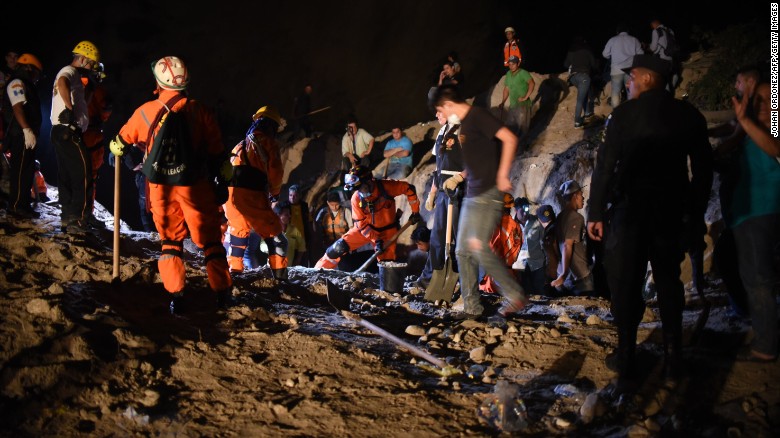
Death toll from Guatemala landslide rises to 191


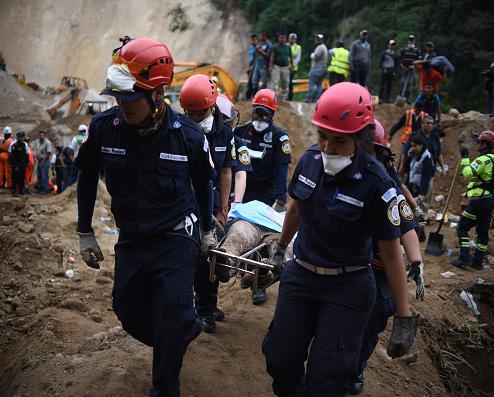
Rescue workers pulled 20 more bodies from a landslide outside the Guatemalan capital, bringing the number of confirmed dead to 191, officials have said.

"The latest toll of victims is 191," said Julio Sanchez on Wednesday, a spokesman for the firefighters and other rescue personnel working at the site on the outskirts of Guatemala City. Authorities said about 150 people still have not been accounted for, as they searched for more bodies at the disaster site in the village of Cambray II.

A growing stench from decomposing bodies has filled the air at the scene of the tragedy, requiring workers to don face masks as the carry on with their grim recovery efforts. The village -- in a section of the town of Santa Catarina Pinula, some 15 kilometers east of the capital -- was buried late Thursday by a mountain of mud and debris following heavy rains.

Rescuers said it would be nothing short of a miracle if anyone were found alive at this point, as they continue their search for more bodies, aided by specially-trained dogs. Officials said they also have opened an investigation to determine who or what might have been responsible for the disaster.

Thursday 8 October 2015

http://www.dnaindia.com/world/report-death-toll-from-guatemala-landslide-rises-to-191-officials-2132660

continue reading

Wednesday, 7 October 2015

Death toll in Guatemala landslide rises to 161


The death toll from a landslide that devastated a Guatemalan village has risen to 161 as emergency workers continue pulling bodies from the mud and debris, officials said Tuesday.

The search for victims of the landslide, which tore through the village of Cambray II Thursday night after heavy rain, resumed at dawn with the help of a Mexican team with trained rescue dogs, said Sergio Cabanas, head of the government's disaster response program.

But hopes of finding survivors are growing increasingly slim, he said.

Emergency workers pulled 19 bodies from the debris Tuesday, Cabanas said, updating the previous toll from Monday night, when officials said there were 142 dead and about 300 missing.

Workers wore face masks as the stench of decomposing bodies increased, and the area has been closed off to journalists.

The search had to be suspended Sunday because of heavy rain that continued to lash the area, in the municipality of Santa Catarina Pinula, about 15 kilometers (10 miles) east of the capital.

Local authorities had urged the precarious hillside community to relocate several times, most recently in November last year.

But many families have refused, saying they have nowhere to go.

More than 53 percent of the Central American country's 16 million people live in poverty.

Wednesday 7 October 2015

https://en-maktoob.news.yahoo.com/death-toll-guatemala-landslide-rises-161-155953649.html

continue reading

More bodies recovered from Himachal's Larji Dam


Two more bodies were recovered from Pandoh Dam and Larji Dam today bringing the total number of bodies fished out in the past three days to 17, of which 16 were identified as the passengers of July 23 Sarsari bus tragedy in Himachal Pradesh.

With the identification of 16 bodies, 39 bodies have so far been recovered, while seven bodies are still missing, police said.

Eight bodies were recovered during de-silting on Saturday, while seven bodies were recovered yesterday.

The sixteen bodies, which have been identified, are of the victims of Sarsari bus accident on Kullu-Manali Road, in which 23 persons were killed and another 23 had gone missing, police said.

Kullu Deputy Commissioner Rakesh Kanwar said that the bodies fished out from the dams were identified.

A private bus carrying 69 pilgrims from Mansa, Bhatinda and Talwandi Sabo areas of Punjab had plunged into Parbati River near Sarsari on the Kullu-Manikaran road in Kullu district on July 23 and 23 persons were killed, while another 23 had gone missing.

15 were admitted to hospital and the remaining passengers escaped with minor injuries.

Wednesday 7 October 2015

http://timesofindia.indiatimes.com/city/shimla/More-bodies-recovered-from-Himachals-Larji-Dam/articleshow/49254244.cms

continue reading

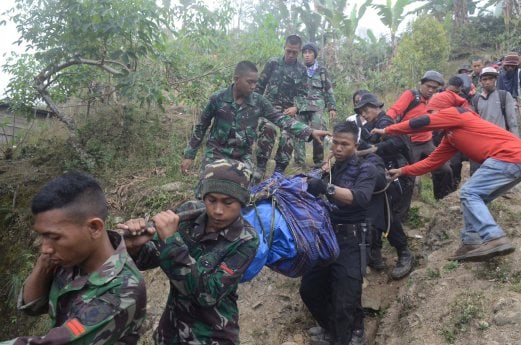
Indonesian rescuers recover bodies from Aviastar plane wreckage


An Indonesian search-and-rescue team has recovered the bodies from the wreckage of a small passenger plane that disappeared last week, officials said on Tuesday.

Ten people were aboard the plane, a DHC-6 Twin Otter operated by the small regional airline Aviastar, when it lost contact with air traffic controllers on Friday, minutes after takeoff from the island of Sulawesi. After days of combing the area, rescuers identified the wreckage in a remote, mountainous area of the island on Monday.

The bodies of all 10 victims — three crew members and seven passengers, including three children — have been found and sent to Makassar, the provincial capital, for identification, Adex Yudiswan, a South Sulawesi police spokesman, confirmed on Tuesday. The black box was also retrieved from the site.

The plane had just begun the short flight from Masamba, a small town in the province of South Sulawesi, to Makassar when it crashed. Family members have traveled to South Sulawesi to identify the bodies, Petrus Budi Prasetyo, an official from Aviastar, told reporters.

The cause of the crash has not been determined. Aviastar flies to remote parts of the Indonesian archipelago like Kalimantan, Sulawesi and Papua, according to its website.

Indonesia’s aviation industry has a poor safety record, and more than 300 people have died in crashes in the past 12 months alone. In June, a military aircraft crashed in the city of Medan on the western island of Sumatra, and in August, a smaller plane went down in the mountains of Papua.

Kurt Mastrovich, a pilot who has years of experience flying in Indonesia, said that while weather and terrain were often challenging factors, a lack of regulation had also led to small airlines’ creating flight paths in far-flung areas with almost no oversight from the central government.

“One of the biggest problems is because the regulator is very underresourced, they haven’t been able to create or evaluate a lot of the routes that have been created,” said Mr. Mastrovich, who was not referring specifically to Aviastar. “So a lot of the companies tend to go through their own process and evaluate their own routes. So there is a lot that gets missed.”

Wednesday 7 October 2015

http://www.nytimes.com/2015/10/07/world/asia/indonesia-wreckage-aviastar-plane-crash.html?_r=0

continue reading

Indonesian forensic experts help identify haj disaster victims


Indonesian forensic experts are in Saudi Arabia to help identify those still missing from the country which suffered one of the heaviest losses in last month's haj disaster, an official said Tuesday (Oct 6).

Arsyad Hidayat, the senior Indonesian official in Mecca, told AFP that 11 specialists had arrived three days ago from police headquarters in his country, the world's largest Muslim-populated nation.

"They have special capability in forensics," including fingerprint data, he said, adding that Indonesia's death toll has now risen to 103, with 25 still missing.

Iran has reported the largest toll from the Sep 24 disaster, with 464 dead, followed by Egypt at 146.

More than 20 countries around the world have reported a total of 1,112 dead, mostly from official sources, far in excess of the Saudi figure of 769 killed issued after the stampede at Mina, near the holy city of Mecca.

It is unclear whether other countries have sent their own forensic specialists but Saudi Arabia's Al-Madina daily reported last week that 20 teams from the Saudi passports department were visiting Mecca-area hospitals to record fingerprints of the dead and of unidentified injured.

Saudi Arabia's regional rival Iran has repatriated 218 bodies of the 464 people it declared dead in the stampede, while accusing Riyadh of incompetence in its handling of haj safety. Tehran has also criticised the slow pace of identifying the victims.

In Indonesia's case, Hidayat said "there have not been meaningful obstacles" encountered by his country's teams of military and police officers. The teams, headed by a colonel from Indonesia's Kopassus special forces, have been gathering data, checking hospitals and searching for and identifying dead bodies.

"God willing, we are hopefully getting near to the final result," Hidayat said

Wednesday 7 October 2015

http://www.channelnewsasia.com/news/asiapacific/indonesian-forensic/2173914.html

continue reading

Tuesday, 6 October 2015

85 dead migrants found washed up in Libya, 2 children in Kos


The bodies of 85 migrants have been found washed up on the coast of Libya, a major departure point for the sea crossing to Europe, the Red Crescent said Monday. Since Tuesday, volunteers have recovered dozens of bodies of migrants in an advanced stage of decomposition on beaches near the capital, spokesman Mohamed al-Misrati said.

They found 75 bodies around Tripoli and another 10 in Sabratah, 70 kilometres (43 miles) to the west, he said.

The Libyan coastguard said it had also rescued 212 migrants from two overloaded rubber dinghies off the Libyan coast.

“We were informed of the presence of two large zodiacs off the coast of Garabulli” 60 kilometres east of Tripoli, a coastguard officer told AFP.

He said that 22 women were among the rescued migrants, who were of different nationalities including many Senegalese and Sudanese.

A Libyan Red-Crescent team, in collaboration with the Libyan navy, on Friday recovered 26 bodies of illegal migrants off the coasts of Tajoura, in the eastern suburb of Tripoli.

“The Red-Crescent team recovered 26 bodies that are supposed to be those of illegal migrants found off the coasts of the region of Tajoura.

“The bodies were transferred to the morgue of the medical centre in Tripoli,’’ the Director of Information at the Red-Crescent, Malek Marsait, said.

According to him, the Libyan Red-Crescent team had earlier on Wednesday recovered the bodies of three others at the same place, despite the difficult access to the place.

Libya, with a coastline of 1,770 kilometres, has for years been a stepping stone for Africans bound for Europe. Most head for Italy’s Lampedusa island which is 300 kilometres from Libya.

People smugglers have taken advantage of chaos in Libya since the 2011 uprising that toppled and killed veteran dictator Moamer Kadhafi to step up their lucrative business. In exchange for steep fees, they take would-be migrants on board rickety boats for the treacherous crossing.

About 515,000 migrants have crossed the Mediterranean this year alone, with up to 3,000 people dead or reported missing in that period, according to the UN High Commission for Refugees.

Meanwhile, the badly decomposed bodies of two children were found washed up on the Greek island of Kos, the latest victims of a crisis that has seen 630,000 people enter the EU illegally this year.

A dead baby boy, thought to be less than a year old, was discovered on a hotel beach early Sunday, dressed in green trousers and a white t-shirt. The decomposed body of an older child, wearing blue trousers and a pink t-shirt, believed to be three- to five-years old, was found hours later at the same spot. Authorities believe the children were from migrant families that had been trying to reach Kos by dinghy, Greek media reported.

Both bodies have been transferred to hospital for an autopsy and DNA testing. Greece has been struggling to cope with a wave of migrants making the dangerous crossing from Turkey.

The EU’s border chief Fabrice Leggeri said 630,000 people have entered the bloc illegally this year. Brussels and Ankara are reportedly set to approve Monday a plan that would see Turkey join Greek coastguard patrols in the eastern Aegean, coordinated by EU border protection agency Frontex.

Tuesday 6 October 2015

http://nation.com.pk/international/06-Oct-2015/85-dead-migrants-found-washed-up-in-libya

continue reading

Mecca stampede: DNA extracted from unidentified bodies to find missing pilgrims


Results of DNA samples, extracted from nails of unidentified dead pilgrims to compare them with the relatives of the missing Egyptians, will be announced after 10 days, the Minister of Health Ahmed Emad announced Sunday.

The samples were extracted by Saudi authorities. There are a total 96 Egyptians reported missing during the annual event of Hajj, meaning pilgrimage.

The Saudi authorities first took hand prints of all the deceased, “which is no longer useful and accurate due to the decomposition of the body,” Rady said in a Sunday statement. He added that DNA under fingernails gives more conclusive results within not more than 14 days.

Saudi Arabia previously announced it had agreed to receive DNA samples from Egyptians whose relatives have been missing to compare them with the bodies of unidentified victims.

Rady also said that five Egyptian pilgrims are the total death toll in an accident that took place right ahead of Hajj season, when a construction crane fell on pilgrims in the Mecca’s holy mosque killing more than 100. Seven out of 28 Egyptians injured in the accident are still receiving treatment in Saudi Arabia hospitals.

Some of the pilgrims suffered memory loss during the season, due to being subjected to “sunstroke,” said Rady; the temperature degrees during the season hit high in the kingdom.

The Ministry of Awqaf (Religious Endowment) has announced that the death toll of Egyptian pilgrims in a stampede in Mecca hit 138.

The five-day rituals of Hajj started Sept. 26, since then, an Egypt Air bridge has been transporting pilgrims back from Saudi Arabia.

Tuesday 6 October 2015

http://www.thecairopost.com/news/170133/news/dna-extracted-from-unidentified-bodies-to-find-missing-pilgrims

continue reading

60th anniversary of deadly Wyoming plane crash


John Vandel was a junior pharmacy major at the University of Wyoming when he and his Sigma Nu brothers received a phone call from United Airlines.

It was the morning of Friday, Oct. 7, 1955.

Flight 409 had crashed into the east side of Medicine Bow Peak just 24 hours earlier.

"The guy that called us had been in our fraternity years before," Vandel said. "So, he called our fraternity and said, 'If you get some guys up there, we're going to pay you pretty well.' So, all the guys volunteered."

People were needed to remove the bodies of the 66 people aboard the plane, and Vandel agreed to help.

"It was all curiosity," he said. "We got to go up and see what it was all about."

He didn't know the crash 40 miles west of Laramie was, at the time, the worst air disaster in United States history.

Sixty-three passengers and three crew members sat in the DC-4 aircraft, a four-engine propeller airplane, as it left Denver International Airport the morning of Oct. 6, 1955, with plans to land in Salt Lake City less than three hours later, according to United Airlines documents — just one of many documents about the crash stored in the UW American Heritage Center.

Among the 66 people aboard were members of the U.S. military, choir members from Salt Lake City and two infants.

The normal flight path goes far north of Laramie to skirt the Snowy Range. However, a United Airlines investigation after the crash concluded pilots would occasionally fly over Medicine Bow Peak to save time.

Windy weather as reported over the Snowies the night before the crash, along with possible snowfall — less than ideal flying conditions.

When flight 409 failed to report in to Rock River, fighter jets from the Wyoming Air National Guard were scrambled with orders to find a missing aircraft.

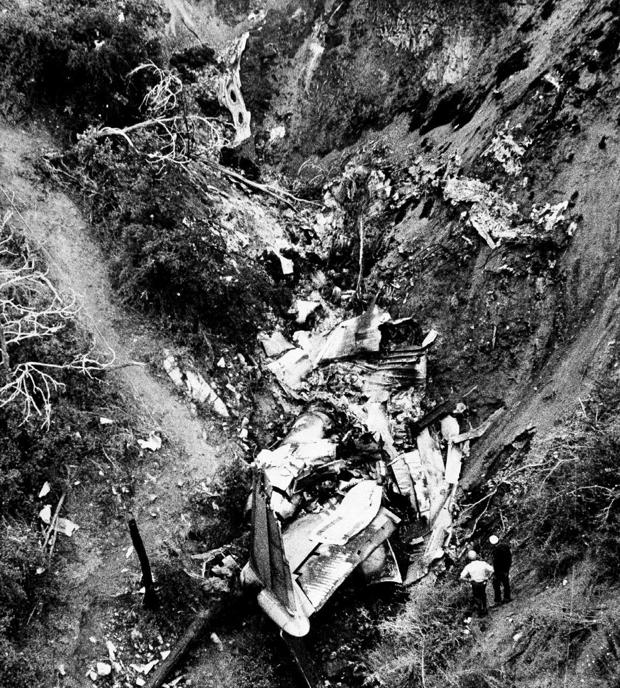
The plane crashed at 7:26 a.m., according to onboard clocks recovered after the crash, the investigation report states. It exploded on impact, creating a debris field about a mile long. Two huge black scorch marks blighted the side of the mountain.

Wreckage and bodies were catapulted over the precipice — the plane hit only 25 feet below the mountain crest. The tail section broke off and lodged itself on a small outcropping halfway down the cliff. The rest of the wreckage tumbled down snowy rocks, coming to rest at the foot of the peak.

The crash was discovered by an F-80 fighter jet based out of F. E. Warren Air Force Base at 11:40 a.m. the day of the crash. The pilot spotted "a huge black smudge where it hit the peak and pieces of wreckage that slid 200 feet down the side of the precipice," an Oct. 6, 1955, Laramie Boomerang article states.

With bad weather still engulfing the crash site, the jets were ordered back to base before more surveillance could be completed.

Bob Foster, a Civil Air Patrol member from Laramie, was the first person to reach the crash site. He recounted his experience during a 1996 interview for the American Heritage Center.

"As we walked along the tail slope of the mountain, we started to run into the wreckage, landing gears and main struts of the wing. And then you look to where we saw the plane crash and you see those airplane parts quarter of a mile away, it's obviously going to be a really bad scene. You don't really expect to find any live people."

Personnel began arriving soon after the crash was discovered — a group of 14 rescue workers from the Denver operating base of United Airlines arrived by plane at 2 p.m. Thursday.

The timing of the disaster couldn't have been worse — more than 1,500 Shriners packed the hotels of Laramie for a ceremony, leaving almost no place to house the scores of United Airlines personnel streaming into the area.

Double cots from the university were brought to the Connor Hotel. Some Shriners also gave up their rooms for emergency workers and airline personnel. More than 125 people were at the crash site by Thursday night.

Only the best mountaineers could reach the peak where a majority of the wreckage was scattered — many of the trails and paths available today did not exist in 1955.

Dr. John Bunch made the climb with airline officials, local law enforcement and reporters to the base of the cliffs above Mirror Lake to treat any potential survivors.

The state of the bodies was such that they could only "be identified only by fingerprints," he told the Boomerang.

The explosion showered the area with wreckage workers had to avoid.

"There were large sections of twisted metal at the base of the cliff, so twisted, in fact, that you couldn't tell what it was," Bunch said. "There were pieces of the plane all over the base of the mountain."

Body bags were brought to the crash site to transport the dead to the bottom of the cliff. A rope-and-pulley system about 900 feet long was created, running from the top of the cliff to the base of the mountain, UW Outing Club member Richard W. Murphy says in a report.

Vandel arrived later that Friday, after the system was set up. He worked the lower end of the pulley system.

"We got a call early that morning and we all skipped class and went up there," he said. "The university excused us."

About 30 people were helping in the area, Vandel estimated, although he didn't know how many others worked at the peak or in the identification room.

UW summer science camp — essentially a log cabin not far from the site — served as a temporary morgue.

"They did all of their identifying in there, and we weren't allowed in there," he said. "In fact, nobody wanted to go in there."

All of the victims were in bags by the time Vandel and his fraternity brothers received them at the base of the mountain — with some bags labeled "spare parts." The group avoided some of the traumatic sights others higher up the mountain saw.

"We were all kind of having fun and joking around in between trips, but it was serious business," he said.

Fifty-seven victims had been recovered from the mountain by the afternoon of the following Monday, a spokesman from United Airlines stated in the Oct. 10 Boomerang. He estimated 125 people were still working at the site.

Members of the University of Wyoming and the University of Colorado alpine teams were working in six-man shifts, searching for and lowering bodies.

By that Tuesday, all victims had been recovered and identified.

While the victims had been removed from the site, wreckage from the large four-engine airplane was still strewn about, from pistons and wing struts to landing gear and propellers. However, the entire tail section of the plane was still lodged precariously in the mountain face.

It was decided the wreckage needed to be destroyed to discourage curious climbers. The solution was to shoot the tail down with a recoilless rifle — similar to a small artillery piece — Don Sims said in a 1996 American Heritage Center interview.

"They didn't want to leave it there because there were so many people crawling around in there," he said. "Do you think that thing would come down? Oh no — it took hit after hit."

Eventually, the wreckage was dispersed, but many pieces of the destroyed aircraft litter the mountain base to this day.

Several theories formed about what caused the crash, but none was confirmed.

Three local loggers were working at a site about 10 miles southeast of the crash, and one told the board the right inboard motor of the DC-4 was not rotating, possibly indicating some sort of mechanical failure.

United Airlines officials said wreckage showed the engine was working; Even if the engine was out, it should not have caused a crash.

The loggers also estimated the plane was at about 10,000 feet — the plane was about 300 feet above the treetops and the camp's elevation was 9,600 feet. Board members said this was "dangerously low," especially for an unpressurized aircraft — passengers would begin to feel ill effects at that altitude.

Throughout the investigation, United Airlines managers in Denver and Salt Lake City said the pilot, Capt. Clinton C. Cooke, Jr., and his first officer Ralph D. Salisburg, Jr, were good pilots with a perfect record. Cooke had flown the route 45 times in the previous year, a Civil Aeronautics Board Accident Investigation Report states, and had never been known to deviate from the flight plan without telling a dispatcher.

However, it is almost certain the pilots purposely went out of their way to fly over the mountains, the report states.

"It is difficult to understand how a pilot of Capt. Cooke's experience would deliberately attempt a shortcut and, even if he did, why he would have flown at such a low altitude over hazardous terrain," it states. "It is true the flight was an hour and 11 minutes late; however, the time saved by taking a shortcut would have been inconsequential."

It goes on to state deviating from the course "would have been breaking rigid company rules and his record indicated that he had never been known to do so."

Carbon monoxide poisoning leading to crew incapacitation was also listed as a possible — albeit unlikely — cause.

Today, hikers and climbers near Medicine Bow Peak can view pieces of the wreckage, although the black scars on the cliff face faded long ago.

Vandel kept a piece of wreckage for many years, he said, and still occasionally thinks about the crash today.

"I kept on wondering, over the years, how the devil they did it," he said. "How did he happen to just run into a mountain?"

Tuesday 6 October 2015

http://trib.com/news/state-and-regional/tuesday-marks-th-anniversary-of-deadly-wyoming-plane-crash/article_1a650b63-9514-5a81-ba37-8777328cd04e.html

continue reading

Italian lab battles ‘not to lose the dead’ from migrant ships


In one photograph, a pretty, young Eritrean woman dressed in cheerful colors smiles brightly into the camera. In another, glazed eyes stare out of a blue, bloated face, typical of drowning victims.

But it is the teeth, frozen in a grimace of death, that the scientists here were interested in. They were a match.

The finding will allow them at least to let the woman’s family know for sure that she — their daughter, wife or sister perhaps — was indeed among the 368 migrants who died when their boat capsized off the Italian island of Lampedusa two years ago this month as they tried to make their way to Europe.

So far this year, almost 2,900 migrants have drowned making the crossing to Europe from North Africa. Very often, they are the nameless victims of one of this young century’s greatest tidal movements of people fleeing war and poverty — dying in anonymity, far from home, their loved ones left in limbo about their fates, and the authorities uncertain of exactly who they are.

Since the spring of 2014, however, this laboratory at the University of Milan has been working to give a name to those hundreds of unidentified migrants who drowned at sea in the Lampedusa wreck and others.

“Our battle is not to lose the dead,” said Dr. Cristina Cattaneo, a forensic pathologist, who runs the Labanof, the laboratory that has been building a databank to help identify the scores of victims of some of the worst migrant shipwrecks off Italy in recent years.

Even now, two years after the sinking, nearly 200 victims of the Lampedusa wreck have not been officially identified. “The more decomposed they are the more difficult it is to identify them,” Dr. Cattaneo said.

Fearful of European regulations that force migrants to ask for asylum in the first country in which they land, many migrants do not carry any ID, making identification even harder.

Another challenge has been reaching the families of the victims, many of whom live in war-torn or repressive countries, or in places where medical records are difficult to retrieve.

“Our problem has been contacting relatives,” said Vittorio Piscitelli, since 2014 Italy’s High Commissioner for Missing Persons, whose office has reached out to embassies and various humanitarian agencies — like the International Committee for the Red Cross — for assistance.

Even when relatives can be tracked down in Europe, getting them to come to Italy for the identification process can be time consuming and costly. In addition, in countries like Eritrea, where many of the Lampedusa victims came from, relatives of migrants risk repercussions from an oppressive government.

Still, over the past years, small groups of family members of presumed victims have traveled to Italy — initially to Rome but now to the lab — hoping to find news of their loved ones.

They bring fragments of lost lives — photographs, ID cards and photos or videos, clinical and dental records and personal effects like toothbrushes or combs — to help make a match.

At the lab, assisted by a psychologist, they are interviewed by trained personnel and then pore through an evolving database of personal effects, like bracelets or necklaces, phones, or clothes, looking for identifying clues.

DNA comparisons are also made, and much of the data is culled from autopsies: tattoos, surgery scars, dental records and other biological remains.

Adal Neguse, 40, an Eritrean migrant now living in Stockholm, was the first relative to arrive in Lampedusa after the Oct. 3, 2013, shipwreck, searching for his brother Abraham.

He determined from survivors that his brother had perished, and spent a fruitless week trying to find his corpse, looking at photographs of the victims.

“I finally had to stop because it was too disturbing,” he said. Abraham was eventually identified some months later through the clothing he was wearing.

Adal Neguse, 40, lost his brother in a shipwreck off the Italian island of Lampedusa. Credit Alessandro Penso for The New York Times

In Lampedusa, Mr. Neguse was inundated by telephone calls from other Eritreans who could not make the trip and did not know whom to call for information.

“People would ring all day and night,” said Mr. Neguse, who passed through Rome on Monday to take part in a commemoration ceremony for the Lampedusa victims on the island.

The aim of the laboratory, and of the Italian authority that oversees it, is eventually to help relatives like him identify their loved ones by setting up a broad database of all the victims of the Mediterranean crossing to Italy.

In attempting to do so, Italy was “moved by humanitarian and ethical reasons, as well as a sense of pietas for the dead, and to grant relatives some peace,” said Mr. Piscitelli, who coordinates the laboratory’s work.

In fact, the Lampedusa sinking of Oct. 3, 2013, though a tragedy that riveted global attention on the scale and dangers of the migrants’ crossing, is just one of several sizable calamities that the authorities and the lab have had to deal with.

Another 200 or so migrants — again mostly Eritrean — died off Lampedusa eight days after the Oct. 3 sinking. And this April, more than 700 people drowned when their ship sank some 70 nautical miles off Libya.

The Italian Navy began removing the corpses from the wreck near Libya in July and Dr. Cattaneo’s team has been carrying out the autopsies in an improvised, but high-tech, tent set up on a NATO base in Melilli, Sicily.

The team involves experts from four universities as well as biologists, anthropologists, forensic dentists and specialized technicians developing a single protocol that can be used in any shipwreck situation, she said.

After autopsies, the victims have been buried in cemeteries throughout Sicily.

So far, some 20 victims have been identified through the lab’s work.

“It’s a small number, but it means that the procedure works,” Dr. Cattaneo said. “The problem is how to enlarge it. The bigger the numbers, the bigger the costs.”

Mr. Piscitelli’s office has been lobbying to expand the database to include the victims of all shipwrecks in Italy. As of now, the lab has focused on three major shipwrecks. Other disasters have been handled by local police and prosecutors, and Mr. Piscitelli would like to better coordinate their results into one database.

But for now, his office does not have the resources. Humanitarian agencies charge that few resources are allocated to missing migrants because the dead are not a priority.

As political strife and economic conditions remain unstable in parts of the Middle East and Africa, there is no indication that migrants will stop gambling their lives for a better future in Europe any time soon. And if anything, those here say, the need for their work will continue to expand.

“It will never be over as long as poor people attempt the Mediterranean crossing, putting their lives at risk,” Mr. Piscitelli said.

Tuesday 6 October 2015

http://www.nytimes.com/2015/10/03/world/europe/italian-lab-battles-not-to-lose-the-dead-from-migrant-ships.html?_r=0

continue reading

French Riviera floods: Death toll rises to 19


At least 19 people, including one Briton, have been found dead following flash floods on the French Riviera.

The death toll rose after two bodies were discovered on Monday. One person remains missing but another was found alive, according to reports.

Violent storms and heavy rain on Saturday evening sent torrents of water and mud through several towns.

As well as the Briton, an Italian woman and a Portuguese man were also among those killed, AFP news agency said.

French President Francois Hollande has announced a state of "natural disaster" in the affected region.

Forecasters have faced criticism over the effectiveness of weather alerts.

'Apocalyptic'

The area is estimated to have received more than 10% of its average yearly rainfall in two days alone. Rivers burst their banks, sending water coursing into nearby towns and cities.

Divers found one body in the worst-hit town of Mandelieu-la-Napoule on Monday.

Eight are now confirmed killed there after being trapped in garages when they tried to remove their cars, officials say.

In other developments on Monday:

◾Another body was found in an underground parking lot in Cannes, leaving one person still missing in the city
◾A 90-year-old man reported missing was found alive in Antibes, according to local media
◾Interior Minister Bernard Cazeneuve told Europe 1 (in French) that two people had been sent before a judge while seven others remained in custody after being arrest on suspicion of looting

Three elderly people drowned when their retirement home in Biot, near the city of Antibes, was flooded.

Visiting the home on Sunday, President Hollande offered his condolences and urged residents to remain cautious, saying: "It's not over."

Hundreds of volunteers have been helping clear debris and clean homes affected.

"We have lived through an apocalyptic situation that we have never experienced before," Eric Ciotti, president of the Alpes-Maritimes department, tweeted following the disaster.

Forecaster fallout

Mr Ciotti also questioned the use of an orange alert to warn residents, rather than the more serious red alert.

Christian Estrosi, the deputy mayor of Nice, added his criticism in an interview with BFMTV on Monday, saying the area received so many orange alerts that people had stopped taking all the necessary precautions.

But he denied any fallout with weather forecasters, who insisted they did not have the technical ability to predict the intensity of the storms in time.

Thousands of homes remained without electricity on Monday morning following the floods.

Meanwhile Bernard Giampaolo, director of the Marineland amusement park in Antibes, said three loggerhead turtles were still missing after the enclosures were hit.

He told Nice Matin newspaper (in French) that polar bears, orcas and dolphins had survived, although the park was still without power.

Chickens, goats and sheep had been washed away, the newspaper reported.

Tuesday 6 October 2015

http://www.bbc.com/news/world-europe-34443189

continue reading

Guatemala landslide: Death toll rises to 131 with as many as 300 potentially still missing days after disaster


The number of people killed by the deadly landslide that hit a Guatemalan city has risen to 131, authorities said, with potentially 300 more people still missing three days after the disaster.

An estimated 125 homes were buried in El Cambray, a village on the outskirts of the capital, Guatemala City, when a 300ft hillside collapsed and covered an area of four acres with mud and dirt around 14 metres deep.

Rescue workers continued to pull corpses from the mud on Sunday as families began to bury their dead in the overcrowded local cemetery.

A funeral procession for the son and grandaughter of 59-year-old carpenter and painter Ismael Estrada saw 200 people walking through the streets to the cemetary. Estrada returned to the improvised morgue immediately after the service to search for his 19 family members that are still missing.

No survivors have been found this weekend despite the efforts of around 1,800 rescue workers sifting through the rubble.

An improvised morgue has been set up and municipal medical examiner Dr Carlos Augusto Rodas Gonzalez said 86 bodies have been identified and handed over to relatives, 26 of which were children and teenagers. Some bodies were found in pieces however, and many remain unidentified.

Authorities have estimated that 300 people are still missing, but admitted that many people may have fled the area and taken refuge elsewhere or with relatives without informing rescue teams, or that they were simply not in their homes when the mudslide hit.

Reuters news agency reports the number of missing is closer to 150 claiming authorities issued a sharp revision after recalculating the local population, however the official number remains unknown.

Authorities are now preparing to use heavy machinery to search the disaster area instead of digging by hand and listening for survivors, after rescuers reported that the buried homes they were searching have been filled with water.

Around 90 per cent of the search for bodies will now be carried out with backhoes and bulldozers said services coordinator Sergio Cabanas, who explained that rescuers will mainly be sent out on foot to recover a corpse that has been turned up by the machinery.

“The people who could have been alive have drowned,” he said.

In the neighbourhood cemetery 36 new crypts have already been created, though the identification process of bodies has changed rapidly – bodies have reportedly become unrecognisable due to being buried in mud and water for three days, causing volunteers and workers in the makeshift morgue to rely on fingerprints and DNA tests to identify the dead.

“With whatever measure we have, any human remain that we receive, we will make every effort to give it a first and last name,” Dr Gonzales said.

Tuesday 6 October 2015

http://www.independent.co.uk/news/world/americas/guatemala-landslide-death-toll-rises-to-131-with-as-many-as-300-potentially-still-missing-days-after-a6679706.html

continue reading

7 more bodies recovered from Pandoh Dam in Mandi, two months after bus disaster


Seven more bodies were recovered today from the Pandoh Dam in Mandi district. Eight bodies were recovered yesterday from the Larji Dam in Kullu district during a flushing out operation.

However, six of the eight bodies have been identified by relatives of pilgrims of the Manikaran bus mishap. A private bus carrying 69 pilgrims from Punjab had plunged into the Parbati river near Sarari on the Bhuntar-Manikaran road in Kullu district on July 23.

The police said seven bodies were found floating in the Pandoh Dam. They said the bodies might have reached the dam after a desilting operation was carried out in the Larji Dam yesterday.

Kullu SDM Rohit Rathore said seven more bodies were recovered from the Pandoh Dam. He said relatives of the victims had already been informed and many had arrived to identify the bodies. The SDM said the bodies had been brought to regional hospital, Kullu, as these could be of the remaining 17 missing pilgrims. He said an ex gratia of Rs 25,000 had been given to the family members of the identified victims as immediate relief.

Gill said relatives of other missing pilgrims had been informed while the bodies had been handed over to their relatives by the hospital authorities after the post-mortem examination.

However, nine more bodies recovered in the past two days remained unidentified.

An intensive rescue operation was carried out by over nearly 600 personnel of the National Disaster Response Force, Shastra Seema Bal, Indo-Tibetan Border Police, Home Guards and the police to trace the missing persons.

Tuesday 6 October 2015

http://www.tribuneindia.com/news/himachal/7-more-bodies-recovered-from-pandoh-dam-in-mandi/142096.html

continue reading

Monday, 5 October 2015

Missing ship: El Faro confirmed to have sunk off Bahamas

he lost cargo ship El Faro sank in Bahamian waters after sailing into the path of Hurricane Joaquin, according to the US Coast Guard. The 224m (735ft) vessel and its crew of 33 have been missing since issuing a distress call on Thursday. The coast guard says an "unidentifiable body" has been found but a search remains underway. On Sunday, search planes found debris including life jackets, containers and oil in the water. It was this find that led rescuers to the conclusion that the ship had sank. Along with the body, an empty, heavily damaged life boat has also been found. "We are still looking for survivors or any signs of life," US Coast Guard Capt Mark Fedor said, but adding the crew faced "challenging conditions to survive". The coast guard says it has searched 70,000 sq nautical miles attempting to find the crew of 28 Americans and five Poles. The ship, which was travelling from Florida to Puerto Rico, was taking on water before it sank according to the distress call. Its owners, Tote Maritime, say the ship lost power after its engines broke down. Satellite picture of Hurricane JoaquinImage copyrightREUTERS/NOAA Image caption Hurricane Joaquin from space Tote Maritime, said two vessels it dispatched to the scene had found a container "which appears to be from the El Faro". The company has also defended its decision to allow the ship to sail so close to a hurricane. In a statement it said the crew were "equipped to handle situations such as changing weather." Joaquin brought heavy rains to the Bahamas, damaging a number of houses. The weakened storm has since hit Bermuda. http://www.bbc.com/news/world-latin-america-34443218

continue reading

Death toll after Guatemala landslide tops 130


The gangly arms of four backhoes dug through a mound of sandy soil that had buried many of the residents of El Cambray alive in a landslide.

Carefully, the diggers turned up sheet metal roofs, broken walls and the bodies of people trapped in the dirt bulging over much of the Guatemalan village.

By early Sunday, they had recovered nearly 90 bodies of people who died after the side of a towering hill broke loose suddenly and crashed down on the village in the darkness of Thursday night.

Since then, residents and rescuers have shoveled and even burrowed with their hands in search of the hundreds of victims the country's Public Ministry estimates were inside the dozens of homes that were instantly engulfed by the landslide.

By Sunday evening, the ministry was reporting 131 people were dead and more than 300 still missing.

Heavy rains sent earth and rock cascading over homes and trapping residents inside on Thursday night. No survivors have been found this weekend despite the efforts of around 1,800 rescue workers sifting through the rubble.

Rain hampered search and rescue efforts on Sunday.

In the town's crowded cemetery, families sobbed as they placed wreaths on hastily-sealed tombs stacked in walls, where simple inscriptions in cement listed the names of the dead.

Many people in El Cambray did not heed a warning to evacuate, said Alejandro Maldonado, the national coordinator for disaster reduction. El Cambray is about 10 miles (16 kilometers) east of Guatemala City.

Somber finds

Rain had soaked the village and the forested hills that rise steeply up around it. The town is nestled in a deep valley, leaving little space between the hillside and the homes below to buffer the force of the earth and trees that fell down on them.

The rescuers and villagers formed long bucket lines of up to 100 people to pass away dirt and debris. Some carried out the bodies of neighbors and loved ones, including children.

"We found the two month-old twins, and now we are looking for their mother and sister," a villager said.

"We only found one of my nieces, in a state that nobody would want to see a family member," said another.

Many were still waiting for the first body of their loved ones to turn up.

"I have 20 missing family members -- my seven brothers, my dad and my brother-in-law" among them, another villager said.

As they tried to salvage what they could from under the dirt to aid them in grieving, the pale gash in the hill left by the landslide gaped down at those digging.

On Saturday, the workers stopped what they were doing briefly and stood still for a moment of silence.

Monday 5 October 2015

http://uk.reuters.com/article/2015/10/05/uk-guatemala-mudslide-idUKKCN0RW1Q220151005

continue reading