Thursday, 3 September 2015

14 dead after boat with 70 migrants on board capsizes near Malaysia


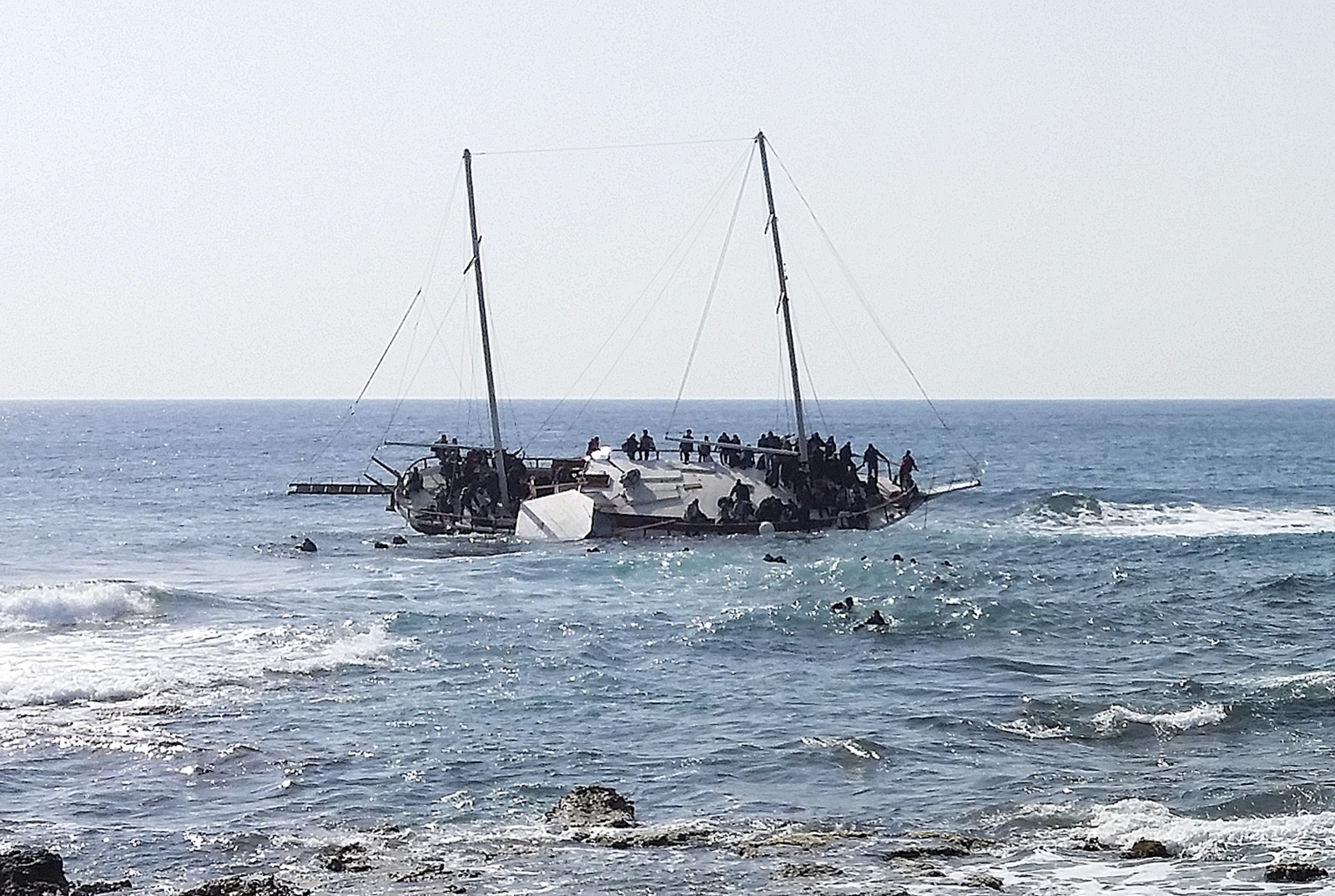
A wooden boat crammed with migrant workers who were headed back to Indonesia capsized Thursday off Malaysia's western coast, leaving at least 14 people dead, a maritime official said..

The boat was believed to be carrying 70 people and not 100 as reported earlier by fishermen, said First Adm. Mohamad Aliyas Hamdan, the district chief of the Malaysian Maritime Enforcement Agency.

He said that 13 women and one man are confirmed to have died, and 19 people have been rescued.

Agency official Mohamad Hambali Yaakup said the boat sank in bad sea conditions not far from the coast and several vessels and an aircraft were searching for survivors near the coastal town of Sabak Bernam in the central Selangor state

Mohamad Hambali said the boat was believed to have been taking migrant workers home to Tanjung Balai in Indonesia's Sumatra province. It was likely to have been overcrowded when it sank, he said.

Such incidents are common in Malaysia, which has up to 2 million Indonesian migrants working illegally in the country.

The Indonesians work without legal permits in plantations and other industries in Malaysia, and often travel between the countries by crossing the narrow Strait of Malacca in poorly equipped boats.

Thursday 03 September 2015

http://www.latimes.com/world/asia/la-fg-malayasia-boat-capsizes-20150903-story.html

continue reading

Austria struggle to Identify truck victims


Veteran police investigators say they have never faced a task like identifying the 71 bodies unloaded from the back of a truck found abandoned along a highway last week.

The victims, believed to have been mainly Syrian refugees trying to reach Germany, had apparently suffocated. They were so decomposed and drenched in bodily fluids that many of their documents were illegible. Hands were so deformed that traditional fingerprinting methods proved impossible.

Criminal investigators, many of whom had identified victims of the 2004 Indian Ocean tsunami, are working 16-hour days at a disused veterinary clinic in Nickelsdorf, near where the truck was found Aug. 27. The stench and heat topping 90 degrees compounded the pressure, as most of the early work was done outdoors.

“This is both mentally and physically one of the most challenging jobs we’ve ever done,” said Chief Inspector Kepic Erwin, who heads the team handling the postmortem investigation. “We only focus on the work we’re supposed to do.”

Such gruesome finds are becoming all-too-common as Europe reels from the mounting death toll from the biggest influx of migrants in decades. At least 12 Syrians, including eight children ranging from 9 months to 11 years old, drowned Wednesday as they attempted to cross the Aegean Sea to reach Greece, Turkey’s state-run Anadolu news agency said.

The bodies of the 59 men, eight women and four children found in the truck in Austria were brought to Nickelsdorf, undressed, then sent to Vienna over the weekend for forensic examination.

Their papers and electronic devices are being cleaned and analyzed at a regional police station in Eisenstadt. Clothing and any other belongings remain in Nickelsdorf, where investigators painstakingly search through them for clues.

No one has been positively identified, but an Austrian government official said travel documents found so far suggest at least some of the victims were from Syria where civil war has raged for the past four years.

The grim work has brought the human tragedy in Europe’s unfolding migrant crisis into focus. People from Syria, Iraq, Afghanistan and parts of Africa are willing to risk their lives to reach safer, more prosperous countries—even going as far as packing themselves into a refrigerated chicken delivery truck with no room to sit and little air to breath.

Activists and migration experts say smuggling has boomed since Europe recently began tightening its internal borders. Hungary last weekend finished erecting a razor-wire fence along its wooded frontier with Serbia, one of the most-popular crossings on the route northward from the Mediterranean.

Many don’t make it that far. The International Organization for Migration says more than 2,300 people have died while trying to cross the sea into Europe so far this year.

Germany, with its relatively strong job market and generous benefits, has been one of the main destinations for the wave of migrants and refugees. Among the hundreds of people prevented from boarding Germany-bound trains at Budapest’s main railway station this week, some said they would turn to smugglers.

Overnight Tuesday, Austrian police rescued 24 Afghan teenagers crammed into a small, nearly airtight van, at risk of suffocation. The van’s two windows were darkened and sealed and the rear door had been barred from the outside, a police spokesman said. The driver—identified as a 30-year-old Romanian—was arrested after trying to run away.

Nearby, in Nickelsdorf, Mr. Erwin said his medical team hoped to finish the forensic research by Friday, while examination of the findings would continue for weeks. Some passengers may never be identified, he warned.

“We do, of course, want to identify everyone, but we have no guarantees,” said Lt. Col. Karl Wochermayr, who came from Salzburg to Eisenstadt to lead the 30 investigators working on identifications.

The task is complicated by the lack of information about the victims. Normally in such situations, authorities have a list of names or other details to match to specific bodies. “Here, we have no idea who we’re looking for,” Col. Wochermayr said.

They don’t even know how long the people had been dead. It could have been “anything from some hours to several days. It is still hard to tell, because of the heat,” which accelerates decomposition, Mr. Erwin said.

A police hotline and email address established to gather tips has received fewer than 200 descriptions of missing people, said Col. Wochermayr.

He said the number is unusually low, probably because relatives may be stuck in war zones or otherwise cut off from communications.

Worried family members and friends arrive at the police station in Eisenstadt daily, handing over photos of missing loved ones and providing investigators with DNA samples. On Monday one man arrived from Hannover, Germany, 500 miles away, because he feared his brother might have been on the truck, Col. Wochermayr said.

The van where the people died, still emitting an overwhelming stench that wafted to a nearby refugee camp, was moved Wednesday to “a safe place,” according to the state prosecutor.

At the former veterinary facility, a one-story gray building with loading bays resembling a warehouse, police Wednesday continued documenting the migrants’ possessions. One officer clad in a hazmat suit spread a pair of jeans darkened by bodily secretions across a sheet of white plastic on the ground. A second officer, also in white, took photographs while a third nearby in civilian clothes wrote down details called out by his colleague in a monotone.

“Black belt, leather. Jeans, dark blue…”

A second team in Eisenstadt is analyzing cellphones, USB drives and other electronic items found with the bodies that could offer clues to their identities.

Police declined to say what they had found, but note that chasing leads isn’t simple. Cooperation with police in Syria is largely out of the question, due to the civil war, and some victims may have come from areas now controlled by Islamic State militants. Police also worry that calling numbers in Syria found on cellphones could expose people there to dangers.

Col. Wochermayr said their current focus is on European phone numbers that might provide clues to the migrants’ final destinations.

Medical examiners in Vienna are collecting dental samples, DNA and records of identifying marks such as scars, implants or tattoos. All the information is being entered into a computer program that is also used by Interpol, an international organization that facilitates police cooperation.

“We’re working against time,” said Mr. Erwin. Even though the bodies have been cooled for almost a week, the decomposition doesn’t stop.

The examiners are all accustomed to dealing with corpses, but the work is nevertheless unusually intense, he said. Each evening a police psychologist arrives to talk with team members. “So that we don’t have to take all the mental images with us home,” said Mr. Erwin.

Thursday 03 September 2015

http://www.wsj.com/articles/austria-struggles-with-grisly-task-of-identifying-truck-victims-1441221521

continue reading

20 years on, Bougainville families haunted by missing


In the late 1980s, long-standing tensions over an Australia-run copper mine saw the region of Bougainville descend into a decade-long civil war for independence from Papua New Guinea.

It was after PNG imposed a blockade on the region in 1990 that Celine Pururau's brother, Paschal, left to take up arms and join the conflict, compelled by what she says was a motivation to save Bougainville from being wrecked by mining and environmental destruction.

"We tried to stop him," she said in an interview 25 years later. "But he did not listen to us, he said he had to sacrifice to save Bougainville."

Paschal, who before the war was a passionate football fan who worked with children around the town of Buka, left to fight Papua New Guinea government forces on Buka island.

His family never saw him again.

"They tell us the story that they buried him in a mass grave," Ms Pururau said. Her situation is not unique.

Almost twenty years since the war's end, the International Committee for the Red Cross says many families still have no idea what happened to their relatives during the war.

The official end of the conflict was in 1997, when a ceasefire was signed after protracted efforts to negotiate a peace between the two sides.

Estimates put the death toll at about 15,000, but the ICRC's Bougainville delegate, Tobias Koehler, says that nearly 20 years later, there's still no idea just how many are missing.

"There's simply no data on this and there's also, in terms of missing persons, no clear knowledge," said Mr Koehler. "Every time we come to a new district or we come to a new village and we talk about these issues people do come forward and mention this."

"It'll be at least more than 100, but it'll probably be less than a couple of thousand." Mr Koehler said many of the families of the disappeared have suffered psychologically as a result of the uncertainty, especially in a culture where returning a dead person to their home village for burial is of utmost importance.

"Basically, their family members have no idea of their fate and whereabouts, what has actually happened to them, if they are dead, if they have been killed or have died of a disease, if they are buried at a certain place or their bodies are lost at sea," said Mr Koehler. "There are a lot of families who are completely left in the dark about the fate of their loved ones."

It was that uncertainty that spurred Peter Garuai to form the Bougainville Families of the Missing Persons Association.

Mr Garuai's 20-year-old brother, Benedict, joined the fight in 1993 and was killed later that year. His family never heard what happened to Benedict.

"He was killed during the combat here in Arawa," said Mr Garuai. "The defence force killed him, but we've never known where he was buried. It was a dirty little war, here in Bougainville."

"I formed this association because of the pain that lingered in my mind that my brother, he has to come back," he said. "So this association tries to bring back normalcy to the lives of the missing people's families."

The now Autonomous Bougainville Government, formed under the peace agreement signed at the end of the conflict, adopted a policy on missing persons late last year, but little has come from it so far.

That's prompted many of the relatives of the disappeared to march through the towns of Buka and Arawa this week in an effort to highlight their ongoing battle for answers, and to call for more to be done to ensure that remains are returned to home villages.

Peter Garuai says the government needs to take note of the families' cries in order to build a foundation for a referendum on possible independence for Bougainville, which is likely to be held in 2019.

Bougainville's president, John Momis, says he accepts the ABG does need to do more to work out the whereabouts of the missing, but funding has been an issue.

"The ABG first of all has to engage people who are in the know and also find funds to fund it because it won't be done for nothing," said Mr Momis. "I'm not saying it hasn't been the top priority, we have had problems with the National Government giving us our legitimate financial budgetary allocations, and all these things have taken up our time."

John Momis said he hopes to work with the Red Cross and donor countries to make the missing persons policy more effective.

Thursday 03 September 2015

http://www.radionz.co.nz/international/pacific-news/283179/20-years-on,-bougainville-families-haunted-by-missing

continue reading

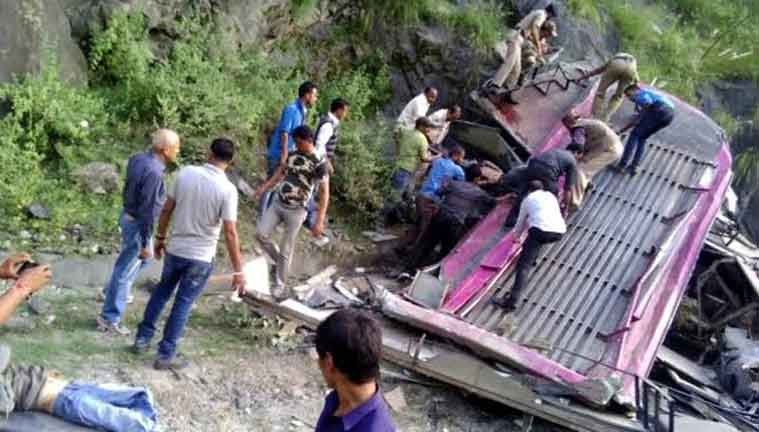
Himachal Pradesh: 18 dead, 12 injured as bus falls into gorge at Nathpa


Eighteen people were killed and twelve others injured on Tuesday when a bus fell 200 metres deep into a gorge at Nathpa on Hindustan Tibet National highway, 185km from Shimla.

Fifteen persons died on the spot while three succumbed to their injuries on way to hospital and twelve others were injured, SP, Kinnaur, Rahul Nath said.

The condition of four injured persons was stated to be serious and they have been rushed to Civil Hospital Rampur.

The private bus was on its way to Rampur from Rekong Peo when the tragedy struck. The deceased included two policemen while the identity of the others was being identified.

Since most of the people travelling in the bus were locals, a large number of people rushed to the spot and wailing relatives of the passengers looked for their kin.

After hurtling into the gorge, the bus stopped on the bank of Sutlej, a few meters from the river and some of the injured persons jumped out of the bus.

The bus broke into pieces and rescuers struggled to extricate the bodies trapped in the vehicle

Rescue teams, assisted by local people, had a tough time in bringing the injured to nearest roadhead.

The injured persons have been admitted to hospital at Bhawa Nagar while two seriously injured persons were rushed to civil hospital at Rampur.

The cause of the accident could not be ascertained so far but eye-witnesses said it took place as the driver tried to overtake another bus.

Thursday 03 September 2015

http://www.firstpost.com/india/himachal-pradesh-18-dead-12-injured-as-bus-falls-into-gorge-at-nathpa-2416938.html

continue reading

Wednesday, 2 September 2015

11 migrants drown, 5 missing when boats sink on way to Greek island from Turkey


A Turkish media report says at least 11 migrants have died and five others are missing after boats carrying them to the Greek island of Kos capsized.

The private Dogan news agency says a boat carrying 16 people sank in international waters after leaving from the Turkish resort of Bodrum early Wednesday. Seven of them drowned while four were rescued.

Hours later, a second boat carrying six migrants sank off the coast of Bodrum. A woman and three children drowned while two migrants in life vests made it to shore half-unconscious, the report said.

Coast Guard officials would not immediately comment.

The route between Bodrum and Kos is one of the shortest from Turkey to the Greek islands. Thousands of migrants are attempting the perilous sea crossing despite the risks.

Wednesday 02 September 2015

http://globalnews.ca/news/2198707/11-migrants-drown-5-missing-when-boats-sink-on-way-to-greek-island-from-turkey-report/

continue reading

Mexico asks Austria lab to test missing students' clothes


Mexican authorities delivered on Tuesday clothing and objects linked to last year's disappearance and presumed massacre of 43 students to an Austrian laboratory in a new bid to identify the victims.

The 53 items were handed over to the University of Innsbruck, which has only managed to confirm the identity of one of the students among 17 sets of charred remains sent by Mexico late last year.

The pieces of clothing and other objects were sent to Austria on a request by international experts of the Inter-American Human Rights Commission, which has been conducting its own investigation into a case that caused international outrage.

The items were "reviewed and catalogued" by prosecutors and members of the Argentine Forensic Anthropology Team, the attorney general's office said in a statement.

The Argentine team has worked on the case at the request of relatives of the missing because they do not trust the authorities.

In a July report, the Inter-American commission sharply questioned why prosecutors had not used clothing that was found of the missing students as evidence.

The commission's experts asked the authorities to process the items, photograph them and undertake genetic tests, which were conducted in late July.

Prosecutors say the 43 students were abducted by corrupt police in the southern Guerrero state town of Iguala on Sept 26 and delivered to a drug gang, which slaughtered them and incinerated their bodies.

International human rights groups criticised the government's conclusion, saying it relied too much on the testimony of suspected criminals instead of physical evidence.

Wednesday 2 September 2015

http://www.thesundaily.my/news/1540060

continue reading

Mass grave found in northern Mexico


A mass grave has been found in northern Mexico, authorities said Tuesday, as a rights group indicated it could contain 31,000 bone fragments corresponding to at least 31 bodies.

The pit was discovered on a ranch in the town of Salinas Victoria, some 35 kilometers (22 miles) north of the industrial hub of Monterrey, said a spokeswoman for the Nuevo Leon state prosecutor's office, Priscila Rivas.

"The ranch was found through statements by detained criminals, information from victims and investigations by the prosecutor's office," Rivas told AFP.

The spokeswoman declined to say how many pieces of bones were unearthed or how many bodies they could represent.

But Consuelo Morales, who heads the Citizens Supporting Human Rights (CADHAC), said authorities told her organization that 31,000 bone fragments were found since the grave was detected earlier this year.

"The genetic profiles of 31 people have already been identified. It's what the prosecutor's office told us," said Morales, whose group represents relatives of missing people.

She said that her organization had told the authorities back in January that the ranch named "Las Abejas" (The Bees) may contain a clandestine grave. The fragments have been found over the course of several months.

Authorities have cordoned off the ranch as they continue to search for remains, objects or pieces of clothing that could help identify the victims.

The bones have been taken to the University Hospital of Monterrey, where DNA tests are being conducted, Morales said.

Mexican drug cartels often dump the bodies of their victims in mass graves. In 2013, for instance, 64 bodies were unearthed between the western states of Jalisco and Michoacan.

Nuevo Leon state has been the scene of brutal turf wars between the Zetas and Gulf cartels in recent years.

Tens of thousands of people have been killed across the country since the drug war intensified in 2006, while 20,000 more have disappeared.

Wednesday 2 September 2015

http://news.yahoo.com/mass-grave-found-northern-mexico-222750482.html

continue reading

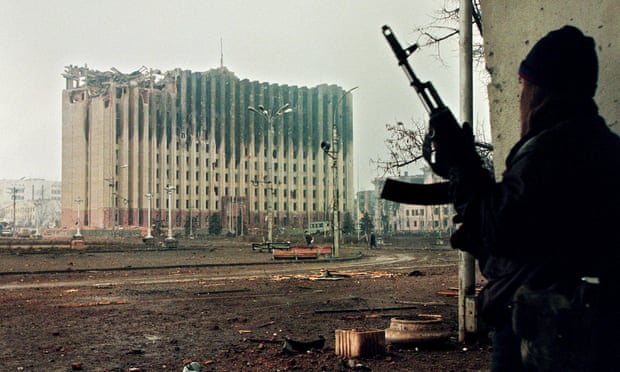
20 years after Chechen war, families still searching for missing bodies


Zura Batayeva carefully holds a small black-and-white photograph between her fingers. Creased and faded, it shows an earnest man with curly black hair.

The picture is all that remains of her son, Visit Batayev, who disappeared without a trace shortly after Russian tanks rolled into Chechnya more than 20 years ago – launching the first of two devastating wars against separatist rebels in the North Caucasus republic.

“The worst is not knowing what happened to him,” she says. “Only the thought that we will be together after I die brings me solace.”

This agonising uncertainty is shared by many Chechens.

Rights groups say an estimated 5,000 people are still missing from the two wars – the first of which began in December 1994, when federal forces launched a bloody attack on the capital, Grozny.

Like the Batayevs, many families still searching for their relatives accuse authorities of turning a blind eye to their plight.

Ramzan Kadyrov, Chechnya’s Kremlin-appointed leader, has overseen a massive campaign to rebuild Grozny with the help of cash injections from Moscow. But as glistening skyscrapers go up around the city, the grim task of laying the war dead to rest has fallen chiefly to human rights activists.

“No one needs us. The government has left us with our problem,” says Batayeva’s husband, Abuyezid Batayev. “We have received a lot of help from ordinary people, but they have their own problems. Many have missing relatives, too.”

Rights groups say there are still unopened graves in fields, courtyards, and basements throughout Chechnya.

‘These bodies need to be identified’

Visit Batayev was 27 years old when he disappeared, along with his neighbour, Musa. Witnesses say the two men were seized by Russian soldiers as they hid from shelling in the basement of a Grozny hospital.

Musa’s body eventually surfaced in a morgue in Moscow, and although the circumstances of his death remain unknown his parents were able to give him a proper funeral in Chechnya.

Visit Batayev’s continued absence, however, has prevented his parents from coming to terms with their loss. “Sometimes I close my eyes and I see my son. It’s as if he had returned,” Batayeva says. “I see him speaking to me. I see us having lunch together under the summer canopy of our house. I see him in my dreams, too.”

Zainap Mezhidova, a rights campaigner whose own son is missing, knows of at least three mass graves that she says contain the remains of hundreds of people.

“These bodies need to be identified. We know where they are located,” she says. “The authorities should be looking for our children.”

‘When I hear a child calling for his mother in the street, I turn around’. Zura Batayeva remembers her son.


Promises Despite Kadyrov’s repeated promises, Chechnya still has no forensic lab of its own. Remains exhumed from mass graves are sent either to Moscow or Rostov-on-Don for identification before being returned for burial in Chechnya.

Batayev says he has combed through numerous mass graves in search of his son, sifting through human remains with his bare hands.

He was once told that the body of a man matching his son’s description had been found in a mass grave close to Grozny’s cannery. Documents on the body gave Visit as the man’s first name.

The Batayevs immediately rushed to the site. “There were about 250 bodies there,” Batayeva recalls.

The body, however, did not belong to their son. “That day I collapsed and I hit my knee very hard,” she says. “It still hurts today.”

Desperate to find his son, Batayev travelled to a forensic lab in distant Rostov-on-Don. He says he saw many bodies there, but his son was nowhere to be found.

Today, he and his wife no longer have the strength to search for his body.

But Batayeva, despite the odds, refuses to give up hope of finding him alive. “When I hear a child calling for his mother in the street, I turn around,” she says. “I still have some hope of being reunited with my son one day.” Wednesday 2 September 2015

http://www.theguardian.com/world/2015/sep/02/chechnya-anniversary-missing-people-remain

continue reading

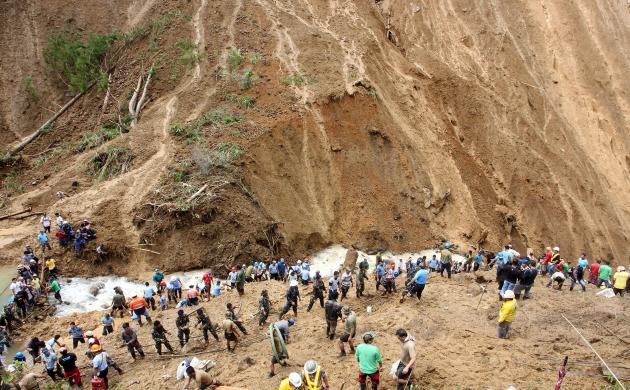
2 more bodies retrieved from Benguet landslide


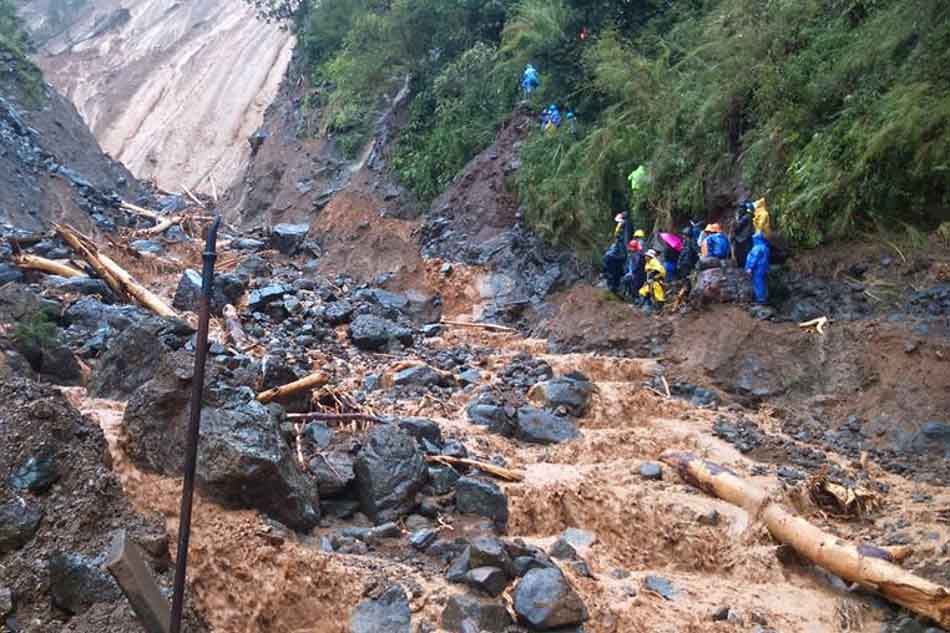
The remains of two miners were recovered by a team of volunteers digging through mud and rocks in a landslide-hit area in Mankayan, Benguet province, on Monday, police said.

The bodies were recovered at 10 a.m. in Barangay Taneg, said Insp. Joyce Ann Dayag, information officer of the Benguet police office.

She said volunteers composed of miners, residents, soldiers and policemen were still looking for six people out of 16 miners and their family members who took shelter in a mining camp in Sitio Elizabeth. The camp was buried by a landslide triggered by heavy rain dumped by Typhoon “Ineng” on Aug. 22.

Benguet Gov. Nestor Fongwan said the landslide hit a nearby mountain slope, and not the slope where the camp had been put up.

“The loose rocks and mud fell toward the slopes of the camp. It was so sudden. The eroded area was heavily vegetated so our experts tell us it was triggered by oversaturation from the rains,” Fongwan said during a meeting last week of the Benguet Provincial Disaster Risk Reduction and Management Council.

The bodies recovered on Monday raised to 19 the typhoon’s death toll in Benguet, 15 of whom died in Mankayan town. Landslides also killed two persons in Bakun town and a person each in Atok and Buguias towns.

Wednesday 2 September

http://newsinfo.inquirer.net/718433/2-more-bodies-retrieved-from-benguet-landslide-2

continue reading

Tuesday, 1 September 2015

The issue of missing persons demands a global solution


Well over 2,000 migrants have drowned in the Mediterranean in 2015 and untold numbers have perished crossing the Sahara en route to ports in Libya and elsewhere. The statistics on missing migrants constitute a horrific backdrop to activities organized to mark the International Day of the Disappeared.

And the numbers of those who go missing on dangerous migration routes – across the Mexican-US border, for example, or south from the Bay of Bengal – are dwarfed by the numbers of those who are disappearing in parts of Central Africa, in Syria, Iraq, Yemen and other conflict zones, not to mention the thousands who are victims of enforced disappearance and extrajudicial killings as a result of repressive government or paramilitary policies.

“The International Day of the Disappeared is an appropriate occasion on which to recall that the issue of missing persons represents a global challenge that requires a global solution,” ICMP Director-General Kathryne Bomberger said in a statement issued today. “As governments around the world struggle to come to terms with missing persons crises it is essential that the issue is addressed in a way that focuses on strategic and institutional solutions.”

Ms Bomberger stressed that “whether a person is missing from conflict, human rights abuses, disasters or other causes, it is a complex issue that entails securing the rights of families of the missing,” and she added that as the only international organization exclusively dedicated to accounting for the missing, ICMP is working with governments, civil society organizations, justice institutions, international organizations and others throughout the world to tackle the problem in a comprehensive way, including through legal and political initiatives.

Established in 1996 to help the relevant authorities account for the 40,000 people reported missing at the end of the conflict in former Yugoslavia, ICMP has led an effort that has resulted in more than 70 percent of these missing persons being accounted for. This is an achievement unsurpassed anywhere.

Since 2003 ICMP has been active beyond the Western Balkans, and today it is working to develop institutions and civil society capacity, promote legislation, foster social and political advocacy, and develop and provide technical expertise to locate and identify the missing in every part of the world.

Since moving its headquarters from Sarajevo to The Hague this summer, ICMP has begun preparations for a Global Forum on Missing Persons, which will bring together policymakers, legal experts, academics, civil society activists and others to share expertise and coordinate activities. It is also establishing an Interagency Committee on Missing Persons in The Hague that will include representatives from international organizations and others, to facilitate cooperation in addressing missing persons cases from conflict, human rights abuses, disasters and other causes.

“The Mediterranean migration crisis has clearly demonstrated the need for effective coordination by multiple agencies,” Ms Bomberger said. “This will be a key step forward in resolving some of the challenges that have been highlighted today in events to mark the International Day of the Disappeared.”

Tuesday 1 September 2015

http://www.icmp.int/news/the-issue-of-missing-persons-demands-a-global-solution/

continue reading

At least 37 migrants feared dead in Libya shipwreck


At least 37 migrants are thought to have died following a weekend shipwreck off the Libyan coast, the Libyan Red Cross said Monday, capping a month during which more than 400 migrants died on what has become the world’s deadliest people-smuggling route.

If confirmed, Sunday’s disaster would be the third sinking in four days in the waters off the North African country.

On Thursday, Libyan officials said 150 bodies had been recovered from two sunken boats off the coast. Three men were arrested, accused of running the smuggling operation that launched the doomed vessels.

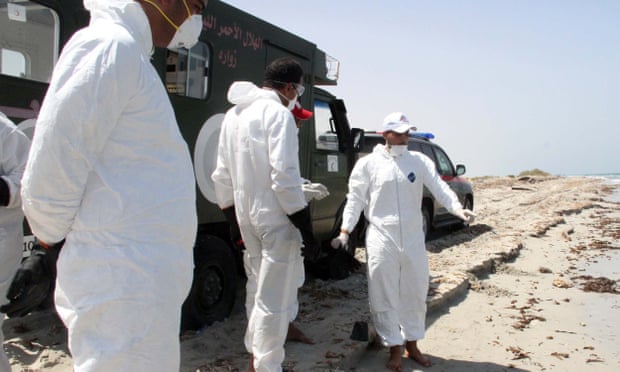
Mohamad Al Misrati, a spokesman for the Red Crescent in the Libyan capital of Tripoli, said seven bodies were discovered floating Sunday near the port of Khoms, a town about 60 miles east of the capital. Hours later, he said, fishermen found another 30 bodies in the water.

Mr. Misrati said his organization, the Libyan arm of the International Federation of the Red Cross, was working with the country’s coast guard to verify the number and identities of the victims.

It wasn’t immediately clear how many people were on the boat, which has yet to be located.

In August alone, about 18,000 migrants have reached Italy from Libya. But more than 2,400 people have died trying to cross the Mediterranean so far this year, the International Organization for Migration said, up from 2,081 for the same period in 2014.

Political chaos and an economic collapse have engulfed Libya since the fall of dictator Moammar Gadhafi in 2011. The ensuing security vacuum has facilitated a people-smuggling trade that has flourished along the Libyan coast, making it the gateway to Europe for migrants from the Middle East and sub-saharan Africa.

Tuesday 1 September 2015

http://www.wsj.com/articles/at-least-37-migrants-feared-dead-in-libya-shipwreck-red-crescent-says-1441025537

continue reading

Working to identify the sailors on the USS Oklahoma


The fuel-stained bones, hundreds of them, are laid out neatly on Carrie Brown’s exam tables at Offutt Air Force Base, carefully tagged and logged in her database.

In the clinical setting of Brown’s lab it’s easy to forget these are the last remains of the first American victims of World War II. These sailors and Marines from the battleship USS Oklahoma partied and danced and played cards on a Hawaiian Saturday night in December 1941. The next morning they died for their country in a cauldron of fire and oily water when the Japanese attacked Pearl Harbor and sank their ship.

They have rested for decades in graves marked “Unknown, Pearl Harbor, Dec. 7, 1941.”

“All these families were told bodies were never recovered — and they were,” said Ray Emory, 94, of Honolulu, a Pearl Harbor survivor who has long lobbied for the identifications of the Oklahoma unknowns. “I never thought they’d dig them all up.”

After several years of internal debate, the Pentagon decided this spring to disinter 61 caskets holding the remains of up to 388 unidentified USS Oklahoma service members — including 17 from Nebraska and western Iowa.

The USS Oklahoma identifications — which investigators think will take five years — are also likely to spur identifications of many other “unknown” remains resting in military cemeteries around the world. And the Offutt lab, belonging to the newly created Defense POW/MIA Accounting Agency, or DPAA, is at the center of the effort.

“We are going to move forward on a large scale,” said Brown, 33, a forensic anthropologist at the Offutt lab, which until now has been limited to examining individual remains from European sites.

DPAA emerged earlier this year, restructured from three agencies responsible for finding and identifying the remains of missing U.S. service members from the late-20th century wars.

In recent years those agencies had endured a barrage of criticism for bureaucratic infighting, ID methods and staging fake transfer ceremonies with empty, flag-draped caskets.

Most of all they were criticized for moving too slowly, averaging about 70 MIA identifications a year since 2010 on a budget that has jumped from $65 million to nearly $100 million. Congress has ordered them to boost the number of IDs to 200 a year.

To do so, the new agency has been given authority not only to open the graves of “unknowns” but also to work with private groups that excavate air crash sites in search of the remains of long-lost MIAs.

Since the opening of the Offutt lab two years ago there has been a trickle, not a torrent, of identifications out of Omaha. Most of the 56 exam tables in Brown’s lab have remained empty — until the arrival of the USS Oklahoma unknowns this summer.

That news has cheered a dwindling group of Oklahoma survivors, and families of the dead, who had sought the identifications for years. The Navy had strongly opposed reopening the graves, but the Pentagon finally ruled in favor of the Oklahoma families in April.

When Japanese torpedo bombers swooped in over Pearl Harbor, the men of the Oklahoma stood little chance — especially those below decks at duty stations or in bunks on a Sunday morning.

Several torpedoes struck the battleship as it was moored on Battleship Row. The Oklahoma rolled, and sank in its berth. Most of the 429 victims drowned or were suffocated, some after spending hours or days shouting and banging for rescue from inside the hull.

Thirty-six bodies were recovered and identified soon after the attack. The rest remained entombed in the hull until the battleship was raised a year and a half later. The bones of the dead, encrusted in mud and oil, were removed from the ship and buried in two Hawaiian cemeteries.

In 1947 the Graves Registration Service spent two years trying to identify the remains. Though they matched names to 27 skulls using dental records, authorities decided to rebury all of the remains at Honolulu’s NationalMemorialCemetery of the Pacific as “unknowns,” because no complete bodies could be identified.

They might have stayed there forever if not for Ray Emory’s dogged detective work. After the Navy veteran retired to Hawaii in the mid-1980s he visited the cemetery to pay his respects to Pearl Harbor victims.

“I wanted to know where the Pearl Harbor grave sites were,” he recalled. “They couldn’t tell me.”

Emory set out to change things. Using the Freedom of Information Act, he gathered documents and learned about the 27 identified skulls. He traced some of them to individual graves. In 2003, one casket was exhumed and the remains of five Oklahoma sailors identified.

But the opening of that one coffin showed just how daunting the task of identifying the USS Oklahoma dead will be. DNA evidence showed that the casket contained remains of at least 95 individuals. It’s assumed that remains are equally commingled in every casket.

“We absolutely know they’re mixed up,” Brown said.

Now her job is to solve this puzzle.

Remains began to arrive at Offutt soon after the first caskets were disinterred in Hawaii on June 8. Brown said skulls are being kept at the DPAA lab in Hawaii, which has experts in dental identifications. Other bones are being brought to Offutt in flag-covered caskets aboard military aircraft.

The bones come wrapped in blankets, she said. They are set out neatly on tables, arms and legs on one side of the table, ribs and backbones on the other, each bone or fragment logged into a database for tracking.

The remains are laid out such that the men would be facing an American flag that stands at one end of the room, following a military tradition.

People who have watched “CSI” on television may think identifying a bone is as simple as taking a DNA sample, testing it and matching it in a computer database — and sometimes it is.

But with the bones of people who have been dead for decades it can be more complicated than that, Brown said.

“We don’t have DNA on file for people who served in World War II,” Brown said. “DNA is very powerful if you have something to match it to. Otherwise, it’s just a series of letters.”

The Offutt lab uses traditional anthropological techniques such as comparing bones with medical and dental records while looking at artifacts and other clues. DNA is just part of the mix.

“It’s very multifaceted,” Brown said. “Many lines of evidence come together.”

Brown said DNA testing will be central to identifying the victims from the Oklahoma. The agency has spent years collecting samples from relatives of nearly all the sailors and Marines.

The best DNA samples can be obtained from the largest pieces of bone, such as a thigh bone. Two kinds of DNA are found in human cells. Nuclear DNA allows a specific match, while mitochondrial DNA isn’t as definite. But mitochondrial DNA is easier to extract from older samples such as the Oklahoma remains, because there is more of it.

“The possibility of identifying every single lost bone is not high,” Brown said. “It depends what pieces you have, how quickly you can put the puzzle together.”

When Brown looks at the bones laid out in the lab she maintains a clinical detachment, focusing on measurements and DNA and material evidence.

But occasionally someone will stop by to view the newly identified remains of a loved one. Brown will set up a room for a private viewing — and she is reminded why this work remains so important.

“The most poignant thing is meeting the families,” Brown said. “It’s what gets you up in the morning.”

They are the families of men like 2nd Lt. John W. Herb, a 22-year-old fighter pilot who died April 13, 1945, in the crash-landing of his P-51D Mustang east of Hamburg, Germany. His remains were identified earlier this year through the efforts of Brown and the Offutt lab. Herb was buried at ArlingtonNationalCemetery in June.

“All we ever knew was that John was shot down in Europe, and he was never found,” said Michael Herb, John’s second cousin and closest living relative. That changed last year when members of a private group called the Missing Allied Air Crew Research Team contacted members of Herb’s family and told them the crash site had been found.

They learned a German man named Manfred Roemer had seen the plane crash as a 5-year-old and never forgot it. Years later, he went looking for the crash site.

Roemer found two women who had seen Herb pulled — alive — from the wreckage by two German officers and executed and buried in a shallow grave. He learned another woman had tended the grave for decades. He notified German authorities, and last year led a U.S. military archaeological team there.

“He’s the one who pursued this,” Michael Herb said. “He’s the one who did the right thing.”

John Herb’s remains were unearthed and shipped to the Offutt lab, and he was identified within days.

The Herbs were so grateful they invited Brown to the service at ArlingtonNationalCemetery. She couldn’t make it, but other DPAA employees attended. So did Roemer, who made it possible.

Michael Herb found the ceremony — complete with military band, rifle salute, folded flag and taps — to be a moving experience.

“There were 80 people at the grave site — 80 people who never knew this guy,” he said. “It made you feel like you were part of something that was a real honor.”

If all goes smoothly, that honor soon will be extended to hundreds more families of World War II service members — men whose bones are resting in an Offutt Air Force Base lab, waiting to be taken home.

Tuesday 1 September 2015

http://lexch.com/news/working-to-identify-sailors-lost-on-the-oklahoma/article_c8d31ebc-4ffc-11e5-8d24-5be4d924e390.html

continue reading

Serbia, Bosnia Mark ‘Day of the Disappeared’


Families of people who went missing during the 1990s conflicts and have not been found marked the annual Day of the Disappeared by urging the authorities to do more to find their relatives’ bodies.

Events and ceremonies were held on Sunday and Monday in Serbia and Bosnia and Herzegovina to draw attention to the fact that around 10,000 people still missing from the Yugoslav wars, according to estimates by the International Committee of the Red Cross.

Serbian and Kosovo Albanian families whose relatives have been missing since the end of the Kosovo conflict in 1999 read out a joint letter at a conference in Belgrade on Monday addressed to the authorities in both Belgrade and Pristina, criticising them for failing to establish the whereabouts of around 1,650 people.

“We are convinced that the number of missing persons would be lower if officials in Belgrade and Pristina had the genuine political will to start dealing with this issue jointly,” the letter said.

Veljko Odalovic, the head of Serbian Commission for Missing Persons, told the conference that the biggest problem in finding those who are still unaccounted for is the lack of the information.

“We need precise, credible information from witnesses who will be able to come with us anywhere in Serbia so we can check together,” Odalovic said.

Matthew Holiday, the head of the International Commission on Missing Persons (ICMP) Western Balkans Programme, said that more than 40,000 people went missing as a result of the 1990s conflicts and that 70 per cent of them have been found and identified.

But another problem is the issue of misidentification due to the lack of precise methods used before DNA analysis was introduced, Holiday said.

“With no new secret graves being found, ICMP would call on the responsible institutions, the Serbian Commission on the Missing Persons, Kosovo Commission, EULEX [the EU rule-of-law mission in Kosovo] and the [EULEX] Department for Forensic Medicine to seriously address this issue of misidentifications,” he noted.

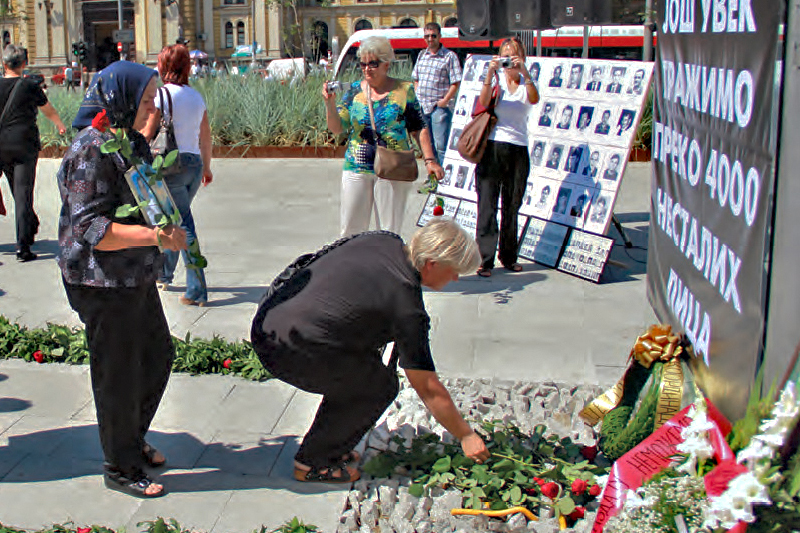
The previous day, missing persons associations and relatives of the missing gathered at the Belgrade Assembly to mark the International Day of the Disappeared, then walked to the nearby Tasmajdan Park and laid roses at the memorial dedicated to the Serb victims killed from 1991 to 2000 in the Yugoslav wars.

“We ask the authorities to resolve the destinies of the missing persons so that families can bury them, to punish those responsible and to provide assistance to the families of those killed,” said Dragan Pjevac, the president of Serbia’s Coalition for Missing Persons.

The International Day of the Disappeared was also marked across Bosnia and Herzegovina on Sunday, with ceremonies taking place in Sarajevo, Prijedor, Srebrenica, Bijeljina, Ozren and other cities. Families of missing persons used the day to call on the government to speed up the search for the remaining 8,000 people who have not been found since the 1992-95 conflict.

Bosnia’s human rights minister Semiha Borovac said that issue of missing persons was one of the toughest the county was facing.

“The ministry for human rights and refugees will try to prioritise the issue of missing persons and try to start activities which will solve the problems of families of missing persons,” said Borovac.

In central Sarajevo on Sunday, the International Commission on Missing Persons organised a presentation of sculptures with messages for the authorities like “Demand truth and justice” and “We are still looking for 8,000 citizens”. People also signed a petition which will be sent to the authorities to in a bid to encourage more support for the search for missing persons.

Amnesty International also issued a plea to the Bosnian authorities on Sunday, calling on them to finally start implementing the state-level law on missing persons which was adopted in 2004.

“This law demands that Bosnia and Herzegovina opens a fund to support families of missing persons, which is key for these families to achieve social and economic rights.

These families are often poor and in many cases they lost the head of the family,” Amnesty International said in a statement.

The president of the Women of Srebrenica association, Hatidza Mehmedovic, said at a ceremony in Srebrenica that was is important that the Day of the Disappeared was commemorated in “the place where genocide took place”.

“Everything went well and we sent out nice although sad messages. One of them is that Srebrenica should be a warning so that we build something safer and more just,” Mehmedovic told media.

Tuesday 1 September 2015

http://www.balkaninsight.com/en/article/serbia-bosnia-mark-missing-persons-day-08-31-2015

continue reading

Monday, 31 August 2015

24 Bangladeshi victims buried in Libya


At least 24 Bangladeshis are believed to have been buried in Libya following the capsize of two boats in the Mediterranean Sea off the Libyan coast three days ago.

“The bodies recovered so far have already been buried, including Bangladeshi victims,” said Mozammel Haque, counsellor (political) and charge d’affairs of Bangladesh Embassy in Libya.

“The Libyan Coast Guard has so far recovered over 150 bodies from the Mediterranean. They did not allow anyone to identify the bodies,” he said.

“We do not know exactly how many Bangladeshi people were there among the dead but we came to know that the Libyan Coast Guard had buried the bodies, including those of Bangladeshis as many of the bodies started to decompose.”

The official, however, informed this reporter over phone that they were sure of 24 Bangladeshis among the dead.

All of the 54 Bangladeshis rescued from the boat capsizes informed the Bangladesh Embassy officials that 78 Bangladeshis had boarded two vessels on Thursday night.

Their boats set off for Italy through the Mediterranean Sea. Most of them were with their families. Among them, 22 Bangladeshis were from four families.

“Family members of those four families confirmed that six of their family members had died in front of their eyes.

“While some others who survived the disaster said in the detention centre of Libya that 18 of their family members had been missing since the capsize,” Mozammel said.

He believed that no missing person could be rescued alive.

Of the 54 pulled alive out of the sea, 12 women and children have already been taken under the care of the Bangladeshi Embassy, while 42 others are still in the detention centre of the Libyan authorities.

“We are negotiating with the Libyan authorities to bring back those under our custody and at least 25 of those 42 in the detention centre wished to return to Bangladesh.”

Bangladeshi migrants in Libya had been passing good days until the present political turmoil erupted.

But over the last one and a half years, they have not been able to send any remittance to the country as the value of local currency dropped rapidly against Dollar due to political unrest, he said.

Against such backdrop these Bangladeshi migrants were heading towards Italy in pursuit of a better life defying the treacherous Mediterranean sea route.

They were lured into the journey by traffickers and middlemen, for which they had to pay 1,000 dinar (approximately Tk60,000) each,” Mozammel said.

When asked about the identities of those middlemen, he said most of them were from Libya. But names of some Bangladeshi middlemen also came up in conversation.

“We have already brought those names to the notice of the authorities concerned of our country so that they can take immediate action against them,” he said.

Monday 31 August 2015

http://www.dhakatribune.com/bangladesh/2015/aug/31/24-bangladeshi-victims-buried-libya

continue reading

Libya boat disaster death toll climbs to 119


The death toll has risen to 119 due to the capsizing Friday of two boats carrying illegal migrants after the Libyan Coast Guard discovered 39 additional bodies, local authorities said Sunday.

On Friday, Libyan authorities discovered the bodies of at least 80 drowned African and Middle Eastern migrants in the water off the coast of the western city of Zuwara.

According to Zuwara City Council spokesman Hafiz Muammer, however, this number was revised upwards Sunday after authorities pulled another 39 bodies from the water.

Muammer added, however, that another 198 would-be migrants -- who had also been aboard the ill-fated vessels -- had been rescued.

According to the Libyan Red Crescent, a search remains ongoing for additional bodies and survivors.

Libyan officials, meanwhile, continue to express grave concern about the steadily rising numbers of death-at-sea off the Libyan coast due to illegal attempts at migration.

In the first six months of this year alone, more than 2,350 would-be migrants and/or refugees have died off the country’s coast while trying to reach the shores of Europe.

This number stood at 2,081 for the same period last year, according to the International Organization for Migration (IOM).

Yet despite these grim statistics, so far this year, more than 255,000 migrants and refugees have successfully made the voyage to Europe by sea, the IOM says.

Of these, nearly 100,000 came from war-torn Syria, more than 25,000 from Eritrea, and some 32,000 from violence-wrecked Afghanistan, according to IOM figures.

Monday 31 August 2015

http://www.worldbulletin.net/middle-east/163725/libya-boat-disaster-death-toll-climbs-to-119

continue reading

Another body recovered after Benguet landslide


Authorities have recovered another body following a landslide in Barangay Taneg in Mankayan, Benguet.

The landslide, which occurred during the onslaught of Typhoon Ineng (international name: Goni), left sixteen people missing. The remains of the nine of the 16 missing people have already been retrieved, according to local officials.

This includes the body of Crisanto Ablao which was recovered 10 a.m. Saturday.

The incident commander promised that retrieval operations will continue until all missing victims are recovered.

A total of 23 bodies have already been recovered in the Cordillera Administrative Region (CAR).

A state of calamity has been declared in the provinces of Benguet, Mt. Province, Apayao and Abra.

Monday 31 August 2015

http://www.abs-cbnnews.com/nation/regions/08/29/15/another-body-recovered-after-benguet-landslide

continue reading

7 bodies wash up on Libya beach: Red Crescent


Another boat carrying refugees has sunk off Libya and the bodies of at least seven people have been washed up, Libya's Red Crescent said on Sunday.

"We were alerted that a boat had sunk and that there are bodies on the beach in Khoms," 120 kilometres (75 miles) east of Tripoli, Red Crescent spokesman Mohammad al-Misrati told AFP. "We don't know how many people were on board, but the coastguard has begun a rescue operation and we are preparing to retrieve at least seven bodies that have been washed up," Misrati added.

The latest sinking comes just days after a boat carrying nearly 400 would-be refugees foundered near Libya's western port of Zuwara. Misrati has said that 126 bodies from that boat were recovered from the sea and 198 people rescued.

"There are still 50 to 60 people who are missing," he said. Libya, with a coastline of 1,770 kilometres (more than 1,000 miles), has for years been a stepping stone for Africans seeking a better life in Europe. Most head for Italy's Lampedusa island which is 300 kilometres from Libya.

People smugglers have taken advantage of chaos in Libya since the 2011 uprising that toppled and killed veteran dictator Moamer Kadhafi to step up their lucrative business. In exchange for steep fees, they take would-be refugees on board rickety boats for the treacherous Mediterranean crossing. About 2,500 people have died at sea trying to reach Europe this year alone.

Monday 31 August 2015

http://www.dnaindia.com/world/report-7-bodies-wash-up-on-libya-beach-red-crescent-2120243

continue reading

29 killed in South Africa bus crash


A bus drove off a cliff, killing 35 people on board in Eastern Cape province on Saturday, authorities said.

Only nine of the 44 passengers survived the horror crash, Xinhua reported citing the Road Traffic Management Corporation (RTMC).

Eight sustained moderate injuries and one was seriously hurt, the RTMC said.

But according to Eastern Cape provincial health spokesman Sizwe Kupelo, six were in a critical condition.

Of those killed, four were children, said RTMC spokesperson Simon Zwane.

The crash took place between Butterworth and Willovale in the province, he said.

It was believed that the victims were all from the same village in Willowvale near Dutywa, Eastern Cape province.

Initial reports put the number of deaths at 25, but after all of the passengers trapped inside the bus had been removed, the death toll rose to 35, Zwane said.

The cause of the accident was not immediately known.

“We cannot speculate at this moment as to the cause of the accident but our investigators will rely on witnesses statements to try and establish what happened,” Butterworth police spokesman Captain Jackson Manatha said.

Monday 31 August 2014

http://gulfnews.com/news/africa/south-africa/35-killed-in-south-africa-bus-accident-1.1575360

continue reading

Sunday, 30 August 2015

Death toll from migrant disaster 117, 185 still missing


Rescue workers have recovered 12 more bodies off the Libyan coast, raising the death toll from the latest disaster for migrants trying to reach Europe by crossing the Mediterranean to 117, Libyan authorities said on Saturday.

Thus far 198 people were rescued and the search is ongoing for missing passengers from two boats that capsized Thursday off the western coastal city of Zuwara with about 500 migrants onboard, the rescue team said in a statement.

Human smuggling of people fleeing conflicts and poverty in the Middle East and sub-Saharan Africa from Libya has spiked since the 2011 overthrow and killing of longtime dictator Moammer Gadhafi, after which the oil-rich north African country plunged into chaos.

One more Libyan accused of organizing the dangerous crossing was arrested on Friday, bringing the total to three, a security official said.

Later Friday, a protest broke out in the coastal city, with residents carrying signs in English, Arabic and Berber, urging people not to rent houses to smugglers because they are used to hold the migrants until the seas become calm enough for travel.

The three alleged smugglers will be the second group ever to face legal charges for human smuggling in western Libya. The defendants in the first case were released last year under murky circumstances in Zuwara, security officials said.

All officials spoke on condition of anonymity because they are not authorized to brief reporters.

Sunday 30 August 2015

http://www.emirates247.com/news/world/death-toll-from-migrant-disaster-117-2015-08-29-1.601643

continue reading

Friday, 28 August 2015

Update: 71 bodies of refugees found in Austria lorry


Police in Austria say the bodies of 71 people, thought to be migrants, were found in an abandoned lorry found on a motorway on Thursday.

The bodies of 59 men, eight women and four children are thought to have been dead for one-and-a-half to two days.

Police said the victims appeared to be migrants from Syria and probably died after suffocating in the vehicle.

The state of the bodies had made establishing an exact death toll difficult. Their identities were also not known, said Hans Peter Doskozil, head of police in the eastern district of Burgenland. “The deaths already occurred some time ago,” he added. “We can make no concrete assumptions about the origin or cause [of death]. We can assume, however, that they are refugees.”

Three people, thought to be Bulgarian, have been detained in Hungary. They are believed to have driven the lorry.

Police sent to investigate the dumped lorry on the A4 motorway towards Vienna discovered the decomposing bodies on Thursday morning.

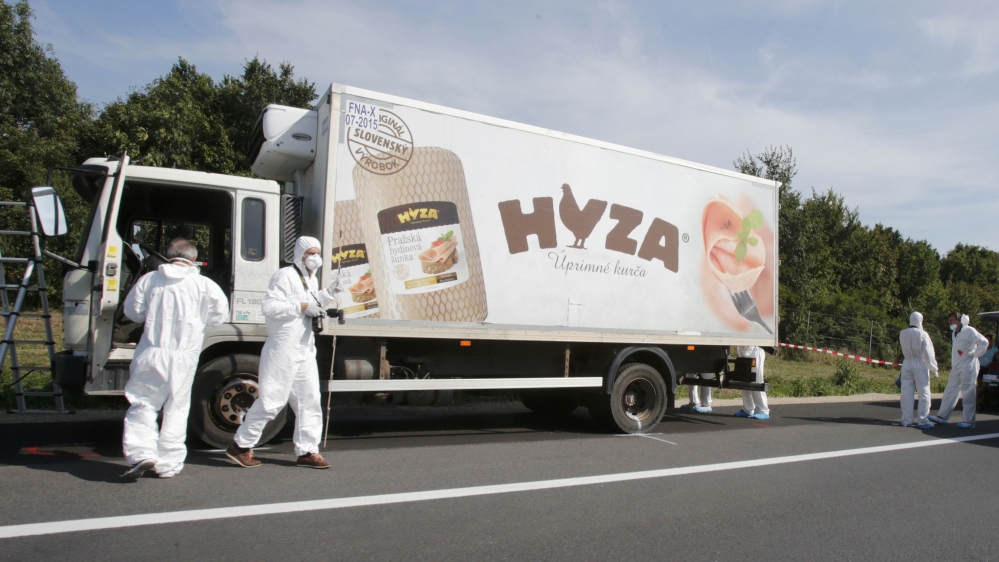
The 7.5-tonne vehicle used to belong to the Slovak chicken meat company Hyza and still has the slogan “Honest chicken” on the side. The company said it sold the lorry in 2014. According to the Hungarian government, it is registered to a Romanian citizen from the central city of Kecskemét.

Road officials said on Thursday that an employee mowing the grass alerted police after noticing putrid liquid dripping from the back of the white refrigerated vehicle. Its door had been left ajar. Detectives then made the grim discovery.

Forensic teams at the scene examined the lorry, which has Hungarian number plates. Lindsey Hilsum of Channel 4 News tweeted that the “smell of death” at the scene was overwhelming. On Thursday afternoon, police towed the vehicle to a nearby hall and began removing bodies.

The vehicle was towed to a customs building with refrigeration facilities where forensic teams worked through the night to examine the bodies.

The group are thought to have been dead when the vehicle crossed into Austria from Hungary. Among the victims was a girl aged between one and two years old.

The 71 victims, including four children, are thought to be from Syria.

The local police chief said a travel document found on the vehicle suggested that the group were Syrian migrants.

"Our preliminary assumption is of course that they were refugees, possibly a group of Syrian refugees," Hans Peter Doskozil, Burgenland province police chief, told reporters.

One of those arrested is assumed to be the owner of the vehicle, Mr Doskozil said, while it is "highly likely" the other two are "the ones who drove the vehicle".

He said there was "an indication we are talking about a Bulgarian-Hungarian human trafficking operation".

"If you look at the organisation of people traffickers, these are the lowest two levels of a criminal organisation," he added.

'No ventilation'

The vehicle had the branding of a Slovakian poultry company, Hyza, on it but the firm said it no longer owned the vehicle.

Mr Doskozil said it was unusual for people smugglers to use a refrigerated vehicle.

"In our preliminary investigation we found that there was no ventilation possible through the sides of the lorry," he said, adding that the victims had probably suffocated.

The lorry, which has Hungarian number plates, is understood to have left Budapest on Wednesday morning.

Truck sightings

- Early Wednesday: Police believe the truck set off from south-east of Budapest

- 09:00 Wednesday: Truck recorded on cameras at Hegyeshalom on the Hungarian side of the border with Austria

- 05:00 or 06:00 Thursday: Truck seen parked in lay-by on A4 motorway between Neusiedl and Parndorf

- 11:30 Thursday: Austrian police open the truck and find bodies

Tens of thousands of migrants from conflict-hit states in the Middle East and Africa have been trying to make their way to Europe in recent months.

A record number of 107,500 migrants crossed the EU's borders last month.

Some of them pay large sums of money to people smugglers to get them through borders illegally.

Meanwhile, migrants continue to die as they try to reach Europe via the central Mediterranean route.

Hundreds of people are feared to have died after two vessels carrying migrants sank off the coast of Libya on Thursday.

Friday 28 August 2015

http://www.bbc.com/news/world-europe-34083337

continue reading