Saturday, 11 April 2015

Here's what NASA plans to do if an astronaut dies in space


President Nixon was prepared for Neil Armstrong and the other Apollo 11 astronauts to die on the moon in 1969.

There’s an old memo titled “In Event of Moon Disaster,” and on it is Nixon’s back up speech for the press in case something went horribly wrong during the moon landing.

It begins with this poignant statement:

“Fate has ordained that the men who went to the moon to explore in peace will stay on the moon to rest in peace.”

Thankfully Nixon didn’t need it.

But now for the first time since the Apollo missions, there’s serious talk of more manned spaceflight missions, and it’s raising an important question: When someone dies in space, what do you do with the body?

A mission to Mars would take several months of travel just to get there. And if manned missions start happening, eventually, someone is going to die in space. No one has a great plan for what to do when that happens.

Right now, astronauts usually only spend six months at a time in space on board the International Space Station (ISS), and all of them undergo an intense medical examination before they’re ever approved for spaceflight. No one has ever died on the ISS. It’s clear from NASA reports that the organisation is focused more on prevention rather than on what to do if an astronaut actually dies in space.

In a recent StarTalk Radio episode, co host Chuck Nice asked astronaut Mike Massimino if NASA has some kind of protocol for bringing back an astronaut who dies in space.

“It could happen, but you know out of all the training I had we never went over that one,” Massimino said.

Even though there’s no official protocol, astronauts do sort of practice for this worst case scenario.

In his book “An Astronaut’s Guide to Life on Earth,” astronaut Chris Hadfield explains a chilling training exercise called a “death sim.” It’s designed to help prepare astronauts for what they should do in the event of the death of one of their colleagues.

Death sims usually operate as a round table discussion where one astronaut is announced as having died and whoever is leading the exercise will throw curve balls into the hypothetical scenario that plays out. In his book Hadfield explains what it was like listening to his own death sim played out:

“We’ve just received word from the Station: Chris is dead.” Immediately, people start working the problem. OK, what are we going to do with his corpse? There are no body bags on Station, so should we shove it in a spacesuit and stick it in a locker? But what about the smell? Should we send it back to Earth on a resupply ship and let it burn up with the rest of the garbage on re-entry? Jettison it during a spacewalk and let it float away into space?

The death sims force the astronauts to really think through how they should respond, Hadfield writes:

Who should tell my parents their son is dead? By phone or in person? Where will they even be — at the farm or at the cottage? Do we need two plans, then, depending on where my mum and dad are?

This is a start, but it gets trickier to deal with death on a long-term mission.

NASA already has plans for manned missions to Mars, and private companies like Mars One and SpaceX are working out the logistics of setting up human colonies on Mars. Manned trips to Mars may still be a few decades off, but they seem inevitable. So eventually, someone is going to die in space, whether while en route to or on Mars itself.

The most simple solution is to just pop the ship’s airlock and send the body floating out into the vacuum of space like Spock’s funeral in Star Trek.

It turns out that one of the weird international rules that govern the cosmos prohibits this. It’s a UN agreement that says you can’t litter in space, and that includes dumping bodies.

That’s because bodies floating through space could collide with other spacecraft or even float over to alien planets and effectively colonize them with human remains and whatever bacteria and other organisms may be living on and in the body.

So we need a plan B, but it’s not practical to keep a human body on a spaceship during a long journey either. It could jeopardize the crew’s health, both physically and mentally. (Just think about spending a couple months on a small spaceship with someone’s coffin on board). Also, spacecraft are incredibly expensive. Adding a mini mausoleum to any ship would be a multi-million dollar addition.

One of the most interesting proposals for dealing with death in space is a collaboration between the green burial company Promessa and NASA that spawned the idea of the “Body Back.” Body Back involves an airtight sleeping bag that a human corpse is zipped into and then exposed to the freezing temperatures of outer space.

The frozen body is hauled back on board and intensely vibrated around until it shatters. You end up with about 50 pounds of finely ground human body dust that you can hang outside your spacecraft until you arrive at your destination.

There’s no good answer for what to do when someone dies after landing on Mars though. NASA’s and Mars One’s plans to visit the red planet both involve the settlers growing their own crops on the planet. One radical idea is to use human bodies for composting and fertiliser. It doesn’t seem likely that that idea will ever catch on though:

“I’m not sure human bodies make particularly good fertiliser,” Paul Wolpe, a senior bioethicist at NASA, told Slate.com. “I mean, no society has done that on Earth that I know of. There are societies that desperately need fertiliser, and even they don’t use their dead bodies for the purpose. There’s always been an extremely strong taboo for using dead bodies for instrumental purposes.”

Death is a deeply human issue, but for long-term spaceflight it has to also be treated as a cost issue and a practicality issue. The Guardian’s video interview with some of the volunteers who signed up to be Mars One’s first colonizers is poetically titled “If I Die on Mars.” It’s a question that needs a lot more thought before any missions launch.

Saturday 11 April 2015

http://www.businessinsider.com.au/what-if-someone-dies-in-space-2015-4

continue reading

Remembering The Ellis Park Stadium Victims


Today, Saturday, 11 April 2015, marks 14 years since the Ellis Park Stadium disaster, which is remembered for claiming the lives of 43 people in a Soweto Derby between Kaizer Chiefs and Orlando Pirates.

The South African football fraternity will forever remember the 43 fans who never returned home, after having gone to watch the biggest game in the Premier Soccer League’s calendar on 11 April 2001.

Benedict Vilakazi had just equalised for Pirates, after Tony Ilodigwe had scored for Chiefs earlier on that evening when the game was halted.

At that moment it had become evident to the powers-that-be and almost everyone at the stadium that tragedy had stricken.

The stadium had been overcrowded, which made it difficult for the security personnel to control the fans on that fateful evening.

The score was 1-1 when the game was abandoned before the end of the first half.

The scenes of the bodies of the deceased that were laid on the pitch that evening will forever be in the memories of the masses associated with arguably the most-loved sport in Mzansi.

As this day marks the memorial service of the late Steve ‘Kalamazoo’ Mokone, as well as the funeral service of the late Richard Henyakane, Soccer Laduma would like to extend our heartfelt condolences to the families, friends and colleagues of all.

Mokone’s memorial service is being held at FNB Stadium. Henyekane’s funeral service is held in Galeshewe in Kimberley.

Saturday 11 April 2015

http://www.soccerladuma.co.za/news/articles/categories/south-africa/14-years-since-the-ellis-park-stadium-disaster/206438

continue reading

Friday, 10 April 2015

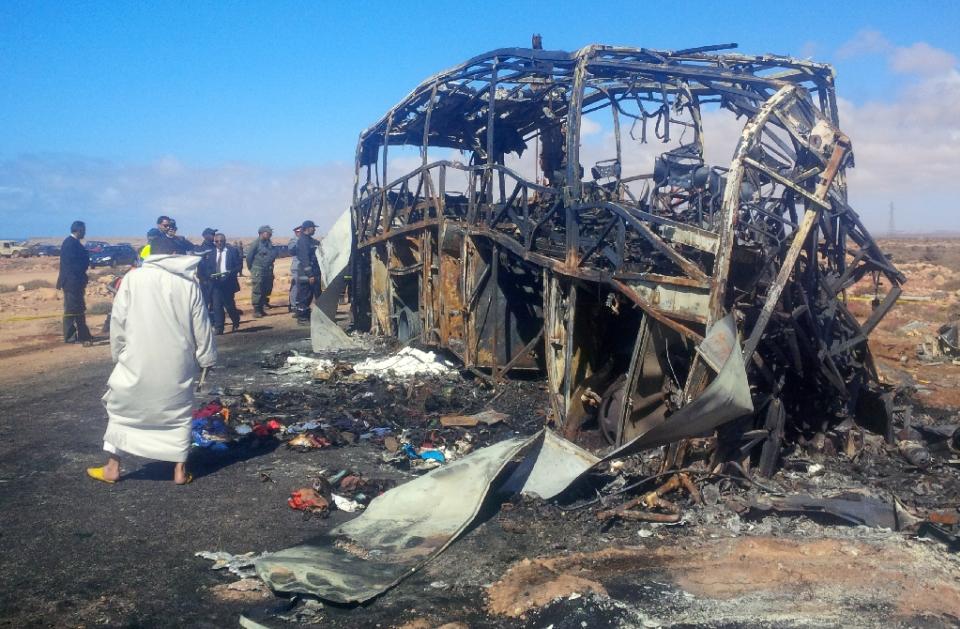
Thirty-three people killed, mostly children, in bus crash in Morocco


At least 33 people were killed, most of them children, when a bus burst into flames after colliding with a gas tanker in Morocco on Friday, a local official and a rights group said.

"We have many completely carbonised bodies. Authorities have been in contact with the bus company to identify the victims," said Benmane Fadli, regional director of the transportation ministry.

The bus had been heading from the coastal city of Benslimane to Laayoune in Western Sahara when the crash happened near the southern city of Tan-Tan.

Most of the victims were children returning from a school athletic competition in Benslimane, the Tan-Tan bureau of the Moroccan Association of Human Rights (AMDH) said in a statement.

The early morning accident at Chbika in southern Morocco was the deadliest in the North African kingdom since 2012 when a bus plunged into a ravine, killing 42 people.

The collision in the province of Tan-Tan killed at least 33 people, MAP news agency reported, quoting local authorities and revising an earlier toll of 31 dead.

They said nine injured people were taken to hospital, but two who were in a serious condition later died.

"A majority of the victims are children aged eight to 14," a regional official from the sports and youth ministry told AFP.

Abdeslam Ahizoune, head of the country's athletics federation, said: "It is a drama that touches us all."

Private media said the bus was transporting the young athletes and their coaches from a competition in Bouznika, a beach resort in the north between the capital Rabat and Casablanca.

Pictures posted on YouTube and on several news websites showed the mangled wreckage of a bus on fire, and witnesses said many of the victims had been asleep when the collision occurred.

"It is a horrible accident. The toll is huge. The fire broke out when the bus and the truck collided and then it spread," social worker El Hassan Mouline told 2M state broadcaster, speaking from the scene.

He said the victims included children who were taking part in a sporting competition, a local athletics champion and an official from the sports and youth ministry.

"The whole team is lost," Mouline said.

News of the accident triggered panic and parents of children who were on the bus rushed to the hospital in the town of Guelmim, demanding the names of the victims, Medi1TV reported.

The broadcaster also reported that at least four children had survived the tragedy but were being treated at hospital for "third degree burns".

King Mohamed VI sent a message of condolences to the families and said he would pay for the burials as well as cover the hospital fees for the injured.

Interior Minister Mohamed Hassad visited the scene of the tragedy, while France expressed "solidarity at this tragic time".

Road accidents are common in Morocco, where officials say about 4,000 people are killed each year -- the equivalent to about 11 every day -- in a country of 34 million inhabitants.

In 2010, Morocco imposed tougher driving laws, and last year announced tighter traffic controls and a budget of $265 million (250 million euros) on improving infrastructure for the period 2014-2017.

The authorities say that human error, including speeding, is the main cause of most road accidents in the country.

The World Health Organization says traffic accidents cost Morocco one billion euros ($1.05 billion) each year, or about two percent of its gross domestic product.

Friday 10 April 2015

http://news.yahoo.com/bus-carrying-athletes-crashes-morocco-killing-31-093448975.html

http://www.thestar.com.my/News/World/2015/04/10/Thirtyone-people-killed-in-bus-crash-in-Morocco/

continue reading

India: Revisiting the Victoria Park inferno of 2006 in Meerut


It is exactly nine years since the fire broke out at the consumer electronics fair at Victoria Park in Meerut, claiming 64 lives. "I still remember that day. My parents and aunt had gone to the fair at Victoria Park. My brother and I were at home. It was a trip that just happened without a lot of planning - they wanted to go to the jewellery market but then thought of visiting the fair. I wish I had hugged them before they left, the last time. My aunt escaped with some burn injuries, but my parents never returned," says 15-year-old Vaishnavi Gupta, who was just six when the fire broke out on April 10, 2006.

Sadly, Vaishnavi's younger brother Devyansh, who was four at the time of the tragedy, died in a road accident a year later. She is now the sole survivor in the family, taken care of by grandparents.

Nine years after the incident, a one-man commission of Justice SB Sinha probes the matter, on instructions from the Supreme Court.

Naresh Tayal, whose parents died in the fire, says, "It was the last day of the fair. My parents were keen on purchasing some electronic products available there at a discount. My wife and I and our two kids and my parents arrived at the fair at around 5pm. The fire only started at around 5:30 pm, but soon as we arrived, I started feeling suffocated."

He said he took his wife's hand and led her out, along with their kids. "There was only one small exit gate, and only one person could emerge at a time. The place was so crowded, I could not find my parents. I had told them to follow us and get out of the place, but I guess they did not hear me. The moment we came out of the pandal, the fire started. All I remember now is that the next thing I saw was my father's dead body," he says. He never got his mother's body - he suspects it was exchanged with some other body.

The bodies recovered from the site were all charred beyond recognition. There was so much chaos, and some people carried bodies, in order to claim compensation.

Interestingly, only after the struggle of Sanjay Gupta, who lost five members of his family in the incident, did the Supreme Court order a total compensation of Rs 5.42 crore to all victims. That amount was distributed in December 2014.

Nineteen-year-old Jagat Singh says, "I was 10 when my father died in that incident. I was so shocked, I was in no position to continue studies; besides, money became hard for the family. I have started my own business now. I hope the culprits get the punishment they deserve."

Friday 10 April 2015

http://timesofindia.indiatimes.com/city/meerut/Revisiting-the-Victoria-Park-inferno-of-2006/articleshow/46867871.cms

continue reading

Government procures coffins for Mazabuka accident victims


Government has provided coffins and blankets to all the 17 Mazabuka accident victims that died in the early hours of Monday.

Acting Mazabuka District Commissioner, Wilson Siadunka, disclosed to ZANIS in Mazabuka this morning that government, through the Disaster Management and Mitigation Unit (DMMU), provided the necessary logistics needed for burial.

Mr Siadunka said apart from buying coffins and blankets for the dead, government also provided food and transport for all relatives of the deceased, some of whom came as far as Chipata in the Eastern Province.

He disclosed that from the 17 deceased persons, 11 bodies were on Tuesday transported to Lusaka, two to Monze District and one body was transported to Chipata for burial.

Mr Siadunka further explained that three other bodies were buried in Mazabuka yesterday following the advice given by their family members who allowed burial to take place within the district.

The Acting District Commissioner has thanked relatives of the deceased for what he termed as high levels of cooperation and maturity during the process of identifying the bodies, saying without their support the task would not have been an easy one.

A total of 17 people died on the spot after the Fuso fighter truck they were traveling in from Lusaka to Monze District lost control and rammed into Mazabuka Shoprite Checkers building around 01:00 hours in the early hours of Monday.

Friday 10 April 2015

http://www.lusakatimes.com/2015/04/09/government-procures-coffins-for-mazabuka-accident-victims/

continue reading

Number of Okhotsk Sea trawler accident victims revised to 57


New, revised data shows that 57 people have died as a result of the Dalniy Vostok fishing trawler sinking in the Sea of Okhotsk, while 12 remain missing, the Chief of Maritime Rescue from the port of Petropavlovsk-Kamchatsky, Artur Rets, told RIA Novosti on Friday.

The Dalniy Vostok fishing freezer trawler sank in the Sea of Okhotsk shortly before midnight on April 1. There were 132 people on board the vessel. Rescue teams have lifted a total of 119 people from the water.

Previous reports said that 56 people from the trawler had died as a result of the accident, while 13 remained missing. "Initially, the bodies were not counted correctly; two bodies were placed in the same container. So, as of today, 12 people are considered missing," Rets said.

The Far East division of the Russian Emergencies Ministry confirmed with RIA Novosti that a mistake had indeed been made in counting the dead bodies.

"The mistake in calculations happened because there were a lot of people taking part in the [search and rescue] operation, new information kept coming in," an Emergencies Ministry representative said.

Five residents of Russia's Sakhalin Region missing after the sinking of the Dalniy Vostok fishing trawler in the Sea of Okhotsk have been declared dead, local authorities announced in a statement.

Their families will receive one million rubles (about $19,130) each in compensation, according to the statement, which added that the 17 Sakhalin residents that survived the accident have been paid 200,000 rubles ($3,825) each.

Two ships carrying survivors of the accident and the bodies of the dead arrived in the port of Korsakov, a town located in Russia's Sakhalin Region, in the early hours of Tuesday. Some of the survivors are still being treated at regional hospitals, but are expected to be released next week.

On Saturday, acting Sakhalin governor Oleg Kozhemyako said that the sinking of the Dalniy Vostok trawler was likely caused by the crew's failure to comply with safety regulations. A criminal case has been opened and an investigation into the accident is underway.

Friday 10 April 2015

http://sputniknews.com/russia/20150410/1020696933.html

continue reading

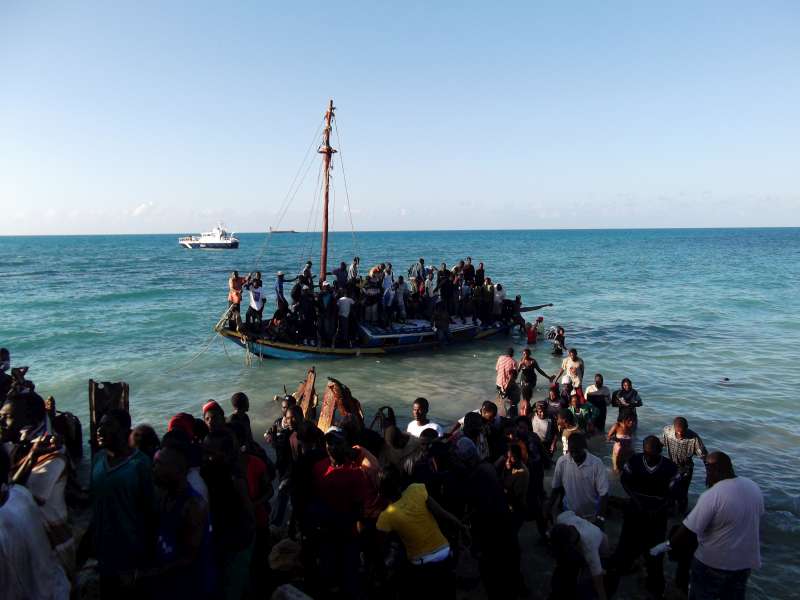
Haiti: suspected boat accident leaves 21 dead, 17 missing en route to islands


At least 21 people have died and 17 others are missing in a suspected boat capsizing off Haiti’s northern coast, authorities said Thursday.

The group was among 50 believed to be aboard a boat that was headed north to the nearby Turks and Caicos islands, said Jean Henri Petit, an official with Haiti’s civil protection department. He said survivors told police the boat encountered bad weather and tried to return to Haiti when it hit something.

The bodies began to wash ashore Thursday morning in the coastal town of Le Borgne, about 100 miles (160km) north of Port-au-Prince, police inspector Jean Mesamours told the Associated Press.

The families of 10 of the victims had picked up the bodies, while the other 11 dead were buried in a mass grave because no one claimed them, Petit said.

The Turks and Caicos islands are a popular destination for Haitian migrants despite authorities warning them that the voyage is perilous.

Friday 10 April 2015

http://www.theguardian.com/world/2015/apr/09/haiti-boat-accident-21-dead-17-missing

continue reading

Thursday, 9 April 2015

Four bodies found from last week's Taiwan sinking, 9 still missing


Four bodies have been retrieved a week after a cargo ship capsized in the Taiwan Strait on 30 March, while nine other crew members are still missing, China's Fujian Maritime Safety Administration announced on 7 April.

The 6,426 gt cargo carrier Zhen He 168 from the mainland sank west off Xiquan Island at around 04:40 h local time on 30 March, leaving all 13 crew members missing.

The ship's AIS was turned off in the evening of 29 March when it was passing the strait from north to south, and its radio echo suddenly reduced in the early morning of 30 March, which was believed to be the time of the accident, according to the shipowner and maritime safety administration.

However, the shipowner did not report the accident until late in the afternoon of 30 March. The capsized ship was found on the same evening, but no floating items were found.

During the seven days of search and rescue, three bodies were found at the ship's cabin between 4 April and 6 April, while another was retrieved by authorities from Taiwan on 5 April.

The shipowner modified the cabin along with other parts of the ship, and did not register or undergo inspection, and most of the crew on board did not hold competency certificates, according to the maritime safety administration.

The cause of the accident is still under investigation.

Thursday 9 April 2015

http://www.ihsmaritime360.com/article/17396/four-bodies-found-from-last-week-s-taiwan-sinking

continue reading

25 killed in Faridpur road crash

At least 25 people were killed and 23 injured when a bus veered off the road as the driver lost control over the steering in Bhanga upazila of Faridpur early today.

Rescue teams rushed the spot and shifted the injured and the bodies to nearby hospitals.

A Barisal-bound bus of Sonartari Paribahan from Dhaka skidded of the road and plunged into a ditch after hitting a tree in Kaidubi area around 1:30am as the driver lost control over the steering, our Faridpur correspondent reports quoting Jamil Hasan, superintendent of police in Faridpur.

The bodies of 20 persons who died on the spot have been kept at Bhanga Highway Police Station premise while those who died at Faridpur Medical College Hospital were kept at the hospital morgue.

Families and relatives started rushing to the scene and morgue to identify the bodies.

So far, 11 bodies were identified till 11:10am when the report was filed.

The cause of the accident wasn’t clear yet but passengers said the driver apparently lost control. It was not known yet if the driver was among the dead.

Meanwhile, the district administration has been distributing Tk 10,000 to each of dead victim’s family, the local upazila nirbahi officer said.

Thursday 9 April 2015

http://www.thedailystar.net/country/22-killed-faridpur-road-crash-76467

continue reading

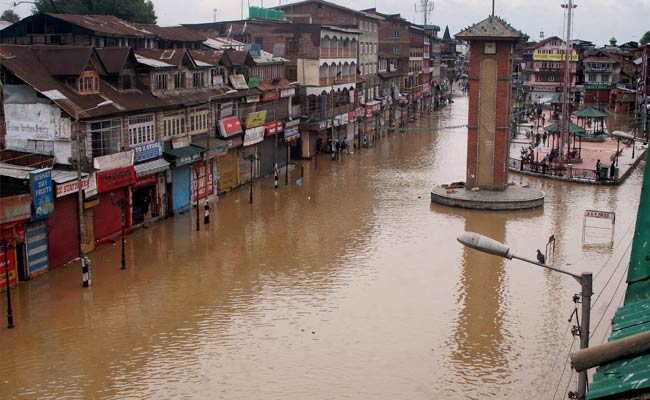
44 dead, 25 injured in recent floods: Jammu and Kashmir Govt


Over 40 people were killed and 25 others injured in the recent landslides and flash floods in the state, Jammu and Kashmir government today said.

Minister for Revenue Javaid Mustafa Mir said this while replying to a Calling Attention Notice by Ali Mohammad Sagar in Legislative Assembly.

"As many as 44 persons lost their lives and 25 got injured. 12,565 structures have been damaged fully, severely and partially, and 680 cowshed also got damaged. Besides, 862 cattle also perished," Mir said.

He said that due to unprecedented rainfall and snowfall followed by flash floods, landslides and avalanches last year, severe loss to life and property took place in the state.

The Minister said many areas in villages have become unsafe for living due to landslides and land sinking.

He said 211 camps have been established in the state and 2,907 families evacuated, 1,474 tents built, 3287 blankets have been provided to the affected families who have become homeless.

The minister said in District Srinagar, 893 structures have been damaged, out of which 18 houses have been fully damaged, 245 severely and 630 partially damaged.

He said in Khanyar constituency, 103 houses have been damaged, out of which 03 houses are fully, 20 severally and 80 houses have been partially damaged.

Mir said that an amount of Rs 35 cr has been released to Divisional Commissioners of Jammu and Divisional Commissioner Kashmir for providing ex gratia and for temporary restoration of critical public utilities on a war-footing.

He said the ex gratia has been provided to the affected families as per the State Disaster Response Fund (SDRF) norms. He said the assessment of loss and damages is in progress throughout the state by inter-departmental teams and relief is being and will be provided to the affected families throughout the state including Khanyar constituency as per the norms.

Meanwhile, the government today also said that a Rs 401-cr detailed project report (DPR) for urgent work was submitted to the Centre in the month of February and an approval is awaited.

"In order to avoid the re-occurrence of such floods in future, a detailed project report with an estimated cost of Rs 401 crore for urgent works carved out of the main project stands submitted to the government of India in the month of February," Minister for Public Health Engineering and Irrigation and Flood Control Sukhnandan Kumar told the Legislative Assembly.

"This has been put for approval of the Ministry of Water resources through their technical approval committee," Minister Sukhnandan Kumar told the Legislative Assembly.

The reply came in response to the question of M Y Tarigami, who wanted to know whether a study was conducted to understand the cause of September 2014 floods that ravaged the state.

The minister said that the final comprehensive project will take about eight to ten months for its submission to the Government of India where in the observations raised by the Central Water Commission (CWC) as far as Indus Water Treaty are to be clarified in detail including the effect of flood discharge on Wullar Lake and downstream.

He said that the temporary restoration of all the breaches and cuts was almost completed under the State Disaster Relief Fund (SDRF) and the measures taken for their permanent restoration have been taken up in a planned and prioritised manner under the Prime Minister's package.

"Besides a committee was constituted by the Government of India to understand the cause of the floods in the state but the findings and recommendations made by the said committee are awaited," he said.

He however said that as per the study undertaken by the department, it was found that the "unprecedented heavy rainfall" resulted in the flood discharge of 1,20,000 cusecs of water at Sangam and 1,30,000 cusecs in Srinagar, which was three times the safe carrying capacity of the existing channels.

The minister said that his department has already completed the temporary restoration of all the breaches and cuts on River Jehlum and the permanent restoration work for strengthening the banks of river was in progress to prevent any further damage to the adjacent areas due to any flood situations in the future.

On a question regarding the removal of encroachments from the water bodies, Kumar said, "22,415 illegally-planted trees have been cut along river Jehlum, 49,738 from other water bodies and streams and 80,208 from irrigation lands and canals."

He said that more than 90 illegally-constructed houses and 218 tin sheds and 246 boundary walls have been demolished from the water ways.

Thursday 9 April 2015

http://www.outlookindia.com/news/article/44-Dead-25-Injured-in-Recent-Floods-JK-Govt/890434

continue reading

Wednesday, 8 April 2015

Uttarakhand High Court says won't dispose PIL on proper last rites in hurry


The Uttarakhand high court on Tuesday said that it won't dispose the public interest litigation regarding the last rites of those killed in the 2013 flash floods too soon and that the progress in the petition will happen step by step.

"I submitted the statement of higher officials of the state government which shows their ignorance about the disaster. The honourable high court told me to submit some suggestions regarding the problems in Kedar valley," said Ajay Gautam (42), the petitioner. The petition was attended by division bench of justices V K Bisht and Sarvesh Gupta.

The PIL was filed in June 2014 and it stated that bodies of the deceased lie decomposed and proper last rites have not been performed for thousands of people killed in the tragedy. The next hearing of the case is scheduled for June 22.

Earlier, the petitioner submitted a supplementary affidavit on March 24 stating that the responsible officials should be held accountable for deaths in June 2013 deluge. In 2014, the HC said DNA profiling of the bodies should be carried out so that it can be used to identify the deceased.

Wednesday 8 April 2015

http://timesofindia.indiatimes.com/city/dehradun/HC-says-wont-dispose-PIL-on-proper-last-rites-in-hurry/articleshow/46841952.cms

continue reading

8 migrants drown after wooden boat sinks off Turkish Aegean coast; 3 still missing


The Turkish Coast Guard says it has recovered the bodies of eight migrants who drowned after a wooden migrant boat sunk in the Aegean off the Turkish coast of Datca late Monday.

The Coast Guard boats rescued nine other people. A boat and a helicopter were still searching for three missing people.

The Coast Guard did not provide information on the migrants' nationalities or say where they were heading. Datca is close to the Greek islands of Rhodes and Cos. The state-run Anadolu Agency said that the dead included migrants from Syria and Iraq.

The Coast Guard said it had rescued a total of 152 migrants from the sea between April 3-6, in six separate rescue operations off the coasts of Didim, Bodrum, Datca and Izmir.

Wednesday 8 April 2015

http://www.startribune.com/world/298866691.html

continue reading

Tuesday, 7 April 2015

15 people feared dead after train hits a canter truck in Kafue


Fifteen people are feared dead after a light canter truck was hit by a train in Kafue last evening less than 24 hours after 19 people died in a road clash in Mazabuka on Monday morning.

Zambia Police spokesperson Charity Chanda confirmed in a post on social media that five people died on the spot but witnesses say more bodies were retrieved at the scene.

“Five people have died, 14 seriously injured while three sustained minor injuries in an accident which happened between 1830 hours and 1900 hours at the rail crossing in Kafue.

Among the seriously injured is a thief who tried to steal from the scene of accident,” Ms Chanda said.

According to eye witnesses, the light truck overtook other vehicles on the rail crossing that were waiting for the train to pass. The driver failed to stop after discovering that the train had already reached the road crossing point. The truck was hit in the trailor and dragged leaving many people and their animals likes goats seriously injured and others dead.

Early in the day 19 people died when the Fuso Fighter truck they were travelling in rammed into the Shoprite building in Mazabuka.

Among the dead are 10 men, six women and three children of various ages.

Southern Province police chief Mary Chikwanda confirmed the accident which happened around 01:00 hours yesterday.

Ms Chikwanda said in an interview that the truck, registration number ACT 2439, was being driven by Kabaso Mwenya from Lusaka heading to a fishing camp in Monze area.

Mr Mwenya is among the people that died on the spot, while some bodies of the victims were mangled.

According to witnesses, the vehicle was loaded with fridges, mealie meal and other goods which passengers, mostly fish mongers, use in their fish business.

The witnesses also disclosed that some money was discovered tied in a plastic bag at the scene of the accident.

Ms Chikwanda said the driver, whose wife also perished is believed to have been speeding resulting in him failing to negotiate a corner and hit into the building.

Part of the building has been razed due to the impact.

“The accident happened around 01:00 hours and several people died among them 10 men, six women and three children,” Ms Chikwanda said.

Ms Chikwanda further said that about five people sustained serious injuries, mainly broken bones, and were admitted to Mazabuka General Hospital.

Some of the bodies of the victims have been identified, while others were still waiting to be identified.

She appealed to members of the public to help the police and hospital authorities to identify the bodies.

The 23 passengers on the truck are believed to be residents of John Laing Township in Lusaka and were heading to Lonchinvar fishing camp.

President Lungu expressed sadness over the deaths when he visited the Copperbelt yesterday.

Vice-President Inonge Wina, who was in Livingstone for the official opening of the fourth general assembly of the Association of African Public Services Commissions, yesterday observed a moment of silence for the accident victims.

Tuesday 7 April 2015

http://www.lusakatimes.com/2015/04/07/15-people-feared-dead-after-train-hits-a-canter-truck-in-kafue/

continue reading

Iraq mass graves uncovered in Tikrit


The suspected mass graves of up to 1,700 captured Iraqi soldiers killed by the Islamic State group (IS) have been found in the city of Tikrit. The sites are near the former US Army base, Camp Speicher.

Iraqi forensic teams have begun to excavate 12 graves following the city's recent liberation from IS.

The June 2014 incident is notorious after IS posted videos and pictures of the execution of the mostly Shia soldiers on social media. Survivors say the militants questioned the victims to identity those who were Shia before killing them.

The exhumations have began just days after Tikrit fell to a combination of the Iraqi army and Shia militias following a month long siege. DNA testing will be used to identify the bodies once they have been exhumed, as many families have never had confirmation of their relatives' death.

"We dug up the first mass grave site today. Until now we found at least 20 bodies. Initial indications show indisputably that they were from the Speicher victims," Khalid al-Atbi told the Reuters news agency on Sunday.

"It was a heartbreaking scene. We couldn't prevent ourselves from breaking down in tears. What savage barbarian could kill 1,700 persons in cold blood?" he added.

The murder of the soldiers has become a lightening rod for Shia militias who have vowed to avenge the killings. The militias have been credited with halting Islamic State's advance last year, but have themselves been accused of war crimes.

Some of the burial sites are in the presidential compound of the former Iraqi president Saddam Hussein, which became the IS headquarters after they took the city last year.

The offensive launched on 2 March to take back Tikrit involved some 30,000 fighters, two-thirds of them from the Popular Mobilisation (Hasid Shaabi) - a force comprising dozens of Iranian-backed Shia militia.

The Iraqi army is now expected to turn its attention to Mosul, 225km (335 miles) north along the Tigris river. IS's most significant stronghold in Iraq, Mosul, presents a far greater challenge than Tikrit for the US-led air coalition and Iraqi ground forces.

Tuesday 7 April 2015

http://www.bbc.co.uk/news/world-middle-east-32199244

continue reading

Monday, 6 April 2015

Zambia: 18 die in truck accident in Mazabuka


Eighteen people have died in Mazabuka after the Monze bound Fuso fighter truck they were in rammed into Mazabuka Shoprite checkers building around 01:00 hours on Monday Morning.

The eighteen people including ten males, five females and three children died on the spot.

Both Southern Province Police Commissioner Mary Chikwanda and Mazabuka Acting District Commissioner Wilson Siadunka confirmed the death in separate interviews with ZANIS in Mazabuka.

Ms. Chikwanda says the driver of the Fuso Fighter truck Registration number ACT 2439 identified as Manuel Kabole is also among the dead .

Ms. Chikwanda says the driver of the truck lost control of the vehicle due to over speeding and careered off the road before hitting into Shoprite checkers building.

And Mr. Siadunka has disclosed that according to authorities at Mazabuka General Hospital 17 people were taken to the hospital dead while one passenger died upon arrival at the health institution.

Mr. Siadunka has further disclosed that five other passengers have been admitted to the hospital in a critical condition.

He says the hospital is planning to evacuate the five casualties who sustained broken bones to the University Teaching Hospital for specialist treatment.

Mr. Siadunka has revealed that the 23 passengers on board the Fuso truck all of whom are residents of John Laing compound in Lusaka were travelling to Lochinvar fishing camp in Monze District where they were going to buy fish.

A check by ZANIS at Mazabuka Shoprite checkers found part of the building where the truck managed to stop from completely razed with employees clearing the rabble.

The bodies of the 18 accident victims are laying in Mazabuka General hospital mortuary.

Monday 6 April 2015

http://ukzambians.co.uk/home/2015/04/06/18-die-in-a-crash/

continue reading

37 killed in Bangladesh storms


At least 37 people were killed when powerful storms swept Bangladesh at the weekend and left a trail of devastation in the northwest, officials said Monday.

Rescuers and villagers recovered the bodies of victims after the storms flattened thousands of houses, uprooted trees and electricity poles and damaged paddy fields across a large area on Saturday night and Sunday.

Nineteen people died in the northern district of Bogra, government administrator of the district Shafiqur Reza Biswas told AFP, adding that more than 100 people were injured.

"They died mostly after they were hit by falling trees or collapsed houses and walls," he said, adding that authorities have sent emergency relief to thousands of villagers.

In neighbouring Rajshahi district, at least five people were killed and 27 injured as the storm hit a large stretch of low-lying land, another administrator said.

"At least 6,960 mud and tin-built houses were completely damaged by the storm," said Mejbah Uddin Chowdhury.

In the western district of Kushtia two people died and around 100 houses were flattened on Sunday. Two died from lightning strikes as the storm hit the southern port city of Chittagong on Monday, government officials told AFP.

There were also fatalities in at least nine other districts, officials told local media, bringing the death toll to 37.

Storms known locally as Kalboishakhi often hit Bangladesh during the early summer in the lead-up to the monsoon, which usually begins about the first week of June.

Monday 6 April 2015

http://www.newsmax.com/world/asia/bangladesh-weather-storms/2015/04/06/id/636577/

continue reading

Brazil: Little help for families of the missing

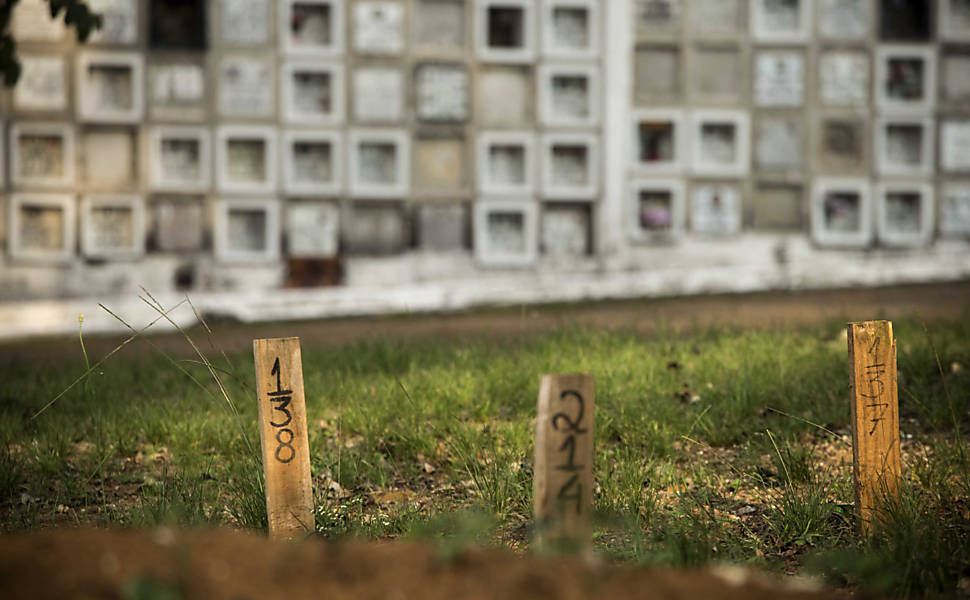
Searches for missing loved ones, families say, are complicated by Sao Paulo's troubled morgues. In the last 15 years, 3,000 bodies, all identified, were buried in unmarked graves in Sao Paulo, Brazil.

ra Lucia Marchioro recalls a morgue employee clicking through photos on a computer screen until a face appeared that could have been Luiz, her 25-year-old son who had disappeared the day before. She wasn't sure, she said, because of the swelling.

"Does he have any tattoos?" Marchioro asked.

When the employee said no, the grief-stricken mother decided to continue her search at the five other government-run morgues spread across Sao Paulo. Luiz had several tattoos, so the face on the screen that made her heart twinge couldn't be him, she thought.

Little did she know, but the 60-day search ahead of her would eventually lead back to the same morgue and body. More than a year later, however, her travails have yet to end. Morgue employees called her last March to identify the body using a photo of a tattoo on the arm, but the remains had already been buried in an unmarked grave, which authorities have refused to open.

"From what [morgue employees] have told me up until today, I don't know what I should believe," Marchioro said recently.

Government officials say they don't know how many people without identification are buried each year in Sao Paulo. In the last 15 years, the bodies of 3,000 people who had identifying documents were buried in unmarked graves here, according to the state's missing persons program.

Bodies that cannot be identified or have suffered a violent death — with or without ID — are sent to the closest Forensic Institute morgue. But regardless of where the bodies end up, members of several families in Brazil's largest city expressed frustration in interviews over the lack of resources and information they ware afforded during their searches.

Bodies held at a city morgue are usually buried after 72 hours, officials say. At the coroner's office, where there is more space, authorities try to keep corpses for 10 days, according to the agency's vice director, Dr. Carlos Augusto Pasqualucci.

The city's morgues came under fire last July when a news station broadcast images of 15 bodies lying side by side on metal tables at one morgue because all 38 refrigeration units were occupied. The situation has not only taken the dignity of the dead, family members say, but could also cause a public health problem. Hospital das Clinicas, home to the University of Sao Paulo's medical school and the central coroner's office, is less than half a block away, leaving patients there susceptible to disease-carrying flies.

"There are fewer refrigeration units than necessary, there are putrid bodies kept outside these units, there are fly catchers — I don't know how they are authorized by health inspectors — that are just like an electrified wire that zaps them," said Eliana Vendramini, the prosecutor who runs the missing persons program, which is investigating conditions in the city morgues. There's nowhere for doctors [who work overtime] to sleep."

The "identified indigents" were found following an inquest by Sรฃo Paulo State's Public Ministry coordinated by Eliana Vendramini, a Public Prosecutor dedicated to finding the whereabouts of missing people in Sรฃo Paulo.

It took her some time to believe that the State's own funeral system may have been responsible for the "disappearance" of thousands of people in the State capital.

The State assigns corpses to unmarked graves that are not claimed by relatives after 72 hours, even if the deceased carried identification, according to State regulation created in 1993, in Luiz Antรดnio Fleury Filho's State administration (PMDB - Brazilian Democratic Movement Party).

The State does this without contacting the relatives, despite having information of the deceased, leaving entire families to search endlessly for their loved ones.

Burials are carried out in partnership with the Municipal Funerary Service in two cemeteries at Vila Formosa, in the east of the city - where bodies are delivered bare, in wooden boxes with cardboard lids.

The corpses used to be buried in the Dom Bosco cemetery in Perus, in the north of the city.

Cases investigated by the Public Ministry are the responsibility of the Death Verification Service (DVS) linked to the University of Sรฃo Paulo's Faculty of Medicine

The service reviews cases of natural death, where there is no suspicion of violence but that require an investigation into the cause of death.

The Public Ministry wants to find out why the State government did not look for the families of the identified deceased.

Contrary to the Prosecutors, the board of the DVS understands that the law does not require the family to be contacted.

Furthermore, it states it does not have enough staff to carry out this task and that it is willing to cooperate with the Public Ministry investigation.

The Prosecutors and the DVS affirm they did not have enough information to locate the families. "However it is possible to locate the families and this is precisely what we are doing", the prosecutor said.

Vendramini also said that, as well as the Federal Constitution, which goes over "the dignity of the human person" in its first article, the Civil Code demands the service to communicate the death to the relatives, because the body belongs to the family.

"This is obvious. Do we need a law to state the obvious? Do we need a law that says: 'Do not bury an identified body without letting the family know'?", the prosecutor questioned.

Another problem is the fact that the DVS is unknown to most of the population, who look for missing relatives through the Coroner - in charge of dealing exclusively with violent deaths or unidentified bodies.

The Public Ministry wants to end unnecessary searches and put an end to burials without notice.

First of all, the Ministry is trying to find matches for the 3,000 "identified indigents" that have gone through the DSV against the list of missing persons in the State of Sรฃo Paulo.

The aim is to find out how many families are still looking for relatives to notify them of the death and clear the list of missing persons.

Joรฃo Rocha was in this list and his family was the first to be contacted by the prosecutor.

In the last few weeks, Folha located four more families. None were contacted by the State services and their relatives were buried in unmarked graves.

Police stations

The Public Ministry has also identified problems with the Civil Police.

According to the legislation, the police are required to register deaths before releasing the bodies to the DVS. The police also register the disappearance of a person when relatives report an occurrence at the police station.

However, in all cases reviewed by Folha, the logs of deaths or disappearances were not cross referenced, which could have put an end to many families endless search for their loved one.

Three out of five families contacted by Folha who reported relatives or friends missing said they were ignorant of the existence of the DVS, stating this reason for not requesting the service. In these cases, relatives were either still looking or had already given up.

In one case the relative had also passed away. In another, a daughter found her father 20 days after his death, buried in an unmarked grave.

She even resorted to the help of a Pai-de-Santo - an Afro-Brazilian priest that evokes deities during rituals - to find her father.

There are still an unknown number of identified people buried in unmarked graves by the Coroner's Office that were victims of violence or accidents.

Database

Vendramini has been working to help the families of missing people since she started the program in November 2013. There were 13,068 open cases that year. The program also assists in identifying bodies that haven't been claimed.

The biggest problem, she says, is the lack of communication among organizations involved in finding missing people. There is no way, for example, to cross-reference information held by different entities, including the six city morgues, the coroner's office, the police department and other organizations. She and her team are working on a database, scheduled to be ready in July, so that the agencies can share information.

For Marchioro, it's too late. Several of her questions are still unanswered, she says: Why didn't the morgue employee show her photos of her son's tattoos? Why was Luiz buried in an unmarked grave in Perus, a cemetery known for mass burials an hour north of the city center, 19 days after he was found when the standard is 72 hours? What happened to his body during those extra 16 days?

The treatment of bodies buried at the Perus cemetery, also known as Dom Bosco, has come into question, with one report of a casket falling open as it was tossed into a shallow grave. The city police's organized-crime unit is also investigating whether organs were illegally taken from unidentified bodies at the coroner's office to sell to medical researchers.

Marchioro says she wonders whether any of indignities could have happened to her son's body, which still lies in an unmarked grave in Perus. Government officials have refused to let Marchioro exhume the body and transfer it to the family plot.

"I'll truly believe that is my son they buried there the day they let me have him back," she said.

Vendramini hopes her work can help prevent future mistakes.

"Everyone wants to work together. But when it comes to the past, no one wants to take responsibility," Vendramini said. "We have to care. We should care. One day it could be any one of us."

Monday 6 April 2015

http://www.latimes.com/world/brazil/la-fg-ff-brazil-indigents-20150405-story.html

http://www1.folha.uol.com.br/internacional/en/saopaulo/2014/04/1443680-3000-people-have-been-buried-in-unmarked-graves-in-the-state-of-sao-paulo-even-though-they-were-identified.shtml

continue reading

Bulgaria marks 11 years since Lim tragedy


On Saturday, April 4, Bulgaria marks 11 years since the tragic incident in the Lim River.

On April 4, 2004, 12 Bulgarian kids died in a heavy road accident of a tourist passenger’s bus, which fell down in the Lim River.

At around 10 p.m. the bus slips on the slippery road Prijepolje and Bijelo Polje and falls down into a 40-meter canyon at the border between Serbia and Montenegro, in the deep water of the Lim River.

The bus was transporting a group of schoolchildren from the Bulgarian town of Svishtov.

According to information of the Svishtov mayor’s administration, there were 41 schoolchildren aged 12-19, seven teachers, one guide and 2 drivers travelling in the bus.

The rescue operations were joined by policemen and firemen from Prijepolje and Bijelo Polje, as well as by many local residents from the village of Gostun.

12 kids died in the crash, while 22 of the rescued were hospitalised in Prijepolje and 17 were sent to a hotel in Bijelo Polje.

The bodies of two of the victims were missing for about a month. They were found by divers on April 25 and May 4.

Every year on this day the parents of the victims gather at the cemetery in the town of Svishtov to commemorate the children, while the Angels from Lim Foundation organises different events to raise awareness and sent a message to the drivers and institutions in charge of the road safety.

Monday 6 April 2015

http://www.focus-fen.net/news/2015/04/05/368580/bulgaria-marks-11-years-since-lim-tragedy-roundup.html

continue reading

Saturday, 4 April 2015

Sewol tragedy: Grieving parents of Korean ferry victims start long march to mark anniversary


Newly shaven-headed and clad in white mourning robes the grieving parents of the victims of last year’s Sewol ferry disaster began a marathon march today to press for an independent inquiry into the tragedy.

More than 200 people are participating in the march from Ansan city to the capital Seoul, mostly the parents of the 250 students from the same high school who perished when the overloaded ferry sank off the southern island of Jindo on April 16.

With the first anniversary of the tragedy drawing near, the 35 kilometre march is being held to call for the sunken ferry to be brought to the surface to recover those bodies still unaccounted for.

The marchers started off from a public park in Ansan where a giant altar to the victims, complete with their black-ribboned portraits and flowers, has been in place over the past year.

Some wept as they set off carrying pictures of their daughters and sons. Before the march started, many parents shaved their heads in a show of grief and determination.

They chanted slogans and held banners alleging that the government was “insulting” victims’ families by “waving money under their noses” instead of seeking to ensure a thorough and independent investigation.

Over the past year, families have repeatedly staged street protests and sit-ins, demanding a meeting with President Park Geun-Hye and urging her to deliver on her promise to continue the search for those still missing.

“Almost a year has passed since the tragedy but the president has not delivered on her promise. We are going to Seoul to hear from her”, said Chun Myeong-Sun, a representative of the families.

The accident—blamed by many on regulatory failings, official incompetence and the ship’s illegal redesign—prompted Park to vow a complete overhaul of national safety standards.

Following months of political bickering, the South Korean parliament passed a bill in November initiating an independent investigation into the sinking.

But relatives have accused the government of seeking to hamper the probe and contain any political fallout by appointing government officials to key posts in the 17-member inquiry committee.

Committee chairman Lee Suk-Tae—one of the members nominated by the families—said this week that the government, which should be the very subject of the investigation, was seeking to lead the committee, something he labelled “unacceptable.”

More than 50 people have been put on trial on charges linked to the sinking, including 15 crew members—who were among the first to climb into lifeboats.

The Sewol’s captain was jailed in November for 36 years for gross negligence and dereliction of duty, while three other senior crew members were sentenced to jail terms of between 15 and 30 years.

The families plan to hold a candle-lit vigil when the protest march arrives in Seoul tomorrow.

Saturday 4 April 2015

http://www.themalaymailonline.com/world/article/sewol-tragedy-grieving-parents-of-korean-ferry-victims-start-long-march-to

continue reading

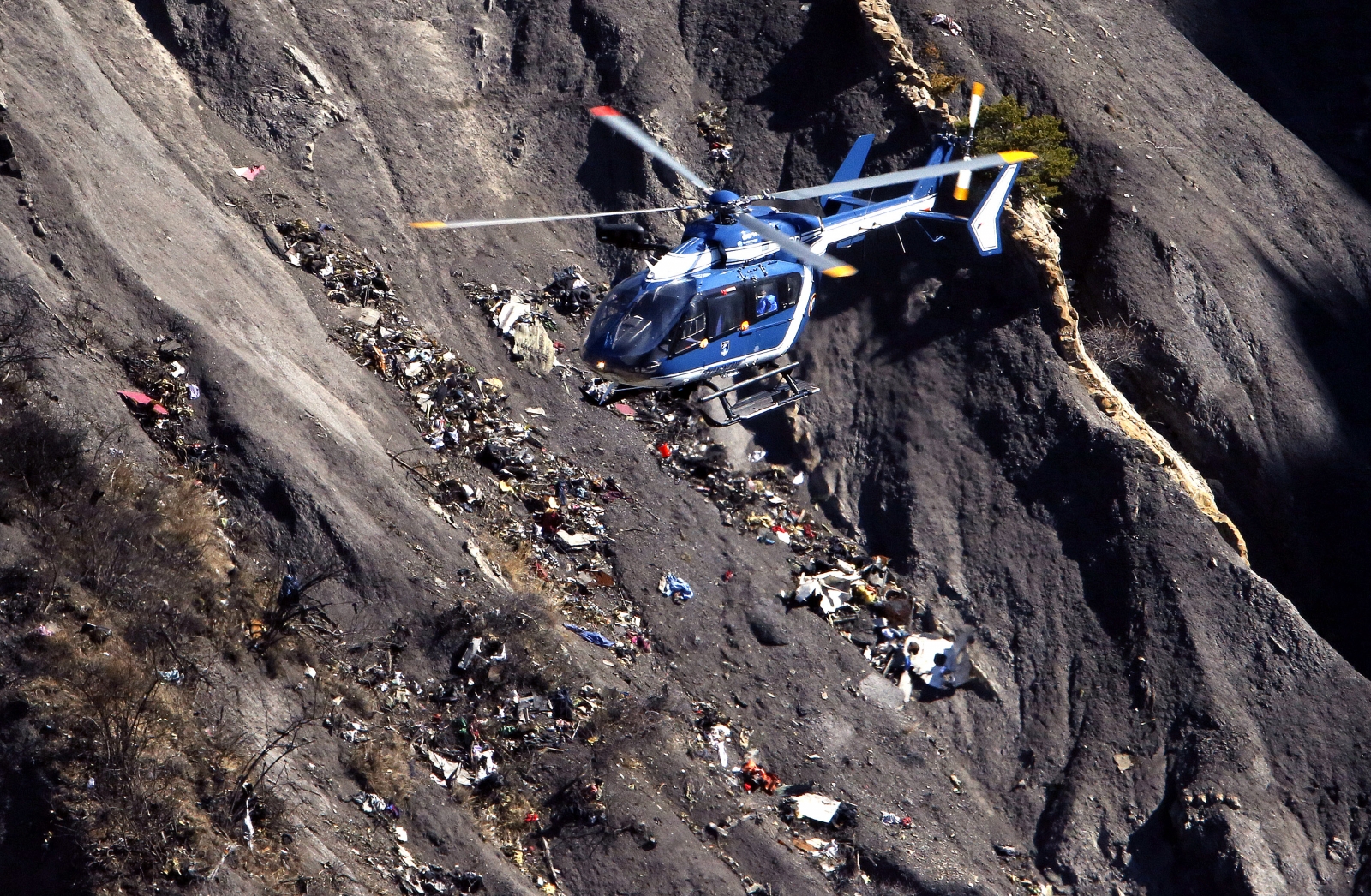
Germanwings flight 9525: 150 DNA profiles isolated


Brice Robin, the Marseilles prosecutor, said forensic scientists have isolated 150 DNA profiles from more than 2,000 samples collected at the crash site. These must now be compared to samples submitted by family members.

But it will take a long time for investigators to match the remains with DNA taken from families of the victims, the Associated Press reported.

More than 2,800 body parts have been found at the crash site, said Marseille prosecutor Brice Robin.

For these results, the investigators had to conduct DNA tests, imaging and 3D scanning all the pieces of the body they found while collecting DNA from the victim items such as jewelry, table cover, razors even the hairs found at the scene.

Saturday 4 April 2015

http://www.ibtimes.co.uk/germanwings-disaster-body-parts-150-victims-terrible-accident-have-been-identified-1494826

http://dantri.com.vn/the-gioi/nhan-dien-xong-2800-manh-thi-the-cua-nan-nhan-germanwings-1054770.htm

continue reading