Tuesday, 12 February 2013

Last body found in Komi coal mine


The bodies of 17 workers killed in a methane explosion at the Komi Vorkutinskaya coal mine have been brought to the surface, coal mine chief engineer Sergei Moiseyev said at the daily briefing held by Russian Emergency Situations Minister Vladimir Puchkov on Tuesday.

"Seventeen bodies have been retrieved; the methane concentration is reducing in the accident zone, it is down to 4% already," he said.

The 18th body has been found 15 meters away from the rock face. It will be raised to the surface, as well.

Methane exploded at the Vorkutinskaya mine of Vorkutaugol at the depth of 800 meters at approximately 10 a.m. on Monday. According to latest updates, 26 workers happened to be in the explosion epicenter; 18 of them died, three were taken to the Vorkuta hospital and five walked out of the mine unaided.

Tuesday 12 February 2013

http://www.kyivpost.com/content/russia-and-former-soviet-union/last-body-found-in-komi-coal-mine-320285.html

continue reading

Two bodies of storm victims recovered in Msinga, 4 still missing

Two bodies of six people who went missing in a thunderstorm in Msinga, northern KwaZulu-Natal, have been recovered, the co-operative governance and traditional affairs department said on Tuesday.

"Two bodies have been recovered today [Tuesday], but we cannot reveal their identities at this stage until their families have been properly notified," said spokesman Lennox Mabaso.

The six were swept away in their homes when the Isibumba river burst its banks and flooded.

"The floods have left 36 people displaced, 25 houses have been completely damaged, and 98 people have been affected," Mabaso said. The rain started on at 6pm on Monday.

"This is indeed a very sad day for us a province as we have come to comfort the families whose lives has been turned asunder as a result of the ferocious storms that hit this area," said co-operative governance MEC Nomusa Dube.

She said the department had spoken to traditional leaders about identifying appropriate land, away from the flood plain, on which families could rebuild their homes.

"Search and rescue crews are on the scene and are searching for those that went missing during the flood," she said.

Dube said families which had lost their homes were being housed at a community hall, and arrangements had been made for them to get all the necessary assistance to ensure they were able to rebuild their lives.

Damage to infrastructure was estimated to run into millions of rand.

Dube, arts and culture MEC Ntombikayise Sibhidla Saphetha, health MEC Sbongiseni Dlomo and Social Development MEC Weziwe Thusi MEC visited the area to asses the damage.

The ANC in KwaZulu-Natal sent its condolences to the families which had lost loved ones and those still searching for missing family members.

"We have no doubts that the emergency and rescue team will do their best in searching for the missing people," said spokesman Senzo Mkhize.

"We also want to commend the provincial government for their swift response in providing relief measure to the victims," he said.

Tuesday 12 February 2013

http://www.timeslive.co.za/local/2013/02/12/two-bodies-recovered-in-msinga

continue reading

USS Monitor remains to be buried next month at Arlington Cemetery


For 140 years the two Union sailors lay entombed in the turret of the USS Monitor, doomed shipmates aboard the sunken Civil War vessel 40 fathoms down and 16 miles off Cape Hatteras.

Their remains were recovered when the turret was brought to the surface in an amazing feat of marine archaeology and engineering in 2002.

Next month, after a decade of trying to learn their identities, the Navy plans to bury the comrades as unidentified in Arlington National Cemetery with full military honors.

The funeral, scheduled for March 8, will mark 40 years of research into the Monitor by the Navy, the National Oceanic and Atmospheric Administration (NOAA), the Mariners’ Museum in Newport News, Va., and many other organizations.

And it will lay to rest perhaps the last of the over 600,000 soldiers, sailors and Marines who perished in the long ago war for the Union. The nation is currently commemorating the sesqicentennial of the war, which ran from1861 to 1865.

“These may very well be the last Navy personnel from the Civil War to be buried at Arlington,” said Navy Secretary Ray Mabus said in a statement Tuesday. “It’s important we honor these brave men and all they represent as we reflect upon the significant role Monitor and her crew had in setting the course for our modern Navy.”

The Monitor is famous for battling the Confederate ship CSS Virginia, formerly the USS Merrimack, on March 9, 1862, at Hampton Roads, Va., in history’s first fight between ironclad warships.

Ten months later, the two men were aboard the Monitor when it sank in a gale off the North Carolina coast on Dec. 31, 1862. The ship capsized, and settled on the bottom upside down.

Most of the 63 crewmen escaped. Sixteen men perished, the bodies of the other 14 were never recovered.

The two unidentified sailors — an older sailor, about 35, who walked with a limp, wore a gold ring, and always had a pipe clenched between his teeth, and a younger man, about 21, with a broken nose and mismatched shoes — were trapped in the turret.

More than a century later, their almost complete skeletons were found, one on top of the other, amid the tangle of huge guns and debris inside.

“It’s extraordinary on a number of levels,” said David W. Alberg, superintendent of NOAA’s Monitor Marine Sanctuary. “There’s something comforting to know that, no matter what you go through, what sacrifice you make, that nation’s promise to look after you, bring you home, and honor you, is as good 150 years later” as it is was back then.

“Here we have two men who were lost in a storm, forgotten by even many of their descendants,” he said. “But the nation’s never forgotten.”

The wreck of the Monitor was located in 1973 by a Duke University research ship in the stormy region called “the graveyard of the Atlantic.”

The study of the bones yielded DNA, but few other clues: The younger man’s broken nose and indications of a possible limp in the older man, the ring on a fingers of his right hand and a groove in his front teeth where he bit down on his pipe.

The identities of all the lost Monitor sailors are known, and many crew members are depicted in old photographs — including a famous series taken on the ship by photographer James F. Gibson in July 1862.

But it was not known which identities might go with the recovered remains.

Last year, at the Navy Memorial in Washington, experts from Louisiana State University displayed clay facial reconstructions of the two men, based on models of their skulls.

The remains were then at the military’s Joint Prisoner of War Missing in Action Command in Hawaii. The turret resides at the Maritime Museum.

Experts hoped the clay images might, through public exposure, provide leads to the identities.

Officials noted a strong resemblance between the reconstructed face of the older sailor and that of the Monitor’s Welsh-born first-class fireman, Robert Williams, 30.

In two of Gibson’s pictures, Williams appears in a cap and mustache, standing with his arms folded. He is surrounded by other members of the crew, who lounge on the deck, playing checkers and smoking pipes.

But investigators could come up with nothing more definitive, and the sailors must now go to their graves unidentified.

Officials said the case will remain open, should further information be discovered.

Tuesday 12 February 2013

http://www.washingtonpost.com/local/uss-monitor-remains-to-buried-next-month-at-arlington-cemetery/2013/02/12/3a1a7abe-7497-11e2-8f84-3e4b513b1a13_story.html

continue reading

Families of accident victims accuse police of looting


Some family members of the Post Bus accident victims have accused the police of ransacking bodies and looting money and luggage.

But police spokesperson Elizabeth Kanjela has denied the allegations and instead blamed it on unknown people.

Some of the money lost by survivors and those that died includes, a K23 million (KR 23, 000), K10 million (KR 10, 000) and K3 million (KR 3, 000).

But Kanjela said passenger who lost luggage and money should report to Central Province police saying the looting was done by unknown people.

Meanwhile, accidents victims have been buried at a mass burial in Ndola.

Speaking at the burial, President Michael Sata has urged RATSA and other law enforcement agencies to ensure that motorists follow road regulations.

President Sata regretted the continued death of people on the road and that something should be done about it.

He took time to reflect on the road accidents and how the problem can be solved.

He has since indicated the intention to construction a duo carriage way from Lusaka to Kabwe as one of the solutions to the road accidents.

“We urgently need the Road Transport and Safety Agency and other law enforcement agencies to work closely with motorists and other road users to ensure that road traffic rules are followed to avoid these accidents,” said President Sata.

Tuesday 12 February 2013

http://zambiareports.com/2013/02/12/families-of-accident-victims-accuse-police-of-looting/

continue reading

Colombia authorities uncover mass grave


Colombian authorities have uncovered the bodies of five men buried in a field in a remote part of Antioquia department, and the country's largest rebel group, FARC, are the intitial suspects, local media reported on Tuesday.

The bodies, in an advanced state of composition, were allegedy found on Monday buried in a field in the village of La Bamba, two hours from the town of El Bagre, in Colombia's north-west Antioquia department. They were in an advanced stage of decomposition and had not been buried with any identifying documents.

According to national police commander General Jose David Guzman, the five men appear to have been members of the paramilitary gang "Los Urabeños" who had, along with five other men, arrived from the port city of Cartagena two months prior, reported El Universal.

The men, reportedly of African descent, were allegedly kidnapped by the FARC on December 30 2012, and had not been seen since.

It is not yet known how long the bodies were buried for.

Tuesday 12 February 2013

http://colombiareports.com/colombia-news/news/28118-colombia-authorities-uncover-mass-grave.html

continue reading

Bodies of 17 miners lifted to surface at Vorkutinskaya mine


The bodies of seventeen miners who died in a methane blast at Vorkutinskaya mine early on Monday have been raised to the surface, Sergei Moiseyev, the mine’s chief engineer, told an emergency meeting held by Russian Emergencies Minister Vladimir Puchkov.

“Seventeen miners have been raised to the surface. The methane concentration in the blast-affected section is decreasing and has already dropped to 4%”, Moiseyev said.

The body of the 18th missing miner was found 15 meters away from the longwall. His body is being lifted to the surface too. Works to degas and ventilate the mine are under way. Moiseyev said that they would finish in 1.5 or 2 hours.

For his part, Russian Minister for Emergency Situations Vladimir Puchkov warned that the operation should stop immediately if there was even the slightest threat to the life and health of the mine rescuers.

Eighteen people died and three more were injured in a methane blast explosion at Vorkutinskaya mine early on Monday. One miner has been taken to Moscow for treatment.

In the meantime, a reserve of gear and equipment for mine rescuers will be created in Vorkuta, according to Russian Minister for Emergency Situations Vladimir Puchkov, who visited the Vorkutinskaya mine on Monday.

“I’ve decided that an Il-76 plane will leave Moscow soon to deliver the gear and equipment. This is going to be a reserve for the mine rescuers who will cover the whole region,” Puchkov emphasized.

Tuesday 12 February 2013

http://news.silobreaker.com/bodies-of-17-miners-lifted-to-surface-at-vorkutinskaya-mine-5_2266603712329809941

continue reading

Trying time for relatives as they search for missing victims


Many survivors were left with little, as all their belongings were lost in the stampede. The administration claimed that at least 19 of the 24 identified bodies had been sent to their native places

Even as 24 of the 36 dead were identified during the day, many people ran from one hospital to another looking for their kin who had gone missing since the stampede at Allahabad railway station on Sunday evening.

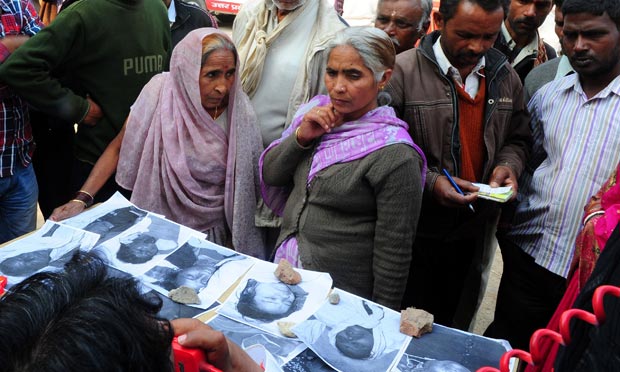
Sitaram Prasad came to the mortuary of Swaroop Rani Nehru (SRN) Hospital looking for his wife Mamta Devi and mother Bachcha Devi. “I have already looked at the list of the injured. I have come here to see if their bodies are here. They were with me when the stampede occurred. After that I have not seen them,” he said.

After seeing the photographs of the dead at the mortuary, Prasad did not have any idea where to look for his family members.


Same was the case with Arjun, who was looking for his wife Sushila Bai. Baliram Pandey from Gorakhpur had been looking for his relative Teg Bahadur and had been to the GRP post and the hospital. “There is one Tej Bahadur in the list of the injured. But I am not sure whether he is the person I am looking for. I will take a look and then go to Tej Bahadur Sapru Hospital,” he said.

Many survivors were left with little, as all their belongings were lost in the stampede. Raj Kumar Kesri of Patna said: “I was wearing a jacket. All the money and ticket was in that jacket. It is gone. My elder sister’s mobile and purse is also lost. Luckily, I had my mobile phone safe. My son is there back home, but he cannot come immediately. We are left with no money.” His sister Shanti Devi was injured in the stampede and was being treated at SRN hospital.

Bansi Dhar Thakur from Delhi, whose neighbour Manorama Devi was injured, said: “Let alone our purse and mobile phones, even our bags and other belongings have been lost. We are left with no money and no clothes.” In the morning, however, somebody came and gave him Rs 500.

The administration claimed that at least 19 of the 24 identified bodies had been sent to their native places. “Three bodies were cremated at Rasulabad crematorium, as their families requested us to get the last rites done here,” said Additional Director (Health) and in-charge (health and sanitation) of Kumbh Mela, Ramesh Kumar. The officer had been camping at SRN since morning.

Tuesday 12 February 2013

http://www.expressindia.com/latest-news/trying-time-for-relatives-as-they-search-for-missing-victims/1072983/

continue reading

Search for remains of disaster victims conducted in Iwate, Miyagi


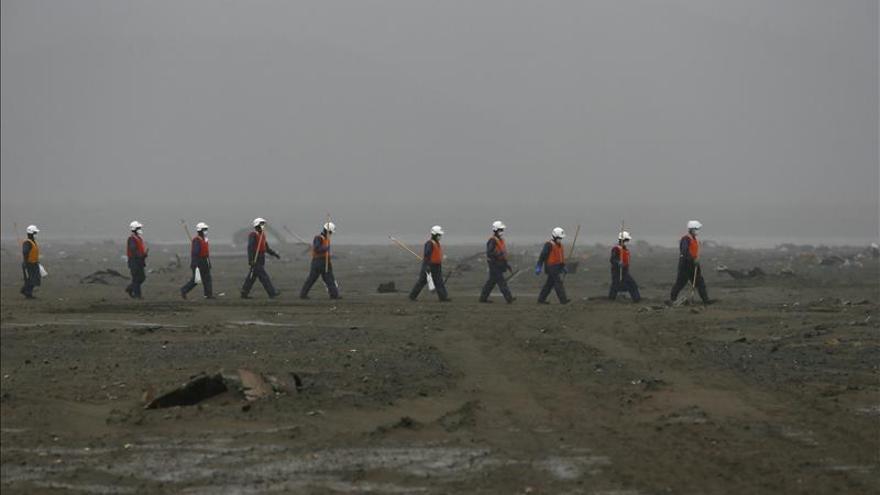
Local police and coast guard conducted an intensive search Monday for traces of those whose remains have not been found since the March 11, 2011, earthquake and tsunami disaster in the coastal areas of Iwate and Miyagi prefectures.

“Families of the missing people cannot go undersea by themselves. We hope we can recover (their remains) or something that could identify them,” said Nobuki Fujita, 38, who led a team of four divers who were involved in the search activities in Kesennuma, Miyagi.

Overall, 2,698 people remained unaccounted for as of Feb. 6 following the disaster, of whom 2,483 were from the two prefectures, according to the National Police Agency. The death toll stood at 15,880.

In Rikuzentakata, Iwate, some 90 officers from the local coast guard and fire headquarters observed a moment of silence in honor of the victims on the seashore before launching the search.

Monday 11 February 2013

http://www.japantimes.co.jp/news/2013/02/12/national/search-for-remains-of-disaster-victims-conducted-in-iwate-miyagi/#.URmgVajVWCA

continue reading

Seeking redemption: Baldia owners offer groceries in exchange for loyalty


On Monday afternoon at a godown in Baldia, Nazia, who lost her husband in the Ali Enterprises inferno, was handed a white envelope of Rs 5,000. The mother of four was told to come back again on the 16th of this month and collect her ration she ‘deserved’. In return, she was told to keep her mouth shut and not to speak ill against the factory owners.

Such pressure tactics being carried by the officials of the gutted factory, Ali Enterprises is likely to increase after the bail of all the men accused in the Baldia fire incident, claim activists.

Pakistan Institute of Labour Education and Research (Piler) executive director Karamat Ali told The Express Tribune that the owners and managers of Ali Enterprises, the factory in which hundreds of people lost their lives, have been intimidating the witnesses and the workers for a while. The purpose of these threats is to pressurise people into agreeing to drop murder charges against the owners.

“Even from inside the jail, the brothers had been giving directions to their men to threaten the people to move back from the case,” said Ali. “Now that they are out of prison, we expect an increase in their dirty activities.”

Meanwhile, the lawyer representing the owners, Amir Raza Naqvi, insisted that the company has been providing groceries and medicines to the families since day one. “We understand that these families are poor so we have been helping them out on a humanitarian basis,” he told The Express Tribune. Denying that these were pressure tactics, Naqvi explained that they took it upon themselves to help these poor because the government had failed to do so.

Last September, more than 250 workers had died in a massive inferno that engulfed a factory in Baldia. Termed as the country’s worst fire disaster, social activists had joined hands with the affected families to help them raise their voice over the missing bodies and the delayed compensation payments.

However, activists now see a change in heart in some of the affected families as the owners are using pressure tactics. While some families have been threatened on the phone and paid visits by factory managers, others have been presented groceries and offered money to keep their mouths shut.

“The poor and weak status of the affected families is being abused by the powerful and influential owners. They are taking advantage of their situation and forcing people to dislodge themselves from the case,” said trade unionist Nasir Mansoor. He said that the managers were operating from a godown near the burned factory. “The people are being called to their office and told to sign documents. God knows what those documents are.” He was worried that these illiterate people may be fooled into signing pardons.

Shahida, who lost her husband Akmal, said that within the past one month, she has received Rs10,000 and a month’s ration from the factory authorities. Even then, she was saddened by the news of the owners’ bails. “I am sad because it is the owners’ fault that my husband died, but if the seth [owner] bears the responsibility of my children, I will forgive them.”

Meanwhile, there are some families who claim they are not interested in what happens to the owners as they are still caught up in identifying the missing bodies. Azmat, a resident of Baldia, who lost his four daughters and a son, said that they are surviving on debts. “Poor people can’t do anything. Even if the owners are set free, we can’t do anything about it.”

Monday 11 February 2013

http://tribune.com.pk/story/505970/seeking-redemption-baldia-owners-offer-groceries-in-exchange-for-loyalty/

continue reading

Monday, 11 February 2013

Three killed in Azerbaijan military helicopter crash


An Azerbaijani military helicopter crashed Feb. 11 near the capital of Baku, killing all three crew members, the ex-Soviet country’s defense ministry said.

“A helicopter of Azerbaijan’s Air Force crashed on Monday at 10:30 local time (0630 GMT) near Baku,” the ministry said in a statement.

A source in the ministry told AFP that all three crew members of the Mi-17 helicopter died. The helicopter debris and one body had been found, he said.

There were no further details on the identities of the dead. The emergency situations ministry has launched naval and ground search operations to find the remaining bodies, he added.

Monday 11 February 2013

http://www.defensenews.com/article/20130211/DEFREG01/302110006/Three-Killed-Azerbaijan-Military-Helicopter-Crash?odyssey=tab%7Ctopnews%7Ctext%7CFRONTPAGE

continue reading

Search for dead relatives at Swaroop Rani Nehru hospital


Adjusting his spectacles several times before looking at the blurred black and white photos of the unidentified deceased at Swaroop Rani Nehru hospital, 65 year old B R Mishra skipped several heartbeats trying to identify the face of his niece, Indira Devi, from among the photos of victims who have not been identified yet. Mishra was relieved not to find a picture of his niece among those of the dead and gathered strength to go looking for Indira all over again, still fearing whether she is dead or live.

Like Mishra, there were several anxious kin of victims on the premises of SRN hospital looking for dear ones missing since the time tragedy struck Allahabad Junction on last Sunday night. Those relatively familiar with the hospital knew exactly were to go but rural folk were confused and needed help.

"I am trying to locate my sister Shanta Bai from last evening and no one is able to give me a clue...please, someone help!" was the lament of 58 years old Pramila Bai Borekade, from Bhalaghat, MP.

Meanwhile, as all attention shifted to SRN hospital, the premises had more OB (outdoor broadcast) vans than ambulances. From the main gate of the hospital, RAF, PAC and local police cops were seen standing all day through, as VIPs and others visited the hospital to meet the injured and ask for their well being.

13 seriously injured persons have been admitted to the Surgical ICU, while 12 are being treated at ward number 2, four at ward number 16 and one, Sanath Kumar, at Anesthesia ICU. All the bodies at the mortuary have been identified and 18 unidentified bodies were kept at MLN Medical College, out of which six were identified, said Saurabh Dubey PRO of the medical college. Proper medical help is being provided to those admitted and the hospital has pressed eight ambulances into service, two were functioning as mini ICU's, he added.

Help had also come from some of MLAs of Samajwadi Party (SP), who were seen sitting in front of the mortuary with all details of the dead and injured along with names of hospitals where they were being attended. "The black and white photos of the unidentified dead bodies along with the details are helping the kin of the victims identify them," said SP MLA, Satyveer Munna.

The railways arranged for wooden boxes to carry the identified bodies which would be sent to their family members.

Monday 11 February 2013

http://timesofindia.indiatimes.com/city/allahabad/Frantic-search-for-dead-relatives-at-Swaroop-Rani-Nehru-hospital/articleshow/18453988.cms

continue reading

Maoists vow to continue putting bombs in dead bodies


In what could turn out to be a huge worry for the home ministry and security forces dealing with Naxals, the Maoists have declared that they will continue with the tactic of planting bombs in the bodies of killed security personnel like they did in Latehar in Jharkhand recently.

In a written statement dated January 16 on behalf of the Bihar-Jharkhand-North Chhattisgarh Special Area Military Commission of the PLGA, CPI (Maoist) spokesperson Toofan said that since the attacks by security forces on Maoists did not follow any "rules of war", they would also go beyond the rules.

While the "media and the government has termed the strategy to plant bombs inside dead bodies of security personnel inhuman", it has not looked at the "inhuman" manner in which the state forces have been killing and attacking the Maoists, the spokesman said.

The statement also talked about the "inhuman" manner in which dead Maoists were treated by the security forces during encounters and claimed that often, they did not even inform the families of the dead and return the bodies to them.

On planting bombs in the body of a jawan, the CPI (Maoist) statement said, "We have no qualms in admitting that warriors of PLGA had put a time bomb in his abdomen. PLGA warriors, however, have never tortured a jawan who is alive. In fact, we have treated arrested jawans as prisoners of war and even released them. If putting a bomb in a dead body is disrespectful of the dead, then it is a crime committed by doctors who conduct post-mortem. The truth is the sole aim of planting a bomb in the jawan's abdomen (in Latehar) was to cause maximum damage to the hostile central forces. To oppose the atrocities by the central forces in Chhattisgarh, Jharkhand and Bengal, we will continue to do this (plant bombs in dead bodies.)"

The statement added, "PLGA wants to make it clear that the bombs planted in the jawan's body were a very simple circuit time bomb which was set in such a way that it would explode either at the spot or when the dead body was being taken away. The doctors were not our targets as it has been made out to be. It was an ordinary circuit that got defused because water seeped into it."

Monday 11 February 2013

http://timesofindia.indiatimes.com/india/Maoists-vow-to-continue-putting-bombs-in-dead-bodies/articleshow/18438560.cms

continue reading

Guinea military plane crashes in Liberia; at least 10 killed


A plane carrying a military delegation from Guinea crashed Monday in Liberia, killing the army chief of staff and at least nine other people, said officials and a source close to the Guinean presidency.

“There were 10 people on board this flight and none of them survived,” said Liberian Information Minister Lewis Brown after the crash in the town of Charlesville, about eight kilometres (five miles) from Liberia’s only international airport.

But a source close to Guinea’s presidency said 18 people had died, including the army chief of staff.

“There were 18 people on board including the chief of staff of the Guinean army, General Souleymane Kelefa Diallo, and they all died,” said the source.

Liberian President Ellen Johnson Sirleaf declared Tuesday a day of mourning for the victims.

“May all of us pray for the souls of the Guineans who died in the crash,” she said on national television.

The plane was carrying the delegation to attend an annual armed forces day in Liberia, which holds ceremonies each year to recognise its military and often invites delegations from neighbouring countries, including Guinea.

Emergency workers and police were dispatched to the crash site from the airport, Roberts International, which is located about 65 kilometres southeast of Monrovia.

Much of the area where the plane went down is covered in deep forest.

Liberian officials said they did not yet have a list of those on board the plane and were unsure how many were crew.

They were due to brief the press at the airport later in the day.

Monday 11 February 2013

http://en.starafrica.com/news/liberia-plane-crash-kills-at-least-10.html

continue reading

Why China's landslide victims were cremated by the State


A landslide last month in Zhenxiong County in southwestern China killed 46 villagers. Once the bodies were recovered, the local authority -- without any prior agreement from family members -- cremated them. This set off a storm of protest from relatives of the deceased, and widespread criticism from the public. Zhenxiong authorities sparked further outrage when they admitted that the cremations were prompted by a desire to maintain stability in this part of the province of Yunnan.

That one’s family member dies in a disaster is devastating enough. The fact that the local government went ahead with such a decision and deprived the families the chance to send their loved ones off properly is extra salt in the wound. Such a method of “maintaining stability” can only make matters worse.

So why are local officials so thoughtless?

In fact, they had carefully calculated their own interests in taking this decision. They must have been afraid of the families “taking the dead to press the living,” thinking they might react more irrationally when they actually saw the horrible state of their excavated loved ones.

On the contrary, especially from a long term point of view, this kind of behavior hurts the feelings of the families of the deceased, threatens public order and undermines good morals. It makes the already poor credibility of the government even worse.

But once again in China, we see officials who have to deal with a troubling event benefit more than being harmed. This explains why this kind of stability maintenance, drinking poison to quench a thirst, prevails so often. In short, that which is thought to benefit the official order not only jeopardizes social morals but also the credibility of the government itself.

“Taking the dead to press the living” is often the last remedy for the weak against the strong.

Take the custom of my hometown in Central Hunan as an example. When a woman had killed herself due to family disputes, her family clan gathered to prevent her body from being buried -- hoping such a scene could ruin the husband’s family.

This is of course an illegal practice, and not worth promoting. However, when one considers the historical background of the custom, one may understand and feel more sympathy. For starters, in traditional Chinese society, women have a very low status. It’s not rare that women suffer abuse from their mothers-in-law or violence from their husbands. The protection of a woman thus depends, not on the law, but on the forces that her own family can muster. It is very difficult to expect the law to uphold justice when a woman commits suicide because of domestic violence. This is why her family clan creates havoc as a way to punish the husband’s family.

Respect the dead

From the viewpoint of the modern rule of law, this kind of practice is primitive, a type of vigilante justice. But under specific historical circumstances, the approach does have a certain deterrent effect and to a certain extent curbs the ill-treatment of women.

So why is it that the practice of taking the dead to press the living still goes on? The most basic element for a civilized society is to respect the dead. Respecting the deceased is respecting the value of life. It’s hard to imagine how a society in which the dead are not given respect can be said to respect life.

A while ago, various local governments in Henan province implemented by force a policy of flattening tombs. Like others, I believe this is because to those officials the skeletons are just meaningless waste. The fact that that waste has to give way to economic development has broken the bottom line of civilization.

Naturally, funerals and the handling of dead bodies can evolve in accordance with economic and social changes. For instance, cremation can take the place of burial. But the premise of respect for the deceased is not to be denied. This implies respecting the deceased’s will and his or her religion.

All civilized societies respect the dead. If the rules made by the powers-that-be of the living world breach such rules of civility for mere utilitarian purposes then it’s doomed to face revolt.

Far too often, local authorities in China try to settle conflicts in the quickest possible way, fearing neither financial costs nor social taboos, for the sole purpose of maintaining stability. Such a cynical way of ruling must come to an end.

Monday 11 February 2013

http://www.worldcrunch.com/culture-society/why-china-039-s-landslide-victims-were-cremated-by-the-state/traditions-corpse-civilization-cremation-zhenxiong/c3s10738/#.URj6n0H3TUI

continue reading

5 Chibombo accident bodies remain unclaimed


Five bodies from the Chibombo Post bus accident still remain unclaimed, according to Ndola district commissioner Rebby Chanda.

But police say that 51 people died in the Chibombo accident on Thursday February 7, 2013 and that they had all been identified and accounted for.

On Saturday, authorities in Ndola said they had failed to account for nine bodies out of the over 50 that died in the accident and intensified the search for the said bodies.

But in an interview at Mitengo Cemetery yesterday, Chanda disclosed that out of the nine, four had been identified and family members were sent to Kabwe General Hospital to collect the bodies.

He said the government was still making frantic efforts to have the remaining five bodies identified so that they could be buried together.

"At the moment, what we have is that one victim was buried yesterday Saturday, four will be buried today Sunday and the rest will be buried tomorrow.

The postmortem is going on right now and four children from Arthur Davison Hospital will be transported to Ndola Central Hospital for postmortem while we are still waiting for the other bodies from Kabwe," Chanda explained. Meanwhile, a visit to Mitengo Cemetery found gravediggers preparing the graves in a place secured for burial.

About 31 graves had been prepared by press time while graders were clearing the area as part of the burial preparations.

And police deputy public relations officer Charity Munganga-Chanda stated that they were concerned about the different figures being passed on to members of the public regarding the number of people who died in the Chibombo accident.

She said according to their investigations and records, 51 people died in the Chibombo accident on Thursday, and that they had all been identified and accounted for.

"Twenty bodies were transported to the Copperbelt on the actual day of the accident. One person who was seriously injured died on the way to UTH and the body was deposited in the UTH mortuary. This brings the total number of bodies evacuated on February 7, 2013 to 21.

On February 8, 2013, 26 bodies were again taken from the Liteta and Kabwe mortuaries to the Copperbelt after positive identification by relatives of the deceased persons. The total number of bodies that were transported to the Copperbelt is 46. The body of the person who died on the way to UTH is still lying in the UTH mortuary," Munganga-Chanda stated.

She stated that as of yesterday four bodies were still in Kabwe General Hospital mortuary, adding that one of them was to be buried in Kabwe, while the three awaited confirmation of place of burial by relatives. She stated that the scene of accident was thoroughly combed and searched and that all the bodies were picked from there.

"We wish to reiterate that the total number of people who died on February 7, 2013 is 51 and all the bodies have been positively identified, autopsy conducted and are ready for burial," she stated.

And Central Province division criminal investigations officer Andrew Mbewe said Van eedem Abraham, the Mkushi farmer who is believed to have caused the accident, was still in police custody for security reasons.

Mbewe said even though the offence committed by Abraham was bailable, police did not want to release him because he may not be spared by the general public.

"It doesn't matter whether it's bailable or not.

We don't give bond there and then. Giving a bond is not a must. Bond is just a prerogative of the police, looking at the nature of the offence. We are talking about a multitude of people; if he is released, the general public can't spare him," Mbewe said.

He wondered why authorities in Ndola were saying that nine bodies were missing, saying they were alarming the nation.

And the Anglican Church in Zambia said driving in Zambia had become risky because of careless and indisciplined drivers.

Anglican Archbishop of the Diocese of Northern Zambia most Reverend Albert Chama said many drivers had no courtesy for other road users.

"We are all very sad for the loss of lives in the accident. We will be praying for the families who have lost their beloved ones. The Church has also observed that driving in Zambia can be risky because of many careless and indisciplined drivers. Many such drivers have no respect or courtesy when on the road," Rev Chama said in a statement.

Archbishop Chama hoped and prayed that the authorities tasked to look into the cause of the tragedy would work tirelessly in order to establish what really happened and find ways of avoiding such accidents in future. The church has since urged the Road Transport and Safety Agency (RTSA) and the government to improve all highways and institute stringent measures to deter road traffic offenders.

Monday 11 February 2013

http://www.postzambia.com/post-read_article.php?articleId=30233

continue reading

Bus packed with Muslim pilgrims runs off bridge in Bangladesh, killing at least 17 people


At least 17 people, including five women, were killed and several others injured when a bus carrying a group of Muslim pilgrims plunged into a nearly dry river in south-eastern Bangladesh today, officials said.

The bus carrying 43 people had started from Gazipur on Saturday to join a Muslim spiritual function at Maizbhandari shrine near the south-eastern port city of Chittagong.

The accident happened in Cox’s Bazar district, 296 kilometres south of the Bangladeshi capital.

“Sixteen of them died instantly and a minor boy succumbed to his wounds as he was being rushed to the hospital,” a police official told PTI.

Five of the dead were women and 18 people were injured in the incident, the Daily Star reported.

The bus fell into a dry part of the Matamuhuri river early morning after breaking the railing of Matamuhuri bridge some 30 feet above the sandy river bed.

The police official said most other passengers were critically wounded as the bus plunged into the river. Army troops from a nearby military installation joined the rescue campaign.

The police official said the passengers were residents of suburban Gazipur at the outskirts of the capital Dhaka and they had gone to join the Muslim spiritual function.

They planned to visit the beach retort town of Cox’s Bazar during their journey back to home.

Barua said the bus was carrying 43 people returning from a shrine of a local Muslim saint Mujibur Rahman Maizbhandari.

Road accidents kill about 10,000 people every year in Bangladesh, the government says. Crashes often are blamed on rash driving and faulty vehicles.

Monday 11 February 2013

http://www.startribune.com/world/190625891.html?refer=y

continue reading

103 dead in cattle raid in South Sudan


At least 103 are dead in a cattle raid in South Sudan, according to reports.

A heavily armed militia attacked tribesmen during a weekend cattle drive in strife-wracked South Sudan, a government official reported Sunday, leaving behind dozens of dead and possibly kidnapping hundreds of others.

Unarmed civilians “were murdered in cold blood” while herding their livestock to camps along the Sobat River, near the Ethiopian border, Akobo County Commissioner Goi Jooyul said in a statement on the attack. He identified the assailants as members of the Murle ethnic group and the victims as the Lou Nuer, two factions that have been battling over grazing lands and water rights in the world’s newest nation.

The attackers overwhelmed government troops who were guarding the herders, killing 14 of them, Jooyul said. In all, 103 bodies had been found and hundreds of families were missing, he said.

“The survivors have narrated use of heavy weaponry including RPGs by the assailants and use of spears and machetes by some,” he said. Meanwhile, he said poor roads were hampering the search for those still missing, including an undetermined number of children, as well as thousands of head of cattle.

The Murle-Lou Nuer conflict is centered in Jonglei state, which borders Ethiopia. Sporadic attacks have persisted despite a peace accord signed in May, Jooyul said.

South Sudan became independent in July 2011. In January 2012, the central government declared Jonglei a humanitarian disaster area and called for international assistance in restoring security.

Monday 11 February 2013

http://wtvr.com/2013/02/10/103-dead-in-cattle-raid-in-south-sudan/

continue reading

Russia coal mine explosion kills nine in Komi region


An underground explosion at a coal mine in the Komi region of northern Russia has killed at least nine miners, officials say.

Rescuers are searching for eight others feared trapped underground. About 250 miners escaped to the surface.

The explosion at the Vorkutinskaya mine is thought to have been the result of a methane gas build-up.

Accidents are frequent in Russia's huge coal mining industry despite recent efforts to improve safety.

The coal mine outside the city of Vorkuta in the Russian Arctic is operated by the steel-making giant Severstal.

Monday 11 February 2013

http://www.bbc.co.uk/news/world-europe-21409680

continue reading

Update: Death toll risen to 36 in Allahabad train station stampede


Officials say the death toll from a stampede during a Hindu festival in northern India has risen to 36.

Medical superintendent Dr P Padmakar of the main state-run hospital said Monday that at least 30 other pilgrims were injured in the crush at the main rail station in the pilgrim city of Allahabad.

Twenty-seven of the dead were women, mostly elderly and poor. An eight-year-old girl was also crushed to death. A Reuters witness saw a woman weeping at the train station, surrounded by six bodies dressed in brightly colored saris. Tens of thousands of people were in the station when a section of a footbridge there collapsed, leading to the stampede late on Sunday.

Indian railway minister Pawan Bansal said the stampede happened in the Allahabad train station on Sunday evening. News reports said tens of thousands of people were in the station when a section of a footbridge there collapsed, leading to the stampede.

Television showed large crowds pushing and jostling at the train station as policemen struggled to restore order.

"There was complete chaos. There was no doctor or ambulance for at least two hours after the accident," a witness told NDTV news channel.

An estimated 30 million Hindus were expected to take a dip at the Sangam, the confluence of the Ganges, the Yamuna and the mythical Saraswati rivers on Sunday, one of the holiest bathing days of the Kumbh Mela, or Pitcher Festival. The festival lasts 55 days and is one of the world's largest religious gatherings.

The auspicious bathing days are decided by the alignment of stars, and the most dramatic feature of the festival is the Naga sadhus ascetics with ash rubbed all over their bodies, wearing only marigold garlands leaping joyfully into the holy waters.

According to Hindu mythology, the Kumbh Mela celebrates the victory of gods over demons in a furious battle over nectar that would give them immortality. As one of the gods fled with a pitcher of the nectar across the skies, it spilled on four Indian towns_Allahabad, Nasik, Ujjain and Haridwar.

The Kumbh Mela is held four times every 12 years in those towns. Hindus believe that sins accumulated in past and current lives require them to continue the cycle of death and rebirth until they are cleansed. If they bathe at the Ganges on the most auspicious day of the festival, believers say they can rid themselves of their sins.

Deadly stampedes are common at India's vast pilgrimages and religious festivals. In 2008, 145 people died when a panicking crowd pushed people over a ravine near the Himalayan temple of Naina Devi. Thousands of police and volunteers are used for crowd control during the Kumbh Mela, manning the river bank when the pilgrims and naked, dreadlocked ascetics dash into the water to bathe. The festival has its roots in a Hindu tradition that says the god Vishnu wrested a golden pot from demons containing the nectar of immortality. In a 12-day fight for possession, four drops fell to earth, in the cities of Allahabad, Haridwar, Ujain and Nasik. Every three years a Kumbh Mela is held at one of these spots, with the festival at Allahabad the holiest of them all. The festival grows in size every time it is held and is considered the world's largest temporary gathering of people. Officials said some 30 million visited the site on Sunday, considered the most auspicious day to bathe in the river. More than 2,000 years old, the festival is a meeting point for Hindu "sadhu" ascetics, some of whom live in forests or Himalayan caves and who belong to dozens of inter-related congregations. The sects have their own administration and elect leaders, but are also known for violent clashes among themselves. Monday 11 February 2013

http://www.guardian.co.uk/world/2013/feb/10/allahabad-train-station-stampede

continue reading

Sunday, 10 February 2013

Ten killed in stampede at Kumbh Mela festival India


At least 10 people were killed and a dozen more injured Sunday after a stampede broke out at a train station in the northern Indian town where millions of devout Hindus gathered for a religious festival, a senior government minister said.

Pawan Bansal, India's Railway Minister, told reporters that the stampede took place as massive crowds flooded the Allahabad train station on Sunday evening.

At least two television channels, NDTV and CNN-IBN said as many as 20 people were feared dead and 30 others injured. News reports said the large crowds caused a section of a footbridge at the station to collapse leading to the accident.

News reports said tens of thousands of people were at the train station at the time. Television showed large crowds pushing and jostling at the train station as policemen struggled to restore order.

"There was complete chaos. There was no doctor or ambulance for at least two hours after the accident," an eyewitness told NDTV news channel.

An estimated 30 million devotees were expected to take a dip at the Sangam, the confluence of 3 rivers - the Ganges, the Yamuna and the mythical Saraswati - on Sunday, 1 of the holiest bathing days of the Kumbh Mela, or Pitcher Festival. The festival lasts 55 days and is 1 of the world's largest religious gatherings.

The auspicious bathing days are decided by the alignment of stars, and devout Hindus believe a dip in the sacred river on 1 of these days will wash away their sins and free them from the cycle of death and rebirth.

The festival brings together millions of devout worshipers and thousands of religious leaders and ascetics.

The most dramatic feature of the festival is the Naga sadhus - ascetics with ash rubbed all over their bodies, wearing only marigold garlands - leaping joyfully into the holy waters.

According to Hindu mythology, the Kumbh Mela celebrates the victory of gods over demons in a furious battle over nectar that would give them immortality. As 1 of the gods fled with a pitcher of the nectar across the skies, it spilled on four Indian towns_Allahabad, Nasik, Ujjain and Haridwar.

The Kumbh Mela is held four times every 12 years in those towns. Hindus believe that sins accumulated in past and current lives require them to continue the cycle of death and rebirth until they are cleansed. If they bathe at the Ganges on the most auspicious day of the festival, believers say they can rid themselves of their sins.

Sunday 10 February 2013

http://www.wafb.com/story/21094124/millions-of-hindus-bathe-in-ganges-to-cleanse-sins

continue reading